Nile perch fishing in Uganda offers one of Africa’s most exciting freshwater angling experiences. Set across vast lakes and powerful river systems, Uganda provides the perfect environment for targeting one of the largest freshwater fish in the world. Whether you are an experienced angler chasing trophy-sized catches or a beginner looking for a unique adventure, fishing for Nile perch combines skill, patience, and adrenaline.
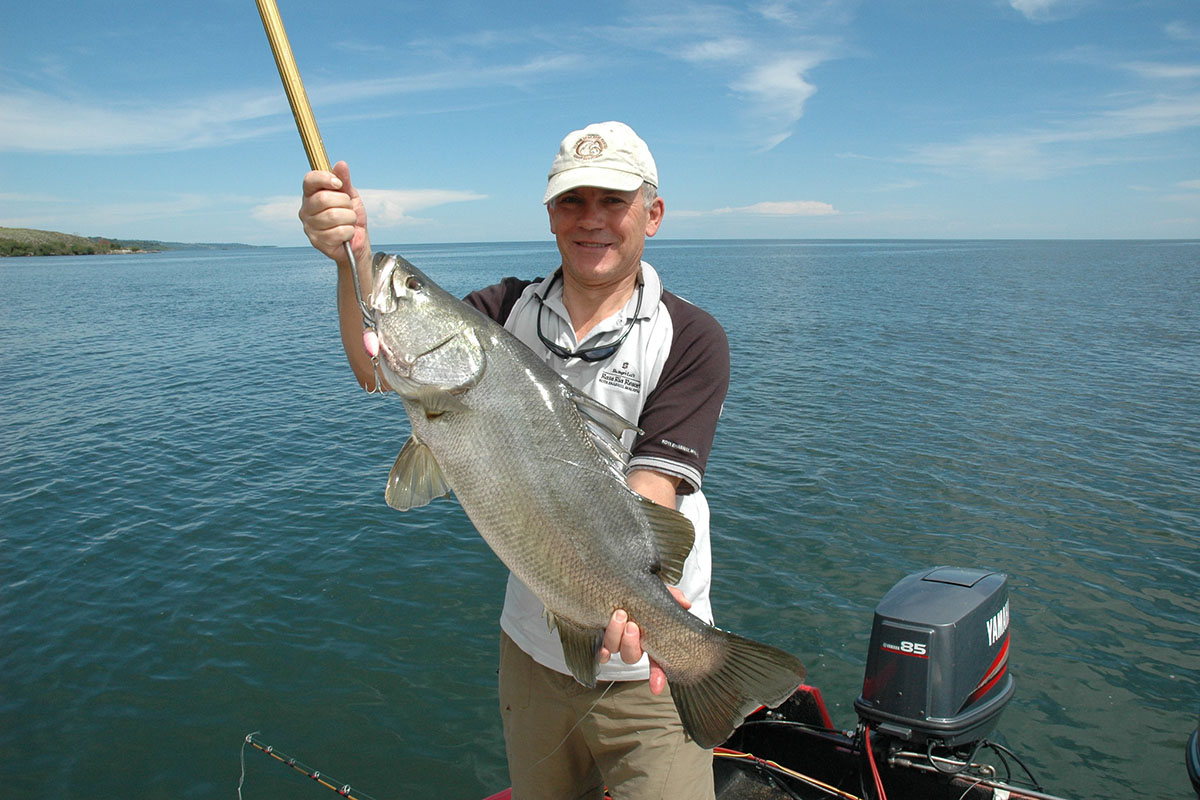
Nile Perch Fishing on Lake Victoria
Uganda’s waters—especially the legendary Lake Victoria and the River Nile—are rich with fish life, supported by a favorable climate and diverse ecosystems. A Nile perch fishing trip is not just about the catch; it’s a full safari experience that blends nature, wildlife, and culture. From sunrise casts on calm waters to the thrill of reeling in a giant fish, every moment creates lasting memories.
Why Uganda is One of the Best Places for Nile Perch Fishing
Uganda stands out as a premier destination for Nile perch fishing due to its abundance of water bodies, healthy fish populations, and year-round fishing opportunities. The country is home to some of Africa’s most productive fishing grounds, where Nile perch grow to impressive sizes, often exceeding 50 kg.
The presence of Lake Victoria, Africa’s largest freshwater lake, plays a major role in Uganda’s reputation. Its vast waters provide an ideal habitat for Nile perch, offering both shallow and deep fishing zones. In addition, the River Nile—especially within Murchison Falls National Park—creates a unique setting where anglers can fish while surrounded by wildlife such as elephants, hippos, and crocodiles.
Uganda also benefits from a stable tropical climate, allowing fishing throughout the year. Unlike seasonal destinations, anglers can plan trips in both dry and wet seasons, with each period offering different advantages. The availability of experienced local guides, well-equipped boats, and organized fishing safaris further enhances the experience.
Accessibility is another key advantage. Major fishing locations are reachable from Entebbe or Kampala, making it easy to combine fishing with other safari activities such as game drives, gorilla trekking, or cultural tours. This flexibility makes Uganda one of the most complete fishing destinations in Africa.
What is Nile Perch
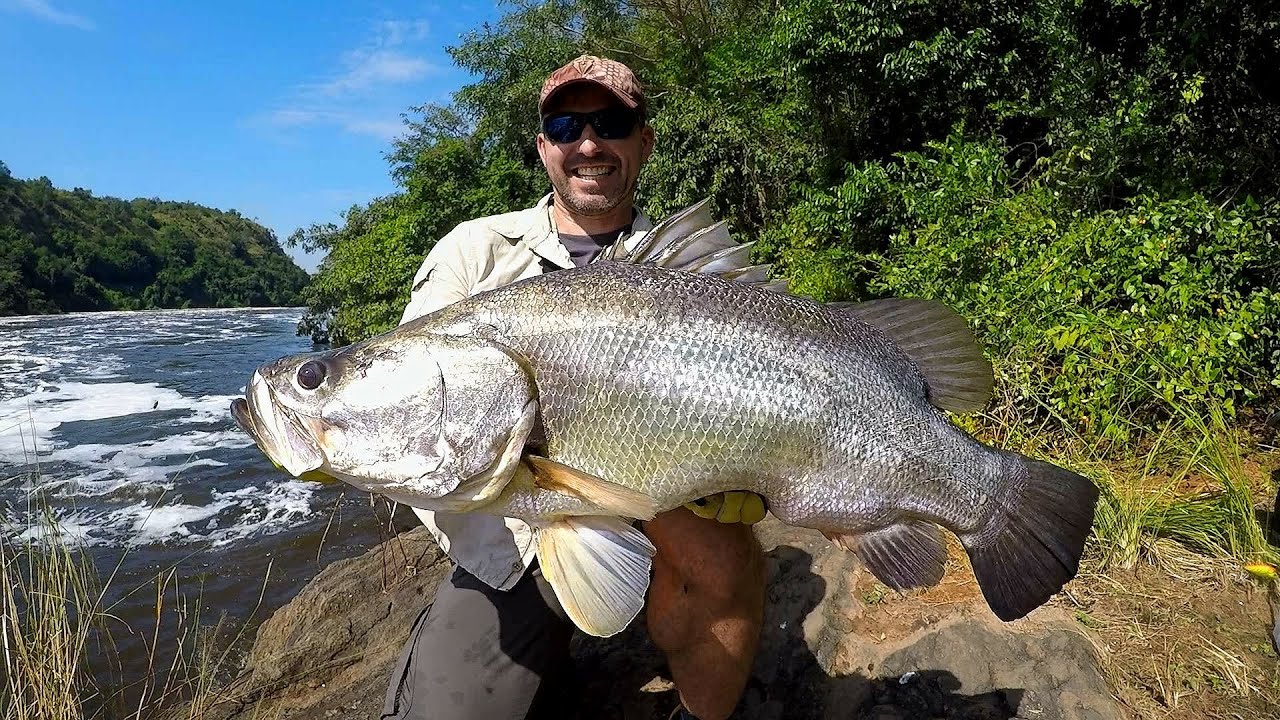
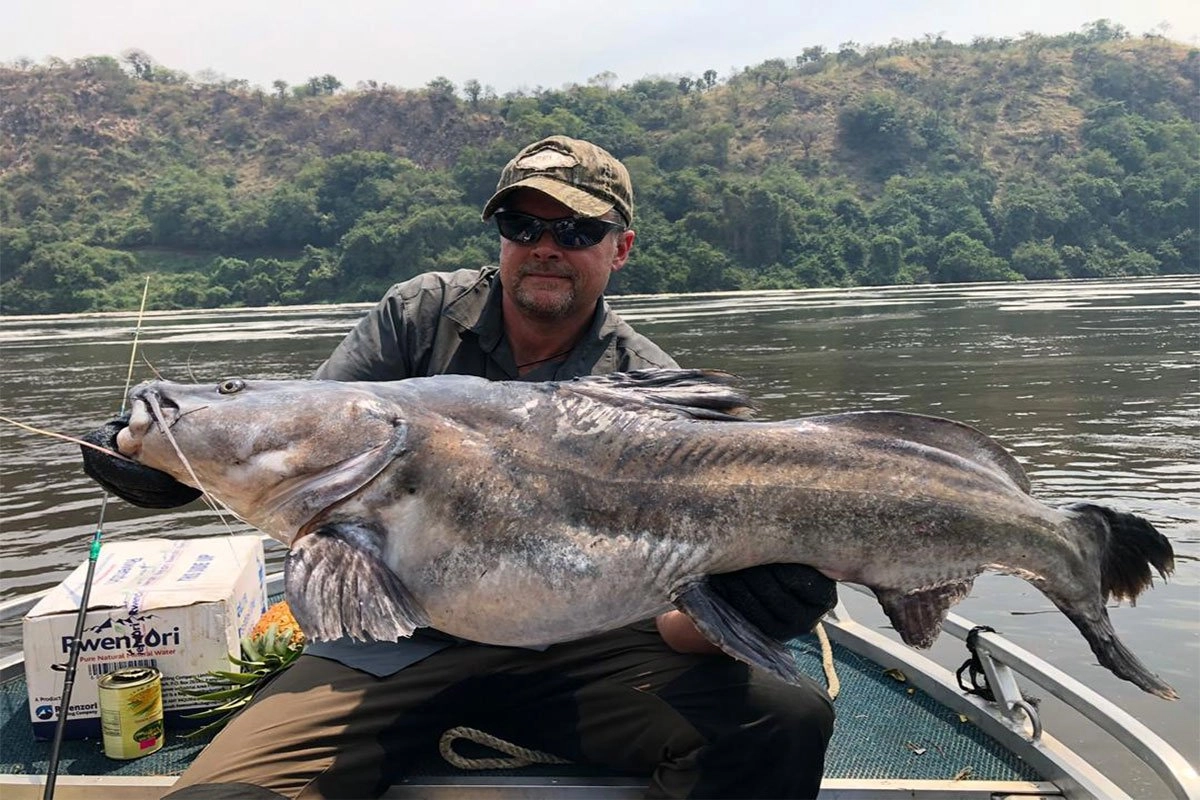
Nile perch is a large freshwater fish species known scientifically as Lates niloticus. It is one of the most powerful and sought-after game fish in Africa due to its size, strength, and fighting ability.
This species can grow to enormous sizes, often reaching over 100 kg in exceptional cases, although most catches range between 10 kg and 60 kg. Nile perch are apex predators, feeding on smaller fish, which contributes to their rapid growth and aggressive behavior when hooked.
Nile Perch fishing -Pieland Gorilla Safaris
They are typically found in warm, oxygen-rich waters such as large lakes and slow-moving rivers. In Uganda, Nile perch thrive in Lake Victoria, the River Nile, and other connected water systems. Their preference for deeper waters during the day and shallower areas at night makes them an exciting challenge for anglers using different fishing techniques.
Beyond sport fishing, Nile perch also play a significant role in the local economy and fishing industry, being one of Uganda’s most important commercial fish species. However, for anglers, the real appeal lies in the challenge—landing a Nile perch is often considered a true test of strength, endurance, and skill.
Would you like to inquire about Nile Perch fishing in Uganda?
Top Fishing Destinations for Nile Perch in Uganda
Uganda offers several prime locations for Nile perch fishing, each with its own unique characteristics and fishing conditions.
Lake Victoria
Lake Victoria is the most famous destination for Nile perch fishing in Uganda. Its vast size and rich ecosystem make it ideal for both beginner and experienced anglers. Fishing is commonly done around islands, bays, and deeper waters where large Nile perch are known to thrive.
Murchison Falls National Park (River Nile)
Fishing along the River Nile in Murchison Falls National Park provides one of the most scenic and adventurous experiences. Anglers can fish below the falls or along calmer stretches of the river while enjoying views of wildlife along the banks. This destination is particularly known for strong, hard-fighting Nile perch.
Lake Albert
Lake Albert is a less crowded but highly productive fishing destination. Located in western Uganda, it offers excellent opportunities for catching large Nile perch in a more remote and peaceful setting.
Lake Kyoga
Lake Kyoga, though less explored, also supports Nile perch fishing. It is ideal for anglers seeking quieter waters and a more local, off-the-beaten-path fishing experience.
Best Time for Nile Perch Fishing in Uganda
Nile perch fishing in Uganda is possible all year round, but certain seasons offer better conditions depending on water levels, fish activity, and weather patterns. Understanding these seasonal variations helps anglers maximize their chances of landing larger fish.
The dry seasons, from June to September and December to February, are generally considered the best time for Nile perch fishing. During these months, water conditions are more stable, and access to fishing areas is easier. Calm waters improve trolling efficiency, and fish are more predictable in their feeding patterns. These months are ideal for both beginners and experienced anglers looking for consistent results.
The wet seasons, from March to May and October to November, can also be productive, especially for experienced anglers. During this time, rising water levels increase fish movement and feeding activity. Nile perch often move closer to shorelines and shallow areas, making them easier to target with certain techniques. However, heavy rains can make some fishing areas harder to access and require more flexibility in planning.
Fishing during wet season- Pieland Gorilla Safaris
Water temperature remains relatively warm throughout the year, which supports continuous fish activity. Early mornings and late evenings are typically the most productive times of the day, as Nile perch are more active and aggressive during these cooler periods.
For anglers seeking trophy catches, combining the right season with the right location—such as deeper waters in dry months or flooded edges during wet months—can significantly improve success rates.
Fishing Techniques for Nile Perch
Catching Nile perch requires strength, patience, and the right technique. Because of their size and power, these fish demand heavy-duty gear and well-planned strategies. The most effective methods in Uganda include trolling, casting, and live bait fishing. Each technique offers a different experience and works best under specific conditions.
Trolling
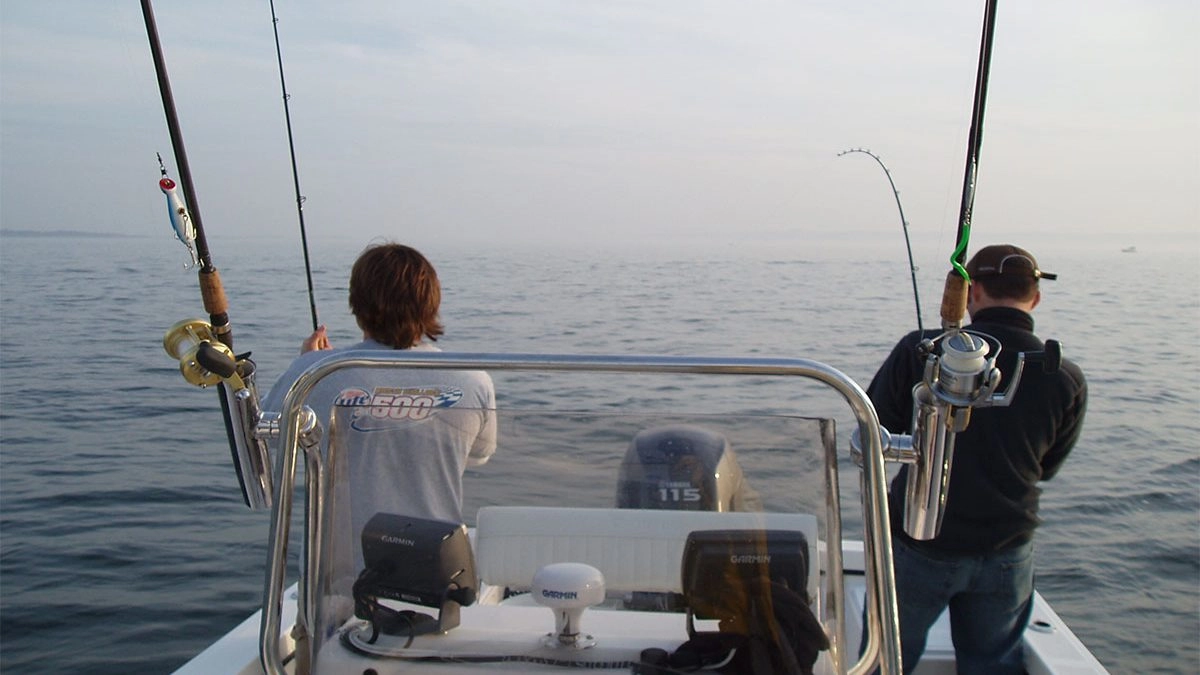
Trolling is the most popular and widely used technique for Nile perch fishing in Uganda, especially on large water bodies like Lake Victoria. This method involves dragging lures behind a moving boat to cover large areas of water.
Trolling is highly effective because Nile perch are often found in deeper waters, where they hunt for prey. By moving continuously, anglers can locate active fish more efficiently. Large, brightly colored lures or deep-diving plugs are commonly used to attract attention.
This technique is ideal for beginners because it allows guides to control the boat and positioning while anglers focus on handling the rod. Once a Nile perch strikes, the fight begins immediately, often requiring significant strength to reel in the fish.
Trolling works best during the dry season when waters are calmer, but it can be used year-round with proper equipment and guidance.
Casting
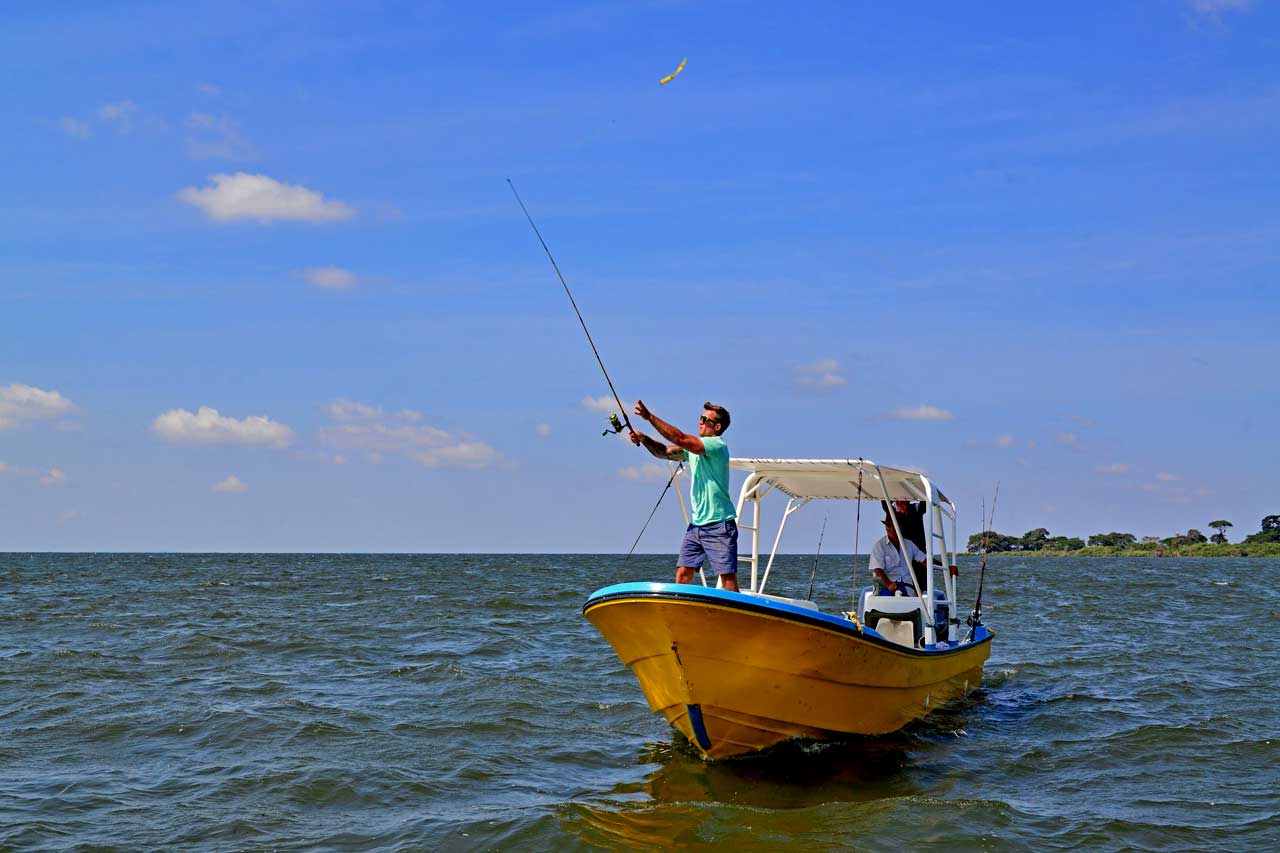
Casting is a more active and engaging fishing technique, often preferred by experienced anglers. It involves repeatedly throwing lures into specific areas such as near rocks, submerged structures, or shorelines where Nile perch are likely to hunt.
This method is particularly effective in shallower waters or during times when fish move closer to the surface, such as early morning or late evening. Casting requires precision and skill, as anglers must target areas where Nile perch are feeding.
Artificial lures such as soft plastics, spoons, and crankbaits are commonly used. The action of retrieving the lure mimics injured prey, triggering aggressive strikes from Nile perch.
Casting offers a more hands-on experience and can be very rewarding, especially when targeting large fish in known hotspots.
Live Bait Fishing
Live bait fishing is one of the most traditional and effective methods for catching Nile perch. It involves using small live fish as bait to attract larger predators.
This technique works exceptionally well because it mimics the natural diet of Nile perch. The movement of live bait in the water creates vibrations that draw attention, making it highly effective even when fish are less active.
Live bait fishing is often done in deeper waters or areas known to hold large Nile perch. Anglers typically anchor the boat and wait patiently for a strike. When a Nile perch takes the bait, the fight can be intense and prolonged.
This method is especially useful for targeting trophy-sized fish and is commonly used by anglers seeking a more strategic and patient fishing experience.
Each of these techniques can be highly effective when used in the right conditions. Many fishing safaris in Uganda combine multiple methods within a single trip, allowing anglers to adapt to changing conditions and increase their chances of success.
Fishing Equipment and Gear Needed
Fishing for Nile perch demands strong, reliable equipment due to the size and power of the fish. Using the right gear not only increases your chances of success but also ensures safety and durability during the fight.
Heavy-duty rods and reels are essential. Medium-heavy to heavy action rods paired with high-capacity spinning or baitcasting reels are commonly used. These reels should have a strong drag system capable of handling sudden, powerful runs from large fish.
Fishing Equipment in uganda -Pieland Gorilla safaris
Fishing lines are typically braided, with strengths ranging from 30 lb to 80 lb, depending on the technique and location. A strong leader line, often made of fluorocarbon or wire, is necessary to prevent breakage from the fish’s sharp gill plates and aggressive movements.
A variety of lures and bait are used, including deep-diving plugs, crankbaits, soft plastics, spoons, and live bait. Bright colors tend to perform well in murky waters, while natural tones are effective in clearer conditions.
Other essential gear includes landing nets, fish grips, pliers, and gloves for safe handling. Anglers should also carry protective clothing, sunglasses, hats, and sunscreen due to prolonged exposure to the sun.
For a more comfortable and successful experience, many anglers rely on fully equipped fishing boats provided by operators, which include fish finders, rod holders, and safety equipment.
Boat Fishing vs Shore Fishing
Nile perch fishing in Uganda can be done either from a boat or from the shore, but each method offers a very different experience.
Boat fishing is the most effective and widely used approach. It allows anglers to access deeper waters where larger Nile perch are commonly found. Boats provide mobility, making it possible to explore different fishing zones, follow fish movements, and use techniques like trolling.
Fishing from a boat also increases the chances of landing trophy-sized Nile perch, as guides can take you directly to known hotspots. Additionally, boats offer a safer and more comfortable environment, especially on large water bodies like Lake Victoria and the River Nile.
Shore fishing, on the other hand, is more limited but still possible in certain locations. It is typically done along riverbanks or lake edges where Nile perch come closer to feed, especially during early morning or late evening.
While shore fishing is more accessible and less expensive, it generally produces smaller catches and fewer opportunities compared to boat fishing. It is best suited for casual anglers or those looking for a simple fishing experience without going far into the water.
Overall, for serious Nile perch fishing—especially targeting large fish—boat fishing remains the preferred and most productive option.
Guided Nile Perch Fishing Safaris
Guided fishing safaris are the best way to experience Nile perch fishing in Uganda, particularly for visitors unfamiliar with local waters. These safaris are organized by professional operators who provide everything needed for a successful trip.
A typical guided fishing safari includes a fully equipped boat, experienced local fishing guides, fishing gear, and safety equipment. Guides have in-depth knowledge of fish behavior, seasonal movements, and the best fishing spots, significantly increasing your chances of success.
Guided Nile Perch fishing safari by Pieland Gorilla Safaris
These safaris can range from half-day trips to multi-day fishing adventures, often combined with wildlife safaris and accommodation in lodges near fishing areas. Locations such as Murchison Falls National Park allow anglers to enjoy both fishing and game viewing, creating a complete safari experience.
Guided safaris are also ideal for beginners, as guides provide instruction on techniques, equipment use, and handling large fish. For experienced anglers, guides help refine strategies and target trophy-sized Nile perch.
In addition to convenience and expertise, guided safaris ensure safety, especially when fishing in remote or wildlife-rich areas. They also handle logistics such as permits, transport, and equipment, allowing anglers to focus entirely on the fishing experience.
Fishing permits are typically arranged through tour operators or obtained locally, depending on the fishing location. In protected areas such as Murchison Falls National Park, additional park entry fees and fishing permits are required. These permits help regulate fishing activity and support conservation efforts.
Regulations may include restrictions on fishing methods, designated fishing zones, and limits on the number and size of fish that can be kept. In many cases, catch-and-release practices are encouraged, especially for large Nile perch, to maintain healthy fish populations.
Use of illegal fishing methods such as nets, poisons, or explosives is strictly prohibited. Anglers are expected to respect local guidelines, wildlife, and the environment at all times.
It is also important to follow safety regulations, particularly when fishing in areas inhabited by wildlife such as hippos and crocodiles. Guided safaris help ensure compliance with all regulations while providing a safe and responsible fishing experience.
By adhering to these rules, anglers contribute to the conservation of Uganda’s rich aquatic ecosystems while enjoying one of the most rewarding fishing experiences in Africa.
Cost of Nile Perch Fishing in Uganda (2026–2027)
The cost of Nile perch fishing in Uganda varies depending on the location, duration, level of comfort, and whether the trip is guided or part of a full safari package. Prices can range from simple half-day excursions to multi-day luxury fishing safaris combined with wildlife experiences.
On average, a full-day guided fishing trip on waters like Lake Victoria or the River Nile costs around $300–$350 per person, often including a boat, fuel, guide, and basic equipment.
In protected areas such as Murchison Falls National Park, anglers must also pay additional fees. These typically include park entry fees (about $45 per day) and fishing permits ranging from $40–$50 per day depending on duration.
For longer fishing safaris that include accommodation, transport, and multiple fishing days, prices increase significantly depending on the level of service and comfort.
Budget Fishing Trips
Budget Nile perch fishing trips are ideal for travelers looking for an affordable experience while still enjoying the thrill of catching this powerful fish.
These trips usually include shared boats, basic fishing gear, and local guides. Accommodation is typically in budget lodges, guesthouses, or camps near fishing areas such as Lake Victoria or smaller landing sites.
A budget fishing experience can cost approximately $100 to $250 per person per day, depending on inclusions. This may cover guiding services and boat use, but often excludes park fees, meals, and accommodation upgrades.
This option is best suited for backpackers, solo travelers, or anglers who prioritize the fishing experience over luxury.
Midrange Fishing Safaris
Midrange fishing safaris offer a balance between comfort and cost, making them the most popular option for many travelers.
These packages typically include private or semi-private boats, experienced guides, quality fishing equipment, and comfortable lodge accommodation. Meals, transfers, and some park fees may also be included.
Prices for midrange fishing safaris generally range between $250 to $500 per person per day, depending on the destination and level of service.
This category allows anglers to enjoy a well-organized fishing experience with reliable equipment and good accommodation while still keeping costs reasonable.
Luxury Fishing Experiences
Luxury Nile perch fishing safaris provide a premium experience, combining world-class fishing with high-end comfort and exclusive services.
These safaris often include luxury lodges, private boats, top-tier fishing equipment, expert guides, and personalized service. Some packages also combine fishing with wildlife safaris, boat cruises, and fine dining experiences.
Multi-day luxury fishing safaris can range from $600 to over $1,500 per person per day, depending on the lodge and level of exclusivity. Extended itineraries that combine fishing with other safari experiences can reach several thousand dollars per person.
Luxury trips are ideal for travelers seeking privacy, comfort, and a fully curated safari experience.
Accommodation Options for Fishing Safaris
Accommodation plays a key role in shaping your Nile perch fishing experience in Uganda. Options range from simple lakeside stays to luxury safari lodges, often located close to prime fishing areas.
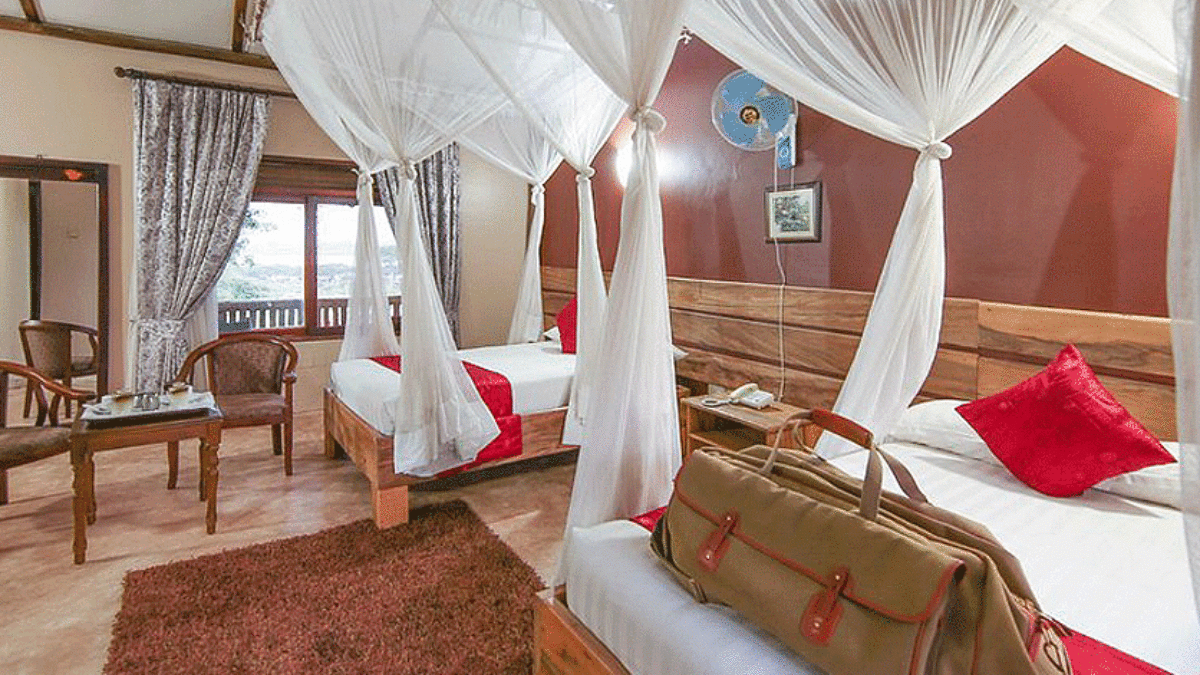
Pakuba safari lodge is convenient accommodation to stay at for Nile Perch fishing in Murchison Falls National Park-Pieland Gorilla Safaris
Budget accommodation includes basic guesthouses, fishing camps, and small lodges near landing sites. These offer simple rooms and essential amenities, making them ideal for travelers focused on fishing rather than comfort.
Midrange lodges provide a more comfortable stay, with private rooms, good dining options, and scenic views of lakes or rivers. These lodges are commonly found around Lake Victoria and near national parks, offering easy access to fishing spots.
Luxury lodges offer high-end amenities, spacious rooms, and exceptional service. Many are located in scenic areas such as along the Nile within or near national parks, allowing guests to combine fishing with wildlife viewing. These lodges often include guided activities, fine dining, and personalized services.
In destinations like Murchison Falls National Park, accommodation ranges from riverside camps to exclusive lodges overlooking the Nile, creating a unique blend of adventure and relaxation.
Choosing the right accommodation depends on your budget, travel style, and the type of fishing experience you want. Whether simple or luxurious, staying close to fishing areas ensures more time on the water and a more rewarding overall experience.
Safety Tips for Nile Perch Fishing
Nile perch fishing in Uganda is thrilling, but safety should always come first—especially when fishing on large lakes and powerful rivers.
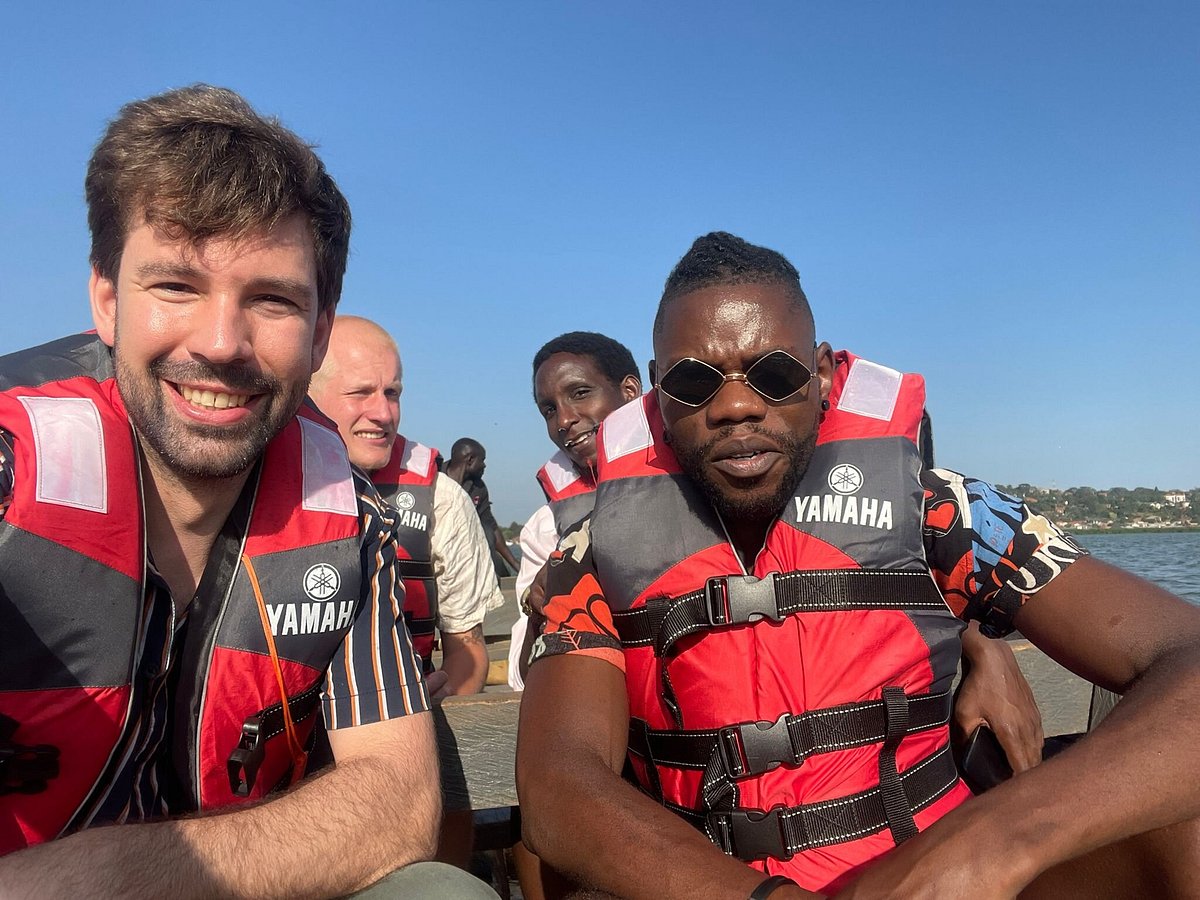
Always wear a life jacket when fishing from a boat, regardless of your swimming ability. Waters like Lake Victoria and the Nile can change conditions quickly, and safety gear is essential.
Wearing life jacket is a safety tip while fishing-Pieland Gorilla Safaris
Be aware of wildlife, particularly when fishing along the Nile or within parks such as Murchison Falls National Park. Hippos and crocodiles can be dangerous, so it is important to follow your guide’s instructions at all times and avoid standing close to the water’s edge.
Use proper fishing equipment suited for large fish. Weak gear can snap under pressure, causing injury or loss of equipment. Gloves are recommended when handling lines and fish.
Stay protected from the sun by wearing hats, sunglasses, and sunscreen, and keep hydrated throughout the day. Uganda’s equatorial climate can be intense, especially during long hours on the water.
Check weather conditions before heading out. Strong winds and storms can make fishing unsafe, particularly on open water. Guided trips usually monitor this closely.
Finally, always fish with a professional guide or experienced local operator, especially if you are unfamiliar with the area. This greatly improves both safety and success.
Catch and Release vs Keeping Fish
When fishing for Nile perch in Uganda, anglers can choose between catch-and-release or keeping their catch, depending on regulations and personal preference.
Catch and release is strongly encouraged, particularly for large Nile perch. Releasing big fish helps preserve breeding populations and ensures sustainable fishing for future generations. It is also the preferred approach for sport fishing, especially when targeting trophy-sized catches.
Proper handling is important when practicing catch and release. Fish should be handled gently, kept in the water as much as possible, and released quickly to reduce stress and injury.
Keeping fish is allowed in many areas, especially outside protected zones, and smaller Nile perch are often kept for consumption. Nile perch is widely enjoyed locally and is an important part of Uganda’s fishing economy.
However, in protected areas or regulated zones, restrictions may apply on the number or size of fish that can be kept. It is always important to follow local guidelines and your guide’s advice.
Balancing both approaches ensures that anglers enjoy their experience while supporting conservation efforts.
Combining Fishing with Wildlife Safaris
One of the unique advantages of Nile perch fishing in Uganda is the ability to combine it with classic wildlife safari experiences. This creates a well-rounded adventure that goes beyond fishing.
In destinations like Murchison Falls National Park, anglers can fish along the Nile while spotting elephants, giraffes, buffaloes, and a wide variety of birdlife along the riverbanks. Boat safaris can be combined with fishing sessions, offering both relaxation and excitement.
Fishing trips can also be extended to include game drives, where you explore savannah landscapes in search of the Big Five and other wildlife. This combination is ideal for travelers who want both adventure and diverse experiences in one trip.
For those exploring Lake Victoria, fishing can be paired with island visits, cultural experiences, and birdwatching, creating a more relaxed but equally enriching journey.
Combining fishing with safaris allows travelers to maximize their time in Uganda, making the trip more memorable and diverse.
Sample Nile Perch Fishing Itineraries
2-Day Fishing Trip
Day 1: Arrival and transfer to your fishing destination, such as Lake Victoria or the Nile. Begin with an afternoon fishing session using trolling or casting techniques. Overnight stay at a nearby lodge.
Day 2: Early morning fishing session when Nile perch are most active. Continue fishing until late morning, followed by departure or transfer back to your starting point.
This short itinerary is ideal for travelers with limited time who want a quick but rewarding fishing experience.
3-Day Fishing Safari
Day 1: Arrival and transfer to your fishing destination. Afternoon fishing session to get familiar with the waters and techniques. Overnight at a lodge.
Day 2: Full-day fishing experience using a combination of trolling, casting, and live bait fishing. Focus on targeting larger Nile perch in deeper waters. Overnight stay at the lodge.
Day 3: Morning fishing session followed by breakfast and departure. Optional stopovers for sightseeing or cultural visits.
This itinerary offers more time on the water, increasing the chances of landing larger fish.
5-Day Fishing and Wildlife Combo
5- Days Fishing and Wildlife Combo
Day 1: Transfer to Murchison Falls National Park or another prime fishing location. Evening at leisure.
Day 2: Morning fishing session on the Nile, followed by an afternoon boat cruise or relaxation at the lodge.
Day 3: Full-day fishing targeting trophy Nile perch using different techniques.
Day 4: Morning game drive in the national park to see wildlife, followed by an optional afternoon fishing session.
Day 5: Final morning fishing or relaxation, then transfer back to your departure point.
This extended itinerary combines the thrill of fishing with the richness of Uganda’s wildlife, offering a complete safari experience.
Contact Us to choose one of the itineraries above .
What to Pack for a Nile Perch Fishing Trip
Preparing properly for a Nile perch fishing trip in Uganda can make a big difference in both comfort and success. Since most fishing takes place under the sun and on open water, packing the right gear is essential.
Lightweight, breathable clothing is ideal for Uganda’s warm climate. Long-sleeved shirts and trousers help protect against the sun and insects, while quick-drying fabrics are useful when dealing with water splashes. A wide-brimmed hat and polarized sunglasses are highly recommended to reduce glare and improve visibility when spotting fish.
Footwear should be practical and comfortable. Non-slip shoes or sandals are best for boat fishing, while sturdy shoes are useful if you plan to fish from the shore or move around rocky areas.
Sun protection is critical. Carry high-SPF sunscreen, lip balm, and after-sun lotion to protect your skin during long hours outdoors. Insect repellent is also important, especially when fishing near rivers or in the evening.
Fishing gear is often provided by operators, but if you prefer your own equipment, bring strong rods, reels, and tackle suitable for large freshwater fish. A pair of gloves can help when handling lines and fish.
Other essentials include a reusable water bottle, snacks, a waterproof bag for valuables, a camera for capturing your catch, and basic personal items. For multi-day trips, pack light layers for cooler mornings and evenings.
Travel Tips for Fishing in Uganda
Fishing in Uganda is straightforward, but a few practical tips can help you enjoy a smoother and more rewarding experience.
Plan your trip in advance with Pieland Gorilla Safaris , especially if you intend to fish in popular areas like Lake Victoria or the Nile. Booking early ensures availability of guides, boats, and accommodation.
Traveling with a reputable operator is highly recommended. Professional guides understand local waters, weather patterns, and fish behavior, greatly increasing your chances of success while ensuring safety.
Be mindful of travel logistics. Most fishing destinations are accessible from Entebbe or Kampala, but some may require longer road transfers or domestic flights. Allow enough time in your itinerary to avoid rushing between locations.
Respect local regulations and communities. Always follow fishing rules, use permitted methods, and avoid restricted areas. Engaging respectfully with local fishermen and communities adds value to your experience.
Stay flexible with your plans. Weather conditions, water levels, and fish activity can change, so having some flexibility allows you to adapt and make the most of your trip.
Health preparation is also important. Carry any necessary medications, stay hydrated, and consider travel insurance that covers outdoor activities.
FAQs About Nile Perch Fishing in Uganda
Is Nile perch fishing available all year round in Uganda? Yes, Nile perch fishing is possible throughout the year, although the dry seasons generally offer more stable conditions.
How big do Nile perch get in Uganda? Nile perch can grow very large, with some exceeding 100 kg, though most catches range between 10 kg and 60 kg.
Do I need a fishing permit in Uganda? Yes, permits are required in many areas, especially in protected zones. These are often arranged by your tour operator.
Is it safe to fish in Uganda? Yes, fishing is safe when done with experienced guides and by following safety guidelines, particularly in areas with wildlife.
What is the best technique for catching Nile perch? Trolling is the most common method, but casting and live bait fishing are also highly effective depending on conditions.
Can beginners go Nile perch fishing? Absolutely. Guided fishing safaris are suitable for beginners, with guides providing instruction and support.
What is included in a fishing safari? Most safaris include a boat, guide, fishing equipment, and sometimes accommodation and meals, depending on the package.
Can I combine fishing with other safari activities? Yes, many trips combine fishing with wildlife safaris, boat cruises, and cultural experiences.
Do I need to bring my own fishing gear? Not necessarily. Most operators provide equipment, but experienced anglers may prefer to bring their own.
Is catch and release practiced in Uganda? Yes, especially for large Nile perch, to support conservation and sustainable fishing.
Conclusion: Plan Your Nile Perch Fishing Safari in Uganda
Nile perch fishing in Uganda offers a unique blend of adventure, challenge, and natural beauty. From the vast waters of Lake Victoria to the wildlife-rich banks of the Nile, every fishing destination provides an unforgettable experience. Whether you are targeting a trophy catch, enjoying a relaxed day on the water, or combining fishing with a classic safari, Uganda delivers exceptional opportunities for anglers of all levels.
With the right planning, equipment, and guidance, your fishing trip can be both successful and memorable. Choosing the right season, location, and fishing technique will enhance your chances of landing one of Africa’s most iconic freshwater fish.
Uganda is more than just a fishing destination—it is a complete adventure. Start planning your Nile perch fishing safari today and experience the thrill of reeling in one of the most powerful freshwater fish in the world while surrounded by some of Africa’s most stunning landscapes.