Best Group Joining Safaris in Uganda – Top Most Affordable Uganda Tours
The Best Group Joining Safaris in Uganda provide travellers with an excellent way to experience the country’s mountain gorillas, chimpanzees, savannah wildlife, scenic landscapes and famous national parks while sharing selected safari costs with other travellers. These safaris are especially suitable for solo travellers, couples, friends and small groups who want a professionally organised Uganda safari without the higher cost of operating a completely private vehicle. By joining a scheduled departure, travellers can explore some of Uganda’s most rewarding destinations while enjoying the social atmosphere of travelling with other visitors who share a similar interest in wildlife, nature and adventure.
Uganda is one of Africa’s most diverse safari destinations because a single journey can combine primate trekking, traditional game drives, boat safaris, forest experiences and dramatic landscapes. Group joining safaris make it possible to connect several of these experiences within one carefully planned itinerary. Depending on the number of days selected, travellers may visit Murchison Falls National Park, Kibale Forest National Park, Queen Elizabeth National Park, the Ishasha Sector, Bwindi Impenetrable National Park, Lake Bunyonyi and Lake Mburo National Park. Longer itineraries provide a broader experience of the country, while shorter group joining safaris focus on the most important wildlife highlights within a more limited travel period.
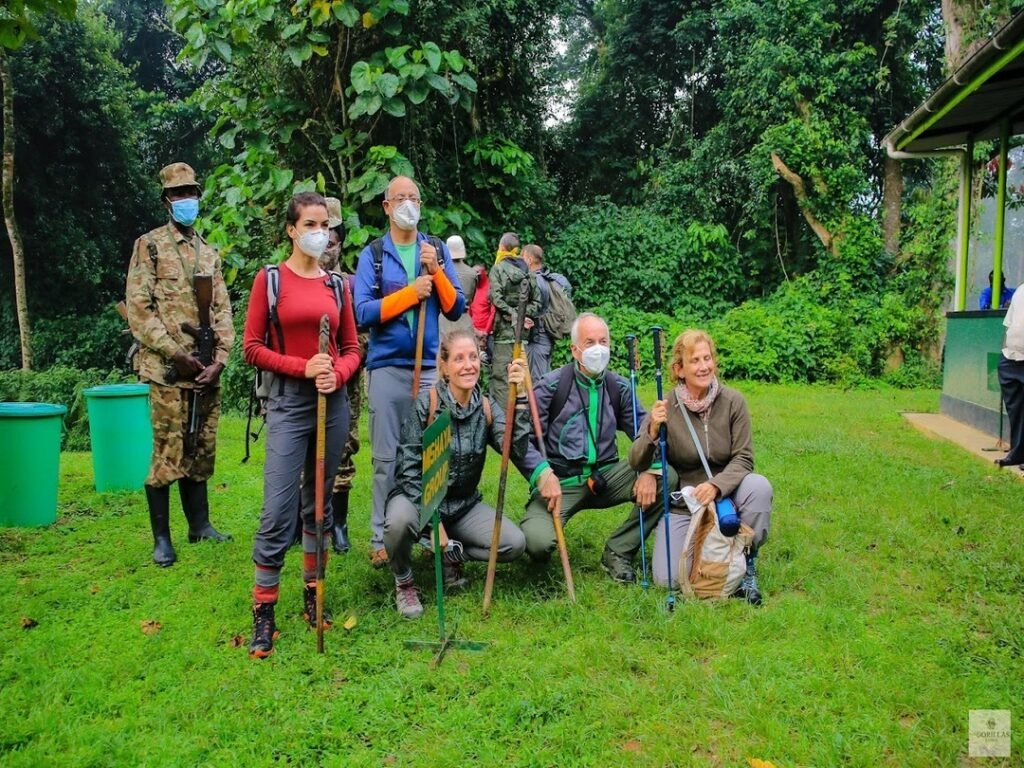
One of the strongest attractions of the Best Group Joining Safaris in Uganda is the opportunity to participate in mountain gorilla trekking in Bwindi Impenetrable National Park. Seeing a habituated mountain gorilla family in its natural forest habitat is one of Uganda’s most memorable wildlife experiences. Many group itineraries also include chimpanzee trekking in Kibale Forest National Park, where travellers walk through tropical forest with experienced ranger guides in search of habituated chimpanzee communities. These two primate experiences can then be combined with wildlife viewing in Uganda’s savannah national parks, creating a safari that offers much more than a traditional game-drive holiday.
The shared nature of these safaris also makes them attractive to travellers who would otherwise be travelling alone. Rather than paying for an entire safari vehicle independently, participants share transport and some operating costs while maintaining the essential structure and quality of a professionally guided safari. Accommodation, meals, park activities and permit arrangements are organised according to the confirmed package, allowing travellers to concentrate on enjoying the journey. This combination of affordability, variety and organised travel is one of the main reasons group joining safaris have become an increasingly practical choice for visitors who want to experience Uganda’s major wildlife destinations.
At Pieland Gorilla Safaris, group joining itineraries can be designed around different travel durations, including 6 Days, 7 Days, 9 Days and 10 Days Uganda Group Joining Safaris. Each itinerary offers a different balance of primate trekking, wildlife viewing, boat safaris and scenic travel. Travellers with limited time may prefer a shorter route focusing on Kibale, Queen Elizabeth and Bwindi, while those with more time can include destinations such as Murchison Falls National Park, Lake Bunyonyi and Lake Mburo National Park. This flexibility makes it easier for travellers to choose a safari that suits their available time, budget and preferred experiences.
What Are Group Joining Safaris in Uganda?
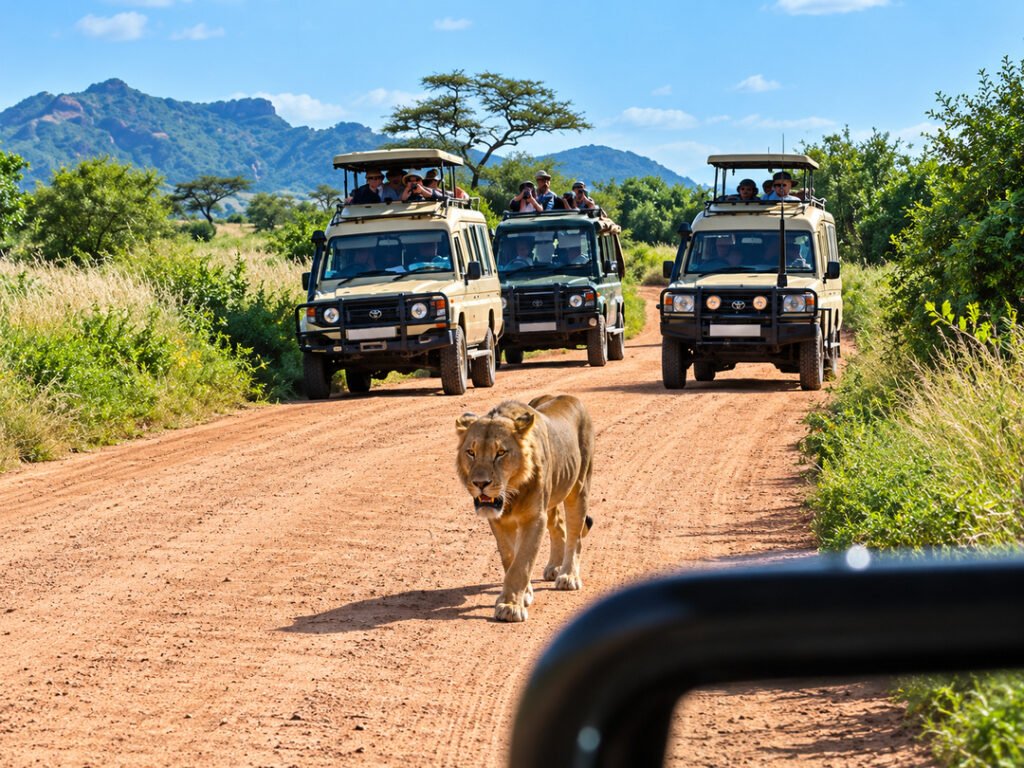
Group joining safaris in Uganda are shared safari departures where travellers who may have booked separately travel together in the same safari vehicle and follow a pre-arranged itinerary. Rather than organising an exclusive private safari for one person, couple or family, several travellers join the same departure and share the journey between Uganda’s national parks and wildlife destinations. The safari normally follows fixed or agreed travel dates, with participants meeting in Kampala or Entebbe before beginning the route together.
The main principle behind a group joining safari is shared transportation. Safari vehicle hire, fuel and some operational expenses are distributed across the travellers participating in the departure, which can reduce the individual cost compared with operating the same itinerary privately. This is particularly useful on longer Uganda safaris because road transfers between national parks can cover substantial distances. Sharing a professionally driven safari vehicle allows travellers to enjoy the same major destinations while making the overall journey more economical.
Although the vehicle is shared, many important parts of the safari remain individually arranged. Travellers normally have their own accommodation booking according to the selected room type, while gorilla and chimpanzee trekking permits are issued for each participant. Meals, park entrance fees, boat safaris and other activities are included or excluded according to the confirmed quotation. This means that joining a group does not mean losing the essential organisation of the safari. Instead, it means that travellers share the road journey and scheduled activities while still receiving properly arranged permits, accommodation and safari services.
Group joining safaris in Uganda can range from relatively short wildlife and primate itineraries to longer journeys covering several regions of the country. A 6 Days Uganda Group Joining Safari may focus on Kibale Forest National Park, Queen Elizabeth National Park, the Ishasha Sector and Bwindi Impenetrable National Park. A 7-day itinerary can add Lake Bunyonyi or Lake Mburo, while a 9 Days or 10 Days Uganda Group Joining Safari can extend north to Murchison Falls National Park and include a broader range of landscapes and wildlife experiences. The number of days therefore determines how many destinations can be included and how much time travellers have in each area.
These safaris are particularly popular with solo travellers. Uganda has several long-distance routes between national parks, and booking a private safari alone can make transport costs relatively high. Joining other travellers provides a practical way to experience destinations such as Bwindi, Kibale, Queen Elizabeth and Murchison Falls without having to pay the entire vehicle cost individually. It also gives solo travellers the opportunity to meet other visitors during the journey, creating a social travel experience while still maintaining professional safari organisation.
Couples and friends can also join scheduled group departures. A couple may share a double room while travelling in the same vehicle as other safari participants, while friends can join together and request suitable room arrangements. The shared departure format works well for travellers who are comfortable following a planned itinerary and who understand that departure times, wildlife activities and road transfers must be coordinated around the entire group.
Group joining safaris generally work best when the itinerary is clearly organised in advance. Gorilla permits, chimpanzee permits and selected accommodation can have limited availability, particularly during popular travel periods. For this reason, travellers should confirm their preferred dates early whenever primate trekking is a major part of the safari. Once permits and accommodation are secured, the remaining safari logistics can be arranged around the confirmed group departure.
The quality of a group joining safari depends greatly on good planning and realistic routing. Uganda’s national parks are spread across different parts of the country, so the itinerary must balance travel time with wildlife activities. A well-designed safari should avoid unnecessary backtracking and should allow enough time for important experiences such as gorilla trekking, chimpanzee trekking, game drives and boat safaris. This is why many successful group joining routes follow a logical progression through western and southwestern Uganda, sometimes beginning with Murchison Falls in the north before continuing towards Kibale, Queen Elizabeth, Bwindi and Lake Mburo.
Why Choose Group Joining Safaris in Uganda?
One of the main reasons to choose group joining safaris in Uganda is the opportunity to reduce the cost of a multi-day wildlife safari without removing the major experiences that make Uganda special. Transport is one of the most significant components of an overland safari because travellers require a suitable safari vehicle, fuel and a professional driver-guide for several days. When these costs are shared among several travellers, the individual price can become more manageable compared with booking the same vehicle privately.
Group joining safaris are also an excellent option for solo travellers who want to explore Uganda but do not want to travel completely alone. Joining a scheduled departure creates a small travel community from the beginning of the safari. Travellers share road journeys, wildlife sightings, boat safaris and conversations throughout the trip, making the experience more social while still allowing everyone to enjoy the destinations individually. For many solo visitors, this balance between independence and companionship is one of the biggest advantages of joining a group safari.
Another reason to choose a group joining safari is the variety of experiences that can be combined in one itinerary. Uganda offers a unique mix of rainforest primates and savannah wildlife, and a well-planned group safari can connect these experiences naturally. Travellers may begin with wildlife viewing in Murchison Falls National Park, continue to chimpanzee trekking in Kibale Forest National Park, enjoy game drives and a Kazinga Channel boat safari in Queen Elizabeth National Park, search for tree-climbing lions in Ishasha and finally trek mountain gorillas in Bwindi Impenetrable National Park. Additional destinations such as Lake Bunyonyi and Lake Mburo can provide relaxation, walking safaris and further wildlife viewing.
The Best Group Joining Safaris in Uganda are also convenient because much of the safari planning is handled before departure. Travellers do not need to organise each national park, permit, lodge and road transfer separately. The safari operator coordinates the route, accommodation, selected meals, transport and activities according to the confirmed package. This reduces the amount of planning required from the traveller and helps ensure that the itinerary follows a realistic travel sequence.
Group joining safaris can also make longer itineraries more accessible. A private nine-day or ten-day safari may be expensive for one person because the vehicle and driver-guide are dedicated entirely to that traveller. By joining a scheduled departure, participants can experience a much broader route while sharing some of those operational costs. This allows travellers to include more destinations without necessarily increasing the price as dramatically as an equivalent private safari.
The organised nature of a group departure is another major advantage. The safari follows a clear programme, with planned transfer days, game drives, trekking activities and boat safaris. This structure is useful for first-time visitors to Uganda who may not be familiar with the distances between national parks or the procedures for activities such as gorilla trekking. Travellers can rely on the safari driver-guide and local team to manage the day-to-day logistics while they focus on enjoying the experience.
Group joining safaris also provide opportunities to share wildlife moments with other travellers. Watching elephants cross the savannah, seeing a lion resting in the Ishasha trees, encountering chimpanzees in Kibale or standing quietly near a mountain gorilla family in Bwindi can become even more memorable when experienced alongside fellow safari participants. These shared experiences often create friendships and conversations that continue long after the safari has ended.
For travellers who want a balance between affordability, organisation and a comprehensive Uganda wildlife experience, group joining safaris are therefore a strong option. They combine the major advantages of a professionally guided safari with the cost-sharing benefits of travelling with others. Whether the priority is gorilla trekking, chimpanzee trekking, wildlife viewing, boat safaris or simply exploring Uganda’s landscapes, a carefully planned group joining itinerary can provide a rewarding and well-rounded journey through some of the country’s most important safari destinations.
Best Group Joining Safaris in Uganda
Uganda offers a wide range of group joining safari options for travellers who want to experience gorilla trekking, chimpanzee trekking, wildlife viewing, boat safaris and some of the country’s most beautiful national parks while sharing selected safari costs with other travellers. These itineraries range from short three-day gorilla trekking trips to longer eleven-day journeys that combine several national parks and wildlife regions across western and northern Uganda.
3 Days Gorilla Trekking Group Joining Safari
The 3 Days Gorilla Trekking Group Joining Safari is designed for travellers whose main priority is mountain gorilla trekking in Uganda. The safari normally starts from Kampala or Entebbe and travels towards Bwindi Impenetrable National Park, one of the country’s most important gorilla trekking destinations.
The first day is mainly dedicated to the journey towards southwestern Uganda, followed by gorilla trekking on the second day. Travellers join a morning briefing before entering Bwindi’s rainforest with ranger guides in search of a habituated mountain gorilla family. After the trek, the final day is used for the return journey to Kampala or Entebbe.
This safari is especially suitable for travellers with limited time who still want to experience Uganda’s famous mountain gorillas. It also works well for solo travellers looking for a shorter and more affordable shared departure.
4 Days Gorilla Chimpanzee Trekking Group Joining Safari
The 4 Days Gorilla Chimpanzee Trekking Group Joining Safari combines two of Uganda’s most important primate experiences within one compact itinerary. Travellers have the opportunity to trek mountain gorillas in Bwindi Impenetrable National Park and chimpanzees in one of Uganda’s recognised chimpanzee trekking areas, depending on the confirmed route.
The itinerary is designed for travellers who want to focus strongly on primates without adding several days of traditional savannah wildlife viewing. It offers an excellent introduction to Uganda’s forests and provides the chance to encounter both mountain gorillas and chimpanzees within a relatively short period.
Because the programme involves significant road travel, the safari is best suited to travellers who are comfortable with a faster-paced itinerary. For visitors with limited time, however, it can provide an exciting combination of Uganda’s two signature primate experiences.
5 Days Uganda Group Joining Safari
The 5 Days Uganda Group Joining Safari provides a broader experience than the shorter primate-only itineraries. Depending on the confirmed programme, it can combine chimpanzee trekking, wildlife viewing and mountain gorilla trekking within western and southwestern Uganda.
A typical route may include Kibale Forest National Park for chimpanzee trekking, Queen Elizabeth National Park for wildlife viewing and Bwindi Impenetrable National Park for gorilla trekking. This combination allows travellers to experience tropical forest, open savannah and mountainous rainforest landscapes within one journey.
The five-day option is particularly suitable for travellers who want more than gorilla trekking but still need to keep the safari relatively short. It offers a strong balance between primate encounters and traditional wildlife experiences.
6 Days Uganda Group Joining Safari
The 6 Days Uganda Group Joining Safari is one of the strongest options for travellers who want to combine Uganda’s major primate experiences with savannah wildlife viewing. The route commonly includes Kibale Forest National Park, Queen Elizabeth National Park, the Ishasha Sector and Bwindi Impenetrable National Park.
Chimpanzee trekking in Kibale introduces travellers to Uganda’s tropical forests before the safari continues to Queen Elizabeth National Park for game drives and a boat safari on the Kazinga Channel. The route then passes through Ishasha, where travellers search for the famous tree-climbing lions, before reaching Bwindi for mountain gorilla trekking.
This itinerary is well suited to solo travellers, couples and friends who want a comprehensive safari without committing to a very long journey. It provides a rewarding combination of primates, wildlife and varied landscapes.
7 Days Uganda Group Joining Safari
The 7 Days Uganda Group Joining Safari builds on the six-day itinerary by providing additional time for scenic travel, relaxation or another wildlife destination. A common route combines Kibale Forest National Park, Queen Elizabeth National Park, Ishasha, Bwindi Impenetrable National Park, Lake Bunyonyi and Lake Mburo National Park.
Travellers can experience chimpanzee trekking, game drives, a Kazinga Channel boat safari, tree-climbing lion country and mountain gorilla trekking before enjoying the peaceful surroundings of Lake Bunyonyi. The journey can then continue towards Lake Mburo National Park for another wildlife experience.
The seven-day itinerary is ideal for travellers who want a well-balanced safari with enough variety to experience both forests and savannahs without making the journey unnecessarily long.
8 Days Uganda Group Joining Safari
The 8 Days Uganda Group Joining Safari gives travellers additional time to explore Uganda’s major wildlife regions at a more comfortable pace. It can combine Kibale Forest National Park, Queen Elizabeth National Park, Ishasha, Bwindi Impenetrable National Park, Lake Bunyonyi and Lake Mburo National Park, depending on the confirmed departure.
The extra day provides more flexibility for transfers, wildlife activities and relaxation between the major safari highlights. Travellers can enjoy chimpanzee trekking, mountain gorilla trekking, game drives, boat safaris and scenic travel through western Uganda.
This itinerary is particularly attractive to travellers who want a more complete safari than the six- or seven-day options while avoiding the longer journey north to Murchison Falls National Park.
9 Days Uganda Group Joining Safari
The 9 Days Uganda Group Joining Safari offers a much broader Uganda experience by combining Murchison Falls National Park with the major wildlife and primate destinations of western Uganda. The route can include Murchison Falls, Kibale Forest National Park, Queen Elizabeth National Park, Ishasha, Bwindi Impenetrable National Park and Lake Mburo National Park.
Murchison Falls adds game viewing and a boat safari on the River Nile before the journey continues towards Kibale for chimpanzee trekking. Queen Elizabeth National Park introduces another major wildlife experience, including a Kazinga Channel boat safari, while Ishasha provides the opportunity to search for tree-climbing lions.
The itinerary then continues to Bwindi for gorilla trekking before finishing with wildlife viewing in Lake Mburo National Park. This safari is ideal for travellers who want a more comprehensive Uganda experience with several national parks included.
Inquire About the Next Group Departure
10 Days Uganda Group Joining Safari
The 10 Days Uganda Group Joining Safari is one of the most complete shared safari itineraries available in Uganda. It can combine Murchison Falls National Park, Kibale Forest National Park, Queen Elizabeth National Park, Ishasha, Bwindi Impenetrable National Park, Lake Bunyonyi and Lake Mburo National Park.
The longer duration allows travellers to experience major wildlife areas without feeling as rushed between destinations. Game drives, boat safaris, chimpanzee trekking and mountain gorilla trekking can all be included within the same itinerary.
Lake Bunyonyi can also provide a relaxing break after gorilla trekking before the safari continues towards Lake Mburo National Park. This itinerary is especially suitable for travellers who want a broad overview of Uganda’s wildlife, primates and landscapes.
11 Days Group Joining Uganda Safari
The 11 Days Group Joining Uganda Safari is designed for travellers who want one of the most extensive shared safari experiences in Uganda. The additional day allows the itinerary to include Uganda’s major primate and wildlife destinations while providing more time for activities, road transfers and relaxation.
A comprehensive route can include Murchison Falls National Park, Kibale Forest National Park, Queen Elizabeth National Park, the Ishasha Sector, Bwindi Impenetrable National Park, Lake Bunyonyi and Lake Mburo National Park. Depending on the confirmed itinerary, the safari can combine multiple game drives, boat safaris, chimpanzee trekking and gorilla trekking.
The eleven-day option is particularly suitable for travellers who want to experience Uganda in greater depth rather than focusing only on one or two major attractions. It offers a strong balance of adventure, wildlife, primates, scenic landscapes and shared safari travel.
Main Experiences on Group Joining Safaris in Uganda
Group joining safaris in Uganda bring together some of the country’s most rewarding wildlife, primate and scenic experiences within one shared journey. Depending on the number of days selected, travellers can move from tropical rainforest to open savannah, travel along major rivers and channels, search for iconic predators and spend time in some of Uganda’s most beautiful natural landscapes. These experiences make group joining safaris particularly attractive to travellers who want variety rather than focusing on only one activity. A well-planned itinerary can combine gorilla trekking, chimpanzee trekking, game drives, boat safaris, walking safaris and relaxing scenic stops while allowing travellers to share transport and selected safari costs with other guests.
Gorilla Trekking in Bwindi Impenetrable National Park
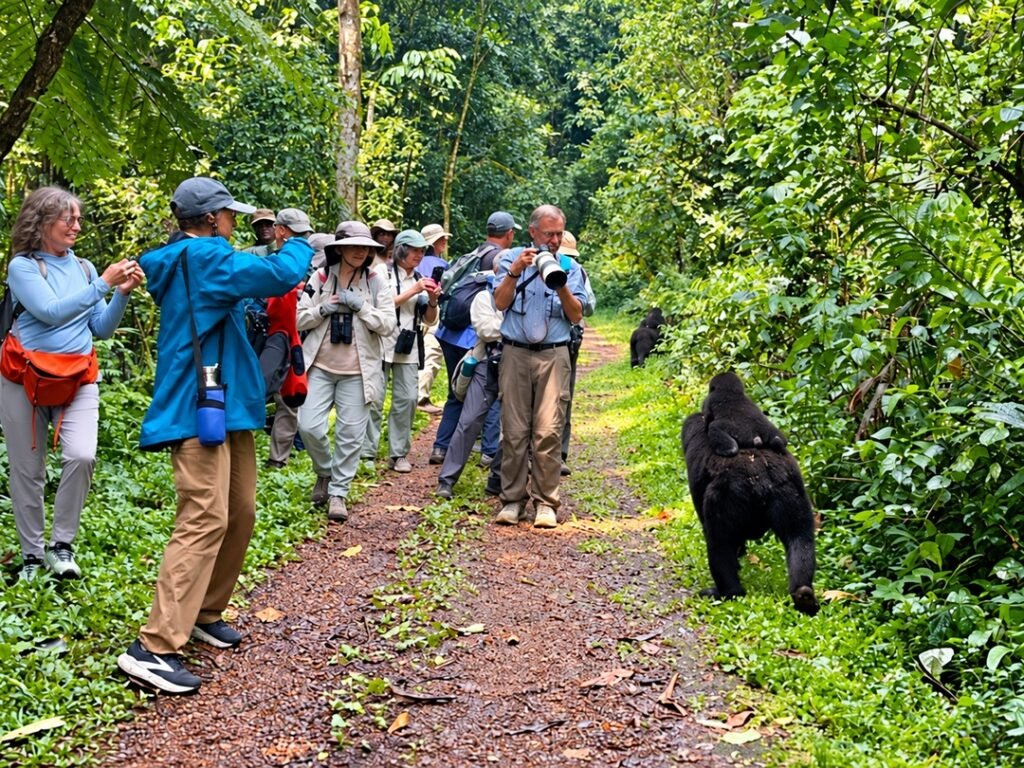
Gorilla trekking in Bwindi Impenetrable National Park is one of the most important experiences included in many group joining safaris in Uganda. Bwindi is located in southwestern Uganda and is internationally known for its mountain gorillas, dense rainforest and dramatic highland scenery. For many travellers, the gorilla trek becomes the emotional highlight of the entire safari because it offers the rare opportunity to observe a habituated mountain gorilla family within its natural forest environment.
The experience normally begins early in the morning at the designated trekking sector. Travellers attend a briefing where ranger guides explain the trekking procedures, expected behaviour in the forest and the rules that apply when encountering the gorillas. Participants are then divided into trekking groups and assigned to a particular habituated gorilla family. The trek begins on foot and can take travellers through steep slopes, thick vegetation, muddy trails and uneven forest terrain.
The length and difficulty of the trek varies because mountain gorillas move freely through the forest. Some groups may be found relatively quickly, while others may require several hours of hiking. The unpredictability is part of the experience and is one reason travellers are advised to be physically prepared, carry sufficient drinking water and wear appropriate hiking clothing. Sturdy walking shoes, long trousers, rain protection and gloves can all be useful in the forest environment.
When the gorilla family is located, travellers are allowed to observe the gorillas under the guidance of the ranger team and according to the applicable trekking regulations. This period provides an extraordinary opportunity to watch the gorillas resting, feeding, interacting and moving through the vegetation. Seeing a large silverback, young gorillas playing or a mother caring for an infant can be one of the most memorable moments of a Uganda safari.
Gorilla trekking fits particularly well into group joining safaris because the activity itself is naturally organised in small trekking groups. Even when travellers have joined the safari from different countries or booked separately, they share the excitement of the briefing, forest walk and eventual gorilla encounter. This creates a strong sense of shared achievement, especially after completing a demanding trek.
Bwindi also contributes greatly to the scenic value of the journey. The approach to the park passes through southwestern Uganda’s hills, villages, cultivated slopes and forested landscapes. This makes the experience much more than the trek itself. The journey to Bwindi becomes part of the adventure and gives travellers a chance to see a different side of Uganda compared with the open savannah parks.
Chimpanzee Trekking in Kibale Forest National Park
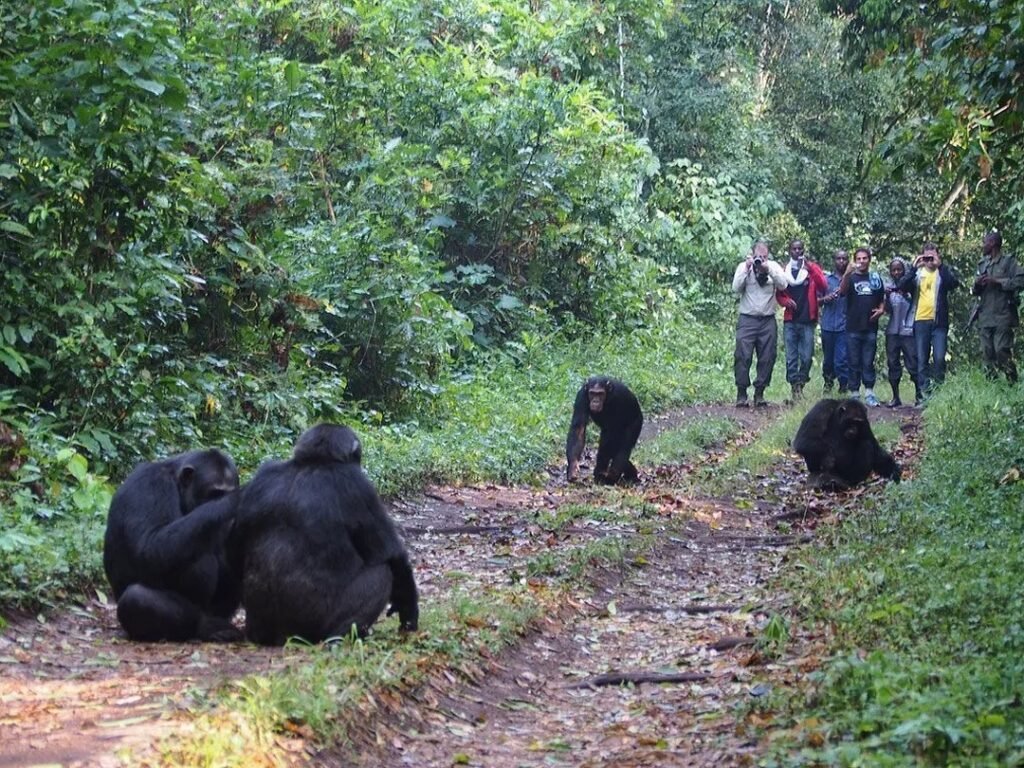
Chimpanzee trekking in Kibale Forest National Park is another major primate experience included in many group joining safaris in Uganda. Kibale is one of the country’s best-known forest destinations and is especially associated with chimpanzee tracking. The forest environment offers a completely different experience from savannah game viewing and provides travellers with the opportunity to explore Uganda’s tropical rainforest on foot.
The experience usually begins with a briefing before travellers enter the forest with trained ranger guides. The guides explain how to behave around the chimpanzees, how to move through the forest and what to expect during the trek. Once the walk begins, attention shifts to signs of chimpanzee activity. Calls from deep within the forest, broken branches and movement through the canopy can all help the ranger team locate a habituated chimpanzee community.
Unlike gorilla trekking, where the forest encounter can sometimes feel more quiet and concentrated, chimpanzee trekking can be very energetic. Chimpanzees may move quickly through the trees, call loudly to one another, descend to the forest floor or travel as a group. Their speed and social behaviour make the experience exciting and unpredictable. Travellers may have opportunities to watch them feeding, grooming, resting or interacting with other members of the community.
Chimpanzee trekking also introduces visitors to the wider biodiversity of Kibale Forest. Even when the main purpose of the walk is to find chimpanzees, travellers may hear numerous bird species, see other primates and experience the atmosphere of one of Uganda’s most important forest ecosystems. The dense vegetation, large trees and forest sounds create a strong contrast with the open plains experienced later in Queen Elizabeth or Murchison Falls National Parks.
For group joining safari travellers, chimpanzee trekking is especially valuable because it complements gorilla trekking rather than repeating it. The two primate experiences are very different in character. Gorilla trekking often involves a slower, more intimate encounter, while chimpanzee trekking can feel faster and more dynamic. Including both activities gives travellers a broader understanding of Uganda’s primate diversity.
Kibale is also well positioned within many western Uganda safari routes. It can be combined naturally with Queen Elizabeth National Park and Bwindi Impenetrable National Park, which is why it features prominently in longer group joining itineraries. This logical routing reduces unnecessary backtracking and helps travellers experience several major destinations within a relatively efficient journey.
Game Drives in Uganda’s National Parks
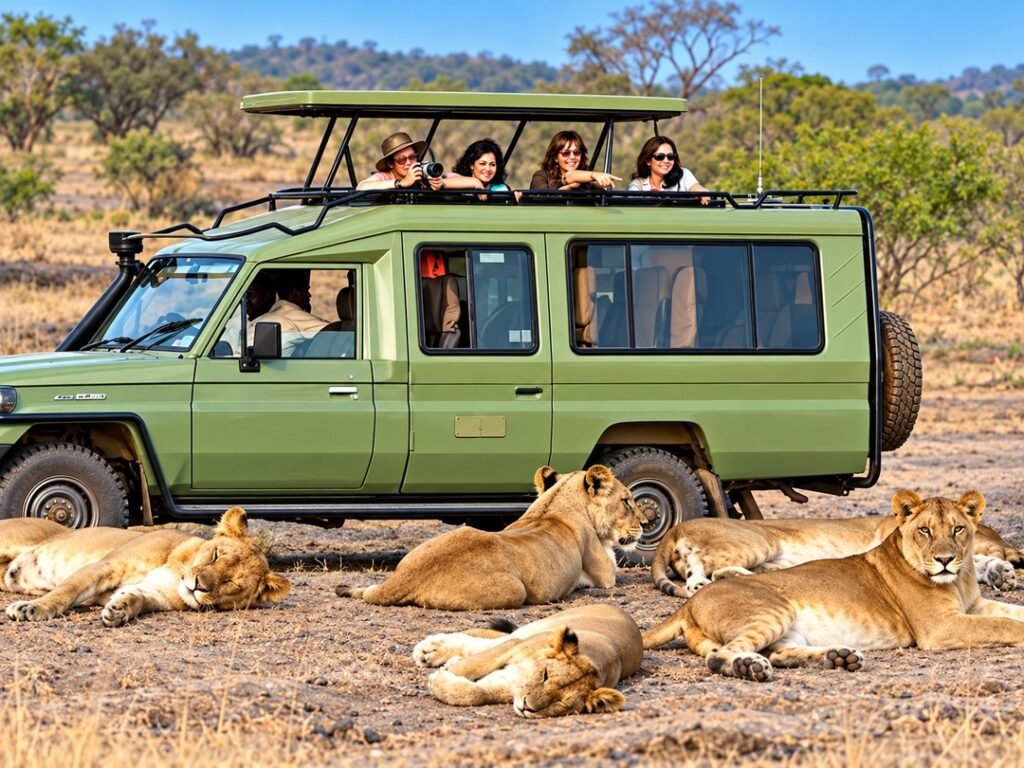
Game drives are an essential part of many group joining safaris in Uganda because they provide the traditional savannah wildlife experience that complements primate trekking. National parks such as Murchison Falls, Queen Elizabeth and Lake Mburo offer travellers opportunities to search for a wide variety of wildlife from the comfort of a safari vehicle.
The experience usually takes place early in the morning or later in the afternoon when wildlife activity can be more favourable. Travellers explore open plains, woodland, grassland and bush areas while the safari driver-guide looks for animals and interprets the landscape. Depending on the park and the route, possible sightings may include elephants, buffaloes, giraffes, Uganda kob, impalas, zebras, warthogs, waterbucks and various antelope species. Predators such as lions and leopards may also be encountered, although sightings can never be guaranteed.
Murchison Falls National Park provides one of Uganda’s classic big-game experiences. The broad savannah landscapes and large wildlife populations make it an excellent destination for game drives. Queen Elizabeth National Park offers a different environment, with open plains, crater landscapes and productive wildlife areas that support both herbivores and predators. Lake Mburo National Park adds another contrast, particularly because it is well known for species such as zebras and impalas.
Game drives are particularly enjoyable on group joining safaris because wildlife sightings are shared experiences. When one traveller spots an elephant herd or a lion in the distance, the excitement quickly spreads through the vehicle. This social aspect can make the experience more engaging, especially for solo travellers who may otherwise be enjoying the safari alone.
The safari driver-guide plays an important role during game drives. Beyond driving the vehicle, the guide helps identify animals, explains behaviour, interprets tracks and movements and positions the vehicle for good viewing when possible. A knowledgeable guide can greatly improve the experience by helping travellers understand not only what they are seeing but also how the animals fit into the surrounding ecosystem.
Boat Safari on the River Nile in Murchison Falls National Park
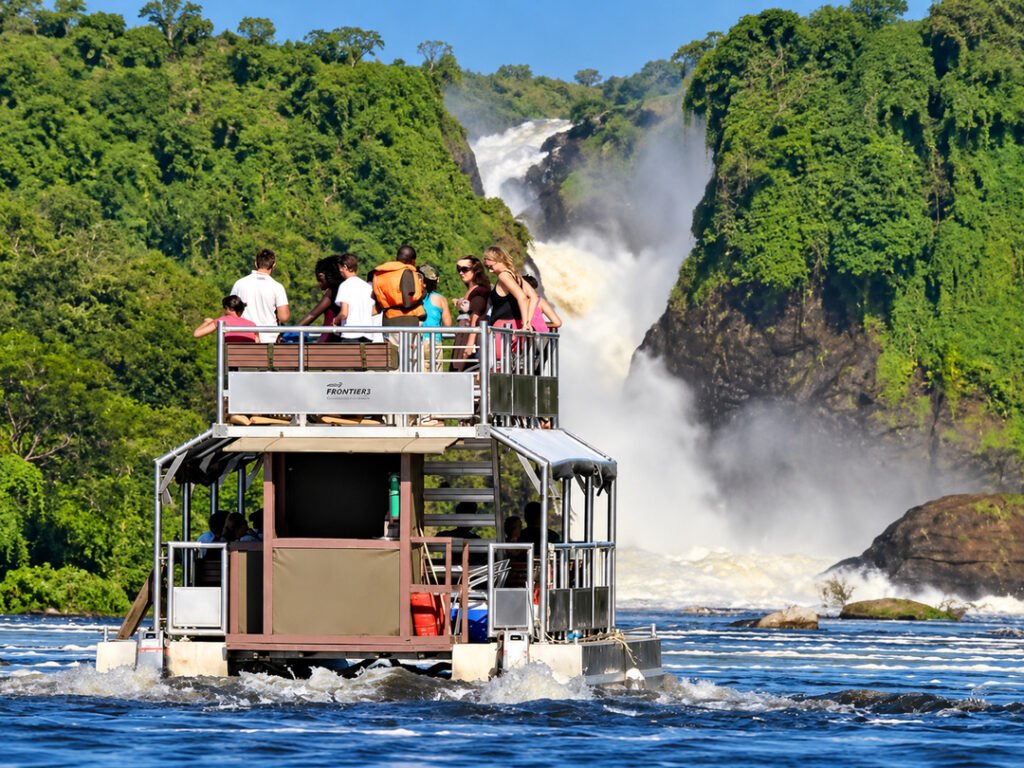
A boat safari on the River Nile in Murchison Falls National Park is one of the most memorable water-based experiences that can be included in a longer group joining safari. After exploring the park by vehicle, travellers move onto the river and experience the landscape from a completely different perspective.
The Nile supports a rich concentration of wildlife along its banks. During the boat safari, travellers may see hippos in the water, crocodiles resting near the shoreline, elephants coming to drink and buffaloes grazing close to the river. Numerous bird species can also be observed, making the experience rewarding for both wildlife enthusiasts and photographers.
The slower pace of a boat safari provides a welcome contrast to the movement of a game drive. Travellers can sit, observe and enjoy the scenery while the boat moves along the river. The combination of water, wildlife and surrounding savannah makes the experience particularly scenic and relaxing.
For travellers on a 9 Days, 10 Days or 11 Days Group Joining Uganda Safari, the River Nile boat safari adds another important layer to the itinerary. It means that Murchison Falls is not experienced only from the road but also from the water, giving travellers a broader appreciation of the park.
The social nature of the boat safari also fits well into a group joining itinerary. Travellers share the same boat experience, watch wildlife together and often take photographs from different positions as animals appear along the riverbanks. This makes it one of the most enjoyable shared activities on a longer safari.
Kazinga Channel Boat Safari
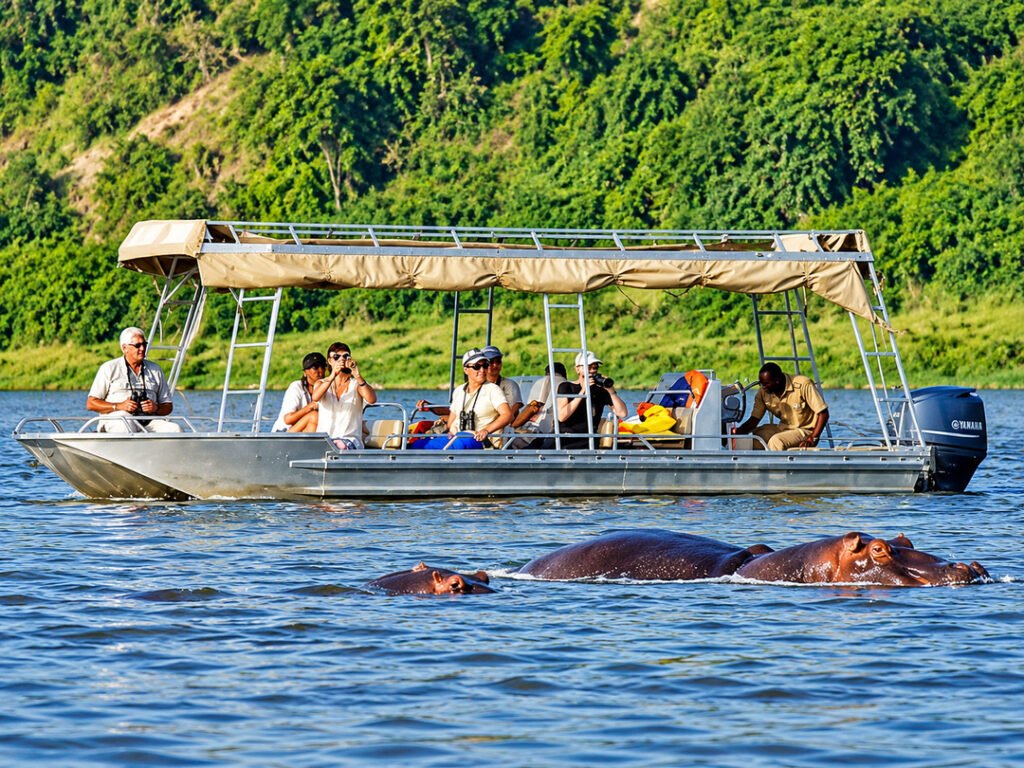
The Kazinga Channel boat safari in Queen Elizabeth National Park is another major experience commonly included in Uganda group joining safaris. The channel connects Lake George and Lake Edward and is one of the park’s most productive wildlife-viewing areas.
A boat safari along the channel allows travellers to observe wildlife that spends much of the day close to the water. Hippos are frequently seen in large numbers, while crocodiles, buffaloes, elephants and various antelope species may also appear along the shoreline. Birdlife can be especially impressive, with many water-associated species concentrated around the channel.
The experience is particularly valuable because it complements the morning game drive. From the safari vehicle, travellers explore the open plains and bush, while from the boat they can watch animals approaching the water from a different angle. This creates a fuller understanding of how wildlife uses the landscape throughout the day.
Photography opportunities are another major attraction. Animals near the water can often be viewed for longer periods than during a moving game drive, and the open visibility across the channel can make it easier to observe behaviour. Reflections, birdlife and large mammals near the shoreline also create excellent photographic scenes.
For group joining safari travellers, the Kazinga Channel boat safari is usually one of the most relaxed wildlife activities in the itinerary. After an early morning game drive, the afternoon boat cruise provides a slower and more comfortable way to continue wildlife viewing.
Tree-Climbing Lions in Ishasha Sector
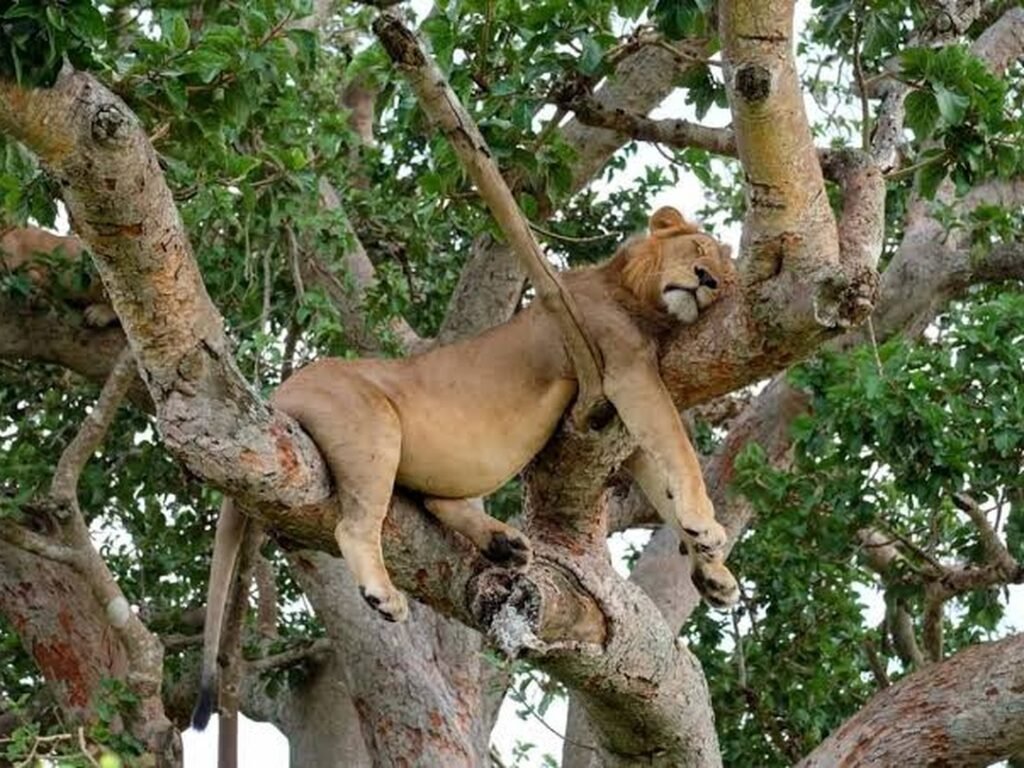
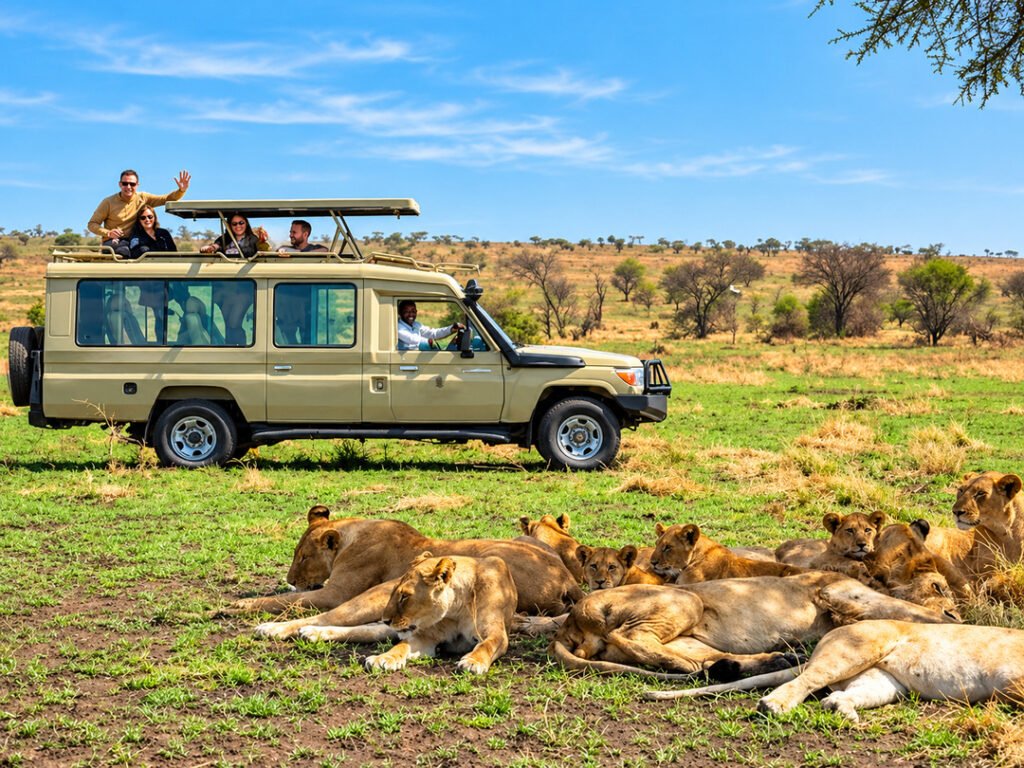
The Ishasha Sector of Queen Elizabeth National Park is famous for its tree-climbing lions and is one of the most distinctive wildlife areas included in many Uganda group joining safaris. Ishasha is located in the southern part of the park and is often visited while travellers are moving towards Bwindi Impenetrable National Park.
The main attraction is the possibility of finding lions resting in large trees. Seeing a lion stretched along a branch or sleeping high above the ground creates a very different experience from seeing lions on the open plains. This unusual behaviour has made Ishasha one of the most recognised wildlife areas in Uganda.
Searching for tree-climbing lions is usually done during a game drive through the sector. The safari guide looks carefully through the trees and surrounding grasslands for signs of lion activity. Because the lions move freely, sightings are never guaranteed, but the search itself adds a sense of anticipation to the journey.
Ishasha is also home to other wildlife, so the experience is not limited to lions. Travellers may encounter Uganda kob, topi, buffaloes, elephants and other species while moving through the area. This makes the sector valuable even when the lions are difficult to locate.
Including Ishasha within a group joining safari also makes logistical sense because it can be incorporated into the route between Queen Elizabeth National Park and Bwindi. Travellers therefore gain an additional wildlife experience without needing to make a major detour.
Walking Safari in Lake Mburo National Park
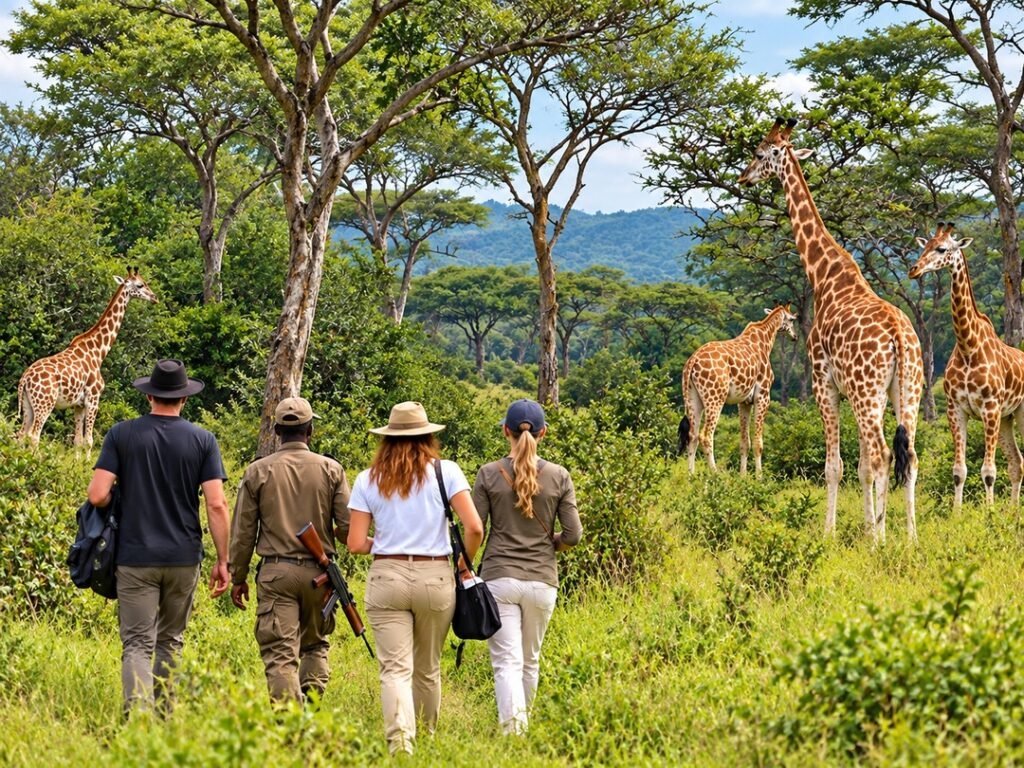
A walking safari in Lake Mburo National Park gives travellers the opportunity to experience wildlife at ground level and is one of the most interesting activities that can be added to a group joining safari. Unlike a traditional game drive, a walking safari places travellers directly within the natural environment under the guidance of an experienced ranger.
The slower pace makes it possible to notice details that are often missed from a vehicle. Travellers may learn about animal tracks, vegetation, insects and smaller signs of wildlife activity while moving through the landscape. Depending on the route and wildlife movements, there may also be opportunities to see zebras, impalas, giraffes and other animals from a safe distance.
Walking through the savannah creates a stronger sense of connection with the environment because travellers can hear sounds, feel changes in the terrain and appreciate the scale of the landscape more directly. The experience is therefore very different from vehicle-based wildlife viewing.
Lake Mburo is particularly well suited to walking activities because of its open landscapes and the types of wildlife commonly encountered there. For travellers who have already spent several days in a safari vehicle, the opportunity to walk can also be refreshing and provide a welcome change of pace.
A walking safari near the end of a group joining itinerary can be especially rewarding. After gorilla trekking, chimpanzee trekking, game drives and boat safaris, it provides one more distinctive way to experience Uganda’s wildlife before the journey back to Kampala or Entebbe.
Relaxation at Lake Bunyonyi
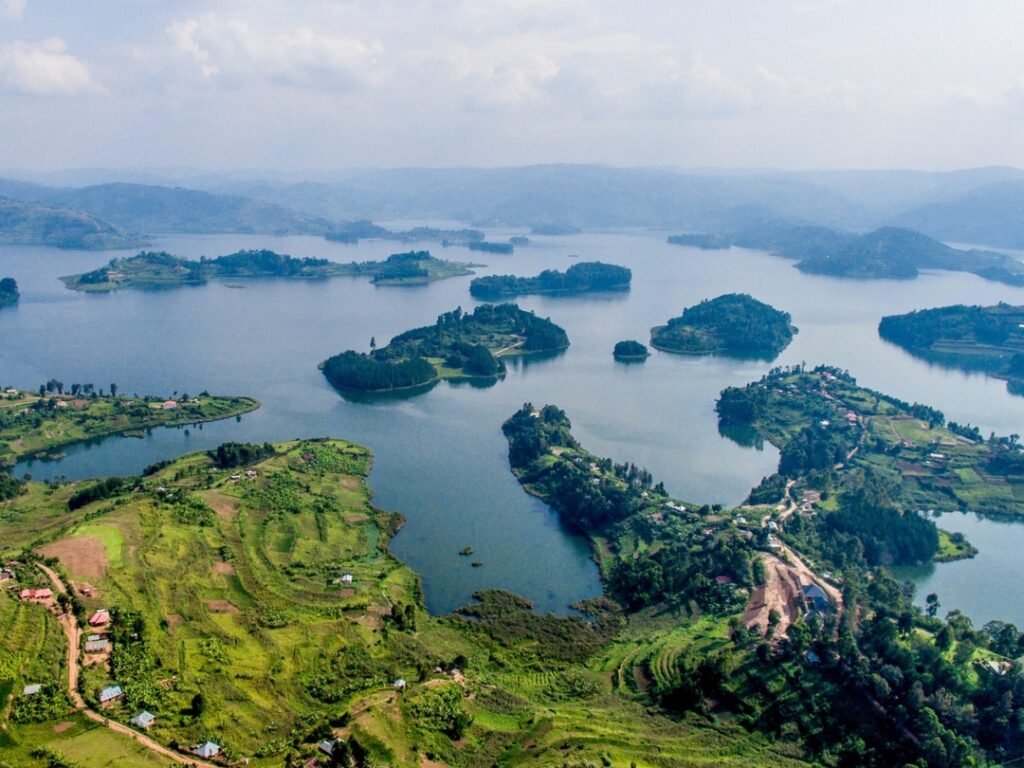
Lake Bunyonyi provides a peaceful scenic contrast to the more active wildlife experiences included in Uganda group joining safaris. Located in southwestern Uganda, the lake is surrounded by green hills and numerous islands, creating one of the country’s most attractive highland landscapes.
Lake Bunyonyi is often included after gorilla trekking in Bwindi Impenetrable National Park. This positioning works particularly well because gorilla trekking can be physically demanding, and travellers often appreciate having time to rest after spending several hours hiking through the forest.
The main attraction at Lake Bunyonyi is the peaceful atmosphere. Travellers can relax at their accommodation, enjoy views across the water and appreciate the surrounding hills without the pressure of an early-morning wildlife activity. Depending on the itinerary, optional activities may also be available, but many travellers simply value the opportunity to slow down.
The lake also adds scenic variety to the safari. By this stage of the journey, travellers may already have experienced rainforest, savannah, river systems and wildlife-rich national parks. Lake Bunyonyi introduces a quieter highland environment and gives the itinerary a more balanced rhythm.
For longer group joining safaris, especially seven-day, ten-day and eleven-day options, Lake Bunyonyi can make the journey feel less rushed. It allows travellers to enjoy Uganda not only through wildlife encounters but also through its landscapes and slower travel moments. This combination of adventure and relaxation is one of the reasons it fits so naturally into a well-designed group joining safari.
Best Destinations for Group Joining Safaris in Uganda
Uganda is exceptionally well suited to group joining safaris because its major wildlife destinations can be connected into logical overland routes that combine primate trekking, game drives, boat safaris, scenic landscapes and relaxed travel experiences. The best destinations for group joining safaris in Uganda are spread mainly across the western, southwestern and northwestern parts of the country, allowing travellers to experience very different environments within one itinerary. A single safari can move from the broad savannahs of Murchison Falls National Park to the tropical forests of Kibale, continue through Queen Elizabeth National Park and Ishasha, reach the mountain forests of Bwindi, then finish with the peaceful landscapes of Lake Bunyonyi or the open wildlife country of Lake Mburo National Park.
These destinations are especially suitable for shared safaris because each contributes a different experience to the journey. Murchison Falls adds classic big-game viewing and the River Nile, Kibale provides chimpanzee trekking, Queen Elizabeth combines game drives with the Kazinga Channel, Ishasha offers the possibility of seeing tree-climbing lions, Bwindi provides mountain gorilla trekking, Lake Bunyonyi offers a relaxing scenic break and Lake Mburo introduces walking safaris and wildlife such as zebras and impalas. Together, they create some of the most complete group joining safari routes in Uganda.
Murchison Falls National Park
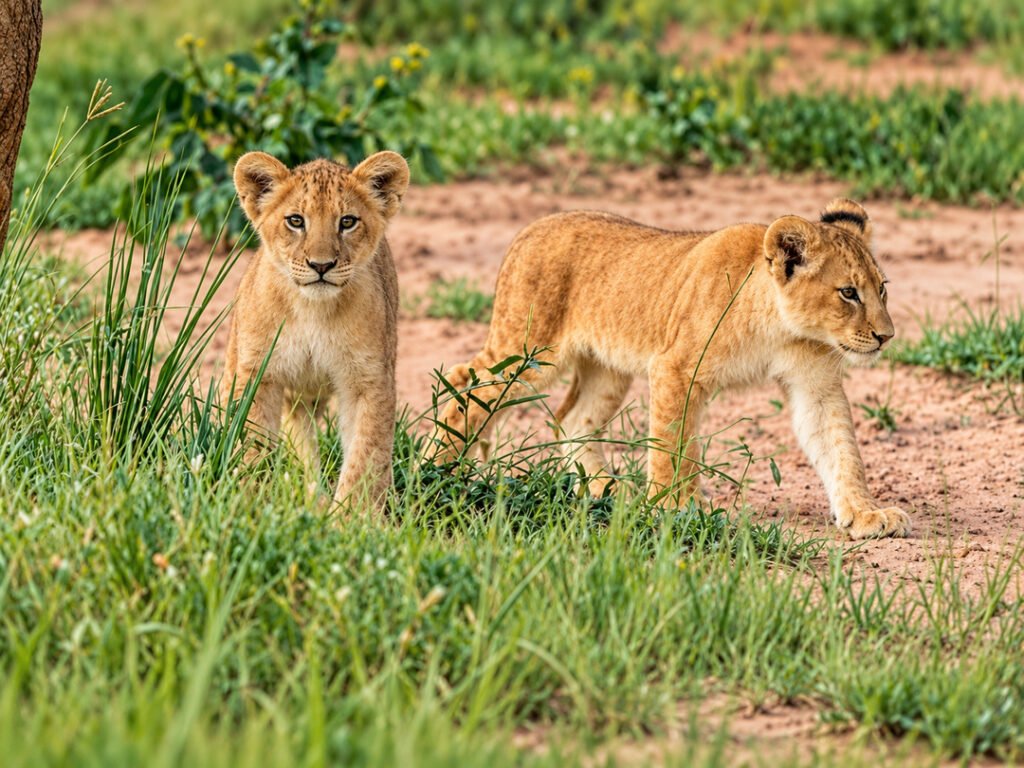
Murchison Falls National Park is one of the best destinations for longer group joining safaris in Uganda because it combines expansive savannah, large wildlife populations, the River Nile and one of the country’s most dramatic natural landmarks. It is often included in 9 Days, 10 Days and 11 Days Uganda Group Joining Safaris, where it provides an excellent beginning to a longer journey through the country.
Game drives are one of the major attractions in Murchison Falls National Park. Travellers can explore broad grasslands and woodland areas while searching for elephants, giraffes, buffaloes, Uganda kob, warthogs and other wildlife. Predators including lions and leopards are also present, although their movements mean that sightings can never be guaranteed. The openness of the landscape makes wildlife viewing particularly rewarding and gives first-time safari travellers the classic African savannah experience many expect from a Uganda journey.
The River Nile adds another dimension to the park. A boat safari gives travellers the opportunity to observe hippos, crocodiles, elephants, buffaloes and many water-associated birds along the riverbanks. This experience creates a strong contrast with the morning game drive because wildlife is viewed from the water rather than from a safari vehicle. For group joining safari travellers, combining both activities makes Murchison Falls one of the most varied destinations on the itinerary.
The park is also famous for Murchison Falls itself, where the Nile is forced through a narrow section of rock before continuing downstream. Depending on the confirmed programme, travellers may visit viewpoints or incorporate the falls into the day’s activities. The combination of river scenery, wildlife and the waterfall gives the park a distinctive identity that differs greatly from Uganda’s forest destinations.
Murchison Falls also works well within a longer group joining route because the journey can continue south towards Kibale Forest National Park. This creates a natural transition from savannah wildlife to primate trekking and allows travellers to experience several different ecosystems without repeating the same type of activity.
Kibale Forest National Park
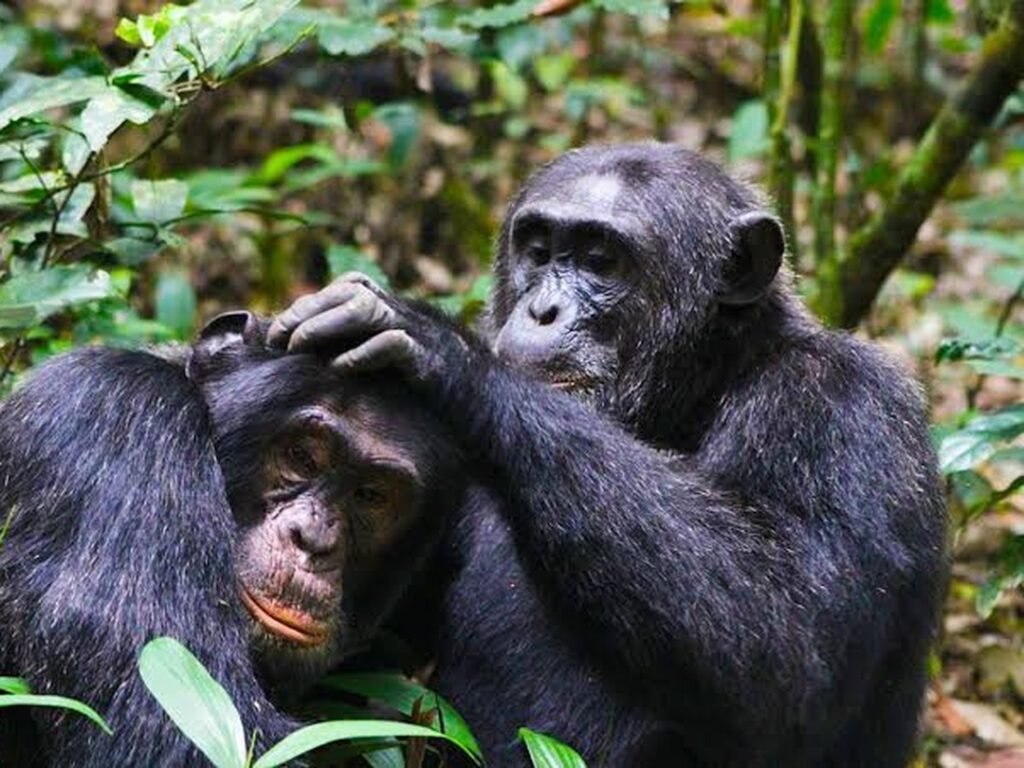
Kibale Forest National Park is one of the most important primate destinations included in group joining safaris in Uganda. It is especially known for chimpanzee trekking and forms a key part of itineraries that combine primates with wildlife viewing in Queen Elizabeth National Park and gorilla trekking in Bwindi.
The main attraction is chimpanzee trekking. Travellers enter the tropical forest with ranger guides and follow signs of habituated chimpanzee communities. The experience can involve listening for vocalisations, watching movement through the canopy and following the chimpanzees as they travel through the forest. When the chimpanzees are located, travellers can observe their social behaviour, feeding patterns and interactions under the guidance of the ranger team.
Kibale adds important variety to a group joining safari because it introduces a completely different environment from the savannah parks. The dense forest, tall trees, humid conditions and rich vegetation create an immersive experience. Even before the chimpanzees are found, the walk itself allows travellers to appreciate the atmosphere of one of Uganda’s most important tropical forest areas.
The destination also fits naturally into longer group joining itineraries. Travellers arriving from Murchison Falls can continue to Kibale before moving south towards Queen Elizabeth National Park. Those beginning with a shorter western Uganda itinerary can also reach Kibale directly from Kampala or Entebbe before continuing to Queen Elizabeth, Ishasha and Bwindi.
For travellers interested in primates, including Kibale alongside Bwindi makes the safari significantly richer. Gorilla trekking and chimpanzee trekking are very different experiences, and having both in the same itinerary gives travellers a broader understanding of Uganda’s primate tourism.
Queen Elizabeth National Park
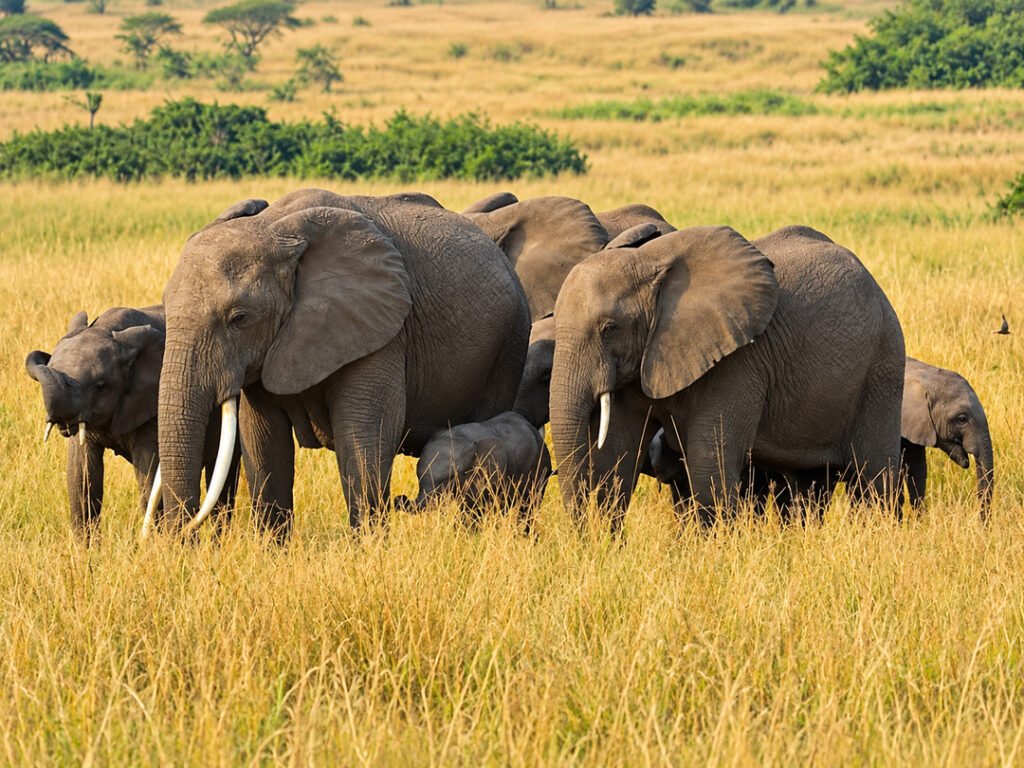
Queen Elizabeth National Park is one of the most important wildlife destinations on group joining safaris in Uganda because it combines traditional game drives, beautiful savannah landscapes, crater areas and the famous Kazinga Channel. It is frequently included in 5-day, 6-day, 7-day and longer group joining safaris.
Morning game drives allow travellers to search for elephants, buffaloes, Uganda kob, warthogs, waterbucks and other wildlife across the park’s plains. Predators such as lions and leopards may also be encountered, although sightings always depend on wildlife movements. The varied landscape makes the game drive visually interesting and provides many opportunities for photography.
One of the strongest attractions of Queen Elizabeth National Park is the Kazinga Channel boat safari. The channel connects Lake George and Lake Edward and supports high concentrations of wildlife along its shores. Travellers may see hippos, crocodiles, buffaloes, elephants and numerous bird species during the cruise. This experience often becomes one of the highlights of a group joining itinerary because wildlife can be observed from a different angle and at a more relaxed pace than during a game drive.
Queen Elizabeth National Park is also strategically located between Kibale Forest National Park and the Ishasha Sector, making it an important connecting destination on many western Uganda safari routes. This allows travellers to combine chimpanzee trekking, game viewing, a boat safari and tree-climbing lion country within consecutive days.
The park is particularly valuable for travellers who want a balanced safari. After walking in Kibale’s forest, Queen Elizabeth provides open savannah and water-based wildlife viewing before the journey continues into the more mountainous landscapes around Bwindi.
Ishasha Sector
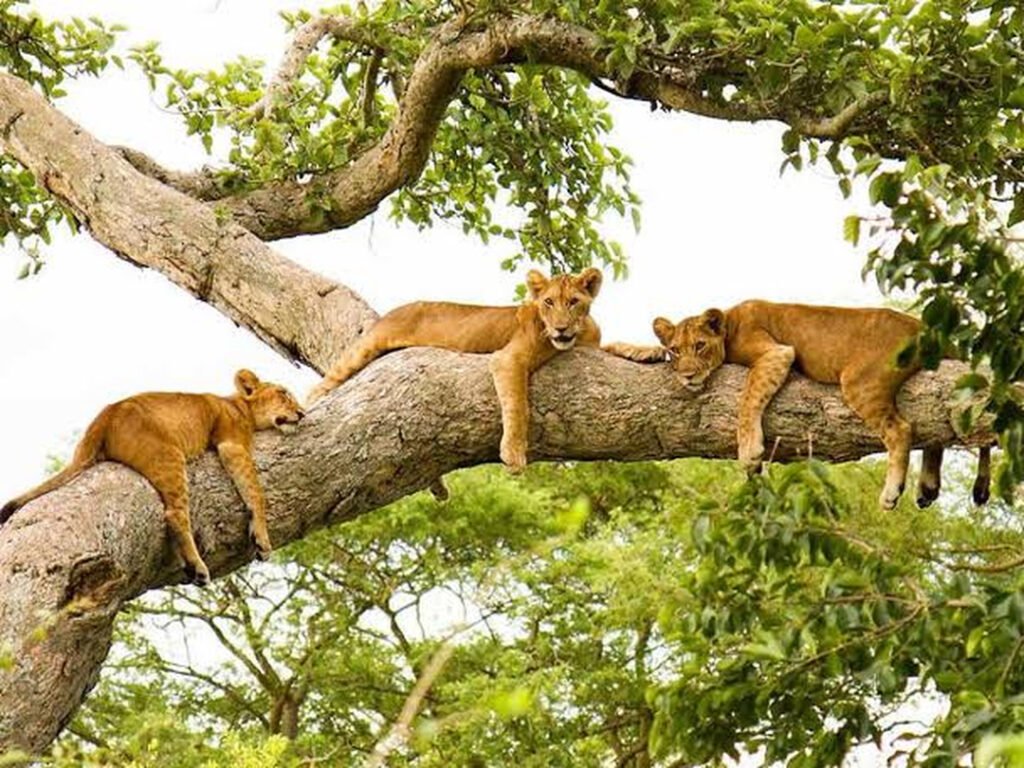
The Ishasha Sector forms the southern part of Queen Elizabeth National Park and is one of the most distinctive wildlife areas included in Uganda group joining safaris. It is particularly famous for its tree-climbing lions and is often visited while travellers are moving from the main Queen Elizabeth area towards Bwindi Impenetrable National Park.
The possibility of seeing lions resting in large trees makes Ishasha different from most other safari destinations in Uganda. Travellers may spot lions stretched along branches, sleeping above the ground or surveying the surrounding plains from an elevated position. These sightings are never guaranteed, but the search itself adds excitement and anticipation to the journey.
Ishasha is not only about lions. The sector also supports other wildlife including Uganda kob, topi, buffaloes, elephants and various bird species. This means travellers can still enjoy a rewarding wildlife drive even if the lions are difficult to locate on a particular day.
The destination fits naturally into a group joining itinerary because it lies along the route towards Bwindi. Rather than treating it as a separate detour, the safari can include a wildlife drive through Ishasha before continuing into the southwestern highlands. This makes it one of the most efficient and rewarding additions to a multi-day group safari.
The change in scenery is also noticeable. Travellers move from the broader savannah landscapes of Queen Elizabeth towards quieter and more remote terrain before eventually reaching the forested mountains around Bwindi. This transition adds depth to the overall safari experience.
Bwindi Impenetrable National Park
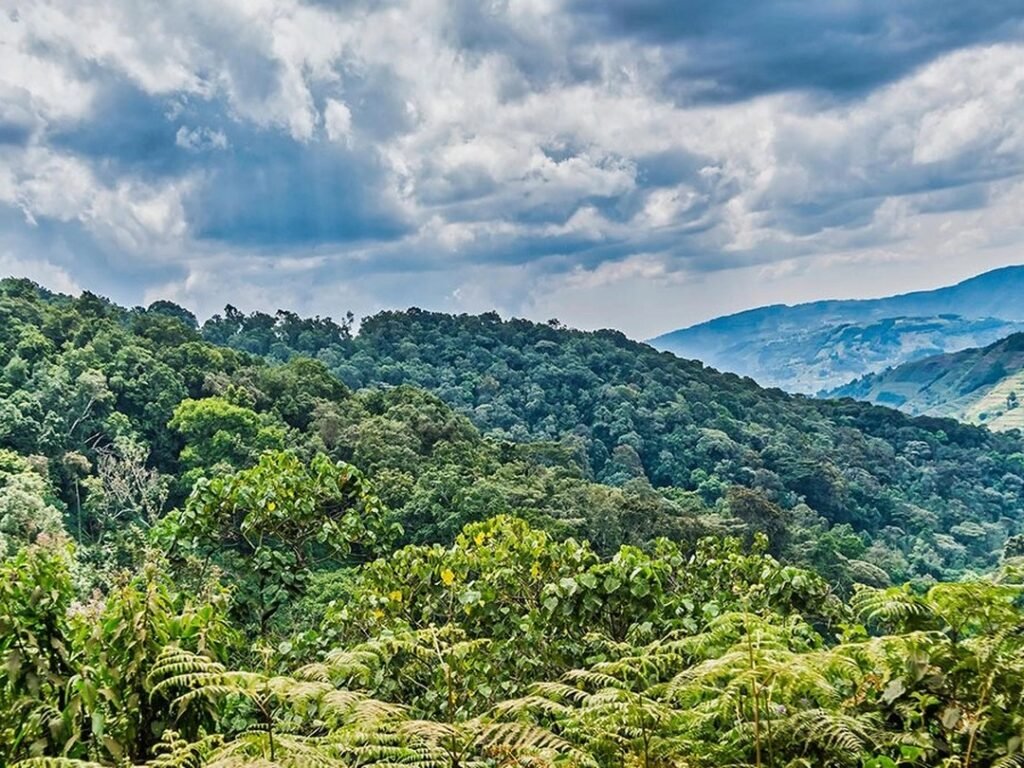
Bwindi Impenetrable National Park is one of the most important destinations on group joining safaris in Uganda because it is home to one of the country’s most famous wildlife experiences: mountain gorilla trekking. For many travellers, Bwindi is the main reason for visiting Uganda and the emotional centre of the entire safari.
Gorilla trekking begins with an early morning briefing before travellers enter the forest with ranger guides. The trek can vary in length and difficulty depending on the location of the gorilla family and the terrain. The forest can be steep, muddy and dense, so travellers need suitable footwear, rain protection and a reasonable level of fitness.
Once a habituated gorilla family is located, travellers can observe the gorillas according to the applicable trekking rules. Watching a silverback, females and young gorillas interact at close range can be an extraordinary experience. The atmosphere of the forest and the quiet concentration required during the encounter make gorilla trekking very different from a normal game drive.
Bwindi is also important because of its scenery. The region is characterised by steep green hills, cultivated slopes, forested valleys and dramatic mountain landscapes. The journey into Bwindi is therefore visually rewarding even before the trekking experience begins.
For group joining safaris, Bwindi is particularly suitable because travellers can share the road journey and transport costs while still participating in the trekking activity through individually secured permits. This makes gorilla trekking more accessible to solo travellers and others who may find a fully private safari more expensive.
Lake Bunyonyi
Lake Bunyonyi is one of the best places to include after gorilla trekking because it provides a peaceful and scenic contrast to the physically demanding forest experience. The lake is surrounded by rolling green hills and islands, creating one of the most attractive landscapes in southwestern Uganda.
On group joining safaris, Lake Bunyonyi is commonly used as a relaxation stop. After several days of road transfers, game drives and trekking, travellers can slow down, enjoy the views and spend time at their accommodation without immediately moving into another demanding activity.
The destination also improves the rhythm of a longer itinerary. Rather than travelling directly from Bwindi to the next national park, adding Lake Bunyonyi gives travellers time to rest and recover. This is particularly valuable after gorilla trekking, when many visitors appreciate a quieter day.
Depending on the confirmed programme, optional activities may be available, but the main value of Lake Bunyonyi is its atmosphere. The calm water, green hills and cooler highland environment make it an ideal place to relax, reflect on the gorilla experience and enjoy another side of Uganda’s natural beauty.
Lake Bunyonyi also adds more scenic variety to the safari. By this stage, travellers may already have experienced tropical forest, open savannah and river systems. The lake introduces a highland environment that feels very different from the national parks visited earlier.
Lake Mburo National Park
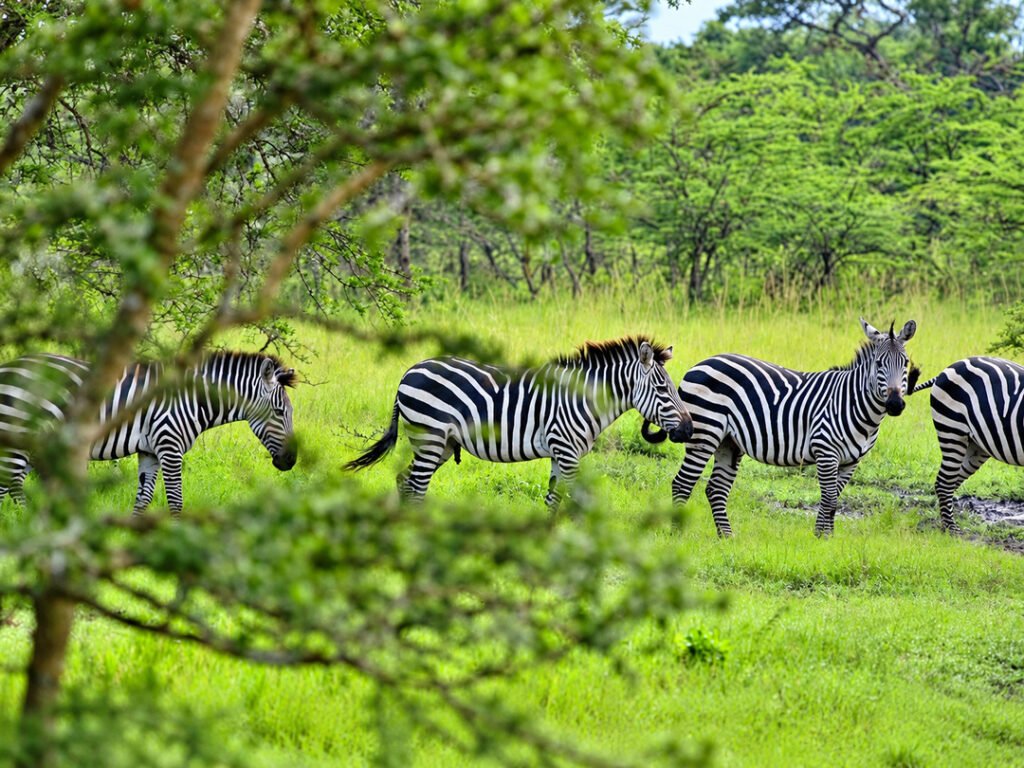
Lake Mburo National Park is an excellent destination for the final stages of a group joining safari because it is located within practical reach of Kampala and Entebbe and provides another distinctive wildlife experience before the journey ends.
The park is particularly known for zebras, impalas, elands, buffaloes, warthogs and other wildlife. Its landscapes are more compact than those of Murchison Falls or Queen Elizabeth, creating a different style of game viewing. Travellers can explore open grassland, woodland and wetland areas while searching for wildlife.
One of the most attractive experiences in Lake Mburo is the possibility of a guided walking safari. Walking through the savannah gives travellers a closer connection to the environment and allows them to notice tracks, vegetation and smaller details that are easy to miss from a vehicle. Depending on the confirmed itinerary and park arrangements, walking activities can be included or arranged separately.
Lake Mburo works especially well as the final national park on longer group joining routes because it helps break up the journey from Bwindi or Lake Bunyonyi back to Kampala or Entebbe. Instead of completing one very long road transfer, travellers can spend another night in a wildlife area and enjoy one final safari experience.
Its position also makes it suitable for itineraries that end with an Equator stop before continuing to Kampala or Entebbe. This creates a smooth and interesting conclusion to the journey while allowing travellers to enjoy wildlife until the final day of the safari.
Together, Murchison Falls National Park, Kibale Forest National Park, Queen Elizabeth National Park, the Ishasha Sector, Bwindi Impenetrable National Park, Lake Bunyonyi and Lake Mburo National Park form the core of many of the best group joining safaris in Uganda. Each destination contributes something different, and when combined carefully, they create a journey that moves naturally between primate trekking, savannah wildlife, boat safaris, scenic landscapes and relaxation.
Who Can Join Group Joining Safaris in Uganda?
Group joining safaris in Uganda are suitable for a wide variety of travellers who are comfortable sharing a safari vehicle, following a scheduled itinerary and experiencing Uganda’s wildlife destinations together with other guests. These safaris are especially attractive to travellers who want to reduce some of the costs associated with operating a private safari while still enjoying professionally organised transport, accommodation, wildlife activities and primate trekking. Depending on the particular departure, participants may come from different countries and travel backgrounds, but they share the same general interest in discovering Uganda’s national parks, mountain gorillas, chimpanzees, savannah wildlife and landscapes.
A successful group joining safari works best for travellers who understand that the itinerary is shared. Departure times, game drives, road transfers and scheduled activities normally follow a programme designed for the entire group rather than being changed for one traveller. This structure makes the safari particularly convenient for people who prefer having most of the travel arrangements organised in advance. At the same time, travellers can still enjoy individual experiences during activities such as gorilla trekking and chimpanzee trekking, where permits, trekking groups and ranger arrangements are managed according to the applicable procedures.
Solo Travellers
Solo travellers are among the people who benefit most from group joining safaris in Uganda. Booking a completely private safari as one person can be expensive because the traveller may have to cover the cost of the safari vehicle, fuel and driver-guide without anyone else sharing those expenses. A group joining departure makes it possible to share some of these operational costs with other safari participants while still experiencing the major destinations and activities included in the itinerary.
The social aspect is another major advantage for solo travellers. Instead of spending several days travelling alone between national parks, a solo traveller becomes part of a small safari group. Long road journeys between destinations can become more enjoyable when travellers are able to talk, exchange travel experiences and share their excitement about wildlife sightings. A group may include people from different countries, creating an interesting social environment throughout the journey.
Solo travellers still maintain a considerable degree of independence within the group structure. Accommodation can normally be arranged in a single room, although a single supplement may apply depending on the lodge and confirmed package. During gorilla trekking and chimpanzee trekking, the traveller participates according to the permit and trekking arrangements for that activity rather than simply remaining with the same safari vehicle group throughout the entire experience.
A group joining safari can therefore provide solo travellers with a practical balance between independence and companionship. They can enjoy their own room, personal travel experience and individual wildlife interests while still benefiting from shared transport and the company of other travellers.
Couples
Couples can comfortably join group joining safaris in Uganda and are often able to reduce their overall safari cost while still enjoying the journey together. They normally share a double room or twin room, depending on their preference and accommodation availability, while travelling between destinations in the same safari vehicle as other participants.
For couples who enjoy meeting other travellers, the group format can add a social dimension to the safari without taking away from their time together. They can share game drives, boat safaris and road transfers with the wider group while still enjoying private accommodation and personal time at the lodges.
A group joining safari can also make it easier for couples to include a longer itinerary within their budget. Rather than paying privately for all vehicle and guide expenses, some transport costs are shared among the participants. This can make routes combining Murchison Falls, Kibale, Queen Elizabeth, Bwindi and Lake Mburo more accessible than an equivalent private safari.
Couples should, however, be comfortable with the structured nature of a group departure. Game-drive times, departure schedules and road transfers need to work for all participants, so the itinerary generally offers less flexibility than a completely private safari. For couples who value affordability and the opportunity to meet other travellers, this trade-off can be worthwhile.
Friends
Friends travelling together can also join group joining safaris in Uganda. This option works particularly well for two or more friends who want to experience gorilla trekking, chimpanzee trekking and wildlife viewing but do not necessarily need a private safari vehicle exclusively for themselves.
Friends can request twin rooms, separate rooms or other accommodation arrangements depending on the property and confirmed package. During the day, they join the shared safari vehicle and participate in the same scheduled activities as the rest of the group.
Travelling with friends can make the group joining experience particularly enjoyable because travellers already have familiar companions while also having opportunities to meet other safari participants. Shared wildlife sightings, long road journeys and evenings at safari lodges can create memorable moments for the entire group.
Friends with similar travel interests can choose the itinerary length that best suits them. A short three- or four-day safari may be appropriate for those mainly interested in primates, while six-, seven-, nine-, ten- or eleven-day itineraries allow more time for Uganda’s national parks and wildlife experiences.
Small Groups
Small groups can join scheduled safari departures when there is sufficient availability in the vehicle, accommodation and activities. A small group of relatives, colleagues or friends may choose to join other travellers rather than booking an entirely private departure.
This can be especially useful when the group is not large enough to make private vehicle costs economical. Sharing the vehicle with a few additional participants can reduce individual costs while maintaining the advantages of travelling with professional safari arrangements.
Small groups also benefit from the diversity of activities available on Uganda itineraries. Some members may be especially interested in mountain gorillas and chimpanzees, while others may enjoy game drives, birdwatching, photography or boat safaris. A comprehensive group joining itinerary can combine these interests within one journey.
The number of travellers accepted on each departure depends on the vehicle configuration and operational arrangements. Travellers booking as a small group should therefore confirm early, particularly when they want to travel together on a specific departure date. Gorilla and chimpanzee trekking permits, lodge rooms and vehicle seats can all affect availability.
First-Time Visitors to Uganda
Group joining safaris are an excellent option for first-time visitors to Uganda because they provide a structured way to experience several of the country’s major destinations without requiring the traveller to plan every logistical detail independently. Uganda’s national parks are spread across different regions, and understanding the driving distances, activity schedules and permit requirements can be challenging for someone visiting the country for the first time.
A professionally organised group joining safari places these arrangements within one itinerary. Travellers know where they will be going each day, which activities are planned and how the different destinations connect. This can make the first Uganda safari much easier to manage.
First-time visitors can also experience a broad introduction to the country. Depending on the selected itinerary, they may see the River Nile at Murchison Falls, trek chimpanzees in Kibale Forest National Park, explore Queen Elizabeth National Park, search for tree-climbing lions in Ishasha, trek mountain gorillas in Bwindi and finish with wildlife viewing in Lake Mburo National Park.
The presence of a professional safari driver-guide is particularly valuable for first-time visitors. The guide assists with the road journey, provides information about wildlife and destinations and helps coordinate the daily safari programme. Travellers therefore have local support throughout the journey rather than needing to navigate Uganda’s safari regions independently.
For someone making their first visit to Uganda, a group joining safari can therefore provide a convenient introduction to the country’s wildlife, landscapes and national parks while also offering the opportunity to travel alongside other visitors.
Accommodation on Group Joining Safaris in Uganda
Accommodation on group joining safaris in Uganda is normally selected to provide a practical balance between comfort, location and overall safari cost. Because group joining safaris are designed partly around sharing expenses and keeping the journey reasonably affordable, most departures commonly use carefully selected budget or mid-range safari lodges rather than high-end luxury properties. The exact accommodation depends on the itinerary, travel dates, availability and package confirmed at the time of booking.
Location is one of the most important considerations when choosing accommodation for a group joining safari. Uganda’s safari itineraries often involve early-morning activities such as gorilla trekking, chimpanzee trekking and game drives, so staying reasonably close to the activity area can reduce unnecessary driving. In Bwindi Impenetrable National Park, for example, accommodation should ideally correspond with the trekking sector connected to the traveller’s gorilla permit. This is important because Bwindi has several trekking areas, and staying in the wrong region can create unnecessary transfers on the morning of the trek.
Around Kibale Forest National Park, accommodation is normally selected within reasonable travelling distance of the chimpanzee trekking area. This allows travellers to have breakfast and reach the briefing point in good time for the scheduled activity. Lodges around Kibale often offer a quiet forest or countryside atmosphere, giving travellers an opportunity to rest after the road journey before beginning their chimpanzee experience.
In Queen Elizabeth National Park, group joining safari accommodation may be located inside the broader conservation area or around communities close to the park. The priority is generally to provide convenient access to the morning game-drive areas and the Kazinga Channel boat safari. Staying within practical reach of these activities helps reduce transfer time and allows travellers to spend more of the day enjoying the national park.
Accommodation around Murchison Falls National Park varies considerably in style and location. Group joining safaris usually choose properties that allow reasonable access to the park’s wildlife areas and planned boat safari activities. Because Murchison Falls can involve considerable distances between different areas of the park, the lodge selected can influence the timing of the following day’s activities.
In the Bwindi region, lodges often have impressive views of forested hills and the surrounding highlands. Accommodation may range from simple guesthouses and budget lodges to comfortable mid-range properties. On a group joining itinerary, the selected lodge will normally correspond with the package level and available trekking sector rather than being chosen solely according to luxury level.
Lake Bunyonyi accommodation has a different atmosphere from the national park lodges. Properties around the lake are often chosen for their views and peaceful surroundings, allowing travellers to relax after gorilla trekking. The emphasis here is usually less on immediate wildlife access and more on comfort, scenery and rest.
Around Lake Mburo National Park, accommodation provides convenient access to the final wildlife experiences of the safari. Depending on the itinerary, travellers may stay close enough to participate in an early game drive or guided walking activity before beginning the journey towards Kampala or Entebbe.
Room arrangements can normally be adapted according to the traveller’s needs. Couples generally share a double room, friends may request twin accommodation and solo travellers can usually request a single room. A single supplement may apply because accommodation properties often price rooms based on double occupancy. Travellers should confirm their preferred room arrangement when making the booking rather than waiting until the safari begins.
Meals are generally provided according to the confirmed safari package. Many safari lodges operate on full-board arrangements while travellers are inside or near the national parks, meaning breakfast, lunch and dinner may be included. On long transfer days, lunch may sometimes be taken at a restaurant along the route rather than at the lodge. The final quotation should clearly indicate the meal plan so travellers know what is included before departure.
The standard of accommodation can vary between destinations because not every national park has the same range of properties. A mid-range lodge in one destination may have different facilities from a similarly classified property elsewhere. For this reason, group joining safari accommodation should be judged primarily by cleanliness, comfort, location, service and suitability for the itinerary rather than expecting every lodge to have identical facilities.
Travellers with dietary requirements should communicate them before the safari. Vegetarian meals and other common dietary needs can often be accommodated when lodges receive advance notice. More specialised dietary requirements should be discussed during the booking process so that the safari operator can confirm what the selected properties are able to provide.
Accommodation forms an important part of the overall experience on group joining safaris in Uganda. After long road transfers, forest trekking or full days of wildlife viewing, having a comfortable place to rest becomes essential. Carefully selected lodges therefore support the rhythm of the safari by placing travellers near the next activity while providing the meals, rest and atmosphere needed to enjoy the following day.
Safari Vehicles Used on Group Joining Safaris in Uganda
Safari vehicles play an important role in the comfort, safety and overall experience of group joining safaris in Uganda. Because most itineraries involve long overland journeys between national parks, the vehicle is not only used for transfers but also becomes the main platform for wildlife viewing during game drives. A suitable safari vehicle therefore needs to handle both Uganda’s main highways and the rougher roads commonly found inside national parks and remote safari areas.
Most group joining safaris in Uganda use 4×4 safari vehicles, with the Toyota Land Cruiser being one of the most common options for longer wildlife itineraries. These vehicles are well suited to Uganda’s changing road conditions and are generally preferred because they provide good ground clearance, strong off-road capability and enough interior space for travellers and luggage. During the dry season, roads inside the parks can become dusty and uneven, while during the rainy season some sections can become muddy or slippery, making four-wheel-drive capability particularly valuable.
Many safari Land Cruisers are fitted with a pop-up roof that can be raised during game drives. This allows travellers to stand or sit higher inside the vehicle while searching for wildlife and taking photographs. The raised viewing position can make it easier to see animals across the savannah, particularly in parks such as Murchison Falls National Park, Queen Elizabeth National Park and Lake Mburo National Park. When the vehicle returns to public roads, the roof is normally lowered for safety and comfort.
The number of passengers in a group joining safari vehicle depends on the configuration of the vehicle and the size of the confirmed departure. Good group joining arrangements should avoid overcrowding because travellers spend many hours on the road and need enough room for both comfort and wildlife viewing. Seating arrangements can vary, and travellers who consider a window seat particularly important should ask about the vehicle configuration before confirming their safari.
Luggage space is another important consideration. Because all participants are sharing the same vehicle, travellers are normally encouraged to pack reasonably and avoid excessively large hard-shell suitcases where possible. Soft-sided travel bags can be easier to arrange inside safari vehicles, particularly when several people are travelling together. The safari operator should provide clear guidance before departure if there are specific luggage restrictions for a particular vehicle or group size.
The safari driver-guide is equally important as the vehicle itself. On a group joining safari, the driver-guide manages the road journey, helps coordinate daily departure times and assists with wildlife viewing during game drives. A professional guide should understand the route between national parks, current road conditions and the timing required to reach scheduled activities such as chimpanzee trekking, gorilla trekking and boat safaris.
Long-distance driving is a major feature of many Uganda safaris, especially on routes that include Murchison Falls National Park, Kibale Forest National Park, Queen Elizabeth National Park, Bwindi Impenetrable National Park and Lake Mburo National Park. Travellers should therefore expect some days to involve several hours on the road. The vehicle should be comfortable enough for these journeys, and reasonable stops for meals, refreshments and rest can normally be incorporated along the way.
For group joining safaris, the shared safari vehicle is also part of what makes the itinerary more affordable. Instead of one traveller paying for an entire vehicle, fuel and driver-guide independently, these operational expenses can be distributed among several participants. This is one of the main reasons group joining safaris can offer better value for solo travellers and couples compared with equivalent private itineraries.
Best Time for Group Joining Safaris in Uganda
Group joining safaris in Uganda can be organised throughout the year, and there is no single month that is suitable for every traveller. The best time depends on personal priorities, permit availability, preferred road conditions and whether the traveller is more interested in primate trekking, general wildlife viewing or travelling during quieter periods.
The relatively drier months from June to August and from December to February are among the most popular periods for Uganda safaris. During these months, forest trails can be somewhat easier to navigate and some roads inside the national parks may be more manageable. These conditions can be particularly helpful for travellers planning gorilla trekking in Bwindi Impenetrable National Park or chimpanzee trekking in Kibale Forest National Park, where rain can make trails muddy and slippery.
The drier periods are also popular for traditional wildlife viewing. In savannah parks such as Murchison Falls and Queen Elizabeth, reduced vegetation in some areas can make wildlife easier to spot, while animals may gather around reliable water sources. However, wildlife remains wild and sightings can never be guaranteed regardless of the month of travel.
Rainier periods can also be rewarding. Uganda’s landscapes often become particularly green and attractive during wetter months, and the forests can be especially lush. Travellers who do not mind occasional rain may also find that some periods are less crowded than the busiest travel months. Rain does not automatically stop gorilla or chimpanzee trekking, although travellers need suitable waterproof clothing, appropriate hiking shoes and protection for cameras and personal belongings.
Because group joining safaris depend on scheduled departures, availability is just as important as weather. A traveller may prefer a certain month, but the most suitable departure will also depend on whether enough participants, permits, accommodation and vehicle space are available. This is why travellers should check confirmed departure dates before making international flight arrangements.
For itineraries that include gorilla and chimpanzee trekking, booking early is especially important. These activities depend on limited permit availability, and once permits are sold out for a particular date or trekking location, the entire safari programme may need to be adjusted.
Travellers should also remember that Uganda has a tropical climate and weather can change quickly. Even during the drier months, rainfall can occur, particularly in forest areas such as Bwindi and Kibale. Packing for both sunshine and rain is therefore advisable throughout the year.
Ultimately, the best time for a group joining safari in Uganda is when the traveller can secure the desired departure, permits and accommodation while being comfortable with the expected seasonal conditions. Uganda offers rewarding wildlife and primate experiences throughout the year, which gives travellers considerable flexibility when planning their journey.
Gorilla Trekking Permits on Group Joining Safaris in Uganda
A gorilla trekking permit is one of the most important requirements for any group joining safari that includes mountain gorilla trekking. The permit gives the holder access to a scheduled gorilla trekking experience in accordance with the regulations of the responsible wildlife authority. Without a valid permit, a traveller cannot participate in the gorilla trek.
For group joining safaris in Uganda, gorilla permits are normally arranged individually for each traveller even though the safari vehicle and road journey are shared. This means that every participant who wishes to trek must have a confirmed permit for the correct date and trekking area. The permit is therefore a personal and essential part of the booking process.
Uganda gorilla trekking is most commonly associated with Bwindi Impenetrable National Park, although Mgahinga Gorilla National Park can also be used on some itineraries. Bwindi has several trekking sectors, and the permit allocation can influence where the traveller needs to stay the night before the trek. This is why accommodation and permit arrangements should be coordinated carefully rather than booked independently without considering the trekking location.
Permit availability is limited, especially during popular travel months. Travellers who are planning a group joining safari with gorilla trekking should therefore confirm their trip well in advance whenever possible. Waiting until the last minute can create difficulties because the safari operator may find vehicle space and accommodation but be unable to secure a gorilla permit for the required trekking date.
The price of the gorilla permit should always be clearly explained in the final quotation. Some group joining safari prices may already include the permit, while others may list it separately. Travellers should not assume that the permit is automatically included simply because gorilla trekking appears in the itinerary. The confirmed safari quotation should state exactly what has been paid for.
On the trekking day, travellers normally attend an early morning briefing before being assigned to a gorilla family and ranger team. The permit does not guarantee a short or easy trek because the gorillas move freely within their natural habitat. Trekking duration and difficulty can vary considerably depending on the location of the gorilla family, terrain and weather conditions.
Travellers should also be aware that gorilla trekking is regulated to protect both visitors and the animals. Ranger instructions must be followed carefully, and health-related rules may apply because gorillas are susceptible to some human illnesses. Anyone who becomes unwell shortly before the trek should inform the safari operator or ranger team rather than ignoring the situation.
For group joining safaris, securing the gorilla permit early helps protect the entire itinerary. Once the trekking date is confirmed, accommodation and transport can be organised around it, making the overall safari much easier to plan.
Chimpanzee Trekking Permits on Group Joining Safaris in Uganda
Chimpanzee trekking permits are another important component of group joining safaris that include Kibale Forest National Park. Like gorilla permits, these are issued for individual travellers and allow participation in a scheduled chimpanzee trekking experience under the guidance of ranger teams.
Kibale Forest National Park is one of Uganda’s leading chimpanzee trekking destinations and is commonly included in five-day, six-day, seven-day and longer group joining itineraries. The forest fits naturally into routes that continue towards Queen Elizabeth National Park and Bwindi Impenetrable National Park, which makes chimpanzee trekking an important part of many western Uganda safaris.
The chimpanzee trekking permit should be secured before the safari whenever the activity is a priority. Although availability may sometimes be more flexible than gorilla trekking, spaces are still limited and popular dates can fill up. Booking early therefore remains the safer approach, especially when the safari dates cannot easily be changed.
As with gorilla trekking, travellers should check whether the chimpanzee permit is included in the quoted safari price. A well-prepared quotation should clearly show whether the permit has been included or whether it needs to be paid separately. This helps avoid confusion close to the departure date.
On the trekking day, travellers normally report to the designated briefing point before entering the forest with ranger guides. The guides explain the trekking procedures, appropriate behaviour and safety rules before the group begins searching for the chimpanzees. The experience may involve walking through forest trails, listening for calls and following signs of chimpanzee movement.
Once a habituated chimpanzee community is located, travellers are allowed to observe the animals according to the applicable rules and time limits. Chimpanzees can be very active, moving quickly through the canopy or across the forest floor, which makes the experience different from gorilla trekking.
The permit allows access to the organised trekking activity but does not guarantee a particular type of sighting. Chimpanzees are wild animals and their movements can vary from day to day. Ranger guides use their knowledge of the forest and the chimpanzee communities to improve the chances of locating them.
For travellers booking a group joining safari that includes both chimpanzee and gorilla trekking, permit planning is especially important because both activities may determine the sequence of the itinerary. Once the permit dates are fixed, the safari operator can organise accommodation and transport around those commitments, helping the entire journey run more smoothly.
Cost of Group Joining Safaris in Uganda
The cost of group joining safaris in Uganda varies according to the number of safari days, destinations included, accommodation category, number of travellers sharing the safari vehicle, gorilla and chimpanzee trekking permits, park activities and the time of year. One of the main advantages of joining a scheduled safari departure is that several important operating expenses, particularly the safari vehicle, fuel and driver-guide, are shared among travellers rather than being paid entirely by one person or couple. This can make a group joining safari considerably more affordable than operating the same itinerary privately.
Shorter group joining safaris are generally less expensive because they involve fewer nights of accommodation, fewer days of vehicle hire and a smaller number of destinations. A 3 Days Gorilla Trekking Group Joining Safari, for example, concentrates mainly on travelling to Bwindi Impenetrable National Park, completing the gorilla trek and returning to Kampala or Entebbe. As the safari becomes longer, additional national parks, accommodation nights, park entrance fees, boat safaris, chimpanzee trekking and other activities increase the overall cost.
Gorilla trekking is one of the most significant individual expenses on itineraries that include Bwindi Impenetrable National Park. The Uganda gorilla trekking permit for a foreign non-resident is USD 800 per person, and this amount forms an important part of the total cost of most gorilla group joining safaris. Chimpanzee trekking also requires a separate permit, meaning itineraries combining both gorillas and chimpanzees naturally cost more than wildlife-only routes.
Accommodation category also influences the final safari price. Most standard group joining departures are based on carefully selected budget or mid-range accommodation because the purpose is to maintain a comfortable safari while keeping the overall cost accessible. Travellers requesting upgraded accommodation may pay more even while continuing to share the safari vehicle with the other participants.
The number of travellers confirmed for the departure can also influence pricing. A vehicle carrying several paying participants distributes the cost of fuel, vehicle operation and the driver-guide among more people. A departure with only a few participants may therefore cost more per person than one operating closer to its planned capacity. Travellers should always request the confirmed price for their particular departure rather than assuming that every group safari carries exactly the same cost.
The following table gives useful planning estimates for different group joining safari durations. These are indicative price ranges rather than fixed quotations because the final cost depends on the itinerary, accommodation, permits, departure size and activities selected.
| Safari Duration | Typical Safari Focus | Estimated Cost Per Person |
|---|---|---|
| 3 Days Gorilla Trekking Group Joining Safari | Bwindi gorilla trekking | USD 1,200 – 1,600 |
| 4 Days Gorilla Chimpanzee Group Joining Safari | Gorilla and chimpanzee trekking | USD 1,500 – 2,000 |
| 5 Days Uganda Group Joining Safari | Primates and Queen Elizabeth wildlife | USD 1,700 – 2,200 |
| 6 Days Uganda Group Joining Safari | Kibale, Queen Elizabeth, Ishasha and Bwindi | USD 1,900 – 2,500 |
| 7 Days Uganda Group Joining Safari | Primates, wildlife, Bwindi, Bunyonyi and/or Lake Mburo | USD 2,100 – 2,800 |
| 8 Days Uganda Group Joining Safari | Extended western Uganda wildlife and primate safari | USD 2,300 – 3,100 |
| 9 Days Uganda Group Joining Safari | Murchison, Kibale, Queen Elizabeth, Bwindi and Lake Mburo | USD 2,600 – 3,500 |
| 10 Days Uganda Group Joining Safari | Extended Uganda primates, wildlife and scenic circuit | USD 2,900 – 3,900 |
| 11 Days Group Joining Uganda Safari | Comprehensive Uganda wildlife and primate circuit | USD 3,200 – 4,300 |
These prices should be treated as planning estimates. A safari that includes both gorilla and chimpanzee trekking permits, better accommodation and more activities will generally fall towards the higher end of the range. A simpler route using budget accommodation may fall closer to the lower end. International flights, visas, insurance and personal expenses are generally outside these estimates unless a quotation specifically states otherwise.
Travellers should therefore request a personalised quotation based on their preferred travel date, safari duration, room arrangement and number of participants. This ensures that the price reflects actual permit availability, accommodation rates and the confirmed group departure rather than relying only on a general online estimate.
What Is Included in Group Joining Safaris in Uganda?
A group joining safari package normally includes the principal services required to operate the confirmed itinerary from the agreed starting point until the end of the safari. Exact inclusions can vary between departures, so travellers should always read their quotation carefully before making payment.
Safari transportation is one of the most important inclusions. Travellers generally share a safari vehicle throughout the journey, with fuel and the services of a professional safari driver-guide incorporated into the package. The vehicle is used for long-distance transfers between national parks as well as wildlife viewing during scheduled game drives.
Accommodation for the specified number of nights is normally included. The lodge category depends on the package booked, with many group joining safaris using selected budget or mid-range properties. Accommodation is arranged according to the traveller’s confirmed room type, such as a single, double or twin room.
Meals are normally provided according to the itinerary and accommodation meal plan. Many safari lodges operate on full-board arrangements during the safari, although the exact combination of breakfast, lunch and dinner should be confirmed in the quotation. On long transfer days, meals may sometimes be taken at selected restaurants along the route.
National park entrance fees associated with the scheduled itinerary are normally incorporated into a fully quoted safari package. These allow travellers to enter destinations such as Murchison Falls National Park, Queen Elizabeth National Park, Bwindi Impenetrable National Park and Lake Mburo National Park according to the planned route.
Where specifically stated in the quotation, gorilla and chimpanzee trekking permits from Uganda Wildlife Authority are included. These permits represent a significant part of the safari cost and should always be clearly identified before payment. Travellers should never assume that a trekking permit is included simply because the activity appears in the itinerary.
Scheduled activities may also be incorporated. Depending on the safari, these can include game drives, a River Nile boat safari in Murchison Falls National Park, a Kazinga Channel boat safari in Queen Elizabeth National Park, wildlife viewing in Ishasha and selected activities in Lake Mburo National Park. The exact activities included should correspond with the detailed itinerary.
Bottled drinking water while travelling in the safari vehicle is also commonly provided. Pick-up and drop-off in Kampala or Entebbe may be included according to the confirmed programme, although travellers requiring additional airport transfers or accommodation before and after the safari should confirm whether these arrangements are covered.
The most important principle is that travellers should rely on their confirmed quotation rather than a general website description. The quotation should clearly state which permits, accommodation, meals and activities are included so that there are no misunderstandings during the safari.
What Is Excluded in the Group Joining Safaris in Uganda?
Certain travel expenses normally remain the responsibility of the traveller and are not automatically included in the cost of a group joining safari. Understanding these exclusions before booking makes it easier to prepare an accurate overall travel budget.
International flights to and from Uganda are generally excluded. Travellers therefore arrange their own air travel to Entebbe International Airport unless a special package specifically includes international transportation. Flight schedules should be coordinated with the group safari departure to ensure sufficient time before the itinerary begins.
Uganda entry visa costs and other immigration expenses are also normally excluded. Entry requirements can vary depending on nationality and personal circumstances, so travellers should verify the applicable requirements before travelling.
Travel insurance is another important exclusion. Travellers are generally responsible for obtaining comprehensive insurance covering medical treatment, emergencies, trip interruptions, cancellations and any activities relevant to their safari. Because group joining itineraries can include forest trekking and travel through remote areas, appropriate insurance is strongly recommended.
Personal expenses such as alcoholic drinks, premium beverages, laundry, souvenirs, telephone services and personal shopping are generally not included. Travellers should therefore carry an appropriate payment method for expenses incurred directly at lodges or during stops along the journey.
Tips and gratuities are usually excluded from the safari price. Travellers may choose to tip safari guides, lodge staff, rangers and porters according to their level of satisfaction and personal preference.
Porter services during gorilla trekking are commonly paid separately. Hiring a porter can be helpful because the forest terrain may be steep, slippery or physically demanding, and a porter can assist with carrying a daypack and navigating difficult sections of the trail.
Optional activities are also excluded unless specifically written into the confirmed package. A traveller who decides to add horseback riding, additional nature walks, cultural activities or another excursion may need to pay the additional cost separately.
Accommodation before the official beginning of the safari or after the itinerary ends is normally excluded unless specifically arranged. Travellers arriving in Uganda one or more days before the group departure should therefore check whether their Kampala or Entebbe hotel has been included.
Expenses arising from circumstances beyond the safari operator’s control may also fall outside the package. These can include additional accommodation, meals or transport caused by major flight disruptions or other unexpected changes that are not part of the confirmed itinerary.
Group Joining Safari vs Private Safari in Uganda
Choosing between a group joining safari and a private safari in Uganda depends on budget, travel style, flexibility and how much personal control a traveller wants over the itinerary. Both safari styles can visit the same national parks and include major experiences such as gorilla trekking, chimpanzee trekking, wildlife game drives and boat safaris, but the way the journey is organised is different.
The major difference is the use of the safari vehicle. During a group joining safari, travellers who may have booked separately share the same vehicle, driver-guide and scheduled programme. On a private safari, the vehicle and driver-guide are reserved exclusively for one traveller, couple, family or private party.
Cost is one of the strongest reasons travellers choose a group joining safari. Vehicle hire, fuel and driver-guide expenses are divided between several participants, reducing the amount each traveller needs to contribute towards these operating costs. This is particularly valuable for solo travellers, who would otherwise need to pay for an entire private safari vehicle themselves.
A private safari normally costs more but offers greater flexibility. Travellers can often choose their preferred departure dates, accommodation category and itinerary pace more freely. If they want to spend longer photographing wildlife, make certain scheduled adjustments or travel only with their own companions, a private safari may be more suitable.
Group joining safaris follow a more structured programme. Because several travellers are sharing the journey, everyone needs to respect agreed departure times. One participant cannot substantially alter the day’s programme if the change would affect the rest of the group. This means group joining safaris are best suited to travellers who are comfortable following a planned itinerary.
Private safaris also provide more privacy. Couples, honeymooners, families and photographers may appreciate having exclusive use of the safari vehicle and more personal interaction with the driver-guide. Families travelling with children may also find a private safari easier because the schedule can sometimes be adapted more closely to their needs.
However, group joining safaris offer a social experience that private travel cannot always provide. Solo travellers can meet people from different countries, share wildlife encounters and enjoy conversations during long road journeys. The group can become an important part of the safari experience itself.
The following comparison shows the main differences:
| Feature | Group Joining Safari | Private Safari |
|---|---|---|
| Safari vehicle | Shared with other travellers | Exclusive to your party |
| Cost | Generally lower | Generally higher |
| Departure dates | Usually scheduled | More flexible |
| Itinerary flexibility | Limited | High |
| Privacy | Shared experience | Greater privacy |
| Best for solo travellers | Excellent | More expensive for one person |
| Best for couples | Very suitable | Excellent for privacy |
| Best for families | Possible, depending on itinerary | Often more convenient |
| Social experience | High | Limited to your own party |
| Wildlife activities | Shared according to itinerary | Can be more personalised |
| Accommodation | Usually predetermined | Wider choice possible |
| Safari pace | Follows group programme | More adaptable |
Neither option is automatically better for every traveller. Someone visiting Uganda alone and wanting to keep the safari affordable may find a group joining departure ideal. A couple looking for privacy or a photographer wanting maximum flexibility may prefer a private safari. Travellers who prioritise meeting other people and sharing the adventure often enjoy the group format, while those who prioritise independence may be more comfortable with a private journey.
For travellers primarily interested in experiencing Uganda’s mountain gorillas, chimpanzees and major wildlife parks at a manageable cost, group joining safaris provide excellent value. They make it possible to combine several of Uganda’s strongest safari experiences while distributing some of the major transport expenses among participants, which is why they have become particularly attractive to solo travellers, couples and budget-conscious wildlife enthusiasts.
Advantages of Group Joining Safaris in Uganda
Group joining safaris in Uganda offer a practical and rewarding way to experience the country’s national parks, mountain gorillas, chimpanzees and savannah wildlife while sharing selected safari costs with other travellers. One of the biggest advantages is affordability. Safari vehicle hire, fuel and the services of a professional driver-guide are among the major operating expenses on a Uganda safari, especially on longer routes covering several national parks. When these costs are shared among a number of participants, the amount paid by each traveller can be lower than on an equivalent private safari.
This makes group joining safaris particularly attractive to solo travellers, who would otherwise have to cover most vehicle-related expenses alone. Couples and friends can also benefit from the shared-cost structure while still enjoying their own room arrangements at the lodges. Travellers therefore gain access to major experiences such as gorilla trekking in Bwindi Impenetrable National Park, chimpanzee trekking in Kibale Forest National Park, game drives in Queen Elizabeth and Murchison Falls National Parks and boat safaris on the River Nile and Kazinga Channel without necessarily paying for a fully private journey.
Another major advantage is the social nature of the experience. Group joining safaris bring together travellers who may come from different countries and backgrounds but share an interest in wildlife and adventure. Long road transfers, game drives, trekking days and evenings at safari lodges can create opportunities for conversation and friendship. For solo travellers in particular, this can make the safari feel more enjoyable because the journey is shared rather than experienced alone.
Group joining safaris are also convenient because much of the planning is organised in advance. The route, transport, accommodation, activities and permit arrangements are coordinated before departure according to the confirmed package. Travellers do not need to organise each national park separately or manage complicated transfers between destinations. This structure can be especially valuable for first-time visitors to Uganda who may not be familiar with the distances between parks or the logistics involved in gorilla and chimpanzee trekking.
Another advantage is the ability to experience several different ecosystems within one itinerary. A longer group joining safari can move from the savannahs of Murchison Falls National Park to the tropical forests of Kibale, continue through Queen Elizabeth National Park and Ishasha, reach the mountain rainforest of Bwindi and finish in the open landscapes of Lake Mburo National Park. This variety gives travellers a much broader understanding of Uganda than a short single-destination trip.
The fixed structure of a group joining safari can also help travellers use their time efficiently. Because the itinerary has been planned around realistic travel distances and scheduled activities, there is less risk of losing time through poor routing or unnecessary backtracking. For travellers with a limited number of days in Uganda, this organised approach can make a significant difference.
Group joining safaris therefore offer a strong balance between affordability, organisation, social interaction and access to Uganda’s major wildlife experiences. They are especially suitable for travellers who are comfortable following a shared programme and who value the opportunity to reduce some safari costs without giving up the main highlights of the journey.
How to Prepare for a Group Joining Safari in Uganda
Preparing well for a group joining safari in Uganda helps make the journey more comfortable and enjoyable. Because these safaris often combine long road transfers, forest trekking, game drives, boat safaris and changing weather conditions, travellers should plan carefully before departure rather than treating the safari like an ordinary city holiday.
The first step is to confirm the itinerary in detail. Travellers should know the starting point, departure time, number of safari days, destinations included, accommodation level and whether gorilla and chimpanzee permits are already included in the quotation. This is particularly important for group departures because the safari follows a shared schedule and participants need to arrive on time.
Travellers should also review their travel documents well before departure. A valid passport, applicable visa arrangements, travel insurance and copies of important booking documents should be prepared in advance. It is also useful to keep digital copies of important documents in a secure location in case the originals are misplaced.
Physical preparation can be valuable for travellers planning gorilla or chimpanzee trekking. Gorilla trekking in Bwindi can involve steep, muddy and uneven terrain, and the length of the trek varies depending on the location of the gorilla family. Regular walking before the trip can help improve stamina and make the experience more comfortable. Travellers do not need to be elite hikers, but a reasonable level of fitness is beneficial.
Health preparation should also be considered before travelling. Visitors should discuss appropriate travel health advice with a qualified medical professional, especially if they have existing health conditions or are unsure about recommended vaccinations or medications. Any regular prescription medication should be packed in sufficient quantity for the full journey.
Because a group joining safari involves shared travel, punctuality is extremely important. One late traveller can delay the entire group and affect scheduled activities. Participants should therefore be ready for early departures and follow the agreed programme closely. Morning activities often begin before sunrise, especially game drives and trekking days.
Travellers should also prepare mentally for flexibility. Road conditions, wildlife movements, weather and other local factors can sometimes affect the timing of activities. A safari is not a rigid city tour, and small adjustments may occasionally be necessary. Approaching the journey with patience and a positive attitude usually makes the experience much more enjoyable.
Finally, travellers should communicate any dietary requirements, mobility concerns or special requests before the safari begins. Advance notice gives the operator and lodges a better chance to make suitable arrangements.
What to Pack for a Group Joining Safari in Uganda
Packing for a group joining safari in Uganda should focus on comfort, practicality and the variety of environments included in the itinerary. Travellers may experience warm savannah conditions, cooler highland areas, tropical forest rain and early morning game drives within the same journey, so versatile clothing is especially useful.
Lightweight, breathable clothing is suitable for most daytime safari activities. Neutral colours are generally practical for wildlife viewing and trekking because they are less conspicuous and show dust less easily than very bright clothing. Long trousers and long-sleeved shirts are especially useful for forest activities because they help protect the skin from vegetation and insects.
For gorilla and chimpanzee trekking, sturdy hiking shoes with good grip are important. Trails can become muddy and slippery, particularly after rain. Long trousers, a rain jacket and protective gloves can also be useful when moving through dense vegetation. Travellers should carry a small daypack with drinking water, a camera, rain protection and other essentials.
A light jacket or fleece can be useful for early mornings and evenings, particularly in higher-altitude areas around Bwindi and Lake Bunyonyi. Temperatures can feel noticeably cooler before sunrise and after sunset, even when daytime conditions are warm.
Sun protection is also important. A hat, sunglasses and suitable sunscreen can make long game drives more comfortable. Insect repellent is useful in many safari areas, particularly around forests, lakes and wetlands.
Travellers who enjoy photography should bring the necessary camera equipment, memory cards, spare batteries and charging accessories. A telephoto lens can be valuable for wildlife photography, while a smaller lens may be more practical for landscapes and general travel images. Cameras and phones should be protected from rain and dust.
A reusable water bottle can be convenient, although bottled drinking water is often provided in the safari vehicle. Personal toiletries, medication and a compact first-aid kit can also be useful.
Luggage should ideally be practical rather than excessive. Because group joining safari vehicles have shared storage space, very large hard-shell suitcases can be inconvenient. Soft-sided travel bags are often easier to arrange inside the vehicle, especially when several passengers are travelling together.
Travellers should also carry a small amount of easily accessible cash for tips, personal purchases, optional activities or expenses in areas where card payment may not be available. Important documents, valuables and medication should remain in hand luggage rather than being packed deep inside larger bags.
How Many Days Are Best for a Group Joining Safari in Uganda?
The best number of days for a group joining safari in Uganda depends on the traveller’s available time, budget and the experiences they consider most important. Uganda has several major safari regions, and visiting them properly requires realistic travel time because the national parks are spread across different parts of the country.
A 3 Days Gorilla Trekking Group Joining Safari is suitable for travellers whose main priority is mountain gorilla trekking in Bwindi Impenetrable National Park. It is the shortest practical option for visitors who want the gorilla experience but have limited time in Uganda. The itinerary is usually fast-paced because one day is required for the journey to Bwindi, one day for trekking and another for the return journey.
A 4 Days Gorilla Chimpanzee Group Joining Safari gives travellers the opportunity to combine two primate experiences within a relatively short period. It is a good option for travellers who are more interested in primates than in savannah wildlife.
Five- and six-day itineraries provide a better balance between primates and traditional safari experiences. These routes can include Kibale Forest National Park, Queen Elizabeth National Park, Ishasha and Bwindi. For many travellers, six days is a strong minimum for experiencing both chimpanzee and gorilla trekking alongside wildlife viewing without making the journey excessively long.
Seven- and eight-day group joining safaris allow more time for additional destinations or a slower pace. Lake Bunyonyi and Lake Mburo can be included more comfortably, giving travellers a mixture of wildlife, primates and relaxation.
Nine-, ten- and eleven-day itineraries are best for travellers who want a broader Uganda experience. These safaris can include Murchison Falls National Park in addition to the western and southwestern destinations. The longer duration makes it possible to combine major game drives, boat safaris, chimpanzee trekking, gorilla trekking, scenic travel and more relaxed transitions between parks.
For travellers visiting Uganda for the first time, around seven to ten days can offer an excellent balance between depth and practicality. This period allows enough time to experience several major destinations while avoiding an itinerary that feels excessively rushed. Travellers with more time can choose ten or eleven days for a more complete national park circuit.
The best safari duration is therefore not simply the longest possible itinerary. It should match the traveller’s priorities and energy level. Someone mainly interested in gorillas may be satisfied with three days, while a traveller wanting primates, wildlife, boat safaris and several national parks will benefit from a longer journey.
Why Choose Pieland Gorilla Safaris for Group Joining Safaris in Uganda?
Pieland Gorilla Safaris offers group joining safaris designed around Uganda’s most important wildlife and primate destinations. The itineraries are structured to help travellers experience mountain gorillas, chimpanzees, savannah wildlife, boat safaris and scenic landscapes while sharing selected safari costs with other participants.
One of the main strengths of Pieland Gorilla Safaris is the range of itinerary lengths available. Travellers can choose shorter three- or four-day primate-focused safaris or longer six-, seven-, nine-, ten- and eleven-day journeys that combine several national parks. This makes it easier to select a safari that matches available travel time and budget.
The company also focuses on logical routing. Uganda’s national parks are spread across large distances, so a poorly planned itinerary can involve unnecessary backtracking and long driving days. Group joining itineraries are arranged to connect destinations in a practical sequence, such as Kibale Forest National Park, Queen Elizabeth National Park, Ishasha, Bwindi Impenetrable National Park and Lake Mburo National Park. Longer routes can also include Murchison Falls National Park.
Primate trekking is a central part of many Pieland Gorilla Safaris group departures. Gorilla and chimpanzee permits can be arranged according to the confirmed itinerary and availability, helping travellers avoid the difficulty of trying to coordinate permit dates independently.
Travellers also benefit from professional safari transport and the support of a driver-guide throughout the journey. The guide manages the road transfers, assists with wildlife viewing and helps coordinate the daily programme from one destination to the next.
Pieland Gorilla Safaris can also arrange accommodation according to the confirmed safari category, with budget and mid-range options commonly used on group joining departures. Room arrangements can be adapted for solo travellers, couples and friends depending on availability.
The group joining format is particularly valuable for solo travellers because it provides an opportunity to share transport with other visitors while still enjoying an organised safari. Couples and small groups can also join and benefit from the shared-cost structure.
Another important advantage is the variety of safari experiences that can be combined within one journey. Depending on the itinerary, travellers may enjoy gorilla trekking in Bwindi, chimpanzee trekking in Kibale, game drives in Murchison Falls and Queen Elizabeth National Parks, a Nile boat safari, a Kazinga Channel boat safari, tree-climbing lion searches in Ishasha and wildlife viewing in Lake Mburo.
For travellers looking for an organised, social and cost-conscious way to explore Uganda, Pieland Gorilla Safaris provides group joining safari options that bring together many of the country’s most important wildlife experiences within one carefully planned journey.
Frequently Asked Questions About the Best Group Joining Safaris in Uganda
What are group joining safaris in Uganda?
Group joining safaris in Uganda are shared safari departures where travellers who may have booked separately travel together in the same safari vehicle and follow a planned itinerary. The main advantage is that participants share selected costs such as the vehicle, fuel and driver-guide while still enjoying organised accommodation, wildlife activities and permit arrangements according to the confirmed package.
Who are the best group joining safaris in Uganda suitable for?
The Best Group Joining Safaris in Uganda are suitable for solo travellers, couples, friends, small groups and first-time visitors who are comfortable sharing transport and following a scheduled programme. They are particularly attractive to travellers who want to reduce safari costs while still experiencing Uganda’s major national parks and primate activities.
Can solo travellers join group joining safaris in Uganda?
Yes. Solo travellers are among the main beneficiaries of group joining safaris because they do not have to cover the full cost of a private safari vehicle alone. They can share transport with other travellers while still requesting a single room, subject to availability and any applicable single supplement.
Can couples join group joining safaris in Uganda?
Yes. Couples can join scheduled departures and normally share a double or twin room while travelling in the same safari vehicle as other participants. This allows couples to enjoy the safari together while benefiting from the lower shared transport costs associated with a group departure.
Can friends join the same group joining safari?
Yes. Friends can book the same departure and request suitable room arrangements, such as twin rooms or separate rooms. Booking early is advisable if several friends want to travel together because vehicle space, accommodation and trekking permits can become limited.
Can families join group joining safaris in Uganda?
Families can join some group departures, but the suitability of the safari depends on the ages of the children and the activities included. Families interested in gorilla or chimpanzee trekking should confirm the applicable minimum age requirements before booking because these activities have specific participation rules.
What is the shortest group joining safari in Uganda?
A 3 Days Gorilla Trekking Group Joining Safari is one of the shortest practical options. It normally focuses on travelling to Bwindi Impenetrable National Park, completing the gorilla trekking experience and returning to Kampala or Entebbe.
What is the best safari duration for a first-time visitor?
For many first-time visitors, around seven to ten days provides an excellent balance. This gives enough time to combine primate trekking, game drives, boat safaris and several national parks without making the itinerary excessively rushed.
Are there longer group joining safaris in Uganda?
Yes. Longer itineraries such as 9 Days, 10 Days and 11 Days Group Joining Uganda Safaris can cover a wider range of destinations. These may include Murchison Falls National Park, Kibale Forest National Park, Queen Elizabeth National Park, Ishasha, Bwindi Impenetrable National Park and Lake Mburo National Park.
Where do group joining safaris in Uganda normally start?
Many group joining safaris begin from Kampala or Entebbe according to the confirmed departure arrangements. Travellers should check the exact meeting location and departure time before the safari so that the entire group can leave on schedule.
Where do group joining safaris normally end?
Most itineraries return to Kampala or Entebbe at the end of the safari. The exact drop-off arrangement should be confirmed before departure, particularly for travellers planning to connect directly with an international flight.
Which national parks can be visited on group joining safaris in Uganda?
Depending on the safari duration, travellers may visit Murchison Falls National Park, Kibale Forest National Park, Queen Elizabeth National Park, Bwindi Impenetrable National Park and Lake Mburo National Park. Some itineraries also pass through the Ishasha Sector and include Lake Bunyonyi.
Is gorilla trekking included in group joining safaris in Uganda?
Gorilla trekking is included in many group joining itineraries, particularly those visiting Bwindi Impenetrable National Park. However, travellers should confirm whether the actual gorilla permit is included in the quoted safari price rather than assuming it is automatically covered.
Where does gorilla trekking take place?
Most group joining safari itineraries conduct gorilla trekking in Bwindi Impenetrable National Park. The specific trekking sector depends on permit availability and the accommodation arrangements connected to the confirmed departure.
How difficult is gorilla trekking?
The difficulty varies depending on the location of the gorilla family, weather conditions and terrain. Treks may involve steep hills, muddy paths, thick vegetation and uneven forest trails, so a reasonable level of fitness and appropriate hiking footwear are recommended.
How long does gorilla trekking take?
There is no fixed trekking duration because mountain gorillas move freely within their natural habitat. Some groups may be located relatively quickly, while others can require several hours of walking before the gorillas are found.
Are gorilla sightings guaranteed?
Wildlife sightings can never be guaranteed absolutely because mountain gorillas are wild animals. However, trekking is conducted with experienced ranger teams who track habituated gorilla families and use their knowledge of the forest to locate them.
Is chimpanzee trekking included in group joining safaris?
Chimpanzee trekking is included in many medium and longer itineraries that visit Kibale Forest National Park. Travellers should confirm whether the chimpanzee permit is included in the final safari quotation.
Where does chimpanzee trekking take place?
Chimpanzee trekking commonly takes place in Kibale Forest National Park. The experience normally begins with a briefing before travellers enter the forest with ranger guides in search of habituated chimpanzee communities.
How is chimpanzee trekking different from gorilla trekking?
Chimpanzee trekking is generally more dynamic because chimpanzees can move quickly through the forest and canopy. Gorilla trekking often feels slower and more intimate once the gorilla family is located, while chimpanzee encounters can involve following a more active primate group.
Are game drives included on group joining safaris?
Yes, many group joining itineraries include game drives in parks such as Murchison Falls, Queen Elizabeth and Lake Mburo. The exact number of game drives depends on the safari duration and confirmed programme.
What wildlife can I see during game drives?
Possible sightings include elephants, buffaloes, giraffes, Uganda kob, zebras, impalas, warthogs, waterbucks, elands and other wildlife. Lions and leopards may also be encountered in some parks, although predator sightings depend on wildlife movements.
Are boat safaris included in group joining safaris?
Many longer group joining safaris include boat experiences. A River Nile boat safari can be included in Murchison Falls National Park, while Queen Elizabeth National Park commonly features a Kazinga Channel boat safari.
What can I see during the River Nile boat safari?
Travellers may see hippos, crocodiles, elephants, buffaloes and numerous bird species along the riverbanks. The experience also provides a scenic perspective of Murchison Falls National Park that is very different from a game drive.
What can I see on the Kazinga Channel boat safari?
The Kazinga Channel is well known for hippos, crocodiles, buffaloes, elephants and rich birdlife. The boat safari allows travellers to observe animals gathering near the water while enjoying a relaxed wildlife-viewing experience.
Will we see tree-climbing lions in Ishasha?
The safari may include a search for tree-climbing lions in the Ishasha Sector of Queen Elizabeth National Park. Ishasha is famous for this unusual lion behaviour, but sightings cannot be guaranteed because the lions move freely throughout the area.
Is Lake Bunyonyi included in every group joining safari?
No. Lake Bunyonyi is normally included on selected longer itineraries rather than every departure. It is often used as a scenic relaxation stop after gorilla trekking in Bwindi.
Can we do a walking safari in Lake Mburo National Park?
Guided walking activities may be available in Lake Mburo National Park depending on the confirmed itinerary and current arrangements. Travellers who particularly want a walking safari should make sure it is specified in their booking before departure.
What type of accommodation is used on group joining safaris?
Most standard group joining safaris use selected budget or mid-range accommodation. The exact properties depend on the route, travel dates and availability, with priority usually given to comfortable lodges that are conveniently located for the following day’s activities.
Can I request a single room?
Yes. Solo travellers can normally request single accommodation. A single supplement may apply because many safari lodge rates are based on two people sharing a room.
Are meals included in group joining safari packages?
Meals are generally included according to the confirmed meal plan. Many safari lodges operate on full-board arrangements, although travellers should check the quotation to see exactly which meals are covered.
What type of safari vehicle is used?
Group joining safaris commonly use 4×4 safari vehicles, including specially adapted Toyota Land Cruisers. Many vehicles have pop-up roofs that improve wildlife viewing and photography during game drives.
Will I have a window seat during the safari?
This depends on the number of travellers and the configuration of the safari vehicle. If having a window seat is particularly important, travellers should ask about seating arrangements before confirming their departure.
How much luggage should I bring?
Travellers are generally encouraged to pack reasonably because luggage space is shared. Soft-sided travel bags are often more practical than very large hard-shell suitcases, especially when several passengers are sharing one safari vehicle.
What should I pack for gorilla trekking?
Useful items include sturdy hiking shoes, long trousers, a long-sleeved shirt, rain protection, drinking water and a small daypack. Gloves can also be helpful when moving through thick vegetation or supporting yourself on steep sections of the trail.
What is the best time for group joining safaris in Uganda?
Group joining safaris can operate throughout the year. The relatively drier periods from June to August and December to February are popular because trekking trails and some park roads can be easier to navigate, but rewarding safaris are possible in other months as well.
Can I join a group safari during the rainy season?
Yes. Uganda safaris continue during wetter periods, although travellers should be prepared for rain, muddy forest trails and changing road conditions. Waterproof clothing and suitable hiking footwear become particularly important during these months.
How much do group joining safaris in Uganda cost?
Prices vary according to safari length, accommodation level, permits, number of travellers and activities included. Shorter gorilla-focused safaris cost less than longer itineraries covering several national parks, while gorilla and chimpanzee permits can represent a significant part of the total price.
Are gorilla and chimpanzee permits included in the safari price?
They may be included, but this should always be confirmed in writing. The final quotation should clearly state whether the gorilla trekking permit and chimpanzee trekking permit are included or need to be paid separately.
What is normally excluded from a group joining safari?
Common exclusions include international flights, visas, travel insurance, personal expenses, alcoholic drinks, tips, porter fees and optional activities that are not specifically listed in the confirmed itinerary.
Are group joining safaris cheaper than private safaris?
They are generally more affordable because several travellers share major operating expenses such as vehicle hire, fuel and driver-guide services. The exact saving depends on the size of the group, itinerary and accommodation category.
What is the main difference between a group joining safari and a private safari?
A group joining safari follows a shared itinerary and uses a vehicle with other participants, while a private safari reserves the vehicle and guide exclusively for one traveller or private party. Private safaris offer more flexibility, whereas group departures usually provide better cost-sharing opportunities.
Can a group joining safari be changed into a private safari?
In many cases, the same or a similar itinerary can be organised privately. The price will usually increase because the traveller or private party will be responsible for the vehicle, guide and other operating expenses that would otherwise be shared.
Do group joining safaris operate every day?
Not necessarily. Many group safaris operate on selected scheduled departure dates rather than daily. Travellers should therefore confirm available dates before purchasing flights or making other non-refundable travel arrangements.
How early should I book a group joining safari?
Booking early is strongly recommended when gorilla or chimpanzee trekking is included because permit availability can affect the entire itinerary. Early booking also improves the chances of securing the preferred departure date and suitable accommodation.
Can I book a group joining safari at the last minute?
Last-minute bookings may be possible, but they depend on available vehicle seats, accommodation and trekking permits. Travellers with fixed dates should not rely on last-minute availability, especially during popular travel periods.
Do I need travel insurance?
Comprehensive travel insurance is strongly recommended. It should provide suitable protection for medical emergencies, trip interruption, cancellation and other situations relevant to the traveller’s itinerary and personal circumstances.
Are group joining safaris suitable for photographers?
Yes. These safaris provide many opportunities for wildlife, primate, landscape and bird photography. However, photographers who require a very specific pace, extended positioning or exclusive control over the vehicle may find a private safari more suitable.
Can I bring professional camera equipment?
Yes, although travellers should consider the available luggage space and protect equipment from dust, rain and humidity. During gorilla and chimpanzee encounters, all photography must follow the instructions given by the ranger guides.
Can I use flash photography around mountain gorillas?
Flash photography should not be used around mountain gorillas. Travellers should follow all instructions given during the pre-trek briefing and by the ranger team throughout the encounter.
Are group joining safaris suitable for first-time visitors to Africa?
Yes. A professionally organised group safari can be an excellent introduction to Uganda and African wildlife travel because transport, accommodation and major activities are coordinated in advance. The presence of a professional driver-guide also provides valuable local assistance throughout the journey.
Why choose Pieland Gorilla Safaris for a group joining safari in Uganda?
Pieland Gorilla Safaris offers group joining itineraries covering many of Uganda’s leading primate and wildlife destinations, including Bwindi, Kibale, Queen Elizabeth, Murchison Falls and Lake Mburo. Travellers can choose from shorter gorilla-focused trips or longer multi-park itineraries while sharing selected safari costs with other participants.
How do I book one of the Best Group Joining Safaris in Uganda?
Travellers can begin by providing their preferred travel dates, number of people, room requirements and desired safari duration. Availability can then be checked for the scheduled departure, safari vehicle, accommodation and any required gorilla or chimpanzee trekking permits before the booking is confirmed.
Book Your Group Joining Safari in Uganda