Bwindi Gorilla Group Joining Safari
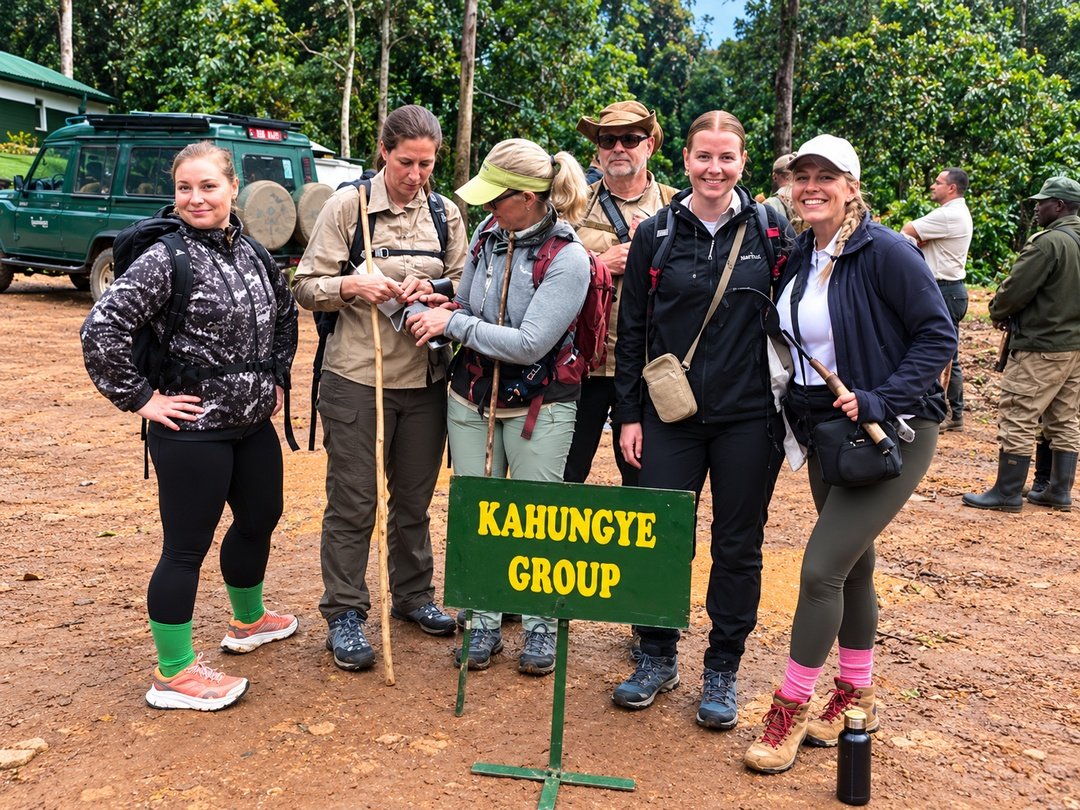
A Bwindi Gorilla Group Joining Safari is one of the most practical ways to experience mountain gorilla trekking in Uganda while sharing selected safari services with other travelers. Instead of booking a completely private safari vehicle and guide, travelers join a scheduled departure with other participants who are following the same or a similar route to Bwindi Impenetrable National Park. This helps reduce some of the costs associated with transportation, guiding and safari logistics while still allowing each traveler to enjoy the main highlight of the journey—the unforgettable experience of trekking mountain gorillas in their natural forest habitat.
Bwindi Impenetrable National Park is one of Uganda’s most famous wildlife destinations and one of the world’s most important strongholds for mountain gorillas. The park’s steep forested hills, thick vegetation, mist-covered valleys and extraordinary biodiversity create an environment that feels very different from a traditional savannah safari. Rather than searching for wildlife from inside a vehicle, visitors enter the forest on foot with experienced ranger guides and follow trails in search of a habituated gorilla family.
For solo travelers, couples, friends and visitors looking for a more affordable Uganda gorilla trekking experience, joining a group can make the journey easier to organize. Transport is coordinated in advance, departure times are fixed, accommodation can be arranged around the planned route, and gorilla trekking permits from Uganda Wildlife Authority can be secured before the safari begins. This creates a structured journey in which travelers can focus more on the experience and less on organizing individual transfers between destinations.
A Bwindi Gorilla Group Joining Safari can begin from Kampala, Entebbe or, depending on the itinerary, Kigali in Rwanda. Some programs focus entirely on Bwindi, while others combine gorilla trekking with Lake Bunyonyi, Queen Elizabeth National Park, wildlife game drives, cultural experiences or additional primate activities elsewhere in Uganda. This flexibility allows travelers to choose between a short gorilla-focused safari and a longer group journey through western Uganda.
The shared nature of the safari also adds a social element. Travelers from different countries may begin the journey as strangers and gradually connect through the long scenic drive, forest trekking, meals and shared excitement of encountering mountain gorillas. For many people, this creates an enjoyable balance between independent travel and the convenience of an organized safari.
What Is a Bwindi Gorilla Group Joining Safari?
A Bwindi Gorilla Group Joining Safari is a scheduled safari in which individual travelers book places on the same safari departure rather than reserving the entire trip privately. The participants share major safari services such as transportation, a professional driver-guide and, in some cases, selected transfers and activities. Gorilla trekking itself remains carefully regulated and is conducted according to the trekking arrangements and gorilla family allocations made for that particular day.
The group joining model is especially useful because the journey to Bwindi can involve several hours of road travel from Uganda’s main arrival points. Hiring a private safari vehicle for one person can significantly increase the overall cost of a trip. By joining other travelers, the vehicle and driver-guide costs can be divided among the participants, making the safari more accessible without removing the important services required for a comfortable journey.
A typical group joining safari follows a fixed departure date. Travelers are informed where and when the safari begins, and participants are expected to arrive at the meeting point on time. Depending on the program, the departure may begin in Kampala, Entebbe or another agreed location. From there, the group travels together toward southwestern Uganda.
The drive itself forms part of the experience. Uganda’s landscape changes noticeably as travelers leave the central region and continue toward the southwest. Busy towns gradually give way to countryside, farmland, rolling hills and increasingly mountainous scenery. Stops can be included for meals, refreshments, viewpoints or other attractions depending on the itinerary.
Once the group reaches the Bwindi region, travelers normally check into accommodation selected according to the safari package. Group joining safaris can be designed around budget, midrange or higher-comfort lodges, although travelers should always check exactly what type of accommodation is included before booking. Some guests may share rooms when this has been agreed, while solo travelers may request a private room subject to the conditions of the safari.
The most important day is the gorilla trekking day. Participants wake early, have breakfast and transfer to the appropriate Bwindi trekking sector. At the briefing point, wildlife authorities explain the trekking rules, expected behavior around gorillas and general forest safety. Visitors are then organized into trekking groups before entering the forest with ranger guides.
The trek may take a shorter or longer period depending on the location of the assigned gorilla family. Mountain gorillas move through the forest naturally, so the exact walking distance cannot be predicted in advance. Some groups may locate gorillas relatively quickly, while others may walk through steep or dense terrain for several hours.
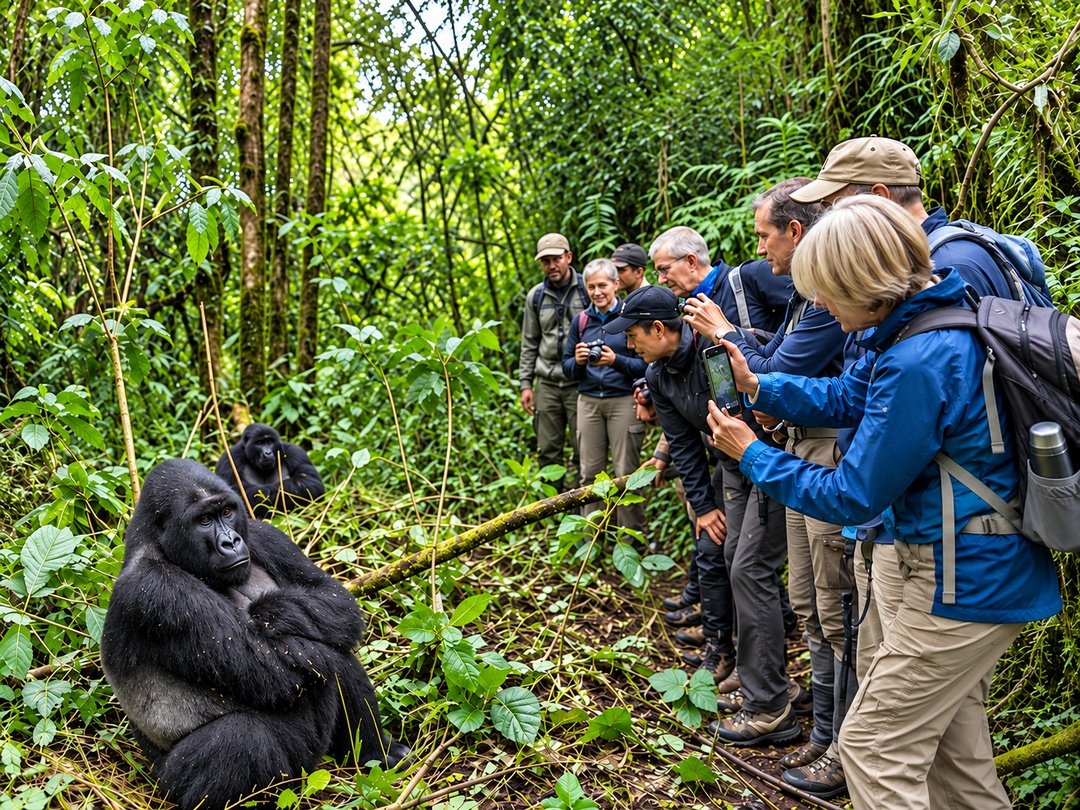
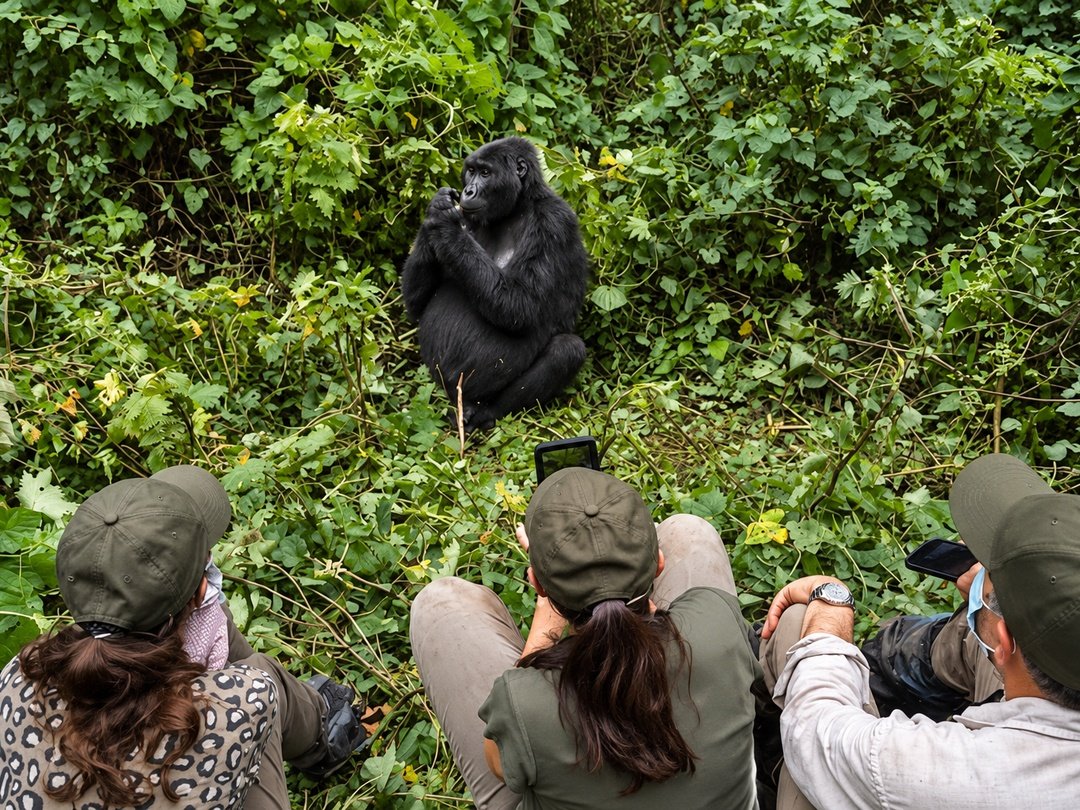
Once the gorillas are found, visitors are given a controlled period to observe them under the guidance of the rangers. Travelers may see adults feeding, young gorillas playing, females caring for infants or a dominant silverback resting and monitoring the family. This moment is usually the emotional highlight of the entire safari.
After the trek, the group returns to the briefing point and then continues according to the itinerary. Some safaris proceed toward Lake Bunyonyi for relaxation, while others remain near Bwindi or begin the return journey toward Kampala, Entebbe or Kigali.
Because the safari operates on a shared schedule, travelers should understand that flexibility is different from a private safari. Departure times, major stops and route decisions normally follow the agreed group itinerary. However, this structure is also one of the reasons the safari can operate more efficiently and at a lower shared transportation cost.
Why Choose a Bwindi Gorilla Group Joining Safari?
One of the main reasons travelers choose a Bwindi Gorilla Group Joining Safari is affordability. Gorilla trekking is a highly specialized wildlife experience that involves permits, transportation, accommodation, professional guiding and other logistical arrangements. For a solo traveler, paying privately for every element can make the journey considerably more expensive. Sharing transport and certain operational costs with other travelers can reduce the overall safari expense.
This makes group joining safaris particularly attractive to solo travelers. Many people dream of trekking mountain gorillas but hesitate because they do not have a travel companion. A scheduled group departure removes the need to find friends or family members who are available on the same dates. A solo traveler can simply reserve a place and join other participants on the scheduled safari.
Couples can also benefit from group joining safaris. A couple may still enjoy their own accommodation while sharing the safari vehicle and driver-guide with other travelers. This allows them to experience the social benefits of a group journey while still maintaining personal space during the evenings.
Another advantage is organization. Gorilla trekking requires several elements to be coordinated correctly. The safari dates must match permit availability, accommodation should ideally be located within practical reach of the assigned trekking sector, and transportation needs to be arranged around the correct reporting time. A properly organized group safari brings these elements together into a single itinerary.
Group travel can also make the long road journey more enjoyable. Traveling from Kampala or Entebbe toward Bwindi takes travelers through a large part of Uganda. Sharing the journey with other safari participants can create opportunities for conversation, photography and exchanging travel experiences.
For first-time visitors to Uganda, traveling with a professional driver-guide adds reassurance and convenience. The guide handles navigation, driving and coordination while also providing information about Uganda’s landscapes, communities and wildlife destinations along the route.
The social experience is another important reason to choose a group safari. Gorilla trekking attracts travelers from many parts of the world, and a group departure can bring together people with very different backgrounds who share the same interest in wildlife and adventure. By the end of the safari, the shared gorilla encounter often becomes something the group remembers together.
A Bwindi Gorilla Group Joining Safari is also suitable for travelers who prefer a structured itinerary. Rather than spending time organizing transport, accommodation and individual movements independently, travelers follow a planned schedule from the starting point to Bwindi and back.
Another advantage is that group safaris can often be combined with additional attractions. Travelers may continue toward Lake Bunyonyi after trekking, visit Queen Elizabeth National Park for game drives, explore cultural experiences near Bwindi or join a longer Uganda wildlife itinerary.
The safari also provides an opportunity to experience Uganda beyond the gorillas themselves. The road journey passes through towns, villages and rural landscapes that reveal more of the country than travelers would see by flying directly between destinations. For visitors who enjoy cultural observation and changing scenery, the overland journey becomes an important part of the adventure.
Most importantly, joining a group does not reduce the significance of the gorilla trekking experience. When you finally enter Bwindi’s forest and stand quietly near a mountain gorilla family, the experience remains deeply personal. Sharing transport may make the journey more affordable, but the moment you encounter the gorillas is still one of the most intimate and memorable wildlife experiences available in Uganda.
Bwindi Impenetrable National Park Overview
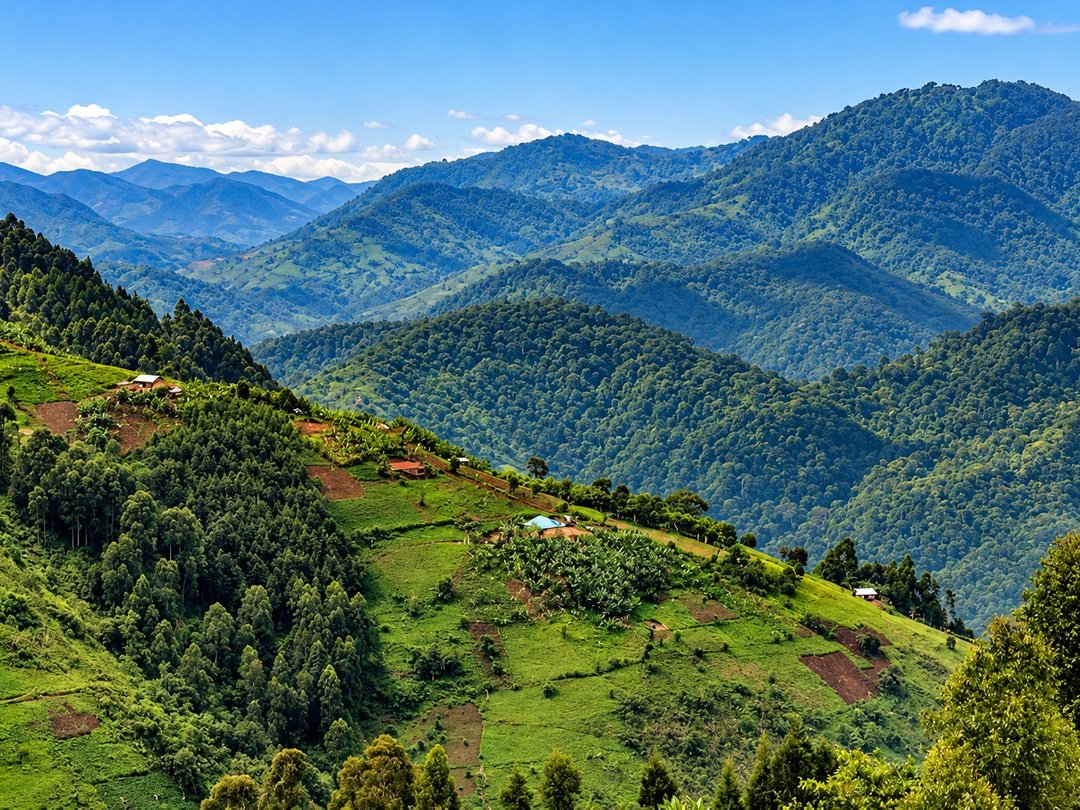
Bwindi Impenetrable National Park is one of Uganda’s most important wildlife destinations and the centerpiece of most Bwindi Gorilla Group Joining Safari itineraries. Located in southwestern Uganda, the park is famous for its dense tropical forest, steep valleys, exceptional biodiversity and, above all, its population of mountain gorillas.
The forest is ancient, thick and biologically rich. Walking through Bwindi feels very different from traveling through open savannah parks because much of the experience takes place beneath a dense canopy where visibility changes constantly. Travelers move through narrow forest paths, climb slopes, cross streams and listen to the sounds of birds, insects and primates hidden within the vegetation.
Bwindi is especially important because it protects a significant population of mountain gorillas. Several habituated gorilla families are available for tourism, allowing visitors to join regulated treks and observe these animals in the wild. The trekking experience is carefully managed so that tourism can contribute to conservation while minimizing disturbance to the gorillas.
The park is divided into several trekking sectors, including Buhoma, Ruhija, Rushaga and Nkuringo. Each sector has its own character, access routes, accommodation options and habituated gorilla families. The trekking sector assigned to a traveler normally depends on permit availability and the specific safari arrangements made in advance.
Buhoma is one of the best-known sectors and has long been associated with gorilla tourism in Bwindi. It offers a range of accommodation options and is often included in itineraries that connect Bwindi with Queen Elizabeth National Park.
Ruhija is known for its elevated location, forest scenery and birding opportunities. Travelers trekking from this sector may experience cooler temperatures and beautiful mountain views.
Rushaga is another major gorilla trekking area and is frequently used for both standard gorilla trekking and gorilla habituation experiences. It is also well positioned for travelers entering Uganda from Rwanda or combining Bwindi with Lake Bunyonyi.
Nkuringo is known for dramatic scenery and steeper terrain. The area appeals to travelers who enjoy more challenging trekking and highland landscapes.
For travelers on a group joining safari, understanding the trekking sector is important because accommodation and road transfers need to be coordinated around the correct briefing point. A lodge in one sector may not be convenient for a trek beginning in another sector, especially when early-morning reporting is required.
Bwindi is also much more than a gorilla destination. The park supports a wide variety of birds, butterflies, primates, forest mammals and plant species. Birdwatchers, photographers and nature enthusiasts can therefore find plenty of additional interest around the forest.
Many travelers also combine gorilla trekking with community experiences near Bwindi. These may include visits to local communities, cultural demonstrations, craft experiences and guided walks. Such activities can add another dimension to a group joining safari by helping travelers understand the people who live around the forest and the relationship between tourism and conservation.
Gorilla Trekking on a Group Joining Safari
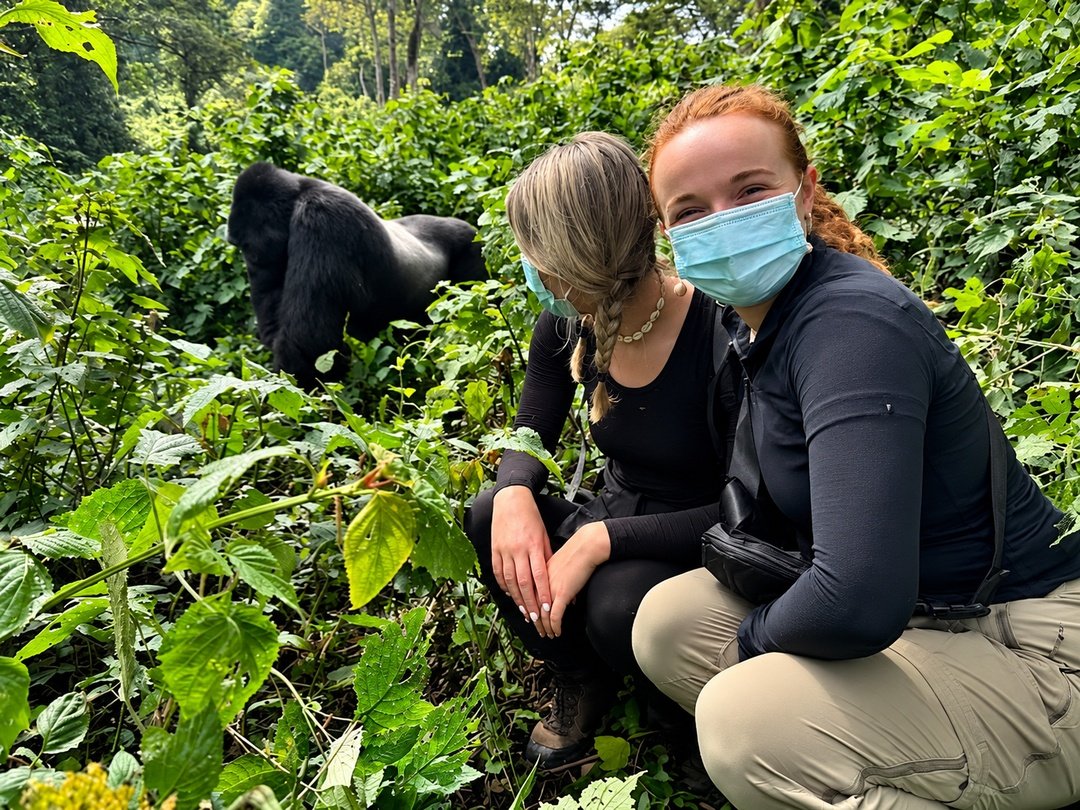
Gorilla trekking is the main highlight of a Bwindi Gorilla Group Joining Safari, and the trekking day is usually the most anticipated part of the entire journey.
The day normally begins early. Travelers wake up, have breakfast and transfer to the designated park briefing point. Because group joining safaris operate on a schedule, participants are expected to be ready on time so that everyone reaches the briefing area before the trekking process begins.
At the briefing point, ranger guides explain the rules of gorilla trekking, forest safety, expected behavior around the gorillas and what visitors should do during the trek. Travelers may also be assigned to a specific gorilla family group depending on permit allocation and operational arrangements.
After the briefing, the trekking group enters the forest with trained guides and trackers. The search can take different amounts of time because mountain gorillas move freely through their habitat. Their location depends on where they fed, rested or traveled the previous day.
Some treks may involve relatively short walks, while others may require several hours of hiking through steep, muddy or densely vegetated terrain. This unpredictability is part of what makes gorilla trekking such a genuine wildlife experience.
The forest environment can be physically demanding. Travelers may encounter slippery trails, roots, uneven ground and steep climbs. Good hiking shoes, long trousers, gloves and rain protection can make the experience much more comfortable.
Porters are often available near the trekking points and can help carry backpacks or provide support on difficult sections of the trail. Hiring a porter can also provide direct income to members of the local community.
As the group moves through the forest, guides interpret tracks, vegetation and other signs that may indicate where the gorillas have passed. The anticipation builds as travelers move deeper into the forest and begin to realize that the animals may be close.
Once the gorilla family is located, visitors are guided into an appropriate viewing position. The moment can be powerful, especially for first-time visitors. Travelers may see a silverback resting, females caring for young gorillas, juveniles playing or family members feeding on vegetation.
The observation period is carefully controlled. Visitors are expected to remain calm, avoid sudden movements and follow all instructions given by the ranger guides.
Photography is allowed, but flash photography should not be used. Travelers should prepare their cameras in advance so they do not spend the entire encounter adjusting equipment.
For group joining travelers, the gorilla encounter itself still feels very personal. Although participants may have shared a vehicle on the journey to Bwindi, the experience inside the forest is focused entirely on the gorillas and the immediate trekking group.
After the encounter, travelers return through the forest to the starting point. Some may feel physically tired, but the excitement of the experience usually makes the effort worthwhile.
The group then continues according to the planned itinerary. Depending on the safari, travelers may return to their lodge, continue toward Lake Bunyonyi, transfer to another destination or begin the return journey.
Gorilla Trekking Permits for a Bwindi Gorilla Group Joining Safari
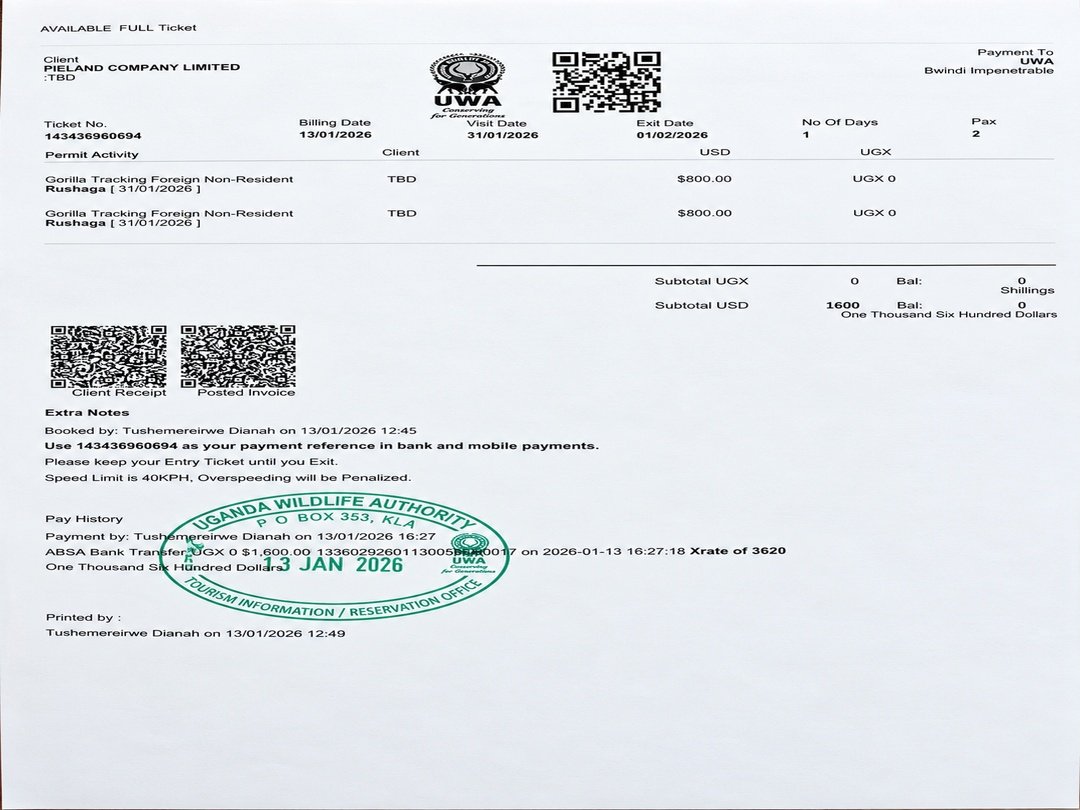
A gorilla trekking permit is one of the most important requirements for any Bwindi Gorilla Group Joining Safari. Without a valid permit, a traveler cannot participate in the scheduled gorilla trekking experience.
Gorilla permits are limited because only a controlled number of visitors are allowed to trek habituated gorilla families each day. This system helps protect the gorillas from excessive human contact while supporting conservation and park management.
For travelers joining a group safari, permit coordination is particularly important because the permit date must match the safari departure date and the assigned trekking sector. A mismatch between accommodation, transport and permit location can create major logistical problems.
This is why travelers are encouraged to confirm their participation early. Once a group joining departure is available, the safari organizer can coordinate transport, accommodation and permit availability around the same travel dates.
Permits are normally arranged before the safari begins. Travelers should not assume they can arrive in Bwindi and obtain a permit at the last minute, especially during busy travel periods when availability may be limited.
The permit usually corresponds to a specific trekking date and sector. This means that travelers should avoid changing their itinerary after the permit has been secured unless they understand the applicable conditions and availability.
For solo travelers, permit planning is one of the main advantages of joining an organized safari. Instead of navigating the process independently, the permit can be coordinated together with the rest of the safari arrangements.
The same applies to couples and small groups. When everyone is traveling on the same group joining departure, it becomes easier to organize the permits around a shared itinerary.
Travelers should also understand that a gorilla trekking permit is separate from other safari costs such as transport, accommodation, meals and additional activities unless these have been packaged together.
Before confirming a safari, travelers should therefore ask exactly what is included in the package and whether the permit has already been factored into the arrangement.
Permit availability can influence which trekking sector is used. For example, if permits are available in Rushaga rather than Buhoma, the safari may need to use accommodation and transfers that are convenient for Rushaga.
This is another reason why early booking is valuable. It gives the safari organizer more flexibility to secure suitable permits, accommodation and transport before preferred options become limited.
For travelers who are serious about joining a gorilla safari, the best approach is to confirm dates early and allow the safari organizer to align the permit with the planned group departure.
A well-organized permit process helps ensure that the most important part of the trip—the actual gorilla trekking experience—runs smoothly and without unnecessary complications.
Popular Bwindi Gorilla Group Joining Safari Routes
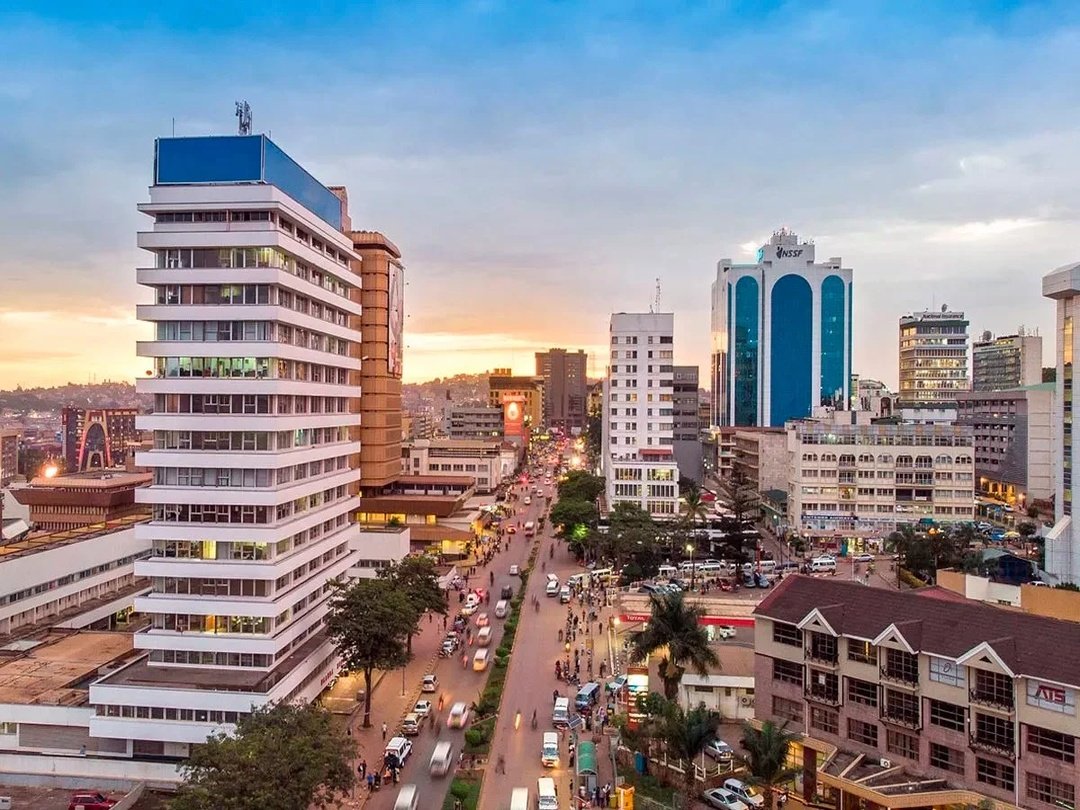
A Bwindi Gorilla Group Joining Safari can follow several routes depending on where travelers begin their journey, how many days they have available and which additional destinations they want to include. The most common starting points are Kampala, Entebbe and Kigali, while longer group safaris may connect Bwindi with Queen Elizabeth National Park, Lake Bunyonyi or other attractions in western and southwestern Uganda.
The Kampala or Entebbe to Bwindi route is one of the most popular options for travelers arriving in Uganda through Entebbe International Airport. Group members normally meet at a designated point before beginning the overland journey toward southwestern Uganda. The drive is long but scenic, passing through towns, farming areas, rolling hills and increasingly mountainous landscapes as the group approaches Bwindi.
This route is especially suitable for travelers who want to experience more of Uganda by road. Rather than flying directly to the gorilla region, they see a broader section of the country and can often include planned stops for meals, photography and short breaks along the way.
Another popular option is the Kigali to Bwindi group joining safari. Kigali can provide convenient access to southwestern Uganda, particularly for travelers trekking in sectors such as Rushaga or Nkuringo. Depending on the final itinerary, travelers cross the Rwanda–Uganda border before continuing toward Bwindi.
This route appeals to visitors who may already be in Rwanda or who want to combine Rwanda and Uganda in one journey. It can also reduce the amount of overland travel required compared with starting the safari from Kampala.
A third route combines Bwindi with Lake Bunyonyi. This is particularly attractive for travelers who want a relaxed experience after gorilla trekking. After the physical challenge and emotional excitement of trekking in Bwindi, Lake Bunyonyi provides a peaceful setting where travelers can enjoy scenic views, boat experiences, birding and time to rest.
The combination works well within a group joining itinerary because Lake Bunyonyi can serve as a natural transition between Bwindi and the return journey toward Kampala or Entebbe.
Another important route combines Bwindi with Queen Elizabeth National Park. This itinerary is ideal for travelers who want to experience both gorillas and traditional savannah wildlife.
Queen Elizabeth National Park adds game drives, open landscapes and opportunities to see elephants, buffaloes, antelopes, lions and other wildlife. Travelers can therefore experience two very different ecosystems within one safari.
In some itineraries, the group may travel from Queen Elizabeth toward Bwindi, while in others the journey may begin with gorilla trekking before continuing toward Queen Elizabeth. The direction usually depends on permit dates, accommodation arrangements and the overall safari schedule.
Longer group joining safaris can also connect Bwindi with Kibale National Park for chimpanzee trekking. This creates a primate-focused journey in which travelers experience both mountain gorillas and chimpanzees.
For travelers interested in Uganda’s great apes, combining Kibale and Bwindi can be one of the strongest safari experiences available in the country.
The best route depends on the traveler’s arrival point, available time and preferred safari style. Shorter group joining safaris usually focus entirely on Bwindi, while longer programs allow visitors to combine gorilla trekking with lakes, savannah wildlife, additional primates and cultural experiences.
Typical 3-Day Bwindi Gorilla Group Joining Safari
A 3-day Bwindi Gorilla Group Joining Safari is one of the most popular options for travelers who want to experience gorilla trekking without committing to a long Uganda safari. The itinerary is compact, but when properly organized it provides enough time to travel to Bwindi, complete the gorilla trek and return to the starting point.
Day One: Transfer to Bwindi Impenetrable National Park
The safari usually begins early in the morning from Kampala, Entebbe or another agreed meeting point. Travelers meet their driver-guide and fellow group members before beginning the journey toward southwestern Uganda.
The road transfer gives participants the opportunity to see Uganda beyond its major cities. The route passes through changing landscapes, busy trading centers, agricultural areas, rolling hills and rural communities.
Scheduled stops can be included for meals, refreshments or short breaks. The exact route and duration depend on road conditions, the selected trekking sector and the location of the accommodation.
As the group approaches Bwindi, the landscape becomes increasingly mountainous and forested. The final stages of the journey often provide dramatic views of hills, valleys and cultivated slopes surrounding the protected forest.
On arrival, travelers check into their lodge or camp and prepare for the following morning’s gorilla trek. Dinner is usually followed by an early night because the trekking day begins early.
This first evening is also a good opportunity for the guide to explain the following day’s schedule, what travelers should carry and the expected reporting time at the park briefing point.
Day Two: Gorilla Trekking in Bwindi
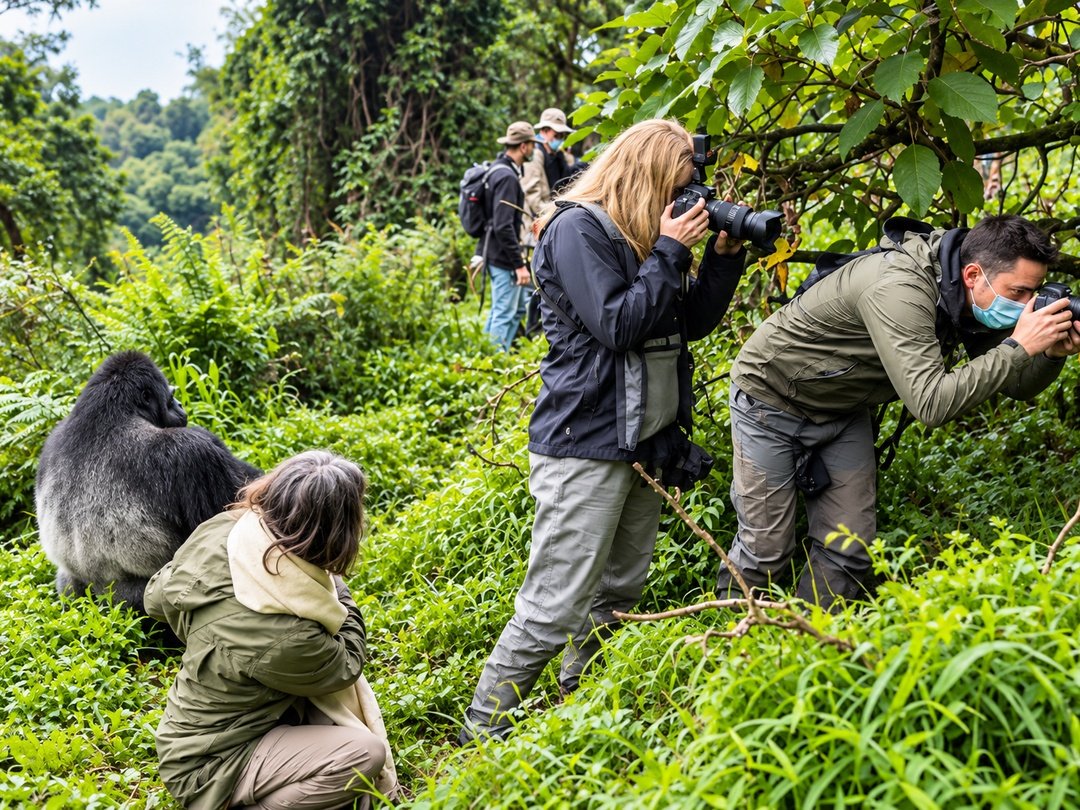
The second day is the highlight of the safari.
Travelers wake early, have breakfast and transfer to the appropriate Bwindi trekking sector. Everyone should carry essential trekking equipment, including drinking water, suitable footwear, rain protection and a small daypack.
At the briefing point, ranger guides explain how the trek will be conducted and remind visitors about the rules that protect both the gorillas and the participants.
The trekking group then enters the forest and begins searching for the assigned gorilla family.
The amount of time required to locate the gorillas cannot be predicted because the animals move freely through the forest. Some trekking groups may encounter their assigned family relatively quickly, while others may spend several hours walking through steep or dense terrain.
Once the gorillas are found, the atmosphere changes immediately. Visitors may observe a silverback, females, juveniles and young gorillas feeding, resting, climbing or interacting with one another.
The encounter is carefully managed by ranger guides, and visitors are expected to follow all instructions regarding movement, photography and distance.
After the experience, the group returns to the starting area and later transfers back to the accommodation.
Depending on the itinerary and the energy level of the travelers, the afternoon may be used for relaxation, a community experience or another activity near Bwindi.
Some 3-day programs may instead continue toward Lake Bunyonyi after the trek, allowing travelers to spend the evening in a quieter lakeside setting.
Day Three: Return Journey
After breakfast, the group begins the journey back toward Kampala, Entebbe or another agreed destination.
The return drive provides time to reflect on the trekking experience and enjoy the landscapes that may have been missed during the first journey.
Stops can be made along the route depending on the itinerary, travel time and group schedule.
A 3-day group joining safari is ideal for travelers whose main objective is gorilla trekking. However, visitors who want to include Queen Elizabeth National Park, Lake Bunyonyi, chimpanzee trekking or additional cultural activities should consider a longer itinerary.
The success of a short safari depends heavily on good coordination. Gorilla permits, transport, accommodation and briefing times must all align correctly. For this reason, booking a well-organized group departure can make the experience much easier for travelers who have limited time.
Accommodation on a Bwindi Gorilla Group Joining Safari
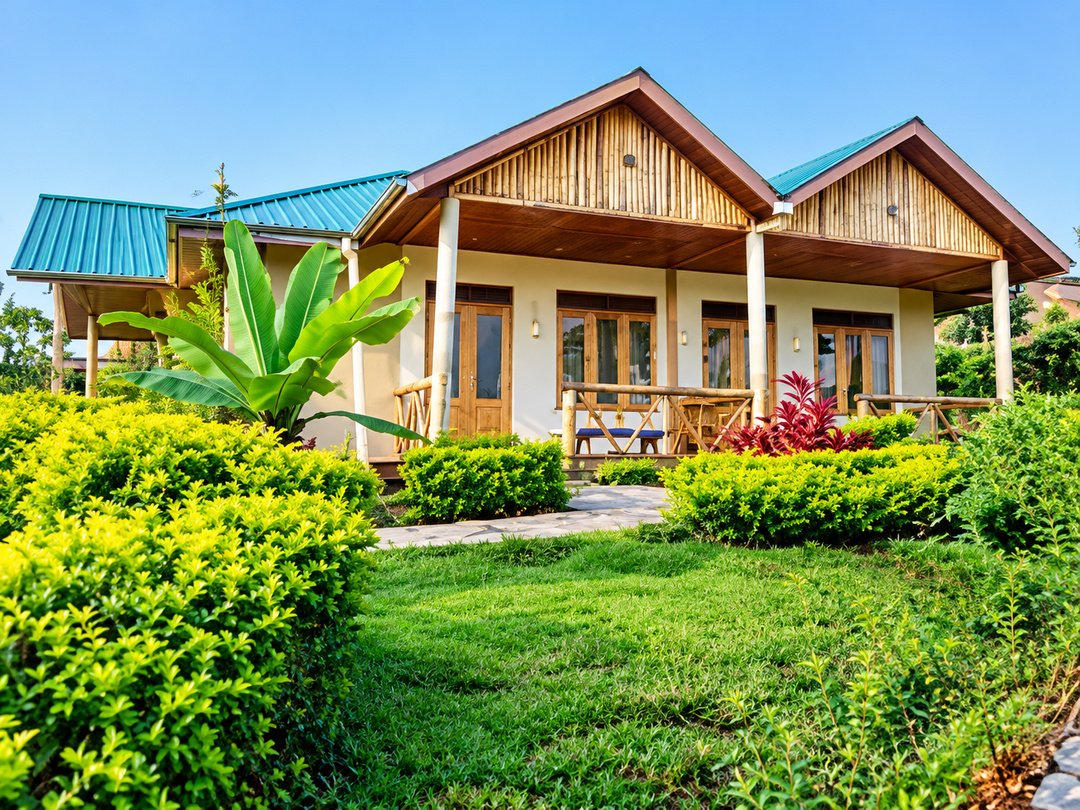
Accommodation is an important part of a Bwindi Gorilla Group Joining Safari because travelers need a comfortable place to rest before and after the trek. Bwindi has a wide range of accommodation options, from simple budget camps and guesthouses to comfortable midrange lodges and more luxurious properties.
The accommodation selected for a group joining safari usually depends on the package category, trekking sector and availability.
Budget accommodation is commonly used on lower-cost group safaris. These properties generally provide the basic facilities travelers need, including a bed, private or shared bathroom arrangements, meals and a convenient location near the trekking area.
Budget lodges are particularly suitable for solo travelers, students, backpackers and visitors whose main priority is the gorilla trekking experience rather than high-end accommodation.
Midrange accommodation offers additional comfort while remaining practical for a group safari. Travelers may enjoy larger rooms, better views, private bathrooms, more developed dining areas and improved guest facilities.
This category is popular with couples and travelers who want a balance between affordability and comfort.
The location of the lodge is extremely important. Bwindi is divided into different trekking sectors, and travelers should ideally stay near the sector indicated on their gorilla permit.
For example, a traveler trekking in Buhoma should normally use accommodation that provides practical access to the Buhoma briefing point. The same principle applies to Rushaga, Ruhija and Nkuringo.
Attempting to stay too far from the assigned sector can result in extremely early departures and unnecessary driving on the trekking morning.
On a group joining safari, accommodation arrangements may vary according to rooming preferences. Couples typically share one room, while friends may choose twin arrangements.
Solo travelers should confirm whether the safari price includes a private room or whether a single-room supplement applies.
Some group departures may also offer shared accommodation for travelers who want to reduce costs further. This should always be clearly communicated before booking so that participants understand the rooming arrangement.
Meals are often included in accommodation packages, especially dinner and breakfast. Breakfast is particularly important on the trekking morning because visitors may spend several hours in the forest.
Travelers should also inform the safari organizer or lodge about dietary restrictions before arrival whenever possible.
After gorilla trekking, the lodge becomes an important place to relax. Travelers may return tired, muddy and excited after several hours in the forest, so a hot shower, comfortable room and good meal can make a significant difference to the overall safari experience.
The best accommodation for a group joining safari is not necessarily the most expensive. What matters most is that it is clean, comfortable, safe, properly located and suitable for the trekking schedule.
A well-planned group safari therefore coordinates the lodge with the gorilla permit, trekking sector and transport arrangements rather than selecting accommodation based only on price.
Transport for a Bwindi Gorilla Group Joining Safari
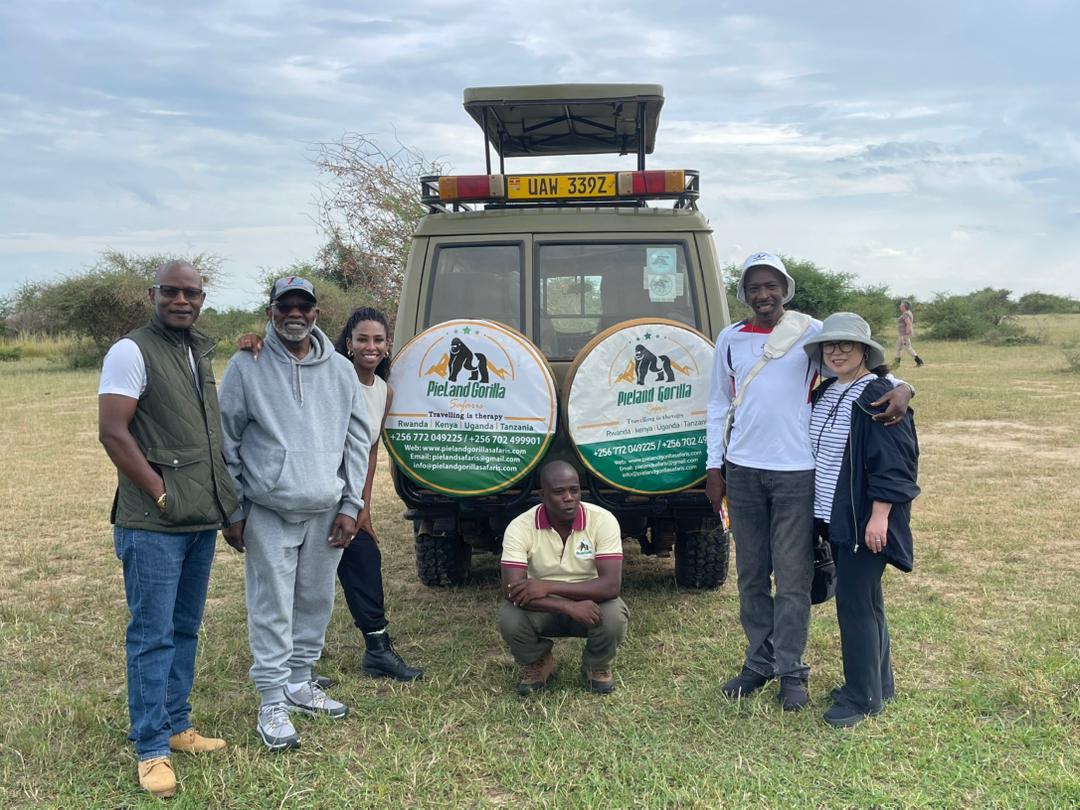
Transport is one of the biggest advantages of a Bwindi Gorilla Group Joining Safari because travelers share the cost of moving between Kampala, Entebbe, Kigali, Bwindi and other destinations on the itinerary. Instead of arranging a private vehicle individually, participants travel together in a safari vehicle with a professional driver-guide.
The type of vehicle used normally depends on the size of the group, road conditions and safari package. A good safari vehicle should provide enough space for passengers, luggage and photography equipment while remaining suitable for the long journey into southwestern Uganda.
Travelers beginning from Kampala or Entebbe should expect a full day on the road when traveling to Bwindi. The journey is long, but it passes through some of Uganda’s most scenic rural landscapes. Planned stops for meals, refreshments and rest breaks make the transfer more comfortable.
For travelers starting from Kigali, the route can be shorter depending on the trekking sector and border crossing used. This makes Kigali an attractive starting point for some group joining safaris, particularly when the itinerary focuses on southern Bwindi.
Group transport follows a shared schedule, so punctuality is important. Travelers should arrive at the agreed meeting point on time because delays can affect everyone in the vehicle.
Luggage should also be kept practical. Soft-sided bags are usually easier to handle than large rigid suitcases, especially when several travelers are sharing one safari vehicle.
The professional driver-guide plays an important role throughout the journey. In addition to driving, the guide can explain local landscapes, communities, road conditions and safari logistics. This makes the transfer more informative and less tiring for visitors who are unfamiliar with Uganda.
Transport arrangements should always be coordinated with the correct Bwindi trekking sector. A traveler trekking in Rushaga, for example, should not be transported to accommodation that makes access to the Rushaga briefing point unnecessarily difficult.
For this reason, successful group joining safaris depend on careful coordination between transport, accommodation and gorilla permits.
Who Should Join a Bwindi Gorilla Group Safari?
A Bwindi Gorilla Group Joining Safari is particularly suitable for travelers who want to experience mountain gorilla trekking while keeping the safari organized, social and more affordable than a fully private journey.
Solo travelers are among the biggest beneficiaries. Traveling alone can make private transport expensive, but joining other travelers allows the cost of the safari vehicle and driver-guide to be shared.
Couples can also benefit from a group safari while still enjoying privacy at their lodge. They can share transport and some safari activities during the day but return to their own room in the evening.
Friends traveling together may choose a group joining safari when they want to reduce transport costs without organizing every detail independently.
Budget-conscious travelers are also well suited to this safari style. Sharing transport can make a major difference to the overall trip cost, especially on a short 3-day or 4-day gorilla safari.
First-time visitors to Uganda may find a group safari easier because the route, accommodation, permits and major timings are already coordinated.
Photographers and wildlife enthusiasts may also enjoy the group setting because they travel with people who often share similar interests in nature and conservation.
The group model is less suitable for travelers who want complete flexibility over departure times, stops and daily schedules. Private safaris remain the better choice for visitors who prefer to control every part of the itinerary.
For most travelers, however, a small group creates a good balance between independence and organization.
Best Time for a Bwindi Gorilla Group Joining Safari
A Bwindi Gorilla Group Joining Safari can be organized throughout the year because mountain gorilla trekking in Bwindi takes place year-round. The best period depends on personal travel preferences, weather tolerance and availability.
The drier periods are often popular because forest trails may be easier to navigate. Less rainfall can make steep paths less slippery and road conditions more predictable.
These periods are also popular with international travelers, which means gorilla permits and accommodation can become limited. Early booking is especially important when traveling during busy months.
The wetter periods can still be excellent for gorilla trekking. Bwindi is a rainforest, so some rain should be expected at any time of year.
During wetter months, the forest becomes especially lush and atmospheric. Photographers may appreciate the rich green vegetation, dramatic cloud cover and misty scenery.
Rain can make trekking more physically demanding because trails may become muddy and slippery. Travelers should therefore bring waterproof clothing and strong hiking footwear.
Group joining safaris can be attractive during both peak and quieter periods. During busier seasons, there may be more scheduled departures, while quieter months can offer a more relaxed atmosphere.
Travelers should avoid choosing dates based only on weather. Permit availability, flight schedules, accommodation and other destinations on the itinerary should also influence the final decision.
The most important factor is to book early once travel dates are known. Gorilla trekking permits are limited, and the permit date determines much of the rest of the safari planning.
What to Pack for a Bwindi Gorilla Group Joining Safari
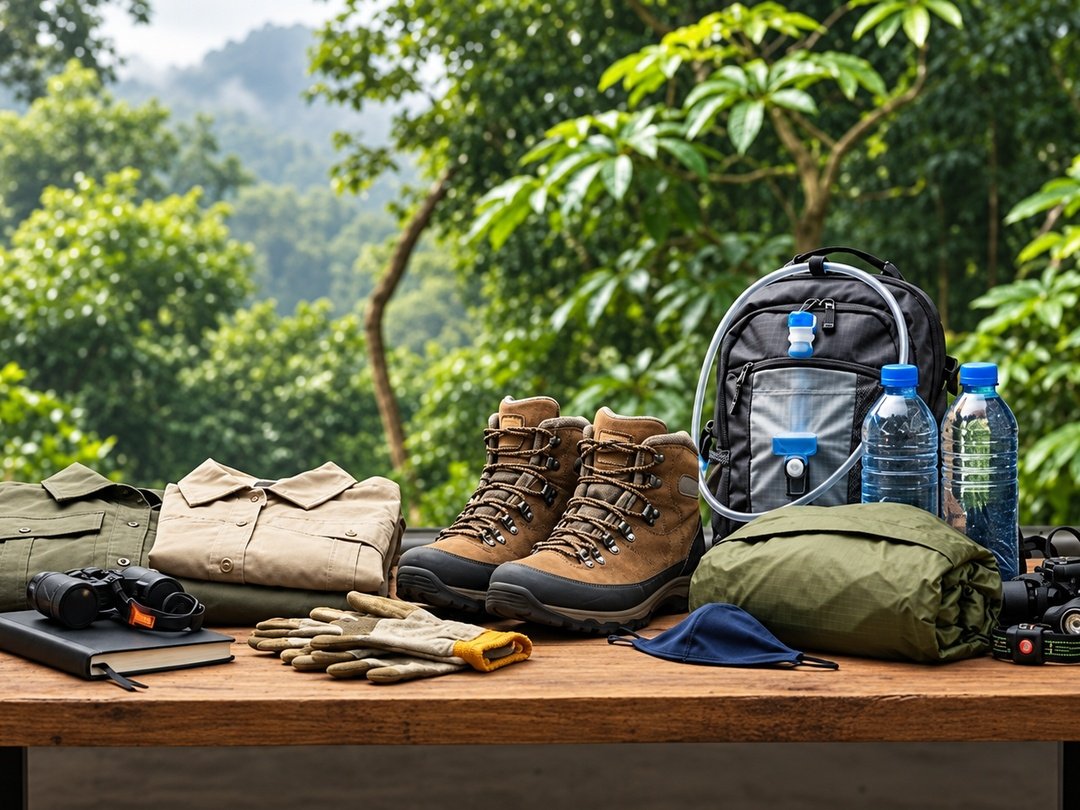
Packing correctly is important for a Bwindi Gorilla Group Joining Safari because the journey combines long road transfers, changing weather conditions and a physically active forest trek. Travelers do not need excessive luggage, but they should bring practical clothing and equipment that will make the gorilla trekking day more comfortable.
Strong hiking boots or trekking shoes are among the most important items. Bwindi’s forest trails can be steep, muddy and slippery, especially after rainfall. Footwear with good grip and ankle support can make a significant difference during the trek.
Long trousers are also recommended because they protect the legs from vegetation, insects and mud. Lightweight trekking trousers that dry quickly are usually more practical than heavy clothing.
A long-sleeved shirt provides additional protection while walking through thick forest. Breathable materials are preferable because the trek can become warm and humid even when the morning starts cool.
Travelers should carry a lightweight waterproof jacket or poncho. Bwindi is a rainforest, and showers can occur even during periods that are generally considered dry.
Gardening or lightweight trekking gloves can be useful when climbing steeper sections of the trail. Visitors sometimes need to hold onto branches, vines or vegetation for balance, and gloves can protect the hands from scratches and rough surfaces.
A small daypack is useful for carrying water, snacks, a camera, rain protection and personal items during the trek. The bag should be comfortable enough to carry for several hours.
Visitors should bring sufficient drinking water. Gorilla trekking can involve considerable walking, and staying hydrated is important throughout the experience.
A hat and sunscreen are also useful, particularly during road transfers and when walking through more open areas around the forest.
Insect repellent can help protect against mosquitoes and other insects, particularly in the evenings and around forest-edge accommodation.
Photographers should bring suitable camera equipment but avoid carrying unnecessary weight. A camera with good low-light performance can be particularly useful because gorillas are often encountered beneath the forest canopy where lighting conditions can change quickly.
Extra batteries and memory cards are recommended because charging opportunities may vary between accommodations.
Travelers should avoid using flash photography during gorilla encounters. Cameras should therefore be prepared in advance for natural-light photography.
A reusable water bottle is another practical item and can help reduce disposable plastic use during the safari.
For the road journey, travelers may also want a light sweater, travel pillow, personal medication and a small amount of cash for optional purchases or gratuities.
Packing lightly is particularly useful on a group joining safari because several passengers may be sharing luggage space in the same vehicle.
The most important principle is to pack for comfort and practicality rather than appearance. Appropriate clothing and footwear can greatly improve the gorilla trekking experience.
Bwindi Gorilla Group Joining Safari From Kigali
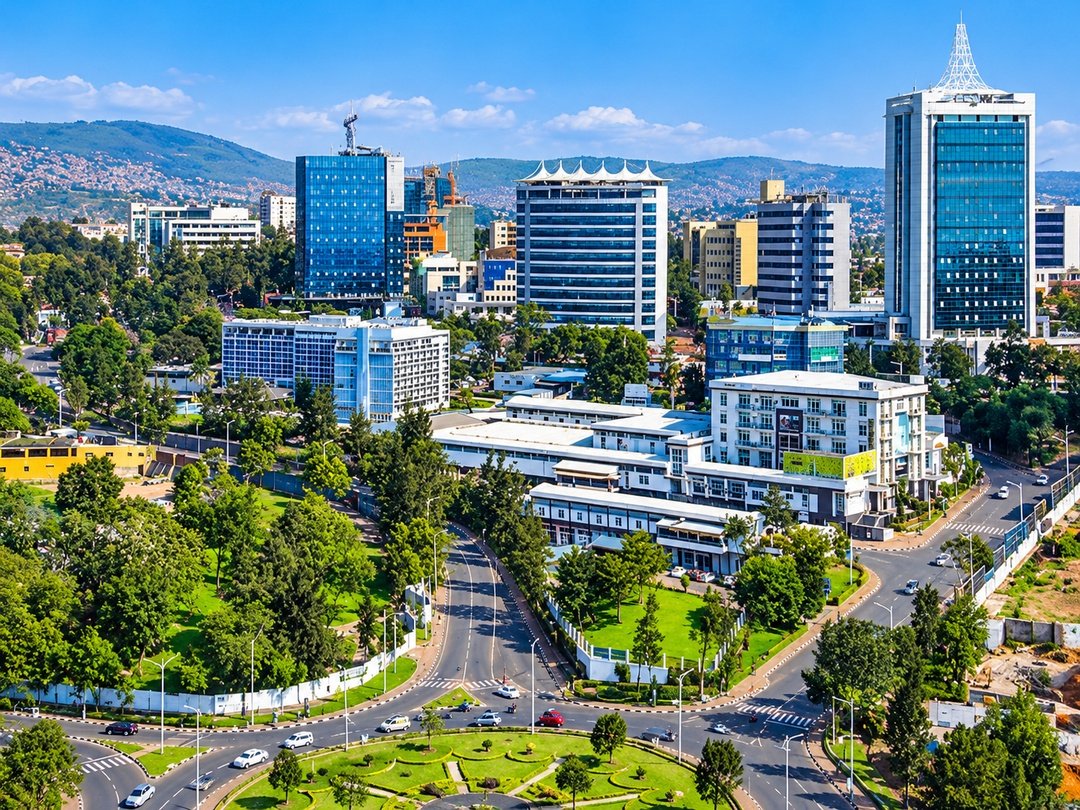
A Bwindi Gorilla Group Joining Safari from Kigali can be an attractive option for travelers who are already in Rwanda or who prefer to begin their journey closer to southwestern Uganda.
Kigali is geographically well positioned for access to parts of southern Bwindi, making it particularly useful for travelers whose gorilla trekking permits are assigned to sectors such as Rushaga or Nkuringo.
The safari normally begins with a scheduled pick-up from Kigali or another agreed meeting point. Group members then travel toward the Uganda border, complete the necessary immigration procedures and continue toward Bwindi.
Travelers should ensure that they have the correct travel documents for both countries before beginning the journey. Passport validity, visa requirements and border procedures should be confirmed before travel.
The road journey from Kigali provides a scenic introduction to the region. Travelers pass through rolling hills, rural communities and cultivated landscapes before reaching the forested highlands around Bwindi.
One of the advantages of beginning from Kigali is that the road transfer can be shorter than driving from Kampala or Entebbe, depending on the final trekking sector.
This can make the route attractive to travelers with limited time.
A typical short itinerary may include a transfer from Kigali to Bwindi on the first day, gorilla trekking on the second day and a return to Kigali on the third day.
Longer itineraries can include Lake Bunyonyi, Queen Elizabeth National Park or additional attractions in Uganda.
Travelers should understand that the itinerary depends heavily on the trekking sector. A permit for Buhoma may require a different route and longer transfer than a permit for Rushaga.
For this reason, the gorilla permit should be confirmed before final transport arrangements are made.
A group joining safari from Kigali can also appeal to travelers who want to combine Rwanda and Uganda in one journey.
Visitors may spend time exploring Kigali before crossing into Uganda for gorilla trekking, or they may continue with additional safari activities after returning from Bwindi.
The shared transport arrangement can help reduce the cost of cross-border travel compared with organizing a private vehicle.
As with all group safaris, travelers should arrive at the agreed pick-up location on time and carry practical luggage.
The Kigali route provides a convenient alternative for travelers who want to reach Bwindi without beginning their journey from central Uganda.
Bwindi Gorilla Group Joining Safari From Kampala or Entebbe
A Bwindi Gorilla Group Joining Safari from Kampala or Entebbe is one of the most common ways to experience gorilla trekking in Uganda.
Many international visitors arrive through Entebbe International Airport and either spend a night in Entebbe or Kampala before joining a scheduled safari departure.
The journey from central Uganda to Bwindi is long, but it provides one of the best opportunities to experience the changing landscapes of the country.
The group normally departs early in the morning so that there is enough time to reach southwestern Uganda before evening.
After leaving Kampala or Entebbe, travelers pass through increasingly rural areas, farming landscapes and regional towns.
Depending on the itinerary, the safari may include scheduled stops for breakfast, lunch or refreshments.
The drive becomes increasingly scenic as the group approaches western and southwestern Uganda.
Rolling hills, plantations, valleys and highland landscapes gradually replace the flatter areas found closer to Kampala.
For many travelers, the road journey becomes an important part of the safari because it reveals a side of Uganda that would be missed by flying directly to the gorilla region.
A professional driver-guide manages the route and can provide information about the different areas the group passes through.
Travelers should expect to spend a significant part of the first day on the road, so comfortable clothing and practical luggage are recommended.
On arrival near Bwindi, the group checks into accommodation located within practical reach of the assigned trekking sector.
The following morning is dedicated to gorilla trekking.
After the trek, the safari may either remain near Bwindi, continue to Lake Bunyonyi or begin connecting toward another destination depending on the length of the itinerary.
A simple 3-day safari normally returns to Kampala or Entebbe on the final day.
Longer group joining safaris may instead continue through Queen Elizabeth National Park, Kibale National Park or other destinations before returning to central Uganda.
Beginning the safari from Kampala or Entebbe is particularly convenient for travelers who want to combine gorilla trekking with a broader Uganda experience.
The route also avoids the need for international border crossings, which can simplify logistics for visitors whose entire safari takes place within Uganda.
For solo travelers, the shared road transfer is one of the biggest advantages of this route. Instead of paying privately for the long journey to Bwindi, participants share the vehicle and driver-guide with other travelers.
Couples and friends can benefit in the same way while still maintaining their own accommodation arrangements.
The Kampala or Entebbe route therefore remains one of the most practical choices for travelers looking for a structured and affordable Bwindi Gorilla Group Joining Safari.
Combining a Bwindi Gorilla Group Joining Safari With Other Destinations
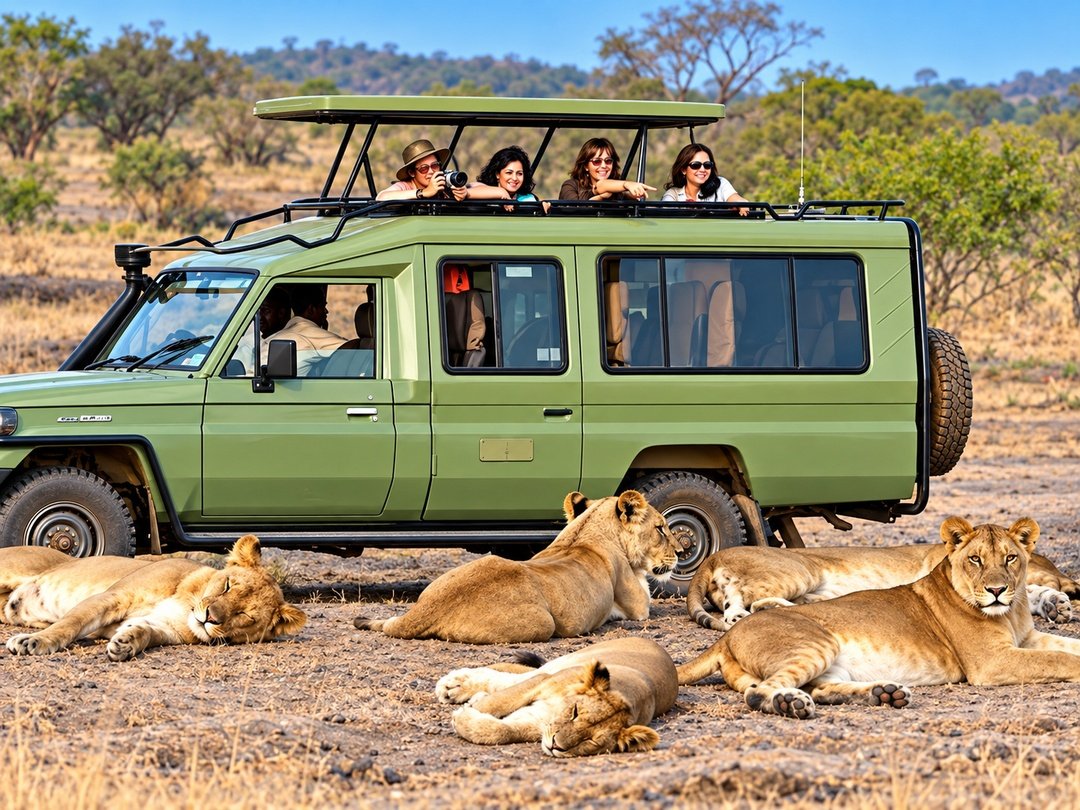
A Bwindi Gorilla Group Joining Safari can become even more rewarding when it is combined with other destinations in western and southwestern Uganda. Gorilla trekking may be the main reason for visiting Bwindi, but many travelers prefer to extend the journey so they can experience more wildlife, landscapes and cultural attractions within the same safari.
One of the most natural combinations is Bwindi and Queen Elizabeth National Park. After trekking mountain gorillas in the forest, travelers can continue toward Uganda’s savannah country for game drives, wildlife photography and classic safari experiences. This creates a strong contrast between two ecosystems: dense tropical forest in Bwindi and open grasslands in Queen Elizabeth National Park.
Queen Elizabeth National Park gives group joining travelers the opportunity to look for elephants, buffaloes, antelopes, lions and other wildlife while enjoying broader views of the western Uganda landscape. Depending on the itinerary, travelers may also include a boat experience, scenic crater areas or other wildlife activities before continuing their journey.
Another popular combination is Bwindi and Lake Bunyonyi. Lake Bunyonyi works especially well after gorilla trekking because it provides a slower and more relaxed environment. After several hours hiking through the forest, travelers can enjoy the peaceful scenery, island-dotted waters and cool highland atmosphere around the lake.
Lake Bunyonyi can be included for one night or longer depending on the safari schedule. Group members may relax by the water, take a boat trip, enjoy birdwatching or simply rest before continuing toward Kampala, Entebbe or another destination.
Travelers interested mainly in primates can combine Bwindi with Kibale National Park. This creates a powerful Uganda primate itinerary featuring mountain gorillas in Bwindi and chimpanzees in Kibale. The two experiences are different enough to complement each other well.
Chimpanzee trekking in Kibale is usually more active, with visitors following fast-moving primates through tropical forest, while gorilla trekking in Bwindi often involves more time observing a family group after the gorillas have been located. Experiencing both allows travelers to appreciate the behavior, habitat and conservation importance of Uganda’s great apes.
A longer safari may also include Mgahinga Gorilla National Park. Mgahinga is particularly attractive to travelers interested in golden monkeys, volcanic scenery and additional mountain experiences. Although Bwindi remains the main destination for the group safari, Mgahinga can add another primate-focused element to a southwestern Uganda itinerary.
Some travelers may also continue toward Lake Mburo National Park during the return journey. Lake Mburo can provide a useful wildlife stop between southwestern Uganda and central Uganda, allowing travelers to enjoy more savannah scenery before ending the safari.
These extensions are particularly useful for travelers who have already traveled a long distance to Uganda and want to experience more than one national park. Instead of treating gorilla trekking as a stand-alone activity, the safari becomes a broader journey through some of Uganda’s most varied environments.
The exact combination should always be planned around gorilla permit dates, travel distances and available time. Adding too many destinations to a short itinerary can make the safari feel rushed, so longer routes should include enough nights to allow travelers to enjoy each destination properly.
Advantages of a Small Group Gorilla Safari
A small group setting is one of the strongest features of a Bwindi Gorilla Group Joining Safari. Travelers share transport and selected safari services without being placed in an excessively large tour group, creating a more personal and manageable travel experience.
The first major advantage is shared cost. Transport to Bwindi can represent a significant portion of the total safari expense, especially for solo travelers. When several participants travel in one safari vehicle, the cost of the driver-guide and vehicle can be divided across the group.
This makes the safari more accessible while still maintaining the convenience of professional transportation.
Another advantage is the social experience. Travelers on group joining safaris often come from different countries and backgrounds, but they share a common interest in mountain gorillas and wildlife. The road journey, meals and safari activities provide opportunities to exchange stories and learn from one another.
For solo travelers, this can make the journey much more enjoyable. Instead of spending many hours alone in a vehicle, they travel with others who are equally excited about the experience.
Small groups also tend to move more efficiently than large tours. It is easier to coordinate departure times, luggage, meal stops and lodge check-ins when the group size remains manageable.
The smaller format also creates a better relationship between travelers and the driver-guide. Participants have more opportunities to ask questions, learn about Uganda and receive practical advice during the journey.
Another benefit is flexibility within the structure of the itinerary. Although group joining safaris follow agreed schedules, a small group can often manage rest stops and travel breaks more smoothly than a large coach-style tour.
For couples, the group format provides a useful balance. They can share safari transport during the day but still enjoy private accommodation and personal time in the evening.
For wildlife enthusiasts, traveling with a small number of like-minded people can enhance the overall experience. Group members often share photography interests, conservation questions and excitement about seeing gorillas.
The group model can also make first-time travel in Uganda feel easier. Transport, accommodation and permit logistics are already coordinated, reducing the number of individual decisions visitors need to make after arrival.
Despite the shared arrangement, the gorilla encounter itself remains highly personal. Each traveler experiences the forest, the anticipation and the moment of seeing the gorillas in their own way.
This combination of affordability, organization and social interaction is what makes small group gorilla safaris particularly attractive.
Responsible Gorilla Trekking on a Group Joining Safari
Responsible tourism is an essential part of every Bwindi Gorilla Group Joining Safari because mountain gorillas live within a sensitive forest ecosystem and must be protected from unnecessary disturbance.
Visitors should follow all instructions given by ranger guides before and during the trek. These guidelines are designed to protect both the gorillas and the people visiting them.
Travelers are expected to maintain the recommended distance from the gorillas. Although gorillas may sometimes move closer on their own, visitors should not deliberately approach them.
Touching or feeding gorillas is not permitted. These are wild animals, and direct interaction can create health and behavioral risks.
Flash photography should also be avoided. Sudden bright light can disturb wildlife and is unnecessary when cameras are properly prepared for natural forest conditions.
Visitors should remain calm and avoid loud voices during the encounter. Quiet behavior allows the group to observe the gorillas with minimal disruption.
Health precautions are also important because gorillas can be vulnerable to some human illnesses. Travelers who are unwell should inform guides or safari organizers before trekking.
Responsible trekking also means respecting the forest itself. Visitors should not leave rubbish, damage vegetation unnecessarily or remove plants and other natural materials.
Hiring local porters can provide an additional positive impact. Porters assist trekkers with bags and difficult terrain while earning income from tourism. This creates a direct connection between conservation and local livelihoods.
Group joining safaris can further support local economies through accommodation, meals, guiding services and community experiences around Bwindi.
Travelers should also respect the communities living near the park. Photography of local people should be done with permission, and cultural experiences should be approached respectfully.
Responsible tourism helps ensure that gorilla trekking continues to support conservation, local employment and the long-term protection of Bwindi Impenetrable National Park.
By following these principles, travelers contribute to preserving the same experience for future visitors while helping protect one of Uganda’s most important wildlife treasures.
How to Book a Bwindi Gorilla Group Joining Safari
Booking a Bwindi Gorilla Group Joining Safari should begin with confirming your preferred travel dates and checking whether a scheduled group departure is available. Because gorilla trekking depends on limited permits, travelers should avoid waiting until the last minute, especially when planning to visit during busy travel periods.
The first step is usually to select the departure point. Travelers may join from Kampala, Entebbe or Kigali depending on the safari route. Once the starting point is confirmed, the safari organizer can determine which group departure best matches the traveler’s dates.
The next important step is checking gorilla permit availability. The permit date is central to the entire itinerary because transport, accommodation and the trekking sector must all be planned around it.
Travelers should provide their full names exactly as they appear on their passports when permits are being arranged. Passport details may also be required as part of the booking process.
After permit availability is confirmed, the traveler can proceed with the required payment according to the safari booking terms. The amount and payment schedule may vary depending on whether the safari includes the gorilla permit, accommodation, transport and additional activities.
Before making payment, travelers should carefully review what is included in the safari package.
A typical group joining package may include shared safari transport, the services of a professional driver-guide, accommodation, selected meals and transfers between destinations. Gorilla permits may be included in the quoted package or listed separately, so this should always be confirmed.
Travelers should also ask about room arrangements. Couples may share a double room, friends may prefer twin beds, while solo travelers should confirm whether a private room is included or whether an additional single-room charge applies.
Once the booking is confirmed, travelers should receive clear information about the departure date, meeting point, reporting time and emergency contact details.
For departures from Kampala or Entebbe, travelers may be asked to meet early in the morning at a designated hotel, office or central pick-up point.
For group departures from Kigali, travelers should also confirm border-crossing requirements and carry the appropriate travel documents.
Because group safaris operate on fixed schedules, participants should plan to arrive at the meeting point before the departure time. A delay by one traveler can affect the entire group and may create problems with lodge arrival times or other arrangements.
Travelers arriving by international flight should ideally avoid scheduling their group safari departure too close to their flight arrival time. Allowing additional time for immigration, baggage collection and possible flight delays makes the journey more relaxed.
It is also advisable to keep copies of passport details, booking confirmations and permit information available during the trip.
A well-organized booking process ensures that the most complicated elements of the safari are handled before the journey begins. Once permits, transport and accommodation are confirmed, travelers can focus on preparing for the gorilla trekking experience itself.
How Many People Join a Bwindi Gorilla Group Joining Safari?
The number of travelers on a Bwindi Gorilla Group Joining Safari can vary depending on the vehicle, departure date and number of people who have reserved places on that particular journey.
The objective of a group joining safari is generally to keep the group manageable while allowing participants to share transport and safari services.
Small groups are usually preferable because they create a more comfortable travel environment. Passengers have more space for luggage, photography equipment and personal belongings, while the driver-guide can communicate more easily with everyone.
Travelers should understand that the safari vehicle group and the gorilla trekking group are not necessarily the same thing.
The people sharing transport to Bwindi may be separated into different gorilla trekking groups on the trekking morning depending on permit allocations and gorilla family assignments.
Similarly, travelers staying at the same lodge may have permits for different trekking sectors or gorilla families.
This is why permit coordination is important when travelers want to trek together. Friends, couples or family members who want to remain in the same trekking group should communicate this preference during the booking process.
Final allocations are still subject to the arrangements made by the relevant wildlife authorities and park staff.
Group size also affects the atmosphere of the safari.
A smaller group often feels more personal and allows travelers to get to know one another during the journey. Conversations during long transfers, meal stops and lodge evenings can become an enjoyable part of the experience.
Solo travelers in particular often appreciate this social environment because they can experience Uganda with other people while still maintaining their independence.
Couples may enjoy the same benefit while retaining private accommodation.
Travelers should also consider vehicle comfort when evaluating a group safari. A well-organized departure should not overload the vehicle with passengers and luggage.
The goal is to create a balance between affordability and comfort rather than simply placing as many travelers as possible into one vehicle.
For visitors who prefer complete privacy and control over their schedule, a private gorilla safari may be more appropriate. However, travelers who are comfortable sharing transport often find that a small group joining arrangement provides excellent value.
The most important point is that the shared nature of the journey does not reduce the quality of the gorilla trekking experience. The main wildlife encounter remains professionally managed and regulated once travelers reach Bwindi.
Why Book a Bwindi Gorilla Group Joining Safari?
A Bwindi Gorilla Group Joining Safari offers an excellent balance between affordability, professional organization and one of Africa’s most remarkable wildlife experiences.
For many travelers, mountain gorilla trekking is a once-in-a-lifetime journey. The challenge is often finding a practical way to reach Bwindi, secure the correct permit and coordinate accommodation without paying the full cost of a private safari.
A group joining safari helps solve this problem by combining travelers who have similar dates and itineraries.
Shared transport reduces the cost of the long journey to Bwindi, while professional coordination helps ensure that permits, accommodation and transfers fit together properly.
Solo travelers benefit because they do not need to find their own travel companions before visiting Uganda.
Couples and friends benefit because they can share major safari costs with others while still enjoying their own room and personal time.
The journey also provides an opportunity to meet people from different parts of the world who have come to Uganda for the same reason: to experience mountain gorillas in the wild.
Most importantly, the group arrangement makes it possible to focus on the experience itself.
Instead of worrying about road directions, vehicle hire, permit logistics and accommodation locations, travelers follow a planned itinerary led by an experienced driver-guide.
The reward comes when the group finally reaches Bwindi and enters the forest.
Walking beneath the dense canopy, listening to the sounds of the forest and following experienced trackers creates a sense of anticipation that is difficult to reproduce in any other type of wildlife experience.
The moment a gorilla family appears through the vegetation can become the defining memory of the entire journey.
A silverback may sit quietly nearby while younger gorillas play, climb or feed around the family. Every encounter is different because the gorillas are observed within their natural environment.
For travelers who want an organized, social and cost-conscious way to experience gorilla trekking, a Bwindi Gorilla Group Joining Safari provides a strong alternative to a fully private safari.
It can also serve as the beginning of a larger Uganda adventure, with opportunities to continue toward Queen Elizabeth National Park, Lake Bunyonyi, Kibale National Park, Mgahinga Gorilla National Park or other destinations.
Whether you are traveling alone, as a couple or with friends, joining a scheduled group can make the journey to Bwindi easier to plan while keeping the unforgettable gorilla encounter at the center of the safari.
What Is Included in a Bwindi Gorilla Group Joining Safari?
The exact inclusions of a Bwindi Gorilla Group Joining Safari depend on the itinerary and safari operator, but most group departures are designed to cover the essential services required for a smooth journey to Bwindi Impenetrable National Park.
Shared safari transport is usually one of the main inclusions. Travelers join the same vehicle from the agreed departure point and travel together toward Bwindi. This shared arrangement is what makes the safari particularly attractive to solo travelers and couples who want to reduce transportation costs.
The services of a professional driver-guide are also normally included. The driver-guide manages the road journey, coordinates departure times, assists with lodge check-ins and provides information about the destinations visited along the route.
Accommodation is another important inclusion. The type of lodge depends on whether the safari is designed as a budget, midrange or more comfortable group departure.
Travelers should always confirm the rooming arrangement before booking. Couples normally share a double room, friends may use twin rooms, while solo travelers should check whether a private room or shared room has been included.
Meals are commonly included according to the safari itinerary. Breakfast and dinner are particularly important because travelers may leave early for activities and return to the lodge after several hours of trekking.
On the gorilla trekking day, breakfast is normally arranged before departure for the briefing point. Depending on the lodge and itinerary, packed lunch or other meal arrangements may also be provided.
A gorilla trekking permit may be included within the total safari package or charged separately. This should always be clearly confirmed before payment because the permit is an essential requirement for participating in gorilla trekking.
Park transfers connected with the itinerary are generally included where applicable. This may involve transportation between the lodge and the designated gorilla trekking briefing point.
Some group joining safaris also include additional activities such as Lake Bunyonyi excursions, cultural visits, community experiences or wildlife activities when these form part of the advertised itinerary.
Travelers should request a clear list of inclusions before confirming the safari. This avoids misunderstandings and makes it easier to compare different group joining packages.
A properly organized Bwindi group safari should clearly state what is included and what remains the traveler’s responsibility.
What Is Usually Excluded From a Bwindi Gorilla Group Joining Safari?
Understanding the exclusions is just as important as understanding what is included in a Bwindi Gorilla Group Joining Safari.
Most safari packages do not include international flights to and from Uganda or Rwanda. Travelers are responsible for arranging their own international travel so that they arrive before the scheduled group departure.
Visa fees are also generally excluded. Visitors should check the current entry requirements that apply to their nationality and itinerary before traveling.
Personal travel insurance is another important exclusion. Travelers are strongly encouraged to obtain suitable insurance that covers medical emergencies, trip interruption and activities associated with their safari.
Tips and gratuities are usually not included in the package. Travelers may choose to tip driver-guides, ranger guides, porters and lodge staff according to the service received and their personal preference.
Other personal expenses are normally paid separately. These may include alcoholic drinks, souvenirs, laundry services, optional activities and additional accommodation before or after the scheduled safari.
Travelers should also pay attention to activities that are listed as optional. A safari may pass through or stay near an attraction without automatically including every available activity there.
For example, an overnight stay around Lake Bunyonyi does not necessarily mean that a boat trip has been included unless this is specifically stated in the itinerary.
Similarly, cultural experiences around Bwindi may require separate arrangements if they are not part of the original group safari package.
Travelers should therefore read the itinerary carefully and ask for clarification before confirming their booking.
Clear information about inclusions and exclusions helps travelers budget accurately and prevents unexpected costs during the safari.
Bwindi Gorilla Group Joining Safari vs Private Gorilla Safari
Choosing between a Bwindi Gorilla Group Joining Safari and a private gorilla safari depends largely on budget, preferred travel style and the amount of flexibility a traveler wants.
A group joining safari is designed around shared services. Travelers share the safari vehicle, driver-guide and scheduled route with other participants who have booked the same departure.
The main advantage is cost sharing. The expense of transportation and guiding is divided among several travelers, making the journey particularly attractive to solo visitors and couples.
The group safari also creates a social experience. Participants may meet travelers from different countries, exchange travel stories and share the excitement of reaching Bwindi together.
However, group safaris operate according to an agreed schedule. Travelers cannot normally change departure times, extend stops or significantly alter the itinerary according to individual preferences.
A private gorilla safari provides much greater flexibility.
The safari vehicle and driver-guide are reserved specifically for the traveler, couple, family or private party. This allows the itinerary to be adapted more easily around preferred departure times, sightseeing stops and accommodation choices.
Private safaris can therefore suit honeymooners, families, photographers and travelers who value privacy or want a more customized journey.
The main difference is cost. When one or two people use a private safari vehicle, they carry the full cost of the transport and guide rather than sharing it with other participants.
For solo travelers, this difference can be particularly significant.
A group joining safari does not mean that the actual gorilla encounter is of lower quality. Gorilla trekking is regulated independently of whether a visitor reached Bwindi on a private or shared safari.
Once travelers arrive at the trekking briefing point, trekking groups are organized according to permit arrangements and park procedures.
Both group and private safari travelers therefore participate in the same professionally managed gorilla trekking system.
The decision ultimately comes down to travel priorities.
Travelers who value affordability, social interaction and a structured itinerary may prefer a Bwindi Gorilla Group Joining Safari.
Visitors who value privacy, flexibility and customized travel arrangements may prefer a private safari.
For many solo travelers and couples, however, a small group departure provides an excellent middle ground: professional organization, manageable costs and the same unforgettable opportunity to encounter mountain gorillas in Bwindi Impenetrable National Park.
Quick Comparison: Group Joining vs Private Gorilla Safari.
| Safari Feature | Bwindi Gorilla Group Joining Safari | Private Gorilla Safari |
|---|---|---|
| Transport | Shared with other travelers on the same scheduled safari departure. | Reserved exclusively for you or your private travel party. |
| Cost | More affordable because transport and selected safari costs are shared. | Usually more expensive because the full transport and guide costs are covered privately. |
| Best For | Solo travelers, couples, friends and travelers looking for better value. | Couples, honeymooners, families, photographers and travelers who prefer privacy. |
| Departure Dates | Usually follows fixed or scheduled departure dates. | Can normally be arranged around your preferred travel dates. |
| Flexibility | Follows a planned itinerary with agreed stops and timings. | Offers more freedom to adjust the route, stops and daily schedule. |
| Safari Vehicle | Shared with other participants. | Used only by you and your travel companions. |
| Driver-Guide | Shared with the rest of the group. | Dedicated entirely to your private safari. |
| Accommodation | Usually selected according to the group package, although private rooms may still be available. | Gives you greater freedom to choose preferred lodges and room categories. |
| Gorilla Trekking Permit | Each traveler requires an individual gorilla trekking permit. | Each traveler also requires an individual gorilla trekking permit. |
| Gorilla Trekking Experience | The trekking experience follows the same official park procedures. | The trekking experience follows the same official park procedures. |
| Social Experience | Offers a chance to meet and travel with other safari participants. | Provides more privacy and a quieter, more personal journey. |
| Additional Stops | Usually depend on the fixed group itinerary and available time. | Can be customized more easily according to your interests. |
| Solo Traveler Value | Excellent value because transport costs are shared with others. | Usually more expensive for a solo traveler because private transport is not shared. |
| Overall Experience | Affordable, social and well organized. | Private, flexible and highly personalized. |
Cost Factors for a Bwindi Gorilla Group Joining Safari
The total cost of a Bwindi Gorilla Group Joining Safari depends on several important factors, including the gorilla permit, transport arrangements, accommodation category, number of safari days, starting point and any additional activities included in the itinerary.
One of the largest fixed costs is usually the gorilla trekking permit. Because the permit is required for each traveler, this part of the safari cannot normally be reduced by joining a group. The main savings come from sharing transport, driver-guide services and, in some cases, other safari logistics.
Transport costs can vary significantly depending on whether the safari begins from Kampala, Entebbe or Kigali. A longer road journey requires more fuel, driver time and vehicle use, while shorter access routes may reduce the overall transport expense.
The number of travelers sharing the vehicle also affects the cost. When several participants join the same departure, the transport expense can be divided among more people, making the safari more affordable per person.
Accommodation category is another major factor. Budget lodges and camps help keep the overall safari cost lower, while midrange properties provide more comfort at a higher rate. Travelers should select accommodation according to their priorities rather than assuming that the cheapest option is always the best.
The number of nights also influences the total safari price. A short three-day itinerary is generally more affordable than a longer safari that includes Queen Elizabeth National Park, Lake Bunyonyi, Kibale or other destinations.
Additional activities can also affect the final cost. A safari that includes only gorilla trekking will normally cost less than one that also includes game drives, boat safaris, cultural visits, chimpanzee trekking or scenic excursions.
Solo travelers should also confirm whether a single-room supplement applies. Even though transport costs are shared, private accommodation for one traveler may still cost more than sharing a room.
Travelers should therefore compare safari packages carefully and avoid judging them only by the headline price. A slightly higher-priced safari may include a better-located lodge, a more comfortable vehicle, additional meals or more complete services.
The best value comes from understanding exactly what is included, what is excluded and how the itinerary has been designed.
A properly structured Bwindi Gorilla Group Joining Safari can offer excellent value because it reduces shared operational costs without compromising the main gorilla trekking experience.
Bwindi Gorilla Group Joining Safari for Solo Travelers
A Bwindi Gorilla Group Joining Safari is particularly well suited to solo travelers because it removes one of the biggest challenges of traveling alone: the high cost of private transport.
A solo traveler booking a completely private safari must usually cover the full cost of the vehicle and driver-guide. By joining a scheduled group departure, that same traveler can share transport with other participants and significantly reduce the overall journey cost.
The group format also provides companionship during the long road transfer to Bwindi. Instead of traveling alone for several hours, solo visitors can meet other travelers who are also interested in wildlife, photography and gorilla trekking.
This social element can make the journey more enjoyable without forcing travelers to give up their independence.
Solo travelers still have the option of staying in a private room if this is included or arranged separately. Sharing a safari vehicle does not necessarily mean sharing accommodation.
The group joining format can also make safari planning easier for first-time visitors to Uganda. Transport, accommodation, gorilla permit coordination and departure times are organized around a fixed itinerary.
This allows the solo traveler to avoid arranging multiple services independently.
Another advantage is safety and convenience. Traveling with an experienced driver-guide and other participants can make unfamiliar routes feel easier to manage.
Solo travelers should still pay attention to the meeting point, departure time and rooming conditions before booking.
It is also important to confirm whether the gorilla permit is included and whether any single-room supplement applies.
For adventurous travelers who enjoy meeting new people, a Bwindi group safari can become one of the most rewarding ways to experience Uganda.
The shared road journey often creates new friendships, while the gorilla encounter remains a personal and memorable experience.
Bwindi Gorilla Group Joining Safari for Couples and Friends
Couples and friends can also benefit greatly from a Bwindi Gorilla Group Joining Safari because they can share the wider safari experience with other travelers while still maintaining their own personal space.
Couples usually occupy a private double room while sharing transport with the rest of the group. This creates a useful balance between affordability and privacy.
Friends traveling together can request twin accommodation where available and join the same safari departure without needing to organize a private vehicle.
The group structure also makes it easier for couples and friends to plan a short gorilla safari when they do not want to spend heavily on private transportation.
During the road journey, travelers can enjoy the social atmosphere of the group, while evenings at the lodge provide time to relax privately.
Couples may also choose to extend the safari with additional destinations such as Lake Bunyonyi, Queen Elizabeth National Park or Kibale National Park.
Friends with shared interests in photography, birding or wildlife can similarly build a longer itinerary around the gorilla trekking experience.
Travelers who want to trek the same gorilla family should communicate this preference during the booking process so that permit arrangements can be coordinated where possible.
It is important to remember that final gorilla family allocation is managed according to park procedures and operational considerations.
Couples and friends should also confirm whether their preferred room type is available, particularly during busy travel periods.
For travelers who want a safari that remains social without becoming overly expensive, a small group departure offers a practical solution.
The journey to Bwindi becomes more affordable, the logistics are easier to manage and the mountain gorilla experience remains the central highlight of the trip.
Bwindi Gorilla Group Joining Safari for Families
A Bwindi Gorilla Group Joining Safari can also work for families, but it requires careful planning around age limits, room arrangements, trekking ability and the interests of younger travelers. Families should confirm all activity requirements before booking because gorilla trekking is not suitable for very young children.
For families with older children who meet the trekking requirements, the experience can be extremely rewarding. Walking through Bwindi’s forest together and eventually encountering a mountain gorilla family can become one of the strongest shared memories of the entire Uganda journey.
Parents should consider the physical demands of the trek before confirming participation. Forest conditions can include steep slopes, muddy trails, thick vegetation and several hours of walking. Families should be honest about fitness levels and prepare appropriately.
The group joining format can help reduce transport costs, especially for smaller families who do not need a private vehicle. However, families should confirm whether the group departure schedule suits their needs.
Accommodation is another important consideration. Family rooms, interconnected rooms or suitable room arrangements should be confirmed early because these may be limited near certain Bwindi sectors.
Families may also benefit from combining gorilla trekking with less demanding activities. Lake Bunyonyi, cultural experiences, scenic viewpoints and community visits can create a more balanced itinerary.
For families who prefer greater flexibility, a private safari may still be more suitable. However, those comfortable with a shared schedule can find a Bwindi group joining safari practical and rewarding.
Health and Fitness for Gorilla Trekking in Bwindi
Gorilla trekking requires a reasonable level of fitness because visitors walk through natural forest terrain rather than prepared tourist pathways.
The difficulty varies from one trek to another. Some gorilla families may be located relatively close to the starting point, while others may require several hours of hiking.
Travelers should prepare for steep slopes, muddy ground, roots, vines and uneven trails.
Regular walking before the safari can help improve endurance. Travelers who are not used to hiking may benefit from increasing their daily walking distance in the weeks before departure.
Proper footwear is also important. Hiking boots or strong walking shoes with good grip provide better support than ordinary casual shoes.
Travelers with existing medical conditions should consider whether the physical demands of the trek are appropriate for them and seek professional medical advice where necessary.
Hydration is essential. Carry enough drinking water and eat a proper breakfast before entering the forest.
Hiring a porter can also make the trek easier. Porters can carry backpacks and provide support on difficult sections of the trail.
Health precautions around gorillas are especially important because mountain gorillas can be vulnerable to some human illnesses. Visitors should follow all health instructions provided before the trek.
Anyone who feels unwell should communicate this before entering the forest.
Good preparation helps ensure that travelers can focus on the experience rather than struggling unnecessarily with the terrain.
Photography Tips for a Bwindi Gorilla Group Joining Safari
Photography is one of the highlights of a Bwindi Gorilla Group Joining Safari, but forest conditions can make gorilla photography challenging.
The light beneath Bwindi’s canopy can be limited and constantly changing. Travelers should therefore become familiar with their camera settings before the trek.
A camera that performs well in low-light conditions can be useful. Fast lenses may also help when gorillas are sitting beneath dense vegetation.
Visitors should avoid relying on flash photography. Flash should not be used during the gorilla encounter because it can disturb the animals.
Photographers should also remember that the trekking experience is limited in time once the gorillas are located. Spending too long adjusting equipment can mean missing important moments.
It is therefore better to prepare camera settings in advance.
Carry spare batteries and enough memory-card capacity. Cold, damp or humid conditions can affect equipment, so basic weather protection is also useful.
A lightweight camera setup is often better than carrying excessive equipment through steep forest terrain.
Travelers using smartphones can also capture excellent images, particularly when the gorillas are visible in good light.
Photography should never interfere with ranger instructions or safe viewing distances.
The goal should be to document the experience while still taking time to observe the gorillas directly.
Some of the most memorable moments may happen quickly: a juvenile climbing a tree, a silverback turning toward the group or a mother moving with an infant.
Patience, preparation and respect for the animals are more important than carrying the most expensive camera.
Cultural Experiences Around Bwindi on a Group Joining Safari
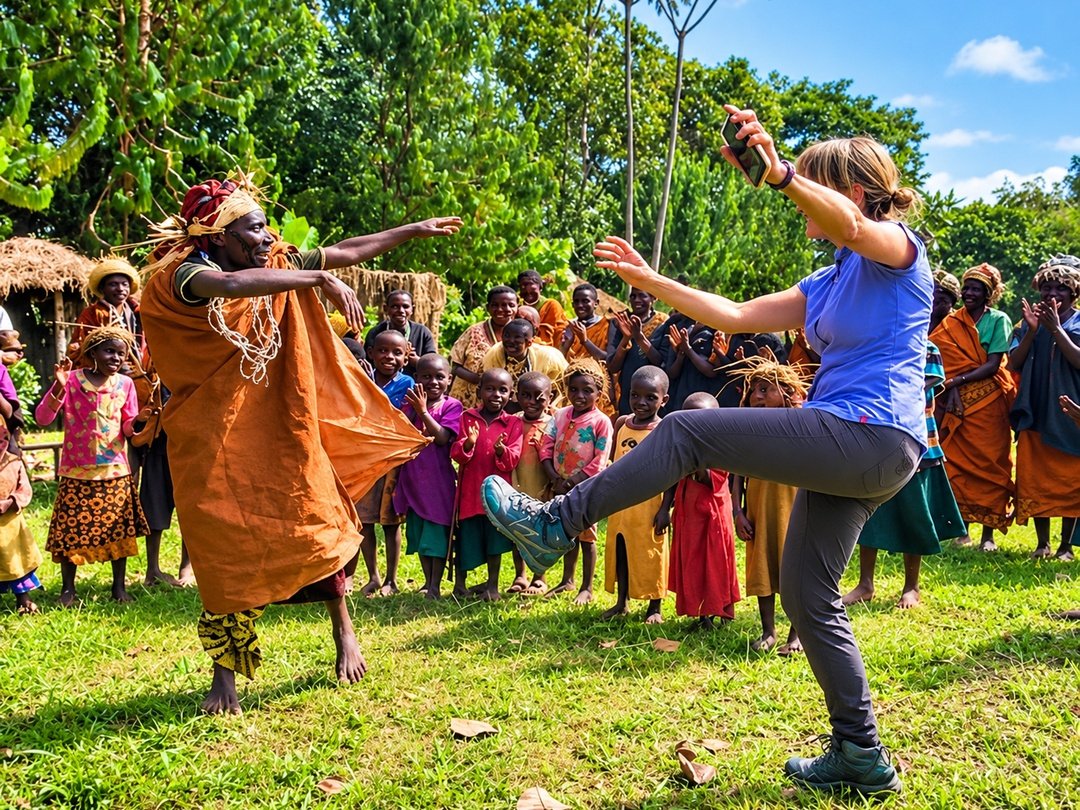
A Bwindi Gorilla Group Joining Safari can be made even more meaningful by including cultural experiences around the communities that live near Bwindi Impenetrable National Park. These activities help travelers understand the human side of conservation and show how tourism, local livelihoods and the protection of mountain gorillas are connected.
Community visits may include traditional music, dance, storytelling, craft demonstrations, farming activities and opportunities to learn about local ways of life. Some experiences also introduce travelers to coffee growing, food preparation, medicinal plants and the daily routines of people living around the forest.
For group travelers, cultural experiences work especially well after gorilla trekking or on an additional day near Bwindi. They provide a slower pace after the physical demands of the forest and allow participants to engage with the destination beyond wildlife viewing.
Visitors should approach these experiences respectfully. Photography should be done with permission, and travelers should listen carefully to local guides who explain customs and expectations.
Responsible cultural tourism can provide direct economic benefits to communities through guiding, performances, crafts and locally managed activities.
When included thoughtfully, a cultural experience gives greater depth to a Bwindi safari and helps travelers appreciate that conservation depends not only on protected forests but also on the people who live around them.
Bwindi Gorilla Group Joining Safari and Lake Bunyonyi
Combining a Bwindi Gorilla Group Joining Safari with Lake Bunyonyi is one of the most relaxing ways to extend a gorilla trekking itinerary.
Lake Bunyonyi lies in the highlands of southwestern Uganda and is known for its calm waters, scenic islands and surrounding green hills. After several hours trekking through Bwindi, many travelers appreciate the opportunity to slow down beside the lake.
A common itinerary includes gorilla trekking in Bwindi followed by a transfer to Lake Bunyonyi later the same day or the following morning.
The lake can serve as a peaceful overnight stop before the group returns to Kampala or Entebbe.
Activities around Lake Bunyonyi may include boat rides, canoeing, birdwatching, photography and relaxed walks through the surrounding highland scenery.
For couples, the lake provides a romantic contrast to the intensity of gorilla trekking. Solo travelers may enjoy the social atmosphere of shared activities, while friends can use the stop as a chance to relax together after the trek.
Lake Bunyonyi also gives travelers time to reflect on the gorilla encounter before continuing their journey.
The combination of Bwindi’s dense forest and Bunyonyi’s open lake scenery creates a well-balanced short safari.
Bwindi Gorilla Group Joining Safari and Queen Elizabeth National Park
A Bwindi Gorilla Group Joining Safari can also be combined with Queen Elizabeth National Park for travelers who want both primate trekking and classic savannah wildlife viewing.
This combination is especially attractive because the two destinations offer completely different environments.
Bwindi is dominated by forest, steep slopes and mountain gorillas. Queen Elizabeth National Park introduces open savannah, wetlands, crater landscapes and opportunities to see larger mammals.
Travelers can enjoy game drives in search of elephants, buffaloes, antelopes, lions and other wildlife before or after trekking in Bwindi.
Depending on the route, the safari may also pass through the Ishasha area, which is widely known for its tree-climbing lions.
A longer itinerary may include a boat safari on the Kazinga Channel, allowing travelers to see wildlife and birdlife from the water.
For group joining travelers, this combination provides excellent value because the same shared vehicle can continue between destinations.
Instead of traveling to Uganda only for one activity, visitors experience two of the country’s major safari environments within one journey.
A well-paced itinerary is important because both destinations deserve enough time. Travelers should avoid trying to fit Queen Elizabeth and Bwindi into an excessively short schedule.
When planned properly, the combination creates a strong safari sequence: savannah wildlife, dramatic landscapes and finally the unforgettable experience of standing near mountain gorillas in Bwindi’s forest.
Bwindi Gorilla Group Joining Safari and Kibale National Park
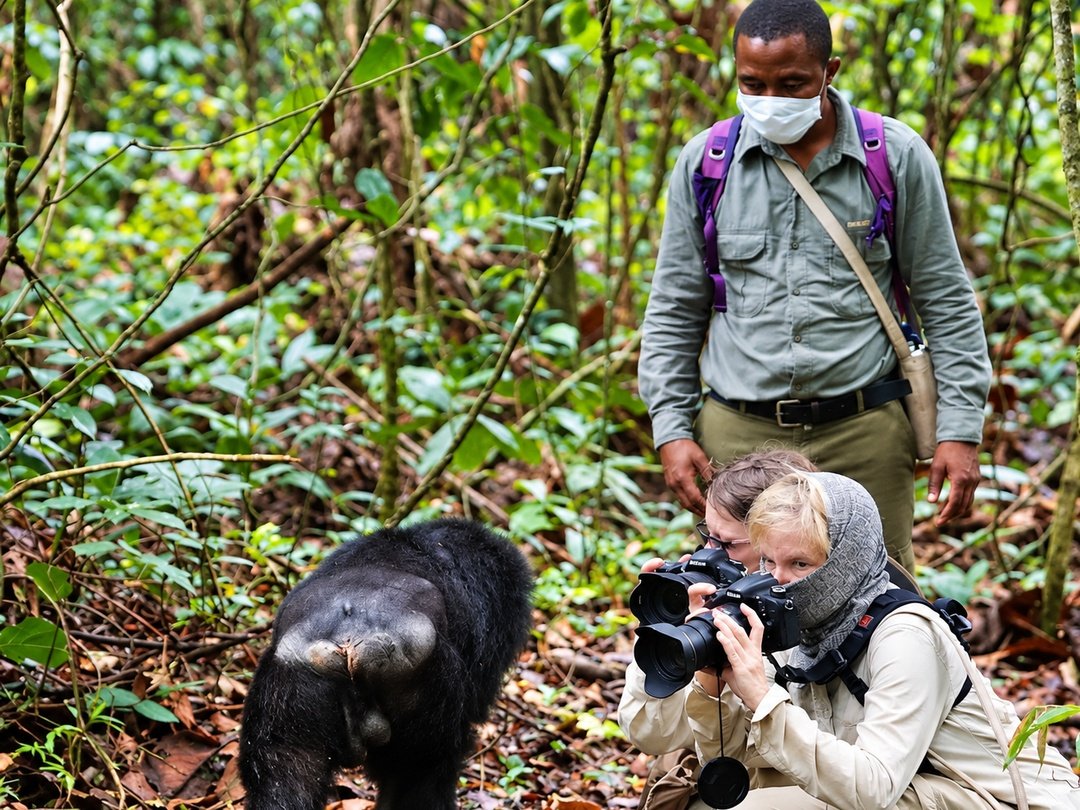
A Bwindi Gorilla Group Joining Safari can be combined with Kibale National Park for travelers who want a deeper primate-focused journey through Uganda. This pairing brings together mountain gorillas in Bwindi and chimpanzees in Kibale, creating one of the strongest great-ape safari combinations in East Africa.
Kibale National Park is famous for chimpanzee trekking and its rich primate diversity. Travelers walk through tropical forest with experienced guides in search of habituated chimpanzee communities, listening for calls and movement through the canopy.
The experience differs from gorilla trekking in Bwindi. Chimpanzees are generally more active and may move quickly through the forest, while mountain gorillas are often observed in family groups resting, feeding or interacting at a slower pace.
Combining both destinations allows travelers to compare these two extraordinary primate encounters within one safari.
A typical route may begin in Kibale with chimpanzee trekking before continuing south toward Queen Elizabeth National Park and then Bwindi. Alternatively, travelers may begin in Bwindi and continue north toward Kibale depending on permit dates and the overall itinerary.
This type of group joining safari works particularly well for wildlife enthusiasts, photographers and travelers who want to make primates the central theme of their Uganda journey.
Because the distance between Kibale and Bwindi is significant, enough travel time should be included between destinations. A well-paced itinerary avoids rushing and allows travelers to enjoy the changing landscapes of western Uganda.
For visitors with enough time, adding Kibale transforms a gorilla-focused trip into a broader primate safari with greater variety and educational value.
Bwindi Gorilla Group Joining Safari and Mgahinga Gorilla National Park
A Bwindi Gorilla Group Joining Safari can also be extended to Mgahinga Gorilla National Park, another important primate destination in southwestern Uganda.
Mgahinga is smaller than Bwindi but offers a very different landscape. The park lies within the Virunga region and is surrounded by dramatic volcanic scenery.
One of its strongest attractions is golden monkey trekking. Travelers can enter the bamboo forest with guides and search for these active, colorful primates while enjoying views of the surrounding mountains.
For visitors already traveling to Bwindi, Mgahinga can add variety without taking the safari too far away from southwestern Uganda.
The park also appeals to hikers and travelers interested in mountain scenery. Depending on the itinerary and physical ability of the group, visitors may include additional walks or volcanic experiences.
Combining Bwindi and Mgahinga is especially suitable for travelers who want a more specialized primate safari rather than a traditional game-drive itinerary.
The combination can also work well with Lake Bunyonyi, allowing travelers to move between gorilla country, golden monkey habitat and a relaxing lakeside environment.
Because both parks are located in southwestern Uganda, careful route planning can make the journey efficient while still allowing enough time for each activity.
Bwindi Gorilla Group Joining Safari and Lake Mburo National Park
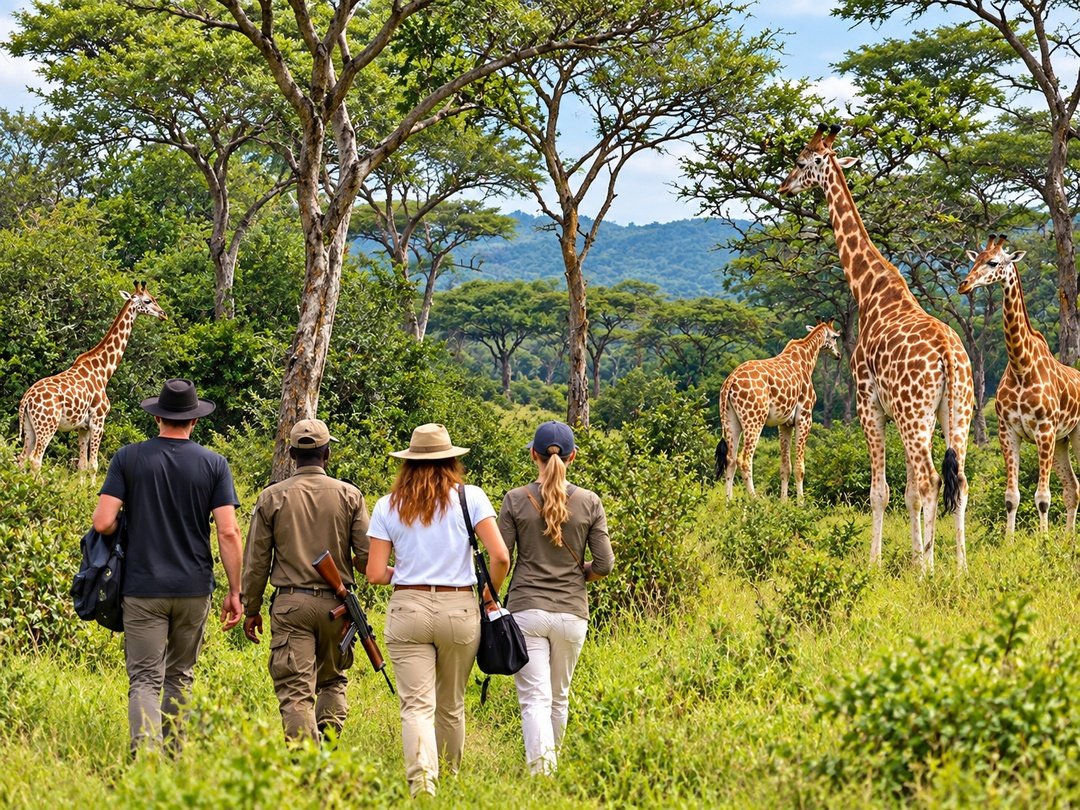
Lake Mburo National Park can be an excellent addition to a Bwindi Gorilla Group Joining Safari, especially for travelers returning toward Kampala or Entebbe.
Its location makes it a convenient stop between southwestern Uganda and central Uganda, reducing the need to complete the entire return journey in one long drive.
Lake Mburo offers a very different environment from Bwindi. Instead of dense forest and mountain gorillas, travelers experience open savannah, woodland, wetlands and a variety of plains wildlife.
Game drives can provide opportunities to see zebras, antelopes, buffaloes and other species associated with the park.
The destination is also popular for birding, and its varied habitats support a wide range of birdlife.
For travelers who want to break up the return journey after gorilla trekking, spending a night around Lake Mburo can make the safari more relaxed.
The park also adds another dimension to the overall itinerary by combining primate trekking with a more traditional wildlife safari.
A route that includes Bwindi and Lake Mburo works especially well for visitors who have limited time but still want to experience more than one protected area in Uganda.
By the time the safari returns to Kampala or Entebbe, travelers will have experienced both forest and savannah landscapes, making the journey feel more complete.
Cancellation and Rescheduling on a Bwindi Gorilla Group Joining Safari
Travelers booking a Bwindi Gorilla Group Joining Safari should understand the cancellation and rescheduling conditions before making payment because several components of the trip, especially gorilla trekking permits, are tied to fixed dates.
A group joining safari usually depends on confirmed departure dates, reserved accommodation, transport arrangements and permit availability. Once these services have been booked, changing the itinerary may not always be simple.
Gorilla trekking permits are particularly important because they are issued for a specific date and trekking area. If a traveler decides to change the safari date after the permit has already been secured, the possibility of rescheduling will depend on the applicable Uganda Wildlife Authority rules and the availability of permits for the new date.
Travelers should therefore avoid confirming dates until they are reasonably certain they can travel.
Accommodation providers may also have their own cancellation policies. Some lodges allow changes within certain timeframes, while others may charge cancellation fees or retain deposits, particularly during busy travel periods.
Transport arrangements can also be affected by late cancellations. A group safari is priced partly around the number of participants sharing the vehicle. If one traveler withdraws at the last moment, the operating costs for the remaining participants may change depending on the booking conditions.
For this reason, travelers should read the safari terms carefully before confirming participation.
Travel insurance can be extremely useful. A suitable policy may provide protection against certain unexpected circumstances such as illness, trip interruption or other covered events that prevent travel.
When requesting a reschedule, travelers should communicate as early as possible. Early notice gives the safari organizer more time to explore alternative dates, accommodation and permit availability.
If a traveler misses the scheduled departure without prior notice, joining the group later may be difficult because the vehicle will already be traveling according to the fixed itinerary.
The same applies to the gorilla trekking day. Reporting late to the park briefing point can result in missing the scheduled activity.
A Bwindi Gorilla Group Joining Safari therefore works best for travelers who understand that the itinerary depends on punctuality and confirmed dates.
Clear communication before and during the booking process helps reduce complications and gives both the traveler and safari organizer enough time to manage any unavoidable changes.
Safety on a Bwindi Gorilla Group Joining Safari
Safety is an important consideration on every Bwindi Gorilla Group Joining Safari, from the road journey to the actual trekking experience inside Bwindi Impenetrable National Park.
Travelers normally move with a professional driver-guide during the road portion of the safari. Using an experienced guide helps reduce the challenges of navigating unfamiliar routes, changing road conditions and remote areas.
Seat belts should be used whenever available, and travelers should follow the instructions of the driver-guide regarding departure times, stops and road safety.
Personal belongings such as passports, money, cameras and phones should be kept secure during transfers and lodge stays.
When entering Bwindi for gorilla trekking, visitors are accompanied by trained ranger guides who understand the terrain and wildlife behavior.
The briefing before the trek is particularly important. Rangers explain how visitors should behave in the forest, what to do if gorillas move close to the group and how to respond to changing conditions.
Travelers should never separate from the trekking group unless instructed by a guide.
The forest terrain itself presents one of the main physical challenges. Trails may be steep, muddy or slippery, and visitors should walk carefully rather than trying to keep an unnecessarily fast pace.
Strong footwear with good grip is recommended, and trekking poles may be useful for some travelers.
Porters can provide additional assistance, especially on steep sections. Travelers who are concerned about fitness or balance should consider hiring one before entering the forest.
Weather can change quickly in Bwindi, so carrying waterproof clothing is important.
Visitors should also bring essential personal medication and inform their guide about any condition that could affect their ability to trek.
Wildlife encounters should always be treated with respect. Gorillas are habituated to the presence of people, but they remain wild animals.
Visitors must follow ranger instructions, avoid sudden movements and never attempt to touch or feed the gorillas.
The group joining nature of the safari can also contribute positively to safety because travelers are not moving between destinations alone. Participants travel with other visitors and an experienced guide throughout the main itinerary.
By following professional guidance, preparing properly and respecting park regulations, travelers can enjoy a well-managed and memorable gorilla trekking experience.
Preparing for Departure on a Bwindi Gorilla Group Joining Safari
Good preparation before departure can make a Bwindi Gorilla Group Joining Safari significantly more comfortable and enjoyable.
Travelers should begin by checking that their passport and required travel documents are valid for the intended journey. Those entering Uganda from another country should also confirm the applicable visa and immigration requirements before travel.
The safari organizer should have the correct traveler details for gorilla permit arrangements and accommodation bookings.
International flights should be scheduled with enough time before the group departure. Travelers arriving in Entebbe shortly before a scheduled early-morning departure should consider staying overnight rather than risking a missed connection caused by flight delays or baggage collection.
Those joining from Kigali should also allow enough time for border procedures and any other requirements associated with entering Uganda.
Before leaving home, travelers should review the final safari itinerary carefully. They should know the departure point, meeting time, emergency contact number, trekking date and accommodation arrangements.
Packing should focus on practical items rather than excessive luggage. A compact soft-sided travel bag is easier to manage in a shared safari vehicle than a large rigid suitcase.
Important documents, medication, camera equipment and valuables should remain easily accessible rather than being packed at the bottom of large luggage.
Travelers should also prepare financially for personal expenses that may not be included in the safari package. This may include drinks, souvenirs, tips, optional activities and other individual purchases.
A small amount of cash can be useful, especially in remote areas where card facilities may not always be available.
Before the gorilla trekking day, travelers should ensure that they have suitable clothing, footwear, rain protection, drinking water and a small backpack.
Cameras and phones should be fully charged, and photographers should confirm that they have enough memory-card capacity.
Getting adequate rest before departure is also important. The road journey can be long, and the trekking day may require several hours of walking.
Travelers who prepare properly can approach the safari with greater confidence and spend less time dealing with avoidable problems.
A Bwindi group joining safari is at its best when permits, transport, accommodation and personal preparations all work together smoothly, allowing the traveler to focus on the experience that brought them to Uganda: meeting mountain gorillas in the wild.
Frequently Asked Questions About a Bwindi Gorilla Group Joining Safari
What is a Bwindi Gorilla Group Joining Safari?
A Bwindi Gorilla Group Joining Safari is a scheduled safari where individual travelers join other visitors traveling on the same or a similar itinerary to Bwindi Impenetrable National Park. Instead of paying for an entire safari vehicle and driver-guide privately, participants share selected services such as transport, guiding and some safari logistics. This makes the experience particularly attractive to solo travelers, couples and friends who want a more affordable way to reach Bwindi while still enjoying a professionally organized gorilla trekking journey.
Can solo travelers join a Bwindi gorilla group safari?
Yes. Solo travelers are among the main beneficiaries of a group joining safari because they do not need to find their own travel companions before visiting Bwindi. They can reserve one seat on a scheduled departure, share the transport costs with the rest of the group and still enjoy their own gorilla trekking experience. Solo travelers should confirm whether accommodation is based on a private room or whether a single-room supplement applies.
Where do Bwindi group joining safaris start?
Most Bwindi Gorilla Group Joining Safari departures begin from Kampala, Entebbe or Kigali, depending on the route and itinerary. Kampala and Entebbe are convenient for travelers arriving through Uganda, while Kigali can be practical for visitors already traveling in Rwanda or heading toward the southern sectors of Bwindi. The exact meeting location and departure time should always be confirmed before the safari begins.
How many days do I need for a Bwindi Gorilla Group Joining Safari?
A three-day safari is one of the most common options because it provides time to travel to Bwindi, complete the gorilla trek and return to the starting point. Travelers who want a less rushed experience or wish to add destinations such as Lake Bunyonyi, Queen Elizabeth National Park or Kibale National Park should consider four or more days. Longer itineraries also allow more time for cultural activities, wildlife viewing and scenic stops.
Is a gorilla trekking permit required?
Yes. Every traveler who wants to participate in gorilla trekking in Bwindi must have a valid gorilla trekking permit for the scheduled date. The permit controls access to the trekking activity and helps regulate the number of visitors entering the forest. Travelers should secure permits in advance because availability can become limited, particularly during popular travel periods.
Is the gorilla permit included in the group safari?
This depends on the safari package. Some operators include the gorilla trekking permit within the total package price, while others list it separately from transport, accommodation and meals. Before confirming a Bwindi Gorilla Group Joining Safari, travelers should carefully check whether the permit has already been included so there are no unexpected additional costs later.
Can gorilla trekking permits sell out?
Yes. Gorilla trekking permits are limited because only a controlled number of visitors are allowed to trek habituated gorilla families each day. During busy travel periods, preferred dates or trekking sectors may become unavailable. Travelers with fixed holiday dates should therefore book as early as possible rather than waiting until shortly before departure.
Which Bwindi sector will I trek from?
Bwindi has several major gorilla trekking sectors, including Buhoma, Ruhija, Rushaga and Nkuringo. The sector used for your safari depends largely on permit availability, the location of your accommodation and the route of the group safari. The sector should be confirmed before travel so that accommodation and morning transfers can be organized correctly.
Can I choose my preferred gorilla trekking sector?
Travelers may request a preferred sector, especially when planning early, but final availability depends on permits and operational arrangements. Some visitors choose a sector because of its location, accommodation choices or connection with another destination. However, the most important priority is securing a valid permit that works with the overall safari itinerary.
Can couples trek the same gorilla family?
Couples who want to trek together should have their permits arranged under the same travel plan and communicate this preference during booking. Safari organizers can normally coordinate the request so the couple reports to the same trekking sector. Final gorilla family allocation is still handled according to park procedures on the trekking day.
How difficult is gorilla trekking in Bwindi?
The difficulty varies from one trek to another because mountain gorillas move naturally through the forest. Some groups may find their assigned gorilla family after a relatively short walk, while others may spend several hours navigating steep slopes, muddy paths and dense vegetation. Weather conditions also influence trail difficulty, so travelers should prepare for a moderate to physically demanding activity.
Do I need to be very fit for gorilla trekking?
You do not need to be an experienced athlete, but a reasonable level of fitness can make the trek much more enjoyable. Regular walking, hiking or light exercise before traveling can help build stamina for Bwindi’s uneven terrain. Travelers with mobility concerns or existing health conditions should consider their physical abilities carefully and seek appropriate professional advice before the trek.
Can I hire a porter during gorilla trekking?
Yes. Porters are commonly available at the trekking areas and can carry backpacks, drinking water, cameras and other personal items. They may also provide a steady hand on difficult or slippery sections of the trail. Hiring a porter can make the experience more comfortable while also providing direct income to members of communities around Bwindi.
What should I wear for gorilla trekking?
Travelers should wear strong hiking boots or trekking shoes, long trousers and a long-sleeved shirt. A waterproof jacket or poncho is highly recommended because rain can occur at any time in Bwindi. Lightweight gloves can also be useful for protecting the hands when holding branches or vegetation for support on steep sections.
Can I photograph the mountain gorillas?
Yes. Photography is one of the most memorable parts of gorilla trekking, and visitors are generally allowed to take photographs during the encounter. However, travelers must follow ranger instructions and avoid flash photography. Cameras should be prepared in advance because forest lighting can be limited and the encounter time is carefully managed.
Is gorilla trekking safe?
Gorilla trekking is conducted under the supervision of trained ranger guides who understand the forest and the behavior of habituated gorilla families. Visitors receive a briefing before entering the forest and must follow all instructions throughout the trek. Although gorillas are wild animals, the experience is carefully managed to reduce risk to both visitors and wildlife.
Are gorilla sightings guaranteed?
No wildlife sighting can be absolutely guaranteed because mountain gorillas move freely within their natural habitat. However, experienced trackers and ranger guides monitor the movements of habituated gorilla families and use this knowledge to locate them. Travelers should approach the experience with realistic expectations and understand that searching for the gorillas is part of the adventure.
Can children join a gorilla trekking safari?
Children may travel on the wider safari, but gorilla trekking itself is subject to age requirements. Families should confirm the current minimum age before arranging permits for younger travelers. Even when a child cannot participate in the trek, families may still arrange other activities around Bwindi or nearby destinations.
Is accommodation included in a group joining safari?
Accommodation is normally included when it is listed as part of the safari package. The category may range from budget camps and guesthouses to comfortable midrange lodges. Travelers should confirm the property, room type, meal plan and number of nights before booking, especially when the trekking sector affects where they need to stay.
Do solo travelers have to share a room?
Not always. Many solo travelers prefer a private room even though they share transport with the group. Depending on the safari package, a single-room supplement may apply. Some budget-oriented departures may offer shared accommodation, but this should always be clearly communicated before the traveler confirms the booking.
Are meals included?
Many group joining safaris include selected meals, particularly breakfast and dinner at the lodge. The exact meal plan depends on the itinerary and accommodation package. On the gorilla trekking day, travelers may also need a packed lunch or snacks depending on how long the trek is expected to take.
Is transport shared throughout the safari?
The major road transfers are normally shared with other participants on the scheduled departure. Travelers typically use the same safari vehicle between the starting point, Bwindi and any additional destinations included in the itinerary. Sharing transport is one of the main reasons group joining safaris can cost less than private safaris.
Can I join the safari from Kigali?
Yes. Some Bwindi Gorilla Group Joining Safari itineraries begin in Kigali, making them convenient for travelers already in Rwanda. The route normally involves crossing into Uganda before continuing toward Bwindi. Travelers should make sure their travel documents and immigration requirements are in order before departure.
Can I start the safari from Entebbe?
Yes. Entebbe is a common starting point because many international visitors arrive through Entebbe International Airport. Some departures begin directly from Entebbe, while others involve an initial transfer to Kampala or another meeting location. Travelers should confirm the exact departure point when booking.
Can I combine the safari with Lake Bunyonyi?
Yes. Lake Bunyonyi is one of the most popular extensions after gorilla trekking because it provides a peaceful place to relax following the forest experience. Visitors can enjoy scenic views, boat trips, birding and quiet time beside the lake before continuing toward Kampala, Entebbe or another destination.
Can I combine Bwindi with Queen Elizabeth National Park?
Yes. Combining Bwindi with Queen Elizabeth National Park creates a strong safari that includes both gorilla trekking and traditional savannah wildlife viewing. Travelers can search for elephants, buffaloes, antelopes and other wildlife on game drives before or after the gorilla experience. This combination is particularly suitable for first-time visitors who want more variety.
Can I combine gorilla trekking with chimpanzee trekking?
Yes. Travelers with enough time can combine Bwindi with Kibale National Park for a primate-focused Uganda safari. This allows visitors to experience mountain gorillas in Bwindi and chimpanzees in Kibale. The two encounters are very different and complement each other exceptionally well.
Can I combine Bwindi with Mgahinga Gorilla National Park?
Yes. Mgahinga Gorilla National Park can be added for travelers interested in golden monkey trekking, volcanic scenery or additional primate experiences. Because both parks are located in southwestern Uganda, they can fit naturally into a longer regional itinerary when travel time is properly planned.
What happens if it rains during gorilla trekking?
Rain is part of the natural Bwindi forest environment and can occur throughout the year. Trekking normally continues during ordinary rainfall, although conditions may become more slippery and physically demanding. Travelers should carry waterproof clothing and protect cameras and personal belongings against moisture.
What is the best time to join a Bwindi gorilla safari?
Gorilla trekking takes place throughout the year. Drier periods may offer easier trail conditions, while wetter months create especially lush forest scenery. The best time depends on personal preferences, permit availability, accommodation availability and how the Bwindi visit fits into the rest of the Uganda safari.
Should I carry cash during the safari?
Yes, carrying a reasonable amount of cash can be useful for small personal expenses such as tips, souvenirs, optional activities and purchases in areas where card payments may not always be available. Travelers should still keep money secure and avoid carrying unnecessary large amounts.
How much luggage should I bring?
Travelers should pack lightly because luggage space is shared inside the safari vehicle. Soft-sided bags are generally easier to arrange than large hard-shell suitcases. Bring only what is necessary for the number of safari days, including trekking clothing, personal items and photography equipment.
Can I join a group safari at the last minute?
It may sometimes be possible if there are still available seats, accommodation and gorilla permits, but travelers should not rely on last-minute availability. Gorilla permits are limited, and scheduled departures may already be full. Booking early gives travelers a better chance of securing their preferred dates.
Can I change my trekking date after booking?
Date changes may be possible depending on permit conditions, availability and the safari operator’s booking policy. However, travelers should not assume that a permit can always be moved easily. Any request to change dates should be communicated as early as possible so alternative arrangements can be explored.
What happens if I miss the group departure?
Group joining safaris operate according to fixed schedules, so missing the agreed departure can create serious logistical problems. The safari vehicle cannot normally delay the entire group for a late traveler. Participants should therefore arrive at the meeting point well before the confirmed departure time.
Is a Bwindi group safari suitable for first-time visitors to Uganda?
Yes. A group joining safari can be especially convenient for first-time visitors because many of the important logistics are arranged in advance. Transport, accommodation, gorilla permits and route planning are coordinated within one itinerary, allowing travelers to focus more on the experience and less on managing individual services.
Is the safari suitable for photographers?
Yes. Bwindi offers excellent opportunities for wildlife, primate and landscape photography. Photographers should prepare for changing forest light, carry weather protection for equipment and avoid bringing more gear than they can comfortably manage during the trek. Flash photography should not be used during the gorilla encounter.
Is a group joining safari cheaper than a private safari?
In many cases, yes. The main savings come from sharing the safari vehicle and driver-guide with other travelers. A solo visitor who books privately would otherwise carry the full transport cost. The gorilla permit remains an individual requirement, so the biggest financial advantage is usually in shared logistics.
Will I have enough space in the safari vehicle?
A properly organized group joining safari should use a vehicle appropriate for the number of travelers and their luggage. However, participants should pack reasonably because storage space is shared. Asking about the expected group size and vehicle type before booking can help travelers understand what level of comfort to expect.
Why should I choose a Bwindi Gorilla Group Joining Safari?
A Bwindi Gorilla Group Joining Safari is an excellent choice for travelers who want to experience mountain gorillas while sharing selected safari costs with other visitors. It combines professional organization, social travel and the convenience of scheduled transport with one of Uganda’s most remarkable wildlife experiences. For solo travelers, couples and friends seeking a practical alternative to a private safari, it can provide a very strong balance between affordability, comfort and adventure.
Join a Bwindi Gorilla Group Safari Today
Turn your dream of meeting mountain gorillas into a well-planned and affordable adventure with Pieland Gorilla Safaris on a Bwindi Gorilla Group Joining Safari. Share transport and selected safari costs with other travelers while enjoying professional guiding, carefully coordinated accommodation and an unforgettable gorilla trekking experience in Bwindi Impenetrable National Park.
Whether you are traveling alone, as a couple or with friends, Pieland Gorilla Safaris offers a practical way to experience Uganda’s mountain gorillas without the higher cost of a fully private safari.
You can also extend your journey to Lake Bunyonyi, Queen Elizabeth National Park, Kibale National Park, Mgahinga Gorilla National Park and other exciting destinations across Uganda.
Book your place on a Bwindi Gorilla Group Joining Safari today, secure your gorilla trekking permit early and get ready for one of Africa’s most memorable wildlife encounters.