Gorilla Group Joining Safari for Solo Travellers in Uganda
A Gorilla Group Joining Safari for Solo Travellers in Uganda is one of the most practical and affordable ways for independent travellers to experience mountain gorilla trekking without carrying the full cost of a private safari vehicle and driver-guide. Instead of travelling alone in a dedicated vehicle, solo travellers join other guests with similar travel dates and share the major transport expenses while still enjoying a professionally organised gorilla trekking experience in Uganda.
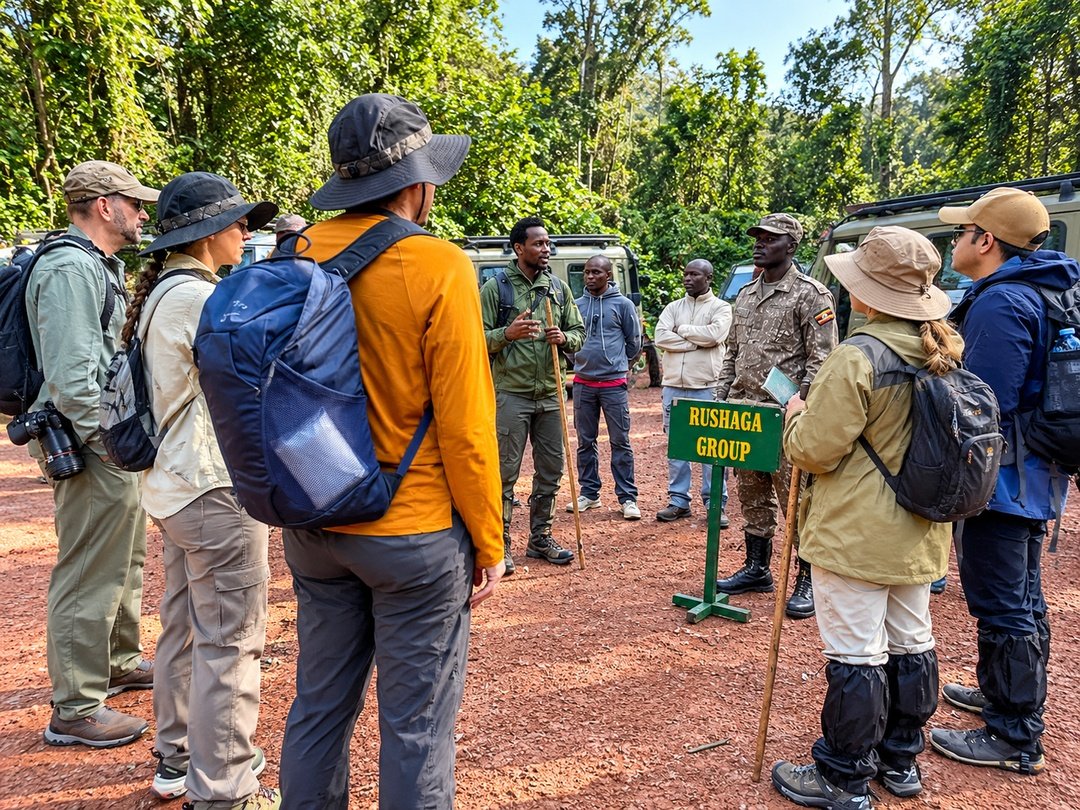
The safari is particularly suitable for travellers who want to visit Bwindi Impenetrable National Park, home to several habituated mountain gorilla families and one of Africa’s most important primate destinations. Group joining arrangements allow solo travellers to access the same gorilla trekking experience available on private safaris, including guided forest trekking, ranger briefings, one hour with a habituated gorilla family, accommodation near the trekking sector, scheduled meals and organised road transfers.
Choosing a group departure also creates a more social travel experience. Solo travellers often meet other visitors with similar interests in wildlife, conservation, photography and adventure travel. The journey to Bwindi becomes part of the experience as participants share scenic road transfers, stop at selected points along the route and travel together toward Uganda’s mountainous southwestern region. Travellers can still maintain personal space at the lodge, with private-room arrangements available depending on the confirmed accommodation category.
A Gorilla Group Joining Safari for Solo Travellers in Uganda can begin from Entebbe, Kampala or Kigali depending on the confirmed departure schedule. Starting from Kigali can be convenient for travellers heading to southern Bwindi, while Entebbe and Kampala departures are suitable for visitors beginning their journey within Uganda. The final route, trekking sector, accommodation and departure arrangement are coordinated around gorilla permit availability and the confirmed group schedule.
For solo travellers concerned about the cost of gorilla trekking, joining a shared safari offers an important advantage. Transport, fuel and driver-guide expenses can be distributed across several participants, helping to make the safari more affordable without reducing the quality of the gorilla encounter itself. Every traveller still requires an individual gorilla trekking permit, and the forest experience remains professionally managed by Uganda Wildlife Authority rangers and trackers.
This safari is also suitable for first-time visitors to Uganda, independent female travellers, photographers, backpackers, budget-conscious travellers and anyone who prefers the security and convenience of organised transport while still enjoying the independence of solo travel. With the right departure date and permit availability, a group joining safari provides a balanced combination of affordability, social interaction, professional organisation and one of Africa’s most remarkable wildlife experiences.
Overview of Gorilla Group Joining Safari for Solo Travellers in Uganda
A Gorilla Group Joining Safari for Solo Travellers in Uganda is designed for independent travellers who want to experience mountain gorilla trekking while sharing some of the main safari costs with other participants. The arrangement combines organised road transport, professional guiding, accommodation near the trekking sector, meals according to the confirmed itinerary and a valid gorilla trekking permit for each eligible traveller.
The safari can begin from Entebbe, Kampala or Kigali, depending on the confirmed group departure. Entebbe and Kampala departures are suitable for travellers already in Uganda, while Kigali can provide convenient access to southern Bwindi for travellers arriving through Rwanda. The exact route is planned around gorilla permit availability, the assigned trekking sector and the location of the confirmed accommodation.
Group joining refers mainly to shared safari transportation and scheduled activities. Solo travellers do not necessarily have to share a bedroom with another participant. Private rooms can normally be arranged, subject to lodge availability and any applicable single-room supplement. This allows travellers to reduce transport costs while still maintaining privacy during the safari.
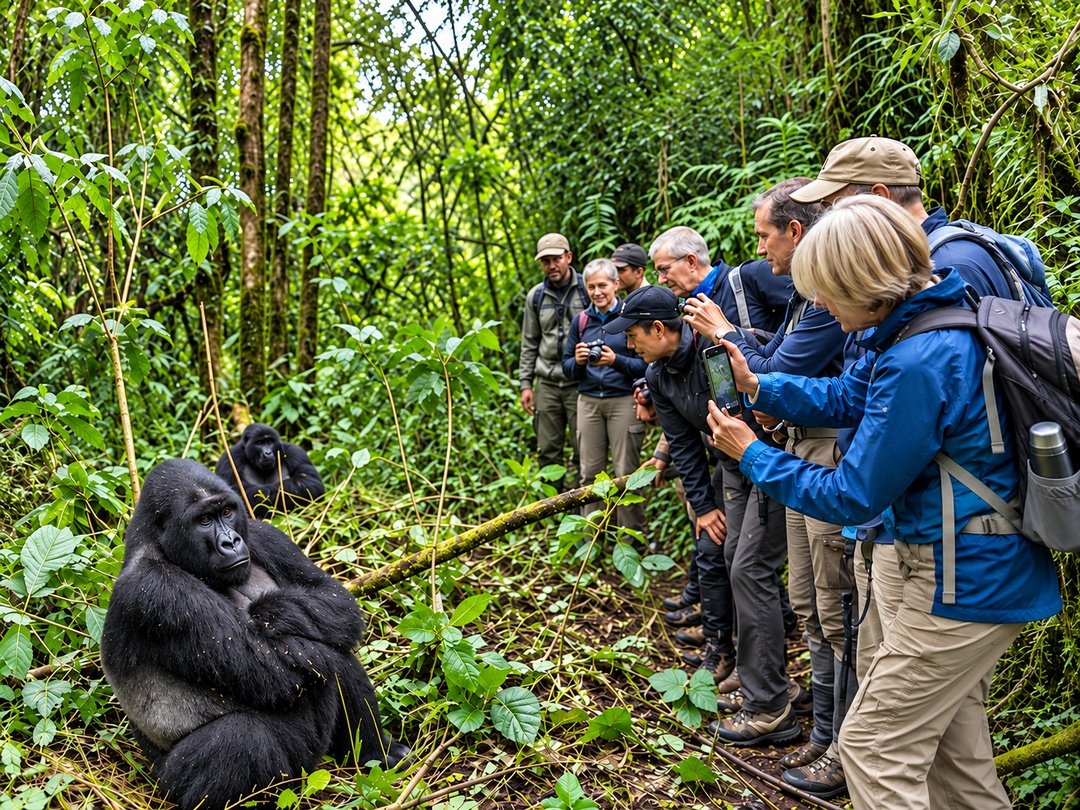
The main destination is usually Bwindi Impenetrable National Park, where travellers join a guided gorilla trek under the supervision of Uganda Wildlife Authority rangers and trackers. The trekking day includes a ranger briefing, forest hike, assignment to a habituated gorilla family and approximately one hour observing the gorillas after they are located.
The overall safari is organised around confirmed departure dates so that transport, accommodation and gorilla permits align correctly. This is especially important for solo travellers because a group joining safari depends on matching travellers who are available on the same dates and following the same general route.
Gorilla Group Joining Safari for Solo Travellers in Uganda at a Glance
Safari type: Gorilla group joining safari for solo travellers
Main destination: Bwindi Impenetrable National Park
Main activity: Mountain gorilla trekking
Starting points: Entebbe, Kampala or Kigali, depending on departure
Transport: Shared safari vehicle
Driver-guide: Professional English-speaking driver-guide
Accommodation: Budget or midrange lodge, depending on package
Room arrangement: Private room available for solo travellers where confirmed
Meals: According to the confirmed itinerary
Gorilla permit: One valid gorilla trekking permit for the confirmed trekking date is included for each eligible traveller, subject to permit availability.
Minimum trekking age: 15 years
Typical duration: 3 days, with longer options available
Group arrangement: Shared transport with other confirmed travellers
Best suited for: Solo travellers, first-time visitors, budget-conscious travellers and social adventure travellers
Availability: Subject to gorilla permit space, accommodation and confirmed group departure dates
A Gorilla Group Joining Safari for Solo Travellers in Uganda offers a practical balance between affordability and convenience. Solo travellers benefit from shared transport costs without losing access to the core services needed for a well-organised gorilla trekking experience.
Why Choose a Gorilla Group Joining Safari as a Solo Traveller?
Choosing a Gorilla Group Joining Safari for Solo Travellers in Uganda gives independent travellers a practical way to experience mountain gorilla trekking without paying the full cost of a private safari vehicle and driver-guide. For many solo travellers, transport is one of the most expensive parts of a gorilla safari. By sharing a vehicle with other confirmed participants, those costs can be distributed across the group, making the overall trip more manageable.
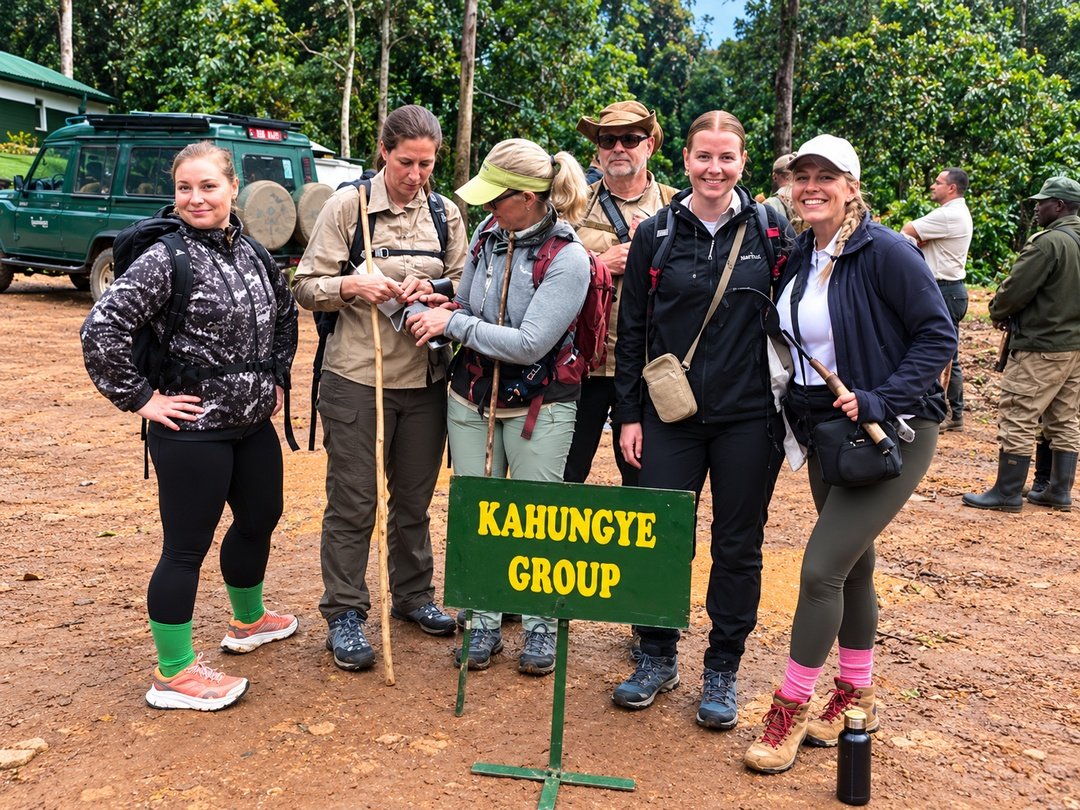
The shared arrangement does not reduce the quality of the gorilla trekking experience. Every eligible traveller still receives an individual gorilla permit, joins the official ranger briefing, treks with an assigned gorilla group and spends the standard viewing time with a habituated mountain gorilla family once it is located. The main difference is that the road journey and some safari logistics are shared with other travellers.
A group joining safari is also ideal for solo travellers who prefer not to manage every transfer, border crossing, lodge check-in and trekking arrangement independently. The safari operator coordinates the route, departure time, accommodation, transport and gorilla trekking schedule so that the journey runs according to one confirmed plan.
Lower Transport Costs
One of the biggest advantages is cost sharing. A solo traveller booking a private safari normally pays the entire vehicle, fuel and driver-guide cost alone. On a group joining safari, those expenses are shared among several participants travelling on the same route and dates.
This makes group travel particularly useful for short gorilla safaris where transport can form a significant part of the total trip cost. Travellers can use the savings for other experiences, additional nights, cultural activities or safari extensions.
A More Social Travel Experience
Solo travel does not have to mean travelling alone for the entire journey. Group joining safaris allow independent travellers to meet other visitors who are also interested in wildlife, mountain gorillas, conservation and adventure travel.
The shared road journey creates natural opportunities for conversation, photography stops and exchanging travel experiences. For many solo travellers, this social element makes the transfer to Bwindi more enjoyable while still allowing personal time at the lodge.
Private Accommodation Can Still Be Arranged
Joining a safari group does not automatically mean sharing a hotel room. Solo travellers can usually request their own private room, subject to availability and the confirmed accommodation category.
This gives travellers a useful balance: shared transport during the journey and privacy when resting at the lodge. A single-room supplement may apply depending on the property and booking conditions.
Organised Safari Logistics
A solo traveller may otherwise need to arrange airport transfers, long-distance transportation, gorilla permits, lodge reservations and trekking-day transfers separately. A group joining safari brings these arrangements together under one coordinated itinerary.
This can be especially valuable for first-time visitors to Uganda who may not be familiar with travel times, park sectors, road conditions or permit procedures.
Suitable for First-Time Visitors
The organised structure makes the safari suitable for travellers visiting Uganda for the first time. A professional driver-guide manages the road journey and helps coordinate scheduled transfers, while Uganda Wildlife Authority personnel manage the actual gorilla trekking activity inside the park.
Travellers therefore enjoy the independence of solo travel without having to organise every operational detail themselves.
Good for Female Solo Travellers
Female solo travellers can also benefit from the organised nature of a group joining safari. Instead of arranging multiple independent transfers, the traveller joins a confirmed vehicle with an established itinerary, professional driver-guide and other safari participants.
The group arrangement can make the journey more comfortable for travellers who prefer organised transport while still travelling independently.
Flexible Starting Options
Depending on the confirmed departure, solo travellers may be able to join from Entebbe, Kampala or Kigali. This gives international travellers several practical ways to connect with the safari based on their flight plans and wider East African itinerary.
Kigali can be especially useful for travellers heading to southern Bwindi, while Entebbe and Kampala are suitable for travellers beginning their journey within Uganda.
Easier to Extend the Safari
Solo travellers can also use the group joining safari as the foundation of a longer Uganda trip. Depending on the route and available dates, the gorilla experience may be combined with Lake Bunyonyi, Queen Elizabeth National Park, chimpanzee trekking or cultural activities.
This makes the group joining format useful for travellers who want to control costs on the gorilla portion while still building a wider Uganda itinerary around it.
Overall, a Gorilla Group Joining Safari for Solo Travellers in Uganda combines lower transport costs, organised logistics, social interaction, professional guiding and the freedom to maintain personal accommodation arrangements. It is particularly well suited to independent travellers who want an affordable but professionally managed way to experience mountain gorillas in Uganda.
How the Group Joining Safari Works for Solo Travellers
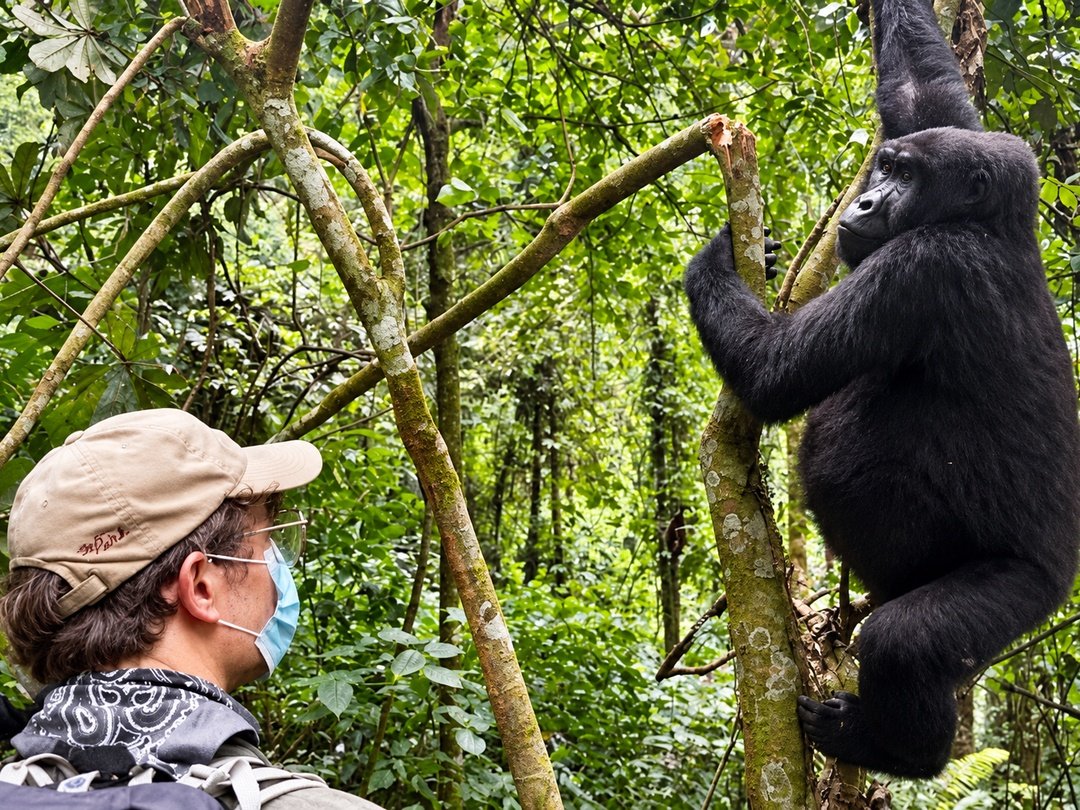
A Gorilla Group Joining Safari for Solo Travellers in Uganda works by bringing together independent travellers who have similar travel dates and want to share the main transport costs of reaching Bwindi Impenetrable National Park. Instead of each solo traveller hiring a private vehicle and driver-guide, several travellers join one confirmed departure and follow the same general itinerary.
The arrangement is coordinated in advance so that the gorilla trekking date, transport schedule, accommodation location and departure point all match. This is especially important because gorilla trekking permits are issued for specific dates and sectors, while group transport must operate according to one agreed schedule.
Joining a Confirmed Departure
Solo travellers normally begin by providing their preferred travel dates, starting point and accommodation preference. The safari operator then checks whether there is an existing group departure that matches those dates.
If there is a suitable departure, the traveller can join the group subject to vehicle space, gorilla permit availability and accommodation. Once confirmed, the traveller receives the agreed itinerary, meeting point, departure time and booking conditions.
Meeting Point and Pickup
The safari may begin from Entebbe, Kampala or Kigali depending on the confirmed departure.
Travellers are given a specific pickup point or meeting location before the safari begins. This may be a selected hotel, airport, central meeting point or another agreed location that fits the group route.
Because the vehicle is shared, travellers are expected to be ready at the agreed time so that the departure is not delayed for the rest of the group.
Shared Safari Vehicle
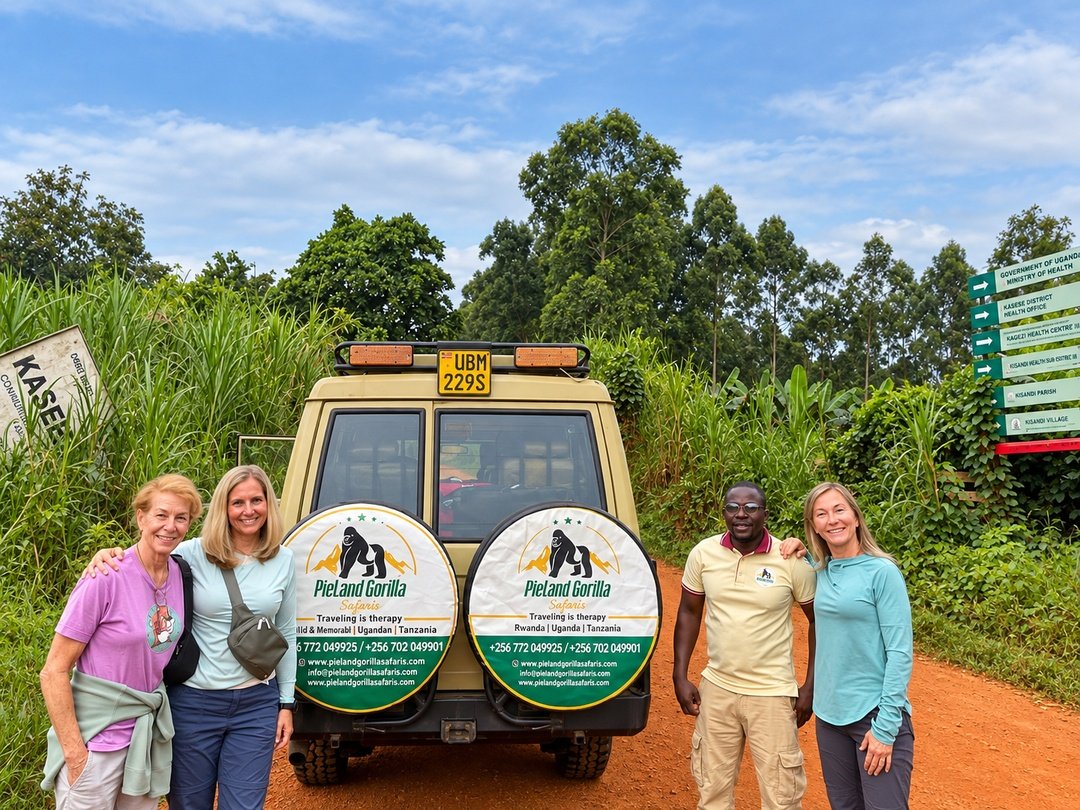
Participants travel together in a suitable safari vehicle selected according to the number of confirmed travellers. The vehicle normally includes enough seating and luggage space for the group, while the professional driver-guide manages the scheduled transfers.
Sharing the vehicle is one of the main ways solo travellers reduce costs. Fuel, vehicle use and driver-guide services are distributed across the group instead of being paid entirely by one person.
Coordinated Gorilla Permit Dates
Every traveller requires an individual gorilla trekking permit. The permit date must match the group’s trekking day, which is why solo travellers should avoid purchasing unrelated permits before confirming whether they fit the departure schedule.
Where the package includes the gorilla permit, the operator coordinates the permit reservation with the safari dates. Travellers should provide the correct personal details required for the permit booking and make payment within the agreed booking period.
Trekking Sector Allocation
The exact Bwindi sector depends on permit availability and the confirmed group itinerary. Rushaga and other southern Bwindi sectors can be convenient for departures linked to Kigali, while other sectors may be used depending on the route and available permits.
All group participants normally need arrangements that are geographically practical for the same departure. This prevents delays caused by travellers being assigned to widely separated trekking sectors.
Accommodation Arrangements
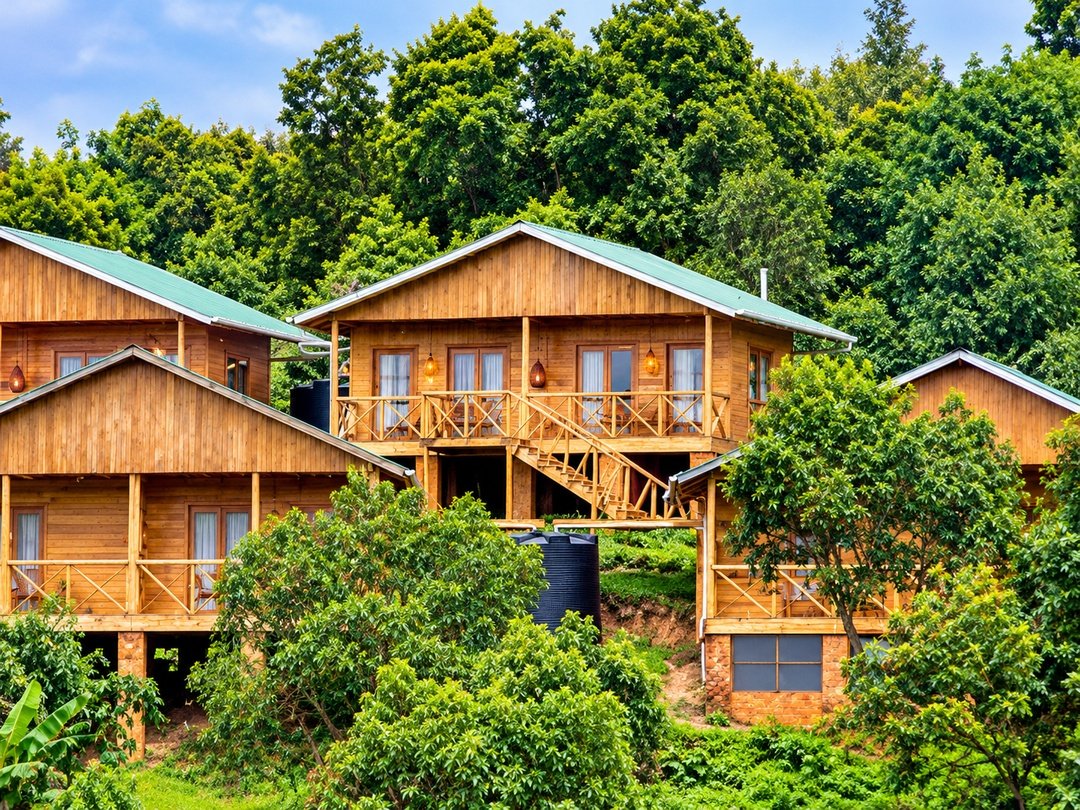
Group joining does not necessarily mean shared bedrooms. Solo travellers can request private accommodation while continuing to share the safari vehicle.
Accommodation is selected close to the confirmed trekking sector so that the group can travel together to the Uganda Wildlife Authority briefing point on the trekking morning.
Budget and midrange properties may be available depending on the departure. A single-room supplement can apply where the lodge charges extra for single occupancy.
Shared Schedule
A group safari follows an agreed timetable. Departure times, meal stops, border procedures, lodge check-ins and trekking-day transfers are organised around the needs of the whole group.
This means the safari is less flexible than a private tour. Individual travellers cannot usually change departure times, add long unscheduled stops or alter the route without affecting the other participants.
For solo travellers who value affordability and organised logistics, this structured schedule is usually a reasonable trade-off.
Gorilla Trekking Day
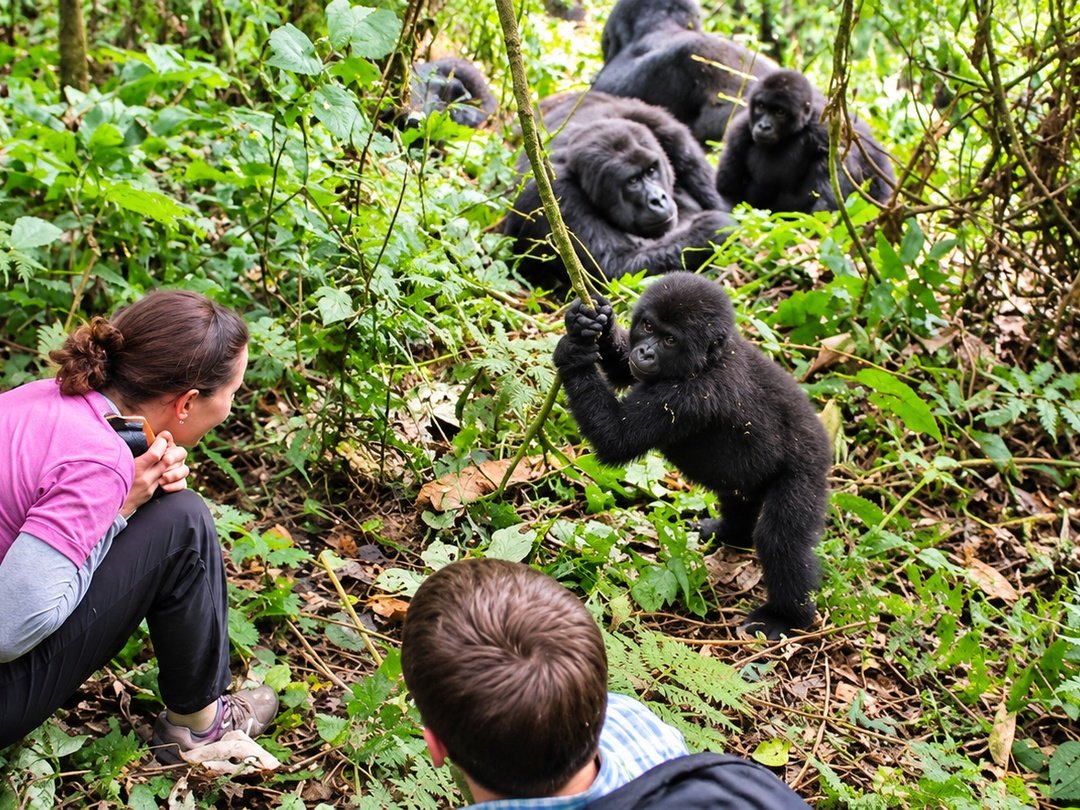
On the trekking morning, the group transfers to the designated park briefing point. Uganda Wildlife Authority rangers explain trekking rules, conservation procedures and appropriate behaviour around mountain gorillas.
Travellers are then assigned to trekking groups according to park arrangements. The people sharing the safari vehicle do not necessarily trek the same gorilla family because final trekking assignments are controlled by park authorities.
Once a gorilla family is located, visitors taking part in standard gorilla trekking are generally allowed approximately one hour with the gorillas under ranger supervision.
Return Journey
After the gorilla trekking experience, travellers return to their lodge or continue according to the confirmed itinerary. The following day, the shared vehicle follows the planned return route or continues to the next destination.
Travellers joining from Kigali may return to Kigali, while departures from Entebbe or Kampala normally finish according to the agreed Uganda itinerary.
Communication Before Departure
Clear communication is important for a successful group joining safari. Solo travellers should provide their correct travel dates, flight information where relevant, passport details required for permits, dietary requirements and accommodation preferences before final confirmation.
Any changes should be communicated as early as possible because one traveller’s date change can affect transport, accommodation and permit arrangements.
A Gorilla Group Joining Safari for Solo Travellers in Uganda therefore works best when all participants follow the confirmed schedule and understand the shared nature of the journey. In return, solo travellers benefit from lower transport costs, coordinated logistics and the opportunity to experience mountain gorilla trekking without arranging a fully private safari.
Best Starting Points for Solo Gorilla Group Safaris in Uganda
A Gorilla Group Joining Safari for Solo Travellers in Uganda can begin from different locations depending on the confirmed departure schedule, the traveller’s international arrival point and the trekking sector assigned in Bwindi Impenetrable National Park. The three most practical starting points are Entebbe, Kampala and Kigali.
Each starting point has its own advantages. Entebbe is convenient for international arrivals through Uganda, Kampala works well for travellers already staying in the capital, while Kigali can provide a shorter road approach to southern Bwindi for travellers entering through Rwanda.
Starting from Entebbe
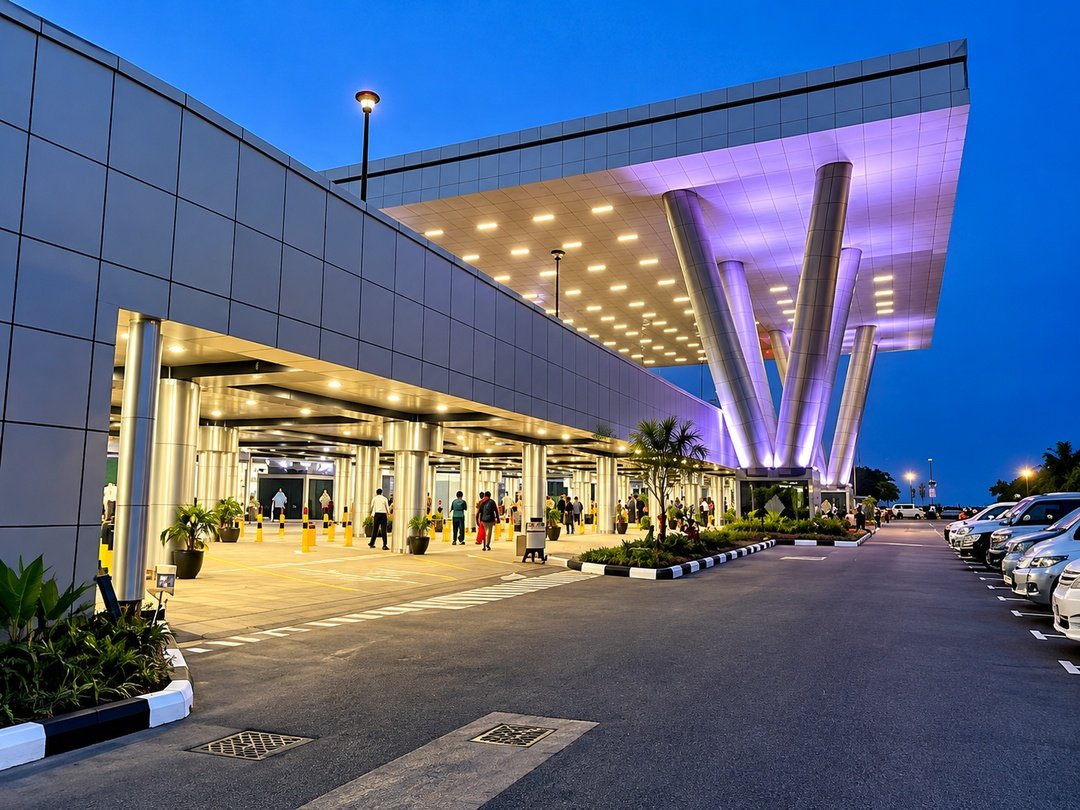
Entebbe is one of the most convenient starting points for solo travellers arriving directly in Uganda through Entebbe International Airport. It allows travellers to connect with a scheduled group departure without first arranging an additional transfer to another city.
A group joining safari from Entebbe usually begins with pickup from the airport, a nearby hotel or another agreed location. From there, the shared safari vehicle continues through central and southwestern Uganda toward Bwindi Impenetrable National Park.
The journey is long, but it offers a scenic introduction to Uganda. Travellers pass through towns, agricultural landscapes, roadside communities and the rolling hills of the southwest before reaching the gorilla region.
For solo travellers who prefer to keep their entire journey within Uganda, Entebbe is often the most straightforward option.
Starting from Kampala
Kampala is another practical departure point for travellers who are already staying in Uganda’s capital or arriving there before the safari.
Group joining departures from Kampala can collect travellers from selected hotels or agreed meeting points before beginning the road journey toward Bwindi. The route generally follows the same southwestern direction as Entebbe departures.
Starting from Kampala can be useful for travellers who want to spend time in the city before or after their gorilla safari. It also makes it easier to combine the trip with other Uganda destinations depending on the wider itinerary.
Because Kampala traffic can affect departure times, group safaris usually leave early in the morning to allow enough time for the long transfer to Bwindi.
Starting from Kigali
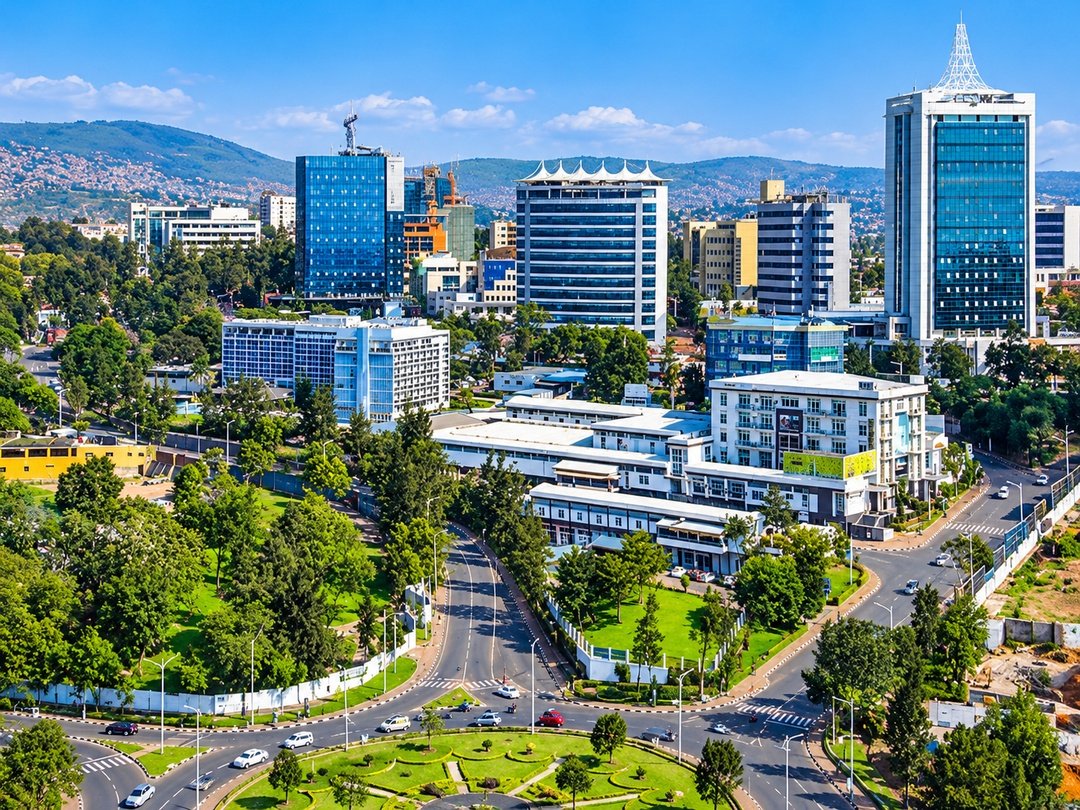
Kigali is an increasingly practical starting point for solo travellers heading to southern Bwindi. The city’s location in Rwanda provides convenient road access toward the Uganda border and the Rushaga or Nkuringo areas of Bwindi, depending on the confirmed trekking sector.
For many solo travellers, starting from Kigali can reduce the road travel time compared with beginning in Kampala or Entebbe. This makes it especially attractive for short gorilla safaris where the traveller wants to spend less time on long-distance road transfers.
The safari normally crosses into Uganda through a suitable Rwanda-Uganda border point before continuing into southwestern Uganda. Travellers must carry the correct passport, visa and entry documentation required for both countries.
Kigali can also be a good choice for travellers already visiting Rwanda or arriving on an international flight that fits the group departure schedule.
Which Starting Point Is Best for Solo Travellers?
The best starting point depends on the traveller’s flight plans, confirmed group departure and trekking sector.
Travellers arriving directly in Uganda may find Entebbe the most convenient option. Those already staying in Kampala can join from the capital, while travellers entering through Rwanda or trekking in southern Bwindi may find Kigali more practical.
Solo travellers should choose the starting point that matches the confirmed group departure rather than arranging independent travel first and trying to connect later. This helps avoid unnecessary transport costs, missed departures and conflicting permit arrangements.
Matching the Starting Point with the Gorilla Permit
The starting point should also be coordinated with the gorilla trekking permit and assigned sector. A traveller with a permit for southern Bwindi may find a Kigali-based departure more convenient, while another departure from Entebbe or Kampala may be better suited to a different route.
For this reason, solo travellers should confirm the group departure, trekking date and permit sector together before finalising flights or additional hotel bookings.
A Gorilla Group Joining Safari for Solo Travellers in Uganda works best when the starting point, transport route, accommodation and permit arrangements are planned as one coordinated itinerary.
3 Days Gorilla Group Joining Safari for Solo Travellers in Uganda
The 3 Days Gorilla Group Joining Safari for Solo Travellers in Uganda is designed for independent travellers who want a short but well-organised mountain gorilla trekking experience without paying for an entire private safari vehicle. The itinerary brings together solo travellers with compatible travel dates, allowing them to share transportation, fuel and driver-guide services while travelling to Bwindi Impenetrable National Park.
The exact starting point may be Entebbe, Kampala or Kigali depending on the confirmed group departure. The route, accommodation and trekking sector are coordinated with the available gorilla permits so that everyone joining the safari follows a practical and manageable itinerary.
Day 1: Transfer to Bwindi Impenetrable National Park
Your Gorilla Group Joining Safari for Solo Travellers in Uganda begins from the confirmed pickup point, where you meet your professional driver-guide and the other travellers joining the departure. The guide provides a short briefing about the journey, expected stops, accommodation arrangements and the following day’s gorilla trekking experience.
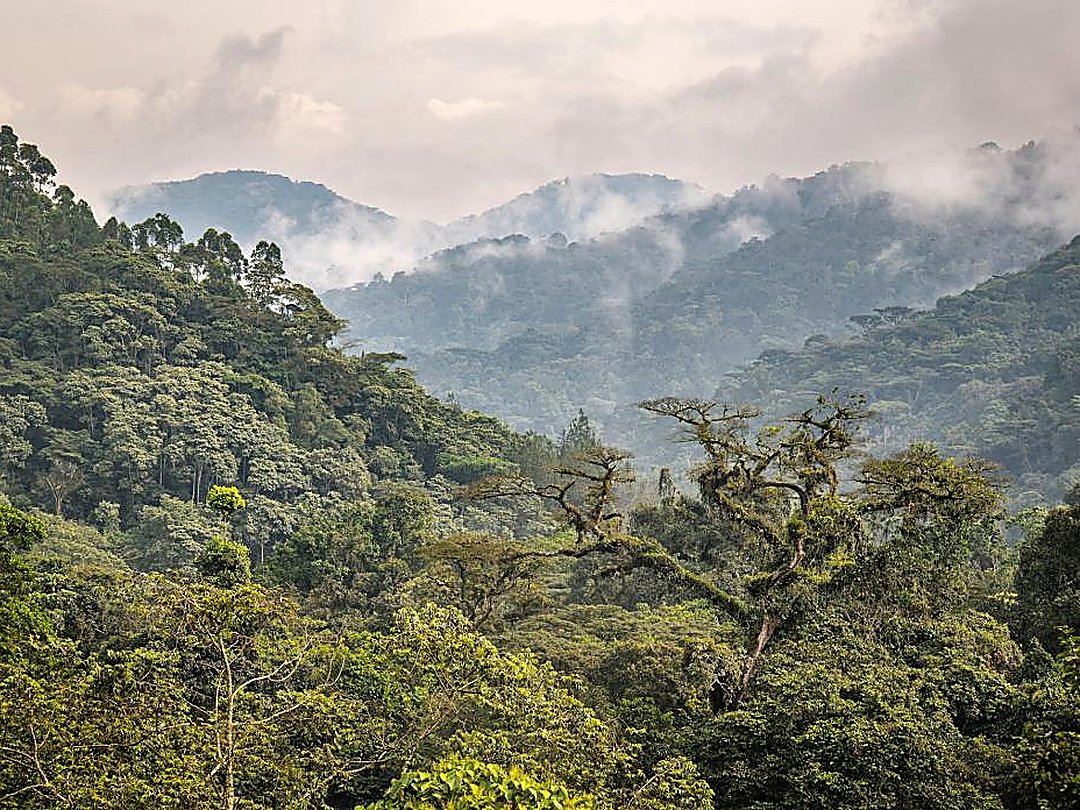
Travellers joining from Entebbe or Kampala begin the journey through Uganda’s countryside toward the southwestern region. The drive introduces you to changing landscapes as busy urban areas gradually give way to agricultural communities, open countryside, rolling hills and increasingly mountainous scenery.
Depending on the confirmed route and group schedule, short stops may be made for refreshments, meals or rest breaks. Because this is a shared safari, stops are coordinated for the entire group rather than individually so that the journey remains on schedule.
For travellers joining from Kigali, the journey follows a different route toward the Rwanda-Uganda border before continuing into southwestern Uganda. After completing the required immigration procedures, the group continues toward the assigned Bwindi trekking sector.
As you approach Bwindi, the landscape becomes increasingly dramatic. Steep cultivated hills, deep valleys, rural communities and patches of tropical forest dominate the scenery. This part of the journey gives travellers their first impression of the mountainous environment surrounding the gorilla habitat.
On arrival at the lodge, check in and settle into your room. Solo travellers can normally stay in private rooms where this has been confirmed during booking, even though transport is shared with the rest of the group.
Later, your driver-guide explains the next morning’s schedule. You will be advised about your wake-up time, breakfast, departure for the briefing point, clothing, packed lunch, drinking water and items recommended for the forest trek.
The evening offers time to relax, prepare your trekking equipment and meet the other travellers before the main gorilla experience.
Main activity: Transfer to Bwindi Impenetrable National Park
Accommodation: Budget or midrange lodge near the confirmed trekking sector
Meals: According to the confirmed safari package
Transport: Shared safari vehicle
Travel style: Group joining
Day 2: Gorilla Trekking in Bwindi Impenetrable National Park
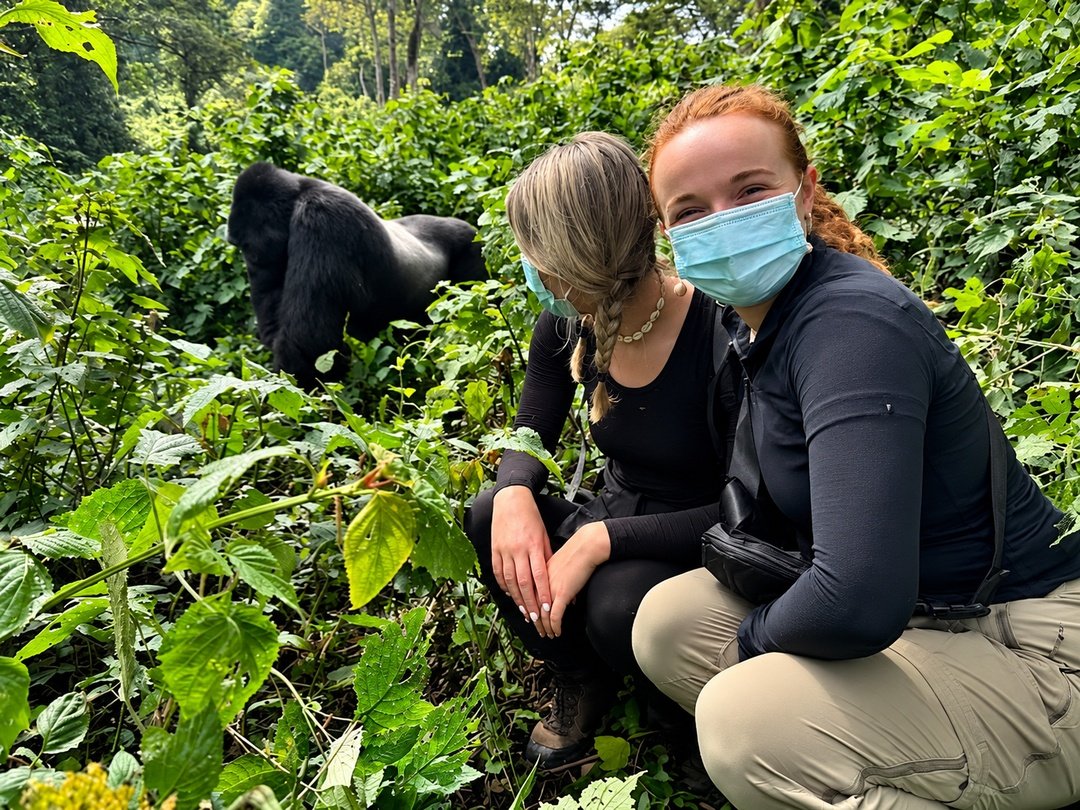
Day two is the highlight of the Gorilla Group Joining Safari for Solo Travellers in Uganda. Wake up early, have breakfast and prepare for one of Africa’s most memorable wildlife encounters.
Your driver-guide transfers you to the designated gorilla trekking briefing point. Travellers should arrive with appropriate trekking clothing, drinking water, packed lunch, rain protection and any personal medication or camera equipment they require during the day.
Before entering the forest, Uganda Wildlife Authority rangers conduct a detailed briefing. The briefing explains trekking procedures, conservation rules, appropriate behaviour around mountain gorillas and important safety guidelines that must be followed throughout the experience.
Visitors are then organised into trekking groups and assigned to habituated mountain gorilla families. The travellers sharing your safari vehicle may not necessarily be assigned to the same gorilla family because final trekking allocations are managed by park authorities.
Once your trekking group is ready, you enter Bwindi Impenetrable Forest accompanied by professional rangers and trackers.
The trek can vary considerably from one day to another. Mountain gorillas move naturally within their forest habitat, so their location cannot be predicted precisely. Some trekking groups may locate the gorillas after a shorter hike, while others may spend several hours moving through steep slopes, dense vegetation and uneven rainforest trails.
This unpredictability is part of what makes gorilla trekking a genuine wildlife adventure. You are entering the gorillas’ natural environment rather than visiting animals in a controlled setting.
Porters are normally available at the trekking point and can be particularly useful for solo travellers carrying cameras, drinking water or a daypack. A porter can also provide additional support when navigating steep or slippery sections of the trail.
When the trackers locate the assigned gorilla family, the ranger prepares the group for the encounter. Visitors approach calmly and follow instructions regarding positioning, photography and behaviour.
During standard gorilla trekking, visitors are generally permitted approximately one hour with the habituated gorilla family after it has been located.
This period can provide remarkable opportunities to observe the social behaviour of mountain gorillas. You may see a dominant silverback monitoring the family, adult females feeding, juveniles climbing vegetation or young gorillas playing with one another.
Each encounter is different because the animals behave naturally. At times the gorillas may remain relatively still while feeding, while on other occasions the family may move gradually through the surrounding vegetation.
Photography is allowed, but flash should not be used. Travellers should remain attentive to the instructions of the ranger team throughout the encounter.
After the permitted viewing period, your trekking group gradually leaves the gorillas and begins the return walk through the forest.
Once you reach the starting point, your driver-guide meets you and transfers you back to the lodge.
The remainder of the day can be spent resting after the trek, sharing photographs and experiences with other members of the group and enjoying the peaceful surroundings of Bwindi.
For many solo travellers, this evening becomes one of the most enjoyable parts of the safari because everyone returns with their own experience and stories from the forest.
Main activity: Mountain gorilla trekking
Location: Bwindi Impenetrable National Park
Trekking arrangement: Guided ranger-led trek
Gorilla viewing: Approximately one hour after locating the assigned family during standard trekking
Accommodation: Budget or midrange lodge near Bwindi
Meals: Breakfast, packed lunch and dinner according to the confirmed package
Day 3: Return Journey After Gorilla Trekking
After breakfast, check out of your lodge and prepare for the return journey. This final day of the Gorilla Group Joining Safari for Solo Travellers in Uganda follows the confirmed group route back toward the agreed ending point.
Travellers returning to Entebbe or Kampala begin the drive through southwestern Uganda, passing through the region’s rolling hills, farms, towns and rural communities. The journey offers an opportunity to reflect on the previous day’s gorilla encounter while enjoying more of Uganda’s countryside.
Rest and meal stops can be made according to the group schedule before continuing toward Kampala or Entebbe.
Travellers whose group departure started in Kigali travel toward the Uganda-Rwanda border. After completing immigration formalities, the journey continues through Rwanda toward Kigali.
The final drop-off arrangement depends on the confirmed itinerary. Travellers may be dropped at an agreed hotel, central meeting location, airport or another pre-arranged point where the timing and route allow.
Because this is a shared safari, solo travellers should coordinate onward flights carefully and avoid arranging extremely tight connections immediately after the scheduled return. Road conditions, traffic and border procedures can sometimes affect arrival times.
The safari ends after the agreed drop-off, marking the conclusion of a short but rewarding journey centred on one of Africa’s most extraordinary wildlife experiences.
For solo travellers, the trip provides more than the gorilla encounter itself. It combines independent travel with shared adventure, giving participants the opportunity to experience Uganda’s landscapes, meet other travellers and enjoy an organised safari without needing to pay for a completely private tour.
Main activity: Return transfer
Destination: Entebbe, Kampala or Kigali according to the confirmed departure
Transport: Shared safari vehicle
Meals: According to the confirmed safari package
Why This 3-Day Itinerary Works Well for Solo Travellers
The three-day itinerary is especially practical for solo travellers because it keeps the safari focused on the primary objective: reaching Bwindi, trekking mountain gorillas and returning to the agreed destination without unnecessary additional days.
Sharing transport allows independent travellers to reduce some of the largest logistical expenses while still receiving professional driver-guide services, scheduled transfers and organised accommodation.
The itinerary is also easy to incorporate into a longer East African trip. Travellers can arrive before the group departure, complete the three-day safari and then continue independently to another destination or extend their Uganda journey with additional wildlife and cultural experiences.
For travellers with limited time, a 3 Days Gorilla Group Joining Safari for Solo Travellers in Uganda offers a practical combination of affordability, organisation, social interaction and direct access to the mountain gorillas of Bwindi Impenetrable National Park.
Gorilla Trekking Experience for Solo Travellers in Bwindi Impenetrable National Park
The gorilla trekking day is the central experience of a Gorilla Group Joining Safari for Solo Travellers in Uganda. For many independent travellers, it is the main reason for visiting Bwindi Impenetrable National Park and one of the most memorable wildlife encounters available in East Africa.
The experience combines a demanding rainforest hike with the rare opportunity to observe habituated mountain gorillas in their natural environment. Although solo travellers join a shared safari vehicle to reach Bwindi, the actual gorilla trekking experience is organised by park authorities and follows the same conservation procedures used for all visitors.
Morning Preparation Before the Trek
Gorilla trekking begins early in the morning. Solo travellers normally wake up before sunrise, have breakfast at the lodge and prepare their trekking equipment before transferring to the assigned briefing point.
Travellers should carry drinking water, a packed lunch, rain protection, personal medication and any camera equipment they plan to use. The forest environment can be wet and unpredictable, so sturdy hiking boots, long trousers, a long-sleeved shirt and a lightweight waterproof jacket are recommended.
The driver-guide normally confirms the departure time the evening before so that the group arrives at the briefing point on schedule.
Gorilla Trekking Briefing
Before entering the forest, all trekkers attend an official briefing led by Uganda Wildlife Authority rangers.
The briefing explains how visitors should behave around mountain gorillas, how the trekking groups are organised, what to expect in the forest and the conservation rules that protect both visitors and gorillas.
Solo travellers should pay close attention during this briefing because the terrain, weather conditions and location of the assigned gorilla family can affect the difficulty of the trek.
The rangers also explain photography rules, appropriate viewing distance, what to do if a gorilla approaches and how visitors should respond to instructions during the encounter.
Assignment to a Gorilla Family
After the briefing, visitors are assigned to habituated mountain gorilla families.
The people who travelled together in the safari vehicle are not always guaranteed to trek the same gorilla family. Final allocations depend on park arrangements, permit records and operational decisions made by the ranger team.
For solo travellers, this can add another social element to the experience because they may join a trekking group made up of visitors from different countries and safari companies.
Each trekking group enters the forest accompanied by trained rangers and trackers who understand the movements and behaviour of the gorilla families.
Entering Bwindi Impenetrable Forest
The actual trek begins once the group enters the forest.
Bwindi is characterised by steep slopes, dense vegetation, tangled vines, uneven paths and sections that can become muddy after rainfall. The forest is naturally rugged, and trekking conditions can vary significantly from one day to another.
Some gorilla families may be located relatively close to the starting point, while others may require several hours of hiking.
Mountain gorillas move freely through the forest, which means there is no fixed trekking duration.
This uncertainty is part of the adventure and makes every gorilla trek different.
Trekking Difficulty for Solo Travellers
The difficulty of the trek depends on several factors, including the location of the gorilla family, rainfall, terrain and the physical condition of the traveller.
A reasonable level of fitness is recommended, but solo travellers do not need to be professional hikers.
Walking regularly before the safari can help improve endurance, especially for travellers who are not used to hills or long periods of walking.
Travellers who have concerns about mobility or fitness should communicate them in advance so that appropriate advice can be provided before the trekking day.
Hiring a Porter
Solo travellers are strongly encouraged to consider hiring a porter.
A porter can carry a backpack, drinking water, camera equipment, packed lunch and other personal items during the trek.
This can make a major difference on steep sections of the trail, particularly when the forest is wet or slippery.
Porters can also provide physical support when crossing difficult ground, helping travellers maintain balance and conserve energy for the gorilla encounter.
For solo travellers who do not have a companion to share equipment with, porter assistance can be especially useful.
Tracking the Mountain Gorillas
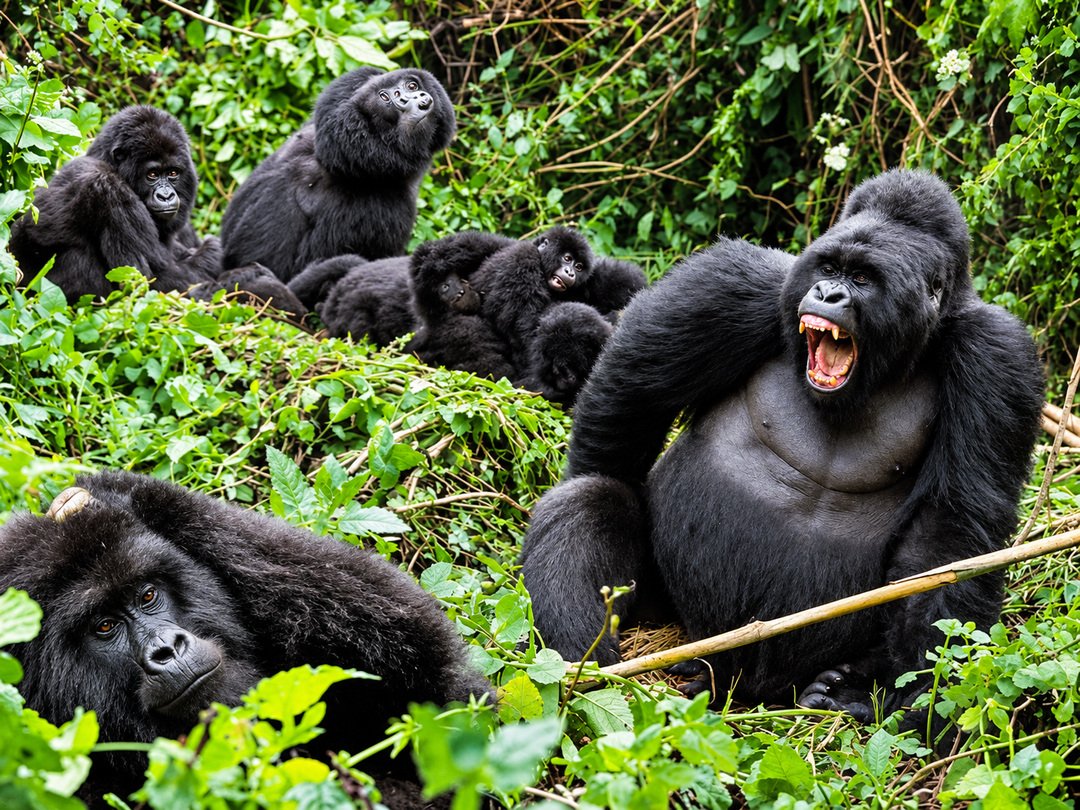
Rangers and trackers communicate during the trek to determine the current location of the assigned gorilla family.
Signs such as broken vegetation, feeding remains, footprints and previous nesting areas may help indicate the direction in which the gorillas have moved.
As the trekking group gets closer, the rangers may ask visitors to prepare cameras, reduce noise and leave walking sticks or unnecessary equipment behind where appropriate.
The atmosphere often becomes more exciting as the group approaches the gorillas.
The First Gorilla Encounter
Seeing a mountain gorilla for the first time is often the most emotional moment of the safari.
A large silverback may be the first animal visible through the vegetation, or travellers may encounter females, juveniles or young gorillas feeding nearby.
The gorillas are not staged for visitors. They continue with their natural behaviour while the trekking group observes under ranger supervision.
Travellers may see gorillas feeding, grooming, resting, climbing, playing or interacting with other family members.
Because every gorilla family has its own social structure and personality, no two encounters are exactly the same.
Time Spent With the Gorillas
During standard gorilla trekking, visitors are generally allowed approximately one hour with the assigned habituated gorilla family after it has been located.
The viewing period is carefully controlled to reduce disturbance to the gorillas while still allowing visitors enough time to observe and photograph them.
The ranger team manages the encounter and may reposition the group depending on the movement of the gorillas and surrounding vegetation.
Travellers should remain calm, speak quietly and follow instructions at all times.
Gorilla Photography for Solo Travellers
Solo travellers often value the opportunity to photograph the experience, but the forest environment can make photography challenging.
Lighting can change rapidly beneath the canopy, and gorillas may move between dense vegetation and open areas.
Flash photography should not be used.
Travellers should therefore prepare camera settings before the encounter and avoid spending the entire hour looking through a screen.
The experience is often more memorable when travellers balance photography with simply observing the gorillas directly.
Solo travellers may also ask another member of the trekking group or guide to help take a photograph of them where appropriate, provided this does not disturb the gorillas or delay the group.
Following Gorilla Trekking Rules
Responsible behaviour is essential during the gorilla encounter.
Travellers must follow ranger instructions regarding distance, movement and noise.
Food should not be eaten close to the gorillas, and visitors should avoid sudden movements.
If a gorilla moves closer, travellers should remain calm and wait for guidance from the ranger team.
The rules are designed to protect the health and safety of both visitors and the gorillas.
Returning From the Forest
After the viewing period ends, the trekking group leaves the gorillas and begins the walk back toward the starting point.
The return journey may be easier because the group is no longer searching for the gorillas, although steep or muddy terrain can still require careful walking.
Once the trek is completed, travellers reunite with their driver-guide and return to the lodge or continue with the confirmed itinerary.
Many solo travellers spend the remainder of the day resting, reviewing photographs and sharing stories with other members of the group.
Why the Experience Is Special for Solo Travellers
For solo travellers, gorilla trekking can be both deeply personal and surprisingly social.
The traveller begins the journey independently but shares the forest experience with a small group of people who have come together for the same purpose.
This creates a sense of shared achievement after completing the trek and seeing the gorillas.
A Gorilla Group Joining Safari for Solo Travellers in Uganda therefore offers more than a way to reduce transport costs. It allows independent travellers to experience one of Africa’s most remarkable wildlife encounters while still enjoying the companionship, structure and support of an organised safari.
Gorilla Permits for Solo Travellers in Uganda
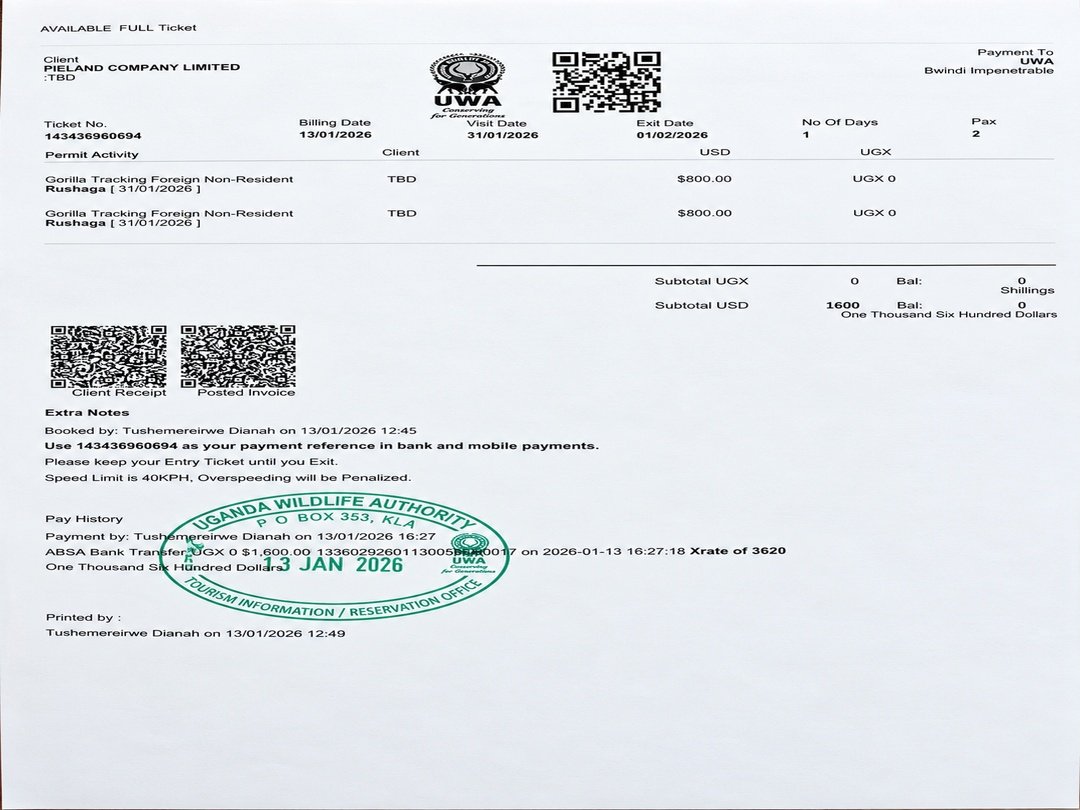
A valid gorilla trekking permit is required for every traveller participating in mountain gorilla trekking in Uganda. For anyone booking a Gorilla Group Joining Safari for Solo Travellers in Uganda, the permit is one of the most important parts of the safari because it determines the trekking date and helps shape the rest of the itinerary.
The gorilla permit is issued for a specific trekking date, which means the safari transport, accommodation and group departure must be coordinated carefully around that date. Solo travellers joining an existing departure should therefore avoid booking unrelated transport or accommodation before confirming that their permit matches the group schedule.
Where the safari package includes the permit, the operator coordinates the permit reservation together with the group departure. The traveller is normally required to provide accurate personal details and complete the agreed payment within the specified booking period.
Why Solo Travellers Should Book Gorilla Permits Early
Gorilla trekking permits are limited each day, and availability can become especially tight during popular travel periods. This makes early booking important for solo travellers who want to join a confirmed group departure.
A private traveller may have greater freedom to shift dates, but a group joining safari depends on several people travelling on the same schedule. If permits are unavailable for the planned trekking date, the entire departure may need to be adjusted.
Booking early therefore improves the chances of matching a gorilla permit with the correct group departure, accommodation and safari vehicle.
Gorilla Permit and Trekking Sector
The trekking sector attached to the safari affects where the group stays and how the road journey is planned.
Bwindi Impenetrable National Park has several gorilla trekking areas, and the final trekking location depends on the permits secured for the confirmed date.
For solo travellers, it is particularly important that the trekking sector is compatible with the rest of the group. A permit in a completely different part of Bwindi may make it difficult to share the same vehicle and lodge arrangements.
This is why the permit should normally be confirmed together with the group safari rather than arranged separately without checking the itinerary.
Can a Solo Traveller Join if They Already Have a Gorilla Permit?
Yes, but the permit date and trekking sector must match the confirmed group departure.
A traveller who has already purchased a permit should provide the permit details before joining the safari so that the operator can verify whether the group route, accommodation and trekking schedule are compatible.
If the existing permit does not match the group itinerary, the traveller may need a different transport arrangement or an alternative departure.
Minimum Age for Gorilla Trekking
The minimum age for mountain gorilla trekking in Uganda is generally 15 years.
Solo travellers booking for themselves will normally meet this requirement, but the rule remains important for anyone planning to combine the safari with younger relatives or family members before or after the group departure.
Why Permit Coordination Matters on a Group Safari
Permit coordination is especially important on a Gorilla Group Joining Safari for Solo Travellers in Uganda because the entire group is travelling according to a shared schedule.
The vehicle departure, accommodation location, trekking morning and return transfer all need to work together.
For this reason, solo travellers should confirm the complete safari arrangement rather than treating the gorilla permit as a separate booking.
Accommodation for Solo Travellers on a Gorilla Group Joining Safari
Accommodation is an important part of a Gorilla Group Joining Safari for Solo Travellers in Uganda because solo travellers often want to share transport costs without giving up their privacy at the lodge.
Group joining normally refers to shared safari transportation and coordinated activities. It does not automatically mean sharing a bedroom with another traveller.
Solo travellers can usually request private accommodation, depending on availability and the selected safari category.
Private Rooms for Solo Travellers
A private room allows the traveller to enjoy personal space after the shared road journey and gorilla trekking activities.
This is especially valuable after a long trekking day when travellers may want to rest, organise photographs or simply enjoy some quiet time.
The private room can usually be arranged even when the traveller is sharing transport with several other safari participants.
Single-Room Supplements
Some lodges may charge an additional amount for single occupancy.
This is because a room designed for two people is being occupied by one traveller.
The exact supplement depends on the lodge and accommodation category.
Solo travellers should therefore confirm whether the quoted package includes a private room or whether a single supplement applies.
Budget Accommodation
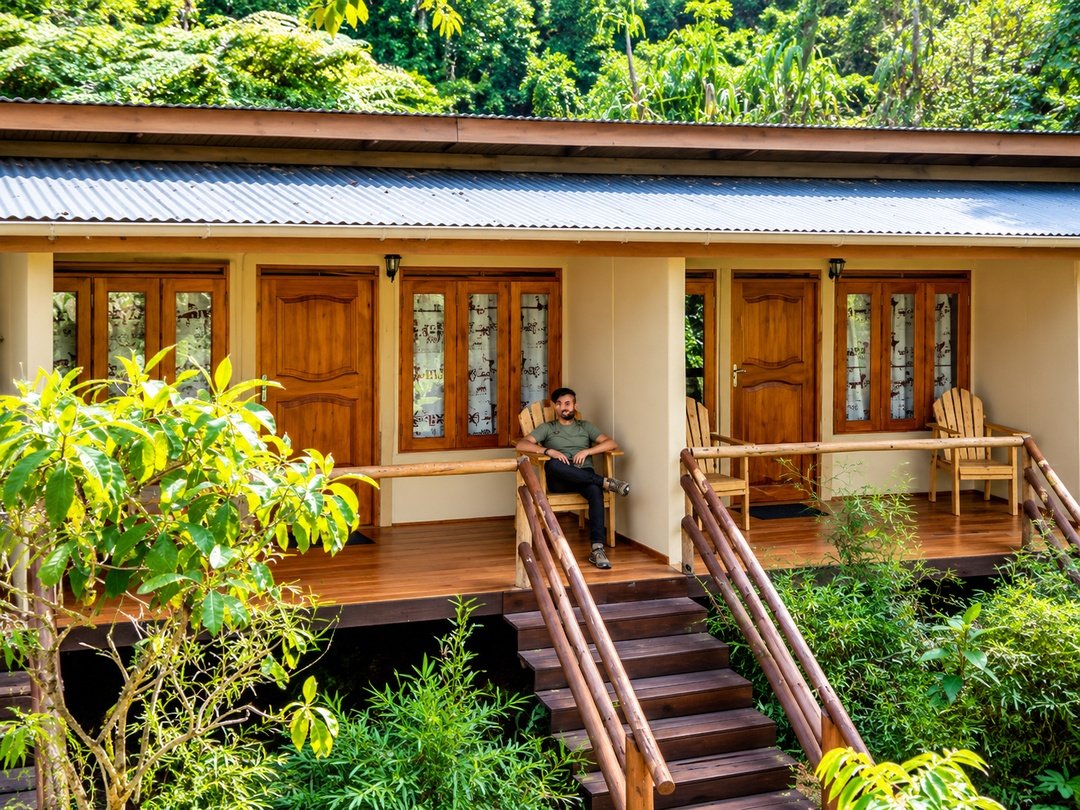
Budget lodges are suitable for travellers who want to keep the overall safari cost manageable.
These properties generally provide the essential services required for a comfortable stay, including a private room, bathroom facilities, meals and convenient access to the gorilla trekking area.
For many solo travellers, budget accommodation works particularly well because the main purpose of the safari is the gorilla trekking experience rather than luxury lodging.
Midrange Accommodation
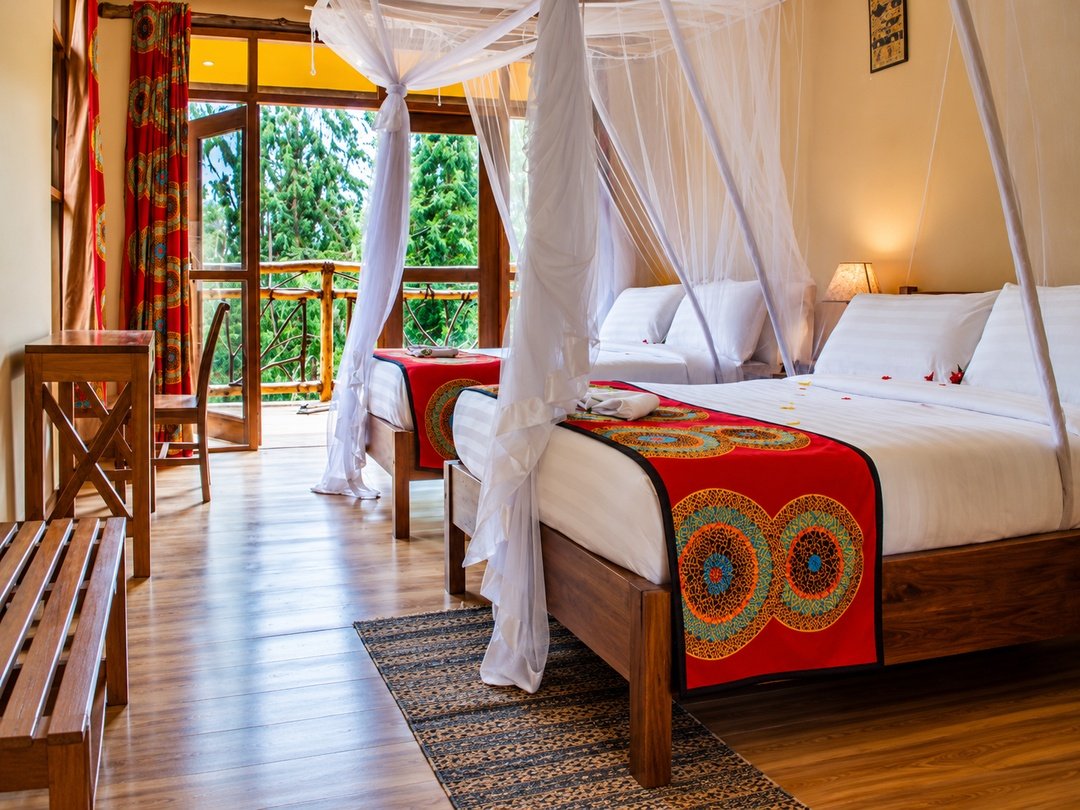
Midrange lodges offer additional comfort while still maintaining a practical price level.
Travellers may benefit from larger rooms, improved dining areas, better views and more extensive lodge facilities.
A solo traveller can therefore join shared transport while choosing a higher accommodation category if the lodge location remains compatible with the group itinerary.
Why Lodge Location Matters
Accommodation should be located reasonably close to the assigned trekking sector.
This is important because gorilla trekking begins early in the morning and the group must reach the briefing point on time.
If one traveller stays far away from the rest of the group, the shared transport schedule can become difficult.
For this reason, accommodation upgrades should normally be selected within or near the same trekking area used by the other participants.
Can Solo Travellers Share a Room if They Want?
Yes, where appropriate arrangements are available.
Some travellers may prefer to share a twin room with another participant to reduce accommodation costs further.
However, room sharing should never be assumed.
It should only be arranged when both travellers agree and the lodge has a suitable room configuration.
Best Accommodation Choice for Solo Travellers
The best accommodation depends on budget, comfort expectations and the confirmed trekking sector.
A Gorilla Group Joining Safari for Solo Travellers in Uganda works best when accommodation balances privacy, convenience and proximity to the gorilla trekking starting point.
Group Size and Safari Vehicle for Solo Travellers
The size of the group is an important consideration for travellers booking a Gorilla Group Joining Safari for Solo Travellers in Uganda.
Group size depends on the number of confirmed participants, the safari vehicle being used and the specific departure arrangement.
The aim should be to keep the group manageable enough for comfortable travel while still allowing participants to benefit from shared transport costs.
How Many Travellers Can Join?
There is no single group size that applies to every departure.
Some departures may operate with only a few travellers, while others may include a larger number of participants depending on demand and vehicle capacity.
What matters most is that each traveller has a proper seat, reasonable luggage space and a comfortable journey.
Type of Safari Vehicle
A suitable safari vehicle is selected according to the size of the group.
The vehicle should provide enough seating, luggage capacity and reliability for long-distance road travel to Bwindi.
Solo travellers should understand that the vehicle is shared for the scheduled route, so seating arrangements and stops are organised around the whole group.
Luggage Space for Solo Travellers
Travellers should carry practical luggage that can fit comfortably in the shared vehicle.
Large suitcases can sometimes create storage difficulties, particularly when several participants are travelling together.
A medium-sized travel bag or soft-sided luggage is often easier to manage on safari.
Travellers should also carry a smaller daypack for water, rain protection, personal items and trekking equipment.
Shared Vehicle for the Entire Journey
The same safari vehicle is normally used for the scheduled transfers included in the group itinerary.
This can include pickup, road travel to Bwindi, lodge transfers and the return journey.
Because the transport is shared, travellers are expected to follow the agreed departure times.
Why Group Size Matters for Solo Travellers
A smaller group may offer a quieter journey and easier coordination, while a larger group may reduce some transport costs more effectively.
The important point is that the departure remains comfortable and professionally organised.
A Gorilla Group Joining Safari for Solo Travellers in Uganda should never feel overcrowded simply because travellers are sharing transport.
Is a Gorilla Group Joining Safari Safe for Solo Travellers?
Safety is one of the first concerns many travellers have when considering a Gorilla Group Joining Safari for Solo Travellers in Uganda.
For independent travellers, joining an organised departure can provide additional structure because transport, accommodation and the main safari activities are coordinated in advance.
Travellers are accompanied by a professional driver-guide during the road journey and by trained park rangers during the actual gorilla trekking experience.
Professional Driver-Guides
The driver-guide manages the road journey, departure schedule, lodge transfers and general safari logistics.
For solo travellers unfamiliar with Uganda, this can make the journey considerably easier than arranging multiple independent transfers.
The guide also helps coordinate timing so that the group reaches accommodation and trekking locations according to schedule.
Organised Accommodation
Solo travellers stay in confirmed accommodation rather than searching for lodging after arrival.
This removes one of the uncertainties of independent travel and allows the traveller to know where they will stay before the safari begins.
Ranger-Led Gorilla Trekking
The actual gorilla trekking experience is conducted under the supervision of trained wildlife rangers and trackers.
Travellers do not enter the forest independently.
The ranger team manages the route, behaviour around the gorillas and safety procedures during the trek.
Travelling With Other Participants
Another advantage of a group joining safari is that the traveller is not alone during the long road transfers.
Solo travellers share the vehicle with other participants and follow one organised route.
For many travellers, this creates a greater sense of comfort than travelling alone between unfamiliar destinations.
Personal Responsibility Still Matters
Even on an organised safari, travellers should continue to follow normal travel precautions.
Passports, money, phones and important documents should be kept secure.
Travellers should follow guide instructions, avoid unnecessary independent movement late at night and keep emergency contact information accessible.
Is Uganda Suitable for First-Time Solo Travellers?
A group joining safari can be especially suitable for first-time visitors because the most complicated parts of the journey are already organised.
Instead of managing the route, accommodation and trekking arrangements independently, travellers follow a structured itinerary.
This makes a Gorilla Group Joining Safari for Solo Travellers in Uganda a practical choice for travellers who want the independence of solo travel with the additional support of an organised safari.
Female Solo Travellers on Gorilla Group Joining Safaris
A Gorilla Group Joining Safari for Solo Travellers in Uganda can also be a practical option for women travelling independently.
Female solo travellers often value the combination of organised transport, confirmed accommodation and travelling with other safari participants while still maintaining their own personal space.
Organised Transport
Instead of arranging several different drivers and transfers, the traveller joins one confirmed safari vehicle for the planned route.
This reduces the need to negotiate transport at multiple stages of the journey.
The driver-guide also remains the main contact person for the transport portion of the safari.
Private Accommodation
Female solo travellers can request private rooms where available.
This allows the traveller to participate in the shared safari while maintaining privacy at the lodge.
Private accommodation should be confirmed during booking rather than assumed after arrival.
Travelling With a Group
Sharing the road journey with other travellers can create a more comfortable and social experience.
Participants often come from different countries but share a common interest in wildlife and gorilla trekking.
For a solo female traveller, this can provide companionship during transfers without taking away the independence of the trip.
Clear Pickup and Drop-Off Arrangements
Pickup points and departure times should be confirmed before the safari begins.
Where possible, travellers should use agreed hotel, airport or central meeting locations rather than trying to locate the group at the last minute.
Clear arrangements reduce confusion and make the beginning and end of the safari easier.
Communication Before the Safari
Solo female travellers should provide any important accommodation, dietary or transport preferences during booking.
Good communication helps ensure that the safari is organised around practical expectations before departure.
For many women travelling independently, a Gorilla Group Joining Safari for Solo Travellers in Uganda offers a useful balance between freedom, companionship and organised logistics.
Solo Group Safari vs Private Gorilla Safari in Uganda
Solo travellers planning gorilla trekking in Uganda generally choose between a group joining safari and a private safari.
Both options can provide access to the same mountain gorilla trekking experience, but they differ significantly in transport costs, flexibility and travel style.
Cost
A group joining safari is usually more economical for a solo traveller because vehicle, fuel and driver-guide expenses are shared.
On a private safari, the traveller carries the full cost of the vehicle and guide alone.
This is one of the main reasons independent travellers choose group departures.
Flexibility
Private safaris provide greater flexibility.
A solo traveller can usually choose departure times, stops, accommodation and additional activities more freely.
Group joining safaris follow a shared schedule because several travellers are using the same vehicle.
Privacy
Private safaris offer complete privacy during road transfers.
Group joining safaris are more social because travellers share the journey with other participants.
Accommodation can still remain private even when transport is shared.
Social Experience
Group joining safaris are ideal for travellers who enjoy meeting other people.
The journey gives participants time to talk, share experiences and connect with travellers from different countries.
A private safari is better suited to someone who prefers a quieter and more personal travel experience.
Which Option Is Better for Solo Travellers?
The answer depends on priorities.
Travellers who want maximum flexibility, privacy and control may prefer a private safari.
Travellers who want to reduce costs and enjoy a more social journey may find a Gorilla Group Joining Safari for Solo Travellers in Uganda more suitable.
For many independent travellers, the group joining option provides the best balance between affordability and professional safari organisation.
What Is Included in a Gorilla Group Joining Safari for Solo Travellers in Uganda?
A Gorilla Group Joining Safari for Solo Travellers in Uganda normally includes the essential services required to complete the safari comfortably and efficiently. The exact inclusions depend on the confirmed package, but the purpose of the group arrangement is to combine the most important safari services into one organised itinerary while allowing solo travellers to share some of the major transport expenses.
Shared safari transportation is one of the main inclusions. Travellers join a suitable safari vehicle with other confirmed participants and follow the agreed route to Bwindi Impenetrable National Park. Fuel for the scheduled transfers is normally included, meaning travellers do not need to make separate fuel payments during the journey.
The services of a professional English-speaking driver-guide are also included. The driver-guide manages the road transfers, coordinates pickup and drop-off times, helps with lodge check-ins and ensures that the group reaches the gorilla trekking briefing point according to schedule.
One valid gorilla trekking permit for the confirmed trekking date is included for each eligible traveller subject to permit availability. This permit allows the traveller to participate in the official ranger-led mountain gorilla trek in Bwindi Impenetrable National Park.
Accommodation for the confirmed nights is also included according to the selected category. Solo travellers can normally request private rooms, while budget and midrange accommodation options may be available depending on the departure.
Meals are provided according to the confirmed itinerary. On the gorilla trekking day, travellers normally receive breakfast, a packed lunch and dinner depending on the selected package. Drinking water is also provided during scheduled road transfers.
The group joining package therefore brings together transportation, guiding, accommodation, meals and the gorilla trekking arrangements needed for a successful safari. Travellers should always review the final quotation carefully so that they clearly understand which services are included before confirming their booking.
What Is Excluded in a Gorilla Group Joining Safari for Solo Travellers in Uganda?
Although the main safari services are usually included, certain personal and international travel expenses remain outside the package.
International flights are normally excluded. Solo travellers are responsible for arranging their own flights to Entebbe, Kigali or another suitable arrival point that connects with the confirmed group departure.
Visa fees are also excluded. Travellers must ensure that they have the correct travel documentation required for Uganda and, where applicable, Rwanda.
Personal travel insurance is not normally included in the safari package. Travellers should arrange suitable insurance before departure according to their own travel needs.
Tips and gratuities are also excluded and remain at the traveller’s discretion.
Personal expenses such as souvenirs, laundry, alcoholic drinks, additional beverages, telephone charges and services not mentioned in the confirmed itinerary are paid separately.
Optional activities and safari extensions are also excluded unless specifically added to the package. These may include additional game drives, chimpanzee trekking, Batwa cultural experiences, extra hotel nights or other activities requested before or after the main gorilla safari.
Additional transfers requested outside the confirmed group route may also attract an extra charge because group joining safaris operate according to a shared schedule.
Best Time for a Gorilla Group Joining Safari for Solo Travellers in Uganda
A Gorilla Group Joining Safari for Solo Travellers in Uganda can operate throughout the year because mountain gorilla trekking in Bwindi Impenetrable National Park is available in every season.
However, travel conditions vary during the year, and some months may be more suitable for travellers who prefer comparatively drier forest trails.
The periods from June to September and December to February are commonly preferred because rainfall may be lower compared with the wetter months. Trails can still be muddy because Bwindi is a tropical rainforest, but trekking conditions may be easier during comparatively dry periods.
These months are also popular with international visitors, meaning gorilla permits, accommodation and group departure spaces may be in greater demand. Solo travellers planning to travel during these periods should therefore confirm their safari early.
The wetter periods can also be suitable for gorilla trekking. Rainfall may make forest trails more slippery and demanding, but the rainforest remains exceptionally green and atmospheric.
Solo travellers visiting during wetter months should prepare properly with waterproof hiking boots, rain protection and suitable clothing.
One advantage of travelling outside the busiest periods is that there may be fewer visitors on some routes, although gorilla permit availability and departure schedules should still be confirmed in advance.
The best time ultimately depends on personal preference, travel dates and availability rather than one specific month.
What to Pack for a Gorilla Group Joining Safari for Solo Travellers in Uganda
Packing correctly can make a major difference during a Gorilla Group Joining Safari for Solo Travellers in Uganda, especially because solo travellers are responsible for managing their own luggage and trekking equipment.
A pair of sturdy waterproof hiking boots is one of the most important items. Gorilla trekking takes place on uneven forest trails that can become muddy and slippery, particularly after rainfall.
Long trousers are recommended because they protect the legs from vegetation, insects and mud. A long-sleeved shirt provides additional protection while moving through dense sections of the forest.
A lightweight waterproof jacket should also be carried because rainfall can occur at any time in Bwindi.
Gardening gloves can be useful during the trek because travellers may need to hold branches or vegetation for support on steep sections.
A small daypack is recommended for carrying drinking water, packed lunch, rain protection, personal medication, camera equipment and other essential items during the forest trek.
Insect repellent, sunscreen and a reusable water bottle are also useful.
Travellers who plan to take photographs should carry suitable camera equipment together with spare batteries or a portable charging solution where appropriate.
Large suitcases should be avoided where possible because group safari vehicles have shared luggage space. Soft-sided bags or medium-sized travel bags are often easier to arrange inside the vehicle.
Solo travellers should also carry personal travel documents in a secure and easily accessible place, particularly when the itinerary involves border crossings.
Can Solo Travellers Join a Gorilla Group Safari at the Last Minute?
Last-minute participation may sometimes be possible, but it depends on several factors.
The most important consideration is gorilla permit availability. If no permit is available for the confirmed trekking date, the traveller cannot participate in the standard gorilla trek.
Vehicle space must also be available. Group joining departures operate with a limited number of seats depending on the safari vehicle being used.
Accommodation near the assigned trekking sector must also be available. Even if a vehicle seat exists, the traveller may not be able to join if suitable accommodation cannot be confirmed.
For this reason, solo travellers are strongly encouraged to book in advance.
Advance booking gives the safari operator enough time to coordinate the permit, vehicle seat, lodge room and departure schedule.
Travellers with flexible dates may have a better chance of finding a last-minute group departure because they can adjust their travel plans according to available permits and existing departures.
Optional Safari Extensions for Solo Travellers
A Gorilla Group Joining Safari for Solo Travellers in Uganda can be extended with additional wildlife, cultural and scenic experiences for travellers who have more time.
One popular option is Lake Bunyonyi, which provides a peaceful environment for relaxation after the gorilla trek. Travellers can enjoy scenic views, boat experiences and quiet accommodation around the lake.
Queen Elizabeth National Park is another attractive extension. Solo travellers can continue from the gorilla region to one of Uganda’s major wildlife destinations for game drives and other safari experiences.
Chimpanzee trekking can also be added to a longer itinerary. This provides travellers with the opportunity to combine mountain gorillas with another important primate experience in Uganda.
A Batwa cultural experience can be arranged around the Bwindi region where available. The activity gives travellers an opportunity to learn about Batwa traditions, history and cultural connections with the forest.
Golden monkey trekking may also be considered for travellers combining Uganda with Rwanda or Mgahinga Gorilla National Park.
Travellers should remember that optional activities require additional time and may involve extra transport, accommodation and activity costs.
Can Solo Travellers Combine Gorilla Trekking With Queen Elizabeth National Park?
Yes. Solo travellers can extend the gorilla safari to Queen Elizabeth National Park for additional wildlife viewing.
This combination is particularly useful for travellers who want to experience both primates and traditional African safari wildlife during the same journey.
After gorilla trekking in Bwindi, travellers can continue toward Queen Elizabeth National Park depending on the confirmed route.
The extension may include game drives, scenic transfers and other wildlife experiences.
Because the standard group joining safari follows a fixed schedule, travellers who want this extension should communicate their plans early so that suitable transport arrangements can be organised.
Can Solo Travellers Combine the Safari With Lake Bunyonyi?
Yes. Lake Bunyonyi is one of the easiest destinations to combine with a Bwindi gorilla safari because it lies within southwestern Uganda.
Solo travellers can spend additional time around the lake after gorilla trekking, enjoying a more relaxed atmosphere following the demanding forest hike.
The extension can include scenic accommodation, boat activities and quiet time overlooking the surrounding hills and islands.
Lake Bunyonyi is particularly suitable for travellers who want a slower travel experience before continuing to Kampala, Entebbe, Kigali or another destination.
Can Solo Travellers Add a Batwa Cultural Experience?
Yes. A Batwa cultural experience can be added where the safari schedule allows.
The experience introduces travellers to aspects of Batwa history, traditional knowledge, music and cultural practices associated with communities that historically lived around the forest environment.
Solo travellers often appreciate cultural activities because they add another dimension to the safari beyond wildlife.
The activity should be arranged in advance so that it fits within the group departure schedule without delaying other participants.
Can Solo Travellers Add Chimpanzee Trekking?
Yes. Chimpanzee trekking can be added to a longer Uganda itinerary.
This combination works particularly well for travellers who want a broader primate-focused safari.
The gorilla experience and chimpanzee experience are different, allowing travellers to observe two remarkable primate species in contrasting forest environments.
Additional days are required, and the extension may involve separate permits, transport and accommodation arrangements.
Why Advance Booking Is Important for Solo Travellers
Advance booking is especially important for a Gorilla Group Joining Safari for Solo Travellers in Uganda because several different services must be coordinated together.
A suitable group departure must first be available.
A gorilla permit must then match the trekking date.
A vehicle seat must be available.
Accommodation must also be confirmed near the correct trekking sector.
If any one of these elements is unavailable, the traveller may need to choose another date.
Frequently Asked Questions About Gorilla Group Joining Safari for Solo Travellers in Uganda
What is a Gorilla Group Joining Safari for Solo Travellers in Uganda?
A Gorilla Group Joining Safari for Solo Travellers in Uganda is an organised safari where independent travellers share the same safari vehicle, driver-guide and scheduled road transfers while travelling to Bwindi Impenetrable National Park for mountain gorilla trekking. The arrangement helps solo travellers reduce the cost of transportation while still enjoying professionally organised accommodation, meals and gorilla trekking arrangements.
Can solo travellers join a Gorilla Group Joining Safari for Solo Travellers in Uganda without knowing anyone?
Yes. Travellers do not need to know the other participants before booking. The safari is specifically suitable for independent travellers who want to join other visitors travelling on similar dates. Solo participants often meet for the first time at the agreed pickup point and then share the scheduled safari journey.
Is a Gorilla Group Joining Safari for Solo Travellers in Uganda cheaper than a private safari?
It is normally more economical for a solo traveller because vehicle, fuel and driver-guide costs are shared among several participants. On a private safari, one traveller would normally carry the entire transport cost alone. Sharing these expenses can significantly reduce the transport component of the safari.
Is a gorilla permit included in a Gorilla Group Joining Safari for Solo Travellers in Uganda?
Yes. One valid gorilla trekking permit for the confirmed trekking date is included for each eligible traveller, subject to permit availability. Early booking is recommended because permits are limited.
Where does a Gorilla Group Joining Safari for Solo Travellers in Uganda normally start?
The safari can begin from Entebbe, Kampala or Kigali depending on the confirmed group departure. Entebbe is convenient for travellers arriving through Uganda, Kampala works well for travellers already in the capital, while Kigali can provide convenient access to southern Bwindi.
How long is a Gorilla Group Joining Safari for Solo Travellers in Uganda?
A common itinerary lasts three days, allowing one day for travel to Bwindi, one day for gorilla trekking and one day for the return transfer. Longer options can also be arranged for travellers who want to add other destinations or wildlife experiences.
Which destination is used for a Gorilla Group Joining Safari for Solo Travellers in Uganda?
Bwindi Impenetrable National Park is the main destination for many group joining gorilla safaris. The exact trekking sector depends on permit availability, confirmed accommodation and the route followed by the group.
Is a Gorilla Group Joining Safari for Solo Travellers in Uganda suitable for first-time visitors?
Yes. It is particularly suitable for first-time travellers because transport, accommodation, permit arrangements and trekking-day logistics are coordinated in advance. A professional driver-guide accompanies the road journey, while trained wildlife rangers manage the gorilla trekking experience.
Is a Gorilla Group Joining Safari for Solo Travellers in Uganda suitable for female solo travellers?
Yes. Female solo travellers can join confirmed group departures and request private accommodation where available. The organised transport structure, confirmed pickup points and professional guiding can make the journey easier for women travelling independently.
Do I have to share a room on a Gorilla Group Joining Safari for Solo Travellers in Uganda?
No. Group joining generally refers to shared transportation rather than shared bedrooms. Solo travellers can request private rooms, although a single-room supplement may apply depending on the lodge and accommodation category.
What type of vehicle is used for a Gorilla Group Joining Safari for Solo Travellers in Uganda?
A suitable safari vehicle is selected according to the number of confirmed participants. The vehicle should provide comfortable seating, reasonable luggage space and reliable transportation for the road journey to and from Bwindi.
How many people can join a Gorilla Group Joining Safari for Solo Travellers in Uganda?
The group size depends on confirmed bookings and the capacity of the safari vehicle. Some departures may operate with only a few travellers, while others may have a larger group. The main priority should be comfortable seating and adequate luggage space for all participants.
What is included in a Gorilla Group Joining Safari for Solo Travellers in Uganda?
The confirmed package may include shared safari transport, fuel for scheduled transfers, a professional driver-guide, accommodation, meals according to the itinerary, drinking water and one valid gorilla trekking permit where specified. Travellers should review the final quotation carefully before booking.
What is excluded from a Gorilla Group Joining Safari for Solo Travellers in Uganda?
International flights, visa fees, personal travel insurance, tips, gratuities and personal expenses are normally excluded. Optional activities, extra hotel nights and transfers outside the confirmed group route may also attract additional costs.
What is the best time for a Gorilla Group Joining Safari for Solo Travellers in Uganda?
The safari can operate throughout the year. June to September and December to February are popular because trekking conditions may be comparatively drier. However, Bwindi is a tropical rainforest, so rain can occur at any time of year.
Can I join a Gorilla Group Joining Safari for Solo Travellers in Uganda from Kigali?
Yes. Kigali can be a convenient starting point for travellers heading to southern Bwindi. The safari involves crossing the Rwanda-Uganda border, so travellers must ensure that their passport and any required entry documents are valid.
Can I join a Gorilla Group Joining Safari for Solo Travellers in Uganda from Entebbe?
Yes. Entebbe departures are suitable for travellers arriving directly through Entebbe International Airport or staying nearby. The journey to Bwindi is longer than the Kigali route, but it allows travellers to experience more of Uganda’s countryside.
Can I book a Gorilla Group Joining Safari for Solo Travellers in Uganda at the last minute?
Last-minute booking may be possible, but it depends on gorilla permit availability, vehicle space and accommodation. Because all three need to match the departure, advance booking is much more reliable.
Can I extend a Gorilla Group Joining Safari for Solo Travellers in Uganda?
Yes. Solo travellers can extend their safari with Lake Bunyonyi, Queen Elizabeth National Park, chimpanzee trekking, Batwa cultural experiences or other activities depending on available time and transport arrangements.
How do I book a Gorilla Group Joining Safari for Solo Travellers in Uganda?
Provide your preferred travel dates, starting point, accommodation preference and any optional activities you want to include. The safari operator can then check available departures, gorilla permits, vehicle space and suitable accommodation before providing the final quotation.
What is the minimum age for gorilla trekking?
The minimum age for mountain gorilla trekking in Uganda is generally 15 years. Travellers should provide the correct age of every participant during booking so eligibility can be confirmed before permits are secured.
How difficult is gorilla trekking in Bwindi?
The difficulty varies according to the location of the assigned gorilla family, rainfall, trail conditions and terrain. Trekkers may encounter steep hills, muddy trails, dense vegetation and uneven ground.
Do I need to be physically fit for gorilla trekking?
A reasonable level of fitness is recommended because the trek can last several hours. Travellers should be prepared for hills, slippery trails and prolonged walking through tropical rainforest.
Can I hire a porter during the trek?
Yes. Porters are normally available at the gorilla trekking starting point. They can carry your backpack, water, camera equipment and packed lunch while also assisting on steep or slippery sections.
How long can I stay with the mountain gorillas?
During standard gorilla trekking, visitors are generally allowed approximately one hour with the assigned habituated gorilla family after it has been located. The total trekking experience can be much longer because the gorillas move freely through the forest.
Can I take photographs of the gorillas?
Yes. Visitors may take photographs during the gorilla encounter, but flash photography should not be used. Travellers should follow all instructions given by the ranger team.
What should I wear for gorilla trekking?
Wear sturdy waterproof hiking boots, long trousers, a long-sleeved shirt and a lightweight rain jacket. Gardening gloves can also be useful when holding vegetation during steep or slippery sections.
What should I carry in my daypack?
Carry drinking water, a packed lunch, rain protection, insect repellent, sunscreen, personal medication and suitable camera equipment. Keep the bag light enough for comfortable trekking or hire a porter for assistance.
Are meals included during the Gorilla Group Joining Safari for Solo Travellers in Uganda?
Meals are normally included according to the confirmed itinerary. On the gorilla trekking day, travellers usually carry a packed lunch and drinking water because the length of the forest trek cannot be predicted in advance.
Are vegetarian or vegan meals available?
Yes. Many lodges can prepare vegetarian meals and accommodate vegan diets when informed in advance. Travellers should communicate dietary restrictions, food allergies or special meal requirements before the safari begins.
Is drinking water provided?
Yes. Drinking water is normally provided during scheduled road transfers and according to the confirmed safari arrangement. Travellers should also carry enough water during the gorilla trek.
Can I upgrade my accommodation during the Gorilla Group Joining Safari for Solo Travellers in Uganda?
Yes. A solo traveller may request a higher accommodation category, provided the lodge is close enough to the group’s main accommodation and the assigned trekking sector. This helps prevent delays to the shared transport schedule.
Can I share a room with another solo traveller?
Yes, but only when both travellers agree and suitable twin accommodation is available. Room sharing should not be assumed automatically. Travellers who prefer private rooms should request them during booking.
What happens if the group is not full?
The safari operator should advise travellers about the confirmed departure arrangement before final payment. Depending on the number of participants, the safari may operate with a smaller group or an alternative transport arrangement may be proposed.
Can I be picked up from the airport?
Airport pickup may be arranged when the arrival time fits the confirmed departure schedule. Travellers arriving internationally should allow sufficient time for immigration, luggage collection and possible flight delays.
Should I arrive a day before the Gorilla Group Joining Safari for Solo Travellers in Uganda starts?
Arriving the previous day is recommended when the group departure is scheduled early in the morning. This reduces the risk of missing the safari because of delayed flights, immigration procedures or baggage problems.
Is fuel included in the Gorilla Group Joining Safari for Solo Travellers in Uganda?
Fuel for all scheduled transfers is normally included in the confirmed package. Additional journeys or unscheduled transfers requested outside the agreed itinerary may be charged separately.
Can I combine the gorilla safari with Queen Elizabeth National Park?
Yes. Solo travellers can extend the trip to Queen Elizabeth National Park for game drives and other wildlife experiences. Additional days, transport and accommodation are required beyond the standard gorilla itinerary.
Can I combine the Gorilla Group Joining Safari for Solo Travellers in Uganda with Lake Bunyonyi?
Yes. Lake Bunyonyi is a convenient extension for travellers who want to relax after gorilla trekking. Additional transport and accommodation can be arranged depending on the confirmed route.
Can I add chimpanzee trekking or a Batwa cultural experience?
Yes. Chimpanzee trekking and Batwa cultural experiences can be added where the itinerary and travel time allow. These activities normally require extra time and may involve additional permits, transport or accommodation costs.
Book Your Gorilla Group Joining Safari for Solo Travellers in Uganda
Ready to experience mountain gorillas without paying the full cost of a private safari? A Gorilla Group Joining Safari for Solo Travellers in Uganda gives you the opportunity to share transport with other travellers while still enjoying professional guiding, organised accommodation and a carefully coordinated gorilla trekking experience.
Whether you plan to start from Entebbe, Kampala or Kigali, your safari can be arranged around available group departure dates, gorilla permits and suitable accommodation near the confirmed trekking sector.
Contact Pieland Gorilla Safaris with your preferred travel dates, starting point and accommodation preference to check available departures, gorilla permit availability, remaining group seats and the final safari quotation.
Join a confirmed departure, share the journey and experience Uganda’s mountain gorillas with confidence.