
Gorilla Trekking for Seniors and Accessible Gorilla Safaris
Introduction Gorilla Trekking for Seniors and Accessible Gorilla Safaris
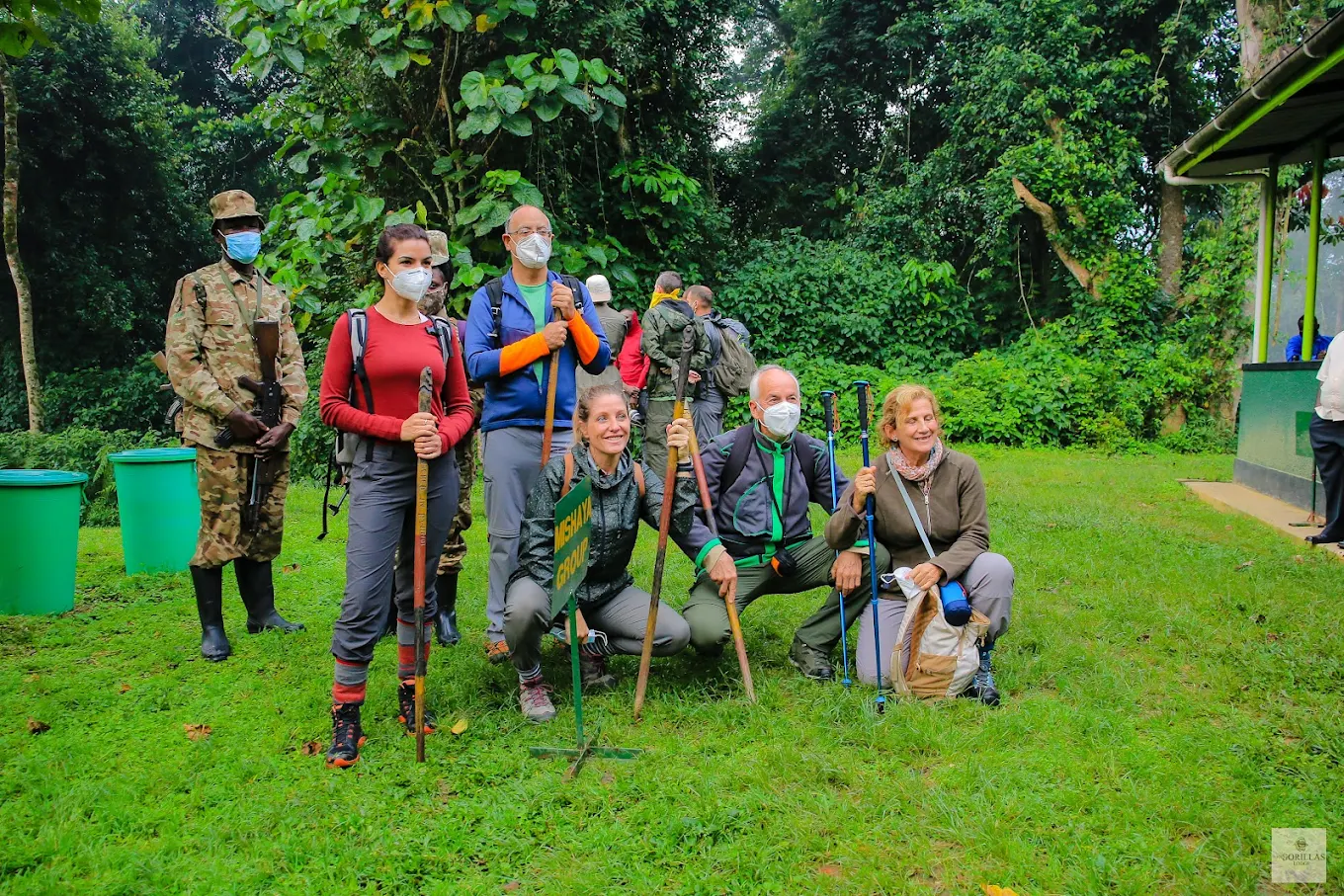
Gorilla trekking for seniors and accessible gorilla safaris are increasingly important for travelers who want to encounter mountain gorillas but may be concerned about age, fitness, walking ability, steep terrain, or the physical demands of trekking through a tropical forest. Seeing a mountain gorilla at close range is not an experience reserved only for young or highly athletic travelers. With thoughtful planning, realistic expectations, suitable accommodation, private transport, porter assistance and appropriate trekking support, many older travelers can enjoy this remarkable wildlife experience in Uganda or Rwanda.
The key to planning a successful senior gorilla safari is understanding that no two gorilla treks are exactly the same. Mountain gorillas live freely in natural forests rather than remaining at fixed viewing sites. Their location changes from one day to another, meaning one group of visitors might find gorillas relatively close to the starting point while another group may walk considerably farther before reaching them. In Uganda, the Uganda Wildlife Authority describes gorilla tracking as an activity requiring moderate fitness and notes that treks may last approximately two to seven hours.
For older travelers, therefore, accessibility does not simply mean finding an “easy gorilla trek.” It means designing the entire safari around the traveler. The right itinerary considers walking ability, balance, stamina, accommodation location, road-transfer length, rest periods, luggage handling, porter assistance and, where appropriate and available, additional mobility support.
Uganda offers gorilla trekking in Bwindi Impenetrable National Park and Mgahinga Gorilla National Park, while Rwanda’s principal gorilla trekking destination is Volcanoes National Park. Each destination has different advantages for senior travelers, and choosing between them should be based on much more than permit price alone.
A properly planned accessible gorilla safari should aim to reduce unnecessary physical strain while preserving the excitement and authenticity of encountering mountain gorillas in the wild. For some travelers, that may mean hiring a porter and walking independently. For others, it may mean arranging considerably more physical assistance. For active seniors, very little adjustment may be necessary at all.
Gorilla Trekking for Seniors at a Glance
Maximum age: No general upper age limit
Minimum age: 15 years
Best destination for shorter road logistics: Rwanda
Best destination for flexibility and wider safari combinations: Uganda
Porter assistance: Available
Limited-mobility assistance: Can be arranged in suitable circumstances
Wheelchair-accessible trails: No conventional wheelchair trails
Sedan-chair/carrying assistance: May be arranged in advance
Recommended safari duration for seniors: 5–8+ days
Most important preparation: Fitness assessment, porter, suitable lodge and slower itinerary
Can Seniors Go Gorilla Trekking?
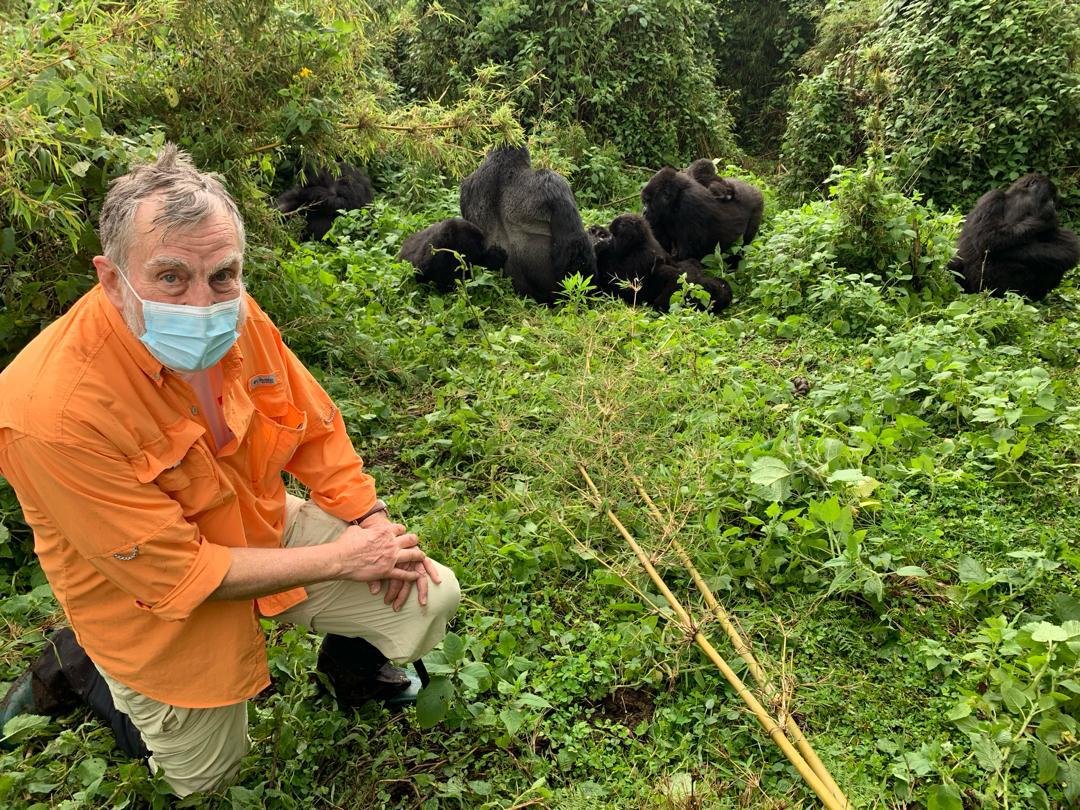
Yes. Senior travelers can go gorilla trekking, provided their individual mobility, health and physical ability are compatible with the trek or appropriate support has been arranged.
Age by itself should not be used as the sole measure of whether someone can participate. A physically active traveler in their seventies may be more comfortable walking through mountainous terrain than a much younger traveler who rarely exercises. Conversely, an older traveler with limited balance, knee problems, reduced stamina or another mobility concern may need a carefully adapted safari rather than a standard trekking itinerary.
Official gorilla trekking rules focus on a minimum participation age of 15 years rather than establishing a general upper age limit. Uganda Wildlife Authority guidelines state that the minimum age for tracking and viewing gorillas is 15, while Rwanda’s published gorilla-booking guidelines also specify a minimum age of 15. This means senior travelers should think primarily about their physical readiness and individual support requirements rather than assuming that being over a particular age automatically prevents them from trekking.
Many people considering gorilla trekking after 60, 70 or even later in life are understandably concerned by photographs showing visitors climbing muddy forest slopes. Those conditions do occur, but they do not describe every minute of every gorilla trek. The difficulty changes according to where the gorillas are located, recent rainfall, vegetation, elevation, trail conditions and the route followed by trackers on that particular day.
This unpredictability is one of the reasons senior travelers should discuss mobility requirements before arriving at the park. A traveler who comfortably walks several kilometres but struggles with steep descents has different requirements from someone who tires quickly but has excellent balance. Likewise, someone recovering from a knee replacement may require different arrangements from an active seventy-five-year-old who regularly hikes.
A good senior gorilla safari therefore begins long before the morning of the trek. The itinerary should be designed to conserve energy. Long road journeys immediately before trekking should be avoided where practical. Accommodation should ideally be positioned conveniently for the selected trekking area. Travelers who need assistance should have that arranged in advance rather than trying to organize everything at the briefing point.
Hiring a porter can also make a meaningful difference. Even a relatively fit senior traveler benefits from not carrying a backpack, drinking water, camera equipment and rain gear through the forest. Having another person available to provide a steady hand over difficult ground can reduce fatigue and allow the traveler to concentrate on the experience rather than constantly worrying about footing.
The objective is not necessarily to eliminate all physical effort. Gorilla trekking remains an outdoor rainforest activity, and some level of unpredictability is part of its character. Instead, gorilla trekking for seniors should be planned so that avoidable physical strain is removed while appropriate assistance is available for unavoidable challenges.
For travelers with significant mobility limitations, the conversation becomes more individualized. Natural gorilla habitats are not conventional paved attractions, and the forest should never be presented as universally wheelchair accessible. However, travelers who would struggle to complete the trek independently may sometimes be able to participate through specialized carrying arrangements and additional porter support, subject to local arrangements and the individual’s circumstances.
Senior travelers should therefore avoid automatically ruling themselves out because of age. The better question is not simply, “Am I too old for gorilla trekking?” but rather, “What level of assistance and itinerary design would allow me to experience gorillas comfortably and responsibly?”
What Are Gorilla Trekking for Seniors and Accessible Gorilla Safaris?
Accessible gorilla safaris are customized gorilla trekking journeys designed for travelers who may require additional consideration because of age, reduced mobility, physical limitations, slower walking speed or a preference for a less strenuous style of travel.
Accessibility in gorilla tourism is different from accessibility in a hotel, museum or conventional visitor attraction. Mountain gorillas inhabit natural montane and tropical forests. Trails can include roots, vegetation, mud, inclines and uneven surfaces. An accessible gorilla safari therefore does not mean transforming the rainforest into a paved environment. Instead, it means adapting as many elements of the journey as possible around the traveler’s abilities.
That adaptation begins with itinerary design.
A conventional safari may involve arriving at a lodge late in the evening after a long transfer, waking before sunrise, trekking the following morning and continuing immediately to another destination. Such a schedule can be unnecessarily tiring for an older traveler. An accessible itinerary can instead provide an earlier arrival at the gorilla destination, sufficient time to rest, a comfortable night’s sleep and a relaxed evening before trekking.
Transport is another important consideration. Senior-friendly gorilla safaris are often more comfortable when operated privately because stops can be taken whenever necessary. Travelers can stretch their legs, use bathroom facilities or simply pause without feeling that they are delaying a larger group. Where practical, scheduled or charter flights can also reduce lengthy overland journeys.
Accommodation deserves equally careful attention. A beautiful lodge may not automatically be suitable for every older traveler. Some properties are built on steep hillsides and require guests to climb numerous steps between their rooms, restaurant and reception. For a guest with limited mobility, a slightly less dramatic property with convenient room access may provide a substantially better experience.
Before booking accommodation for an accessible gorilla safari, it is useful to establish whether the lodge has ground-level rooms, how far rooms are from the restaurant, whether stairs are unavoidable, what type of shower is installed, whether pathways become slippery when wet and whether staff can assist with luggage.
The trekking day itself can then be organized around the traveler. Porter assistance should be considered even by seniors who normally walk independently. A porter can carry personal belongings and provide support through difficult sections of the forest, helping conserve energy for the moment the gorillas are finally located.
For travelers with considerably reduced walking ability, more substantial assistance may need to be discussed and arranged. The exact options can differ by destination and should always be confirmed for the specific travel dates rather than assumed.
An accessible gorilla safari can therefore include a combination of:
private transportation, strategically located accommodation, slower travel days, additional rest nights, luggage assistance, porter support, trekking poles or walking sticks, carefully communicated mobility requirements, shorter safari driving schedules and specialized trekking assistance where locally available.
This planning approach is particularly valuable for senior couples whose physical abilities differ. One partner may be an enthusiastic walker while the other needs regular assistance. There is no reason the entire journey must be planned according to the stronger traveler’s ability. The safari can instead be structured so that both guests enjoy the experience comfortably.
Accessibility also involves reducing unnecessary stress. Airport assistance, clear border procedures, pre-arranged permits, reliable vehicles, dietary planning and having the same professional guide throughout the journey can make an enormous difference. Senior travelers should not have to spend their energy solving logistics that could have been handled before arrival.
An accessible gorilla safari is therefore not a separate or lesser version of gorilla trekking. It is a more personalized way of reaching the same extraordinary wildlife encounter.
How Difficult Is Gorilla Trekking for Seniors?
The difficulty of gorilla trekking for seniors can range from manageable to physically demanding, and it is impossible to predict the exact difficulty of an individual trek months in advance.
Mountain gorillas move freely through their habitat. Trackers locate their recent movements, and visitors then follow ranger guides through the forest until the assigned gorilla family is found. Because the gorillas are not positioned at predetermined viewing points, the amount of walking varies from day to day.
Uganda Wildlife Authority advises that gorilla tracking requires moderate fitness and indicates that treks can last approximately two to seven hours. This range illustrates why physical preparation remains important even when assistance has been arranged.
However, total trek duration should not be confused with continuously climbing a mountain for seven hours. A gorilla trek may involve periods of slower walking, pauses, ranger explanations and changes in pace as trackers determine the gorillas’ position.
For seniors, five factors are particularly important when evaluating difficulty: distance, terrain, altitude, weather and personal mobility.
Trekking Distance
One of the most common questions from older travelers is, “How far will I have to walk to see the gorillas?”
Unfortunately, there is no fixed distance.
Mountain gorillas continually move through their home ranges in response to food availability, social behavior and other natural factors. Rangers and trackers follow signs of their movement, but the animals’ precise location on a future trekking date cannot be guaranteed.
On some mornings, visitors may locate their assigned family comparatively quickly. On others, reaching the gorillas can require several hours of walking.
This unpredictability is especially important for travelers who are comfortable walking only a specific distance. A safari operator should never promise that a particular gorilla family will be “only thirty minutes away” or guarantee that an older traveler will receive the shortest trek. Gorilla locations can change between one day and the next.
What can be done is careful planning and clear communication.
Senior travelers should communicate their walking ability before the safari and repeat any important mobility information during the park briefing. Rangers need an accurate description of the traveler’s capabilities rather than a vague statement such as “I am a little slow.”
It is far more useful to explain that a traveler can comfortably walk for two hours but struggles with steep downhill sections, or that they have good stamina but require additional support over uneven ground.
Distance should also be considered within the wider safari itinerary. A traveler may be physically capable of a gorilla trek but perform poorly because they spent eight or nine hours in a vehicle the previous day and arrived at the lodge exhausted. For this reason, better senior itineraries provide enough recovery time before trekking whenever possible.
The goal is to arrive at the trailhead rested, hydrated and ready for the forest rather than beginning one of Africa’s most memorable wildlife experiences already fatigued.
Terrain and Slopes
Terrain is often a greater challenge during gorilla trekking for seniors besides distance alone.
Bwindi is a densely forested, mountainous environment, while Rwanda’s gorilla trekking takes place among the slopes of the Virunga volcanic landscape in Volcanoes National Park. Official tourism information for Rwanda describes gorilla encounters as being led by expert trackers and guides through bamboo-covered slopes.
Forest paths can be uneven. Travelers may encounter exposed roots, loose soil, vegetation, rocks and muddy sections. Following rainfall, some slopes can become slippery. In places, rangers may need to guide visitors beyond established paths because the gorillas have moved deeper into vegetation.
For senior travelers, going downhill can sometimes be more difficult than climbing. Descending places pressure on knees and requires balance, particularly when the ground is wet. This is why someone who can comfortably walk long distances on a flat road may still find a gorilla trek challenging.
Good hiking footwear is therefore essential. Shoes or boots should provide strong grip and should already have been worn before the safari. Gorilla trekking is not a good occasion to discover that new hiking boots cause blisters.
Walking sticks or trekking poles can provide additional stability, while a porter can help a traveler negotiate difficult sections. The combination can significantly reduce the amount of energy spent maintaining balance.
Travelers should also avoid trying to match the pace of younger or faster participants. Moving carefully and placing each foot securely is considerably more important than walking quickly.
This is another reason why mobility requirements should be communicated at the beginning of the trek. The objective is not to turn the forest into an easy walking trail but to ensure that the available assistance is used intelligently.
Altitude
Altitude is another factor that sometimes surprises travelers planning gorilla trekking for seniors.
Mountain gorillas live in elevated forest environments, and trekking involves physical activity at heights that may be considerably greater than those to which some visitors are accustomed.
Rwanda’s official tourism information highlights the high-altitude volcanic environment of Volcanoes National Park, with some hikes in the area reaching above 3,000 metres. Gorilla trekking routes themselves vary according to the location of the assigned gorilla family, but the broader environment remains mountainous.
At higher elevations, some travelers may notice that they breathe more heavily during uphill walking. The effect varies significantly between individuals and should not be predicted purely according to age.
A senior traveler who regularly hikes may feel perfectly comfortable, while someone who lives a largely sedentary lifestyle may find repeated climbing tiring.
The practical response is to maintain a steady pace rather than rushing. Travelers should allow their guide to know if they need to stop, drink water or recover their breathing.
Altitude is also one reason why physical preparation before the safari can be valuable. Regular walking, moderate hill training and stair climbing can help a traveler understand their own response to sustained exercise before arriving in East Africa.
Anyone with a medical condition that could be affected by exertion or altitude should seek individualized advice from an appropriate healthcare professional before traveling.
Weather Conditions
Weather can dramatically change the perceived difficulty of a gorilla trek.
Both Bwindi and the Virunga region are forested mountain environments where rainfall can occur even during months generally considered drier. Rain does not necessarily prevent gorilla trekking, but it can transform sections of the trail.
Dry soil can become slippery mud, vegetation can become wet, and descents may require considerably more caution.
For seniors, this makes preparation particularly important.
A lightweight waterproof jacket should be easily accessible rather than buried underneath other luggage. Good footwear with reliable tread is more important than fashionable safari shoes, and gaiters can help protect trousers and lower legs in wet conditions.
A walking stick can become especially useful after rainfall because it provides an additional point of contact with the ground.
Travelers should also dress in layers. Early mornings around mountain-gorilla habitats can feel cool, while physical activity later in the trek may generate considerable body heat. Clothing that can be added or removed as conditions change is generally more comfortable than one heavy garment.
Rain should not automatically be viewed as a reason for seniors to avoid gorilla trekking altogether. Instead, the possibility of wet conditions should be incorporated into planning.
Travelers particularly concerned about slippery terrain may prefer to schedule their safari during generally drier periods, but rainforest weather can never be guaranteed.
Personal Fitness and Mobility
Personal fitness is ultimately more important than the number printed on a traveler’s passport.
Two people of exactly the same age can have completely different gorilla trekking experiences. One seventy-year-old may walk several kilometres every morning, regularly climb hills and have excellent balance. Another may have limited mobility because of arthritis, previous surgery or years of low physical activity.
For that reason, gorilla trekking for seniors should always be assessed individually.
The most relevant questions include whether the traveler can walk on uneven surfaces, climb moderate slopes, descend safely, maintain activity for an extended period and recover comfortably after physical exertion.
Balance deserves particular attention. Natural forest terrain requires constant small adjustments to footing. A traveler may have excellent cardiovascular fitness but still need assistance because of reduced stability on wet or uneven ground.
Knee and hip mobility can also affect the experience. Stepping over roots, navigating inclines and descending slopes can place different demands on the body from walking on a treadmill or paved road.
Preparation does not require becoming an athlete. Regular walking in the weeks or months before travel can be useful, particularly when routes include hills or stairs. Building leg strength and becoming comfortable with the hiking footwear intended for the safari can also make the trekking day considerably easier.
Senior travelers should also be realistic rather than competitive. There is little value in hiding a mobility limitation because of embarrassment. Rangers and guides can provide better support when they understand exactly what a traveler needs.
The ideal approach is to identify challenges early and design around them.
A fit senior may require nothing more than a porter and a comfortable itinerary. Another traveler may benefit from additional rest days, private transport and carefully selected accommodation. Someone with significant mobility limitations may require specialized assistance to reach the gorillas.
None of these approaches makes the experience less meaningful.
The reward is the same: reaching a quiet section of African rainforest and realizing that only a short distance away, a family of mountain gorillas is feeding, resting, playing and interacting in its natural home.
For many older travelers, that moment becomes not merely another safari sighting but the culmination of careful preparation and a wildlife experience they once wondered whether they would ever be able to achieve.
Best Destinations for Gorilla Trekking for Seniors
The best gorilla trekking destination for a senior traveler is not necessarily the destination with the shortest road transfer, the most luxurious lodge or even the lowest permit cost. For gorilla trekking for seniors and accessible gorilla safaris, the right destination should be chosen according to a combination of walking ability, stamina, preferred travel pace, accommodation accessibility, altitude tolerance, available trekking assistance and the amount of time the traveler wants to spend reaching the gorilla region.
Uganda is particularly important for gorilla trekking for seniors because it provides two separate mountain gorilla destinations: Bwindi Impenetrable National Park and Mgahinga Gorilla National Park. Uganda Wildlife Authority confirms that gorilla trekking takes place in both parks, with Bwindi divided into four principal trekking sectors: Buhoma, Ruhija, Rushaga and Nkuringo. This variety creates useful flexibility when designing a safari for older visitors because accommodation, transfer routes and trekking locations can be matched more carefully to an individual’s requirements.
Bwindi is the larger and more established gorilla trekking destination. Its different sectors allow travelers to choose between northern, eastern and southern approaches to the forest, although the actual difficulty of an individual gorilla trek can never be guaranteed in advance. Uganda Wildlife Authority describes Bwindi as a landscape of steep ridges and deep valleys, with elevations ranging from about 1,160 to 2,607 metres above sea level. Senior travelers should therefore approach Bwindi as a genuine rainforest trekking experience rather than assuming that any particular sector will always provide a flat or short route.
Mgahinga Gorilla National Park offers a different experience. It is considerably smaller than Bwindi and lies in the Virunga volcanic landscape near Kisoro. Uganda Wildlife Authority places the park between approximately 2,227 and 4,127 metres in elevation and confirms that it protects mountain gorillas as well as endangered golden monkeys. The volcanic scenery is spectacular, but the higher elevation is an important consideration for older travelers who may be sensitive to exertion at altitude.
For some seniors, the best solution is not simply choosing between Bwindi and Mgahinga but also changing how the destination is reached. Uganda Wildlife Authority states that scheduled and charter flights connect Entebbe with Kisoro for the southern Bwindi sectors and with Kihihi for northern Bwindi, substantially reducing the amount of time spent on long-distance road transfers. Flights are also available between Entebbe or Kajjansi and Kisoro for travelers heading toward Mgahinga.
This can be particularly useful for seniors who are comfortable walking but find prolonged driving tiring. Reducing a long overland transfer may preserve energy for the trek itself and allow the traveler to arrive at the lodge feeling rested rather than exhausted.
The best destination should therefore be selected after answering several practical questions: How long can the traveler comfortably walk? Are steep descents more difficult than climbs? Does the traveler use a walking stick? Is altitude a concern? Would they prefer to fly rather than drive for much of the day? Do they need a ground-floor room? Are they comfortable with steps around a hillside lodge? Would they like a porter from the beginning of the trek?
When these questions are considered before permits and accommodation are booked, a gorilla safari can be designed around the traveler rather than forcing the traveler into a standard itinerary.
Gorilla Trekking for Seniors in Uganda
Gorilla trekking for seniors in Uganda can be highly rewarding because the country combines exceptional mountain gorilla habitat with several trekking locations, a wide range of accommodation and the possibility of building the gorilla experience into a slower, privately guided safari.
Uganda Wildlife Authority states that gorilla trekking in the country takes place in Bwindi Impenetrable National Park and Mgahinga Gorilla National Park, and that trekking may require moderate fitness because the activity can last approximately two to seven hours depending on circumstances. For older travelers, that variation is important. It means the safari should not be marketed as either automatically difficult or automatically easy.
Instead, the entire journey should be adapted to the traveler.
A healthy and active traveler in their late sixties or seventies may need very few modifications beyond a porter, appropriate footwear and a comfortable lodge. Another traveler of the same age may require a slower itinerary, a flight into southwestern Uganda, a lodge close to the relevant trekking headquarters and considerably more physical assistance during the forest walk.
Uganda also works particularly well for travelers who want to combine gorillas with lower-impact wildlife experiences. A senior-focused itinerary can include comfortable game drives, boat safaris and scenic stays before or after the gorilla trek. This allows the journey to remain diverse without requiring strenuous walking every day.
The most important decision is whether to trek in Bwindi or Mgahinga and, if Bwindi is chosen, which trekking sector should form the base of the safari.
Bwindi Impenetrable National Park
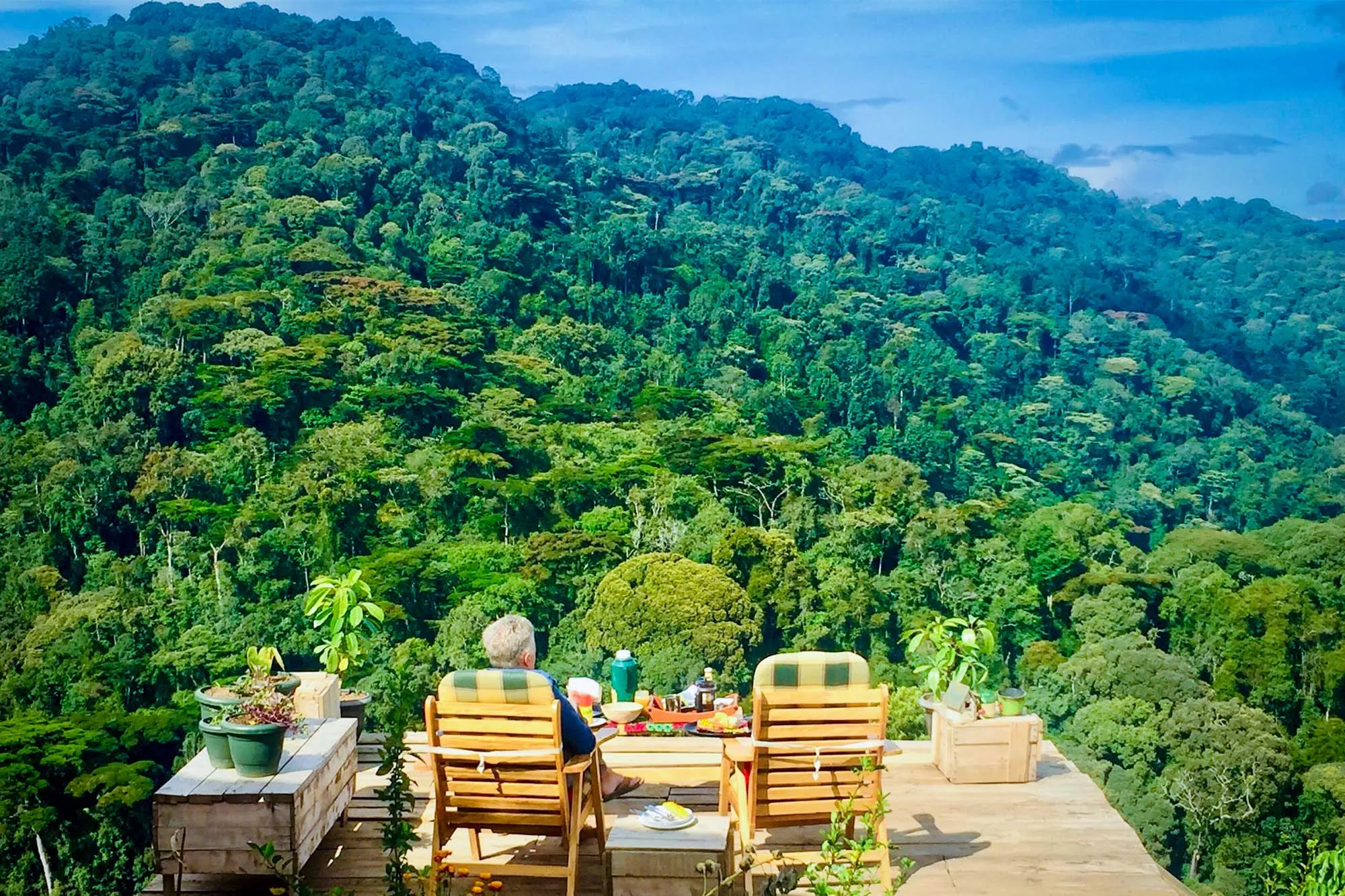
Bwindi Impenetrable National Park is Uganda’s principal mountain gorilla trekking destination and one of the most important locations for senior travelers planning a gorilla safari. Uganda Wildlife Authority identifies Bwindi’s four main trekking sectors as Buhoma, Ruhija, Rushaga and Nkuringo.
This sector system is particularly useful when designing accessible gorilla safaris because each sector has its own approach roads, accommodation options and geographical position. A traveler arriving from Queen Elizabeth National Park may logically approach Bwindi differently from someone flying into Kisoro or entering Uganda from Rwanda.
Bwindi itself is not a flat forest. Uganda Wildlife Authority describes a landscape of steep ridges and deep valleys, with altitudes extending from approximately 1,160 metres to 2,607 metres. Consequently, senior travelers should not choose Bwindi believing that a certain sector can guarantee a short or effortless trek.
Mountain gorillas move freely, and their location changes. A trek that was relatively straightforward one morning may be more demanding on another day.
What can be controlled is the preparation surrounding the trek.
Senior travelers can stay at accommodation close to their assigned trekking area, avoid unnecessary transfers on the evening before the trek, hire a porter, carry minimal equipment and communicate physical limitations clearly during the morning briefing.
Choosing the correct lodge is especially important in Bwindi. Some properties have rooms positioned on steep hillsides or along pathways involving numerous steps. A lodge may have beautiful views but still be inconvenient for a traveler with reduced knee strength or limited balance. When booking for an older guest, room location can matter just as much as lodge category.
Ground-floor or easily accessible rooms should therefore be requested where necessary. The distance between the room, dining area and vehicle parking point should also be considered.
Flying can further improve the experience. Uganda Wildlife Authority states that flights serve both sides of Bwindi: Kisoro Airstrip is used for access toward the southern sectors of Rushaga and Nkuringo, while Kihihi serves the northern side of the park.
For a senior traveler who dislikes long drives, this can transform the safari. Instead of using a full day to reach Bwindi from Entebbe by road, an itinerary can incorporate a flight followed by a regional 4×4 transfer to the lodge.
Bwindi is therefore especially suitable for travelers who want flexibility. Rather than asking only, “Is Bwindi suitable for seniors?” the better planning question is, “Which Bwindi sector, lodge and transport arrangement best match this particular traveler?”
Mgahinga Gorilla National Park
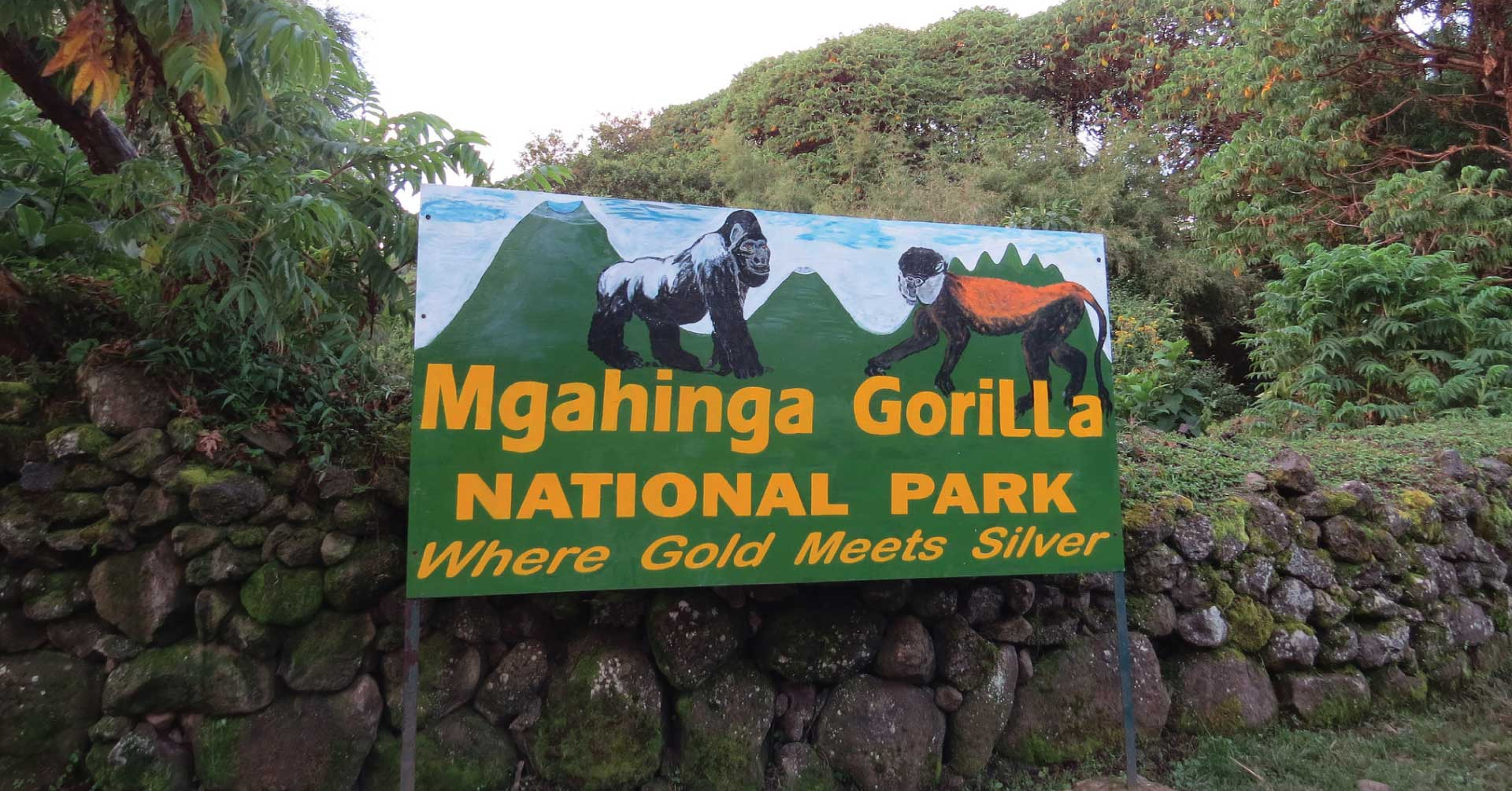
Mgahinga Gorilla National Park provides a second option for gorilla trekking for seniors in Uganda and is sometimes overlooked by travelers who automatically associate Uganda gorilla safaris with Bwindi.
Located in Kisoro District in Uganda’s far southwest, Mgahinga is part of the wider Virunga volcanic ecosystem. Uganda Wildlife Authority states that the park covers approximately 33.7 square kilometres and lies between about 2,227 and 4,127 metres above sea level.
Its dramatic volcanic setting makes Mgahinga visually spectacular. Forest, bamboo and the slopes of the Virunga volcanoes create a very different atmosphere from many parts of Bwindi.
For senior travelers, however, the elevation deserves serious consideration. Visitors who are comfortable walking at altitude may enjoy Mgahinga enormously, while travelers who become breathless easily during uphill activity may prefer to discuss the physical demands carefully before choosing it solely because it is a smaller park.
Uganda Wildlife Authority currently identifies Mgahinga as having a habituated gorilla group available for tourism and describes the park as an alternative gorilla trekking destination to Bwindi. Because trekking opportunities are more concentrated than in Bwindi’s four-sector system, permit and itinerary planning should be handled carefully.
Mgahinga can be especially attractive for travelers who want to combine mountain gorillas with another primate experience. The park is also an important habitat for golden monkeys. A senior traveler with sufficient mobility could therefore spend several nights around Kisoro and combine gorilla trekking with a separate golden monkey experience without changing accommodation every night.
Access can also be made more comfortable by flying. Uganda Wildlife Authority notes that scheduled and charter flights operate from Entebbe and Kajjansi to Kisoro Airstrip, after which travelers continue by road toward the park.
For an accessible safari, this can be preferable to spending most of the day driving from central Uganda.
Mgahinga should not automatically be labeled “easier than Bwindi.” Its terrain and altitude remain significant, and gorillas are wild animals whose daily movements influence trekking distance. However, for the right traveler, it can provide an intimate and beautifully scenic alternative.
Best Bwindi Sectors Suitable for Gorilla Trekking for Seniors
Selecting the best Bwindi sector for senior gorilla trekkers requires more care than simply ranking Buhoma, Ruhija, Rushaga and Nkuringo from easiest to hardest.
No operator, lodge or guide can responsibly guarantee that a specific sector will provide the easiest gorilla trek on a particular day. Mountain gorillas continually move within their ranges. Rainfall, vegetation, the gorillas’ overnight movements and the location of their feeding areas all influence the route taken by trekkers.
The best sector for a senior traveler should therefore be selected according to a wider combination of factors:
the traveler’s mobility, where the safari is coming from, road-transfer length, access to airstrips, lodge location, number of steps around the lodge, ability to arrange porter assistance and how much rest is available before trekking.
For many senior travelers, Buhoma is an especially practical sector, largely because of its established tourism infrastructure and access through Kihihi. However, that does not mean every Buhoma gorilla trek is easy. Ruhija, Rushaga and Nkuringo can also work extremely well when the itinerary is designed properly.
Buhoma Sector
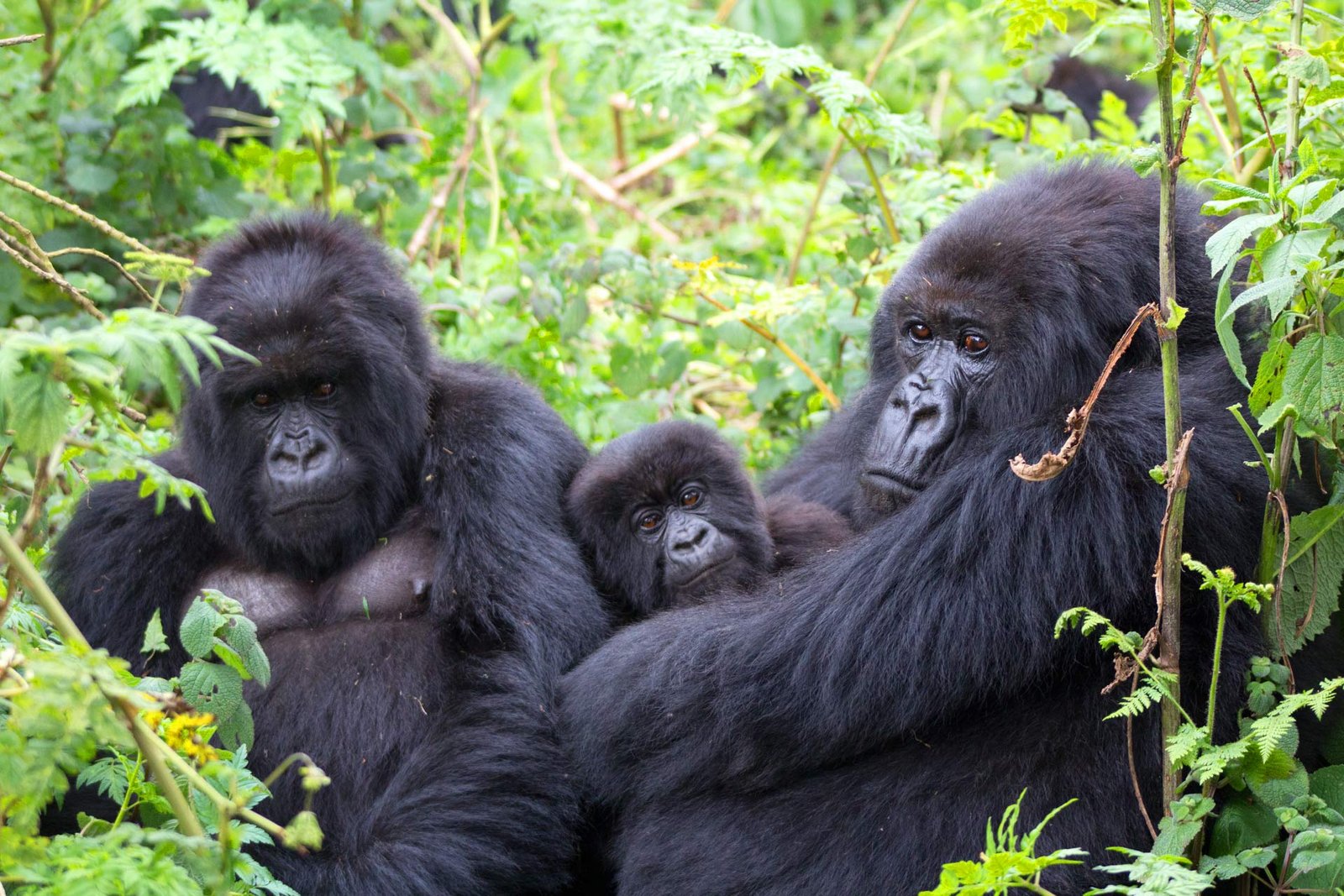
Buhoma Sector is located on the northern side of Bwindi and is one of the park’s longest-established gorilla tourism areas. Uganda Wildlife Authority notes that the Mubare gorilla group became Uganda’s first group habituated for tourism in 1993, helping establish Bwindi as a major gorilla trekking destination.
For senior travelers, one of Buhoma’s strongest advantages is logistics.
Travelers can access northern Bwindi through Kihihi Airstrip, which Uganda Wildlife Authority says is served by flights from Entebbe, followed by a 4×4 road transfer to the lodge. This is particularly attractive for older guests who want to minimize long-distance driving.
Buhoma also fits naturally into Uganda wildlife itineraries approaching from Queen Elizabeth National Park. UWA describes a route from the Mweya area through Ishasha toward Kihihi and Buhoma. This allows travelers to combine a conventional wildlife safari with gorilla trekking without necessarily returning toward Kampala or Entebbe between experiences.
Another practical advantage is the established tourism environment around Buhoma. UWA notes that Buhoma and Nkuringo offer accommodation ranging across different categories as well as community and cultural experiences.
For seniors, this creates useful flexibility in choosing accommodation according to physical needs rather than simply price.
When reviewing a Buhoma lodge, however, the exact room location should still be checked. Properties around Bwindi are often built to follow natural slopes. A traveler with limited mobility should ask whether their room involves steep pathways, long staircases or significant walking between accommodation and dining facilities.
Buhoma is therefore often a strong choice for senior travelers who prioritize convenient northern access, established accommodation and straightforward integration with a wider Uganda safari.
It should not, however, be marketed as a guaranteed “easy gorilla trekking sector.” The gorillas determine where the trek goes, and daily conditions remain unpredictable.
Ruhija Sector
Ruhija Sector occupies the eastern side of Bwindi and offers another important option for senior gorilla trekkers.
Its position can work particularly well for travelers whose wider route takes them through Kabale or eastern approaches to Bwindi. Uganda Wildlife Authority describes the Kabale–Ruhija–Buhoma route as approximately 95 kilometres of winding murram road and recommends a 4WD vehicle.
This information is especially relevant for seniors because road quality and transfer duration matter when planning the day before trekking. An older traveler may be physically capable of completing the forest walk yet find several hours over winding roads tiring. For that reason, the transfer into Ruhija should be planned with adequate stops and enough time to arrive at the lodge well before evening.
Ruhija’s elevated forest setting can provide beautiful scenery and a strong sense of being deep within Bwindi. However, elevation and terrain should again be considered when evaluating suitability for a particular traveler.
For an active senior who regularly walks and has good balance, Ruhija can be an excellent choice. For someone with greater mobility limitations, the decision should be based on the expected support arrangements, lodge accessibility and the individual’s physical profile rather than simply assuming one Bwindi sector is universally better than another.
A porter is particularly valuable for senior travelers because the benefit goes beyond carrying a backpack. Having another person available to offer a hand across uneven or slippery sections can reduce the amount of energy required for balance and allow the traveler to move more confidently.
The best senior safari in Ruhija should also avoid unnecessary movement between sectors. Staying close to the correct trekking location the night before is preferable to waking extremely early and beginning the day with a long transfer.
Rushaga Sector
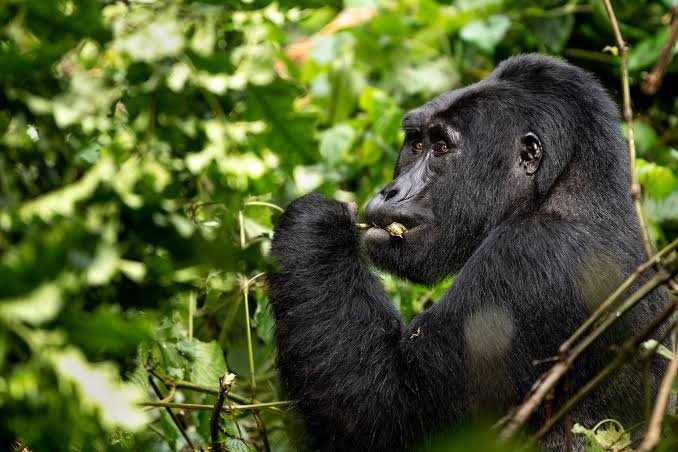
Rushaga Sector, in southern Bwindi, is one of the most popular bases for gorilla trekking and is particularly useful for itineraries approaching the park through Kisoro.
Uganda Wildlife Authority confirms that travelers visiting the southern sectors of Rushaga and Nkuringo can use scheduled flights between Entebbe and Kisoro Airstrip before continuing by 4×4 vehicle toward their lodge.
This makes Rushaga a strong option for seniors who want to reduce long overland transfers.
It is also convenient for itineraries beginning or ending in Rwanda, depending on current border procedures and the route being used. For older travelers, a cross-border itinerary should be paced carefully because border formalities, driving and trekking should not be compressed unnecessarily into the same short period.
Rushaga offers a broad selection of accommodation in the surrounding southern Bwindi area, making it possible to choose a lodge according to budget and mobility requirements. The most expensive lodge is not automatically the most accessible, so room location, steps, pathways and distance from common areas should always be checked.
Senior travelers staying in Rushaga should arrive with enough time to rest before trekking. An itinerary that involves a long drive followed immediately by an early morning gorilla trek can unnecessarily increase fatigue.
Rushaga can be a particularly good option for active seniors, couples and multi-generational families because the surrounding southern Bwindi region allows a safari to be planned at different comfort levels.
As elsewhere in Bwindi, however, trekking difficulty changes from day to day. A visitor should never book Rushaga because someone has promised that its gorillas will always be close to the trailhead.
Instead, Rushaga should be chosen for the overall suitability of the itinerary: access through Kisoro, accommodation, travel direction, available support and the traveler’s individual needs.
Nkuringo Sector
Nkuringo Sector lies in the southern part of Bwindi and is famous for its dramatic highland landscape. For experienced travelers who appreciate panoramic scenery and intimate forest environments, it can be one of the most memorable areas around Bwindi.
For senior travelers, however, Nkuringo deserves particularly thoughtful planning because the surrounding region is mountainous.
Uganda Wildlife Authority describes road access from Kabale to Nkuringo as approximately 105 kilometres along mountainous murram roads and notes that travelers can also approach from Kisoro, with 4WD vehicles recommended.
The physical landscape means Nkuringo should not be selected casually for a traveler with serious mobility restrictions simply because a preferred lodge happens to be available there.
At the same time, it would be incorrect to say that Nkuringo is unsuitable for seniors. Many active older travelers can enjoy the area very comfortably, especially when the safari is carefully paced.
Flying into Kisoro can substantially reduce travel fatigue. UWA confirms that Kisoro Airstrip serves the southern Bwindi sectors, including Nkuringo. A private 4×4 can then complete the regional transfer.
Accommodation selection becomes particularly important. If a traveler has difficulty with steep slopes, the operator should confirm the location of their room and how much walking is required within the lodge grounds. This small planning detail can make a major difference. A guest should not use most of their energy climbing between their room and restaurant before the gorilla trek has even begun.
Nkuringo can be an excellent choice for a fit senior seeking dramatic scenery, a quieter mountain atmosphere and a carefully designed southern Bwindi itinerary. For visitors with substantial mobility limitations, additional assistance and detailed planning become even more important.
Ultimately, there is no single Bwindi sector that is universally best for every senior traveler.
Buhoma may be especially practical for travelers approaching from northern safari circuits or flying through Kihihi. Ruhija can work well for travelers approaching from Kabale and for active seniors comfortable in elevated terrain. Rushaga is convenient for southern approaches and access through Kisoro, while Nkuringo appeals to travelers who want a spectacular highland setting and whose mobility is compatible with the landscape.
The correct sector should be chosen only after considering the person who will actually be trekking.
For gorilla trekking for seniors and accessible gorilla safaris, that individualized approach is far more valuable than simply advertising one location as the “easiest place to see gorillas.”
Gorilla Trekking for Seniors in Rwanda
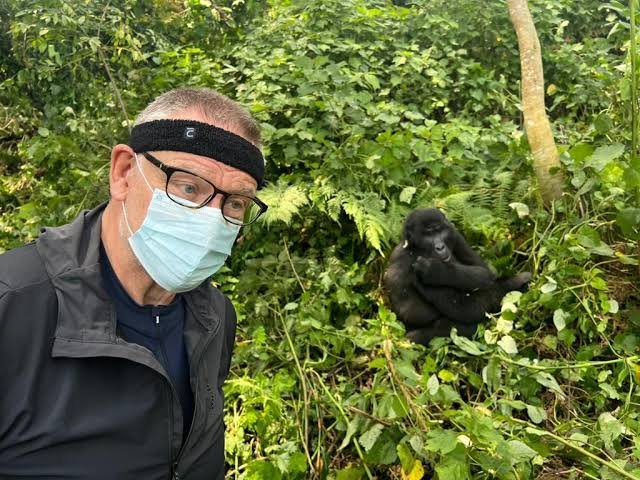
Gorilla trekking for seniors in Rwanda is an excellent option for older travelers who prioritize convenient road access, high-quality accommodation, private transfers and a relatively compact safari itinerary. Rwanda’s mountain gorillas are trekked in Volcanoes National Park, in the country’s northwest, where the forested slopes of the Virunga volcanoes provide one of Africa’s most celebrated primate experiences. Rwanda’s official tourism authority confirms that gorilla trekking takes place in Volcanoes National Park and that porters can be arranged at the park headquarters before visitors enter the forest.
For senior travelers, one of Rwanda’s greatest advantages is not necessarily that the gorilla trekking itself is easier. The major advantage is logistical simplicity. Travelers can arrive at Kigali International Airport, travel by road toward the Volcanoes National Park area, stay comfortably near the trekking headquarters and undertake the gorilla experience without combining it with extremely long overland transfers.
This can make Rwanda particularly attractive to travelers in their 60s, 70s or 80s who remain enthusiastic about wildlife experiences but no longer enjoy sitting in a safari vehicle for most of the day.
However, Rwanda should never be promoted as offering guaranteed easy gorilla trekking. Volcanoes National Park is a mountainous environment, and the location of a gorilla family changes as the animals move naturally through their habitat. Rwanda’s official tourism information notes that tracking time can vary considerably according to the family assigned, with some experiences taking around 90 minutes while others may occupy much of the morning.
This unpredictability is especially important when planning gorilla trekking for seniors and accessible gorilla safaris in Rwanda. Travelers should describe their mobility honestly before the trek and again during the morning briefing. A person who has excellent stamina but poor knees may need different assistance from someone who walks slowly but has good balance.
Porters are available and should be considered an important part of senior gorilla trekking rather than something reserved only for travelers who believe they are unfit. Visit Rwanda specifically notes that porters can be arranged at park headquarters and can assist visitors during their gorilla tracking experience.
A porter can carry water, rainwear, camera equipment and other personal items, allowing the traveler to conserve energy. More importantly, a porter can provide a steady hand when navigating uneven or slippery sections of the forest.
For senior travelers, reducing unnecessary exertion can be just as important as preparing physically for the trek itself.
Accommodation around Volcanoes National Park ranges from comfortable properties to some of Rwanda’s most luxurious safari lodges. When planning for a traveler with reduced mobility, however, the lodge should be judged on accessibility as well as appearance. Hillside locations, long pathways, steps and distances between guest rooms and dining areas should all be considered.
A senior-friendly room should ideally minimize unnecessary climbing and allow straightforward access to the vehicle on trekking morning.
The safari can also be intentionally slowed down. Instead of arriving at Volcanoes National Park late in the evening and trekking early the next morning, an older traveler may benefit from arriving a day earlier. This provides time to relax, become accustomed to the surroundings, prepare equipment and begin trekking morning feeling rested.
For travelers particularly concerned about physical exertion, the itinerary may include a relaxed afternoon after the trek rather than another demanding activity. A second night at the same lodge can make an enormous difference to the overall comfort of the experience.
Rwanda therefore works especially well for senior travelers who want a short, private and highly organized gorilla safari with minimal unnecessary travel.
Volcanoes National Park
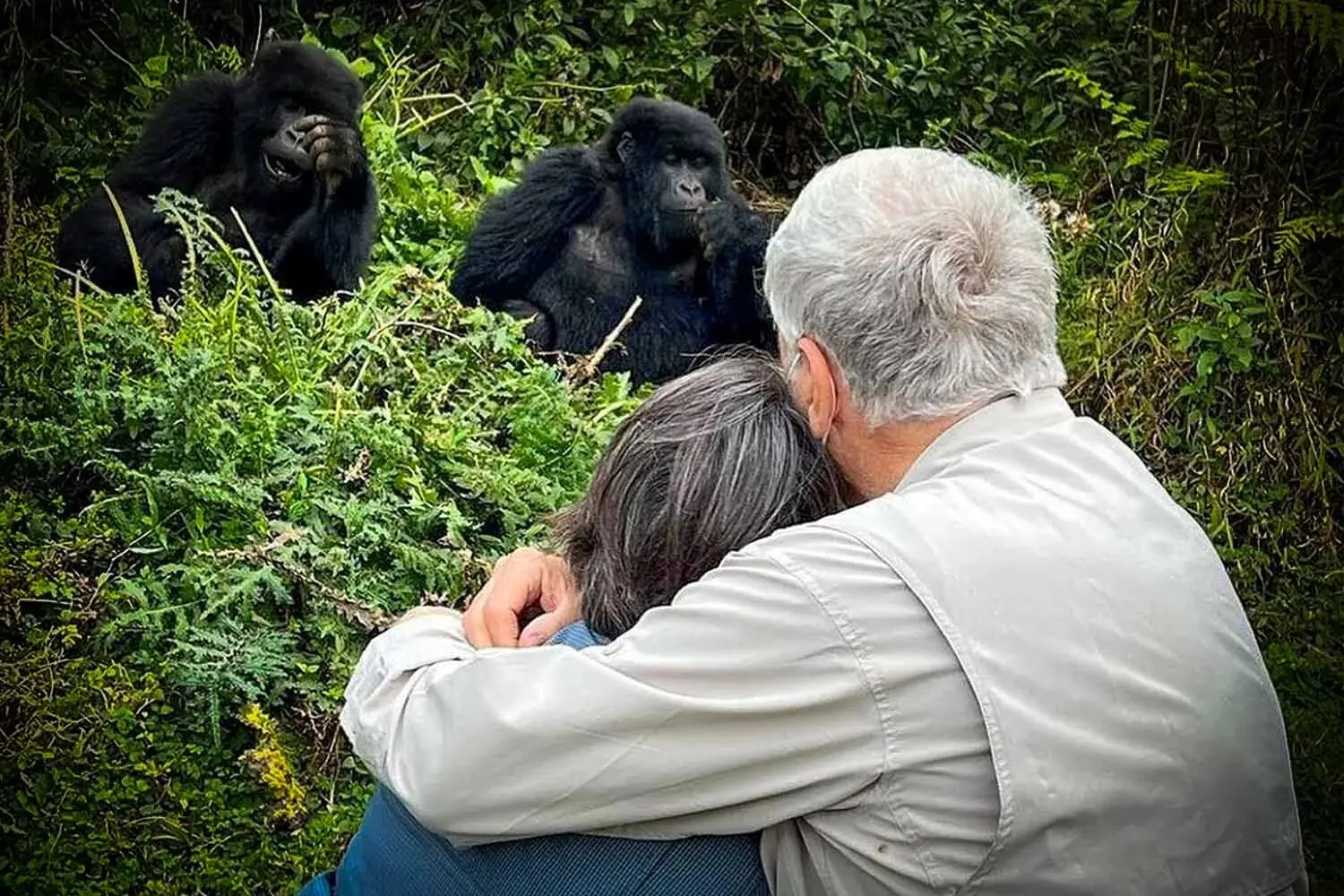
Volcanoes National Park is Rwanda’s principal mountain gorilla destination and forms part of the wider Virunga conservation landscape. The park’s forest-covered volcanic terrain creates magnificent scenery but also explains why proper preparation is necessary for elderly and mobility-conscious travelers.
Visit Rwanda recommends sturdy clothing and solid walking shoes for activities in Volcanoes National Park and specifically advises that gaiters and lightweight waterproof clothing can be useful in rainy conditions.
These recommendations are particularly relevant for older trekkers. The challenge of gorilla trekking is often not simply walking distance but maintaining balance on natural forest terrain.
Roots, vegetation, mud and uneven ground can require careful foot placement. Rain may make slopes considerably more slippery than they appeared when dry.
For this reason, an older traveler who normally walks comfortably on paved roads should not assume that the same distance through a mountain forest will feel identical.
Walking slowly is perfectly acceptable. Gorilla trekking is not a race.
The objective is to reach the gorillas safely and with enough energy remaining to enjoy the encounter.
Travelers should therefore communicate with guides whenever they need to slow down, adjust equipment or stop briefly.
2026/2027 Gorilla Trekking Costs for Seniors
Updated August 2026
The cost of gorilla trekking for seniors and accessible gorilla safaris should be considered as more than the price of a gorilla permit. Older travelers may also need to budget for porter assistance, carefully selected accommodation, private transportation, domestic flights, extra rest nights and, where required, specialized mobility support. The final cost therefore depends heavily on whether the traveler is an active senior who needs little more than a porter or someone who requires a fully adapted itinerary with additional assistance.
The figures below separate official gorilla permit fees from estimated travel and accessibility costs. Gorilla permit rates are controlled by the relevant wildlife authorities, while porter fees, flights, accommodation and mobility-assistance costs can vary.
Uganda Gorilla Permit Costs for 2026
For a foreign non-resident visitor, the standard Uganda gorilla trekking permit is USD 800 per person for trekking in Bwindi Impenetrable National Park or Mgahinga Gorilla National Park. Uganda Wildlife Authority introduced special low-season rates in 2026 for April, May and November, reducing the gorilla tracking permit to USD 600 for foreign non-residents and USD 500 for foreign residents during those months. UWA states that these low-season permits cannot be rescheduled.
This low-season arrangement can be particularly interesting for senior travelers who have flexible travel dates. However, the financial saving should be weighed against the possibility of wetter trails in April, May and November. For someone with reduced balance, knee problems or difficulty negotiating mud, choosing the lowest permit price should not necessarily take priority over trail conditions and personal comfort.
Uganda Gorilla Permit Costs From January 2027
Uganda Wildlife Authority has also published its revised permit structure taking effect on 1 January 2027. Standard gorilla tracking will cost USD 800 for foreign non-residents, USD 700 for foreign residents, USD 500 for Rest of Africa visitors and UGX 300,000 for East African Community citizens.
An important change affects the Gorilla Habituation Experience. From 1 January 2027, UWA lists habituation permits at USD 1,800 for foreign non-residents, USD 1,600 for foreign residents, USD 1,000 for Rest of Africa visitors and UGX 750,000 for East African Community citizens.
For most senior travelers, the standard gorilla trek will remain the more practical choice. Gorilla habituation is a longer and potentially more physically demanding forest experience and should therefore be selected according to fitness and mobility rather than simply because it provides more time around the gorillas.
Rwanda Gorilla Permit Costs for 2026/2027
Rwanda’s standard gorilla trekking permit for an international visitor is currently USD 1,500 per person per trekking day in Volcanoes National Park. Rwanda’s official tourism authority continues to publish this USD 1,500 rate and notes that special rates are available for certain Rwandan and East African Community categories.
The higher permit cost does not necessarily make Rwanda unsuitable for senior travelers. Rwanda’s advantage is often logistical. A relatively compact journey between Kigali and Volcanoes National Park can reduce the amount of time spent on long road transfers, which may be especially valuable for older travelers who experience back, hip or joint discomfort after several hours in a vehicle.
2026/2027 Gorilla Permit Cost Comparison
| Gorilla Experience | 2026 | From 1 January 2027 |
|---|---|---|
| Uganda – Foreign Non-Resident, standard trek | USD 800 | USD 800 |
| Uganda – Foreign Resident, standard trek | USD 700 | USD 700 |
| Uganda – Rest of Africa, standard trek | Check applicable 2026 category | USD 500 |
| Uganda – EAC Citizen, standard trek | UGX 300,000 | UGX 300,000 |
| Uganda Low Season – Foreign Non-Resident | USD 600 | Subject to UWA’s applicable low-season policy |
| Uganda Low Season – Foreign Resident | USD 500 | Subject to UWA’s applicable low-season policy |
| Uganda Gorilla Habituation – Foreign Non-Resident | USD 1,500 | USD 1,800 |
| Rwanda – Standard International Gorilla Permit | USD 1,500 | Confirm at booking |
Uganda’s 2026 low-season discounts apply to April, May and November under UWA’s published 2026 notice. Permit rates and eligibility categories should always be reconfirmed when a safari is booked because wildlife authorities may revise tariffs or promotional arrangements.
How Much Does a Porter Cost for Senior Gorilla Trekking?
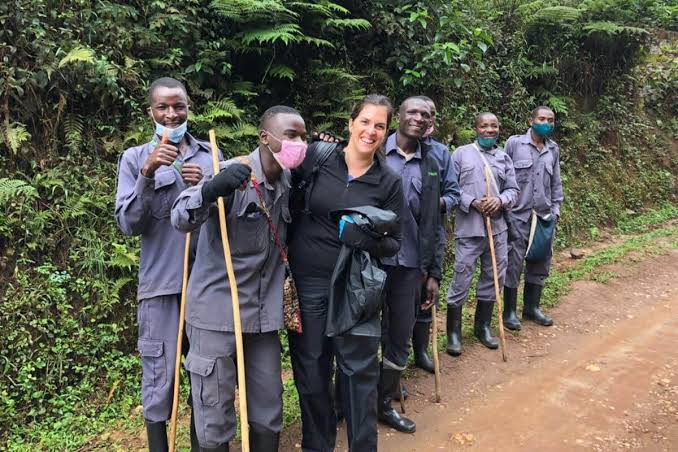
For many older travelers, porter assistance is one of the most worthwhile small expenses of the entire safari.
In Uganda, travelers should currently budget approximately USD 15–25 per porter for the trek, although this is a practical planning estimate rather than an official fixed UWA tariff. Published local trekking sources commonly place porter charges around USD 15–20, with gratuities normally considered separately.
In Rwanda, approximately USD 10–20 is a reasonable planning range for ordinary porter assistance, with the actual arrangement confirmed locally. Current Rwanda trekking guidance places porter costs within roughly this range.
A senior traveler should not avoid hiring a porter simply to save USD 15 or USD 20 after spending thousands of dollars reaching the gorillas. A porter can carry water, rainwear and camera equipment while also providing valuable support over muddy, steep or uneven sections of the trail.
What Does Specialized Mobility Assistance Cost?
Specialized carrying assistance, including a gorilla trekking sedan chair or similar assisted-carrying arrangement, should be quoted individually.
Unlike hiring one ordinary porter, carrying a traveler through mountainous forest terrain can require a team of people. The price can therefore vary according to the trekking location, number of porters required, terrain, assistance arrangement and local procedures.
Some commercial sources quote sedan-chair assistance around several hundred US dollars, but there is no single official universal rate that should be promised for every traveler, every sector or every trekking date.
For this reason, Pieland Gorilla Safaris should confirm the current arrangement before including the service in a final quotation.
Travelers who know that they will require substantial mobility assistance should mention this during the initial inquiry rather than waiting until they reach Bwindi, Mgahinga or Volcanoes National Park.
Domestic Flight Costs for Senior Gorilla Safaris in Uganda
Domestic flights can considerably improve the comfort of a Uganda gorilla safari for seniors.
AeroLink currently operates scheduled services from Entebbe to Kihihi and Kisoro, the two principal air gateways used for Uganda’s gorilla regions. Kihihi is particularly useful for northern Bwindi, while Kisoro provides convenient access toward southern Bwindi and Mgahinga. AeroLink’s published 2026 schedule shows multiple Kihihi services and morning/mid-morning Kisoro flights.
Because airline prices vary according to date, availability and booking conditions, there is no single permanent fare. For planning purposes, senior travelers can reasonably budget approximately USD 300–500 per person each way for scheduled flights between Entebbe and the southwestern airstrips, but the actual fare should be checked for the travel date before quoting the safari. Current flight searches show significant variation by date, while AeroLink itself states that fares are subject to availability and change.
For some senior travelers, this is money better spent than upgrading the lodge. A comfortable flight that removes most of a long road journey may have a greater effect on the traveler’s wellbeing than moving from an excellent mid-range lodge to a luxury property.
Indicative 2026/2027 Senior Gorilla Safari Costs
The gorilla permit is only one component of a complete safari. Accommodation, 4×4 transportation, meals, driver-guide services, airport transfers, fuel and any additional activities must also be included.
For a private 3-day Uganda gorilla safari, a reasonable 2026/2027 planning range is approximately USD 1,500–2,200 per person for budget to comfortable mid-range travel when two people are sharing, depending on starting point, lodge, season and route. Current market listings show three-day Bwindi trips beginning around the mid-USD 1,000s, with private and higher-comfort arrangements costing more.
A 3–5 day senior-friendly Uganda safari incorporating domestic flights, higher-quality accommodation, private transfers and porter assistance can reasonably move into approximately the USD 2,200–4,000+ per person range. Luxury or ultra-luxury lodges can raise this substantially.
In Rwanda, the USD 1,500 permit creates a higher starting cost. Current official Visit Rwanda trip examples show that even short gorilla packages combining a permit with transportation, guiding and accommodation start well above the permit price itself; one-day experiences are published from around USD 1,750 per person and two-day gorilla experiences from approximately USD 2,438 per person, depending on the operator and group size.
For a private 3–5 day senior-friendly Rwanda gorilla safari, travelers should therefore generally budget approximately USD 2,500–4,500+ per person for comfortable accommodation and private transportation, with premium and luxury lodge combinations potentially costing considerably more.
These safari ranges are planning estimates rather than official tariffs. Group size, season, lodge selection, number of gorilla permits, domestic flights and accessibility requirements can substantially change the final price.
Typical Accessible Gorilla Safari Budget
| Cost Component | Uganda | Rwanda |
| Standard Gorilla Permit | USD 800 FNR | USD 1,500 international visitor |
| 2026 Low-Season Permit | USD 600 FNR / USD 500 FR | Check applicable RDB offers |
| Ordinary Porter | Approx. USD 15–25 | Approx. USD 10–20 |
| Specialized Carrying Assistance | Quoted individually | Quoted individually |
| Domestic Flight | Approx. USD 300–500 each way | Usually unnecessary for Kigali–Volcanoes itinerary |
| Private 3-Day Gorilla Safari | Approx. USD 1,500–2,200+ pp | Approx. USD 2,500–3,500+ pp |
| 3–5 Day Accessible/Fly-In Safari | Approx. USD 2,200–4,000+ pp | Approx. USD 2,500–4,500+ pp |
| Luxury Senior Gorilla Safari | USD 4,000+ pp | USD 5,000+ pp |
Does Gorilla Trekking Cost More for Seniors?
There is no general senior surcharge simply because a traveler is older. A physically active seventy-year-old using the same itinerary as another adult may pay essentially the same safari price.
Additional costs arise when the itinerary is modified for comfort or accessibility.
A traveler may choose a domestic flight instead of a long road transfer, spend an additional night near the gorilla park, request private transportation or arrange additional mobility assistance. These services increase the total safari price because they add real services—not because of the traveler’s age.
For some senior travelers, an ordinary porter may be the only additional expense required. For someone with substantial mobility limitations, the accessible components of the trip may represent a larger part of the budget.
The objective should therefore not simply be to create the cheapest possible safari. It should be to spend the budget where it provides the greatest improvement in comfort, mobility, safety and overall enjoyment.
For gorilla trekking for seniors, an extra night to recover, a USD 20 porter or a domestic flight that eliminates many hours of driving may provide considerably more value than spending the same money on purely cosmetic luxury upgrades.
Pieland Gorilla Safaris can quote accessibility arrangements individually according to the traveler’s mobility, preferred trekking destination, accommodation level and required assistance. Because porter teams, carrying arrangements, flights and lodge availability can change, the final cost should always be confirmed for the actual travel dates before booking.
Why Rwanda Can Work Well for Senior Gorilla Travelers
Rwanda is particularly attractive for senior travelers because a gorilla safari can be constructed without changing hotels every night.
A comfortable itinerary could include arrival in Kigali, a relaxed overnight stay, transfer to Volcanoes National Park, two or three nights near the park and a later return to Kigali.
Travelers who want a longer safari can add Lake Kivu, Akagera National Park or other experiences without turning every day into strenuous physical activity.
This style of travel is particularly suitable for senior couples where one person enjoys walking more than the other. The more active traveler may choose an additional activity while their partner enjoys the lodge, spa or scenic surroundings.
For many older travelers, comfort comes from having choices rather than having every hour filled with activities.
Uganda vs Rwanda Gorilla Trekking for Seniors
Choosing between Uganda and Rwanda for senior gorilla trekking is one of the most important decisions when planning an accessible gorilla safari.
Both countries provide extraordinary opportunities to see mountain gorillas, but their logistics and safari styles differ.
Uganda provides gorilla trekking in both Bwindi Impenetrable National Park and Mgahinga Gorilla National Park, while Rwanda’s gorilla trekking is concentrated in Volcanoes National Park. Uganda Wildlife Authority confirms Uganda’s two trekking destinations, while Visit Rwanda identifies Volcanoes National Park as Rwanda’s mountain gorilla trekking location.
For a senior traveler, the choice can be simplified by considering several factors.
Accessibility and Transfer Convenience
Rwanda often has an advantage for travelers who want to minimize long-distance road travel.
A short Rwanda itinerary can combine Kigali and Volcanoes National Park without requiring a full-day cross-country drive. This makes Rwanda appealing to travelers who find prolonged vehicle journeys uncomfortable.
Uganda involves greater distances if traveling entirely by road from Entebbe or Kampala to southwestern Uganda. However, domestic flights can substantially reduce this inconvenience, particularly for travelers using Kihihi or Kisoro to access gorilla regions.
The better comparison is therefore not simply Rwanda road safari versus Uganda road safari. Senior travelers should also consider a fly-in Uganda gorilla safari, which can dramatically reduce transfer fatigue.
Variety of Trekking Areas
Uganda provides greater geographical choice.
Bwindi alone has the major trekking sectors of Buhoma, Ruhija, Rushaga and Nkuringo, while Mgahinga offers another gorilla trekking environment.
This can provide flexibility when designing an itinerary around route direction and accommodation.
Rwanda’s experience is more geographically concentrated around Volcanoes National Park. For some seniors, this simplicity is an advantage.
Terrain
Neither country should be described as universally easy.
Uganda Wildlife Authority describes gorilla tracking as requiring moderate fitness and indicates that trekking in Uganda may last approximately two to seven hours.
Rwanda also involves mountainous forest terrain, and official Rwanda itineraries acknowledge that tracking length varies depending on the gorilla family assigned.
The difficulty of an individual trek ultimately depends heavily on where the gorillas are located that day.
Porter Support
Porter assistance can be incorporated into senior gorilla safaris in both destinations. Visit Rwanda explicitly notes porter arrangements at Volcanoes National Park headquarters.
Senior travelers should consider using a porter from the beginning rather than waiting until they are exhausted.
Which Is Better for Seniors?
Rwanda may be better for a senior traveler who prioritizes shorter overall transfers, luxury accommodation and a compact itinerary.
Uganda may be better for a senior traveler who wants greater trekking-area choice, broader safari combinations and the possibility of combining gorillas with classic wildlife experiences.
However, the correct answer depends on the individual.
A physically active seventy-five-year-old may enjoy a comprehensive Uganda safari enormously, while someone with reduced mobility may prefer Rwanda because the entire journey can be kept compact.
Conversely, a traveler with mobility limitations may still choose Uganda successfully when domestic flights, suitable accommodation and trekking assistance are incorporated.
The best accessible safari therefore starts with the traveler’s needs and then selects the destination—not the other way around.
Uganda vs Rwanda Gorilla Trekking for Seniors: Quick Comparison
| Factor | Uganda | Rwanda |
|---|---|---|
| Main Gorilla Parks | Bwindi & Mgahinga | Volcanoes |
| Road Logistics | Longer unless flying | Generally shorter |
| Fly-in Options | Excellent | Less necessary for short trips |
| Trekking Areas | More choice | Concentrated |
| Luxury Options | Excellent | Exceptional |
| Wildlife Extension | Very strong | Akagera |
| Best For | Broader safari | Compact safari |
What Is a Gorilla Trekking Sedan Chair?
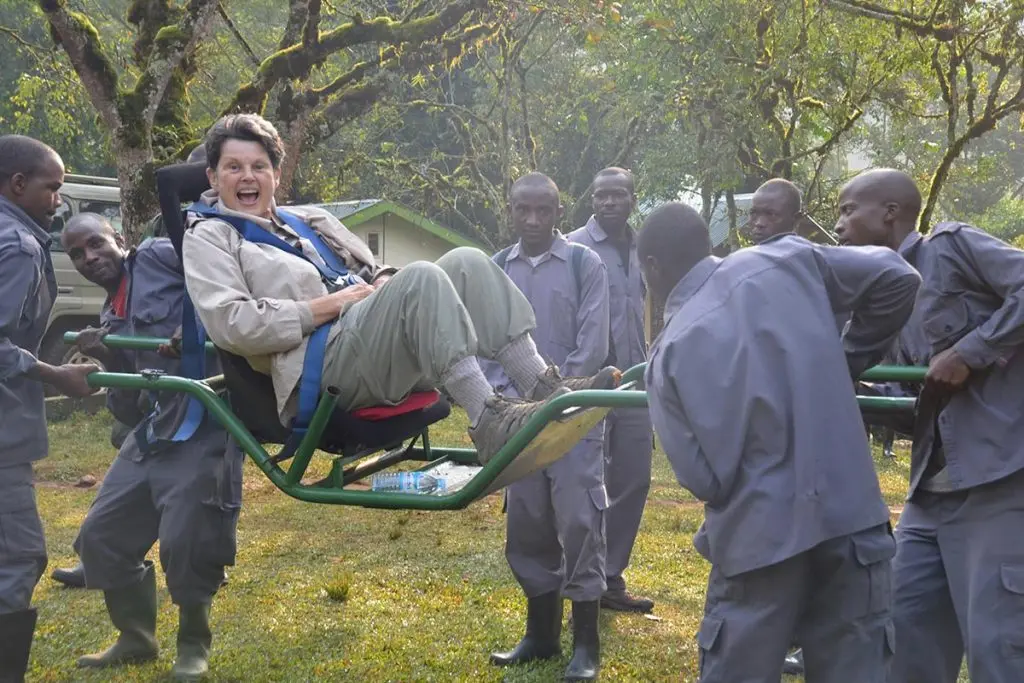
A gorilla trekking sedan chair is a specialized carrying arrangement sometimes used to assist travelers who are unable to walk the entire route to a mountain gorilla family independently.
It is particularly associated with accessible gorilla trekking for seniors, elderly travelers and visitors with significant mobility limitations.
Unlike a conventional wheelchair, a sedan chair does not depend on a smooth or paved trail. The traveler is seated while a team of porters carries and supports the chair through natural forest terrain.
This distinction is important because mountain gorilla habitats are not conventional wheelchair-accessible attractions. The trails can be narrow, steep, muddy and uneven, making ordinary wheelchair movement impractical in many sections.
Specialized carrying assistance offers a different solution.
Local safari operators in Uganda and Rwanda report arranging sedan chairs or similar assisted-carrying systems for elderly travelers and visitors with significant mobility restrictions. Availability, design, porter requirements and pricing are not standardized across every trekking location, so arrangements should always be confirmed specifically for the destination, date and traveler rather than assumed.
Who May Need a Sedan Chair?
A sedan chair may be considered for travelers who cannot safely complete a mountain gorilla trek on foot.
This may include some people with:
- substantially reduced walking ability;
- severe difficulty with steep slopes;
- limited endurance;
- significant balance limitations;
- mobility disabilities;
- age-related restrictions that make several hours of forest walking unrealistic.
Using a sedan chair should not be viewed as failing at gorilla trekking.
The purpose of an accessible safari is to allow the traveler to experience the wildlife safely and realistically.
A traveler who cannot walk through Bwindi’s steep forest should not be required to prove physical toughness before being considered worthy of seeing mountain gorillas.
Is a Sedan Chair the Same as a Wheelchair?
No.
A normal wheelchair is designed primarily for surfaces where its wheels can move effectively. Gorilla habitats contain natural forest terrain where wheels may encounter roots, mud, vegetation and steep gradients.
A trekking carrying chair is instead supported and transported by people.
This allows it to negotiate terrain that would normally stop a conventional wheelchair.
Travelers who normally use wheelchairs should therefore explain their exact transfer and seating requirements well in advance. For example, the operator needs to understand whether the traveler can transfer independently from their wheelchair to another seat, whether assistance is required and whether there are any specific positioning or support needs.
Accessible travel works best when these details are discussed openly before arrival.
Should a Sedan Chair Be Arranged in Advance?
Yes, whenever possible.
A specialized carrying arrangement requires people, equipment and coordination. It should not be treated like an ordinary walking stick that can always be found immediately at the trailhead.
Travelers who already know that they cannot hike independently should tell their safari operator during the planning stage.
The operator can then confirm the arrangements available for the chosen park and trekking sector.
It is also important not to publish a permanent guaranteed sedan-chair price on a safari page unless that price has been confirmed for the traveler’s actual date and location. Porter requirements and local arrangements can change.
The gorilla permit itself is also separate from mobility assistance.
Porter Assistance for Senior Gorilla Trekkers
For many seniors, a porter is the most useful and simplest form of gorilla trekking assistance.
Hiring a porter does not mean the traveler is physically incapable of trekking. Even strong, experienced hikers can benefit from carrying less weight through a wet mountain forest.
Visit Rwanda’s official itinerary information specifically notes that local porters can be arranged at Volcanoes National Park headquarters to assist during the gorilla experience.
A porter can carry items such as water, rain gear, lunch where applicable, spare clothing and camera equipment.
Removing several kilograms from the traveler’s back can make a surprisingly large difference after several hours of walking.
For seniors, however, the greatest value may be physical support.
A porter can offer a hand when stepping across uneven ground, climbing a slippery incline or descending a muddy slope.
This is particularly useful for travelers whose knees are stronger when climbing than descending.
Why Fit Seniors Should Still Consider a Porter
Some older travelers initially refuse a porter because they exercise regularly and do not consider themselves to need assistance.
That decision can be reconsidered.
The porter is there not only for situations where the traveler cannot continue. The porter helps conserve energy from the very beginning.
A visitor may feel extremely strong during the first hour of walking but become tired after reaching the gorillas and still need to walk back to the starting point.
Using assistance from the beginning can preserve strength for the entire experience.
Another advantage is that hiring local porters directly contributes income to people living around gorilla conservation landscapes.
For a relatively small component of the total safari cost, a traveler gains practical assistance while creating direct local economic value.
For gorilla trekking for seniors, hiring a porter should therefore usually be treated as sensible preparation rather than an emergency measure.
Can People With Limited Mobility See Mountain Gorillas?
In some cases, yes.
People with limited mobility should not automatically assume that seeing mountain gorillas is impossible.
The important question is the degree and type of mobility limitation.
Someone who walks slowly but independently may require nothing more than a porter, walking stick and carefully paced trek.
Someone who cannot walk safely on steep natural terrain may need specialized carrying assistance.
A traveler who normally uses a wheelchair may require considerably more detailed arrangements.
What should never be done is promise that every person with every mobility limitation can automatically complete a gorilla trek.
Mountain gorillas live in wild forest habitat. Accessibility must therefore be assessed individually.
An operator planning an accessible gorilla safari should know:
- whether the traveler can stand independently;
- approximately how far they can walk;
- whether they can climb steps;
- whether steep descents cause difficulty;
- whether they can transfer from one seat to another;
- whether they normally use a cane, walker or wheelchair;
- whether they require physical assistance when standing;
- whether long drives cause discomfort.
These details make it possible to plan appropriate transport, accommodation and trekking support.
A simple statement such as “the guest has limited mobility” is not enough information.
The more accurately mobility needs are described, the more responsibly the safari can be arranged.
Can Wheelchair Users Go Gorilla Trekking?
A wheelchair user may be able to experience mountain gorillas, but gorilla trekking should not be described as conventionally wheelchair accessible.
There are no paved pathways leading directly to wild mountain gorilla families.
The final approach takes place through natural forest.
For some wheelchair users, specialized carrying assistance may make the experience possible. The traveler may transfer from their wheelchair to an appropriate carrying chair before entering terrain that cannot be crossed using normal wheels.
Whether this arrangement is suitable depends on the individual’s ability to transfer, seating requirements, physical condition and the assistance available at the particular trekking location.
The entire safari also needs to be considered.
A traveler may have suitable forest assistance but encounter difficulties if their lodge room has many stairs or if the safari vehicle cannot accommodate their normal mobility equipment.
Therefore an accessible gorilla safari for wheelchair users should examine every stage:
airport arrival, safari vehicle entry, accommodation pathways, bathroom configuration, restaurant access, mobility-equipment storage, trekking support and return transfers.
The forest is only one part of the accessibility challenge.
How Gorilla Families Are Assigned to Senior Travelers
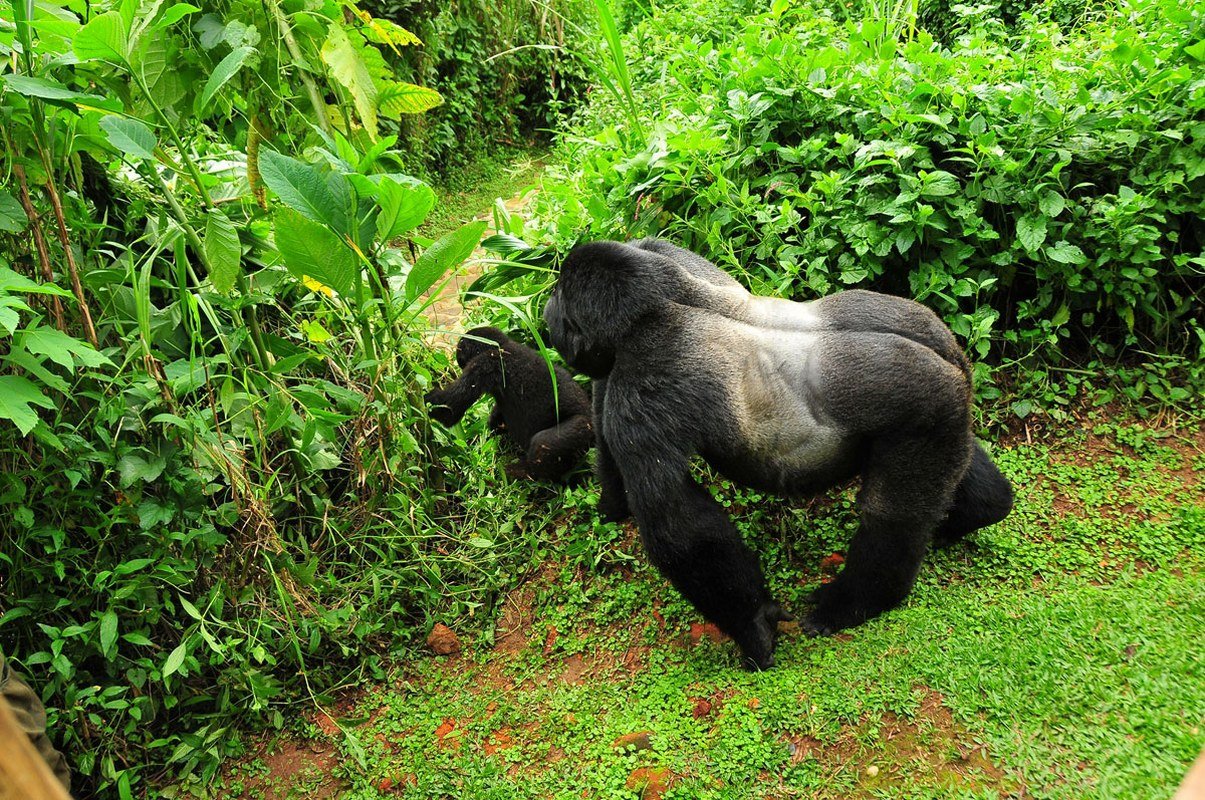
Gorilla trekking normally begins with registration and a briefing before visitors enter the forest.
For senior travelers, this is an important opportunity to communicate physical ability clearly.
Gorilla groups live and move freely, so no responsible authority or tour operator can guarantee months in advance that a traveler will receive the closest gorilla family.
Official Rwanda tourism information confirms that tracking duration varies according to the family assigned, demonstrating how different the experience can be from one group to another.
When assignments are being organized, senior travelers should make guides aware of genuine mobility concerns.
Rather than simply saying:
“I’m old, so I need an easy group,”
it is more useful to explain:
“I can walk steadily for several hours, but steep downhill sections are difficult for my knees.”
Or:
“I am comfortable walking slowly but need assistance on slippery ground.”
This gives park staff a clearer understanding of the traveler’s abilities.
Can Seniors Request a Shorter Gorilla Trek?
Senior travelers can make their physical limitations known and may ask that these be considered when groups are organized.
However, a short gorilla trek can never be guaranteed.
Mountain gorillas may move after trackers locate them. A family that was relatively close to the starting area yesterday may have traveled considerably farther by the following morning.
Weather and forest conditions can also change the difficulty of the route.
The safest promise is therefore not:
“We guarantee you the shortest gorilla trek.”
It is:
“We will communicate your mobility requirements, arrange appropriate assistance and design the safari to reduce avoidable physical strain.”
That difference is extremely important for both responsible tourism and traveler expectations.
A well-designed accessible gorilla safari cannot control the mountain gorillas.
What it can control is almost everything surrounding the encounter: the transport, accommodation, rest time, porter support, equipment, communication, pacing and additional mobility assistance that give the traveler the best possible opportunity to reach the gorillas comfortably.
How Fit Do You Need to Be for Gorilla Trekking?
You do not need to be an athlete to go gorilla trekking, but a reasonable level of walking ability, balance and stamina can make the experience considerably more comfortable.
Fitness requirements vary because every gorilla trek is different. Some visitors may find their assigned gorilla family after a comparatively manageable walk, while others may spend several hours moving through forest terrain before reaching them.
For senior travelers, fitness should therefore be considered in practical terms rather than according to age.
A useful question is whether the traveler can comfortably walk for one or two hours on uneven ground while taking breaks when necessary.
Another consideration is whether they can climb and descend moderate slopes without becoming excessively fatigued.
Balance is also important. Natural forest terrain may include exposed roots, loose soil, rocks, vegetation and slippery sections. A person with good cardiovascular fitness but poor balance may still require considerable assistance.
Leg strength can make climbing easier, while knee stability becomes particularly important during descents.
The ability to recover after exertion is also relevant. Gorilla trekkers must normally return from the forest after the gorilla encounter, so reaching the gorillas is only part of the physical journey.
This is one reason travelers should avoid using all their energy during the first part of the trek.
Senior travelers who regularly walk, garden, hike, play golf, cycle or remain generally active may already have much of the functional fitness required.
Those who spend most of their time sitting may benefit from gradually increasing their activity before travel.
The goal is not to transform into an experienced mountain hiker. The aim is to become comfortable with sustained walking, moderate inclines and uneven terrain.
Travelers with significant medical concerns, previous major surgery or conditions that may be affected by physical exertion should seek personalized medical advice before undertaking the activity.
Preparing for Gorilla Trekking After Age 60
Preparing properly can make gorilla trekking after 60 considerably more enjoyable.
Older travelers should focus less on intense training and more on building practical strength, endurance and confidence.
Preparation should ideally begin gradually rather than suddenly undertaking strenuous exercise shortly before departure.
Regular Walking
Walking is one of the simplest and most useful ways to prepare for gorilla trekking.
Travelers should gradually become accustomed to spending longer periods on their feet.
Where possible, walks should include a mixture of flat ground and gentle inclines rather than taking place only on treadmills or perfectly level roads.
The objective is to improve endurance while also becoming comfortable with changes in terrain.
A traveler who can comfortably walk for an hour or more without excessive fatigue will usually arrive better prepared than someone whose daily activity consists mainly of short indoor movements.
Walking frequency can be more important than intensity. Regular moderate walks are generally more useful for gorilla preparation than occasional extreme exercise.
Hill and Stair Training
Gorilla habitats are mountainous, so seniors should prepare for climbing and descending.
Walking on hills can strengthen the muscles used during trekking and help travelers understand how their knees respond to inclines.
Stairs can provide a practical alternative for people who live in flat areas.
Descending deserves particular attention because some travelers find going downhill more uncomfortable than climbing.
Rather than moving quickly, seniors should practice controlled steps and use handrails or walking support where appropriate.
The purpose is confidence and stability, not speed.
Balance Exercises
Balance is frequently overlooked when people prepare for gorilla trekking.
However, natural forest trails demand more balance than ordinary paved walking.
Simple exercises that improve stability may help travelers become more confident when stepping over roots, moving across uneven ground or changing direction on a slope.
Anyone with existing balance problems should be especially careful and may benefit from professional advice on safe exercises.
During the actual trek, a walking stick or porter can provide an additional point of support.
Leg and Core Strength
Strong legs help with climbing, while good core stability assists with balance.
Preparation can include gentle exercises such as controlled chair rises, step-ups and other low-impact movements appropriate to the traveler’s ability.
The emphasis should remain on gradual improvement.
A traveler who has not exercised regularly should not suddenly begin strenuous training shortly before departure.
Consistency is more valuable than intensity.
Breaking in Hiking Boots
Never wait until gorilla trekking morning to wear hiking boots for the first time.
New footwear can cause blisters, pressure points and discomfort that may turn a manageable trek into an unpleasant experience.
Senior travelers should wear their intended trekking footwear several times before traveling.
Ideally, the boots should be tested on longer walks and uneven ground.
They should provide good traction, ankle support where desired and enough room for comfortable socks.
Water resistance is also useful because gorilla forests can be wet even outside the main rainy periods.
Comfortable footwear is one of the simplest ways to improve the trekking experience.
Gorilla Trekking for Travelers Over 70
Gorilla trekking over 70 is entirely possible for many travelers, but the safari should be designed according to personal ability rather than chronological age.
A seventy-year-old who walks regularly, remains active and has good balance may complete a gorilla trek with relatively little additional assistance.
Another traveler of the same age may require a slower pace, porter support and additional mobility planning.
There is no reason both travelers should receive the same itinerary.
Senior-friendly safari planning should begin by reducing unnecessary fatigue.
Instead of arriving at the gorilla region after an exhausting journey and trekking the following morning, travelers over 70 may benefit from an additional night before the trek.
This allows time to rest properly, organize equipment and prepare mentally for the experience.
Private transport is also valuable.
A private vehicle allows the traveler to stop whenever necessary and eliminates pressure to match the schedule of a larger group.
Accommodation should be selected carefully.
A luxury lodge built on a steep hillside may be less convenient than a comfortable property with fewer stairs and easier room access.
The most important luxury for an older traveler is often convenience.
Porter assistance is highly recommended even for active travelers.
Having another person carry the backpack and offer support over difficult sections can preserve energy and improve confidence.
Travelers over 70 should also resist the temptation to prove that they can keep up with younger trekkers.
Moving at a steady personal pace is far more sensible.
The success of the experience should be measured by reaching the gorillas safely and enjoying the encounter, not by how quickly the forest was crossed.
Gorilla Trekking for Travelers Over 80
Gorilla trekking over 80 requires more individualized planning, but age alone does not automatically make the experience impossible.
Some travelers in their eighties remain remarkably active and capable of walking significant distances.
Others may require substantial support.
The first consideration should be honest assessment of mobility.
Can the traveler walk independently?
Do they use a cane or walker?
Can they climb stairs?
Can they remain seated comfortably during road transfers?
Can they transfer independently between a vehicle and another seat?
Do they become fatigued quickly?
These questions help determine what level of assistance may be necessary.
For travelers over 80 who are still strong walkers, the safari may resemble a conventional senior gorilla itinerary with the addition of a porter and slower pacing.
For travelers with substantial mobility limitations, specialized carrying assistance may need to be considered.
The entire safari should also be simplified.
Multiple one-night stays, long road journeys and rushed schedules can be physically exhausting even before trekking begins.
A better itinerary may include two or three nights at the same gorilla lodge, private transfers and a full day of rest before or after trekking.
The traveler should also have easy access to personal medication, drinking water and suitable meals.
Accommodation should be evaluated beyond star rating.
Steps, steep pathways, bathroom layout and distance from the room to dining areas become especially important for older guests.
Travel insurance and appropriate medical preparation also deserve greater attention because coverage conditions can vary with age.
A traveler with a medical condition that could be affected by strenuous activity should obtain individualized professional advice before committing to the trek.
Gorilla trekking over 80 should therefore never be presented as universally easy or universally impossible.
The correct approach is individual assessment, careful planning and appropriate support.
Gorilla Trekking With Bad Knees or Joint Problems
Knee and joint concerns are among the most common physical challenges reported by older travelers considering gorilla trekking.
The challenge is often not simply walking distance.
Descending steep or slippery terrain can place considerably more strain on the knees than walking on level ground.
Someone who regularly walks several kilometres around their neighborhood may therefore find forest trekking very different.
For travelers with knee problems, preparation should begin with understanding exactly which movements cause discomfort.
Some people struggle primarily with steep descents.
Others find climbing more difficult.
Some can walk comfortably but experience pain when stepping over high obstacles or bending deeply.
This information should be shared with the safari operator before travel and with the trekking guides on the day.
Porter assistance can be extremely useful.
A porter can provide a steady hand while descending, help the traveler maintain balance and reduce the amount of weight being carried.
Walking sticks or trekking poles may also help some travelers by providing additional stability.
Footwear becomes particularly important.
A boot with reliable grip reduces slipping and can improve confidence on loose or muddy ground.
Travelers should take smaller, controlled steps rather than rushing downhill.
Resting briefly can also prevent fatigue from making balance worse.
Travelers with significant arthritis, recent joint surgery or persistent pain should speak with an appropriate healthcare professional before undertaking strenuous trekking.
The objective is not to diagnose whether someone can trek but to understand whether the planned activity is appropriate for their individual circumstances.
Gorilla Trekking After Hip or Knee Replacement
Travelers who have undergone hip or knee replacement sometimes assume that gorilla trekking is automatically impossible.
That is not necessarily the case.
Many people return to active lifestyles after joint replacement, but readiness for forest trekking varies significantly.
The most important consideration is not simply how long ago surgery occurred but how well the traveler has recovered and what level of activity their medical team considers appropriate.
Natural gorilla trekking terrain may require climbing, controlled descending, stepping over roots and maintaining balance on uneven ground.
These movements can be more demanding than ordinary walking.
Travelers with previous joint replacement should therefore avoid relying on general internet advice about whether they are fit to trek.
Individual medical guidance is more appropriate.
If trekking is considered suitable, the safari can then be designed to reduce avoidable strain.
This may involve flying rather than completing long road transfers, spending additional nights near the trekking area, hiring a porter and using walking support.
When Should Seniors Consider Additional Trekking Assistance?
Additional assistance should be considered whenever a traveler is uncertain that they can safely complete an unpredictable forest trek independently.
Warning signs may include major difficulty with hills, very limited walking endurance, frequent loss of balance, dependence on mobility equipment or severe discomfort on uneven ground.
The decision should be made before travel whenever possible.
Waiting until trekking morning may limit the support that can be organized.
Senior travelers should also avoid treating assistance as an all-or-nothing decision.
There are different levels of support.
One traveler may simply need a porter to carry a backpack.
Another may need regular hand support.
Another may require a specialized carrying arrangement.
The safari should match the level of assistance to the individual.
What Happens If a Senior Cannot Continue the Gorilla Trek?
A common concern among older visitors is what happens if they become too tired to continue.
This is another reason travelers should communicate openly with guides and avoid pushing themselves beyond reasonable limits.
If a traveler begins experiencing significant difficulty, they should tell the guide immediately rather than waiting until they are completely exhausted.
The appropriate response depends on the location, terrain, available support and circumstances of the trek.
No traveler should assume that reaching the gorillas is guaranteed regardless of physical condition.
This is why preparation and realistic planning matter.
Hiring a porter from the beginning can reduce the likelihood of reaching complete exhaustion.
Travelers who already know that walking several hours through uneven terrain is unrealistic should discuss more substantial mobility assistance before the trek rather than hoping to manage without it.
The best accessible gorilla safari anticipates difficulties before they become emergencies.
Why Rest Days Matter on Senior Gorilla Safaris
Rest days are sometimes viewed as wasted safari time.
For older travelers, they can be one of the most valuable parts of an itinerary.
A gorilla trek can be physically and emotionally intense.
Having a quiet afternoon or an additional night afterward allows the traveler to recover without immediately entering a vehicle for another long journey.
Rest days also create flexibility.
If a traveler arrives tired after an international flight, they are not forced immediately into a demanding schedule.
A relaxed itinerary might include arrival in Kigali or Entebbe, an overnight stay, a comfortable transfer to the gorilla region and at least one full night there before trekking.
After the gorilla encounter, the traveler can enjoy another relaxed evening at the same lodge.
This style of travel is particularly suitable for couples where one person has greater stamina than the other.
The more active partner can participate in an optional activity while the other rests.
A senior safari should not be judged by how many destinations are squeezed into the itinerary.
For many travelers, fewer destinations experienced comfortably create a far better journey than a rushed itinerary filled with exhausting transfers.
The Best Approach to Gorilla Trekking for Older Travelers
The most successful senior gorilla safaris combine realistic expectations with thoughtful preparation.
Age should never be ignored, but it should also never be treated as the only measure of capability.
A traveler in their seventies or eighties may be perfectly capable of trekking independently.
Another traveler in their sixties may require considerable assistance.
The best planning therefore begins with individual ability.
Before booking, travelers should consider their walking endurance, balance, knee and hip mobility, tolerance for long drives and comfort on uneven terrain.
From there, the safari can be built around those needs.
Suitable accommodation can be chosen.
Porters can be planned.
Flights can reduce long transfers.
Extra nights can provide rest.
Specialized assistance can be investigated where necessary.
This is what makes gorilla trekking for seniors and accessible gorilla safaris genuinely accessible: not pretending that mountain forests are easy environments, but creating the right combination of preparation, support and itinerary design to give each traveler the best possible opportunity to experience mountain gorillas safely and comfortably.
Best Accommodation for Senior Gorilla Trekkers
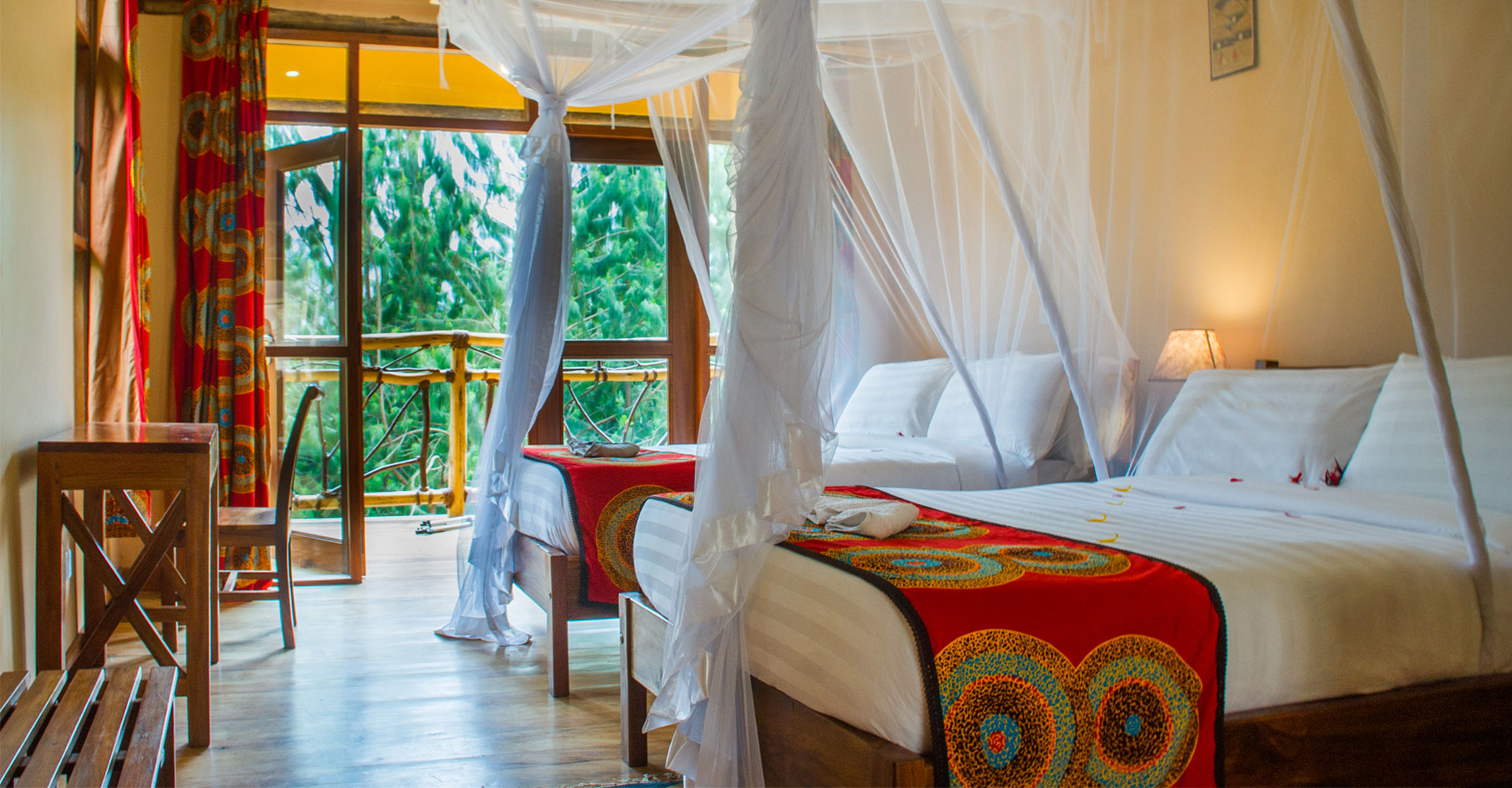
Choosing the right accommodation is one of the most important parts of planning gorilla trekking for seniors and accessible gorilla safaris. A lodge may look luxurious in photographs, have excellent views, and receive impressive reviews, but that does not automatically make it suitable for an older traveler or someone with limited mobility.
Many gorilla lodges are built in mountainous areas because the parks themselves are surrounded by steep terrain. This means guest rooms may be positioned on slopes, connected by stone pathways, stairs, wooden walkways or uneven outdoor paths. For younger or highly mobile travelers, this may not be a major concern. For seniors, however, walking repeatedly between a room, restaurant, reception area and safari vehicle can become tiring, especially before or after a gorilla trek.
The most suitable accommodation should therefore be selected according to the individual traveler rather than simply by star rating.
Lodges Near Trekking Headquarters
One of the most important considerations is the distance between the lodge and the gorilla trekking starting point.
Senior travelers generally benefit from staying as close as practical to the sector or headquarters where their permit is registered. This reduces the need for a very early wake-up followed by a lengthy drive before the trek even begins.
A traveler who starts the morning after an hour or more of driving over winding mountain roads may already feel fatigued by the time the briefing begins.
For this reason, accommodation should be matched carefully to the correct gorilla trekking sector.
In Bwindi, this is particularly important because permits are associated with specific trekking areas such as Buhoma, Ruhija, Rushaga and Nkuringo. Staying in the wrong part of the park can create an unnecessarily difficult morning transfer.
For accessible gorilla safaris, accommodation location should therefore be considered before the booking is finalized, not after.
Ground-Floor Rooms
Ground-floor rooms can make an enormous difference for older travelers.
Senior guests with knee pain, reduced balance, arthritis or limited mobility should not be placed in a room that requires repeated climbing of steep stairs unless they are fully comfortable with this arrangement.
When booking, it is useful to request a room that is:
- on ground level;
- close to common areas;
- close to the vehicle pickup point;
- easy to reach without steep paths;
- accessible without long staircases.
Where a lodge does not have true ground-floor rooms, the travel planner should ask which rooms involve the least walking or climbing.
Room allocation should never be treated as a minor detail on a senior gorilla safari.
Accessible Bathrooms
Bathroom layout becomes increasingly important for travelers with mobility limitations.
A senior-friendly bathroom may include a walk-in shower, stable flooring, sufficient space to move comfortably and, where available, grab support.
High-sided bathtubs can be difficult for some older travelers to enter safely.
When a guest has significant mobility needs, the exact bathroom configuration should be confirmed with the lodge.
It is also useful to ask whether hot water is reliably available, because the gorilla trekking regions of Uganda and Rwanda can feel cool in the mornings and evenings.
A warm shower after several hours in a wet forest can be one of the most appreciated comforts of the trip.
Minimal Steps and Walking Distances
A lodge that requires twenty minutes of walking between the room and restaurant may be beautiful, but it may not be ideal for an elderly guest.
Accessibility planning should consider the entire property layout.
Important questions include:
How many steps are there between the room and restaurant?
Is the path steep?
Does the pathway become slippery when it rains?
Can a vehicle reach close to the room?
Is there staff assistance for luggage?
Can meals be served closer to the guest’s room if necessary?
These details often matter more than whether the lodge has a swimming pool or spectacular architectural design.
Comfortable Dining and Rest Areas
Senior travelers may appreciate having comfortable indoor areas where they can relax before or after trekking.
Mountain gorilla areas can be cool, particularly during early mornings and evenings.
A lodge with a comfortable lounge, fireplace, warm dining area and supportive seating can provide a much better recovery environment than a property designed primarily around outdoor spaces.
Meals should also be considered.
Older travelers sometimes prefer earlier dinners, lighter meals or specific dietary arrangements.
A well-planned safari should communicate dietary needs to the lodge before arrival rather than expecting the guest to explain them repeatedly.
Luxury Gorilla Safaris for Seniors
Luxury gorilla safaris for seniors are particularly well suited to travelers who want to experience mountain gorillas without unnecessary physical and logistical stress.
Luxury in this context should not simply mean expensive accommodation.
For an older traveler, true luxury is often found in convenience, privacy, flexibility and personalized service.
A luxury senior gorilla safari can include private airport assistance, a dedicated safari guide, premium 4×4 transportation, strategically located accommodation, porter assistance, flexible meal times and carefully planned rest periods.
The itinerary can also be designed with fewer hotel changes.
Instead of moving every night, travelers may spend two or three nights in the same property and enjoy the destination at a more relaxed pace.
This is particularly valuable around Bwindi or Volcanoes National Park.
Private 4×4 Safari Vehicle
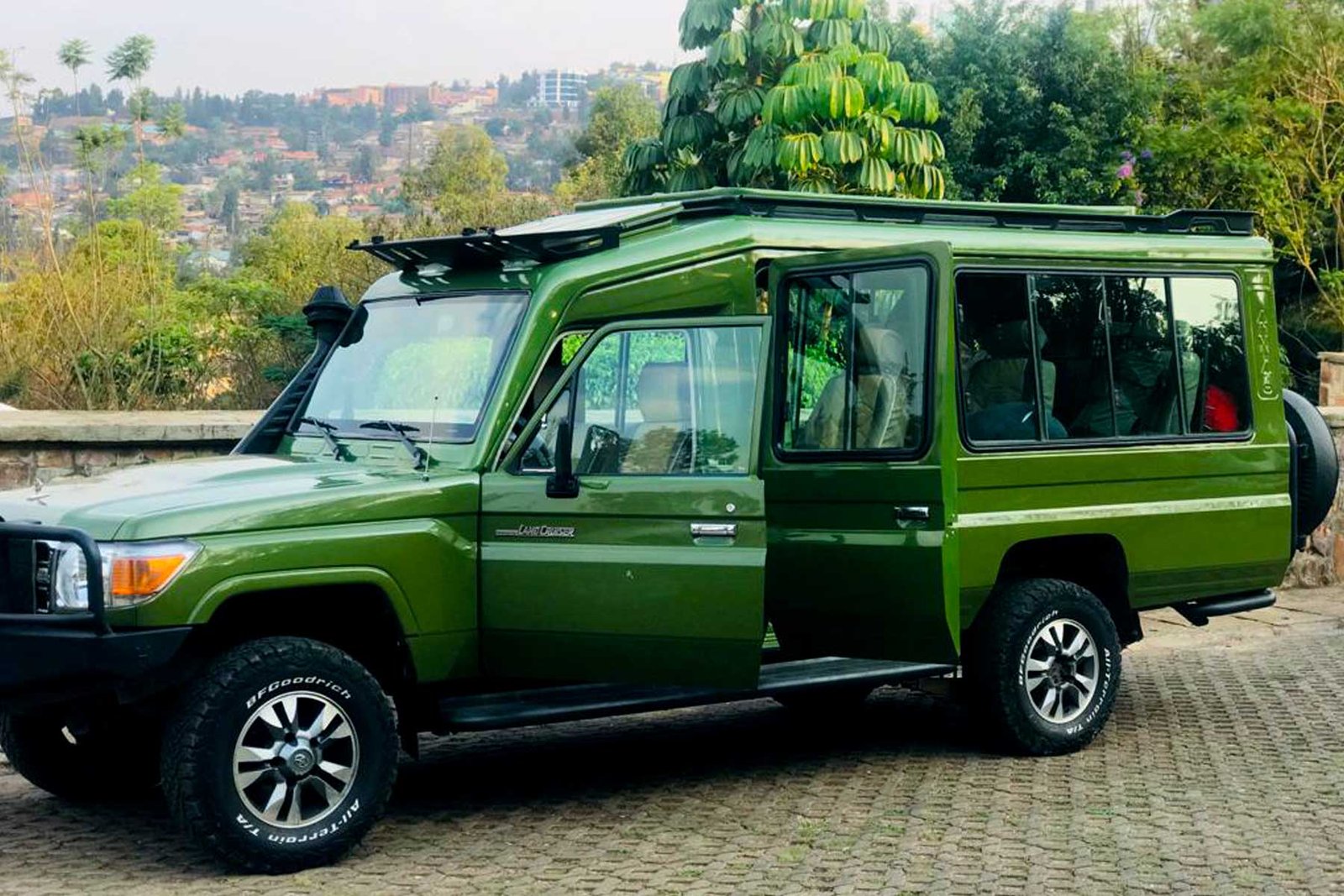
A private safari vehicle allows the journey to move according to the traveler’s comfort.
Stops can be made whenever needed for stretching, photography, refreshments or bathroom breaks.
The traveler is not required to keep up with a group schedule.
Seat comfort should also be considered.
Senior travelers may appreciate spacious seating, good suspension, easy vehicle entry and sufficient legroom.
Where someone has difficulty climbing into a high safari vehicle, this should be discussed before the trip so that the operator can plan appropriately.
Dedicated Private Guide
A private guide can greatly improve the experience for older travelers.
Instead of explaining mobility needs to different people every day, the traveler can have one guide who understands their pace, preferences and limitations.
The guide can also coordinate with lodges, trekking personnel and other service providers.
For travelers who prefer a slow morning, frequent stops or shorter activity days, this continuity can make the safari feel considerably more relaxed.
Luggage Assistance
Luggage should not become an unnecessary physical burden.
A luxury accessible safari should ensure that bags are handled at airports, lodges and vehicles whenever practical.
Senior guests should avoid repeatedly lifting heavy suitcases into vehicles or carrying bags along steep lodge pathways.
Spa and Recovery Time
Many luxury lodges around gorilla regions offer massage or wellness experiences.
For senior travelers, these can be particularly enjoyable after trekking.
Even where spa treatments are not important, having time to rest is valuable.
A luxury itinerary should not fill every available hour simply because activities exist.
A quiet afternoon overlooking the forest can be just as memorable as another scheduled excursion.
Flying Gorilla Safaris for Senior Travelers
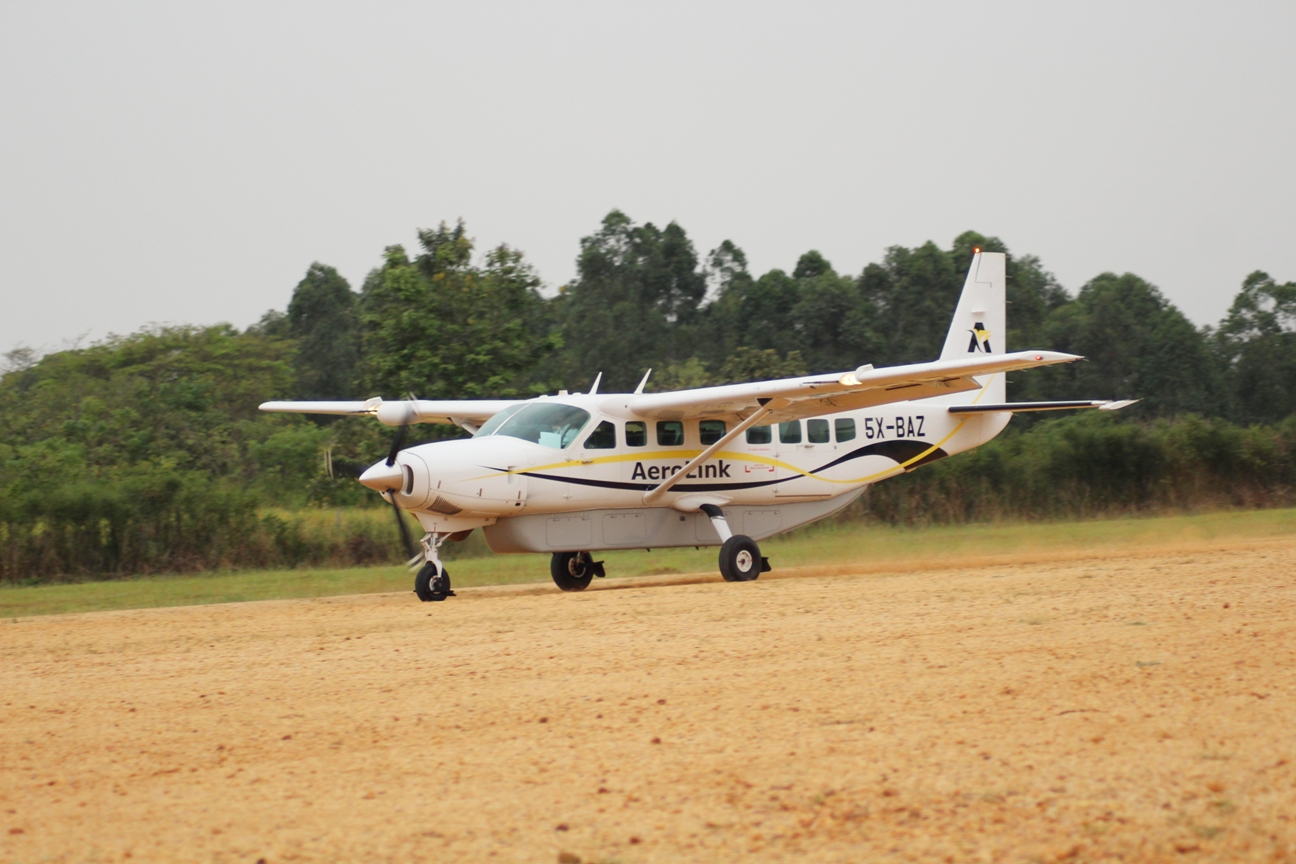
One of the best ways to make gorilla trekking for seniors more comfortable is to reduce long road transfers.
Uganda’s gorilla destinations are located in the far southwest of the country, and traveling entirely by road from Entebbe can require a full day.
Some travelers enjoy scenic road journeys.
Others, particularly seniors with back discomfort, joint stiffness or limited tolerance for long drives, may prefer a domestic flight.
Fly-In Gorilla Safaris in Uganda
Fly-in safari arrangements can connect Entebbe with airstrips serving the gorilla regions.
The traveler then continues by private vehicle to the lodge.
For northern Bwindi, flights commonly use Kihihi as a regional access point.
For southern Bwindi and Mgahinga, Kisoro is an important access point.
A flying safari can reduce the amount of time spent on the road and preserve energy for the gorilla trek.
It is particularly useful for travelers undertaking a short safari.
For example, instead of spending most of Day 1 driving from Entebbe toward Bwindi, a traveler can fly closer to the park and arrive at the lodge earlier.
Benefits of Flying for Seniors
Flying can reduce:
- back discomfort from long road journeys;
- fatigue before trekking;
- repeated roadside stops;
- time spent traveling between destinations;
- the physical strain of sitting for many hours.
It can also create more time for rest.
However, flying does not eliminate all road travel.
Airstrips are regional access points rather than locations inside the gorilla trekking headquarters, so a road transfer is still required.
The traveler should therefore understand the full journey rather than assuming the aircraft lands directly at the lodge.
Luggage Considerations
Domestic safari flights may operate with smaller aircraft and may have stricter luggage limits than international flights.
Senior travelers should pack carefully and use soft-sided luggage where required by the airline.
Heavy photographic equipment should also be considered when calculating baggage.
The operator should confirm the applicable luggage rules before travel.
Flying Versus Driving
A road safari remains an excellent option for travelers who enjoy scenery and want to visit destinations along the way.
A flying safari is generally better suited to travelers whose primary objective is reducing transfer time.
The decision should depend on the traveler’s comfort, budget, time and health.
For many senior travelers, combining flying and driving provides the best balance.
Private Gorilla Safaris for Seniors
A private gorilla safari for seniors offers greater flexibility than joining a fixed group itinerary.
The safari vehicle, guide and daily schedule are dedicated to the traveler or their companions.
This makes it much easier to adjust the journey according to energy levels.
If the traveler needs an additional rest stop, the vehicle can stop.
If they want to leave the lodge later on a non-trekking day, the schedule can be adjusted.
If one member of a couple prefers to rest while the other participates in an activity, the itinerary can often be modified accordingly.
This flexibility is particularly important for couples with different mobility levels.
Why Private Safaris Work Well for Older Travelers
Private safari travel provides control.
Older guests are not pressured to follow the pace of younger travelers.
The guide can also learn the traveler’s preferences throughout the trip.
For example, some seniors prefer:
- shorter driving periods;
- longer lunch breaks;
- earlier arrival at lodges;
- fewer activities in a single day;
- more photography stops;
- later departures after breakfast.
A private safari can incorporate these preferences naturally.
Private Safaris for Senior Couples
Senior couples often have different levels of fitness.
One partner may walk daily and remain highly active, while the other may have knee problems or reduced stamina.
A private safari allows both travelers to enjoy the journey without forcing one person to adopt the other’s pace.
The more active partner may participate in an optional forest walk or cultural excursion while the other rests at the lodge.
Private Safaris for Solo Seniors
Solo senior travelers can also benefit from private arrangements.
Traveling alone does not mean being unsupported.
A dedicated guide provides continuity throughout the journey and can assist with logistics, luggage, check-ins and daily planning.
This can be particularly reassuring when traveling through unfamiliar destinations.
What to Wear for Gorilla Trekking as a Senior
Proper clothing can significantly improve comfort during gorilla trekking.
Senior travelers should prioritize protection, grip and flexibility rather than fashion.
The forest can be cool in the morning, warm during physical activity and wet if rain develops.
Layered clothing therefore works well.
Long Hiking Trousers
Long trousers protect the legs from vegetation, insects and scratches.
The material should allow comfortable movement.
Heavy jeans are generally less practical because they can become uncomfortable when wet.
Long-Sleeved Shirt
A lightweight long-sleeved shirt helps protect the arms from vegetation and insects.
Breathable material is preferable because trekking can become warm once walking begins.
Waterproof Jacket
A lightweight waterproof jacket should always be carried.
Rainfall can occur in mountain forest environments even when the day begins with clear skies.
The jacket should be easy to remove and place in a small backpack.
Hiking Boots
Good footwear is one of the most important pieces of equipment.
Boots should have reliable grip and should already be broken in.
Senior travelers should avoid trekking in smooth-soled casual shoes.
A supportive hiking boot can improve confidence when walking across mud or uneven terrain.
Gaiters
Gaiters can help protect the lower legs from mud and vegetation.
They can be particularly useful during wetter conditions.
Gardening or Trekking Gloves
Light gloves can help protect the hands when using vegetation for support.
Travelers may occasionally need to steady themselves with nearby branches or plants.
Hat and Sun Protection
Although much of the trek takes place beneath forest cover, a hat can still be useful before and after entering dense vegetation.
Sun protection is also helpful during road transfers and open sections.
What Seniors Should Pack for Gorilla Trekking
Senior travelers should pack enough to remain comfortable without carrying unnecessary weight.
A porter can carry the trekking backpack, but keeping the bag reasonably light still makes the experience easier.
Useful items include:
- drinking water;
- lightweight rain jacket;
- personal medication;
- insect repellent;
- sunscreen;
- camera;
- spare camera battery;
- small waterproof bag;
- light snacks if appropriate;
- reading glasses if needed;
- tissues;
- hand sanitizer;
- walking support if normally used.
Prescription medication should remain easily accessible.
Travelers should avoid placing essential medication in checked luggage when flying internationally.
Walking Sticks and Trekking Poles
Walking support can be extremely valuable during gorilla trekking.
A walking stick provides an additional point of balance when climbing or descending.
This can be particularly helpful for travelers with knee concerns or reduced stability.
Some travelers prefer a single stick.
Others are more comfortable with trekking poles.
The best option depends on what the individual is already accustomed to using.
Senior travelers should avoid experimenting with unfamiliar equipment for the first time on trekking morning.
If using trekking poles, practice beforehand.
A porter can also provide physical assistance where needed.
The combination of a walking stick and porter support can make difficult sections considerably easier to manage.
Medical Considerations Before a Senior Gorilla Safari
Senior travelers should consider their personal health before undertaking gorilla trekking.
The activity involves physical exertion, uneven terrain and sometimes significant altitude.
Anyone with a medical condition that may be affected by these factors should seek individualized advice from an appropriate healthcare professional.
This is especially important for travelers with significant heart, respiratory, mobility or balance concerns.
The goal is not to discourage travel.
It is to ensure that the safari is designed realistically.
Prescription Medication
Travelers should bring enough medication for the entire trip, plus a reasonable reserve where possible.
Medication should be kept in clearly labeled packaging.
A copy of relevant prescriptions may also be useful.
Essential medication should remain in hand luggage during flights.
Hydration
Older travelers can sometimes become dehydrated without immediately noticing strong thirst.
Drinking regularly is important, especially when walking at altitude.
Water should be available before, during and after trekking.
Rest and Recovery
The safari itinerary should provide adequate sleep and recovery time.
Arriving late at night, waking extremely early and undertaking a physically demanding trek the next morning is not ideal for many senior travelers.
A relaxed schedule can improve both safety and enjoyment.
Travel Insurance for Senior Gorilla Safaris
Comprehensive travel insurance is particularly important for older travelers.
Policies vary considerably, and age restrictions may apply.
Travelers should read the policy carefully rather than assuming that all safari activities are automatically covered.
Important areas to review include:
- emergency medical treatment;
- evacuation;
- trip cancellation;
- trip interruption;
- lost luggage;
- delayed flights;
- pre-existing medical conditions;
- trekking or outdoor activity coverage.
Some insurers have different terms for travelers above certain ages.
This makes it important to arrange insurance early and understand the exclusions.
Travelers with pre-existing medical conditions should disclose them accurately where required by the insurer.
A lower-cost insurance policy is not necessarily the best value if important activities or medical circumstances are excluded.
For accessible gorilla safaris and senior gorilla trekking, insurance should be treated as part of the trip planning rather than an optional extra.
How Long Should a Senior Gorilla Safari Be?
The ideal duration of a gorilla safari for a senior traveler depends on physical ability, travel style, number of destinations, preferred pace and whether the journey includes additional wildlife experiences. While very short gorilla tours are possible, they are not always the most comfortable option for older travelers because they may involve long transfers followed by early-morning trekking with very little recovery time.
For gorilla trekking for seniors and accessible gorilla safaris, a slightly slower itinerary is usually more comfortable. Spending two or more nights in the gorilla region allows travelers to arrive without rushing, rest properly before trekking and recover afterward before continuing to another destination.
A senior traveler should not feel pressured to visit as many national parks as possible within a short period. The quality of the experience matters more than the number of places included.
4–5 Day Gorilla Safari
A four- or five-day gorilla safari works well for travelers whose primary objective is seeing mountain gorillas without adding a long wildlife circuit.
A typical itinerary can include arrival in Kigali or Entebbe, transfer or flight to the gorilla region, at least one full gorilla trekking experience and a relaxed return journey.
For seniors, five days is generally more comfortable than compressing the experience into two or three days.
An extra night allows the traveler to arrive at the gorilla destination earlier and avoid trekking immediately after a long transfer.
This type of safari is particularly suitable for travelers combining gorilla trekking with a broader international holiday or those who want a focused wildlife experience without spending several weeks in East Africa.
6–8 Day Gorilla Safari
A six- to eight-day itinerary provides a very good balance for many senior travelers.
It allows enough time for gorilla trekking while also including relaxing scenic or wildlife experiences.
An itinerary could combine gorillas with Lake Bunyonyi, Lake Kivu, Queen Elizabeth National Park or another destination that does not require strenuous walking.
The additional days create flexibility.
Instead of transferring every morning, travelers can spend two or three nights at selected lodges.
This slower pace reduces luggage handling, repeated check-ins and long driving days.
For many people over 60 or 70, a seven-day safari provides enough variety without becoming exhausting.
9–12 Day Gorilla and Wildlife Safari
A nine- to twelve-day safari works particularly well for seniors who want gorilla trekking to form part of a broader East African wildlife journey.
In Uganda, a relaxed itinerary can combine gorillas with destinations such as Queen Elizabeth National Park, Kibale National Park and Lake Mburo.
In Rwanda, gorilla trekking can be combined with Akagera National Park, Lake Kivu and Kigali.
The advantage of having more days is that transfers can be broken into manageable stages.
A senior traveler does not need to leave a lodge at sunrise, spend an entire day driving and repeat the process the following morning.
Two-night stays can be used whenever possible.
This gives travelers time to enjoy their accommodation, rest between activities and experience destinations more deeply.
12–15 Day Relaxed Gorilla Safari
A twelve- to fifteen-day safari is ideal for travelers who want a comprehensive experience without rushing.
This duration allows gorilla trekking to be combined with game drives, boat safaris, chimpanzee trekking where appropriate, cultural experiences and relaxation.
The itinerary can also include recovery days between more physically demanding activities.
For seniors traveling long distances internationally, this slower approach can be particularly valuable.
The first day after arrival can be kept light, allowing time to recover from flights and adjust to the local time zone.
The final day before departure can also remain relatively relaxed.
For many senior travelers, a longer safari does not necessarily mean a more tiring safari.
When carefully planned, a longer itinerary can actually be less physically demanding because activities and transfers are spread over more days.
Recommended 5-Day Accessible Gorilla Safari
A five-day accessible gorilla safari can provide an excellent balance between adventure and comfort.
The following itinerary is only an example and should always be customized according to the traveler’s mobility, preferred destination and accommodation level.
Day 1: Arrival and Relaxation
Arrive at Kigali International Airport or Entebbe International Airport and meet your private safari guide.
Rather than immediately beginning a long drive, the first day should focus on settling in and recovering from international travel.
Transfer to a comfortable hotel where luggage assistance and an easily accessible room can be arranged.
The afternoon or evening should remain flexible.
Travelers can rest, enjoy dinner and prepare for the journey ahead.
For senior travelers arriving after an overnight flight, avoiding major activities on arrival day can make a significant difference.
Day 2: Scenic Transfer or Flight to the Gorilla Region
After breakfast, continue toward the selected gorilla destination.
Travelers choosing Rwanda can proceed privately toward Volcanoes National Park.
Those trekking in Uganda may transfer by road or use a domestic flight depending on the itinerary.
Stops should be made whenever required.
The goal is to arrive at the lodge early enough to relax rather than reaching the gorilla region late at night.
After check-in, travelers can organize trekking clothing, discuss the following morning with their guide and enjoy an early dinner.
Day 3: Gorilla Trekking With Porter Assistance
After an early breakfast, transfer to the trekking briefing point.
Mobility requirements should already have been communicated, but they should be mentioned again before groups enter the forest.
A porter can be arranged to carry the backpack and provide assistance where necessary.
The trek proceeds according to the location of the assigned gorilla family.
Once the gorillas are found, visitors experience one of Africa’s most extraordinary wildlife encounters before returning from the forest.
After trekking, return to the lodge.
The remainder of the day should normally be kept free for rest.
A warm shower, relaxed lunch and quiet afternoon can be especially welcome after the physical effort of trekking.
Day 4: Rest, Cultural Experience or Gentle Activity
This day should remain flexible.
Travelers who feel energetic may participate in a community visit, scenic drive or other low-impact experience.
Those who prefer to rest can remain at the lodge.
Senior travelers should not feel obligated to fill the day with activities simply because they are available.
The purpose of this extra day is to provide breathing room after trekking.
Day 5: Return Transfer and Departure
After breakfast, begin the return journey toward Kigali or Entebbe.
If the travel schedule permits, stops can be included along the way.
Travelers flying internationally should allow enough time between the safari transfer and departure flight.
Where possible, an additional airport hotel night can be considered for travelers who prefer not to combine a long transfer with an international departure.
Recommended 7-Day Gorilla Safari for Seniors
A seven-day gorilla safari is one of the most comfortable options for older travelers because it provides additional time for rest and allows the journey to move at a more relaxed pace.
Day 1: Arrival in Kigali or Entebbe
Meet your private guide and transfer to a comfortable hotel.
The remainder of the day is reserved for relaxation.
No strenuous activity should be required after a long international journey.
Day 2: Relaxed Transfer Toward the Gorilla Region
After breakfast, begin the scenic journey toward the gorilla destination.
The itinerary should include regular stops.
If traveling in Uganda, a domestic flight can be considered to reduce road time.
Arrive at the lodge during daylight whenever possible.
Day 3: Rest and Preparation
A dedicated rest day before trekking can be extremely beneficial for older travelers.
Guests can enjoy the lodge, take a gentle walk around the property, organize equipment or participate in a short cultural activity.
The main objective is to begin trekking morning rested rather than fatigued.
Day 4: Gorilla Trekking
After breakfast, transfer to the trekking headquarters.
Complete registration and briefing before entering the forest with rangers and porters.
The duration of the trek depends on the location of the gorillas.
After the encounter, return to the lodge and spend the rest of the afternoon resting.
Day 5: Recovery Day
This day provides time for recovery.
Travelers who feel energetic may participate in a scenic activity, cultural visit or another gentle excursion.
Others may prefer a massage, relaxed lunch or simply enjoying the lodge surroundings.
Day 6: Optional Wildlife or Scenic Experience
Depending on the route, the safari can include a scenic lake visit, relaxed boat experience or short transfer toward the departure city.
Keeping this day flexible ensures that the traveler is not pushed into an activity if they remain tired after trekking.
Day 7: Departure
After breakfast, return to Kigali or Entebbe for the onward flight.
The day’s schedule should be based around the international departure time with enough margin for a comfortable transfer.
Gorilla Trekking and Wildlife Safaris for Seniors
Gorilla trekking can be combined beautifully with classic African wildlife experiences.
For senior travelers, the best combinations usually include activities that provide exceptional wildlife viewing without requiring long periods of walking.
Game drives and boat safaris are particularly suitable because travelers can observe animals while remaining seated for much of the experience.
Queen Elizabeth National Park
Queen Elizabeth National Park is one of the most natural additions to a Uganda gorilla safari.
The park can be included before or after Bwindi and provides a completely different wildlife environment.
Game drives allow travelers to search for elephants, buffaloes, antelopes, lions and other wildlife from the comfort of a safari vehicle.
For seniors, the Kazinga Channel boat experience is particularly attractive because it provides wildlife viewing with relatively little physical exertion.
Travelers can remain seated while observing hippos, crocodiles, elephants, buffaloes and numerous bird species around the shoreline.
Combining gorilla trekking with Queen Elizabeth National Park creates a balanced safari.
The gorilla experience provides the physically adventurous element, while game drives and boat safaris allow more relaxed wildlife viewing.
Lake Mburo National Park
Lake Mburo National Park can provide a gentle beginning or ending to a Uganda safari.
Its location makes it useful on some itineraries traveling between Entebbe and southwestern Uganda.
Game drives provide opportunities to see zebras, impalas, buffaloes and other wildlife.
A boat experience may also be incorporated depending on the itinerary.
For senior travelers, Lake Mburo can break a longer road journey into more manageable sections.
Instead of traveling directly between Entebbe and Bwindi in one long day, an itinerary may include an overnight stop.
This can reduce fatigue and add another wildlife destination without making the trip excessively demanding.
Akagera National Park
For travelers choosing Rwanda, Akagera National Park is one of the best additions to a senior gorilla safari.
The park offers classic savannah wildlife viewing and allows visitors to experience a completely different ecosystem from Volcanoes National Park.
Game drives provide opportunities to search for major African wildlife from a safari vehicle.
A boat safari can also add a relaxed water-based experience.
For seniors, the combination of Volcanoes National Park and Akagera works well because one physically demanding activity—gorilla trekking—can be balanced with several lower-impact game viewing experiences.
Lake Bunyonyi
Lake Bunyonyi is one of the most relaxing additions to a Bwindi gorilla itinerary.
Its peaceful highland setting makes it particularly suitable after trekking.
Senior travelers can spend a night or two enjoying lake views and a slower pace.
Gentle boat or canoe experiences may be possible depending on personal comfort and mobility.
For travelers who have completed a physically demanding gorilla trek, Lake Bunyonyi provides an opportunity to recover before continuing toward another destination.
It can also work well for couples where one person wants more activities while the other prefers relaxation.
Lake Kivu
Lake Kivu provides a relaxing extension for travelers trekking gorillas in Rwanda.
After the mountainous forest experience of Volcanoes National Park, senior travelers can continue toward the lakeshore for one or more nights.
The atmosphere is generally slower and more restorative.
Travelers can enjoy scenic views, relaxed meals and gentle lakeside activities.
Lake Kivu is especially attractive for travelers who do not want to finish their gorilla trek and immediately return home.
Adding a lake stay creates time to absorb the experience and recover before the final transfer.
Best Time for Senior Gorilla Trekking
Mountain gorilla trekking is possible throughout the year, but weather can influence trail conditions and therefore the physical difficulty of the experience.
For senior travelers concerned about slippery trails, wetter vegetation or difficult footing, generally drier periods are often preferred.
However, gorilla habitats are tropical mountain forests, and rainfall is possible at any time.
No month should be advertised as guaranteeing completely dry trekking conditions.
The best time for a senior traveler should therefore consider more than rainfall.
Other factors include:
- personal tolerance for heat or cool mountain mornings;
- preferred travel dates;
- permit availability;
- accommodation availability;
- crowd levels;
- whether other safari destinations are being included;
- individual mobility.
Travelers who have significant balance concerns may prefer periods when trails are statistically less likely to be extremely wet.
Those who are comfortable with changing weather may travel throughout the year.
Dry-Season Gorilla Trekking for Seniors
Drier periods are popular with many senior travelers because trails may be easier to negotiate when rainfall is reduced.
Less mud can improve traction and reduce the amount of energy required to maintain balance.
For travelers with knee problems or reduced stability, this can be an important consideration.
However, dry-season trekking should still be approached with proper equipment.
Mountain forests can receive unexpected showers.
A waterproof jacket, hiking boots and walking support remain important regardless of travel month.
Popular travel periods may also experience stronger demand for gorilla permits and accommodation.
Senior travelers who require specific lodge rooms or mobility arrangements should therefore plan particularly early.
Rainy Season Gorilla Trekking for Seniors
Rainy-season gorilla trekking can still provide an extraordinary experience, but seniors should understand how wet conditions may affect the trek.
Rain can make slopes slippery.
Mud may become deeper.
Vegetation may be wet, and clothing can become damp during the forest walk.
For a strong and experienced hiker, these conditions may simply make the trek more adventurous.
For someone with limited balance or knee problems, they can make the experience considerably more difficult.
This does not mean senior travelers should automatically avoid wetter months.
Instead, they should prepare more carefully.
Good hiking boots with reliable traction become especially important.
Gaiters can help keep mud away from the lower legs.
A waterproof jacket should always be easily accessible.
A porter can provide valuable stability on slippery terrain.
Travelers should also move slowly and avoid rushing to keep up with other trekkers.
The advantage of traveling during less busy periods may include a quieter overall safari atmosphere and greater accommodation choice in some circumstances.
For seniors whose travel dates are flexible, the decision should therefore balance weather, availability, budget and personal mobility rather than relying on one factor alone.
Best Time to Book an Accessible Gorilla Safari
Accessible gorilla safaris should ideally be planned earlier than standard trips.
This is not simply because of gorilla permits.
Senior travelers may require particular lodge rooms, ground-floor accommodation, reduced walking distances within properties, private vehicles, suitable flight schedules or specialized trekking assistance.
The more specific the traveler’s needs, the more valuable advance planning becomes.
A lodge may have only one or two rooms that are particularly convenient for someone with reduced mobility.
Those rooms can be booked long before the rest of the property becomes full.
Similarly, travelers who want to fly into the gorilla region may have limited flight options on their preferred dates.
Gorilla permit availability is another major consideration.
Because visitor numbers are controlled, permits are limited for each trekking date.
Popular travel periods can therefore fill in advance.
For seniors planning a specific anniversary trip, family holiday or fixed-date journey, early booking provides more flexibility.
The booking process should begin by discussing the traveler’s needs rather than immediately reserving whatever lodge happens to be available.
The safari planner should understand:
- the traveler’s approximate age;
- walking ability;
- mobility limitations;
- preferred travel dates;
- whether a cane, walker or wheelchair is used;
- desired accommodation level;
- preferred Uganda or Rwanda destination;
- whether long road transfers are comfortable;
- whether porter or additional trekking assistance may be required.
Once these details are understood, permits, accommodation and transport can be arranged around the individual.
For gorilla trekking for seniors and accessible gorilla safaris, early planning is valuable because accessibility often depends on securing the right combination of services—not simply obtaining a gorilla permit.
Is Gorilla Trekking Safe for Seniors?
Gorilla trekking can be safe for senior travelers when it is planned responsibly and the traveler’s physical ability is taken into account.
The activity is professionally managed and conducted with trained guides and park rangers.
However, the main physical risks for older travelers are often related to terrain rather than the gorillas themselves.
Uneven ground, mud, steep slopes, fatigue and poor balance can create challenges.
This is why appropriate footwear, walking support and porter assistance are important.
The best safety approach begins before the safari.
A senior traveler should be honest about their fitness and mobility.
The itinerary should avoid unnecessary exhaustion before trekking.
Accommodation should be suitable.
Medication should be accessible.
Travel insurance should be appropriate.
The traveler should also follow ranger instructions throughout the experience.
Physical Safety
Physical safety depends largely on moving carefully.
Senior travelers should avoid rushing.
If the group is moving too quickly, the guide should be informed.
A slower pace is preferable to trying to match younger participants.
A porter can also help stabilize the traveler on difficult sections.
Fatigue
Fatigue can reduce balance and concentration.
This is why conserving energy from the beginning is important.
Carrying unnecessary weight should be avoided.
Travelers should remain hydrated and take breaks when required.
Weather-Related Safety
Rain can make trails slippery.
Good hiking boots and walking support become especially important in wet conditions.
Travelers should also carry rain protection so that cold or wet clothing does not make the trek uncomfortable.
Health Considerations
Travelers with significant cardiovascular, respiratory, joint or balance concerns should seek appropriate professional medical guidance before committing to strenuous trekking.
This is particularly important when physical exertion at altitude may be involved.
Gorilla Trekking Rules for Senior Travelers
Senior travelers follow the same general gorilla trekking rules as other visitors.
These rules exist to protect both the gorillas and the people visiting them.
Travelers should listen carefully during the briefing and follow ranger instructions throughout the trek.
Follow Ranger Instructions
Rangers understand the behavior of the gorillas and the forest environment.
Visitors should follow their instructions regarding movement, positioning and behavior.
If a ranger asks the group to move, stop or remain quiet, the instruction should be followed immediately.
Maintain the Required Distance
Visitors should maintain the required viewing distance whenever possible.
Gorillas are wild animals, even though habituated groups have become accustomed to controlled human presence.
Visitors should never deliberately approach a gorilla more closely for a photograph.
Do Not Use Flash Photography
Flash photography should not be used.
Travelers should know how to disable the flash on their camera or phone before reaching the gorillas.
Senior travelers unfamiliar with camera settings may want to prepare them before the trek.
Avoid Sudden Movements
Quick or aggressive movements should be avoided around gorillas.
Visitors should remain calm and follow the ranger’s direction.
Keep Voices Low
Gorilla viewing should remain quiet and respectful.
Talking softly allows everyone to enjoy the experience without unnecessary disturbance.
Do Not Eat Near the Gorillas
Food should not be consumed in close proximity to gorillas.
The ranger will advise when and where eating is appropriate during the trek.
Do Not Trek When Ill
Visitors who are suffering from certain contagious illnesses may be prevented from trekking.
Mountain gorillas are closely related to humans and can be vulnerable to human diseases.
Travelers should inform their guide if they become unwell before trekking rather than hiding symptoms.
This is especially important on senior safaris because international travel can sometimes leave visitors tired or susceptible to respiratory illness.
Photography Tips for Senior Gorilla Trekkers
Photography is an important part of the gorilla experience for many travelers, but heavy camera equipment can make trekking more difficult.
Senior travelers should therefore consider carrying the lightest practical setup.
Keep Camera Equipment Light
A large camera body combined with several heavy lenses may become exhausting after hours of walking.
A lightweight camera or a single versatile zoom lens can be much more practical.
Phone cameras can also produce excellent results at close range.
Let a Porter Carry the Equipment
A porter can carry the camera bag until the group approaches the gorillas.
This allows the traveler to conserve energy during the trek.
Important equipment should still be stored carefully and protected from rain.
Prepare Camera Settings in Advance
Once the gorillas are located, the experience can become emotionally overwhelming.
This is not the best moment to begin searching through complicated camera menus.
Travelers should prepare basic settings before trekking.
Flash should be disabled.
Battery levels should be checked.
Memory cards should have enough space.
Carry Spare Batteries
Cold, moisture and extensive photography can reduce battery performance.
A spare battery can be useful.
It should be kept in a dry location.
Protect Equipment From Rain
A simple waterproof camera cover or dry bag can protect equipment during sudden showers.
Senior travelers should avoid complicated heavy protective cases unless necessary.
Spend Time Watching, Not Only Photographing
One of the best pieces of advice for any gorilla trek is to lower the camera occasionally.
The encounter is relatively limited in time.
Senior travelers who have waited many years to see mountain gorillas should allow themselves to experience the moment directly.
Watching a silverback rest, seeing juveniles play or observing a mother carrying her infant can be more memorable than taking hundreds of nearly identical photographs.
Solo Senior Gorilla Trekking
Solo senior gorilla trekking is increasingly appealing to travelers who do not want to postpone an important wildlife experience simply because they do not have a travel companion.
A solo senior safari can be arranged privately, giving the traveler their own guide and vehicle.
This provides considerable flexibility.
The guide can assist with luggage, accommodation check-in, daily planning and communication with trekking staff.
For older travelers, having one consistent guide throughout the safari can create reassurance and continuity.
Private Guide Support
A private guide can become the traveler’s primary point of contact.
They understand the itinerary, accommodation arrangements and mobility requirements.
If the traveler needs an additional rest stop or wishes to shorten a non-essential activity, the guide can adjust the day accordingly.
Single-Room Considerations
Solo travel usually involves single-room accommodation.
Some lodges apply single supplements, so the total safari cost may be higher than the per-person price paid by two people sharing a room.
Senior travelers should ask for a complete solo quotation rather than relying on a general twin-sharing rate.
Safety and Independence
A private safari allows a solo traveler to remain independent without being unsupported.
Airport transfers, road travel and lodge arrangements can all be pre-arranged.
This can be particularly valuable for someone visiting East Africa for the first time.
Gorilla Trekking for Senior Couples
Gorilla trekking is often a milestone experience for senior couples.
It may form part of an anniversary journey, retirement trip or long-awaited African safari.
One of the biggest planning considerations is that both partners may not have the same level of fitness.
One person may be an enthusiastic hiker while the other has knee problems or lower endurance.
A private safari can accommodate these differences.
The stronger traveler can participate fully without forcing their partner to move at the same pace throughout the wider itinerary.
The less mobile traveler can receive additional porter or mobility support.
Rest days can also be scheduled after trekking.
Different Fitness Levels
Couples should discuss individual mobility honestly during the booking stage.
It is common for one traveler to underestimate their partner’s physical difficulty or assume that both will manage because they are the same age.
The safari should be planned around the person who requires the greater level of support.
Sharing the Gorilla Experience
Even if the couple uses different levels of assistance during the trek, they may still be able to share the gorilla encounter together.
This can make the experience particularly meaningful.
The objective should be to create conditions where both travelers arrive with enough energy to enjoy the moment.
Gorilla Trekking for Multi-Generational Families
Gorilla safaris can also be incorporated into multi-generational family journeys involving grandparents, parents and older children.
These trips can be especially memorable because family members experience one of Africa’s most remarkable wildlife encounters together.
However, the safari needs careful pacing.
Senior family members should not be expected to follow an itinerary designed entirely around younger travelers.
Rest time and accessibility should be incorporated from the beginning.
Different Activity Levels
Not everyone needs to complete every activity.
Younger family members may participate in longer hikes or additional excursions while senior travelers relax.
Private transport makes these arrangements much easier.
Accommodation Choice
Multi-generational groups benefit from lodges that offer different room configurations and easy common areas.
Senior guests may need ground-level accommodation, while younger family members may be comfortable with rooms farther away.
Gorilla Trekking Age Rules
Gorilla trekking has minimum-age requirements, so families traveling with children should confirm eligibility before buying permits.
The rules should be checked for the destination and travel dates during the booking stage.
How to Choose a Gorilla Safari Company for Seniors
Choosing the right operator is especially important when planning an accessible gorilla safari.
A company should do more than sell a permit and hotel package.
It should ask questions about the traveler’s actual needs.
A good operator should want to know how far the traveler can walk, whether they use mobility equipment, whether stairs are difficult and whether long drives cause discomfort.
If these questions are never asked, accessibility is being treated as an afterthought.
Experience With Senior Travelers
Ask whether the company regularly organizes gorilla trips for older guests.
An experienced operator should understand that two seventy-year-old travelers may have completely different mobility levels.
Knowledge of Gorilla Sectors
The company should understand the differences between Buhoma, Ruhija, Rushaga, Nkuringo, Mgahinga and Volcanoes National Park.
Sector selection should consider accessibility and route logistics.
Lodge Knowledge
A good operator should know more than lodge names.
They should understand room access, property layout and whether certain lodges involve steep pathways or numerous steps.
Porter and Mobility Arrangements
Ask whether porter assistance can be arranged.
If more substantial support is required, the operator should investigate the available options in advance rather than making assumptions.
Private Transport
A private vehicle is highly valuable for senior travelers.
The company should be able to adapt stops and daily timing according to the guest.
Honest Advice
Avoid operators that guarantee an easy gorilla trek.
No one can control where mountain gorillas will be located on the day.
A reliable company should explain what can and cannot be guaranteed.
Questions to Ask Before Booking an Accessible Gorilla Safari
Before paying a deposit, senior travelers should ask practical questions about the safari.
Useful questions include:
- Which gorilla destination suits my mobility best?
- Which trekking sector will I use?
- How far is my lodge from the briefing point?
- Does the lodge have ground-floor rooms?
- Are there steep paths or stairs around the lodge?
- Can porter assistance be arranged?
- Can additional carrying assistance be organized?
- How long are the road transfers?
- Can domestic flights reduce driving time?
- What happens if I need to walk slowly?
- Can the itinerary include rest days?
- Is the safari private?
- Can dietary requirements be arranged?
- What type of vehicle will be used?
- Can the vehicle accommodate mobility equipment?
- What travel insurance should I consider?
- What happens if I become unwell before trekking?
- What is included in the safari price?
- Which accessibility costs are additional?
The answers should be specific.
For example, “The lodge is senior friendly” is less useful than “Your room can be assigned near the restaurant and does not require climbing stairs.”
Specific information makes it easier to make informed decisions.
Accessible Gorilla Safari Booking Process
Booking an accessible gorilla safari should begin with the traveler rather than the permit.
The objective is to understand the person’s abilities first and then build the safari around them.
Step 1 – Share Your Travel Dates
Provide your preferred travel dates and whether they are flexible.
This allows the operator to check permit availability, accommodation and transport.
Step 2 – Discuss Mobility and Fitness
Explain your walking ability honestly.
Mention any problems with stairs, steep slopes, long drives or balance.
If you use a walking stick, walker or wheelchair, state this clearly.
Step 3 – Choose Uganda or Rwanda
The destination should be selected according to budget, mobility, transfer preferences and safari goals.
Uganda offers multiple trekking areas and excellent wildlife extensions.
Rwanda provides a compact and highly convenient gorilla itinerary.
Step 4 – Check Gorilla Permit Availability
Once the destination has been selected, permit availability should be checked for the preferred trekking date.
Permits are limited and should be secured before finalizing some of the surrounding arrangements.
Step 5 – Select Suitable Accommodation
Choose accommodation based on both comfort and accessibility.
Room location, stairs, pathways and distance from common areas should be considered.
Step 6 – Arrange Porter or Sedan Chair Assistance
If porter assistance or more substantial mobility support is needed, this should be discussed before arrival.
Travelers requiring specialized carrying support should not assume that it can always be arranged at the last minute.
Step 7 – Confirm Transport and Safari Details
Confirm airport transfers, safari vehicle, domestic flights where applicable, lodge bookings, permits and any special assistance.
The final itinerary should clearly show travel times, overnight locations and trekking arrangements.
For gorilla trekking for seniors and accessible gorilla safaris, this step-by-step approach reduces uncertainty and allows the experience to be tailored around the person who will actually be traveling.
Frequently Asked Questions About Gorilla Trekking for Seniors and Accessible Gorilla Safaris
Can seniors go gorilla trekking?
Yes. Many senior travelers can participate in gorilla trekking when the safari is planned according to their individual mobility, fitness and comfort. Age alone does not determine whether someone can trek. Walking ability, balance, stamina, joint health and the level of support available are more important considerations.
Is there a maximum age for gorilla trekking?
There is generally no standard upper age limit for gorilla trekking. Eligibility is determined much more by a traveler’s physical ability and overall readiness for a forest trek.
Can a 60-year-old go gorilla trekking?
Yes. Many people in their sixties remain very active and can complete gorilla trekking comfortably.
Can a 70-year-old go gorilla trekking?
Yes. Gorilla trekking for travelers over 70 is possible for many people when the safari is planned around their individual fitness and mobility.
Can an 80-year-old go gorilla trekking?
Some travelers in their eighties can participate in gorilla trekking, although planning becomes increasingly individualized.
Can people over 85 see mountain gorillas?
Potentially, yes, depending on the person’s mobility, health and the level of trekking assistance available.
Is gorilla trekking difficult for elderly travelers?
It can be physically demanding because mountain gorillas live in natural forest environments with uneven ground, slopes, roots, vegetation and possible mud.
How long does gorilla trekking take for seniors?
There is no fixed duration specifically for senior travelers. The amount of time spent trekking depends mainly on where the gorillas are located that day.
Can seniors request a shorter gorilla trek?
Senior travelers can explain their physical limitations during the briefing and request that these be taken into consideration, although a short trek cannot be guaranteed.
Can I request an easier gorilla family?
Travelers can make park staff aware of genuine mobility concerns, and these may be considered during group organization.
Which country is better for senior gorilla trekking: Uganda or Rwanda?
Both Uganda and Rwanda can work extremely well. Rwanda is especially convenient for compact itineraries, while Uganda offers greater trekking-area variety and wider safari combinations.
Is Uganda good for gorilla trekking for seniors?
Yes. Uganda can be an excellent destination for senior travelers because it provides several gorilla trekking areas and a wide choice of accommodation.
Is Rwanda good for senior gorilla travelers?
Yes. Rwanda is particularly suitable for travelers wanting a relatively compact itinerary centered around Kigali and Volcanoes National Park.
Which Bwindi sector is best for senior gorilla trekking?
There is no single Bwindi sector that is automatically best for every senior. Buhoma, Ruhija, Rushaga and Nkuringo should be compared according to mobility, access and accommodation.
Is Buhoma suitable for senior travelers?
Buhoma can be a very practical option because of its established tourism infrastructure and convenient northern access.
Is Rushaga suitable for seniors?
Yes. Rushaga can work very well for senior travelers, particularly those using southern Bwindi and Kisoro access.
Is Nkuringo suitable for elderly gorilla trekkers?
Nkuringo can be suitable for active seniors, although the mountainous terrain means careful planning is important.
Is Ruhija suitable for gorilla trekking for seniors?
Ruhija can suit active older travelers and visitors whose itinerary naturally approaches eastern Bwindi.
Is Mgahinga good for gorilla trekking for seniors?
Yes. Mgahinga Gorilla National Park can provide a beautiful gorilla experience, although its higher-altitude volcanic landscape should be considered.
What is a sedan chair for gorilla trekking?
A gorilla trekking sedan chair is a specialized carrying arrangement that may help visitors who cannot complete the forest trek independently.
Can elderly travelers be carried to see gorillas?
In some situations, specialized carrying assistance can be arranged for elderly travelers with significant walking limitations.
How much does a gorilla trekking sedan chair cost?
Costs can vary according to location, the level of assistance required and the number of porters involved.
Can wheelchair users go gorilla trekking?
Some wheelchair users may be able to experience mountain gorillas with specialized assistance, although natural gorilla trails are not conventionally wheelchair accessible.
Can someone who uses a walker see mountain gorillas?
Potentially, yes. A walker may be useful around lodges and airports, while more specialized assistance may be required inside the forest.
Can someone with bad knees go gorilla trekking?
Possibly. Porter assistance, trekking poles, suitable footwear and a slower pace can be particularly useful for travelers with knee concerns.
Can someone with arthritis go gorilla trekking?
The answer depends on the severity and location of the arthritis and the traveler’s actual mobility.
Can I go gorilla trekking after a knee replacement?
Some travelers can, but suitability varies considerably and individualized medical guidance is recommended.
Can I go gorilla trekking after hip replacement?
Potentially, but the traveler’s recovery, balance and walking ability should guide the decision.
Do seniors need a porter for gorilla trekking?
A porter is highly recommended for many senior travelers because they can carry personal equipment and provide physical support.
Should fit seniors still hire a porter?
Yes. A porter can help conserve energy and provide useful assistance even for physically active seniors.
Can a porter carry my camera equipment?
Generally, a porter can help carry a traveler’s trekking bag and camera equipment when packed securely.
Can seniors use walking sticks during gorilla trekking?
Yes. Walking sticks can be extremely useful for maintaining balance on uneven forest terrain.
How fit do seniors need to be for gorilla trekking?
A reasonable level of walking endurance, balance and leg strength is useful, although support arrangements can make the experience more manageable.
How should seniors train for gorilla trekking?
Regular walking, gentle hill or stair training and appropriate strength and balance exercises can help prepare the body.
How far should I be able to walk before booking a gorilla trek?
There is no fixed minimum distance because gorilla trekking conditions vary from day to day.
Is gorilla trekking harder than normal hiking?
It can feel more demanding because of roots, mud, vegetation and changing slopes.
Is downhill walking difficult during gorilla trekking?
For many older travelers, descending can be more challenging than climbing because it places more stress on the knees and requires good balance.
What happens if a senior becomes tired during the trek?
The traveler should inform the guide before reaching complete exhaustion so that appropriate support and rest can be considered.
What happens if I cannot reach the gorillas?
Reaching the gorillas cannot be guaranteed based on mobility alone, which is why realistic preparation and proper support are important.
Are gorilla trekking trails wheelchair accessible?
No. Gorilla trails are natural rainforest routes rather than paved wheelchair-accessible pathways.
Are there accessible gorilla lodges?
Some lodges are considerably more suitable for reduced-mobility travelers than others, particularly those with ground-level rooms and fewer steps.
What type of room should seniors request?
Travelers with mobility concerns should generally request a room with minimal steps and convenient access to common areas and vehicle pickup points.
Should seniors stay near the gorilla trekking headquarters?
Yes, where practical. Staying close to the correct trekking sector can reduce unnecessary driving before the trek.
Can seniors fly to Bwindi instead of driving?
Yes. Domestic flights can be incorporated into many Uganda gorilla itineraries to reduce long road transfers.
Is flying better than driving for senior gorilla travelers?
It depends on the traveler. Flying is particularly useful for guests who find long vehicle journeys tiring or uncomfortable.
How many nights should seniors stay near Bwindi?
At least two nights are often preferable for one gorilla trek, while three nights can provide an even more relaxed experience.
Should seniors have a rest day before gorilla trekking?
A rest day can be very valuable, especially after long international travel or a demanding transfer.
Should seniors rest after gorilla trekking?
Yes. A relaxed afternoon or additional night allows the body to recover before continuing to another destination.
What should seniors wear for gorilla trekking?
Long hiking trousers, a long-sleeved shirt, sturdy hiking footwear and a lightweight waterproof jacket are generally recommended.
What shoes are best for senior gorilla trekking?
Comfortable hiking boots or sturdy walking shoes with excellent grip are preferable.
Are trekking poles useful for older travelers?
Yes. Trekking poles can improve stability and reduce pressure during climbs and descents.
What should seniors carry during the gorilla trek?
Useful items include water, rain protection, medication, a camera, insect repellent and other small necessities.
Can seniors bring medication during the trek?
Yes. Essential medication should remain readily accessible throughout the trek.
Is gorilla trekking safe for travelers with heart conditions?
This requires individualized medical guidance because gorilla trekking can involve sustained physical activity and altitude.
Is gorilla trekking safe for travelers with breathing problems?
Suitability depends on the type and severity of the condition, so professional medical advice may be appropriate.
Do senior travelers need travel insurance?
Comprehensive travel insurance is strongly recommended, particularly with good medical, evacuation and cancellation coverage.
Does travel insurance cover gorilla trekking?
Coverage varies between policies, so travelers should confirm that gorilla trekking and planned safari activities are included.
Can a solo senior go gorilla trekking?
Yes. A solo senior traveler can arrange a privately guided safari with dedicated transportation and support.
Can senior couples go gorilla trekking together if they have different fitness levels?
Yes. Different levels of porter or mobility assistance can be arranged according to each person’s needs.
Can grandparents go gorilla trekking with their family?
Yes, provided everyone participating meets the applicable trekking requirements.
Is gorilla trekking suitable for people who have never hiked before?
Some first-time hikers successfully complete gorilla treks, but preparation and porter assistance are recommended.
Is the dry season better for gorilla trekking for seniors?
Drier periods can be attractive because trails may be less muddy, although rainfall is possible throughout the year.
Can seniors trek gorillas during the rainy season?
Yes, although wet conditions can make slopes and forest trails more challenging.
What is the best time of year for accessible gorilla safaris?
The ideal time depends on mobility, travel dates, permit availability, accommodation and wider safari plans.
How far in advance should seniors book a gorilla safari?
Early planning is particularly valuable for travelers requiring specific rooms, flights, permits or specialized mobility arrangements.
Are private gorilla safaris better for seniors?
Private safaris are often especially suitable because the itinerary can move according to the traveler’s preferred pace.
Can seniors combine gorillas with Queen Elizabeth National Park?
Yes. Game drives and the Kazinga Channel boat safari provide excellent wildlife experiences with relatively little walking.
Can senior travelers combine gorilla trekking with Lake Bunyonyi?
Yes. Lake Bunyonyi can provide a relaxing stay before or after a Bwindi gorilla trek.
Can seniors combine Rwanda gorilla trekking with Lake Kivu?
Yes. Lake Kivu provides an excellent relaxing extension after Volcanoes National Park.
Can seniors combine gorilla trekking with Akagera National Park?
Yes. Akagera’s game drives and wildlife viewing can balance the physical demands of gorilla trekking.
Should elderly travelers choose luxury gorilla safaris?
Luxury can improve comfort, but it is not essential. Accessibility, lodge location, private transport and suitable support are more important than star rating alone.
Does gorilla trekking for seniors cost more?
It can, particularly when domestic flights, additional nights, specialized assistance or private transportation are required.
Are gorilla permits cheaper for seniors?
Travelers should not assume that a general senior discount applies. Current permit categories and rates should always be confirmed.
Is a gorilla permit included in an accessible safari package?
This depends on the safari operator and package. Travelers should request a clear list of inclusions before booking.
Can Pieland Gorilla Safaris arrange a senior-friendly gorilla trip?
Yes. Pieland Gorilla Safaris can design a private senior-focused journey around walking ability, preferred comfort level, safari duration, transportation preferences and mobility requirements.
Why Book a Private Gorilla Trekking for Seniors and Accessible Gorilla Safari with Pieland Gorilla Safaris?
Planning an accessible gorilla safari requires more than reserving a gorilla permit, booking a lodge and providing a vehicle. The experience needs to be constructed around the person who will actually be traveling.
At Pieland Gorilla Safaris, our approach to gorilla trekking for seniors begins with understanding your individual needs.
We want to know how you prefer to travel, how comfortable you are walking, whether stairs are difficult, whether you have knee or balance concerns, whether you prefer to avoid long road transfers and how much assistance you would like during the gorilla trek.
This information helps us design a safari around you rather than fitting you into a rigid itinerary.
Personalized Senior Gorilla Safari Planning
No two senior travelers are identical.
A physically active seventy-five-year-old who walks several kilometres every morning should not automatically receive the same safari arrangement as another traveler of the same age who uses a walking aid.
Pieland Gorilla Safaris can tailor the journey according to individual ability and preferred travel pace.
The itinerary can include additional rest nights, shorter transfer days, suitable gorilla trekking sectors and activities that balance physical adventure with relaxation.
Private 4×4 Safari Transportation
A private safari vehicle provides flexibility throughout the journey.
You can stop when you need to stretch, take photographs, use bathroom facilities or simply enjoy the scenery.
There is no need to keep pace with a large group itinerary.
For senior couples and families, private transportation also makes it easier to accommodate different energy levels.
Carefully Selected Gorilla Lodges
We can select accommodation with senior travelers in mind rather than relying solely on star ratings.
Where mobility is a concern, we can request rooms that reduce unnecessary walking and discuss ground-level access, stairs, room location and proximity to common areas with the selected property.
This attention to detail is particularly important around mountainous gorilla destinations where some lodge rooms are positioned on steep slopes.
Gorilla Trekking Porter Arrangements
Porter support can be incorporated into the trekking plan.
We strongly encourage many senior travelers to consider a porter even when they are active and physically fit.
The porter can carry personal equipment and provide useful physical support on uneven terrain.
Additional Mobility Assistance
Travelers who cannot complete a normal forest trek independently can discuss their requirements with us before booking.
Where specialized carrying assistance is appropriate and locally available, we can investigate the arrangements required for the selected gorilla destination.
These services should be organized according to the individual traveler rather than assumed to be identical in every park.
Fly-In Gorilla Safari Options
For guests who prefer to minimize long road transfers, Pieland Gorilla Safaris can build selected Uganda itineraries around domestic flights where appropriate.
Reducing driving time can preserve energy for the gorilla trek and make the overall journey considerably more comfortable.
Uganda and Rwanda Gorilla Safari Options
We can design senior-friendly gorilla safaris in both Uganda and Rwanda.
Uganda provides access to Bwindi Impenetrable National Park and Mgahinga Gorilla National Park and combines naturally with wildlife destinations such as Queen Elizabeth National Park, Lake Bunyonyi and Lake Mburo National Park.
Rwanda provides access to Volcanoes National Park and can be combined comfortably with Kigali, Lake Kivu and Akagera National Park.
The choice should be based on your requirements rather than simply selecting whichever destination appears most popular.
Slower and More Comfortable Itineraries
A senior safari does not need to change accommodation every night.
Where possible, we can design journeys around two- and three-night stays, giving travelers time to settle into a lodge and enjoy the destination.
Rest days can be included before or after gorilla trekking.
Long transfers can be divided into manageable sections or replaced with flights where practical.
The objective is to experience more by rushing less.
Safari Planning for Travelers Over 60, 70 and 80
We can design itineraries for active older travelers as well as people who require more significant mobility assistance.
Age is not treated as the only deciding factor.
Instead, we consider walking ability, balance, stamina, travel preferences and personal comfort.
Senior Couples With Different Mobility Levels
If you and your partner have different fitness levels, the safari can be planned around both travelers.
One person may want an additional activity while the other prefers to relax.
One may need porter support while the other treks more independently.
A private safari makes these differences easier to accommodate.
Support for Solo Senior Travelers
Solo travelers can also book a privately guided safari.
Your guide can provide continuity throughout the journey, assisting with transportation, lodge check-ins and daily logistics.
This allows travelers to retain their independence while benefiting from organized support.
Combining Gorillas With Relaxed Wildlife Experiences
A senior gorilla safari does not need to be physically demanding every day.
Pieland Gorilla Safaris can combine gorilla trekking with game drives, scenic destinations and boat experiences that require much less walking.
A Uganda safari might combine Bwindi with Queen Elizabeth National Park and Lake Bunyonyi.
A Rwanda journey might combine Volcanoes National Park with Lake Kivu or Akagera National Park.
Honest Expectations About Trekking Difficulty
We do not need to pretend that gorilla trekking is always easy.
Mountain gorillas live in wild forests and their daily location cannot be controlled.
A short walk can sometimes occur, but no responsible operator can guarantee that a particular family will remain close to the trekking starting point on your travel date.
Our goal is therefore to control the parts of the safari that can be planned: your accommodation, transportation, rest time, porter arrangements, route, equipment preparation and communication of mobility requirements.
That honest approach is particularly important when organizing gorilla trekking for seniors and accessible gorilla safaris.
Plan Your Gorilla Trekking Safari for Seniors
Seeing mountain gorillas in the wild is an experience many travelers dream about for decades.
Being in your sixties, seventies or eighties does not automatically mean that dream has passed.
The key is creating the right safari.
Your journey should take into account how you actually travel rather than assuming that every visitor has the same physical ability.
At Pieland Gorilla Safaris, we can help design a private gorilla trekking for seniors around the preferred pace, accommodation level, mobility and travel dates.
You may be an active traveler who simply wants a porter and a comfortable lodge.
You may prefer to fly into the gorilla region rather than spend many hours driving.
You may need a room without stairs.
You may have difficulty with your knees and want extra trekking assistance.
Or you may normally use a wheelchair and need us to investigate more specialized arrangements.
The first step is simply telling us what you need.
Tell Us About Your Trip
When requesting your customized gorilla trekking for seniors, share:
- your preferred travel dates;
- number of travelers;
- approximate ages of the travelers;
- number of days available;
- whether you prefer Uganda, Rwanda or would like our recommendation;
- your approximate walking ability;
- any difficulties with stairs, hills or long-distance walking;
- whether you normally use a cane, walker or wheelchair;
- whether you would prefer road transfers or domestic flights;
- your preferred accommodation level;
- whether you want one or more gorilla treks;
- any additional safari destinations you would like to visit;
- dietary or room-access requirements that may affect the trip.
The more we understand about your travel style, the better we can design the itinerary.
Choose Uganda or Rwanda
If you are unsure whether Uganda or Rwanda is better for you, we can help compare them according to your priorities.
Uganda may suit travelers wanting a longer safari that combines gorillas with savannah wildlife, lakes and other national parks.
Rwanda can be particularly attractive to travelers wanting a compact itinerary with relatively straightforward access between Kigali and Volcanoes National Park.
Fly-in options can also make Uganda highly convenient for travelers who prefer not to undertake long road journeys.
Secure Your Gorilla Permit
Once your destination and travel dates are agreed, gorilla permit availability becomes one of the most important considerations.
Permits are limited for each trekking day, so early planning can provide a better choice of dates and accommodation.
Select the Right Lodge
We can then match accommodation to your comfort and mobility needs.
For travelers with reduced mobility, we can prioritize suitable room locations and discuss practical access with the property.
For travelers seeking a premium experience, we can also incorporate luxury lodges and additional personalized services.
Arrange Your Trekking Support
Porters and any additional mobility arrangements should be discussed before trekking day.
If you already know that you need considerable assistance, tell us during the initial planning process.
This gives us the opportunity to investigate and organize the appropriate support for the destination.
Travel at Your Own Pace
A senior safari should never feel like a race.
We can build the itinerary around a comfortable pace with appropriate rest periods and private transfers.
Instead of measuring the safari by how many destinations can be visited, we focus on how well each destination can be experienced.
Start Planning Your Gorilla Trekking for Seniors
Whether you are planning gorilla trekking after 60, gorilla trekking over 70, an accessible gorilla safari for a traveler with limited mobility, or a once-in-a-lifetime gorilla journey after 80, thoughtful preparation can open possibilities that initially seem difficult.
You do not need to decide everything before contacting us.
Tell Pieland Gorilla Safaris your dates, travel companions, preferred comfort level and any mobility concerns.
We can then help determine whether Uganda or Rwanda is the better fit, recommend an appropriate safari pace, identify suitable accommodation and plan the support required for your gorilla experience.
Your age should influence how your gorilla safari is planned—not automatically determine whether you can experience it.
Let us design a journey that gives you the time, comfort and assistance needed to stand—or travel with appropriate support—within one of Africa’s extraordinary mountain forests and experience the unforgettable moment when you finally meet a mountain gorilla in the wild.
Would you like to inquire about gorilla trekking in Uganda and Rwanda for seniors?
Contact Us today.