Uganda and Congo Gorilla Safari – Ultimate Guide to Gorilla Trekking Across Two Incredible Destinations
Overview
A Uganda and Congo Gorilla Safari offers one of Africa’s most extraordinary wildlife adventures by combining two remarkable gorilla trekking destinations into a single, unforgettable journey. This cross-border safari allows travelers to experience the lush rainforests of Uganda alongside the untouched wilderness of the Democratic Republic of Congo, creating an immersive exploration of the habitats that protect some of the world’s rarest primates. Whether your goal is to encounter mountain gorillas in mist-covered forests or witness the unique eastern lowland gorillas found only in Congo, this safari delivers an unmatched primate experience.
Uganda has long been recognized as one of Africa’s premier gorilla trekking destinations, with thriving mountain gorilla populations living in Bwindi Impenetrable National Park and Mgahinga Gorilla National Park. Across the border, Congo provides a completely different perspective on gorilla conservation. Visitors can trek mountain gorillas in Virunga National Park or travel to Kahuzi-Biega National Park to observe eastern lowland gorillas, the largest gorilla subspecies on Earth. Combining these destinations creates an exceptional opportunity to compare habitats, gorilla behaviors, landscapes, and conservation approaches within one carefully planned itinerary.
A Uganda and Congo Gorilla Safari is about far more than gorilla encounters. Travelers pass through breathtaking mountain ranges, volcanic landscapes, ancient tropical forests, vibrant local communities, and rich ecosystems that support chimpanzees, golden monkeys, forest elephants, countless bird species, and unique plant life. Every day introduces new scenery and wildlife, making the safari both diverse and rewarding.
One of the greatest advantages of this safari is its flexibility. Travelers can begin from Entebbe, Kampala, Kigali, Goma, or Bukavu depending on their preferred itinerary and available border crossings. Short five-day adventures are perfect for visitors focused on gorilla trekking, while extended journeys of ten days or more allow time for chimpanzee tracking, volcano hiking, cultural experiences, game drives, birdwatching, and luxury lodge stays across both countries.
For photographers, conservation enthusiasts, honeymooners, families, solo travelers, and luxury safari seekers, a Uganda and Congo Gorilla Safari offers exceptional value and diversity. Few wildlife experiences compare to standing only a few meters away from a wild gorilla family while observing their natural social interactions. Combining Uganda and Congo not only maximizes wildlife encounters but also creates a richer understanding of the conservation efforts that protect these critically important primates for future generations.
Why Choose a Uganda and Congo Gorilla Safari
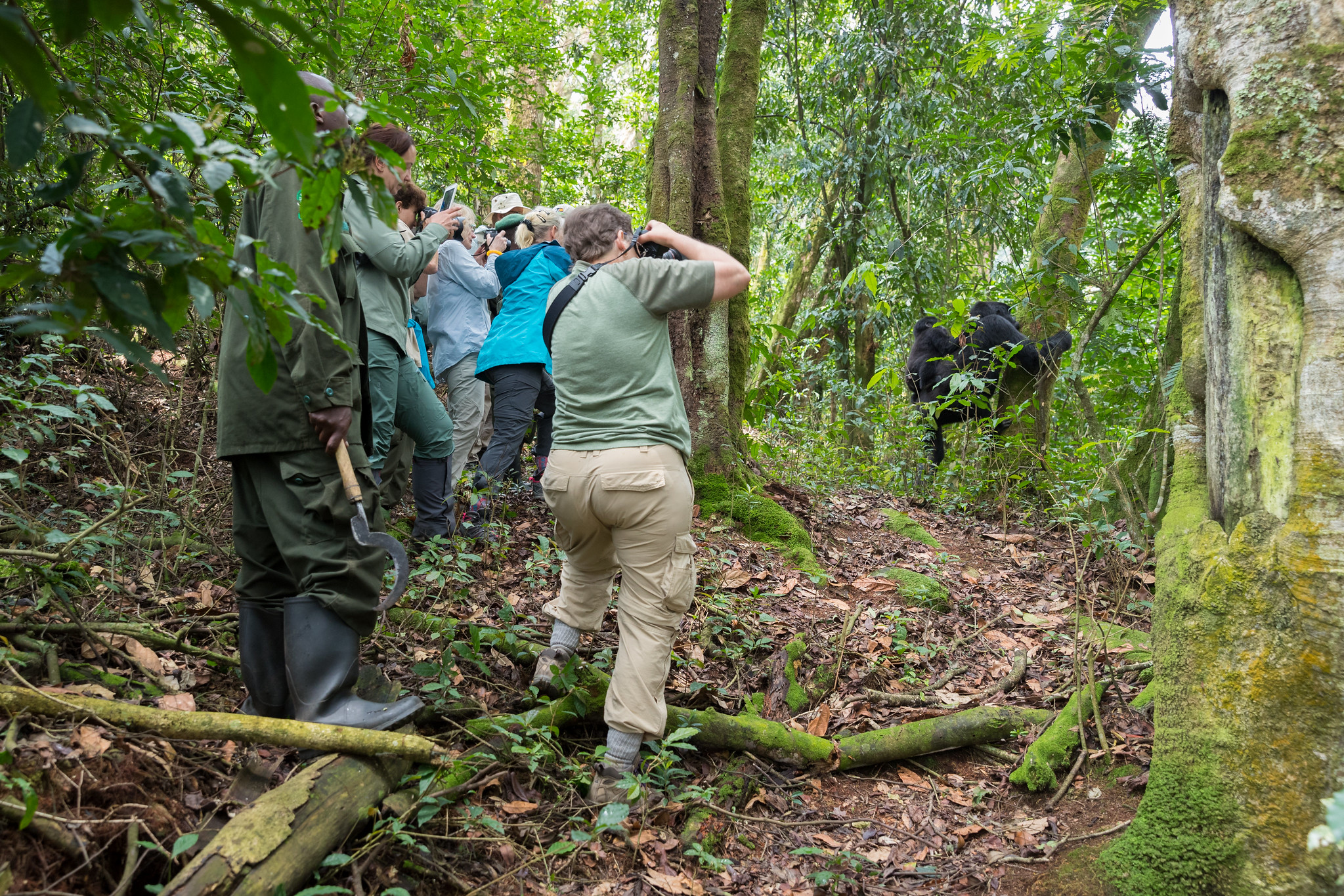
Choosing a Uganda and Congo Gorilla Safari allows travelers to experience two of Africa’s most remarkable gorilla trekking destinations within one seamless adventure. Rather than limiting your journey to a single park, this safari introduces you to multiple gorilla habitats, diverse landscapes, distinct trekking experiences, and a broader understanding of East Africa’s incredible biodiversity.
One of the biggest reasons travelers choose this itinerary is the opportunity to see different gorilla subspecies. Uganda is internationally renowned for mountain gorilla trekking in Bwindi Impenetrable National Park and Mgahinga Gorilla National Park, while Congo offers the rare chance to encounter both mountain gorillas in Virunga National Park and eastern lowland gorillas in Kahuzi-Biega National Park. Experiencing both provides a deeper appreciation of gorilla diversity and conservation.
The landscapes themselves make this safari extraordinary. Uganda’s mist-covered forests, rolling hills, waterfalls, and bamboo vegetation contrast beautifully with Congo’s volcanic mountains, lava fields, dense lowland rainforests, and dramatic wilderness. Each destination presents unique hiking conditions, photography opportunities, and unforgettable scenery.
Travelers also benefit from greater itinerary flexibility. Gorilla trekking can easily be combined with chimpanzee tracking in Kibale Forest, golden monkey tracking in Mgahinga, Nyiragongo Volcano hiking, birdwatching, cultural village visits, community tourism, and wildlife safaris in Uganda’s famous savannah parks. This creates a safari that goes beyond gorillas to showcase the incredible natural diversity of the Albertine Rift.
Another major advantage is exclusivity. Compared to many traditional safari destinations, gorilla trekking operates under strict permit limits that allow only a small number of visitors to meet each gorilla family every day. This creates intimate wildlife encounters while minimizing disturbance to the gorillas and supporting long-term conservation.
A Uganda and Congo Gorilla Safari also supports local communities and conservation programs. Gorilla permit revenues contribute directly to wildlife protection, anti-poaching initiatives, habitat preservation, ranger operations, scientific research, and community development projects surrounding the parks. Every safari therefore contributes to safeguarding one of the world’s most endangered great apes.
Whether you seek adventure, wildlife photography, luxury travel, conservation experiences, or a once-in-a-lifetime African journey, combining Uganda and Congo offers greater diversity, richer experiences, and unforgettable memories than visiting either destination alone.
Uganda vs Congo Gorilla Trekking at a Glance
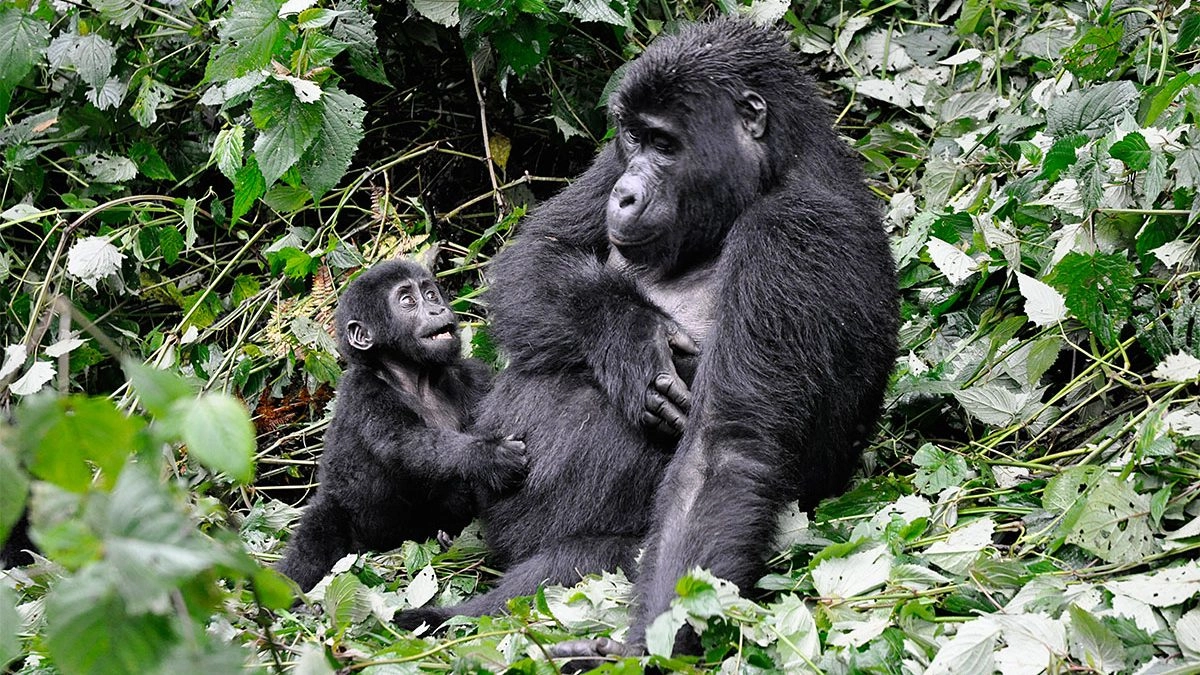
Both Uganda and Congo offer exceptional gorilla trekking experiences, yet each destination provides distinct advantages that appeal to different types of travelers. Understanding these differences helps visitors choose the itinerary that best matches their interests, travel style, budget, and adventure level.
Uganda is internationally recognized for its well-developed tourism infrastructure, reliable conservation management, and large population of habituated mountain gorilla families. Bwindi Impenetrable National Park alone protects nearly half of the world’s remaining mountain gorillas, while Mgahinga Gorilla National Park offers a quieter trekking experience within the scenic Virunga Mountains. Uganda is ideal for travelers seeking established lodges, excellent road networks, and opportunities to combine gorilla trekking with chimpanzee tracking and traditional wildlife safaris.
Congo delivers a more adventurous and less crowded experience. Virunga National Park offers mountain gorilla trekking in one of Africa’s oldest national parks, while Kahuzi-Biega National Park is globally famous for eastern lowland gorillas, a species found nowhere else in the wild. Travelers looking for unique primate encounters, dramatic volcanic scenery, and remote wilderness often find Congo especially rewarding.
The trekking environments also differ significantly. Uganda’s hikes typically pass through steep hillsides, ancient rainforest, thick vegetation, and high-altitude terrain, while Congo combines volcanic forests, bamboo zones, lava landscapes, and expansive lowland rainforest. Every trek is guided by experienced rangers who monitor gorilla movements daily to maximize visitor success.
Accommodation choices vary across both countries. Uganda offers an extensive range of budget, midrange, luxury, and ultra-luxury safari lodges close to trekking sectors. Congo has fewer accommodation options but provides authentic wilderness experiences that appeal to adventurous travelers seeking remote destinations.
For visitors with additional time, combining Uganda and Congo creates the most comprehensive gorilla safari available in Africa. Travelers can experience mountain gorillas in Uganda, eastern lowland gorillas in Congo, breathtaking volcanic landscapes, rainforest ecosystems, and rich cultural encounters within a single expertly organized itinerary. This combination delivers unmatched diversity, exceptional wildlife viewing, and an unforgettable conservation-focused safari unlike anywhere else on the continent.
Where to See Gorillas on a Uganda and Congo Safari
A Uganda and Congo Gorilla Safari gives travelers access to some of the most important gorilla habitats in Africa. This journey can include mountain gorillas in Uganda’s misty highland forests, mountain gorillas in Congo’s volcanic Virunga landscapes, and eastern lowland gorillas in Congo’s deep rainforest ecosystems. Few safari combinations offer this level of primate diversity, making Uganda and Congo one of the most rewarding routes for travelers who want a deeper gorilla trekking experience.
The main gorilla destinations on a Uganda and Congo Safari are Bwindi Impenetrable National Park, Mgahinga Gorilla National Park, Virunga National Park, and Kahuzi-Biega National Park. Each park offers a different landscape, trekking style, gorilla experience, and safari atmosphere. Uganda is best known for reliable mountain gorilla trekking, well-developed safari logistics, and a wide choice of lodges. Congo offers a wilder, more adventurous experience with both mountain gorillas and eastern lowland gorillas.
Choosing where to see gorillas depends on your travel interests, budget, fitness level, time available, and preferred safari style. Travelers who want the highest number of gorilla families and flexible permit availability often choose Bwindi. Those who prefer a quieter, scenic gorilla trek within the Virunga Volcanoes may choose Mgahinga. Adventurous travelers interested in Congo’s legendary conservation story may consider Virunga, while those who want to see the rare eastern lowland gorillas should include Kahuzi-Biega National Park.
Bwindi Impenetrable National Park
Bwindi Impenetrable National Park is the most famous gorilla trekking destination in Uganda and one of the best places in the world to see mountain gorillas in their natural habitat. Located in southwestern Uganda, Bwindi is a UNESCO World Heritage Site known for its ancient rainforest, steep hills, misty valleys, waterfalls, rich birdlife, and exceptional biodiversity. The park protects a large population of mountain gorillas, making it a key highlight on any Uganda and Congo Gorilla Safari.
Gorilla trekking in Bwindi takes place across different trekking sectors, including Buhoma, Ruhija, Rushaga, and Nkuringo. Each sector offers a unique experience. Buhoma is one of the most established sectors, with excellent lodge options and easier access from Queen Elizabeth National Park. Ruhija is quieter and ideal for travelers who enjoy scenic highland views and birdwatching. Rushaga has several habituated gorilla families and is popular for travelers entering Uganda from Rwanda. Nkuringo is known for dramatic landscapes, challenging treks, and rewarding gorilla encounters.
Bwindi is especially suitable for travelers who want flexibility. Because the park has multiple trekking sectors and several habituated gorilla families, it offers more options when planning permits, accommodation, and safari routes. This makes it easier to design short, midrange, luxury, and extended Uganda and Congo Gorilla Safari itineraries. Travelers can also combine Bwindi with Queen Elizabeth National Park, Lake Bunyonyi, Kibale Forest, Mgahinga Gorilla National Park, or onward travel to Congo.
The trekking experience in Bwindi is deeply immersive. Trails pass through thick rainforest, tangled vegetation, bamboo zones, muddy slopes, and high-altitude forest paths. The trek may take a few hours or most of the day depending on the location of the gorilla family. Once the gorillas are found, visitors spend one unforgettable hour watching them feed, rest, groom, play, and interact under the guidance of professional rangers and trackers.
Bwindi is ideal for first-time gorilla trekkers, photographers, conservation travelers, honeymooners, families with older children, and visitors who want a well-organized gorilla trekking experience. Its combination of strong conservation management, diverse accommodation, experienced guides, and breathtaking scenery makes it one of the strongest anchor destinations for a Uganda and Congo Gorilla Safari.
Mgahinga Gorilla National Park
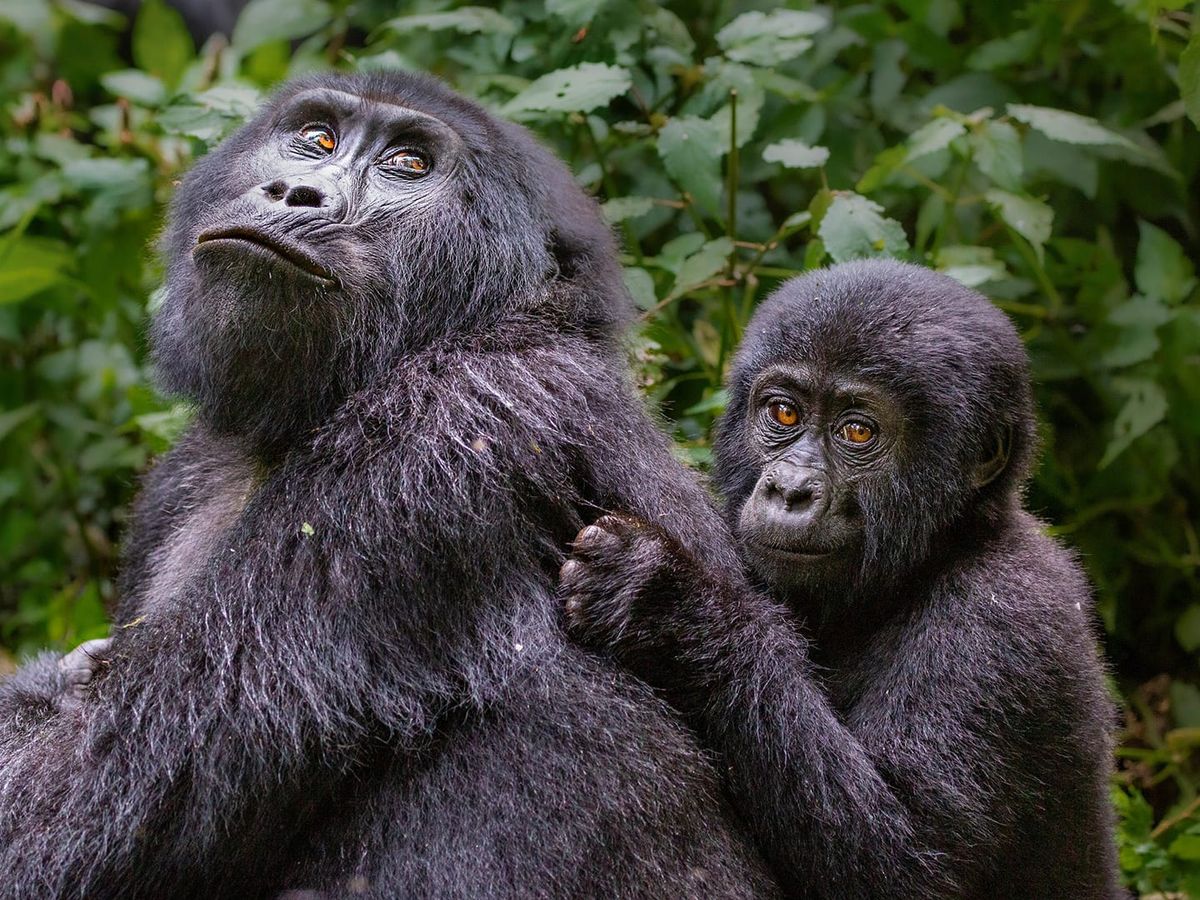
Mgahinga Gorilla National Park is Uganda’s smallest national park, but it offers one of the most scenic and intimate gorilla trekking experiences in East Africa. Located in the far southwestern corner of Uganda, Mgahinga forms part of the larger Virunga Conservation Area, which extends across Uganda, Rwanda, and Congo. The park is dominated by three spectacular volcanoes: Mount Muhabura, Mount Gahinga, and Mount Sabyinyo.
Mgahinga is an excellent destination for travelers who want a quieter alternative to Bwindi. The park is less crowded, beautifully scenic, and rich in volcanic landscapes, bamboo forests, montane woodland, and open alpine views. Its gorilla trekking experience feels peaceful and exclusive, making it a strong choice for travelers who prefer fewer tourists and a more private atmosphere.
The park is home to the famous Nyakagezi gorilla family, a habituated mountain gorilla group known for its stability and impressive silverbacks. Trekking this family offers visitors a rewarding opportunity to observe mountain gorillas in a dramatic volcanic setting. Because Mgahinga lies within the Virunga range, the scenery feels different from Bwindi’s dense rainforest. The vegetation is often more open in some areas, which can create excellent photography opportunities.
Mgahinga is also one of the best places in Uganda to combine gorilla trekking with golden monkey tracking. Golden monkeys live in the park’s bamboo forests and offer a lively, colorful primate experience that pairs beautifully with gorilla trekking. Travelers can also enjoy volcano hiking, birdwatching, Batwa cultural experiences, nature walks, and views across Uganda, Rwanda, and Congo.
For a Uganda and Congo Gorilla Safari, Mgahinga is strategically located near the borders with Rwanda and Congo, making it useful for cross-border itineraries. Travelers can start from Kigali, cross into Uganda through Cyanika or Gatuna, trek gorillas in Mgahinga or Bwindi, and continue toward Congo depending on the route and travel conditions.
Mgahinga is best for travelers who want scenic beauty, fewer crowds, volcanic landscapes, golden monkeys, and a more intimate mountain gorilla trekking experience. Although it has fewer gorilla trekking options than Bwindi, its peaceful atmosphere and dramatic setting make it one of Uganda’s hidden safari treasures.
Virunga National Park
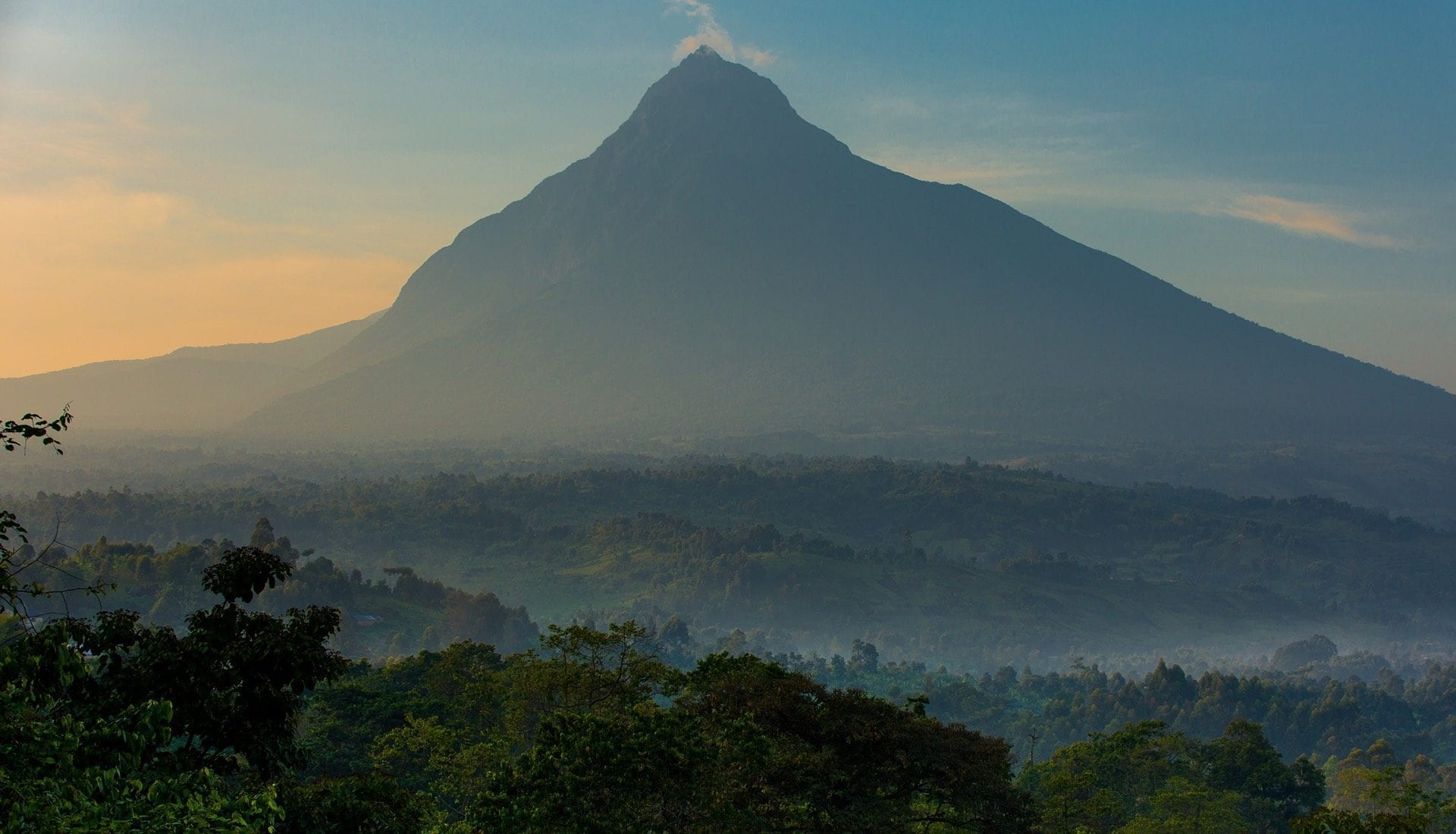
Virunga National Park is one of Africa’s most legendary conservation areas and one of the most dramatic gorilla trekking destinations on the continent. Located in eastern Democratic Republic of Congo, Virunga is Africa’s oldest national park and forms part of the greater Virunga Massif shared by Congo, Rwanda, and Uganda. The park is famous for mountain gorillas, active volcanoes, lava plains, montane forests, savannahs, wetlands, and extraordinary biodiversity.
For travelers seeking a more adventurous Uganda and Congo Gorilla Safari, Virunga offers a completely different experience from Uganda. The park’s gorilla trekking takes place in a volcanic landscape shaped by the Virunga Mountains, including Mount Nyiragongo and Mount Nyamulagira. The scenery is wild, powerful, and deeply atmospheric, giving visitors a strong sense of remote African wilderness.
Mountain gorilla trekking in Virunga allows travelers to see gorillas in Congo’s section of the Virunga Conservation Area. The treks are guided by skilled rangers who monitor gorilla families and lead visitors through forested slopes in search of habituated groups. The experience is often quieter than more established destinations, which appeals to travelers looking for exclusivity and adventure.
Virunga is also important because of its conservation story. The park has faced serious challenges over the years, yet its rangers and conservation teams continue working to protect gorillas, wildlife, forests, and local communities. For many visitors, trekking gorillas in Virunga is not only a wildlife experience but also a meaningful connection to one of Africa’s most courageous conservation landscapes.
A Uganda and Congo Gorilla Safari that includes Virunga can be combined with Bwindi, Mgahinga, Lake Bunyonyi, Queen Elizabeth National Park, or Rwanda depending on the itinerary. Some travelers may also add Nyiragongo Volcano hiking when conditions and park operations allow. This makes Virunga especially attractive to adventure travelers, photographers, conservation supporters, and visitors who want a safari beyond the ordinary.
Because Virunga lies in a region where travel conditions can change, visitors should always plan through experienced operators who monitor park operations, border requirements, permits, security updates, and transport logistics. When properly organized, Virunga can become one of the most powerful and memorable sections of a Uganda and Congo Gorilla Safari.
Kahuzi-Biega National Park
Kahuzi-Biega National Park is one of the most important gorilla destinations in Congo and the best place to see eastern lowland gorillas, also known as Grauer’s gorillas. Located near Bukavu in eastern Democratic Republic of Congo, the park is a UNESCO World Heritage Site known for its vast rainforest, volcanic mountains, lowland habitats, waterfalls, and rare wildlife. Unlike Uganda and Virunga, which focus mainly on mountain gorillas, Kahuzi-Biega offers travelers the chance to encounter a different gorilla subspecies.
Eastern lowland gorillas are the largest gorillas in the world. They are generally bigger than mountain gorillas, with powerful bodies, broad chests, large hands, and impressive silverbacks. Seeing them in Kahuzi-Biega adds a unique dimension to a Uganda and Congo Gorilla Safari because travelers can compare two different gorilla subspecies within one journey. This makes the safari especially valuable for primate lovers, researchers, photographers, and travelers seeking rare wildlife encounters.
The trekking experience in Kahuzi-Biega is usually different from Bwindi or Mgahinga. The terrain can be less steep in some areas, especially compared to Uganda’s highland forests, though conditions depend on the location of the gorilla family and the forest environment. Treks move through dense vegetation, tropical rainforest, and quiet forest trails guided by experienced rangers. Once the gorillas are found, visitors spend time observing their feeding behavior, family structure, movement, and social interactions.
Kahuzi-Biega is also rewarding because it receives fewer visitors than many better-known gorilla parks. This gives the experience a more remote and exclusive feel. Travelers who include Kahuzi-Biega often enjoy a deeper sense of wilderness and a stronger feeling of discovery. The park is ideal for those who want something different from the classic mountain gorilla trek.
A safari to Kahuzi-Biega usually connects well with Bukavu, Lake Kivu, Rwanda’s Rusizi border, or longer Congo itineraries. It can also be combined with Uganda gorilla trekking for travelers who want to experience both mountain gorillas and eastern lowland gorillas. This combination creates one of the richest primate safaris in Africa.
Kahuzi-Biega is best for adventurous travelers, wildlife specialists, conservation-minded visitors, photographers, and anyone who wants a rare gorilla trekking experience beyond the usual safari routes. Adding this park to a Uganda and Congo Gorilla Safari transforms the journey from a standard gorilla holiday into a deeper exploration of Africa’s great ape diversity.
Types of Gorillas You Will Encounter
One of the greatest advantages of a Uganda and Congo Gorilla Safari is the opportunity to encounter two of the world’s most remarkable gorilla subspecies. While many travelers visit Africa simply to see mountain gorillas, combining Uganda and Congo allows visitors to expand their safari by experiencing both mountain gorillas and the rare eastern lowland gorillas, also known as Grauer’s gorillas.
Although all gorillas belong to the same great ape family, these subspecies differ in appearance, habitat, behavior, body size, distribution, and ecological adaptations. Understanding these differences makes every gorilla encounter even more rewarding and helps travelers appreciate the remarkable biodiversity of Central and East Africa.
Mountain gorillas inhabit high-altitude montane forests characterized by cool temperatures, bamboo vegetation, and mist-covered mountains. Eastern lowland gorillas, on the other hand, occupy tropical lowland rainforests where dense vegetation, warmer climates, and vast forest ecosystems provide ideal conditions for the world’s largest gorilla subspecies.
Both species are critically important for global conservation efforts. Gorilla trekking not only provides unforgettable wildlife encounters but also contributes directly to protecting these endangered primates through conservation funding, ranger patrols, habitat protection, scientific research, and community development.
A Uganda and Congo Gorilla Safari offers one of the few opportunities anywhere in the world to compare these magnificent primates within a single safari, creating an educational and deeply immersive wildlife experience.
Mountain Gorillas
Mountain gorillas are among the rarest and most iconic wildlife species on Earth. Found only within the Virunga Mountains and Uganda’s Bwindi Impenetrable National Park, these gentle giants have become the symbol of African conservation and one of the continent’s most sought-after wildlife experiences.
On a Uganda and Congo Gorilla Safari, mountain gorillas can be encountered in Bwindi Impenetrable National Park, Mgahinga Gorilla National Park, and Virunga National Park. These protected forests form the last remaining natural habitat for the world’s entire wild mountain gorilla population.
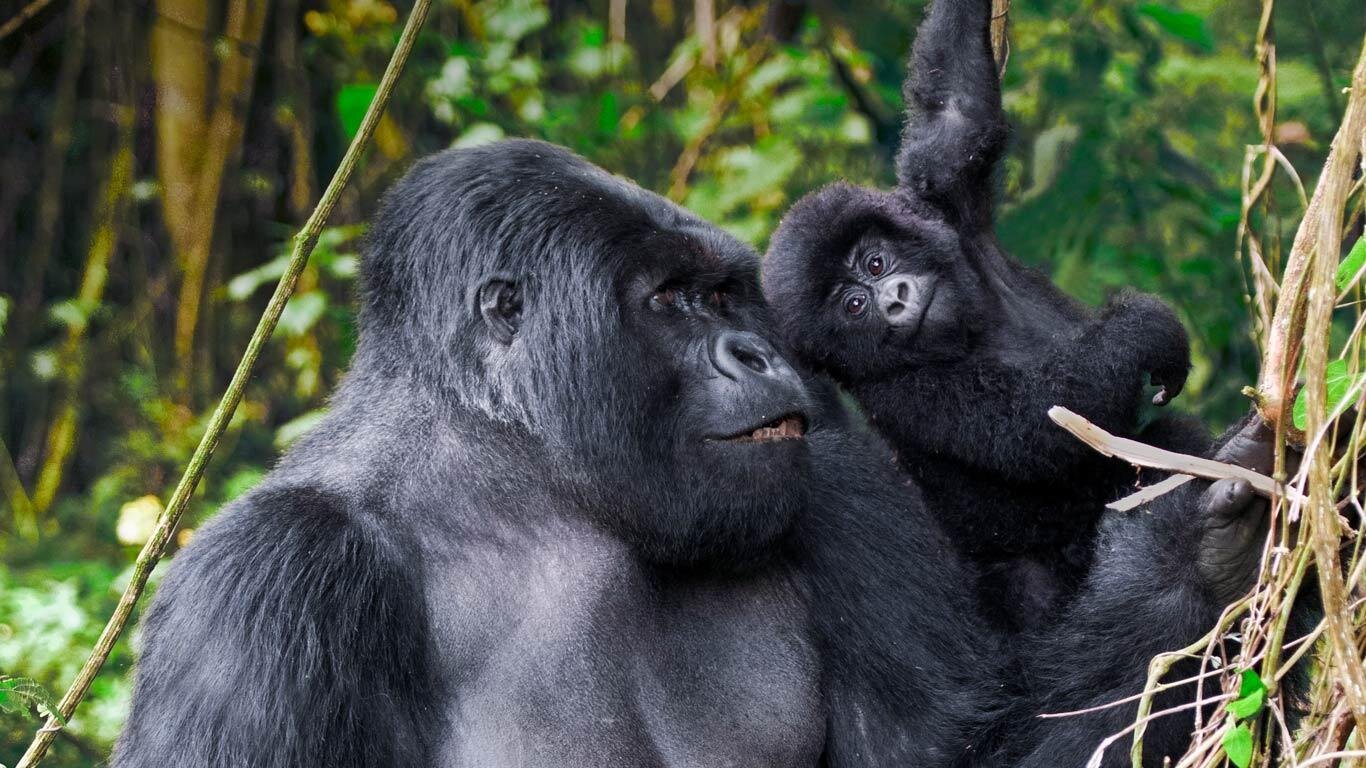
Mountain gorillas possess thick black fur that helps them survive the cool temperatures of high-altitude forests. Adult silverbacks can weigh over 180 kilograms and serve as leaders of their family groups, making decisions about movement, feeding, protection, and social interactions. Their calm leadership and protective behavior create fascinating opportunities for observation during gorilla trekking.
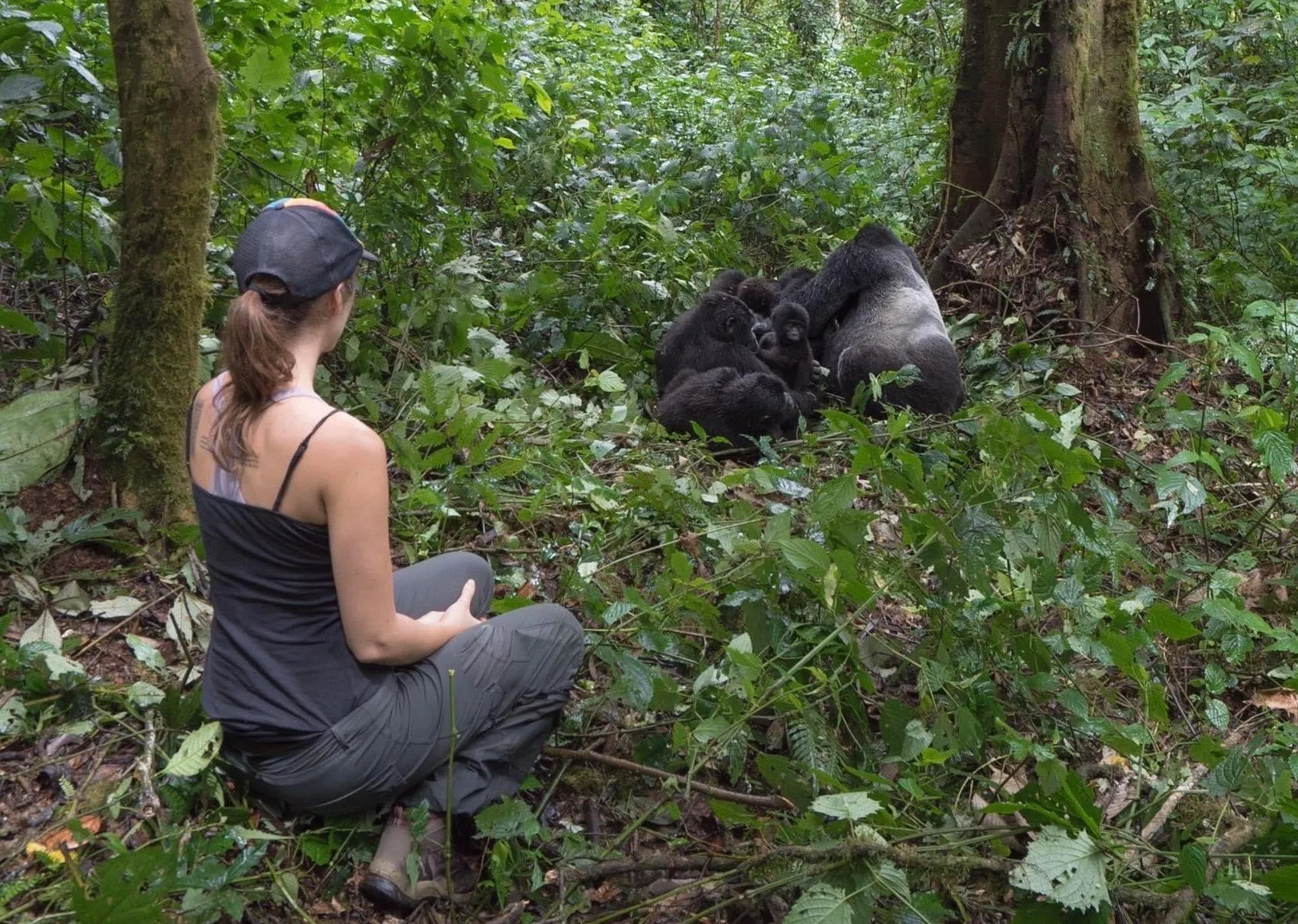
Mountain gorillas live in stable family groups consisting of silverbacks, adult females, juveniles, blackbacks, and playful infants. During the one-hour gorilla encounter, visitors frequently witness grooming, feeding, resting, climbing, vocal communication, and social bonding. Young gorillas often provide the most entertaining moments as they chase one another, swing through vegetation, and interact with curious energy.
Unlike many wild animals, mountain gorillas show remarkable intelligence and emotional expression. Their facial expressions, eye contact, communication, and close family relationships often remind visitors of human behavior, making every trek an emotional and unforgettable experience.
Their diet consists primarily of leaves, bamboo shoots, vines, stems, roots, wild celery, fruits, and other forest vegetation. Because food is abundant throughout their habitat, mountain gorillas rarely need to travel long distances each day, allowing researchers and trackers to monitor habituated families effectively.
Years of conservation have helped mountain gorilla numbers gradually increase, making them one of the world’s greatest conservation success stories. Nevertheless, they remain endangered and continue to face threats from habitat loss, disease transmission, human encroachment, and climate change. Every gorilla permit purchased contributes directly to protecting these extraordinary animals and the forests they depend upon.
Eastern Lowland Gorillas (Grauer’s Gorillas)
Eastern lowland gorillas, scientifically known as Grauer’s gorillas, represent the largest gorilla subspecies in the world. They are found exclusively in the eastern Democratic Republic of Congo, making them one of Africa’s rarest and most geographically restricted great apes.
Unlike mountain gorillas, eastern lowland gorillas inhabit tropical lowland rainforests where warmer temperatures, taller forest canopies, and extensive vegetation create a completely different ecosystem. On a Uganda and Congo Gorilla Safari, the best place to encounter these remarkable primates is Kahuzi-Biega National Park.
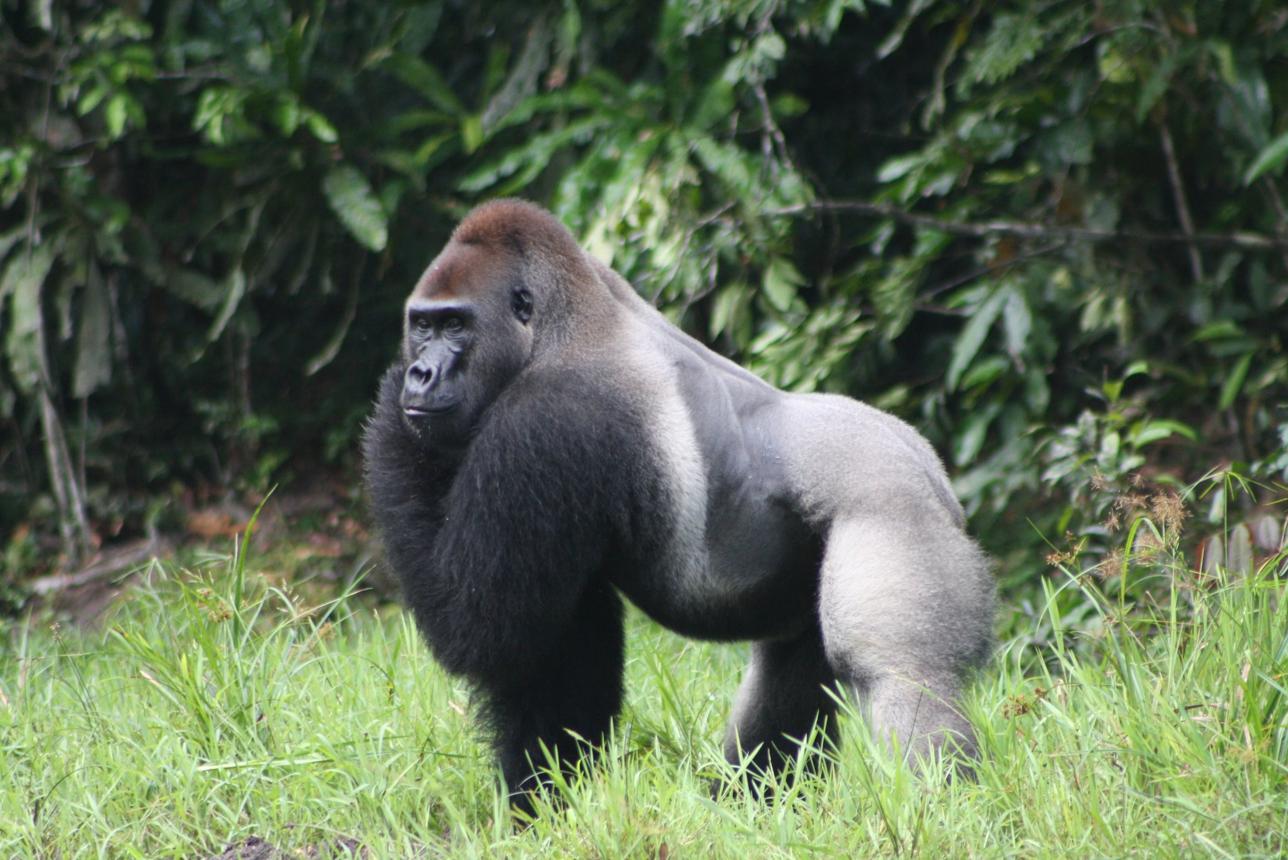
Grauer’s gorillas are noticeably larger than mountain gorillas. Adult males develop massive muscular bodies, broad chests, long arms, powerful shoulders, and wide hands that help them move through dense forest vegetation. Their shorter, slightly less dense fur reflects adaptation to lower elevations and warmer rainforest climates.
Eastern lowland gorillas display many of the same fascinating social behaviors as mountain gorillas. They live in cohesive family groups led by dominant silverbacks who guide daily activities, protect younger members, and maintain group stability. Visitors frequently observe mothers caring for infants, juveniles playing together, adults feeding peacefully, and silverbacks calmly supervising their families.
Their diet is broader than that of mountain gorillas and includes leaves, fruits, bark, stems, seeds, roots, insects, and numerous rainforest plant species. Because food resources are distributed differently throughout the lowland rainforest, Grauer’s gorillas may travel greater distances while foraging.
A visit to Kahuzi-Biega offers travelers the rare opportunity to compare the behavior, body structure, habitat, and ecology of eastern lowland gorillas with mountain gorillas encountered in Uganda. This makes a combined Uganda and Congo Gorilla Safari one of the most comprehensive gorilla experiences available anywhere in Africa.
Like mountain gorillas, eastern lowland gorillas remain critically endangered due to habitat destruction, illegal mining, armed conflict, poaching, and human encroachment. Responsible tourism plays an increasingly important role in supporting conservation programs that protect these magnificent primates and the forests they call home.
Gorilla Trekking Experiences in Uganda
Uganda is internationally recognized as one of the world’s finest destinations for gorilla trekking. With nearly half of the global mountain gorilla population living within its protected forests, Uganda offers visitors an exceptional combination of biodiversity, conservation success, well-developed tourism infrastructure, and unforgettable wildlife encounters. For many travelers, Uganda forms the centerpiece of a Uganda and Congo Gorilla Safari.
Gorilla trekking in Uganda takes place in Bwindi Impenetrable National Park and Mgahinga Gorilla National Park, both located in the country’s scenic southwestern highlands. Each park provides a distinct trekking experience while maintaining the same conservation standards and regulations established to protect endangered mountain gorillas.
Every trekking day begins early in the morning with a detailed briefing by Uganda Wildlife Authority rangers. Visitors learn about gorilla behavior, trekking procedures, conservation efforts, photography guidelines, health precautions, and safety rules before being assigned to a specific habituated gorilla family based on fitness levels and permit allocation.
Accompanied by experienced guides, trackers, and armed ranger escorts, visitors enter ancient rainforest in search of mountain gorillas. Skilled trackers move ahead of each group, following fresh nests, feeding sites, broken vegetation, footprints, and vocalizations until the gorilla family is located. Trek durations vary considerably, lasting anywhere from one hour to most of the day depending on where the gorillas have traveled.
The journey itself is an essential part of the experience. Trekkers walk beneath towering rainforest trees, cross small streams, climb forested ridges, navigate muddy trails, and pass through dense vegetation filled with colorful birds, butterflies, orchids, and other forest wildlife. Every trek reveals new perspectives of Uganda’s remarkable rainforest ecosystem.
The highlight comes when visitors first see the gorillas. As the forest suddenly opens and the family appears only a few meters away, the experience becomes deeply emotional. During the permitted one-hour observation period, visitors quietly watch gorillas feed, groom, nurse infants, interact socially, rest beneath trees, or curiously observe the human visitors. The close proximity, calm atmosphere, and intelligence displayed by the gorillas create memories that last a lifetime.
Uganda also offers one of the widest selections of gorilla trekking accommodations in Africa. Visitors can choose from budget camps, comfortable midrange lodges, luxury eco-lodges, and ultra-premium safari properties situated close to each trekking sector. Many lodges provide panoramic forest views, excellent cuisine, spa facilities, cultural entertainment, and personalized service that enhances the overall safari experience.
Another advantage of gorilla trekking in Uganda is the opportunity to combine it with numerous other safari activities. Travelers can continue to Kibale Forest for chimpanzee tracking, visit Queen Elizabeth National Park for Big Five wildlife viewing and boat cruises, relax at Lake Bunyonyi, explore Mgahinga’s volcanoes, track golden monkeys, or experience authentic Batwa cultural encounters. These combinations make Uganda an exceptionally diverse safari destination before continuing into Congo for further gorilla adventures.
Uganda’s strong conservation record, experienced ranger teams, reliable tourism infrastructure, multiple habituated gorilla families, and spectacular rainforest scenery make it one of the most rewarding destinations for mountain gorilla trekking. Whether it is your first gorilla safari or part of a larger Uganda and Congo Gorilla Safari, trekking in Uganda delivers an extraordinary wildlife experience that consistently ranks among the greatest natural encounters on Earth.
Gorilla Trekking Experiences in Congo
A Uganda and Congo Gorilla Safari becomes even more extraordinary when it extends into the Democratic Republic of Congo, one of Africa’s last great wilderness destinations. Congo offers a gorilla trekking experience that is distinctly different from Uganda, combining remote rainforest adventures, dramatic volcanic landscapes, fewer visitors, and the rare opportunity to encounter both mountain gorillas and eastern lowland gorillas within the same country.
Unlike many traditional safari destinations, gorilla trekking in Congo feels raw, authentic, and deeply adventurous. The forests are less visited, the trails are quieter, and the wilderness remains remarkably untouched. This creates a sense of exploration that appeals to travelers seeking experiences beyond conventional safari routes.
Congo offers two exceptional gorilla trekking destinations. Virunga National Park is famous for mountain gorillas living on the slopes of the Virunga Volcanoes, while Kahuzi-Biega National Park protects the world’s largest population of habituated eastern lowland gorillas. Visiting both parks provides one of Africa’s richest primate experiences.
Every trekking day begins with an early morning briefing by experienced park rangers. Visitors receive guidance on gorilla behavior, conservation, photography, health regulations, and trekking safety before being assigned to a habituated gorilla family. Small trekking groups minimize disturbance to the gorillas while creating intimate wildlife encounters.
The trek itself is an unforgettable adventure. Visitors hike through dense rainforest, bamboo forests, volcanic slopes, moss-covered trails, giant ferns, towering trees, and pristine wilderness while trackers search for fresh signs of gorilla activity. Along the way, travelers may encounter colorful birds, monkeys, butterflies, forest elephants, and countless endemic plant species.
Once the gorilla family is located, visitors spend one remarkable hour observing these gentle giants in complete silence. Watching silverbacks supervise their families, mothers care for infants, juveniles play among the vegetation, and adults peacefully feed creates an emotional wildlife encounter unlike any other on Earth.
Virunga National Park offers mountain gorilla trekking within spectacular volcanic scenery. The park’s rugged terrain, lava fields, ancient forests, and proximity to Mount Nyiragongo create one of Africa’s most dramatic trekking environments. For adventurous travelers, Virunga can also be combined with volcano hiking when park operations permit.
Kahuzi-Biega National Park offers a completely different experience. Here, visitors track eastern lowland gorillas through vast tropical rainforest. These impressive primates are larger than mountain gorillas and live within lower elevation forests that support an incredible diversity of wildlife. Seeing Grauer’s gorillas adds a unique dimension to a Uganda and Congo Gorilla Safari that cannot be experienced elsewhere.
Because tourism operations in Congo can occasionally change due to conservation or security considerations, travelers should always organize their safari through experienced operators who monitor park accessibility, border crossings, permits, accommodation, and transportation. Proper planning ensures a smooth, safe, and rewarding gorilla trekking adventure.
For travelers seeking exclusivity, adventure, and exceptional primate encounters, Congo offers one of Africa’s most remarkable wildlife experiences and perfectly complements gorilla trekking in Uganda.
Gorilla Trekking Permit Costs
A gorilla trekking permit is the most important requirement for anyone planning a Uganda and Congo Gorilla Safari. Every visitor must hold a valid permit before entering the forest to track a habituated gorilla family. These permits are issued by the respective wildlife authorities and help regulate visitor numbers while generating essential funding for conservation, anti-poaching operations, ranger salaries, scientific research, habitat protection, and community development.
Because gorilla trekking is carefully managed, only a limited number of permits are available each day for every habituated gorilla family. This exclusivity not only protects the gorillas from excessive human interaction but also creates a more intimate wildlife experience for visitors.
Permit fees differ between Uganda and Congo. Uganda is internationally recognized for its highly organized conservation system and extensive gorilla trekking infrastructure, while Congo offers one of the most affordable gorilla trekking experiences in Africa. Regardless of the destination, every permit allows visitors to spend one unforgettable hour with a habituated gorilla family after successfully locating them in the forest.
Permit availability can become limited during the peak travel seasons from June to September and December to February. Travelers planning a Uganda and Congo Gorilla Safari are strongly encouraged to reserve permits several months in advance to secure their preferred trekking dates.
Uganda Gorilla Permit
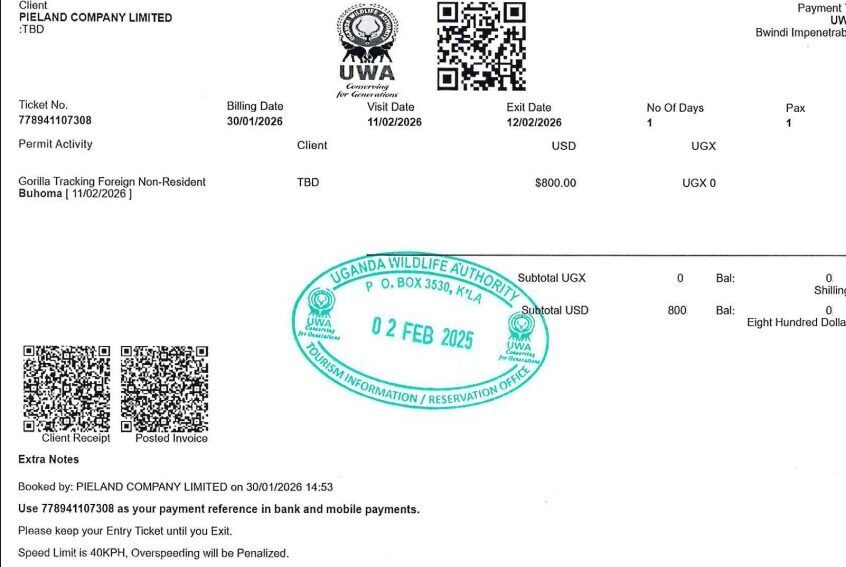
Uganda issues gorilla trekking permits for Bwindi Impenetrable National Park and Mgahinga Gorilla National Park through the Uganda Wildlife Authority. The permit grants visitors one hour with a habituated mountain gorilla family under the supervision of professional ranger guides and trackers.
The standard foreign non-resident permit costs USD 800 per person. The permit includes park entry for gorilla trekking, ranger guiding services, gorilla tracking, security provided by armed ranger escorts, and one hour of observing the gorillas in their natural habitat.
Uganda remains one of Africa’s best-value gorilla trekking destinations because it combines world-class conservation, numerous habituated gorilla families, excellent accommodation choices, and opportunities to combine gorilla trekking with chimpanzee tracking, wildlife safaris, birdwatching, and cultural experiences.
Because permits are allocated to specific trekking sectors and gorilla families, early booking offers greater flexibility when choosing travel dates, accommodation, and preferred trekking regions.
Congo Gorilla Permit
Congo offers one of the most affordable gorilla trekking permits in Africa. Visitors can purchase permits for mountain gorilla trekking in Virunga National Park and eastern lowland gorilla trekking in Kahuzi-Biega National Park.
The standard permit costs USD 400 per person, making Congo an attractive destination for travelers seeking a more adventurous gorilla trekking experience at a lower permit cost. The permit allows one hour with a habituated gorilla family under the supervision of experienced park rangers and trackers.
Although the permit price is lower than Uganda’s, travelers should also consider transportation, accommodation, border crossings, and current park operating conditions when planning their safari. Working with an experienced safari company helps ensure permits, logistics, and travel arrangements are organized efficiently.
For travelers wishing to experience both mountain gorillas and eastern lowland gorillas during one journey, Congo provides a unique opportunity unavailable anywhere else in Africa.
Uganda vs Congo Gorilla Permit Comparison
| Feature | Uganda | Congo (DRC) |
|---|---|---|
| Gorilla Species | Mountain Gorillas | Mountain Gorillas & Eastern Lowland Gorillas |
| Main Trekking Parks | Bwindi Impenetrable National Park, Mgahinga Gorilla National Park | Virunga National Park, Kahuzi-Biega National Park |
| Standard Permit Price (Foreign Non-Resident) | USD 800 | USD 400 |
| Time with Gorillas | 1 Hour | 1 Hour |
| Permit Issued By | Uganda Wildlife Authority (UWA) | Relevant Congolese Wildlife Authorities / Park Management |
| Daily Permit Availability | Limited | Limited |
| Advance Booking Recommended | Yes (3–6+ months) | Yes |
| Best For | Well-developed tourism, multiple gorilla families, easy safari combinations | Budget-conscious adventure travelers and visitors seeking eastern lowland gorillas |
| Accommodation Options | Extensive Budget, Midrange & Luxury | More Limited but Growing |
| Safari Style | Comfortable, diverse and conservation-focused | Remote, adventurous and wilderness-focused |
Best Time for a Uganda and Congo Gorilla Safari
A Uganda and Congo Gorilla Safari can be enjoyed throughout the year because mountain gorillas and eastern lowland gorillas remain within their natural forest habitats regardless of the season. Unlike seasonal wildlife migrations, gorilla trekking is available every month, allowing travelers to choose travel dates based on weather conditions, photography preferences, permit availability, and overall safari experiences.
Uganda and eastern Democratic Republic of Congo experience a tropical climate with two relatively dry seasons and two rainy seasons. While weather patterns can vary due to altitude and local conditions, gorilla trekking continues year-round under the guidance of experienced trackers and park rangers. Every season offers its own advantages, making there no single “bad” time to visit.
Many travelers prefer the dry months because forest trails are generally firmer and hiking conditions are more comfortable. Others deliberately travel during the rainy season to enjoy lush green landscapes, fewer tourists, softer lighting for photography, and increased lodge availability. Regardless of when you travel, encountering wild gorillas in their natural environment remains equally rewarding.
Planning well in advance is particularly important during the peak travel months, when gorilla permits and preferred lodges sell out quickly. Booking early provides greater flexibility for choosing trekking sectors, accommodation, and cross-border safari routes.
Dry Season
The dry season is widely considered the most popular time for a Uganda and Congo Gorilla Safari. The main dry periods typically occur from June to September and December to February, bringing relatively lower rainfall, clearer skies, and more comfortable trekking conditions.
Forest trails are generally less muddy, making hiking easier across the mountainous terrain of Bwindi, Mgahinga, Virunga, and Kahuzi-Biega. Although gorilla trekking still requires climbing steep slopes and walking through dense vegetation, the drier ground improves overall comfort for many visitors.
Wildlife photography is particularly rewarding during these months. Clearer skies allow more natural light to reach the forest, while reduced rainfall creates better visibility for landscape photography. Scenic views of the Virunga Volcanoes, Bwindi’s mist-covered valleys, and Congo’s tropical rainforests are often at their finest during the dry season.
Because this is also the busiest tourism period, gorilla trekking permits are in highest demand. Luxury lodges, safari camps, and popular trekking sectors frequently become fully booked months in advance. Travelers planning to visit during the dry season should reserve permits and accommodation as early as possible to secure their preferred itinerary.
Wet Season
The wet season generally occurs from March to May and October to November. Although rainfall becomes more frequent, gorilla trekking continues daily, and many experienced travelers intentionally choose these months because of the unique advantages they offer.
The forests become exceptionally lush, transforming the landscapes into vibrant shades of green. Mist drifting through ancient rainforest creates spectacular scenery, while waterfalls, flowering plants, and fresh vegetation enhance the beauty of every trek. These conditions produce some of the most dramatic photography opportunities of the year.
One of the biggest advantages of traveling during the wet season is the smaller number of visitors. Trekking groups are often quieter, creating a more intimate atmosphere when observing gorilla families. Accommodation availability is generally better, and some safari services may offer seasonal promotions depending on demand.
Rain can make trekking more physically demanding, especially on steep forest trails where mud and slippery vegetation require additional care. Waterproof hiking boots, rain jackets, gaiters, backpacks with rain covers, and trekking poles become especially valuable during this period. Fortunately, experienced guides adjust trekking pace according to trail conditions to ensure visitors enjoy a safe and memorable experience.
For travelers who appreciate quieter parks, dramatic rainforest scenery, and exceptional wildlife photography, the wet season offers one of the most rewarding times to experience a Uganda and Congo Gorilla Safari.
Sample Uganda and Congo Gorilla Safari Itineraries
A Uganda and Congo Gorilla Safari can be customized to suit different travel styles, budgets, and available vacation time. Whether you have only a few days for gorilla trekking or several weeks to explore East Africa’s extraordinary biodiversity, combining Uganda and Congo creates a safari filled with unforgettable wildlife encounters, breathtaking landscapes, and meaningful conservation experiences.
Below are sample itineraries designed to provide inspiration for planning your own Uganda and Congo Gorilla Safari.
5-Day Uganda and Congo Gorilla Safari
A five-day itinerary is ideal for travelers whose primary goal is to experience gorilla trekking in both Uganda and Congo within a limited timeframe. The safari typically begins in Kigali or southwestern Uganda before continuing to Bwindi Impenetrable National Park for mountain gorilla trekking. From there, travelers cross into eastern Congo to explore either Virunga National Park or Kahuzi-Biega National Park, depending on park accessibility and travel preferences.
Despite its shorter duration, this itinerary provides an exciting introduction to two remarkable gorilla destinations while showcasing the spectacular mountain scenery of the Albertine Rift Valley.
7-Day Uganda and Congo Gorilla Safari
A seven-day safari offers a more relaxed pace and allows visitors to experience gorilla trekking alongside additional wildlife and cultural attractions. Travelers often begin with gorilla trekking in Bwindi or Mgahinga before continuing into Congo for either mountain gorillas in Virunga or eastern lowland gorillas in Kahuzi-Biega.
Extra time allows opportunities to visit Batwa communities, enjoy scenic drives through southwestern Uganda, explore Lake Bunyonyi, photograph volcanic landscapes, and spend additional nights in luxury safari lodges. This itinerary balances adventure with comfort while providing a richer understanding of the region’s wildlife and cultures.
10-Day Uganda and Congo Gorilla Safari
A ten-day itinerary is one of the most comprehensive safari options for travelers seeking diverse wildlife experiences beyond gorilla trekking. In addition to visiting Uganda and Congo’s premier gorilla destinations, visitors can include chimpanzee tracking in Kibale Forest, wildlife viewing in Queen Elizabeth National Park, boat cruises along the Kazinga Channel, birdwatching excursions, and cultural interactions with local communities.
The Congo portion may include Virunga National Park, Kahuzi-Biega National Park, or both, depending on travel logistics. This extended itinerary provides ample time to appreciate different ecosystems while minimizing long travel days and maximizing wildlife viewing opportunities.
Luxury travelers often choose this itinerary because it allows extended stays at premium lodges and creates a more relaxed safari pace.
12-Day Uganda and Congo Gorilla Safari
The twelve-day Uganda and Congo Gorilla Safari represents the ultimate primate and wildlife adventure across two extraordinary countries. Designed for travelers who want to experience every major highlight, this itinerary combines mountain gorillas in Uganda, eastern lowland gorillas in Congo, chimpanzee trekking, savannah wildlife, scenic lakes, rainforest ecosystems, volcanic landscapes, and authentic cultural encounters.
Depending on travel conditions, visitors may include Bwindi Impenetrable National Park, Mgahinga Gorilla National Park, Virunga National Park, Kahuzi-Biega National Park, Kibale Forest National Park, Queen Elizabeth National Park, and Lake Bunyonyi within one seamless safari.
The additional days provide flexibility for photography, leisure, nature walks, luxury lodge experiences, and optional activities such as golden monkey tracking or volcano hiking. Rather than rushing between destinations, travelers have time to fully appreciate each park, creating a deeper connection with the wildlife, landscapes, and conservation efforts that make this region one of Africa’s greatest natural treasures.
For travelers seeking the most complete Uganda and Congo Gorilla Safari experience, the twelve-day itinerary offers the perfect combination of adventure, comfort, biodiversity, and unforgettable encounters with Africa’s magnificent great apes.
Cross-Border Travel for Uganda and Congo Gorilla Safari
One of the greatest advantages of a Uganda and Congo Gorilla Safari is the ability to explore two of Africa’s premier gorilla destinations within a single journey. Thanks to their shared border and close proximity of national parks, travelers can easily combine gorilla trekking in Uganda with wildlife adventures in the Democratic Republic of Congo. This creates an exceptional safari experience that includes mountain gorillas, eastern lowland gorillas, volcanic landscapes, ancient rainforests, and rich cultural encounters.
Most cross-border safaris are carefully planned to minimize travel time while maximizing wildlife experiences. Depending on your itinerary, travelers may begin in Entebbe, Kampala, Kigali, Goma, or Bukavu before crossing into the neighboring country. Popular routes connect Bwindi Impenetrable National Park and Mgahinga Gorilla National Park with Virunga National Park or Kahuzi-Biega National Park, allowing visitors to experience multiple gorilla habitats during one safari.
Crossing between Uganda and Congo is generally straightforward when all travel arrangements are organized in advance. Professional safari operators assist with border procedures, transportation, permits, accommodation, immigration requirements, and park logistics to ensure a smooth transition between countries. Travelers are advised to use official border posts and comply with all immigration and health regulations applicable at the time of travel.
Because entry requirements, border operating procedures, and health regulations can change, especially during regional public health events, visitors should always verify the latest travel requirements before departure. Travelers should also monitor official government advisories and work with experienced safari companies that receive regular operational updates.
Border Crossing Requirements for Uganda and Congo Gorilla Safari
Several official border crossings connect Uganda and the Democratic Republic of Congo, making it possible to combine gorilla trekking destinations in both countries. The most commonly used crossing for travelers visiting western Uganda is the Mpondwe–Kasindi Border Post, while travelers beginning their safari in Rwanda may enter Congo through Goma or Bukavu depending on their itinerary.
At the border, immigration officials normally require travelers to present a valid passport, appropriate visa where applicable, and any additional documents required under current immigration or public health regulations. Travelers may also undergo routine immigration processing, customs inspections, and health screening procedures before receiving entry authorization.
Cross-border travel is considerably easier when transportation, permits, accommodation, and immigration arrangements have been organized before arrival. Many Uganda and Congo Gorilla Safari packages include private safari vehicles, experienced driver-guides, and assistance throughout the immigration process, reducing waiting times and ensuring a seamless journey between destinations.
Visitors should always cross through officially recognized immigration posts rather than informal routes. Official crossings provide proper immigration clearance, customs processing, and access to assistance should any travel questions arise during the journey.
Visa Information
Visa requirements depend entirely on your nationality, passport, and planned travel route. Most international visitors require separate entry authorization for Uganda and the Democratic Republic of Congo unless exempt under specific bilateral agreements.
Uganda operates an online visa system for most foreign visitors, while the Democratic Republic of Congo also offers visa application options for eligible travelers, including an electronic visa process for certain nationalities and travel purposes. Passports should generally remain valid for at least six months beyond the intended period of travel.
Travelers entering Uganda through Rwanda may also consider the East African Tourist Visa when their itinerary includes Uganda, Rwanda, and Kenya. However, this visa does not include entry into the Democratic Republic of Congo, meaning a separate Congolese visa is normally required for travelers continuing into Congo.
Visa regulations may change depending on bilateral agreements, immigration policies, and public health measures. Travelers should therefore confirm the latest visa requirements before departure and ensure all applications are completed well in advance of their safari.
Travel Documents
Preparing the correct travel documents before departure ensures a smooth Uganda and Congo Gorilla Safari. Every traveler should carry both printed and digital copies of important documents throughout the journey.
Essential travel documents generally include:
- A passport valid for at least six months beyond the travel period.
- Valid visa or entry authorization for each country where required.
- Gorilla trekking permits for each scheduled trekking destination.
- Yellow Fever Vaccination Certificate, which is commonly required when entering Uganda, Congo, and neighboring East African countries.
- Comprehensive travel insurance covering medical emergencies, evacuation, and adventure activities.
- Flight confirmations and onward travel itinerary.
- Hotel and safari booking confirmations.
- Emergency contact information.
- Sufficient proof of funds where requested by immigration authorities.
Many travelers also keep electronic copies of passports, visas, permits, insurance policies, and booking confirmations stored securely on their mobile devices or cloud storage as an additional precaution.
Having all required documents prepared before arrival significantly reduces delays at border crossings and allows travelers to focus on enjoying their Uganda and Congo Gorilla Safari with confidence.
Transportation Options for Uganda and Congo Gorilla Safari
Transportation plays a significant role in the overall experience of a Uganda and Congo Gorilla Safari. The right mode of transport affects travel time, comfort, scenery, flexibility, and the overall pace of your adventure. Whether you prefer scenic road journeys, time-saving domestic flights, or exclusive private transfers, both Uganda and Congo offer transportation options to suit different travel styles and budgets.
Most gorilla safari itineraries use comfortable 4×4 safari vehicles because many national parks are located in remote mountainous regions where roads can be rough, particularly during the rainy season. Travelers seeking luxury and convenience can also choose scheduled or charter flights to reduce driving time, while private transfers provide personalized travel between airports, hotels, border crossings, and national parks.
Choosing the most suitable transportation depends on the duration of your safari, the destinations included, your budget, and the level of comfort you desire. Many travelers combine different transportation methods within one itinerary, flying to major safari regions before continuing by road to the gorilla trekking parks.
Road Safaris
Road safaris remain the most popular way to experience a Uganda and Congo Gorilla Safari. They offer flexibility, affordability, and the opportunity to appreciate the spectacular landscapes that make East and Central Africa so unique. Travelers journey through rolling hills, tea plantations, traditional villages, mountain passes, crater lakes, tropical forests, and scenic countryside while enjoying regular stops for photography, local markets, and cultural interactions.
Most road safaris are conducted in customized 4×4 safari vehicles equipped for long-distance travel. These vehicles feature comfortable seating, pop-up roofs for sightseeing, large windows for photography, luggage space, and experienced driver-guides who provide commentary throughout the journey.
Road travel also allows travelers to combine multiple destinations without relying on domestic flight schedules. Popular combinations include Bwindi Impenetrable National Park, Mgahinga Gorilla National Park, Queen Elizabeth National Park, Kibale Forest National Park, Virunga National Park, and Kahuzi-Biega National Park.
Although driving times between destinations can be long, the journey itself becomes part of the safari experience. Travelers gain a deeper appreciation of local communities, changing landscapes, and everyday life while enjoying one of Africa’s most scenic overland adventures.
Fly-In Safaris
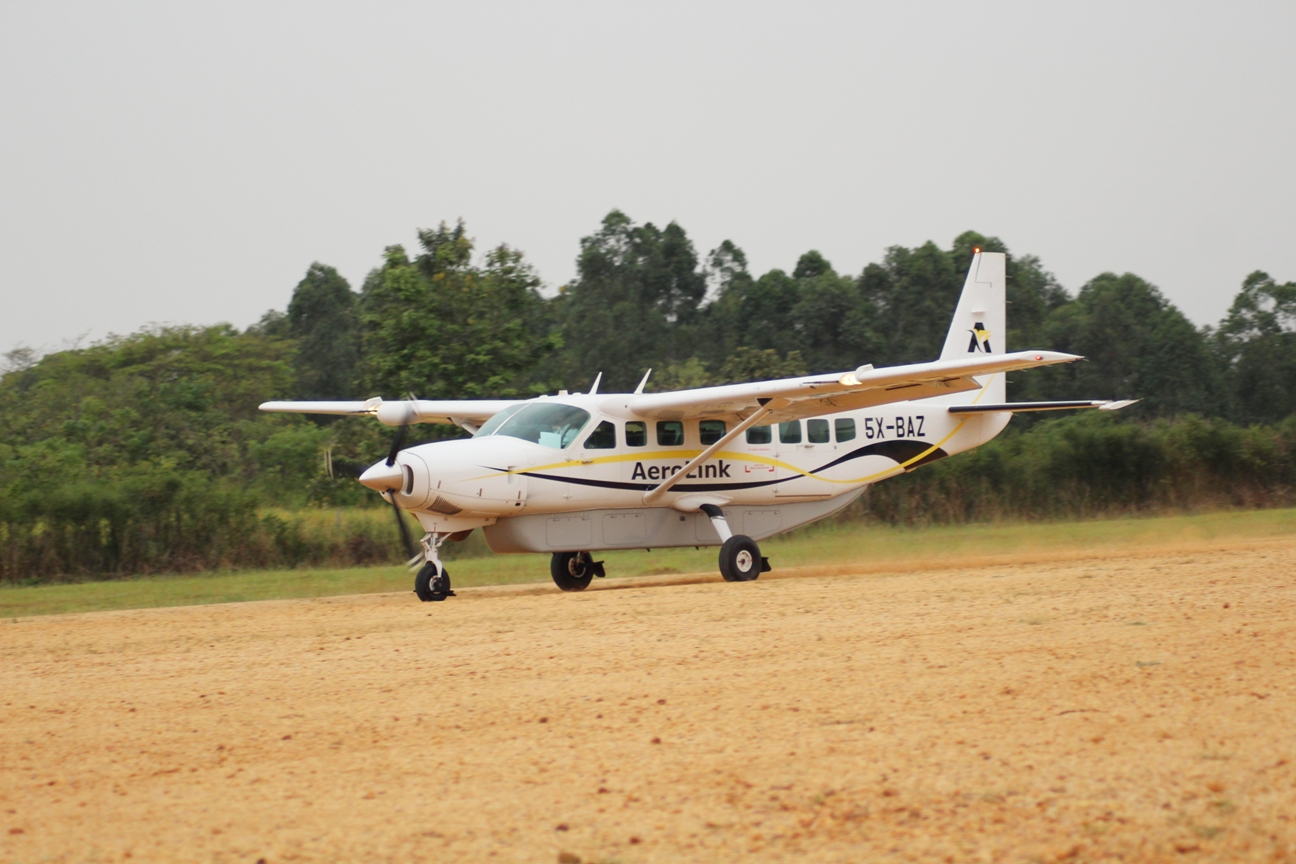
Fly-in safaris provide the fastest and most luxurious way to explore Uganda and selected safari regions connected to Congo. By replacing long road journeys with domestic or charter flights, travelers maximize their time in the national parks while enjoying spectacular aerial views of forests, volcanic mountains, rivers, lakes, and wildlife habitats.
Flights operate between major airports and safari airstrips, allowing visitors to reach gorilla trekking destinations in significantly less time than road travel. Upon arrival, guests are met by professional guides who provide comfortable transfers to nearby lodges and national parks.
Fly-in safaris are particularly popular with honeymooners, luxury travelers, photographers, families with limited vacation time, senior travelers, and visitors seeking a premium safari experience. The reduced travel time allows more opportunities for wildlife activities, relaxation, and additional safari experiences.
Many luxury Uganda and Congo Gorilla Safari itineraries combine domestic flights with private road transfers, creating seamless travel between airports, border crossings, and safari lodges.
Private Transfers
Private transfers offer the highest level of comfort, flexibility, and personalized service during a Uganda and Congo Gorilla Safari. Instead of sharing transportation with other travelers, guests enjoy exclusive use of a private safari vehicle accompanied by a dedicated professional driver-guide.
Private transfers allow complete flexibility throughout the safari. Travelers can stop whenever they wish for photography, sightseeing, refreshments, shopping, or cultural visits without following fixed schedules. The itinerary can also be adjusted to suit personal interests, making private travel particularly attractive for photographers, families, honeymoon couples, small groups, and luxury travelers.
Transfers are commonly arranged between international airports, hotels, national parks, border crossings, and airstrips. Vehicles are maintained for safari conditions and are equipped to handle both paved highways and rough mountain roads leading to gorilla trekking destinations.
For cross-border safaris, private transfers simplify immigration procedures by coordinating arrival times, border logistics, and onward transportation, ensuring a smooth and stress-free journey between Uganda and Congo.
Comparison of Transportation Options for Uganda and Congo Gorilla Safari
| Feature | Road Safari | Fly-In Safari | Private Transfer |
|---|---|---|---|
| Best For | Budget and midrange travelers, adventure seekers | Luxury travelers, honeymooners, visitors with limited time | Families, couples, photographers, VIP travelers |
| Cost | Lowest | Highest | Moderate to High |
| Travel Time | Longest | Fastest | Depends on itinerary |
| Comfort | Comfortable 4×4 safari vehicles | Highest level of comfort | Very comfortable with personalized service |
| Scenic Experience | Excellent roadside landscapes and cultural encounters | Outstanding aerial views of forests, volcanoes and lakes | Excellent with flexible sightseeing stops |
| Flexibility | Moderate | Limited by flight schedules | Maximum flexibility |
| Wildlife Viewing En Route | High | Limited during flights | High with customized stops |
| Photography Opportunities | Excellent | Excellent aerial photography | Excellent with unlimited stops |
| Suitable for Cross-Border Travel | Yes | Usually combined with road transfers | Yes, highly recommended |
| Access to Remote Parks | Excellent | Excellent when airstrips are available | Excellent |
| Group Size | Shared or private | Individual or small groups | Fully private |
| Luggage Capacity | High | Subject to airline baggage limits | High |
| Recommended Safari Length | 5–14+ days | 4–10 days | Any duration |
| Overall Experience | Immersive and adventurous | Fast, exclusive and luxurious | Personalized, flexible and comfortable |
Accommodation Options for Uganda and Congo Gorilla Safari
Accommodation is one of the most important aspects of a Uganda and Congo Gorilla Safari, influencing comfort, accessibility, relaxation, and the overall safari experience. Both Uganda and the Democratic Republic of Congo offer a variety of lodges, tented camps, eco-retreats, and luxury safari properties located close to the major gorilla trekking destinations. Whether you are planning an affordable adventure or an ultra-luxury primate expedition, there are accommodation options to suit every budget and travel style.
Most gorilla safari lodges are strategically positioned within a short driving distance of park headquarters, allowing visitors to reach early morning gorilla trekking briefings with ease. Many properties are surrounded by lush rainforest, volcanic mountains, tea plantations, or panoramic valley views, providing guests with a peaceful setting before and after their trekking experience.
Accommodation standards vary from simple guesthouses offering clean and comfortable rooms to world-class luxury lodges featuring private cottages, gourmet dining, spa facilities, fireplaces, and personalized butler service. Regardless of category, many lodges emphasize sustainability by supporting local communities, reducing environmental impact, and contributing to gorilla conservation programs.
Choosing the right accommodation depends on your budget, preferred trekking sector, travel itinerary, and desired level of comfort. Travelers combining Uganda and Congo often stay in different lodge categories throughout the safari to balance cost, convenience, and overall experience.
Budget Lodges for Uganda and Congo Gorilla Safari
Budget lodges provide an affordable way to experience a Uganda and Congo Gorilla Safari without compromising access to the national parks. These accommodations are ideal for backpackers, students, solo travelers, adventure enthusiasts, and visitors looking to maximize their safari while keeping overall costs manageable.
Most budget lodges offer private or shared rooms with comfortable beds, hot showers, clean bathrooms, electricity, and simple dining facilities. Although amenities are generally basic, many properties provide warm hospitality, beautiful natural surroundings, and easy access to gorilla trekking headquarters.
Guests can expect freshly prepared local and international meals, friendly staff, secure parking, Wi-Fi in selected areas, and opportunities to interact with local communities. Many budget accommodations also arrange packed lunches for trekking days and assist with transportation to the park headquarters.
Budget lodges are particularly popular among travelers spending several weeks exploring East Africa, allowing them to enjoy unforgettable gorilla trekking experiences while maintaining an economical travel budget.
Midrange Lodges
Midrange lodges offer an excellent balance between affordability and comfort, making them one of the most popular accommodation choices for Uganda and Congo Gorilla Safaris. They provide higher service standards, more spacious rooms, attractive surroundings, and additional facilities without the premium price associated with luxury properties.
Rooms typically include private bathrooms, comfortable beds, quality furnishings, hot showers, reliable electricity, Wi-Fi, and private verandas overlooking forests, mountains, or gardens. Many lodges feature restaurants serving international and local cuisine, comfortable lounges, bars, fireplaces, and beautifully landscaped grounds where guests can relax after trekking.
Midrange accommodation appeals to couples, families, photographers, and small groups seeking quality service while maintaining a reasonable safari budget. Many properties also organize cultural visits, nature walks, birdwatching activities, and community experiences that complement gorilla trekking.
For many travelers, midrange lodges represent the ideal combination of comfort, location, value, and authentic African hospitality.
Luxury Lodges
Luxury lodges provide the highest level of comfort and exclusivity during a Uganda and Congo Gorilla Safari. Designed for discerning travelers, honeymooners, photographers, conservation enthusiasts, and VIP guests, these properties combine exceptional service with spectacular natural settings.
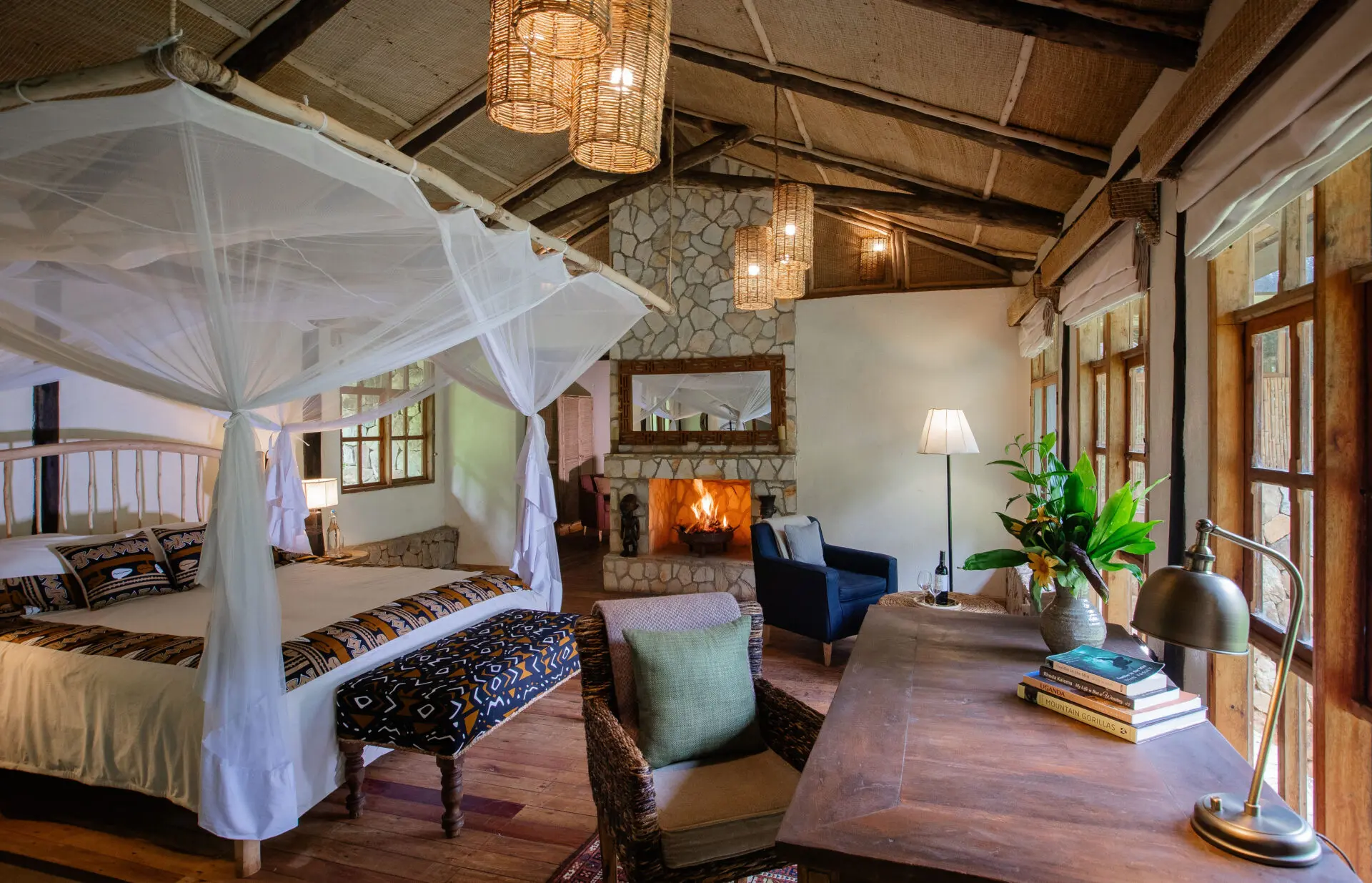
Luxury accommodations often feature spacious private cottages or suites with elegant interiors, king-size beds, premium linens, en-suite bathrooms, fireplaces, panoramic terraces, and breathtaking views of tropical rainforest, volcanic mountains, or surrounding valleys. Many lodges are carefully designed using sustainable architecture that blends harmoniously with the surrounding environment.
Guests enjoy personalized services including private butlers, gourmet dining, fine wines, spa treatments, massage services, laundry facilities, guided nature walks, and customized safari experiences. Many luxury properties also arrange private bush breakfasts, sundowner cocktails, cultural performances, and exclusive photography opportunities.
Several luxury lodges actively support local conservation initiatives and community development projects, allowing visitors to contribute directly to the protection of endangered gorillas while enjoying world-class hospitality. Their close proximity to gorilla trekking sectors also minimizes morning travel time, providing a relaxed start to each trekking day.
For travelers seeking unforgettable comfort, privacy, and premium safari experiences, luxury lodges offer the ultimate way to experience Uganda and Congo’s extraordinary gorilla destinations.
Comparison of Accommodation Options for Uganda and Congo Gorilla Safari
| Feature | Budget Lodges | Midrange Lodges | Luxury Lodges |
|---|---|---|---|
| Best For | Backpackers, solo travelers, budget-conscious visitors | Couples, families, small groups | Honeymooners, luxury travelers, photographers, VIPs |
| Price Range | Lowest | Moderate | Highest |
| Room Comfort | Basic but comfortable | Spacious and well-furnished | Premium suites and private cottages |
| Private Bathroom | Usually available | Yes | Yes |
| Hot Showers | Yes | Yes | Yes |
| Restaurant | Simple dining | Full-service restaurant | Gourmet dining experiences |
| Wi-Fi | Limited or common areas | Usually available | High-speed internet in most properties |
| Scenic Views | Good | Excellent | Exceptional panoramic views |
| Service Level | Friendly and basic | Professional and personalized | Highly personalized luxury service |
| Spa & Wellness | Rare | Occasionally available | Common in many luxury lodges |
| Laundry Services | Limited | Available | Comprehensive service |
| Eco-Friendly Practices | Many support sustainability | Strong conservation focus | Extensive sustainability initiatives |
| Proximity to Gorilla Trekking | Close to park headquarters | Very close | Often closest with premium access |
| Overall Experience | Affordable and practical | Comfortable and excellent value | Exclusive, luxurious, and unforgettable |
Other Wildlife Experiences to Combine with Uganda and Congo Gorilla Safari
A Uganda and Congo Gorilla Safari becomes even more rewarding when combined with other wildlife and nature experiences. While gorilla trekking is the main highlight, Uganda and Congo are rich in primates, savannah wildlife, birds, forests, lakes, rivers, volcanoes, and cultural landscapes that can turn a simple gorilla trip into a complete African safari adventure.
Travelers can combine gorilla trekking with chimpanzee trekking, golden monkey tracking, game drives, boat cruises, bird watching, and guided nature walks. These activities add variety to the safari and allow visitors to experience different habitats, from dense tropical forests and bamboo zones to open savannah plains, crater lakes, wetlands, and river channels.
Chimpanzee Trekking
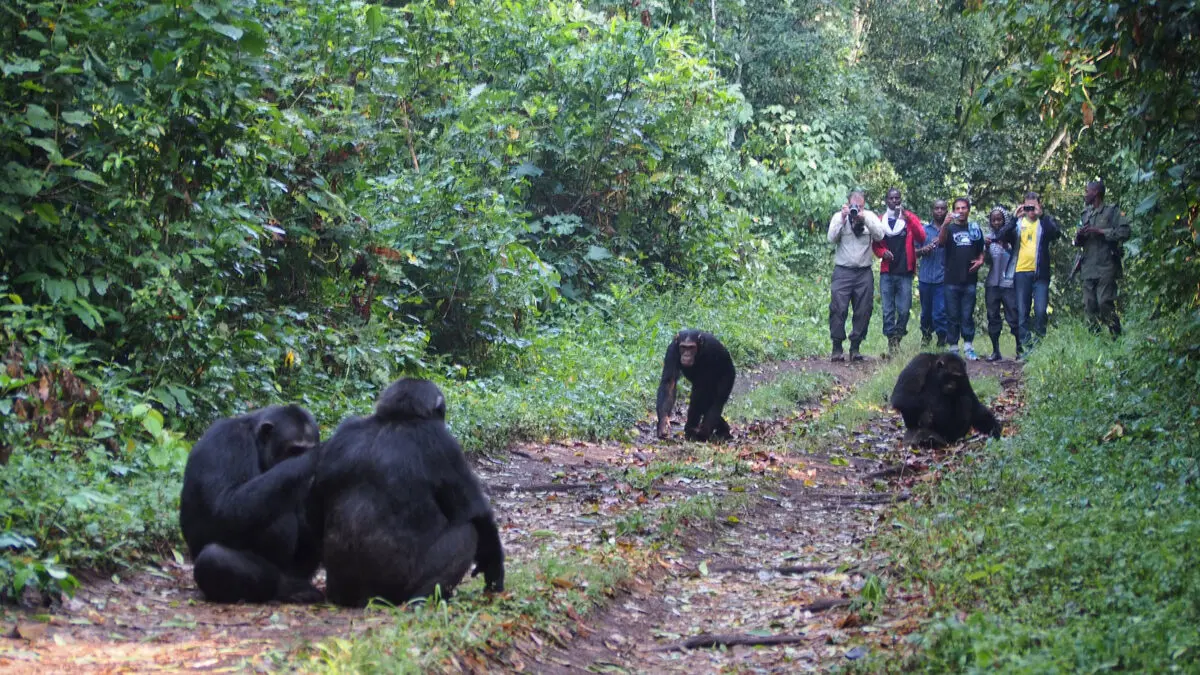
Chimpanzee trekking is one of the best activities to combine with a Uganda and Congo Gorilla Safari because it gives travelers the chance to compare two of Africa’s most fascinating great apes. While gorillas are calm, powerful, and mostly ground-dwelling, chimpanzees are energetic, vocal, fast-moving, and highly social. Their behavior, intelligence, communication, and movement through the forest create a completely different primate experience.
In Uganda, chimpanzee trekking is most popular in Kibale Forest National Park, often called the primate capital of East Africa. The forest is home to many primate species and offers one of the most reliable chimpanzee tracking experiences in Africa. Travelers can also track chimpanzees in Kyambura Gorge, Budongo Forest, Kalinzu Forest, and other forest reserves depending on the safari route.
A typical chimpanzee trek begins with a ranger briefing before visitors enter the forest with experienced guides. The sound of chimpanzees calling through the trees is often the first sign that a group is nearby. Once found, visitors observe them feeding, climbing, grooming, playing, communicating, and moving through the canopy. The experience is lively, dramatic, and exciting, making it a perfect contrast to the peaceful atmosphere of gorilla trekking.
Golden Monkey Tracking with Uganda and Congo Gorilla Safari
Golden monkey tracking is another excellent primate experience to combine with gorilla trekking, especially for travelers visiting Mgahinga Gorilla National Park in Uganda or the Virunga region. Golden monkeys are beautiful, playful, and highly active primates known for their golden-orange fur, quick movements, and strong connection to bamboo forest habitats.
Unlike gorillas, golden monkeys move quickly through bamboo vegetation, often jumping between branches, feeding on bamboo shoots, fruits, leaves, and insects. Their energy makes the tracking experience fun, light, and ideal for photographers who enjoy capturing movement and color in the forest.
In Uganda, Mgahinga Gorilla National Park is the best place for golden monkey tracking. This makes it very easy to combine with mountain gorilla trekking in the same park. Travelers can spend one day tracking gorillas and another day searching for golden monkeys, creating a rich primate-focused safari without long transfers between destinations.
Golden monkey tracking is generally less physically demanding than gorilla trekking, although the trail conditions can still vary depending on weather and the location of the troop. It is a wonderful activity for travelers who want an extra forest experience, families with older children, photographers, and visitors interested in rare Albertine Rift wildlife.
Game Drives
Game drives add a classic African safari experience to a Uganda and Congo Gorilla Safari. After trekking through rainforests in search of gorillas, travelers can explore open savannah landscapes where elephants, buffaloes, lions, leopards, antelopes, warthogs, giraffes, zebras, hippos, hyenas, and many other animals may be seen.
In Uganda, the best game drive destinations to combine with gorilla trekking include Queen Elizabeth National Park, Murchison Falls National Park, Lake Mburo National Park, and Kidepo Valley National Park. Queen Elizabeth National Park is especially convenient because it lies between Kibale Forest and Bwindi, making it a natural stop on many Uganda gorilla safari itineraries.
Game drives are usually conducted in the early morning or late afternoon when animals are more active and temperatures are cooler. Morning drives are excellent for spotting predators, while evening drives offer beautiful golden light for photography. In Queen Elizabeth National Park, the Ishasha sector is famous for tree-climbing lions, making it a strong addition to Uganda and Congo safari itineraries.
Game drives bring balance to a primate safari by adding wide-open landscapes and larger wildlife encounters. They are ideal for travelers who want both rainforest adventure and traditional African wildlife viewing within one journey.
Boat Cruises with Uganda and Congo Gorilla Safari
Boat cruises are a relaxing and scenic way to experience wildlife from the water. They are especially valuable after physically demanding gorilla or chimpanzee treks because they allow travelers to enjoy wildlife viewing at a slower, more comfortable pace.
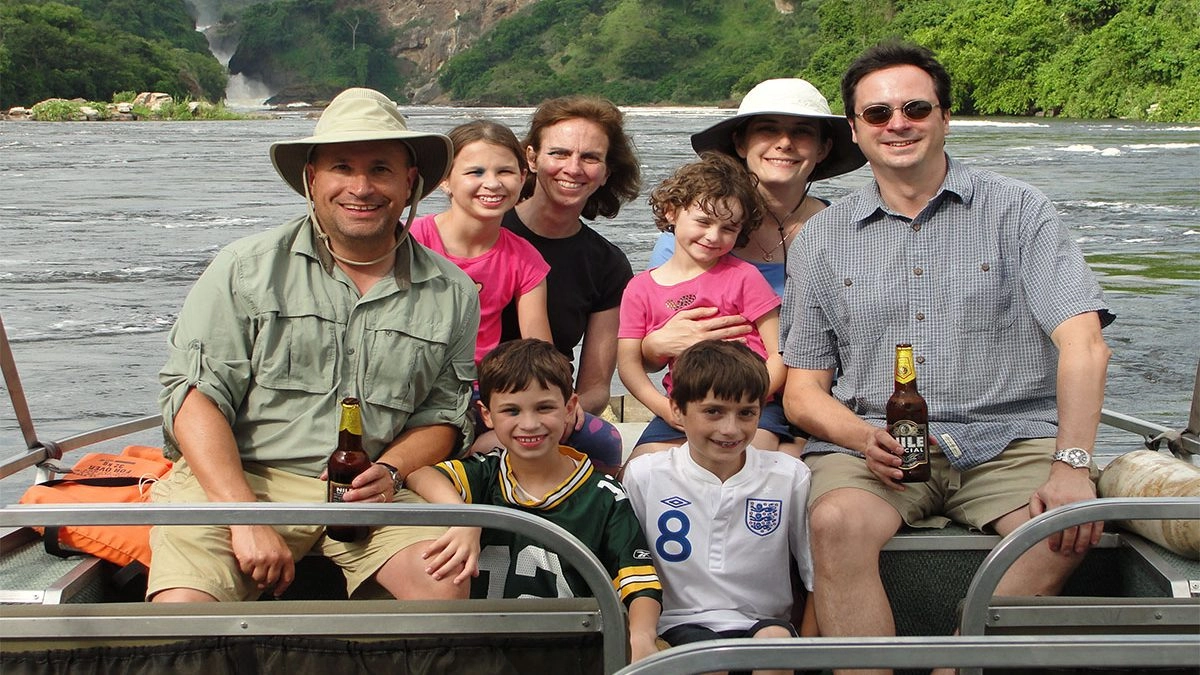
In Uganda, popular boat cruise destinations include the Kazinga Channel in Queen Elizabeth National Park, the Nile River in Murchison Falls National Park, Lake Bunyonyi, Lake Mburo, and sections of Lake Victoria. The Kazinga Channel is one of the best options to combine with a Uganda gorilla safari because it offers excellent sightings of hippos, crocodiles, elephants, buffaloes, waterbirds, and animals coming to drink along the shoreline.
Boat cruises are also excellent for photography. The calm movement of the boat allows travelers to capture wildlife reflections, birdlife, sunset scenes, and close-up views of animals near the water. For bird lovers, water-based safaris are especially rewarding because they reveal kingfishers, fish eagles, herons, storks, pelicans, cormorants, and many other wetland species.
Adding a boat cruise to a Uganda and Congo Gorilla Safari creates a softer and more relaxing safari rhythm. It is perfect for honeymooners, families, photographers, senior travelers, and visitors who want a peaceful wildlife experience after forest trekking.
Bird Watching
Uganda and Congo are exceptional bird watching destinations because they lie within some of Africa’s richest ecological zones. The combination of montane forests, wetlands, savannahs, lakes, volcanoes, and tropical rainforest creates outstanding birding opportunities throughout a Uganda and Congo Gorilla Safari.
Uganda is particularly famous among birders because it hosts Albertine Rift endemics, forest species, savannah birds, wetland birds, and migratory species. Top birding areas that combine well with gorilla trekking include Bwindi Impenetrable National Park, Mgahinga Gorilla National Park, Kibale Forest, Queen Elizabeth National Park, Mabamba Swamp, Lake Mburo, and Murchison Falls National Park.
Bwindi is one of Africa’s most important forest birding destinations. Travelers may look for species such as the African green broadbill, Rwenzori turaco, handsome francolin, black bee-eater, strange weaver, and many other highland forest birds. Mgahinga is also excellent for Albertine Rift birds due to its bamboo and montane habitats.
Congo’s forests add another layer of birding interest, especially for travelers visiting Virunga or Kahuzi-Biega. These areas support rare forest birds, endemic species, and rich rainforest birdlife that appeals to serious bird watchers and wildlife photographers.
Bird watching can be enjoyed as a dedicated safari activity or casually during gorilla treks, nature walks, game drives, and boat cruises. Including birding content on the page helps attract a wider audience, especially specialist travelers planning longer Uganda and Congo safari itineraries.
Nature Walks with Uganda and Congo Gorilla Safari
Nature walks are a wonderful way to slow down and experience the smaller details of Uganda and Congo’s landscapes. Unlike game drives or trekking activities focused on a specific animal, guided nature walks allow travelers to learn about plants, insects, birds, animal tracks, forest ecology, medicinal trees, community life, and conservation.
In Uganda, nature walks can be arranged in Bwindi Impenetrable National Park, Mgahinga Gorilla National Park, Kibale Forest, Lake Bunyonyi, Queen Elizabeth National Park, Lake Mburo National Park, and around several safari lodges. These walks may pass through forest trails, village paths, wetland edges, crater lakes, bamboo zones, and scenic viewpoints.
Nature walks near gorilla parks are especially rewarding because they help travelers understand the ecosystem that supports mountain gorillas. Guides explain forest regeneration, animal signs, bird calls, local plant uses, and the relationship between communities and protected areas.
In Congo, guided walks around forested and volcanic areas can add depth to the safari experience, especially when combined with gorilla trekking, cultural visits, or conservation-focused activities. The slower pace allows visitors to appreciate the raw beauty of Congo’s wilderness beyond the main gorilla encounter.
Nature walks are suitable for travelers who enjoy photography, soft adventure, education, birding, and quiet time in nature. They are also useful for rest days between more demanding trekking activities, helping create a well-balanced Uganda and Congo Gorilla Safari.
Nyiragongo Volcano Hiking Extension with Uganda and Congo Gorilla Safari
A Nyiragongo Volcano Hiking Extension is one of the most exciting ways to enhance a Uganda and Congo Gorilla Safari. Located within Virunga National Park in the eastern Democratic Republic of Congo, Mount Nyiragongo is one of Africa’s most iconic volcanoes and is internationally renowned for hosting one of the world’s largest and most active lava lakes. Combining gorilla trekking with this unforgettable volcanic adventure creates an extraordinary safari that showcases both the wildlife and geological wonders of the Albertine Rift.
Towering approximately 3,470 meters (11,384 feet) above sea level, Mount Nyiragongo dominates the surrounding landscape with its steep volcanic slopes, ancient lava flows, and breathtaking panoramic views. The hike takes visitors through several ecological zones, beginning with tropical rainforest before gradually ascending into montane forest, bamboo vegetation, heathland, and rocky volcanic terrain.
The ascent normally takes between five and seven hours depending on weather conditions and the pace of the group. Along the trail, experienced guides provide fascinating information about the volcano’s geology, wildlife, vegetation, and conservation importance within Virunga National Park. Rest stops allow hikers to enjoy spectacular views over the Virunga Mountains, Lake Kivu, and neighboring volcanoes.
Reaching the summit is one of Africa’s most rewarding hiking achievements. Visitors are welcomed by breathtaking views of the enormous lava lake glowing deep inside the crater, creating one of the continent’s most dramatic natural spectacles. Overnight accommodation is usually provided in mountain summit cabins, allowing hikers to witness the remarkable glow of molten lava after sunset and again before sunrise.
The following morning, hikers descend back through the volcanic landscape where transfers continue to the next safari destination. Many travelers combine the volcano hike with mountain gorilla trekking in Virunga National Park or gorilla trekking in Uganda’s Bwindi Impenetrable National Park and Mgahinga Gorilla National Park, creating one of Africa’s most diverse adventure safaris.
The Nyiragongo extension is best suited for travelers with good physical fitness who enjoy hiking, nature, photography, geology, and adventure travel. It offers an unforgettable complement to gorilla trekking by combining wildlife encounters with one of the world’s most spectacular volcanic landscapes.
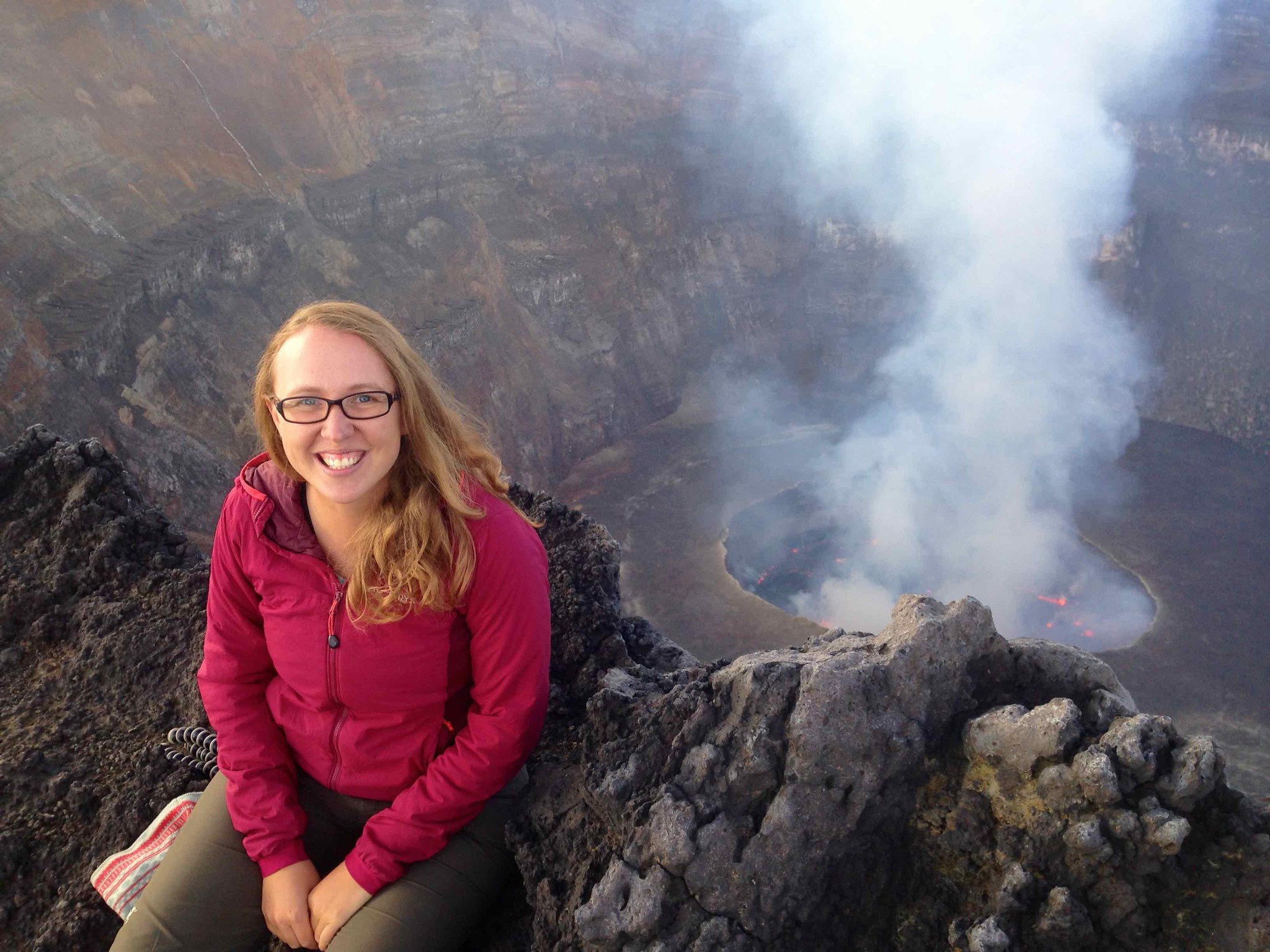
Kahuzi-Biega Lowland Gorilla Extension with Uganda and Congo Gorilla Safari
A Kahuzi-Biega Lowland Gorilla Extension transforms a traditional Uganda and Congo Gorilla Safari into one of the most comprehensive primate experiences available anywhere in Africa. This extension introduces travelers to eastern lowland gorillas, also known as Grauer’s gorillas, a rare subspecies found only in the eastern Democratic Republic of Congo.
Located near the city of Bukavu, Kahuzi-Biega National Park is a UNESCO World Heritage Site named after the extinct volcanoes Mount Kahuzi and Mount Biega. The park protects extensive tropical rainforest, montane forest, wetlands, bamboo zones, rivers, and one of the world’s most important populations of eastern lowland gorillas.
Unlike mountain gorillas found in Uganda and Virunga, Grauer’s gorillas inhabit lower elevation rainforests and are noticeably larger in size. Adult silverbacks possess powerful muscular bodies, broad shoulders, and impressive physical strength, making every encounter a remarkable wildlife experience. Their behavior, habitat, feeding patterns, and social interactions differ slightly from mountain gorillas, giving travelers the unique opportunity to compare two gorilla subspecies during one safari.
The trekking experience begins with a briefing by park rangers before visitors enter the rainforest accompanied by experienced trackers. Depending on the movements of the gorilla family, the hike may range from relatively moderate to more demanding. Along the way, travelers encounter towering rainforest trees, colorful birds, butterflies, forest plants, and numerous signs of the region’s rich biodiversity.
Once the gorilla family is located, visitors spend one unforgettable hour observing these magnificent primates as they feed, groom, care for infants, and interact within their family groups. The peaceful atmosphere, dense rainforest setting, and relatively low visitor numbers create a truly intimate wildlife experience.
Adding Kahuzi-Biega to a Uganda and Congo Gorilla Safari provides an exceptional opportunity to experience both mountain gorillas and eastern lowland gorillas within a single journey. Few wildlife itineraries anywhere in the world offer such remarkable primate diversity, making this extension especially popular among wildlife enthusiasts, photographers, researchers, and conservation travelers.
Safety and Security for Uganda and Congo Gorilla Safaris
Safety is one of the most common questions asked by travelers planning a Uganda and Congo Gorilla Safari. When organized through an experienced and reputable safari company, gorilla trekking in both Uganda and approved regions of eastern Congo is carefully managed to provide visitors with a safe, organized, and memorable wildlife experience.
Uganda has built a strong international reputation as one of Africa’s leading gorilla trekking destinations. The country’s protected areas are managed by professional wildlife authorities, experienced ranger teams, conservation organizations, and tourism stakeholders who work together to ensure the safety of both visitors and wildlife. Gorilla trekking takes place under strict regulations, with every group accompanied by trained ranger guides and, where necessary, armed ranger escorts responsible for visitor safety.
In the Democratic Republic of Congo, tourism operations are conducted only in areas officially opened for visitors. Gorilla trekking activities are carefully coordinated by park authorities who continuously assess operational conditions before allowing tourism activities to proceed. When conditions permit, visitors are accompanied throughout the experience by highly trained park rangers familiar with the terrain and wildlife.
Travelers should understand that travel advice and park accessibility may change depending on regional circumstances. For this reason, it is important to book through professional safari operators who receive regular updates regarding border crossings, park operations, transportation routes, accommodation availability, and security recommendations. This ensures that itineraries can be adjusted whenever necessary to maintain visitor safety.
Health precautions are equally important during a Uganda and Congo Gorilla Safari. Visitors should obtain comprehensive travel insurance that includes medical treatment and emergency evacuation, carry necessary personal medications, remain hydrated throughout trekking activities, and follow all health guidelines issued by wildlife authorities. Gorilla trekking regulations require visitors who feel unwell to report their condition before trekking in order to reduce the risk of disease transmission to endangered gorillas.
Respecting ranger instructions is essential throughout the safari. Visitors should maintain the recommended viewing distance from gorillas, avoid sudden movements, refrain from using flash photography, and remain within their assigned trekking group at all times. These simple measures help protect both visitors and gorillas while ensuring an enjoyable experience for everyone.
With proper planning, professional guiding services, and adherence to official park regulations, a Uganda and Congo Gorilla Safari remains one of Africa’s safest and most rewarding wildlife adventures.
Physical Fitness Requirements for Uganda and Congo Gorilla Safari
A Uganda and Congo Gorilla Safari involves hiking through natural rainforest terrain, making a reasonable level of physical fitness important for an enjoyable experience. Gorilla trekking is not considered mountain climbing, but it does require visitors to walk across uneven ground, navigate dense vegetation, cross small streams, climb forest slopes, and occasionally hike for several hours depending on the location of the gorilla family.
The duration and difficulty of each trek vary every day because gorillas move freely through their natural habitat. Some groups may be located within one or two hours of the park headquarters, while others may require longer hikes lasting five hours or more. Weather conditions, altitude, trail conditions, and individual fitness levels also influence the overall difficulty of the trek.
Visitors do not need to be professional hikers or athletes to participate in gorilla trekking. People of different ages successfully complete treks every year, including many older travelers. A moderate level of fitness, comfortable walking ability, and positive attitude are usually sufficient for most trekking experiences.
Preparing before your safari can greatly improve comfort during the trek. Regular walking, stair climbing, hiking, cycling, swimming, or light cardiovascular exercise several weeks before departure helps improve stamina and endurance. Wearing properly broken-in waterproof hiking boots also reduces fatigue and improves stability on uneven forest trails.
Visitors who have concerns about mobility or physical fitness should discuss them with their safari operator before travel. Park authorities can often allocate trekking groups based on fitness levels whenever permit availability allows. Porters are also available at the park headquarters to carry backpacks, provide support on steep sections, and assist visitors throughout the hike. Hiring a porter not only makes the trek easier but also directly supports local communities living near the national parks.
The rewards of gorilla trekking far outweigh the physical effort involved. Standing quietly among wild gorillas in their natural forest home is widely regarded as one of the greatest wildlife experiences on Earth. Whether trekking through Uganda’s ancient rainforests or Congo’s volcanic landscapes, the journey itself becomes an unforgettable part of the adventure.
Gorilla Trekking Rules and Regulations
Gorilla trekking is a carefully regulated wildlife activity designed to protect one of the world’s most endangered great apes while allowing visitors to experience them in their natural environment. Every Uganda and Congo Gorilla Safari follows strict conservation guidelines established by wildlife authorities to minimize human impact on gorilla families and ensure the long-term survival of these remarkable primates.
Before every trek, visitors attend a mandatory briefing conducted by experienced park rangers. During this session, guides explain gorilla behavior, trekking procedures, safety measures, photography rules, health protocols, and environmental responsibilities. Following these guidelines not only protects the gorillas but also enhances the experience for every visitor.
One of the most important regulations is maintaining a minimum viewing distance of approximately seven meters from the gorillas. Although gorillas occasionally approach visitors out of curiosity, trekkers should never move closer intentionally or attempt to touch them. Maintaining this distance helps reduce the risk of transmitting human diseases to gorillas, whose immune systems are highly susceptible to many common illnesses.
Only one hour may be spent with a habituated gorilla family after they have been located. This limited viewing period minimizes disturbance while allowing visitors sufficient time to observe feeding behavior, family interactions, grooming, infant play, and communication among group members.
Visitors who are unwell with flu-like symptoms, fever, cough, or contagious illnesses should not participate in gorilla trekking. Gorillas share approximately 98 percent of human DNA, making them highly vulnerable to respiratory infections and other human diseases. Responsible tourism begins by protecting the health of the animals.
During the trek, visitors should remain together as a group, follow instructions from ranger guides at all times, speak quietly, avoid sudden movements, and never run if a gorilla approaches. Silverbacks are naturally protective of their families, but habituated gorillas are generally calm when visitors behave respectfully.
Eating, smoking, littering, and leaving personal belongings within the gorilla habitat are prohibited. Flash photography is also not permitted because sudden bursts of light may disturb the gorillas. Visitors are encouraged to use natural light and silent camera settings whenever possible.
These regulations are not simply rules—they are essential conservation measures that have helped protect mountain gorillas and eastern lowland gorillas while allowing future generations to continue experiencing one of Africa’s greatest wildlife encounters.
What to Pack for a Uganda and Congo Gorilla Safari
Packing appropriately plays an important role in ensuring a comfortable and successful Uganda and Congo Gorilla Safari. Gorilla trekking takes place in tropical rainforest environments where weather conditions can change rapidly, trails may become muddy, and vegetation is often dense. Bringing the right equipment allows visitors to enjoy the experience safely while remaining comfortable throughout the trek.
Sturdy waterproof hiking boots are the most essential item. Forest trails frequently include slippery slopes, uneven ground, exposed roots, rocks, and muddy sections that require reliable footwear with good ankle support. Comfortable hiking socks help reduce fatigue and prevent blisters during longer treks.
Long-sleeved shirts and long trousers provide protection against insects, thorny vegetation, and stinging plants encountered along the trail. Neutral-colored clothing such as green, brown, or khaki blends naturally with the forest environment while avoiding unnecessary attention from wildlife.
A lightweight waterproof rain jacket is highly recommended because rain showers can occur at any time of year, even during the dry season. Waterproof trousers or gaiters provide additional protection when trekking through wet vegetation and muddy paths.
A comfortable daypack should contain drinking water, energy snacks, sunscreen, insect repellent, sunglasses, lip balm, personal medications, tissues, hand sanitizer, and a waterproof cover to protect electronic equipment. Hydration is especially important because trekking often takes place at higher elevations and can be physically demanding.
Many experienced trekkers also carry lightweight gardening gloves, which help protect hands while holding branches, climbing steep sections, or moving through dense vegetation. A walking stick, usually available at the park headquarters, provides additional stability on uneven trails.
Photography equipment should include a quality camera, spare batteries, memory cards, and a protective waterproof bag. Since flash photography is prohibited, cameras with good low-light performance and image stabilization produce the best results inside the rainforest.
Travel documents should always be carried securely, including passports, visas, gorilla permits, travel insurance, vaccination certificates where required, and emergency contact information. Keeping digital copies stored securely on a mobile device or cloud storage provides additional security during travel.
Proper preparation allows visitors to focus entirely on the remarkable wildlife encounters awaiting them deep within the forests of Uganda and Congo.
Photography Tips for Uganda and Congo Gorilla Safari
Photography is one of the highlights of a Uganda and Congo Gorilla Safari, allowing visitors to capture unforgettable memories of one of the world’s most extraordinary wildlife experiences. Photographing gorillas within dense rainforest environments presents unique challenges, but with proper preparation and patience, visitors can produce stunning images while respecting wildlife and conservation guidelines.
The most important photography rule is that flash photography is strictly prohibited. Flash can startle gorillas and interfere with their natural behavior. Cameras should therefore be adjusted to perform well under low-light forest conditions using higher ISO settings, wider apertures, and faster lenses where available.
Rainforests are often shaded by dense tree canopies, creating soft but limited natural light. Cameras capable of handling higher ISO values without excessive image noise are particularly useful. Image stabilization and fast autofocus systems also improve success when photographing moving gorillas or playful juveniles.
Patience is one of the greatest tools in wildlife photography. Rather than taking continuous photographs immediately after locating the gorillas, visitors should first observe their behavior. Waiting quietly often results in remarkable moments such as eye contact, grooming, feeding, mothers carrying infants, playful interactions, or powerful silverback displays.
Photographers should avoid focusing only on close-up portraits. Wider landscape compositions that include surrounding rainforest vegetation help tell the complete story of the gorillas’ natural habitat. Images showing forest textures, mist, bamboo, towering trees, and environmental details create stronger visual narratives.
Respecting ranger instructions is essential throughout the photography session. Visitors should never leave the group, move closer to gorillas for better angles, or position themselves in ways that interfere with the animals’ natural movement. Ethical wildlife photography always prioritizes the well-being of the animals over obtaining a photograph.
Additional photographic opportunities throughout a Uganda and Congo Gorilla Safari include mountain scenery, volcanic landscapes, waterfalls, birds, butterflies, local communities, traditional villages, tea plantations, crater lakes, game drives, and boat cruises. Together these images tell the complete story of an unforgettable African safari adventure.
Responsible Tourism and Gorilla Conservation
Every Uganda and Congo Gorilla Safari contributes directly to one of Africa’s greatest conservation success stories. Responsible tourism has become one of the most effective tools for protecting endangered gorillas while improving the livelihoods of communities living around protected forests.
Revenue generated through gorilla trekking permits supports wildlife conservation, anti-poaching patrols, veterinary care, ranger training, scientific research, habitat restoration, infrastructure development, and environmental education. Without sustainable tourism, many conservation programs protecting mountain gorillas and eastern lowland gorillas would face significant challenges.
Local communities also benefit substantially from responsible tourism. Employment opportunities for guides, trackers, porters, lodge staff, drivers, artisans, farmers, and cultural performers create alternative sources of income that reduce pressure on protected forests. Community tourism initiatives further strengthen the relationship between conservation and sustainable development.
Visitors play an important role in gorilla conservation by following park regulations, respecting wildlife, minimizing waste, avoiding single-use plastics where possible, supporting locally owned businesses, and participating in environmentally responsible tourism practices. Simple actions such as hiring local porters, purchasing locally made handicrafts, and staying at eco-friendly lodges create lasting positive impacts for surrounding communities.
Responsible travelers also recognize that wildlife encounters should never interfere with natural animal behavior. Observing gorillas quietly, maintaining the recommended viewing distance, avoiding littering, and respecting protected habitats help preserve these remarkable ecosystems for future generations.
Choosing responsible tourism means that every safari becomes more than a personal adventure—it becomes a direct contribution to protecting one of the world’s most endangered great apes and the extraordinary forests they call home.
Why Book Your Uganda and Congo Gorilla Safari with Pieland Gorilla Safaris
Planning a Uganda and Congo Gorilla Safari requires local knowledge, careful logistics, and an experienced safari team capable of organizing permits, transportation, accommodation, border crossings, and personalized wildlife experiences. At Pieland Gorilla Safaris, we specialize in creating expertly planned gorilla safaris that combine Uganda’s world-renowned mountain gorilla destinations with the remarkable wilderness of the Democratic Republic of Congo.
Our safari specialists have extensive knowledge of gorilla trekking destinations, trekking sectors, accommodation options, seasonal travel conditions, and cross-border safari logistics. Whether you are planning a short gorilla trekking adventure or an extended multi-country wildlife expedition, we design itineraries tailored to your interests, budget, and travel style.
We assist with securing gorilla trekking permits well in advance, ensuring that visitors have the best possible chance of obtaining their preferred trekking dates and locations. Our team also arranges reliable airport transfers, private 4×4 safari vehicles, experienced English-speaking driver-guides, carefully selected accommodation, and seamless transportation between Uganda and Congo.
Every itinerary is customized rather than following fixed schedules. Travelers can combine mountain gorilla trekking, eastern lowland gorilla trekking, chimpanzee tracking, golden monkey tracking, wildlife safaris, bird watching, volcano hiking, boat cruises, cultural experiences, and luxury lodge stays into one unforgettable safari.
Safety, comfort, and personalized service remain central to every journey we organize. We continuously monitor travel conditions, border requirements, park operations, and conservation updates to ensure every safari operates smoothly while maintaining the highest professional standards.
As a company committed to sustainable tourism, Pieland Gorilla Safaris works closely with local communities, conservation partners, experienced guides, and responsible accommodation providers. Every safari supports wildlife conservation while creating meaningful economic opportunities for the communities living alongside Africa’s endangered gorillas.
Whether you are a first-time visitor to Africa, a returning wildlife enthusiast, a honeymoon couple, a family, or a professional photographer, Pieland Gorilla Safaris is dedicated to delivering an authentic, safe, and unforgettable Uganda and Congo Gorilla Safari. From your first inquiry to your final airport transfer, our experienced team is committed to making your gorilla adventure one of the greatest travel experiences of your lifetime.
Contact Pieland Gorilla Safaris today to reserve your gorilla permits, receive a personalized itinerary, request a free quotation, and begin planning your extraordinary Uganda and Congo Gorilla Safari across two of Africa’s most spectacular wildlife destinations.
Frequently Asked Questions About Uganda and Congo Gorilla Safari
Is a Uganda and Congo Gorilla Safari worth it?
Yes. A Uganda and Congo Gorilla Safari is one of the most rewarding wildlife experiences in Africa because it combines two exceptional gorilla destinations into one unforgettable adventure. Travelers have the opportunity to visit Uganda’s famous mountain gorilla habitats in Bwindi Impenetrable National Park or Mgahinga Gorilla National Park while also exploring the Democratic Republic of Congo’s remarkable gorilla destinations, including Virunga National Park and Kahuzi-Biega National Park.
This safari allows visitors to experience different ecosystems, cultures, and wildlife while comparing mountain gorillas with the rare eastern lowland gorillas found only in Congo. Beyond gorilla trekking, travelers can enjoy chimpanzee trekking, game drives, bird watching, volcano hiking, boat cruises, and cultural experiences, making it one of Africa’s most complete safari itineraries.
How much does a Uganda and Congo Gorilla Safari cost?
The cost of a Uganda and Congo Gorilla Safari varies depending on the duration of the trip, accommodation category, transportation method, number of gorilla permits required, and additional safari activities.
Budget safaris generally start from approximately USD 2,500–3,500 per person, midrange safaris range between USD 3,800–6,000, while luxury safaris may cost USD 7,000 or more. Gorilla permit fees, accommodation, meals, transportation, park entrance fees, guide services, and airport transfers are usually included in comprehensive safari packages.
Custom itineraries can be designed to suit different budgets while ensuring an unforgettable gorilla trekking experience.
What is included in a Uganda and Congo Gorilla Safari package?
Most professionally organized Uganda and Congo Gorilla Safari packages include gorilla trekking permits, accommodation, airport transfers, private 4×4 safari transportation, professional English-speaking driver-guides, park entrance fees, meals as specified in the itinerary, bottled drinking water during transfers, and government taxes.
Many packages also include chimpanzee trekking, boat cruises, game drives, cultural visits, bird watching, and optional activities depending on the itinerary selected.
International flights, travel insurance, visas, personal expenses, alcoholic beverages, laundry services, and tips are normally excluded unless specifically stated.
How many days do I need for a Uganda and Congo Gorilla Safari?
The ideal duration depends on your travel goals. A minimum of five days is recommended for travelers wishing to trek gorillas in both Uganda and Congo. Seven to ten days allows enough time to include chimpanzee trekking, wildlife safaris, boat cruises, and cultural experiences.
Travelers seeking the most comprehensive adventure often choose twelve to fourteen-day itineraries, which include multiple national parks, both mountain and eastern lowland gorillas, Nyiragongo Volcano hiking, bird watching, and luxury lodge stays.
Longer itineraries provide a more relaxed pace and reduce long driving days.
What is the best time to visit Uganda and Congo for gorilla trekking?
Gorilla trekking is available throughout the year because gorillas remain within their protected forests regardless of season.
The dry seasons from June to September and December to February are generally considered the best months because trails are less muddy, hiking conditions are easier, and photography is often excellent due to clearer skies.
The rainy seasons from March to May and October to November offer lush green forests, fewer tourists, beautiful misty landscapes, and excellent wildlife photography opportunities. Although trekking can be more physically demanding, many experienced travelers prefer these quieter months.
Can I see both mountain gorillas and eastern lowland gorillas on one safari?
Yes. One of the greatest advantages of a Uganda and Congo Gorilla Safari is the opportunity to see both mountain gorillas and eastern lowland gorillas during a single journey.
Mountain gorillas are found in Uganda’s Bwindi Impenetrable National Park, Mgahinga Gorilla National Park, and Congo’s Virunga National Park. Eastern lowland gorillas, also known as Grauer’s gorillas, are found only in Kahuzi-Biega National Park in eastern Congo.
Experiencing both subspecies allows travelers to appreciate differences in habitat, behavior, body size, and conservation while enjoying one of Africa’s most unique primate adventures.
Which national parks are included in a Uganda and Congo Gorilla Safari?
The main gorilla parks included are Bwindi Impenetrable National Park and Mgahinga Gorilla National Park in Uganda, together with Virunga National Park and Kahuzi-Biega National Park in the Democratic Republic of Congo.
Depending on the itinerary, travelers may also visit Kibale Forest National Park for chimpanzee trekking, Queen Elizabeth National Park for wildlife safaris and boat cruises, Lake Mburo National Park, Murchison Falls National Park, Lake Bunyonyi, or Nyiragongo Volcano.
Each itinerary can be customized according to available time, budget, and personal interests.
What is the difference between Uganda and Congo gorilla trekking?
Uganda and Congo both offer exceptional gorilla trekking experiences, but each destination provides something unique.
Uganda is known for its excellent tourism infrastructure, numerous habituated mountain gorilla families, comfortable lodges, and the ability to combine gorilla trekking with classic wildlife safaris. Bwindi and Mgahinga offer beautiful rainforest trekking with highly experienced ranger teams.
Congo provides a more adventurous wilderness experience. Visitors can trek mountain gorillas in Virunga National Park and eastern lowland gorillas in Kahuzi-Biega National Park, making it the only destination where both gorilla subspecies can be included in one safari. Congo generally attracts travelers seeking remote landscapes and unique conservation experiences.
Is gorilla trekking difficult?
Gorilla trekking is moderately challenging but achievable for most people with a reasonable level of fitness. The difficulty varies depending on the location of the gorilla family, weather conditions, altitude, and forest terrain.
Some treks may last only one to two hours, while others can take several hours through steep hills, muddy trails, dense vegetation, and uneven ground.
Professional ranger guides set a comfortable pace, allow frequent rest stops, and assist visitors throughout the trek. Hiring a local porter can also make the experience significantly easier by carrying bags and providing support on steep sections.
How fit do I need to be for gorilla trekking?
You do not need to be an athlete to participate in gorilla trekking, but a moderate level of physical fitness is recommended. Visitors should be comfortable walking several kilometers over uneven forest trails while occasionally climbing hills or navigating muddy terrain.
Preparing before your safari with regular walking, hiking, stair climbing, cycling, or light cardiovascular exercise helps improve endurance and overall comfort during the trek.
Travelers with reduced mobility or older visitors can often be assigned to gorilla families located closer to the park headquarters when permit availability allows. Porters and, in some cases, sedan chair services are also available to assist visitors who require additional support, making gorilla trekking accessible to a wide range of travelers.
How long does a gorilla trek take?
The length of a gorilla trek varies every day because mountain gorillas and eastern lowland gorillas move freely through their natural habitats in search of food. A trek may last anywhere from one hour to eight hours, depending on where the gorilla family is located. Some groups are found relatively close to the park headquarters, while others travel deeper into the rainforest or higher into the mountains.
The hike itself is part of the adventure, taking visitors through lush rainforest, bamboo forests, rivers, steep hills, and dense vegetation while experienced trackers search for fresh signs of gorilla activity. Once the gorillas are located, visitors are allowed to spend one unforgettable hour observing them in their natural environment.
Although trekking times vary, every hike is carefully guided by experienced rangers who ensure visitors move at a comfortable pace while enjoying the surrounding forest ecosystem.
How much time do I spend with the gorillas?
Visitors spend exactly one hour with a habituated gorilla family after they have been located by the ranger guides and trackers. This one-hour rule is strictly enforced by wildlife authorities in Uganda and Congo to minimize human disturbance and protect the health of these endangered primates.
During the hour, visitors observe gorillas feeding, grooming, resting, communicating, caring for infants, and interacting naturally within their family groups. The experience is incredibly intimate, allowing travelers to appreciate the intelligence, emotions, and social structure of these magnificent animals.
Although one hour may seem short, most visitors find it deeply memorable and emotionally rewarding, often describing it as one of the greatest wildlife experiences of their lives.
What is included in a gorilla trekking permit?
A gorilla trekking permit grants visitors legal access to trek a habituated gorilla family under the supervision of trained ranger guides. The permit includes the park entry specifically for gorilla trekking, ranger guiding services, gorilla tracking by experienced trackers, security provided by armed ranger escorts where necessary, and one hour with the gorilla family after they are found.
Permit fees also make a significant contribution to gorilla conservation. Revenue supports anti-poaching patrols, habitat protection, veterinary care, scientific research, ranger salaries, community development, and conservation education programs around the protected areas.
Accommodation, transportation, meals, visas, travel insurance, and personal expenses are generally not included in the permit itself unless incorporated into a complete safari package.
How early should I book my gorilla permit?
It is highly recommended to book your gorilla permit at least three to six months before your planned travel dates. During peak travel seasons, permits often sell out much earlier, especially for popular trekking sectors in Bwindi Impenetrable National Park and Mgahinga Gorilla National Park.
Luxury lodges and preferred safari itineraries are also in high demand during these periods. Booking early provides greater flexibility in selecting trekking dates, accommodation, and travel routes while reducing the risk of disappointment.
Travelers planning to visit during June to September or December to February should ideally reserve permits as soon as travel dates are confirmed.
Can I book gorilla permits through Pieland Gorilla Safaris?
Yes. Pieland Gorilla Safaris assists travelers by securing gorilla trekking permits as part of a complete safari package or as a standalone permit booking service, subject to availability. The company works closely with the relevant wildlife authorities to reserve permits according to your preferred travel dates and trekking destinations.
In addition to permit reservations, Pieland Gorilla Safaris organizes accommodation, transportation, airport transfers, border crossings, experienced guides, and customized safari itineraries. This allows travelers to enjoy a seamless planning process without worrying about complex booking procedures.
Early inquiries are always encouraged to increase the chances of obtaining permits for preferred dates and trekking sectors.
Is Congo safe for gorilla trekking?
Gorilla trekking in the Democratic Republic of Congo is conducted only when park authorities officially consider tourism activities safe to operate. Experienced ranger teams continuously monitor conditions within the national parks and surrounding areas before allowing visitors to enter the forests.
Travelers participating in gorilla trekking are always accompanied by highly trained park rangers who are familiar with both the wildlife and the local environment. Professional safari operators also monitor travel advisories, park announcements, and border conditions to ensure itineraries remain safe and practical.
Visitors are encouraged to book through reputable safari companies, follow ranger instructions, and stay informed about current travel conditions before departure.
Is Uganda safe for gorilla trekking?
Uganda is widely regarded as one of Africa’s safest and most organized destinations for gorilla trekking. The country’s national parks are professionally managed by experienced wildlife authorities, and every trekking group is accompanied by knowledgeable ranger guides and, where appropriate, armed ranger escorts.
Tourism has become one of Uganda’s major industries, and the country has invested significantly in visitor safety, conservation, and tourism infrastructure. Thousands of travelers successfully complete gorilla trekking every year without incident.
As with any international travel, visitors should follow their guide’s instructions, keep valuables secure, purchase comprehensive travel insurance, and observe standard travel precautions throughout their journey.
Which border crossings are used between Uganda and Congo?
Several official border crossings connect Uganda and the Democratic Republic of Congo, allowing travelers to combine gorilla trekking experiences in both countries. The most frequently used crossing for western Uganda safaris is the Mpondwe–Kasindi border, which provides access toward eastern Congo.
Depending on the itinerary, travelers may also enter Congo through neighboring Rwanda using the Goma or Bukavu border crossings before continuing to Virunga National Park or Kahuzi-Biega National Park.
Professional safari companies coordinate transportation, immigration procedures, and border logistics to ensure a smooth transition between countries.
Do I need visas for both Uganda and Congo?
In most cases, yes. International travelers generally require separate visas for Uganda and the Democratic Republic of Congo unless exempt under specific bilateral agreements.
Uganda offers an electronic visa application system for many nationalities, while Congo also has its own visa requirements depending on the traveler’s nationality and intended purpose of travel. The East African Tourist Visa covers Uganda, Rwanda, and Kenya but does not include entry into the Democratic Republic of Congo.
Travelers should verify visa requirements well before departure and ensure that their passports remain valid for at least six months beyond the date of travel.
Can I start my Uganda and Congo Gorilla Safari from Kigali?
Yes. Starting a Uganda and Congo Gorilla Safari from Kigali is a popular option because Rwanda’s capital is located relatively close to Uganda’s southwestern gorilla parks and eastern Congo’s gorilla destinations.
Many travelers fly into Kigali International Airport before driving to Bwindi Impenetrable National Park, Mgahinga Gorilla National Park, Virunga National Park, or Kahuzi-Biega National Park. Beginning the safari from Kigali often reduces driving time compared to traveling from Entebbe, especially for visitors focusing on gorilla trekking in southwestern Uganda.
This route is particularly attractive for travelers with limited vacation time, as it allows quicker access to the gorilla trekking regions while still providing opportunities to enjoy a complete Uganda and Congo Gorilla Safari.
What travel documents do I need for a Uganda and Congo Gorilla Safari?
Travelers should carry all essential travel documents before beginning a Uganda and Congo Gorilla Safari. The most important document is a passport that remains valid for at least six months beyond your intended travel dates and contains sufficient blank pages for immigration stamps.
Depending on your nationality, you will also need valid visas for Uganda and the Democratic Republic of Congo. In addition, you should carry your gorilla trekking permits, flight tickets, accommodation confirmations, safari itinerary, travel insurance certificate, and emergency contact information. Many countries also require proof of Yellow Fever vaccination when entering Uganda or Congo, so travelers should carry their International Certificate of Vaccination.
It is advisable to keep both printed and electronic copies of all important documents. Having digital backups stored securely on your phone or cloud storage provides additional security should any documents become misplaced during your safari.
What should I wear for gorilla trekking?
Wearing the correct clothing greatly improves comfort during gorilla trekking. Since trekking takes place in dense tropical rainforest where trails can be muddy and vegetation thick, practical clothing is essential.
Long-sleeved shirts and long trousers help protect against insects, thorny plants, and stinging vegetation. Neutral-colored clothing such as green, brown, or khaki is recommended because it blends naturally into the forest environment. Bright colors should generally be avoided.
Waterproof hiking boots with good ankle support are one of the most important items, as trails may become slippery after rainfall. A lightweight waterproof jacket is also essential because showers can occur at any time of the year.
A wide-brimmed hat, gardening gloves, sunglasses, and moisture-wicking clothing further enhance comfort throughout the trek, allowing visitors to fully enjoy the extraordinary experience of observing gorillas in their natural habitat.
What should I pack for a Uganda and Congo Gorilla Safari?
Packing properly helps ensure a comfortable and enjoyable safari. Essential items include waterproof hiking boots, lightweight rain gear, long-sleeved clothing, long trousers, comfortable hiking socks, a daypack, reusable water bottle, energy snacks, sunscreen, insect repellent, personal medications, sunglasses, and a hat.
Photography equipment is highly recommended. Visitors should bring a camera with extra batteries and memory cards, as well as a waterproof bag to protect electronics from rain and humidity. A pair of binoculars is also useful for bird watching and wildlife viewing throughout the safari.
Travelers should not forget passports, visas, gorilla permits, travel insurance documents, vaccination certificates, and a small amount of local currency for tips, souvenirs, and personal purchases.
Preparing thoroughly allows visitors to focus on enjoying every moment of their Uganda and Congo Gorilla Safari.
Can I hire a porter during gorilla trekking?
Yes. Porters are available at all major gorilla trekking parks in Uganda and Congo, and hiring one is highly recommended regardless of your fitness level.
Porters assist by carrying backpacks, providing support on steep or slippery sections of the trail, helping visitors cross difficult terrain, and offering encouragement throughout the hike. Their assistance makes trekking significantly easier and allows visitors to concentrate on enjoying the forest and the gorilla encounter.
Hiring a porter also directly benefits local communities because it provides employment opportunities for people living around the national parks. Many porters are former hunters who now earn sustainable incomes through conservation-based tourism, making your contribution beneficial for both local livelihoods and wildlife protection.
Can children participate in gorilla trekking?
Gorilla trekking has minimum age requirements designed to protect both visitors and gorillas. In both Uganda and Congo, participants must generally be at least 15 years old to obtain a gorilla trekking permit.
The age restriction exists because trekking can be physically demanding, requiring visitors to walk for several hours through mountainous rainforest terrain. Younger children may also find it difficult to remain calm and quiet around gorillas, which is essential for everyone’s safety.
Families traveling with younger children can still enjoy many other safari activities, including nature walks, cultural experiences, boat cruises, bird watching, wildlife game drives, and community visits while older family members participate in gorilla trekking.
Can senior travelers go gorilla trekking?
Absolutely. Many senior travelers successfully complete gorilla treks every year and describe the experience as one of the highlights of their lives.
Although trekking involves walking through natural forest terrain, wildlife authorities often assign visitors to gorilla families based on their physical ability whenever possible. Some gorilla groups are located closer to the park headquarters and require shorter hikes than others.
Senior travelers can also hire experienced porters or, in some locations, request sedan chair services where a team of porters assists in carrying visitors through difficult sections of the forest. These services make gorilla trekking accessible to many older visitors who may otherwise be concerned about the physical demands.
What happens if I cannot complete the trek?
If you become too tired or experience physical difficulties during the trek, your ranger guides will assess the situation and provide assistance whenever possible. Depending on the circumstances, visitors may rest before continuing or return safely to the starting point if necessary.
Hiring a porter significantly reduces the likelihood of needing to stop because they provide valuable physical support on challenging sections of the trail. Visitors should always inform their guides of any medical conditions or mobility concerns before beginning the trek.
Preparing with light exercise before your safari, wearing proper hiking boots, staying hydrated, and maintaining a comfortable pace greatly improve your chances of successfully completing the trek.
Can I take photographs during gorilla trekking?
Yes. Photography is encouraged during gorilla trekking because it allows visitors to preserve unforgettable memories of this extraordinary wildlife encounter. Watching mountain gorillas or eastern lowland gorillas in their natural habitat offers exceptional opportunities for wildlife photography.
Visitors are encouraged to photograph natural behaviors such as feeding, grooming, playing, resting, and interactions between mothers and infants. Patience is often rewarded with remarkable moments that capture the intelligence and social nature of these great apes.
The best photographs are usually taken using natural light and by following the guidance of ranger guides, who help visitors position themselves without disturbing the gorillas.
Is flash photography allowed during gorilla trekking?
No. Flash photography is strictly prohibited during gorilla trekking in both Uganda and Congo.
The sudden burst of light from a camera flash may startle gorillas, interrupt their natural behavior, and create unnecessary stress for these endangered animals. Wildlife authorities therefore require visitors to disable flash before entering the forest.
Modern cameras with good low-light performance produce excellent results without flash. Increasing the ISO setting, using wider apertures, and photographing patiently in available natural light allows visitors to capture outstanding images while respecting gorilla conservation guidelines.
What wildlife can I see besides gorillas?
A Uganda and Congo Gorilla Safari offers far more than gorilla trekking. Uganda alone is home to over 1,000 bird species, numerous primates, elephants, lions, leopards, buffaloes, giraffes, zebras, hippos, crocodiles, antelopes, and countless smaller mammals.
Travelers may also encounter chimpanzees, golden monkeys, black-and-white colobus monkeys, L’Hoest’s monkeys, blue monkeys, vervet monkeys, and olive baboons while exploring the forests.
In Congo, visitors can experience mountain gorillas, eastern lowland gorillas, forest elephants, unique rainforest birdlife, and spectacular volcanic landscapes. Combining these experiences creates one of Africa’s richest wildlife adventures, making a Uganda and Congo Gorilla Safari an unforgettable journey for nature lovers, photographers, and wildlife enthusiasts.
Can I combine chimpanzee trekking with gorilla trekking?
Yes. Combining chimpanzee trekking with gorilla trekking is one of the most popular safari options in Uganda and Congo. Since Uganda is home to both mountain gorillas and one of Africa’s largest populations of chimpanzees, travelers can enjoy encounters with two remarkable great ape species during the same trip.
Chimpanzee trekking is commonly conducted in Kibale Forest National Park, Budongo Forest, Kyambura Gorge, and Kalinzu Forest. These destinations pair perfectly with gorilla trekking in Bwindi Impenetrable National Park or Mgahinga Gorilla National Park. The combination allows visitors to compare the behavior, communication, and habitats of gorillas and chimpanzees while exploring some of East Africa’s most beautiful rainforests.
Adding chimpanzee trekking creates a more complete primate safari and is highly recommended for wildlife enthusiasts, photographers, and conservation-minded travelers.
Can I combine Nyiragongo Volcano hiking with gorilla trekking?
Yes. Many travelers combine gorilla trekking with a hike to Mount Nyiragongo, creating one of Africa’s most adventurous safari experiences. Located in Virunga National Park in the Democratic Republic of Congo, Nyiragongo is famous for its spectacular lava lake, dramatic volcanic scenery, and breathtaking summit views.
A typical itinerary includes gorilla trekking in Uganda or Congo followed by the Nyiragongo hike. The climb usually takes five to seven hours, with an overnight stay in summit cabins where visitors witness the glowing lava lake after sunset and again at sunrise.
This combination offers an unforgettable blend of wildlife, adventure, geology, and photography, making it one of the most exciting extensions to a Uganda and Congo Gorilla Safari.
Are luxury Uganda and Congo Gorilla Safaris available?
Absolutely. Luxury Uganda and Congo Gorilla Safaris are designed for travelers seeking exceptional comfort, personalized service, and exclusive wildlife experiences. These safaris include luxury lodges, spacious private cottages, gourmet dining, premium transportation, experienced guides, and carefully planned itineraries.
Luxury travelers often enjoy private airport transfers, customized safari vehicles, fly-in safari options, premium gorilla trekking lodges, spa facilities, fine dining, and breathtaking forest or mountain views. Every aspect of the journey is designed to maximize comfort while maintaining close connections with nature.
Luxury safaris can also be personalized to include chimpanzee trekking, bird watching, game drives, boat cruises, cultural experiences, and Nyiragongo Volcano hiking depending on the traveler’s interests.
Are fly-in gorilla safaris available?
Yes. Fly-in gorilla safaris are an excellent choice for travelers who want to reduce long driving distances and maximize their time enjoying wildlife activities. Domestic and charter flights operate between major airports and selected safari airstrips, allowing visitors to reach gorilla trekking regions quickly and comfortably.
After landing, guests are transferred by private vehicle to nearby lodges and park headquarters for their scheduled trekking activities. Fly-in safaris are especially popular among honeymooners, photographers, business travelers with limited time, luxury travelers, and visitors seeking a more relaxed safari experience.
Although fly-in safaris cost more than road safaris, they offer spectacular aerial views of Uganda’s forests, lakes, rivers, and mountains while significantly reducing travel time.
What types of accommodation are available during the safari?
A Uganda and Congo Gorilla Safari offers accommodation options for every budget and travel style. Visitors can choose from budget guesthouses, comfortable midrange lodges, luxury safari lodges, boutique eco-lodges, and premium tented camps located close to the national parks.
Budget accommodations provide clean, comfortable rooms and essential facilities at affordable prices. Midrange lodges combine excellent service with comfortable amenities, making them popular among couples and families. Luxury lodges feature spacious cottages, gourmet cuisine, fireplaces, panoramic views, spa services, and personalized hospitality.
Many accommodations are located within scenic rainforest settings, allowing guests to wake up surrounded by birdsong, mountain views, and lush vegetation before beginning their gorilla trekking adventure.
Is travel insurance required for a Uganda and Congo Gorilla Safari?
Although travel insurance may not always be legally required, it is strongly recommended for every traveler visiting Uganda and Congo. Comprehensive travel insurance provides financial protection against unexpected events such as medical emergencies, evacuation, trip cancellation, baggage loss, flight delays, and other unforeseen circumstances.
Since gorilla trekking takes place in remote forest environments, having medical evacuation coverage provides valuable peace of mind. Adventure activities such as volcano hiking and chimpanzee trekking are also best undertaken with appropriate insurance coverage.
Before purchasing a policy, travelers should confirm that gorilla trekking and other planned safari activities are included under the policy’s adventure travel coverage.
What conservation efforts do gorilla permit fees support?
Gorilla permit fees play a vital role in protecting endangered mountain gorillas and eastern lowland gorillas. Revenue generated through permits supports anti-poaching patrols, wildlife monitoring, veterinary care, scientific research, habitat protection, ranger training, infrastructure development, and environmental education.
Permit fees also contribute to community development projects surrounding the national parks. Local communities benefit through improved schools, healthcare facilities, water projects, employment opportunities, and tourism-related businesses. These benefits encourage local participation in conservation and reduce pressure on protected forests.
By purchasing a gorilla permit, every visitor makes a direct contribution toward preserving one of the world’s most endangered great apes and supporting sustainable tourism throughout the region.
Why should I book my Uganda and Congo Gorilla Safari with Pieland Gorilla Safaris?
Pieland Gorilla Safaris specializes in creating personalized gorilla trekking adventures across Uganda and Congo. Our experienced safari consultants understand every aspect of gorilla safari planning, including permit reservations, accommodation selection, transportation, border procedures, and customized itineraries.
We work closely with trusted lodges, experienced driver-guides, wildlife authorities, and local communities to ensure every safari operates smoothly from arrival to departure. Whether you are planning a luxury honeymoon, family holiday, photography expedition, or budget adventure, we tailor every itinerary to match your interests and travel budget.
Our commitment to professional service, conservation, transparent pricing, and personalized attention ensures that every traveler enjoys a memorable, safe, and rewarding gorilla safari experience.
Can my safari itinerary be customized?
Yes. Every Uganda and Congo Gorilla Safari can be fully customized according to your interests, budget, travel dates, available time, and preferred activities. There is no single itinerary that suits every traveler, which is why personalized planning is one of the greatest advantages of booking with an experienced safari company.
Travelers can choose the number of gorilla treks, accommodation category, transportation method, national parks, border crossings, and additional activities such as chimpanzee trekking, bird watching, boat cruises, game drives, cultural experiences, golden monkey tracking, or Nyiragongo Volcano hiking.
Customized itineraries ensure that every safari reflects your personal travel goals while maximizing both comfort and wildlife experiences.
How do I book a Uganda and Congo Gorilla Safari?
Booking a Uganda and Congo Gorilla Safari is simple when working with an experienced safari company like Pieland Gorilla Safaris. The process usually begins by contacting our safari consultants with your preferred travel dates, number of travelers, budget, and interests.
Our team prepares a personalized itinerary together with a detailed quotation that includes accommodation, gorilla permits, transportation, activities, meals, and other safari services. Once you approve the itinerary and make the required deposit, we immediately begin securing gorilla permits, confirming accommodation, arranging transportation, and organizing every aspect of your safari.
Before departure, you will receive complete travel information, packing advice, permit confirmations, and final itinerary details. From the moment you arrive until your departure, our experienced team ensures your Uganda and Congo Gorilla Safari is professionally organized, seamless, and truly unforgettable.
Would you like to inquire about Uganda and Congo Gorilla Safaris?
Contact Us today.