
Safari in Chobe National Park – Game Drives & Boat Cruise Safaris
Introduction: Discover the Magic of a Chobe National Park Safari
A Chobe National Park Safari offers one of Botswana’s most rewarding wildlife experiences, combining spectacular animal encounters, diverse landscapes and unforgettable moments along the legendary Chobe River. Located in northern Botswana near Kasane and the borders of Zimbabwe, Zambia and Namibia, Chobe National Park is famous for its remarkable concentration of elephants, abundant wildlife, beautiful river scenery and exceptional opportunities for both land and water-based safaris.
Unlike many safari destinations where wildlife viewing is limited to traditional game drives, Chobe provides a unique combination of morning and afternoon game drives, Chobe River boat safaris, photography experiences and private wildlife adventures. Visitors can watch enormous elephant herds gathering along the riverbanks, observe lions and other predators moving through the wilderness, and enjoy peaceful boat cruises where hippos, crocodiles and colourful bird species reveal a different side of Botswana’s ecosystem.
A safari in Chobe National Park can be designed as a short adventure from Victoria Falls or as part of a longer Southern Africa journey combining destinations such as Savuti, Khwai, Moremi Game Reserve, the Okavango Delta, Zambia and Zimbabwe. Whether you are a first-time safari traveller, a wildlife photographer, a couple seeking a romantic escape or a family looking for an unforgettable African holiday, Chobe offers an exceptional balance of accessibility, comfort and authentic wilderness.
With Pieland Gorilla Safaris, your Chobe National Park Safari can be tailored around your interests, travel style and preferred level of comfort. From luxury lodges and private game drives to carefully planned Botswana safari combinations, we create personalised journeys that showcase the very best of northern Botswana’s wildlife and landscapes.
Why Choose a Safari in Chobe National Park?
A safari in Chobe National Park brings travelers into one of Botswana’s most rewarding wildlife landscapes, where large concentrations of animals gather around rivers, floodplains, woodland and seasonal pans. Chobe National Park covers approximately 11,700 square kilometres and contains several distinct ecosystems, including the Chobe Riverfront, Ngwezumba pans, Savuti and Linyanti. This ecological variety is one of the park’s greatest strengths because visitors are not limited to a single type of landscape or wildlife experience.
One of the strongest reasons to choose a Chobe National Park safari is the opportunity to experience wildlife from both land and water. Morning and afternoon game drives explore riverbanks, woodland tracks, open plains and wildlife corridors, while boat safaris on the Chobe River provide an entirely different perspective. From the water, visitors can watch elephants drinking and bathing, hippos resting in the river, crocodiles along the banks and numerous waterbirds feeding around the floodplains. Botswana Tourism specifically highlights river cruises as one of the best ways to observe hippos, crocodiles and waterbirds from a perspective that cannot be achieved on a conventional game drive.
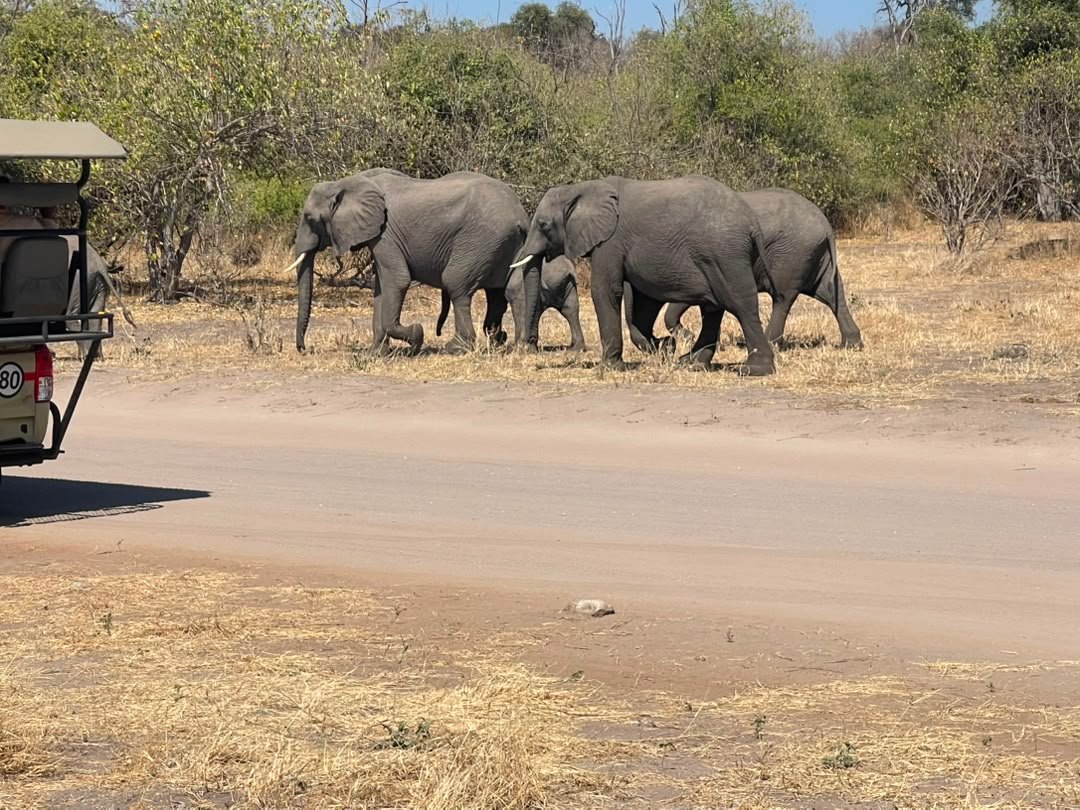
Chobe is especially renowned for its elephant viewing. During the dry months, large family herds move toward the Chobe River to drink, bathe and socialize, sometimes creating extraordinary scenes along the riverfront. Cape buffaloes also gather around the permanent water, while giraffes, impalas, kudus, waterbuck, puku, sable antelopes and other herbivores attract predators including lions, leopards, hyenas and jackals. For travelers who dream of seeing African elephants in impressive numbers, few experiences compare with watching entire herds descend toward the Chobe River during an afternoon safari.
Another advantage is accessibility. Unlike some remote Botswana safari regions that rely heavily on light-aircraft transfers, the Chobe Riverfront can be reached conveniently through Kasane, which Botswana Tourism identifies as the gateway to Chobe National Park. Kasane also provides straightforward connections with Victoria Falls in Zimbabwe and Livingstone in Zambia, making Chobe especially valuable for travelers planning a Botswana, Zimbabwe and Zambia safari. A visitor can therefore combine Chobe wildlife viewing with Victoria Falls without sacrificing several days to complicated transportation.
A safari in Chobe National Park is equally attractive because different sections of the park provide noticeably different experiences. The busy, wildlife-rich Chobe Riverfront contrasts with the remote predator country of Savuti, while Linyanti offers a quieter wilderness atmosphere and Nogatsaa provides an even more secluded safari environment. Travelers who spend several nights exploring different parts of Chobe can experience much more than an elephant safari; they encounter a vast northern Botswana ecosystem shaped by permanent rivers, seasonal water, migration routes, woodland and open grassland.
Where Is Chobe National Park Located?
Chobe National Park is located in northern Botswana, close to the international boundaries with Namibia, Zambia and Zimbabwe. Its northern boundary is formed by the Chobe River, while Kasane lies at the northeastern edge of the wider Chobe tourism region and functions as the main gateway for many visitors. The park’s position makes it one of the most strategically located safari destinations in Southern Africa.
Kasane is particularly important when planning a safari in Chobe National Park because accommodation, road transfers, boat cruises and game drives are widely organized from the town. Botswana Tourism notes that Chobe National Park lies only about 10 kilometres from Kasane, making it possible for visitors to stay around town while participating in morning game drives, afternoon safaris and Chobe River cruises. This accessibility makes the Chobe Riverfront particularly suitable for short Botswana safaris, family journeys and travelers incorporating the park into a larger Southern African itinerary.
Chobe’s northern location is also one of the reasons it combines so effectively with Victoria Falls. Botswana Tourism describes Kasane as an important departure point for Victoria Falls in Zimbabwe and Livingstone in Zambia, with Victoria Falls about 80 kilometres away. This allows travelers to create itineraries such as Victoria Falls and Chobe, Livingstone and Chobe, or more extensive Zambia–Zimbabwe–Botswana safari circuits.
To the southwest, Chobe also connects naturally with Botswana’s other famous wildlife regions. Travelers can continue through Savuti toward Moremi Game Reserve and the Okavango Delta, producing a comprehensive northern Botswana safari. Botswana Tourism specifically notes that Moremi is frequently combined with Chobe, demonstrating how naturally the two protected areas fit into the same wildlife circuit.
The park itself is far larger and more varied than the easily accessible riverfront suggests. Its approximately 11,700 square kilometres include riverine floodplains, woodland, swamps, seasonal pans and drier interior wilderness. Consequently, travelers planning several days in Chobe should consider whether they want only the easily reached Kasane and Riverfront experience or a deeper exploration through areas such as Savuti, Linyanti and Nogatsaa.
What Makes Chobe National Park Special?
What makes Chobe National Park special is the combination of exceptional wildlife concentrations, dramatically different ecosystems and the ability to experience those animals from both safari vehicles and boats. The Chobe River creates a permanent lifeline along the park’s northern boundary, while the interior changes through woodland, pans and seasonal waterways. Botswana Tourism identifies four major geographical areas within the park—the Chobe Riverfront, Ngwezumba pans, Savuti and Linyanti—illustrating just how diverse the park is.
The elephants are perhaps Chobe’s most recognizable attraction. During dry conditions, family groups travel from woodland areas toward the river, and visitors can sometimes watch large numbers of elephants drinking, swimming, covering themselves in mud and interacting along the riverbanks. Botswana Tourism notes that during the dry winter months the Riverfront attracts major elephant and Cape buffalo herds and that travelers can sometimes encounter hundreds of elephants during an afternoon game drive. These experiences have made an elephant safari in Chobe National Park one of Botswana’s signature wildlife encounters.
Yet Chobe should not be viewed only as an elephant destination. Lions, leopards, hyenas and jackals occur alongside giraffes, buffaloes, zebras and numerous antelope species. Savuti is particularly associated with predator viewing; Botswana Tourism highlights significant resident populations of lions, cheetahs and hyenas in this part of the Chobe region. This combination of large herbivore concentrations and predators gives visitors opportunities to observe natural interactions rather than simply isolated wildlife sightings.
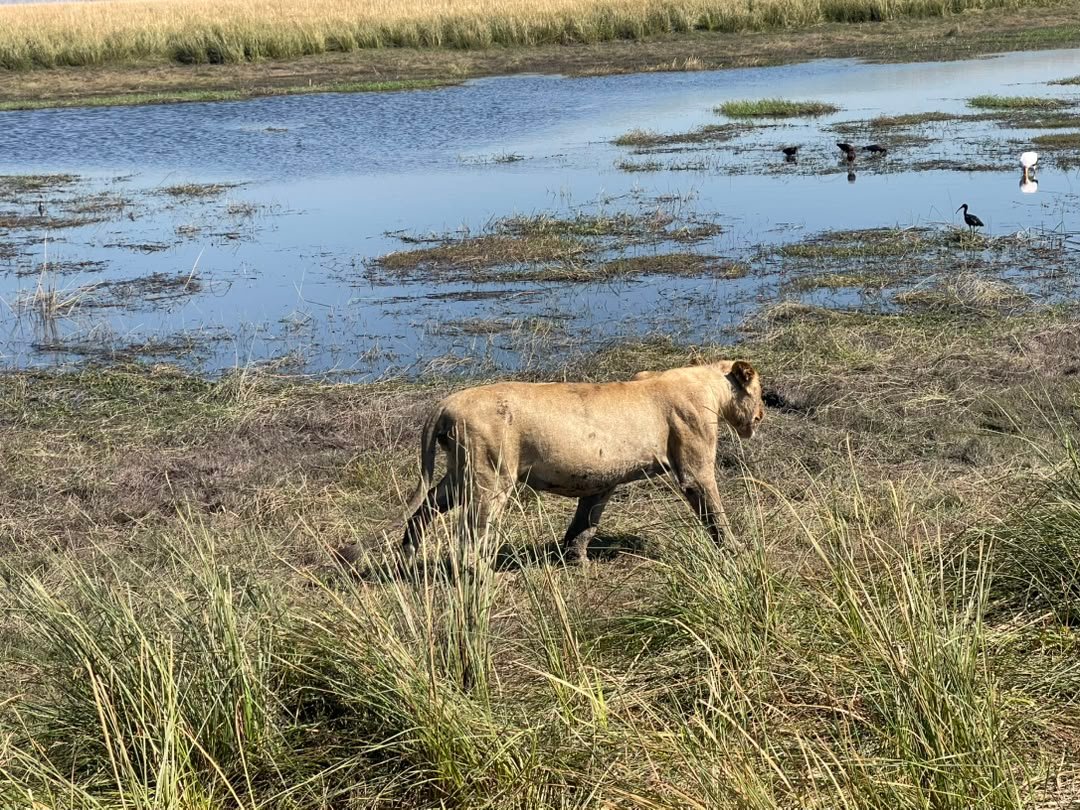
Water-based safari viewing adds another dimension. Instead of looking toward a river from a vehicle, guests can move slowly along the Chobe itself, watching animals come directly to the water. Elephants may wade through shallow areas, buffaloes may graze along the floodplains, hippos occupy deeper channels and crocodiles rest along exposed banks. The river also supports particularly rich birdlife, making Chobe attractive to dedicated birdwatchers as well as first-time safari travelers.
Another quality that makes Chobe special is that the safari can change dramatically simply by moving from one section of the park to another. Travelers can experience the concentration and accessibility of the Riverfront before continuing into the quieter interior, where distances are greater and the feeling of isolation becomes stronger. This makes Chobe suitable both for travelers wanting a convenient two-night safari from Victoria Falls and experienced safari enthusiasts looking for a longer, more remote Botswana wilderness expedition.
Plan Your Chobe Safari Adventure Today.
Best Areas for a Safari in Chobe National Park
Choosing the best area for a safari in Chobe National Park depends on what a traveler wants to see and how much time they have available. Chobe is not a single uniform landscape. Its riverfront, woodland, seasonal channels, open plains and remote pans each create different wildlife-viewing conditions. Botswana Tourism officially identifies the Riverfront, Ngwezumba pans, Savuti and Linyanti among its main geographical areas, while more remote localities such as Nogatsaa broaden the range of safari experiences available within the park.
For a first visit or short safari, the Chobe Riverfront is usually the natural starting point because it combines accessibility with excellent game viewing and boat safaris. Travelers staying longer can add Savuti for predators and a more remote safari atmosphere, while Linyanti appeals to visitors searching for quieter wilderness. Nogatsaa can offer an even greater sense of isolation. The forest-reserve landscapes around the wider Chobe and Kasane region also complement the national park experience, especially on itineraries focused on private camps and less heavily traveled wildlife corridors.
Chobe Riverfront
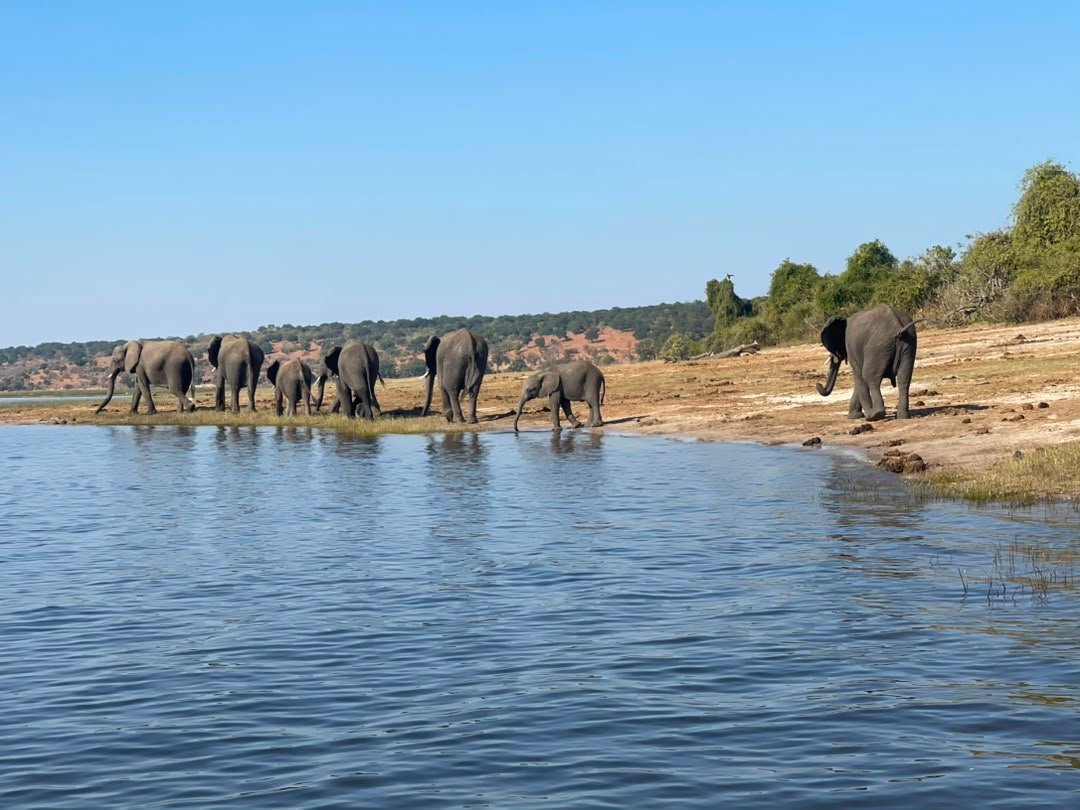
The Chobe Riverfront, sometimes associated with the Serondela area, is the most accessible and frequently visited part of Chobe National Park. Botswana Tourism identifies the Riverfront as especially famous for the large herds of elephants and Cape buffaloes that gather near the river during the dry months. For travelers undertaking their first safari in Chobe National Park, this is normally the easiest area in which to experience the park’s signature combination of abundant wildlife and beautiful river scenery.
Game drives follow tracks through woodland and along the floodplain, where visitors may encounter elephants, buffaloes, giraffes, waterbuck, puku, lechwe, kudu, sable, roan, impala, warthogs, baboons and monkeys. Predators including lions, leopards, hyenas and jackals also inhabit the area. Because the Chobe River remains such an important water source, wildlife movements toward and away from the river can create particularly productive morning and late-afternoon drives.
The defining experience, however, is a Chobe River boat safari. Boats allow travelers to approach wildlife viewing from a lower perspective and observe animals along islands, channels and riverbanks. Elephants drinking at the water’s edge, hippos surfacing nearby, crocodiles resting on sandbanks and large numbers of waterbirds can all contribute to a completely different experience from a conventional 4×4 safari. Botswana Tourism specifically recommends river cruises for the alternative wildlife-viewing perspective they provide.
The Riverfront is also the most practical choice for travelers combining Chobe and Victoria Falls, because Kasane provides convenient access to both the park and regional border connections. It is ideal for one-day excursions, two- or three-night Chobe safaris, family trips, private photographic journeys and first-time Botswana visitors.
Savuti
Savuti, also written Savute, provides a markedly different safari environment from the Chobe Riverfront. Located deeper within the Chobe wilderness, the area is shaped by open grasslands, woodland and the famously unpredictable Savuti Channel. Botswana Tourism describes Savuti as being at the heart of the park and notes that it supports most of the Chobe region’s wildlife species apart from some of the more strongly water-dependent antelopes.
Savuti is particularly attractive to travelers interested in predators. Lions, cheetahs and hyenas are among the carnivores highlighted by Botswana Tourism for this region, and the mixture of open terrain and prey species creates excellent opportunities for observing predator behavior. Elephants and other large mammals also move through the area, while changing water availability can strongly influence where wildlife concentrates.
A Savuti safari feels considerably more remote than a Riverfront excursion from Kasane. The longer distances and wilderness setting make it especially appealing to travelers who already have a few days available and want a more immersive Botswana safari. It also fits naturally into overland or fly-in itineraries connecting Chobe with Moremi and the Okavango Delta.
Combining the Chobe Riverfront and Savuti is particularly rewarding because the two areas showcase different sides of the same national park. Riverfront safaris emphasize water, elephants and boat viewing, whereas Savuti offers open landscapes, predator activity and the atmosphere of Botswana’s remote interior.
Linyanti
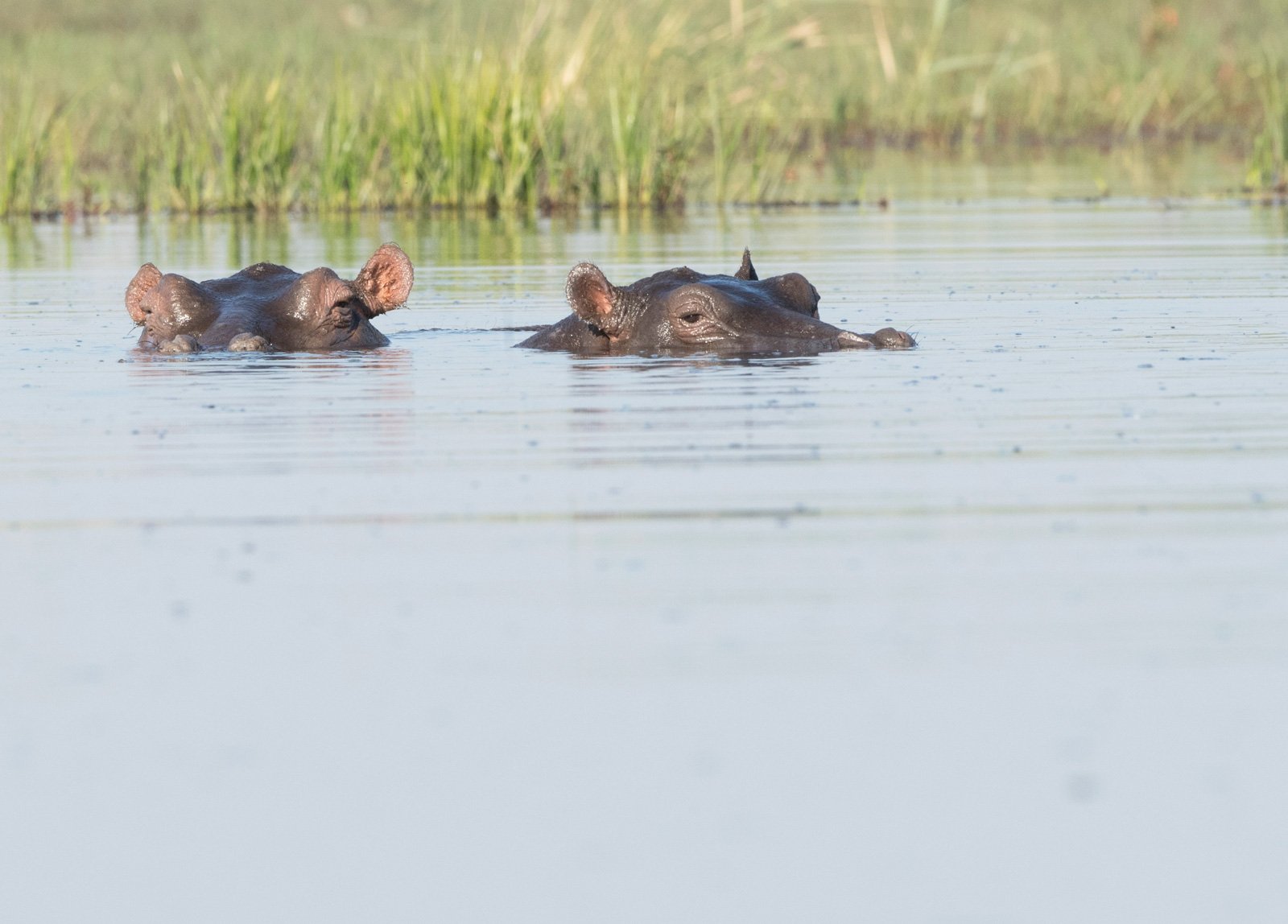
The Linyanti region occupies the western side of the broader Chobe wilderness and offers a quieter alternative to the busy Riverfront. It forms part of the distinct geographical diversity recognized within Chobe National Park and is associated with waterways, floodplains and woodland environments. Its relative remoteness is one of its greatest attractions.
Linyanti is well suited to travelers looking for an intimate wildlife experience with fewer vehicles and a stronger feeling of isolation. Elephants are an important feature of northern Botswana’s Linyanti landscapes, while predators and other large mammals move through the wider Chobe–Linyanti ecosystem. The region also forms part of important wildlife corridors extending through northern Botswana.
Because of the area’s remote nature, Linyanti safaris are generally better suited to travelers with additional time rather than those visiting Chobe on a one-day excursion from Victoria Falls. It can work especially well in itineraries that combine Chobe, Savuti, Linyanti and the Okavango Delta, gradually moving through increasingly remote wilderness areas.
For photographers and repeat safari travelers, Linyanti can provide an excellent contrast to the more accessible Riverfront. Instead of concentrating purely on how many animals can be seen during a short drive, the experience is often about spending longer in a quiet landscape, observing wildlife behavior and appreciating northern Botswana’s wilderness character.
Nogatsaa
Nogatsaa is one of the quieter areas of Chobe National Park and offers a particularly appealing alternative for travelers wishing to move away from the more heavily visited Riverfront. The area lies roughly 80 kilometres south of the Chobe Riverfront and is characterized by open grasslands, woodland and seasonal pans. Its remoteness gives it a traditional wilderness atmosphere that can be difficult to experience during a short safari based entirely around Kasane.
Seasonal water availability strongly influences wildlife activity in Nogatsaa. The pans become important focal points, attracting animals into areas where visitors may encounter elephants and other wildlife without the same concentration of safari vehicles seen along the most popular Riverfront tracks. The landscape itself is also part of the appeal, with broad spaces and wooded sections creating a distinctly different visual experience from the Chobe River.
Nogatsaa is particularly suitable for repeat visitors, photographers, adventurous travelers and anyone searching for a less crowded Chobe National Park safari. Rather than maximizing the number of activities in a short period, a stay here encourages travelers to slow down and experience the rhythms of the bush.
It can also be incorporated into longer itineraries linking different sections of Chobe. A journey combining the Riverfront, Nogatsaa and Savuti, for example, demonstrates how dramatically the park changes as travelers move away from the permanent Chobe River and deeper into Botswana’s interior wilderness.
Chobe Forest Reserve
The Chobe Forest Reserve and neighboring forest-reserve landscapes should be understood as complementary to the national park rather than one of the four principal geographical sections identified by Botswana Tourism within Chobe National Park itself. The broader Chobe and Kasane region contains protected forest areas and wildlife corridors that extend beyond the formal national park boundaries, helping create a much larger interconnected wilderness landscape.
These forested areas can provide a different safari atmosphere from the open Chobe River floodplains. Woodlands offer habitat for elephants, antelopes, predators and numerous bird species, while private or lower-density tourism areas can appeal to travelers who value tranquility. Wildlife frequently moves through the wider landscape rather than respecting the administrative boundaries visible on a map, which is why accommodations around the forest reserves can still provide valuable wildlife experiences.
The forest-reserve areas around Kasane can also work well for travelers who want convenient access to both the Chobe River and surrounding wilderness. Some properties in the wider Chobe region combine game drives with river activities, allowing guests to experience woodland environments before entering the national park or taking a boat safari. Botswana Tourism lists properties in the wider Chobe and forest-reserve region offering game-viewing activities, illustrating how these landscapes complement the core national park experience.
For a complete safari in Chobe National Park, travelers should therefore avoid thinking of Chobe as one small riverfront destination. The river is the most famous feature, but the wider safari landscape includes remote woodland, seasonal pans, predator-rich plains and extensive wildlife corridors. Combining the Chobe Riverfront with areas such as Savuti, Linyanti or Nogatsaa transforms a short wildlife excursion into a much deeper exploration of northern Botswana.
Wildlife to See on a Chobe National Park Safari
The extraordinary diversity of wildlife is one of the main reasons a safari in Chobe National Park ranks among Botswana’s most rewarding safari experiences. The Chobe ecosystem includes permanent river frontage, floodplains, woodland, seasonal pans, marshes and drier interior landscapes, creating suitable habitats for an impressive range of mammals, predators, reptiles and birds. Botswana Tourism notes that travelers exploring tracks near the Chobe River can sometimes encounter as many as 15 different animal species during a single drive, illustrating the richness of the park’s wildlife.
Wildlife viewing changes according to both the season and the section of the park being explored. Around the Chobe Riverfront, elephants, buffaloes and numerous antelope species become particularly conspicuous around permanent water. Savuti, on the other hand, is widely associated with predators, while the Linyanti landscapes provide important dry-season water for elephants, buffaloes, zebras and other species moving through northern Botswana. This variety means a longer Chobe safari can produce substantially different wildlife encounters from one day to the next.
Travelers should remember that Chobe is a natural wilderness rather than a controlled wildlife attraction, so sightings can never be guaranteed. Animals move according to rainfall, water availability, vegetation, temperature and predator activity. That unpredictability is an important part of the experience. A quiet morning may suddenly produce a herd of elephants crossing the road, a pride of lions resting near the floodplain or buffaloes emerging from woodland as they move toward the river.
Elephants in Chobe National Park
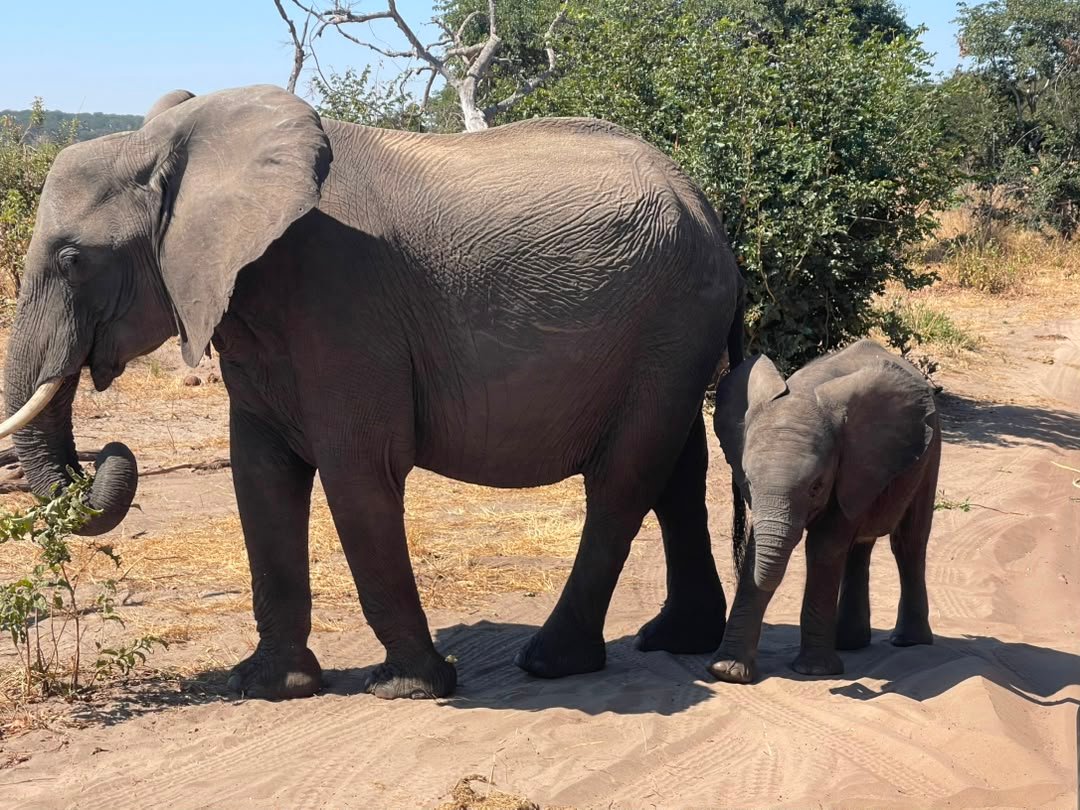
Elephants in Chobe National Park are unquestionably one of the park’s greatest attractions, and many travelers specifically choose Chobe because of the extraordinary opportunities to watch African elephants around the Chobe River. The Riverfront becomes particularly important during the dry months when large herds move toward permanent water to drink, bathe and cool themselves. Botswana Tourism describes the Chobe Riverfront as especially famous for the large herds of elephants and Cape buffaloes that converge on the river during the dry winter period.
An afternoon elephant safari in Chobe National Park can be especially memorable. Botswana Tourism notes that visitors may sometimes see hundreds of elephants during a single afternoon game drive, while family groups can cross the Serondella Road on their way to the river. Observing these movements provides far more than a simple wildlife sighting. Travelers may watch adults protecting calves, young elephants playing together, herds drinking from the river, individuals covering themselves in mud and groups disappearing back into woodland as temperatures begin to fall.
The Chobe River also makes elephant viewing different from many traditional land-based safari destinations. From a boat safari, travelers can watch elephants approaching the shoreline from water level, sometimes seeing them enter the river to drink, bathe or cross shallow channels. This creates excellent opportunities for wildlife photography because elephants may be framed against open water, floodplains and dramatic evening light rather than dense vegetation.
Elephants can also be encountered away from the Riverfront. Permanent waters in the greater Linyanti region become important wildlife gathering and migration points during the dry season, attracting elephant and buffalo herds from across northern Botswana. Travelers combining the Riverfront with Savuti or Linyanti therefore gain a broader understanding of how elephants move through the larger Chobe ecosystem rather than seeing them only beside the main river.
Lions and Other Predators
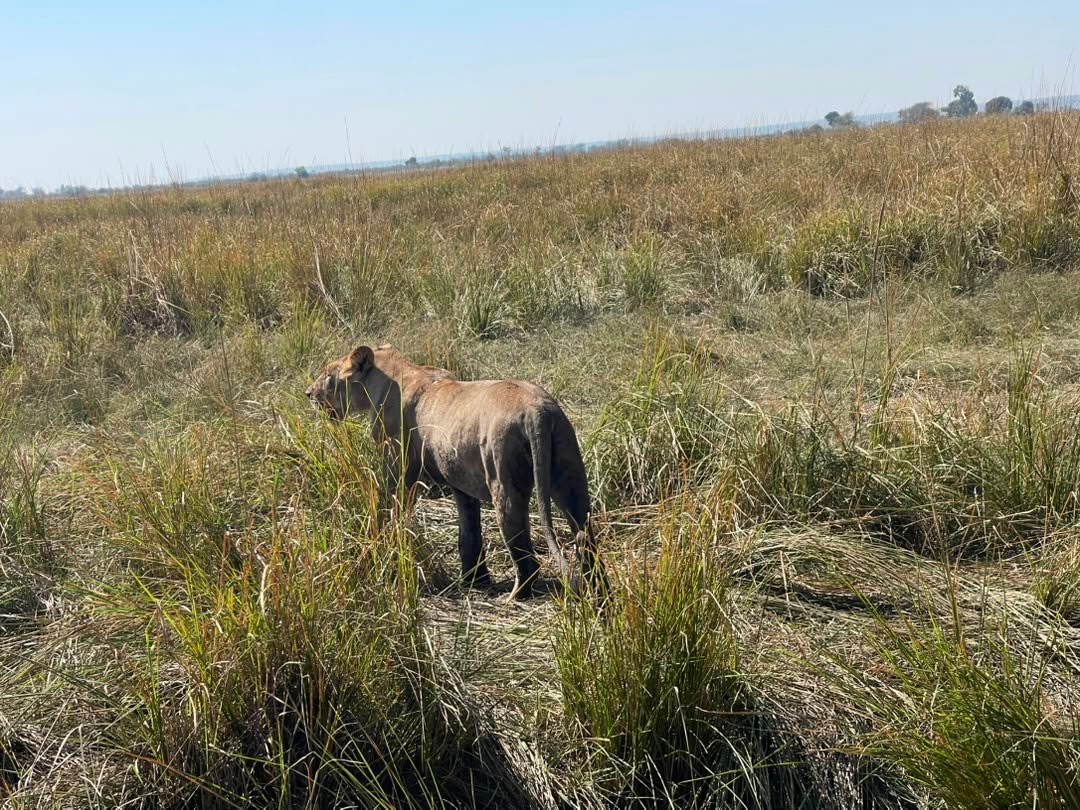
A Chobe National Park safari is not only about elephants. The park supports an impressive range of predators, including lions, leopards, spotted hyenas and jackals, while cheetahs and several smaller carnivores occur in suitable areas of the broader ecosystem. Botswana Tourism specifically lists lion, leopard, hyena and jackal among the predators accompanying the abundant herbivores around the Chobe Riverfront.
Lions are among the most exciting animals to encounter during a game drive. They may be found resting in shade during warmer hours, moving through open areas in the cooler morning or evening, or watching concentrations of herbivores around water. Because buffaloes, impalas, zebras and other prey species occur throughout the Chobe ecosystem, predator activity forms an important part of the park’s natural wildlife dynamics.
Travelers particularly interested in predators should consider including Savuti in a longer Chobe itinerary. Botswana Tourism identifies Savuti as being especially known for its resident populations of lions, cheetahs and hyenas. Its combination of grasslands, woodland, the Savuti Channel and seasonal wildlife movements creates a very different predator-viewing environment from the riverbanks near Kasane.
Leopards can also occur within Chobe, although their solitary behavior and preference for cover can make them more difficult to locate than lions. A leopard sighting is therefore often one of the most exciting moments of a safari. Hyenas are more commonly heard or observed around predator-rich landscapes, while jackals and smaller carnivores add another dimension for travelers interested in the complete ecosystem rather than only the largest animals.
In the wider Linyanti landscapes, the predator variety becomes even broader. Botswana Tourism lists lions, hyenas, leopards, cheetahs, jackals, servals and caracals among predators that may occur in the region depending on season, water and food availability. This is why combining different Chobe areas can be particularly rewarding for serious wildlife enthusiasts.
Buffaloes, Giraffes and Antelopes
Large herbivores provide much of the everyday action on a safari in Chobe National Park. Cape buffaloes are especially conspicuous around the Chobe River during dry periods, where large herds move toward permanent water alongside elephants. Botswana Tourism specifically identifies elephants and Cape buffaloes as two of the major wildlife concentrations along the Riverfront during the dry winter months.
Watching a large buffalo herd is impressive in its own right. Hundreds of animals may move through woodland and grassland before reaching water, while calves remain among protective adults. Their presence also attracts the attention of lions, making areas with large buffalo concentrations particularly interesting for travelers hoping to observe predator-prey interactions.
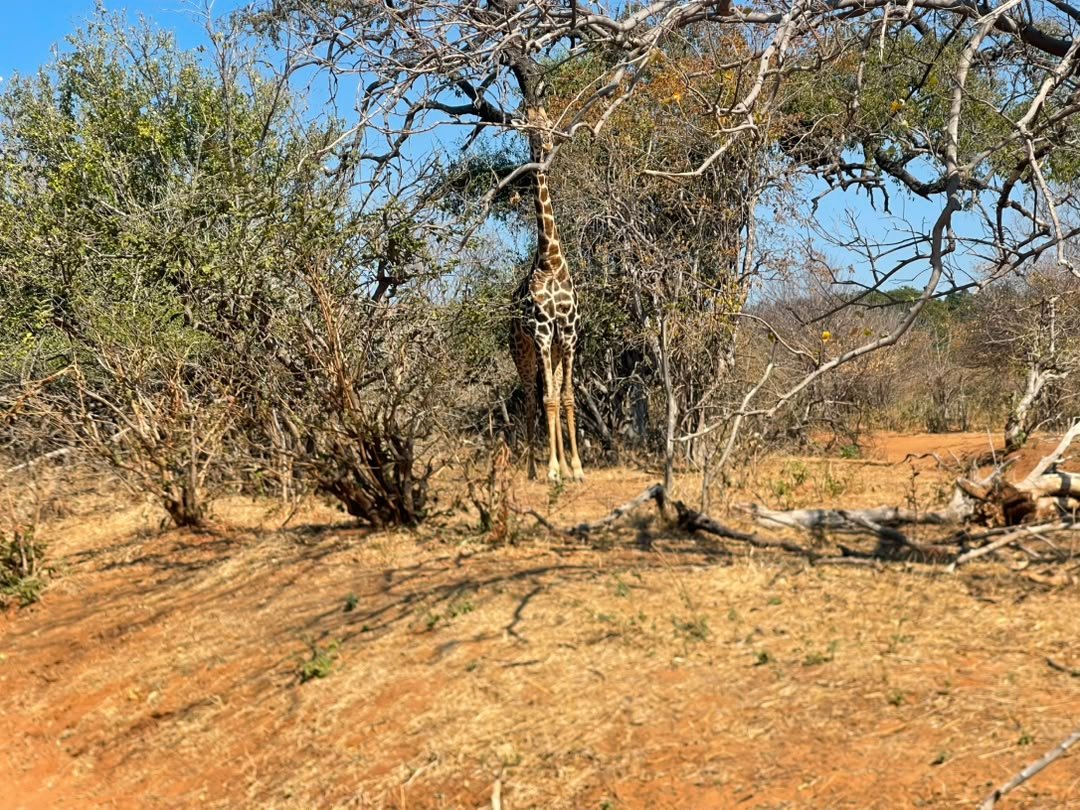
Giraffes in Chobe National Park add a completely different character to the landscape. They browse on trees and shrubs along woodland edges and are often among the easiest large mammals to identify from a distance. Their height makes them particularly photogenic against open Botswana skies, while their slow movements provide good opportunities for travelers to observe feeding behavior.
Chobe also supports a diverse collection of antelope species. Botswana Tourism lists waterbuck, lechwe, puku, kudu, roan, sable, impala and bushbuck among animals that can be encountered around the Riverfront and surrounding habitats. This diversity is important because each species favors slightly different habitat conditions, ranging from wetter floodplain areas to woodland and drier interior environments.
For wildlife enthusiasts, species such as sable and roan antelope can be particularly exciting because they are less routinely encountered than impalas. Puku are another interesting Chobe species closely associated with northern Botswana’s river environments. Moving between the Chobe Riverfront, Linyanti and interior sections of the park increases the variety of antelope habitats travelers can explore.
These herbivores are also fundamental to the larger ecosystem. Buffaloes, antelopes and other prey animals support Chobe’s predator populations, while grazing and browsing help shape vegetation patterns. A rewarding safari therefore involves appreciating not only individual species but also how they interact within the landscape.
African Wild Dogs
African wild dogs are among the most exciting and sought-after predators in Southern Africa. Unlike lions, which may spend long periods resting, wild dogs are highly mobile and can cover substantial distances while hunting and moving through their territories. Their unpredictable movements mean sightings are never guaranteed, making every encounter particularly rewarding.
The wider northern Botswana ecosystem is important habitat for African wild dogs, including wildlife areas connected to Chobe and Linyanti. Botswana Tourism listings for the broader Chobe-Linyanti tourism landscape identify wild dogs among the predators visitors may encounter in this region. Their movements can extend across large territories, so sightings depend greatly on where packs are located during a traveler’s visit.
Wild dogs are highly social animals and live in coordinated packs. Watching a pack interact can be as fascinating as witnessing a hunt. Travelers may see adults greeting one another, younger individuals playing, packs resting together or the group suddenly becoming active before moving rapidly through the bush. Experienced guides pay attention to fresh tracks, alarm calls and reports from other guides when searching for these elusive predators.
Travelers particularly interested in African wild dog safaris in Botswana may benefit from spending more time in the broader northern Botswana wilderness rather than limiting their journey to a single short Riverfront game drive. Combining Chobe with Linyanti, Savuti, Moremi or other connected northern ecosystems increases the diversity of predator habitat explored, although wildlife sightings remain completely natural and cannot be promised.
The rarity and wide-ranging nature of African wild dogs make them one of the species that experienced safari travelers often value most. Seeing elephants beside the Chobe River may be expected, but unexpectedly finding a pack of painted dogs moving through the woodland can become one of the defining wildlife moments of an entire Botswana safari.
Hippos and Crocodiles
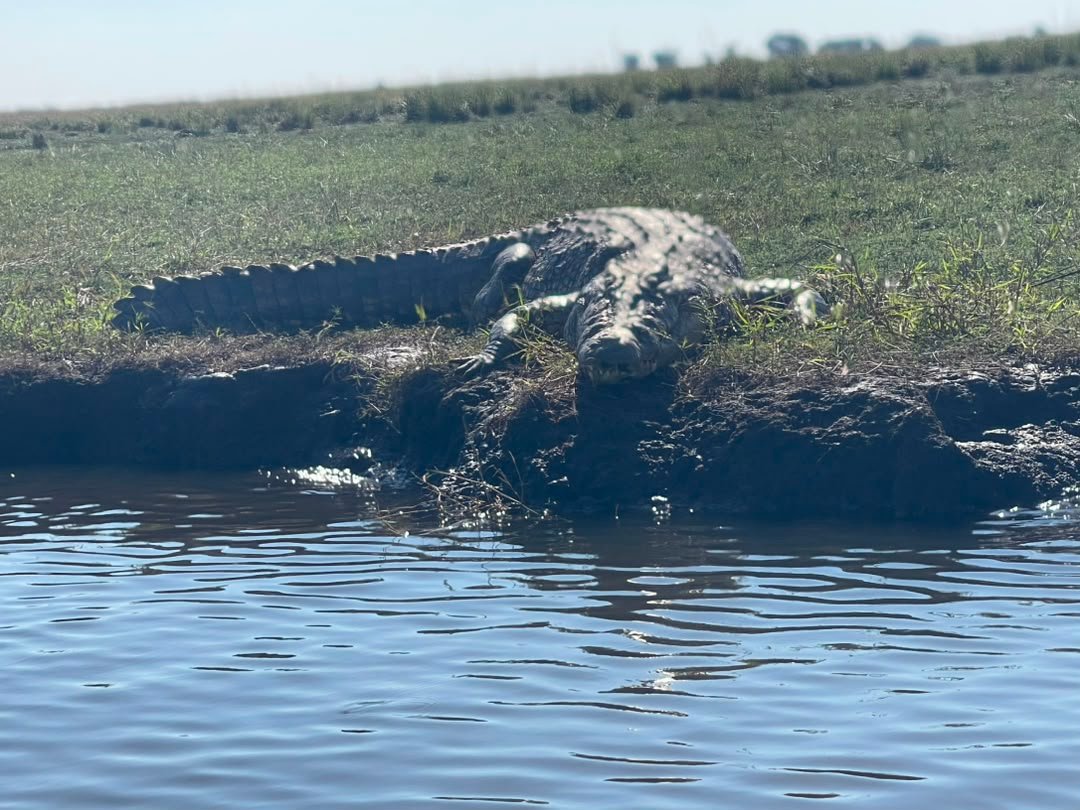
The permanent waterways of the Chobe region create excellent habitat for hippos and crocodiles, making a Chobe River safari an important complement to traditional game drives. Botswana Tourism specifically recommends river cruises because they allow visitors to get significantly closer views of hippos, crocodiles and waterbirds than would normally be possible from land.
Hippos spend much of the daytime in or near water, where they can regulate their body temperature and remain protected from the strongest heat. During a boat safari on the Chobe River, travelers may see groups resting in deeper channels, surfacing to breathe or moving between sections of the river. Their characteristic calls often become part of the soundscape of a Chobe river experience.
Despite their appearance, hippos are powerful wild animals that require considerable space and respect. Professional boat operators maintain appropriate distances and follow established navigation practices when moving around them. Travelers should never attempt to approach wildlife independently or encourage a boat operator to move too close merely for photographs.
Nile crocodiles are another important part of the Chobe River ecosystem. They may be seen lying along exposed banks or islands, partially submerged near the shoreline or moving silently through the water. Warm periods often provide opportunities to see crocodiles basking, while their camouflage can make them surprisingly difficult to notice until a guide points them out.
Seeing hippos and crocodiles from the river demonstrates why travelers should include both a game drive and boat safari in Chobe National Park. Land safaris provide access to elephants, buffaloes, lions, giraffes and antelopes, whereas river safaris reveal aquatic and semi-aquatic wildlife from a completely different perspective.
Birdlife in Chobe National Park
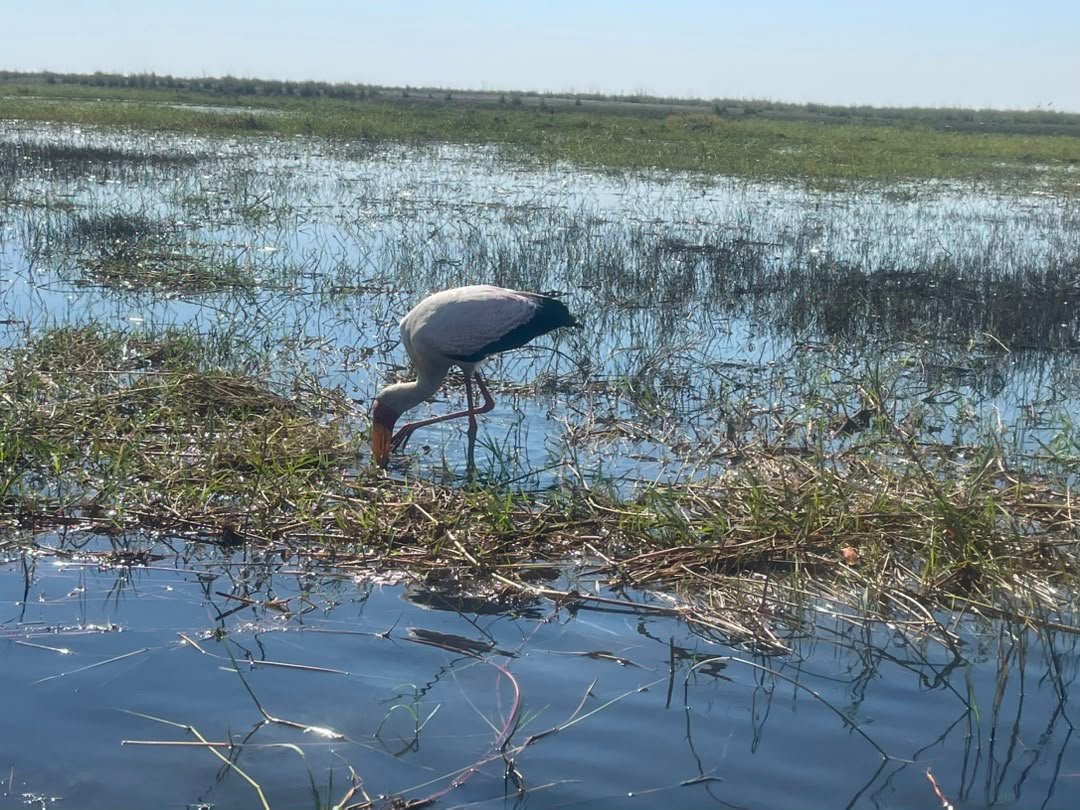
The birdlife in Chobe National Park is exceptional, making the park much more than a destination for large mammals. Botswana Tourism reports that more than 460 bird species have been recorded in Chobe National Park, placing it among Africa’s important bird-safari destinations. The park’s combination of rivers, floodplains, woodland, marshes, open grassland and seasonal pans creates habitats for waterbirds, raptors, woodland specialists and migratory species.
The Chobe Riverfront is particularly productive for birdwatching because the permanent river supports an enormous variety of aquatic and shoreline species. Botswana Tourism highlights birds including Sacred Ibis, Egyptian Geese, cormorants, darters, Spur-winged Geese, Pel’s Fishing Owl, carmine bee-eaters, kingfishers, rollers, African Fish Eagles, Martial Eagles and several members of the stork family.
A Chobe River birdwatching safari can therefore be rewarding even for travelers who do not consider themselves dedicated birders. Kingfishers may be seen perched above channels waiting to dive for fish, African Fish Eagles call from riverside trees and large waterbirds move between sandbanks and shallow areas. Because boat safaris travel quietly along the river, they offer excellent opportunities for photography.
Savuti also becomes important for birdlife when seasonal water conditions are favorable. Botswana Tourism notes that the Mababe Depression can attract thousands of migratory birds when filled with water, alongside large concentrations of other wildlife. The changing seasonal conditions mean birding experiences differ substantially between wet and dry periods.
The greener months can be especially attractive to bird enthusiasts because seasonal migrants join resident species and the landscape becomes more vibrant. Breeding activity, colorful plumage and increased insect abundance can make this an excellent time for specialized birdwatching, while the dry season offers easier viewing around concentrated water sources.
For travelers planning a comprehensive wildlife safari in Chobe National Park, birdlife should therefore not be treated as an afterthought. Elephants, lions and buffaloes may initially attract visitors to Chobe, but the park’s extraordinary bird diversity adds depth to every game drive and river cruise. From powerful raptors to brightly colored bee-eaters and kingfishers, birds form an essential part of the Chobe safari experience.
Chobe National Park Elephant Safaris
Chobe National Park elephant safaris are among the most iconic wildlife experiences in Botswana and one of the main reasons travelers include Chobe in a Southern African safari itinerary. The park is particularly renowned for the enormous numbers of African elephants that move through its riverine woodland, floodplains and inland wilderness. The Chobe Riverfront is especially famous for large elephant herds, particularly during the dry season when permanent water becomes increasingly important to wildlife. Botswana Tourism specifically identifies the Riverfront as an area celebrated for its large concentrations of elephants and Cape buffaloes.
What makes an elephant safari in Chobe National Park particularly special is not simply the number of elephants that may be encountered but the variety of behaviors travelers can observe. Family groups regularly approach the Chobe River to drink, bathe and cool themselves, while young calves remain close to their mothers and older females guide herds between feeding grounds and water. Visitors may watch elephants covering themselves with mud, spraying water over their bodies, feeding along the floodplain or slowly crossing safari tracks as they move between woodland and the river. These prolonged encounters allow travelers to appreciate the social complexity of elephants rather than merely photographing an animal for a few moments.
The dry season generally produces some of the most dramatic elephant encounters along the river because animals become increasingly dependent on permanent water. During afternoon game drives, herds may emerge from woodland and make their way toward the Chobe River, creating some of the park’s classic safari scenes. Botswana Tourism notes that travelers can sometimes encounter hundreds of elephants during an afternoon drive along the Riverfront. This combination of large herds, open floodplains and river scenery has helped make Chobe one of Africa’s best-known elephant-viewing destinations.
A Chobe River boat safari provides an entirely different perspective on elephants. Instead of watching from a safari vehicle, visitors travel along the river and observe animals approaching the banks from water level. Elephants may stand almost completely surrounded by water while feeding on aquatic vegetation, cross shallow channels between islands or line the riverbank during the warmer parts of the afternoon. Botswana Tourism highlights river cruising as one of Chobe’s defining wildlife experiences, providing close views of animals that gather around the water.
Photographers particularly appreciate Chobe elephant safaris because the river offers unusually clean backgrounds, reflections and low viewing angles. Late-afternoon light can illuminate elephants against the river and distant floodplains, while boat-based photography can provide perspectives difficult to achieve from a conventional vehicle. Travelers who are especially interested in elephants should therefore combine at least one land-based game drive with a Chobe River boat safari rather than choosing only one activity.
Although the Riverfront is the most famous elephant-viewing area, elephants also occur throughout the wider Chobe ecosystem. Savuti, Linyanti and the wildlife corridors connecting Chobe with other northern Botswana conservation areas support extensive elephant movements. A longer safari in Chobe National Park therefore provides a much broader elephant experience than a short excursion from Kasane and allows travelers to see how these animals use different habitats according to season, water availability and food.
Best Safari Activities in Chobe National Park
The best safari activities in Chobe National Park combine traditional land-based wildlife viewing with experiences on the Chobe River. This is one of the qualities that distinguishes Chobe from many safari destinations where visitors spend almost every activity inside a vehicle. From Kasane, travelers can conveniently arrange morning and afternoon game drives as well as boat cruises, creating considerable flexibility within even a short stay. Botswana Tourism specifically highlights morning and afternoon game drives together with boat cruises among the activities available to visitors based around Kasane.
A well-designed Chobe safari should ideally include both land and water activities. Game drives are particularly effective for locating lions, leopards, buffaloes, giraffes, antelopes and elephants in woodland and open terrain, while boat safaris reveal hippos, crocodiles, waterbirds and animals approaching the river to drink. Combining these experiences provides a much more complete understanding of Chobe’s wildlife ecosystem than repeatedly taking the same type of safari.
Different activities also suit different travelers. First-time visitors may prioritize classic game drives and an afternoon river cruise, photographers may prefer private vehicles and specialized boats, birdwatchers can spend longer around productive river channels, while couples may particularly enjoy a sunset cruise. Families and private groups can also tailor activity times and vehicle arrangements according to their own pace.
Morning Game Drives
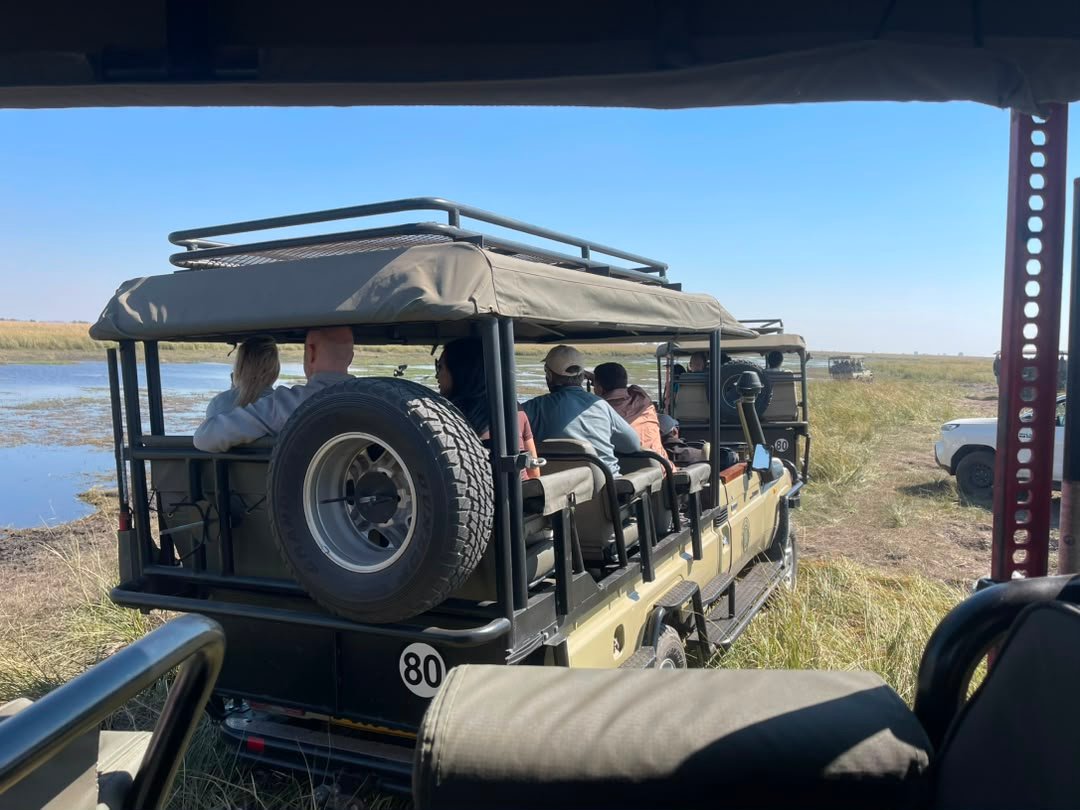
Morning game drives in Chobe National Park normally take advantage of the cooler early hours when wildlife activity can be high and temperatures are more comfortable. Leaving early also gives travelers a chance to experience the landscape as the light begins to spread across the floodplain and woodland, creating beautiful conditions for both wildlife viewing and photography.
Predators are an important attraction during morning drives. Lions may still be active after hunting during the night, while hyenas and jackals can sometimes be encountered before rising temperatures encourage animals to seek shade. Leopards are much less predictable but may occasionally be found moving through woodland or resting in trees. Herbivores such as impalas, giraffes, buffaloes and elephants also become increasingly active as daylight develops.
Morning drives are particularly valuable because guides can search for fresh tracks and other signs left by animals overnight. Experienced safari guides interpret footprints, alarm calls and animal behavior to help determine where predators or large herds may have moved. This tracking element makes the activity much more interesting than simply driving randomly through the national park.
The light during the first hours of the day can also be excellent for photography. Softer illumination, longer shadows and cooler conditions often create attractive images of elephants, giraffes and other wildlife before the stronger midday sun arrives. Visitors interested in Chobe wildlife photography should consider taking several morning drives rather than relying on a single safari outing.
A typical Chobe itinerary can therefore begin with a morning game drive before returning to the lodge for breakfast or relaxation and later heading onto the river. Botswana Tourism confirms that visitors staying around Kasane can structure itineraries around both morning and afternoon drives as well as boat cruises.
Afternoon Game Drives
Afternoon game drives in Chobe National Park offer a different experience from the morning. Temperatures gradually decline as the day progresses, and animals begin moving again after resting during the hottest hours. Around the Chobe Riverfront, the afternoon can be particularly productive because elephants and buffaloes may move toward permanent water.
Elephant viewing is one of the great strengths of an afternoon drive. Botswana Tourism notes that the Chobe Riverfront attracts large elephant and buffalo herds, making this one of the park’s signature wildlife areas. Travelers may encounter family groups walking toward the water, bulls feeding near the road or elephants congregating across the floodplain as the afternoon cools.
Predator activity may also increase toward evening. Lions that spent much of the day sleeping can become more alert, while other carnivores may begin preparing for nighttime activity. Although there is never a guarantee of seeing a hunt, the changing behavior of predators and prey can make the final portion of an afternoon safari particularly exciting.
Late-afternoon game drives are also excellent for photography because the warmer light can transform Chobe’s landscape. Elephants, giraffes and antelopes photographed against golden grasslands or the Chobe floodplain can produce some of the most memorable images of a Botswana safari.
For travelers staying several nights, alternating morning and afternoon game drives provides greater variety because wildlife activity changes throughout the day. Some encounters may occur only once during an entire safari, so spending time in the park during different periods increases the range of behaviors travelers can potentially observe.
Chobe River Boat Safaris
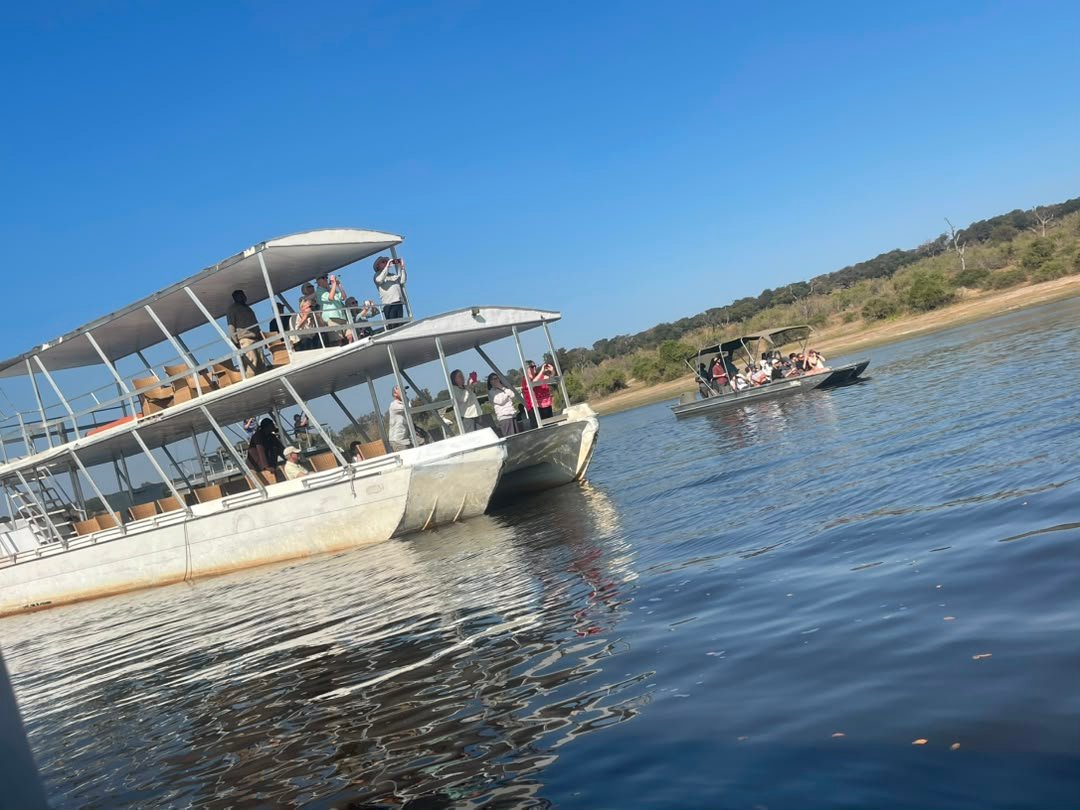
A Chobe River boat safari is one of the defining experiences of visiting Chobe National Park and should be included in almost every first-time itinerary. Botswana Tourism specifically recommends river cruises as a way to experience the park from a perspective unavailable on land, with particularly good opportunities to observe hippos, crocodiles, waterbirds and wildlife using the river.
The most dramatic encounters often involve elephants. Boats can position themselves at respectful distances as herds descend toward the river, allowing travelers to observe elephants drinking, bathing or crossing shallow channels. Watching elephants from close to water level creates a completely different sense of scale than viewing them from an elevated safari vehicle.
Boat safaris are also excellent for observing hippos and Nile crocodiles. Hippos can be seen resting in deeper sections of the river or surfacing between breaths, while crocodiles frequently lie along banks and exposed sandbars. Waterbuck, buffaloes and other mammals may appear along the shoreline as they come to drink or feed.
Birdwatching is another major strength of the river experience. Kingfishers, African Fish Eagles, herons, egrets, cormorants and numerous other species use the waterways and floodplains. The slower pace of a boat often provides more time to observe and photograph birds than a conventional game drive.
Several safari properties in the Chobe area offer both 4×4 wildlife viewing and Chobe River cruises, demonstrating how closely the two activities complement one another. Botswana Tourism lists daily game-viewing safaris and river cruises among activities available at lodges in the region. For a comprehensive Chobe safari, experiencing the park from both vehicle and boat is strongly recommended.
Sunset Boat Cruises
A sunset boat cruise on the Chobe River combines wildlife viewing with one of the most atmospheric moments of the day. As temperatures begin to fall, animals become more active along the riverbanks, while the changing light creates beautiful views across the floodplain and water.
Elephants are frequently one of the principal attractions during these afternoon river excursions because family groups may arrive at the water after feeding farther inland. Travelers can spend time observing animals drinking or bathing before watching the sun descend over the wider river landscape.
The relaxed pace makes a sunset cruise especially appealing to couples, honeymooners and travelers seeking a less physically demanding safari activity. It also provides a welcome change after several hours of driving on dusty national park tracks.
Wildlife remains the central focus, however. Hippos, crocodiles, buffaloes, antelopes and waterbirds can all contribute to the experience, and a seemingly quiet stretch of river can change quickly when elephants emerge from woodland or a Fish Eagle swoops toward the water.
The combination of evening wildlife and dramatic light also makes the activity extremely attractive for photographers. Reflections on the river, silhouettes of animals and changing sky conditions provide a different style of image from those captured during daytime game drives.
Book My Chobe Safari Experience.
Private Safari Experiences
A private safari in Chobe National Park provides greater flexibility than joining a shared vehicle or scheduled excursion. Instead of following the interests of several unrelated travelers, a private guide can concentrate on the animals, landscapes and photography opportunities that matter most to a particular couple, family or group.
Private game drives are especially useful for serious wildlife enthusiasts. If travelers locate lions, elephants or another interesting animal, they can often spend longer observing behavior rather than moving on because other guests want to search for another species. The guide can also adjust the balance between general wildlife viewing, birds and photography according to the group’s interests.
Families may find a private safari particularly comfortable because activity times can be better adapted to children, while multi-generational groups can move at a slower pace when necessary. Couples and honeymooners may also appreciate the privacy and personalized attention.
Private boat safaris offer similar benefits. Photographers can position themselves according to light direction and animal movement, while travelers interested in birds can spend longer in productive channels instead of following a standard river-cruise schedule.
For travelers who want more than a basic Chobe National Park safari, combining private game drives with a private or small-group boat experience can substantially improve both flexibility and the quality of wildlife observation.
Birdwatching Safaris
A birdwatching safari in Chobe National Park can be remarkably rewarding because river, floodplain, woodland and seasonal habitats support an exceptional variety of birdlife. Even travelers who initially visit Chobe primarily for elephants often become interested in birds after seeing the diversity concentrated around the Chobe River.
River safaris are particularly productive because birds are frequently visible along open shorelines, islands and channels. African Fish Eagles may be heard calling from riverside trees, while kingfishers search for prey along the water. Herons, egrets, cormorants and other waterbirds are commonly associated with the river environment.
Game drives broaden the birding experience by exploring woodland and drier habitats away from the river. Raptors, hornbills, rollers, bee-eaters and numerous smaller species can become important highlights, especially with a guide who specializes in bird identification.
The wetter months can bring particularly interesting birding conditions because migratory species arrive and many resident birds become more active around breeding and feeding opportunities. The landscape is also greener, providing an attractive background for bird photography.
Dedicated birders should consider arranging private guiding rather than relying entirely on standard shared game drives. A specialized guide can devote more time to identification, calls, habitat preferences and locating less obvious species instead of concentrating primarily on elephants and large predators.
Photographic Safaris
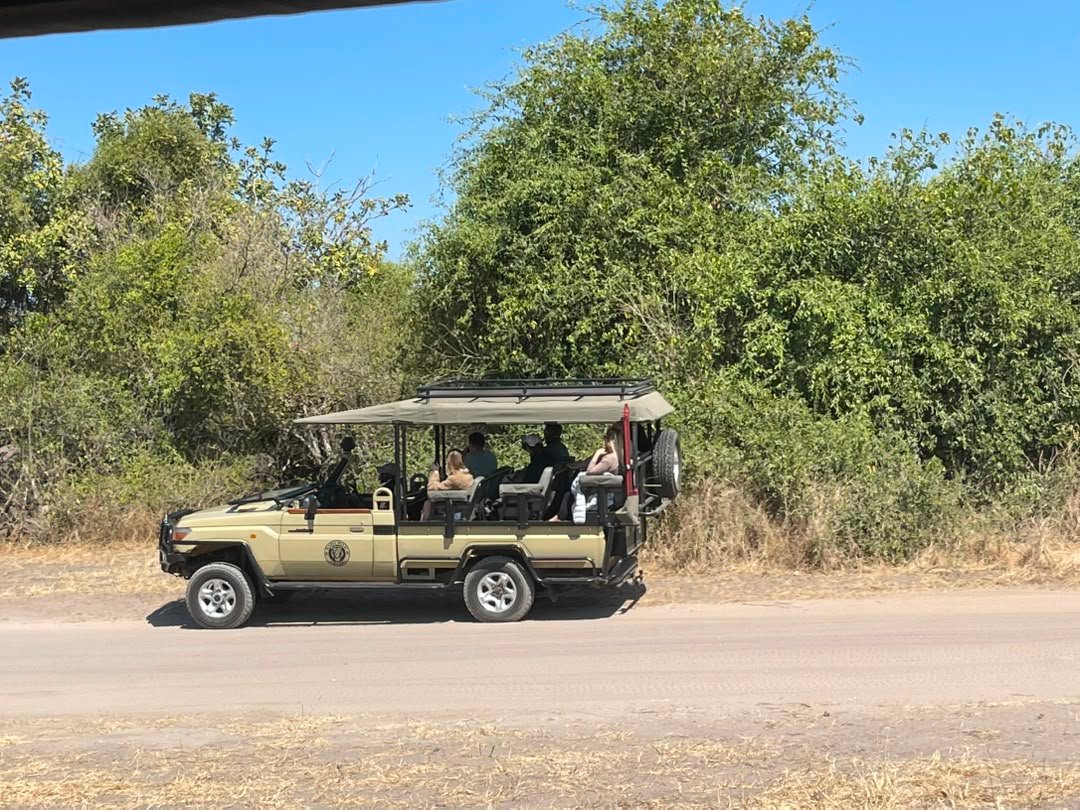
A photographic safari in Chobe National Park is particularly rewarding because travelers can photograph wildlife from both land and water. Elephants, predators, buffaloes, birds and river landscapes provide an enormous variety of subjects, while morning and late-afternoon light creates constantly changing photographic conditions.
The Chobe River is one of the park’s greatest photographic advantages. Boats allow photographers to work close to water level and often provide unobstructed views of animals approaching the shoreline. Elephants standing in shallow water, crocodiles resting on banks and birds taking flight across open channels can all produce images that are difficult to capture from a game-drive vehicle.
Private photographic boats or small-group excursions can be particularly useful because positioning matters enormously. Rather than simply approaching an animal, an experienced guide considers light direction, background, animal movement and safe viewing distance. Some operators and lodges in the wider Chobe area specifically emphasize river-based wildlife viewing, including quieter safari-boat experiences.
Land-based photography remains equally important. Morning drives can provide soft light and greater predator activity, while late-afternoon drives are ideal for warm-colored portraits and wider environmental scenes. Photographers interested in lions and other predators may also consider combining the Riverfront with Savuti, which Botswana Tourism identifies as particularly well known for resident lion, cheetah and hyena populations.
A successful Chobe photographic safari should therefore include several activity types rather than attempting to capture everything in one excursion. A combination of early morning game drives, afternoon river safaris, private guiding and enough nights in the destination gives photographers time to wait for behavior instead of rushing between sightings. Chobe’s abundance of wildlife, broad river landscapes and exceptional elephant encounters make it one of Botswana’s strongest destinations for both amateur and experienced wildlife photographers.
Chobe River Safari – What to Expect
A Chobe River safari is one of the defining experiences of a safari in Chobe National Park because it allows travelers to observe Botswana’s wildlife from an entirely different perspective. Instead of following animals through woodland and dusty tracks in a safari vehicle, visitors cruise slowly along the Chobe River, watching wildlife gather around the banks, islands and floodplains. Botswana Tourism specifically recommends a river cruise for its close views of hippos, crocodiles and the remarkable variety of waterbirds that occur along the river.
The experience usually feels considerably calmer than a traditional game drive. Boats move through open channels while guides scan the riverbanks for elephants, buffaloes, antelopes, hippos, crocodiles and birds. The relatively low viewing position can create exceptional opportunities to appreciate the size of large animals, particularly when elephants walk down to drink or enter the shallow water. Because the river is such an important permanent water source, it becomes a natural gathering point for wildlife, particularly as surrounding seasonal water becomes scarce.
Elephants are often the stars of a Chobe River boat safari. During the drier months, family herds regularly move toward the river to drink, bathe and socialize. Botswana Tourism identifies the Chobe Riverfront as particularly famous for large herds of elephants and Cape buffaloes gathering along the river during the dry winter months. From a boat, travelers may watch elephants drinking with their trunks, young calves playing in shallow water or entire family groups moving along the floodplain.
The river safari is equally rewarding for observing semi-aquatic wildlife. Hippos may be seen resting in deeper channels or surfacing nearby, while Nile crocodiles can sometimes be spotted along exposed banks and islands. These animals can be more naturally observed from the water than from inland game-drive tracks, which is one reason Botswana Tourism describes the river cruise as a completely different vantage point from land-based wildlife viewing.
Birdlife also becomes a major component of the experience. More than 460 bird species have been recorded in Chobe National Park, including African Fish Eagles, kingfishers, Sacred Ibis, cormorants, darters, Spur-winged Geese, Pel’s Fishing Owl, rollers, bee-eaters and several stork species. Even visitors who arrive primarily interested in elephants and predators often find the river cruise one of the best opportunities to appreciate Chobe’s extraordinary bird diversity.
Another attraction is the photographic potential. The open river often provides cleaner backgrounds than woodland environments, while water reflections, elephants along the shoreline and birds in flight create excellent compositions. Afternoon excursions are particularly popular because wildlife activity around the river can combine with softer evening light. Travelers interested in photography may prefer smaller boats or private excursions, where there is greater flexibility to position the boat according to animal movement and light.
A Chobe River safari from Kasane is also straightforward to integrate into a short Botswana itinerary. Botswana Tourism notes that visitors based in Kasane can arrange flexible combinations of morning and afternoon game drives with boat cruises, making it easy to experience both land and water wildlife viewing during the same stay. For first-time visitors, combining at least one game drive with one river safari provides a much fuller introduction to Chobe National Park than choosing either activity alone.
Game Drive vs Boat Safari in Chobe National Park
Choosing between a game drive and boat safari in Chobe National Park should not necessarily be viewed as an either-or decision. The two activities explore different habitats, provide different viewing angles and reveal different aspects of the Chobe ecosystem. Botswana Tourism promotes both land-based game drives and boat cruises around Kasane, highlighting the flexibility visitors have to combine the two experiences.
A Chobe game drive is the better option for exploring woodland, open grassland and inland sections of the Riverfront. Safari vehicles can follow tracks in search of lions, leopards, elephants, buffaloes, giraffes, antelopes, hyenas and other terrestrial wildlife. Botswana Tourism lists species such as waterbuck, lechwe, puku, giraffe, kudu, roan, sable and impala around the Riverfront, together with predators including lion, leopard, hyena and jackal.
Game drives are particularly important for travelers hoping to see predators. Lions may be encountered resting beside the tracks, moving through grassland or watching concentrations of prey, while leopards may occasionally be found around wooded areas. A vehicle also gives guides the freedom to search a much larger section of the park and respond to fresh tracks, alarm calls or recent sightings.
A Chobe boat safari, by comparison, concentrates on the river environment. It is especially effective for elephants approaching the water, hippos, crocodiles, buffaloes near the shoreline and aquatic birdlife. The lower viewing angle creates more intimate photographic perspectives and makes it possible to observe wildlife behaviors that may not be visible during a road safari. Botswana Tourism explicitly notes that river cruises provide closer views of hippos, crocodiles and waterbirds than travelers are likely to obtain from land.
Boat safaris also avoid some of the dust associated with dry-season game drives and can feel more relaxed because passengers spend less time searching through dense vegetation. On the other hand, boats cannot explore the woodland where many predators and terrestrial species spend their time. This makes the river experience complementary rather than a replacement for game drives.
For a traveler with only one day in Chobe, an itinerary that combines both activities is usually the strongest option. A morning game drive can focus on terrestrial wildlife and predator activity, followed by an afternoon river cruise for elephants, hippos, crocodiles and birds. For visitors staying two or three nights, repeating both activities at different times of day provides even greater variety because wildlife movements change constantly.
Photography priorities may also influence the choice. A game drive is generally stronger for lions, giraffes, antelopes and environmental portraits on land, while a boat safari can be exceptional for elephants in water, reflections, birds and shoreline wildlife. Serious photographers may therefore want private arrangements for both activities rather than selecting only one.
Ultimately, the best safari in Chobe National Park combines the two. The game drive explains what happens across the land, while the boat safari reveals how deeply the Chobe River shapes the entire ecosystem. Together they provide a much more complete understanding of why this area supports such remarkable concentrations of wildlife.
Best Time for a Safari in Chobe National Park
The best time for a safari in Chobe National Park depends on what travelers most want to experience. Botswana has distinct wet and dry seasonal patterns, and these influence vegetation, water availability, wildlife concentrations, birdlife, temperatures and photographic conditions. Botswana Tourism identifies April through October as particularly favorable for weather and game viewing because wildlife becomes increasingly concentrated around available water and visibility improves as grasses become lower.
Botswana’s summer runs approximately from November through March and generally brings hotter temperatures, cloud development and rainfall. Winter runs from May through August and is characteristically dry, with sunny days but potentially very cold mornings and nights. April and early May, as well as September and October, are transitional periods. These seasonal differences mean there is no universally perfect month for every traveler.
For visitors primarily interested in elephants and concentrated large-mammal viewing, the dry period is usually the strongest choice. Birdwatchers and travelers who enjoy lush landscapes may prefer the wetter summer months. Photographers can find advantages in both seasons, with dry-season wildlife concentrations contrasting against the dramatic skies, greenery and softer vegetation of the green season.
Chobe Safari During the Dry Season
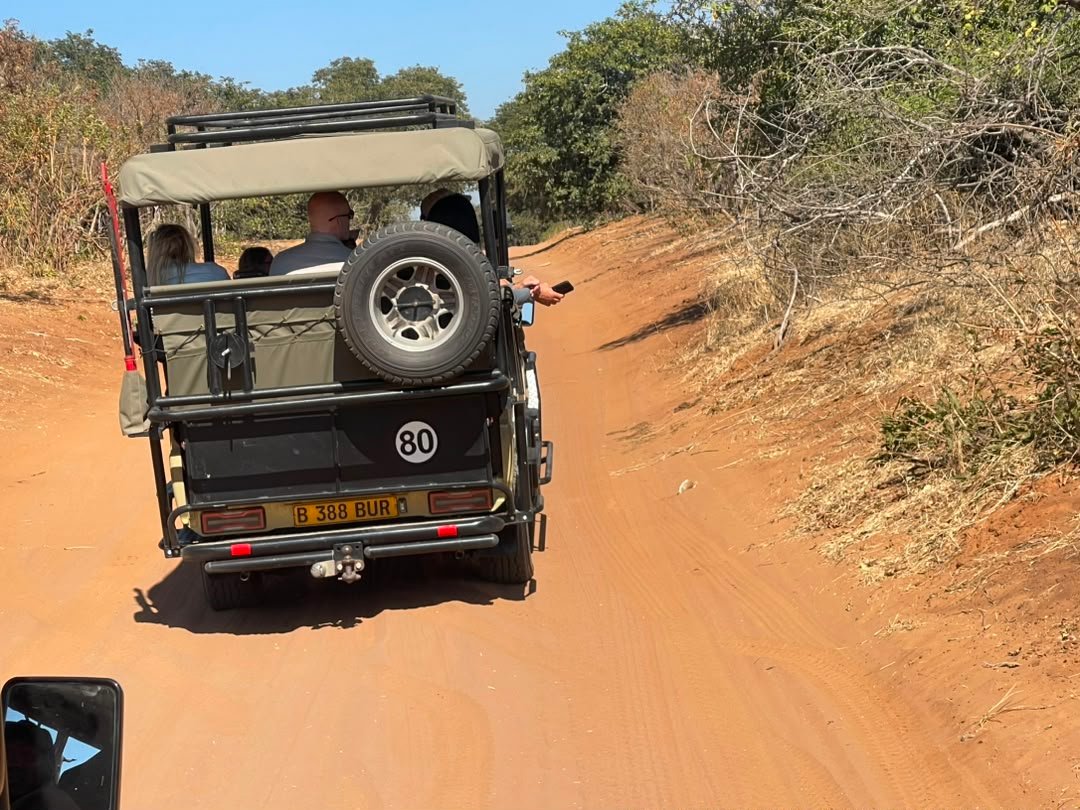
A Chobe safari during the dry season is particularly rewarding for travelers whose main goal is concentrated wildlife viewing. Botswana Tourism identifies winter, from roughly May through August, as the country’s dry season, while April/early May and September/October also tend to remain dry. The tourism authority considers April through October particularly strong for game viewing because wildlife gathers around remaining water sources and lower grasses improve visibility.
In Chobe, the importance of permanent water is especially evident along the Chobe Riverfront. As seasonal water sources diminish, elephants, buffaloes and numerous other animals move toward the river. Botswana Tourism specifically states that large herds of elephants and Cape buffaloes converge on the riverbank during the dry winter months. This creates some of the park’s most famous wildlife scenes.
The later part of the dry period can produce particularly dramatic concentrations. Elephants may approach the river in multiple family groups, buffalo herds occupy the floodplains and predators monitor the movement of prey around water. Botswana Tourism notes that visitors can sometimes see hundreds of elephants during a single afternoon drive along the Riverfront.
Vegetation also becomes progressively less dense as the dry season develops, which can improve visibility during game drives. Wildlife tracks and access routes are generally less affected by rainfall, making this a particularly practical season for exploring both the Riverfront and more remote sections of northern Botswana.
However, travelers should prepare for significant temperature variations. Botswana Tourism notes that winter days can be sunny and comfortable while nights and early mornings become very cold because of clear skies. Warm jackets, layers, hats and scarves can therefore be important during early morning game drives even when afternoons are warm.
The popularity of the dry season also means visitors should plan well in advance if they want specific lodges or private safari arrangements. The Riverfront is one of Botswana’s most accessible major wildlife areas, and excellent wildlife conditions naturally attract increased interest during this period.
Chobe Safari During the Green Season
A Chobe safari during the green season provides a completely different interpretation of the park. Botswana’s summer generally extends from November through March and brings the majority of the country’s rainfall. Botswana Tourism describes summer as hot, with rainfall that can be highly localized and episodic rather than necessarily continuing throughout the entire day.
Rain transforms the landscape. Grasslands become greener, trees produce fresh foliage and temporary pans may begin holding water. Wildlife can become more dispersed because animals are no longer completely dependent on permanent sources such as the Chobe River. This means travelers may not always encounter the enormous riverfront concentrations associated with the peak dry season, but the wider landscape becomes visually richer and more dynamic.
The green season is especially attractive to travelers interested in birdwatching in Chobe National Park. The park already supports more than 460 recorded bird species, and wetter conditions create productive feeding and breeding environments throughout the ecosystem. Birders can spend substantial time around waterways, floodplains and woodland looking beyond the park’s famous large mammals.
Photography can also be outstanding. Green grass, dark storm clouds, fresh vegetation and dramatic shafts of sunlight create more colorful backgrounds than the dusty late dry season. For photographers interested in landscapes and environmental wildlife portraits rather than only concentrated big-game encounters, these conditions can be extremely rewarding.
Summer temperatures can become intense. Botswana Tourism notes that temperatures can rise to around 38°C and occasionally higher before rain and cloud cover provide temporary cooling. Visitors traveling during this period should therefore prepare for heat, humidity and occasional heavy showers.
For travelers who value lush scenery, birds, atmospheric skies and a different side of Botswana, the green season should not be dismissed as an inferior time to travel. It simply produces a different safari experience from the concentrated wildlife viewing associated with the dry months.
Best Time for Elephant Viewing
For travelers specifically seeking the best time to see elephants in Chobe National Park, the dry season is generally the strongest period. Botswana Tourism identifies the Chobe Riverfront as particularly famous for large elephant herds gathering along the river during the dry winter months.
As inland water sources become less dependable, the Chobe River acts as an essential source of permanent water. Elephants move between feeding areas and the river, producing predictable patterns that can be observed during both game drives and boat safaris. Afternoon excursions can be especially productive as animals approach the river after feeding inland.
This is also when visitors may witness some of Chobe’s most spectacular herd behavior. Multiple family groups may arrive within the same general area, calves remain closely protected by adults and elephants enter the river to drink, bathe and play. Botswana Tourism notes that hundreds of elephants may sometimes be seen during an afternoon drive in this season.
A boat safari becomes particularly valuable for elephant enthusiasts because it allows travelers to observe animals at the shoreline from water level. A land-based game drive may reveal herds moving toward the river, while a subsequent boat excursion shows what happens once they arrive. Combining both activities produces a much richer Chobe elephant safari.
Elephants are present within the wider ecosystem throughout the year, so visiting outside the dry season does not mean travelers will not see them. However, rainfall allows animals to spread more widely across the landscape, meaning exceptionally large concentrations along the main river may become less consistent.
For travelers whose primary dream is watching large numbers of elephants around the Chobe River, planning within the broader April-to-October game-viewing period, particularly the drier winter and late-dry-season months, offers a strong strategy.
Best Time for Birdwatching
There is excellent birding in Chobe throughout the year because more than 460 species have been recorded in the park. Nevertheless, travelers who make birdwatching a central part of their safari often find the wetter summer period particularly attractive because the landscape becomes more productive and water is more widely distributed.
The Chobe River remains one of the strongest birding locations regardless of season. African Fish Eagles, kingfishers, cormorants, darters, geese, storks and numerous other species can be encountered along river channels and floodplains. Botswana Tourism also highlights specialist species such as Pel’s Fishing Owl as part of the park’s impressive recorded birdlife.
During summer, greener vegetation can provide visually attractive settings for bird photography, while increased insect activity and seasonal wet areas can create additional feeding opportunities. Rainfall is variable and localized, however, so conditions can differ significantly even within the same travel period. Botswana Tourism emphasizes that Botswana’s summer rainfall is episodic and highly regional.
Dry-season birding remains excellent around permanent water because species become concentrated along the river and other dependable sources. This can make certain birds easier to locate, particularly for travelers combining general wildlife viewing with casual birdwatching.
Dedicated birders should therefore think in terms of priorities. The greener summer period is attractive for seasonal activity, landscapes and diversity, while the dry months can provide easier access and concentrated wildlife around the river. There is no need to avoid Chobe purely because a trip falls outside a traditional birding season.
Best Time for Photography
The best time for photography in Chobe National Park depends on the style of images a traveler wants to create. For concentrated elephant photography and reliable access to wildlife around the river, the dry season is especially strong. Lower grasses and the gathering of animals around remaining water can make wildlife easier to locate and photograph. Botswana Tourism identifies April through October as particularly favorable for game viewing and visibility.
Late dry-season landscapes can create powerful images of elephants, buffaloes and predators against pale grasslands and dusty backgrounds. Around the Chobe River, photographers can also work with blue water, reflections and open floodplains, giving the images a distinctive sense of place.
Morning and late afternoon generally offer the most attractive natural light for wildlife photography. Early game drives can combine softer light with cooler conditions, while afternoon river cruises can produce warm light across elephants, hippos and the floodplain. The Riverfront’s dry-season elephant concentrations can make these late-day conditions particularly productive.
The green season offers a different photographic palette. Fresh vegetation, saturated colors, dramatic clouds and changing weather can produce more atmospheric landscapes. Animals photographed against green grass can look very different from classic dry-season safari images, while birds become an increasingly important photographic subject.
Photographers should therefore not think only in terms of a single “best month.” The dry season is particularly strong for concentrated wildlife, elephants and easier visibility, while the wetter months reward photographers interested in birds, landscapes, color and dramatic environmental images. Botswana’s rainfall can be unpredictable and localized, which also means green-season photography often includes rapidly changing skies and light.
For the strongest overall Chobe photographic safari, travelers should combine morning game drives with afternoon boat safaris and allow several days rather than relying on a single excursion. Wildlife behavior cannot be scheduled, and having additional time creates opportunities to return to productive locations, work with different light conditions and photograph the same species from both land and water.
Chobe National Park Safari by Month
Planning a Chobe National Park safari by month is important because the character of the park changes significantly throughout the year. Botswana experiences a summer rainy season and a dry winter season, with October and April generally acting as transitional months. January and February are normally among the peak rainfall months, while the winter period receives very little rain. These seasonal changes influence vegetation, wildlife distribution, temperatures, riverfront activity and the overall style of safari visitors can expect.
There is therefore no single month that is perfect for every traveler. Visitors wanting huge elephant concentrations and easier general wildlife viewing often favor the dry months, while travelers interested in lush landscapes, birdlife and dramatic photography may find the wetter period extremely rewarding. Botswana Tourism considers approximately April through October particularly favorable for game viewing as animals become increasingly dependent on permanent water and vegetation becomes less dense.
Chobe Safari from January to March
A Chobe safari from January to March takes place during Botswana’s green or rainy season. January and February are generally regarded as the peak rainfall months, and much of northern Botswana receives its annual rainfall during the summer period. The Chobe District is among Botswana’s wetter regions, with the northeastern part of the country receiving significantly more annual rainfall than the arid southwest.
During these months, Chobe National Park becomes dramatically greener. Fresh grass covers many open areas, trees and shrubs produce new growth, and temporary water sources become more widely available. As a result, wildlife is often more dispersed than during the height of the dry season because animals do not need to remain close to the Chobe River throughout the day. This means travelers should not necessarily expect the same enormous concentrations of elephants around the Riverfront that are characteristic of the driest months.
However, January to March can be extremely rewarding for travelers who enjoy landscapes and photography. Green vegetation provides attractive backgrounds for elephants, giraffes, antelopes and predators, while summer storms can produce dramatic clouds and changing light conditions. The atmosphere is very different from the dry-season image of pale grass, dusty tracks and animals crowded around permanent water.
Birdwatching is another major reason to consider a Chobe safari in January, February or March. Chobe supports an extraordinary diversity of birdlife, and wetter conditions create productive habitats around floodplains, channels, woodland and seasonal pans. Travelers interested in combining mammal viewing with serious bird photography can find the green season particularly appealing. Chobe National Park has recorded more than 460 bird species.
The main consideration is the weather. Summer in Botswana can be hot, and rainfall is often localized rather than continuous across an entire region. A heavy afternoon storm may be followed by sunshine, while another part of the park may remain dry. Road conditions can also vary according to recent rainfall, particularly in more remote areas away from the easily accessible Riverfront.
January to March therefore suits travelers who are comfortable with occasional rain and who value green landscapes, birdwatching, dramatic skies and a quieter seasonal atmosphere as much as concentrated dry-season wildlife.
Chobe Safari from April to May
A Chobe safari from April to May takes place during one of the most attractive transitional periods of the year. Botswana Tourism describes April as a transition between the rainy summer and increasingly dry winter conditions. Rainfall begins declining, temperatures generally become more comfortable, and the landscape may still retain much of the green vegetation produced during the preceding wet months.
This period offers an excellent compromise between green-season scenery and dry-season game viewing. Travelers may still experience lush landscapes, but wildlife gradually begins adjusting its movements as temporary water sources diminish. Permanent rivers and channels become increasingly important, eventually drawing more animals toward areas such as the Chobe Riverfront.
May marks the beginning of Botswana’s cooler winter period. Daytime conditions can be very pleasant for game drives, while early mornings and evenings may feel considerably cooler. Botswana Tourism advises visitors traveling in winter to carry warmer clothing, including long trousers, long-sleeved garments and jerseys, because temperatures can change substantially between daytime and early-morning activities.
Wildlife photography can be particularly appealing during April and May because vegetation may still retain some color while visibility improves. Photographers may therefore find a useful balance between attractive environmental backgrounds and the gradually increasing concentration of wildlife around permanent water.
Boat safaris remain an essential activity during this period. The Chobe River is a permanent feature of northern Botswana and provides habitat for elephants, buffaloes, hippos, crocodiles and extensive birdlife. Travelers staying around Kasane can easily combine morning and afternoon game drives with boat cruises, allowing them to experience both land and river wildlife during the same stay.
For travelers who dislike the intense heat of late summer but also want to avoid the driest landscapes of September and October, April and May can be an excellent time for a safari in Chobe National Park.
Chobe Safari from June to August
A Chobe safari from June to August takes place during Botswana’s dry winter season and is one of the strongest periods for classic wildlife viewing. Rain becomes uncommon, vegetation progressively dries and animals become increasingly dependent on permanent water. This is one of the reasons Botswana Tourism regards the April-to-October period as particularly favorable for game viewing.
The Chobe Riverfront becomes increasingly important during these months. Elephants and Cape buffaloes begin concentrating around the permanent river, producing the wildlife spectacles for which Chobe is internationally known. Botswana Tourism describes the Riverfront as famous for major elephant and buffalo concentrations during the dry winter months.
June, July and August are particularly suitable for travelers interested in a combination of game drives and Chobe River boat safaris. Morning drives can search the woodland and floodplain for predators and large herbivores, while afternoon cruises provide opportunities to observe elephants approaching the river, alongside hippos, crocodiles and waterbirds. Kasane provides convenient access to both activities.
Wildlife visibility generally improves as grasses become lower and vegetation thins. Animals may become easier to spot during drives, and guides can concentrate their searches around established water sources and wildlife movement routes. The Linyanti region also becomes especially significant in the dry season because its permanent waters serve as important gathering and migration points for elephants, buffaloes, wildebeest and zebras moving through northern Botswana.
One important consideration is temperature. Botswana’s winter can produce cold mornings and evenings despite sunny and comfortable afternoons. Travelers heading out before sunrise should carry warm layers that can be removed as temperatures rise later in the day. Botswana Tourism specifically recommends warmer clothing during winter safari travel.
June to August is consequently one of the strongest periods for travelers seeking reliable big-game viewing, comfortable daytime temperatures, elephant encounters and a traditional dry-season Botswana safari.
Chobe Safari from September to October
A Chobe safari from September to October can produce some of the most dramatic wildlife encounters of the year. These months fall toward the end of the dry period, when many temporary water sources have disappeared and permanent rivers become increasingly important to animals. October is regarded as a transitional month as Botswana begins moving toward the summer rainy season.
The Chobe Riverfront can be exceptional during this period. Botswana Tourism states that in the dry season travelers may sometimes see hundreds of elephants during a single afternoon game drive, with large herds moving toward the river to drink and bathe.
Buffaloes may also gather in substantial numbers, while antelopes and other herbivores remain dependent on increasingly limited water. This concentration of prey can make the wider environment interesting for predator viewing because lions, hyenas and other carnivores follow wildlife movements around productive areas.
September and October are therefore particularly attractive for travelers planning an elephant safari in Chobe National Park. Afternoon game drives may reveal family groups moving toward the Riverfront, while boat cruises can provide a second perspective once those elephants reach the water. Combining both activities allows visitors to observe movement between woodland and river rather than experiencing only one part of the daily cycle.
The major consideration is heat. Temperatures rise toward summer, particularly in October, and midday conditions can become demanding. Travelers should arrange active safari periods around the cooler mornings and late afternoons whenever possible and use the central part of the day for lunch, swimming or relaxation.
For travelers whose principal objective is large elephant concentrations and intense riverfront wildlife activity, September and October can be among the most rewarding months to visit Chobe.
Chobe Safari from November to December
A Chobe safari from November to December marks the transition back toward Botswana’s summer green season. Rainfall becomes increasingly likely, temperatures are generally warm, and the transformation of the landscape can be remarkably quick once meaningful rain arrives. Botswana Tourism describes the summer period as the principal rainy season, with October and April serving as transitional months around it.
Early November can sometimes retain characteristics of the late dry season, particularly if significant rainfall has not yet occurred. Animals may therefore still remain concentrated around permanent water. Once regular rains begin, temporary pans refill and fresh vegetation appears, enabling wildlife to spread more widely through the park.
The visual transformation can be spectacular. Dry grasslands begin becoming green, fresh vegetation appears and dramatic summer clouds develop above the park. These conditions are attractive to photographers who prefer rich color and environmental wildlife images rather than the dustier appearance of late dry-season landscapes.
December increasingly delivers the classic green-season atmosphere. Bird activity becomes a major component of the safari, while game drives continue to provide opportunities to encounter elephants, lions, giraffes, buffaloes and numerous antelope species. Chobe’s enormous bird diversity means there is always considerable wildlife interest even when large mammals are more widely dispersed.
Rainfall does not necessarily mean that an entire safari day will be lost. Botswana’s summer rainfall is often localized and episodic, so periods of rain can be interspersed with sunshine and clear conditions. Travelers should nevertheless pack lightweight rain protection and remain prepared for warm, humid conditions.
November and December are therefore excellent for visitors who want to witness Chobe changing from dry-season wilderness into green-season abundance, particularly photographers, birdwatchers and repeat safari travelers looking for something different from the traditional peak-season experience.
How Many Days Do You Need in Chobe National Park?
Determining how many days you need in Chobe National Park depends on whether Chobe is being visited as a short extension from Victoria Falls or as a major component of a Botswana safari. Because Kasane lies close to the park and supports both road-based game drives and Chobe River cruises, even travelers with limited time can experience some of Chobe’s major attractions. Botswana Tourism notes that Chobe National Park lies only about 10 kilometres from Kasane and that visitors can arrange flexible morning and afternoon game drives alongside boat cruises.
For most first-time visitors, two to three nights provides a particularly good balance. This allows enough time to experience at least one morning game drive and one afternoon Chobe River safari while also creating opportunities for repeat activities. Four or five days becomes more appropriate when travelers want deeper wildlife observation, photography or exploration beyond the most accessible Riverfront.
1 Day Chobe Safari
A 1 Day Chobe Safari is possible and can be extremely rewarding, particularly for travelers staying in Victoria Falls, Livingstone or Kasane who have limited time. The key is to structure the day around both the land and water experiences that make Chobe distinctive.
A strong one-day itinerary normally includes a morning game drive and an afternoon Chobe River boat safari, or the activities can be reversed depending on operating schedules. Botswana Tourism confirms that Kasane supports flexible combinations of morning and afternoon game drives and boat cruises.
The game drive provides opportunities to search for elephants, buffaloes, giraffes, antelopes, lions and other terrestrial wildlife. The boat safari then adds hippos, crocodiles, waterbirds and elephants approaching the Chobe River. Experiencing both environments prevents the day from feeling like a simple drive through one section of the park.
A one-day safari is particularly popular as part of a Chobe day trip from Victoria Falls because the destinations lie within the same broader regional tourism circuit. Botswana Tourism identifies Victoria Falls as approximately 80 kilometres from Kasane, demonstrating why the two attractions are so frequently combined.
The disadvantage of a one-day Chobe safari is the lack of flexibility. Wildlife sightings are unpredictable, and travelers cannot simply return the following morning if lions, elephants or other desired species were difficult to locate. Border procedures can also consume part of the day for visitors traveling internationally from Zimbabwe or Zambia.
A one-day safari is therefore best for travelers who mainly want an introduction to Chobe rather than a comprehensive exploration of the park.
2 Day Chobe Safari
A 2 Day Chobe Safari offers a noticeably richer experience because travelers can participate in several activities without trying to fit everything into a single day. It works particularly well for visitors adding Botswana to a Victoria Falls itinerary or travelers who want Chobe to serve as their first major safari destination.
The first day might include an afternoon Chobe River cruise after arrival in Kasane, allowing travelers to immediately experience elephants, hippos, crocodiles and river birdlife. The following morning can then begin with an early game drive while wildlife is active and temperatures remain relatively cool. Kasane’s proximity to the park makes such combinations straightforward.
With two days available, travelers also gain the opportunity to repeat one of the activities. Someone particularly interested in elephants may choose a second river safari, while visitors hoping to see predators can prioritize another morning or late-afternoon game drive.
Two days are enough to understand why Chobe is different from many traditional safari destinations. The contrast between road-based wildlife viewing and the river environment becomes clear, and visitors have more time to observe behavior rather than simply checking species off a list.
However, a two-day safari will generally remain focused on the Chobe Riverfront and Kasane area rather than remote sections such as Savuti or Linyanti. Travelers seeking a deeper exploration of Chobe should allow more time.
3 Day Chobe Safari
A 3 Day Chobe Safari is an excellent choice for many first-time visitors and provides a much better balance between wildlife viewing and relaxation. Three days allow travelers to experience multiple game drives and boat safaris under different light, weather and wildlife conditions rather than depending on one excursion.
One morning might focus on searching for predators, while an afternoon river cruise concentrates on elephants and aquatic wildlife. The following day can revisit productive areas or focus more heavily on photography and birdwatching. This flexibility is valuable because animal movements change constantly.
Three days are particularly rewarding during the dry season when the Chobe Riverfront attracts major concentrations of elephants and buffaloes. Botswana Tourism highlights the Riverfront as one of the park’s major dry-season wildlife gathering areas.
Photographers also benefit significantly from the additional time. A single elephant encounter in poor midday light may not provide the ideal image, whereas several drives and cruises create opportunities to work with sunrise, late-afternoon light, reflections and different animal behaviors.
A three-day stay also prevents the safari from becoming exhausting. Guests can take a break during the warm middle of the day instead of scheduling nonstop activities from dawn until evening.
For travelers combining Victoria Falls and Chobe National Park, three days in the Chobe region can therefore provide enough time to experience Botswana properly without making the wider itinerary unnecessarily long.
4–5 Day Chobe Safari
A 4–5 Day Chobe Safari is ideal for travelers who want to experience the park more deeply rather than treating it as a short extension from Victoria Falls. The additional days allow for repeated Riverfront activities and can also support exploration toward more remote sections of the greater Chobe wilderness.
Visitors may begin around Kasane and the Chobe Riverfront before moving deeper into areas such as Savuti. Botswana Tourism describes Savuti as a major wildlife region associated with resident predator populations, including lions, cheetahs and hyenas, while the broader Linyanti system becomes an important dry-season wildlife gathering area.
This extended itinerary creates much greater ecological variety. The Riverfront emphasizes permanent water, elephants and boat-based wildlife viewing, whereas inland areas introduce woodland, open plains, seasonal channels and stronger opportunities to experience the remoteness of northern Botswana.
Four or five days are particularly valuable for serious wildlife photographers. Photographers can dedicate separate activities to elephants, predators, birds and landscapes instead of attempting to capture everything during one drive. Repeated boat excursions also allow photographers to experiment with different light, angles and river conditions.
Longer stays are equally rewarding for travelers who simply enjoy observing animal behavior. Instead of immediately leaving a sighting after taking several photographs, guests can spend more time watching elephants interact, buffalo herds move toward water or predators respond to surrounding prey.
A 4–5 day safari is therefore one of the strongest choices for travelers whose primary destination is Chobe itself. Rather than asking, “Can I see Chobe in one day?”, these visitors experience the park as a complete Botswana safari destination, combining the famous Chobe Riverfront with enough time to appreciate its wildlife patterns, landscapes and more remote wilderness character.
Request a free quote.
Suggested Chobe National Park Safari Itineraries
The best Chobe National Park safari itinerary depends on how much time travelers have, where their journey begins and whether they want Chobe as a short wildlife extension or as part of a wider Botswana safari. Chobe is particularly flexible because visitors can combine traditional 4×4 game drives with Chobe River boat safaris, photographic experiences and onward journeys toward the Okavango Delta. Travelers staying around Kasane can comfortably access the Chobe Riverfront, while longer itineraries create opportunities to explore more remote sections of northern Botswana.
For visitors coming from Victoria Falls in Zimbabwe or Livingstone in Zambia, even a one-day Chobe safari can introduce Botswana’s remarkable elephant populations and river-based wildlife. However, spending two or three days creates a much more complete experience because wildlife movements are unpredictable and each morning or afternoon safari can produce completely different encounters. Four-day itineraries allow travelers to slow down and enjoy repeated wildlife activities, while a five-day Chobe and Okavango Delta safari combines two of Botswana’s most important ecosystems.
1 Day Chobe Safari from Victoria Falls
A 1 Day Chobe Safari from Victoria Falls is one of the most popular short safari extensions for travelers visiting Zimbabwe. It provides an opportunity to cross into Botswana and experience both a traditional African game drive and a boat safari on the Chobe River within the same day. Although a single day cannot reveal every part of Chobe National Park, it can provide an excellent introduction to its elephants, buffaloes, antelopes, predators, hippos, crocodiles and birdlife.
The journey normally begins early in the morning with collection from a hotel in Victoria Falls. Travelers drive toward the Botswana border and complete immigration formalities before continuing to Kasane, the principal gateway to Chobe National Park. Because international border procedures are involved, visitors should travel with the correct passport and visa documentation for their nationality and itinerary.
Morning – Victoria Falls to Chobe National Park
After an early breakfast, depart Victoria Falls for the road journey toward the Zimbabwe–Botswana border. On arrival at the border, complete immigration formalities before meeting the Botswana safari team and continuing toward Kasane and Chobe National Park.
The morning is usually designed to maximize wildlife-viewing time while temperatures are still relatively cool. Depending on operating arrangements, travelers may begin with either a game drive or river safari.
Morning Game Drive in Chobe National Park
Enter Chobe National Park in an open-sided safari vehicle and explore the Chobe Riverfront, one of the richest wildlife areas in northern Botswana. Morning game drives provide opportunities to search for elephants, buffaloes, giraffes, impalas, kudus, waterbuck, puku, warthogs, baboons and numerous other animals.
Predator sightings are also possible. Lions frequently inhabit the broader Riverfront ecosystem, while leopards, hyenas and jackals may occasionally be encountered. Guides search for tracks, alarm calls and other signs that can reveal recent animal movements.
The experience is particularly impressive during the dry season when large numbers of animals move toward the Chobe River. Elephants may be seen crossing the tracks in family groups, while buffaloes gather around productive feeding areas.
Midday – Lunch in Kasane
After the morning game drive, leave the park and enjoy lunch at a lodge or restaurant in the Kasane area. The midday break provides time to relax before changing from a land-based safari to an afternoon experience on the river.
Afternoon – Chobe River Boat Safari
The afternoon Chobe River boat safari provides a completely different wildlife experience. Cruise along the river channels while searching the banks, islands and floodplains for animals. Elephants are often among the principal highlights, particularly when herds approach the water to drink and bathe.
Hippos and Nile crocodiles are regularly associated with the river environment, while buffaloes and antelopes may feed along the shoreline. Birdlife can also be exceptional, with African Fish Eagles, kingfishers, herons, egrets, cormorants and numerous other species occurring around the water.
The low angle from the boat provides excellent photographic opportunities, particularly when elephants enter shallow water or move along open floodplains.
Late Afternoon – Return to Victoria Falls
After completing the river safari, transfer back toward the Botswana–Zimbabwe border, complete immigration procedures and continue to Victoria Falls. Arrival is generally in the evening.
A Chobe day trip from Victoria Falls is ideal for travelers with limited time, although visitors who have two or more nights available will gain a much deeper safari experience by staying in Botswana.
2 Day Chobe National Park Safari
A 2 Day Chobe National Park Safari is an excellent choice for travelers who want more than a quick introduction without committing several days to one destination. Spending a night in the Chobe region creates time for morning and afternoon wildlife activities while removing the pressure of completing international border crossings twice within a single safari day.
This itinerary works particularly well for travelers arriving from Victoria Falls, Livingstone or Kasane. The primary focus is usually the Chobe Riverfront, where both land and river-based safari experiences are readily accessible.
Day 1 – Arrival in Chobe National Park and Chobe River Safari
Arrive in the Kasane region during the morning or around midday and transfer to your selected lodge. After checking in, enjoy lunch and a short period of relaxation before beginning the first wildlife activity.
During the afternoon, embark on a Chobe River boat safari. The river experience introduces travelers to the ecosystem from a water-level perspective and can produce excellent encounters with elephants, hippos, crocodiles, buffaloes, antelopes and birdlife.
Elephant viewing can be particularly rewarding later in the afternoon when herds move toward the river after feeding inland. Family groups may gather along the banks, young elephants can be seen playing near the water, and large bulls sometimes feed independently along the floodplain.
Remain on the river as the afternoon light softens before returning to the lodge for dinner and overnight.
Main experience: Chobe River safari and sunset wildlife viewing
Overnight: Kasane or Chobe Riverfront area
Day 2 – Morning Chobe Game Drive and Departure
Wake early and head into Chobe National Park for a morning game drive. The cooler hours provide an excellent opportunity to search for wildlife before temperatures rise.
The guide will explore productive tracks around the Riverfront while searching for elephants, buffaloes, giraffes, zebras, antelopes and predators. Lions may still be active after the night, while hyenas and other carnivores can occasionally be encountered moving through the landscape.
Return to the lodge after the game drive for breakfast or brunch before checking out. Continue toward Victoria Falls, Livingstone, Kasane Airport or the next destination on the wider Botswana safari.
A two-day safari is particularly suitable for travelers combining Victoria Falls and Chobe National Park, as it delivers the essential Chobe experiences without requiring a long extension.
3 Day Chobe Safari and River Experience
A 3 Day Chobe Safari and River Experience provides a more complete introduction to the park and is one of the strongest options for first-time visitors. Three days create enough time to repeat game drives and boat safaris, giving travelers a better chance of observing different wildlife behavior under changing conditions.
Instead of rushing through Chobe, visitors can enjoy the rhythm of early morning wildlife activities, midday relaxation and late-afternoon excursions. This itinerary is especially attractive to photographers, couples and travelers interested in elephants.
Day 1 – Arrival in Kasane and Sunset Chobe River Safari
Arrive in Kasane from Victoria Falls, Livingstone or another Botswana destination and transfer to the lodge. After checking in and enjoying lunch, relax before the afternoon safari.
Later, board a boat for a sunset safari on the Chobe River. Cruise through productive channels while watching elephants, buffaloes and antelopes along the riverbanks. Hippos may surface nearby, while crocodiles can sometimes be spotted resting along exposed shoreline areas.
As the temperatures cool, elephant activity often increases. Large herds may emerge from woodland and approach the water, creating some of Chobe’s most recognizable wildlife scenes.
Return to the lodge after sunset for dinner.
Main experience: Chobe River safari
Overnight: Chobe or Kasane
Day 2 – Morning Game Drive and Afternoon River Safari
Begin before sunrise with coffee or tea before entering Chobe National Park for an extended morning game drive along the Riverfront. Guides search for fresh predator tracks while also exploring areas frequented by elephants, buffaloes and antelopes.
Morning can be particularly rewarding for lions and other carnivores before the increasing heat causes them to rest. Giraffes, kudus, impalas and numerous smaller species provide additional wildlife encounters.
Return to the lodge during the late morning for breakfast or brunch and spend the middle of the day relaxing.
During the afternoon, return to the Chobe River for another boat safari. Repeating the activity is worthwhile because animal movements change daily. One afternoon may be dominated by elephants while another produces excellent buffalo, hippo, crocodile or bird encounters.
Return after sunset for dinner.
Main experiences: Chobe game drive and river safari
Overnight: Chobe or Kasane
Day 3 – Final Morning Safari and Departure
Take one final morning game drive before leaving Chobe. This provides another opportunity to search for species that may not have been encountered during previous activities.
Travelers interested in photography can concentrate on particular animals, while birdwatchers may devote additional time to woodland and river-edge species.
Return to the lodge for breakfast, check out and continue toward Victoria Falls, Livingstone, the Okavango Delta or Kasane Airport.
Three days provide an excellent balance for travelers who want a complete Chobe National Park safari without extending into the more remote interior.
4 Day Chobe Wildlife Safari
A 4 Day Chobe Wildlife Safari is designed for travelers who want to experience Chobe at a more relaxed pace and dedicate substantial time to wildlife observation. Four days allow guests to repeat productive activities, search more carefully for predators and explore different areas instead of concentrating entirely on one section of the Riverfront.
The itinerary can be based around a single Chobe lodge or adapted to include a more remote safari camp where logistics allow.
Day 1 – Arrival in Chobe and Afternoon River Safari
Arrive in Kasane and transfer to the selected safari lodge. After lunch and orientation, begin the safari with an afternoon boat excursion on the Chobe River.
Watch elephants moving toward water, hippos occupying deeper channels and crocodiles resting along the banks. The river also provides some of Chobe’s strongest opportunities for bird photography.
Return to the lodge after sunset.
Main experience: Chobe River safari
Overnight: Chobe area
Day 2 – Morning and Afternoon Chobe Game Drives
Begin with an early morning game drive concentrating on the Riverfront and surrounding woodland. Guides search for lions, leopards, hyenas and other predators while also observing large herbivores.
After returning to the lodge for breakfast and rest, embark on another game drive later in the afternoon. The later safari focuses on changing wildlife movements as elephants and buffaloes begin approaching permanent water.
Staying out during different times of day gives travelers a stronger appreciation of how animal behavior changes as temperatures rise and fall.
Main experiences: Morning and afternoon game drives
Overnight: Chobe area
Day 3 – Extended Chobe Wildlife and Photographic Safari
Day three can be customized according to the interests of the travelers. Wildlife enthusiasts can take a longer game drive into less frequently visited areas, while photographers may arrange a private vehicle or specialized river safari.
This is an excellent opportunity to slow the pace and spend longer at productive sightings. Instead of leaving an elephant herd after a few minutes, visitors can observe social behavior, interactions between calves and adults and movements between feeding and drinking areas.
Birdwatchers can focus on riverine and woodland habitats, while predator enthusiasts can search areas where recent lion, leopard or hyena activity has been recorded.
The afternoon can include another Chobe River safari, allowing travelers to return to favorite sections of the river under different light.
Main experience: Customized Chobe wildlife safari
Overnight: Chobe area
Day 4 – Morning Game Drive and Departure
Take a final early game drive through Chobe National Park. This last activity is especially valuable because wildlife sightings can change dramatically from one day to another.
Return for breakfast and check out before transferring to Kasane Airport, Victoria Falls, Livingstone or another Botswana safari destination.
Four days are particularly suitable for wildlife photographers, repeat safari travelers and visitors who prefer slower travel, as the itinerary offers enough time to observe rather than simply search for animals.
5 Day Chobe and Okavango Delta Safari
A 5 Day Chobe and Okavango Delta Safari combines two of Botswana’s most celebrated wildlife environments. Chobe provides spectacular elephant concentrations, game drives and river-based wildlife viewing, while the Okavango Delta introduces channels, floodplains, islands and a more intimate wilderness environment.
This combination is particularly attractive because the destinations complement rather than duplicate one another. Chobe emphasizes the powerful Chobe River ecosystem, while the Okavango offers seasonal wetlands where activities may include game drives, mokoro excursions, boat safaris and guided wilderness experiences depending on the camp and water conditions.
Day 1 – Arrival in Chobe National Park and Sunset River Safari
Arrive in Kasane and transfer to the lodge near Chobe National Park. After settling in and having lunch, begin the safari with an afternoon cruise on the Chobe River.
Watch elephants gathering along the shoreline and search for hippos, crocodiles, buffaloes and abundant waterbirds. Stay on the river into the late afternoon to experience Chobe’s changing light before returning to the lodge.
Main experience: Chobe River safari
Overnight: Chobe or Kasane
Day 2 – Morning Game Drive and Afternoon Chobe Safari
Start early with a game drive through the Chobe Riverfront. Search for elephants, lions, buffaloes, giraffes, impalas, kudus, puku and other wildlife.
After returning to the lodge for brunch and relaxation, embark on a second afternoon activity. Travelers can choose another river safari or game drive depending on previous wildlife sightings and personal interests.
The second night in Chobe ensures visitors experience both the terrestrial and riverine dimensions of the park rather than simply using Kasane as a transfer point.
Main experiences: Chobe game drive and river wildlife viewing
Overnight: Chobe or Kasane
Day 3 – Chobe to the Okavango Delta
After breakfast, transfer to Kasane Airport for the onward journey into the Okavango Delta. Depending on the selected camp, this is commonly accomplished using a light aircraft, providing spectacular aerial views over northern Botswana.
The flight itself becomes part of the safari as the landscape changes from Chobe’s woodland and river systems into the distinctive channels, floodplains and islands of the Okavango.
On arrival at the camp airstrip, meet the safari team and transfer to the lodge. After lunch and a briefing, participate in the first Delta activity, which may be a game drive, boat excursion or mokoro experience depending on the location, season and camp.
Main experience: Scenic transfer and first Okavango activity
Overnight: Okavango Delta
Day 4 – Full Day Okavango Delta Safari
Spend the day exploring the Okavango ecosystem through morning and afternoon activities.
A game drive may reveal elephants, buffaloes, giraffes, antelopes, lions, leopards, hyenas and other wildlife inhabiting the islands and dry areas. Camps with access to suitable water channels may also offer mokoro excursions, allowing travelers to move quietly through shallow waterways in a traditional-style canoe.
Boat safaris provide another perspective of the Delta, particularly in areas where deeper channels remain navigable. Birdlife is exceptional, while hippos and other animals associated with wetland environments may also be encountered.
Return to camp during the middle of the day for meals and relaxation before the afternoon safari.
Main experiences: Okavango game drive, mokoro or boat safari
Overnight: Okavango Delta
Day 5 – Final Okavango Safari and Departure
Begin with one final early morning activity in the Delta. The last safari provides another chance to observe predators, elephants, birds and the wetland landscape before leaving camp.
Return for breakfast and transfer to the airstrip for the light-aircraft flight to Maun, Kasane or another onward connection depending on the larger travel itinerary.
A 5 Day Chobe and Okavango Delta Safari is particularly suitable for travelers with limited time who want to experience two contrasting Botswana ecosystems. However, travelers with seven or more days available can extend the journey by spending three nights in each destination or including Moremi, Savuti or another wilderness area between Chobe and the Delta.
The key advantage of this itinerary is variety. In only five days, travelers can experience Chobe game drives, Chobe River safaris, elephant viewing, predator searches, scenic bush flights and Okavango Delta wetland activities. For travelers combining Botswana with Victoria Falls, the route can also be extended easily into Zimbabwe or Zambia, creating a complete Southern African safari journey.
Chobe National Park Safari from Victoria Falls
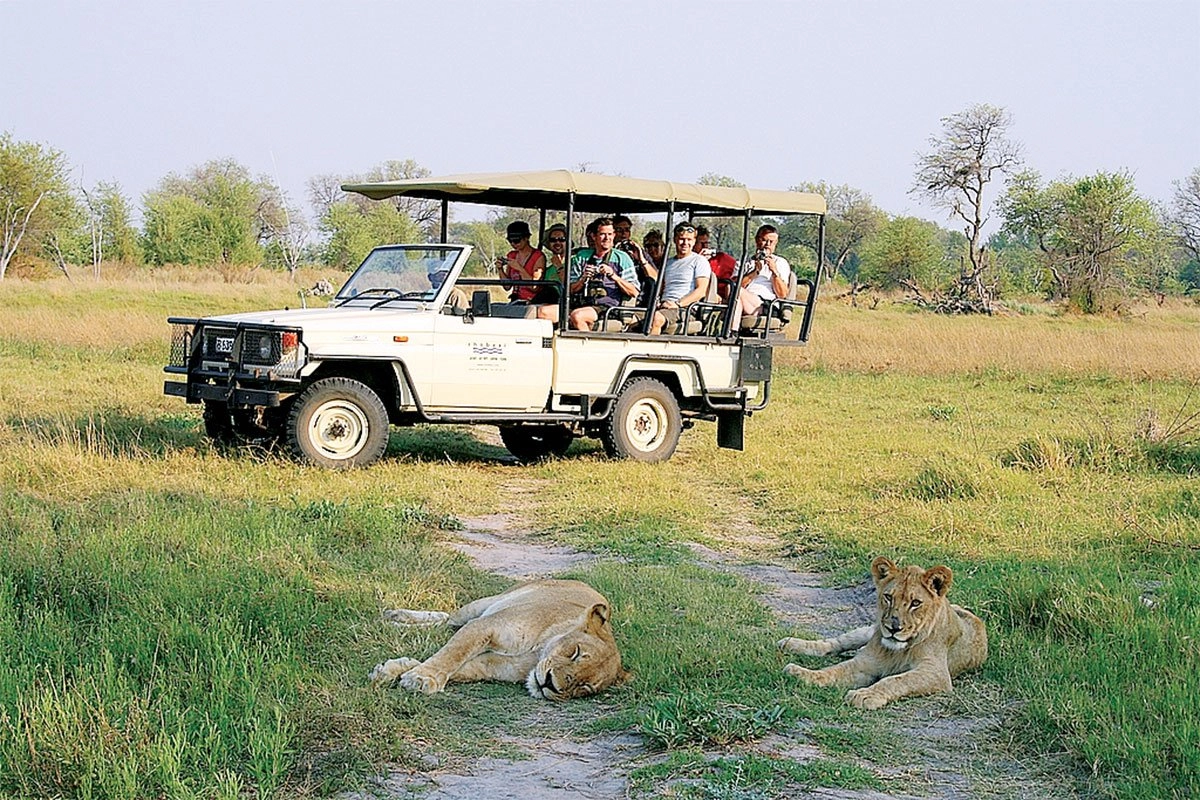
A Chobe National Park Safari from Victoria Falls is one of the easiest and most rewarding ways to combine Zimbabwe’s most famous natural attraction with Botswana’s extraordinary wildlife. Victoria Falls and Chobe National Park form part of the wider Kavango-Zambezi tourism region, allowing travelers to move from waterfalls and adventure activities to elephant-rich safari country without taking a domestic flight. Botswana Tourism identifies Kasane as the gateway to Chobe National Park and notes that Victoria Falls is approximately 80 kilometres from Kasane, making this one of Southern Africa’s most practical cross-border safari combinations.
The journey is particularly attractive because travelers do not need to sacrifice several days simply getting from one destination to another. Visitors can leave a Victoria Falls hotel in the morning, cross from Zimbabwe into Botswana and begin exploring Chobe the same day. Those with very limited time can undertake a day trip and return to Victoria Falls in the evening, while travelers with two or more days available can stay around Kasane or the Chobe River and enjoy repeated game drives and boat safaris.
This combination also creates an excellent contrast between experiences. Victoria Falls is primarily about spectacular scenery, the Zambezi River and adventure activities, whereas Chobe introduces travelers to elephants, buffaloes, lions, giraffes, antelopes, hippos, crocodiles and abundant birdlife. The Chobe Riverfront is especially famous for the large herds of elephants and Cape buffaloes that gather around the river during the dry season. For travelers planning a Victoria Falls and Botswana safari, Chobe is therefore a natural next destination.
Victoria Falls to Chobe Distance
The distance from Victoria Falls to Chobe National Park is relatively short compared with many African safari transfers. Botswana Tourism states that Victoria Falls is approximately 80 kilometres from Kasane, while Chobe National Park itself lies only about 10 kilometres from Kasane. This close proximity is one of the main reasons Chobe has become such a popular addition to Victoria Falls holidays.
The journey normally travels west from Victoria Falls toward the Kazungula border between Zimbabwe and Botswana. Zimbabwe’s official border information lists Kazungula as one of the recognized border posts connecting Zimbabwe with Botswana. Once immigration formalities have been completed, travelers continue into the Kasane area, where safari vehicles and Chobe River activities can be arranged.
Actual transfer time should not be calculated from road distance alone. International travel means that passengers must stop for immigration and, where relevant, visa processing before continuing into Botswana. Traffic volumes, group size and how quickly immigration procedures are completed can all affect the journey. For this reason, a professionally organized Victoria Falls to Chobe transfer normally includes enough flexibility for border formalities rather than relying on an exact arrival time.
The short distance also means travelers can easily incorporate Chobe into a longer Victoria Falls stay. Someone spending three or four nights in Victoria Falls can dedicate one full day to Botswana, while travelers who want a more serious wildlife experience can leave Victoria Falls and spend two or three nights near Chobe before continuing deeper into Botswana.
This accessibility distinguishes Chobe from many remote African safari destinations that require long overland journeys or expensive charter flights. For international travelers who want to combine Victoria Falls, elephants and a Botswana safari within a relatively short itinerary, the Victoria Falls–Kasane route is exceptionally convenient.
Border Crossing Between Zimbabwe and Botswana
Travelers taking a Chobe safari from Victoria Falls normally cross between Zimbabwe and Botswana through the Kazungula Border Post. Zimbabwe officially lists Kazungula among its Botswana border crossings, and the route provides direct access from the Victoria Falls area toward Kasane and Chobe National Park.
At the border, travelers leave the vehicle as required, complete Zimbabwe exit procedures and then complete entry formalities for Botswana. Depending on how the transfer is organized, visitors may change vehicles or safari teams around the border because operators on either side commonly handle their own transport arrangements. A well-organized safari company coordinates this handover so that travelers continue toward Kasane without having to arrange independent transport after clearing immigration.
A valid passport is essential, and Botswana visa requirements depend on nationality. Botswana’s government currently maintains nationality-specific immigration and tourism-visa requirements, and travelers who require a tourism visa should arrange the appropriate permission according to the rules applying to their passport. Botswana’s tourism-visa guidance also requires passports submitted for a visa application to have at least six months’ validity. Because visa policies can change, travelers should verify requirements before leaving for Southern Africa rather than assuming that arrangements available to another nationality will also apply to them.
Travelers holding an eligible KAZA UNIVISA should also understand how it works. The current Zambia Department of Immigration guidance states that the KAZA UNIVISA costs USD 50, allows qualifying travelers multiple entries between Zambia and Zimbabwe for up to 30 days under its conditions, and covers eligible day trips into Botswana through the Kazungula borders. The scheme does not mean every nationality automatically qualifies, so eligibility should always be checked before relying on it for a Victoria Falls–Chobe itinerary.
Border formalities should be treated as part of the safari journey rather than an inconvenience to be ignored when planning. Travelers undertaking a day trip have a fixed amount of wildlife-viewing time available, so departing Victoria Falls early and using an operator familiar with the border process helps maximize the day inside Chobe.
Chobe Day Trip from Victoria Falls
A Chobe day trip from Victoria Falls is ideal for travelers who have limited time but want to experience Botswana while staying in Zimbabwe. The close geographical relationship between Victoria Falls and Kasane makes it possible to combine cross-border transfers, wildlife viewing and a Chobe River experience before returning to Zimbabwe later in the day. Botswana Tourism specifically promotes the close relationship between Kasane and Victoria Falls and identifies the two destinations as only about 80 kilometres apart.
The day normally begins early with collection from a hotel in Victoria Falls. Travelers drive toward the Kazungula border, complete Zimbabwe exit and Botswana entry procedures and continue toward Kasane. Once in the Chobe area, the safari typically combines two contrasting activities: a 4×4 game drive in Chobe National Park and a boat safari on the Chobe River. Botswana Tourism notes that Kasane supports flexible land-and-water itineraries incorporating morning and afternoon game drives together with boat cruises.
During the game drive, travelers explore the Chobe Riverfront and surrounding woodland in search of elephants, buffaloes, giraffes, waterbuck, puku, kudu, sable, roan, impalas, warthogs and other wildlife. Predators including lions, leopards, hyenas and jackals also occur within this ecosystem. Botswana Tourism highlights the Riverfront as particularly productive and notes that a game drive along tracks near the river can reveal an impressive diversity of species.
The Chobe River boat safari then adds an entirely different wildlife perspective. From the water, visitors can watch elephants approaching the river, hippos occupying deeper channels and crocodiles resting along exposed banks. Chobe is also exceptionally rich in birdlife, with more than 460 bird species recorded in the park. The ability to combine a traditional game drive with a river safari is one of the strongest reasons a Chobe day trip is more rewarding than simply visiting another land-based wildlife reserve.
Lunch is usually scheduled between activities before travelers continue with the second safari experience. Later in the afternoon, they return toward the Botswana–Zimbabwe border, complete immigration formalities and transfer back to Victoria Falls.
The principal limitation of a 1 Day Chobe Safari from Victoria Falls is time. Wildlife is unpredictable, and there is no opportunity to simply try again the following morning if a particular predator or herd is difficult to locate. The day also involves two international border crossings. Nevertheless, for travelers whose itinerary cannot accommodate an overnight stay in Botswana, it remains one of the most efficient ways to add a genuine Chobe wildlife experience to a Victoria Falls holiday.
Overnight Chobe Safari from Victoria Falls
An overnight Chobe safari from Victoria Falls is the better option for travelers who want to experience Botswana more deeply. Instead of crossing into Chobe, completing two activities and immediately returning to Zimbabwe, visitors remain in the Kasane or Chobe River area for one or more nights. This creates opportunities for additional game drives, river safaris and wildlife encounters at the most productive times of day.
The journey still begins with the relatively short transfer from Victoria Falls toward Kasane, but once the Botswana border has been cleared, travelers continue to their selected lodge rather than planning around a same-day return. Kasane offers numerous accommodation options along and near the Chobe River and sits only around 10 kilometres from the national park.
A typical first afternoon can include a Chobe River sunset safari. Elephants may move toward the river to drink and bathe as temperatures fall, while hippos, crocodiles, buffaloes, antelopes and waterbirds add to the experience. After sunset, travelers return to their Botswana lodge for dinner rather than undertaking another border crossing.
The following morning can begin before sunrise with a game drive into Chobe National Park. These cooler hours can be especially rewarding for predator searches, while elephants, buffaloes, giraffes and antelopes remain active before the heat builds. The Chobe Riverfront supports remarkable wildlife diversity, including predators such as lions, leopards and hyenas.
Spending two or three nights in Chobe from Victoria Falls improves the safari significantly because travelers can repeat activities. One boat safari might produce extraordinary elephants, while another may provide better bird, hippo or crocodile encounters. One morning game drive may focus on buffaloes and plains game, while the next could produce a memorable lion sighting.
An overnight safari also works naturally as part of a longer route. Instead of returning to Zimbabwe, travelers can continue from Kasane toward Savuti, Moremi Game Reserve or the Okavango Delta. Chobe therefore functions not only as an excursion from Victoria Falls but also as an excellent gateway into a comprehensive Botswana safari.
Chobe National Park Safari from Livingstone, Zambia
A Chobe National Park Safari from Livingstone, Zambia is another highly convenient way to combine Victoria Falls with Botswana wildlife. Livingstone is the main tourism base on the Zambian side of Victoria Falls, while Kasane provides access to Chobe National Park across the Botswana border. Botswana Tourism specifically identifies Kasane as an important regional gateway for both Livingstone in Zambia and Victoria Falls in Zimbabwe.
This route has become even more practical because Zambia and Botswana are directly connected by the Kazungula Bridge and One-Stop Border Post. In 2026, the governments moved the Kazungula OSBP to 24-hour operations, strengthening the border as a major regional passenger and trade connection. For safari travelers, this provides an important direct corridor between the Livingstone region and northern Botswana.
A Chobe safari from Livingstone can be arranged as a day trip, an overnight safari or the beginning of a longer Botswana journey. Visitors can leave Zambia in the morning, cross into Botswana, enjoy both game-drive and river-based wildlife viewing and either return to Livingstone later that day or stay in Kasane.
Livingstone to Chobe National Park
Traveling from Livingstone to Chobe National Park involves driving west toward Kazungula, crossing the Zambia–Botswana border and continuing to Kasane. The actual journey duration varies according to the traveler’s hotel location, border formalities and traffic conditions, but it is short enough for Chobe to be routinely visited as a full-day excursion from Livingstone. Botswana Tourism identifies Kasane as a key regional departure and arrival point for travelers connecting with Livingstone.
Once travelers enter Botswana, Kasane acts as the operational center for Chobe activities. Chobe National Park itself is approximately 10 kilometres from Kasane, allowing visitors to move relatively quickly from border transfer to safari activities. This is particularly valuable on day trips because the majority of the available time can be devoted to game viewing and the river rather than driving between distant destinations.
The route from Livingstone is also scenically and geographically interesting because it lies within the wider Kavango-Zambezi Transfrontier Conservation Area, which links important landscapes across Angola, Botswana, Namibia, Zambia and Zimbabwe. Zambia’s Department of Immigration describes the KAZA conservation area as being centered around the Caprivi–Chobe–Victoria Falls region. The short international journey therefore crosses part of one of Southern Africa’s most important connected tourism and conservation landscapes.
Travelers planning an overnight or multi-day safari can remain around the Chobe River after arrival and then continue deeper into Botswana. Kasane Airport also creates onward connections for travelers heading toward the Okavango region, making Livingstone–Chobe–Okavango a particularly logical safari route.
Kazungula Border Crossing
The Kazungula Border Crossing between Zambia and Botswana is one of the most important international gateways for travelers combining Livingstone with Chobe National Park. The two countries are linked by the Kazungula Bridge, and the associated One-Stop Border Post was moved toward full 24-hour operation from April 1, 2026, according to Botswana government reporting.
Travelers departing Livingstone complete the necessary Zambia exit and Botswana entry formalities around the Kazungula crossing before continuing toward Kasane. The one-stop border arrangement was designed to improve regional movement and reduce inefficiencies associated with the older crossing arrangements, while the Kazungula Bridge Authority now supports the operation of this increasingly important regional corridor.
Passport and visa requirements must still be considered carefully. Botswana entry conditions depend on nationality, while travelers returning to Zambia must also hold the correct permission to re-enter the country. For certain eligible nationalities, the KAZA UNIVISA can be particularly useful. Zambia’s Department of Immigration currently states that the visa allows multiple travel between Zambia and Zimbabwe within its validity conditions and covers qualifying day trips into Botswana through Kazungula. It currently costs USD 50 and is valid for up to 30 days under the scheme’s stated conditions.
Zambia also maintains a Day Tripper facility under certain circumstances. Current immigration guidance describes it as a visa issued at eligible ports of entry for visits of less than 24 hours, including situations where a tourist leaves Zambia to visit a neighboring country and returns through the same qualifying port within 24 hours; the published fee is currently USD 10, and the facility applies at Victoria Falls and Kazungula Border Controls. Eligibility and the correct visa arrangement still depend on the traveler’s nationality and itinerary, so these rules should be checked before travel.
For organized Chobe safaris, the tour operator normally coordinates the transfer on both sides of the border, which significantly simplifies the experience. Travelers should nevertheless keep passports and any required visa documentation easily accessible rather than packing them inside checked or inaccessible luggage.
Chobe Day Trip from Zambia
A Chobe day trip from Zambia is particularly popular among travelers staying in Livingstone who want to experience a full Botswana wildlife safari without immediately changing hotels. The day combines the relatively short cross-border journey with two of Chobe’s signature activities: a game drive through the Chobe Riverfront and a safari cruise along the Chobe River.
The excursion normally begins early in Livingstone. Travelers are transferred toward Kazungula, complete Zambia and Botswana immigration formalities and continue to Kasane. Because Chobe National Park is located only around 10 kilometres from Kasane, travelers can begin the wildlife experience relatively soon after arriving in the area.
The Chobe game drive explores tracks along the Riverfront, searching for elephants, buffaloes, giraffes, kudu, impalas, puku, waterbuck, sable, roan and numerous other species. Predators including lions, leopards, hyenas and jackals also occur in the park. During the dry winter months, the Riverfront becomes especially important because large numbers of elephants and Cape buffaloes gather around the permanent Chobe River.
After the land-based safari, travelers usually stop for lunch before beginning a Chobe River boat safari. From the water, the emphasis shifts toward elephants approaching the shoreline, hippos, crocodiles and the park’s exceptional birdlife. Botswana Tourism emphasizes that a river cruise gives visitors a very different wildlife perspective and particularly good views of hippos, crocodiles and waterbirds compared with land-based viewing.
The afternoon river safari can be one of the most memorable parts of the trip because elephants may arrive at the river as temperatures begin to fall. Families can be observed drinking, bathing and moving through shallow water, while the open floodplain creates excellent photographic conditions.
After completing the second activity, travelers return to the Botswana–Zambia border and continue back to Livingstone. Visitors using an eligible KAZA UNIVISA can benefit from the scheme’s provision covering qualifying Botswana day trips through Kazungula, while other travelers need to ensure that their own entry and re-entry permissions are appropriate for the journey.
A Chobe Day Trip from Livingstone is therefore an excellent choice for visitors who want to combine Victoria Falls and Botswana within a short itinerary. However, travelers who have the time should consider spending at least one or two nights in Chobe. Staying overnight removes the need to return across the border the same day and opens the possibility of early morning predator searches, sunset river safaris and repeated elephant encounters, creating a considerably deeper Chobe National Park experience.
Chobe National Park Safari from Kasane
A Chobe National Park safari from Kasane is the easiest and most convenient way to explore the famous Chobe Riverfront and is particularly suitable for travelers who want to maximize wildlife-viewing time without spending hours on long transfers. Botswana Tourism officially describes Kasane as the gateway to Chobe National Park, with the park lying only about 10 kilometres from the town. Kasane is positioned along the Chobe River and has developed into an important safari base with hotels, guesthouses, campsites, restaurants, shops and operators offering both land and river-based wildlife activities.
The greatest advantage of starting a safari in Chobe National Park from Kasane is flexibility. Travelers can leave their accommodation early in the morning and reach the Riverfront quickly enough to take advantage of the cooler hours when wildlife is active. After a morning game drive, it is possible to return to the lodge for breakfast or lunch, relax during the hottest part of the day and then head back out for an afternoon activity. Botswana Tourism specifically notes that visitors staying in Kasane can arrange flexible itineraries involving morning game drives, afternoon game drives and boat cruises on the Chobe River.
Morning game drives from Kasane generally concentrate on the wildlife-rich Chobe Riverfront. Travelers can search for elephants, buffaloes, giraffes, antelopes and predators while exploring woodland, riverbanks and open floodplain environments. The relatively short journey from Kasane means more of the morning can be spent inside the wildlife area rather than transferring from a distant town. This is particularly valuable for photographers and serious safari travelers who want to be in position during the soft early-morning light.
The afternoon provides an opportunity to switch from land to water by taking a Chobe River boat safari from Kasane. Instead of driving through woodland, travelers cruise along the river channels and floodplains, observing elephants approaching the water, hippos in the channels, crocodiles along the banks and extensive birdlife. The ability to combine land and river experiences during a single stay is one of the main reasons Kasane works so well as a safari base.
Kasane is also convenient for travelers who want different accommodation styles. Properties are spread along and around the Chobe River, ranging from practical guesthouses to more elaborate safari lodges. Some offer views directly over the river, allowing wildlife watching to continue even when guests are not participating in formal safari activities. Botswana Tourism confirms that Kasane has an extensive range of hotels, guesthouses and campsites serving visitors to Chobe National Park.
Another major benefit is Kasane’s location within one of Southern Africa’s most interesting cross-border tourism regions. Botswana Tourism identifies Kasane not only as the gateway to Chobe but also as an important access point for Victoria Falls in Zimbabwe and Livingstone in Zambia. Victoria Falls is approximately 80 kilometres from Kasane according to the tourism authority, which explains why Chobe is frequently combined with Victoria Falls in short multi-country itineraries.
Travelers with only one day available can use Kasane for a morning game drive and afternoon river cruise. Those spending two or three nights can repeat activities and increase their opportunities to observe different wildlife behaviors. Longer stays can also act as the beginning of journeys toward Savuti, Moremi Game Reserve and the Okavango Delta.
For travelers arriving by air, Kasane is equally convenient. Kasane International Airport lies approximately four kilometres south of Kasane town and is open to both domestic and international traffic. The Civil Aviation Authority of Botswana highlights the airport’s strategic position within the region where Botswana lies close to Namibia, Zambia and Zimbabwe. This means visitors can arrive by air, transfer to a Kasane lodge and begin their Chobe experience without a lengthy overland journey.
A Chobe safari from Kasane therefore suits almost every type of traveler, from visitors taking a short Botswana extension after Victoria Falls to families, honeymooners, photographers and experienced safari travelers beginning a longer Botswana circuit. The combination of quick access to the park, river activities, accommodation variety and onward air and road connections makes Kasane the most practical gateway to the Chobe Riverfront.
How to Get to Chobe National Park
Understanding how to get to Chobe National Park is relatively straightforward because northern Botswana is connected to several important safari gateways. The most convenient entry point for the Chobe Riverfront is Kasane, while travelers exploring the wider national park may also reach more remote regions using 4×4 vehicles or light-aircraft transfers. Botswana Tourism confirms that Kasane functions as the primary gateway to Chobe and is positioned only about 10 kilometres from the park.
There are four particularly useful ways to incorporate Chobe into a Southern African itinerary: flying directly into Kasane, driving from Victoria Falls in Zimbabwe, driving from Livingstone in Zambia, or connecting from Maun and the Okavango Delta. The best option depends on the direction of travel, available time, budget and whether Chobe is the first destination or part of a larger Botswana safari.
Travelers arriving from outside the region often find flying to Kasane the most efficient approach. Those already visiting Victoria Falls or Livingstone usually benefit from road transfers because the destinations are relatively close. Travelers moving through Botswana from the Okavango Delta can connect toward Chobe using scheduled flights, charter aircraft or longer overland safari arrangements.
Flying to Kasane
Flying to Kasane is one of the fastest and most convenient ways to reach Chobe National Park, particularly for travelers arriving from other parts of Botswana or connecting through regional aviation hubs. Flights arrive at Kasane International Airport, which is located approximately four kilometres south of Kasane town. The Civil Aviation Authority of Botswana states that the airport accommodates both domestic and international traffic and is strategically positioned within Botswana’s northern tourism region.
After landing, travelers can transfer by road from the airport to a lodge in Kasane or near the Chobe River. Because the airport is close to town and Chobe National Park itself lies only around 10 kilometres from Kasane, it is possible to arrive and begin safari activities without losing an entire day to ground transportation.
Air Botswana currently includes Kasane among its destinations and provides a current flight-schedule facility for travelers checking operating routes and timings. Because airline schedules can change according to season and operational requirements, travelers should verify the actual flights available for their travel date rather than relying on fixed schedules published far in advance.
Domestic aviation is especially useful when combining northern Botswana with the rest of the country. Air Botswana identifies Maun–Kasane as an important tourism route connecting Maun, the gateway to the Okavango Delta region, with Kasane on the Chobe River. This gives travelers an efficient way to build an itinerary that combines two of Botswana’s most famous safari areas without spending a full day or more on road transfers.
Flying can also form part of an international itinerary. Travelers arriving in Southern Africa through larger regional aviation hubs can connect onward toward Kasane according to available schedules. Rather than assuming a particular international route operates every day, travelers should check current airline timetables when planning because regional services can change by season. Air Botswana’s current destination network includes Kasane alongside Maun, Johannesburg, Gaborone and several other regional points.
Flying is particularly attractive for travelers on shorter holidays. Someone combining Chobe and the Okavango Delta can spend the morning in one safari area, fly between the major gateways and potentially be ready for another wildlife activity later the same day, depending on flight and lodge arrangements.
Travelers using small charter aircraft for remote camps should also expect different luggage requirements from conventional international flights. Soft-sided safari bags are usually much easier to accommodate in small aircraft than large hard-shell suitcases, and the specific baggage allowance should always be confirmed with the flight operator before travel.
Overall, flying into Kasane is ideal for visitors who value time efficiency, travelers connecting Chobe with other Botswana wildlife areas and anyone who wants to begin their safari without undertaking a long-distance road journey.
Driving from Victoria Falls
Driving from Victoria Falls to Chobe National Park is one of the most popular cross-border safari routes in Southern Africa. Botswana Tourism states that Victoria Falls is approximately 80 kilometres from Kasane, making it possible to travel from Zimbabwe to Botswana and experience Chobe without requiring an additional regional flight.
The trip normally begins at a hotel in Victoria Falls, followed by a road transfer toward the Zimbabwe–Botswana border. After completing Zimbabwe exit procedures and Botswana entry formalities, travelers continue toward Kasane. The exact transfer time varies because international border processing depends on passenger numbers, visas and conditions at the crossing, so travelers should avoid planning the journey purely according to road distance.
Once in Kasane, Chobe National Park is close enough for travelers to begin wildlife activities on the same day. Botswana Tourism places the park approximately 10 kilometres from the town, making Victoria Falls and Chobe one of the rare major African destination combinations where a traveler can move from an international attraction to a major wildlife park within a relatively compact geographic area.
Visitors with limited time can arrange a Chobe day trip from Victoria Falls, generally combining a game drive and Chobe River boat safari before returning to Zimbabwe. Travelers with more time can instead transfer one-way to Kasane and remain overnight. The overnight option is usually better for a deeper wildlife experience because it creates opportunities for sunset river safaris and early-morning game drives without having to repeat international border procedures on the same day.
Driving from Victoria Falls to Chobe is also strategically useful for travelers continuing through Botswana. Rather than returning to Zimbabwe after the safari, visitors can spend several nights in Kasane and then continue toward Savuti, Moremi or the Okavango Delta.
The route is therefore particularly suitable for multi-country holidays such as Victoria Falls and Chobe Safaris, Zimbabwe and Botswana Safaris, or longer Zambia, Zimbabwe and Botswana journeys. The relative proximity of Victoria Falls and Kasane makes it possible to add substantial wildlife viewing without complicated regional aviation.
Driving from Livingstone
Travelers staying on the Zambian side of Victoria Falls can also reach Chobe conveniently by driving from Livingstone to Kasane. Botswana Tourism identifies Kasane as an important regional access point not only for Victoria Falls in Zimbabwe but also for Livingstone in Zambia, which makes a Zambia-to-Chobe itinerary a natural part of the wider regional safari circuit.
The road journey travels from Livingstone toward Kazungula before crossing from Zambia into Botswana. Travelers must complete the appropriate immigration procedures before continuing into Kasane, so the actual journey time depends partly on border formalities rather than distance alone.
Once travelers enter Botswana, the route continues toward Kasane and the Chobe Riverfront. Because Chobe National Park lies approximately 10 kilometres from Kasane, there is no additional lengthy road transfer after reaching the town. This makes a Chobe safari from Livingstone practical even for travelers who have only one full day available.
A typical day trip can include a morning game drive through the Chobe Riverfront, followed by lunch and an afternoon boat safari. The game drive focuses on terrestrial wildlife such as elephants, buffaloes, giraffes, antelopes and predators, while the river safari provides opportunities for elephants at the water, hippos, crocodiles and birds.
Travelers with additional time should consider staying overnight in Kasane rather than immediately returning to Livingstone. A one- or two-night stay eliminates the need for a same-day return border crossing and creates more time for early morning and late-afternoon safari activities.
The route is especially attractive for travelers designing a Zambia, Botswana and Zimbabwe itinerary. For example, visitors can begin around Livingstone and Victoria Falls, continue to Chobe National Park and then travel deeper into Botswana toward the Okavango Delta. Alternatively, they can start in Botswana and finish with Victoria Falls in Zambia.
Using organized transfers is generally the simplest approach because safari operators can coordinate the handover between vehicles and guides while allowing sufficient time for immigration formalities. Travelers should still confirm passport and visa requirements for their nationality before departure because cross-border entry conditions can change.
Chobe from Maun and the Okavango Delta
Traveling to Chobe from Maun and the Okavango Delta creates one of Botswana’s strongest safari combinations. Maun functions as a major gateway to the Okavango safari region, while Kasane performs a similar role for Chobe. Connecting the two allows travelers to experience the remarkable wetlands and channels of the Delta together with Chobe’s elephant-rich Riverfront and river-based wildlife viewing.
One of the most efficient options is to fly between Maun and Kasane. Air Botswana identifies its Maun–Kasane service as an important tourism route linking Maun, associated with the Okavango Delta, with Kasane on the Chobe River. Current schedules should be checked for specific travel dates because operating days and timings can change. Air Botswana provides a live flight-schedule tool for this purpose.
Flying between the gateways is especially useful for travelers who want to spend several nights in each region without sacrificing large amounts of safari time to road travel. A visitor could finish an Okavango stay, transfer to Maun or a camp airstrip, fly north toward Kasane and then begin the Chobe portion of the trip.
Travelers staying at remote Okavango Delta camps may not necessarily need to return to Maun before continuing north. Depending on the safari operator, camp location and season, light-aircraft charter arrangements can connect different safari areas using bush airstrips. These flights are an important feature of Botswana’s remote safari system because many Delta camps are located far from conventional roads.
The transition from the Okavango Delta to Chobe creates striking ecological variety. Delta safaris may involve seasonal floodplains, channels, islands, mokoro excursions, boat activities and game drives, while Chobe introduces the permanent riverfront, extensive elephant movements and excellent wildlife viewing from both vehicles and boats.
Travelers who prefer an overland Botswana safari can also connect the Maun region with Chobe by road, but this is a substantially longer undertaking than transferring between Kasane and Victoria Falls. Depending on the route and safari style, overland journeys may be designed to include additional wildlife destinations rather than treating the journey simply as transportation.
One particularly rewarding safari route is Maun – Moremi Game Reserve – Savuti – Chobe Riverfront – Kasane. Instead of moving directly between Maun and Kasane, travelers progress through northern Botswana’s wilderness, spending nights in different ecosystems along the way. This kind of itinerary is particularly suitable for travelers who have more time and want the road journey itself to become part of the safari.
Another approach is to fly from Maun or the Delta to Kasane and use Chobe as the final Botswana destination before continuing by road to Victoria Falls. This creates an efficient Okavango Delta – Chobe – Victoria Falls safari, with increasingly easy onward connections as travelers move north and east.
The direction can also be reversed. Travelers arriving from Zimbabwe or Zambia can begin in Kasane with a Chobe National Park safari, fly to Maun or directly toward an Okavango camp and finish the journey deeper inside Botswana. Air Botswana’s current network specifically recognizes the importance of the Maun–Kasane tourism connection.
For travelers who want to experience Botswana properly rather than visiting only one wildlife area, combining Chobe National Park and the Okavango Delta is one of the strongest itinerary choices. Chobe delivers large elephant herds, the Chobe River and classic game drives, while the Okavango introduces a dramatically different wetland wilderness. Kasane and Maun serve as the two principal gateways that make these contrasting safari environments relatively easy to connect.
Chobe National Park Safari Costs
The cost of a safari in Chobe National Park varies considerably according to accommodation level, number of nights, season, whether activities are shared or private, and whether travelers stay in Kasane or at a fully inclusive safari lodge. Chobe can therefore accommodate everything from relatively affordable day visitors staying in Kasane to high-end travelers spending more than USD 1,000 per person per night at luxury lodges inside or close to the national park.
For 2026 planning, budget-oriented travelers using Kasane guesthouses and shared activities can keep costs substantially lower than visitors booking fully inclusive safari lodges. Current published Chobe estimates place budget safari arrangements around USD 100–200 per person per day, while mid-range lodge safaris commonly fall around USD 350–700 per person per day or night depending on the package structure. Luxury Chobe properties can rise well above USD 700 per person per night, with Chobe Game Lodge publishing 2026 rates of approximately USD 690 in the green season and up to USD 1,290 per person sharing per night during the May–October peak period.
Travelers should therefore look carefully at what a quoted Chobe safari price actually includes. A USD 600 lodge package that includes accommodation, meals, park fees, game drives, boat cruises and selected beverages may represent better overall value than a cheaper room where every activity, meal and park entry charge must be paid separately.
Estimated Chobe National Park Safari Cost Table
| Chobe Safari Expense | Approximate 2026 Cost | Typical Basis |
|---|---|---|
| Budget Chobe safari | USD 100–250 per person per day | Simple accommodation/shared activities |
| Mid-range Chobe safari | USD 350–700 per person per night | Safari lodge, often meals + activities |
| Luxury Chobe safari | USD 650–1,300+ per person per night | Fully inclusive luxury lodge |
| International adult park entry | BWP 270 per person per day | Chobe National Park entry |
| International child 8–17 park entry | BWP 135 per child per day | Approximately 50% adult rate |
| Children under 8 | Free | Park entry |
| SADC/resident adult park entry | Around BWP 205 per person per day | Subject to qualifying status |
| Botswana citizen adult park entry | Around BWP 30 per person per day | Citizen rate |
| Foreign-registered vehicle under 3,500 kg | Around BWP 115 per vehicle per day | Additional to passenger entry |
| Shared 3-hour Chobe game drive | About USD 60–100 per person | Operator and inclusions vary |
| Full-day Chobe wildlife safari | About USD 120–280 per person | Often includes several activities/lunch |
| Shared Chobe River cruise | About USD 40–70 per person | Usually 2.5–3 hours |
| Sunset Chobe River cruise | Around USD 60 per person | Shared excursion |
| Private boat safari | About USD 250–450+ per boat | Duration and boat size affect cost |
| Private game drive | About USD 200–450+ per vehicle | Planning estimate; operator dependent |
| Premium fully inclusive Chobe lodge | USD 700–1,300+ per person per night | Accommodation, meals and activities |
Important: These are useful 2026 Chobe safari planning rates, not universal fixed prices. Operator prices, exchange rates, park charges, seasonality and lodge inclusions can change, so final rates should always be confirmed when the safari is booked. Current published 2026 sources list international Chobe entry at BWP 270 per adult per day and BWP 135 for children aged 8–17.
Budget Chobe Safari Costs
A budget Chobe National Park safari is most practical when travelers base themselves in Kasane rather than staying at an expensive fully inclusive wilderness lodge. Kasane has guesthouses, campsites, self-catering accommodation and simpler hotels that allow visitors to purchase game drives and boat cruises separately. Current 2026 Chobe cost guides estimate basic safari arrangements from roughly USD 100–200 per person per day, although adding better accommodation, multiple activities and private transfers can push the daily amount toward USD 200–250 or more.
This type of safari does not necessarily mean compromising on wildlife. Kasane lies beside the Chobe safari region, so budget travelers can still join exactly the same Chobe Riverfront ecosystem used by visitors staying at expensive lodges. The major difference is usually accommodation style, exclusivity, meal arrangements, vehicle size and whether activities are private or shared.
A budget traveler might stay in a guesthouse in Kasane, join a shared morning game drive in Chobe National Park, return to town for lunch and later join a shared sunset boat cruise. Current online listings show approximately three-hour Chobe game drives from around USD 65 per person, illustrating how travelers can experience the park without purchasing a full luxury lodge package.
Shared Chobe River cruises are another effective way to control costs. One current Kasane activity provider lists river cruising at BWP 375 per person excluding park fees, while current marketplace listings show sunset cruises around USD 60. Joining other travelers significantly reduces the cost compared with hiring a private boat.
Accommodation represents another important part of the budget. Current 2026 Chobe guides list Kasane guesthouses and backpacker-style options from around USD 80 per person per night, although actual room prices depend greatly on travel dates and occupancy. Travelers willing to camp or self-cater can potentially reduce costs further.
The important point is that cheap Chobe safaris are possible, especially for travelers who separate accommodation from safari activities and use Kasane as their base. However, the lowest advertised activity rate should never be treated as the complete cost. Travelers should check whether national park fees, transfers, refreshments, meals and hotel pickup are included before comparing operators.
Mid-Range Chobe Safari Costs
A mid-range Chobe National Park safari provides one of the strongest balances between comfort, safari quality and overall price. Current 2026 pricing guides place many mid-range Chobe experiences at approximately USD 350–700 per person per day or night, depending on whether accommodation, meals, park fees and activities are bundled together.
At this level, travelers can generally expect comfortable en-suite accommodation, good meals, professional guiding and scheduled safari activities. Many packages include one or two activities per day, such as a morning game drive and afternoon Chobe River cruise. Some also include transfers from Kasane Airport or nearby border points.
Actual published lodge pricing demonstrates why inclusions matter. Chobe Safari Lodge publishes 2026–2027 rates of approximately USD 445 per person sharing per night for a luxury room with half board and one activity, rising to around USD 600 per person sharing for a fully inclusive arrangement with two activities.
A two-night package at a well-positioned lodge can therefore appear more expensive than booking a Kasane hotel separately, but travelers may already have meals, guiding, boat cruises and game drives built into the price. This makes mid-range safari packages particularly convenient for first-time visitors who do not want to organize every Chobe activity independently.
Mid-range safaris also offer more comfortable transport and usually smaller activity groups than the cheapest excursions. Travelers can spend several nights enjoying different morning and afternoon activities while still avoiding the very high nightly rates associated with Botswana’s most exclusive safari properties.
For most international travelers spending two or three nights in Chobe National Park, the mid-range category provides an excellent combination of convenience, accommodation quality and wildlife experience.
Luxury Chobe Safari Costs
A luxury safari in Chobe National Park can range from approximately USD 650 to well over USD 1,000 per person per night, particularly during Botswana’s peak dry-season months. These rates often include much more than accommodation: meals, local beverages, scheduled safari activities, professional guides, park fees and selected transfers may all be bundled into one nightly rate.
For example, Chobe Bakwena Lodge lists 2026 rates at approximately USD 653 per person sharing per night during January–April, increasing to around USD 766 during May–October for shorter stays. These rates illustrate the substantial seasonal difference that can occur even within the same property.
At the higher end, Chobe Game Lodge publishes 2026 standard-room rates of approximately USD 690 per person sharing per night from January 6 through March, about USD 990 during April and approximately USD 1,290 per person sharing per night from May through October. Luxury suites can rise to approximately USD 1,570 per person sharing during peak season.
The appeal of luxury Chobe safaris goes beyond a better bedroom. Guests may benefit from exceptional riverfront locations, smaller safari groups, highly experienced guides, premium dining, more personalized service and easier access to wildlife activities. Some high-end properties also include both land and water safaris as part of the standard daily program.
Luxury safari pricing also tends to be highest during the June-to-October dry season, when Chobe is especially popular for concentrated elephant and buffalo viewing around permanent water. Travelers willing to visit during green or shoulder seasons can sometimes enjoy the same high-quality lodge at substantially lower rates. The difference between Chobe Game Lodge’s USD 690 green-season rate and USD 1,290 peak-season rate demonstrates how important travel dates can be to the overall safari budget.
For luxury travelers, it is therefore more useful to compare total inclusions than nightly prices alone. A more expensive all-inclusive lodge can include meals, safari drives, boat cruises and park fees that would otherwise have to be purchased separately.
Chobe Park Fees
Chobe National Park entrance fees are charged separately from many accommodation and activity costs unless the lodge or safari operator specifically states that park fees are included. For 2026, recently published Chobe fee schedules list international visitors at approximately BWP 270 per adult per day, with children aged 8–17 charged approximately BWP 135 per day and children under eight entering free.
The published structure distinguishes between Botswana citizens, eligible residents/SADC travelers and international visitors. Current published schedules list approximately BWP 30 for a Botswana adult citizen, BWP 205 for qualifying resident/SADC adults and BWP 270 for international adults visiting Chobe or Moremi.
| Visitor Category | Approximate 2026 Chobe Entry Fee |
| Botswana citizen adult | BWP 30 per day |
| Resident/SADC adult | BWP 205 per day |
| International adult | BWP 270 per day |
| International child 8–17 | BWP 135 per day |
| Child under 8 | Free |
These charges are normally per person, per day, meaning travelers entering the national park on several days may incur the entry fee repeatedly unless their package already incorporates it.
Vehicle charges can also apply in addition to passenger entry. Published 2026 schedules list approximately BWP 115 per day for a foreign-registered vehicle under 3,500 kilograms, compared with roughly BWP 30 for a Botswana-registered vehicle in the same category. Larger safari vehicles attract higher rates.
For travelers booking organized game drives, these expenses may already be incorporated into the excursion price. However, some activities advertise a lower base price and then charge park entry separately. Current Chobe listings explicitly show instances where approximately USD 15–20 in entrance charges are collected in addition to the activity price.
Travelers should therefore ask one simple question before booking: “Are all Chobe National Park fees included in this price?” This prevents apparently inexpensive tours from becoming unexpectedly expensive after taxes, fees and transfers are added.
Boat Safari Costs
A Chobe River boat safari is one of the essential activities in the park, and prices depend on whether the cruise is shared or private, its duration and whether park fees, drinks, transfers or meals are included.
A standard shared river cruise generally represents the most affordable option. Current activity listings show Chobe sunset cruises around USD 60 per person, while a Kasane-based operator lists a boat activity at BWP 375 per person excluding park fees. This means travelers can often budget approximately USD 40–70 per person for a straightforward shared boat safari before considering additional fees.
These cruises generally last several hours and concentrate on the wildlife-rich Chobe River. Travelers can search for elephants, buffaloes, hippos, crocodiles and birds while exploring channels and floodplains from water level.
Private boats cost significantly more but provide greater freedom. Rather than sharing the boat with unrelated travelers, the entire excursion can be adapted around photography, elephants, birdwatching or other interests. Current Chobe pricing guidance places private vehicle or boat charters broadly around USD 250–450 total, although actual rates depend on boat size, duration and operator.
Private boat safaris can be especially valuable for wildlife photographers because the guide can spend longer at productive sightings and position the boat according to the sun, animal movement and background. Chobe Safari Lodge also specifically promotes private boat hire for customized interests such as specialist photography and birdwatching.
Travelers comparing boat-safari prices should confirm whether park fees are included. Some operators quote the activity alone, whereas others bundle boat use, guiding, refreshments, hotel collection and national park charges into one price.
Private Game Drive Costs
A private game drive in Chobe National Park costs more than joining a shared safari vehicle, but it offers considerably greater flexibility. Shared three-hour Chobe game drives are currently advertised from around USD 65 per person, while full-day shared wildlife safaris from Kasane are listed from roughly USD 120 and can rise beyond USD 200 depending on meals, duration and additional activities.
For a private vehicle, travelers should typically budget approximately USD 200–450 or more per vehicle for a half-day-style experience, depending on operator, duration, group size, park fees and whether the vehicle is reserved exclusively for the group. This should be treated as a planning range rather than a government-set tariff because private operators determine their own rates.
The main advantage is control over the safari. If travelers are particularly interested in lions, the guide can dedicate more time to predator searches. If elephants are the main priority, more of the drive can be spent around routes used by herds moving toward the Chobe River. Birdwatchers can stop for small species that shared safari groups might otherwise pass quickly.
Private vehicles are especially valuable for professional and serious wildlife photography. Photographers can request better positioning, spend longer at sightings and avoid constantly competing for viewing space with several other guests.
Families may also find private safari vehicles worthwhile because the activity can be paced more comfortably around children or older travelers. Groups of friends can sometimes find private vehicles surprisingly cost-effective because the vehicle price is divided among several passengers.
A private Chobe safari can also form part of a fully customized day combining an exclusive game drive with a private Chobe River boat safari. This creates one of the most comprehensive ways to experience the national park because travelers control the pace on both land and water.
Ultimately, the cost of a Chobe National Park safari can range from a relatively affordable Kasane-based trip to an ultra-luxury Botswana safari costing more than USD 1,000 per person per night. The biggest factors are accommodation standard, travel season, private versus shared activities and the number of services included in the package. Travelers should therefore compare the total safari value rather than the headline price alone, paying particular attention to accommodation, meals, park fees, game drives, boat safaris and transfers before deciding which Chobe safari package offers the best value.
Where to Stay in Chobe National Park
Choosing where to stay in Chobe National Park has a major influence on the style, cost and overall atmosphere of a Chobe safari. Accommodation around the park ranges from exclusive riverfront safari lodges and intimate eco-lodges to comfortable Kasane hotels, affordable guesthouses, campsites and remote tented camps around Savuti and the wider Linyanti wilderness. Kasane has the greatest concentration of accommodation and is the easiest base for travelers interested primarily in the Chobe Riverfront, while more remote camps are better suited to visitors who want a deeper wilderness experience away from the busier northern section of the park. Botswana Tourism describes Kasane as the gateway to Chobe National Park and confirms that the town offers hotels, guesthouses and campsites along and around the Chobe River.
The first decision travelers should make is whether they want to stay inside or immediately beside the national park, along the Chobe River, in Kasane, or in a remote wilderness area such as Savuti or Linyanti. Staying close to Kasane provides convenient access to restaurants, airports, border transfers and scheduled activities, making it particularly practical for first-time visitors, families and travelers combining Chobe with Victoria Falls. Remote camps, by comparison, generally involve longer 4×4 transfers or light-aircraft access but provide greater isolation and a stronger feeling of being immersed in the African wilderness.
It is also important to understand that not every property marketed as a “Chobe lodge” is physically inside Chobe National Park. In fact, Chobe Game Lodge is the only permanent lodge situated on the Chobe Riverfront inside Chobe National Park itself. Most other well-known properties are located in Kasane, along the river outside the park boundary, in neighboring wildlife areas or in remote sections of the broader Chobe ecosystem. This distinction does not necessarily make one choice better than another; rather, it helps travelers select accommodation according to convenience, wilderness atmosphere, safari activities and budget.
Luxury Lodges
Travelers looking for luxury lodges in Chobe National Park can choose from sophisticated properties offering premium accommodation, excellent food, professional guiding and easy access to both game drives and Chobe River safaris. At this level, many properties operate on an inclusive safari basis, meaning accommodation may be combined with meals, scheduled wildlife activities, selected drinks and other services. The precise inclusions differ by lodge and season, so comparing complete safari packages is more useful than looking only at the room rate.
Among the most distinctive luxury choices is Chobe Game Lodge, which occupies an exceptional position directly on the Chobe River inside the national park. Botswana Tourism describes it as the only lodge on the riverfront within Chobe National Park, while the lodge itself emphasizes its location on the game-rich Chobe River. This location gives guests the advantage of waking within the protected area and beginning wildlife activities without first transferring from Kasane to the park entrance.
Chobe Game Lodge is particularly attractive to travelers seeking an immersive but comfortable safari. The combination of river views, 4×4 game drives and boating makes it possible to experience Chobe from both land and water. Its position also appeals to wildlife photographers because guests are already based within the Riverfront ecosystem rather than commuting from town for every game drive. The lodge is best suited to travelers who prioritize location, convenience, privacy and a more complete safari atmosphere over keeping accommodation costs low.
Another strong luxury option is Chobe Bakwena Eco Lodge, a smaller owner-run property situated on the banks of the Chobe River in the Kasane area. The lodge currently offers 15 chalets, including riverine chalets, elevated treetop chalets, a family chalet and a honeymoon chalet. Its riverine rooms are positioned within indigenous riverine forest, while the lodge focuses strongly on an intimate, environmentally conscious safari style.
Chobe Bakwena is particularly appealing for couples, honeymooners and travelers who prefer a smaller lodge rather than a large hotel-style property. Because it is based along the river yet outside the formal park interior, guests can combine a peaceful lodge atmosphere with organized wildlife activities in Chobe National Park. Its accommodation configuration also makes it attractive to families requiring more space, although families should always check current age policies for individual activities before booking.
Luxury accommodation around Chobe should ultimately be chosen according to the desired safari style. Travelers who want to be physically inside Chobe National Park may find Chobe Game Lodge particularly attractive, whereas visitors who prefer a smaller boutique property or a lodge with a strong eco-conscious identity may favor accommodation along the Chobe River outside the park. The wildlife itself moves through a much larger ecosystem, so staying outside the formal boundary does not mean being disconnected from the safari environment.
Mid-Range Safari Lodges
Mid-range safari lodges near Chobe National Park are ideal for travelers who want comfortable accommodation and convenient access to wildlife activities without paying the rates associated with Botswana’s most exclusive camps. This category is particularly strong around Kasane, where travelers can choose properties offering air-conditioned rooms, swimming pools, restaurants and activity desks while joining scheduled game drives and river cruises separately or as part of a package.
One of the best-known choices is Chobe Safari Lodge, situated in Kasane directly on the banks of the Chobe River. The lodge states that it is approximately a 10-minute drive from both the Chobe National Park entrance gate and Kasane International Airport, making it extremely convenient for visitors arriving by air or road. Accommodation ranges from river-facing rooms to bush rooms, suites and camping facilities, meaning the same property can cater to several different travel budgets.
Chobe Safari Lodge is particularly useful for first-time visitors because game drives, Chobe River safaris, private boat hire and other excursions can be organized directly from the property. Its location means travelers can spend the morning inside the national park, return to the lodge during the warmer midday hours and then take an afternoon boat cruise without changing accommodation. This makes it a strong choice for two- or three-night Chobe safaris and for travelers arriving from Victoria Falls or Livingstone.
Nearby Chobe Bush Lodge provides another comfortable option. It is situated beside Chobe National Park and within walking distance of the Chobe Riverfront area, with 42 rooms including several family rooms. The accommodation has a contemporary safari style and is especially convenient for families or couples who want modern rooms while remaining close to Kasane’s tourism infrastructure.
Another property worth considering is Muchenje Safari Lodge, positioned on the western side of Chobe National Park overlooking the floodplain from the Buffalo Ridge area. Botswana Tourism describes the lodge as being tucked among trees on the western side of the park, with floodplain views and guided safari activities. Its location is valuable for travelers who want a quieter Chobe experience away from the concentration of activity close to Kasane and the eastern Riverfront.
Elephant Valley Lodge is another option in the broader Chobe region for travelers wanting a traditional tented-safari feel. Botswana Tourism states that the lodge offers daily 4×4 game-viewing safaris and boat cruises on the Chobe River, with 20 accommodation tents. It can therefore work well for travelers seeking an accommodation package that places wildlife activities at the heart of the stay rather than treating the property simply as a hotel.
The term “mid-range” should be treated flexibly in Botswana because lodge pricing changes dramatically between seasons and according to whether packages include meals, transfers and safari activities. A property that appears expensive when compared with a conventional hotel may represent good safari value if two daily activities and meals are already included. Travelers should therefore compare the complete package rather than the room alone.
Budget Accommodation
Finding budget accommodation near Chobe National Park is considerably easier in Kasane and Kazungula than inside the wilderness areas of Chobe. Travelers who want an affordable safari should generally stay outside the national park and purchase shared game drives and boat safaris separately. Kasane is particularly suitable for this approach because Botswana Tourism confirms that the town offers a wide range of guesthouses, hotels and campsites catering to national park visitors.
Guesthouses provide one of the most practical alternatives to expensive safari lodges. Waterberry Guesthouse, for example, is listed by Botswana Tourism as offering affordable en-suite rooms with air conditioning, Wi-Fi and secure parking. A property of this type works well for independent travelers who do not need an all-inclusive safari lodge and are comfortable booking wildlife activities through local operators.
Other simple Kasane accommodations include small guesthouses such as Punkinheads Guesthouse, which Botswana Tourism lists in Kasane. The precise standard and prices of guesthouses vary, but their main advantage is allowing travelers to direct more of the safari budget toward game drives, river cruises, private guiding or additional nights in Botswana.
Self-catering is another useful strategy. Tlou Safari Lodge is listed by Botswana Tourism as a self-catering property with 53 units, an on-site restaurant, swimming pool and the ability to arrange activities. Self-catering accommodation can be especially useful for families and longer-stay travelers because meals do not need to be purchased through a fully inclusive lodge package.
Camping can reduce accommodation costs even further. Chobe Safari Lodge maintains a campsite in Kasane close to the main park gateway; the lodge describes the campsite as roughly 10 minutes from Sedudu Gate and Kasane International Airport. This makes camping practical for self-drive visitors and overland travelers who want inexpensive accommodation without being far from the Riverfront safari area.
The Big 5 Chobe Hotel in Kazungula also advertises accommodation and camping on the banks of the Chobe River and is listed by Botswana Tourism as an affordability-focused property. Staying farther from central Kasane can require additional transportation planning, but it may suit visitors arriving overland from Zambia or travelers looking for simpler lodging near the wider Chobe River area.
A budget Chobe safari therefore does not mean missing the park’s major experiences. Visitors staying in a modest guesthouse can still take the same Chobe National Park game drives and Chobe River boat safaris as guests at more expensive hotels. What changes is the accommodation, meal arrangement, transfer convenience and level of exclusivity rather than the fundamental wildlife environment.
Lodges Along the Chobe River
Staying at one of the lodges along the Chobe River adds a special dimension to a Chobe safari because the river remains part of the experience even between formal game-viewing activities. Guests can sit on a terrace listening to hippos, watch birds moving between riverine trees and enjoy sunsets over the water before heading out for another safari.
The most exclusive riverfront position is occupied by Chobe Game Lodge inside Chobe National Park. Botswana Tourism places the property approximately 23 kilometres west of Kasane on the Chobe River and identifies it as the only riverfront lodge located within the park itself. For travelers who want a traditional lodge-in-the-park experience, this is a particularly important distinction.
Outside the park but conveniently located in Kasane, Chobe Safari Lodge sits directly on the Chobe River and shares a boundary with Chobe National Park. Its location is particularly attractive because travelers obtain the atmosphere of riverfront accommodation while retaining easy access to Kasane shops, the airport and regional road connections.
Chobe Bakwena Eco Lodge provides a more intimate riverfront option. Its riverine chalets are positioned along the water within indigenous vegetation, and the lodge combines this riverside setting with a relatively small number of rooms. This can appeal to couples and travelers who prefer a quieter lodge environment.
Travelers wanting something smaller can consider Chobe River Lodge, which Botswana Tourism describes as a 12-room boutique hotel on the banks of the Chobe River. The property offers boat cruises, game drives, a restaurant, swimming pool and airport transfers. This type of property bridges the gap between a large resort and a small guesthouse.
The key benefit of staying along the river is not simply the view. Chobe’s wildlife is strongly linked to permanent water, particularly during dry conditions. A riverfront base therefore places travelers close to one of the central ecological features shaping wildlife movements throughout northern Chobe. Even when animals are not visible directly from the property, the setting reinforces the connection between the safari and the landscape.
Accommodation in Kasane
Accommodation in Kasane provides the widest selection for visitors to Chobe National Park. Botswana Tourism describes the town as the gateway to Chobe and notes that hotels, guesthouses and campsites are spread along the riverbanks and surrounding areas. This variety makes Kasane particularly suitable for travelers who want control over their safari budget rather than being restricted to fully inclusive wilderness camps.
For many first-time visitors, Kasane is the most practical place to stay. Chobe National Park is nearby, Kasane International Airport provides convenient access, and road connections link the town with Victoria Falls in Zimbabwe and Livingstone in Zambia. Botswana Tourism specifically identifies Kasane as an important departure point for both Victoria Falls and Livingstone. This is why Kasane works exceptionally well as part of a Zambia–Zimbabwe–Botswana itinerary.
Accommodation choices range from Chobe Safari Lodge and Chobe Bush Lodge to boutique river properties, guesthouses and self-catering units. Travelers can therefore choose a room according to budget and then separately determine how many game drives and boat safaris they want. This flexibility is especially valuable for people spending four or five nights in the area who may not want two scheduled safari activities every day.
Kasane also works well for families because properties such as Chobe Bush Lodge have dedicated family-room configurations. Self-catering accommodation and access to town facilities can make longer family stays simpler than remaining at an isolated camp where all meals and activities operate on fixed schedules.
Travelers interested in value rather than maximum wilderness immersion should strongly consider Kasane. The trade-off is that the town naturally has more vehicles, buildings and tourism infrastructure than remote Savuti or Linyanti. However, once visitors enter Chobe National Park or board a river safari, the experience quickly becomes focused on wildlife and the surrounding landscape.
Remote Camps in Savuti and Linyanti
Travelers wanting a deeper wilderness experience should consider remote safari camps in Savuti and Linyanti. These regions feel dramatically different from Kasane and the accessible Chobe Riverfront. Distances are greater, tourism infrastructure is lighter and the safari experience is generally built around staying within or beside wildlife-rich landscapes rather than commuting into them each morning.
Savuti, sometimes written Savute, is one of the principal wilderness regions of Chobe National Park. Botswana Tourism describes Savuti and Linyanti as important wildlife areas within northern Botswana, with Savuti occupying a remote part of the Chobe ecosystem and supporting significant predator populations. Travelers choosing accommodation here usually do so because they want predators, open landscapes and a feeling of isolation rather than convenient access to Kasane.
One of the specialist accommodation options is &Beyond Savute Under Canvas, a mobile-style luxury camp operating in a remote part of Chobe National Park. &Beyond describes Savute as a wild corner of Chobe and positions the camp around an immersive tented safari experience rather than a conventional permanent hotel. This style of accommodation is particularly suitable for travelers who want comfort while retaining the atmosphere of sleeping close to the African bush.
Savuti safaris are especially appealing to travelers interested in lions, hyenas, elephants and seasonal wildlife movements. Because guests stay remotely, game drives begin directly within the safari environment and can focus on the broader Savuti landscape rather than transferring back and forth from Kasane.
The Linyanti region requires slightly more careful explanation because the name is used for both the Linyanti section of Chobe National Park and neighboring private concessions within the larger ecosystem. Botswana Tourism notes that a portion of Chobe National Park reaches the Linyanti River and swamps, where government camping facilities exist, while private reserves and concessions extend along neighboring river systems. Travelers should therefore check exactly where a lodge is located rather than assuming every property using “Linyanti” in its description lies inside Chobe National Park.
These private wilderness areas are one of the attractions of the wider Chobe–Linyanti ecosystem. They can offer smaller camps, fewer safari vehicles and a more exclusive experience than the busy Riverfront. Some camps are reached primarily by light aircraft, increasing the cost but dramatically reducing travel time across difficult terrain.
For travelers planning an extended Botswana safari, a route combining Chobe Riverfront, Savuti and Linyanti can be extremely rewarding. The Riverfront emphasizes elephants, boat safaris and permanent water; Savuti offers predator-rich plains and a remote interior landscape; and Linyanti introduces riverine woodland, floodplains and private wilderness areas. Rather than repeating the same safari environment for several nights, travelers progressively move through different ecosystems.
Ultimately, the best accommodation in Chobe National Park depends on the safari experience desired. Luxury travelers seeking an exceptional in-park position can consider Chobe Game Lodge; travelers wanting riverfront convenience have several excellent choices around Kasane; mid-range and budget visitors can use Kasane as an affordable base; and experienced safari travelers can continue into Savuti and the wider Linyanti wilderness for a much more secluded experience. Choosing the correct location—not simply the most expensive room—is what turns accommodation into an important part of the Chobe safari itself.
Chobe National Park Safari Packages
Chobe National Park safari packages can be designed for almost every type of traveler, from visitors looking for a short affordable wildlife experience from Kasane to couples booking a private luxury safari and families combining Chobe with Victoria Falls or the Okavango Delta. The park’s accessibility, especially around the Chobe Riverfront, makes it unusually flexible. Travelers can choose simple day packages, two- or three-night lodge safaris, private photographic journeys, honeymoon experiences, family holidays or longer Botswana itineraries linking Chobe with Savuti, Moremi and the Okavango Delta.
A typical Chobe safari package may include accommodation, airport or border transfers, meals, park entrance fees, professional safari guiding, game drives and boat safaris on the Chobe River. More exclusive packages can add private vehicles, private boats, premium accommodation, charter flights and personalized schedules, while budget packages usually rely on shared activities and accommodation in Kasane. The most important factor is therefore not simply the advertised price but what is included in the Chobe safari package.
Travelers should also consider the length of the safari. A one-day package is practical for visitors coming from Victoria Falls or Livingstone, while two or three nights allow time for several game drives and river cruises. Longer Chobe packages can include Savuti or connect onward to the Okavango Delta, creating a more complete Botswana wildlife journey.
Budget Chobe Safari Packages
Budget Chobe safari packages are ideal for travelers who want excellent wildlife viewing without paying for high-end safari lodges or exclusive private vehicles. The most economical way to experience Chobe is generally to stay in Kasane, where travelers can choose affordable guesthouses, campsites, self-catering properties and simple hotels while booking shared game drives and Chobe River boat safaris separately.
A typical budget package may include one or two nights in Kasane, a shared morning game drive in Chobe National Park, an afternoon river safari, transfers between the accommodation and activity departure points, and sometimes breakfast or lunch. Travelers arriving from Victoria Falls or Livingstone can also choose a one-day Chobe package that combines cross-border transfers, lunch, a game drive and a boat cruise before returning to their hotel in the evening.
The main advantage of a cheap Chobe National Park safari package is that travelers still explore the same wildlife-rich ecosystem used by guests staying in more expensive lodges. Elephants, buffaloes, giraffes, lions, antelopes, hippos and crocodiles do not appear only for luxury guests. The difference lies primarily in accommodation style, vehicle exclusivity, meal arrangements and the level of personalized service.
Shared game drives help reduce the cost significantly because vehicle expenses are divided among several passengers. Shared boat cruises work in the same way, allowing travelers to experience the Chobe River without paying for an entire private vessel. For solo travelers, backpackers and couples on a controlled budget, these group activities can provide very good safari value.
Travelers should nevertheless examine budget packages carefully. Some low advertised prices may exclude park entrance fees, visa-related costs, drinks or transfers. A slightly more expensive package that includes all major expenses can sometimes represent better value than the cheapest headline rate.
A 2 Day Budget Chobe Safari is particularly attractive because it provides enough time for a sunset boat cruise and an early morning game drive without requiring luxury accommodation. Travelers with three days can repeat one or both activities and improve their chances of varied wildlife sightings while still keeping the overall safari affordable.
Luxury Chobe Safari Packages
Luxury Chobe safari packages are designed for travelers who want excellent wildlife viewing combined with high-quality accommodation, refined dining, professional guiding and more personalized service. These packages frequently use premium lodges along the Chobe River or exclusive safari properties where wildlife activities form part of the daily lodge experience.
A luxury package may include spacious river-facing accommodation, all meals, selected beverages, scheduled game drives, boat safaris, park fees, airport transfers and other lodge services. More exclusive itineraries can add private safari vehicles, private river boats, charter flights and personalized guiding. Rather than arranging every component separately, travelers can experience Chobe through a carefully coordinated all-inclusive safari program.
Location can be one of the greatest advantages of a luxury package. Staying directly along the river or close to productive wildlife areas reduces transfer time and allows travelers to remain connected to the safari environment throughout the day. Guests may spend the morning watching elephants during a game drive, return to the lodge for lunch and later head onto the Chobe River without complicated logistics.
A luxury safari in Chobe National Park is especially well suited to honeymooners, photographers, milestone travelers and visitors combining Botswana with other premium Southern African destinations. Chobe can be paired with luxury camps in the Okavango Delta, creating an itinerary that combines riverfront wildlife concentrations with secluded Delta wilderness.
The experience can also be highly personalized. Instead of following a rigid group schedule, some luxury packages allow guests to spend more time at particular sightings, alter activity times or choose between a game drive and river safari depending on recent wildlife activity.
For travelers who value comfort but still want authentic wildlife experiences, luxury Chobe packages can provide an excellent balance. The key is to select a lodge and itinerary based on location, guiding quality and safari inclusions, rather than choosing accommodation purely because it has the highest room category.
Private Chobe Safaris
A private Chobe safari gives travelers complete or near-complete control over their wildlife-viewing experience. Rather than sharing a vehicle or boat with unrelated visitors, the safari is arranged exclusively for one traveler, couple, family or private group.
This is particularly useful in Chobe because different visitors often have very different interests. Some travelers want to spend hours observing elephants, while others are specifically searching for lions, leopards or African wild dogs. Birdwatchers may want frequent stops for smaller species, while photographers may need the vehicle positioned carefully according to the light. A private safari allows the guide to structure the experience around these priorities.
A typical private Chobe National Park safari package may include private transfers, exclusive use of a safari vehicle, private Chobe River boat excursions, accommodation and personalized guiding. More extensive itineraries can continue toward Savuti, Moremi or the Okavango Delta using private road transfers or charter flights.
Private Chobe safaris are especially valuable for photographers. A shared vehicle may need to move away from a sighting because other passengers want to search for something else. In a private vehicle, photographers can often remain longer when an elephant herd, lion pride or interesting bird behavior creates a strong photographic opportunity.
Families also benefit from privacy. Parents can adjust the pace according to children’s interests, take breaks when needed and avoid disturbing unrelated travelers. Senior travelers and visitors with mobility considerations may similarly appreciate having more control over boarding times and activity duration.
A private safari does not automatically have to be ultra-luxury. Travelers can combine a comfortable mid-range Kasane lodge with a private game drive or private boat safari, creating a personalized experience without booking the most expensive accommodation available.
For travelers seeking flexibility, exclusivity and deeper wildlife observation, a private safari in Chobe National Park is one of the strongest options.
Family Chobe Safaris
Family Chobe safaris work particularly well because the park provides different ways of viewing wildlife and does not require families to spend every activity inside a vehicle. Children may enjoy watching elephants from a Chobe River boat just as much as searching for lions during a game drive, creating variety throughout the safari.
A family safari package should be designed according to the children’s ages rather than simply using an adult itinerary with extra beds. Very young children may struggle with long game drives, early wake-up calls and extended transfers, while teenagers may enjoy a more active schedule involving several wildlife experiences.
For families with younger children, staying around Kasane can be particularly practical. The area offers family-friendly accommodation, swimming pools, restaurants and relatively short transfers to Chobe National Park. Parents can schedule a morning game drive, return to the lodge for lunch and rest, then take a shorter afternoon river cruise rather than keeping children out on safari all day.
A family Chobe safari package may include family rooms, private or shared game drives, Chobe River cruises, meals and transfers. Booking a private safari vehicle can be especially useful for families because the guide can stop when children need a break and spend more time on wildlife that captures their attention.
The Chobe Riverfront provides particularly exciting experiences for children because large animals can often be observed clearly. Elephants approaching the river, hippos surfacing beside the boat and crocodiles resting along the banks provide memorable wildlife encounters without requiring children to identify animals hidden deep inside vegetation.
Families combining Chobe with Victoria Falls can create an even more varied holiday. Several nights around Victoria Falls can introduce waterfalls, river activities and family-friendly attractions before the journey continues into Botswana for wildlife viewing. With more time, families can add the Okavango Delta, although lodge age restrictions and specific activity policies should always be checked before confirming the itinerary.
A successful family safari should avoid rushing between too many destinations. Two or three nights in Chobe usually provide a better experience than a one-day excursion involving long transfers and border procedures, particularly when traveling with younger children.
Honeymoon Chobe Safaris
A Chobe honeymoon safari combines wildlife, river scenery and intimate safari accommodation, making the park an excellent destination for couples seeking something more adventurous than a conventional beach honeymoon. Watching elephants along the Chobe River at sunset, enjoying private dinners and staying in a river-facing lodge can create a highly romantic safari experience.
Honeymoon packages usually emphasize privacy. Couples may choose a private game drive, private Chobe River cruise or a smaller safari lodge where the experience feels more personalized. Accommodation can include river-view rooms, secluded chalets or honeymoon suites depending on the property selected.
A typical luxury Chobe honeymoon package may include airport transfers, romantic accommodation, full-board meals, game drives, river safaris and special arrangements such as private dining. Some lodges may also provide honeymoon amenities, although these should always be confirmed when making the reservation.
The Chobe River is especially important to the honeymoon experience. Afternoon boat safaris allow couples to watch wildlife while enjoying the changing evening light across the floodplain. Elephants may gather along the shoreline while hippos and waterbirds occupy the river, creating a safari experience that is both dramatic and relaxed.
Couples with more time should consider combining Chobe with the Okavango Delta. Chobe delivers large wildlife concentrations and excellent elephant encounters, while the Delta introduces remote camps, waterways and a stronger feeling of seclusion. A Chobe and Okavango honeymoon therefore offers two different versions of Botswana’s wilderness within one journey.
Victoria Falls is another natural addition. A honeymoon itinerary could combine two or three nights around Victoria Falls with several nights in Chobe before continuing into the Okavango Delta. This creates a journey combining dramatic scenery, wildlife, river experiences and secluded safari lodges.
The best honeymoon packages should prioritize enough time in each destination. Spending several nights in one well-chosen lodge often produces a more romantic experience than changing properties every night simply to include as many locations as possible.
Small Group Chobe Safaris
Small group Chobe safaris offer a useful balance between the affordability of shared travel and the personalized feeling of a private safari. These packages usually place a limited number of travelers in one safari vehicle, allowing costs to be divided while still providing enough space for comfortable wildlife viewing.
Small group packages are particularly attractive to solo travelers, couples and friends who do not need an exclusive vehicle but prefer a more intimate experience than a large coach-style excursion. Because safari vehicles carry relatively few passengers, guides can still respond to the interests of the group and provide detailed explanations about wildlife behavior and the Chobe ecosystem.
A small group Chobe National Park safari package might include two or three nights of accommodation, shared transfers, scheduled game drives, Chobe River boat safaris, selected meals and park fees. Longer itineraries can combine Chobe with Victoria Falls, Savuti, Moremi or the Okavango Delta.
One major advantage for solo travelers is social interaction. Safari activities naturally encourage conversation as guests share wildlife sightings and meals. A small group allows travelers to enjoy this social atmosphere without the cost of paying for a fully private safari.
Small groups can also work well for photography when vehicle occupancy is controlled. Fewer passengers generally mean better access to open sides of the vehicle, easier movement between seats and fewer people competing for the same photographic angle.
For friends traveling together, a small group safari can sometimes effectively function as a private experience if the group is large enough to occupy most or all of the vehicle. This can make Chobe particularly good value for groups of four to six travelers who want personalized guiding without paying individual private-safari supplements.
The most successful small-group safari should avoid packing too many people into one vehicle simply to reduce the rate. Comfort matters during multi-hour game drives, and each traveler should have a good viewing position.
Whether travelers choose a budget Chobe safari package, luxury Chobe safari, private tour, family holiday, honeymoon or small-group safari, the strongest itineraries include both land and water wildlife viewing. Chobe’s greatest advantage is the ability to combine traditional game drives with safaris on the Chobe River. Selecting a package that allows enough time for both experiences—and enough nights for wildlife sightings to unfold naturally—creates a much more rewarding Chobe National Park safari.
Chobe National Park Safari for Families
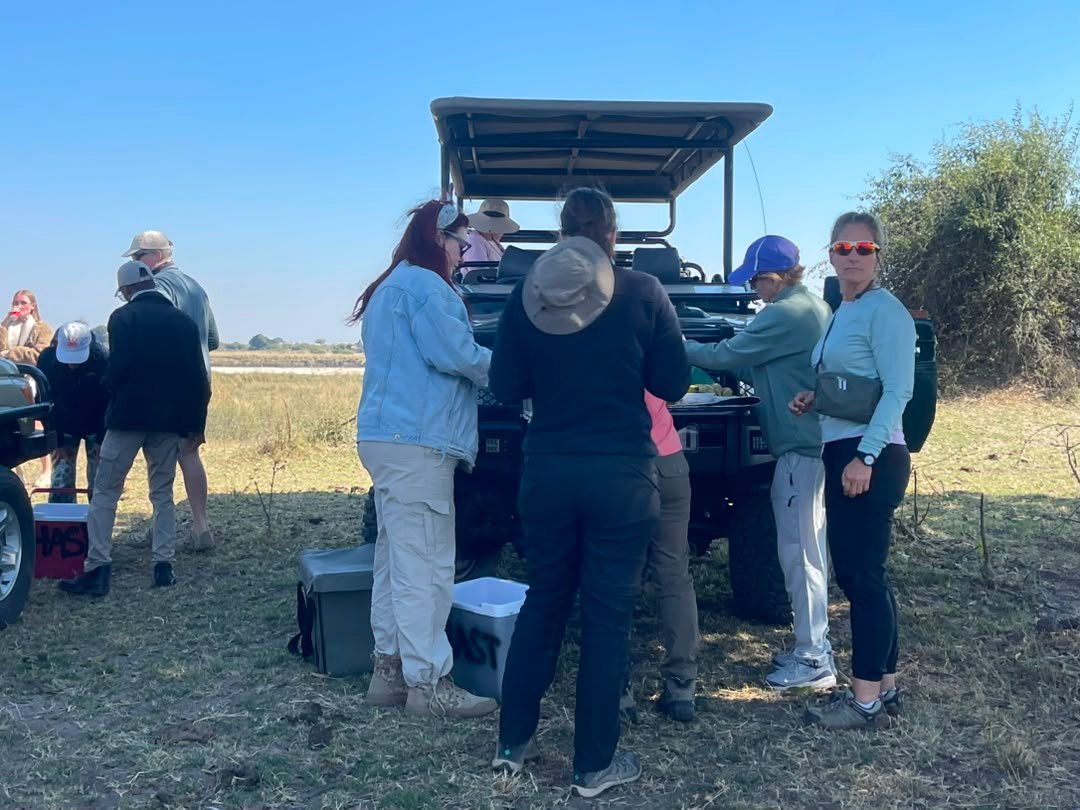
A Chobe National Park safari for families can be one of the most approachable ways to introduce children and teenagers to an African wildlife safari because Chobe combines spectacular wildlife with relatively straightforward logistics. Families do not necessarily need to spend entire days driving across remote wilderness. Around Kasane, it is possible to alternate between game drives, Chobe River boat safaris, lodge time and swimming-pool breaks, creating a much more varied schedule than a safari built exclusively around long vehicle journeys. Chobe Safari Lodge, for example, is only about a 10-minute drive from both the national park entrance and Kasane International Airport, illustrating how easy logistics can be when families choose the right base.
For children, the wildlife itself is unusually engaging. Chobe’s famous elephant encounters can be particularly memorable because families may watch elephants walking across the floodplains, drinking beside the river, bathing, interacting with calves or moving between woodland and water. A boat safari changes the viewing perspective completely and can hold children’s attention differently from another long game drive. Hippos, crocodiles, buffaloes and colorful birds around the Chobe River add variety throughout the excursion. Several Chobe properties specifically promote family safari experiences, and Chobe Game Lodge states that its guides can adapt the safari experience around younger travelers.
The best family safari in Chobe National Park should not simply copy an adult itinerary. Families with younger children generally benefit from shorter activities, flexible meal times and enough downtime between excursions. A sensible day might begin with an early morning game drive, followed by breakfast and several relaxed hours at the lodge before an afternoon Chobe River cruise. Teenagers and older children may be comfortable with longer drives, while very young travelers often respond better to shorter outings with clear breaks between them.
Accommodation also deserves careful planning. Connecting bedrooms, family suites and properties with pools can make a significant difference when several generations travel together. Chobe Safari Lodge currently offers spacious family-room configurations, including options with two separate en-suite bedrooms, while Chobe Game Lodge offers family-oriented accommodation and can tailor daily routines around children. Individual room and activity age policies still vary: for example, Chobe Game Lodge states that its luxury family suites are suitable for children over six. Families should therefore check the exact policy of the chosen lodge rather than assuming every Chobe property follows the same rules.
A private vehicle can be especially worthwhile for a Chobe family safari. With a shared vehicle, parents may feel pressure to keep children quiet or remain on a fixed schedule because unrelated guests are also participating. With a private safari vehicle, the guide can spend more time with elephants if the children are fascinated by them, shorten the drive when attention begins to fade or stop to explain tracks, dung, birds and smaller animals in a way that makes the experience more educational. This flexibility can matter more to a family than simply upgrading to a more expensive bedroom.
Families traveling with grandparents should also think in terms of comfort rather than age alone. Boat safaris can provide a relaxing alternative to several hours over uneven game-drive tracks, while lodges close to Kasane reduce complicated transfers. Multi-generational families may therefore find Chobe easier to manage than safari areas requiring several bush flights and repeated camp changes.
A family Chobe itinerary can also connect naturally with Victoria Falls. Chobe Safari Lodge promotes Victoria Falls day trips alongside game drives and Chobe River experiences, reflecting how easily the two destinations fit into a wider family holiday. Families with sufficient time should normally spend at least two or three nights around Chobe rather than trying to fit Botswana into one rushed cross-border day. This gives children time to settle into the safari rhythm and gives the family more than one opportunity to encounter the wildlife they have traveled so far to see.
Ultimately, a successful Chobe National Park safari with children is not about completing the maximum number of activities. It is about giving children enough variety to remain interested while parents still enjoy serious wildlife viewing. A thoughtful combination of elephants, river safaris, manageable game drives, family-friendly accommodation and sufficient relaxation can turn Chobe into one of the strongest family safari destinations in Botswana.
Chobe Safari for Couples and Honeymooners
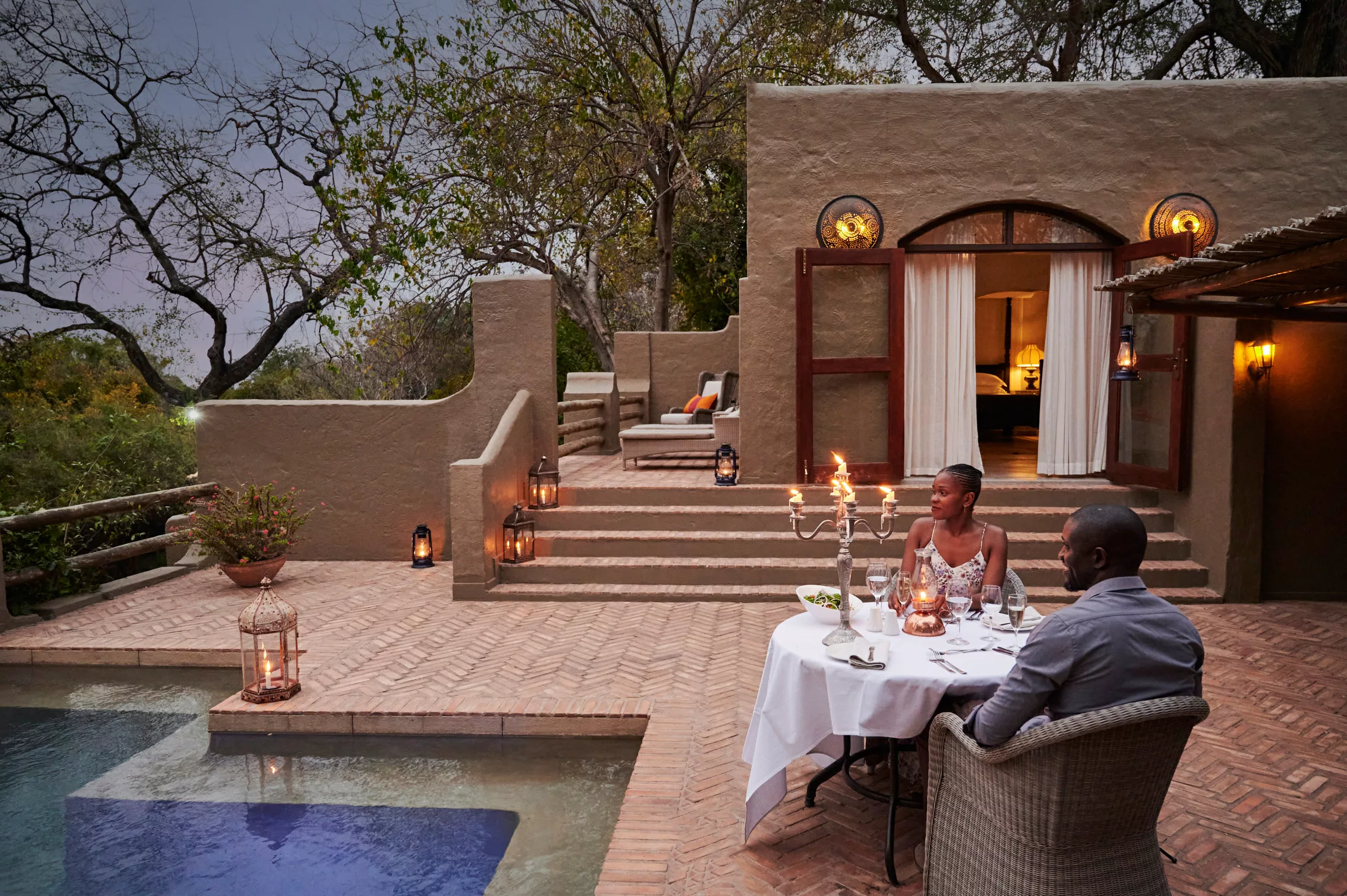
A Chobe safari for couples and honeymooners combines the excitement of a major wildlife destination with the slower, more romantic atmosphere of the Chobe River. Couples can begin the day searching for elephants and predators on a morning game drive, spend the afternoon relaxing at a riverfront lodge and later board a boat as the evening light spreads across the floodplains. This mixture of adventure and relaxation makes Chobe particularly suitable for honeymoons, anniversaries and couples who want their holiday to feel more meaningful than a conventional resort stay.
The Chobe River is central to the romantic experience. An afternoon boat safari can become one of the highlights of a Botswana honeymoon safari, particularly when elephants emerge from the woodland to drink as the heat begins to fade. Hippos call from the river, African Fish Eagles and other birds move overhead, and the western sky gradually changes color. Chobe Safari Lodge emphasizes its riverfront location and sunset experiences, as well as its convenient departure point for Chobe River cruises.
Couples who want greater privacy should consider private safari activities rather than upgrading only the accommodation. A beautiful suite certainly improves a honeymoon, but having a private boat safari on the Chobe River can often transform the experience more significantly. Couples can spend longer with elephants, concentrate on photography, avoid a fixed shared-group schedule and simply enjoy more quiet time together. Private game drives can provide the same freedom on land.
Accommodation style should reflect the type of honeymoon being planned. Some couples prefer a sophisticated riverfront luxury lodge with spa facilities and large suites; others prefer a small tented camp where evenings feel quieter and more closely connected to the wilderness. For example, Sanctuary Chobe Chilwero combines morning and afternoon game drives with Chobe River cruises and offers both conventional suites and more exclusive pool-suite accommodation. The best choice is therefore not automatically the most expensive property but the one whose location and activity style best match how the couple wants to spend each day.
A honeymoon also benefits from staying long enough to slow down. Trying to arrive from Victoria Falls, complete several activities and leave immediately the next morning provides wildlife but very little romance. Two or three nights allow time for a relaxed breakfast, spa treatment, private dinner or afternoon at the lodge between safaris. Couples with four or more nights can divide their stay between the Chobe Riverfront and a more remote area such as Savuti or continue into the Okavango Delta.
The Chobe and Okavango Delta honeymoon is particularly strong because the environments complement one another. Chobe provides the powerful spectacle of elephants, buffaloes and river activity, while a remote Delta camp can add secluded waterways, smaller camps and a different wilderness atmosphere. Victoria Falls can then be added before or after Botswana, creating a honeymoon that combines waterfall scenery, wildlife, rivers and remote safari camps rather than repeating the same experience every day.
The most romantic Chobe safaris usually leave some space in the itinerary. Wildlife itself provides unpredictability and excitement; not every hour needs an organized activity. Sitting beside the Chobe River after a morning safari, watching monkeys in the trees or listening to hippos after dark can be just as memorable as another scheduled drive.
For couples who value privacy, beautiful scenery and meaningful shared experiences, a Chobe honeymoon safari can therefore offer far more than luxury accommodation. The combination of river sunsets, elephants, private wildlife encounters and the feeling of traveling together through one of Botswana’s great safari regions gives the destination its romantic character.
Luxury Safari in Chobe National Park
A luxury safari in Chobe National Park is defined less by decorative rooms than by access, guiding, location, privacy and the quality of time spent around wildlife. Chobe has accommodation at several luxury levels, ranging from sophisticated Kasane riverfront properties to lodges positioned much closer to the wilderness. Chobe Game Lodge has a particularly distinctive location: Botswana Tourism identifies it as the only lodge on the Chobe Riverfront situated inside Chobe National Park.
The advantage of a premium safari location becomes obvious early in the morning. Guests staying inside or exceptionally close to the wildlife area can reduce unnecessary transfers and begin concentrating on animals sooner. In a destination such as Chobe, where morning and late-afternoon light can be particularly rewarding, reducing logistical friction has genuine safari value. Luxury should therefore be evaluated partly according to where the lodge is situated and how easily guests reach productive wildlife areas, not simply the size of the suite.
High-end Chobe experiences can combine morning and afternoon game drives with river-based wildlife viewing. Some luxury properties deliberately differentiate the river experience as well. Sanctuary Chobe Chilwero, for example, offers a specialist photographic river cruise using a boat with 360-degree swivel seating, alongside its conventional sundowner cruises. This demonstrates how premium safari design can improve the experience itself rather than merely adding comfort after the activity is finished.
The quality of guiding is another critical difference. A strong guide does much more than name animals. Guides interpret elephant social behavior, explain why buffaloes move toward particular sections of the river, identify alarm calls, recognize predator tracks and help travelers understand how rainfall, water and vegetation influence Chobe’s wildlife. For experienced safari travelers, the difference between average and excellent guiding can be more important than whether the lodge has a larger swimming pool.
A luxury Chobe elephant safari can also benefit from smaller activity groups or private arrangements. Large elephant herds deserve time rather than hurried viewing. Travelers may spend an extended period watching calves play, adults drink or several family units interact near the water. With a private guide, there is less pressure to leave simply because another guest wants to search for a different species.
Sustainability is increasingly part of the luxury experience as well. Botswana Tourism notes that Chobe Game Lodge operates electric-powered game-drive vehicles and solar-electric safari boats, providing quieter wildlife viewing while reducing operational emissions. Quieter vehicles and boats can also improve the atmosphere for photographers and travelers who want to hear natural sounds around the river.
A high-end Chobe safari can be extended into a larger luxury Botswana itinerary using Savuti, Moremi and the Okavango Delta. Instead of staying five or six nights in essentially the same habitat, travelers can spend several nights around the Chobe River before flying deeper into Botswana. Chobe contributes elephants, river viewing and highly productive game drives, while the Delta adds floodplain and wetland environments.
Luxury travelers should nevertheless avoid over-scheduling. Paying premium safari rates can create a temptation to fill every available hour with activities. In practice, the best luxury safari often includes one excellent morning experience, a comfortable midday break and another carefully chosen late-afternoon safari rather than constant movement. The ability to choose—and not be rushed—is itself part of luxury.
Budget Safari in Chobe National Park
A budget safari in Chobe National Park is entirely achievable, particularly when travelers use Kasane as their base rather than booking a fully inclusive lodge deep within the safari area. Kasane has a much broader range of accommodation styles, making it possible to spend less on the room while still devoting money to the activities that matter most: game drives and Chobe River safaris. Botswana Tourism lists guesthouse accommodation in Kasane from which travelers can access the nearby national park and arrange boat cruises.
This distinction is important because a budget Chobe safari does not mean a different national park. A traveler staying at a small Kasane guesthouse and a traveler staying at a high-end riverfront lodge can both enter the Chobe Riverfront and search for elephants, buffaloes, lions, giraffes and antelopes. They can both cruise the Chobe River and see hippos, crocodiles and elephants at the water. The major differences are accommodation, exclusivity, meals, transfers and the number of people sharing each activity.
One of the strongest approaches is to combine affordable accommodation with shared safari activities. Rather than hiring an entire game-drive vehicle, travelers join a scheduled excursion and divide transport and guiding costs among several participants. The same approach works for shared river cruises. This is especially useful for solo travelers and couples who do not need privacy but still want professional guiding.
Accommodation choice can reduce costs further. Chobe Safari Lodge currently offers several accommodation styles as well as a riverfront campsite, and it is about a 10-minute drive from the Chobe National Park entrance. Smaller local guesthouses provide another alternative; Botswana Tourism’s listing for Punkinheads, for example, describes a four-room bed-and-breakfast in Kasane with access to boat-cruise arrangements.
Budget travelers should, however, avoid building an itinerary around the cheapest advertised room alone. Staying far from activity departure points can create additional taxi and transfer expenses. Similarly, a cheap safari excursion may exclude park fees or transportation. The best value usually comes from comparing the total Chobe safari cost, including accommodation, transfers, park entry, game drives, river cruises and meals.
A short stay can also control costs without reducing the quality of the safari. Two nights in Kasane can provide an afternoon Chobe River cruise, an early morning game drive and potentially another activity before departure. Three nights allow more wildlife time without dramatically increasing transportation expenses because the traveler remains in one base.
Travel during less demanded periods may also broaden the accommodation choices available, although travelers should select dates according to the wildlife experience they want rather than price alone. Chobe changes substantially between the dry and green seasons, and lower rates are not automatically good value if they do not match the traveler’s main interests.
A cheap Chobe safari should therefore focus on intelligent allocation of money rather than simply reducing every cost. Saving on the bedroom while keeping a well-guided game drive and quality river safari often produces a better trip than choosing expensive accommodation and then cutting the activities that make Chobe worth visiting.
Private Safari in Chobe National Park
A private safari in Chobe National Park is one of the best options for travelers who care deeply about flexibility. Instead of sharing the vehicle with strangers and following a generalized safari plan, a couple, family or small private group can shape the day’s wildlife experience around its own priorities. Private game drives and boat trips are available through accommodation providers in the Chobe region; Chobe Bush Lodge, for example, currently promotes both private boat trips and private game drives.
The difference becomes most apparent at wildlife sightings. Imagine encountering a herd of elephants approaching the Chobe River. On a shared drive, the group may need to move after a short time because different guests have different priorities. On a private safari, travelers who are fascinated by elephants can remain longer and watch the herd’s behavior unfold. Alternatively, guests who have already photographed many elephants may ask the guide to concentrate on predators or particular antelope species.
Private safaris are consequently excellent for repeat African safari travelers. Someone who has already completed several conventional game drives may no longer be interested in racing between every large mammal. They may prefer searching carefully for African wild dogs, spending an hour watching lion behavior or concentrating on birds and smaller wildlife. A private guide can adjust the safari accordingly.
A private Chobe River safari provides another major advantage: positioning. Boats have more freedom to spend time along productive sections of the river when the itinerary is not designed around a large shared group. Photographers can consider direction of light and background, while couples can enjoy a quieter experience. Birdwatchers can stop for kingfishers, raptors and shoreline species that a general sightseeing cruise might pass more quickly.
Families benefit for different reasons. A private vehicle reduces the pressure created by children sharing a safari with unrelated adults, and the day can be adjusted if someone becomes tired. Multi-generational groups may also need additional time entering vehicles or may prefer slightly shorter activities. Having the vehicle exclusively for the group makes these adjustments far easier.
Private Chobe safaris can be arranged at more than one accommodation level. Travelers do not need to purchase the most expensive lodge in Botswana simply to have private guiding. A strong value strategy can be to stay at a comfortable Kasane lodge and invest the additional budget in private game drives and private boat safaris, placing more of the expenditure directly into the wildlife experience.
Longer private journeys can extend beyond the Riverfront. Travelers with four or more days may continue toward the western side of Chobe or build Savuti into a broader itinerary. Muchenje Safari Lodge, for example, is positioned on the western side of Chobe National Park and offers game drives and boat cruises, illustrating the different bases available beyond central Kasane.
The strongest private safari is not necessarily the one with the greatest number of activities. Its real advantage is control of time. Being able to remain with an interesting animal, leave an unproductive area, concentrate on photography or simply slow the pace creates a level of freedom that shared departures cannot always provide.
Chobe National Park Photographic Safari
A Chobe National Park photographic safari is particularly rewarding because few destinations allow photographers to work so effectively from both land and water within the same stay. Game-drive vehicles provide access to elephants, lions, giraffes, buffaloes and antelopes across woodland and floodplain habitats, while the Chobe River creates opportunities to photograph wildlife from a much lower angle. Chobe’s riverfront properties actively offer both forms of viewing, and specialized photographic river experiences are also available.
Elephants make Chobe especially compelling for photographers. Rather than relying only on portraits of stationary animals, photographers can work with behavior: adults drinking, calves playing, family groups walking toward the river, elephants bathing or animals moving across open floodplains. River-based viewing may place the photographer closer to eye level with wildlife than a conventional elevated safari vehicle, producing more intimate images and cleaner backgrounds.
The Chobe River photographic safari is also exceptional for birds. Fish Eagles, kingfishers, herons, egrets and other water-associated species can be photographed against relatively uncluttered river backgrounds. Boats can provide opportunities to photograph birds in flight or feeding close to the water, while crocodiles and hippos offer additional subjects between elephant encounters. Specialist river boats can make the process considerably easier; Sanctuary Chobe Chilwero, for example, currently advertises a dedicated photographic safari boat with 360-degree swivel seating.
Light should influence the itinerary. Early mornings are often ideal for land-based photography because the sun is softer and many animals remain active before temperatures increase. Afternoon boat safaris can then take advantage of warmer evening light across the river. Instead of photographing only individual animals, photographers can incorporate water, islands, reflections, dramatic skies and the wider floodplain into environmental compositions.
A private vehicle becomes particularly valuable for serious photographers because position can matter as much as the sighting itself. Seeing a lion behind dense vegetation is exciting, but it may produce a weak photograph. A knowledgeable guide can sometimes reposition safely or wait for the animal to move into a better opening rather than immediately continuing to the next sighting. Photographers also benefit from having an entire seat or row available for equipment rather than competing for shooting space.
The same principle applies to river safaris. The best photographic position is not always the closest one. A boat situated slightly farther away may provide a cleaner background, better reflection or more flattering angle than one pressed tightly against a group of elephants. Experienced photographic guides understand that composition, light direction and anticipated animal movement matter more than simply reducing distance.
Equipment planning should be realistic. A telephoto lens is extremely useful for wildlife and birds, but Chobe also rewards wider lenses because large elephant herds and river landscapes can be more powerful when photographed within their environment. Carrying two camera bodies can reduce the need to change lenses in dusty conditions, while spare batteries, memory cards and dust protection are essential considerations on a multi-day safari.
Photographers should also consider season. The dry months provide concentrated wildlife around permanent water and increasingly open vegetation, while the green season changes the visual character of Chobe with fresh vegetation, darker storm skies and more saturated backgrounds. Neither is universally better. Dry-season Chobe favors classic wildlife concentrations, whereas green-season travel can produce more atmospheric environmental photography.
For dedicated wildlife photographers, three nights should be considered a useful minimum rather than treating Chobe as a single-day excursion. More time creates opportunities to photograph the same species in different light and behavior, return to productive areas and recover from an unproductive drive. Four or five nights can be even more rewarding when photography is the main purpose of the journey.
The strongest Chobe photographic safari therefore combines morning game drives, afternoon river safaris, enough time in the destination and, where budget allows, private or photography-oriented guiding. Chobe’s value does not come simply from having many animals. It comes from the unusual ability to photograph those animals behaving naturally around one of Southern Africa’s great river systems—from elephants crossing floodplains to predators in the woodland and birds skimming across the Chobe River.
What to Pack for a Chobe National Park Safari
Knowing what to pack for a Chobe National Park safari can make a significant difference to comfort, photography and the overall quality of the wildlife experience. Chobe combines open-vehicle game drives, boat safaris on the Chobe River, warm afternoons, cool early mornings during the dry season, intense sunshine and occasional dusty conditions. Travelers therefore need a practical safari wardrobe rather than a large suitcase filled with unnecessary clothing.
The best approach is to pack light, comfortable and adaptable clothing that can be layered as temperatures change during the day. Early morning game drives can feel surprisingly cool, especially when the vehicle is moving before sunrise, while temperatures may become much warmer by late morning. Afternoon boat safaris can also feel cooler once the sun begins to set over the river. Lightweight layers therefore work better than relying on one heavy item of clothing.
Travelers should also consider their wider itinerary. A Chobe safari is frequently combined with Victoria Falls, Livingstone, the Okavango Delta or other parts of Botswana, meaning luggage may need to fit into safari vehicles and, in some itineraries, small aircraft. Soft-sided bags are usually more practical than oversized hard-shell suitcases when traveling through several safari destinations.
Packing should ultimately focus on five priorities: comfortable neutral clothing, reliable footwear, sun protection, insect protection and essential wildlife-viewing equipment. Expensive specialist safari clothing is not required. What matters is choosing practical items that remain comfortable during several hours outdoors.
Safari Clothing
The best safari clothing for Chobe National Park is lightweight, breathable and comfortable enough to wear for several hours during game drives and boat safaris. Neutral colors such as khaki, olive, beige, stone, brown and muted green are practical because they blend naturally with the safari environment and generally show dust less quickly than very dark or bright clothing.
Lightweight long trousers are among the most useful items to pack. They provide protection from sun, insects and vegetation while remaining comfortable during cooler mornings. Travelers may also pack one or two pairs of shorts for relaxing at the lodge or for particularly warm afternoons, although long trousers are often more practical during formal safari activities.
Long-sleeved shirts are equally useful because the sleeves can be rolled up when temperatures rise and lowered again for protection from the sun or insects. Lightweight cotton or moisture-wicking fabrics work particularly well. Packing several breathable T-shirts or safari shirts makes it easy to alternate clothing without carrying an excessive amount of luggage.
A warm layer is essential, particularly for travelers visiting during the cooler dry-season months. An early morning game drive involves sitting in an open vehicle while cold air moves past the passengers, which can feel considerably colder than the daytime temperature might suggest. A fleece, lightweight insulated jacket or warm sweater can make these first hours much more comfortable.
Travelers should also carry a lightweight windproof jacket. This is useful not only during morning drives but also on Chobe River boat safaris, where moving air over the water can become cool as the afternoon progresses. During the greener rainy season, a compact waterproof jacket can also be useful for occasional showers.
Comfortable closed shoes are generally the best footwear for game drives. Heavy hiking boots are unnecessary for most standard Chobe safaris because travelers usually remain in vehicles or boats. Lightweight walking shoes, trainers or safari shoes provide sufficient support. Sandals or flip-flops can then be used around the lodge.
Avoid packing excessive amounts of camouflage-pattern clothing, extremely bright colors or clothing designed more for appearance than practicality. A Chobe safari involves dust, sun, boats and open vehicles, so comfortable clothing that can be washed easily is generally more useful than formal safari fashion.
Camera and Binoculars
A camera and binoculars are among the most valuable items to carry on a Chobe National Park safari because wildlife is not always positioned directly beside the vehicle or boat. Binoculars allow travelers to observe distant elephants, predators, birds and animal behavior that would otherwise be difficult to appreciate.
A pair of binoculars around 8x or 10x magnification is generally suitable for safari use. Travelers interested in birdwatching may particularly appreciate good-quality binoculars because Chobe’s river, floodplains and woodland support an exceptional variety of birdlife. Couples should consider carrying one pair each if both people are enthusiastic wildlife watchers, as sharing binoculars constantly can become frustrating during fast-moving sightings.
For photography, a camera with a telephoto lens is highly useful. A lens in the approximate 200–400 mm or similar range can provide good flexibility for wildlife without requiring photographers to approach animals closely. Travelers using mirrorless or DSLR systems may benefit from carrying a second shorter lens for landscapes, lodge photography and large elephant groups close to the vehicle.
Chobe also rewards wider photography. Elephants walking through floodplains, herds gathered beside the river and dramatic sunset scenes may look more powerful when photographed within the landscape rather than tightly cropped. For this reason, a medium-range or wider lens can complement a long wildlife lens.
A Chobe River photographic safari creates additional opportunities because animals can sometimes be observed against open water with fewer distracting backgrounds. Photographers should keep their equipment protected from splashes and carry a dry cloth or lens-cleaning material. A waterproof camera cover or simple protective bag can be useful during boat activities.
Extra batteries are essential because travelers may spend several hours away from electrical charging points during the day. Memory cards should also be carried in sufficient capacity. It is better to have several spare cards than to begin deleting photographs during an exciting safari.
Travelers should also bring a basic lens-cleaning kit. Chobe game drives can become dusty, especially during the dry season, and fine particles can settle on lenses, camera bodies and binoculars. A blower, microfiber cloth and simple cleaning brush can help keep equipment functional.
A compact beanbag can be useful for serious photographers because it can support a long lens on a vehicle rail or boat edge without the complexity of carrying a full tripod. Large tripods can be difficult to use inside shared safari vehicles and are not always necessary unless the safari is specifically designed around professional photography.
Sun and Insect Protection
Sun protection is extremely important on a Chobe safari because travelers may spend several hours outdoors on exposed game-drive vehicles and boats. The combination of strong sunlight, dry air and reflection from the Chobe River can result in sunburn faster than visitors expect.
A broad-spectrum sunscreen with a high SPF should be applied before morning activities and reapplied during the day. Travelers should pay particular attention to the face, ears, neck, hands and arms, which remain exposed during open-vehicle safaris.
A wide-brimmed hat provides significantly more protection than a small cap because it shades both the face and neck. However, hats should fit securely because wind generated by moving safari vehicles and boats can easily blow away loose headwear.
Quality sunglasses are equally important. Polarized lenses can be particularly useful during boat safaris because they reduce glare from the Chobe River and can improve visibility across the water. Sunglasses should ideally provide good UV protection rather than being chosen purely for style.
Insect repellent should also be included in every Chobe National Park packing list. Mosquitoes and other insects may be encountered, particularly around water and during warmer evenings. A reliable repellent can be applied to exposed skin and, depending on the product, clothing.
Long-sleeved shirts and long trousers provide additional protection during dawn and dusk, when insects may be more active. Lightweight fabrics allow travelers to remain covered without becoming excessively hot.
Travelers should discuss malaria prevention with an appropriate medical professional before travel because recommendations depend on the season, individual medical circumstances and the wider Southern African itinerary. Safari packing advice should complement rather than replace professional health guidance.
Lip balm with sun protection can also be useful because dry air and wind can quickly cause discomfort. A reusable water bottle is equally valuable, as regular hydration becomes particularly important during hot afternoons.
What to Carry on a Chobe Boat Safari
A Chobe boat safari requires slightly different preparation from a game drive because travelers spend several hours exposed to open water, sunlight and occasional spray. Packing only a few essential items makes the experience more comfortable while avoiding the need to carry a large bag.
Sunglasses and a secure hat are particularly important. The reflection from the Chobe River can intensify brightness, making eye protection valuable throughout the afternoon. Travelers should also apply sunscreen before boarding and carry a small bottle for reapplication if necessary.
Binoculars are extremely useful on a boat safari because animals may be visible on distant floodplains or islands. They are especially valuable for observing birds, crocodiles, antelopes and elephants moving along the opposite bank.
A camera should be easily accessible rather than packed deep inside a backpack. Wildlife encounters can happen quickly, particularly when elephants appear along the shoreline or birds take flight. At the same time, photographers should protect equipment from splashes. A waterproof pouch, dry bag or protective camera cover provides inexpensive protection against accidental water exposure.
A light jacket or fleece is worth carrying, particularly on late-afternoon excursions. Temperatures can feel comfortable when the cruise begins, but the combination of moving air and falling evening temperatures can make the return journey considerably cooler.
Travelers should also bring drinking water if it is not supplied by the boat operator. Some cruises provide refreshments, but it is still sensible to confirm what is included rather than assume drinks will automatically be available.
Only a small daypack should be taken onto the boat. Large bags take up unnecessary space and can make it difficult to move when animals appear on different sides of the vessel. Essential items should include a camera, binoculars, sunscreen, sunglasses, light layer, water and personal medication.
Photographers should consider carrying additional memory cards and batteries because the Chobe River can provide a high number of photographic opportunities in a relatively short period. Elephants, hippos, crocodiles and birds may all appear during the same excursion, making it easy to take far more photographs than expected.
What to Wear on Safari in Chobe National Park
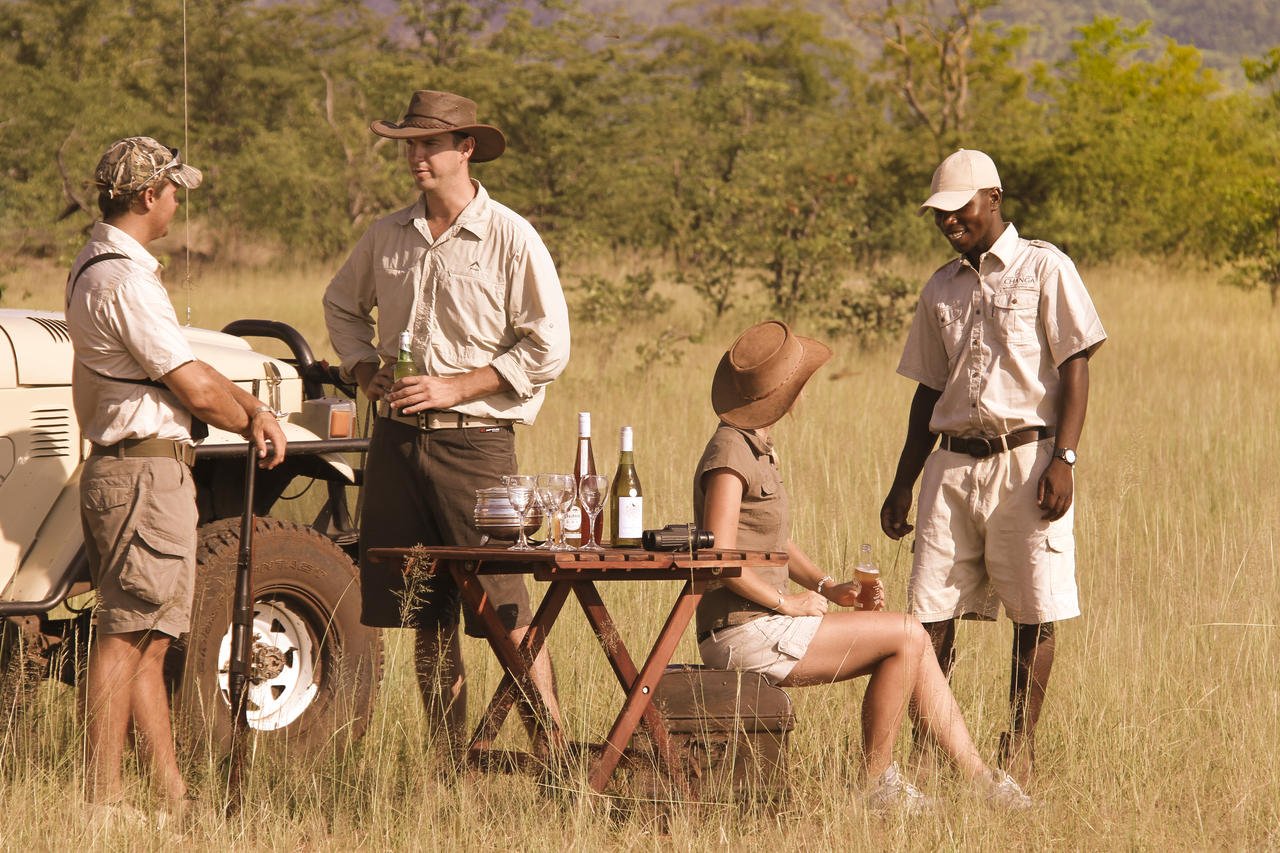
Knowing what to wear on safari in Chobe National Park is mainly about dressing for changing temperatures and several hours of outdoor wildlife viewing. Safari clothing does not need to be expensive or highly specialized. Comfortable neutral clothing, practical footwear and layers are far more important than trying to create a particular safari appearance.
For an early morning game drive, travelers should normally begin with long trousers, a T-shirt or safari shirt, a warm fleece or jacket and closed shoes. A light scarf can also be useful during particularly cool mornings. As temperatures increase after sunrise, layers can be removed and stored inside a small backpack.
During warm afternoons, lightweight shirts and breathable trousers provide good comfort while still offering sun protection. Shorts are acceptable for many activities but leave more skin exposed to sun and insects, which is why some travelers prefer lightweight long trousers even when temperatures are high.
Neutral colors such as khaki, beige, green and brown are the most practical for game drives. They are less visually distracting around wildlife and handle safari dust better than white or very dark clothing. However, travelers do not need to buy an entirely new wardrobe simply because they are going on safari.
Extremely dark colors can absorb heat during hot periods, while very bright clothing may be more noticeable in the natural environment. White clothing can quickly show dust. Muted, comfortable everyday outdoor clothing is therefore usually ideal.
On a Chobe River safari, travelers should dress similarly but carry an additional light layer because the breeze over the water can become cooler toward sunset. A secure hat and polarized sunglasses are especially useful during river activities.
Footwear should remain simple. Closed trainers, walking shoes or light hiking shoes are adequate for most Chobe game drives because guests normally spend the majority of the activity inside the vehicle. Heavy trekking boots are unnecessary unless the itinerary includes specialized walking activities elsewhere.
At the lodge, dress is usually relaxed. Comfortable casual clothing, sandals and light evening wear are sufficient at most safari properties. Luxury lodges may provide elegant dining environments, but safari destinations generally do not require formal suits, ties or evening dresses.
Travelers visiting Chobe during the cooler season should pay particular attention to early mornings. Sitting still in an open safari vehicle can make temperatures feel much colder than expected, so wearing multiple removable layers is one of the most important clothing strategies.
During the green season, clothing should be lighter and more breathable, with a compact rain jacket kept nearby. Quick-drying fabrics can be especially practical if afternoon rainfall occurs.
For most travelers, the ideal Chobe safari outfit is therefore simple: breathable neutral shirt, comfortable long trousers, closed shoes, hat, sunglasses and several removable layers. Dressing for comfort allows travelers to concentrate on the elephants, predators, birds and extraordinary landscapes of Chobe rather than spending the safari distracted by cold, heat, insects or unsuitable clothing.
Chobe National Park Safari Safety
Chobe National Park safari safety is an important part of planning a successful Botswana safari because visitors are entering a genuine wilderness where elephants, buffaloes, lions, hippos, crocodiles and other wild animals move freely. Chobe is not a controlled wildlife attraction, and the very quality that makes it exciting—the ability to observe animals behaving naturally in their own habitat—also means travelers must respect park regulations and follow instructions from professional guides. Botswana’s Department of Wildlife and National Parks has specifically emphasized that park rules are designed not only to protect ecosystems but also to protect tourists; in 2025, authorities took action against guides who left designated routes around a lion sighting because the behavior created both conservation and visitor-safety concerns.
Most visitors experience Chobe through professionally guided game drives and boat safaris, which substantially simplifies wildlife safety. Travelers should nevertheless listen carefully to the guide before every activity, remain inside the vehicle unless specifically told it is safe to leave, avoid shouting or making sudden movements around animals, and never attempt to attract wildlife for a photograph. Maintaining a respectful distance is particularly important around elephants, buffaloes, lions, hippos and crocodiles.
Safety also extends beyond encounters with wildlife. Chobe can be hot, sunny and remote, so travelers should carry drinking water, sun protection and any essential medication during activities. Early morning drives can be unexpectedly cold, while afternoon temperatures may become intense. Good preparation, appropriate clothing and experienced guiding are therefore just as important to safari safety as understanding animal behavior.
Wildlife Safety
Wildlife safety in Chobe National Park begins with understanding that every animal encountered is wild and unpredictable. Elephants may appear calm while feeding beside the road but can become defensive if they feel crowded, particularly when calves are nearby. Buffaloes can also be unpredictable, while predators such as lions and leopards should never be approached on foot without an authorized professional wilderness activity specifically designed for that purpose.
Visitors should remain seated inside safari vehicles and avoid hanging arms, camera equipment or other objects unnecessarily outside the vehicle when close to wildlife. The shape of a safari vehicle is familiar to many animals, whereas sudden movements by individual passengers may attract attention. Travelers should therefore follow the guide’s instructions regarding when to speak, when to remain still and when photography needs to pause.
Elephant encounters deserve particular respect in Chobe because the park is famous for large concentrations of elephants. A herd may cross directly in front of a safari vehicle, and the correct response is usually patience rather than attempting to move closer. Professional guides read elephant behavior, including ear position, body posture, vocalizations and the presence of calves, and determine when it is appropriate to remain in position or create more distance. Travelers should allow the guide to make these decisions.
The same principle applies around predators. A lion feeding on a kill may attract several safari vehicles, but responsible guiding requires adherence to established routes and viewing rules. Botswana wildlife authorities have warned that leaving designated tracks and surrounding predators can endanger visitors as well as damage vegetation and smaller organisms. Guides were sanctioned in Chobe in 2025 after vehicles left gazetted routes to approach lions feeding on a buffalo, demonstrating that wildlife-viewing rules are actively enforced.
Travelers should also avoid walking independently around unfenced lodges after dark. In many safari areas, elephants, hippos and other animals may move between accommodation buildings during the night. Where a lodge requires guests to be escorted after dark, this should be treated as an essential safety rule rather than an optional service.
Food should never be offered to wildlife. Feeding monkeys, baboons or other animals changes their natural behavior and can create dangerous interactions with future visitors. Keeping food secured and following lodge instructions helps prevent wildlife from associating people with easy food.
For travelers on a self-drive Chobe safari, additional caution is required. Remain on authorized routes, obey park operating regulations, carry sufficient drinking water and fuel, and avoid taking unnecessary risks simply to obtain a closer wildlife sighting. Botswana’s wildlife authorities have explicitly linked route discipline with both conservation and tourist safety.
Boat Safari Safety
A Chobe River boat safari is generally a relaxed way to see wildlife, but travelers are still moving through habitat occupied by hippos, crocodiles and elephants. Safety therefore depends on using a responsible operator, following the boat guide’s instructions and respecting the distance between the vessel and wildlife.
Life jackets are one of the most important pieces of boat-safety equipment. Following previous safety concerns in the Chobe boating industry, local tourism operators emphasized that boats should carry life jackets, should not be overloaded and should be checked for seaworthiness before cruises. Travelers should therefore use established operators and should not hesitate to ask about safety equipment before departure.
Passengers should remain seated when instructed, particularly when the boat is moving or maneuvering around wildlife. Standing suddenly to photograph an elephant or bird can affect balance, especially in smaller vessels. Camera bags and other belongings should be positioned so they do not obstruct movement or create a tripping hazard.
Hippos require particular caution. Although travelers often see only their heads above the water, they are large, powerful animals and should never be approached carelessly. Professional Chobe boat guides understand the river channels and maintain appropriate distances from pods. Visitors should never pressure a guide to move closer simply to obtain a stronger photograph.
Crocodiles should be treated with the same respect. Travelers should keep hands and feet inside the vessel and should not attempt to touch the water when the boat is positioned near wildlife. The Chobe River is a natural ecosystem rather than a recreational swimming area.
Weather also matters. Strong wind, storms and rapidly changing river conditions may cause operators to alter or cancel an activity. Travelers should view such decisions as part of professional risk management rather than an inconvenience. A responsible operator should always prioritize safe operating conditions over completing an excursion exactly as scheduled.
Children on boat safaris require particularly close supervision. Parents should ensure that children remain seated when required and use appropriate safety equipment supplied by the operator. Age rules and child policies vary among Chobe safari companies, so families should check these conditions before confirming their safari rather than assuming all river cruises accept children of every age.
Malaria and Health Considerations
Malaria is an important health consideration for Chobe National Park. Current CDC guidance identifies the Chobe District, including Chobe National Park, as an area where malaria transmission occurs and recommends prescription malaria-prevention medication for travelers visiting the area. The CDC currently lists options such as atovaquone-proguanil, doxycycline, mefloquine and tafenoquine, but the correct medicine depends on the individual traveler and should be selected in consultation with a qualified healthcare professional.
Travelers should therefore arrange a travel-health consultation before departing for Botswana rather than purchasing medication without professional advice. Some malaria-prevention medicines must be started before entering the risk area and continued for a period after leaving, so last-minute planning may limit the available options.
Preventing mosquito bites remains important even when travelers are taking malaria medication. The CDC recommends covering exposed skin with long sleeves and trousers, using appropriate insect repellent, considering treated clothing or gear, and sleeping in screened, air-conditioned or properly protected accommodation where possible. These precautions are particularly useful around dawn, dusk and evening periods when travelers may be relaxing near the Chobe River.
Travelers should also be aware of yellow fever certificate requirements, especially when Chobe forms part of a larger African itinerary. The CDC states that Botswana does not require a yellow fever vaccination certificate for travelers arriving directly from a country without yellow-fever transmission risk. However, a certificate is required for travelers aged one year or older arriving from a country with yellow-fever transmission risk, including certain airport transits or layovers exceeding 12 hours in a risk country. This means entry requirements can depend on where the traveler has recently been, not simply their passport nationality.
Routine travel preparation is equally important. Travelers should carry their normal prescription medicine in sufficient quantities, keep important medication in hand luggage and consider comprehensive travel insurance that includes emergency medical treatment and evacuation. This becomes especially relevant when combining Chobe with remote camps in Savuti, Linyanti or the Okavango Delta, where major medical facilities may be far away.
Hydration and sun protection should not be underestimated. Chobe can become extremely warm, and travelers may spend several hours in open safari vehicles or boats. Drinking water regularly, using sunscreen, wearing a hat and taking advantage of midday rest periods can help reduce heat-related problems.
Anyone who develops fever during or after a visit to a malaria-risk area should seek medical attention promptly and mention the recent travel history. CDC guidance stresses that malaria can become serious if diagnosis and treatment are delayed.
Traveling with Children
Traveling to Chobe National Park with children can be extremely rewarding when the safari is designed around the children’s ages and attention spans. Elephants, giraffes, hippos and crocodiles are visually exciting for young travelers, and Chobe’s combination of game drives and boat safaris creates more variety than destinations where every wildlife activity takes place inside a vehicle.
Safety begins with choosing appropriate activities. Safari lodges and operators may have their own minimum-age policies for shared game drives, boat safaris or particular wilderness experiences. Families should confirm these rules when booking because there is no single age policy applied identically by every Chobe lodge or safari company.
A private safari vehicle can be particularly useful for families. Children may become tired before adults, need additional bathroom breaks or simply lose concentration during a long game drive. Private arrangements allow the family and guide to adjust the pace without affecting unrelated guests.
Parents should explain basic wildlife rules before entering the park. Children should understand that they must remain seated when instructed, avoid shouting around animals and never attempt to touch or feed wildlife. Young children should remain under direct adult supervision during lodge stays as well, especially at unfenced properties where animals may move through the grounds.
Boat safaris require the same attention. Children should use the safety equipment supplied by the operator and follow the crew’s instructions throughout the cruise. Chobe boating operators have emphasized life jackets, appropriate vessel condition and avoidance of overloading as important safety practices.
Health planning is especially important for children because Chobe National Park lies within a malaria transmission area. Families should obtain personalized medical advice about malaria prevention and other travel-health requirements rather than assuming adult medication or dosing applies to children. Current CDC guidance specifically identifies Chobe National Park among Botswana’s malaria-risk areas.
Families crossing international borders should also check the documentation required for every child. In addition to a valid passport and any necessary visa, parents or guardians should confirm with the relevant immigration authorities whether birth certificates, consent documents or other supporting paperwork are required for their particular family circumstances. Requirements can differ according to nationality, custody arrangements and the countries crossed during the journey.
With the correct planning, a family safari in Chobe National Park can be both safe and highly educational. The key is to prioritize suitable activity lengths, professional guiding, appropriate health preparation and family-friendly accommodation instead of attempting to fit children into an itinerary designed entirely for adults.
Chobe National Park Entry Requirements
Chobe National Park entry requirements involve two separate considerations: permission to enter Botswana as a country and permission to enter the national park itself. International travelers first need the correct passport and, depending on nationality, an appropriate Botswana visa. Once inside Botswana, park entrance fees and national park operating rules apply to visits to Chobe.
Botswana’s immigration requirements are nationality-specific. Some passport holders can visit without obtaining a tourist visa, while citizens of countries that require a visa must obtain the correct authorization. Botswana’s government maintains an online eVisa system and states that tourism-visa applications are available to non-citizens whose nationality requires a visa.
Travelers combining Chobe with Victoria Falls in Zimbabwe or Livingstone in Zambia must pay particular attention to multiple-entry requirements. Leaving one country for Botswana and returning later constitutes another international border crossing, so a single-entry visa for the country being revisited may not be sufficient.
Visa and border regulations are among the parts of safari planning most likely to change. Travelers should therefore verify requirements using the Botswana, Zimbabwe and Zambia immigration authorities shortly before departure rather than relying entirely on older travel blogs or previous safari experience.
Botswana Visa Requirements
Botswana visa requirements for tourists depend on nationality. Travelers from countries that require visas can apply through Botswana’s official eVisa system or through designated immigration offices, embassies and consulates. Botswana’s government states that tourism-visa processing normally takes approximately 7 to 14 days, so travelers who require a visa should not leave the application until the final days before departure.
For travelers requiring a tourism visa, Botswana currently asks for supporting documentation including passport copies showing adequate validity, passport photographs, a reason for the visit, flight and accommodation information, a trip itinerary and evidence of the intention to leave Botswana after the trip.
Travelers should verify whether their nationality is visa-exempt before applying. It is unnecessary to purchase a visa simply because another traveler on the same safari requires one; immigration conditions are determined by the passport being used.
Anyone entering Botswana as part of a Chobe day trip from Victoria Falls or Livingstone should remember that a short stay does not remove the need to satisfy Botswana’s immigration rules. Even if the traveler is inside Botswana only for several hours, they are still formally crossing an international border.
It is also important not to confuse the KAZA UNIVISA with a general five-country visa. The current arrangement primarily facilitates travel between Zambia and Zimbabwe for eligible nationalities, while also covering qualifying day trips into Botswana through the Kazungula borders. Zambia’s Department of Immigration currently lists the KAZA UNIVISA at USD 50, with validity of up to 30 days under the scheme’s conditions.
Travelers staying overnight in Botswana should check the normal Botswana entry requirements applying to their nationality rather than assuming that the day-trip provision of the KAZA UNIVISA automatically substitutes for all Botswana immigration requirements.
Passport Requirements
Travelers entering Botswana should plan to carry a passport with at least six months of remaining validity. Botswana’s official tourism-visa requirements specify that applicants must provide passport pages showing a validity period of not less than six months. Botswana government travel guidance similarly states that visitors should have passports with at least six months’ validity.
The passport should also be in good physical condition and should have sufficient available space for immigration endorsements required during the wider journey. This is particularly important on itineraries combining Botswana, Zimbabwe and Zambia, where travelers may receive multiple border stamps over a relatively short period.
The passport used to apply for a visa should be the same passport presented when entering Botswana. Travelers holding more than one nationality should therefore be careful not to apply using one travel document and arrive at the border using another.
Families should ensure that each child has the travel documentation required for the journey. They should also verify whether additional parental-consent or birth documentation applies to their particular circumstances before travel, particularly when a child is traveling with only one parent or a guardian.
Travelers should keep digital and paper copies of the passport identification page separately from the original document. Copies do not replace a passport at immigration, but they can be useful if documents are lost or damaged while traveling.
Because a Chobe safari from Victoria Falls or Livingstone involves international borders, passports should be carried in secure hand luggage on the transfer day rather than packed in a suitcase that may be difficult to access at immigration.
Border Requirements for Victoria Falls Day Trips
A Chobe day trip from Victoria Falls normally involves leaving Zimbabwe, entering Botswana, enjoying the Chobe safari and then returning to Zimbabwe later the same day. Travelers therefore need to think about both Botswana entry requirements and their right to re-enter Zimbabwe.
This distinction is especially important for travelers who required a visa to enter Zimbabwe. Zimbabwe’s official eVisa system explains that a single-entry visa allows only one entry, while a double-entry visa allows two separate entries and a multiple-entry visa allows repeated entries during its applicable validity. A traveler using a single-entry visa who leaves Zimbabwe for Botswana should therefore not assume that the same visa automatically allows them to return.
For eligible travelers, the KAZA UNIVISA can simplify this arrangement considerably. Zambia’s Department of Immigration states that the KAZA UNIVISA allows multiple travel between Zambia and Zimbabwe within the visa’s conditions and also covers qualifying Botswana day trips through the Kazungula borders. The published cost is currently USD 50, and the visa is valid for up to 30 days under the stated conditions.
Eligibility matters. The KAZA arrangement is available only to specified nationalities, so travelers should not assume that every passport holder can purchase it. The current official eligibility list includes, among others, citizens of the United States, United Kingdom, Canada, Australia, Germany, France, Italy, Japan, Spain, Netherlands and several other countries.
Travelers based in Livingstone, Zambia, face a similar issue when leaving Zambia for a Botswana day safari and returning. Zambia currently offers a Day Tripper facility at Victoria Falls and Kazungula Border Controls for qualifying visitors staying less than 24 hours, and its immigration authority also confirms that the KAZA UNIVISA covers qualifying Botswana day trips through Kazungula.
For a Victoria Falls–Chobe day trip, travelers should therefore check four things before departure: whether Botswana requires a visa for their nationality, whether their Zimbabwe visa permits re-entry, whether they qualify for the KAZA UNIVISA, and whether their passport has sufficient validity. These checks should be completed before safari day rather than at the border.
A professionally organized transfer can make the physical border crossing easier, but the traveler remains responsible for possessing the correct immigration documents. Safari operators can assist with practical guidance, yet final decisions on admission are made by immigration authorities.
For most travelers, the border crossing between Victoria Falls and Chobe National Park is a straightforward part of the safari when documentation has been prepared correctly. The complications usually arise when visitors assume that a single-entry visa allows re-entry or that the KAZA UNIVISA applies automatically to every nationality. Confirming these details in advance allows the day to remain focused on Chobe’s elephants, game drives and river safaris rather than immigration problems.
Combining Chobe National Park with Other Destinations
One of the greatest advantages of planning a safari in Chobe National Park is how easily Chobe can become part of a much larger Southern African journey. Chobe does not have to be treated as an isolated wildlife destination. Its position in northern Botswana places travelers within reach of the Okavango Delta, Moremi Game Reserve, Savuti, Victoria Falls, Livingstone and some of Zimbabwe and Zambia’s finest wildlife destinations. Kasane functions as the principal gateway to Chobe and is also an important regional connection point for Victoria Falls in Zimbabwe and Livingstone in Zambia. Botswana Tourism places Victoria Falls approximately 80 kilometres from Kasane, while Chobe National Park begins only about 10 kilometres from the town.
This strategic position allows travelers to design very different safari combinations depending on available time. A short trip can focus on Victoria Falls and Chobe National Park, while a longer Botswana safari can combine Chobe with Savuti, Moremi and the Okavango Delta. Travelers with two weeks or more can extend the journey through Zambia and Zimbabwe, combining waterfalls, river safaris, game drives, walking safaris and some of Southern Africa’s most important wilderness landscapes.
The best combination is not necessarily the itinerary with the largest number of destinations. Chobe works particularly well when paired with places that offer a genuinely different experience. The Chobe Riverfront is famous for elephants, buffaloes and river-based wildlife viewing, while Savuti emphasizes predator-rich interior wilderness. Moremi and the Okavango introduce floodplains, channels and wetland ecosystems, and Victoria Falls adds one of Africa’s great natural spectacles.
Chobe and Victoria Falls Safari
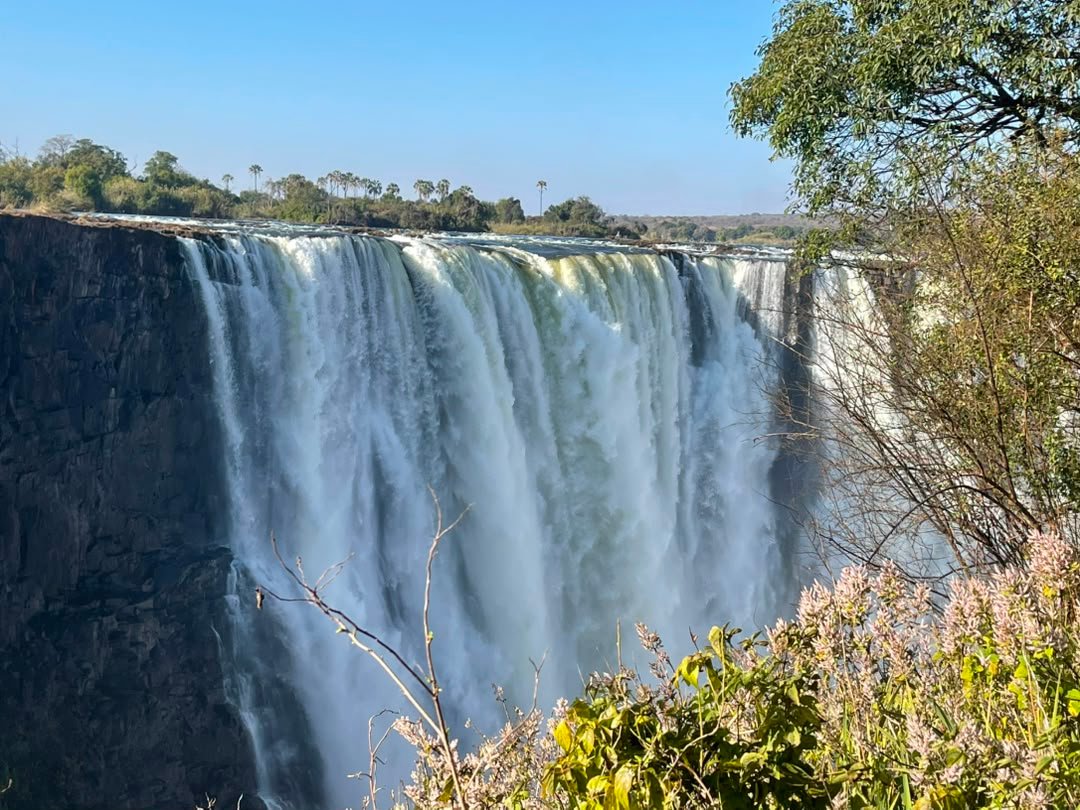
A Chobe and Victoria Falls safari is one of the strongest short multi-country safari combinations in Southern Africa. It brings together two dramatically different experiences within a relatively compact geographical area: the wildlife-rich Chobe River ecosystem in Botswana and the enormous waterfall on the Zambezi River between Zimbabwe and Zambia. Kasane is the gateway to Chobe and lies approximately 80 kilometres from Victoria Falls, which is why the two destinations can be combined without losing entire days to long-distance travel.
The contrast between the destinations is what makes the combination so valuable. In Chobe, travelers can spend mornings on game drives searching for elephants, buffaloes, lions, giraffes and antelopes before taking an afternoon boat safari to watch wildlife around the Chobe River. Botswana Tourism describes the Riverfront as particularly famous for large elephant and Cape buffalo herds during the dry season and highlights river cruises for close views of hippos, crocodiles and waterbirds.
Victoria Falls changes the pace completely. Instead of searching for wildlife, travelers explore the waterfall, gorge and surrounding Zambezi landscape. Zimbabwe Tourism describes Victoria Falls as the world’s largest single curtain of falling water and notes that the Zimbabwean rainforest provides extensive viewpoints of the falls. Travelers can also cross the Victoria Falls Bridge between Zimbabwe and Zambia, which directly connects Victoria Falls town with the Livingstone side of the destination.
A well-paced Victoria Falls and Chobe safari can work beautifully over four or five days. Two nights around Victoria Falls provide time for the falls and selected Zambezi activities, while two or three nights around Chobe allow travelers to experience both game drives and boat safaris without turning Botswana into a rushed day excursion. Those with very limited time can undertake a Chobe day trip from Victoria Falls, but an overnight Chobe stay creates considerably more wildlife-viewing flexibility.
This combination is particularly good for first-time African safari travelers because it provides a major natural landmark and a genuine wildlife safari without complicated internal flying. It also works well as the beginning or end of a longer itinerary, as travelers can continue from Kasane deeper into Botswana or from Victoria Falls onward through Zimbabwe or Zambia.
Chobe and Okavango Delta Safari
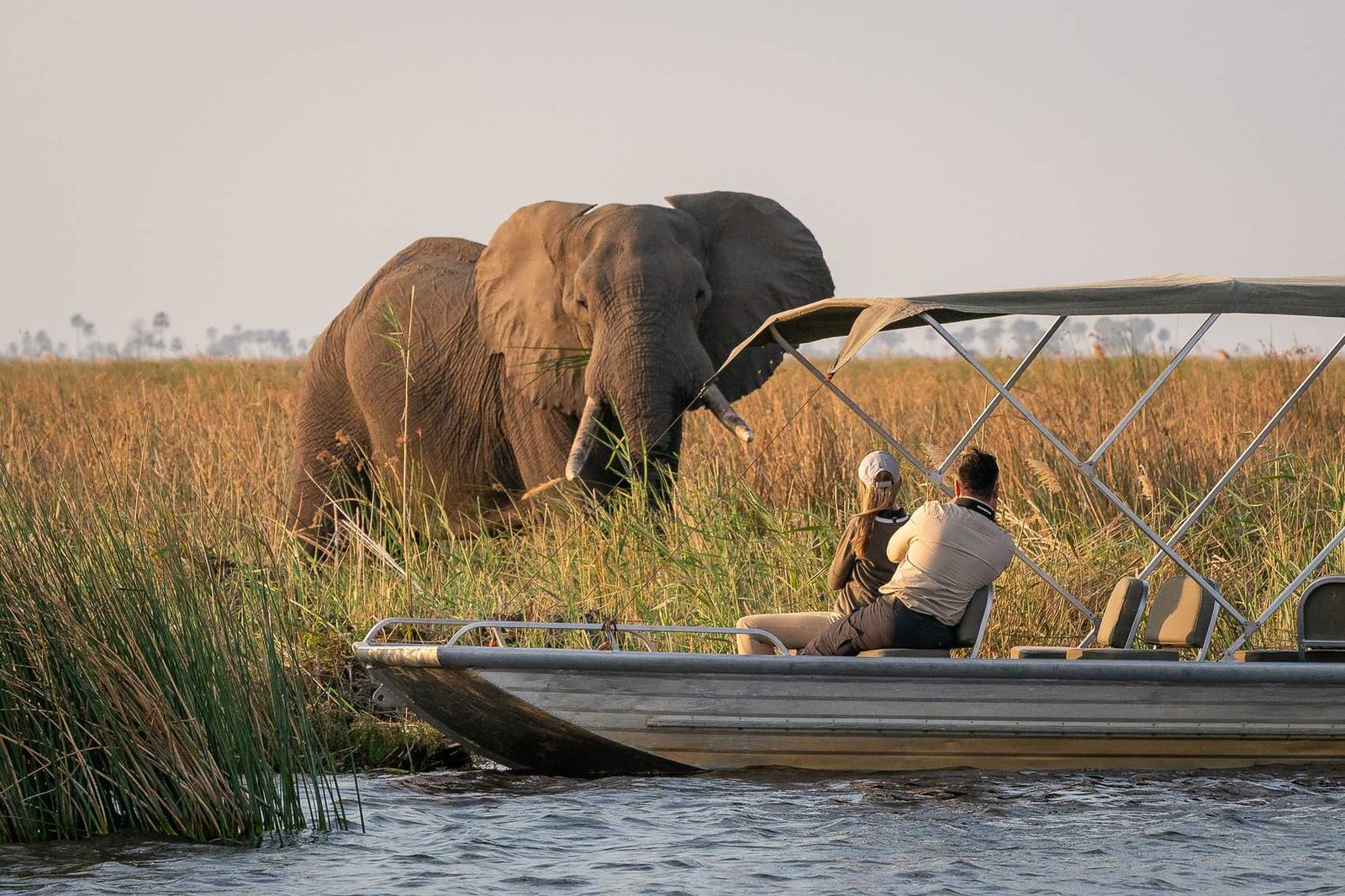
A Chobe and Okavango Delta safari is one of the most complete Botswana combinations because the two destinations showcase very different versions of the country’s wilderness. Chobe is dominated in the north by the permanent Chobe River and is renowned for concentrated elephant and buffalo viewing, whereas the Okavango Delta is an immense inland wetland containing channels, lagoons, flooded grasslands, islands and dryland habitats. Botswana Tourism describes the Okavango as one of the world’s great wilderness destinations and the largest intact inland delta.
Chobe usually delivers the more immediately recognizable big-game safari experience. Visitors can spend mornings exploring the Riverfront by 4×4 and afternoons cruising among elephants, hippos, crocodiles and birds. During the dry season, hundreds of elephants may sometimes be encountered around the Riverfront as herds move toward permanent water.
The Okavango changes the experience dramatically. Depending on the selected camp and water conditions, visitors may explore by game-drive vehicle, motorboat or mokoro, the traditional-style dugout canoe closely associated with Delta safaris. Botswana Tourism lists mokoro excursions, boating, game drives, birdwatching and wilderness sundowners among the Delta’s characteristic experiences.
This contrast means there is very little repetition. Chobe might provide a powerful afternoon scene involving dozens of elephants around the river, while the Okavango may deliver a quiet mokoro excursion through papyrus-fringed channels the following day. Both destinations contain elephants, predators and abundant birdlife, but the landscapes and viewing styles feel remarkably different.
For most travelers, spending two or three nights in Chobe and three or four nights in the Okavango Delta creates a strong combination. Travelers interested in photography, honeymoon travel or high-end safari camps may want even longer. Connections are often arranged using scheduled or charter light aircraft, depending on the specific Delta camp and the direction of travel.
The combination can also be extended naturally to Victoria Falls. A particularly efficient Southern African route can therefore move from Victoria Falls to Chobe National Park and onward to the Okavango Delta, progressively changing from waterfalls to riverfront game viewing and finally remote wetland wilderness.
Chobe and Moremi Game Reserve
A Chobe and Moremi Game Reserve safari is ideal for travelers who want a more wildlife-intensive Botswana itinerary. Moremi occupies part of the wider Okavango ecosystem and combines permanent and seasonal wetland environments with dryland areas suitable for classic vehicle safaris. Botswana Tourism specifically notes that Moremi is frequently combined with Chobe National Park, demonstrating how naturally the two destinations fit into the same northern Botswana circuit.
Chobe provides the strong river component. The Chobe Riverfront supports elephants, buffaloes, giraffes, numerous antelope species and predators, while boat cruises allow travelers to observe hippos, crocodiles and waterbirds from the river. Moremi then broadens the safari by introducing a mosaic of floodplains, woodland, lagoons and dry areas within the Okavango system.
The combination is particularly suitable for travelers who want serious game viewing rather than a sightseeing-heavy holiday. Chobe and Moremi both reward early starts, long wildlife observations and repeated game drives. The experience is therefore especially attractive to photographers, birdwatchers and travelers who have already experienced a short introductory safari and now want something deeper.
An overland itinerary can use the journey itself as part of the safari rather than treating Moremi and Chobe as isolated destinations. More adventurous routes can move through northern Botswana’s wildlife landscapes toward Savuti before eventually reaching Chobe. Alternatively, travelers can use light aircraft to reduce transfer time and combine selected lodges in each area.
A well-paced Chobe and Moremi journey should generally avoid changing camp every night. Spending several nights in each ecosystem gives guides time to follow current wildlife movements and allows travelers to experience both early mornings and late afternoons in each location. Since animal sightings can never be guaranteed, additional time normally delivers more value than adding another park simply to increase the number of names on an itinerary.
For travelers building a broader Botswana safari, Moremi can also act as the bridge between Chobe and the Okavango Delta, producing a journey through some of northern Botswana’s most important wildlife environments.
Chobe and Savuti Safari
A Chobe and Savuti safari is an excellent choice for travelers who want to experience two very different sections of the Chobe ecosystem itself. Savuti lies at the heart of Chobe National Park and is known for its interior wilderness, open landscapes and strong predator presence, whereas the Chobe Riverfront is characterized by permanent water and extraordinary concentrations of elephants and buffaloes.
Savuti is particularly compelling for travelers interested in carnivores. Botswana Tourism identifies lion, cheetah and hyena among the predators for which Savuti is especially well known. The region is shaped by the unpredictable Savuti Channel, Savuti Marsh and the broader Mababe landscape, where changes in water availability influence wildlife movement over time.
By comparison, a Chobe Riverfront safari is heavily influenced by the river. Elephants move toward the water to drink and bathe, buffaloes gather along productive floodplains and boat safaris create wildlife perspectives impossible in the inland Savuti environment. Botswana Tourism notes that the Riverfront is Chobe’s most accessible and frequently visited big-game area, especially famous for its dry-season elephant and buffalo gatherings.
Combining these regions therefore gives visitors river safari and predator-country experiences within one national park. A traveler might begin with two nights around the Chobe River, enjoying boat safaris and Riverfront game drives, before continuing into Savuti for another two or three nights of deeper wilderness exploration.
Savuti also works particularly well as part of an overland route toward Moremi and the Okavango region. Rather than flying directly between Kasane and the Delta, adventurous travelers can move progressively through northern Botswana, with Savuti becoming a major safari destination rather than merely a transfer point.
This combination is especially worthwhile for repeat safari visitors and photographers. Chobe provides some of the strongest elephant imagery, while Savuti adds predators, open country and a very different visual character. Together they demonstrate why Chobe National Park should not be understood as only the easily accessible Riverfront near Kasane.
Chobe and Zambia Safari
A Chobe and Zambia safari combines Botswana’s extraordinary wildlife with the Zambezi landscapes and safari traditions of Zambia. For shorter itineraries, the easiest Zambian addition is Livingstone and Victoria Falls. Zambia Tourism describes Livingstone as a principal base for visiting Victoria Falls and the many lodges situated along the upper Zambezi River.
This creates a convenient contrast. Chobe can provide intensive elephant viewing, game drives and river safaris, while Livingstone introduces the waterfall, the Zambezi and a wider collection of adventure and river-based activities. Zambia Tourism notes that Victoria Falls can be reached from Livingstone along Mosi-oa-Tunya Road, with the town situated only around 10–11 kilometres from the falls.
Travelers with more time should consider going beyond Livingstone because Zambia’s safari identity is much richer than Victoria Falls alone. South Luangwa National Park is internationally associated with walking safaris and supports a rich diversity of wildlife, while the Lower Zambezi National Park combines conventional game viewing with boating, canoeing and river-based safari activities.
A longer itinerary can therefore progress from Chobe’s riverfront elephants into one of Zambia’s specialist wilderness destinations. Chobe and Lower Zambezi are particularly interesting together because both are river-focused but offer different experiences: Chobe is renowned for boat-based observation around major wildlife concentrations, while Lower Zambezi adds canoeing and quieter exploration of channels along the Zambezi.
Combining Chobe with South Luangwa creates an even stronger contrast. Travelers move from Botswana’s land-and-water safaris to Zambia’s celebrated walking-safari country. Zambia Tourism describes South Luangwa as a major wildlife sanctuary and identifies walking safaris as one of the experiences for which the park became famous.
For a shorter holiday, Livingstone and Chobe is usually the most efficient combination. For travelers with approximately ten days or more, adding South Luangwa or Lower Zambezi can turn the journey into a much deeper Botswana and Zambia safari rather than simply a Victoria Falls extension.
Chobe and Zimbabwe Safari
A Chobe and Zimbabwe safari works exceptionally well because Chobe can be linked with both Victoria Falls and Zimbabwe’s major wildlife destinations. The easiest starting point is Victoria Falls, which lies within the same regional tourism circuit as Kasane and Chobe. Botswana Tourism places Victoria Falls about 80 kilometres from Kasane, making the route especially practical for travelers who do not want to depend entirely on internal flights.
Victoria Falls provides the obvious first contrast to Chobe. Zimbabwe Tourism describes the falls as the world’s largest single curtain of falling water, while the surrounding Victoria Falls region offers river landscapes and access to nearby Zambezi National Park. Travelers can therefore move from Chobe’s elephant-rich Riverfront into one of Africa’s most dramatic natural attractions within the same journey.
For a more complete Zimbabwe safari, Hwange National Park is the strongest addition. Zimbabwe Tourism identifies Hwange as Zimbabwe’s largest and most popular national park and notes its excellent wildlife viewing and particularly impressive elephant concentrations around waterholes during the dry season.
Although both Chobe and Hwange are famous for elephants, their safari character differs considerably. Chobe’s Riverfront is shaped by a major permanent river and offers exceptional boat safaris, whereas Hwange is predominantly a terrestrial game-viewing destination where pumped and natural waterholes become important wildlife gathering points. The combination therefore allows travelers to observe elephants and other wildlife in two very different environments.
A particularly satisfying route can include Chobe National Park, Victoria Falls and Hwange National Park. Chobe provides Botswana’s river safari, Victoria Falls introduces scenery and adventure, and Hwange brings a deeper Zimbabwean wildlife experience. Zimbabwe Tourism notes that Hwange lies between Bulawayo and Victoria Falls and can be reached from the Victoria Falls region by road or air.
Travelers with significantly more time can continue farther into Zimbabwe toward destinations such as Mana Pools, where canoeing and walking add another style of wilderness safari. Zimbabwe Tourism highlights Mana Pools for its Zambezi canoe experiences and dry-season wildlife viewing. This creates the possibility of a sophisticated Zimbabwe and Botswana safari rather than restricting Zimbabwe to a single waterfall stop.
Zambia, Zimbabwe and Botswana Safari
A Zambia, Zimbabwe and Botswana safari is one of the most diverse multi-country journeys available in Southern Africa because the three countries meet within the broader Zambezi–Chobe tourism landscape and can be combined around wildlife, rivers and Victoria Falls. Chobe National Park becomes a natural centerpiece because Kasane provides access toward both Victoria Falls in Zimbabwe and Livingstone in Zambia.
The geographical relationship is not accidental. Botswana, Zambia and Zimbabwe are three of the five partner countries within the Kavango-Zambezi Transfrontier Conservation Area, together with Angola and Namibia. KAZA was established as a transboundary conservation and tourism partnership designed to support connected ecosystems, wildlife populations and regional tourism across this enormous Southern African landscape.
A shorter three-country itinerary can concentrate on the Victoria Falls–Livingstone–Chobe triangle. Travelers might spend time on the Zimbabwean side of Victoria Falls, cross to Livingstone for the Zambian perspective and Zambezi activities, and then continue to Chobe for game drives and river safaris. This approach provides three countries without excessive internal flying and works particularly well for travelers who have around one week available. Livingstone is an established base for the Zambian side of Victoria Falls, while Kasane is the recognized gateway to Chobe and to regional connections with both Livingstone and Victoria Falls.
With additional time, the itinerary can become significantly richer. In Zimbabwe, Hwange National Park can be added for an extended terrestrial wildlife safari. In Zambia, travelers can include South Luangwa for walking safaris or Lower Zambezi for canoeing, boating and river-based wildlife experiences. Botswana can then be expanded beyond Chobe toward Savuti, Moremi or the Okavango Delta.
This produces extraordinary variety within one journey. A traveler might watch elephants entering the Chobe River in Botswana, stand beside Victoria Falls in Zimbabwe, experience the Zambezi from Livingstone in Zambia, track wildlife on foot in South Luangwa and later move through the channels of the Okavango Delta by mokoro. Each destination adds a different dimension rather than simply repeating another conventional game drive.
For travelers with 10 to 14 days, it is usually better to select a few major destinations and spend several nights in each rather than trying to cover every park in all three countries. A well-balanced itinerary might emphasize Victoria Falls and Livingstone, Chobe and one additional major wildlife area. Travelers with two to three weeks can build a more comprehensive journey including Hwange, South Luangwa, Lower Zambezi or the Okavango Delta.
The three-country safari is also highly adaptable to different travel styles. Budget and mid-range travelers can concentrate on road-connected destinations around Livingstone, Victoria Falls and Kasane, while luxury travelers can use light aircraft to link remote safari camps deeper within Zambia and Botswana. Families may prefer fewer destinations and shorter transfers, whereas photographers can prioritize Chobe, Hwange and other wildlife-rich regions where several nights provide repeated opportunities to observe animal behavior.
Ultimately, combining Chobe National Park with Zambia and Zimbabwe works because Chobe is not merely an additional park beside Victoria Falls. It is a major safari destination in its own right and an excellent bridge between some of Southern Africa’s most remarkable landscapes. Whether travelers choose a simple Chobe and Victoria Falls safari or an extensive Zambia, Zimbabwe and Botswana journey, the strongest itinerary uses the differences between each destination—river safaris, waterfalls, walking safaris, predator country and wetland wilderness—to create a safari that becomes progressively more varied as the journey unfolds.
Chobe National Park vs Okavango Delta
Choosing between Chobe National Park and the Okavango Delta is one of the most common questions travelers face when planning a Botswana safari. Both are among the country’s signature wildlife regions, but they offer noticeably different landscapes, safari activities, accommodation styles and overall experiences. For travelers with sufficient time, the strongest solution is usually not to choose between them at all, but to combine both destinations in the same Botswana itinerary.
Chobe National Park covers approximately 11,700 square kilometres and contains floodplains, woodland, swamps and drier interior ecosystems. The Chobe Riverfront is particularly famous for large concentrations of elephants and buffaloes during the dry season. Boat cruises on the Chobe River complement traditional game drives and provide opportunities to observe elephants at the water, hippos, crocodiles and numerous bird species.
The Okavango Delta provides a dramatically different environment. Instead of a safari landscape dominated by one major riverfront, travelers enter an intricate wetland system of channels, floodplains, lagoons and islands. Botswana Tourism describes the Okavango as one of the country’s defining wilderness destinations, while Moremi Game Reserve protects part of the Delta and is frequently combined with Chobe.
The method of wildlife viewing is another major difference. Chobe is exceptionally strong for combining 4×4 game drives with motorboat safaris, particularly around the Riverfront. In the Delta, the exact activities depend on the camp and water conditions, but travelers may combine game drives with motorboat excursions, walking and traditional-style mokoro trips. The Delta therefore tends to feel more intimate and water-dominated, while Chobe often delivers more immediate concentrations of large mammals around the river.
Accessibility is also different. Kasane is the main gateway to Chobe National Park and lies close to the park, while it also connects conveniently with Victoria Falls and Livingstone. Many remote Okavango camps, by contrast, are commonly reached by light aircraft, which can add significantly to the cost of a Botswana safari.
Accommodation reflects this difference. Chobe provides everything from Kasane guesthouses and campsites to luxury safari lodges, making it easier to build budget, mid-range and luxury Chobe safaris. Remote parts of the Okavango Delta tend to rely more heavily on fully inclusive safari camps, often making a Delta safari more expensive.
Wildlife quality is outstanding in both destinations, but the experience is different. Chobe is particularly compelling for elephants, buffaloes and riverfront wildlife concentrations. The wider Okavango ecosystem provides exceptional habitat diversity and excellent predator viewing, with wildlife distributed between dry islands, floodplains and waterways.
| Safari Feature | Chobe National Park | Okavango Delta |
|---|---|---|
| Signature experience | Elephants and Chobe River | Wetland wilderness |
| Main activities | Game drives and boat safaris | Game drives, mokoro and boating depending on camp |
| Elephant viewing | Exceptional | Excellent |
| Predator viewing | Excellent | Excellent |
| Accessibility | Easy through Kasane | Many camps require light aircraft |
| Budget options | More widely available | Generally fewer |
| Family suitability | Excellent around Kasane | Depends strongly on camp |
| Photography | Excellent land and river photography | Exceptional wetland and wildlife photography |
| Best for first-time visitors | Very accessible | Excellent but usually more expensive |
| Combination potential | Victoria Falls, Savuti, Moremi | Moremi, Chobe, other Delta camps |
For travelers with only two or three safari days, Chobe National Park can be the easier and more cost-effective choice. Visitors can fly or drive into Kasane, complete game drives and river cruises and combine the safari easily with Victoria Falls. For travelers wanting a more remote, immersive and exclusive Botswana experience, the Okavango Delta often adds another level of wilderness.
For the strongest Botswana safari, consider spending approximately two to three nights in Chobe and three or four nights in the Okavango Delta. Chobe provides spectacular riverfront wildlife and elephants, while the Delta introduces a completely different wetland environment. Instead of repeating one safari style, travelers experience two contrasting versions of Botswana.
Chobe National Park vs Hwange National Park
A comparison of Chobe National Park vs Hwange National Park is particularly relevant to travelers combining Botswana and Zimbabwe. Both parks are celebrated for elephants, large mammals and outstanding safari experiences, yet the landscapes and methods of wildlife viewing are very different.
Chobe’s defining feature is the Chobe River. During the drier months, permanent water draws large concentrations of elephants and Cape buffaloes toward the Riverfront. Travelers can observe wildlife during conventional game drives and then switch to boat safaris, experiencing the same ecosystem from water level. Botswana Tourism highlights Chobe’s riverfront elephant concentrations and its combination of floodplains, swamps and woodland.
Hwange is Zimbabwe’s largest national park, covering approximately 14,650 square kilometres. ZimParks describes it as home to Zimbabwe’s largest elephant population and important populations of African wild dogs, while species such as sable and roan are also present. Zimbabwe Tourism additionally describes Hwange as an excellent Big Five wildlife destination and emphasizes the large elephant concentrations attracted to its waterholes during the dry season.
The water experience separates the parks most clearly. In Chobe, the river itself becomes part of the safari, with elephants sometimes drinking and entering the water while boats move through nearby channels. Hwange is predominantly a land-based safari destination, with game drives focusing on woodland, plains and waterholes.
This means travelers who particularly enjoy boat safaris may prefer Chobe, while visitors who appreciate long game drives, waterhole observation and expansive terrestrial wilderness may find Hwange especially rewarding.
The parks also differ in accessibility. Kasane lies immediately beside the Chobe tourism region and provides accommodation, an airport and convenient regional transfers. Victoria Falls is approximately 80 kilometres from Kasane. Hwange is also conveniently combined with Victoria Falls; Zimbabwe Tourism describes its main entrance as approximately a two-hour drive south of Victoria Falls.
| Safari Feature | Chobe National Park | Hwange National Park |
| Country | Botswana | Zimbabwe |
| Approximate size | 11,700 km² | 14,650 km² |
| Famous for | Elephants and river safaris | Elephants, Big Five and waterholes |
| Boat safaris | Major attraction | Not a defining park activity |
| Game drives | Excellent | Excellent |
| Elephants | Exceptional | Exceptional |
| African wild dogs | Possible | Important population |
| Best combination | Victoria Falls and Okavango | Victoria Falls and wider Zimbabwe |
| Landscape | Riverfront, floodplains, woodland | Woodland, plains and waterholes |
| Safari character | Land and water | Primarily terrestrial |
For travelers staying only around Victoria Falls, choosing between Chobe and Hwange can be difficult because both are excellent additions. Chobe provides the more unusual river-and-game-drive combination, while Hwange allows travelers to remain within Zimbabwe and explore a larger terrestrial wilderness.
Travelers with sufficient time should strongly consider including both. A safari combining Hwange, Victoria Falls and Chobe National Park creates three very different experiences: classic Zimbabwean game viewing, the dramatic Victoria Falls environment and Botswana’s elephant-rich Chobe River.
Chobe National Park vs Kruger National Park
Comparing Chobe National Park and Kruger National Park means comparing two very different safari models. Both provide outstanding African wildlife viewing, but the scale, infrastructure, safari activities, accessibility and atmosphere differ considerably.
Kruger is one of Africa’s most famous wildlife parks and covers nearly two million hectares. SANParks describes it as South Africa’s flagship national park and one of the world’s most popular public-entry game parks. Visitors can explore Kruger in their own vehicles, stay in public rest camps or select more exclusive lodge accommodation.
Chobe is smaller at approximately 11,700 square kilometres but possesses an extraordinary diversity of floodplains, swamps and woodland. Its greatest distinction is the Chobe River, which allows travelers to alternate between conventional game drives and wildlife viewing by boat.
Kruger has much more extensive tourism infrastructure. SANParks lists numerous main rest camps, bushveld camps, bush lodges, satellite camps and other accommodation options within the park. This makes Kruger exceptionally attractive for independent self-drive travelers and visitors who want to control their daily safari schedule.
Chobe’s Riverfront is smaller and more concentrated. Travelers based in Kasane can reach productive wildlife areas quickly and then spend the afternoon on the river. The experience is therefore particularly suitable for visitors who have only a few days and want high-quality land and water wildlife viewing without covering the enormous distances possible in Kruger.
Kruger also provides a wider variety of public-park activities, including guided walks and wilderness experiences led by professional guides. Chobe’s defining alternative to the game drive is the river cruise, which is particularly good for elephants, hippos, crocodiles and waterbirds.
| Safari Feature | Chobe National Park | Kruger National Park |
| Country | Botswana | South Africa |
| Approximate scale | 11,700 km² | Nearly 2 million hectares |
| Signature wildlife experience | Chobe River elephants | Extensive Big Five safari |
| Boat safaris | Major highlight | Not the defining experience |
| Self-drive | Possible | Exceptionally well developed |
| Accommodation variety | Strong around Kasane | Very extensive |
| Public rest camps | More limited | Extensive SANParks network |
| Short safari suitability | Excellent | Good, but park is enormous |
| Regional combinations | Victoria Falls, Okavango | Panorama Route, Mozambique, wider South Africa |
| Best for | River wildlife and elephants | Long self-drive and comprehensive terrestrial safari |
Neither park should be described as simply “better.” Kruger is stronger for travelers wanting an extensive self-drive safari with a large public infrastructure network, while Chobe stands out for travelers who want elephants, the Chobe River and an easy combination with Victoria Falls.
For travelers who have already visited Kruger, Chobe can feel refreshingly different because the boat safari changes the perspective completely. Likewise, someone visiting Chobe first may later enjoy Kruger because of the enormous geographical scale and freedom of exploring independently.
Is a Safari in Chobe National Park Worth It?
Yes, a safari in Chobe National Park is absolutely worth considering, especially for travelers interested in elephants, river-based wildlife viewing, photography and a safari that can be combined easily with Victoria Falls. What makes Chobe especially valuable is not one individual animal species but the concentration of different experiences that can be enjoyed within a relatively short stay.
The elephants alone can justify the journey for many wildlife lovers. Botswana Tourism identifies Chobe as being particularly famous for its large elephant herds, especially along the Riverfront during the dry season. Watching elephants from a game-drive vehicle is impressive; seeing them again from a boat while they drink, bathe or move across the floodplain creates an entirely different experience.
Chobe is equally worthwhile because travelers are not restricted to one safari format. A typical day can begin with a sunrise game drive in search of lions, buffaloes, giraffes, elephants and antelopes before switching to a boat later in the day for hippos, crocodiles, birds and riverfront wildlife. That variety can make even a two- or three-night visit feel surprisingly complete.
Accessibility increases the value. Kasane is the gateway to Chobe and connects naturally with Victoria Falls in Zimbabwe and Livingstone in Zambia. This means travelers can add a genuine Botswana safari to a Victoria Falls holiday without taking a complicated series of internal flights.
Chobe is particularly worthwhile for first-time safari travelers because animals around the Riverfront can be relatively easy to observe compared with more challenging wilderness areas where wildlife is thinly distributed. It also works for experienced visitors because Savuti, Linyanti and other parts of the wider ecosystem offer much deeper wilderness possibilities.
The main caveat is that the popular Riverfront can become busier than remote Botswana concessions, particularly around productive sightings and during popular travel periods. Travelers seeking complete isolation may prefer to combine the Riverfront with Savuti, western Chobe or a private concession rather than spending their entire safari close to Kasane.
Even with this consideration, Chobe remains one of Botswana’s strongest safari destinations. For travelers wanting elephants, predators, birds, game drives, boat safaris and excellent regional connections in one destination, it provides exceptional variety.
Tips for Planning the Best Chobe National Park Safari
Planning the best Chobe National Park safari begins with deciding what kind of wildlife experience matters most. Travelers primarily interested in large elephant concentrations may favor the drier months, while birdwatchers and photographers interested in lush landscapes may prefer green-season conditions. The correct travel month should therefore be chosen around priorities rather than simply selecting the most popular season.
Allow enough time. A Chobe day trip can be rewarding, particularly from Victoria Falls, but it provides only a snapshot of the park. Two or three nights are considerably better for most first-time visitors, because they allow several game drives and river safaris. Serious photographers or travelers wanting Savuti should consider four or five days or a longer northern Botswana itinerary.
Do not choose between a game drive and boat safari if the itinerary allows both. Chobe’s greatest strength is precisely this combination. Land safaris reveal lions, giraffes, buffaloes, elephants and antelopes in woodland and floodplain environments, while the river produces hippos, crocodiles, waterbirds and some of the park’s most memorable elephant encounters.
Select accommodation according to location as well as price. A cheap room that requires long transfers for every activity may not represent the best value. Conversely, travelers do not necessarily need an expensive lodge to experience Chobe’s wildlife. Kasane provides hotels, guesthouses and campsites that serve visitors to the national park.
Consider private activities selectively. Travelers do not need to make the entire safari private to gain significant benefits. Booking a standard lodge but upgrading one afternoon to a private Chobe River boat safari or one morning to a private game drive can provide greater flexibility where it matters most.
Photographers should request smaller vehicle groups whenever possible. Seat position, freedom to move and the ability to remain at a sighting can affect photographic quality considerably. Chobe’s river environment is particularly strong for low-angle wildlife images, reflections and elephants against uncluttered backgrounds.
Families should confirm age policies before paying deposits. Boat safaris, shared game drives and specific lodges can have different rules regarding young children. A private vehicle may be a worthwhile investment for families because it allows activity times to be adapted more easily.
Travelers combining Chobe and Victoria Falls should check passport and visa arrangements carefully because an international border is involved. Those continuing into the Okavango Delta should also check baggage restrictions for light aircraft rather than packing according to international-airline allowances.
Finally, avoid designing the itinerary around the number of destinations visited. Three nights properly exploring Chobe can provide far greater safari value than spending one night each in several parks. Wildlife is unpredictable, and time allows travelers to witness behavior rather than merely collect photographs of different species.
Responsible and Sustainable Safari Travel in Chobe
Responsible safari travel in Chobe National Park begins with recognizing that wildlife tourism depends on protecting the same landscapes and animals visitors have traveled to experience. Elephants, predators, birds, wetlands and river ecosystems remain the foundation of Chobe’s tourism economy, so travelers, guides, lodges and park authorities all share responsibility for reducing unnecessary disturbance.
Visitors should never pressure guides to leave authorized tracks or approach wildlife more closely for photographs. Botswana authorities demonstrated the seriousness of this issue in 2025 when guides were penalized after leaving designated routes around a lion sighting in Chobe. Wildlife officials emphasized that such behavior can threaten both ecosystems and visitor safety. Responsible travelers should value ethical viewing over a closer photograph.
Maintaining appropriate distance from elephants is particularly important. Chobe’s elephant encounters can feel remarkably intimate, especially along the Riverfront, but this should never lead visitors to encourage guides to block animals or crowd a herd. Allowing elephants to choose their own direction produces more natural behavior and a better safari experience.
Boat safaris also require responsible practices. Boats should approach shoreline wildlife carefully, avoid surrounding animals and prevent unnecessary disturbance to hippos, birds and elephants entering the river. The goal is to observe wildlife behavior rather than alter it.
Choosing accommodation with meaningful environmental practices can also improve the sustainability of a safari. Botswana Tourism highlights Chobe Game Lodge’s use of electric game-drive vehicles as part of its eco-tourism profile, demonstrating how lower-emission safari technology is already being used within the Chobe tourism industry.
Travelers can reduce waste by carrying reusable water bottles where lodges provide safe refill facilities, avoiding unnecessary single-use plastics and respecting lodge waste-management systems. Water should also be used thoughtfully, particularly in safari environments where supply and treatment can be resource-intensive.
Responsible tourism includes people as well as wildlife. Purchasing locally produced crafts, using legitimate local guides and supporting tourism businesses that employ and train residents helps keep a greater proportion of tourism revenue within the destination. Travelers should choose community visits carefully and favor experiences based on genuine local participation rather than intrusive or staged encounters.
Noise should be minimized around wildlife. Loud conversations, music and shouting can interfere with the atmosphere and potentially disturb animals. Some of the most memorable Chobe experiences come from switching off unnecessary distractions and listening to elephants communicate, Fish Eagles calling above the river or hippos vocalizing after sunset.
Wildlife should never be fed. Feeding monkeys, baboons or other animals changes their natural behavior and can cause them to associate people and lodges with food, potentially creating dangerous interactions later.
A sustainable Chobe safari is ultimately about leaving wildlife enough space to remain wild. Responsible tourism does not reduce the quality of the experience; it usually improves it. Watching an elephant family choose to approach the river naturally is far more meaningful than forcing a closer encounter for a photograph.
Why Book a Chobe National Park Safari With Us?
Booking a Chobe National Park safari with us is about designing the journey around the traveler rather than forcing every visitor into the same standard package. Chobe can be experienced in many ways—a one-day safari from Victoria Falls, an affordable Kasane stay, a private photographic safari, a family holiday, a honeymoon or a longer Botswana journey combining Chobe with Savuti and the Okavango Delta. The right itinerary depends on your priorities, travel dates, budget and the amount of time available.
We focus first on getting the routing right. Chobe’s position near Zimbabwe and Zambia creates excellent multi-country opportunities, but poor planning can result in unnecessary border crossings, backtracking or expensive flights. Kasane is both the gateway to Chobe National Park and an important connection point for Victoria Falls and Livingstone. A carefully planned route allows more of the holiday to be spent enjoying wildlife rather than repeatedly transferring between the same locations.
We also believe a Chobe safari should include the experiences that genuinely distinguish the destination. For most visitors, that means combining game drives with a Chobe River safari rather than offering several repetitive vehicle drives. The Riverfront’s elephant concentrations, aquatic wildlife and birdlife are a fundamental part of what makes Chobe different from conventional land-only safari parks.
Accommodation is selected according to the style of safari required. Travelers seeking affordability can use Kasane as a practical base, while couples and luxury travelers may prefer a riverfront property or more exclusive wilderness experience. Those wanting a deeper safari can continue beyond the busy Riverfront into Savuti or combine Chobe with Moremi and the Okavango Delta.
For families, the itinerary can emphasize shorter transfers, suitable accommodation and a balance between game drives and river activities. Honeymooners can prioritize privacy and slower pacing. Photographers can build the safari around morning and afternoon light, smaller groups and private activities where those upgrades provide genuine value.
We also place emphasis on transparent safari planning. A useful quotation should make clear what is included—accommodation, meals, transfers, park fees, game drives, boat safaris and any cross-border arrangements—so travelers can compare complete safari value rather than misleading headline prices.
Our goal is not simply to put travelers inside Chobe National Park. It is to match the right section of Chobe, the right accommodation style and the right activities to each journey. Someone visiting for one day from Victoria Falls needs a completely different plan from a photographer spending five nights in Botswana or a honeymoon couple continuing to the Okavango Delta.
A Chobe safari can also be built as part of a broader Botswana, Zimbabwe and Zambia journey. Travelers can begin with Victoria Falls, continue to the elephants of Chobe and then fly toward the Okavango Delta, or extend into Zimbabwe’s Hwange National Park and Zambia’s major safari regions. This flexibility allows Chobe to function either as a short safari extension or as a central part of a much larger Southern African adventure.
Most importantly, we aim to create enough time for the safari to unfold naturally. Wildlife cannot be scheduled. Lions may appear unexpectedly, elephants may arrive at the river later than anticipated and a quiet stretch of the Chobe River can suddenly become the most memorable part of the entire journey. A well-designed safari leaves enough space for those moments.
Book your Chobe National Park safari with us and we can tailor the journey around your preferred travel dates, accommodation level, budget and interests—whether you are looking for an affordable Chobe safari from Victoria Falls, a private Botswana wildlife experience, a family safari, a photographic journey or a luxury Chobe and Okavango Delta combination.
Frequently Asked Questions About Safari in Chobe National Park
What is Chobe National Park famous for?
Chobe National Park is best known for its extraordinary elephant population, the wildlife-rich Chobe Riverfront and the ability to combine traditional game drives with boat safaris. Travelers regularly encounter elephants, buffaloes, giraffes, antelopes, hippos, crocodiles and a wide variety of birds, while predators such as lions, leopards and hyenas are also present. What makes a safari in Chobe National Park particularly special is the chance to observe wildlife from both land and water, creating a more varied safari than in many purely land-based destinations.
Where is Chobe National Park located?
Chobe National Park is located in northern Botswana, close to the borders with Zimbabwe, Zambia and Namibia. Kasane is the main gateway town and provides convenient access to the Chobe Riverfront. This strategic location makes Chobe easy to combine with Victoria Falls in Zimbabwe, Livingstone in Zambia and other Botswana safari destinations such as Savuti, Moremi Game Reserve and the Okavango Delta.
Is a safari in Chobe National Park worth it?
Yes. A safari in Chobe National Park is worth it for travelers interested in elephants, river-based wildlife viewing, photography and varied safari activities. Chobe is particularly rewarding because visitors can enjoy a morning game drive and then experience a completely different perspective on an afternoon Chobe River safari. It is also relatively easy to access compared with many remote Botswana safari regions, making it suitable for both short trips and longer itineraries.
What animals can I see in Chobe National Park?
Wildlife in Chobe includes elephants, buffaloes, giraffes, zebras, hippos, crocodiles, warthogs and numerous antelope species such as kudu, impala, puku, waterbuck, sable and roan. Predators include lions, leopards, spotted hyenas, jackals and, in some areas, African wild dogs and cheetahs. Chobe is also an exceptional birding destination, particularly along the Chobe River and seasonal wetlands.
Is Chobe National Park good for seeing elephants?
Chobe is one of Africa’s most celebrated elephant-viewing destinations. During the dry season, large numbers of elephants move toward the permanent Chobe River to drink, bathe and socialize. Visitors may see family groups with calves, solitary bulls and sometimes several herds gathering within the same general area. Boat safaris are particularly rewarding because they allow travelers to watch elephants from water level as they approach the river.
Can I see the Big Five in Chobe National Park?
Chobe provides excellent opportunities to see lion, leopard, elephant and buffalo, but rhinoceros sightings should not be considered a typical Chobe experience. Travelers should therefore avoid visiting Chobe solely to complete a Big Five checklist. The park’s real strength lies in its elephants, predators, antelope diversity, river wildlife and natural interactions between species.
What is the best time to visit Chobe National Park?
The dry season, generally from around May or June through October, is one of the most popular periods because wildlife becomes increasingly concentrated around permanent water sources. Vegetation also becomes thinner, which can make animals easier to see. However, the green season from roughly November through March offers lush scenery, excellent birding, dramatic skies and fewer visitors in some periods.
What is the best month for a safari in Chobe National Park?
There is no single best month for every traveler. July and August offer excellent dry-season wildlife viewing with relatively cool mornings, while September and October can produce particularly dramatic elephant concentrations around the river. Travelers who prefer greener landscapes, birdlife and atmospheric photography may prefer January through March. April and May provide a useful transition between the wetter and drier seasons.
How many days do I need in Chobe National Park?
Two to three nights are ideal for most first-time visitors. This provides enough time for several game drives and boat safaris without rushing. Travelers interested in photography or more remote areas such as Savuti may prefer four or five days. A single day is possible, especially from Victoria Falls or Livingstone, but it offers only a brief introduction.
Is one day enough for Chobe National Park?
One day can be enough to experience the highlights of the Chobe Riverfront if time is limited. A well-planned day usually combines a morning game drive with an afternoon boat safari. However, wildlife is unpredictable, so staying overnight provides more opportunities to see predators, elephant herds and different wildlife behavior under changing light conditions.
Can I visit Chobe National Park from Victoria Falls?
Yes. Chobe is one of the easiest safari destinations to combine with Victoria Falls. Travelers can leave Victoria Falls in the morning, cross into Botswana and join a game drive and Chobe River cruise before either returning the same evening or staying overnight in Kasane. An overnight safari is generally more relaxed and provides more wildlife-viewing opportunities than a same-day return.
How far is Chobe National Park from Victoria Falls?
Victoria Falls and Kasane are relatively close by Southern African safari standards, making road transfers practical. The journey includes an international border crossing, so actual travel time depends on immigration procedures as well as road distance. This convenient connection is one reason Victoria Falls and Chobe safaris are so popular.
Can I visit Chobe from Livingstone, Zambia?
Yes. Travelers staying in Livingstone can travel through the Kazungula border area into Botswana and continue to Kasane and Chobe National Park. Day trips are possible, although an overnight stay gives travelers more time for morning and evening wildlife activities. Chobe works particularly well as part of a Zambia, Zimbabwe and Botswana itinerary.
Is Kasane inside Chobe National Park?
Kasane is not inside Chobe National Park, but it sits immediately beside the wider Chobe tourism area and is the main gateway to the park. Many hotels, lodges and guesthouses are located in Kasane, making it a convenient base for travelers who want access to both game drives and boat safaris without paying for remote wilderness accommodation.
Is it better to stay in Kasane or inside Chobe National Park?
Kasane is usually better for travelers seeking flexibility, affordability and easy access to airports, shops and restaurants. Staying inside or immediately beside the park can provide a stronger wilderness atmosphere and reduce some transfer time. The best choice therefore depends on budget, preferred lodge style and how immersive the traveler wants the safari to feel.
What is a Chobe River boat safari like?
A Chobe River boat safari involves cruising slowly through river channels and floodplains while searching for wildlife along the banks and islands. Travelers may see elephants drinking and bathing, hippos surfacing in deeper water, crocodiles resting along the shoreline and numerous bird species. The experience is usually calmer than a game drive and provides an excellent low-angle perspective for photography.
Is a Chobe River safari better than a game drive?
Neither is inherently better because they reveal different sides of the ecosystem. Game drives are stronger for lions, giraffes, antelopes and other terrestrial wildlife, while boat safaris are particularly effective for elephants at the water, hippos, crocodiles and birds. The best Chobe safari includes both activities rather than choosing one.
What is the best time of day for a Chobe boat safari?
Late afternoon is especially popular because temperatures begin to cool and wildlife often becomes more active around the river. Elephants may arrive to drink and bathe, while the softer evening light creates excellent photographic conditions. Morning cruises can also be rewarding, particularly for birds and quieter river conditions.
Are Chobe boat safaris safe?
Yes, when operated by professional safari companies using appropriate boats and safety equipment. Travelers should follow the guide’s instructions, remain seated when required and avoid leaning unnecessarily over the side of the vessel. Hippos and crocodiles are powerful wild animals, so responsible operators maintain safe viewing distances.
Can children go on safari in Chobe National Park?
Yes. Chobe is a good family safari destination because game drives can be combined with boat excursions, lodge relaxation and relatively short transfers around Kasane. However, minimum age rules vary among lodges and safari operators. Families should confirm child policies before booking and may benefit from a private safari vehicle if traveling with younger children.
Is Chobe National Park safe for tourists?
Chobe is widely visited by international safari travelers, and professionally guided activities are designed around established safety procedures. Visitors should follow wildlife rules, remain inside vehicles unless instructed otherwise and respect lodge policies regarding walking after dark. Normal travel precautions should also be followed in Kasane and at border crossings.
Is there malaria in Chobe National Park?
Chobe lies within a malaria-risk region, so travelers should seek personalized medical advice before travel. A qualified healthcare professional can advise whether malaria-prevention medication is appropriate for the planned dates and itinerary. Travelers should also use insect repellent, wear long clothing in the evening and follow lodge mosquito-control measures.
What should I wear on safari in Chobe National Park?
Wear lightweight, breathable clothing in neutral colors such as khaki, beige, olive or brown. Long trousers and lightweight long-sleeved shirts provide useful protection from sun and insects. Early mornings can be surprisingly cool during the dry season, so a fleece or light jacket is essential. Comfortable closed shoes are usually sufficient for standard game drives.
What should I pack for a Chobe safari?
Useful items include neutral safari clothing, a warm layer, hat, sunscreen, insect repellent, sunglasses, binoculars, camera equipment, personal medication and a small daypack. Travelers using light aircraft should also check baggage restrictions before packing. Soft-sided luggage is often more practical for safari travel than large hard-shell suitcases.
Do I need binoculars in Chobe National Park?
Binoculars are highly recommended. Wildlife may be visible across floodplains or on distant riverbanks, and binoculars make it easier to observe animal behavior rather than simply identify species. They are particularly valuable for birdwatching along the Chobe River. Couples who are enthusiastic about wildlife may prefer carrying one pair each.
Is Chobe National Park good for photography?
Chobe is one of Botswana’s strongest wildlife photography destinations because travelers can photograph animals from both vehicles and boats. Elephants along the river provide particularly dramatic subjects, while predators, birds, reflections and open floodplains create further opportunities. Serious photographers may benefit from private vehicles or specialized photographic boats.
Can I book a private safari in Chobe National Park?
Yes. Private game drives and private boat safaris are available through various lodges and safari operators. Private activities give travelers more control over the pace of the safari and are especially valuable for photographers, families, honeymooners and repeat safari visitors with specific wildlife interests.
How much does a Chobe National Park safari cost?
Costs vary widely according to accommodation, season, safari length and whether activities are private or shared. Budget travelers staying in Kasane can keep costs relatively low by combining affordable accommodation with shared activities. Mid-range and luxury packages may include meals, park fees, game drives, boat safaris and transfers, increasing the daily rate but also simplifying the experience.
Can I do Chobe National Park on a budget?
Yes. The easiest approach is to stay in Kasane at a guesthouse, campsite or affordable lodge and join shared game drives and river cruises. Travelers can therefore enjoy the same wildlife ecosystem as luxury visitors without paying for an expensive all-inclusive safari camp.
Is Chobe National Park expensive?
Chobe can be expensive at luxury lodge level, but it is one of Botswana’s more flexible safari destinations because Kasane provides a broad range of accommodation and activity options. Travelers can choose shared activities, shorter stays and budget accommodation while still experiencing elephants, predators and the Chobe River.
Do I need to book Chobe National Park in advance?
Advance booking is recommended, particularly during the popular dry-season months and for travelers requiring specific lodges or private safari activities. Smaller safari properties and specialized photographic excursions can fill early. Budget travelers also benefit from planning ahead because the best-value accommodation may be limited during busy periods.
What are the best areas of Chobe National Park?
The Chobe Riverfront is best for travelers seeking easy access, elephants and boat safaris. Savuti is especially attractive for predators and remote wilderness. Linyanti provides a quieter wildlife experience within the broader northern Botswana ecosystem, while Nogatsaa appeals to travelers who want to move away from the busier Riverfront.
Is Savuti worth visiting?
Yes, particularly for travelers who have more than a few days and want a deeper Chobe safari. Savuti offers a different landscape from the Riverfront and is especially associated with predators such as lions and hyenas. It also works well as part of an overland or fly-in journey between Chobe and the Okavango region.
Can I combine Chobe with the Okavango Delta?
Yes, and this is one of the best Botswana safari combinations. Chobe provides elephants, river safaris and concentrated game viewing, while the Okavango Delta offers wetlands, channels and a more remote wilderness environment. Spending two or three nights in Chobe followed by several nights in the Delta creates excellent variety.
Is Chobe better than the Okavango Delta?
They offer different experiences rather than one being universally better. Chobe is easier to access, generally more flexible in price and particularly strong for elephants and river safaris. The Okavango Delta is often more remote and offers wetland experiences such as mokoro excursions. Travelers who can afford the time should ideally visit both.
Is Chobe better than Hwange National Park?
Chobe and Hwange are both outstanding wildlife destinations but have different characters. Chobe’s major advantage is the Chobe River and the ability to combine boat safaris with game drives. Hwange provides a larger land-based safari environment with extensive waterhole-focused wildlife viewing. Combining both with Victoria Falls can produce an excellent Botswana and Zimbabwe safari.
Is Chobe better than Kruger National Park?
Kruger is much larger and exceptionally well developed for self-drive safaris, while Chobe offers a more concentrated riverfront experience and excellent boat safaris. Travelers interested in independent road-based exploration may prefer Kruger, whereas visitors wanting elephants, river wildlife and easy Victoria Falls connections may find Chobe more appealing.
Can I self-drive in Chobe National Park?
Yes, but road conditions can be challenging in some areas and seasons. A suitable 4×4 is strongly recommended for more remote sections, particularly Savuti and routes beyond the easily accessed Riverfront. First-time visitors may prefer guided game drives because experienced local guides understand wildlife movements and park conditions.
Can I camp in Chobe National Park?
Camping is possible in designated areas, including remote safari regions, but advance planning is important. Campers must follow strict wildlife-safety rules because many camps are unfenced and animals may move through them. Visitors should never store food carelessly or approach wildlife on foot around campsites.
What birds can I see in Chobe National Park?
Chobe supports hundreds of bird species, including African Fish Eagles, kingfishers, bee-eaters, storks, herons, egrets, cormorants, rollers and numerous raptors. The Chobe Riverfront is particularly productive because permanent water supports both resident and seasonal species. Dedicated birdwatchers may find the green season especially rewarding.
Can I combine Chobe with Victoria Falls and the Okavango Delta?
Yes. This is one of the most popular and rewarding Southern African safari combinations. Travelers can begin with Victoria Falls, continue by road to Chobe for elephants and river safaris, and then fly onward to the Okavango Delta for a more remote wetland experience. The three destinations offer very different landscapes and therefore complement one another exceptionally well.
Why should Chobe National Park be included in a Botswana safari?
Chobe deserves a place in a Botswana itinerary because it combines exceptional wildlife viewing with accessibility and activity diversity. Travelers can experience elephants, predators, river safaris, birdlife and beautiful landscapes without relying entirely on expensive bush flights. Chobe also connects naturally with Victoria Falls, Savuti, Moremi and the Okavango Delta, making it one of the most versatile safari destinations in Southern Africa.
Request a Custom Safari Quote.