
Upemba National Park |Wildlife, Birdwatching and Adventure Travel in Congo
Introduction to Upemba National Park
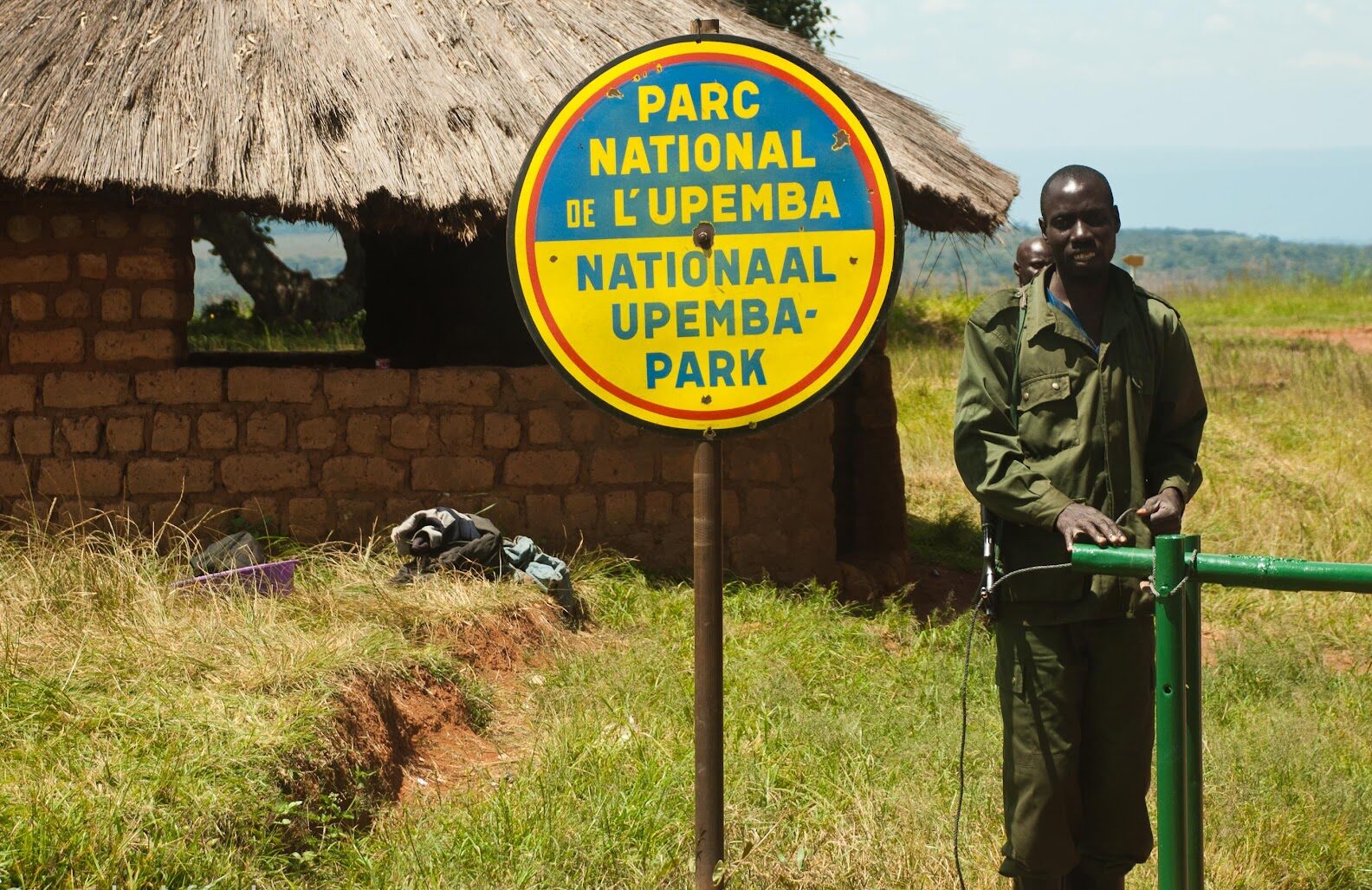
Upemba National Park is one of the oldest and most important protected areas in the Democratic Republic of Congo. Renowned for its remarkable biodiversity, vast wilderness, and unique landscapes, the park represents one of Central Africa’s most significant conservation areas. Covering thousands of square kilometers of savannahs, wetlands, forests, rivers, lakes, and plateaus, Upemba National Park protects an extraordinary variety of wildlife and ecosystems that are rarely found together within a single protected area.
Despite its immense ecological importance, Upemba National Park remains one of Africa’s least-visited national parks, offering travelers a rare opportunity to experience untouched wilderness far from the crowds commonly associated with popular safari destinations. The park is home to numerous mammal species, rich birdlife, reptiles, and aquatic ecosystems that contribute to its reputation as one of Congo’s hidden natural treasures.
For wildlife enthusiasts, birdwatchers, photographers, conservationists, and adventurous travelers, Upemba National Park offers a unique safari experience that combines scenic beauty with exceptional biodiversity. Its remote location and relatively undeveloped tourism infrastructure make it particularly attractive to visitors seeking authentic exploration and genuine wilderness encounters.
As conservation efforts continue to protect and restore wildlife populations throughout the region, Upemba National Park is increasingly recognized as a vital sanctuary for many species and an important destination for future eco-tourism development in the Democratic Republic of Congo.
Where is Upemba National Park Located?
Geographic Location
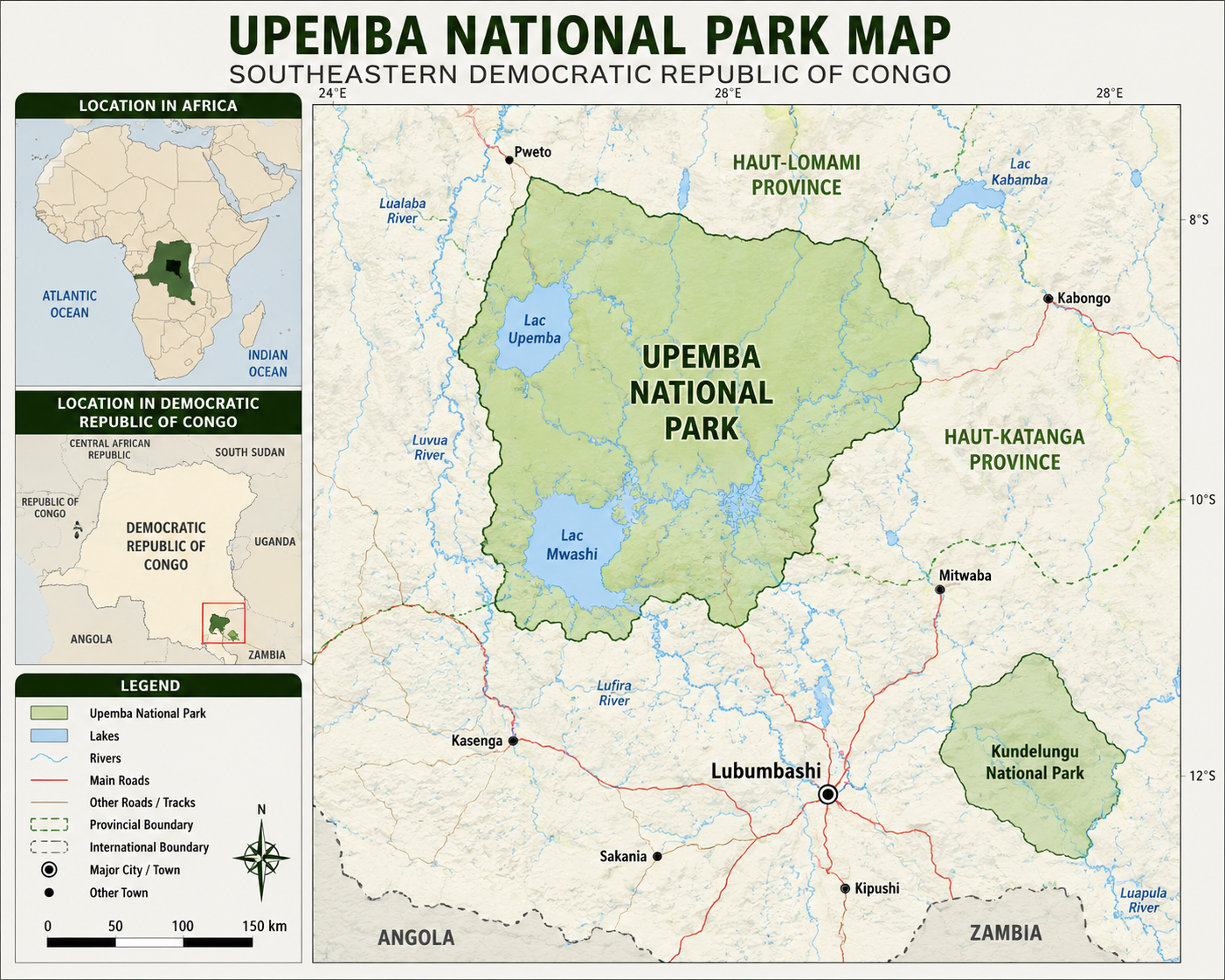
Upemba National Park is located in the southeastern part of the Democratic Republic of Congo within Haut-Katanga Province. The park lies northwest of the city of Lubumbashi and forms part of the larger Upemba Depression, a vast ecological region characterized by wetlands, floodplains, rivers, lakes, grasslands, and elevated plateaus.
The park occupies a strategic position within the Congo Basin’s southern ecosystems and serves as an important transition zone between Central African forests and southern African savannah habitats. This unique geographical setting contributes significantly to the park’s exceptional biodiversity and ecological richness.
One of the defining features of Upemba National Park is its network of lakes and waterways. Numerous rivers flow through the protected area, creating extensive wetlands that support fish populations, aquatic birds, crocodiles, hippos, and other wildlife. These wetlands play a crucial role in maintaining ecological balance and providing essential resources for wildlife throughout the year.
The landscape varies dramatically across the park. Visitors can encounter vast grasslands, wooded savannahs, marshes, river valleys, rocky outcrops, and elevated plateaus that provide habitat for different species. This diversity of environments makes Upemba National Park one of the most ecologically varied protected areas in the Democratic Republic of Congo.
The park’s remote location has helped preserve much of its natural character, allowing wildlife and ecosystems to remain relatively undisturbed compared to more heavily developed tourism destinations. As a result, Upemba remains an important refuge for numerous species and a valuable area for scientific research and conservation.
Map of Upemba National Park.
History of Upemba National Park
The history of Upemba National Park dates back to 1939, when it was officially established as one of the earliest national parks in the Democratic Republic of Congo. Its creation reflected growing recognition of the region’s ecological importance and the need to protect its diverse wildlife and unique habitats from increasing human pressures.
During the early decades of its existence, Upemba National Park supported abundant wildlife populations, including large herds of antelope, buffalo, elephants, zebras, and numerous predators. The park became known as one of Central Africa’s most important wildlife strongholds and attracted scientific interest due to its rich biodiversity and unique ecological characteristics.
The park’s wetlands and river systems also played a vital role in supporting fish populations and migratory bird species, making Upemba a significant site for both terrestrial and aquatic conservation. Researchers conducted numerous studies within the park to better understand the region’s ecosystems, wildlife populations, and environmental processes.
Like many protected areas in the region, Upemba National Park faced significant challenges during periods of political instability, economic hardship, and limited conservation resources. Poaching, habitat degradation, and reduced management capacity affected wildlife populations and conservation efforts over several decades.
Despite these challenges, Upemba National Park remains one of Congo’s most important conservation landscapes. National authorities, conservation organizations, and international partners continue working to strengthen wildlife protection, restore habitats, improve park management, and support sustainable conservation initiatives throughout the region.
Today, Upemba National Park stands as a symbol of Congo’s remarkable natural heritage. Ongoing conservation efforts aim to secure the future of its wildlife populations, preserve its unique ecosystems, and promote responsible tourism that benefits both local communities and biodiversity conservation.
As awareness of the park’s ecological significance continues to grow, Upemba National Park is increasingly viewed as a key destination for conservation tourism and scientific research within Central Africa. Its rich history, extraordinary biodiversity, and vast wilderness areas ensure its place among the Democratic Republic of Congo’s most valuable protected landscapes.
Importance of the Park in Congo Conservation
Upemba National Park plays a critical role in wildlife conservation and biodiversity protection in the Democratic Republic of Congo. As one of the country’s oldest national parks, it serves as a vast refuge for numerous plant and animal species that depend on its diverse ecosystems for survival. The park protects extensive savannahs, wetlands, forests, rivers, lakes, and grasslands, making it one of the most ecologically important conservation areas in Central Africa.
The park provides habitat for a wide variety of mammals, birds, reptiles, fish, and plant species, many of which face increasing pressure from habitat loss and human activities outside protected areas. By safeguarding these ecosystems, Upemba National Park helps maintain ecological balance and preserves essential wildlife corridors that support species movement and genetic diversity.
Upemba’s wetlands are particularly important because they support large populations of aquatic wildlife and migratory birds. These wetlands act as natural water reservoirs, helping regulate water systems and supporting biodiversity throughout the region. The park also contributes to climate regulation through the protection of natural habitats that store carbon and support healthy ecological processes.
Conservation efforts within Upemba National Park focus on wildlife monitoring, anti-poaching operations, habitat restoration, scientific research, and community engagement. Rangers and conservation organizations work to protect vulnerable species while promoting sustainable management of natural resources. These initiatives are essential for ensuring that future generations can continue to benefit from Congo’s extraordinary natural heritage.
Beyond wildlife protection, the park serves as an important center for environmental education and scientific research. Researchers study its ecosystems, wildlife populations, and conservation challenges to better understand how to protect biodiversity in Central Africa. As conservation programs continue to expand, Upemba National Park remains one of the most significant protected landscapes contributing to the long-term conservation of wildlife in the Democratic Republic of Congo.
Upemba National Park Quick Facts
| Details | Facts |
|---|---|
| Location | Haut-Katanga Province |
| Size | 11,730 km² |
| Established | 1939 |
| Best For | Wildlife, Birding |
| Closest City | Lubumbashi |
| Main Habitats | Wetlands, Savannahs, Lakes |
Why Visit Upemba National Park
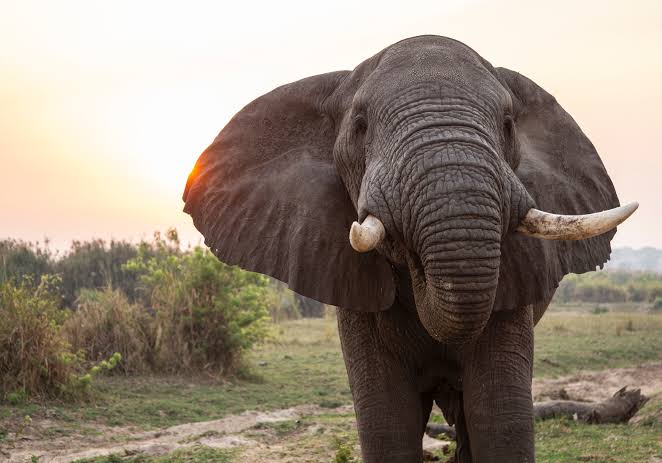
Upemba National Park offers one of the most unique and authentic safari experiences in the Democratic Republic of Congo. Unlike more frequently visited wildlife destinations, Upemba remains largely untouched by mass tourism, allowing visitors to experience true wilderness in one of Africa’s most remote conservation areas.
The park attracts travelers seeking adventure, wildlife, birdwatching, photography, and nature exploration. Its remarkable diversity of habitats supports an impressive range of species and provides opportunities to discover landscapes that differ dramatically from traditional African safari destinations. From vast wetlands and river systems to rolling savannahs and elevated plateaus, every part of the park offers something unique.
Visitors are drawn to Upemba because of its sense of discovery. The park remains one of Congo’s hidden gems, offering an opportunity to explore landscapes and ecosystems that few international travelers have experienced. Wildlife encounters feel genuine and exclusive, while the scenery showcases some of the country’s most spectacular natural environments.
For conservation-minded travelers, a visit to Upemba National Park also supports efforts to protect one of Central Africa’s most important ecological regions. Tourism has the potential to contribute directly to wildlife conservation, habitat protection, and community development, helping secure the future of the park’s extraordinary biodiversity.
Whether you are a wildlife enthusiast, birder, photographer, researcher, or explorer, Upemba National Park offers an unforgettable opportunity to experience one of Congo’s most remarkable protected areas.
One of Congo’s Largest Protected Areas
Upemba National Park is among the largest protected areas in the Democratic Republic of Congo, covering thousands of square kilometers of diverse habitats and wilderness landscapes. Its immense size allows it to support a wide range of ecosystems and wildlife populations that require large, interconnected habitats for survival.
The park’s vast expanse provides sanctuary for numerous species, allowing wildlife to move freely across grasslands, wetlands, forests, rivers, and plateaus. Large protected areas such as Upemba are particularly important for maintaining ecological processes, supporting migration patterns, and preserving genetic diversity among wildlife populations.
Because of its size, Upemba contains environments that vary significantly from one region to another. Some areas are dominated by open savannahs and grasslands, while others feature dense vegetation, extensive wetlands, and freshwater ecosystems. This habitat diversity contributes to the park’s exceptional biodiversity and ecological value.
The sheer scale of Upemba National Park creates a sense of wilderness rarely found in modern safari destinations. Visitors can travel through vast landscapes without encountering significant development, making the experience feel more remote and authentic than many other wildlife destinations across Africa.
Unique Landscapes and Ecosystems
One of the most compelling reasons to visit Upemba National Park is its extraordinary variety of landscapes and ecosystems. Few protected areas in Central Africa contain such a diverse combination of habitats within a single conservation area.
The park is famous for its extensive wetlands and floodplains, which support rich aquatic ecosystems and attract numerous bird species. These wetlands provide critical habitat for fish, reptiles, amphibians, and mammals while contributing to the overall ecological health of the region.
Upemba’s grasslands and savannahs create ideal conditions for grazing wildlife and support many of the park’s larger mammal species. These open landscapes contrast beautifully with wooded areas and riverine habitats, creating a mosaic of ecosystems that enhances biodiversity throughout the park.
The network of rivers and lakes scattered across Upemba National Park further increases its ecological importance. These waterways sustain wildlife populations throughout the year and provide essential resources during dry periods. They also create spectacular scenery that adds to the park’s appeal for photographers and nature enthusiasts.
Elevated plateaus and rugged terrain introduce yet another dimension to the landscape. These areas offer stunning views, unique vegetation communities, and additional habitat diversity that supports a variety of wildlife species.
Together, the wetlands, savannahs, forests, rivers, lakes, and plateaus make Upemba National Park one of the most ecologically diverse protected areas in the Democratic Republic of Congo. This remarkable variety of landscapes creates exceptional opportunities for wildlife viewing, birdwatching, photography, scientific research, and wilderness exploration.
Rich Wildlife Diversity
Upemba National Park is one of the most biologically diverse protected areas in the Democratic Republic of Congo, supporting a remarkable variety of wildlife across its vast landscapes. The park’s combination of wetlands, grasslands, rivers, lakes, forests, and savannah ecosystems creates ideal conditions for numerous animal species, making it a valuable refuge for wildlife in Central Africa.
Large mammals are among the park’s most important attractions. Upemba provides habitat for elephants, buffalo, zebras, antelope species, hippos, crocodiles, and various predators. These animals depend on the park’s extensive natural habitats and water systems, which support wildlife throughout the year. The diversity of environments allows different species to thrive within the same protected area, contributing to the park’s exceptional ecological richness.
The park is particularly important for antelope populations, with several species inhabiting its grasslands and wetland areas. These herbivores play a vital role in maintaining ecological balance and serve as prey for carnivorous species. Their presence helps sustain healthy predator-prey relationships across the park’s ecosystems.
Birdlife is another major component of Upemba’s biodiversity. Hundreds of bird species have been recorded throughout the park, including waterbirds, raptors, migratory species, and wetland specialists. The extensive marshes, lakes, and floodplains provide ideal feeding and breeding grounds, making Upemba an outstanding destination for birdwatchers and ornithologists.
The park’s rivers, lakes, and wetlands also support a rich variety of aquatic life. Fish populations thrive within these waterways, while crocodiles, amphibians, and numerous smaller species contribute to the complexity of the ecosystem. These aquatic habitats are essential for maintaining biodiversity and supporting wildlife throughout the park.
What makes Upemba National Park especially significant is not only the number of species it protects but also the diversity of habitats that support them. This ecological variety allows visitors to experience a wide range of wildlife encounters while exploring one of Congo’s most important conservation landscapes. For nature lovers, photographers, researchers, and safari enthusiasts, the park offers exceptional opportunities to discover wildlife in a truly wild and remote setting.
Off-the-Beaten-Path Safari Experience
One of the most appealing aspects of Upemba National Park is its status as a true off-the-beaten-path safari destination. Unlike many famous African national parks that attract large numbers of visitors each year, Upemba remains largely unexplored by international tourism. This creates a rare opportunity for travelers to experience wilderness in its most authentic and untouched form.
Visiting Upemba National Park is not simply about wildlife viewing; it is about exploration, discovery, and adventure. The park’s remote location and limited tourism development provide an atmosphere of exclusivity that is increasingly difficult to find in many of Africa’s popular safari destinations. Travelers often feel as though they are venturing into a hidden corner of the continent where nature remains largely undisturbed.
The absence of large tourist crowds enhances every aspect of the safari experience. Wildlife encounters feel more personal, landscapes appear more pristine, and visitors can enjoy a stronger connection with nature. Rather than sharing sightings with multiple safari vehicles, travelers may find themselves experiencing vast stretches of wilderness with little evidence of human activity.
For photographers, Upemba offers extraordinary opportunities to capture unique images of wildlife and landscapes in a setting that remains relatively untouched by modern tourism. The park’s dramatic scenery, diverse ecosystems, and remote atmosphere create endless possibilities for nature photography and wildlife documentation.
Adventure travelers are particularly drawn to Upemba because it represents one of Africa’s lesser-known conservation treasures. Exploring its wetlands, grasslands, rivers, and remote wilderness areas provides a genuine sense of discovery that is increasingly rare in today’s travel industry. Every journey through the park feels like an expedition into one of Central Africa’s last great wilderness regions.
An off-the-beaten-path safari in Upemba National Park also supports the future growth of sustainable tourism within the region. Responsible visitation can contribute to conservation funding, community development, and increased awareness of the park’s ecological importance. As interest in authentic and conservation-focused travel continues to grow, Upemba is becoming recognized as one of Congo’s most promising destinations for adventurous wildlife enthusiasts seeking experiences beyond the traditional safari circuit.
Wildlife in Upemba National Park
Upemba National Park is one of the most important wildlife sanctuaries in the Democratic Republic of Congo, protecting an extraordinary range of species across its diverse landscapes. The park’s vast network of wetlands, grasslands, rivers, forests, floodplains, and savannahs creates ideal habitats for numerous mammals, reptiles, birds, and aquatic species. This ecological diversity makes Upemba one of Central Africa’s most significant conservation areas and a valuable refuge for wildlife populations that have declined in other parts of the region.
The park supports both large and small mammals, including iconic African species such as elephants, buffalo, lions, leopards, hippos, and various antelope species. Its wetlands and waterways provide critical habitat for crocodiles and aquatic wildlife, while forested areas shelter primates and smaller mammals. Together, these species contribute to the rich biodiversity that makes Upemba National Park a fascinating destination for wildlife enthusiasts, researchers, birdwatchers, and conservationists.
Visitors exploring Upemba National Park have the opportunity to experience wildlife in a remote and relatively untouched environment. Although wildlife densities may vary across different regions of the park, the diversity of species and habitats provides rewarding opportunities for nature observation and photography.
African Elephants
African elephants are among the most iconic wildlife species found in Upemba National Park. As the largest land mammals on Earth, elephants play a crucial role in maintaining healthy ecosystems throughout the park. Their movements help shape vegetation patterns, create pathways through dense habitats, disperse seeds, and influence the availability of resources for other wildlife species.
The park’s extensive grasslands, wetlands, and woodland areas provide suitable habitat for elephants, offering access to food, water, and shelter throughout the year. Elephants often travel long distances within the park as they search for vegetation and water sources, particularly during seasonal changes.
Observing elephants in their natural habitat is one of the most memorable experiences available in Upemba National Park. Visitors may witness family groups moving through grasslands, feeding near wetlands, or interacting socially within larger herds. Their intelligence, complex social structures, and immense size make them one of the park’s most impressive wildlife attractions.
African Buffalo
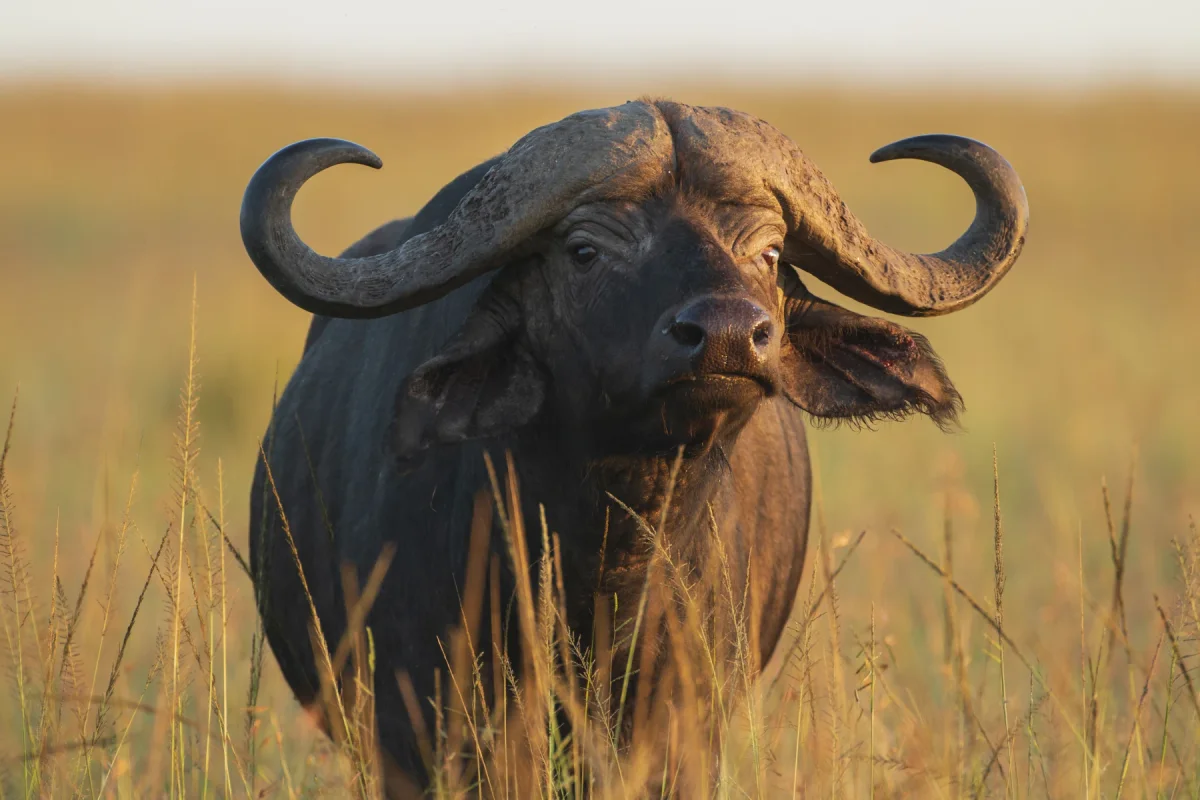
African buffalo are another important species within Upemba National Park and contribute significantly to the park’s wildlife diversity. These powerful animals are highly adaptable and thrive in the grasslands, floodplains, and savannah habitats found throughout the protected area.
Buffalo are known for their strong herd behavior and can often be found grazing in groups near water sources. Their presence supports the ecological balance of the park by influencing vegetation growth and providing prey opportunities for large predators.
Unlike domesticated cattle, African buffalo are unpredictable and highly respected by wildlife professionals. Their strength and defensive behavior make them one of Africa’s most formidable animals. Observing buffalo herds moving across Upemba’s open landscapes provides a classic African safari experience and highlights the park’s rich wildlife heritage.
Leopards
Leopards represent one of the most elusive predators in Upemba National Park. Their secretive nature, excellent camouflage, and largely nocturnal behavior make them difficult to observe, even in areas where they are present.
These adaptable big cats occupy a variety of habitats throughout the park, including woodlands, rocky areas, riverine forests, and grassland edges. Leopards are solitary hunters capable of preying on a wide range of animals, from small mammals and birds to larger antelope species.
Although sightings are relatively rare, the presence of leopards is an important indicator of a healthy ecosystem. Their role as apex predators helps regulate prey populations and contributes to ecological stability within the park. For wildlife enthusiasts and photographers, a leopard sighting in Upemba National Park is often considered one of the most rewarding safari experiences.
Lions
Lions are among Africa’s most iconic predators and historically occurred within parts of Upemba National Park. As top predators, lions play an essential role in maintaining balance within wildlife ecosystems by controlling herbivore populations and supporting healthy ecological processes.
The open grasslands and savannah habitats found in portions of the park provide suitable environments for lions, particularly where prey species are abundant. Lions are highly social animals and typically live in family groups known as prides.
Although lion populations in Central Africa face various conservation challenges, their presence remains an important component of the region’s wildlife heritage. Conservation efforts aimed at protecting habitats and prey species contribute to the long-term survival of these remarkable predators within protected areas such as Upemba National Park.
Zebras
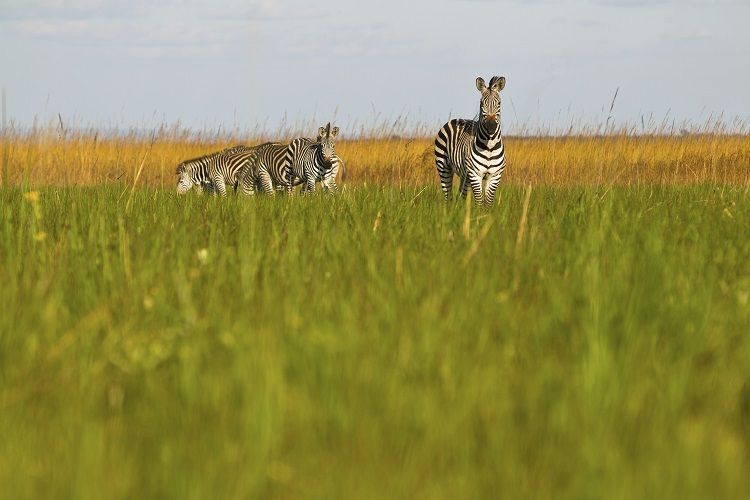
Zebras add a unique and visually striking element to the wildlife diversity of Upemba National Park. Their distinctive black-and-white striped patterns make them among the most recognizable animals in Africa.
These social herbivores are commonly associated with grassland habitats where they feed on grasses and other vegetation. Zebras often share grazing areas with antelope species and other herbivores, creating dynamic wildlife communities across the park’s savannah ecosystems.
In addition to their beauty, zebras play an important ecological role by influencing vegetation structure and supporting predator-prey relationships. Their presence contributes to the rich wildlife experiences available to visitors exploring Upemba National Park.
Hippos
Hippos are among the most important aquatic mammals inhabiting Upemba National Park’s extensive river systems, lakes, and wetlands. These massive animals spend much of their time in water, emerging primarily during the evening and nighttime hours to graze on surrounding vegetation.
The park’s numerous waterways provide ideal habitat for hippo populations, supporting their need for water, food, and protection from the sun. Hippos contribute significantly to aquatic ecosystems by influencing nutrient cycles and shaping wetland environments.
Watching hippos resting in rivers, interacting within groups, or moving between water bodies offers visitors a fascinating glimpse into one of Africa’s most unique wildlife species. Their size, behavior, and ecological importance make them a highlight of wildlife viewing in Upemba National Park.
Crocodiles
Crocodiles are important predators within the aquatic ecosystems of Upemba National Park. The park’s rivers, lakes, and wetlands provide excellent habitat for these ancient reptiles, allowing them to thrive throughout the region.
As ambush predators, crocodiles play a critical role in maintaining ecological balance within aquatic environments. They feed on fish, birds, mammals, and other prey species, helping regulate populations and support healthy ecosystems.
Visitors exploring Upemba’s waterways may encounter crocodiles basking along riverbanks, floating near the water’s surface, or resting in wetland areas. Their presence highlights the ecological richness of the park’s aquatic habitats and contributes to the diversity of wildlife experiences available within the protected area.
Antelope Species
Upemba National Park supports a wide variety of antelope species that occupy different habitats throughout the park. These herbivores are among the most commonly observed mammals and play a vital role in maintaining ecological balance.
Different antelope species utilize grasslands, floodplains, wetlands, woodlands, and forest edges depending on their ecological requirements. Their grazing and browsing activities influence vegetation patterns while supporting predator populations through natural food chains.
The diversity of antelope species contributes significantly to the park’s wildlife richness and enhances opportunities for wildlife viewing. Visitors may encounter both large and small antelope species as they explore the park’s varied landscapes.
Primates
Several primate species inhabit the forests, riverine habitats, and woodland areas of Upemba National Park. These intelligent and socially complex animals contribute to the ecological diversity of the region and play important roles in seed dispersal and forest regeneration.
Primates are often observed moving through trees, foraging for food, interacting socially, and communicating within family groups. Their behaviors provide fascinating opportunities for wildlife observation and scientific study.
The presence of primates adds another dimension to the wildlife experience in Upemba National Park, demonstrating the ecological connections between forest habitats and broader ecosystem health.
Small Mammals
While large mammals often attract the most attention, Upemba National Park also supports a remarkable variety of small mammals that contribute significantly to ecosystem functioning. These include rodents, insectivores, bats, small carnivores, and numerous other species adapted to the park’s diverse habitats.
Small mammals play essential roles in seed dispersal, pollination, soil health, insect control, and food web dynamics. Many larger predators depend on these species as part of their diet, making them critical components of healthy ecosystems.
Although they are often overlooked during wildlife safaris, small mammals represent an important aspect of Upemba’s biodiversity. Their abundance and ecological significance contribute to the overall richness and complexity of the park’s natural environments.
Birdlife in Upemba National Park
Upemba National Park is one of the most important birding destinations in the Democratic Republic of Congo and a hidden paradise for birdwatchers exploring Central Africa. The park’s remarkable diversity of habitats, including wetlands, floodplains, rivers, lakes, grasslands, woodlands, and forested areas, supports an impressive variety of bird species throughout the year.
The extensive wetland systems that characterize much of the park create ideal breeding, feeding, and nesting grounds for aquatic birds, while the savannahs and woodlands provide habitat for numerous terrestrial species. Migratory birds also use the park’s wetlands and waterways as seasonal stopover points, further increasing its avian diversity.
For both professional ornithologists and casual birdwatchers, Upemba National Park offers exceptional opportunities to observe a wide range of species in relatively undisturbed natural environments. The combination of abundant birdlife, scenic landscapes, and low visitor numbers creates a rewarding birding experience that remains largely undiscovered by international tourism.
Birdlife contributes significantly to the ecological importance of Upemba National Park. Birds assist with seed dispersal, pollination, insect control, and ecological monitoring, making them vital components of healthy ecosystems. Their presence reflects the overall biodiversity and environmental quality of the park’s habitats.
Bird Species Diversity
Upemba National Park supports hundreds of bird species, making it one of the richest avian habitats in southeastern Congo. The park’s diverse ecosystems attract a broad range of birds adapted to wetlands, grasslands, forests, rivers, and open savannah environments.
Waterbirds are particularly abundant throughout the park due to its numerous lakes, marshes, and river systems. Herons, egrets, storks, ibises, ducks, geese, kingfishers, and other aquatic species can often be observed feeding and nesting in wetland areas. These habitats provide critical resources that support large bird populations throughout the year.
Savannah and grassland environments attract species such as bustards, lapwings, francolins, bee-eaters, rollers, and various raptors. These open habitats create excellent opportunities for birdwatching because many species can be easily observed across the landscape.
Woodlands and forest patches support a different group of birds, including hornbills, barbets, woodpeckers, shrikes, flycatchers, sunbirds, and numerous songbirds. The diversity of vegetation types throughout the park contributes significantly to the variety of bird species present.
Bird diversity increases further during migration periods when seasonal visitors arrive from other parts of Africa and beyond. These migratory species add to the already impressive bird list and provide birdwatchers with additional opportunities to observe rare and unusual birds.
The variety of birdlife found in Upemba National Park reflects the ecological richness of the region and makes the park an important destination for bird conservation, scientific research, and eco-tourism.
Endemic and Rare Birds
One of the most exciting aspects of birdwatching in Upemba National Park is the opportunity to observe rare and localized species associated with Central African ecosystems. The park’s remote location and diverse habitats provide refuge for birds that may be difficult to find elsewhere.
Several species found within the region are closely linked to wetland habitats, river systems, and specialized ecological niches. These birds depend on healthy ecosystems and are often sensitive indicators of environmental change. Their presence highlights the conservation value of the park and the importance of protecting its habitats.
Birdwatchers visiting Upemba may encounter uncommon waterbirds, rare raptors, secretive marsh species, and specialized grassland birds that contribute to the park’s reputation as an important avian sanctuary. The diversity of habitats increases the likelihood of observing species with highly specific ecological requirements.
The park’s wetlands are particularly important for rare water-associated birds. Seasonal flooding creates feeding opportunities that attract species from surrounding regions and support breeding populations of various aquatic birds. Some of these species may be difficult to observe outside protected wetland systems.
For serious birders, the possibility of encountering uncommon or rarely recorded species adds an element of excitement to every birdwatching excursion. The relatively limited birding activity within Upemba also means that new observations can contribute valuable information to regional ornithological knowledge.
Best Birdwatching Areas
Upemba National Park contains several excellent birdwatching areas, each offering unique habitats and species diversity. The best locations often depend on the type of birds visitors hope to observe and the season during which they visit.
The park’s wetlands and floodplains are among the most productive birdwatching areas. These habitats attract large numbers of waterbirds, waders, herons, storks, kingfishers, and other aquatic species. Early morning and late afternoon are often the most rewarding times for observing bird activity in these environments.
Lakes and river systems provide additional opportunities to observe aquatic birds, fish-eating species, and migratory visitors. The combination of open water, shoreline vegetation, and surrounding wetlands supports a rich variety of birdlife throughout the year.
Grasslands and savannah areas are ideal for observing terrestrial birds, including raptors, ground-dwelling species, and insect-eating birds. These open habitats also provide excellent visibility for birdwatchers and photographers seeking to document wildlife in natural settings.
Wooded areas and forest patches support a different community of species, including colorful forest birds, songbirds, and canopy specialists. Exploring these habitats can reveal species that are rarely seen in more open environments.
Because the park contains such a diverse range of ecosystems, birdwatchers who explore multiple habitats often record significantly more species than those who remain within a single area. This habitat diversity is one of Upemba National Park’s greatest strengths as a birding destination.
Best Time for Birding
Birdwatching in Upemba National Park can be rewarding throughout the year, but certain seasons offer particularly favorable conditions depending on the species visitors wish to observe.
The wet season is often considered one of the best periods for birding because breeding activity increases dramatically during this time. Many species display colorful breeding plumage, become more vocal, and engage in courtship behaviors that make them easier to locate and identify. Wetland habitats also become highly productive, attracting large numbers of birds.
Migratory species are another highlight during certain periods of the year. As seasonal visitors arrive from different regions, bird diversity increases and birdwatchers have opportunities to observe species that may not be present throughout the entire year.
The dry season also offers excellent birdwatching opportunities. As water sources become more concentrated, birds gather around rivers, lakes, and wetlands, making them easier to locate. Reduced vegetation density can improve visibility and increase the chances of successful observation and photography.
Early morning is generally the best time of day for birdwatching in Upemba National Park. During these hours, birds are most active as they feed, sing, and move throughout their territories. Late afternoon also provides productive birding conditions while offering favorable lighting for photography.
Whether visiting during the wet season or dry season, birdwatchers will find that Upemba National Park offers exceptional opportunities to experience one of Congo’s richest and most diverse avian environments. The combination of abundant habitats, low tourism pressure, and remarkable biodiversity makes the park a rewarding destination for bird enthusiasts of all experience levels.
Landscapes and Ecosystems of Upemba National Park
One of the most remarkable features of Upemba National Park is its extraordinary diversity of landscapes and ecosystems. Covering thousands of square kilometers in southeastern Democratic Republic of Congo, the park contains a mosaic of habitats that support an exceptional variety of wildlife and plant species. From vast grasslands and wetlands to rivers, lakes, forests, and elevated plateaus, Upemba National Park showcases some of the most diverse natural environments found anywhere in Central Africa.
This ecological diversity is one of the primary reasons why Upemba National Park is considered a conservation priority within the Congo Basin region. Each habitat contributes uniquely to the park’s biodiversity, supporting different wildlife communities and ecological processes. Together, these interconnected ecosystems create one of the most complex and important protected landscapes in the Democratic Republic of Congo.
Visitors exploring Upemba National Park experience dramatically changing scenery as they move between habitats. These diverse environments not only enhance wildlife viewing opportunities but also provide valuable insight into the natural processes that sustain one of Africa’s least-explored wilderness areas.
Savannah Grasslands
The savannah grasslands of Upemba National Park are among the most iconic landscapes within the protected area. These expansive open plains stretch across large portions of the park and provide critical habitat for grazing wildlife species. Characterized by tall grasses, scattered shrubs, and occasional trees, the grasslands create a classic African safari setting that supports a rich variety of animals.
Many herbivores depend on these grasslands for food, including buffalo, zebras, antelope species, and other grazing mammals. The abundance of vegetation provides year-round feeding opportunities while also supporting complex ecological relationships between herbivores and predators.
The open nature of the savannahs makes them particularly attractive for wildlife observation and photography. Visitors can often enjoy panoramic views across the landscape while observing animals moving through the grasslands. Seasonal changes bring dramatic transformations to these ecosystems, with rainfall stimulating lush vegetation growth and attracting wildlife to newly productive feeding areas.
Savannah habitats also support numerous bird species, reptiles, and smaller mammals that contribute to the overall biodiversity of Upemba National Park. Their ecological importance extends beyond wildlife viewing, as these grasslands help regulate water cycles, support soil health, and maintain ecological balance throughout the region.
Wetlands and Floodplains
Wetlands and floodplains are among the most ecologically significant habitats within Upemba National Park. The park’s extensive network of marshes, seasonal floodplains, swamps, and wet grasslands supports a remarkable diversity of wildlife while playing a vital role in regional water systems.
These wetland ecosystems serve as breeding grounds, feeding areas, and refuges for countless species. Birds, fish, amphibians, reptiles, and mammals all depend on these habitats for survival. During seasonal flooding, nutrient-rich waters spread across floodplains, creating highly productive environments that sustain large populations of wildlife.
Wetlands are particularly important for birdlife. Large numbers of waterbirds, waders, herons, storks, and migratory species utilize these habitats throughout the year. The abundance of aquatic life provides a reliable food source, making the wetlands some of the most important birdwatching areas within the park.
Beyond their wildlife value, wetlands help regulate water flow, improve water quality, reduce erosion, and support broader ecosystem health. They act as natural reservoirs that store and slowly release water, helping maintain ecological stability during seasonal changes.
The wetlands of Upemba National Park represent one of the largest and most valuable freshwater ecosystems in southeastern Congo and are essential to the park’s overall biodiversity.
Rivers and Lakes
Rivers and lakes form the lifeblood of Upemba National Park, shaping its landscapes and sustaining its wildlife populations. Numerous waterways flow through the park, creating a complex network of aquatic habitats that support fish, crocodiles, hippos, birds, and many other species.
The park is particularly famous for the Upemba Depression, a region containing numerous interconnected lakes and wetlands. These water bodies create unique ecological conditions that support exceptional biodiversity while contributing to the park’s scenic beauty.
Hippos are commonly associated with these aquatic habitats, spending much of their lives within rivers and lakes. Crocodiles also inhabit many waterways, serving as important predators within aquatic ecosystems. Fish populations thrive in these environments, supporting both wildlife and ecological processes throughout the park.
The rivers and lakes of Upemba National Park also attract wildlife from surrounding habitats. During dry periods, animals often congregate near permanent water sources, creating excellent opportunities for wildlife observation and photography.
In addition to their ecological importance, these waterways create some of the park’s most beautiful landscapes. Reflections of surrounding grasslands, wetlands, and distant hills produce stunning scenery that appeals to photographers, birdwatchers, and nature enthusiasts alike.
Forested Areas
Although Upemba National Park is widely known for its grasslands and wetlands, forested habitats also form an important component of its ecological diversity. These woodlands and forest patches provide shelter, food, and breeding habitat for numerous wildlife species that are not typically found in more open environments.
Forested areas support a variety of primates, birds, small mammals, reptiles, and insects. The dense vegetation creates microhabitats that contribute significantly to the park’s biodiversity and ecological complexity. Many species depend on forest habitats for protection from predators, nesting opportunities, and access to specialized food resources.
Trees within these ecosystems play a crucial role in maintaining environmental stability. They help regulate local climate conditions, prevent soil erosion, store carbon, and support nutrient cycling. Their ecological functions extend far beyond the immediate forest environment and influence the health of surrounding ecosystems.
Birdwatchers often find forested habitats particularly rewarding because they support species that may be difficult to observe elsewhere in the park. The diversity of vegetation creates opportunities to encounter colorful songbirds, hornbills, woodpeckers, and numerous other forest-dependent species.
The presence of forested areas adds another layer of ecological richness to Upemba National Park and demonstrates the extraordinary habitat diversity that distinguishes it from many other protected areas in Central Africa.
Mountains and Plateaus
Mountains and plateaus contribute a dramatic dimension to the landscapes of Upemba National Park. Elevated terrain creates variation in climate, vegetation, and habitat structure, supporting species that may not occur within lower-lying areas of the park.
These elevated regions offer spectacular views across surrounding wetlands, grasslands, rivers, and forests. For visitors, the mountains and plateaus provide some of the most scenic locations within the park and create opportunities for landscape photography and wilderness exploration.
Differences in altitude influence vegetation patterns and ecological conditions. Certain plant species thrive within these higher elevations, creating habitats that support specialized wildlife communities. The varied terrain contributes to the overall ecological diversity of the park and increases the number of species that can coexist within the protected area.
Mountains and plateaus also play an important role in regional water systems. Rainfall captured by elevated landscapes feeds rivers, wetlands, and lakes throughout the park, supporting ecosystems far beyond the immediate highland areas.
The combination of mountains, plateaus, wetlands, forests, rivers, and savannahs makes Upemba National Park one of the most geographically and ecologically diverse protected areas in the Democratic Republic of Congo. These landscapes create an environment of extraordinary beauty and biodiversity that continues to support wildlife conservation, scientific research, and future eco-tourism opportunities.
Safari Activities in Upemba National Park
Upemba National Park offers a variety of safari activities that allow visitors to experience its wildlife, landscapes, and ecosystems from different perspectives. Although the park remains one of the least-visited protected areas in the Democratic Republic of Congo, it provides exceptional opportunities for adventure, exploration, conservation-focused tourism, and nature discovery.
The diversity of habitats found throughout the park creates ideal conditions for a wide range of safari experiences. Visitors can explore vast savannahs, wetlands, rivers, forests, and plateaus while observing wildlife, birdlife, and some of Central Africa’s most remarkable natural scenery. Whether traveling as a wildlife enthusiast, photographer, birder, researcher, or adventurous explorer, Upemba National Park offers activities that showcase its extraordinary biodiversity.
Unlike heavily visited safari destinations, experiences in Upemba often feel more authentic and exclusive. The park’s remote nature allows travelers to enjoy wilderness encounters with minimal disturbance, creating a stronger connection to the natural environment and providing a genuine sense of discovery.
Game Drives
Game drives are among the most exciting safari activities available in Upemba National Park. These guided wildlife excursions provide visitors with opportunities to explore large areas of the park while searching for its diverse animal populations.
The park’s extensive savannahs, grasslands, wetlands, and woodland habitats support a variety of wildlife species, including elephants, buffalo, zebras, antelope, hippos, crocodiles, and numerous smaller mammals. Game drives allow visitors to cover greater distances than walking activities, increasing the chances of observing wildlife across multiple ecosystems.
Morning game drives are particularly rewarding because many animals are most active during the cooler hours after sunrise. Visitors may witness grazing herbivores, bird activity around wetlands, and predators returning from nighttime hunting activities. Evening drives can also provide excellent wildlife viewing opportunities as animals become active before nightfall.
One of the advantages of game drives in Upemba National Park is the absence of large tourist crowds. Wildlife encounters often feel more intimate and natural, allowing visitors to observe animal behavior in a peaceful and undisturbed environment.
For photographers and wildlife enthusiasts, game drives provide some of the best opportunities to experience the park’s biodiversity while enjoying spectacular views of its landscapes.
Walking Safaris
Walking safaris offer a completely different perspective on the natural environment of Upemba National Park. Accompanied by experienced guides and conservation personnel, visitors explore the park on foot while gaining a deeper understanding of its ecosystems and wildlife.
Unlike vehicle-based safaris, walking safaris focus on the smaller details of the environment. Participants learn to identify animal tracks, bird calls, plant species, insect life, and ecological relationships that may go unnoticed during game drives.
Walking through the park’s grasslands, wetlands, and woodland habitats provides a more immersive experience and allows visitors to connect directly with the natural world. The pace is slower, encouraging observation and appreciation of the intricate ecological processes that support biodiversity within the park.
Guides often share valuable insights into wildlife behavior, conservation challenges, traditional ecological knowledge, and the unique characteristics of Upemba’s ecosystems. This educational component makes walking safaris especially rewarding for travelers interested in conservation and natural history.
Walking safaris also create opportunities to experience the sights, sounds, and atmosphere of one of Congo’s most remote wilderness areas in a way that is both exciting and memorable.
Birdwatching Safaris
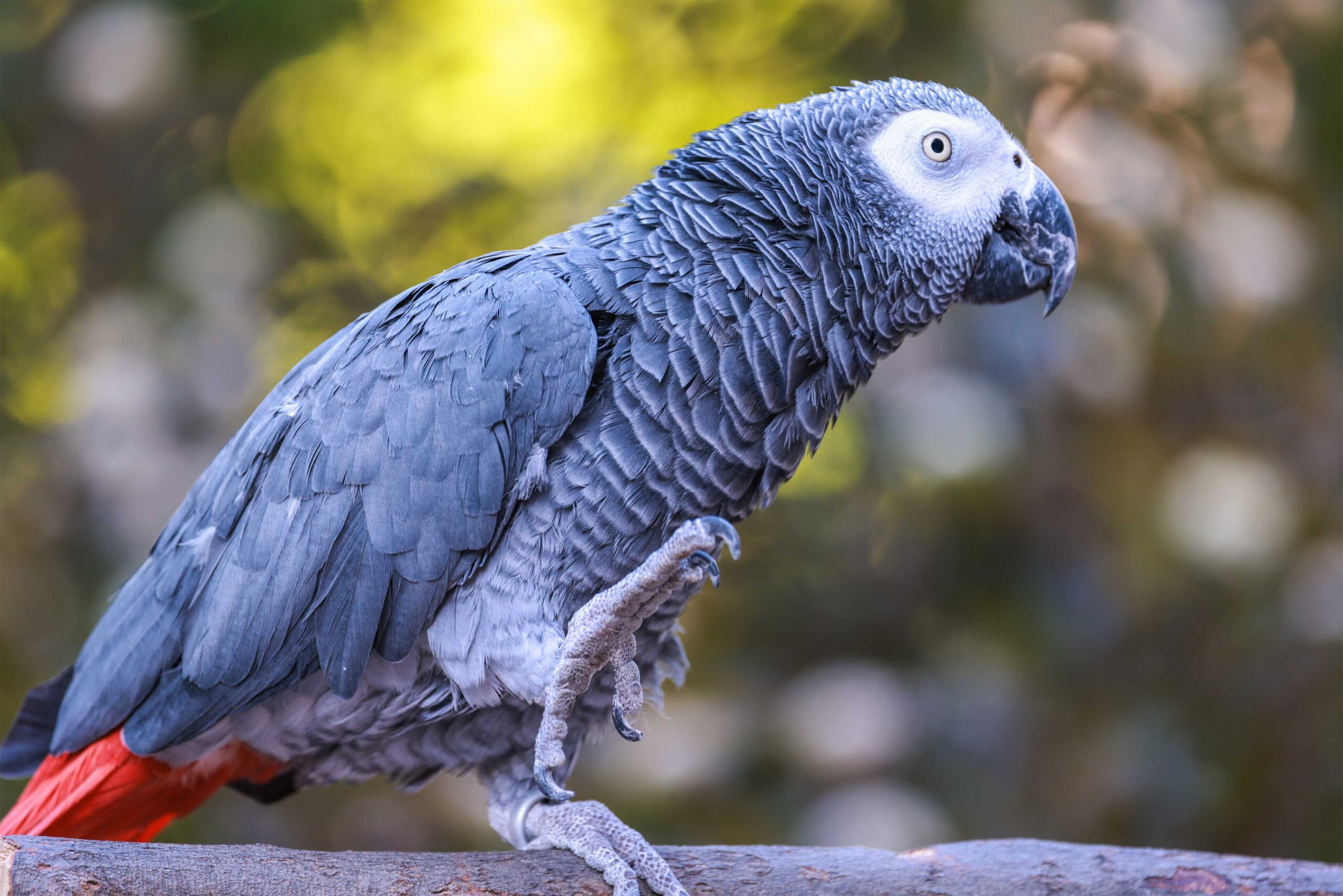
Birdwatching safaris are among the most rewarding activities in Upemba National Park due to the park’s exceptional avian diversity. The combination of wetlands, lakes, rivers, floodplains, grasslands, and forested habitats supports hundreds of bird species throughout the year.
Specialized birding excursions focus on locating and identifying both common and rare species while exploring the park’s most productive bird habitats. Experienced guides help visitors recognize bird calls, understand species behavior, and locate birds that might otherwise remain hidden.
Wetland areas are particularly productive for birdwatching and often host large concentrations of waterbirds, waders, herons, egrets, storks, kingfishers, and migratory species. Grasslands and woodlands provide opportunities to observe raptors, bee-eaters, hornbills, sunbirds, and numerous songbirds.
Birdwatching safaris can be enjoyed by both experienced ornithologists and casual nature enthusiasts. The diversity of species and habitats ensures that every excursion offers new discoveries and exciting wildlife encounters.
For bird lovers, Upemba National Park represents one of the most promising yet least-explored birding destinations in Central Africa.
Photography Safaris
Photography safaris allow visitors to capture the extraordinary beauty of Upemba National Park while documenting its wildlife, landscapes, and ecosystems. The park’s remote wilderness, dramatic scenery, and diverse habitats provide endless opportunities for nature photography.
Wildlife photographers may focus on elephants, buffalo, antelope, birds, hippos, crocodiles, and other species that inhabit the park. The relatively low number of visitors means that photographers often enjoy unobstructed wildlife encounters without the competition commonly found in more popular safari destinations.
Landscape photography is equally rewarding. The park’s wetlands, lakes, rivers, grasslands, mountains, and floodplains create stunning visual compositions throughout the day. Sunrise and sunset are particularly spectacular, producing dramatic lighting conditions that enhance photographic opportunities.
Photography safaris often move at a slower pace than traditional game drives, allowing participants to spend more time observing wildlife behavior and waiting for ideal photographic conditions. Guides can assist photographers in positioning for the best angles while ensuring minimal disturbance to wildlife.
For both amateur and professional photographers, Upemba National Park offers a rare opportunity to document one of Africa’s most untouched and visually diverse conservation areas.
Nature Walks
Nature walks provide a relaxed and educational way to experience the diverse environments of Upemba National Park. These guided excursions focus on understanding the park’s ecosystems rather than simply searching for large wildlife species.
Participants explore different habitats while learning about plants, insects, reptiles, birds, geology, and ecological processes. Guides explain how various species interact with their environment and highlight the importance of conservation within the park.
Nature walks are ideal for visitors who wish to gain a broader appreciation of biodiversity and ecosystem functioning. They reveal aspects of the environment that are often overlooked during traditional safari activities and encourage a deeper understanding of the natural world.
The pace of a nature walk allows participants to fully absorb the beauty of their surroundings while observing smaller forms of life that contribute to the park’s ecological complexity. These experiences are particularly popular among nature enthusiasts, students, researchers, and conservation-minded travelers.
Nature walks complement other safari activities and provide a well-rounded introduction to the remarkable biodiversity of Upemba National Park.
Wildlife Research Experiences
Wildlife research experiences offer visitors a unique opportunity to learn about conservation science and the efforts being made to protect biodiversity within Upemba National Park. These experiences are particularly valuable for travelers interested in wildlife management, ecology, conservation, and scientific research.
Participants may gain insight into wildlife monitoring programs, habitat assessments, anti-poaching initiatives, species surveys, and ecological studies conducted within the park. Researchers and conservation professionals often share information about ongoing projects and the challenges involved in protecting wildlife populations.
These experiences highlight the critical role that scientific research plays in conservation planning and ecosystem management. Visitors learn how data is collected, analyzed, and used to support decision-making processes that benefit wildlife and habitats.
Wildlife research experiences also help raise awareness of conservation issues affecting Central Africa and demonstrate the importance of protected areas such as Upemba National Park. By connecting visitors directly with conservation efforts, these activities foster greater appreciation for biodiversity and encourage support for long-term wildlife protection.
For travelers seeking a deeper and more meaningful safari experience, wildlife research activities provide valuable insight into the work being done to preserve one of Congo’s most important natural landscapes.
Best Time to Visit Upemba National Park
Upemba National Park can be visited throughout the year, but the overall safari experience varies depending on seasonal weather patterns, wildlife movements, vegetation conditions, and bird activity. The park’s diverse ecosystems respond differently to rainfall and seasonal changes, creating unique opportunities for wildlife viewing, photography, birdwatching, and nature exploration at different times of the year.
Because Upemba National Park contains wetlands, rivers, lakes, floodplains, grasslands, forests, and elevated plateaus, seasonal conditions can influence accessibility and wildlife distribution across the protected area. Some visitors prefer the dry season for easier wildlife viewing and travel conditions, while others favor the wet season for lush scenery, active birdlife, and vibrant landscapes.
Understanding the differences between seasons can help travelers choose the best time to visit Upemba National Park based on their interests and safari goals.
Dry Season
The dry season is generally considered one of the best times to visit Upemba National Park for traditional wildlife viewing. During this period, rainfall decreases significantly, vegetation becomes less dense, and animals often concentrate around permanent water sources such as rivers, lakes, and wetlands.
The reduced vegetation makes it easier to spot wildlife across the park’s grasslands and open habitats. Visitors may enjoy improved opportunities to observe elephants, buffalo, antelope species, zebras, and other animals as they gather near reliable water supplies. Predator sightings can also become more frequent as carnivores focus their activities around areas with abundant prey.
Dry season conditions are typically favorable for game drives and wildlife photography. Roads and tracks are often easier to navigate, allowing visitors to access a wider range of habitats within the park. The clear skies and excellent visibility create ideal conditions for landscape photography and wildlife observation.
Another advantage of the dry season is the increased concentration of wildlife. As temporary water sources disappear, animals become more predictable in their movements, making wildlife encounters more rewarding for safari travelers.
For visitors primarily interested in large mammals, game viewing, and easier travel conditions, the dry season offers some of the most productive safari experiences in Upemba National Park.
Wet Season
The wet season transforms Upemba National Park into a lush and vibrant wilderness characterized by abundant vegetation, flowing waterways, and thriving ecosystems. Rainfall replenishes wetlands, rivers, lakes, and floodplains, creating highly productive habitats that support a wide variety of wildlife and bird species.
During this season, the park’s landscapes become exceptionally beautiful. Grasslands turn green, wetlands expand, and flowering plants create colorful scenery throughout the protected area. The dramatic transformation of the environment attracts photographers, nature enthusiasts, and birdwatchers seeking to experience the park at its most visually spectacular.
Wildlife remains present during the wet season, although animals may become more dispersed because water and food resources are widely available across the landscape. While wildlife sightings can sometimes require more effort, visitors often enjoy observing animals in healthier and more natural conditions.
The wet season is particularly important for breeding activity among many species. Birds become highly active, amphibians emerge in large numbers, and numerous animals take advantage of favorable environmental conditions for reproduction.
Travelers visiting during the wet season should be prepared for occasional challenges related to rainfall and road conditions. However, those willing to embrace these conditions are often rewarded with extraordinary scenery, fewer visitors, and excellent opportunities for birdwatching and photography.
Wildlife Viewing by Season
Wildlife viewing opportunities in Upemba National Park vary throughout the year, with each season offering distinct advantages. Understanding these seasonal differences helps visitors maximize their chances of experiencing the park’s remarkable biodiversity.
During the dry season, wildlife is generally easier to locate because animals gather around permanent water sources. Open grasslands and reduced vegetation improve visibility, allowing visitors to spot wildlife from greater distances. This period is particularly favorable for observing large mammals such as elephants, buffalo, antelope species, and other grazing animals.
Predators may also be more visible during the dry season because prey species become concentrated around limited water supplies. The combination of increased animal activity and improved viewing conditions makes this one of the most rewarding periods for traditional safari experiences.
In the wet season, wildlife becomes more widely distributed throughout the park as water and vegetation become abundant. Animals can access resources across larger areas, reducing their dependence on specific water sources. While sightings may require more patience, visitors often observe wildlife in lush and scenic environments.
The wet season also provides opportunities to witness breeding behaviors, young animals, and increased ecological activity. Many species become more active as environmental conditions improve, creating fascinating wildlife encounters that differ from those experienced during the dry season.
Ultimately, both seasons offer rewarding wildlife experiences. The best choice depends on whether visitors prioritize easier wildlife viewing or richer ecological and landscape experiences.
Birding Seasons
Birdwatching is exceptional throughout the year in Upemba National Park, but seasonal changes influence species diversity, bird behavior, and viewing opportunities. The park’s wetlands, rivers, lakes, floodplains, forests, and grasslands support hundreds of bird species, making it one of the most important birding destinations in southeastern Congo.
The wet season is often considered the peak birding period because many species enter their breeding season during this time. Birds become more vocal, display colorful breeding plumage, and engage in courtship behaviors that make them easier to observe and identify. Wetland habitats become highly productive and attract large concentrations of waterbirds and migratory species.
Migratory birds contribute significantly to bird diversity during certain times of the year. Seasonal visitors arrive from other regions, increasing the number of species that birdwatchers can encounter within the park.
The dry season also offers excellent birdwatching opportunities. As water sources become more concentrated, birds gather around rivers, lakes, and wetlands, making them easier to locate. Reduced vegetation can improve visibility and enhance photography conditions for bird enthusiasts.
Early mornings are generally the most productive times for birdwatching regardless of season. During these hours, birds are actively feeding, singing, and moving throughout their territories. Late afternoons also provide rewarding birding conditions and excellent natural lighting for photography.
For dedicated birdwatchers, Upemba National Park offers rewarding experiences throughout the year. The combination of habitat diversity, seasonal migration, breeding activity, and low tourism pressure makes the park one of Congo’s most promising birding destinations.
Conservation Efforts in Upemba National Park

Conservation lies at the heart of Upemba National Park’s mission and long-term survival. As one of the oldest protected areas in the Democratic Republic of Congo, the park plays a crucial role in safeguarding biodiversity, protecting critical habitats, and preserving wildlife populations that face increasing pressure from human activities and environmental change.
The park’s vast landscapes support a wide variety of species, including elephants, buffalo, antelope, birds, reptiles, and numerous smaller mammals. Protecting these species requires coordinated conservation strategies that address both immediate threats and long-term ecological challenges. Conservation efforts in Upemba National Park involve wildlife protection programs, anti-poaching operations, habitat restoration initiatives, scientific research, and community-based conservation projects.
Government agencies, conservation organizations, researchers, park authorities, and local communities all contribute to safeguarding the park’s natural resources. These collaborative efforts help ensure that Upemba National Park remains one of Central Africa’s most important biodiversity strongholds and a vital refuge for wildlife.
Despite significant challenges, ongoing conservation work continues to improve wildlife protection, strengthen ecosystem management, and create opportunities for sustainable development linked to conservation and eco-tourism.
Wildlife Protection Programs
Wildlife protection programs form the foundation of conservation efforts in Upemba National Park. These programs are designed to safeguard animal populations, monitor biodiversity, and ensure that wildlife habitats remain secure for future generations.
Park authorities regularly conduct wildlife monitoring activities to assess population trends, identify conservation priorities, and evaluate the effectiveness of management strategies. These surveys help conservationists understand how wildlife populations are changing over time and allow for informed decision-making regarding species protection.
Wildlife protection initiatives also focus on reducing threats to vulnerable species and maintaining ecological balance within the park. Rangers patrol protected areas, monitor animal movements, investigate illegal activities, and work to prevent disturbances that could negatively impact wildlife populations.
Scientific research plays an important role in wildlife protection. Researchers collect valuable information about species behavior, habitat use, migration patterns, breeding success, and ecological relationships. This knowledge helps conservation managers develop more effective strategies for protecting biodiversity throughout the park.
Through continued investment in wildlife monitoring, scientific research, and habitat protection, Upemba National Park remains an important sanctuary for many of Congo’s wildlife species.
Anti-Poaching Initiatives
Poaching has historically been one of the greatest threats facing wildlife in Upemba National Park and many other protected areas across Africa. Illegal hunting can significantly reduce wildlife populations, disrupt ecosystems, and undermine conservation efforts.
To address this challenge, anti-poaching initiatives have become a major focus of conservation activities within the park. Specially trained rangers conduct regular patrols across protected areas to detect and prevent illegal hunting activities. These patrols help safeguard wildlife while demonstrating a strong conservation presence throughout the park.
Modern conservation programs increasingly utilize technology to strengthen anti-poaching operations. GPS tracking, communication systems, aerial monitoring, data collection tools, and wildlife surveillance techniques improve the effectiveness of ranger teams and enhance their ability to respond to potential threats.
Anti-poaching efforts also involve intelligence gathering, law enforcement cooperation, and community engagement. Conservation organizations work closely with local authorities and communities to identify illegal activities and reduce incentives for wildlife crime.
Protecting wildlife from poaching is essential for maintaining healthy ecosystems and ensuring that future generations can continue to benefit from Upemba National Park’s extraordinary biodiversity.
Habitat Restoration
Habitat restoration is a critical component of conservation in Upemba National Park. Healthy ecosystems are essential for wildlife survival, biodiversity conservation, and long-term ecological stability. When habitats become degraded due to human activities, environmental pressures, or historical disturbances, restoration programs help return ecosystems to a more natural and productive state.
Restoration initiatives may include reforestation projects, wetland rehabilitation, erosion control measures, invasive species management, and the protection of critical wildlife habitats. These efforts improve environmental conditions and create healthier ecosystems capable of supporting diverse plant and animal communities.
Wetlands and river systems are particularly important restoration priorities because they provide water, food, and breeding habitats for numerous species. Maintaining the ecological integrity of these areas benefits birds, fish, amphibians, reptiles, mammals, and many other forms of wildlife.
Habitat restoration also contributes to climate resilience by improving ecosystem health, increasing carbon storage, enhancing water regulation, and reducing environmental degradation. These benefits extend beyond wildlife conservation and support broader ecological sustainability across the region.
Through ongoing habitat restoration efforts, Upemba National Park continues to strengthen its role as one of Congo’s most valuable conservation landscapes.
Community Conservation Projects
Successful conservation depends not only on protecting wildlife but also on supporting the people who live near protected areas. Community conservation projects in and around Upemba National Park aim to create positive relationships between conservation initiatives and local communities.
These programs promote sustainable livelihoods, environmental education, natural resource management, and conservation awareness. By providing economic opportunities linked to conservation, community projects help reduce pressures on wildlife and encourage local support for protected areas.
Environmental education programs play an important role in raising awareness about the value of biodiversity and ecosystem conservation. Schools, community groups, and local leaders often participate in activities that promote understanding of conservation challenges and solutions.
Community conservation initiatives may also support sustainable agriculture, eco-tourism development, small business opportunities, and resource management programs that improve livelihoods while reducing dependence on activities that threaten wildlife and habitats.
When local communities benefit from conservation, they are more likely to participate actively in protecting natural resources. This partnership approach is essential for achieving long-term conservation success within Upemba National Park.
Challenges Facing Conservation
Despite ongoing conservation efforts, Upemba National Park faces numerous challenges that require continued attention and support. Protecting such a large and ecologically diverse landscape is a complex task that involves balancing conservation objectives with social, economic, and environmental realities.
Poaching remains one of the most significant threats to wildlife populations. Illegal hunting can affect both large mammals and smaller species, reducing biodiversity and disrupting ecological processes. Continued investment in anti-poaching programs is essential for protecting vulnerable wildlife populations.
Habitat degradation also presents challenges. Unsustainable resource use, land-use pressures, and environmental changes can impact ecosystems and reduce habitat quality for wildlife. Conservation organizations must work continuously to restore damaged habitats and prevent further degradation.
Limited funding and logistical constraints can affect conservation operations. Managing a large protected area requires significant resources for ranger patrols, research, infrastructure, equipment, and community engagement programs. Securing long-term financial support remains a priority for conservation stakeholders.
Climate change introduces additional uncertainty by influencing rainfall patterns, water availability, vegetation growth, and ecosystem dynamics. Adapting conservation strategies to changing environmental conditions will be increasingly important in the coming decades.
Despite these challenges, Upemba National Park remains one of the Democratic Republic of Congo’s most important conservation landscapes. Continued collaboration among government agencies, conservation organizations, researchers, local communities, and international partners offers hope for the future protection of the park’s extraordinary biodiversity and natural heritage.
Accommodation Near Upemba National Park
Accommodation options near Upemba National Park are generally more limited than those found in Congo’s better-known tourism destinations. Because the park remains one of the country’s most remote and least-developed protected areas, visitors should expect a more adventurous travel experience. However, a range of accommodation options can still be arranged depending on the safari itinerary, travel style, and level of comfort desired.
Most visitors access the park through nearby towns and regional centers where accommodation facilities are available. Safari operators can also arrange mobile camps and expedition-style accommodations for travelers seeking deeper exploration of the park’s wilderness areas. As tourism infrastructure gradually develops, accommodation options around Upemba National Park are expected to improve while maintaining the area’s authentic and untouched character.
Whether traveling on a budget, seeking comfortable midrange facilities, or looking for exclusive wilderness experiences, visitors can find suitable accommodation solutions that complement their Upemba National Park adventure.
Budget Accommodation
Budget accommodation near Upemba National Park provides affordable options for backpackers, students, researchers, conservation volunteers, and travelers seeking low-cost safari experiences. These facilities typically focus on practicality, cleanliness, and basic comfort rather than luxury amenities.
Budget accommodations often offer simple rooms, guesthouses, lodges, or community-operated facilities that provide essential services such as beds, meals, and basic sanitation. While facilities may be modest, they allow visitors to explore the region without significantly increasing overall travel costs.
Many budget travelers choose accommodation in nearby towns before continuing to the park. These options provide a convenient base for organizing transportation, guides, and safari activities while maintaining manageable expenses.
Budget accommodation is particularly attractive for travelers prioritizing wildlife experiences and adventure over luxury. It allows visitors to experience the remarkable landscapes and biodiversity of Upemba National Park while keeping costs under control.
Typical Budget Accommodation Costs
| Accommodation Type | Average Cost Per Person Per Night |
|---|---|
| Basic Guesthouse | USD 20 – 50 |
| Community Lodge | USD 30 – 70 |
| Budget Safari Camp | USD 50 – 100 |
| Research Camp Accommodation | USD 40 – 80 |
Midrange Lodges
Midrange lodges provide a comfortable balance between affordability and enhanced services. These accommodations are suitable for most safari travelers who want a higher level of comfort while maintaining reasonable travel budgets.
Midrange properties typically offer private rooms, comfortable bedding, dining facilities, reliable electricity, improved sanitation, and organized safari support services. Guests can enjoy a more relaxing environment after exploring the park’s remote landscapes and wildlife habitats.
Many midrange accommodations are designed to blend comfort with nature, allowing visitors to experience the wilderness atmosphere while enjoying modern conveniences. Friendly hospitality, locally inspired cuisine, and scenic surroundings often enhance the overall experience.
For couples, families, and small groups, midrange lodges provide excellent value and serve as a practical choice for multi-day safaris in southeastern Congo.
Typical Midrange Accommodation Costs
| Accommodation Type | Average Cost Per Person Per Night |
| Midrange Lodge | USD 100 – 200 |
| Safari Lodge | USD 150 – 300 |
| Eco-Lodge | USD 120 – 250 |
| Private Chalet | USD 180 – 350 |
Luxury Safari Camps
Luxury safari camps near Upemba National Park cater to travelers seeking exclusive experiences, personalized service, and high levels of comfort in remote wilderness settings. Although luxury tourism infrastructure remains limited in this region compared to other African safari destinations, customized luxury experiences can be arranged through specialized safari operators.
Luxury safari accommodations typically feature spacious suites or luxury tents, private facilities, gourmet dining, professional guiding services, premium transportation, and personalized safari itineraries. Guests enjoy a higher degree of privacy and exclusivity while experiencing one of Congo’s most remote conservation areas.
The appeal of luxury accommodation near Upemba lies in the combination of comfort and isolation. Visitors can enjoy spectacular landscapes, wildlife encounters, and exceptional service without the crowds often associated with more established safari destinations.
For photographers, honeymooners, conservation travelers, and adventurous luxury seekers, these accommodations provide a unique way to experience one of Central Africa’s hidden wilderness treasures.
Typical Luxury Accommodation Costs
| Accommodation Type | Average Cost Per Person Per Night |
| Luxury Safari Camp | USD 400 – 800 |
| Premium Eco-Lodge | USD 500 – 1,000 |
| Exclusive Private Camp | USD 800 – 1,500+ |
| Fully Customized Luxury Safari | USD 1,000 – 2,500+ |
Camping Opportunities
Camping is one of the most authentic ways to experience Upemba National Park and its surrounding wilderness. For adventurous travelers, camping provides a direct connection with nature and allows visitors to fully immerse themselves in the park’s remote landscapes and ecosystems.
Camping experiences can range from basic expedition-style setups to fully serviced mobile safari camps. Depending on the safari arrangement, camps may include comfortable tents, dining facilities, camp staff, guides, and support vehicles that enhance comfort while maintaining a strong wilderness atmosphere.
One of the greatest advantages of camping is the opportunity to experience the sounds, sights, and atmosphere of the African wilderness after dark. Visitors can enjoy spectacular night skies, early morning bird activity, and the feeling of being surrounded by nature.
Camping is especially popular among photographers, researchers, birdwatchers, and adventurous safari travelers who want a deeper connection with the natural environment. It also allows access to remote areas that may not have permanent accommodation facilities.
Typical Camping Costs
| Camping Type | Average Cost Per Person Per Night |
| Basic Camping | USD 20 – 60 |
| Guided Camping Safari | USD 80 – 200 |
| Mobile Safari Camp | USD 150 – 400 |
| Luxury Mobile Camp | USD 400 – 900 |
Accommodation near Upemba National Park may not yet match the variety found in Africa’s major safari destinations, but it offers something increasingly rare: authentic wilderness experiences in one of the continent’s least-explored national parks. Whether choosing a simple guesthouse, a comfortable lodge, a luxury safari camp, or a remote camping adventure, visitors can enjoy a unique stay while discovering the remarkable biodiversity and landscapes of Upemba National Park.
How to Get to Upemba National Park
Upemba National Park is located in the southeastern part of the Democratic Republic of Congo and remains one of the country’s most remote protected areas. While reaching the park requires more planning than visiting some of Africa’s better-known safari destinations, the journey rewards travelers with access to one of Central Africa’s most untouched wilderness regions.
Most visitors begin their journey through Lubumbashi, the largest city in southeastern Congo and the region’s primary transportation hub. From there, travelers can continue by road, charter flight, or organized safari transfer depending on their itinerary, budget, and preferred level of comfort.
Because tourism infrastructure around Upemba National Park is still developing, many visitors choose to travel with experienced safari operators who can arrange transportation, permits, accommodation, guides, and logistical support. Organized safari packages often provide the most convenient and efficient way to explore the park while ensuring a smooth travel experience.
Whether arriving from within Congo or combining Upemba with other destinations in Central Africa, several transportation options make it possible to reach this remarkable conservation area.
Access from Lubumbashi
Lubumbashi serves as the main gateway to Upemba National Park and is usually the starting point for most safari itineraries. As the second-largest city in the Democratic Republic of Congo, Lubumbashi is connected to various domestic and international destinations through its airport and road network.
Travelers arriving in Congo often fly into Lubumbashi before continuing to the park. The city offers accommodation, transportation services, banking facilities, restaurants, and other essential travel services that allow visitors to prepare for their safari.
From Lubumbashi, visitors can arrange private road transfers, guided safari expeditions, or charter flights depending on their travel preferences. Many safari operators use Lubumbashi as the primary departure point for Upemba National Park tours because it provides the most practical access to southeastern Congo.
Spending a night in Lubumbashi before departing for the park is often recommended, especially for travelers arriving on international flights. This allows time to organize logistics, rest, and prepare for the journey into the more remote wilderness areas of Upemba.
For most visitors, Lubumbashi represents the easiest and most reliable gateway to one of Congo’s largest and most important national parks.
Domestic Flights

Domestic flights offer the fastest and most comfortable method of reaching regions near Upemba National Park, particularly for travelers with limited time or those seeking a more exclusive safari experience.
Because of the park’s remote location, charter flights are often utilized by conservation teams, researchers, photographers, and luxury safari travelers. These flights significantly reduce travel time compared to long road journeys and provide spectacular aerial views of Congo’s diverse landscapes.
Flying allows visitors to access remote areas more efficiently while avoiding some of the logistical challenges associated with overland travel. Charter services can often be customized according to safari itineraries, making them particularly attractive for private expeditions and high-end wildlife experiences.
Domestic aviation also plays an important role in supporting conservation activities within remote protected areas such as Upemba National Park. Researchers, park managers, and conservation organizations frequently rely on air transport to access different regions of the park.
While domestic flights are generally more expensive than road transfers, they offer substantial time savings and increased comfort for visitors seeking a premium travel experience.
Road Transfers
Road transfers remain the most common method of reaching Upemba National Park from Lubumbashi and other nearby locations. Traveling by road provides an opportunity to experience the landscapes, communities, and natural environments of southeastern Congo while journeying toward the park.
Depending on weather conditions, road quality, and the specific destination within the park region, travel times can vary considerably. Safari operators typically use well-equipped four-wheel-drive vehicles capable of handling remote terrain and changing road conditions.
Road journeys often become part of the adventure itself. Travelers may pass through rural villages, open grasslands, forested areas, and scenic landscapes while observing everyday life and gaining a broader understanding of the region.
During the dry season, road conditions are generally more favorable and allow easier access to many parts of the park. In the wet season, heavy rainfall can affect certain routes, making travel slower and occasionally requiring adjustments to itineraries.
Professional guides and experienced drivers are strongly recommended for road travel to Upemba National Park. Their local knowledge helps ensure safety, efficiency, and a more enjoyable travel experience throughout the journey.
Safari Packages Including Upemba
For most visitors, booking a safari package is the simplest and most practical way to visit Upemba National Park. Organized safari itineraries typically include transportation, accommodation, guiding services, park logistics, meals, and activity planning, allowing travelers to focus entirely on enjoying their experience.
Safari packages can range from short wildlife-focused adventures to extended expeditions that combine Upemba National Park with other attractions in southeastern Congo. Depending on the itinerary, travelers may explore wildlife-rich grasslands, wetlands, birding areas, scenic landscapes, and conservation projects while benefiting from professional guidance and logistical support.
Many safari operators offer customized tours that can be tailored to specific interests such as wildlife photography, birdwatching, conservation tourism, research expeditions, or general safari exploration. These personalized itineraries provide flexibility and allow visitors to maximize their time within the park.
Longer safari packages may also combine Upemba National Park with nearby protected areas and natural attractions, creating comprehensive wildlife and conservation experiences across the Democratic Republic of Congo.
For travelers unfamiliar with the region, safari packages provide peace of mind by ensuring transportation, permits, accommodations, guides, and park access are professionally arranged. This makes organized safaris one of the most efficient and rewarding ways to experience the extraordinary landscapes and biodiversity of Upemba National Park.
Upemba National Park Safari Costs
The cost of visiting Upemba National Park varies depending on the length of the safari, transportation method, accommodation standard, group size, and activities included. Because Upemba National Park is located in a remote part of southeastern Democratic Republic of Congo, logistics often represent a significant portion of overall safari expenses. Charter flights, specialized vehicles, ranger support, and accommodation arrangements contribute to the final cost of an Upemba safari.
Unlike more established safari destinations, Upemba safaris are usually organized as customized expeditions. Visitors often travel with experienced guides and conservation partners who coordinate transportation, permits, accommodation, meals, and park activities. Although costs can be higher due to the park’s remote location, travelers gain access to one of Africa’s least-explored wilderness areas and one of Congo’s most important conservation landscapes.
Park Entry Fees
Park fees help support wildlife conservation, ranger operations, habitat protection, infrastructure maintenance, and community development programs within Upemba National Park. Entry fees are generally arranged through authorized safari operators, conservation partners, or park management authorities.
Because tourism to Upemba remains limited and logistics vary considerably between expeditions, park fees may change depending on the nature of the visit and the services included.
Estimated Park Fees
| Visitor Category | Estimated Cost Per Person |
|---|---|
| International Visitors | USD 40 – 100 |
| East African Residents | USD 20 – 60 |
| Congolese Citizens | USD 10 – 30 |
| Photography Permits (if required) | USD 20 – 100 |
Actual rates may vary depending on current park regulations and safari arrangements.
Accommodation Costs
Accommodation near Upemba National Park ranges from simple expedition camps and guesthouses to more comfortable safari lodges and customized luxury camps. The level of comfort chosen significantly influences overall safari costs.
Budget travelers can utilize basic guesthouses and community accommodations, while luxury visitors may choose fully serviced safari camps with private facilities and personalized services.
Accommodation Cost Estimates
| Accommodation Type | Cost Per Person Per Night |
| Budget Guesthouse | USD 20 – 60 |
| Community Lodge | USD 40 – 80 |
| Midrange Safari Lodge | USD 100 – 250 |
| Premium Safari Camp | USD 300 – 700 |
| Luxury Expedition Camp | USD 700 – 1,500+ |
Accommodation costs often include meals, especially in remote safari camps where independent dining options are unavailable.
Transport Costs
Transportation is often the largest expense associated with an Upemba National Park safari. Due to the park’s remote location, visitors must typically travel through Lubumbashi before continuing by road or charter aircraft.
Road transfers are generally more affordable but require longer travel times. Charter flights provide faster access and are often preferred for luxury safaris, research expeditions, and travelers with limited time.
Transportation Cost Estimates
| Transport Option | Estimated Cost |
| Shared Road Transfer | USD 100 – 300 |
| Private 4×4 Vehicle | USD 250 – 600 per day |
| Lubumbashi Road Expedition | USD 300 – 800 |
| Charter Flight (One Way) | USD 400 – 800+ |
| Private Charter Safari Flight | USD 1,000 – 5,000+ |
Travel costs vary according to group size, season, route conditions, and availability of charter services.
Guide Fees
Professional guides enhance the safari experience by helping visitors locate wildlife, understand ecosystems, interpret animal behavior, and navigate the park safely. Guides also contribute directly to conservation and local employment.
Many Upemba safari experiences include ranger escorts or conservation personnel as part of the overall package. Specialized birding guides, photography guides, and wildlife experts may involve additional costs.
Guide Fee Estimates
| Guide Service | Estimated Cost |
| Local Guide | USD 30 – 80 per day |
| Professional Safari Guide | USD 80 – 200 per day |
| Birding Specialist | USD 100 – 250 per day |
| Photography Guide | USD 150 – 300 per day |
| Ranger Escort Services | Often Included |
Experienced guides significantly improve wildlife sightings and provide valuable insights into Upemba National Park’s biodiversity and conservation efforts.
Full Safari Package Costs
Most travelers visit Upemba National Park through organized safari packages that combine transportation, accommodation, guiding services, park fees, meals, and activities. Package prices vary depending on safari length, accommodation level, transportation choices, and group size.
Estimated Upemba National Park Safari Package Costs
| Safari Type | Duration | Estimated Cost Per Person |
| Budget Safari | 3 Days | USD 800 – 1,500 |
| Midrange Safari | 3–5 Days | USD 1,500 – 3,500 |
| Wildlife & Birding Safari | 5–7 Days | USD 2,500 – 5,500 |
| Luxury Safari | 5–7 Days | USD 5,000 – 10,000+ |
| Private Expedition Safari | 7–10 Days | USD 8,000 – 20,000+ |
These estimates generally include:
- Park entry fees
- Accommodation
- Meals
- Guide services
- Ground transportation
- Selected safari activities
- Conservation support fees
Additional expenses may include international flights, visas, travel insurance, personal purchases, gratuities, and optional charter flights.
Although Upemba National Park safaris require greater logistical planning than many African safari destinations, they provide access to one of the continent’s most remote and biodiverse protected areas. For travelers seeking genuine wilderness experiences, exceptional birdlife, unique wildlife encounters, and participation in one of Africa’s most important conservation stories, an Upemba National Park safari offers remarkable value and adventure.
Upemba National Park vs Other Congo National Parks
The Democratic Republic of Congo is home to some of Africa’s most remarkable national parks, each offering unique wildlife experiences, landscapes, ecosystems, and conservation significance. While Upemba National Park remains one of the country’s least-explored protected areas, it competes with world-famous destinations such as Virunga National Park, Kahuzi-Biega National Park, Garamba National Park, and Kundelungu National Park.
Each park has its own strengths and appeals to different types of travelers. Some focus on gorilla trekking, others on classic wildlife safaris, while some excel in birdwatching, hiking, or conservation tourism. Understanding the differences between these parks helps visitors choose the destination that best matches their interests and travel goals.
Although Virunga and Kahuzi-Biega often receive greater international attention due to their gorilla populations, Upemba National Park stands out for its immense size, ecological diversity, extensive wetlands, and authentic wilderness experience. Its remote location and low visitor numbers make it one of the most untouched safari destinations in Central Africa.
Upemba vs Virunga National Park
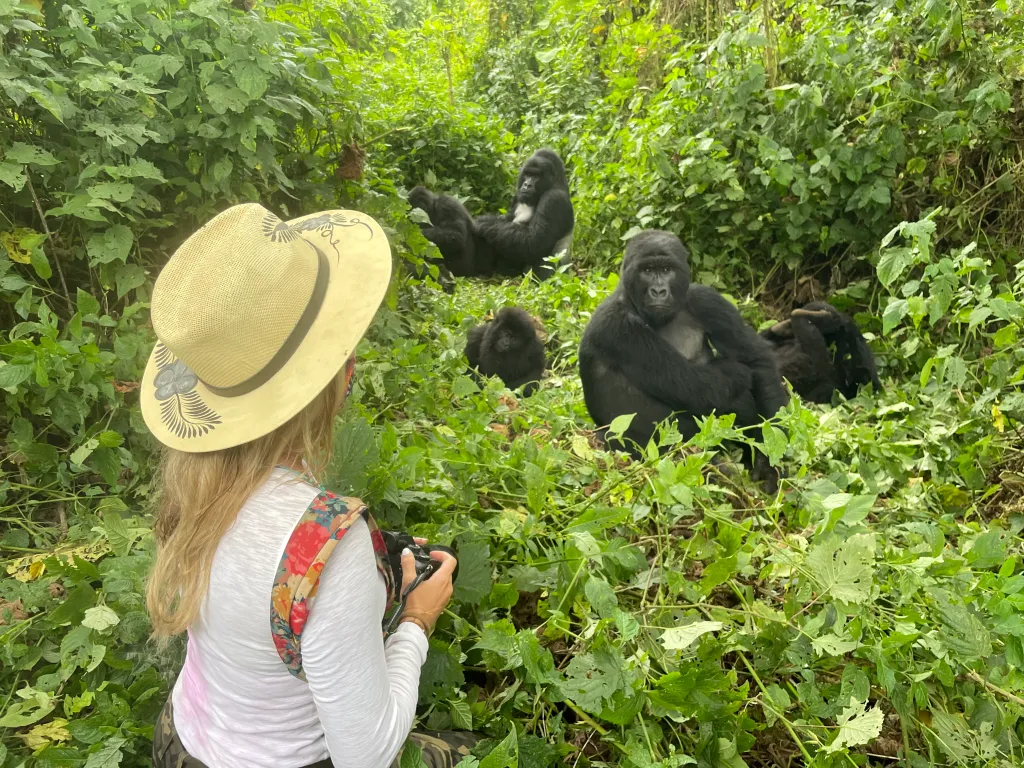
Upemba National Park and Virunga National Park are two of Congo’s most important protected areas, but they offer very different safari experiences.
Virunga National Park is internationally renowned for its mountain gorilla trekking experiences and is one of Africa’s most famous wildlife destinations. Located along the eastern border of the Democratic Republic of Congo, Virunga protects mountain gorillas, chimpanzees, forest elephants, and an extraordinary range of ecosystems that include tropical forests, volcanic mountains, lakes, and savannahs. The park is also home to the famous Mount Nyiragongo, one of the world’s most active volcanoes.
Upemba National Park, by contrast, focuses more on vast wilderness landscapes, wetlands, rivers, grasslands, and traditional wildlife viewing. It does not offer gorilla trekking, but it provides a more remote and less-crowded safari experience. Visitors interested in birdwatching, conservation, landscape photography, and wilderness exploration often find Upemba particularly rewarding.
Virunga generally attracts travelers seeking gorilla encounters, volcano adventures, and internationally recognized wildlife experiences. Upemba appeals to those looking for authentic exploration, exceptional birdlife, diverse ecosystems, and a true off-the-beaten-path safari.
Comparison Table
| Feature | Upemba National Park | Virunga National Park |
|---|---|---|
| Gorilla Trekking | No | Yes |
| Volcano Hiking | No | Yes |
| Wetlands | Excellent | Limited |
| Birdwatching | Excellent | Excellent |
| Wildlife Viewing | Good | Good |
| Tourism Infrastructure | Limited | Better Developed |
| Visitor Numbers | Very Low | Moderate |
| Wilderness Experience | Exceptional | Excellent |
Upemba vs Kahuzi-Biega National Park
Kahuzi-Biega National Park is one of the most important primate conservation areas in Africa and is best known for protecting eastern lowland gorillas, the largest gorilla subspecies in the world. Located near Bukavu in eastern Congo, the park contains dense tropical rainforest, mountainous terrain, and exceptional biodiversity.
Visitors to Kahuzi-Biega primarily travel to experience eastern lowland gorilla trekking. The opportunity to observe these rare primates in their natural habitat makes the park one of Congo’s premier wildlife attractions. The park also supports chimpanzees, forest elephants, birds, and numerous other species associated with rainforest ecosystems.
Upemba National Park differs significantly because its ecosystems are dominated by wetlands, grasslands, rivers, lakes, and savannah habitats rather than dense rainforest. While Kahuzi-Biega focuses on primate experiences, Upemba offers broader wildlife viewing opportunities, extensive birdwatching, and landscape exploration.
Travelers whose primary interest is gorillas should choose Kahuzi-Biega. Those interested in diverse ecosystems, birdlife, wetlands, and remote wilderness experiences may find Upemba National Park more appealing.
Comparison Table
| Feature | Upemba National Park | Kahuzi-Biega National Park |
| Eastern Lowland Gorillas | No | Yes |
| Rainforest Experience | Limited | Excellent |
| Wetlands | Excellent | Limited |
| Birdwatching | Excellent | Very Good |
| Large Mammals | Good | Moderate |
| Photography Landscapes | Excellent | Excellent |
| Adventure Level | High | Moderate |
| Accessibility | Difficult | Easier |
Upemba vs Garamba National Park
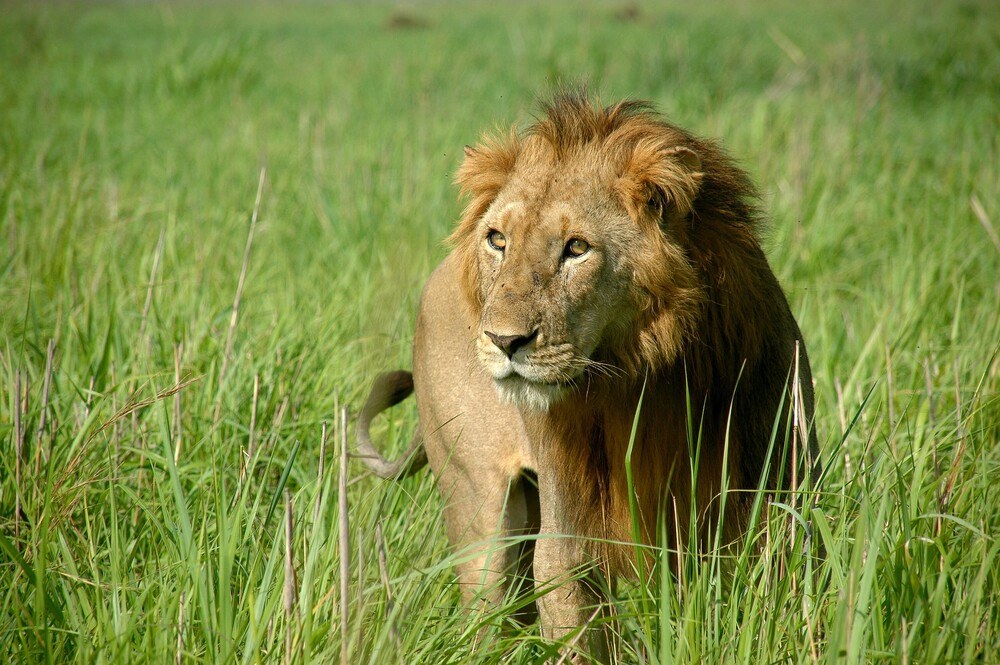
Garamba National Park is often considered Congo’s best destination for traditional wildlife safaris. Located in northeastern Congo, the park contains extensive savannahs, woodlands, rivers, and grasslands that support many iconic African wildlife species.
Garamba is particularly famous for its elephants, buffalo, giraffes, antelope species, lions, and rich birdlife. Historically, the park was one of the last strongholds of the northern white rhinoceros. Although rhinos are no longer present in the wild, Garamba remains one of Congo’s most important wildlife conservation areas.
Compared to Garamba, Upemba National Park offers greater habitat diversity due to its vast wetlands, lakes, floodplains, and varied ecosystems. While Garamba may provide stronger opportunities for traditional wildlife viewing, Upemba excels in birdwatching, aquatic ecosystems, landscape diversity, and wilderness exploration.
Both parks are highly important conservation areas and attract travelers interested in experiencing Congo’s natural heritage beyond gorilla trekking.
Comparison Table
| Feature | Upemba National Park | Garamba National Park |
| Savannah Wildlife | Good | Excellent |
| Wetlands | Excellent | Moderate |
| Birdwatching | Excellent | Excellent |
| Lions | Historical Presence | Better Opportunities |
| Buffalo | Present | Strong Populations |
| Wilderness Experience | Exceptional | Excellent |
| Tourism Development | Limited | Limited |
| Ecosystem Diversity | Very High | High |
Upemba vs Kundelungu National Park
Kundelungu National Park is another important protected area located in southeastern Congo. The park is famous for its spectacular landscapes, waterfalls, plateaus, and rugged terrain. It is particularly known for the Lofoi Falls, one of Africa’s tallest waterfalls, which attracts nature enthusiasts and adventure travelers.
While wildlife exists within Kundelungu National Park, many visitors are drawn primarily by its scenery rather than traditional safari experiences. The park offers opportunities for hiking, photography, birdwatching, and exploring dramatic landscapes that differ significantly from those found in other Congolese national parks.
Upemba National Park and Kundelungu National Park share some similarities due to their geographic proximity and habitat diversity. However, Upemba generally offers stronger wildlife viewing opportunities, larger wetland systems, and greater ecological variety. Kundelungu, on the other hand, is particularly attractive for travelers interested in waterfalls, scenic landscapes, and outdoor adventure.
Many visitors choose to combine both parks within a single itinerary because they complement each other exceptionally well and showcase different aspects of southeastern Congo’s natural heritage.
Comparison Table
| Feature | Upemba National Park | Kundelungu National Park |
| Wildlife Viewing | Strong | Moderate |
| Wetlands | Excellent | Limited |
| Birdwatching | Excellent | Very Good |
| Waterfalls | Limited | Excellent |
| Hiking Opportunities | Good | Excellent |
| Scenic Landscapes | Excellent | Exceptional |
| Conservation Importance | Very High | High |
| Tourism Infrastructure | Limited | Limited |
Which Congo National Park Is Best
The best national park in Congo depends on the type of experience you are seeking.
- Choose Virunga National Park for mountain gorilla trekking and volcano adventures.
- Choose Kahuzi-Biega National Park for eastern lowland gorilla trekking.
- Choose Garamba National Park for classic wildlife safaris and savannah ecosystems.
- Choose Kundelungu National Park for waterfalls, hiking, and dramatic scenery.
- Choose Upemba National Park for birdwatching, wetland ecosystems, wildlife diversity, and one of Africa’s most authentic wilderness experiences.
For travelers seeking a remote, conservation-focused safari destination with exceptional biodiversity and minimal tourist crowds, Upemba National Park remains one of Congo’s most remarkable hidden treasures.
Suggested Upemba National Park Itineraries
Upemba National Park offers a variety of safari possibilities for travelers seeking wildlife, birdwatching, photography, conservation experiences, and wilderness exploration. Because of its remote location and vast size, the ideal itinerary depends on the amount of time available and the specific interests of each visitor.
Short itineraries provide an introduction to the park’s landscapes and wildlife, while longer safaris allow travelers to explore multiple ecosystems, experience greater biodiversity, and combine Upemba with other protected areas in southeastern Congo. Whether visiting for a few days or embarking on an extended expedition, Upemba National Park offers an authentic and unforgettable wilderness experience.
2 Days Upemba National Park Safari
A 2-day safari is ideal for travelers with limited time who wish to experience the highlights of Upemba National Park. Although brief, this itinerary provides opportunities to explore key habitats, observe wildlife, and appreciate the park’s remarkable scenery.
Day 1: Arrival and Afternoon Wildlife Exploration
Arrive in the Upemba region and transfer to your accommodation or safari camp. After settling in, begin an introductory wildlife excursion through nearby grasslands, wetlands, and river systems. This first exploration offers opportunities to observe antelope, buffalo, birds, and other wildlife while becoming familiar with the park’s diverse ecosystems.
As the day ends, enjoy sunset views over the park’s landscapes before returning to camp for dinner and an overnight stay.
Day 2: Morning Safari and Departure
An early morning safari provides the best chance to observe wildlife activity before temperatures rise. Explore additional habitats while searching for larger mammals and bird species that are most active during the cooler hours of the day.
After breakfast, depart the park and continue to your next destination.
This short itinerary provides a valuable introduction to Upemba National Park and is ideal for travelers combining the park with other destinations in Congo.
3 Days Wildlife Safari in Upemba
A 3-day safari allows visitors to explore a broader range of habitats and significantly increases wildlife viewing opportunities. This itinerary is popular among nature enthusiasts, photographers, and birdwatchers.
Day 1: Arrival and Orientation Safari
Arrive in the Upemba region and transfer to your lodge or safari camp. Enjoy an afternoon game drive or nature excursion through nearby grasslands and wetlands while learning about the park’s ecosystems and conservation importance.
Day 2: Full-Day Wildlife Exploration
Spend the day exploring multiple areas of the park. Search for elephants, buffalo, zebras, antelope species, hippos, crocodiles, and numerous bird species. Visit wetlands, floodplains, and river systems that support some of the park’s richest wildlife concentrations.
Photographers and birdwatchers will find excellent opportunities throughout the day to capture the diversity of Upemba’s landscapes and wildlife.
Day 3: Birdwatching and Departure
Begin the day with a birdwatching excursion or guided nature walk before returning for breakfast. Afterward, depart the park with a deeper appreciation of one of Congo’s most remarkable protected areas.
5 Days Upemba and Kundelungu Safari
This itinerary combines two of southeastern Congo’s most important protected areas: Upemba National Park and Kundelungu National Park. Together, they offer exceptional wildlife viewing, scenic landscapes, waterfalls, birdlife, and wilderness exploration.
Day 1: Arrival in Upemba
Transfer from Lubumbashi to the Upemba region and enjoy an introductory wildlife excursion.
Day 2: Full-Day Upemba Safari
Explore wetlands, rivers, grasslands, and wildlife-rich habitats while searching for mammals, birds, reptiles, and other species.
Day 3: Transfer to Kundelungu National Park
Travel to Kundelungu National Park while enjoying scenic landscapes along the way. Upon arrival, begin exploring the park’s unique environments.
Day 4: Kundelungu Exploration
Visit spectacular natural attractions including the famous Lofoi Falls. Explore plateaus, valleys, bird habitats, and scenic viewpoints that make Kundelungu one of Congo’s most beautiful national parks.
Day 5: Morning Activity and Departure
Enjoy a final morning excursion before returning to Lubumbashi or continuing to another destination.
This itinerary provides an excellent combination of wildlife, landscapes, conservation, and adventure.
7 Days Southern Congo Wildlife Adventure
A 7-day safari offers a comprehensive exploration of southern Congo’s remarkable biodiversity and protected landscapes. This itinerary is ideal for travelers seeking a deeper understanding of the region’s ecosystems and conservation efforts.
Day 1: Arrival in Lubumbashi
Arrive in Lubumbashi and prepare for the safari. Overnight in the city.
Day 2: Transfer to Upemba National Park
Travel to Upemba National Park and begin exploring the surrounding landscapes.
Day 3: Wildlife Safari in Upemba
Spend a full day searching for wildlife across grasslands, wetlands, rivers, and floodplains.
Day 4: Birdwatching and Nature Exploration
Focus on birdlife, photography, and ecological exploration while visiting some of the park’s most diverse habitats.
Day 5: Transfer to Kundelungu National Park
Journey to Kundelungu and begin exploring its dramatic landscapes.
Day 6: Waterfalls and Wildlife
Visit Lofoi Falls and other scenic attractions while continuing wildlife and birdwatching activities.
Day 7: Return to Lubumbashi
Conclude the safari and return to Lubumbashi for onward travel arrangements.
This itinerary offers one of the most complete introductions to southeastern Congo’s wildlife, landscapes, and conservation areas.
Request a quote to visit Upemba National Park.
Is Upemba National Park Safe to Visit
Safety is an important consideration for anyone planning a visit to Upemba National Park. Like many remote wilderness areas in Central Africa, travel requires careful planning, professional guidance, and awareness of current conditions.
The park’s remote location means that infrastructure is limited and logistics can be more challenging than in established safari destinations elsewhere in Africa. However, visitors who travel with experienced safari operators and follow recommended travel guidelines can enjoy rewarding and well-organized experiences.
Safety conditions may change over time, making it essential to obtain updated information before travel. Professional safari companies, local authorities, and conservation organizations are often the best sources of current guidance regarding travel arrangements and security considerations.
For most visitors, organized safaris provide the safest and most practical way to explore the park while benefiting from local expertise, transportation support, and logistical coordination.
Current Tourism Situation
Upemba National Park remains one of the least-visited national parks in the Democratic Republic of Congo. Tourism infrastructure is still developing, and visitor numbers remain extremely low compared to more famous destinations such as Virunga National Park or Kahuzi-Biega National Park.
The low volume of tourism contributes to the park’s appeal as a genuine wilderness destination. Travelers who visit Upemba often enjoy an exclusive experience with minimal crowds and exceptional opportunities for wildlife observation and nature exploration.
Most visits to the park are organized through specialized safari operators, conservation organizations, research teams, and eco-tourism initiatives. These organizations help coordinate transportation, accommodation, guiding services, and access to protected areas.
As conservation efforts continue and interest in sustainable tourism grows, Upemba National Park has the potential to become one of Congo’s most important eco-tourism destinations. Its vast landscapes, rich biodiversity, remarkable birdlife, and authentic wilderness experiences make it a valuable destination for adventurous travelers seeking to explore one of Africa’s hidden conservation treasures.
Travel Safety Tips for Upemba National Park
Traveling to Upemba National Park requires careful preparation due to the park’s remote location and limited tourism infrastructure. While the park offers extraordinary wildlife experiences and breathtaking landscapes, visitors should approach their journey with proper planning and awareness.
One of the most important safety recommendations is to travel with an experienced safari operator familiar with southeastern Congo. Professional operators can provide up-to-date information on road conditions, transportation logistics, accommodation arrangements, and regional travel requirements. Their local expertise significantly improves both safety and overall travel experience.
Travelers should ensure they have comprehensive travel insurance that covers medical emergencies, evacuation services, trip interruptions, and adventure activities. Due to the remoteness of the park, access to advanced medical facilities may be limited, making adequate insurance particularly important.
Visitors are also encouraged to consult healthcare professionals before departure regarding recommended vaccinations and preventive medications. Carrying a personal medical kit, prescription medications, insect repellent, sunscreen, and other essential travel supplies is highly recommended.
Maintaining communication with guides and safari staff throughout the journey is important. Travelers should follow all instructions provided by park authorities, guides, and conservation personnel, especially during wildlife encounters and activities in remote areas.
Respecting wildlife safety guidelines is essential. Animals should never be approached too closely, fed, or disturbed. Observing wildlife from safe distances protects both visitors and the animals while ensuring natural behavior remains undisturbed.
Finally, travelers should remain informed about current travel advisories and regional conditions before visiting Upemba National Park. Responsible planning and professional support greatly contribute to a safe and enjoyable safari experience.
Guided Safari Recommendations
Guided safaris are strongly recommended for anyone visiting Upemba National Park. Due to the park’s immense size, remote location, and complex ecosystems, experienced guides provide invaluable knowledge and logistical support that significantly enhance the visitor experience.
Professional safari guides possess detailed understanding of wildlife behavior, habitat distribution, birdlife, conservation programs, and local environmental conditions. Their expertise increases the chances of successful wildlife sightings while providing fascinating insights into the park’s ecology and natural history.
Guides also play a critical role in visitor safety. They understand how to navigate remote landscapes, respond to changing conditions, and manage wildlife encounters responsibly. Their presence allows travelers to focus on enjoying the experience while benefiting from expert guidance.
Birdwatchers, photographers, researchers, and wildlife enthusiasts particularly benefit from specialized guides who can help identify species, locate wildlife hotspots, and interpret ecological interactions that may otherwise go unnoticed.
Many guided safaris include transportation, accommodation arrangements, meals, park permits, and planned activities, simplifying logistics and allowing visitors to maximize their time within the park. For travelers seeking a deeper understanding of Upemba National Park and its conservation importance, guided safaris provide the most rewarding and informative experience.
Why Visit Upemba National Park?
Upemba National Park is one of the Democratic Republic of Congo’s most remarkable yet least-explored protected areas. It offers a unique combination of wildlife, birdlife, wetlands, rivers, savannahs, forests, and dramatic landscapes that create an unforgettable safari experience.
Unlike many heavily visited wildlife destinations, Upemba remains largely untouched by mass tourism. Visitors have the opportunity to explore vast wilderness areas, observe diverse wildlife, and experience authentic nature without crowds or extensive development.
The park’s ecological importance, rich biodiversity, scenic beauty, and conservation value make it one of Central Africa’s hidden treasures. Whether you are a wildlife enthusiast, birder, photographer, researcher, conservation supporter, or adventure traveler, Upemba National Park offers experiences that are difficult to find elsewhere on the continent.
For travelers seeking genuine exploration and meaningful connections with nature, Upemba represents one of Africa’s last great wilderness destinations.
Unique Wildlife Experiences
Upemba National Park offers wildlife experiences that differ significantly from traditional African safari destinations. The park’s diverse habitats support elephants, buffalo, zebras, antelope species, hippos, crocodiles, primates, and numerous smaller mammals.
Its combination of wetlands, rivers, floodplains, grasslands, and forests creates opportunities to observe wildlife in a variety of ecological settings. Visitors may encounter animals grazing across open plains, feeding near wetlands, resting along riverbanks, or moving through wooded habitats.
The low number of visitors means wildlife encounters often feel more personal and authentic. Rather than competing with numerous safari vehicles, travelers can enjoy quiet and immersive wildlife experiences within one of Central Africa’s most remote conservation landscapes.
For photographers and nature enthusiasts, the diversity of species and habitats provides endless opportunities for observation and exploration.
Untouched Wilderness
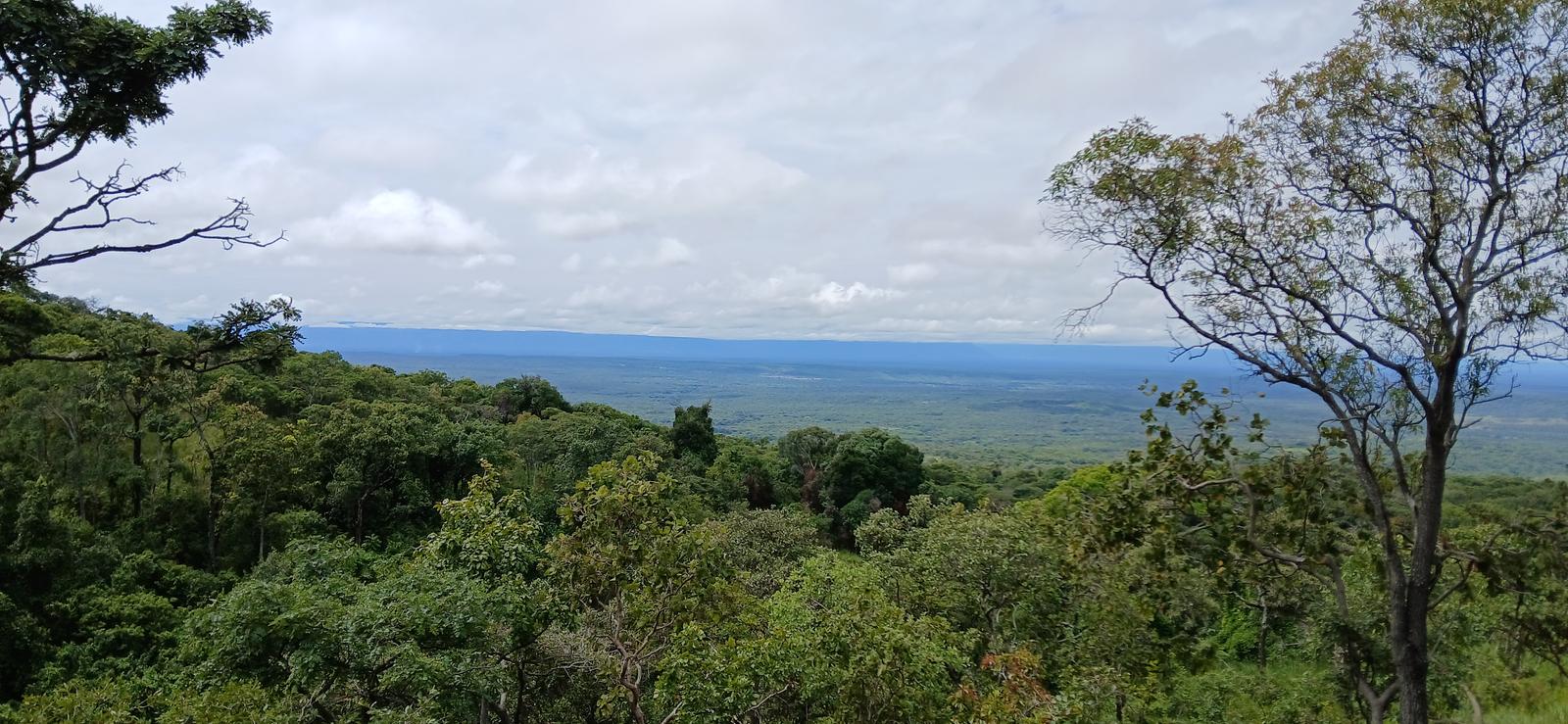
One of Upemba National Park’s greatest attractions is its extraordinary sense of wilderness. Large areas of the park remain largely unchanged by modern development, creating an environment where nature continues to function much as it has for centuries.
Visitors can explore vast landscapes without encountering crowds, busy roads, or extensive tourism infrastructure. This isolation creates a rare sense of discovery and adventure that is increasingly difficult to find in many of Africa’s more established safari destinations.
The park’s remoteness allows travelers to experience nature in its purest form. The sounds of birds, flowing rivers, wildlife activity, and open wilderness replace the distractions of urban life, creating a truly immersive safari experience.
For those seeking authentic exploration and meaningful connections with nature, Upemba National Park offers one of the most untouched wilderness experiences in Africa.
Incredible Birdlife
Birdwatchers consider Upemba National Park one of the most promising birding destinations in the Democratic Republic of Congo. The park’s wetlands, lakes, rivers, floodplains, grasslands, and forests support hundreds of bird species throughout the year.
Waterbirds, raptors, migratory species, forest birds, and grassland specialists can all be found within the park’s diverse ecosystems. Seasonal migrations and breeding activities further increase bird diversity and create exciting opportunities for bird observation.
The relatively low number of visitors enhances the birdwatching experience by providing peaceful conditions and minimal disturbance to wildlife. Whether you are a casual bird enthusiast or an experienced ornithologist, Upemba offers exceptional opportunities to discover Central Africa’s avian diversity.
Birdlife contributes significantly to the park’s ecological importance and remains one of its most valuable natural attractions.
Scenic Landscapes
The landscapes of Upemba National Park are among the most diverse and beautiful in Central Africa. Visitors can experience expansive savannahs, extensive wetlands, winding rivers, tranquil lakes, forested areas, rolling plateaus, and distant mountain views within a single protected area.
Seasonal changes bring dramatic transformations to the scenery. During the wet season, lush vegetation and expanded wetlands create vibrant landscapes filled with life. During the dry season, open grasslands and concentrated wildlife offer equally impressive views.
Photographers are particularly drawn to Upemba because of its extraordinary variety of natural settings. Sunrises over wetlands, wildlife against expansive grasslands, reflections on lakes, and dramatic skies create unforgettable photographic opportunities.
The park’s landscapes are not only visually stunning but also ecologically important, supporting the diverse habitats that make Upemba one of Congo’s most valuable conservation areas.
Conservation Importance
Upemba National Park plays a vital role in the conservation of biodiversity in the Democratic Republic of Congo. As one of the country’s oldest national parks, it protects extensive ecosystems that support countless plant and animal species.
The park serves as a refuge for wildlife populations while safeguarding wetlands, forests, rivers, lakes, and grasslands that are essential for ecological stability. Its conservation significance extends beyond wildlife protection and contributes to climate regulation, water management, scientific research, and environmental education.
Visitors to Upemba National Park directly support conservation efforts through park fees, guided activities, and responsible tourism initiatives. These contributions help fund wildlife protection programs, anti-poaching operations, habitat restoration projects, and community conservation initiatives.
By visiting Upemba National Park, travelers become part of a broader effort to protect one of Central Africa’s most important natural landscapes. This combination of adventure, biodiversity, and conservation impact makes Upemba a truly meaningful safari destination.