Gorilla Trekking Over 70 – Complete Guide for Older Travelers
Introduction to Gorilla Trekking Over 70
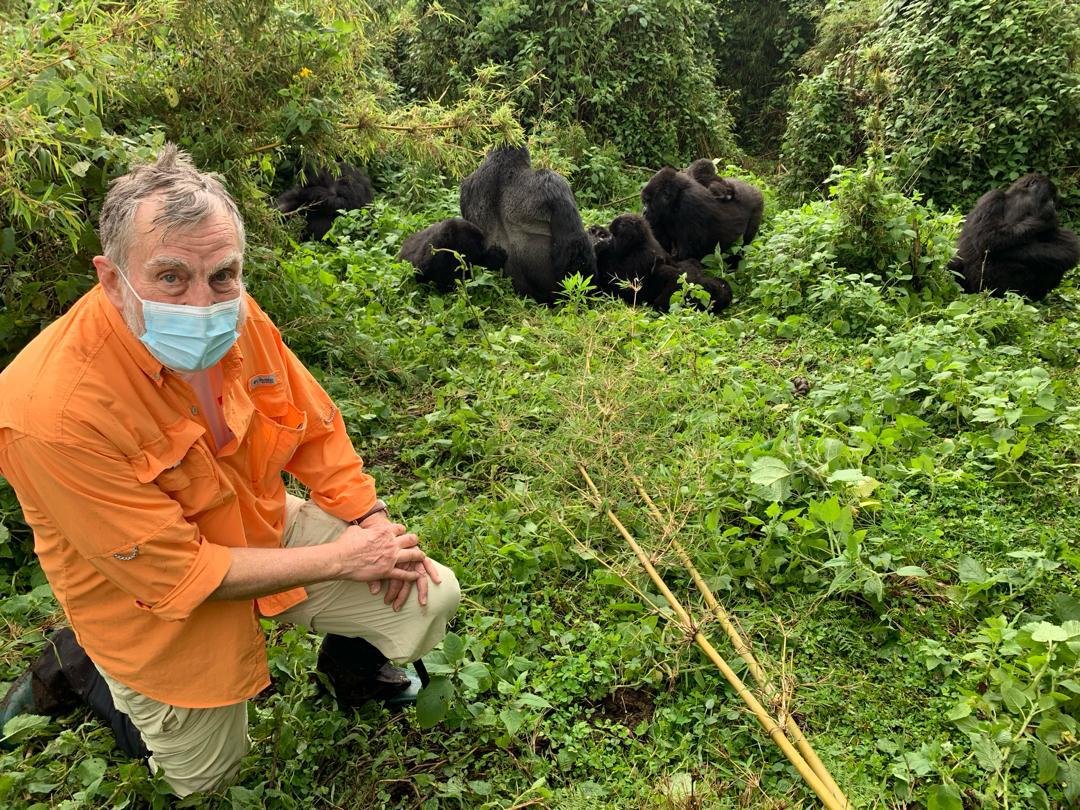
Gorilla trekking over 70 is entirely realistic for many older travelers who dream of standing in an African rainforest and observing mountain gorillas in their natural habitat. Reaching your seventies does not automatically make gorilla trekking unsuitable, nor does being younger automatically make someone physically prepared for the experience. The more useful questions concern walking ability, balance, leg strength, stamina, joint health, recovery after exercise and the level of assistance a traveler may require.
For many people, their seventies are among the best years for meaningful travel. Retirement can provide greater freedom to travel slowly, spend additional nights in one destination and choose experiences for their significance rather than trying to fit an entire country into a rushed itinerary. A carefully planned gorilla safari can take advantage of exactly this style of travel. Instead of driving long distances immediately before trekking, an older traveler can arrive early, rest at a comfortable lodge, prepare properly for the forest and begin trekking morning feeling refreshed.
Mountain gorilla trekking takes place in wild, mountainous environments rather than on constructed wildlife-viewing paths. In Uganda, gorilla trekking is conducted in Bwindi Impenetrable National Park and Mgahinga Gorilla National Park. Uganda Wildlife Authority describes the activity as requiring moderate fitness and notes that a trek may last approximately two to seven hours, depending on circumstances. Rwanda’s gorilla trekking takes place in Volcanoes National Park, where official tourism information says hikes to the different gorilla families can range from around 30 minutes to four or more hours depending on their location.
That variation is extremely important for anyone researching gorilla trekking after 70. Mountain gorillas move freely through the forest. They are not waiting at a fixed viewing platform, and nobody can responsibly promise months beforehand that a particular visitor will walk for only thirty minutes. One morning’s trek may be relatively straightforward; another may involve considerably more distance, vegetation, climbing, mud or uneven terrain.
This does not mean senior travelers should be discouraged. It means the safari needs to be planned realistically.
A physically active 72-year-old who walks regularly, manages stairs comfortably and has good balance may require little more than appropriate footwear, a porter and a well-paced itinerary. A 76-year-old with arthritis may still be able to participate but may benefit from considerably more assistance. An 80-year-old who cannot safely negotiate steep, uneven forest ground may need specialized carrying support rather than attempting to complete the entire route independently.
The phrase gorilla trekking over 70 therefore describes a very diverse group of travelers. There is no single physical profile for everyone between 70 and 79 years old.
One person may run, cycle or hike regularly at 75. Another person of the same age may be recovering from joint surgery. One traveler may have excellent cardiovascular endurance but poor balance. Another may walk slowly but remain extremely stable on uneven ground. These differences matter considerably more to safari planning than the year written on a passport.
This is why Pieland Gorilla Safaris approaches senior gorilla travel around the individual traveler rather than assuming that everyone above a certain age requires exactly the same arrangements. Important considerations can include the traveler’s normal walking routine, comfort on hills, ability to use stairs, knee and hip mobility, balance, preferred travel pace, tolerance of long drives and whether ordinary porter support or more substantial mobility assistance may be appropriate.
The objective should not be to remove every physical element from the experience. Gorilla trekking remains an authentic rainforest adventure. The objective is to remove unnecessary physical strain so that the traveler’s energy is reserved for the experience that matters most: reaching the gorillas.
That might mean staying an additional night before trekking.
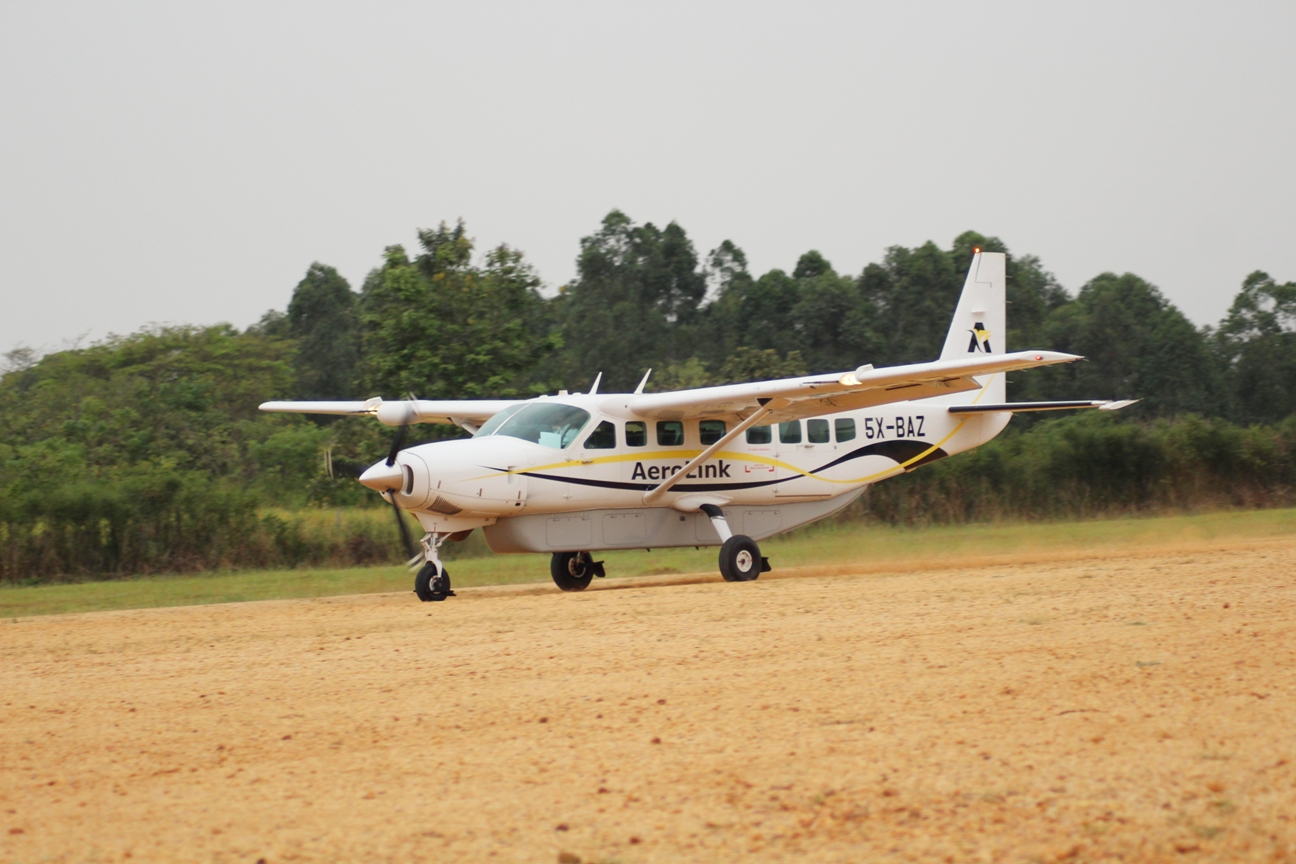
It might mean flying to southwestern Uganda rather than spending most of a day traveling by road.
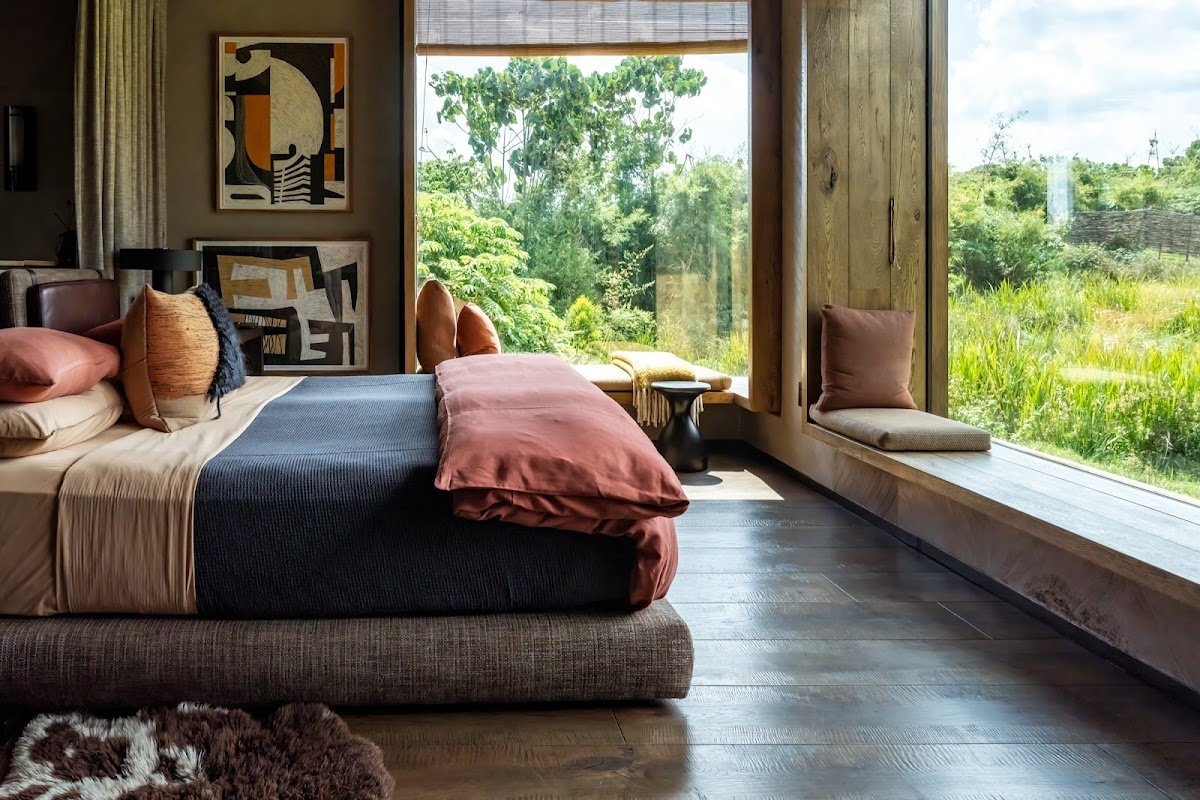
It might mean choosing accommodation where the guest room does not require climbing dozens of steps.
It might mean hiring a porter from the beginning of the trek rather than waiting until fatigue develops.
And, for travelers with significant mobility limitations, it may mean investigating specialized carrying assistance well before arrival.
A well-designed senior gorilla safari is therefore not a lesser or simplified version of gorilla trekking. The traveler sees the same mountain gorillas, enters the same natural forest and experiences the same extraordinary moment of watching a silverback, mother or playful juvenile only a short distance away. The difference is that the journey surrounding that encounter is planned more carefully.
For many people considering gorilla trekking in their 70s, the greatest mistake is deciding that they are either “too old” or “fit enough” based only on age. Neither conclusion provides enough information.
The better starting question is:
What can I comfortably do now, and what support would allow me to manage the parts of gorilla trekking that may be more challenging?
Answering that question honestly can transform gorilla trekking over 70 from an intimidating idea into a realistic, carefully planned and deeply rewarding African wildlife experience.
Can You Go Gorilla Trekking Over 70?
Yes, many travelers over 70 can go gorilla trekking.
Being 70, 75 or 79 does not by itself determine whether someone can participate successfully. Current official gorilla information published by both Uganda and Rwanda focuses on the physical nature of the activity and minimum participation requirements rather than treating senior age itself as an automatic exclusion. Rwanda’s official gorilla-tracking information specifies a minimum trekking age of 15 years, while its trekking procedures also take fitness into account when visitors are organized for gorilla families.
Uganda Wildlife Authority similarly describes gorilla tracking as an activity requiring moderate fitness and states that the trek may last approximately two to seven hours. This is a more useful consideration for someone over 70 than focusing simply on chronological age.
A traveler considering the trek should therefore think about what those hours could involve.
Gorilla trekking is not equivalent to walking for two to seven hours on a pavement. The route can involve natural forest surfaces, roots, vegetation, mud, inclines and changes in elevation. Rain can alter the trail substantially. Some sections may be straightforward, while others may require careful foot placement or support.
The trek also has an unpredictable element because the gorillas determine where the journey leads.
In Rwanda, Visit Rwanda states that visitors are allocated a family group on the day according to fitness levels and that hikes to gorilla locations can range from about 30 minutes to four or more hours. Porters are also available to carry backpacks and cameras and provide a helping hand along the route. These practical measures are particularly relevant for older travelers.
However, the possibility that fitness may be considered during group organization should never be converted into a guarantee that a senior traveler will receive a short trek. Gorillas move naturally, and conditions can change after groups leave the briefing point.
For this reason, someone over 70 should prepare for a real forest trek even when mobility requirements have been communicated.
There are broadly several types of travelers over 70 who may approach the experience differently.
An active senior traveler may walk the entire route independently and simply hire a porter to carry equipment.
A traveler with mild mobility concerns may walk independently but benefit from a porter providing a steady hand on slopes, together with a trekking pole or walking stick.
A traveler with more significant limitations may need a specially adapted arrangement and much more advance planning.
Someone who is unable to negotiate natural forest terrain safely should not be encouraged to simply “try and see how far you get.” That approach transfers the problem to trekking morning. The better approach is to identify the limitation before travel and establish what assistance can realistically be arranged.
The same principle applies to itinerary design.
A traveler may technically be capable of completing a gorilla trek yet have a poor experience because they arrive physically exhausted. Imagine spending eight or nine hours traveling, arriving at a lodge late, eating dinner, sleeping for a few hours and then waking early for a demanding forest experience. A younger traveler may find that schedule tiring; someone over 70 may find it unnecessarily draining.
A senior-friendly itinerary can instead protect energy.
Arrive earlier.
Spend enough time at the gorilla destination.
Sleep well before trekking.
Carry as little weight as possible.
Use a porter.
Allow a relaxed afternoon afterward.
Avoid an immediate long-distance transfer following the trek.
These decisions can matter almost as much as physical preparation.
The answer to “Can I go gorilla trekking at 70?” is therefore not determined by the birthday itself.
For many travelers the answer is yes.
The more important question is how the gorilla safari should be designed around that particular 70-year-old traveler.
Is There a Maximum Age for Gorilla Trekking?
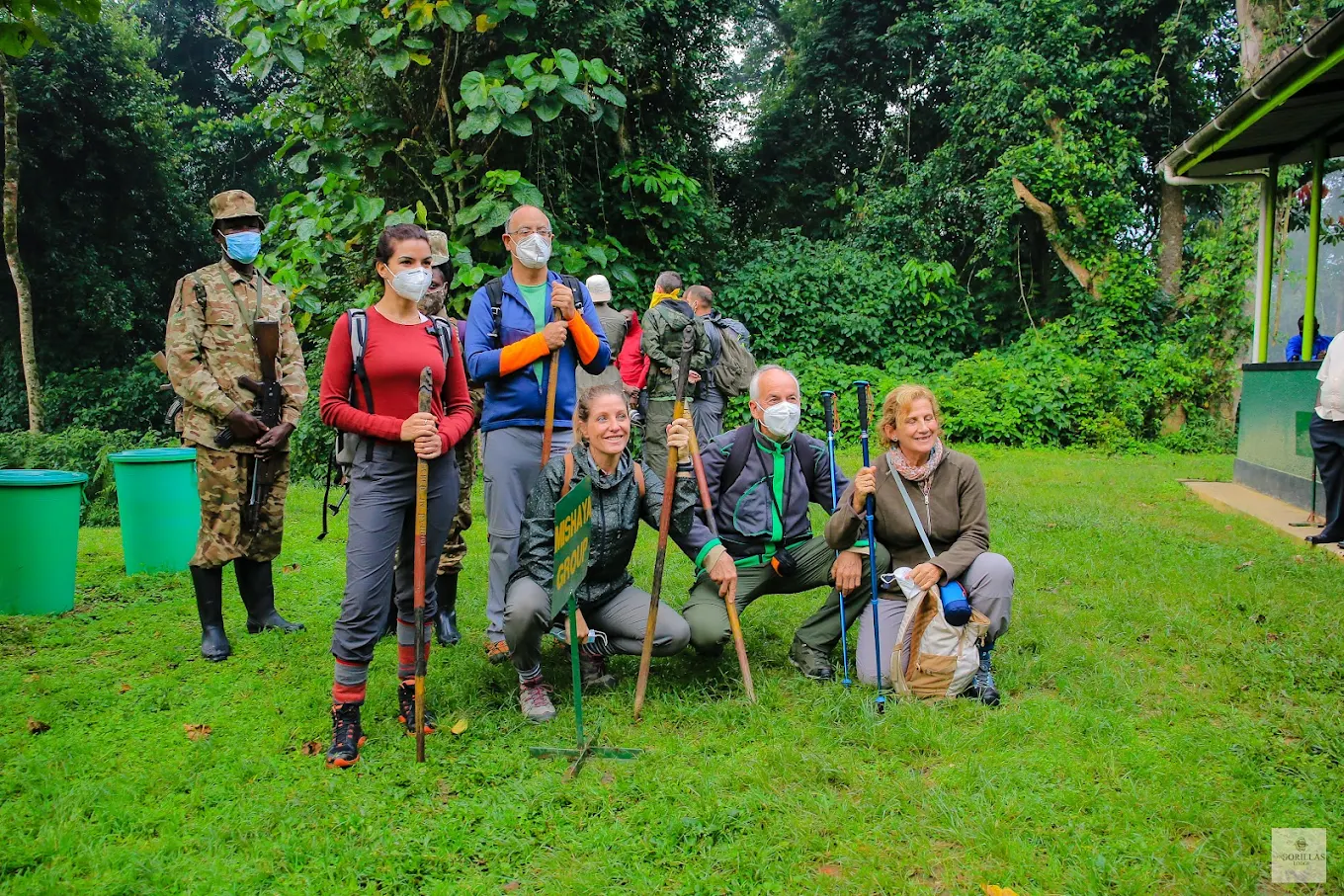
One of the first questions older travelers ask is:
“What is the maximum age for gorilla trekking?”
The current official information published for gorilla tracking places emphasis on a minimum participation age rather than a published maximum age. Visit Rwanda currently states that the minimum age for tracking gorillas is 15 years. Uganda Wildlife Authority’s current gorilla-tracking information describes the fitness requirements and trekking duration without presenting senior age itself as an automatic barrier to participation.
This means turning 70 does not suddenly make someone ineligible for a gorilla permit.
Nor does turning 75.
The important distinction, however, is between being allowed to participate and being physically suited to a particular form of participation.
A traveler can satisfy the age requirement while still needing substantial assistance.
That distinction is sometimes lost on safari websites that simply state, “There is no maximum age, so anyone can trek.”
That is too simplistic.
A better explanation is that older age does not automatically disqualify a traveler, but natural forest conditions still need to be respected. A visitor who cannot safely walk on uneven ground may require a different plan from an active senior who hikes every weekend.
The same is true at any age.
A sedentary 45-year-old with severe knee problems may find a particular trek considerably harder than a physically active 73-year-old.
Age therefore provides some useful context, but it is not a physical examination.
Travelers should also avoid searching for an imaginary “safe age.” There is no universal point at which gorilla trekking changes from appropriate to inappropriate. Human physical ability declines at different rates and is influenced by health, activity level, previous injuries, balance, strength and many other factors.
For this reason, a responsible senior gorilla safari should use functional ability rather than age alone as the starting point.
Can the traveler walk comfortably for an extended period?
Can they climb stairs?
Can they descend without significant instability?
Can they step over roots or obstacles?
Do they normally use a cane?
Do they experience knee or hip pain?
Do they tire rapidly when walking uphill?
How do they recover after prolonged exercise?
Would they accept physical assistance from a porter?
These answers provide far more useful planning information than simply saying, “The guest is 74.”
Travelers with significant medical conditions, recent surgery or health concerns that may be affected by exertion should obtain individualized guidance from an appropriate healthcare professional before committing to strenuous trekking. The safari operator can design logistics and assistance, but should not attempt to substitute for medical assessment.
The practical conclusion is encouraging:
There is no reason to abandon the dream of seeing mountain gorillas simply because you have entered your seventies.
Instead, treat your age as one component of a broader assessment of mobility, fitness, health and support needs.
Does Age Matter More Than Fitness?
For gorilla trekking over 70, functional fitness generally tells us much more about likely trekking comfort than age alone.
Consider two hypothetical travelers.
The first is 72 and walks five kilometres several times each week, gardens regularly, uses stairs without difficulty and takes hiking holidays.
The second is 58, spends most days sitting, rarely walks more than a few hundred metres and struggles with steep stairs.
Their ages might suggest one conclusion, while their physical abilities suggest the opposite.
This is why a safari planner should not assume that every traveler above 70 needs the easiest possible itinerary, nor assume that a younger traveler will automatically handle the forest comfortably.
For gorilla trekking, fitness is also broader than cardiovascular endurance.
A traveler can have excellent heart and lung fitness but poor balance.
Another may have strong legs but painful knees.
Someone may comfortably walk ten kilometres on flat roads yet struggle significantly when descending a wet slope.
Another traveler may walk slowly but have excellent stability and endurance.
For senior gorilla trekkers, five elements deserve particular attention:
Walking endurance determines how comfortably you can remain active for an extended period.
Leg strength helps with climbing, controlled descending and stepping over natural obstacles.
Balance is particularly important on uneven, wet or muddy ground.
Joint mobility affects how comfortably the knees, hips and ankles manage slopes and irregular steps.
Recovery capacity influences whether fatigue accumulates as the trek continues and how well you feel afterward.
This is why asking only, “How many kilometres can you walk?” is not enough.
The better assessment looks at the type of walking.
Someone preparing for gorilla trekking after 70 can learn a great deal by walking on moderately uneven ground, practicing hills and stairs and observing how their body responds. If descending repeatedly causes knee pain, that information matters. If two hours of walking leaves the traveler exhausted for the remainder of the day, that also matters.
This does not mean prospective travelers need to train like mountain climbers.
Uganda Wildlife Authority describes gorilla tracking as requiring moderate fitness, not elite athletic conditioning. At the same time, “moderate fitness” should not be interpreted as a promise that every trek is easy.
The goal of preparation is to create a reasonable physical reserve.
A traveler should ideally arrive capable of doing somewhat more than the minimum they expect rather than hoping the gorillas happen to be very close.
Assistance can then preserve that reserve.
In Rwanda, porters can carry bags and provide support along the route, while official information confirms that fitness is considered when groups are allocated on trekking morning. Travelers should still communicate their mobility accurately rather than relying entirely on the allocation process.
The most useful principle is therefore:
Do not compare your age with other travelers. Compare the demands of gorilla trekking with what your own body can comfortably do.
A 75-year-old should not attempt a difficult route merely because another 75-year-old completed one.
Likewise, an active 75-year-old should not automatically assume they need to be carried simply because of their age.
Individual ability should lead the decision.
Who Is a Good Candidate for Gorilla Trekking After 70?
A good candidate for gorilla trekking after 70 is not necessarily someone who is exceptionally athletic.
A better candidate is someone whose current physical abilities are understood, whose expectations are realistic and whose safari has been designed accordingly.
For an independent walking trek, a senior traveler will generally benefit from being able to walk for sustained periods, manage moderate inclines, negotiate uneven ground, maintain reasonable balance and communicate when they need rest.
That does not mean the traveler must move quickly.
Slow walking is not failure.
In fact, moving deliberately can be an advantage on forest terrain. Careful foot placement, steady breathing and conservation of energy are usually more useful than attempting to match the pace of younger trekkers.
An ideal candidate also understands that the trekking duration cannot be predicted precisely. Uganda Wildlife Authority currently gives a general range of approximately two to seven hours for Uganda gorilla tracking, while Visit Rwanda notes that hikes to gorilla groups can vary from around 30 minutes to four or more hours.
A traveler who says, “I can only walk for exactly forty-five minutes,” therefore requires a different discussion from someone who says, “I walk slowly, but I can remain active for several hours if I take occasional rests.”
A good candidate for gorilla trekking after 70 is also willing to accept assistance before it becomes absolutely necessary.
Hiring a porter is one of the simplest examples.
Some fit seniors initially decline because they do not want to appear dependent. Yet the porter can carry water, rainwear and camera equipment while also providing a steady hand over difficult ground. Rwanda’s official tourism guidance specifically notes that porters can carry backpacks and cameras and provide assistance along the trekking route.
Conserving energy at the beginning may make the return journey considerably more comfortable.
Travelers who may be particularly well suited to gorilla trekking after 70 include:
- active older adults who regularly walk, hike, cycle or exercise;
- travelers with good balance and reasonable leg strength;
- seniors who can manage hills or stairs without significant difficulty;
- travelers willing to use porter assistance;
- visitors comfortable adjusting their pace rather than competing with others;
- travelers willing to spend additional time at the gorilla destination instead of rushing;
- people who communicate mobility limitations honestly before the safari;
- travelers who are comfortable using specialized assistance if their mobility requires it.
At the same time, someone who does not fit all these descriptions should not automatically conclude that seeing gorillas is impossible.
There are different levels of assistance.
A traveler who struggles mainly with carrying weight may only need an ordinary porter.
Someone with mild balance problems may benefit from a porter plus a walking stick or trekking pole.
A visitor with significantly reduced walking ability may need a much more specialized assisted trekking arrangement that should be investigated and organized in advance.
This creates a useful distinction between fitness for independent trekking and suitability for an accessible gorilla safari.
A person might not be capable of independently walking through Bwindi or Volcanoes National Park for several hours but may still be a potential candidate for an accessible gorilla experience if appropriate carrying assistance can be safely and realistically arranged.
That is why travelers should not conceal mobility limitations.
Telling an operator that you are “fine” when you actually struggle with stairs makes planning worse, not better.
Useful information includes:
“I can walk for about two hours but descending steep slopes hurts my knees.”
“I use a walking stick outdoors.”
“I have good stamina but poor balance on wet ground.”
“I can walk short distances but cannot manage prolonged climbing.”
“I have had a knee replacement and have been cleared for hiking, but I need to avoid sudden twisting movements.”
“I normally use a wheelchair and would need assistance transferring into another seat.”
These descriptions allow much better planning than simply saying:
“I am 74.”
The safari can then be designed around the actual traveler.
Transport can be adjusted.
Rest nights can be added.
A suitable lodge can be selected.
Porters can be planned.
Specialized mobility assistance can be investigated where necessary.
Long road journeys can sometimes be reduced.
And the traveler’s needs can be communicated appropriately before the trekking experience.
A senior traveler should also consider how the entire safari affects physical readiness. Someone may be perfectly capable of trekking but become unnecessarily fatigued by changing lodges every night, repeatedly packing luggage and spending long days in vehicles.
For many travelers over 70, slower is not less adventurous—it is simply better safari design.
Spending two or three nights in one location can provide considerably more enjoyment than rushing through five destinations. Arriving at the gorilla lodge one day before trekking can provide time to sleep well, hydrate, organize equipment and mentally prepare for the experience.
The afternoon after trekking should also be considered.
There is no requirement to finish one of the world’s great wildlife experiences and immediately begin another demanding activity. Returning to the lodge, having lunch, enjoying the scenery and allowing the body to recover may be exactly the right plan.
Ultimately, the best candidate for gorilla trekking over 70 is someone who combines realistic self-assessment with good planning.
You do not need to prove that age has not affected you.
You do not need to keep pace with younger travelers.
And you do not need to complete every part of the experience without assistance for the encounter to be meaningful.
The goal is much simpler:
Reach the gorillas in a manner appropriate to your abilities, preserve enough energy to enjoy the encounter, and return from the forest with the experience—not the physical struggle—as the strongest memory.
How Difficult Is Gorilla Trekking for Travelers Over 70?
Gorilla trekking for travelers over 70 can range from moderately challenging to physically demanding, depending on where the gorillas are located, the terrain encountered, recent rainfall, elevation, walking pace and the individual traveler’s fitness and mobility. There is no single difficulty rating that applies to every senior traveler or every gorilla trek. One person may reach their assigned gorilla family after a relatively manageable forest walk, while another trekking on the same day may follow a different family much farther into mountainous terrain.
This uncertainty is one of the most important things travelers over 70 should understand before booking. Mountain gorillas live freely in natural forest habitats rather than remaining at fixed viewing points. Rangers and trackers monitor their movements, but the location of a gorilla family changes continually. In Uganda, the Uganda Wildlife Authority describes gorilla tracking as requiring moderate fitness and states that treks may last approximately two to seven hours. In Rwanda, Visit Rwanda states that hikes to different gorilla families may range from approximately 30 minutes to four or more hours, depending on their location.
For someone over 70, however, total time is only one part of the difficulty.
A three-hour walk across relatively gentle terrain may feel easier than a much shorter trek involving slippery descents, thick vegetation and repeated climbing. Likewise, a traveler with excellent cardiovascular fitness may still find the experience challenging if they have weak knees or poor balance. Another traveler who walks slowly but has strong legs and good stability may manage surprisingly well.
For this reason, Pieland Gorilla Safaris should never assess senior gorilla trekkers using age alone. A more useful assessment considers walking endurance, balance, knee and hip mobility, ability to negotiate slopes, comfort on uneven surfaces and recovery after physical activity.
The safari itinerary surrounding the trek can also affect its difficulty.
A 74-year-old traveler who arrives at the gorilla lodge early, rests properly, sleeps well and begins the trekking morning hydrated may perform considerably better than someone of the same age who spent most of the previous day in a vehicle and arrived exhausted late in the evening.
Good senior safari planning therefore reduces unnecessary physical strain before the trek even begins.
The aim is not to promise an effortless gorilla encounter. Gorilla trekking remains a genuine rainforest activity. Instead, the aim is to ensure that the traveler arrives prepared, understands the possible challenges and has appropriate assistance available.
Trekking Distance
There is no fixed trekking distance for gorilla trekking over 70, and this is one of the most important points for senior travelers to understand.
Mountain gorillas are wild animals. They move through their home ranges according to feeding opportunities, social interactions and other natural behavior. Rangers and trackers monitor their movements, but nobody can accurately guarantee months in advance that a particular gorilla family will be located close to the starting point.
A traveler may therefore ask:
“How many kilometres will I have to walk?”
Unfortunately, there is no responsible universal answer.
On some trekking days, visitors may encounter their assigned gorilla family relatively close to the forest edge. On another day, the same family may have moved considerably farther away.
This makes gorilla trekking different from visiting a conventional attraction where the distance between the entrance and viewing area is known.
For travelers over 70, the absence of a fixed distance does not mean the experience cannot be planned. It means the planning should focus on preparing for variation rather than relying on an expected minimum.
A traveler who comfortably walks several kilometres regularly and remains stable on uneven surfaces may be in a strong position to undertake an ordinary trek. Someone whose walking ability is limited to short distances should discuss additional support before booking.
Senior travelers should also avoid relying too heavily on reports from friends or online reviews.
Someone may say:
“My gorilla trek lasted only an hour.”
That does not mean another traveler using the same park or trekking sector will have the same experience.
Similarly, a review describing a five-hour trek does not mean every visitor will face such a demanding day.
The mountain gorillas determine much of the route.
In Rwanda, visitors are allocated to gorilla groups during the morning process, and Visit Rwanda states that fitness levels are considered. However, the same official information makes clear that hiking time varies according to the location of the assigned group. This means senior travelers should communicate mobility concerns clearly but should not interpret group allocation as a guarantee of a short walk.
For someone over 70, a more helpful preparation question is:
“How long and how far can I comfortably walk on uneven terrain without reaching exhaustion?”
That answer gives the safari operator and trekking team far more useful information.
Travelers with limited endurance may also benefit from porter assistance from the very beginning. Even when the walking distance turns out to be manageable, carrying water, camera equipment and rain gear unnecessarily increases energy expenditure.
Saving that energy for walking is often one of the simplest ways of making gorilla trekking over 70 more comfortable.
Trekking Duration
The duration of gorilla trekking for travelers over 70 cannot be predicted exactly before trekking morning.
In Uganda, official Uganda Wildlife Authority information states that gorilla tracking can last around two to seven hours and requires moderate fitness. In Rwanda, Visit Rwanda says hikes to the gorillas can range from approximately 30 minutes to four or more hours, while another official itinerary describes the tracking portion as potentially lasting from around 90 minutes through much of the morning depending on the gorilla family assigned.
These ranges should not frighten older travelers, but they should be taken seriously.
Trekking duration is not necessarily equivalent to walking continuously at full effort for the entire period.
A gorilla trek normally includes different phases. Visitors travel from the briefing area toward the starting point, enter the forest with ranger guides, follow information from trackers, stop periodically and continue until the gorilla family is located.
The pace may change repeatedly.
There may be sections of straightforward walking followed by sections where progress slows because of vegetation or terrain.
Senior travelers should therefore avoid thinking about duration in the same way they might think about a timed gym workout.
The important issue is whether the traveler can remain active for an extended period while maintaining enough physical reserve for the return journey.
Finding the gorillas is not the end of the physical activity.
After the encounter, the trekking group still has to make its way out of the forest.
This is particularly important for travelers over 70 because excitement can sometimes hide fatigue. Someone may feel strong while moving toward the gorillas and only notice tired legs after the observation period.
Using a porter from the start can help conserve energy for this return journey.
Travelers should also eat appropriately before departing, carry enough drinking water and keep essential personal medication easily accessible.
A senior traveler should never feel embarrassed about asking for a brief stop.
The objective is not to complete the trek as quickly as possible.
The objective is to reach the gorillas safely, enjoy the encounter and return comfortably.
For this reason, a slower but sustainable walking pace is usually more valuable than speed.
Steep Slopes and Uneven Terrain
For many travelers over 70, terrain can be more important than trekking distance.
Mountain gorillas inhabit mountainous forest environments. Rwanda’s Volcanoes National Park protects the steep slopes of the Virunga volcanic landscape, while gorilla trekking in Uganda takes place in the forested landscapes of Bwindi Impenetrable National Park and Mgahinga Gorilla National Park.
The trail should therefore not be imagined as a smooth nature walk.
Sections may involve climbing, descending, stepping across uneven surfaces and moving through vegetation. Depending on the gorillas’ position, rangers may also need to guide visitors beyond obvious established paths.
For an older traveler, uneven terrain requires constant small adjustments of balance.
A paved road allows the foot to land predictably.
A rainforest does not.
A root may require a higher step.
A slope may require shorter strides.
A wet rock may require careful placement.
A section of vegetation may temporarily obscure where the foot should land.
These movements can place greater demands on ankles, knees, hips and balance than walking the same distance on level ground.
Someone who comfortably walks five kilometres every morning around their neighborhood should therefore not automatically assume that five kilometres in a mountain forest will feel identical.
This is why balance is one of the most overlooked elements of preparing for gorilla trekking after 70.
A traveler may have excellent endurance but find unstable ground difficult.
Porter assistance can be particularly useful in these circumstances. In Rwanda, official guidance notes that porters can carry backpacks and cameras and provide a helping hand along the trekking route.
The same principle is valuable for senior trekking generally: carrying less weight makes maintaining balance easier, while having another person available for support can improve confidence on difficult sections.
Appropriate footwear is equally important.
A senior traveler should use sturdy walking shoes or hiking boots with good traction. Visit Rwanda specifically recommends solid walking shoes and sturdy clothing for gorilla trekking.
New boots should ideally be broken in before the safari.
The trekking day is not the right time to discover pressure points, poor ankle support or blisters.
Mud, Roots and Forest Conditions
Mud, exposed roots, vegetation and changing forest conditions are among the reasons gorilla trekking over 70 can feel more demanding than ordinary walking.
Mountain gorilla habitats are living natural environments rather than manicured hiking parks.
The condition of a route can change after rainfall.
Dry soil may become slippery.
Roots can become wet.
Vegetation may hold moisture long after the rain stops.
A trail that felt relatively straightforward earlier in the week may require considerably greater attention after heavy rain.
For travelers over 70, the difficulty created by mud is not simply that shoes become dirty.
The real issue is traction and balance.
A foot that slips even slightly forces the body to react quickly.
Younger travelers with excellent balance may barely notice this correction. Someone with reduced stability, weaker knees or a previous joint problem may find repeated corrections tiring.
Roots create a different challenge.
They can require the traveler to lift the foot higher than during ordinary walking or step carefully between uneven surfaces.
For someone with limited hip mobility, knee stiffness or reduced depth perception, this may slow progress.
There is absolutely nothing wrong with moving slowly through these sections.
In fact, for senior travelers, deliberate movement is usually preferable.
A trekking pole or walking stick can provide an additional point of contact with the ground.
A porter can also provide a hand when stepping over a difficult root or crossing a slippery section.
Clothing should be selected with the forest in mind as well.
Visit Rwanda recommends sturdy clothing, solid walking shoes, gloves, gaiters and lightweight waterproof protection for gorilla tracking because of vegetation, stinging nettles and the possibility of rain.
For a traveler over 70, these items are not merely safari fashion.
They can improve physical comfort.
Gaiters help keep moisture and debris away from lower legs.
Gloves can be useful when vegetation needs to be touched for balance.
A waterproof jacket helps prevent the traveler from becoming cold and wet if rain begins.
Good boots improve traction.
Small equipment choices can make a significant difference when combined over several hours.
Altitude
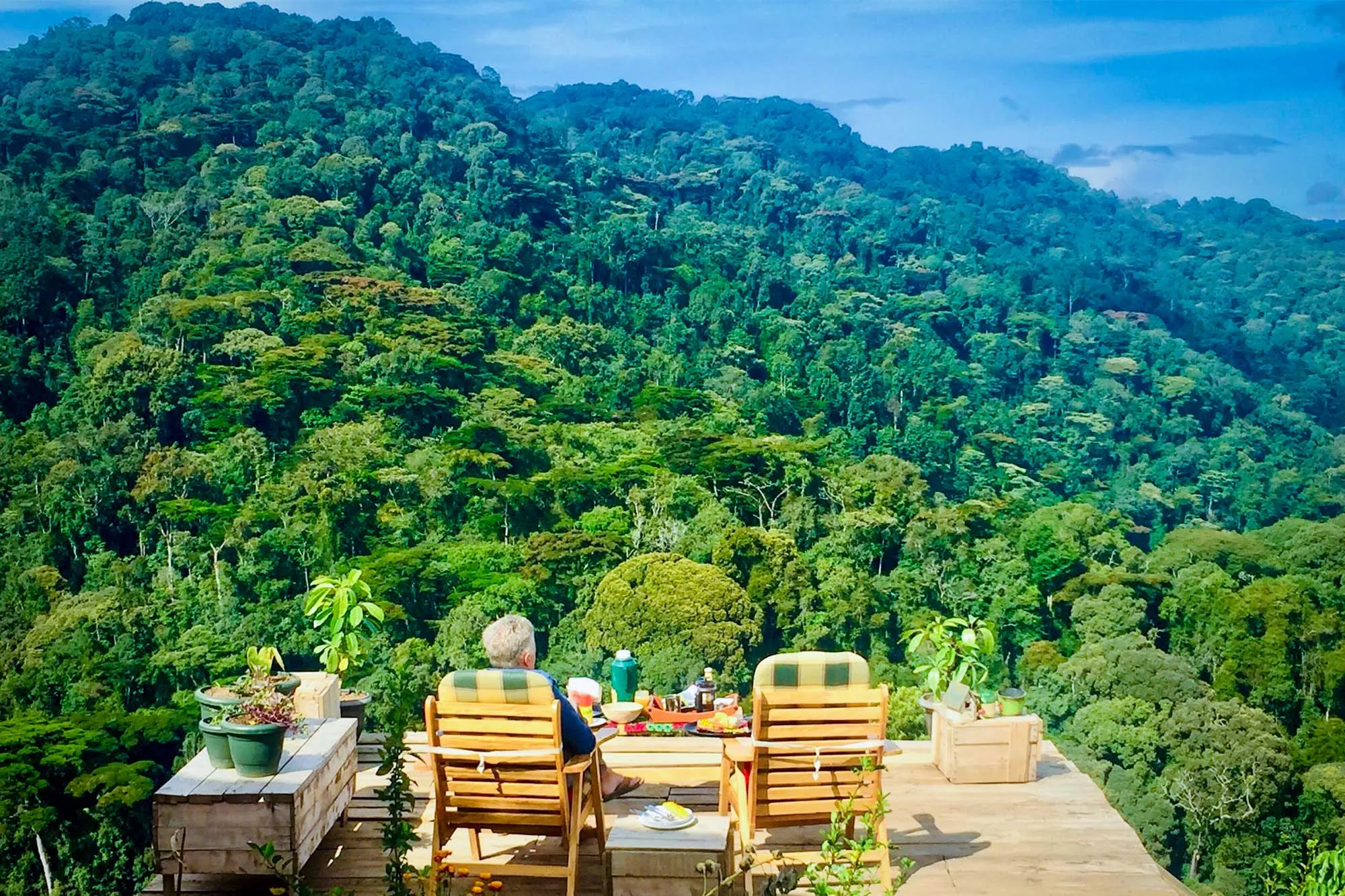
Altitude should be considered when planning gorilla trekking for travelers over 70, particularly in Rwanda’s Volcanoes National Park and Uganda’s Virunga region.
Mountain gorillas live in high-elevation environments. Uganda Wildlife Authority describes mountain gorillas as inhabiting high-altitude montane and bamboo forests, while Rwanda’s official gorilla-tracking guidance states that hikes in Volcanoes National Park may reach approximately 2,500 to 4,000 metres, depending on the gorilla group’s location.
This does not mean every gorilla trek climbs to 4,000 metres.
The precise elevation depends on where the assigned gorilla family is located.
However, the broader point remains important: gorilla trekking takes place at elevations that may be much higher than those at which many international visitors normally live.
At higher altitude, physical exertion may feel different.
A traveler may notice heavier breathing during climbing or feel that their usual walking pace requires more effort.
For travelers over 70, the response to altitude varies significantly from one person to another.
Age alone does not predict how someone will feel.
An active 76-year-old who regularly hikes at elevation may adapt very comfortably.
Another traveler may become breathless sooner than expected.
The safest approach is to avoid rushing.
Walk at a steady pace.
Communicate with the guide.
Stop when necessary.
Drink water regularly.
Do not turn the trek into a competition.
If the traveler has a heart, respiratory or other medical condition that could be affected by exertion or altitude, individualized advice from an appropriate healthcare professional is particularly important before travel.
A tour operator can explain the safari logistics.
A ranger can manage the trekking experience.
Neither should replace personalized medical assessment where there is a significant health concern.
Senior travelers may also benefit from arriving in the gorilla region before the trekking day rather than moving directly from an international flight into strenuous activity.
An additional night can provide rest and allow the traveler to begin trekking in a much better physical condition.
For gorilla trekking over 70, comfort is often improved not by trying to eliminate every challenge but by giving the body enough time to respond to the environment.
Weather and Rainfall
Weather has a direct influence on the difficulty of gorilla trekking, and rain can make a considerable difference for travelers over 70.
Gorilla habitats in Uganda and Rwanda are forested mountain environments where rainfall is possible. Rwanda’s official tourism guidance recommends carrying a lightweight waterproof jacket in Volcanoes National Park and specifically advises suitable footwear, gaiters and waterproof protection because wet conditions can occur.
Rain changes more than comfort.
It changes the ground.
Soil can become slippery.
Roots become wet.
Vegetation can transfer water onto clothing.
A previously firm descent can require slower and more deliberate movement.
For a senior traveler with knee problems or reduced balance, these changes may increase the physical demands of the trek substantially.
This is one reason travelers over 70 sometimes prefer generally drier travel periods.
However, it is important not to promise completely dry trekking conditions during any particular month.
Mountain and rainforest weather can change.
Even during a generally drier season, rain may occur.
The better strategy is therefore to choose a favorable travel period but prepare for rain anyway.
A lightweight waterproof jacket should be easily accessible.
It should not be buried beneath other luggage in a backpack carried far behind the traveler.
Boots should have reliable tread.
Gaiters can be useful.
A porter can keep additional equipment readily available.
Travelers should also consider temperature changes.
A cool, wet morning can feel quite different from a warm afternoon after several hours of physical activity.
Layered clothing allows the traveler to adjust rather than becoming either too cold or excessively warm.
Senior travelers should particularly avoid allowing themselves to become cold and uncomfortable simply because they are determined not to stop.
Comfort contributes to concentration.
Concentration contributes to safer foot placement.
And safer foot placement becomes increasingly important when trails are wet.
Uphill vs Downhill Walking
Many travelers assume that walking uphill will be the hardest part of gorilla trekking over 70.
Surprisingly, for some older travelers, walking downhill is more difficult.
Uphill walking generally requires greater cardiovascular effort.
Heart rate increases.
Breathing becomes heavier.
The muscles of the legs work continuously against gravity.
For a senior traveler with limited aerobic fitness, prolonged climbing may therefore feel exhausting.
The natural response is to slow the pace.
Shorter steps, steady breathing and periodic pauses can help.
Downhill walking creates a different type of physical challenge.
Although breathing may feel easier, descending requires the legs to control the body’s movement against gravity while the knees repeatedly absorb load.
Balance also becomes more important.
On a dry, firm slope, this may be manageable.
Add wet mud, loose soil or exposed roots, and descending can become considerably more demanding.
Travelers with knee pain, arthritis, reduced balance or previous knee surgery may therefore discover that descending is their greatest challenge.
This is extremely useful information to communicate before trekking.
Instead of simply saying:
“I am 73 and reasonably fit,”
the traveler can explain:
“I can walk uphill slowly without a problem, but steep descents are difficult for my knees.”
That statement gives the safari operator, porter and trekking guides much more useful information.
A walking stick or trekking pole can be particularly valuable during descent because it provides another point of support.
A porter can also offer a steady hand through difficult sections.
Travelers should take controlled steps rather than allowing gravity to increase their speed.
There is no benefit in rushing downhill.
The safest senior trekking pace is the pace at which the traveler remains balanced and in control.
This distinction between uphill and downhill ability is another reason gorilla trekking for travelers over 70 should be assessed individually.
One traveler may become breathless during climbs but descend easily.
Another may climb confidently yet require considerable support on the way down.
A third may have excellent endurance but struggle mainly with slippery surfaces.
These differences should shape the support provided.
Ultimately, the difficulty of gorilla trekking after 70 is not defined by one number—neither the traveler’s age, the trekking distance nor the number of hours in the forest.
It is the combination of distance, duration, elevation, terrain, weather, balance, joint mobility, fitness and assistance that determines how demanding the experience feels.
A responsible senior gorilla safari therefore does not promise:
“Your trek will be easy.”
A much better promise is:
“Your abilities will be considered carefully, unnecessary physical strain will be reduced where possible, and appropriate support will be planned so that you have the best realistic opportunity to enjoy the gorilla experience.”
That is the approach Pieland Gorilla Safaris can use when designing gorilla trekking over 70 experiences in Uganda and Rwanda.
How Fit Do You Need to Be for Gorilla Trekking Over 70?
You do not need to be an athlete to enjoy gorilla trekking over 70, but a reasonable level of functional fitness can make the experience considerably more comfortable. The most useful type of fitness for gorilla trekking is not measured by running speed, gym performance or whether someone considers themselves “fit for their age.” What matters is how comfortably the traveler can walk for sustained periods, negotiate hills and uneven ground, maintain balance, control their movement while descending and recover after physical exertion.
Uganda Wildlife Authority describes gorilla tracking as requiring moderate fitness and notes that trekking may last approximately two to seven hours depending on the location of the gorillas and conditions encountered. This does not mean every senior traveler needs to be capable of hiking continuously for seven hours. It does mean that someone planning the experience should prepare for a variable outdoor activity rather than assuming the gorillas will always be located close to the starting point.
For travelers over 70, fitness should therefore be considered in several dimensions.
Walking endurance determines how long you can remain comfortably active.
Leg strength helps you climb slopes, step over roots and control your body during descents.
Balance and stability become particularly important on mud, uneven soil and natural forest surfaces.
Cardiovascular fitness affects how comfortably you cope with prolonged walking and uphill sections.
Knee and hip mobility influences how easily you step over obstacles, climb and descend.
These abilities do not need to be perfect.
A senior traveler may have strong cardiovascular endurance but weaker knees. Another may walk relatively slowly but have excellent balance. Someone else may require regular hand support on steep terrain while remaining capable of walking for several hours.
This is why gorilla trekking fitness after 70 should be assessed individually rather than according to age alone.
General physical-activity guidance for adults aged 65 and older also emphasizes a combination of aerobic activity, muscle strengthening and balance work rather than focusing on just one aspect of fitness. The CDC currently recommends that older adults combine aerobic, muscle-strengthening and balance activities, while adapting activity to their individual abilities and health conditions. These guidelines are general health recommendations rather than a specific gorilla-trekking test, but they illustrate why preparing only by walking on flat roads may not address every physical demand of a rainforest trek.
A useful question is therefore not simply:
“Am I fit enough for my age?”
It is:
“Can my current level of walking endurance, leg strength, balance and joint mobility cope with a variable forest trek, or what assistance would make the experience more manageable?”
That second question leads to much better safari planning.
Walking Endurance
Walking endurance is one of the most important components of fitness for gorilla trekking over 70.
Mountain gorilla trekking involves remaining physically active for an unpredictable amount of time. Gorilla families move freely, which means there is no fixed distance that every traveler will walk. Some visitors may reach their assigned family relatively quickly, while others may spend considerably longer following trackers through the forest.
For this reason, senior travelers should ideally be comfortable with sustained walking rather than preparing only for short bursts of exercise.
Someone who comfortably walks for an hour or more several times a week may already have a useful foundation. However, walking on a flat pavement is not identical to moving through mountain forest terrain. Gorilla trekking can involve slowing down for roots, climbing, stopping, restarting and constantly adjusting stride length.
An older traveler should therefore pay attention not only to how far they can walk but also to how they feel afterward.
Can you walk for an extended period and still feel reasonably comfortable?
Do your legs become extremely tired after 30 minutes?
Do you need long recovery periods after walking?
Can you walk again after sitting for a short rest?
Do hills reduce your endurance significantly?
These observations can provide useful information when discussing a safari.
One of the best ways to prepare walking endurance is gradually rather than suddenly attempting long distances immediately before travel.
Regular walking can form the foundation.
Where possible, include some gentle slopes.
Occasionally walk for longer than your usual daily distance.
Practice wearing the hiking footwear you intend to use on safari.
If you normally use a trekking pole or walking stick, include it during preparation rather than introducing it for the first time in Uganda or Rwanda.
The objective is not to achieve a particular kilometre target because there is no universal minimum walking distance that guarantees successful gorilla trekking.
Instead, the goal is to improve your ability to remain active without reaching complete exhaustion.
This matters because reaching the gorillas is only part of the experience.
After the viewing period, trekkers still need to leave the forest.
A traveler who uses all their energy reaching the gorillas may find the return considerably more difficult.
This is one reason porter assistance can be valuable even for physically active seniors. Carrying water, camera equipment, rainwear and other belongings places additional demand on the body. Removing that weight allows more energy to be reserved for walking.
Senior travelers should therefore think of endurance as energy management, not simply distance.
A good gorilla safari conserves energy before trekking, during trekking and afterward.
Leg Strength
Strong legs can make an enormous difference during gorilla trekking for travelers over 70.
The forest does not require bodybuilding strength, but the muscles of the thighs, hips and lower legs are repeatedly used when climbing slopes, stepping over roots, rising onto higher ground and controlling the body during descent.
Ordinary walking on flat ground may not fully prepare these muscles.
Consider stepping onto a high stair.
The front leg has to lift the body upward.
Now consider walking down a steep slope.
The muscles have to control the body so that it does not move downward too quickly.
Repeat those movements numerous times and leg strength becomes very important.
This is why older travelers preparing for gorilla trekking can benefit from activities that maintain or improve lower-body strength.
The CDC’s current physical-activity guidance for older adults recommends muscle-strengthening activity at least two days each week as part of general healthy physical activity, alongside aerobic and balance activity. Again, this is not a specific gorilla-trekking prescription, but maintaining lower-body strength is particularly relevant to the movements encountered on trekking terrain.
Simple activities such as regular walking, carefully practiced stairs, standing up from a chair and appropriate strength exercises may help improve functional leg strength.
However, seniors with joint problems, previous surgery or medical conditions should avoid suddenly beginning strenuous exercises simply because they have booked a safari. Where necessary, an appropriate healthcare or exercise professional can help determine what type of preparation suits the individual’s circumstances.
One very practical self-observation is how easily you rise from a normal chair without using your hands heavily for assistance.
Another is whether you can climb several flights of stairs slowly while remaining in control.
These movements are not formal gorilla-trekking eligibility tests.
They are simply useful indicators of everyday leg function.
On trekking day, leg strength also affects balance.
When the legs become tired, maintaining stable footing becomes more difficult.
A senior traveler who starts the day unnecessarily carrying a heavy backpack may therefore fatigue faster than someone using porter assistance.
This is why preserving leg strength for the important parts of the trek is sensible.
The aim is not to prove independence.
The aim is to arrive at the gorilla family with enough strength remaining to enjoy one of Africa’s most extraordinary wildlife encounters.
Balance and Stability
Balance may be one of the most important and most underestimated fitness considerations for gorilla trekking over 70.
A traveler can have excellent cardiovascular fitness and strong legs yet still find forest terrain challenging if balance is limited.
Gorilla trekking takes place on natural ground.
Unlike a hotel corridor or paved walking path, the forest can contain roots, uneven soil, loose material, vegetation and slippery areas following rainfall.
Each irregular surface requires the body to make small adjustments.
Most people perform these corrections automatically.
However, balance can become less reliable with age, joint limitations or certain health conditions.
For senior trekkers, this means a short technically difficult section may sometimes be more challenging than a longer stretch of straightforward walking.
General physical-activity recommendations for adults 65 and older specifically include activities that improve balance, in addition to aerobic exercise and strength training. The CDC notes that multicomponent activity combining these different elements can help improve physical function and reduce fall risk.
For gorilla trekking, balance becomes particularly relevant when:
walking across wet ground;
stepping over exposed roots;
moving around rocks;
changing direction on a slope;
descending carefully;
crossing narrow or uneven sections;
or stepping from one level of ground to another.
Travelers should therefore be honest about stability.
If you sometimes lose balance on uneven surfaces at home, tell your safari operator.
If you normally use a walking stick outdoors, bring that information into the planning process.
If you feel considerably safer holding someone’s hand when going down steps, porter support may be valuable during the trek.
There is no benefit in hiding these details because of embarrassment.
A porter can offer much more than luggage assistance.
Having someone available to provide a steady hand can greatly improve confidence on difficult terrain.
A walking stick or trekking pole can also provide an additional point of contact with the ground, although travelers should practice using one before the safari.
Footwear contributes to stability as well.
Boots with good tread reduce the risk of sliding and help the traveler place each step more confidently.
The best senior gorilla trek is not necessarily completed by the person who walks fastest.
It is completed by the traveler who moves steadily, deliberately and within their abilities.
Cardiovascular Fitness
Cardiovascular fitness affects how comfortably travelers over 70 cope with extended walking, uphill terrain and higher-elevation environments during gorilla trekking.
Walking uphill increases the body’s demand for oxygen.
Breathing becomes heavier.
Heart rate rises.
A traveler who rarely exercises may notice these changes much sooner than someone accustomed to regular physical activity.
This does not mean that seniors need to run, cycle competitively or undertake intense gym training before a gorilla safari.
Moderate aerobic conditioning can be useful.
Regular brisk walking is one of the simplest examples.
General CDC guidance for adults 65 and older currently recommends at least 150 minutes per week of moderate-intensity aerobic activity, or an equivalent amount of vigorous or combined activity, depending on the person’s abilities and health. This is a general health recommendation rather than a minimum qualification for gorilla trekking, and people with different health circumstances may need individualized advice.
For safari planning, what matters most is understanding how your body reacts when walking becomes more demanding.
Can you walk uphill while maintaining a conversation?
Do you become breathless very quickly?
Can you recover after stopping briefly?
Does your heart rate settle comfortably after climbing?
Does moderate walking leave you exhausted for the rest of the day?
These observations can help a traveler judge whether additional preparation or assistance may be useful.
Senior travelers should also understand that moving slowly is completely acceptable.
There is no prize for reaching a gorilla family first.
A steady pace can prevent the repeated cycle of rushing, becoming breathless, stopping and rushing again.
Instead, walk consistently.
Take smaller steps on climbs.
Breathe normally.
Drink water.
Tell the guide when you require a pause.
This approach is often more sustainable.
Anyone over 70 with known cardiovascular, respiratory or other health conditions that may be affected by exertion should seek individualized advice from an appropriate healthcare professional before undertaking strenuous trekking. The CDC similarly advises people with chronic conditions or disabilities to discuss appropriate types and amounts of physical activity with a healthcare professional when needed.
A safari operator can reduce transfer fatigue and organize trekking support.
It cannot determine medical fitness.
Knee and Hip Mobility
For many travelers considering gorilla trekking over 70, knees and hips deserve as much attention as general fitness.
Walking through mountainous rainforest requires movements that are different from normal daily walking.
A traveler may need to bend the knee more deeply to step up.
They may need to lift a leg over a root.
The hip may need a larger range of motion when stepping across uneven ground.
During descent, the knees repeatedly control the body’s weight.
Someone who has no difficulty walking on level ground may therefore discover that slopes expose limitations they rarely notice at home.
Knee discomfort is particularly important during downhill sections.
Descending requires controlled movement, and slippery ground can increase the need for stability.
Travelers with arthritis, previous knee injuries or reduced joint mobility may benefit from taking smaller steps, moving slowly and using both porter support and a trekking pole where appropriate.
Hip mobility matters in a slightly different way.
Stepping over roots or onto higher ground sometimes requires greater movement than ordinary walking.
Reduced hip flexibility can make these movements slower and more tiring.
None of this automatically means someone with knee or hip limitations cannot see mountain gorillas.
It means the level of assistance and itinerary design should reflect the actual limitation.
One traveler may need only a porter.
Another may need trekking poles and regular pauses.
Someone with major mobility restrictions may require specialized carrying assistance.
Travelers who have undergone knee or hip replacement should not rely on a generic safari article to determine whether they are personally ready for trekking. Recovery differs significantly between individuals, and suitability for strenuous uneven terrain should be discussed with an appropriate healthcare professional when there is uncertainty.
The important planning question is not simply:
“Do you have bad knees?”
It is:
“What movements cause difficulty?”
For example:
Can you climb comfortably but struggle going downhill?
Does pain appear after a certain amount of walking?
Can you step up onto a high stair?
Can you bend your knee enough to cross a root?
Does your hip become stiff after sitting in a vehicle for several hours?
Do you require a handrail on stairs?
These answers help Pieland Gorilla Safaris understand what type of itinerary may be most comfortable.
Someone whose hips become stiff after long drives may benefit from a fly-in Uganda gorilla safari or additional road stops.
Someone who struggles mainly with downhill walking may benefit greatly from porter assistance and careful pacing.
Someone who cannot safely walk through uneven forest terrain may need to discuss specialized carrying options well in advance.
Ultimately, there is no single fitness score required for gorilla trekking over 70.
The ideal traveler does not need perfect endurance, perfect strength or perfect joints.
What matters is knowing your abilities realistically and matching them with the appropriate level of support.
A fit 72-year-old may complete the trek independently with a porter carrying their bag.
A 78-year-old with mild knee problems may walk successfully with trekking poles and regular support.
Another traveler may require substantially more assistance.
All can still share the same goal: experiencing mountain gorillas in their natural habitat.
For Pieland Gorilla Safaris, the best approach to gorilla trekking for travelers over 70 is therefore to evaluate the person rather than the age—considering walking endurance, strength, balance, cardiovascular capacity and joint mobility before deciding how the safari should be designed.
When to Seek Medical Advice Before Trekking
Most healthy and physically active travelers over 70 do not automatically need medical clearance simply because of their age. However, gorilla trekking over 70 involves prolonged walking, uneven forest terrain, slopes, possible altitude, mud and unpredictable trekking duration, so travelers with certain medical concerns should discuss the activity with an appropriate healthcare professional before traveling.
Uganda Wildlife Authority describes gorilla tracking as an activity requiring moderate fitness and notes that trekking can take approximately two to seven hours depending on where the gorillas are located. This makes personal health and functional ability more important than chronological age alone.
Medical advice is particularly appropriate for a traveler who has a known heart condition, respiratory disease, poorly controlled blood pressure, significant arthritis, recurrent dizziness, serious balance problems, recent surgery, previous joint replacement with ongoing limitations, or another medical condition that may be affected by sustained physical activity.
A traveler should also consider professional advice if they have been largely inactive for a long period and intend to begin a substantially more demanding exercise program specifically to prepare for gorilla trekking. CDC guidance for older adults notes that moderate physical activity is safe for most people but advises people with health conditions to discuss how those conditions may affect their ability to be active.
Previous falls deserve particular attention.
A mountain rainforest can include mud, uneven ground, roots and slopes. Someone who has experienced repeated falls, unexplained dizziness or difficulty maintaining balance should not simply assume that hiring a porter will solve every problem. CDC fall-prevention guidance recommends discussing individual fall risk with a healthcare provider, while the National Institute on Aging advises people experiencing balance problems to seek professional advice about activities such as walking and using stairs.
Medication can also affect trekking comfort and safety.
Some medicines may contribute to dizziness, drowsiness, dehydration or changes in blood pressure. Travelers should not stop or alter medication for a safari without professional guidance. If there is uncertainty about how medication may interact with prolonged exercise, altitude or travel conditions, the traveler should discuss this with their doctor or pharmacist before departure.
Travelers recovering from knee replacement, hip replacement or other orthopedic surgery require an especially individualized approach. Successful recovery does not automatically mean a person is ready for several hours of unpredictable forest trekking. The important questions include whether the traveler can safely manage uneven terrain, descend slopes, step over obstacles and recover from sustained activity.
A doctor or physical therapist familiar with the person’s recovery can provide far more meaningful advice than a general safari article.
Senior travelers should also seek medical guidance if ordinary walking already causes symptoms such as chest pain, unusual shortness of breath, fainting, severe dizziness, significant joint pain or unexplained weakness.
The purpose of seeking advice is not to obtain permission simply because someone has turned 70.
It is to identify risks that may be relevant to a physically demanding outdoor activity and determine whether any preparation, treatment, restrictions or additional support should be considered.
Pieland Gorilla Safaris can help adapt transportation, accommodation, porter arrangements, trekking pace and rest days. However, a safari company should never replace individualized medical advice.
The most responsible approach to gorilla trekking after 70 combines appropriate medical awareness with realistic physical preparation and thoughtful safari design.
How to Prepare for Gorilla Trekking After 70
Preparing for gorilla trekking after 70 does not require training like a professional athlete or mountain climber. The objective is to gradually improve the specific physical abilities that are useful in a mountain forest: walking endurance, lower-body strength, balance, stability, controlled climbing and descending, and the ability to recover comfortably after exertion.
Current CDC guidance for adults aged 65 and older recommends a combination of aerobic activity, muscle-strengthening activity and exercises that improve balance. Adults 65 and older are generally advised to aim for at least 150 minutes of moderate-intensity aerobic activity each week, include muscle-strengthening activity on at least two days, and incorporate balance work.
These are general public-health recommendations rather than a special gorilla trekking training program. However, the combination closely matches several of the physical qualities useful during trekking.
A senior traveler does not need to reach an arbitrary fitness target before contacting Pieland Gorilla Safaris.
Instead, preparation should begin with an honest understanding of current ability.
How long can you walk comfortably?
Can you climb stairs without significant difficulty?
How do your knees feel on descent?
Can you stand securely on uneven surfaces?
How quickly do you recover after an active day?
Do you regularly use a walking stick?
Have you experienced recent falls?
Answering these questions creates a much more useful starting point than simply describing yourself as “fit” or “unfit.”
Preparation should then be progressive.
A traveler who already walks several kilometres regularly may only need to add more hills, balance work and occasional longer walking days.
Someone who has been relatively inactive should begin more gradually.
The objective is consistency rather than exhaustion.
You should arrive in Uganda or Rwanda feeling stronger and more confident—not injured because you trained too aggressively during the final weeks before departure.
Start Walking Regularly Before Your Safari
Walking is the most practical foundation for preparing for gorilla trekking over 70 because trekking itself involves sustained walking.
However, simply walking once or twice immediately before departure is unlikely to change fitness significantly. Preparation works better when regular walking becomes part of the traveler’s routine well before the safari.
Someone who is currently inactive might begin with relatively short comfortable walks and gradually increase duration according to their individual ability.
An already active traveler may begin with longer sessions.
The exact distance should not be standardized because people over 70 have widely different health histories and fitness levels.
More important than reaching a specific number of kilometres is developing the ability to walk consistently without excessive fatigue.
When possible, walking preparation should include different surfaces.
A perfectly flat treadmill provides cardiovascular benefits, but mountain gorilla habitat is not perfectly flat.
Walking outdoors on gently changing terrain helps the feet, ankles, knees and hips respond to more natural movement.
As confidence improves, moderate slopes can be introduced.
Travelers should pay attention to their body’s response.
If a longer walk causes extreme fatigue lasting into the following day, increasing the distance immediately may not be sensible.
If the traveler completes the walk comfortably and recovers normally, gradual progression may be appropriate.
A useful goal is to arrive at the safari with energy in reserve.
Travelers should not train only until they can barely manage a certain distance.
Gorilla trekking contains unpredictable elements, meaning the body may need to cope with more activity than expected.
Regular walking also provides an excellent opportunity to test safari equipment.
Wear the socks intended for trekking.
Use the hiking boots.
Carry a light daypack occasionally.
Practice drinking water during longer walks.
Use trekking poles if they will be used in Africa.
By the time the safari begins, these elements should feel familiar.
Practice Hills and Stairs
Flat walking alone does not prepare the body completely for mountain gorilla terrain.
Both Bwindi and the Virunga landscape include slopes, and climbing or descending can require substantially different muscular effort from walking on level ground.
For travelers over 70, gentle hill and stair practice can be particularly valuable because it reveals limitations that may not appear during ordinary walking.
A person may discover that climbing is relatively comfortable but descending causes knee pain.
Another may have strong knees but become breathless rapidly while climbing.
A third may struggle more with balance than physical effort.
Learning these differences before traveling makes it possible to prepare better and communicate more accurately with Pieland Gorilla Safaris.
Hill practice does not need to involve steep mountain trails.
A gentle neighborhood slope may be enough initially.
Stairs can also be useful because they strengthen many of the muscles involved in stepping upward and controlling the body during descent.
When practicing stairs, travelers should prioritize control rather than speed.
Using a handrail during training is perfectly reasonable.
The objective is not to prove that assistance is unnecessary.
The objective is to strengthen the relevant movement safely.
Downhill practice deserves particular attention.
Many older travelers expect climbing to be the hardest part of gorilla trekking but discover that descending places more strain on their knees.
During descent, the muscles of the legs help slow the body’s movement while balance must continually adjust.
On a wet forest trail, this can become even more demanding.
Practicing controlled descents can therefore help travelers understand whether they may benefit from trekking poles, porter support or a more comprehensive mobility arrangement.
Anyone with significant joint disease, recent surgery or substantial pain during hill or stair training should obtain individualized guidance rather than repeatedly forcing the movement.
Improve Balance and Stability
Balance is one of the most important areas of preparation for senior gorilla trekking and one of the most frequently ignored.
A traveler may be capable of walking several kilometres but still struggle when the ground becomes uneven.
Forest terrain can require stepping around roots, changing direction, crossing muddy sections and adjusting to slopes.
These movements rely heavily on balance and stability.
CDC guidance specifically recommends balance activities for adults aged 65 and older, while the National Institute on Aging lists examples such as heel-to-toe walking, balance walking, backward or sideways walking and controlled standing movements.
Balance exercises should be practiced safely.
Someone who already has significant instability should not begin standing on one leg in the middle of an open room simply because they are preparing for a safari.
NIA recommends having a stable chair, wall or another reliable support nearby when performing balance exercises and seeking professional guidance when uncertain about a particular movement.
Simple controlled exercises may gradually improve confidence.
Heel-to-toe walking can train stability.
Standing up from a chair without rushing combines balance and leg control.
Slowly changing direction while walking can improve coordination.
Tai chi and other appropriate multicomponent activities may combine balance, strength and controlled movement. CDC recognizes multicomponent activity as useful for improving physical function and reducing fall risk in older adults.
For gorilla trekking, the objective is not to achieve acrobatic balance.
It is to reduce the likelihood that every small irregularity in the ground becomes stressful.
Improved stability also increases confidence.
A traveler who constantly fears falling may use considerable mental and physical energy watching every step.
Someone with better stability, appropriate footwear and porter support may move more comfortably.
Travelers with recurring dizziness, unexplained instability or a history of falls should discuss this with an appropriate healthcare professional rather than relying solely on self-directed balance training.
Strengthen Legs and Core
The muscles of the legs and core help support nearly every movement involved in gorilla trekking.
The legs propel the body uphill.
They control descent.
They allow the traveler to step over roots and onto higher ground.
The core helps stabilize the body as terrain changes.
For travelers over 70, improving functional strength can therefore make trekking considerably more comfortable.
Current CDC guidelines recommend muscle-strengthening activities on at least two days each week for adults aged 65 and older, including activities that work major muscle groups such as the legs, hips, back and abdomen.
Strengthening does not necessarily require heavy gym equipment.
Depending on ability, exercises might include controlled sit-to-stand movements from a chair, gentle step-ups, resistance-band exercises or other movements appropriate to the individual.
The ability to stand from a chair is particularly relevant to everyday functional strength.
A traveler who struggles considerably to rise without pulling heavily on furniture may find repeated climbing and stepping more demanding.
Strengthening the hips and thighs can improve these movements.
Core strength also contributes to stability.
When the ground is uneven, the body constantly makes small corrections to remain upright.
A stronger trunk can support these corrections.
However, travelers should avoid turning safari preparation into an extreme fitness program.
Older adults who are unfamiliar with strength training may benefit from guidance from a qualified professional, particularly when arthritis, osteoporosis, joint replacement or another medical issue is present.
The safest strength program is one that can be maintained consistently without causing injury.
The objective is functional strength for travel, not lifting the maximum possible weight.
Break In Your Hiking Boots
A physically prepared traveler can still have a miserable gorilla trek if their footwear causes blisters.
For this reason, hiking boots should never remain in their box until the morning of the trek.
Senior travelers should wear their intended footwear repeatedly before leaving home.
Begin with shorter walks.
Gradually use the boots during longer sessions.
Try them on gentle hills.
Wear the same type of socks that will be used during trekking.
This allows time to discover whether the boots rub the heel, compress the toes, feel unstable around the ankle or become uncomfortable after prolonged walking.
Footwear for gorilla trekking should prioritize grip, stability and comfort.
Mountain forests can become wet and muddy, so traction matters.
Someone over 70 with reduced balance should be particularly cautious about footwear with smooth or worn soles. The National Institute on Aging advises people with balance difficulties to use stable, nonskid footwear rather than slippery shoes.
Boots should fit securely without being excessively tight.
Feet can swell slightly during long periods of walking, so footwear that feels perfect for five minutes in a shop may feel different after several hours.
Travelers should also test their socks.
Poorly fitting socks can bunch, create friction or retain uncomfortable moisture.
If gaiters will be used during the safari, practice putting them on with the intended boots before traveling.
Nothing involved in the basic trekking equipment should feel completely unfamiliar on gorilla trekking morning.
Practice Using Trekking Poles
Trekking poles can be valuable for some travelers over 70 because they provide additional points of contact with the ground and can improve confidence during climbs and descents.
However, a trekking pole is most useful when the traveler already knows how to use it.
Buying poles immediately before the safari and attempting to learn their rhythm inside Bwindi is not ideal.
Practice them during ordinary walks first.
Then introduce them on gentle slopes.
Learn how pole length feels during ascent and descent.
Practice placing the pole securely rather than simply tapping it randomly on the ground.
For travelers who normally use a single walking stick, the goal may be different.
The traveler should determine whether their familiar walking aid is appropriate for trekking or whether another type of support would be more practical.
A porter can complement trekking poles rather than replacing them.
On straightforward terrain, the traveler may walk independently using poles.
On a slippery descent, a porter may provide additional support.
The important point is that assistance does not need to be all or nothing.
Someone can be physically capable of walking most of the trek while still accepting help at the most challenging points.
Travelers with significant balance impairment should obtain appropriate professional advice before relying on trekking poles as a solution.
A pole provides support; it does not eliminate an underlying mobility limitation.
Build Rest and Recovery Into Your Training
One of the most overlooked aspects of preparing for gorilla trekking after 70 is recovery.
The body becomes stronger not only through exercise but also through adequate recovery between demanding sessions.
A traveler who begins training aggressively every day shortly before departure may arrive with sore knees, strained muscles or general fatigue.
That defeats the purpose of preparation.
Training should therefore include easier days.
A longer walking day might be followed by a lighter activity day.
Strength sessions can be separated to allow muscles to recover.
Sleep, hydration and adequate nutrition also contribute to recovery.
The traveler should monitor how they feel the next morning.
If every training session leaves them exhausted, the program may be progressing too quickly.
If recovery is comfortable and walking feels progressively easier, the training is more likely to be appropriate.
Recovery should also be practiced psychologically.
Senior travelers sometimes feel they must prove that they are capable of keeping up.
That attitude can lead to unnecessary overexertion.
Gorilla trekking is not competitive.
Resting when needed is sensible energy management.
The same principle should shape the safari itself.
A well-designed gorilla safari for travelers over 70 should avoid placing the most physically demanding activity immediately after exhausting travel.
Where possible, Pieland Gorilla Safaris can structure the journey so that guests reach the gorilla region with sufficient time to relax before trekking.
After the trek, another demanding transfer or hiking activity should not automatically be scheduled simply because there are hours left in the day.
A relaxed afternoon, comfortable meal and good night’s sleep can be far more valuable.
For travelers combining gorillas with a wider Uganda or Rwanda safari, rest can be built naturally into the itinerary through scenic drives, boat cruises, relaxed lodge stays and game drives.
This makes a senior safari diverse without making every day physically demanding.
The ideal preparation for gorilla trekking after 70 therefore combines walking, gentle hills, strength work, balance training, familiar equipment and adequate recovery.
It does not attempt to transform every senior traveler into a mountain athlete.
Instead, it improves the abilities that matter most while identifying areas where additional assistance may be useful.
A traveler who trains intelligently, communicates limitations honestly, uses porter support when appropriate and follows a carefully paced itinerary can approach gorilla trekking with considerably greater confidence.
For Pieland Gorilla Safaris, this preparation should begin with one principle:
Train for the forest you may encounter, not for the easiest trek you hope to receive.
The gorillas may be relatively close.
They may be farther away.
The ground may be dry.
It may be muddy.
The route may be straightforward.
It may involve substantial climbing.
Because those circumstances cannot be controlled, the best preparation is to strengthen the traveler, arrange appropriate support and build enough flexibility into the safari that the experience remains enjoyable even when the forest demands a little more.
Best Gorilla Trekking Destinations for Travelers Over 70
Choosing the best gorilla trekking destination for travelers over 70 should never be based on age alone. The better approach is to compare each destination according to the traveler’s walking ability, balance, joint health, tolerance for long road journeys, preferred accommodation standard, budget, interest in additional safari experiences and the level of trekking assistance that may be required.
Mountain gorilla trekking is currently available in Uganda, Rwanda and the Democratic Republic of Congo. For many international senior travelers, however, Uganda and Rwanda are the two principal choices when planning a highly organized gorilla safari with established accommodation, private transportation and straightforward combinations with other wildlife experiences.
Uganda offers mountain gorilla trekking in Bwindi Impenetrable National Park and Mgahinga Gorilla National Park. Uganda Wildlife Authority confirms that Bwindi has four principal trekking sectors—Buhoma, Ruhija, Rushaga and Nkuringo—while Mgahinga provides a separate gorilla trekking environment within the Virunga Mountains.
For travelers over 70, having more than one trekking area can be useful because the safari can be designed around much more than the gorilla permit itself.
A traveler approaching from Queen Elizabeth National Park may find northern Bwindi convenient.
Someone flying into Kisoro may be better positioned for southern Bwindi or Mgahinga.
A traveler interested primarily in reducing road time may choose a fly-in itinerary.
Another traveler may prefer a longer road safari because they enjoy scenery, cultural stops and wildlife experiences along the way.
The best destination for gorilla trekking after 70 is therefore the destination that best matches the traveler rather than the destination advertised as the easiest.
No responsible safari operator should guarantee that one park or one trekking sector will always provide a short trek. Mountain gorillas move naturally through their habitat, and trekking time varies according to their location. Uganda Wildlife Authority currently describes gorilla trekking as requiring moderate fitness and notes that the activity may last approximately two to seven hours.
For a senior traveler, this unpredictability makes the supporting logistics especially important.
Consider two travelers who are both 74.
The first is physically active but dislikes spending long hours sitting in vehicles because of back stiffness. A fly-in Uganda safari may suit this traveler extremely well.
The second enjoys road travel but has reduced walking endurance. They may prefer a slower itinerary with several nights near the gorilla park and porter assistance arranged for trekking morning.
A third traveler may have excellent stamina but difficulty with steep descents because of knee problems. For that traveler, lodge location, trekking support and honest communication during the briefing may matter more than whether Uganda or Rwanda appears closer on a map.
When comparing gorilla destinations for people in their seventies, the following factors deserve particular attention:
road-transfer length;
availability of domestic flights;
terrain and altitude;
distance between the lodge and trekking headquarters;
number of steps or steep paths within the lodge;
availability of porter or specialized mobility assistance;
number of nights available before and after trekking;
and whether the traveler wants to combine gorillas with game drives, boat safaris, chimpanzees or relaxed scenic experiences.
Uganda performs particularly strongly when the traveler wants the gorilla encounter to form part of a wider wildlife safari rather than being the only activity.
A senior traveler can combine gorilla trekking with game drives in Queen Elizabeth National Park, boat cruising, scenic relaxation and other experiences that require considerably less strenuous walking. This makes it possible to build an itinerary where the physically demanding gorilla trek is balanced by easier safari days.
The result can be far more comfortable than scheduling several demanding hikes in succession.
For travelers over 70, the pace of the journey is often as important as the destination itself.
A carefully designed six-, seven- or eight-day safari may be considerably more enjoyable than attempting to compress the same experiences into three or four days.
The goal should not be to prove how much ground can be covered.
The goal should be to arrive at the gorilla forest rested, experience the trek comfortably and still have enough energy to appreciate the remainder of Uganda.
Gorilla Trekking Over 70 in Uganda
Gorilla trekking over 70 in Uganda can be an excellent choice for senior travelers because the country offers two mountain gorilla destinations, several trekking sectors, domestic flight options, a wide selection of accommodation and easy combinations with classic wildlife safaris.
Uganda Wildlife Authority currently identifies Bwindi Impenetrable National Park and Mgahinga Gorilla National Park as Uganda’s two gorilla trekking destinations. It describes gorilla tracking as an activity requiring moderate fitness and states that trekking may last approximately two to seven hours before visitors spend their regulated observation period with a habituated gorilla family.
For someone in their seventies, these two parks should not simply be viewed as interchangeable places to buy the same gorilla permit.
They provide different landscapes, access routes and itinerary possibilities.
Bwindi is the larger and more geographically varied destination. It has four principal trekking sectors and numerous lodge options spread around different sides of the forest.
Mgahinga is much smaller and lies within Uganda’s section of the spectacular Virunga volcanic landscape. Uganda Wildlife Authority describes Mgahinga as covering approximately 33.7 square kilometres and ranging from about 2,227 metres to 4,127 metres above sea level.
This difference matters for senior travelers.
Someone who wants the broadest range of accommodation and route options may naturally gravitate toward Bwindi.
Someone who wants to spend time around Kisoro and experience the dramatic Virunga environment may find Mgahinga attractive.
Neither park should automatically be described as easy.
Both are natural mountain environments.
A senior traveler therefore benefits most when the safari is designed around several stages rather than focusing only on trekking morning.
The first stage is getting to the gorilla destination comfortably.
The second is staying in accommodation appropriate for the traveler’s mobility.
The third is resting properly before trekking.
The fourth is arranging porter or additional assistance where necessary.
The fifth is allowing sufficient recovery time afterward.
Uganda can perform especially well in all five areas because travelers can choose between road and air access.
Uganda Wildlife Authority states that Bwindi’s southern sectors can be accessed through Kisoro Airstrip, while northern Bwindi can be approached through Kihihi. It lists scheduled and charter flights from Entebbe, with onward 4WD road transfers required to reach the lodges.
Mgahinga can similarly be approached by flights from Entebbe or Kajjansi to Kisoro Airstrip, followed by a road transfer.
For some travelers over 70, choosing to fly can make more difference to overall comfort than upgrading to a more expensive lodge.
A long road safari can be very enjoyable when properly paced, but sitting for many hours can cause stiffness in the hips, knees and lower back for some older travelers.
A flight does not eliminate all driving, but it can substantially reduce the amount of time spent crossing the country.
This may allow the traveler to reach the gorilla region with more energy available for the trek.
Uganda also allows a safari to be structured slowly.
A senior traveler might arrive in Entebbe, sleep comfortably, fly to the gorilla region the following day, spend the afternoon relaxing and trek only after a full night’s rest.
After trekking, they could remain at the lodge for another night rather than immediately beginning a long transfer.
This kind of itinerary may contain fewer destinations than a rushed safari, but it can provide a considerably better experience.
Bwindi Impenetrable National Park
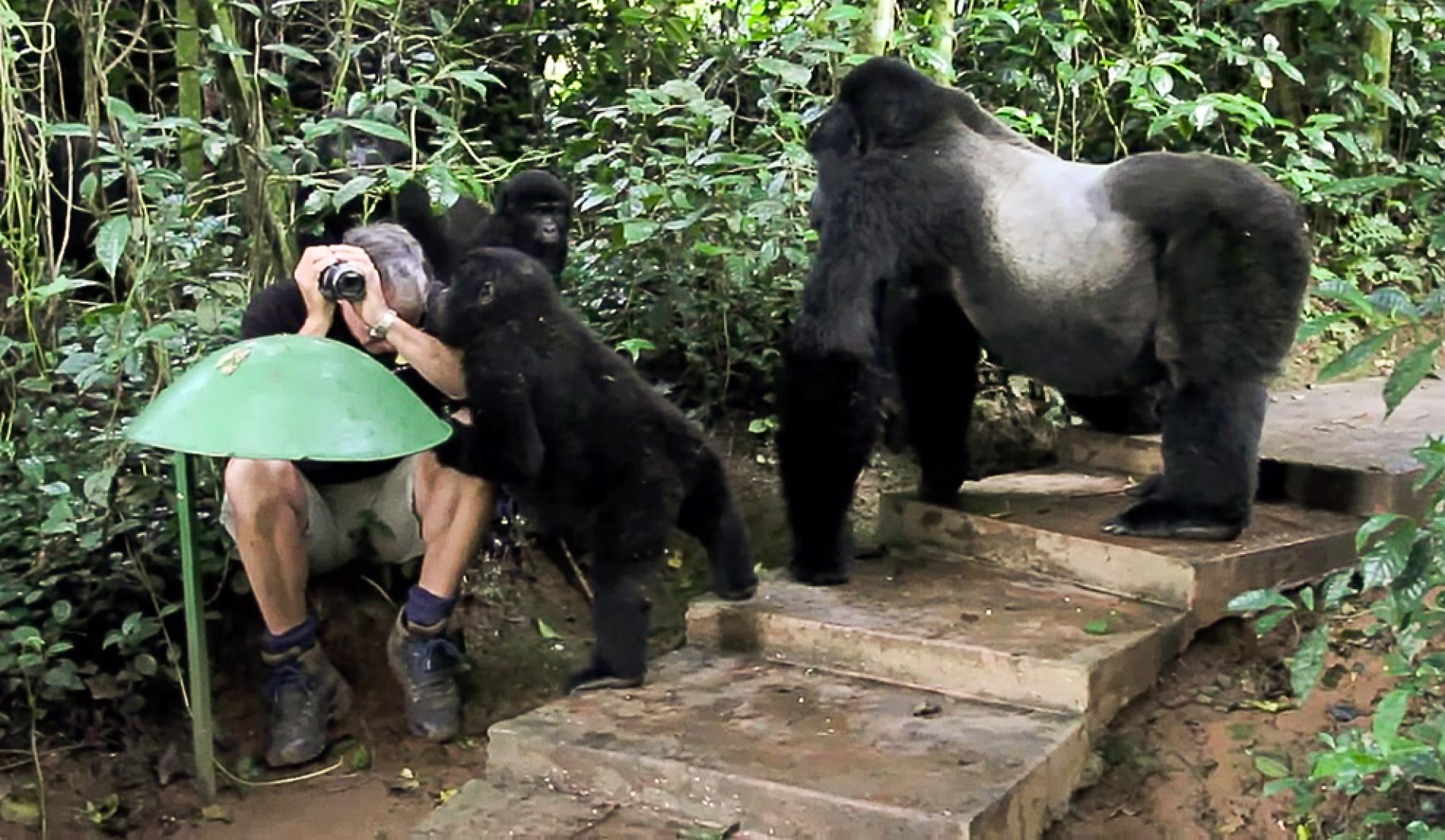
Bwindi Impenetrable National Park is Uganda’s most established gorilla trekking destination and one of the strongest choices for gorilla trekking over 70 when the correct sector, lodge and transport arrangement are selected.
Uganda Wildlife Authority places Bwindi in southwestern Uganda and gives the park an elevation range of approximately 1,160 to 2,607 metres above sea level. It also identifies four main gorilla trekking sectors: Buhoma, Ruhija, Rushaga and Nkuringo.
For senior travelers, the existence of four sectors is important.
Bwindi is not one single entrance where every traveler begins from the same location.
Each sector has its own geographical position and surrounding accommodation.
This means Pieland Gorilla Safaris can consider the traveler’s wider itinerary before selecting where they should stay.
For example, a traveler coming from the Queen Elizabeth National Park area may naturally approach northern Bwindi.
Uganda Wildlife Authority describes access from the Mweya area toward Kihihi and Buhoma via the Ishasha region, with 4WD transport recommended.
This can create an attractive safari sequence for travelers over 70:
wildlife viewing in Queen Elizabeth National Park;
a scenic transfer toward Bwindi;
two or three nights around the gorilla region;
gorilla trekking;
and sufficient recovery before continuing.
The safari therefore avoids repeatedly crossing the same part of Uganda.
For travelers who prefer to fly, northern Bwindi can be accessed through Kihihi Airstrip, while southern sectors such as Rushaga and Nkuringo can be approached through Kisoro Airstrip. Uganda Wildlife Authority currently lists scheduled and charter flight access from Entebbe followed by 4WD transfers to the park region.
This opens several possible senior-friendly safari designs.
A traveler can fly into Kihihi, stay around Buhoma and later continue by road toward Queen Elizabeth National Park.
Another can fly into Kisoro and stay in Rushaga or Nkuringo.
Someone entering from Rwanda may find southern Bwindi more practical depending on the itinerary and current border requirements.
This flexibility is one of Bwindi’s strongest advantages.
However, Bwindi should never be sold to a senior traveler as an easy forest simply because there are several sectors.
The word “Impenetrable” reflects the nature of a dense mountain rainforest.
Terrain can involve slopes, roots, vegetation and muddy sections.
The location of the gorillas changes continually.
A traveler over 70 should therefore prepare for a genuine forest experience even if park staff take mobility concerns into account when organizing trekking groups.
The best approach is to control the factors that can actually be controlled.
Choose the Right Bwindi Sector
Selecting the correct sector can reduce unnecessary road travel and improve the overall flow of the safari.
The decision should consider where the traveler is arriving from, where they are going next, which airstrip they may use and which accommodation suits their mobility.
A sector should not be selected because someone online claimed that it was always easier.
Gorillas move.
Daily trekking conditions change.
The logistical advantages of a sector are more predictable than the exact walking difficulty of a future trek.
Stay Close to the Correct Trekking Area
For travelers over 70, accommodation location is particularly important.
The traveler should ideally stay in the same general area from which their trek will begin rather than waking extremely early and traveling a long distance before briefing.
A senior trekker should arrive at headquarters rested rather than already tired from a difficult morning transfer.
Examine the Lodge, Not Just Its Star Rating
A luxury lodge may be visually spectacular but still be inconvenient for someone with reduced mobility if guest cottages are positioned down steep slopes or connected by many steps.
When Pieland Gorilla Safaris selects a Bwindi lodge for a senior traveler, useful questions include:
Is a ground-level room available?
How many steps separate the room from the restaurant?
How close can the safari vehicle approach the room?
Does the bathroom require stepping into a high bathtub?
Are pathways steep?
Do paths become slippery after rainfall?
Can staff assist with luggage?
These details may have more impact on an older traveler’s comfort than whether the lodge is classified as midrange or luxury.
Use a Porter
For most travelers over 70, hiring a porter can be one of the simplest improvements to the trekking experience.
The porter can carry the traveler’s backpack, water, rain gear and camera equipment, allowing the traveler to reserve strength for walking.
Physical support can also be valuable on difficult terrain.
An active 72-year-old may rarely require the porter’s hand but appreciate having assistance available when descending a muddy slope.
A 77-year-old with weaker knees may use the porter much more frequently.
Both arrangements are entirely appropriate.
Allow Recovery Time
One of the easiest ways to make Bwindi unnecessarily difficult is to turn it into a rushed itinerary.
After gorilla trekking, a traveler may feel physically tired but emotionally exhilarated.
This is not always the ideal moment to spend another five or six hours driving.
An additional night around Bwindi allows the traveler to return to the lodge, shower, enjoy lunch or dinner, rest and absorb the experience.
For travelers over 70, this slower rhythm can greatly improve the safari.
Bwindi is therefore not simply suitable for senior travelers because gorillas are present.
It is suitable because its multiple sectors, air access, accommodation range and connections with Uganda’s wider safari circuit allow the entire journey to be customized.
Mgahinga Gorilla National Park
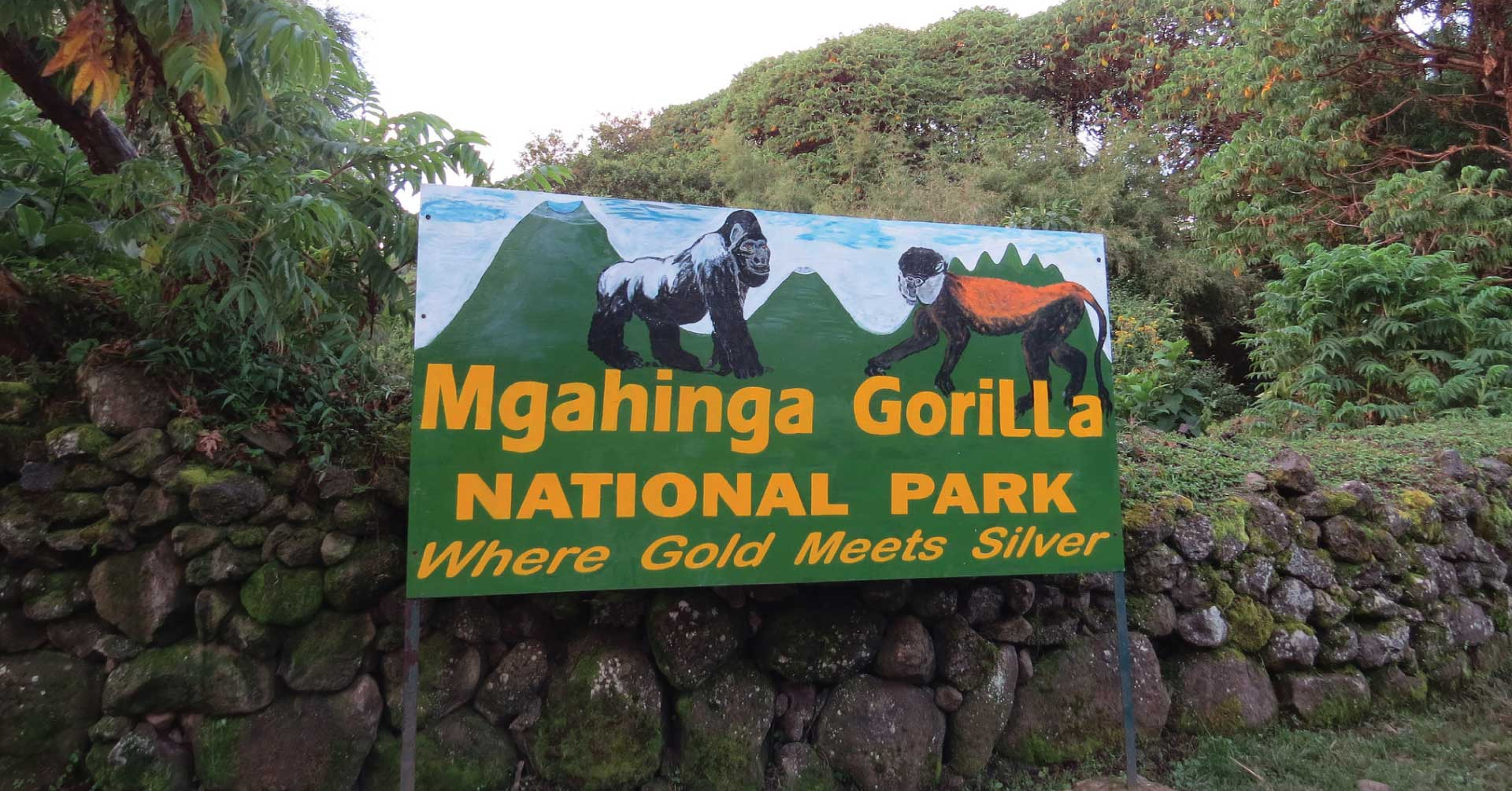
Mgahinga Gorilla National Park offers a very different setting for gorilla trekking over 70 and can be an excellent choice for the right senior traveler.
Located in Kisoro District in southwestern Uganda, Mgahinga forms part of the greater Virunga conservation landscape. Uganda Wildlife Authority states that the park covers approximately 33.7 square kilometres and ranges in altitude from around 2,227 metres to 4,127 metres. The park protects mountain gorillas as well as endangered golden monkeys and is dominated visually by the Virunga volcanoes.
For a senior traveler, Mgahinga’s smaller size should not automatically be interpreted as meaning the gorilla trek will be easier.
Small park does not equal easy trek.
The volcanic landscape is elevated, and the gorillas still move naturally through the forest.
The physical experience therefore depends on the route, gorilla location, weather and individual traveler.
Altitude deserves particular consideration.
A traveler who lives near sea level and rarely undertakes uphill activity may find sustained exertion at higher elevation more noticeable than expected.
Another traveler who regularly hikes may manage very comfortably.
Again, functional ability is more useful than age alone.
Mgahinga can be particularly attractive to travelers who want a quieter-feeling gorilla destination and appreciate dramatic mountain scenery.
The forest is part of a transboundary ecosystem shared across Uganda, Rwanda and the Democratic Republic of Congo.
Standing beneath the Virunga volcanoes creates a powerful sense of place that is very different from many other Uganda safari environments.
Uganda Wildlife Authority currently describes Mgahinga as having a habituated transboundary gorilla group used for tourism.
Because the gorilla tourism setup is more concentrated than Bwindi’s four-sector system, permit planning and accommodation should be arranged carefully in advance.
For senior travelers, access through Kisoro is one of Mgahinga’s practical advantages.
UWA currently states that scheduled and charter flights operate from Entebbe and Kajjansi to Kisoro Airstrip, with flight time given at approximately one hour and ten minutes before an onward road transfer to the park.
This can make Mgahinga much more attractive to someone who does not want a long road journey from central Uganda.
A carefully designed itinerary could therefore include:
arrival and overnight around Entebbe;
flight to Kisoro;
private transfer to the lodge;
a relaxed afternoon;
gorilla trekking the following day;
and another night for recovery.
That sequence preserves energy.
A traveler who has more time may spend additional nights in the Kisoro region.
Mgahinga is also known for golden monkey tracking, another primate experience that can potentially be included for travelers whose fitness and mobility are appropriate. UWA identifies the park as important habitat for the endangered golden monkey.
However, Pieland Gorilla Safaris should not automatically schedule another physically demanding activity immediately after a senior completes gorilla trekking.
The additional experience should be selected according to how active the traveler wants the safari to be.
For some people over 70, gorilla trekking will be the primary physical challenge of the trip.
The following day may be better used for rest, scenic exploration or a relaxed transfer.
Mgahinga may suit a senior traveler particularly well when they:
prefer southern Uganda;
want to use Kisoro flight access;
are comfortable with higher elevations;
enjoy volcanic scenery;
want a focused primate itinerary;
or are combining Uganda with Rwanda.
A traveler with significant respiratory concerns, reduced walking endurance or difficulty at altitude should consider Mgahinga’s elevated environment carefully and seek appropriate professional advice where relevant.
The question should never be:
“Is Mgahinga good for old people?”
The much better question is:
“Does Mgahinga’s altitude, access, terrain and safari style suit this particular traveler?”
For the right person, the answer can be absolutely yes.
Why Uganda Can Work Well for Travelers Over 70
Uganda has several advantages that can make it particularly suitable for gorilla trekking over 70, especially when the safari is privately designed rather than built around a rigid group itinerary.
The first advantage is choice.
Uganda does not offer only one gorilla trekking location. Visitors can trek in Bwindi or Mgahinga, and Bwindi itself is divided into four principal sectors.
This creates flexibility when matching the trekking destination to the wider route.
For senior travel, route efficiency matters.
A poorly designed safari can involve unnecessary backtracking, repeated long drives and constant packing.
A well-designed Uganda itinerary can move naturally from one region to another.
Uganda Offers Useful Fly-In Options
One of the strongest reasons Uganda can work for travelers over 70 is the possibility of reducing road-transfer fatigue through domestic flights.
Uganda Wildlife Authority states that Bwindi can be accessed through flights to Kisoro for the southern sectors and Kihihi for northern access, while Mgahinga can be reached through Kisoro.
This is particularly valuable for travelers whose main physical limitation is not walking but sitting for long periods.
Back stiffness, hip discomfort and swollen legs can make an extended road transfer more tiring than expected.
Flying allows the traveler to conserve energy for the part of the safari that matters most.
Uganda Works Well for Private Safaris
A private safari gives travelers over 70 greater control over pace.
There is no requirement to match the schedule of a large group.
The guide can stop when the traveler needs to stretch.
Bathroom stops can be taken without embarrassment.
Departure can be planned sensibly.
Lunch can be enjoyed without unnecessary rushing.
If the traveler feels tired after an activity, the schedule can often be adjusted.
These small freedoms create a considerably more comfortable journey.
For many older travelers, flexibility is more valuable than speed.
Uganda Combines Gorillas With Easier Wildlife Experiences
Gorilla trekking may be the physically demanding centerpiece of a Uganda safari, but every activity around it does not need to involve strenuous walking.
A traveler can combine gorillas with conventional wildlife viewing from a safari vehicle.
Boat excursions can provide excellent wildlife experiences with limited walking.
Scenic lodge stays offer opportunities for relaxation.
This creates an itinerary where activity levels rise and fall naturally rather than remaining physically demanding every day.
For example, a senior traveler could enjoy:
a game drive;
a boat safari;
a relaxed lodge afternoon;
gorilla trekking;
a recovery day;
and another scenic wildlife experience.
This style allows the body to recover while the safari continues.
Uganda Offers Accommodation Across Different Comfort Levels
The gorilla regions offer accommodation ranging from relatively simple lodges to luxury properties.
For senior travelers, the key is not automatically booking the most expensive option.
Accessibility and convenience should come before status.
A midrange lodge with level pathways and a room close to the restaurant may be more appropriate for someone with mobility limitations than a luxurious hillside property requiring repeated climbing.
Pieland Gorilla Safaris can therefore evaluate accommodation according to the person rather than according to a generic hotel category.
Uganda Allows Slower Itineraries
Many Uganda safaris are marketed around covering as many national parks as possible.
That approach is not necessarily ideal for travelers over 70.
Uganda becomes much more senior-friendly when the itinerary slows down.
Instead of changing accommodation almost every night, travelers can spend two or three nights in important locations.
Instead of driving directly to Bwindi and trekking the following morning after a tiring transfer, the traveler can arrive earlier.
Instead of leaving immediately after trekking, another night can be included.
This does not reduce the quality of the safari.
It usually improves it.
Different Levels of Assistance Can Be Considered
Not every traveler over 70 needs the same level of help.
A highly active senior may simply use a porter for luggage.
Another traveler may need regular hand support on slippery ground.
Someone with substantially reduced walking ability may need more specialized assistance that should be investigated and arranged ahead of time.
This flexibility is central to properly designed accessible gorilla safaris.
The traveler should not be forced into either of two unrealistic categories:
“fully fit” or “cannot trek.”
There is a wide range between those extremes.
Uganda Can Suit Multi-Generational Families
Uganda can also work extremely well when an older traveler is visiting with adult children or grandchildren.
Different generations may have different physical abilities and interests.
A grandfather of 74 may participate fully in gorilla trekking but skip another hike.
Younger family members might choose an additional active excursion while older guests relax at the lodge.
Everyone can then reunite for game drives, meals and wildlife experiences.
The itinerary does not need to force every family member to undertake exactly the same activities.
The Safari Can Be Designed Around Energy, Not Age
The strongest reason Uganda can work well for travelers over 70 is ultimately flexibility.
A senior safari should be designed according to energy levels and functional ability rather than assumptions about age.
A fit 71-year-old may want an active itinerary including gorillas and chimpanzees.
A 76-year-old may prefer gorillas combined with game drives and boat safaris.
An 82-year-old with limited walking ability may need a significantly adapted gorilla experience and a much slower journey.
All three are senior travelers.
They should not receive the same safari simply because they belong to the same age category.
Pieland Gorilla Safaris can therefore approach gorilla trekking over 70 in Uganda by first understanding the traveler and then selecting the destination, sector, lodge, vehicle, flight arrangements and trekking support that best fit them.
That is where Uganda’s variety becomes especially valuable.
Bwindi provides several trekking sectors and extensive safari connections.
Mgahinga provides a distinct Virunga mountain experience with convenient access through Kisoro.
Domestic flights can reduce long road journeys.
Private 4×4 transportation provides flexibility.
Porters can reduce trekking strain.
Appropriate accommodation can reduce unnecessary daily walking.
Rest nights can protect energy.
And Uganda’s wider wildlife circuit allows the demanding gorilla trek to be balanced with more relaxed safari experiences.
For travelers in their seventies, this combination can make Uganda not merely a place where gorilla trekking over 70 is possible, but a destination where the entire journey can be designed thoughtfully around comfort, ability and the extraordinary goal of seeing mountain gorillas in the wild.
Best Bwindi Sectors for Gorilla Trekking Over 70
Choosing the best Bwindi sector for gorilla trekking over 70 is one of the most important decisions when designing a senior-friendly gorilla safari in Uganda. Bwindi Impenetrable National Park is not accessed from one single entrance. Gorilla trekking is organized from four principal sectors—Buhoma, Ruhija, Rushaga and Nkuringo—and each has different road approaches, accommodation options, surrounding landscapes and connections with other safari destinations.
For travelers in their seventies, the correct sector should not be selected simply because a website describes one area as “easy.” Mountain gorillas move naturally through their forest ranges, and their location changes continually. A trek that takes relatively little time one morning may be longer the following day. Weather, vegetation, recent gorilla movements and terrain all influence the difficulty of the experience.
This makes it impossible to guarantee that one Bwindi sector will always provide the shortest gorilla trek for senior travelers.
A better approach is to choose the sector according to factors that can actually be controlled.
These include how the traveler will reach Bwindi, whether they prefer to fly or travel by road, where their safari is coming from, the accessibility of their selected lodge, how much rest they will have before trekking, whether they have knee or hip limitations, their tolerance for slopes, and what level of porter or mobility assistance may be required.
For gorilla trekking over 70, the most suitable sector is therefore the one that creates the best overall journey around the individual traveler.
A physically active 72-year-old may be comfortable in any of Bwindi’s four sectors. A 78-year-old who struggles with long road journeys may benefit greatly from choosing a sector that connects conveniently with domestic flights. Another traveler may have good stamina but weak knees and need a lodge with minimal steps combined with strong porter support.
The sector should fit the traveler—not the traveler being forced to fit the sector.
Buhoma Sector
Why Buhoma Is Popular With Senior Gorilla Trekkers
Buhoma Sector is located on the northern side of Bwindi Impenetrable National Park and is one of the most established gorilla trekking areas in Uganda. It has a long history of gorilla tourism, an extensive range of safari accommodation and convenient connections with northern Uganda safari routes.
For travelers over 70, Buhoma’s strongest advantages are often logistical rather than a guarantee of easier trekking.
The area can be accessed through Kihihi, making fly-in safari arrangements possible for travelers who want to avoid long overland journeys from Entebbe or Kampala. After arriving at Kihihi, visitors continue to the Buhoma area by private safari vehicle.
This can be especially useful for senior travelers who remain physically capable of gorilla trekking but experience discomfort after many hours sitting in a vehicle.
A long road journey can cause hip stiffness, lower-back discomfort or swollen legs, leaving the traveler less prepared for trekking the following morning. Flying into the region can help preserve physical energy for the forest experience itself.
Buhoma and Queen Elizabeth National Park
Another important advantage of Buhoma is its natural connection with Queen Elizabeth National Park, particularly for itineraries moving through the Ishasha region.
This makes Buhoma extremely useful when gorilla trekking forms part of a wider Uganda wildlife safari.
A carefully paced senior itinerary might include several nights in Queen Elizabeth National Park before continuing toward Bwindi. The traveler can enjoy wildlife viewing from a comfortable safari vehicle, take a boat safari, relax at the lodge and then travel toward Buhoma.
This sequence works particularly well because not every day involves strenuous activity.
The physically demanding gorilla trek can be surrounded by easier safari experiences, allowing travelers over 70 to conserve and recover their energy.
Accommodation Advantages in Buhoma
Buhoma has a wide variety of lodges ranging from comfortable midrange properties to high-end luxury accommodation.
For a senior traveler, however, the most luxurious lodge is not automatically the best lodge.
Accessibility should be considered carefully.
Bwindi’s natural landscape is mountainous, and some lodges are built along forested slopes. A property may provide spectacular views while requiring guests to walk along steep pathways or climb several sets of steps between their room and restaurant.
For someone with strong knees this may be perfectly acceptable.
For a traveler with arthritis or reduced balance, it can become unnecessarily tiring.
Before confirming accommodation in Buhoma, useful questions include:
Is a ground-level room available?
Are there many steps between the room and restaurant?
Can the vehicle stop close to the guest room?
Does the bathroom have an easily accessible shower?
Do pathways become slippery after rain?
How far is the room from the main lodge facilities?
Can luggage assistance be provided?
These details become even more important after the gorilla trek, when the traveler may return tired from several hours in the forest.
Is Gorilla Trekking in Buhoma Easier for Seniors?
Buhoma is sometimes described online as one of the easier Bwindi sectors.
That statement should be treated carefully.
Buhoma may offer excellent logistics for seniors, but nobody can responsibly guarantee an easy trek.
Mountain gorillas move.
The route taken on trekking morning depends on where the assigned gorilla family is located.
A senior traveler may enjoy a relatively manageable trek one day, while another traveler using the same sector may walk considerably farther later in the week.
For Pieland Gorilla Safaris, Buhoma should therefore be recommended because it can provide convenient access, established accommodation and easy integration into northern safari routes—not because of an impossible guarantee that its gorillas will always be close.
Who May Prefer Buhoma?
Buhoma may work particularly well for:
travelers flying through Kihihi;
seniors combining Bwindi with Queen Elizabeth National Park;
travelers who prefer established safari infrastructure;
people who want a wide range of lodge choices;
senior couples seeking a slower multi-night stay;
and travelers who want to avoid unnecessary cross-country road transfers.
For many travelers over 70, these advantages make Buhoma one of the most practical places to base a Bwindi gorilla safari
Ruhija Sector
Gorilla Trekking Over 70 in Ruhija
Ruhija Sector, located in eastern Bwindi, offers a different experience from Buhoma. It is surrounded by elevated forest landscapes and can suit active senior travelers whose itinerary naturally approaches Bwindi from Kabale, Lake Bunyonyi or other areas of southwestern Uganda.
Ruhija’s geographical position makes route planning particularly important.
Senior travelers should not choose it simply because a preferred lodge is available. The direction of travel before and after the gorilla trek should be considered so that unnecessary road journeys are avoided.
Long, winding mountain roads can be tiring even when a traveler is physically fit.
For someone over 70, a private vehicle allows the journey to be broken up with stretching stops, bathroom breaks, refreshments and photography.
This is one reason private gorilla safaris often work better than rigid shared departures for senior guests.
Terrain Considerations in Ruhija
Ruhija is situated in an elevated part of Bwindi.
Travelers should therefore prepare for mountainous forest terrain rather than expecting a level nature walk.
The route may involve slopes, vegetation, roots, mud and uneven sections.
For senior travelers, the important consideration is not simply how many hours they can walk.
Balance and joint mobility matter greatly.
Someone who regularly walks long distances on paved roads may still find natural forest terrain challenging.
An active 70-year-old with good balance may manage extremely well.
A traveler with significant knee weakness may need to move more slowly and rely more heavily on porter support.
Neither situation automatically makes Ruhija appropriate or inappropriate.
The decision should be individualized.
Why Porter Support Matters in Ruhija
Porter assistance can be especially valuable for older travelers.
A porter can carry the traveler’s daypack, water, rainwear and camera equipment.
This reduces unnecessary weight.
More importantly, the porter can provide physical support when the traveler encounters a steep, muddy or uneven section.
For a traveler over 70, conserving energy from the beginning is usually wiser than waiting until complete fatigue develops.
Some seniors initially decline porters because they exercise regularly.
That is understandable, but gorilla trekking is unpredictable.
A traveler may feel excellent during the first hour and still appreciate assistance later.
The goal is not proving physical independence.
The goal is experiencing the gorillas comfortably.
Accommodation and Rest in Ruhija
A senior-friendly Ruhija itinerary should ideally include enough time for the traveler to arrive before evening and settle into the lodge.
Arriving very late after a long road transfer and waking early for gorilla briefing is not ideal.
Whenever the schedule allows, travelers over 70 should reach the area earlier, hydrate, eat properly and sleep well before trekking.
Accommodation should again be evaluated according to accessibility.
Rooms close to dining facilities can be particularly useful.
Minimal steps are preferable for guests with joint concerns.
Warm showers, comfortable beds and easy access to the safari vehicle can make the stay considerably more enjoyable.
Who May Prefer Ruhija?
Ruhija may suit:
active travelers over 70;
senior travelers approaching from Kabale or Lake Bunyonyi;
visitors comfortable with mountain terrain;
travelers seeking a quieter-feeling forest environment;
and travelers whose wider Uganda itinerary naturally passes through eastern Bwindi.
The key is route efficiency and realistic preparation.
Rushaga Sector
Why Rushaga Can Work Well for Travelers Over 70
Rushaga Sector is located in southern Bwindi and is one of the most important gorilla trekking areas for travelers approaching through Kisoro or from Rwanda.
For senior travelers, its location can provide significant logistical advantages.
Those traveling from Entebbe can consider domestic flights toward Kisoro, followed by a private road transfer into the southern Bwindi region.
This can remove many hours of overland driving.
For someone in their seventies who remains capable of forest trekking but finds prolonged road travel tiring, the difference can be significant.
Reducing road fatigue allows the traveler to arrive at the lodge with stronger legs, less back stiffness and greater energy for trekking morning.
Rushaga for Travelers Coming From Rwanda
Rushaga can also fit naturally into itineraries beginning in Kigali.
Depending on border requirements and the route being used, southern Bwindi can be approached from Rwanda without first traveling through central Uganda.
This is one reason many short Uganda gorilla safaris begin in Kigali.
For travelers over 70, however, a cross-border transfer should still be paced comfortably.
The objective should not be to complete airport arrival, border formalities, long driving and numerous sightseeing stops in one exhausting day.
Where possible, the itinerary should allow time for rest before trekking.
Accommodation in Rushaga
Rushaga and the surrounding southern Bwindi area offer a range of accommodation options.
For senior travelers, the distance from the lodge to trekking headquarters can be particularly important.
A lodge situated conveniently for the correct trekking area reduces morning transfer time.
This allows the guest to wake at a reasonable time, eat breakfast and arrive for briefing without beginning the day with a stressful journey.
Inside the lodge itself, accessibility should again be checked.
Some senior travelers may benefit from:
rooms near the restaurant;
minimal staircases;
walk-in showers;
easy vehicle access;
staff support with bags;
and secure pathways.
This is particularly relevant during rainy conditions.
A beautiful lodge may still be frustrating for someone with reduced mobility if reaching the dining room requires repeated climbing.
Is Rushaga Good for Active Seniors?
Rushaga can be excellent for physically active travelers over 70.
However, as elsewhere in Bwindi, the actual trekking difficulty varies.
The gorillas may be encountered relatively quickly or may require a longer forest walk.
Senior travelers should therefore approach Rushaga with realistic expectations.
Porter assistance is advisable for many older travelers.
Even fit visitors can conserve energy by having someone else carry their belongings.
A porter also provides reassurance when negotiating wet terrain.
Rushaga for Couples With Different Fitness Levels
Rushaga can work particularly well for couples where one traveler is more physically capable than the other.
One partner may complete the trek independently with light porter assistance.
The other may require greater physical support.
The safari surrounding the trekking experience can still be shared.
Both travelers can stay at the same lodge, use the same private safari vehicle and enjoy the rest of Uganda together.
This is one of the strengths of personalized senior safari planning.
Who May Prefer Rushaga?
Rushaga may be particularly attractive for:
travelers using Kisoro flights;
visitors approaching from Kigali or Rwanda;
senior couples;
multi-generational families;
travelers who want southern Bwindi;
and visitors seeking several accommodation choices near the trekking region.
For Pieland Gorilla Safaris, Rushaga can therefore be a strong option when route planning and mobility needs align.
Nkuringo Sector
Gorilla Trekking Over 70 in Nkuringo
Nkuringo Sector is located in southern Bwindi and is famous for its dramatic highland environment.
For active travelers over 70, Nkuringo can provide one of the most memorable settings in Bwindi.
The surrounding landscape is characterized by steep hills and expansive mountain views.
This scenery is spectacular, but it also means that travelers with mobility limitations should consider the area thoughtfully.
Nkuringo should not automatically be described as unsuitable for senior travelers.
Many people in their seventies remain physically active and can enjoy the area comfortably.
However, the physical environment means that individual mobility matters greatly.
Fitness Considerations for Nkuringo
A traveler considering Nkuringo should think about:
comfort on slopes;
knee strength;
balance;
ability to descend safely;
walking endurance;
and tolerance for higher-elevation environments.
Someone who hikes regularly and has good balance may enjoy Nkuringo enormously.
Another traveler who has serious knee problems may prefer a location where the surrounding lodge and transfer logistics are easier to manage.
Again, age by itself provides too little information.
A fit 76-year-old can be considerably more capable than a sedentary traveler twenty years younger.
Accommodation Is Particularly Important
Lodge selection deserves special attention in Nkuringo.
Highland lodges are often designed to maximize panoramic views.
This can mean rooms being positioned on slopes or at different elevations.
For a traveler with limited mobility, it is essential to check where the room is located.
A senior guest should not spend unnecessary energy climbing between accommodation and dining areas every day.
Pieland Gorilla Safaris should therefore establish in advance whether:
an easily accessible room is available;
the guest can avoid long staircases;
the vehicle can approach reasonably close;
the bathroom layout is convenient;
and lodge staff can provide luggage assistance.
These details can completely change the experience.
Flying Into Southern Bwindi
Nkuringo can be approached through southern Uganda using Kisoro as an important regional air gateway.
For travelers over 70, combining domestic flights with private road transfers can make the journey significantly more comfortable.
A fly-in arrangement allows the traveler to avoid spending most of the day driving from Entebbe.
Instead, they can reach southwestern Uganda much earlier and use the remaining time to relax.
Should Travelers With Limited Mobility Avoid Nkuringo?
Not automatically.
The correct approach is assessment rather than exclusion.
Someone with mild mobility limitations may still enjoy Nkuringo comfortably with the correct lodge, private transportation and porter support.
Someone with more substantial walking limitations may require specialized assistance.
The important thing is discussing these requirements before permits and accommodation are confirmed.
Who May Prefer Nkuringo?
Nkuringo may particularly appeal to:
active seniors;
experienced walkers;
travelers who enjoy mountain scenery;
guests comfortable with slopes;
visitors using southern Bwindi routes;
and travelers prepared to spend multiple nights in the area.
For the right traveler, Nkuringo offers an extraordinary combination of gorilla trekking and dramatic scenery.
Which Bwindi Sector Is Best for a 70-Year-Old?
There is no universal best Bwindi sector for every 70-year-old traveler.
This is the most accurate answer.
A traveler’s chronological age should never be the only factor used to determine their trekking sector.
Consider four different travelers, each aged 72.
One regularly hikes and has excellent balance.
Another walks every day but experiences knee pain on descents.
Another remains physically fit but develops significant back stiffness during long drives.
The fourth uses a walking stick and requires assistance on uneven ground.
They are exactly the same age but have completely different safari requirements.
For this reason, Pieland Gorilla Safaris should begin with the traveler’s functional ability before choosing a sector.
Buhoma May Be Best When Logistics Are the Priority
Buhoma is often a strong choice for travelers who want:
northern Bwindi;
Kihihi flight access;
easy integration with Queen Elizabeth National Park;
established accommodation;
and a convenient multi-night gorilla stay.
For many senior travelers, these logistical strengths make Buhoma extremely attractive.
Ruhija May Be Best for Active Travelers Approaching Eastern Bwindi
Ruhija can fit well when the itinerary naturally approaches through Kabale or nearby areas.
It may suit active seniors comfortable with elevated forest environments and winding road access.
Rushaga May Be Best for Southern Access
Rushaga often works particularly well for travelers using:
Kisoro flights;
Kigali arrivals;
Rwanda-Uganda combinations;
or southern Bwindi itineraries.
Its wide accommodation selection also creates flexibility.
Nkuringo May Be Best for Fit Seniors Seeking Mountain Scenery
Nkuringo can be particularly rewarding for physically active travelers who value panoramic landscapes and are comfortable with highland terrain.
Travelers with significant mobility limitations may require more careful planning.
Do Senior Travelers Get Easier Gorilla Families?
Senior travelers can communicate their mobility limitations during trekking registration and briefing.
This is important.
However, no safari operator should promise that a traveler over 70 will automatically receive the closest gorilla family.
Mountain gorillas move freely.
A group that was nearby yesterday may travel farther overnight.
Rainfall can alter trail conditions.
Vegetation can change the route.
The correct approach is therefore to communicate mobility limitations while preparing for the possibility that the trek may still involve meaningful physical effort.
Instead of saying:
“We guarantee the easiest gorilla family.”
A responsible safari operator should say:
“We will communicate your mobility requirements clearly and arrange appropriate trekking support, while recognizing that the gorillas’ location cannot be guaranteed.”
That is a far more realistic promise.
Factors We Consider Before Choosing a Bwindi Sector
Before recommending Buhoma, Ruhija, Rushaga or Nkuringo for a traveler over 70, it is useful to understand:
Current Walking Ability
How long can the traveler comfortably walk?
Balance
Are uneven surfaces difficult?
Knees
Is descending more challenging than climbing?
Hips
Does the traveler experience stiffness after long periods sitting?
Walking Assistance
Do they normally use a cane, trekking pole or walker?
Previous Surgery
Have they undergone hip or knee replacement?
Road-Travel Tolerance
Can they comfortably spend many hours in a safari vehicle?
Preferred Arrival Airport
Will the safari begin in Entebbe or Kigali?
Domestic Flight Preference
Would the traveler prefer Kihihi or Kisoro access?
Wider Safari Route
Will they combine gorillas with Queen Elizabeth National Park, Lake Bunyonyi, Rwanda or another destination?
Accommodation Needs
Do they require a ground-level room or minimal steps?
Trekking Support
Will they require an ordinary porter or potentially more specialized mobility assistance?
Safari Pace
Would additional nights before and after trekking improve comfort?
Once these questions are answered, choosing the best Bwindi sector becomes much easier.
Best Overall Approach to Bwindi Gorilla Trekking Over 70
The strongest strategy for gorilla trekking over 70 in Bwindi is not searching endlessly for the sector described as easiest.
Instead, focus on creating the easiest overall journey.
Reduce unnecessary road travel.
Choose the correct airstrip where flying makes sense.
Select a lodge convenient for the trekking headquarters.
Request an accessible room.
Arrive early enough to rest.
Hire a porter.
Carry as little weight as possible.
Communicate mobility concerns honestly.
Allow a relaxed afternoon after trekking.
And avoid unnecessary transfers immediately afterward.
A senior traveler who follows this approach may have a much more comfortable safari than someone who simply chooses a supposedly easy sector and ignores everything surrounding the trek.
For Pieland Gorilla Safaris, the guiding principle should therefore remain:
Buhoma, Ruhija, Rushaga and Nkuringo can all work for travelers over 70. The best sector is the one whose access, accommodation, terrain and wider safari logistics best match the individual traveler.
That personalized approach is what turns a standard Bwindi gorilla trek into a carefully designed gorilla trekking experience for travelers over 70.
Gorilla Trekking Over 70 in Rwanda
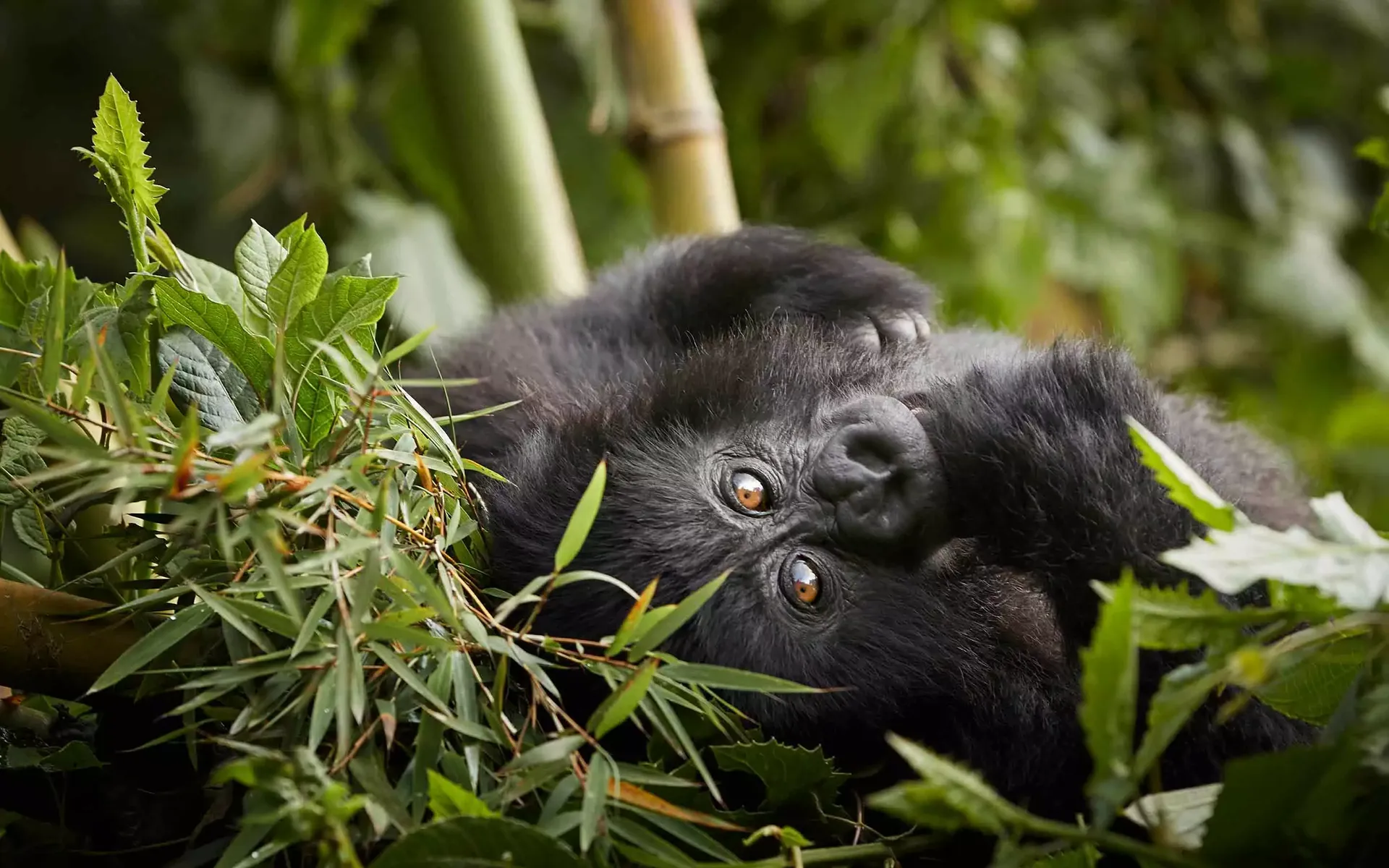
Gorilla trekking over 70 in Rwanda can be an excellent choice for older travelers who want to experience mountain gorillas while keeping the wider safari relatively compact, comfortable and easy to organize. Rwanda’s principal advantage for senior gorilla trekkers is not that walking through the forest is automatically easier than trekking in Uganda. The stronger advantage is the country’s efficient logistics. Travelers can arrive through Kigali, reach the Volcanoes National Park region by road in approximately three hours, stay close to the trekking headquarters and undertake the gorilla experience without first completing a full day of cross-country driving. Rwanda’s official tourism itineraries describe the Kigali-to-Volcanoes journey as roughly a three-hour drive through the country’s green highland scenery.
This distinction matters greatly for travelers in their seventies. A physically active 72-year-old may have no significant difficulty walking through a forest but may dislike spending eight or nine hours sitting in a safari vehicle. Another traveler may have arthritis, hip stiffness or lower-back discomfort that becomes more noticeable after prolonged driving. Rwanda allows the road portion surrounding the gorilla experience to remain comparatively compact, helping travelers preserve more of their physical energy for trekking morning.
However, gorilla trekking in Rwanda should never be described as guaranteed easy trekking for seniors. Mountain gorillas live freely on the forested slopes of the Virunga Massif, and the distance required to reach them changes according to the location of the assigned family. Visit Rwanda states that hikes to different gorilla groups can range from approximately 30 minutes to four or more hours and can reach elevations between approximately 2,500 and 4,000 metres. Visitors are allocated to gorilla families at the morning briefing partly according to fitness levels, but the animals’ natural movements mean no particular walking time can be promised in advance.
This is particularly important when planning gorilla trekking over 70 in Rwanda. A senior traveler should not book the experience because someone promises that Rwanda’s gorillas will always be easier to reach. Instead, Rwanda should be chosen when its overall safari structure suits the traveler’s abilities: shorter road logistics, excellent accommodation around the gorilla region, established porter assistance, a private vehicle, several nights in one location and the opportunity to rest before and after trekking.
A carefully designed Rwanda senior gorilla safari might begin with an overnight stay in Kigali after the international flight. Rather than immediately driving toward the mountains after a long journey, the traveler can sleep comfortably and begin the next morning rested. The following day can be used for the scenic transfer to Volcanoes National Park, with sufficient time for lunch, comfort stops and a relaxed afternoon at the lodge. Gorilla trekking then takes place only after another proper night’s sleep.
For many travelers over 70, this pacing is considerably better than attempting to land in Kigali, drive directly to Volcanoes National Park, arrive late and trek early the following morning.
The trekking day itself can also remain intentionally simple.
After the gorilla encounter, there is no need to schedule another strenuous hike simply because several hours remain in the day. Visit Rwanda’s own suggested gorilla itineraries allow travelers to return to their hotel after trekking for a relaxed afternoon or evening. For a senior traveler, this is excellent safari design. A hot shower, comfortable lunch, rest and time to enjoy the lodge may provide far greater value than trying to fit another physically demanding activity into the same day.
Rwanda can also work well for senior couples whose fitness levels differ. One partner may be extremely active at 74 while the other walks more slowly or requires porter support. The entire itinerary does not need to be determined by the stronger traveler. Both guests can stay at the same comfortable lodge, travel privately and enjoy the wider journey together, while trekking assistance is tailored to the individual.
Travelers who want a longer Rwanda safari can combine Volcanoes National Park with less physically demanding experiences. Akagera National Park, for example, allows wildlife viewing primarily from a safari vehicle, while Lake Kivu can provide scenic relaxation. Rwanda’s official itineraries combine gorilla trekking with safari and lakeside experiences, showing how a longer itinerary can vary its activity level rather than requiring strenuous walking every day.
For gorilla trekking over 70, this balance can be particularly attractive. The gorilla trek becomes the major physical challenge of the holiday, surrounded by comfortable road journeys, scenic lodge stays and wildlife experiences that require much less walking.
The most successful Rwanda gorilla safari for an older traveler therefore begins by understanding the person.
Can they walk steadily for several hours?
Do they have difficulty with steep descents?
Do they use a walking stick?
Do they have good cardiovascular fitness but weaker knees?
Do they become uncomfortable during long road transfers?
Would they benefit from a ground-level room?
Would porter assistance be useful?
Do they prefer an extra day before trekking?
These questions are far more valuable than simply asking whether the traveler is 70, 75 or 79.
Pieland Gorilla Safaris can use Rwanda’s compact geography to design the entire journey around the traveler, while remaining clear that the natural gorilla trek itself retains an element of unpredictability.
Volcanoes National Park
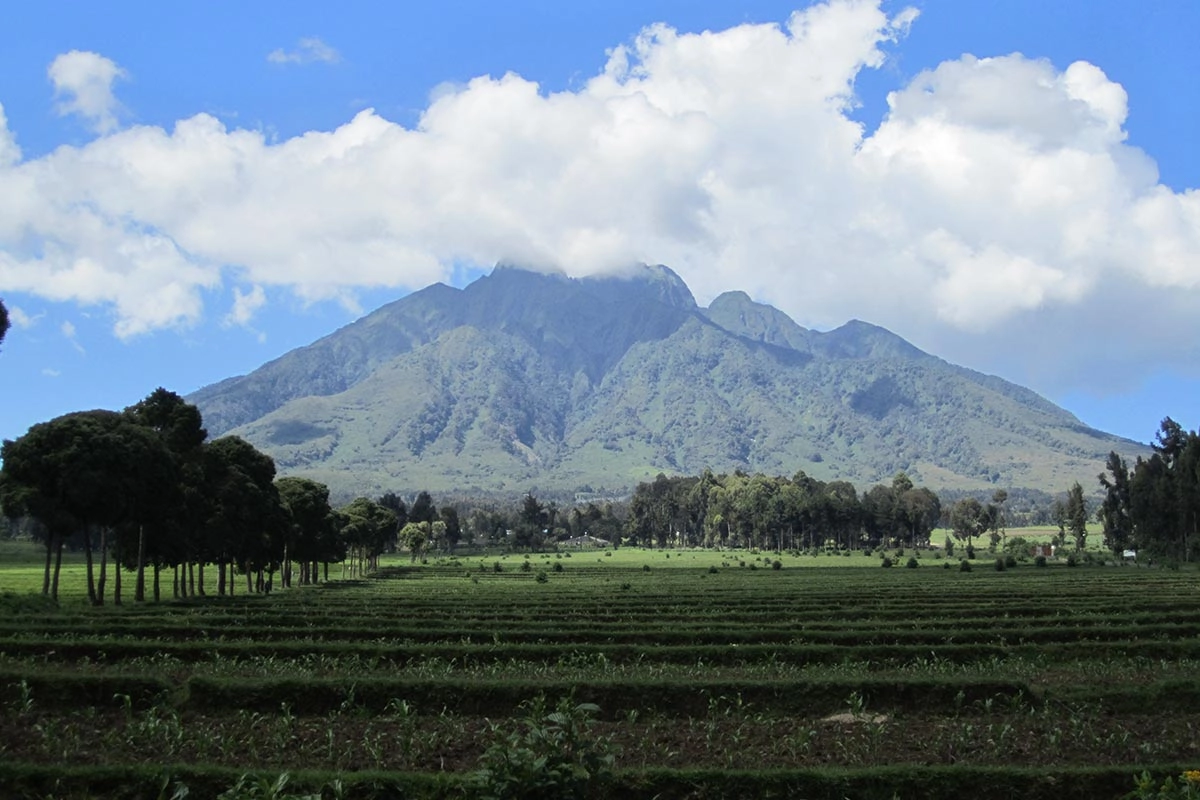
Volcanoes National Park is Rwanda’s mountain gorilla trekking destination and the centerpiece of gorilla trekking over 70 in Rwanda. Located in the country’s northwest within the Virunga Massif, the park protects forested volcanic slopes inhabited by habituated mountain gorilla families. Visit Rwanda currently states that twelve gorilla families are habituated for tourism, with eight visitor permits issued per family per day, creating a maximum of 96 gorilla permits daily under the current system.
For a traveler over 70, understanding the physical character of Volcanoes National Park is important before focusing on luxury lodges or permit availability.
This is a mountain environment.
The gorilla encounter begins with a morning briefing at the park headquarters in Kinigi, where Visit Rwanda currently instructs visitors to gather at around 7:00 a.m. Travelers are briefed on gorilla rules and organized into groups, with fitness levels considered during the allocation process.
For senior travelers, this briefing is more than an administrative procedure.
It is an important opportunity to communicate physical ability clearly.
A traveler should avoid simply saying:
“I am 74, so I need an easy trek.”
Age alone provides limited useful information.
A much better explanation would be:
“I can walk for several hours at a steady pace, but steep downhill sections are difficult for my knees.”
Or:
“I have good endurance, but I need support on slippery ground.”
Or:
“I walk slowly and use a trekking pole, but I can remain active for several hours.”
These descriptions provide much more practical information when trekking groups are being organized.
Visit Rwanda states that hiking time to the different gorilla families can vary from around 30 minutes to more than four hours and that routes may reach approximately 2,500 to 4,000 metres in elevation. This variation illustrates why even an apparently short Rwanda itinerary needs appropriate physical preparation.
The allocation process should also never be misunderstood as a guarantee that an older traveler will receive the nearest gorilla family.
The family may move.
Forest conditions can change.
Rain may make sections slower.
The gorillas ultimately determine where the trek leads.
For travelers over 70, the safest strategy is therefore to prepare for a meaningful forest walk while asking that genuine mobility needs be considered.
Terrain in Volcanoes National Park
The forest environment can include bamboo-covered slopes, vegetation, uneven ground and wet or muddy areas. Visit Rwanda recommends solid walking shoes, sturdy clothing, gaiters, gloves and a lightweight waterproof jacket for gorilla tracking.
These recommendations become particularly important for older travelers.
A pair of boots with reliable grip can improve stability.
Gaiters help protect lower legs from vegetation and moisture.
Gloves can be useful around vegetation.
A waterproof jacket allows the traveler to remain comfortable if rain begins.
For someone over 70, these are not merely optional safari accessories. They contribute directly to comfort and confidence.
Balance deserves special attention.
A traveler may comfortably walk several kilometres through their neighborhood at home but discover that an equivalent distance on natural mountain terrain feels very different.
Roots, uneven surfaces and slippery sections require constant small adjustments.
Someone with excellent cardiovascular fitness but reduced stability may therefore find parts of the forest more challenging than expected.
This is why porter support can be valuable even for physically active senior trekkers.
Porters for Travelers Over 70
Visit Rwanda explicitly states that porters are available to carry backpacks and cameras and to provide a helping hand along the route.
For travelers over 70, hiring a porter should usually be considered sensible preparation rather than evidence of physical weakness.
Even a fit 72-year-old benefits from not carrying several kilograms of water, rainwear and camera equipment while walking uphill.
Removing weight reduces energy expenditure.
The porter can also offer physical support through difficult sections.
This can become particularly useful during descent, when knees and balance may be under greater strain.
A senior traveler may barely need physical assistance for most of the trek and still be extremely grateful to have a porter available when encountering one slippery slope.
The objective is not to rely unnecessarily on another person.
The objective is to preserve energy for the entire experience, including the return walk after seeing the gorillas.
Altitude and Senior Travelers
The elevation of the gorilla trekking environment is another consideration for travelers over 70.
Visit Rwanda notes that gorilla hikes may reach elevations between approximately 2,500 and 4,000 metres depending on the gorilla family’s location. The wider Virunga Massif contains volcanic peaks extending even higher, reinforcing the mountainous nature of the environment.
A traveler who normally lives near sea level may notice that climbing requires more effort.
This does not automatically create a problem.
Many active seniors cope very well.
However, travelers should avoid rushing uphill simply because others in the group appear to be moving faster.
A sustainable pace matters far more.
Anyone with a medical condition that could be affected by altitude or sustained physical exertion should seek individualized advice from an appropriate healthcare professional before travel.
The safari operator can arrange logistics and assistance, but medical suitability is personal.
Gorilla Viewing Time
After the assigned gorilla family is located, the standard encounter allows visitors to spend up to one hour with the gorillas under the current Rwanda tourism system.
For many travelers over 70, this hour becomes the emotional centerpiece of the entire journey.
After hours of preparation, international travel and perhaps a challenging forest walk, the traveler may suddenly find themselves only a short distance from a silverback resting in the vegetation, a mother carrying an infant or juveniles playing near their family.
This is why conserving physical energy matters.
The traveler should reach the gorillas capable of enjoying the moment rather than feeling completely exhausted.
Porter support, slower walking, appropriate footwear and good pacing all contribute toward that goal.
Staying Near Volcanoes National Park
Accommodation selection can significantly affect the senior trekking experience.
The Musanze and Kinigi areas offer a wide range of properties, from conventional hotels to boutique lodges and high-end luxury accommodation. Visit Rwanda identifies Musanze as a major base for gorilla tracking and notes that the Kinigi headquarters is approximately 13 kilometres from Musanze, while accommodation is also available closer to the park fringes.
For travelers over 70, staying closer to the trekking headquarters can be particularly valuable.
The morning already begins early.
Adding an unnecessarily long transfer before briefing can reduce sleep and increase stress.
A lodge closer to Kinigi can allow a more relaxed start.
However, proximity alone does not make a property senior-friendly.
The internal layout of the lodge matters.
Before Pieland Gorilla Safaris confirms accommodation for a guest with mobility concerns, it is useful to establish:
whether a ground-level room is available;
whether there are many stairs;
how far the room is from the restaurant;
whether pathways are steep;
how close the vehicle can approach;
whether bathrooms are easy to enter;
and whether lodge staff can assist with luggage.
Visit Rwanda’s accommodation listings include both properties near the trekking area and hilltop lodges, illustrating the wide variety of settings available around Volcanoes National Park.
For a mobile 71-year-old, a hillside lodge may be completely comfortable.
For someone with significant knee problems, a flatter property with easier room access may provide a much better safari.
The most expensive lodge is therefore not automatically the most suitable lodge for every senior.
Why Rwanda Can Work Well for Older Gorilla Trekkers
Rwanda has several characteristics that can make it especially appealing for older gorilla trekkers, but its strongest advantage is the ability to simplify everything surrounding the trek.
The forest remains wild.
The terrain remains mountainous.
The gorillas still move naturally.
What Rwanda simplifies is the journey around the forest.
Shorter Overall Road Logistics
Visit Rwanda’s official itinerary describes the journey from Kigali to Volcanoes National Park as approximately three hours by road.
For many senior travelers, this is one of Rwanda’s greatest strengths.
A three-hour private drive can easily be divided with a comfort stop.
The traveler can leave Kigali after breakfast, travel gradually through Rwanda’s highland countryside and arrive in the Volcanoes region with much of the day remaining.
This makes it possible to avoid extremely long transfer days.
Someone over 70 who experiences back, hip or knee stiffness during prolonged sitting may value this more than almost any other feature of the safari.
Several Nights in One Place
Rwanda also allows travelers to avoid changing accommodation constantly.
A comfortable senior itinerary could include:
Kigali;
three nights near Volcanoes National Park;
and Kigali again.
The traveler unpacks once in the gorilla region.
They become familiar with the lodge.
They know where the restaurant is.
They do not have to pack luggage immediately after the trek.
For older travelers, reducing repeated hotel changes can significantly reduce fatigue.
Excellent Rest Before Trekking
Because the road transfer is relatively compact, it is easier to reach the gorilla region early enough to rest properly.
Visit Rwanda’s own itineraries encourage travelers to spend the evening relaxing and preparing before the following morning’s gorilla trek.
This is exactly the approach many senior travelers need.
Arrive.
Have lunch.
Walk gently around the lodge if desired.
Prepare trekking clothes.
Organize medication.
Drink enough water.
Eat dinner.
Sleep properly.
Then begin the gorilla experience rested.
Strong Porter Support
Porters are officially incorporated into the Volcanoes National Park trekking experience, with Visit Rwanda specifically noting their role in carrying bags and providing assistance along the route.
For older travelers, this is highly valuable.
A porter can reduce both physical load and psychological stress.
Knowing that someone is available to provide a steady hand can make a traveler feel much more confident approaching uneven terrain.
Fitness Considered During Group Allocation
Rwanda’s current trekking system considers visitors’ fitness during gorilla-family allocation on trekking morning.
This can be beneficial for older travelers when mobility requirements are communicated honestly.
Again, it does not mean a short trek can be guaranteed.
However, it creates an opportunity for genuine physical concerns to be considered before groups depart.
Wide Accommodation Range
The Volcanoes region offers accommodations across several comfort levels, including properties close to the trekking area and high-end lodges throughout the surrounding landscape. Visit Rwanda maintains accommodation listings for the region, including properties in Musanze, Kinigi and near the park.
This creates flexibility when matching a lodge to the traveler’s budget and mobility.
A senior traveler can prioritize accessibility rather than simply choosing the most famous lodge.
Easy Combination With Kigali
Rwanda’s compact geography means a gorilla journey can combine naturally with Kigali.
This can be particularly valuable after a long international flight.
Instead of transferring immediately into the mountains, travelers over 70 can spend the first night in Kigali, recover from the flight and begin the road journey the following morning.
The same principle works after trekking.
Rather than driving directly from Volcanoes National Park to the airport for a tight international departure, an older traveler may prefer returning to Kigali one day earlier and spending the final night near the airport.
This removes unnecessary pressure.
Easy Combination With Other Rwanda Experiences
Senior travelers who want a longer journey can add additional destinations without turning the holiday into continuous trekking.
Visit Rwanda’s official itineraries combine Volcanoes National Park with Akagera National Park and Lake Kivu.
Game drives in Akagera can provide classic wildlife experiences primarily from a vehicle.
Lake Kivu can provide scenic relaxation.
This allows gorilla trekking to remain the major physical activity rather than one of several strenuous experiences scheduled consecutively.
Rwanda Is Particularly Good for Short Senior Gorilla Safaris
A traveler over 70 who has limited holiday time but does not want an exhausting itinerary may find Rwanda especially attractive.
A properly paced four- or five-day trip can include:
arrival and rest in Kigali;
a relaxed transfer to Volcanoes National Park;
a full gorilla trekking day;
a recovery day or scenic activity;
and an unhurried return to Kigali.
That is a short safari without being a rushed safari.
This distinction is extremely important.
Short does not have to mean exhausting.
Kigali to Volcanoes National Park Logistics
Understanding the Kigali to Volcanoes National Park logistics is essential when planning gorilla trekking over 70 in Rwanda.
Visit Rwanda currently describes the road journey from Kigali to the Volcanoes National Park region as approximately three hours, traveling north through Rwanda’s green highland countryside.
For senior travelers, this relatively compact transfer creates several itinerary possibilities.
Arrival at Kigali International Airport
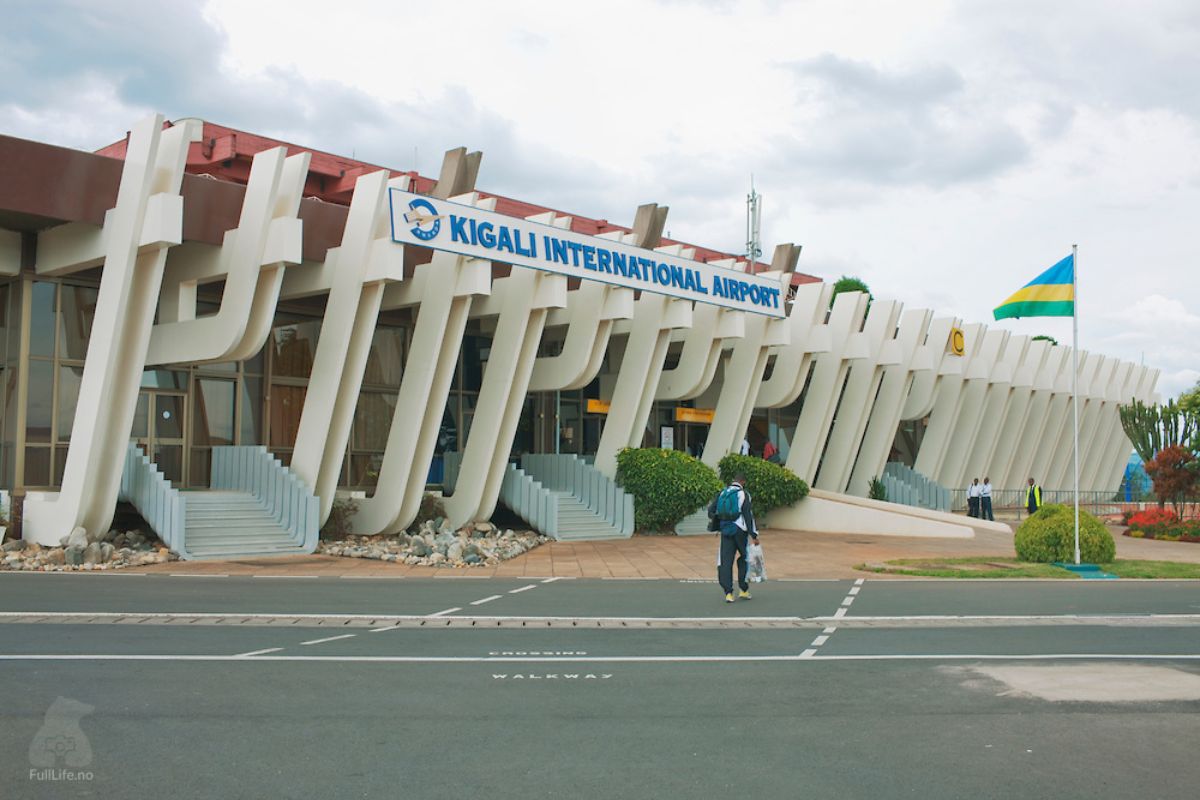
The first decision is whether to transfer toward Volcanoes National Park immediately after the international flight.
For some travelers, this may be perfectly comfortable.
For many people over 70, however, the better option is to overnight in Kigali first—particularly after a long-haul flight involving time-zone changes.
International travel itself is tiring.
The traveler may have spent many hours sitting.
Legs may feel stiff.
Sleep may have been poor.
Luggage still needs to be organized.
Beginning another road journey immediately is not always necessary.
A relaxed night in Kigali allows the traveler to shower, eat properly and sleep before continuing.
Private 4×4 Transfer
For older travelers, a private safari vehicle is usually preferable to a rigid group transfer.
The principal advantage is flexibility.
If the traveler needs a bathroom stop, the vehicle can stop.
If they need to stretch because their hips are becoming stiff, the guide can pause.
If they want to photograph the scenery, there is no need to worry about delaying a large group.
The road journey becomes part of the safari rather than simply an obstacle between Kigali and the gorillas.
Allow Comfortable Stops
Three hours is not an extreme journey, but there is still no need to treat it as a race.
For someone over 70, a short comfort stop can make the transfer considerably more pleasant.
The traveler can get out of the vehicle, straighten their legs, use bathroom facilities and drink water.
People with joint stiffness often benefit from not remaining seated continuously.
Arrive During the Day Where Possible
A senior-friendly itinerary should ideally reach the Volcanoes region early enough for the traveler to see their surroundings, understand the lodge layout and settle into the room before nightfall.
This is particularly valuable for a guest with reduced mobility.
Navigating a new hillside lodge for the first time is easier in daylight.
The traveler can identify steps, pathways, the restaurant and the vehicle pickup point.
If the room proves inconvenient, there may still be time to discuss alternatives with lodge management.
Musanze or Kinigi?
Musanze is one of Rwanda’s major northern cities and sits at approximately 1,850 metres above sea level. Visit Rwanda describes it as a convenient gorilla trekking base, with the Kinigi headquarters approximately 13 kilometres away.
Musanze can be practical for travelers who want urban hotel facilities, restaurants and other services.
However, senior trekkers may prefer accommodation closer to Kinigi if minimizing morning driving is a priority.
The right choice depends on the person.
A physically active 70-year-old may be perfectly happy staying in Musanze.
A traveler with limited mobility who wants the simplest possible trekking morning may prefer to stay closer to park headquarters.
The Morning of Gorilla Trekking
Visit Rwanda states that visitors gather at the Volcanoes National Park headquarters in Kinigi at around 7:00 a.m. for briefing and group allocation.
This means lodge location matters.
A senior traveler should not have to wake unnecessarily early simply because accommodation was selected too far from headquarters.
Breakfast should be arranged with enough time to eat properly rather than rushing.
Medication should be taken according to the traveler’s normal instructions.
Trekking equipment should ideally have been prepared the evening before.
Boots, gaiters, gloves, waterproofs, water and camera equipment should be ready.
The morning should feel organized rather than stressful.
After the Trek
After returning from the forest, many travelers over 70 benefit from going directly back to their lodge.
Visit Rwanda’s itineraries specifically include returning to the hotel to freshen up and relax following gorilla tracking.
Pieland Gorilla Safaris should generally avoid placing a long transfer immediately after the trek unless the traveler’s schedule requires it.
A relaxed afternoon can include:
a shower;
lunch;
rest;
spa treatment where available;
photograph review;
or simply enjoying the mountain scenery.
For many travelers, this is one of the most satisfying afternoons of the safari.
The physical challenge is complete.
The gorilla encounter is still fresh.
There is time to absorb what has just happened.
Returning to Kigali
The return to Kigali can take place the following day at a comfortable pace.
For travelers with an international flight, it is wise to allow appropriate scheduling margins rather than constructing an unnecessarily tight connection between the mountain region and airport departure.
A particularly comfortable senior itinerary may include a final overnight in Kigali.
This creates time to rest, enjoy dinner and travel to the airport without pressure.
A Comfortable Rwanda Gorilla Safari Rhythm for Travelers Over 70
For many older travelers, a comfortable Rwanda itinerary is less about adding more destinations and more about creating space between the important experiences.
A strong structure could be:
Day 1 – Arrival in Kigali and overnight rest
Recover from international travel rather than immediately beginning a mountain transfer.
Day 2 – Kigali to Volcanoes National Park
Travel privately, stop when necessary and arrive early enough to relax.
Day 3 – Gorilla Trekking in Volcanoes National Park
Attend briefing, use porter assistance where appropriate and return to the lodge for a restful afternoon.
Day 4 – Recovery Day or Gentle Experience
Relax at the lodge or choose an appropriate cultural or scenic activity according to the traveler’s energy level.
Day 5 – Return to Kigali
Travel at a comfortable pace and either depart or spend another night.
This five-day structure may appear slower than some aggressively marketed two- or three-day gorilla trips.
For many travelers over 70, that is exactly why it is better.
The objective is not to reach the gorillas in the fewest possible hours.
The objective is to create an experience in which the traveler reaches the forest rested, prepared and confident, spends meaningful time with mountain gorillas and returns home remembering the encounter rather than the exhaustion surrounding it.
For gorilla trekking over 70 in Rwanda, Pieland Gorilla Safaris can use Rwanda’s strongest advantage intelligently: a relatively compact gorilla circuit that allows comfort, private transportation, excellent accommodation, porter assistance and meaningful rest to be incorporated without turning a short safari into a rushed safari.
Rwanda does not remove the natural challenge of mountain gorilla trekking.
It does something equally valuable for older travelers:
it makes almost everything surrounding that challenge easier to organize.
Uganda vs Rwanda for Gorilla Trekking Over 70
Choosing between Uganda and Rwanda for gorilla trekking over 70 is not simply a question of which country has mountain gorillas. Both destinations offer extraordinary encounters, professional ranger-guided trekking and excellent safari accommodation, but the overall travel experience can feel quite different for an older traveler.
For someone in their seventies, the best destination often depends less on age itself and more on mobility, tolerance for long road transfers, budget, preferred safari length, desired accommodation standard, fitness, joint comfort and whether gorilla trekking will be combined with a wider wildlife safari.
Uganda offers gorilla trekking in Bwindi Impenetrable National Park and Mgahinga Gorilla National Park. Bwindi alone contains the four principal trekking sectors of Buhoma, Ruhija, Rushaga and Nkuringo, giving travelers considerable flexibility when designing their safari route. Rwanda concentrates its gorilla trekking around Volcanoes National Park, allowing travelers to build a much more compact itinerary around Kigali and the Virunga Mountains.
For travelers over 70, neither country should automatically be described as easier.
Rwanda usually has the advantage when the main priority is shorter road logistics and a compact gorilla-focused journey.
Uganda often has the advantage when the traveler wants greater choice of trekking locations, fly-in possibilities, a lower standard international permit price and a broader combination of gorillas with wildlife safaris, boat cruises and other experiences.
The right comparison therefore needs to look beyond the permit price.
A traveler may save money on a gorilla permit in Uganda but choose to spend more on a domestic flight to reduce road fatigue.
Another traveler may accept Rwanda’s higher permit cost because reaching Volcanoes National Park from Kigali is comparatively straightforward.
A third may choose Uganda because they want ten days combining gorillas with Queen Elizabeth National Park rather than a short stand-alone gorilla trip.
The best choice for gorilla trekking over 70 is therefore the country whose overall safari structure fits the person most comfortably.
Road Transfer Convenience
Road-transfer convenience is one of the clearest differences between Uganda and Rwanda for travelers over 70.
Rwanda generally has the advantage for travelers who want to minimize the amount of time spent driving before reaching the gorilla region.
Volcanoes National Park is reached from Kigali through Rwanda’s northern highlands, making it possible to arrive at Kigali International Airport, spend a night in the city and continue to the Volcanoes region the following morning without requiring a full-day cross-country road journey.
For many travelers in their seventies, this can be extremely valuable.
The issue is not necessarily that an older traveler cannot tolerate a long safari drive.
Many do.
The concern is that prolonged sitting can cause hip stiffness, knee discomfort, swollen legs, lower-back pain and general fatigue. If a traveler reaches Bwindi or Mgahinga after a very long transfer and then treks early the following morning, they may begin the most important activity of the safari already physically tired.
Rwanda makes it relatively easy to prevent this.
A senior-friendly journey might involve an overnight stay in Kigali, a relaxed morning departure, comfort stops along the way and arrival near Volcanoes National Park early enough to enjoy lunch and rest.
The traveler then spends the afternoon preparing trekking equipment rather than recovering from an exhausting travel day.
Uganda requires more careful route design when starting from Entebbe or Kampala because the mountain gorilla parks lie in southwestern Uganda.
A conventional road safari normally treats the journey as part of a wider Uganda circuit rather than simply rushing directly from Entebbe to Bwindi.
For travelers over 70, this can actually work very well when the journey is broken into meaningful safari stages.
Instead of thinking:
Entebbe → Bwindi as quickly as possible
the itinerary might become:
Entebbe → wildlife destination → Queen Elizabeth National Park → Bwindi → recovery → onward safari
This transforms the transfer into part of the holiday.
Game drives and boat safaris can break up the journey, meaning the traveler does not spend one exhausting day simply trying to reach the gorillas.
Uganda therefore becomes particularly attractive for older travelers who want a full safari rather than only a gorilla trek.
Private transportation makes a major difference in both countries.
A private 4×4 allows the guide to stop when the traveler needs to stretch, use bathroom facilities, have coffee, photograph scenery or simply rest.
For someone with hip or knee stiffness, these stops should be considered part of good safari planning rather than an inconvenience.
For road-transfer convenience alone, Rwanda generally has the advantage.
For travelers who enjoy a slower multi-destination safari, Uganda’s longer geography can still work extremely well when the itinerary is designed intelligently.
Trekking Terrain
One of the biggest mistakes when comparing Uganda and Rwanda is claiming that Rwanda gorilla trekking is easy while Uganda gorilla trekking is difficult.
That distinction is too simplistic.
Mountain gorillas in both countries inhabit natural mountainous forest environments.
There are no paved paths leading directly to a permanently located gorilla family.
The gorillas move naturally, and trekking conditions change according to their location, vegetation, rainfall, altitude and the route followed by trackers.
In Uganda, Bwindi contains steep ridges, valleys, dense vegetation, roots, slopes and potentially muddy forest sections.
Mgahinga lies within the Virunga volcanic landscape and has a higher-elevation environment.
Rwanda’s Volcanoes National Park is also part of the Virunga landscape and includes bamboo forest, volcanic slopes, uneven ground, vegetation and potentially wet or muddy sections.
For travelers over 70, the most important point is that terrain difficulty cannot be reliably predicted only by country.
A traveler might have a relatively manageable trek in Bwindi.
Another might encounter a demanding route in Rwanda.
The opposite could happen the following day.
The assigned gorilla family’s location largely determines what the traveler experiences.
This means senior travelers should not choose Rwanda merely because someone promises an easier walk.
Likewise, they should not reject Uganda because they have seen photographs of trekkers climbing muddy Bwindi slopes.
Instead, travelers should evaluate their own ability.
Can they walk steadily?
Are steep descents difficult?
How are their knees?
Do they have good balance?
Are they comfortable at elevation?
Do they regularly walk on uneven surfaces?
Would porter assistance improve confidence?
These questions are far more useful.
Bwindi Terrain for Travelers Over 70
Bwindi is a true mountain rainforest.
Its terrain can vary substantially among trekking locations and even within the same trek.
For older travelers, balance and knee mobility can be particularly important.
A senior who regularly walks long distances on flat roads may still discover that controlling their body while descending a wet forest slope is a different challenge.
This is why porter assistance, trekking poles, appropriate footwear and a slower pace are valuable.
The different Bwindi sectors also create flexibility in the wider itinerary, although none can guarantee an easy trek.
Mgahinga Terrain for Travelers Over 70
Mgahinga’s Virunga setting creates beautiful scenery but also means elevation should be considered.
A fit traveler in their seventies may enjoy the park enormously.
Someone who becomes breathless easily or has a medical condition affected by exertion at altitude should discuss suitability more carefully.
The fact that Mgahinga is smaller than Bwindi should not be interpreted to mean that trekking will automatically be easier.
Volcanoes National Park Terrain for Travelers Over 70
Rwanda’s Volcanoes National Park also requires realistic preparation.
Travelers may encounter bamboo zones, slopes, vegetation, mud and changes in elevation.
Good boots, gaiters, gloves, waterproof protection and porter assistance can be particularly useful.
The morning allocation process can take genuine mobility considerations into account, but travelers should still prepare for an unpredictable forest experience.
For trekking terrain, therefore, neither Uganda nor Rwanda deserves a universal “easier” label.
The better question is which destination can surround the unpredictable trek with the most appropriate logistics for the individual traveler.
Accommodation Options
Accommodation can have a surprisingly large influence on gorilla trekking over 70.
A traveler may focus entirely on the forest trek and overlook the fact that they will spend considerably more time at their lodge than actually observing the gorillas.
Both Uganda and Rwanda offer excellent accommodation, ranging from practical midrange lodges to some of Africa’s most luxurious gorilla properties.
However, luxury does not automatically mean accessible.
A dramatic lodge may be built into a steep hillside to maximize views.
Guest cottages may be separated by long pathways.
Reaching the restaurant may involve numerous steps.
For a physically active 70-year-old, this may present no problem.
For someone with arthritis, poor balance or knee pain, it may become one of the most tiring parts of the safari.
This is why Pieland Gorilla Safaris should evaluate lodges according to the traveler rather than simply their star category.
Important questions include:
Can the traveler stay in a ground-level or easily accessible room?
How many steps are involved?
How far is the room from the restaurant?
Can the vehicle approach close to the room?
Is the shower easy to enter?
Are pathways steep?
What happens when pathways are wet?
Can staff assist with luggage?
These details are important in both countries.
Accommodation in Uganda
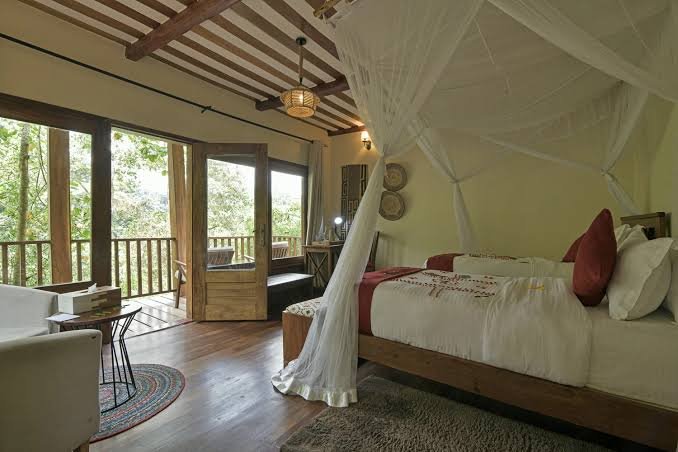
Uganda provides a particularly broad variety of accommodation around Bwindi because the park has several trekking sectors.
Buhoma, Ruhija, Rushaga and Nkuringo each have their own lodge options.
This gives travelers considerable choice but also means the accommodation must match the correct trekking sector.
A traveler should not book a beautiful lodge in one area and then discover that they require an inconvenient early-morning transfer to another trekking location.
For senior travelers, minimizing movement before briefing is important.
The best room may therefore be the one that gives the traveler the easiest access rather than the best panoramic view.
Uganda also has excellent luxury accommodation for travelers who want a premium safari, but comfortable midrange lodges can sometimes provide equally practical accessibility.
Accommodation in Rwanda
Rwanda has developed a particularly strong luxury gorilla lodge market around Volcanoes National Park.
Travelers can choose from comfortable hotels, boutique properties and internationally recognized high-end lodges.
For someone over 70 seeking an upscale gorilla experience, Rwanda can therefore be extremely attractive.
Luxury properties may provide outstanding dining, spa treatments, attentive service, fireplaces, beautiful views and excellent post-trek relaxation.
However, room location should still be checked.
Some high-end lodges occupy dramatic hillside environments.
For a traveler with mobility limitations, Pieland Gorilla Safaris should confirm accessibility rather than assuming the most expensive option must be the best choice.
For ultra-luxury gorilla travel, Rwanda has an especially strong reputation.
For variety across budget levels and trekking sectors, Uganda has a significant advantage.
Porter Assistance
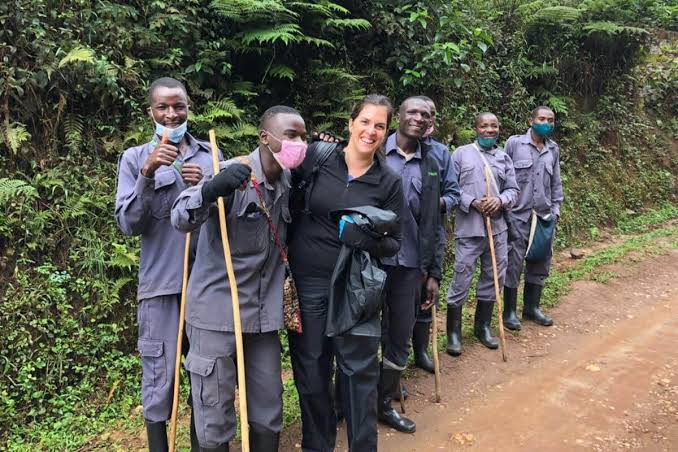
Porter assistance can make an enormous difference for gorilla trekking over 70, and travelers should consider it in both Uganda and Rwanda.
A porter is not only someone who carries luggage.
For senior trekkers, the porter may become one of the most valuable members of the trekking support team.
The porter can carry water, rainwear, a camera bag and other equipment.
This removes unnecessary weight from the traveler’s back.
More importantly, the porter can provide a steady hand when navigating slippery ground, stepping over roots, climbing a slope or descending a difficult section.
For a relatively small additional cost compared with the total safari, porter assistance can substantially improve comfort.
Some older travelers initially decline because they are physically active.
A 72-year-old who walks every day may think:
“I don’t need anyone carrying my bag.”
That may be true on level ground.
However, the purpose of the porter is also to conserve energy.
The traveler still needs to reach the gorillas, enjoy the encounter and return from the forest.
Using less energy carrying equipment during the first hours can leave more physical reserve later.
Porter assistance is particularly useful for travelers whose main challenge is balance rather than endurance.
Someone may be capable of walking for four hours but feel nervous descending wet slopes.
Having another person available for support can greatly improve confidence.
Porters can be incorporated into senior gorilla safaris in both Uganda and Rwanda.
The exact charges and procedures should be confirmed for the particular trekking location and date rather than treated as a permanent universal tariff.
For travelers with more substantial mobility limitations, ordinary porter assistance may not be sufficient.
Specialized carrying arrangements may need to be discussed separately and organized in advance.
The essential principle is the same in both countries:
Do not wait until the traveler is exhausted before accepting assistance.
For travelers over 70, using support from the beginning is often much more effective.
Fly-In Options
This is an area where Uganda can dramatically change the comparison with Rwanda.
When travelers compare the two countries, they often conclude:
Rwanda = short drive.
Uganda = long drive.
That comparison ignores Uganda’s domestic aviation network.
Travelers visiting Bwindi can use domestic flights serving Kihihi or Kisoro, depending on which part of the gorilla region they are visiting.
Kihihi is particularly useful for northern Bwindi and Buhoma.
Kisoro provides access toward southern Bwindi areas such as Rushaga and Nkuringo as well as Mgahinga.
The traveler then continues from the airstrip to the lodge by private 4×4.
For someone over 70, this can completely transform the safari.
A traveler who dislikes prolonged road journeys can leave Entebbe, fly toward southwestern Uganda and reach the gorilla region without spending most of the day driving.
The final road transfer remains, but it is substantially more manageable.
This means the correct comparison is often:
Rwanda by road vs Uganda by air
rather than simply:
Rwanda short drive vs Uganda long drive.
For an older traveler with a comfortable safari budget, the fly-in option can make Uganda extremely competitive in terms of convenience.
It can also be combined with wildlife safaris.
For example, the traveler might fly toward Bwindi, complete the gorilla experience and later continue by road toward Queen Elizabeth National Park.
Alternatively, a wider safari can use a mixture of domestic flights and private 4×4 transfers to reduce the longest driving sections.
Rwanda generally does not require a domestic flight for a short Kigali–Volcanoes itinerary because the road journey is already comparatively compact.
This gives Rwanda simplicity.
Uganda offers more aviation flexibility.
For travelers over 70 who have back problems, hip stiffness or simply dislike spending many hours in vehicles, this factor deserves serious consideration before deciding which destination is better.
Gorilla Permit Costs
Gorilla permit cost is one of the clearest financial differences between Uganda and Rwanda.
For the 2026/2027 period covered by this guide, the standard Uganda gorilla trekking permit for a foreign non-resident is USD 800 per person, while Rwanda’s standard international gorilla trekking permit is USD 1,500 per person. Your current senior-gorilla pillar also records Uganda’s 2026 low-season foreign non-resident rate at USD 600 for April, May and November, subject to the applicable Uganda Wildlife Authority conditions.
This means a couple trekking once can have a substantial permit-price difference between the two countries.
For two foreign non-resident travelers:
Uganda standard permits: USD 1,600 total
Rwanda standard international permits: USD 3,000 total
The permit difference can therefore influence the overall safari budget significantly.
However, travelers over 70 should avoid comparing permit prices in isolation.
A cheaper permit does not automatically produce a cheaper final safari.
Suppose a senior traveler chooses Uganda but wants:
domestic flights;
private transfers;
three nights at a high-quality lodge;
an additional recovery night;
porter assistance;
and luxury accommodation.
The total cost may still become substantial.
Likewise, Rwanda’s permit is more expensive, but the relatively straightforward Kigali–Volcanoes logistics may reduce the amount of transport required for a short safari.
The correct comparison is therefore the complete safari price, not just the permit.
For some travelers, Uganda’s lower permit price leaves more room in the budget for a domestic flight or additional nights.
That can be especially useful for seniors.
Instead of spending USD 1,500 on the permit alone, the traveler can use some of the difference toward improving the wider journey.
For example, the budget might be redirected toward:
a flight into Bwindi;
a better-positioned lodge;
a private vehicle;
an additional rest night;
or other safari experiences.
For travelers who want two gorilla treks, Uganda’s permit-price advantage becomes even more significant.
Rwanda, on the other hand, may appeal to travelers for whom budget is secondary and logistical simplicity or ultra-luxury accommodation is the priority.
Permit tariffs and promotional arrangements can change, so final rates should always be reconfirmed at the time of booking.
Uganda vs Rwanda Gorilla Trekking Over 70: Practical Comparison
| Factor | Uganda | Rwanda |
|---|---|---|
| Main Gorilla Parks | Bwindi & Mgahinga | Volcanoes National Park |
| Trekking Areas | Several sectors and parks | Concentrated in Volcanoes |
| Road Transfer From Main International Gateway | Longer when traveling entirely by road | Comparatively compact from Kigali |
| Domestic Fly-In Options | Excellent via Kihihi/Kisoro | Usually unnecessary for a short gorilla itinerary |
| Standard International Permit | USD 800 FNR | USD 1,500 international visitor |
| Accommodation Range | Budget, midrange, luxury and high-end | Midrange through exceptional ultra-luxury |
| Porter Assistance | Available | Available |
| Terrain | Mountain rainforest / Virunga terrain | Virunga volcanic terrain |
| Wildlife Safari Extensions | Excellent | Excellent, especially Akagera |
| Best for Short Gorilla Trip | Possible, especially via Kigali or fly-in | Excellent |
| Best for Longer Wildlife Safari | Excellent | Very good |
| Best for Multiple Gorilla Regions | Excellent | One principal gorilla park |
| Best for Budget-Conscious Senior Trekker | Often Uganda | Usually more expensive |
| Best for Ultra-Luxury Compact Gorilla Trip | Excellent | Particularly strong |
The table should be viewed as a planning guide rather than a statement that one country is universally superior.
Which Country Is Better for Travelers Over 70?
There is no universal winner between Uganda and Rwanda for gorilla trekking over 70.
The correct destination depends on what the traveler values most.
Rwanda May Be Better If You Want the Simplest Road Logistics
For travelers who dislike long road journeys, Rwanda has a clear advantage.
The journey from Kigali to the Volcanoes National Park region can be incorporated easily into a short private safari.
A traveler can arrive in Kigali, rest, travel north the following day, remain several nights near the park and return to Kigali without crossing large distances.
This can be particularly attractive for someone with:
hip stiffness;
back discomfort;
reduced tolerance for prolonged driving;
or limited international holiday time.
Rwanda May Be Better for a Short Luxury Gorilla Safari
A traveler who primarily wants to see gorillas and stay in exceptionally high-end accommodation may prefer Rwanda.
The Volcanoes region has some of Africa’s most renowned luxury gorilla lodges.
A four- or five-day journey can therefore feel extremely complete without requiring many internal transfers.
For travelers over 70 who value privacy, fine dining, spa facilities, excellent lodge service and a slower pace, this can be very appealing.
Uganda May Be Better for Travelers Concerned About Permit Cost
At USD 800 for the standard foreign non-resident permit versus Rwanda’s USD 1,500 international permit under the current rates used in this guide, Uganda offers a major permit-price advantage.
That saving can be particularly valuable when two people are traveling or when more than one gorilla trek is planned.
The money saved can also be redirected toward making the safari more comfortable.
A senior traveler could spend the difference on a domestic flight, a better lodge or additional nights.
Uganda May Be Better for a Wider Safari
Uganda is particularly strong for travelers who want gorilla trekking to be part of a broader African wildlife journey.
The safari can combine mountain gorillas with:
Queen Elizabeth National Park;
game drives;
boat cruises;
and other scenic regions.
For travelers over 70, this provides an excellent mixture of activity levels.
The gorilla trek may be the physically demanding centerpiece.
Other days can involve wildlife viewing from the comfort of a 4×4 or boat.
Uganda May Be Better for Travelers Who Want More Gorilla-Region Choice
Uganda provides two gorilla national parks and multiple Bwindi trekking sectors.
This gives Pieland Gorilla Safaris greater flexibility when considering route direction, accommodation and flight access.
Rwanda’s concentration around Volcanoes National Park is simpler but provides less geographical variety.
Neither model is inherently better.
One emphasizes choice.
The other emphasizes simplicity.
Uganda Can Become Much More Convenient When Flying
Senior travelers should be particularly careful not to reject Uganda because of road distance without first considering fly-in options.
Flying from Entebbe toward Kihihi or Kisoro can remove much of the road-transfer disadvantage.
Once domestic flights are incorporated, Uganda becomes extremely competitive for older travelers who want both comfort and a comprehensive wildlife safari.
The Trek Itself Cannot Be Guaranteed Easier in Either Country
This may be the most important conclusion.
A 75-year-old should not choose Rwanda because they have been told the gorillas are always closer.
A 72-year-old should not choose Uganda because they have been promised an easy Buhoma family.
Neither promise is responsible.
Mountain gorillas move.
Weather changes.
Trail conditions change.
The traveler’s own fitness also changes how difficult the same terrain feels.
The safari company can control:
transport;
lodge location;
rest days;
porter arrangements;
domestic flights;
private vehicle use;
trekking preparation;
and communication of mobility needs.
It cannot control where a wild gorilla family chooses to spend the night.
Best Choice According to the Type of Senior Traveler
For a 70-year-old wanting the shortest and simplest gorilla-focused safari, Rwanda may be particularly attractive.
For a traveler over 70 wanting a longer Uganda wildlife and gorilla safari, Uganda may provide greater variety.
For a budget-conscious senior traveler, Uganda’s lower standard international permit price may be decisive.
For an ultra-luxury traveler who wants a short high-end gorilla journey, Rwanda can be exceptional.
For a senior traveler who dislikes long road transfers but prefers Uganda, a fly-in Bwindi safari may provide the best solution.
For a traveler wanting two gorilla treks, Uganda’s permit structure can substantially reduce the permit component of the budget.
For a traveler whose main concern is mobility, neither country should be chosen until the person’s exact walking ability, joint health, balance and assistance requirements are understood.
The Approach to Choosing Uganda or Rwanda for Travelers Over 70
For Pieland Gorilla Safaris, the best way to decide between Uganda and Rwanda should begin with the traveler rather than the destination.
A useful planning conversation should establish:
How long can the traveler walk comfortably?
How are their knees on descents?
Do they have good balance?
Do they use a walking stick or trekking pole?
Are long road journeys uncomfortable?
Would they prefer a domestic flight?
Do they need a ground-level room?
Would porter assistance be useful?
Do they want only gorillas or a wider wildlife safari?
How many nights do they have available?
What accommodation level do they prefer?
What is their approximate budget?
Once those questions are answered, the destination often becomes much clearer.
A traveler should not be told:
“Rwanda is for seniors.”
Nor should they simply be told:
“Uganda is cheaper.”
Those statements are incomplete.
A much stronger recommendation might be:
“Because you are comfortable walking but experience hip stiffness during long drives, we recommend a fly-in Bwindi safari through Kihihi.”
Or:
“Because you want only four nights, prefer ultra-luxury accommodation and want to minimize road travel, Rwanda’s Volcanoes National Park is likely the better fit.”
Or:
“Because you want gorillas plus Queen Elizabeth National Park and prefer a slower ten-day wildlife journey, Uganda gives you the stronger overall safari.”
That is the level of personalization that should define gorilla trekking over 70.
The best country is not determined by age.
It is determined by the relationship between the traveler’s abilities, the safari logistics, the budget and the experience they want to have.
For some travelers, that answer will clearly be Uganda.
For others, it will clearly be Rwanda.
And for travelers with enough time, the best answer may even be to experience both countries, comparing Uganda’s varied gorilla landscapes with Rwanda’s compact Virunga experience within one carefully paced East African journey.
Can Travelers Over 70 Request an Easier Gorilla Trek?
Travelers over 70 can communicate their mobility, fitness and physical limitations during the gorilla trekking briefing and ask that these circumstances be considered when trekking groups are organized. This is especially important for older visitors who remain capable of walking but may have difficulty with long distances, steep descents, slippery terrain, knee or hip problems, reduced balance or slower walking speed.
However, requesting an easier gorilla trek is very different from being guaranteed one.
Mountain gorillas are wild animals that move naturally through their forest habitat. They do not remain at permanently fixed viewing locations, and the distance between the trekking starting point and a gorilla family can change from one day to another. In Uganda, Uganda Wildlife Authority states that gorilla trekking requires moderate fitness and may last approximately two to seven hours, illustrating how significantly the experience can vary.
Rwanda’s current system provides a particularly useful example of how individual fitness can be considered without guaranteeing an easy trek. Visit Rwanda states that visitors gather at Volcanoes National Park headquarters in Kinigi at around 7:00 a.m. and are allocated to gorilla families on the day according to fitness levels before receiving their trekking briefing.
For a traveler over 70, this means genuine mobility concerns should be communicated clearly.
A physically active 72-year-old who walks regularly may not need special consideration beyond an ordinary porter.
A 76-year-old who can walk for several hours but experiences severe knee discomfort on steep descents should explain that specific limitation.
A 79-year-old with reduced balance may need additional support even if their general stamina remains good.
These distinctions are much more useful to park staff than simply saying:
“I am over 70 and would like an easy trek.”
Age alone does not describe the physical challenge.
A traveler should therefore approach trekking morning with two ideas in mind:
Ask that genuine mobility limitations be considered, but remain prepared for a real mountain-forest trek.
This balance between communication and realistic expectations is essential for responsible gorilla trekking over 70.
Pieland Gorilla Safaris can help by discussing mobility requirements well before the safari begins and ensuring the traveler understands what information should be shared with the ranger team during briefing. The safari can also be designed to remove avoidable strain before the traveler even reaches the trailhead.
This may include staying close to the correct trekking headquarters, arriving in the gorilla region a day earlier, arranging porter assistance, using a private vehicle and avoiding an exhausting transfer immediately before trekking.
These preparations cannot control where the gorillas will be.
They can, however, improve the traveler’s ability to cope with whatever route develops.
How Gorilla Families Are Assigned
Understanding how gorilla families are assigned is particularly important for travelers over 70 because assignment can influence the amount of walking required on trekking morning.
Gorilla trekking begins with registration and briefing at the relevant park headquarters or trekking point. Rangers and trackers already have information about the recent locations and movements of habituated gorilla families, and trekking groups are organized before visitors enter the forest.
In Rwanda, Visit Rwanda specifically states that travelers gathering at the Volcanoes National Park headquarters are allocated to a gorilla family according to fitness levels, alongside the morning briefing on trekking rules and protocols.
This creates an opportunity for older travelers to communicate genuine physical limitations.
However, the allocation process should not be misunderstood.
It does not mean park officials can line up gorilla families from easiest to hardest with complete certainty.
The gorillas themselves are moving.
A family that trackers encountered close to a particular area yesterday may have traveled considerably farther overnight.
A group that appears relatively accessible early in the morning may continue moving while trekkers are approaching.
Weather may affect trail conditions.
Rain may turn a manageable slope into slippery ground.
Vegetation may require guides to use a different approach.
For this reason, assignment is best understood as an informed attempt to organize visitors appropriately using the information available that morning, rather than a guarantee about exact trekking distance.
This is especially important for Pieland Gorilla Safaris to explain to senior guests.
A traveler should not arrive believing:
“Because I am 74, the park will definitely give me the nearest gorilla family.”
That expectation can lead to disappointment and physical difficulty if the gorillas move.
A much healthier expectation is:
“My genuine mobility limitations will be communicated, and the trekking team can consider them during group organization, but the final distance remains influenced by wild gorilla movements.”
This distinction is important both for responsible tourism and for traveler safety.
Another factor is that age should not automatically determine assignment.
A 76-year-old who hikes every week may be far more physically capable than a sedentary visitor in their fifties.
Likewise, an older traveler may have excellent endurance but significant knee problems.
The most useful information therefore concerns function.
Park staff benefit more from knowing:
“I can walk for three or four hours, but my knees struggle on steep downhill sections.”
than:
“I am 75.”
Similarly:
“I walk slowly but have good endurance.”
or:
“I use a walking stick and need help on slippery ground.”
gives much more meaningful information.
Pieland Gorilla Safaris can help senior travelers prepare these details before trekking morning so they are able to communicate confidently rather than trying to explain complex mobility issues at the last minute.
Can You Request a Shorter Trek?
A traveler over 70 can ask that their mobility limitations be considered and can express a preference for a less demanding or potentially shorter trekking route, but a shorter gorilla trek cannot be guaranteed.
This is one of the most important expectations to establish before booking.
Gorilla trekking differs from a conventional guided hike where the guide can simply select a three-kilometre trail instead of a six-kilometre trail.
The destination is a moving gorilla family.
The trek ends where the gorillas happen to be located.
Uganda Wildlife Authority’s current guidance reflects this natural variation by stating that gorilla trekking can last approximately two to seven hours.
For travelers over 70, this uncertainty means the safari should be designed around capacity rather than prediction.
Instead of assuming:
“I only need to prepare for one hour because I requested a short trek,”
the traveler should prepare for the possibility that the experience may take longer.
This does not mean every senior needs to train for seven continuous hours of difficult climbing.
Trekking time can include slower sections, stops, communication with trackers and changes in pace.
However, the traveler should have enough endurance and support to cope with an experience that may be more demanding than hoped.
A request for a shorter trek is especially appropriate when the traveler has a specific limitation.
For example:
A traveler with knee arthritis may explain that long descents are particularly difficult.
A person with reduced endurance may explain that they walk comfortably but need regular rests.
Someone with a previous joint replacement may explain what movements cause difficulty.
A traveler with balance problems may indicate that uneven or slippery terrain is a greater concern than total distance.
This gives ranger guides better information than a general request for an easy trek.
If the traveler has such substantial mobility limitations that even a moderately long forest walk may be unrealistic, the planning discussion should take place before arriving at the park.
Ordinary group allocation may not be enough.
Pieland Gorilla Safaris should then investigate whether more substantial trekking assistance can be arranged and whether the traveler requires specialized support rather than relying on the hope of receiving a short route.
This is the key distinction:
A preference for a shorter trek can be communicated. Dependence on a short trek should trigger additional planning.
Why an Easy Trek Cannot Be Guaranteed
An easy gorilla trek cannot be guaranteed because the gorillas determine where the encounter takes place.
This may be the single most important reality of mountain gorilla trekking for senior travelers.
Mountain gorillas are not kept in enclosures.
They move through large natural forest ranges.
Their daily movement is influenced by feeding, social interaction, nesting, weather and other natural behavior.
Rangers monitor habituated groups closely, but tracking information does not turn gorillas into stationary attractions.
Uganda Wildlife Authority confirms that trekking duration can vary significantly, with its current guidance giving a broad range of approximately two to seven hours. Rwanda likewise organizes visitors around the known gorilla families on trekking morning, but the animals remain free-ranging within Volcanoes National Park.
This makes phrases such as:
“Guaranteed easy gorilla family”
or
“Guaranteed 30-minute senior trek”
misleading.
Even if a family was located close to the trailhead yesterday, it may have moved before the following morning.
Likewise, trekking distance is not the only factor determining difficulty.
A relatively short route after heavy rain may feel more demanding than a longer route across firmer ground.
A short but steep descent may be challenging for a traveler with knee problems.
A longer but gentler section may actually be easier for the same person.
For travelers over 70, this is why difficulty should never be measured only by time.
Terrain, balance, slope, altitude, mud and individual mobility all matter.
The safari operator can control many things:
the itinerary;
the lodge location;
the vehicle;
the amount of rest;
porter arrangements;
domestic flights;
equipment advice;
and how mobility needs are communicated.
The safari operator cannot control:
where wild mountain gorillas travel overnight;
how far they move before trekkers reach them;
or whether rain changes the condition of the forest.
Responsible senior safari planning focuses on the first group of factors rather than making promises about the second.
This is also why physical preparation remains worthwhile even when a traveler hopes to receive a less demanding trek.
If the gorillas happen to be nearby, excellent.
The traveler reaches them with plenty of energy remaining.
If they are farther away, preparation and support become extremely valuable.
A strong senior-gorilla itinerary therefore plans for uncertainty instead of pretending it can remove it.
How to Communicate Mobility Needs During Briefing
The morning briefing is one of the most important moments for a traveler over 70 because it is an opportunity to explain exactly how they move and what type of terrain causes difficulty.
Older travelers should not be embarrassed about discussing mobility.
Trying to appear stronger than you are can make the trek more difficult.
Likewise, describing yourself simply as “elderly” or “unfit” gives park staff very little useful information.
Specific descriptions are much better.
Instead of saying:
“I am 76 and need an easy trek.”
say:
“I can walk steadily for three hours, but steep descents are difficult for my knees.”
Instead of:
“I have mobility problems.”
say:
“I walk independently, but I need a hand on slippery or uneven ground.”
Instead of:
“My hip is bad.”
say:
“I can climb slowly, but stepping over high roots and descending steep slopes causes discomfort.”
Instead of:
“I am fit.”
say:
“I walk several kilometres regularly and manage hills well, although I prefer a slower pace.”
These descriptions help distinguish between different forms of physical limitation.
A traveler with reduced stamina may need a different approach from someone with reduced balance.
A traveler with excellent endurance but painful knees may benefit from a different route consideration than someone who becomes breathless easily on inclines.
Useful information to communicate can include:
- how long you can comfortably walk;
- whether hills are manageable;
- whether descent causes knee pain;
- whether you use a walking stick or trekking poles;
- whether you require help maintaining balance;
- whether you have had recent joint surgery;
- whether you need frequent short rests;
- whether you are comfortable being physically assisted by a porter.
The briefing is also an appropriate time to remind the trekking team about an assistance arrangement already discussed with Pieland Gorilla Safaris.
A traveler should not assume that every ranger automatically knows information previously shared with a lodge, driver or booking agent.
Important mobility details should be repeated politely and clearly.
This is particularly true for senior couples.
One partner may be considerably more mobile than the other.
They should not simply tell the ranger:
“We are both in our seventies.”
Their abilities should be described separately where necessary.
For example:
“My husband walks very comfortably, but I have difficulty on steep downhill sections.”
This allows support to reflect the individual rather than the couple as one physical unit.
The goal of communication is not to demand special treatment.
It is to provide the trekking team with accurate information so they can organize the experience as responsibly as possible.
Porter Assistance for Gorilla Trekkers Over 70
For many travelers over 70, hiring a porter is one of the simplest and most valuable ways to make gorilla trekking more comfortable.
Porter assistance should not be viewed as something reserved only for travelers who are physically weak.
Even active hikers can benefit from reducing the amount of weight they carry through a mountainous forest.
This becomes especially relevant during gorilla trekking because the traveler may need to manage uneven ground, vegetation, mud, slopes and changing elevation while also carrying drinking water, rainwear and camera equipment.
Removing that weight allows more energy to be directed toward walking and maintaining balance.
Rwanda’s official gorilla trekking system incorporates the use of local porters around the Volcanoes National Park trekking experience, while Uganda’s gorilla trekking activity takes place through the ranger-guided systems of Bwindi and Mgahinga. Rwanda’s official tourism information also confirms that physical fitness is considered when organizing gorilla groups on trekking morning.
For older travelers, porter support is particularly useful because fatigue can affect more than walking speed.
As legs become tired, balance can deteriorate.
The traveler may begin taking less controlled steps.
Descending can become harder.
A heavy backpack that felt completely manageable during the first twenty minutes may become uncomfortable several hours later.
The smarter approach is often to conserve energy from the start.
A senior traveler who finishes the trek thinking:
“I probably could have carried my own bag”
has not wasted money.
They have successfully protected their energy.
That is preferable to reaching the return journey exhausted and wishing assistance had been accepted earlier.
Porters can also be an important source of confidence.
Knowing that someone is nearby to provide a steady hand may reduce anxiety on slippery sections.
This can allow an older traveler to concentrate more on the experience itself rather than constantly worrying about whether they might lose balance.
For gorilla trekking over 70, porter assistance should therefore usually be presented as sensible preparation rather than emergency support.
What Does a Gorilla Trekking Porter Do?
A gorilla trekking porter can perform several practical functions during the trek, and their role is particularly valuable for senior travelers.
The most obvious role is carrying the traveler’s belongings.
This can include items such as:
drinking water;
rain gear;
camera equipment;
a packed snack or lunch where applicable;
extra clothing;
and a small daypack.
The goal is to keep the traveler as physically unburdened as possible while still ensuring necessary equipment remains available.
However, for travelers over 70, physical support may be even more valuable than luggage carrying.
A porter can offer a steady hand while the traveler steps over a large root.
They can help stabilize the traveler when crossing muddy ground.
They may provide support during a steep climb.
They can assist with controlled descent on slippery terrain.
They can help the traveler regain confidence after a difficult section.
This type of assistance can be especially useful for someone whose endurance remains strong but whose balance or knees are less reliable.
A traveler might walk independently for most of the route but rely on the porter for ten particularly challenging sections.
That is still extremely valuable assistance.
A Porter Helps Conserve Energy
Energy conservation is one of the main reasons Pieland Gorilla Safaris can recommend a porter for travelers over 70.
A gorilla trek has two directions.
The traveler needs to reach the gorillas and then return.
Excitement often carries visitors forward during the first part of the journey.
After the gorilla encounter, fatigue may become more noticeable.
A porter helps preserve some physical reserve for that second half.
This is particularly important if the trek becomes longer than expected.
A Porter Helps With Balance
Balance requires constant muscular effort on natural terrain.
Even a small backpack can affect the body’s center of gravity.
Removing the backpack can make stepping and recovering from small slips easier.
The porter can also provide another point of physical support.
This is why porters can be particularly helpful for travelers with:
mild balance problems;
knee weakness;
hip stiffness;
or reduced confidence on uneven terrain.
A Porter Can Carry Camera Equipment
Photography equipment can become surprisingly heavy.
A camera body, telephoto lens, spare batteries and waterproof protection may add several kilograms to the traveler’s load.
For a senior traveler, carrying that weight through the forest may make little sense when porter support is available.
The equipment can remain accessible without being carried on the traveler’s back throughout the trek.
Travelers should still discuss how fragile equipment will be handled and use a secure bag.
A Porter Can Help on Descents
Descending is one of the areas where older travelers may benefit most from physical assistance.
Uphill walking often feels more demanding on the lungs.
Downhill walking can be more demanding on the knees and balance.
A porter can help the traveler maintain control rather than allowing gravity to pull them downhill too quickly.
This becomes especially useful after rainfall.
A Porter Does Not Replace the Ranger Guide
It is important to understand that a porter and ranger guide have different roles.
The ranger guide leads the trekking experience, manages wildlife procedures, provides instructions and ensures visitors follow gorilla-viewing rules.
The porter primarily assists the individual traveler with carrying and physical support.
The porter does not decide where the trekking group goes or alter wildlife rules.
For senior travelers, the best experience comes from having both systems work together: ranger leadership combined with individual physical support.
A Porter Is Different From Specialized Carrying Assistance
Ordinary porter assistance should also not be confused with a sedan chair or specialized carrying arrangement.
A porter generally supports someone who is still undertaking the trek primarily on foot.
A traveler who cannot safely walk through the forest may require a more substantial arrangement involving multiple people and specialized equipment.
That should be discussed before the safari rather than assumed to be equivalent to hiring one porter.
For a traveler who can walk but wants to reduce fatigue, however, a normal porter may be exactly the right level of assistance.
Why we Recommends Early Planning for Senior Trekking Support
The strongest senior gorilla safari is one in which support needs are understood before the traveler arrives at the park.
Pieland Gorilla Safaris should therefore discuss mobility during the booking process rather than waiting until trekking morning.
A useful conversation includes:
How long can the traveler comfortably walk?
How do they manage stairs?
Are hills difficult?
Is going downhill more challenging than climbing?
Do they use a walking stick?
Have they experienced recent falls?
Do they have knee or hip limitations?
Would they like porter assistance even if they are physically active?
Could they require more substantial assistance?
These answers help determine whether an ordinary porter is likely to be enough or whether other arrangements should be investigated.
This preparation does not eliminate the unpredictability of mountain gorilla trekking.
It does something more useful.
It ensures that the traveler is not confronting that unpredictability alone.
For gorilla trekking over 70, the objective should never be to promise an easy forest.
The objective should be to understand the traveler, communicate their needs accurately, arrange appropriate assistance and give them the strongest realistic opportunity to reach the gorillas comfortably and responsibly.
Why Fit Travelers Over 70 Should Still Consider a Porter
One of the most common reactions from physically active senior travelers is:
“I walk regularly, so I don’t think I need a porter.”
That confidence is understandable. Many travelers in their seventies remain extremely active, hike regularly and arrive in Uganda or Rwanda in excellent physical condition. However, hiring a porter for gorilla trekking over 70 should not be interpreted as an admission that someone is unfit. For many older travelers, it is simply intelligent energy management.
Gorilla trekking takes place in a natural mountain environment rather than on a predictable recreational walking trail. Uganda Wildlife Authority currently describes gorilla tracking as requiring moderate fitness and states that a trek may last approximately two to seven hours, depending on circumstances. Rwanda’s official tourism authority similarly states that hikes to gorilla families in Volcanoes National Park can take from approximately 30 minutes to four or more hours, reaching elevations between about 2,500 and 4,000 metres.
The challenge for a traveler over 70 is therefore not simply whether they are capable of walking.
It is whether they can preserve enough physical energy to remain comfortable throughout an unpredictable forest experience.
A backpack that feels light during the first twenty minutes may feel significantly heavier several hours later.
A camera, waterproof jacket, drinking water, snacks where applicable and personal equipment can collectively add several kilograms. Carrying that additional weight means the legs, hips and core are doing more work during every climb, descent and balance correction.
For a younger or older traveler, this may be manageable.
But if somebody is already investing thousands of dollars in an international safari, there is little benefit in adding unnecessary physical strain simply to prove they can carry their own bag.
A Porter Helps You Save Energy for the Important Part
The objective of gorilla trekking is not to demonstrate how much equipment you can carry.
The objective is to reach the mountain gorillas with enough physical and emotional energy to enjoy the encounter.
This becomes particularly important because finding the gorillas is not the end of the trek.
After spending the permitted viewing period with the gorilla family, visitors still need to make their way back through the forest.
Many travelers feel extremely strong during the outward journey because anticipation and excitement are high.
After the gorilla encounter, the legs may feel different.
Muscles may already have completed several hours of climbing, controlled descending and balancing.
The traveler then realizes that there is still a return journey ahead.
This is where conserving energy from the beginning becomes valuable.
A fit 73-year-old may complete an entire trek without ever reaching the point where the porter is physically essential.
That does not mean hiring the porter was unnecessary.
It may mean the assistance worked exactly as intended: the traveler finished the experience with energy remaining.
For senior gorilla trekking, finishing comfortably is a better measure of successful planning than proving assistance was unnecessary.
Fitness Does Not Eliminate Unpredictable Terrain
Another reason active seniors should consider porter support is that cardiovascular fitness and forest mobility are different things.
A 72-year-old may walk five kilometres every morning.
They may cycle regularly.
They may exercise several times per week.
That provides an excellent foundation.
But it does not guarantee that every section of mountain rainforest will feel straightforward.
Bwindi, for example, contains steep ridges and deep valleys, and Uganda Wildlife Authority describes the park as ranging from approximately 1,160 to 2,607 metres above sea level.
Volcanoes National Park similarly involves mountain terrain, with Rwanda’s official guidance describing gorilla treks on bamboo-covered slopes and at considerable elevations.
Rain can make the ground slippery.
Roots can force higher steps.
Vegetation can change how the traveler moves.
A steep descent may challenge the knees even when the traveler’s cardiovascular condition is excellent.
A porter provides another layer of support for these unpredictable moments.
Fit Seniors Can Use Porters Selectively
Hiring a porter does not mean the traveler must hold onto them throughout the entire trek.
A physically active senior may walk independently across straightforward sections.
When the group reaches a steep descent, muddy crossing or unstable section, the traveler can accept a hand.
This selective use of assistance is often ideal.
The traveler maintains independence while support remains immediately available when the terrain becomes more demanding.
A good example is a fit traveler whose only limitation is the knees.
They may climb extremely well.
They may walk for hours without tiring.
But downhill terrain creates discomfort.
For that person, the porter may barely be needed during most of the trek but become invaluable for several steep descents.
Another traveler may have strong joints but slightly reduced balance.
They may appreciate the porter primarily when stepping across roots or moving over slippery ground.
This illustrates why porter assistance for travelers over 70 should be considered personalized support rather than a label of physical weakness.
A Porter Can Reduce the Mental Stress of Trekking
There is also a psychological benefit.
Some senior travelers are physically capable of trekking but become anxious when they encounter unstable terrain.
Once someone begins worrying constantly about falling, they may tense their muscles, shorten their stride excessively and use more energy than necessary.
Knowing that another person is nearby to provide a hand can create confidence.
The traveler can focus more on the forest, ranger explanations and the extraordinary experience ahead rather than thinking continuously about the next difficult step.
Confidence should not be confused with carelessness.
The traveler should still move slowly and watch their footing.
The porter simply provides additional reassurance.
A Porter Can Make Photography Easier
Photography equipment is another reason fit senior travelers may benefit from a porter.
A camera body, lens, spare battery, waterproof protection and accessories can add meaningful weight.
A physically active traveler may be perfectly capable of carrying it, but doing so for several hours across changing terrain is unnecessary when assistance is available.
The porter can carry the securely packed camera equipment during difficult sections while the traveler retains access when needed.
This becomes especially useful on muddy climbs where both hands may be more valuable for balance than for carrying camera gear.
Fit Couples Should Consider Separate Needs
Senior couples also sometimes make the mistake of treating porter assistance as a joint decision.
One partner may be extremely confident and decline assistance.
The other may then feel they should do the same.
That is unnecessary.
A couple aged 72 and 75 can have completely different physical requirements.
One may use a porter extensively.
The other may hire one mainly for luggage.
Both decisions are appropriate.
For Pieland Gorilla Safaris, porter recommendations should therefore be made per traveler, not simply per booking.
There Is Little Advantage in Waiting Until You Are Exhausted
Perhaps the most important reason to hire a porter from the start is that assistance works best before fatigue becomes severe.
Once a traveler’s legs are already exhausted, balance may become poorer and every slope may feel more difficult.
A porter hired from the beginning helps prevent some of that fatigue from accumulating.
This is why Pieland Gorilla Safaris can strongly recommend porter assistance for many travelers over 70—even those who consider themselves fit.
The recommendation is not:
“You are over 70, therefore you cannot trek alone.”
It is:
“You have traveled a very long way for this experience, so there is little reason to carry unnecessary weight or decline useful support.”
That is a much more sensible approach to senior gorilla trekking.
How Much Does a Porter Cost?
The cost of hiring a gorilla trekking porter is relatively small compared with the overall cost of a Uganda or Rwanda gorilla safari, but travelers should be careful with websites presenting one permanent porter fee as though it were an official wildlife-authority tariff.
Current official Uganda Wildlife Authority information confirms the physical demands and general organization of gorilla trekking but does not publish a single universal porter tariff on its main gorilla-tracking page. Rwanda’s official Visit Rwanda gorilla page confirms that porters are available to carry backpacks and cameras and provide a helping hand, but likewise does not list one permanent porter price on that page.
For that reason, porter costs should be treated as locally confirmed service charges rather than permanent official permit fees.
For planning purposes, the existing Pieland Gorilla Safaris senior-gorilla guide uses an approximate range of USD 15–25 per ordinary porter in Uganda and approximately USD 10–20 in Rwanda, while explicitly noting that these are practical planning estimates rather than official fixed wildlife-authority tariffs.
Pieland Gorilla Safaris should therefore reconfirm the current amount when preparing a final quotation.
This is particularly important because arrangements can vary by trekking location and local procedures.
Porter Cost Is Separate From the Gorilla Permit
Travelers should understand that porter assistance is not normally the same thing as purchasing the gorilla trekking permit.
The gorilla permit pays for the regulated trekking experience.
The porter is an additional local support service.
This means travelers should budget for porter assistance separately.
For a safari costing several thousand dollars, this is generally a very small percentage of the total trip cost.
Yet for a traveler over 70, the benefit can be substantial.
A senior traveler should therefore avoid trying to save a relatively small amount by carrying everything themselves if porter support could meaningfully improve comfort.
Tipping Should Be Considered Separately
Travelers may also wish to provide a gratuity following good service.
A porter charge and a gratuity should not automatically be treated as the same thing.
The porter fee compensates the person for the arranged service.
A tip is an additional expression of appreciation.
Pieland Gorilla Safaris can provide current practical guidance before trekking so travelers understand what is customary at the time of their safari.
Don’t Choose a Porter Based Only on Price
For a senior traveler, the value of a porter should not be measured only according to how many kilograms they carry.
The porter may help prevent fatigue.
They may provide stability.
They may make a difficult descent safer and more comfortable.
They may help keep camera equipment secure.
They may allow the traveler to concentrate on the gorilla experience instead of their backpack.
Viewed in this way, porter assistance is one of the more cost-effective comfort upgrades available on a senior gorilla safari.
What About Specialized Carrying Assistance?
Ordinary porter costs should not be confused with the cost of a gorilla trekking sedan chair or specialized carrying arrangement.
An ordinary porter usually assists a traveler who is still walking.
A traveler who cannot safely complete the forest trek independently may require a team of people and specialized carrying equipment.
That service can cost considerably more and should be quoted individually according to the destination, trekking location, support required and current local arrangements. Your main Pieland accessible-gorilla guide already treats specialized carrying assistance separately rather than advertising one universal fixed rate.
For travelers over 70, the distinction is therefore:
Ordinary porter: the traveler primarily walks but receives luggage and physical assistance.
Specialized carrying assistance: the traveler requires substantially greater help to complete the trekking route.
The appropriate option should be established before the safari.
Can a Porter Help With Balance and Steep Terrain?
Yes. For many travelers over 70, assistance with balance and difficult terrain can be even more valuable than having a porter carry their backpack.
Rwanda’s official tourism guidance explicitly states that porters can carry backpacks and cameras and offer a helping hand along the route during gorilla tracking. Visit Rwanda’s suggested gorilla itinerary also notes that local porters can be arranged as part of the trekking experience.
This is highly relevant for senior travelers because balance and joint control often determine how difficult a forest trek feels.
A traveler may be able to walk for several hours without cardiovascular fatigue but still become uncomfortable when the path becomes steep, muddy or uneven.
A porter can provide physical support at exactly those moments.
Helping on Steep Climbs
During uphill walking, the traveler’s legs must repeatedly lift the body against gravity.
On steep sections, footing may also be irregular.
A porter can offer a hand so that the traveler has another stable point of support while stepping onto higher ground.
This does not mean the porter pulls the traveler up the entire mountain.
Often, a small amount of support is enough to make a difficult step much easier.
A senior traveler can still provide most of the physical effort while the porter adds stability.
Helping on Descents
For many travelers over 70, descent is more challenging than climbing.
Going uphill may increase breathing and heart rate, but downhill walking places different demands on the knees and balance.
The traveler needs to control the body’s movement against gravity.
On wet or loose ground, there may also be concern about slipping.
A porter can offer a hand while the traveler takes smaller, controlled steps.
This can be particularly useful for someone with:
mild arthritis;
previous knee problems;
reduced confidence on slopes;
or good overall fitness but weaker downhill stability.
A traveler should tell the porter if descents are their main challenge.
That allows assistance to be concentrated where it is most useful.
Helping Across Muddy Ground
Rain can quickly change mountain forest conditions.
Bwindi contains steep ridges and deep valleys, and UWA notes that the park’s terrain includes mountainous and winding approaches. In Rwanda, Visit Rwanda describes gorilla trekking as taking place up bamboo-covered slopes and recommends sturdy walking shoes, gaiters and waterproof protection.
When soil becomes muddy, traction can decrease.
A porter can help the traveler identify a stable route and provide a hand while crossing the section.
The traveler should still move deliberately.
Assistance does not make slippery terrain disappear.
It simply provides additional stability.
Helping Over Roots and Natural Obstacles
Forest roots can create surprisingly demanding steps.
A traveler may need to lift the foot higher than during ordinary walking.
A porter can help stabilize the body while the traveler steps across.
This can be particularly valuable for someone with reduced hip mobility.
Instead of rushing or attempting a large unstable step, the traveler can move carefully while supported.
Helping When Fatigue Begins to Affect Balance
Balance often becomes worse when the legs become tired.
This is one reason senior trekkers should avoid waiting until complete exhaustion before accepting assistance.
A traveler may feel extremely steady early in the morning but become less controlled after several hours.
The porter is already present and can increase support as needed.
This flexibility is valuable because the amount of assistance required may change during the trek.
A Porter Can Help Without Taking Away Independence
Some senior travelers worry that accepting a porter’s hand will make the experience feel less authentic.
It does not.
The traveler is still trekking through the same natural mountain forest.
They are still following the ranger team.
They are still reaching the same wild mountain gorilla family.
Receiving a hand on a difficult slope does not reduce the significance of the experience.
A good accessible safari adapts the journey while preserving the wildlife encounter.
Porter Plus Trekking Pole Can Work Well
For some travelers over 70, using both a trekking pole and a porter can provide useful support.
The pole provides an additional point of contact with the ground during ordinary walking.
The porter remains available when a section becomes particularly difficult.
This can work well for travelers who are independently mobile but cautious on slopes.
The traveler should ideally practice using trekking poles before the safari rather than learning on trekking morning.
Tell the Porter What Kind of Help You Need
Communication is important.
A senior traveler should not assume the porter automatically knows which movement is difficult.
Useful statements include:
“Going downhill is harder for my knees than climbing.”
“I have good stamina, but I need help on slippery ground.”
“My right knee is weaker, so I prefer support on that side.”
“I don’t need help on level ground, but please stay close on steep sections.”
These instructions allow the porter to provide support without interfering unnecessarily with the traveler’s independence.
Porter Assistance Has Limits
A normal porter should not be presented as the solution to every mobility limitation.
Someone who cannot safely walk for meaningful distances or negotiate forest terrain even with hand support may require a more substantial mobility arrangement.
This is why Pieland Gorilla Safaris should establish walking ability before the trip.
For travelers who can walk but need occasional stability, ordinary porter assistance may be ideal.
For someone who cannot complete the route primarily on foot, specialized carrying support may need to be considered.
The key is matching the level of assistance to the traveler.
For gorilla trekking over 70, a porter should therefore be viewed as much more than a person carrying a backpack.
They can help preserve energy, improve balance, support controlled climbing and descending, assist across muddy or uneven ground and give the traveler greater confidence throughout an unpredictable forest trek.
For a relatively modest additional cost, that can make an enormous difference to the overall gorilla trekking experience.
Gorilla Trekking With a Sedan Chair After 70
Gorilla trekking with a sedan chair after 70 can make a mountain gorilla encounter possible for travelers whose walking ability is substantially more limited than that required for an ordinary forest trek. It is particularly relevant for older travelers who can participate safely in the wider safari but would struggle to walk for several hours through steep, muddy or uneven mountain terrain.
A sedan chair should not be viewed as a luxury shortcut for avoiding every uncomfortable step. It is a form of specialized mobility assistance designed for travelers who need substantially more physical support than an ordinary trekking porter can provide.
This distinction is important.
A traveler who can walk independently but wants someone to carry their backpack and offer a hand on slippery ground will normally require an ordinary porter.
A traveler who cannot safely cover the likely trekking distance on foot, whose knees or hips cannot tolerate prolonged mountain walking, or whose balance limitations make uneven terrain unsafe may need a sedan-chair arrangement instead.
Uganda Wildlife Authority currently describes ordinary gorilla trekking as requiring moderate fitness and notes that a trek may last approximately two to seven hours. That broad range explains why travelers with substantial mobility limitations should not base their entire safari on the hope of receiving a short trek.
Specialized carrying support is most frequently documented publicly around Bwindi Impenetrable National Park in Uganda. Independent Uganda trekking operators describe sedan chairs or supportive carrying chairs being used by teams of porters for travelers with reduced mobility, with the traveler transported along the trekking route rather than expected to complete most of it on foot.
There is an important accuracy point here. Uganda Wildlife Authority’s current public gorilla-tracking information explains the normal trekking experience but does not currently publish a standardized sedan-chair tariff or detailed public procedure on that page. Consequently, Pieland Gorilla Safaris should treat sedan-chair availability and pricing as an individually confirmed local arrangement rather than presenting it as a fixed UWA product with a universally guaranteed price.
For travelers over 70, this is actually useful to understand.
The correct question is not:
“Does every person over 70 need a sedan chair?”
Absolutely not.
Many travelers in their seventies are capable of completing conventional gorilla treks with no more assistance than a porter.
The better question is:
“Can this particular traveler safely and realistically complete an unpredictable mountain-forest trek primarily on foot?”
If the answer is uncertain, specialized mobility assistance deserves serious consideration.
What Is a Gorilla Trekking Sedan Chair?
A gorilla trekking sedan chair is a specialized carrying arrangement that allows a traveler with substantial walking limitations to be transported through portions—or potentially most—of the gorilla trekking route by a coordinated team of local porters.
Independent Uganda trekking sources describe the arrangement as a strong seat or chair fitted to a carrying structure and supported by several porters who work as a team through the forest. Published descriptions commonly refer to teams of approximately four to eight people, although the exact team size and equipment can vary according to the traveler, terrain and local arrangement.
This is very different from an ordinary wheelchair.
Bwindi is a natural mountain rainforest containing uneven soil, roots, slopes, mud and vegetation. UWA describes Bwindi’s road approaches and wider environment as mountainous and winding, and the gorilla trek itself takes place within natural forest rather than on paved accessible pathways.
A conventional wheeled chair is therefore not the appropriate model for understanding this experience.
The sedan chair works because people—not wheels—can negotiate sections of terrain where conventional mobility equipment cannot.
This also explains why the service requires a team rather than one porter.
The team must manage the traveler’s weight while responding constantly to slopes, uneven ground, vegetation and changes in the route.
Depending on the equipment being used, the traveler normally sits in a supportive seat while the carrying team coordinates movement around them. Independent accounts describe the team rotating responsibilities as necessary during the trek.
For travelers over 70, the most important point is that the sedan chair changes the way the traveler reaches the gorillas; it does not change the gorilla encounter itself.
The traveler still participates in an authorized gorilla trek.
They still travel with the ranger-guided group.
They still enter the gorillas’ natural forest environment.
They still follow the same wildlife rules.
The mountain gorillas are not brought to the traveler.
Instead, the mobility support helps the traveler reach the area where the gorillas have been located.
This preserves the essential character of the experience.
A traveler who reaches the gorillas using a sedan chair has not experienced a lesser version of gorilla trekking.
They have experienced an adapted route to the same wild encounter.
Who May Need Sedan-Chair Assistance?
A sedan chair should not be recommended according to age alone.
Turning 70 does not suddenly make someone unable to trek.
A 76-year-old who walks hills several times each week may need only an ordinary porter. A 68-year-old with severe joint disease may require much greater assistance.
For this reason, Pieland Gorilla Safaris should evaluate functional mobility rather than birth date.
Sedan-chair assistance may be worth discussing when a traveler cannot reliably walk for the possible duration of a conventional gorilla trek, even at a slow pace.
It can also be relevant where a traveler has enough general strength for normal daily life but has severe difficulty with mountain terrain.
For example, someone may be capable of walking around a hotel, airport or shopping area yet find prolonged climbing and descending extremely difficult.
This difference is important.
Gorilla trekking is not ordinary urban walking.
UWA advises that conventional trekking may take roughly two to seven hours and requires moderate fitness. The uncertainty matters as much as the maximum duration because no safari company can guarantee that the gorilla family will be close to the trailhead.
Sedan-chair assistance may therefore be appropriate for some travelers with substantial knee or hip problems, severe arthritis, greatly reduced walking endurance, significant balance difficulties or physical conditions that prevent them from safely negotiating prolonged uneven terrain.
It may also be considered by some travelers recovering from previous orthopedic problems whose daily mobility is reasonable but who cannot safely manage steep forest slopes.
However, the presence of a medical condition does not automatically mean a sedan chair is appropriate.
Some health conditions may make the overall trek—including being carried through natural mountain terrain—unsuitable. A traveler with significant medical concerns should discuss the physical nature of the activity with an appropriate healthcare professional before travel.
The safari operator’s role is to explain logistics and arrange assistance.
It should not declare someone medically fit for the experience.
Another important group consists of travelers whose mobility may deteriorate significantly over distance.
A person might comfortably walk for twenty or thirty minutes but know that after an hour their knee becomes painful or their balance becomes unreliable.
For such a traveler, depending entirely on the hope of obtaining a very short gorilla trek would be risky.
Because gorilla movements cannot be predicted with certainty, a more substantial support plan may provide much greater confidence.
At the same time, Pieland Gorilla Safaris should avoid automatically upgrading every mobility concern to sedan-chair assistance.
Some travelers need only:
a slower pace;
a dedicated porter;
a trekking pole;
minimal luggage;
more rest;
and honest communication at briefing.
The objective is to provide the least intrusive level of assistance that still allows the traveler to participate safely and comfortably.
How Sedan-Chair Gorilla Trekking Works
The exact operating procedure can vary by trekking sector, local team and equipment, which is why the arrangement should be confirmed individually before travel.
In general, the process begins well before trekking morning.
Pieland Gorilla Safaris first needs to understand the traveler’s physical circumstances. This should include whether the traveler can stand independently, whether they can walk short distances, their approximate weight, whether transferring into and out of a chair is difficult, and whether they have any specific positioning requirements.
These details matter because a carrying arrangement that works comfortably for one traveler may not be suitable for another.
The safari operator then confirms availability with the relevant local contacts around the selected gorilla trekking sector.
Independent Uganda operators describe sedan-chair arrangements particularly in Bwindi and emphasize advance coordination because chairs and carrying teams are limited compared with ordinary porter services.
On trekking morning, the traveler still participates in the normal registration and briefing process.
The ranger-guided trek remains a wildlife activity, and the traveler must follow instructions concerning gorilla behavior, photography and forest conduct just like other participants.
The carrying team then accompanies the traveler along the trekking route.
On relatively straightforward sections, a traveler who retains some walking capacity may be able to walk if doing so is appropriate and desired.
On difficult sections or for someone who cannot complete the route on foot, the carrying team transports the traveler in the chair.
The exact balance between walking and being carried should depend on the individual’s ability and the arrangement made beforehand.
This means sedan-chair trekking does not necessarily need to be understood as an all-or-nothing experience.
Some travelers may require full carrying support.
Others may need it primarily as a mobility backup for the sections they cannot safely negotiate.
Once the gorilla family has been located, the traveler is positioned according to the circumstances at the viewing site and ranger instructions.
Independent descriptions of mobility-assisted gorilla trekking indicate that travelers who are physically able may transfer from the chair or remain supported where appropriate. The exact arrangement must always follow ranger direction because gorilla welfare, visitor safety and the immediate forest environment take priority.
After the viewing period, the team assists the traveler back out of the forest.
This return journey is one reason the entire carrying team is needed.
Finding the gorillas is only halfway through the physical route.
Senior travelers sometimes focus completely on reaching the family and forget that they must also leave the forest afterward.
With specialized assistance already arranged, this return is incorporated into the mobility plan rather than becoming an unexpected problem.
Should It Be Booked in Advance?
Yes. Specialized sedan-chair assistance should be discussed and arranged in advance whenever the traveler expects to depend on it.
This is very different from ordinary porter assistance.
Independent trekking sources report that ordinary porters can commonly be engaged around trekking starting points, while sedan chairs are more limited and require a coordinated carrying team.
A traveler who simply wants someone to carry their backpack may have much more flexibility.
A traveler who cannot safely undertake the trek without a sedan chair should never arrive at Bwindi assuming one will automatically be available.
This is especially important during busy gorilla trekking periods.
The chair itself has to be available.
A suitable team has to be organized.
The correct trekking sector needs to be confirmed.
The traveler needs to provide useful mobility information.
The tour operator needs to understand whether the traveler will require full carrying support or occasional assistance.
All of this is easier to manage before the safari begins.
Advance planning also allows Pieland Gorilla Safaris to design the rest of the itinerary around the mobility requirement.
For example, the traveler may benefit from arriving at Bwindi early rather than late at night.
A lodge with minimal stairs may be preferable.
A domestic flight into Kihihi or Kisoro might reduce fatigue.
An extra night after trekking may provide valuable recovery time.
The safari vehicle may need easy entry and exit.
The selected room may need to be close to the restaurant and vehicle parking area.
This illustrates an important principle:
A sedan chair solves the forest-access problem. It does not automatically solve every other mobility challenge on the safari.
The entire journey should be adapted.
A traveler who requires carrying assistance in Bwindi should not then be placed in a lodge requiring a long staircase to reach their room.
They should not be scheduled for a six-hour road transfer immediately after the trek unless necessary.
Accessible gorilla safari planning needs to be consistent from airport arrival through to departure.
Sedan Chair vs Ordinary Porter Assistance
Understanding the difference between a sedan chair and ordinary porter assistance is essential for travelers over 70.
An ordinary porter is best suited to a traveler who can still complete the trek mainly on foot.
The porter can carry the daypack, water, rain gear and photography equipment. They can also provide a steady hand on slopes, muddy sections and difficult terrain. Rwanda’s official tourism guidance specifically confirms that porters can carry backpacks and cameras and provide a helping hand along the gorilla trekking route. Similar porter support is widely used around Uganda’s gorilla trekking areas.
A sedan chair provides a much higher level of assistance.
Instead of merely supporting the traveler while they walk, the carrying team can physically transport the traveler through the forest.
The decision between the two should therefore be based on walking capacity.
If a traveler can reasonably walk for several hours but wants to conserve energy and receive help on difficult sections, an ordinary porter may be enough.
If the traveler cannot safely rely on walking for the potential duration of the trek, specialized carrying assistance should be considered.
A useful way to think about the difference is:
Porter assistance supports walking.
Sedan-chair assistance substitutes for walking where necessary.
The distinction also matters financially.
An ordinary porter involves one person and is relatively inexpensive.
A sedan-chair arrangement requires equipment and a multi-person carrying team, so the cost is substantially higher.
The physical demands on the support team are also far greater.
Several people may need to coordinate continuously for hours across challenging terrain.
For a traveler who genuinely requires that level of assistance, however, the value cannot be judged simply by comparing it with an ordinary porter fee.
The sedan chair may be what makes the gorilla encounter physically achievable.
Cost of Specialized Mobility Assistance
The cost of specialized mobility assistance for gorilla trekking should be quoted individually rather than advertised as one guaranteed fixed tariff.
This is an area where many safari websites oversimplify the information.
As of August 2026, Uganda Wildlife Authority’s public gorilla-tracking page does not list a standardized official sedan-chair charge alongside normal gorilla trekking information. UWA’s public rates portal references its official conservation tariffs, but sedan-chair assistance is not presented there as a simple nationwide published permit-style fee.
Independent Uganda trekking operators currently commonly publish planning estimates around USD 300–500 for a sedan-chair arrangement in Bwindi, usually describing the fee as covering the chair and the carrying team.
That figure should be treated as an indicative market range, not a guaranteed official rate.
The final cost may depend on the trekking sector, the type of equipment available, the number of porters required, the traveler’s needs, current local arrangements and other logistical factors.
This distinction is important for Pieland Gorilla Safaris.
A stronger statement on the website is:
“Specialized sedan-chair assistance in Bwindi is quoted individually. Recent local market estimates commonly fall around USD 300–500 per trek, but the exact rate must be reconfirmed for your trekking date, sector and level of support.”
That is far more credible than publishing:
“Sedan chair costs exactly USD 300.”
It also protects the traveler from receiving outdated information.
The specialized assistance charge is separate from the gorilla trekking permit.
The traveler must still hold the appropriate permit for the gorilla experience.
The support team is an additional mobility arrangement rather than a replacement for park authorization.
Travelers should also establish before booking exactly what the quoted mobility-assistance price covers.
Does it cover the entire carrying team?
Does it include the chair?
Does it cover both the journey to the gorillas and the return?
Are tips separate?
Is any deposit required to reserve the equipment?
What happens if the trek is longer than expected?
These details should be clarified before payment rather than on trekking morning.
For travelers with significant mobility limitations, Pieland Gorilla Safaris should therefore build the specialized assistance into the safari quotation from the beginning whenever possible.
It should not appear as an unexpected cash expense after the traveler reaches Bwindi.
Why Specialized Mobility Assistance Requires More Planning Than an Ordinary Gorilla Trek
Sedan-chair gorilla trekking involves more than simply adding a chair to a standard itinerary.
A traveler requiring substantial mobility assistance may also need a different approach to transportation, accommodation and daily pacing.
The journey to Bwindi should be considered carefully.
UWA currently confirms that Bwindi can be accessed by domestic flights serving Kihihi for the northern side and Kisoro for the southern sectors, with onward 4WD transfers required. For a traveler whose walking is significantly limited, using air access may reduce the strain of a very long road journey.
Accommodation deserves equal attention.
A lodge with excellent views may still be inappropriate if the guest room is reached through numerous steep steps.
Pieland Gorilla Safaris should confirm a room with the easiest practical access available.
Where possible, the vehicle should be able to stop close to the guest’s accommodation.
The bathroom should also be assessed according to individual needs.
The trekking day should remain the main event.
A traveler requiring sedan-chair assistance should not automatically be scheduled for another physically demanding activity immediately afterward.
A relaxed lodge afternoon and another overnight around Bwindi may provide a much better experience.
This is what separates true accessible gorilla safari planning from simply selling a gorilla permit and arranging a chair.
Can a Traveler Walk Part of the Trek and Use the Sedan Chair When Needed?
For some travelers, this may be possible depending on the specific mobility arrangement and conditions, but it should be discussed beforehand rather than assumed.
A traveler may be capable of walking on straightforward ground but unable to manage sustained slopes.
Another may walk comfortably for short periods but need carrying assistance as fatigue increases.
A third may need to remain in the chair for most of the route.
The appropriate approach should reflect the individual.
This flexibility can be particularly attractive to travelers over 70 who value independence but also recognize their physical limits.
Using specialized assistance does not mean surrendering all participation.
The traveler can remain involved in the journey, communicate with the rangers, experience the forest atmosphere and engage fully with the eventual gorilla encounter.
The purpose of the chair is simply to overcome the physical barrier that would otherwise prevent participation.
Is Sedan-Chair Gorilla Trekking Safe for Travelers Over 70?
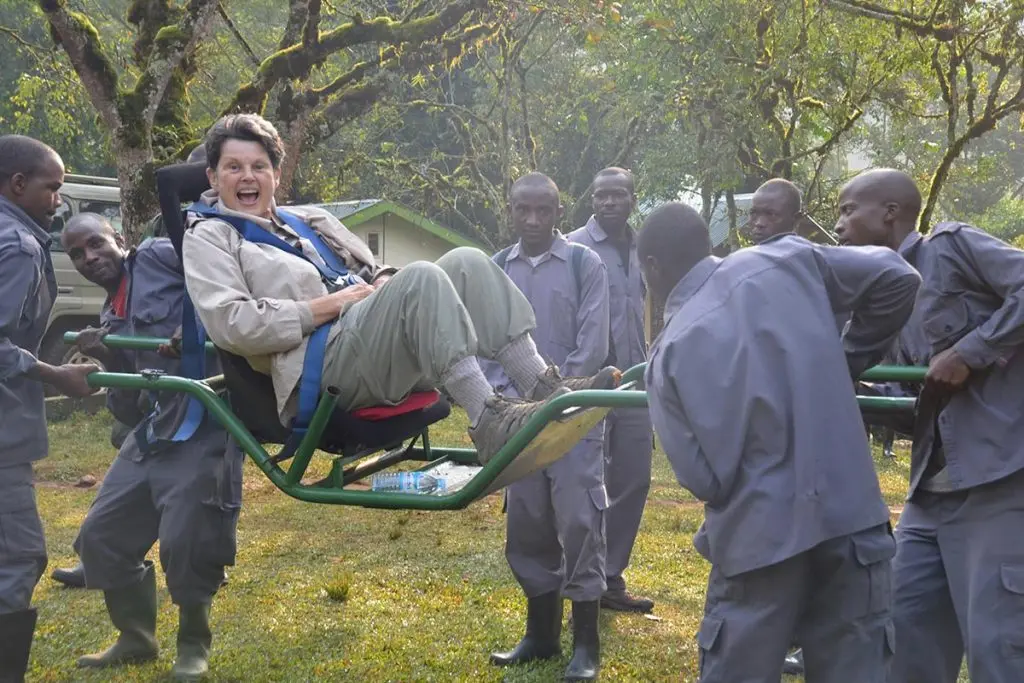
It is better to avoid describing any mountain forest experience as universally safe for every person over 70.
The question needs to be individualized.
The carrying system is designed to provide mobility support across natural terrain, and local teams described by Uganda trekking operators are accustomed to transporting travelers who cannot complete the route independently.
However, the traveler is still entering a mountain rainforest.
There may be slopes.
The ground may be wet.
The chair will move as the carrying team responds to natural terrain.
A traveler who cannot tolerate this type of movement, has serious uncontrolled health issues or cannot sit safely for extended periods may need individualized medical guidance before deciding to participate.
Age alone should not determine suitability.
A well-supported 80-year-old may be an appropriate candidate.
A person much younger with a particular medical condition may not be.
That is why Pieland Gorilla Safaris should discuss mobility and comfort requirements early and encourage appropriate professional medical advice when the traveler’s condition makes suitability uncertain.
Is a Sedan Chair Embarrassing or Less Authentic?
No.
Travelers should not feel embarrassed about using the assistance required to experience one of the world’s most extraordinary wildlife encounters.
A person using a sedan chair is not receiving a fake or simplified gorilla encounter.
The mountain gorillas remain wild.
The forest remains natural.
The trekking group still follows the ranger team.
The visitor still reaches the gorillas in their own habitat.
Only the method of mobility has changed.
This is exactly what a thoughtfully designed accessible safari should achieve.
It should reduce barriers without pretending that the natural environment itself has become barrier-free.
A traveler who has spent decades dreaming about mountain gorillas should not abandon that dream solely because they cannot walk through Bwindi in the same manner as another visitor.
Where appropriate assistance can be safely arranged, specialized mobility support can provide another route to the same remarkable experience.
The Approach to Sedan-Chair Gorilla Trekking After 70
For Pieland Gorilla Safaris, specialized mobility assistance should begin with a detailed conversation rather than an automatic booking.
The key information includes the traveler’s present walking ability, whether they can stand and transfer independently, how they manage stairs, whether they experience knee or hip pain, whether they normally use mobility equipment, whether they have significant balance limitations and whether they expect to walk any portion of the forest route.
From there, Pieland can determine whether the traveler is likely to need an ordinary porter or a more substantial sedan-chair arrangement.
If specialized assistance appears appropriate, availability and current cost should be confirmed for the planned trekking sector before the safari is finalized.
The lodge should then be selected around mobility.
Transportation should minimize unnecessary physical strain.
Rest time should be incorporated.
And trekking morning should arrive with the necessary team already expected—not with everyone hoping a solution can be found at the last minute.
For gorilla trekking with a sedan chair after 70, the guiding principle should therefore be:
Do not promise an easy forest. Build the level of support required to help the traveler experience that forest realistically, comfortably and with dignity.
For some senior travelers, an ordinary porter will be enough.
For others, a sedan chair may be the difference between only dreaming about mountain gorillas and actually sitting quietly in the forest while a silverback, mother and infant move through the vegetation only metres away.
That is why specialized mobility assistance deserves to be treated not as an afterthought, but as an important part of carefully planned gorilla trekking for travelers over 70.
Gorilla Trekking Over 70 With Limited Mobility
Gorilla trekking over 70 with limited mobility is possible for some travelers, but the experience has to be planned according to the person’s actual ability rather than simply their age. Limited mobility covers a very wide range. One traveler may walk independently but slowly. Another may use a cane for stability. Someone else may normally rely on a walker, while another traveler may be unable to walk meaningful distances and use a wheelchair for most daily movement.
Those travelers should not be given the same gorilla trekking plan.
The first question should therefore not be:
“Can people with limited mobility go gorilla trekking?”
A much more useful question is:
“What can this particular traveler do independently, where do they need assistance, and what level of support would be necessary for a natural mountain-forest trek?”
That distinction is fundamental.
Gorilla trekking takes place in wild forest rather than on constructed accessible pathways. Uganda Wildlife Authority describes ordinary gorilla trekking as requiring moderate fitness and notes that treks may last roughly two to seven hours. Bwindi itself consists of steep ridges and deep valleys, reinforcing why conventional mobility equipment cannot simply be assumed to work throughout the forest.
Rwanda likewise conducts gorilla trekking through the mountainous environment of Volcanoes National Park. Visit Rwanda states that visitors are allocated to gorilla families on trekking morning with fitness considered, and its official accessible-travel guidance specifically says park staff can assist travelers with reduced mobility, including offering physical support and, for someone confined to a wheelchair, a stretcher arrangement.
This is an important distinction for accessible gorilla safaris for travelers over 70.
The rainforest itself has not become wheelchair accessible.
Instead, the way the traveler is supported through that environment can sometimes be adapted.
That is what accessibility means in this context.
Pieland Gorilla Safaris should therefore avoid describing Bwindi, Mgahinga or Volcanoes National Park as barrier-free attractions. A more accurate description is that some travelers with mobility limitations may still be able to participate when their needs are discussed early and appropriate human or specialized carrying assistance is arranged.
The amount of assistance needed should be determined before the safari whenever possible.
A traveler who simply walks slowly may need little more than a porter and additional time.
A traveler using a cane may benefit from a porter plus trekking pole.
Someone who normally uses a walker may need to treat that device as useful around airports, lodges and other level environments rather than assume it can function throughout the forest.
A traveler who relies on a wheelchair may require specialized carrying arrangements instead of expecting the wheelchair itself to travel along the gorilla trail.
Understanding these distinctions can prevent unrealistic expectations and allow a much better safari to be built around the traveler.
Walking Slowly but Independently
A traveler does not need to walk quickly to participate in gorilla trekking.
For many people considering gorilla trekking over 70 with limited mobility, the primary issue is not whether they can walk but whether they walk more slowly than the average trekking participant.
Walking slowly, by itself, is not necessarily a major obstacle.
A senior traveler may have good endurance and excellent balance but simply prefer a deliberate pace. Another may move more slowly because of mild arthritis or stiffness. Someone else may need to shorten their stride on uneven ground but remain capable of walking for several hours.
These travelers are very different from someone who cannot safely cover meaningful distance on foot.
The important consideration is sustainability.
Can the traveler continue walking at their preferred pace for an extended period?
Can they recover after short rests?
Can they manage uneven ground?
Can they climb slowly?
Can they control their body when descending?
Can they continue after the gorilla encounter for the return journey?
If the answer is generally yes, slow walking may be manageable with appropriate support.
A senior traveler should never feel pressured to match a younger person’s pace simply because they are trekking in the same environment.
Rushing can create more problems than walking slowly.
When someone tries to keep up with a pace beyond their natural ability, they may become breathless, tire their legs unnecessarily and pay less attention to foot placement.
A steady walker who remains balanced and conserves energy may ultimately manage the forest better than someone who alternates between rushing and exhaustion.
This is especially important in Bwindi, where UWA describes the landscape as one of steep ridges and deep valleys and ordinary gorilla treks as potentially lasting several hours.
Slow Does Not Mean Unfit
Travelers over 70 sometimes describe themselves as “not very fit” simply because they no longer walk quickly.
Speed is only one small part of trekking ability.
A 77-year-old who walks slowly for three hours without excessive fatigue may be better prepared for a gorilla trek than someone who walks quickly for twenty minutes but cannot sustain activity.
This is why Pieland Gorilla Safaris should ask about walking duration and terrain tolerance, not merely pace.
A useful description would be:
“I walk independently and can remain active for several hours, but I prefer a slow pace and need extra care on descents.”
That tells the trekking team far more than:
“I am 76 and slow.”
A Porter Still Makes Sense
A slow but independent senior traveler can benefit greatly from a porter.
The porter can carry the daypack and keep the traveler’s hands free for balance.
They can also offer a hand at the few places where the terrain becomes more demanding.
The traveler may complete most of the trek independently while accepting support only occasionally.
This preserves both independence and physical energy.
Plan the Safari Around a Slow Pace
The safari surrounding the trek should also respect the traveler’s natural rhythm.
A person who walks slowly should not arrive at the gorilla lodge very late after a demanding road transfer and then be expected to rise before dawn feeling fully recovered.
An additional night near the park can make a major difference.
After trekking, the traveler should ideally have time to recover rather than immediately beginning another strenuous activity or lengthy road journey.
For someone over 70, this is not excessive caution.
It is simply good itinerary design.
Using a Walking Stick or Trekking Poles
Travelers who normally use a walking stick or who benefit from trekking poles may still be good candidates for gorilla trekking, depending on why they use the equipment and how well they function on uneven terrain.
A walking stick can provide an additional point of contact with the ground.
Trekking poles can serve a similar purpose while also helping some travelers regulate their rhythm on slopes.
For someone over 70 with mild balance concerns or knee discomfort, this additional support may make walking feel considerably more secure.
However, a trekking pole is support equipment, not a substitute for adequate mobility.
Someone who cannot safely walk through uneven terrain without substantial physical assistance should not assume that buying poles will solve the underlying problem.
The equipment needs to match the person.
Practice Before Traveling
A traveler should ideally practice using trekking poles before arriving in Uganda or Rwanda.
The first time someone learns how to coordinate poles should not be while descending wet rainforest terrain.
Practice on ordinary walks.
Then practice on gentle hills.
Learn how to place the pole securely.
Understand whether one pole or two feels more natural.
Learn how to shorten or lengthen adjustable poles if needed.
The traveler should also practice with the exact boots they plan to use during the safari.
This creates familiarity.
On trekking morning, there are already enough unfamiliar elements—the forest, rangers, weather, altitude and excitement of looking for gorillas.
Basic mobility equipment should feel routine.
Trekking Poles and Porters Can Work Together
Some travelers assume they must choose between poles and a porter.
That is unnecessary.
The two forms of assistance can complement each other.
A traveler might use trekking poles independently across ordinary sections and accept a porter’s hand when reaching a difficult descent.
The porter can also carry the traveler’s backpack so that the arms and upper body are free to use the poles effectively.
This can be particularly helpful for someone whose main difficulty is balance rather than endurance.
A Familiar Walking Stick May Be Better Than Unfamiliar Equipment
A traveler who has used the same walking stick for years may feel safer with that familiar device than suddenly changing to technical hiking poles.
The aim is not to make the traveler look like an experienced mountaineer.
The aim is to provide reliable support.
Pieland Gorilla Safaris should therefore ask what the traveler normally uses rather than automatically recommending new equipment.
Don’t Depend on the Stick Alone
Natural forest terrain can occasionally require more support than a walking aid can provide.
Mud can reduce traction.
A high root can require a larger step.
A steep slope may require another person’s hand.
For this reason, a senior traveler who already knows they have reduced stability should consider combining their walking aid with porter assistance rather than relying entirely on the stick.
Traveling With a Walker
Traveling to Uganda or Rwanda with a walker is entirely different from expecting to complete the gorilla trek using the walker.
This distinction should be made very clear.
A walker may be extremely useful throughout the rest of the safari.
It can assist a senior traveler at airports, hotels, paved areas, restaurants and relatively level lodge environments.
It may provide stability during transfers or allow someone to move more confidently around accommodation.
However, the actual gorilla trekking environment is a natural mountain forest.
Bwindi contains steep ridges and deep valleys, while normal gorilla tracking may require hours of walking. Volcanoes National Park likewise involves natural mountain terrain, and Visit Rwanda recommends sturdy walking shoes and weather protection rather than presenting the gorilla route as a surfaced accessible trail.
A conventional walker therefore should not be assumed to function as the primary mobility device throughout the forest.
Wheels can struggle with roots, mud, narrow irregular ground and steep gradients.
Even a non-wheeled walking frame can be awkward where the traveler has to negotiate natural obstacles.
The question becomes:
If the walker cannot practically be used during the difficult sections, what happens next?
That is the question the safari plan must answer before trekking morning.
A Walker Can Still Tell Us Something Important
Someone who normally uses a walker may have very different abilities from another walker user.
One traveler may use it mainly for confidence but can walk short distances with a cane and another person’s support.
Another may be unable to stand safely without the frame.
Another may use a rollator because of endurance problems and needs frequent sitting breaks.
These situations require different plans.
Pieland Gorilla Safaris should therefore ask:
Can the traveler walk without the walker for short distances?
Can they climb stairs holding a rail?
Can they step over a curb?
Can they stand independently?
Can they transfer from a chair into a vehicle without assistance?
Can they tolerate being physically supported by another person?
These practical questions reveal much more than simply knowing that the person “uses a walker.”
The Walker May Stay at the Trailhead
For some travelers, the walker may be useful up to the trekking staging area but inappropriate once the natural forest route begins.
The traveler may then continue with porter assistance, trekking poles or another prearranged level of support.
For someone with greater limitations, that may not be enough.
In that case, specialized carrying assistance should be investigated.
This planning should happen before arrival.
A traveler should never reach the gorilla trail and discover for the first time that their normal mobility equipment is unsuitable for the terrain.
Consider the Entire Safari
A walker user also needs appropriate planning beyond the forest.
The safari vehicle should be easy to enter.
The walker needs secure luggage space.
The lodge should ideally minimize stairs.
Rooms should be close to common areas where possible.
Bathrooms should be checked for practical accessibility.
Long road transfers may need additional breaks.
A domestic flight may sometimes be preferable in Uganda if prolonged driving aggravates stiffness or pain.
This is what makes a truly accessible gorilla safari different from simply arranging trekking assistance.
The whole journey must make sense.
Significant Mobility Limitations
A traveler with significant mobility limitations needs a different planning process from someone who simply walks slowly.
This category can include travelers who cannot reliably walk for prolonged periods, cannot negotiate steep slopes safely, require substantial assistance with balance, experience severe joint limitations or depend heavily on another person for mobility.
These travelers should not plan around the assumption that park staff will simply assign a nearby gorilla family.
No such guarantee can responsibly be made.
In Uganda, UWA’s current guidance notes that ordinary gorilla trekking can take around two to seven hours. In Rwanda, fitness is considered when gorilla families are allocated, but the gorillas still move freely and the route remains unpredictable.
This creates an important planning principle:
If the traveler cannot cope if the trek becomes longer than hoped, additional mobility support should be discussed before booking.
Do not rely on luck.
Do not rely on a promise of the nearest family.
Do not wait until the trekking morning to reveal major limitations.
Determine What the Traveler Can Actually Do
Terms such as “limited mobility” or “disabled” are too broad to design a safari accurately.
Pieland Gorilla Safaris should understand actual functions.
Can the traveler stand independently?
Can they walk ten metres?
Can they walk 500 metres?
Can they climb a few steps?
Can they transfer into a safari vehicle?
Can they sit comfortably for several hours?
Do they need help using the bathroom?
Can they remain seated safely in a carrying chair?
Do they experience pain when descending?
These details determine what assistance may be appropriate.
Ordinary Porter or Specialized Carrying Assistance?
If the traveler remains capable of completing most of the route on foot, an ordinary porter may still be enough.
If the traveler cannot safely rely on walking through the forest, specialized carrying assistance may be more appropriate.
That is a major distinction.
Ordinary porter support enhances walking.
Specialized carrying support may replace walking for significant portions of the trek.
The choice should be made according to realistic ability rather than pride.
Accommodation Becomes Even More Important
A traveler requiring substantial assistance in the forest should not then stay in a lodge that creates additional mobility barriers.
Room placement should be confirmed.
Stairs should be minimized.
Vehicle access should be considered.
Dining facilities should be within practical reach.
A beautiful hillside room may not be worth the additional physical effort if a flatter room is available.
Transport Must Also Be Adapted
The traveler may need more time getting into and out of a 4×4.
A step may be needed.
The vehicle seating position may matter.
Long transfer days may need to be divided.
For Uganda, domestic flights serving Kihihi or Kisoro can sometimes significantly reduce the amount of overland travel required to reach Bwindi. UWA currently confirms scheduled and charter air access to these airstrips followed by 4WD road transfers to the park region.
Again, accessible planning needs to continue throughout the safari.
Wheelchair Users and Gorilla Trekking
Wheelchair users should not be told that mountain gorilla trekking is conventionally wheelchair accessible.
This is one of the most important accuracy points on an accessible gorilla safari website.
The natural gorilla habitats of Bwindi, Mgahinga and Volcanoes National Park are mountain forests rather than paved wildlife attractions.
Bwindi’s terrain includes steep ridges and deep valleys, and conventional tracking may take several hours. A normal wheelchair therefore cannot simply be expected to roll from the trekking headquarters to a mountain gorilla family.
However, that does not automatically mean a wheelchair user can never see gorillas.
The distinction is between:
wheelchair-accessible trail infrastructure
and
adapted human-assisted access through natural terrain.
Those are not the same thing.
Rwanda’s official accessible-travel guidance is unusually clear on this point. Visit Rwanda states that staff at Volcanoes National Park will try to assist travelers with reduced mobility and specifically mentions providing physical support or a stretcher for visitors confined to a wheelchair.
This is valuable because it demonstrates the correct way of thinking about accessible gorilla trekking.
The wheelchair itself is not necessarily what moves through every part of the forest.
Instead, specialized assistance may enable the traveler to reach the gorillas.
Wheelchair Users in Rwanda
A traveler who uses a wheelchair and wants to trek in Rwanda should discuss requirements before the trip.
Visit Rwanda itself advises travelers with accessibility needs to make contact to discuss their requirements.
Pieland Gorilla Safaris should therefore establish the traveler’s mobility profile in advance and confirm what assistance can be arranged for the specific date.
Questions should include whether the traveler can transfer from their wheelchair into another seat, whether they can stand briefly, whether they have good upper-body stability and whether there are any positioning or medical considerations that could affect the carrying arrangement.
The wheelchair can remain extremely important throughout the rest of the journey even if a different mobility system is used inside the forest.
Accommodation, vehicle access and Kigali logistics should therefore still be designed around the wheelchair user.
Wheelchair Users in Uganda
In Uganda, the natural conditions of Bwindi make conventional wheelchair travel along the gorilla trail unrealistic for many routes. UWA describes Bwindi as a landscape of steep ridges and deep valleys and advises that 4WD vehicles are required for many approaches to the park.
A traveler who relies on a wheelchair should therefore not book an ordinary permit and assume the chair itself will be usable through the forest.
Instead, Pieland Gorilla Safaris should investigate specialized carrying assistance and confirm current arrangements locally before finalizing the safari.
Where such an arrangement is essential to participation, it should be treated as a core part of the booking rather than an optional extra to be sorted out after arrival.
Can the Wheelchair Be Used at the Gorilla Viewing Site?
This cannot responsibly be guaranteed in advance.
The gorilla viewing location is determined by where the family is found that day.
The immediate forest environment may vary.
The traveler may need to remain in the specialized support equipment used to reach the area, or another arrangement may be necessary under ranger direction.
This is why Pieland Gorilla Safaris should avoid promising:
“You will stay in your normal wheelchair all the way to the gorillas.”
A more accurate promise is:
“We will establish your mobility requirements in advance and confirm the practical assistance available for reaching the gorillas, while recognizing that the natural forest itself is not a conventional wheelchair-accessible environment.”
That wording is both more professional and more useful.
Limited Mobility Does Not Mean One Standard Safari
Perhaps the most important lesson for gorilla trekking over 70 with limited mobility is that there is no single “disabled traveler package.”
Mobility exists on a spectrum.
A traveler may walk slowly but independently.
Another may use one trekking pole.
Another may need a porter’s hand on every descent.
Another may normally use a walker but can walk short distances with assistance.
Another may be a full-time wheelchair user.
Those travelers require different levels of support.
The correct safari should therefore begin with an individual mobility assessment rather than assumptions.
Pieland Gorilla Safaris can ask about the traveler’s normal daily movement, stairs, walking distance, balance, transfers, joint limitations, equipment and tolerance for prolonged sitting.
That information can then influence the choice of country, Bwindi sector, lodge, airstrip, safari vehicle, porter arrangements, specialized carrying assistance and number of rest days.
The goal should not be to force every traveler into an ordinary trekking model.
Nor should the goal be to make every traveler with a mobility limitation feel that they require full carrying assistance.
The correct support is the amount of assistance that fits the individual.
A Practical Way to Think About Mobility Levels
A useful planning framework is to think in terms of four broad levels rather than age.
Independent but slow: the traveler walks without significant physical assistance but needs a slower pace. A porter and trekking pole may be useful.
Independent with support: the traveler walks but regularly needs a cane, pole or another person’s hand. A dedicated porter and carefully paced trekking plan may be appropriate.
Limited walking capacity: the traveler can walk short distances but cannot safely rely on walking for an unpredictable multi-hour forest route. Specialized carrying assistance should be investigated.
Wheelchair-dependent or unable to complete meaningful forest walking: the traveler requires a fully adapted mobility plan, including confirmation of specialized carrying assistance, suitable transport and accessible accommodation.
This framework is much more useful than simply saying a traveler is “over 70.”
A 72-year-old could fall into any one of these categories.
So could an 82-year-old.
Our Approach to Gorilla Trekking With Limited Mobility
For Pieland Gorilla Safaris, an accessible gorilla safari should begin before permits are purchased whenever substantial mobility limitations are involved.
The planning process should establish what the traveler can do independently, what assistance they normally use and which parts of a mountain trek would present the greatest difficulty.
The operator can then decide whether the traveler is likely to need an ordinary porter, trekking poles, more substantial physical assistance or a specialized carrying arrangement.
The lodge should be selected according to mobility rather than simply appearance.
Transport should minimize unnecessary strain.
Rest days should be incorporated where useful.
The trekking team should receive accurate information.
And the traveler should arrive knowing what support has actually been confirmed.
Most importantly, Pieland Gorilla Safaris should never describe the natural rainforest as something it is not.
Bwindi, Mgahinga and Volcanoes National Park are wild mountain environments, not barrier-free attractions.
Yet accessibility is not only about changing the environment.
Sometimes it is about changing the support around the traveler.
For some people over 70, that may mean walking slowly with a porter.
For another, it may mean trekking poles and regular assistance.
For someone using a walker, it may mean switching to a different form of support once the forest route begins.
For a wheelchair user, it may mean a specialized carrying arrangement confirmed well in advance.
When those differences are understood and planned responsibly, limited mobility does not automatically end the possibility of seeing mountain gorillas.
It changes how carefully the journey needs to be designed.
Gorilla Trekking Over 70 With Bad Knees
Gorilla trekking over 70 with bad knees can still be realistic for many travelers, but knee function often matters more than age itself. A traveler may be able to walk several kilometres comfortably on flat ground yet find steep descents, muddy slopes, high steps and uneven forest surfaces much more demanding. This is why assessing knee problems for a gorilla safari should go beyond simply asking whether someone can walk.
Gorilla trekking is a variable mountain activity. In Uganda, Uganda Wildlife Authority describes the experience as requiring moderate fitness and notes that treks may last approximately two to seven hours, depending on the location of the gorillas. Rwanda’s official guidance similarly explains that the length and terrain of the hike depend on where the assigned gorilla group is found; hikes can range from roughly 30 minutes to four or more hours.
For a traveler with knee problems, the unpredictability matters. It is not enough to say, “I can normally walk for two hours.” A more useful assessment asks how the knees respond to descending, climbing, repeated stepping, irregular ground and several hours of accumulated activity.
One 74-year-old may have mild arthritis but excellent leg strength and manage a gorilla trek comfortably with trekking poles and a porter. Another may be equally fit cardiovascularly but experience significant pain whenever walking downhill. A third may have little pain at the beginning of a walk but develop weakness after prolonged activity.
These travelers require different levels of support.
The purpose of senior-friendly safari planning is therefore not to promise that the knees will never be challenged. The forest cannot be redesigned around the traveler. Instead, Pieland Gorilla Safaris can reduce the challenges that can be controlled: unnecessary backpack weight, long transfers immediately before trekking, unsuitable footwear, poor lodge positioning, lack of porter assistance and overly ambitious activities after the trek.
Why Descending Can Be More Difficult Than Climbing
Many travelers with bad knees assume that climbing uphill will be the hardest part of gorilla trekking because climbing makes breathing heavier and requires obvious muscular effort. For the knees, however, descending can sometimes be the greater challenge.
When walking downhill, the lower-body muscles have to control the body’s movement as gravity pulls it forward and downward. Research examining downhill walking in people after total knee replacement found that increasing downhill slope changed knee biomechanics and increased measures including knee flexion range and peak knee-extension moment across progressively steeper declines. This helps explain why a traveler can feel reasonably comfortable climbing slowly yet notice considerably more difficulty while descending.
In a gorilla forest, downhill walking is also rarely equivalent to descending a normal staircase.
The surface may be irregular.
There may be exposed roots.
A section may become muddy after rain.
A traveler may need to shorten their step, shift weight carefully and decide where to place each foot.
In Rwanda, official tourism information specifically describes primate-tracking terrain as potentially steep, slippery and muddy, while gorilla trekking guidance recommends solid walking shoes and appropriate protective clothing.
For someone over 70 with knee discomfort, these conditions can require considerably more concentration than ordinary walking.
A common mistake is to move too quickly downhill because descending feels easier on the lungs. That can increase the need for abrupt braking movements and may make the traveler feel less stable.
A better approach is to descend slowly.
Take shorter controlled steps.
Use available support.
Allow other trekkers to move ahead rather than feeling pressured to match their speed.
For some seniors, it can be useful to tell the ranger and porter before departure:
“My endurance is good, but downhill walking is the part that causes difficulty for my knees.”
That information is much more valuable than simply saying, “I have bad knees.”
It tells the support team exactly where the traveler is most likely to need assistance.
The return journey also deserves consideration. Reaching the gorillas is not the end of the physical activity. After the observation period, the traveler must leave the forest. Someone whose knees have already been working for several hours may feel more discomfort on the return journey than during the outward trek.
This is another reason to preserve energy early rather than trying to prove physical independence.
Using Trekking Poles
Trekking poles can be particularly useful for gorilla trekking over 70 with bad knees, provided the traveler knows how to use them and they are appropriate for the individual’s mobility.
Poles can provide additional contact points with the ground and may improve confidence when walking across uneven surfaces or descending carefully. They can also help some travelers maintain a more controlled rhythm rather than allowing the body to move downhill too quickly.
However, trekking poles should not be treated as a medical solution for knee pain.
They are mobility aids.
A traveler with significant knee instability, severe pain or substantial walking limitations should not assume that buying a pair of poles automatically makes a mountain trek appropriate.
The most useful time to begin using trekking poles is before arriving in Africa.
Practice on ordinary walks first.
Then use them on gentle hills.
Become comfortable adjusting their length.
Practice placing them securely rather than reaching too far forward.
Learn how your body feels when descending with them.
If a traveler only learns to use poles during the gorilla trek, the equipment itself can become another thing requiring concentration.
A senior traveler who already uses one walking stick may not necessarily need to switch to two technical trekking poles. Familiarity matters. If the person’s existing walking aid provides reliable support and is practical for the trekking environment, it may remain useful.
The best choice depends on what the traveler normally uses and why.
For a traveler with one weaker knee, an orthopedic or physical-therapy professional may also provide individualized advice about how to use a cane or other walking aid safely. The correct technique can depend on the person’s condition, so Pieland Gorilla Safaris should avoid prescribing a particular medical gait pattern.
Trekking Poles Do Not Replace a Porter
A particularly effective arrangement for some older travelers is trekking poles plus a porter.
The traveler uses the poles through manageable sections.
The porter carries the backpack.
When a muddy descent or difficult step appears, the porter can provide additional physical assistance.
This keeps the traveler’s hands and energy available for balance instead of using one hand to carry a camera bag or water.
For a traveler with bad knees, this combination can be much more useful than either form of support alone.
Porter Support
For a traveler over 70 with knee problems, porter support should be considered from the beginning of the trek rather than only after pain or exhaustion develops.
Rwanda’s official gorilla trekking guidance specifically notes that porters can carry backpacks and cameras and provide a helping hand along the route. The same principle is highly relevant to senior trekking generally.
The first benefit is weight reduction.
Water, rain gear, photography equipment and other belongings may not seem heavy at the start of the morning. But every kilogram carried adds to the physical work being performed while climbing and descending.
Someone with painful knees gains little by carrying unnecessary equipment.
A porter can take the daypack while the traveler focuses on controlled movement.
The second benefit is stability.
A porter may offer a hand when:
descending a steep section;
stepping over a root;
crossing mud;
moving onto a higher piece of ground;
or navigating a section where the traveler does not feel secure.
A senior traveler does not have to hold onto the porter throughout the trek.
Support can be selective.
A 72-year-old may walk independently for 90% of the route and need help only on a handful of descents.
A 79-year-old may prefer more continuous support.
Both are legitimate uses of porter assistance.
For travelers with bad knees, the porter should ideally know which knee causes difficulty and which movements trigger discomfort.
For example:
“My right knee is the weaker one.”
“I am fine climbing, but I need support going downhill.”
“I can walk for several hours, but high steps are difficult.”
These details help the porter stay particularly attentive in the situations where assistance matters.
Don’t Wait Until the Knees Are Exhausted
Once leg muscles become tired, movement may become less controlled.
A traveler who refuses help for the first several hours may find that both their knees and balance deteriorate later.
Using support early can help conserve physical reserve for the return journey.
For gorilla trekking over 70 with bad knees, the goal is not to demonstrate how long someone can manage without assistance.
The goal is to complete the experience with enough energy to enjoy the gorillas and return comfortably.
Footwear and Grip
Good footwear is especially important when knee discomfort is combined with mud, slopes and uneven ground.
Visit Rwanda currently recommends solid walking shoes for gorilla trekking and advises visitors to consider gaiters and waterproof protection for the moist mountain environment.
For someone with bad knees, reliable grip is important because slipping forces the body to make a sudden corrective movement.
A small slip that causes little concern for one traveler may provoke pain or instability in someone with an already sensitive knee.
The objective should therefore be traction and stability, not simply owning expensive hiking boots.
Boots should have a tread appropriate for natural trails.
They should fit securely.
They should have already been worn during longer walks.
The traveler should know how they feel on inclines and descents.
A new pair of boots should not be taken directly from the box to Bwindi or Volcanoes National Park.
Blisters or pressure points can change the traveler’s walking pattern, and compensating for foot discomfort may make the rest of the movement less natural.
For older travelers, the shoe should also feel stable around the foot. A shoe that moves around excessively or has worn, smooth soles is a poor choice for wet mountain conditions.
At the same time, there is no universal “best gorilla trekking boot” for someone with knee disease.
People have different foot shapes, orthopedic requirements and previous injuries. Someone who uses prescription orthotics or specialized footwear should discuss any major footwear change with the relevant professional rather than choosing trekking shoes solely from an online safari list.
Gaiters Can Be Helpful
Gaiters do not treat knee pain, but they can make forest walking more comfortable by helping protect the lower legs and footwear from moisture, vegetation and debris. Rwanda’s official trekking information specifically identifies gaiters as useful equipment.
When someone already has to concentrate carefully on knee placement and stability, reducing smaller distractions can be beneficial.
When Knee Pain May Require Additional Assistance
Not every painful knee requires specialized mobility assistance.
Many older adults live with manageable stiffness or arthritis while remaining highly active.
The key question is whether the knee limitation changes the person’s ability to safely complete an unpredictable mountain trek.
Additional assistance deserves serious consideration when the traveler cannot confidently rely on walking for the potential duration of the trek, when the knee repeatedly gives way, when descending is severely limited, or when pain becomes substantial after relatively short periods of walking.
A history of frequent falls or major balance problems also deserves additional attention.
These situations should not be addressed simply by hoping for a nearby gorilla family.
In Uganda, ordinary tracking may last two to seven hours. In Rwanda, the gorillas’ location determines the length and terrain of the hike. Because no operator controls where wild gorillas move, anyone who depends on receiving a very short trek needs a stronger mobility plan.
That may mean:
ordinary porter assistance;
two-person support where locally appropriate;
a slower pace;
specialized carrying assistance;
or reconsidering whether conventional walking-based trekking is suitable.
The correct level depends on the traveler.
Symptoms That Should Not Simply Be Pushed Through
If ordinary walking is causing severe or rapidly worsening pain, repeated knee instability, major swelling, or a significant change from the traveler’s usual function, the sensible approach is to seek individualized medical assessment rather than relying on safari equipment alone.
A tour operator can organize logistics.
A porter can provide physical assistance.
Neither can determine the cause of new or severe knee symptoms.
This becomes even more important if the traveler is planning to start an aggressive training program shortly before travel.
The objective should be to arrive stronger—not to aggravate the knee through last-minute overtraining.
Gorilla Trekking After Knee Replacement Over 70
Gorilla trekking after knee replacement over 70 may be possible for some travelers who have recovered well and returned to an appropriate level of walking strength and mobility, but the operation itself does not provide a simple yes-or-no answer.
Recovery after knee replacement varies significantly. NHS guidance notes that full recovery may take several months or longer depending on the individual, while patients are normally progressed through walking and rehabilitation under professional guidance. The American Academy of Orthopaedic Surgeons similarly emphasizes gradual recovery of strength and mobility and recommends following the activity program provided by the surgeon and physical therapist.
For this reason, a traveler should not decide that they are ready for Bwindi or Volcanoes National Park simply because a certain number of months have passed since surgery.
The more relevant question is:
What can the replaced knee comfortably and safely do now?
A traveler several years after successful knee replacement who walks regularly, manages slopes and stairs comfortably and has been cleared for appropriate activity may have very different trekking prospects from someone who underwent surgery recently or still struggles with strength, swelling or range of motion.
Recovery Time Alone Is Not Enough
A common question is:
“How long after knee replacement can I go gorilla trekking?”
There should not be one universal number on a safari website.
NHS guidance explains that recovery varies between individuals and may take months or longer. AAOS advises patients to return to activities according to guidance from their surgeon and physical therapist rather than using one timetable for everyone.
That means Pieland Gorilla Safaris should avoid statements such as:
“You can trek six months after knee replacement.”
That may be appropriate for one person and completely inappropriate for another.
A better question for the traveler’s orthopedic team is:
“I am planning a mountain gorilla trek that may involve several hours of walking on steep, uneven and sometimes muddy terrain, including repeated uphill and downhill sections. Am I ready for that level of activity?”
That description is much more useful than simply asking whether travel is allowed.
Stair Ability Can Provide Useful Information
AAOS describes stair climbing and descending as activities that require both strength and flexibility during knee-replacement recovery, with support often used until adequate strength and mobility return.
For future gorilla trekkers, stair ability can therefore provide useful practical information.
It is not a formal gorilla-trekking test.
But if a traveler still has considerable difficulty descending a normal flight of stairs, mountain-forest descents deserve serious consideration.
Likewise, if stepping onto a standard stair remains difficult, roots and natural forest steps may be challenging.
A traveler should ideally discuss these movements with their physical therapist if there is uncertainty.
Downhill Walking Deserves Particular Attention After Knee Replacement
Research specifically examining people with total knee replacements found changes in knee biomechanics as downhill slope increased, and the study authors concluded that downhill walking may not be appropriate during early-stage rehabilitation.
This does not mean people with knee replacements should never descend hills or go gorilla trekking.
It means that downhill ability is an important part of assessing readiness, particularly when the operation is relatively recent or rehabilitation is still ongoing.
A traveler may feel excellent walking on a treadmill yet discover that sustained downhill walking remains difficult.
This is why preparation should include the kinds of movement the traveler’s orthopedic or rehabilitation team considers appropriate—not simply long flat walks.
What About High-Impact Activity?
AAOS generally favors lower-impact fitness activities after total knee replacement and notes that activities such as walking and cycling are commonly appropriate once medically cleared, while higher-impact activities are less desirable.
Gorilla trekking is fundamentally a walking activity rather than a running or jumping sport, but its uneven terrain, slopes and duration make it more complex than ordinary level walking.
For a traveler with a replaced knee, that distinction should be explained clearly to the orthopedic professional.
Porter Assistance Is Still Valuable After Successful Knee Replacement
Even a traveler who has recovered extremely well may benefit from a porter.
There is little advantage in adding the weight of water, cameras and rain gear to a newly rehabilitated or replaced knee when support is readily available.
A porter can carry the equipment and help during difficult descents.
The traveler can still walk independently through most of the forest.
The assistance simply removes unnecessary strain.
Trekking Poles May Be Useful
Some travelers after knee replacement may also find trekking poles useful for balance and controlled walking.
However, the specific walking aid and technique should be appropriate to the individual.
Anyone still receiving physiotherapy or using a cane or other prescribed aid should follow their healthcare professional’s advice rather than replacing that equipment based on general safari recommendations.
Do Not Stop Using a Prescribed Walking Aid to Appear Fitter
A senior traveler should never feel embarrassed about arriving at trekking briefing with a walking aid.
If a cane, pole or other device is normally required, hiding that information or deliberately leaving the aid behind can make planning harder.
Accurate information allows rangers, porters and Pieland Gorilla Safaris to understand what support is needed.
The aim is not to look younger or more athletic.
The aim is to experience mountain gorillas safely and comfortably.
Consider the Safari Before and After the Trek
A successful post-knee-replacement safari is not only about the forest.
Long road transfers can cause stiffness for some travelers.
Repeated climbing around a hillside lodge can add unnecessary stress.
A deep step into a high safari vehicle may be uncomfortable.
Changing hotels every night can reduce recovery time.
These factors should be considered alongside the trek.
For Uganda, a fly-in itinerary may be useful where long road travel is uncomfortable.
An accessible room close to dining facilities can reduce unnecessary steps.
An additional night after gorilla trekking can provide proper recovery.
The following day could involve a relaxed game drive or lodge stay rather than another strenuous hike.
When Medical Clearance Becomes Particularly Important
Anyone over 70 who has had a relatively recent knee replacement, continues to experience significant pain or swelling, has not returned to stable walking, still requires substantial rehabilitation support, or is unsure about prolonged uneven walking should discuss the proposed trek with their orthopedic surgeon or physical therapist.
NHS and AAOS recovery guidance both emphasize individualized rehabilitation and professional advice during return to activity.
Pieland Gorilla Safaris can provide the healthcare professional with a useful description of the trek:
several potentially unpredictable hours of walking, natural uneven ground, slopes, possible mud and roots, altitude, and a return walk after the gorilla encounter.
That gives the professional something concrete to assess.
The Best Approach to Gorilla Trekking With Bad Knees After 70
Bad knees do not automatically rule out gorilla trekking over 70.
Neither does a previous knee replacement.
What matters is how the traveler functions now.
A senior traveler who can walk steadily, manage stairs and slopes, maintain balance and recover comfortably from physical activity may be able to trek successfully with relatively simple support.
Another traveler may benefit from a porter, trekking poles and a carefully selected itinerary.
Someone with much more substantial limitations may need specialized mobility assistance.
The strongest approach combines several small decisions:
prepare gradually; use appropriate footwear; practice hills where medically appropriate; hire a porter; communicate exactly what movement causes knee difficulty; avoid carrying unnecessary weight; descend slowly; build rest into the itinerary; and obtain individualized medical advice when the knee condition or surgical history makes suitability uncertain.
For Pieland Gorilla Safaris, the guiding principle should be simple:
Do not judge readiness by the traveler’s age—or by the fact that they have had knee surgery. Judge the safari around what the traveler can comfortably and safely do today.
That creates a much more realistic foundation for helping travelers over 70 experience mountain gorillas without turning the trek into an unnecessary test of their knees.
Gorilla Trekking After Hip Replacement Over 70
Gorilla trekking after hip replacement over 70 may be possible for many travelers who have recovered well, regained sufficient strength and mobility, and are comfortable walking on uneven terrain. A previous hip replacement should not automatically exclude someone from seeing mountain gorillas, but it does require more thoughtful preparation than simply asking how many months have passed since surgery.
Recovery after hip replacement varies considerably between individuals. The NHS states that recovery can take several months and depends partly on factors such as age and general health, while the American Academy of Orthopaedic Surgeons emphasizes gradual return to normal activity according to the individual’s recovery and the instructions of their surgeon and physical therapist.
For gorilla trekking after hip replacement over 70, the most important question is therefore not:
“Have enough months passed since my operation?”
It is:
“What can my hip comfortably and safely do now?”
This is a much more useful distinction.
A 74-year-old who underwent hip replacement three years ago, walks several kilometres regularly, manages stairs comfortably and has good balance may have very different trekking prospects from a 72-year-old who had surgery recently and still requires a cane or experiences pain after relatively short walks.
The operation itself does not determine trekking suitability.
Current function does.
Mountain gorilla trekking places different demands on the body from ordinary everyday walking. In Uganda, Uganda Wildlife Authority states that gorilla tracking requires moderate fitness and may take approximately two to seven hours depending on circumstances. In Rwanda, Visit Rwanda states that gorilla hikes can range from approximately 30 minutes to four or more hours, with the length and terrain depending on where the assigned gorilla group is located.
The traveler may therefore encounter:
uneven ground;
slopes;
roots;
mud;
changes in elevation;
repeated stepping;
and a return walk after the gorilla encounter.
These are the movements that need to be considered when assessing a replaced hip.
A traveler may feel completely comfortable walking on a flat hotel corridor yet experience very different demands when stepping over a root or stabilizing the body on a muddy slope.
For this reason, Pieland Gorilla Safaris should never tell a guest that hip replacement alone makes gorilla trekking either suitable or unsuitable.
The correct approach is to understand recovery, current mobility, balance, strength, walking endurance, medical advice and the amount of assistance likely to be required.
Recovery and Physical Readiness
Physical readiness for gorilla trekking after hip replacement over 70 should be judged according to functional recovery rather than a fixed timetable.
The NHS notes that full recovery from hip replacement may take several months and that recovery varies between individuals. It recommends following the exercises and advice provided by the physiotherapy team and gradually increasing walking according to comfort.
AAOS similarly emphasizes that returning to everyday activities takes time and that the specific precautions and timing after hip replacement depend on the surgical technique and the instructions of the individual’s surgeon and physical therapist.
This means there is no responsible universal statement such as “you can go gorilla trekking six months after hip replacement.”
That wording would be too simplistic.
Some travelers may recover extremely well.
Others may still have significant limitations after the same period.
The more useful assessment considers several specific physical abilities.
Can You Walk for an Extended Period?
Walking endurance is one of the first considerations.
The traveler should think about what happens during normal life.
Can you walk for an hour without significant discomfort?
Can you continue after a short rest?
Can you walk on consecutive days?
Does your hip become painful after prolonged activity?
Do you compensate by limping when tired?
These observations matter because gorilla trekking is variable.
A traveler cannot depend on receiving a twenty-minute walk simply because they have requested an easier gorilla family.
In Uganda, UWA’s current guidance still describes possible trekking durations of roughly two to seven hours.
In Rwanda, the trekking duration and route depend on the gorilla family’s location, with official guidance giving a range from around thirty minutes to four or more hours.
This uncertainty makes physical reserve especially important.
The traveler should ideally be capable of doing more than the minimum they hope to encounter.
Can You Climb and Descend?
Walking on level ground is only one component of gorilla trekking.
A traveler may need to climb slopes, descend carefully and step between different heights.
AAOS notes that patients recovering from hip replacement need to regain the ability to perform normal functional activities such as walking and negotiating stairs, and that assistive devices may be required during recovery until sufficient strength and confidence have returned.
For gorilla trekking, this becomes highly relevant.
A traveler who still finds an ordinary staircase extremely difficult should discuss the demands of natural mountain terrain with their healthcare professional before assuming that the forest will be manageable.
The forest is less predictable than a staircase.
The steps are not uniform.
There may be no handrail.
The ground may be wet.
The traveler may need to adjust the direction and height of each step.
Can You Step Over Natural Obstacles?
Hip mobility is particularly important when stepping over roots or onto uneven ground.
A traveler may need to raise the leg higher than during ordinary walking.
This movement should not be forced if it causes pain or violates any precautions specific to the person’s surgery.
AAOS notes that hip precautions can vary according to surgical technique and that patients should follow the specific restrictions provided by their surgeon and physical therapist.
For this reason, a generic gorilla trekking article cannot prescribe exactly how far someone should flex or rotate a replaced hip.
The traveler needs individualized guidance if there is uncertainty.
How Is Your Balance?
Balance is another major consideration.
A hip replacement may have relieved pain successfully while strength, coordination or confidence on uneven surfaces still require further work.
Someone may walk comfortably indoors but feel less secure on grass, gravel or slopes.
This difference matters because gorilla trekking takes place in natural terrain.
Visit Rwanda describes primate-tracking terrain as potentially steep, slippery and muddy, reinforcing why balance is particularly important for senior travelers.
A traveler who becomes unstable when the surface changes should discuss that limitation honestly.
A porter can provide valuable support, but a porter should not be used to hide a major unresolved balance problem.
Can You Get Into and Out of a Safari Vehicle Comfortably?
The safari itself contains movements beyond trekking.
A traveler may repeatedly enter and exit a 4×4 vehicle.
Depending on the vehicle, the step can be higher than an ordinary car.
For someone with a replaced hip, this may be easy—or it may expose reduced flexibility.
Pieland Gorilla Safaris can reduce strain by allocating a comfortable vehicle, providing a portable step where appropriate and allowing the traveler to take their time during entry and exit.
There is no need to hurry.
The safari should adapt around the traveler.
Can You Sit Comfortably During Transfers?
Long periods of sitting can also matter.
A traveler may be perfectly capable of walking but become stiff after several hours in a vehicle.
This is especially relevant in Uganda, where overland journeys toward Bwindi or Mgahinga can be lengthy unless the itinerary is broken into stages or domestic flights are used.
A senior traveler after hip replacement may therefore benefit from:
regular comfort stops;
time to get out and stretch;
a private vehicle;
shorter transfer days;
or a fly-in gorilla safari.
The exact choice depends on how the individual responds to prolonged sitting.
Are You Still Following Postoperative Precautions?
Travelers who remain under specific post-operative restrictions need to take them seriously.
AAOS explains that hip precautions vary according to surgical technique and individual recovery, while the NHS also advises patients during recovery to avoid certain movements until they have been told it is safe to resume them.
If a traveler is still being told to avoid particular hip positions, twisting movements or deep bending, that information should be discussed before planning a mountain trek.
Gorilla trekking can involve unpredictable body positioning.
The forest does not provide perfectly controlled movements.
Anyone who still requires strict movement precautions should obtain individualized medical advice before committing to the activity.
Has Your Rehabilitation Progressed Beyond Basic Daily Walking?
This is another useful question.
AAOS and NHS guidance both emphasize rehabilitation exercises and gradual restoration of strength and mobility after hip replacement.
Someone who has returned only to basic household walking may not yet be ready for prolonged natural-terrain trekking.
Someone who regularly walks outdoors, manages hills, climbs stairs and has resumed normal low-impact activity may be much closer to the functional demands required.
The aim is not to reach a particular gym standard.
The aim is to be comfortable with the types of movement the forest may require.
Questions to Discuss With Your Healthcare Professional
Travelers over 70 who have had a hip replacement should consider speaking with their orthopedic surgeon, physiotherapist or another healthcare professional familiar with their recovery if there is any uncertainty about trekking readiness.
The discussion becomes much more useful when the traveler describes the actual gorilla trekking activity rather than simply saying:
“I am going on safari.”
A conventional safari may involve mostly sitting in a vehicle.
Gorilla trekking is different.
A useful description would be:
“I am planning a mountain gorilla trek in Uganda or Rwanda. The activity may involve several hours of walking on uneven natural terrain, slopes, roots, mud and potentially slippery ground. I may need to climb and descend and will have a porter available for support. Is my current hip recovery suitable for this type of activity?”
That gives the healthcare professional something meaningful to assess.
“Am I Ready for Several Hours of Uneven Walking?”
This should be one of the first questions.
Ordinary flat walking may not reveal every limitation.
The healthcare professional may want to know how far the traveler currently walks, whether pain develops, whether gait changes with fatigue and whether the traveler requires an assistive device.
Because gorilla trekking duration is variable, the traveler should explain that the activity cannot be reduced to one guaranteed distance. Uganda’s official guidance allows for a broad two-to-seven-hour range, while Rwanda’s trekking duration also varies by gorilla-group location.
“Are Hills and Stairs Appropriate for Me?”
A senior traveler should specifically ask whether hill walking and repeated stair practice are appropriate during preparation.
This is important because some travelers begin training too aggressively after deciding to book a gorilla safari.
Rehabilitation should be progressive.
The Royal National Orthopaedic Hospital advises that exercise difficulty and duration after hip replacement should be increased gradually and that patients should check with their surgeon or therapist to ensure exercises are appropriate, particularly where hip precautions apply.
That principle fits gorilla preparation well.
The traveler should build function gradually rather than suddenly attempting steep hiking trails several weeks before travel.
“Are There Any Movements I Should Still Avoid?”
Hip precautions differ between patients.
AAOS specifically notes that the precautions required after hip replacement depend on the surgical approach and individual instructions.
A traveler should therefore know whether twisting, deep flexion, crossing the legs or particular movement combinations remain restricted.
This becomes particularly important when:
stepping over roots;
getting into a safari vehicle;
sitting in low chairs;
using lodge bathrooms;
or adjusting position on steep terrain.
Pieland Gorilla Safaris can modify logistics only if the traveler knows what their medical team has advised.
“Should I Use a Cane or Trekking Pole?”
If the traveler normally uses a cane, walking stick or other mobility aid, they should ask whether that equipment remains appropriate for mountain walking.
The safari operator should not tell a traveler to stop using a prescribed aid simply because trekking poles appear more suitable for hiking photographs.
AAOS advises patients to follow their doctor’s specific instructions about when to use a cane, walker or crutches during recovery.
If the traveler has transitioned away from an aid successfully, trekking poles may still be useful for balance.
If an aid is medically recommended, that advice should take priority.
“Can I Practice on Uneven Terrain?”
This question can be particularly valuable.
If the healthcare professional considers it appropriate, gradually walking on outdoor surfaces can help reveal whether the hip is truly ready for more variable terrain.
However, someone should not experiment with unstable surfaces independently if their balance remains poor.
A physiotherapist can help determine an appropriate progression.
“What Should I Do if My Hip Becomes Painful or Swollen?”
The traveler should understand what symptoms are expected and what symptoms should prompt medical review.
AAOS notes that persistent or increasing pain, swelling and other symptoms during hip-replacement recovery can require medical attention, particularly when associated with possible complications.
The traveler should not invent their own pain-management strategy during a safari.
Medication use should remain consistent with professional advice.
“Is Long-Haul Air Travel Appropriate?”
This is particularly relevant for international travelers flying from North America, Europe, Australia or Asia.
AAOS states that prolonged immobility during air travel can contribute to swelling in a healing leg and advises patients to discuss flying with their doctor, especially when the hip is still recovering.
For someone whose replacement occurred long ago and who has fully recovered, this may not be a major concern.
For someone traveling relatively soon after surgery, it deserves direct medical guidance.
“Do I Need Any Special Documentation?”
A traveler may ask whether it is useful to carry information about their implant, medication or medical history.
AAOS notes that some patients may choose to carry information indicating that they have an artificial joint, particularly because implants may affect security screening.
Pieland Gorilla Safaris can also recommend that travelers keep essential medical information, insurance details and medication information easily accessible during the safari.
Reducing Physical Strain During the Safari
For a traveler after hip replacement, reducing physical strain should not begin only when the ranger says:
“Let’s enter the forest.”
A genuinely senior-friendly gorilla safari reduces unnecessary effort from the moment the traveler arrives in East Africa.
This is where good itinerary design can make an enormous difference.
Arrive Early Enough to Recover From the International Flight
A traveler over 70 should ideally avoid landing after a long international journey and immediately beginning the most demanding stage of the safari.
Long-haul travel can leave the body tired and stiff.
A comfortable overnight in Kigali or Entebbe can allow the traveler to sleep, hydrate, organize medication and move around gently before continuing.
This is especially valuable for someone with a replaced hip who becomes stiff after sitting.
The safari should begin rested rather than rushed.
Avoid an Unnecessarily Long Road Transfer Before Trekking
Uganda can involve longer road logistics from Entebbe toward Bwindi or Mgahinga.
That does not make Uganda unsuitable after hip replacement.
It means route planning matters.
A traveler could break the road journey through another safari destination.
Alternatively, domestic flight options can reduce the longest transfer stages.
In Rwanda, Volcanoes National Park is substantially closer to Kigali; Visit Rwanda describes the journey from Kigali to the gorilla region as approximately three hours.
For a traveler whose primary concern is prolonged sitting rather than walking ability, this difference may influence the choice between Uganda and Rwanda.
Use a Private Safari Vehicle
A private vehicle is particularly valuable after hip replacement because the traveler can control the pace of transfers.
The guide can stop for stretching.
The traveler can take bathroom breaks when necessary.
There is no need to climb in and out of the vehicle quickly because several strangers are waiting.
Seat position can also be considered.
Small changes can greatly improve comfort over a multi-day safari.
Consider a Portable Vehicle Step
Some safari vehicles have relatively high entry points.
For someone with reduced hip flexion or weakness, repeatedly climbing into the vehicle can be unnecessarily difficult.
A secure portable step can reduce the height the traveler has to negotiate.
This is a simple logistical adjustment but potentially an important one.
Choose the Lodge According to Mobility, Not Only Luxury
A spectacular lodge can still be inconvenient for a traveler after hip replacement.
Many gorilla lodges are built on slopes to take advantage of mountain and forest views.
That may mean:
long staircases;
steep pathways;
rooms positioned far from the restaurant;
or several elevation changes between common areas.
For a traveler over 70 with a replaced hip, Pieland Gorilla Safaris should investigate the actual room access.
Useful questions include:
Can a ground-level or easily accessible room be requested?
How many steps are there?
How far is the room from the restaurant?
Can the vehicle approach close to the room?
Is the shower walk-in?
Is the bed unusually low?
Are pathways slippery after rain?
These practical details can matter more than the lodge’s price category.
Avoid Very Low Chairs
During recovery, both AAOS and NHS guidance emphasize caution with low seating and excessive hip bending where applicable.
For a traveler who continues to have mobility restrictions or difficulty rising from low furniture, lodge seating should therefore be considered.
A firmer, higher chair may be much easier than a low lounge sofa.
This can be discussed with the lodge where necessary.
Hire a Porter Even if You Feel Fit
A traveler who has recovered successfully from hip replacement may still benefit greatly from an ordinary porter.
The porter can carry:
water;
camera equipment;
rainwear;
snacks;
and the daypack.
Rwanda’s official gorilla trekking guidance specifically states that porters can carry backpacks and cameras and provide a helping hand along the route.
For someone with a replaced hip, reducing carried weight is sensible.
There is little reason to ask the hip, core and legs to manage an extra backpack when someone else can carry it.
The porter can also provide support during:
muddy sections;
large steps;
steep climbs;
and controlled descents.
Tell the Porter About the Hip Replacement
The traveler does not need to provide a detailed surgical history to everyone.
However, it is useful for the porter and ranger to understand where assistance may be required.
A practical statement might be:
“I have had my right hip replaced. I walk independently and have good stamina, but I would like support on high steps and steep descents.”
That tells the team exactly what matters.
Another traveler might say:
“I have recovered well but feel less stable on slippery surfaces.”
This allows support to be targeted appropriately.
Use Trekking Poles if Appropriate
Trekking poles may help some travelers feel more stable on natural terrain.
However, they should be practiced with beforehand.
A traveler after hip replacement should not suddenly introduce a completely unfamiliar movement pattern during the gorilla trek.
If the traveler currently uses a medically recommended cane or walking aid, their healthcare professional’s advice should guide the choice of equipment.
Keep the Backpack Off the Replaced Hip
Even if the traveler chooses not to hire a porter, they should avoid unnecessary load.
The lighter the traveler moves through the forest, the easier it is to manage balance and changing terrain.
For most senior travelers, there is little practical advantage in carrying heavy camera equipment independently.
Allow the Traveler to Set a Sustainable Pace
There is no prize for walking quickly.
Visit Rwanda’s current system specifically takes fitness into account during gorilla-family allocation, although the ultimate trekking distance still depends on where the gorillas are located.
Once the trek begins, the traveler should maintain a controlled pace.
Shorter steps may be preferable on steep terrain.
Pauses can be requested when necessary.
The traveler should avoid rushing because they feel embarrassed about slowing other people down.
An accessible safari is designed around realistic ability.
Keep the Day After Trekking Flexible
Recovery matters.
A traveler after hip replacement may feel excellent immediately after trekking and become stiff later in the day.
For that reason, the day after the gorilla trek should ideally not contain another mandatory strenuous hike.
A relaxed game drive, boat cruise, scenic transfer or lodge day may be more suitable.
This is particularly valuable for travelers combining gorillas with a longer Uganda or Rwanda safari.
Consider Two Nights Around the Gorilla Trek
A rushed itinerary might arrive at the gorilla lodge late, trek the next morning and depart immediately afterward.
For a traveler over 70 after hip replacement, a better pattern may be:
Night 1 – Arrive and rest
Day 2 – Gorilla trek
Night 2 – Recover
Day 3 – Continue the safari
This relatively small itinerary adjustment can significantly reduce physical pressure.
Be Careful About Scheduling Two Demanding Treks Back-to-Back
Some travelers want to combine gorilla trekking with chimpanzee trekking, golden monkey tracking or a second gorilla trek.
That may be entirely possible for a physically strong senior.
However, Pieland Gorilla Safaris should not automatically schedule demanding walking activities on consecutive days without considering recovery.
Someone after hip replacement may enjoy two primate experiences much more if a lower-impact day separates them.
Consider the Return Journey From the Forest
Travelers often focus completely on reaching the gorillas.
The hip still has to manage the return.
A good support plan should therefore preserve strength throughout the outward journey.
Using a porter from the beginning, walking steadily and carrying minimal weight may leave the traveler much more comfortable during the return.
When Hip Pain Should Prompt More Careful Assessment
Mild occasional stiffness does not automatically mean someone cannot undertake gorilla trekking.
However, a traveler should seek individualized medical advice if they continue to experience substantial pain, significant weakness, recurrent instability, difficulty bearing weight, unexplained swelling or a marked reduction in function.
AAOS advises patients recovering from hip replacement to contact their doctor about concerning symptoms such as increasing pain or swelling and emphasizes following individualized medical instructions throughout recovery.
A safari should never become a reason to ignore new or worsening symptoms.
If preparation walks repeatedly aggravate the hip, the solution is not automatically to train harder.
The traveler may need professional reassessment.
Can a Traveler With a Hip Replacement Use Specialized Mobility Assistance?
Yes, a traveler who cannot safely complete a conventional gorilla trek primarily on foot may need more support than an ordinary porter.
That may include specialized carrying assistance where available and appropriate.
The key distinction remains:
ordinary porter assistance supports a traveler who is still walking;
specialized mobility assistance may substitute for walking on substantial portions of the trek.
A previous hip replacement does not automatically mean someone needs this level of assistance.
Many travelers with successful replacements may trek conventionally.
But if walking endurance, balance or joint function remains significantly limited, the possibility should be discussed before the safari rather than waiting until trekking morning.
Is Uganda or Rwanda Better After Hip Replacement?
Neither country is universally better for every traveler with a replaced hip.
Rwanda may appeal to travelers who want shorter road logistics, because Visit Rwanda describes the Kigali-to-Volcanoes journey as approximately three hours.
Uganda may appeal to travelers who want broader safari combinations and can use domestic flights or slower road itineraries to reduce transfer fatigue.
The forest trek itself remains unpredictable in both countries.
Uganda’s official guidance describes ordinary gorilla trekking as potentially lasting two to seven hours. Rwanda similarly notes that hiking time and terrain depend on the gorilla group’s location.
Therefore, the destination should be chosen according to the traveler’s overall mobility profile, not on the assumption that one country guarantees an easier walk.
The Best Approach to Gorilla Trekking After Hip Replacement Over 70
A hip replacement does not automatically close the door to mountain gorilla trekking.
For many travelers, successful surgery may actually restore enough comfort and mobility to make long-held travel goals achievable.
What matters is where the traveler is in their recovery now.
The strongest candidate is not defined by age or by how long ago surgery occurred.
They are defined by function.
Can they walk for sustained periods?
Can they negotiate stairs and hills?
Can they step over obstacles?
Can they maintain balance?
Can they enter and exit a safari vehicle comfortably?
Can they recover after an active day?
Has their medical team cleared the type of activity they plan to undertake?
Once these questions are answered, the safari can be built around the traveler.
Pieland Gorilla Safaris can reduce strain through:
private transportation;
appropriate lodge selection;
shorter transfer days;
domestic flights where useful;
porter assistance;
trekking poles where appropriate;
minimal carried weight;
rest before trekking;
and recovery time afterward.
Most importantly, the traveler should not feel pressure to prove that the replacement hip makes them “normal again.”
Gorilla trekking is not a test of recovery.
It is a wildlife experience.
The best senior safari is therefore the one that uses every reasonable support available so the traveler can reach the mountain gorillas with enough strength, stability and confidence to enjoy the encounter.
For gorilla trekking after hip replacement over 70, the guiding principle should be:
do not judge readiness by the operation date alone—judge it by current mobility, recovery, professional advice and how intelligently the safari can be adapted around the traveler.
Best Accommodation for Gorilla Trekkers Over 70
Choosing the best accommodation for gorilla trekkers over 70 requires more than comparing star ratings, room photographs or whether a lodge describes itself as luxury. For an older traveler, the location and physical layout of the property can have a direct effect on how much energy remains for gorilla trekking.
A beautifully designed lodge may look exceptional online but still be inconvenient for a traveler who has knee problems, reduced balance, a previous hip replacement or difficulty climbing stairs. Another property may appear less dramatic but provide a room close to the restaurant, level pathways, an easy-access bathroom and a short vehicle transfer to the trekking headquarters. For that particular guest, the second lodge may provide the better overall experience.
This is why accommodation for gorilla trekking over 70 should be selected around the traveler rather than around the reputation of the lodge.
The most important questions are practical.
How close is the lodge to the correct gorilla trekking headquarters?
How many steps are required to reach the room?
Is the property built on a steep hillside?
Can the safari vehicle approach the guest room?
Does the bathroom have a walk-in shower?
How far is the restaurant from the accommodation?
Is the room warm and comfortable enough for proper recovery after trekking?
Can lodge staff assist with luggage and movement around the property?
These details may appear minor when a safari is being planned months in advance. On the evening before the trek—or after several hours in the forest—they can become extremely important.
A senior traveler should ideally arrive at the gorilla lodge with as little unnecessary physical effort as possible. Energy should be reserved for the forest, not spent repeatedly climbing steep lodge pathways, carrying luggage or walking long distances between the room and dining area.
For Pieland Gorilla Safaris, choosing senior-friendly accommodation therefore means examining the lodge at a much more practical level than simply categorizing it as budget, midrange or luxury.
Stay Close to the Trekking Headquarters
One of the most important considerations for travelers over 70 is staying reasonably close to the correct gorilla trekking headquarters.
This matters particularly in Bwindi Impenetrable National Park because the park has several different trekking sectors. A lodge that appears to be “in Bwindi” may not necessarily be conveniently positioned for the traveler’s assigned trekking area.
For a younger traveler, an additional morning drive may simply be inconvenient.
For an older traveler, it can mean waking considerably earlier, sitting in a vehicle on winding roads before breakfast has fully settled, and arriving at the briefing point already tired.
That is poor energy management.
A senior-friendly itinerary should make trekking morning as simple as possible.
The traveler should ideally be able to wake at a reasonable hour, dress calmly, eat breakfast, organize medication where necessary, check trekking equipment and travel a practical distance to briefing without rushing.
This creates a very different start to the day.
Instead of beginning the trek already stressed, the traveler arrives focused and rested.
Why Sector Matching Matters in Bwindi
If a permit is associated with Buhoma, accommodation should normally be planned around Buhoma.
The same principle applies to Ruhija, Rushaga and Nkuringo.
Choosing a lodge simply because it has excellent reviews while ignoring its relationship to the trekking sector can create unnecessary transfer time.
For travelers over 70, Pieland Gorilla Safaris should therefore coordinate permit, sector and lodge as one planning decision rather than three separate bookings.
This becomes especially important when the traveler has limited mobility.
A senior who moves slowly may already require additional time in the morning.
Adding an unnecessarily long road transfer makes the experience harder for no meaningful reason.
Why Proximity Matters in Rwanda
The same principle applies around Volcanoes National Park.
Travelers can stay around Musanze or closer to the Kinigi trekking area.
For some guests, staying slightly farther away may be completely comfortable.
For others, particularly those who value a slower morning or have mobility concerns, staying closer to the briefing area can be worth prioritizing.
The best choice depends on the traveler.
The objective is not always to book the geographically closest lodge.
It is to avoid an accommodation choice that creates unnecessary fatigue.
Ground-Level Rooms
A ground-level room can be one of the most valuable accommodation requests for a traveler over 70, particularly when the guest has knee, hip or balance limitations.
Stairs that seem insignificant during booking can become demanding after gorilla trekking.
A traveler may return to the lodge after several hours of climbing, descending and balancing on uneven forest terrain. At that point, walking up another long staircase to reach the bedroom may feel considerably more difficult than it did the previous evening.
Where available, a ground-level room can simplify the entire stay.
It can make:
morning departure easier;
returning after trekking easier;
accessing the restaurant easier;
moving luggage easier;
and responding to any mobility difficulty less complicated.
This does not mean every traveler over 70 needs a ground-floor room.
Many seniors remain extremely mobile.
However, age alone should not be used to decide the matter.
Pieland Gorilla Safaris should ask how the traveler manages stairs in normal life.
A useful question is:
“Would you prefer to avoid unnecessary stairs during the safari?”
That is much better than assuming either that the traveler cannot climb or that they will be comfortable with whatever room is allocated.
Ask for the Room, Not Just the Lodge
Another important point is that the same lodge can offer very different mobility experiences depending on room location.
One guest may be allocated a cottage close to the restaurant with almost level access.
Another may be placed much farther down a hillside.
The name of the lodge therefore does not provide enough information.
Where mobility matters, Pieland Gorilla Safaris should request a specific type of room or at least clearly communicate:
“Please allocate the easiest-access room available for an older traveler with limited knee mobility.”
That request can make a substantial difference.
It should also be reconfirmed before arrival where possible, because room allocations can change.
Minimal Steps and Steep Pathways
Many gorilla lodges are built in spectacular mountain environments.
That creates dramatic views.
It can also create steep pathways and significant elevation changes inside the property.
For travelers over 70, this is an important accommodation consideration that is frequently ignored by standard lodge reviews.
A property may have:
stone stairs between the reception and guest rooms;
sloping paths through gardens;
wooden steps leading onto verandas;
uneven natural walkways;
or separate dining and accommodation areas positioned at different elevations.
None of these automatically makes a lodge unsuitable.
The important issue is how they match the individual traveler.
A physically active 72-year-old may enjoy walking around a hillside lodge without difficulty.
A 76-year-old with painful knees may find repeated descents uncomfortable.
A traveler after hip replacement may manage ordinary walking well but prefer not to repeatedly negotiate steep lodge pathways.
The same property can therefore be perfect for one senior traveler and inconvenient for another.
Lodge Terrain Should Be Considered Before Trek Terrain
One of the best ways to preserve energy for gorilla trekking is to reduce avoidable physical work at the lodge.
The forest terrain cannot be controlled.
The lodge choice can.
A traveler may have to step over roots in Bwindi because that is part of a natural trekking environment.
They should not necessarily have to climb forty unnecessary steps every time they want lunch if a more suitable lodge or room is available.
This distinction is important.
Save physical effort for the parts of the safari that cannot be changed.
Wet Pathways Matter
Mountain gorilla regions can experience rainfall.
A stone or wooden pathway that feels perfectly secure when dry may become more slippery when wet.
For travelers with reduced balance, Pieland Gorilla Safaris should consider how exposed lodge pathways are and whether staff assistance is available.
Good lighting is also important.
An older traveler should not be expected to navigate a poorly lit sloping pathway after dinner simply because the lodge architecture looks romantic.
Where necessary, lodge staff should escort the guest.
Accessible Bathrooms
Bathrooms deserve far more attention when choosing accommodation for gorilla trekkers over 70.
A room can be spacious and luxurious but still create difficulties if the bathroom requires the traveler to step over a high bathtub edge, negotiate slippery surfaces or use fixtures that provide little stability.
For someone with:
bad knees;
reduced hip mobility;
poor balance;
a previous joint replacement;
or a walking aid,
the bathroom can become one of the most important parts of the accommodation assessment.
Walk-In Showers Are Often Preferable
Where possible, a walk-in shower can be easier for many senior travelers than a shower positioned over a deep bathtub.
Stepping over a high bath edge can require significant hip and knee movement.
It may also become more difficult when the surface is wet.
A level or low-threshold shower can therefore provide greater convenience.
However, not all walk-in showers are equally accessible.
The floor may still become slippery.
There may be no handrail.
There may be a raised lip.
This is why the actual layout matters.
Shower Seating
Some travelers may benefit from a shower stool or stable seat.
This can be particularly helpful after the gorilla trek, when legs are tired.
A traveler who normally showers standing may still appreciate having the option to sit after several hours in the forest.
Where this is an important requirement, Pieland Gorilla Safaris should ask the lodge in advance rather than assuming suitable equipment will be available.
Grab Rails and Support
Purpose-built accessible bathrooms may provide grab rails, but these should not be assumed at every gorilla lodge.
Many properties in remote areas were designed primarily as safari lodges rather than specialist mobility facilities.
This is another reason to avoid promising that every “luxury lodge” is fully accessible.
Instead, the operator should describe what is actually available.
Toilet Height
For a traveler with knee or hip limitations, a very low toilet can also be difficult.
Rising from a low seated position requires strength and joint mobility.
This is particularly relevant after a long trekking day.
Again, not every traveler needs specialized facilities, but when the guest has known mobility limitations, details such as toilet height or availability of support rails may deserve discussion.
Bathroom Access at Night
Older travelers should also consider the distance between the bed and bathroom.
A room with steps between the sleeping area and bathroom may be less convenient for someone who wakes during the night.
Good lighting is important.
A senior traveler should be able to reach the bathroom safely without navigating a dark, uneven or complicated interior.
Distance Between Rooms and Dining Areas
The distance between a guest room and the lodge restaurant can seem unimportant when looking at a property map.
For a traveler over 70, especially after gorilla trekking, it may matter a great deal.
Some gorilla lodges consist of widely spaced cottages distributed across large forested or hillside grounds.
This can create privacy and beautiful views.
It can also mean that reaching breakfast or dinner requires a meaningful walk.
For an active senior, this may be enjoyable.
For someone with reduced mobility, it can become repetitive physical work.
Consider the Distance Several Times Per Day
The guest may need to travel between the room and main lodge for:
breakfast;
departure;
lunch;
afternoon tea;
dinner;
briefings;
or simply meeting the guide.
A five-minute uphill walk performed once may seem minor.
Repeated several times each day, it becomes more significant.
For a traveler conserving energy for gorilla trekking, it may be better to request a room closer to common areas.
Close Does Not Necessarily Mean No Privacy
Some travelers worry that asking for a room near the restaurant means losing privacy or views.
That is not always the case.
Many lodges have well-positioned accessible rooms that still provide excellent surroundings.
The important thing is to communicate the requirement early.
If the traveler strongly prioritizes views and is physically capable of walking farther, the more distant room may still be appropriate.
Accessibility planning should support the traveler’s preferences rather than remove choice.
Ask Whether Transport Within the Lodge Is Possible
At some larger properties, staff may be able to assist guests with internal transportation or luggage movement.
This should be confirmed rather than assumed.
In remote gorilla regions, vehicle access to every room may not always be possible.
Pieland Gorilla Safaris should understand the layout before recommending the property to a traveler with major mobility concerns.
Comfortable Beds and Rest Areas
For travelers over 70, recovery is part of the gorilla trekking experience.
Accommodation should therefore provide more than somewhere to sleep.
The room should function as a comfortable place to recover before and after trekking.
A good bed can matter enormously after several hours of forest walking.
Older travelers may experience:
tight calves;
tired thighs;
back stiffness;
hip discomfort;
or general fatigue.
A supportive mattress and appropriate bedding can improve recovery for the following day.
Bed Height Matters
A bed that is extremely low may be difficult for someone with knee or hip limitations to rise from.
A bed that is unusually high can also be inconvenient.
The ideal height depends on the traveler.
Where a guest has substantial mobility concerns, this can be worth discussing with the lodge.
Warmth Is Important
Gorilla regions can feel cool, particularly in the evening and early morning because of elevation.
After trekking in potentially wet conditions, returning to a warm room is especially welcome.
Many higher-end gorilla lodges provide features such as fireplaces, hot-water bottles or room heating arrangements.
For older travelers, warmth can contribute meaningfully to comfort and relaxation.
Seating Inside the Room
A room should ideally have a comfortable chair rather than requiring the traveler to sit only on the bed.
For someone with hip or knee problems, the chair should not be excessively low.
A firm chair with supportive arms can make standing easier.
This can be especially useful while putting on footwear or preparing for the trek.
Verandas and Rest Areas
A private veranda or comfortable communal lounge can add substantial value to a senior gorilla safari.
The traveler may not want another activity after trekking.
Sitting comfortably while overlooking the forest, mountains or surrounding landscape can be exactly the right way to spend the afternoon.
This is an important point when designing itineraries for travelers over 70.
Rest is not wasted safari time.
After the gorilla trek, the traveler may want to review photographs, enjoy tea, have a relaxed meal and absorb the experience.
A lodge that makes this pleasurable can improve the safari significantly.
Spa and Massage Facilities
Some luxury lodges provide spa or massage services.
These may be appealing after trekking, although anyone with recent surgery or a medical condition should follow their healthcare professional’s advice regarding massage or other treatments.
Pieland Gorilla Safaris should present these services as optional comfort features rather than medical recovery treatment.
Lodge Staff Assistance
Good lodge staff can make an enormous difference to gorilla trekking over 70, especially for guests with limited mobility.
The best senior-friendly accommodation is not defined entirely by ramps, stairs or bathrooms.
Service matters.
An attentive team can reduce many small physical demands throughout the stay.
Luggage Assistance
Travelers over 70 should not feel obligated to carry heavy suitcases around a mountain lodge.
Lodge staff can normally assist with luggage, but this should be clearly arranged where mobility is limited.
A guest should be able to arrive, enter their room and begin resting without carrying bags along steep pathways.
The same applies on departure.
Escorting Guests on Sloping Paths
A traveler may feel comfortable navigating the lodge during daylight but prefer assistance after dark or during rain.
Staff can sometimes escort the guest along pathways.
This can provide valuable confidence.
Again, the assistance should be offered without making the traveler feel incapable.
The goal is convenience.
Early Breakfast and Trekking Preparation
Gorilla trekking mornings begin early.
A senior-friendly lodge should be able to provide breakfast at the appropriate time and, where applicable, prepare packed food or refreshments according to local trekking arrangements.
Travelers should not begin a physically demanding activity underfed simply because standard breakfast normally starts later.
Medication schedules may also influence the timing of meals.
The traveler should manage medication according to professional instructions, while the lodge and safari operator can help ensure meals are available at a practical time.
Hot Drinks and Post-Trek Comfort
After trekking, simple hospitality can feel especially valuable.
A hot drink.
A warm towel.
Help removing muddy gaiters.
Assistance carrying equipment.
A comfortable seat.
These small details can transform the arrival back at the lodge.
For senior travelers, they can also reduce unnecessary bending and lifting while legs are tired.
Laundry and Boot Cleaning
Gorilla trekking can leave boots, gaiters and trousers muddy.
Many lodges provide cleaning or laundry assistance depending on the property.
For a traveler over 70, having staff handle heavily soiled footwear or clothing can be particularly convenient.
The traveler should not need to crouch on the bathroom floor scrubbing muddy boots after a long trek.
Communication With the Guide
Good lodge staff can also coordinate with the safari guide regarding wake-up time, breakfast, vehicle departure and any assistance the traveler requires.
This helps make the trekking morning smooth.
Senior travelers benefit greatly when there is no confusion about schedules.
Why the Most Expensive Lodge Is Not Always the Best Lodge for a Senior Trekker
One of the most important lessons in senior gorilla safari planning is that luxury and mobility convenience are not the same thing.
An ultra-luxury lodge may provide exceptional architecture, food and service but still occupy a steep hillside.
A less expensive lodge might offer flatter pathways and much easier access to the trekking headquarters.
Neither property is automatically better.
The correct choice depends on the traveler.
For a fit 71-year-old seeking spectacular views and a premium experience, the hillside luxury lodge may be ideal.
For a 78-year-old with significant knee problems, a more practical property with minimal walking may provide considerably greater comfort.
This is why Pieland Gorilla Safaris should evaluate accommodation according to functional suitability first and price category second.
Questions to Ask Before Booking a Gorilla Lodge for a Traveler Over 70
A useful accommodation assessment should establish:
How far is the lodge from the correct trekking headquarters?
How many steps lead to the room?
Is the room on level ground?
Can the safari vehicle stop close to the accommodation?
How far is the restaurant?
Are pathways steep?
Do they become slippery when wet?
Is there a walk-in shower?
Are grab rails or shower seating available if required?
Is the bed easy to enter and leave?
Is there a firm chair with arms?
Can staff carry luggage?
Can an easier-access room be specifically requested?
Can breakfast be provided early enough for trekking?
Can staff assist the guest after trekking if necessary?
These questions reveal far more about whether a property is truly suitable for senior travel than simply asking whether it is a four- or five-star lodge.
The Best Lodge for Gorilla Trekking Over 70 Is the Lodge That Preserves Energy
Ultimately, the best accommodation for gorilla trekkers over 70 is not necessarily the most famous lodge, the most expensive lodge or the lodge with the most dramatic photograph.
It is the property that helps the traveler arrive at trekking morning rested, comfortable and physically prepared.
A well-chosen lodge should reduce unnecessary effort.
The room should be easy to reach.
The bathroom should be practical.
The restaurant should not require a demanding climb.
The bed should allow proper rest.
The traveler should be able to enjoy the afternoon without feeling obligated to undertake another activity.
Staff should be willing to help.
And the property should fit logically within the correct trekking sector.
For Pieland Gorilla Safaris, accommodation selection for travelers over 70 should therefore follow one simple principle:
The forest will provide enough physical challenge. The lodge should provide comfort, recovery and convenience.
When accommodation is selected this way, the traveler can preserve energy for the experience that truly matters—walking into the mountain forest and spending an unforgettable hour in the presence of wild mountain gorillas.
Best Gorilla Lodges for Travelers Over 70 in Uganda
Choosing the best gorilla lodges for travelers over 70 in Uganda requires a different approach from choosing accommodation for a conventional safari. A lodge may have spectacular forest views, beautiful architecture and excellent food yet still be inconvenient for an older traveler if the guest room is reached by steep pathways, the restaurant is far from the cottages, or the morning transfer to the correct gorilla trekking headquarters is unnecessarily long.
For senior travelers, the strongest lodge is usually the property that combines good location, comfortable rooms, easy practical access, attentive staff and an environment suitable for resting before and after trekking.
This is particularly important in Bwindi because accommodation is spread among several different trekking areas. Buhoma, Rushaga and Nkuringo have their own lodge clusters, while travelers trekking in Mgahinga normally stay close to the park or around Kisoro. A beautiful lodge in the wrong part of southwestern Uganda can create unnecessary travel on trekking morning.
Another important point is that “luxury” and “accessible” are not interchangeable terms. Some of Uganda’s finest gorilla lodges occupy hillsides or forest ridges precisely because those locations provide exceptional views. Travelers with reduced mobility should therefore have the exact room position, steps, pathways, bathroom arrangement and vehicle access confirmed rather than relying on a hotel’s luxury category.
The following properties are among the strongest current options to consider, but Pieland Gorilla Safaris should still match the individual room and lodge layout to the traveler before confirming a senior-friendly stay.
Buhoma is one of the strongest areas for travelers over 70 because it has a particularly mature range of accommodation close to the northern Bwindi trekking area. It also works naturally with Kihihi Airstrip and Queen Elizabeth National Park, making it possible to design a safari that reduces unnecessary backtracking.
For senior travelers, several properties deserve particular consideration.
Mahogany Springs Lodge
Mahogany Springs is one of the strongest all-round Buhoma choices for travelers over 70, particularly when proximity to the trekking point and post-trek comfort are priorities.
The lodge’s official information places it only about a two-minute drive or five-to-ten-minute walk from the Bwindi trekking entrance. It currently has 12 Superior Deluxe Suites and two Premium Deluxe Suites, set in gardens overlooking the Munyanga River and Bwindi forest. The lodge also highlights spacious indoor relaxation areas, comfortable sofas and massage services—features that can be particularly welcome after trekking.
For a physically active traveler over 70, walking to the trekking point may be entirely reasonable. For someone conserving energy because of knee, hip or balance limitations, the short vehicle transfer is often the better choice.
This illustrates an important principle of senior gorilla safari planning: being able to walk somewhere does not necessarily mean you should spend energy doing so before entering the forest.
Mahogany Springs can also work well for travelers flying through Kihihi. The lodge currently describes the Entebbe–Kihihi flight as roughly 70–90 minutes followed by approximately an hour’s road transfer to Buhoma.
For someone over 70 who dislikes lengthy overland travel, this can produce a very comfortable journey:
Entebbe overnight;
morning flight to Kihihi;
private transfer to Mahogany Springs;
afternoon rest;
gorilla trekking the following morning.
The lodge itself is situated on a hillside, however, so Pieland Gorilla Safaris should request the easiest-access suite available for guests with significant mobility limitations rather than assuming every room has identical access. The property describes its main lodge as being perched on a hillside, which reinforces why room-specific confirmation matters.
Best suited to: travelers wanting excellent Buhoma proximity, comfortable upscale accommodation, Kihihi access and a relaxed post-trek environment.
Bwindi Lodge by Volcanoes Safaris
Bwindi Lodge is an excellent luxury option for senior travelers who want high-end service and immediate immersion in the Buhoma forest environment.
Volcanoes Safaris states that Bwindi Lodge overlooks Bwindi Impenetrable Forest and has evolved into a ten-banda luxury lodge. Its current information also highlights personalized service and a location close to the Buhoma gorilla trailheads.
That proximity can be very valuable for older travelers because it simplifies trekking morning.
The traveler does not need to begin the day with an extended vehicle journey through mountainous terrain. Instead, the morning can remain focused on breakfast, equipment, medication where necessary and the ranger briefing.
Post-trek recovery is another strength.
Volcanoes Safaris emphasizes luxury, comfort, conservation experiences and personalized hospitality, while current lodge information includes massages among the services incorporated into stays, subject to availability.
For a senior traveler who has spent several hours climbing, descending and balancing through Bwindi, returning to a lodge where the remainder of the afternoon can be genuinely restful adds considerable value.
However, Pieland Gorilla Safaris should still confirm the specific banda position and pathway difficulty for anyone with substantial mobility limitations. Forest-edge properties naturally work with the terrain around them, so “luxury lodge” should never be assumed to mean “step-free throughout.”
Best suited to: luxury travelers, couples over 70, guests wanting strong service and travelers prioritizing a close Buhoma base.
Gorilla Forest Lodge – A&K Sanctuary
For travelers looking for one of the most refined gorilla stays in Uganda, Gorilla Forest Lodge is a particularly important current Buhoma option.
The property has recently been reimagined as part of A&K Sanctuary’s collection. A&K currently lists Gorilla Forest Lodge in Bwindi with 10 newly renovated villas, while recent 2026 coverage describes its extensive redesign as an upscale forest retreat with spa and high-comfort facilities.
Its location is especially unusual because the property sits within the Bwindi forest environment itself. Current lodge descriptions emphasize its position deep within the national park and its close connection to the gorilla trekking experience.
For older travelers, the greatest appeal is not simply prestige.
It is the combination of privacy, room comfort, attentive service and genuine post-trek recovery.
A senior guest may return from trekking with tired legs and little desire to undertake another excursion. Having comfortable lounge spaces, good dining and a high-quality room makes that quiet afternoon part of the safari rather than empty time.
The property should nonetheless be assessed carefully for guests with limited mobility. Recent reporting describes the redesigned lodge as constructed along a forest slope, so the easiest-access villa should be specifically requested where steps or inclines are a concern.
Best suited to: ultra-luxury senior travelers who prioritize privacy, comfort and a high-end forest setting.
Buhoma Lodge
Buhoma Lodge is another very practical choice for travelers over 70, particularly because of its close relationship with the Buhoma trekking area.
Its official information describes ten chalets with large beds, en-suite bathrooms, hot rain showers and private verandas overlooking Bwindi. The lodge is positioned close to the gorilla trekking starting point.
For senior travelers, the spacious bathrooms and comfortable bedding are valuable, but the lodge’s setting should still be considered carefully because its chalets and central facilities occupy the natural forest landscape.
Pieland Gorilla Safaris should request the chalet requiring the least demanding internal walking for someone with knee or hip difficulties.
Another benefit is Kihihi access. The lodge currently states that scheduled aircraft use Kihihi Airstrip, followed by roughly 90–120 minutes of road transfer depending on road conditions.
Best suited to: travelers wanting a comfortable established Buhoma property with strong forest atmosphere and convenient trekking access.
Rushaga Lodge Options
Rushaga is one of the most useful southern Bwindi sectors for travelers entering through Kisoro, flying into Kisoro Airstrip or building a Uganda–Rwanda itinerary.
For travelers over 70, proximity to Rushaga headquarters matters considerably because the southern Bwindi roads are mountainous. Staying close avoids wasting energy on a long early-morning vehicle transfer.
Ichumbi Gorilla Lodge
Ichumbi Gorilla Lodge is one of the most practical Rushaga choices for senior gorilla trekkers.
The lodge’s own website states that it is about a 10-minute walk from Rushaga Gate and describes itself specifically as a base for gorilla tracking in this part of Bwindi. Rooms are en-suite with hot showers, private balconies and views toward the forest and surrounding countryside.
For a traveler over 70, that short distance is a major advantage.
However, there is no need for a guest with mobility limitations to prove they can complete the ten-minute walk before trekking. A private safari vehicle can be used where practical so that walking energy is preserved for the forest.
Ichumbi also provides 24-hour room service, parking and a well-lit compound according to its current property information.
Those details can be genuinely useful for seniors.
A guest who returns tired from trekking may prefer eating or receiving refreshments without unnecessary movement around the property.
Its position amid mountainous countryside means Pieland Gorilla Safaris should still confirm the easiest room for guests with significant balance or joint concerns.
Best suited to: midrange-to-upper-midrange travelers, seniors prioritizing Rushaga proximity and guests who want to minimize trekking-morning logistics.
Four Gorillas Lodge
Four Gorillas Lodge is one of the strongest luxury choices around Rushaga.
The lodge’s current official information places it on the periphery of Bwindi in the Rushaga area and states that it is approximately 10 minutes from the gorilla tracking and briefing centre. It also describes contemporary luxury cottages and forest surroundings.
For an older traveler, this gives it two valuable characteristics:
short trekking-day logistics and higher-comfort accommodation for recovery.
The lodge currently gives an estimated transfer of approximately 1½–2 hours from Kisoro Airstrip, which can make it a useful option for fly-in senior safaris.
A traveler could therefore fly from Entebbe toward Kisoro, transfer privately to the lodge, rest for the afternoon and trek only after a full night’s sleep.
That is a much more senior-friendly rhythm than completing an all-day drive from central Uganda immediately before trekking.
As with other mountain properties, room access should be confirmed individually. Dramatic forest views are attractive, but a traveler with knee problems may benefit more from the cottage requiring the fewest steps than from whichever room has the highest viewpoint.
Best suited to: luxury travelers, fly-in Rushaga guests, couples over 70 and visitors combining southern Bwindi with Rwanda.
Nkuringo Lodge Options
Nkuringo offers some of Bwindi’s most dramatic highland accommodation. For active travelers over 70 it can be exceptional, but lodge topography requires more careful consideration here than in many other areas.
The best property for a highly mobile 72-year-old may not be the best one for a 78-year-old with significant knee limitations.
Nkuringo Bwindi Gorilla Lodge
Nkuringo Bwindi Gorilla Lodge is one of the strongest all-round accommodation options in the Nkuringo region.
The lodge’s current official information describes it as sitting on a ridge at approximately 2,100 metres, with 13 cottages and views over Bwindi and the Virunga Volcanoes. It also promotes access to both Nkuringo and Rushaga trekking areas.
This flexibility can be helpful when designing southern Bwindi itineraries.
For senior travelers, however, the ridge location matters.
Beautiful views and highland positioning often mean gradients.
A guest with reduced mobility should therefore have their cottage position confirmed before arrival.
An active senior may find the setting magnificent.
Someone with severe knee pain may still stay there comfortably if an easier-access cottage can be allocated, but this should be checked rather than assumed.
A major strength is the opportunity to remain several nights in one base. Older travelers often benefit from unpacking once, trekking, returning to familiar accommodation and having another night before continuing.
Best suited to: active senior travelers, guests wanting strong southern Bwindi scenery and travelers who appreciate a highland lodge with access to both Nkuringo and Rushaga.
Gorilla Heights Lodge
Gorilla Heights Lodge is one of the strongest contemporary luxury choices for travelers over 70 in the Nkuringo region, especially for guests who value large rooms and substantial post-trek facilities.
Its official site places the property in Nkuringo, Kisoro District, and lists spacious deluxe cottages with private bathrooms, indoor showers, bathtubs, heaters and generous room dimensions.
Current booking information also lists spa and wellness facilities, sauna, steam room, swimming pool, restaurants and room service.
These facilities can make a real difference after gorilla trekking.
A traveler in their seventies may not want to spend the afternoon moving around the destination after a demanding trek. A spacious room, proper bathroom, comfortable seating and on-site relaxation facilities can make simply returning to the lodge feel like part of the experience.
However, the property is in Nkuringo’s highland landscape. Pieland Gorilla Safaris should confirm the easiest cottage access before recommending it to someone with substantial mobility limitations.
The focus should be:
Which room is easiest to reach?
not:
Which room has the highest or most dramatic view?
Best suited to: luxury senior travelers, travelers prioritizing spacious accommodation and guests who value spa-style recovery after trekking.
Clouds Mountain Gorilla Lodge
Clouds Mountain Gorilla Lodge is a particularly attractive option for fit travelers over 70 who value intimate luxury and exceptional mountain scenery.
Current property information describes Clouds as being set on a forested ridge near the entrance to Bwindi, with eight volcanic-stone cottages. Each cottage includes a bedroom, en-suite bathroom with walk-in shower, separate lounge, comfortable seating and fireplace. The lodge also highlights post-trek foot massages.
From a senior-comfort perspective, the walk-in shower, separate lounge, fireplace and in-room dining possibilities are particularly attractive.
A traveler can finish trekking and genuinely remain in the cottage rather than repeatedly walking between lodge facilities.
However, Clouds’ high-elevation ridge environment means it is better presented as an excellent choice for reasonably mobile senior travelers, rather than being automatically labeled the most accessible option.
Someone with severe balance problems should have the internal routes and cottage placement discussed carefully before confirmation.
Best suited to: fit senior travelers seeking intimate high-end accommodation, fireplaces, large cottages and dramatic Nkuringo scenery.
Mgahinga and Kisoro Lodge Options
Travelers trekking gorillas in Mgahinga Gorilla National Park have a different accommodation decision.
They can stay very close to the national park or base themselves farther toward Kisoro and its surrounding lakes.
For a traveler over 70, the choice should depend largely on whether the priority is minimum trekking-day transfer or broader access to Kisoro, the airstrip and surrounding scenery.
Mount Gahinga Lodge
For a senior traveler trekking in Mgahinga, Mount Gahinga Lodge is one of the strongest choices for minimizing trekking-day logistics.
Volcanoes Safaris’ current directions place the lodge only a few hundred metres before the Mgahinga Gorilla National Park entrance.
That location is extremely valuable for travelers over 70.
Instead of waking early and sitting through a lengthy road transfer before the trek, the traveler is already positioned beside the park.
Mount Gahinga Lodge currently has eight bandas—six standard and two deluxe—with en-suite bathrooms, hot and cold showers, fireplaces and private porches. Private butler service is also included.
The fireplaces are particularly attractive in Mgahinga’s cool highland environment.
After a trek, a traveler can return, shower and rest rather than continue driving.
For a guest with mobility limitations, Pieland Gorilla Safaris should request the easiest-access banda. The gardens and mountain setting are part of the lodge’s appeal, but internal walking distance should still be confirmed.
Mount Gahinga is also very attractive when a traveler wants several nights in one place and may add golden monkey tracking or cultural activities only if their energy allows.
Best suited to: Mgahinga gorilla trekkers, luxury senior travelers, travelers wanting minimal morning transfer and guests seeking an intimate Virunga setting.
Lake Mulehe Safari Lodge
Lake Mulehe Safari Lodge can be an excellent alternative for travelers who want relaxation, lake views and useful access to Kisoro Airstrip, although it is not as close to Mgahinga headquarters as Mount Gahinga Lodge.
The lodge currently states that it is about 10 kilometres from Kisoro town, 13 kilometres from Kisoro Airstrip, around 20 kilometres from Mgahinga National Park and about 25 kilometres from the Rushaga gate of Bwindi.
This makes Lake Mulehe particularly interesting for fly-in senior itineraries.
A traveler can land at Kisoro, reach the lodge relatively quickly and spend the afternoon relaxing beside the lake.
Its cottages are currently offered as single, double, twin, triple and family units, all en-suite with private porches; room facilities include showers, flushing toilets and luggage racks.
For travelers over 70, the lakeside atmosphere may be especially attractive for a rest night before or after trekking.
However, there is a trade-off.
If the traveler is trekking in Mgahinga or Rushaga, a road transfer is still required on trekking morning.
For someone whose mobility is significantly limited or who wants the shortest possible morning journey, a lodge closer to the relevant park headquarters may be better.
For a traveler who values scenery, Kisoro access and a relaxed two- or three-night regional stay, Lake Mulehe can work beautifully.
Best suited to: fly-in travelers through Kisoro, seniors wanting lake relaxation and travelers combining Mgahinga, southern Bwindi and the wider Kisoro region.
Which Uganda Gorilla Lodge Is Best for a Traveler Over 70?
There is no single lodge that is best for every older traveler.
For Buhoma, Mahogany Springs is particularly strong when proximity and comfortable upscale accommodation matter. Bwindi Lodge offers a refined luxury experience with strong forest immersion, while Gorilla Forest Lodge is especially compelling for travelers seeking the highest-end contemporary experience. Buhoma Lodge remains an excellent established forest option.
For Rushaga, Ichumbi Gorilla Lodge stands out for practical proximity to Rushaga Gate, while Four Gorillas Lodge provides a higher-luxury alternative close to the trekking area.
For Nkuringo, Nkuringo Bwindi Gorilla Lodge offers a strong combination of scenery and regional trekking access; Gorilla Heights is particularly attractive for modern luxury and recovery facilities; Clouds is an excellent choice for fit seniors seeking intimate highland luxury.
For Mgahinga, Mount Gahinga Lodge has the major advantage of being positioned very close to the national park entrance, while Lake Mulehe is stronger for travelers prioritizing Kisoro Airstrip access and a relaxed lake setting.
Best Choices by Senior Traveler Type
A traveler with bad knees should usually prioritize the easiest confirmed room access and shortest reasonable journey to trekking headquarters rather than choosing a lodge solely for views.
A traveler after hip or knee replacement may place particular value on walk-in showers, firm seating, spacious rooms, short internal walking distances and easy vehicle access.
A fit traveler in their early seventies may comfortably choose one of the more dramatic hillside or ridge properties such as Clouds or Nkuringo Bwindi Gorilla Lodge.
A luxury traveler wanting maximum recovery comfort may find Gorilla Forest Lodge, Bwindi Lodge, Gorilla Heights or Mount Gahinga Lodge particularly attractive, depending on the trekking sector.
A traveler trying to minimize transfer fatigue should consider the combination of lodge and airstrip: Kihihi for Buhoma-oriented itineraries and Kisoro for southern Bwindi or Mgahinga.
Most importantly, Pieland Gorilla Safaris should never confirm a lodge for a traveler with meaningful mobility limitations based only on the lodge name.
Before final booking, the reservation team should reconfirm:
the exact room location;
number of steps;
pathway gradient;
distance to restaurant;
bathroom configuration;
vehicle access;
and current transfer time to the correct trekking headquarters.
That final check is what turns a beautiful gorilla lodge into the right gorilla lodge for a traveler over 70.
The forest may already require several hours of physical effort. Accommodation should do the opposite: preserve energy, simplify movement and provide a genuinely comfortable place to recover before and after meeting Uganda’s mountain gorillas.
Best Gorilla Lodges for Travelers Over 70 in Rwanda
Choosing the best gorilla lodges for travelers over 70 in Rwanda requires more than finding the most luxurious hotel near Volcanoes National Park. For an older traveler, the quality of the stay depends on how well the property supports the entire gorilla trekking experience: the distance to the morning briefing point, the amount of walking required within the lodge, room accessibility, bathroom design, warmth, quality of rest, staff assistance and how easily the traveler can recover after trekking.
Rwanda has one of Africa’s strongest collections of gorilla-focused accommodation. Visit Rwanda currently lists properties around Volcanoes National Park ranging from classic and lodge-style accommodation such as Five Volcanoes Boutique Hotel and Tiloreza Volcanoes Ecolodge to luxury properties including Sabyinyo Silverback Lodge, Virunga Lodge and Amakoro Songa Lodge. The region is also home to internationally recognized high-end properties such as Singita Kwitonda Lodge, Wilderness Bisate and One&Only Gorilla’s Nest.
For travelers in their seventies, however, the most expensive lodge is not automatically the best lodge.
A spectacular villa positioned along a steep hillside may be perfect for an active 72-year-old who regularly hikes. The same property could be inconvenient for a 78-year-old with knee arthritis, reduced balance or a previous hip replacement. Conversely, a simpler lodge close to Kinigi with short internal walking distances may provide a considerably more comfortable trekking experience.
This means Pieland Gorilla Safaris should evaluate accommodation according to functional suitability, not merely brand reputation.
The most important questions should include:
How close is the property to the Volcanoes National Park trekking headquarters?
Can an easy-access room be reserved?
How many steps are involved?
Are paths steep or uneven?
Can a vehicle approach close to the room?
Is there a walk-in shower?
How far is the room from the dining area?
Can breakfast be arranged comfortably before the early gorilla briefing?
Is there somewhere warm and comfortable to rest after trekking?
Can staff assist with boots, luggage and movement around the lodge?
These details can make the difference between a beautiful lodge and the right lodge for gorilla trekking over 70.
Volcanoes National Park Lodge Options
The best accommodation for Rwanda gorilla trekking is concentrated around Kinigi, Musanze and the surrounding foothills of Volcanoes National Park.
Musanze is the main urban centre in northern Rwanda and lies approximately 13 kilometres from the Kinigi park headquarters according to Visit Rwanda. Kinigi and the surrounding rural area place travelers closer to the morning gorilla trekking briefing and therefore often work particularly well for visitors who want to minimize early-morning transfers.
For travelers over 70, this distinction matters.
Someone staying in Musanze may appreciate easier access to town services and restaurants. Another traveler may prefer a lodge much closer to Kinigi so that the trekking morning involves as little driving and preparation as possible.
Neither is universally better.
The ideal choice depends on the individual.
A senior traveler with strong mobility but a moderate accommodation budget may prefer Five Volcanoes or Tiloreza.
Someone with substantially more budget may prioritize Sabyinyo because of its proximity to the park headquarters.
A traveler seeking an ultra-luxury experience may prefer Singita Kwitonda, One&Only Gorilla’s Nest or Wilderness Bisate.
A fit traveler who values dramatic views above absolute proximity may consider Virunga Lodge.
The important principle is:
Choose the lodge around the traveler’s mobility and trekking logistics rather than choosing the traveler around the lodge.
Midrange Options
The term midrange in Rwanda can cover a broad spectrum. Some properties marketed internationally as midrange provide a standard that would be considered upscale boutique accommodation elsewhere.
Visit Rwanda officially categorizes Five Volcanoes Boutique Hotel as a Classic accommodation option and Tiloreza as a Lodge/Resort rather than placing every property into the familiar safari categories of budget, midrange and luxury.
For practical safari planning, however, the following properties are particularly useful for travelers who want good comfort without entering the pricing levels of Rwanda’s ultra-luxury gorilla lodges.
Five Volcanoes Boutique Hotel
Five Volcanoes Boutique Hotel is one of the strongest overall choices for travelers over 70 who want a balance between comfort, proximity and value.
The property’s current official information places it approximately 15 minutes by road from the Volcanoes National Park headquarters at Kinigi. It has 13 rooms and describes its standard rooms as having king or twin beds, modern bathrooms with rainfall showers and facilities designed around pre- and post-gorilla-trek comfort. The hotel also currently offers full-board stays, a swimming pool, sauna and post-trek wellness facilities.
For senior travelers, its strongest advantage is simplicity.
A guest can arrive from Kigali, remain in the same property for several nights and undertake the gorilla trek without needing a long early-morning transfer.
That creates a relaxed schedule:
arrive;
unpack;
rest;
sleep properly;
eat breakfast;
drive a short distance to briefing;
trek;
return to the same familiar room.
This is often far better for travelers over 70 than continuously changing accommodation.
The hotel’s current information also emphasizes post-trek recovery, including sauna, pool and massage options.
For a senior guest with tired legs, this can be particularly appealing.
However, Pieland Gorilla Safaris should still confirm the specific room location for someone with significant mobility limitations.
A modern bathroom does not automatically mean a fully accessible bathroom, and a hotel should not be described as universally step-free unless those details have been confirmed directly.
Best suited to: travelers over 70 wanting a comfortable boutique property, good value, short trekking-day logistics and useful recovery facilities.
Tiloreza Volcanoes Ecolodge
Tiloreza Volcanoes Ecolodge is another strong option for travelers looking for comfortable accommodation without entering the ultra-luxury price category.
Visit Rwanda lists Tiloreza as a lodge/resort accommodation option in the Volcanoes National Park region, while the property’s own information places it on the Musanze–Kinigi road and describes standard and deluxe rooms as well as family and VIP cottage options. Its facilities include gardens and a swimming pool, and the lodge positions itself as a base for gorilla trekking and other Volcanoes-area activities.
For travelers over 70, the main attraction is the opportunity to enjoy a comfortable, relatively intimate base while remaining within the gorilla region.
The swimming pool and relaxed garden environment can make a non-trekking afternoon enjoyable without requiring another excursion.
This becomes particularly valuable after the gorilla trek.
A senior traveler may want nothing more demanding than lunch, a shower, a quiet afternoon and an early dinner.
That should be regarded as good safari planning rather than wasted time.
Pieland Gorilla Safaris should request the easiest practical room for travelers with knee or hip limitations and confirm:
whether steps are involved;
how far the room is from the restaurant;
bathroom configuration;
and whether vehicle access can be arranged close to the accommodation.
Best suited to: travelers wanting comfortable lodge-style accommodation, several nights in one location and convenient access to the wider Kinigi–Musanze region.
Le Bambou Gorilla Lodge
Le Bambou Gorilla Lodge is located in Kinigi and provides another practical option for travelers who prioritize proximity to the Volcanoes National Park area over high-end luxury.
The property is positioned at the foot of the volcanic landscape in Kinigi and is oriented strongly toward visitors undertaking gorilla trekking. Its local listing currently identifies it as a lodge very close to Volcanoes National Park.
For travelers over 70, this type of property can work particularly well when the priority is:
a quiet place to sleep;
reasonable comfort;
shorter trekking-day transfers;
and avoiding the much higher cost of Rwanda’s luxury lodge tier.
A senior traveler who intends to spend most of the day trekking does not necessarily need a private plunge pool, personal villa host or elaborate spa.
Sometimes the better use of safari budget is to choose good practical accommodation and allocate additional funds toward:
an extra recovery night;
private transportation;
porter assistance;
or another carefully paced safari destination.
Again, Pieland should confirm room access directly for any guest with significant mobility limitations rather than assuming that a Kinigi location alone makes a lodge accessible.
Da Vinci Gorilla Lodge
DA Vinci Gorilla Lodge is another smaller Kinigi-area accommodation option and may suit travelers who value an intimate property over a large resort.
Its current local listing describes a small lodge with five guest cottages, hot-water showers, room service and a location approximately 20 minutes from the park headquarters.
For travelers over 70, smaller properties can sometimes be appealing because there may be less internal walking than at very large resort complexes.
However, that should not be assumed automatically.
The exact cottage location, steps and bathroom configuration should still be checked.
Best suited to: travelers prioritizing simplicity, personalized atmosphere and reasonable access to Kinigi over resort-style facilities.
Luxury Options
Rwanda is particularly strong in the luxury and ultra-luxury gorilla safari market.
Volcanoes National Park is surrounded by properties that rank among Africa’s best-known wildlife lodges, making Rwanda especially attractive for older travelers who want the physical challenge of gorilla trekking surrounded by extremely high levels of comfort.
For travelers over 70, however, luxury should be used strategically.
The greatest value often comes from:
a spacious room;
warmth;
excellent meals;
easy laundry;
gear cleaning;
high-quality staff assistance;
in-room dining;
a spa or massage facility;
and enough private space to spend the entire afternoon resting after trekking.
Sabyinyo Silverback Lodge
Sabyinyo Silverback Lodge is one of the most practical luxury lodges for older gorilla trekkers because of its proximity to the park headquarters.
The Rwanda Development Board’s tourism regulation database currently lists the lodge as a licensed accommodation property and states that it is approximately 10 minutes from the Volcanoes National Park headquarters, with six cottages, two suites and one family suite. Rooms include fireplaces, dressing areas and en-suite bathrooms, while the main lodge contains a sitting room, restaurant and library.
For travelers over 70, the short morning transfer is a major advantage.
Trekking day already begins early.
Removing unnecessary driving allows more time for breakfast, equipment preparation and a calm arrival at Kinigi.
The cottages and fireplaces also suit Volcanoes National Park’s cool mountain climate.
After a trek involving rain or mud, returning to warm accommodation can be especially satisfying.
Sabyinyo’s grounds are spread across the foothills, however, so travelers with substantial knee, hip or balance concerns should still request the easiest-access cottage available.
Pieland Gorilla Safaris should specifically confirm:
the gradient between the selected cottage and main lodge;
number of steps;
distance to dining;
and whether staff can assist the guest whenever required.
Best suited to: luxury travelers over 70 who place a high priority on minimizing trekking-morning transfer time.
Singita Kwitonda Lodge
Singita Kwitonda Lodge is one of Rwanda’s strongest ultra-luxury options for senior gorilla travelers who value space, privacy and exceptional post-trek comfort.
Singita currently describes Kwitonda as sitting directly on the edge of Volcanoes National Park. The lodge has luxurious suites with private heated plunge pools, wellness treatment areas and indoor and outdoor fireplaces, and its property shares approximately 1.2 kilometres of boundary with the park.
For someone over 70, the attraction is not simply prestige.
The private suite becomes a genuine recovery space.
After gorilla trekking, the traveler can return to:
warmth;
privacy;
a comfortable sitting area;
excellent meals;
and wellness facilities
without needing to undertake another activity.
This is exactly how ultra-luxury accommodation can add meaningful value to a senior safari.
The lodge’s spacious design can also be useful for travelers who prefer to spend substantial time in their room rather than repeatedly moving between communal spaces.
However, Pieland Gorilla Safaris should not automatically market every Kwitonda suite as accessible.
The exact walking route to the allocated suite, any level changes and bathroom configuration should be confirmed for a traveler with substantial mobility limitations.
Best suited to: ultra-luxury senior travelers, couples celebrating a major journey and guests who want exceptional room comfort before and after trekking.
One&Only Gorilla’s Nest
One&Only Gorilla’s Nest is another outstanding luxury choice for travelers over 70, particularly for guests who want resort-style wellness combined with the gorilla experience.
The property is situated on the edge of Volcanoes National Park and consists of freestanding treehouses and suites surrounded by eucalyptus forest. Its current official information includes extensive spa facilities, multiple room and suite categories, in-room or private dining possibilities in higher categories, and trekking equipment such as ponchos, gaiters and backpacks.
The resort currently describes the transfer from Kigali International Airport as approximately 2.5 hours by road, with private SUV or helicopter arrangements also available.
For senior travelers, this gives the property several advantages.
The safari can remain extremely compact.
The traveler can arrive from Kigali without a long cross-country journey, settle into a high-comfort resort and remain there several nights.
The resort’s spa can also provide a relaxing post-trek environment; One&Only specifically offers a post-trek and travel treatment among its wellness menu.
However, the word treehouse should immediately prompt accessibility questions for anyone with reduced mobility.
The property sits within a forested resort layout, and room types differ considerably.
Pieland should therefore contact the resort before booking a senior guest with significant mobility concerns and ask for the room category and location with the least demanding access.
The traveler should not be placed into a visually spectacular accommodation category that requires unnecessary steps if another unit is physically easier.
Best suited to: ultra-luxury travelers wanting a resort environment, wellness services, excellent room comfort and a relatively compact journey from Kigali.
Wilderness Bisate
Wilderness Bisate is one of Rwanda’s most distinctive luxury gorilla lodges and can be exceptional for active travelers over 70.
Wilderness currently describes Bisate as having six architecturally distinctive Forest Villas at the foot of the Virunga volcanoes, within walking distance of Volcanoes National Park. The property also provides wellness facilities, conservation experiences and the Bisate Kwanda day lounge, where travelers can shower, eat or enjoy a massage around their trekking schedule.
For older travelers, Bisate Kwanda is particularly interesting.
A senior guest who finishes an activity before a transfer may benefit enormously from having somewhere comfortable to shower and rest rather than sitting for hours in travel clothes.
Bisate’s conservation setting and villas make it one of the region’s most memorable properties.
However, the lodge occupies a volcanic landscape, and the official material does not present the entire property as universally step-free. For a traveler with significant knee or hip limitations, Pieland Gorilla Safaris should confirm the access to the specific villa rather than choosing Bisate solely because it is close to the park.
A fit 72-year-old may find the setting ideal.
A traveler requiring a cane or experiencing substantial difficulty with inclines may need a more detailed room-access discussion.
Best suited to: active luxury travelers over 70, conservation-focused guests and seniors who want an intimate six-villa experience.
Wilderness Bisate Reserve
For travelers seeking an even more exclusive version of the Bisate experience, Wilderness Bisate Reserve currently offers just four large Forest Villas and highly private service. Wilderness describes each villa as approximately 212 square metres and presents the Reserve as its most exclusive gorilla property in Rwanda.
This can suit an older traveler particularly well when privacy and individualized service are priorities.
The limited number of villas means the stay can feel highly personalized.
However, the same caution regarding the volcanic setting applies.
Before recommending it to someone with substantial mobility limitations, exact internal access should be confirmed.
Best suited to: ultra-high-end senior travelers seeking privacy and personalized service rather than travelers choosing principally according to accessibility.
Virunga Lodge
Virunga Lodge offers one of the most dramatic locations in Rwanda’s gorilla region, with extensive views across the Virunga volcanoes and lakes.
Visit Rwanda currently lists Virunga Lodge as luxury accommodation and describes it as a hilltop property with extensive lake and volcano views. Volcanoes Safaris continues to operate Virunga Lodge as its Rwanda luxury gorilla property and currently publishes 2026 and 2027 lodge rates and itineraries for it.
For physically active travelers over 70, Virunga can be extraordinary.
The landscape itself becomes part of the safari.
However, the phrase “hilltop lodge” is important when evaluating it for reduced mobility.
Someone with excellent mobility may find the setting completely manageable.
A traveler with severe knee problems, significant balance limitations or recent joint surgery should have the pathway gradients, room access and transfer logistics carefully evaluated.
For that traveler, a lodge closer to Kinigi with simpler internal walking may ultimately be more practical.
This is a perfect example of why the “best lodge” depends on the person.
Best suited to: fit senior travelers who prioritize scenery, atmosphere and an intimate luxury lodge experience.
Amakoro Songa Lodge
Amakoro Songa Lodge provides another intimate luxury option near Kinigi.
Visit Rwanda currently lists Amakoro as luxury accommodation in the Volcanoes National Park region. Current lodge descriptions indicate eight cottages set on landscaped grounds, with fireplaces and massage options, and place the property close to the park headquarters.
For travelers over 70, the small number of cottages may provide a more intimate atmosphere than a larger hotel or resort.
Fireplaces can also be particularly welcome during cool evenings around Volcanoes National Park.
As always, Pieland should confirm the exact cottage with the easiest practical access for any traveler with mobility concerns.
Best suited to: senior couples seeking intimate luxury close to the Volcanoes area without necessarily choosing one of the major international ultra-luxury brands.
Accessibility Considerations Before Booking
This may be the most important part of choosing the best gorilla lodges for travelers over 70 in Rwanda.
Most lodge websites understandably emphasize scenery, food, design and experiences.
They do not always provide the room-by-room detail required to determine whether a particular guest with reduced mobility will be comfortable.
For that reason, Pieland Gorilla Safaris should never label a property fully accessible solely because it is luxurious or close to Volcanoes National Park.
Accessibility should be confirmed around the actual traveler.
Ask How Many Steps Lead to the Room
Do not ask only:
“Does the lodge have stairs?”
Ask:
“How many steps are there between the vehicle drop-off point, this specific room and the restaurant?”
This produces much more useful information.
A property may have one easy-access room and several difficult ones.
The room allocation is therefore as important as the lodge selection.
Ask About Pathway Gradient
A pathway does not have to contain stairs to be difficult.
A steep paved slope may be challenging for someone with bad knees.
A gravel path may be difficult for someone using a cane.
Wet stone may concern someone with reduced balance.
Ask whether the guest has to walk:
uphill;
downhill;
across gravel;
along uneven stone;
or through grass
to reach their room.
Confirm Bathroom Layout
For travelers after knee or hip replacement, bathroom design can matter enormously.
Ask whether the selected room has:
a walk-in shower;
a raised shower lip;
a bathtub that must be stepped over;
grab rails;
a shower seat where required;
and adequate space around the toilet.
Do not assume that a large luxury bathroom is automatically easier to use.
A spectacular deep bathtub can actually be less practical than a simple walk-in shower for someone with reduced hip or knee mobility.
Ask Whether the Safari Vehicle Can Approach the Room
For some older travelers, walking 100 metres around the lodge is completely normal.
For someone conserving energy for gorilla trekking, the ability to drive closer to the room can be useful.
This is particularly important:
on arrival;
when carrying luggage;
after trekking;
and during heavy rain.
Confirm the Distance to the Dining Area
A five-minute walk between the room and restaurant sounds insignificant.
But the guest may make that journey:
for breakfast;
before departure;
after returning;
for afternoon tea;
for dinner;
and again after dinner.
If the route involves a steep slope, these small walks accumulate.
A senior traveler with bad knees may therefore benefit from a room close to the main lodge even if another room offers a better view.
Ask About Seating
Travelers after hip or knee replacement may find very low lounge furniture uncomfortable.
Ask whether the room or restaurant has a firm chair with arms that is easy to rise from.
This may sound like a tiny detail.
After gorilla trekking, it can be one of the most appreciated pieces of furniture in the room.
Consider Warmth
The Volcanoes National Park region sits at elevation and can feel cool, particularly during mornings and evenings.
Properties such as Sabyinyo, Singita Kwitonda and several other high-end lodges include fireplaces as part of their accommodation experience.
For older travelers, warmth can contribute significantly to comfort after trekking in damp conditions
Ask About Early Breakfast
Rwanda’s gorilla trekking briefing takes place early in the morning at Kinigi. The current Rwanda Development Board booking information states that trekkers report for briefing at 7:00 a.m.
A senior-friendly lodge should therefore be able to provide breakfast early enough that the traveler can eat without rushing.
A physically demanding trek should not begin with a hurried cup of coffee simply because breakfast timing was poorly arranged.
Confirm Staff Assistance
Ask whether staff can assist with:
luggage;
muddy boots;
trekking equipment;
movement along difficult pathways;
and carrying items between the room and vehicle.
For a traveler over 70, these services reduce unnecessary bending, lifting and walking.
Do Not Choose a Distant Room Simply for the View
This is particularly important at luxury properties.
The most spectacular room may also be the one requiring the greatest amount of walking.
For a traveler with no mobility limitations, that may be worthwhile.
For someone with painful knees, the easiest-access room can produce a much better safari.
A senior traveler should still have beautiful surroundings.
They simply should not have to work unnecessarily hard to reach them.
Which Rwanda Gorilla Lodge Is Best for a Traveler Over 70?
There is no universal winner.
For a traveler wanting strong value, comfortable rooms and simple trekking logistics, Five Volcanoes Boutique Hotel is one of the strongest practical choices.
For someone seeking a similar comfortable lodge-style stay, Tiloreza can also work very well.
For a traveler prioritizing close proximity to the park headquarters within the luxury category, Sabyinyo Silverback Lodge deserves particularly strong consideration because RDB currently places it only around ten minutes from the headquarters.
For ultra-luxury senior travel, Singita Kwitonda provides exceptional suite comfort and a location directly alongside Volcanoes National Park, while One&Only Gorilla’s Nest offers a broader resort and wellness experience.
For a fit traveler over 70 who values conservation, architecture and intimacy, Wilderness Bisate can be outstanding.
For a fit senior who prioritizes extraordinary scenery, Virunga Lodge can be highly rewarding, although its hilltop setting deserves more careful consideration when mobility is reduced.
Best Rwanda Gorilla Lodge by Senior Traveler Type
For a traveler with bad knees, prioritize the property and room with the fewest confirmed steps and shortest practical transfer to Kinigi.
For a traveler after hip replacement, prioritize walk-in bathroom access, easy room entry, comfortable seating and minimal unnecessary walking.
For a fit traveler aged 70–75, most of the major Volcanoes-area lodges may be realistic options, allowing scenery, luxury level and budget to play a greater role.
For a traveler over 80, age itself should still not determine the lodge, but Pieland Gorilla Safaris should be particularly careful about room location, internal gradients and morning transfer time.
For a traveler using a cane or walking stick, a flatter room route may be more important than lodge prestige.
For an ultra-luxury traveler, Singita Kwitonda, Wilderness Bisate or One&Only Gorilla’s Nest can provide exceptional levels of privacy and recovery comfort.
For a traveler prioritizing practical proximity, Sabyinyo and Five Volcanoes are particularly strong options.
Pieland Gorilla Safaris’ Approach to Selecting Rwanda Lodges for Travelers Over 70
Pieland Gorilla Safaris should not simply send a traveler a list of five hotels and ask them to choose the one they like most.
For senior travelers, accommodation should be part of the accessibility assessment.
Before recommending a lodge, Pieland should understand:
how the traveler walks;
whether they use stairs comfortably;
whether downhill walking causes knee pain;
whether they have had hip or knee replacement;
whether they use a cane;
whether they require a walk-in shower;
whether they prefer to minimize all unnecessary walking;
and what level of accommodation they want.
Only then should the lodge be selected.
The final reservation should ideally include a note such as:
“Guest is over 70 and has reduced knee mobility. Please allocate the easiest-access room available, with the minimum practical number of steps and closest convenient access to dining and vehicle pickup.”
For a traveler with more substantial mobility concerns, Pieland should then reconfirm that request shortly before arrival rather than assuming an old reservation note will automatically determine room allocation.
That level of detail is what separates a generic hotel booking from a carefully planned gorilla safari for travelers over 70.
Rwanda offers exceptional accommodation around Volcanoes National Park—from practical Kinigi lodges to some of Africa’s most exclusive safari properties.
The real skill is not identifying the most expensive one.
It is identifying the property where a particular traveler can sleep deeply, move comfortably, prepare calmly for trekking and return from the forest to genuine rest.
For senior gorilla trekkers, that is what makes a lodge truly luxurious.