Best Congo Safari Packages 2027–2030
Introduction to Best Congo Safari Packages 2027–2030
Best Congo Safari Packages 2027–2030 are designed for travelers seeking one of Africa’s most powerful wilderness experiences: gorilla trekking, rainforest expeditions, rare primates, remote national parks, volcanic landscapes, river journeys, conservation travel, and authentic Central African adventure. The Democratic Republic of Congo is not a mass-tourism destination; it is a raw, dramatic, and deeply rewarding safari country for visitors who want something beyond the ordinary.
A Congo safari is best suited for adventurous travelers, wildlife photographers, conservation-minded guests, researchers, primate lovers, and repeat African safari travelers who have already visited destinations such as Uganda, Rwanda, Kenya, Tanzania, Botswana, or South Africa. Unlike classic savannah safaris, Congo offers dense rainforest, volcanic mountains, great apes, forest elephants, okapi, bonobos, rare birds, waterfalls, rivers, and some of the least-explored protected areas in Africa.
For 2027–2030, Congo safari packages can be arranged as short gorilla trekking extensions from Rwanda, multi-day lowland gorilla safaris in Kahuzi-Biega, bonobo experiences near Kinshasa, conservation-based expeditions to Garamba, rainforest journeys into the Congo Basin, and specialist trips to remote parks such as Salonga, Lomami, Maiko, Upemba, Kundelungu, and Okapi Wildlife Reserve. Because travel conditions can change, every Congo safari should be planned with updated park access, security guidance, permit availability, charter logistics, and professional ground handling.
Why Choose Best Congo Safari Packages 2027–2030
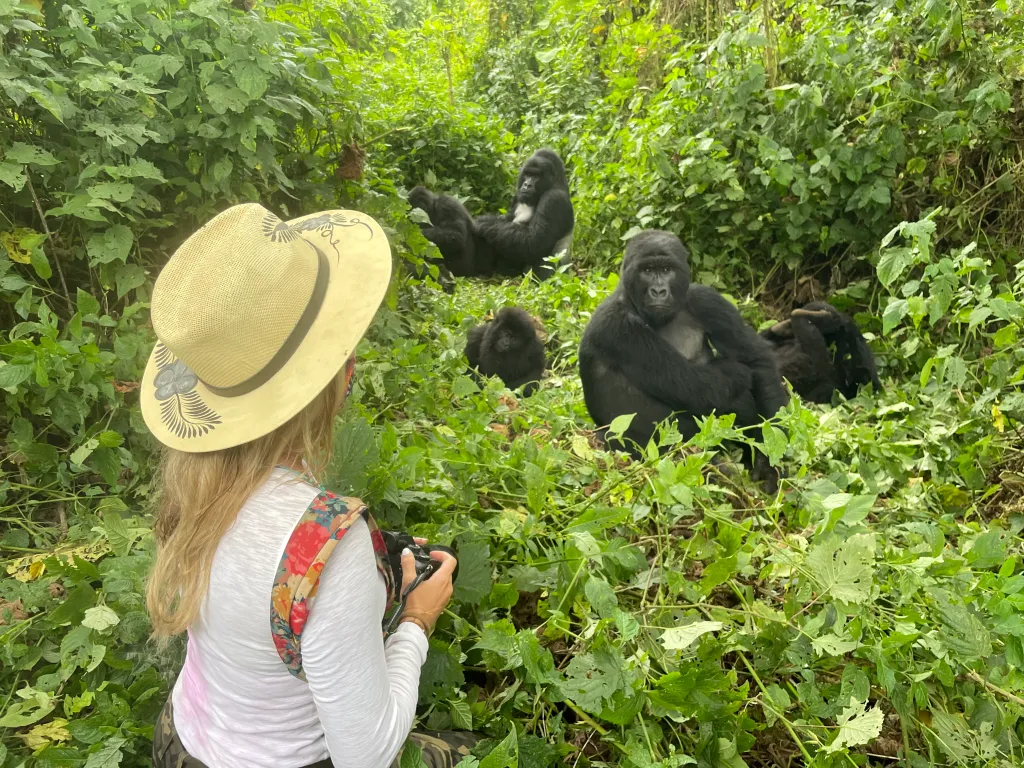
Congo is one of Africa’s last great frontier safari destinations. It offers a sense of wilderness that is difficult to find in more commercial safari countries. The country protects part of the Congo Basin, the second-largest tropical rainforest system on Earth, a globally important ecosystem known for great apes, forest elephants, okapi, rare birds, carbon-rich forests, and extraordinary biodiversity. WWF notes that the Congo Basin supports hundreds of mammal species, around 1,000 bird species, and many endangered species, including forest elephants and great apes.
Travelers choose best Congo safari packages because they offer wildlife experiences that are rare elsewhere. Mountain gorillas can be associated with Virunga, eastern lowland gorillas with Kahuzi-Biega, bonobos with Lola ya Bonobo and Congo Basin habitats, okapi with the Ituri Forest, and remote forest wildlife with Salonga, Maiko, Lomami, and other protected areas. This makes Congo one of the most important primate and rainforest safari destinations in Africa.
Congo is also ideal for travelers who want conservation-focused tourism. Many of its parks are recovering from years of conflict, poaching, illegal mining, weak infrastructure, and limited tourism investment. A carefully arranged Congo safari can directly support ranger protection, local employment, conservation education, community income, and long-term protection of endangered wildlife.
Another reason to choose best Congo safari packages between 2027 and 2030 is exclusivity. While Rwanda and Uganda receive large numbers of gorilla travelers, Congo remains far less visited. This gives well-planned safaris a more private, expedition-style feel. Guests should expect adventure rather than luxury-only comfort, but the reward is a deeper connection to landscapes that still feel wild, ancient, and untouched.
Where to Go for Best Congo Safari Packages 2027-2030
Virunga National Park
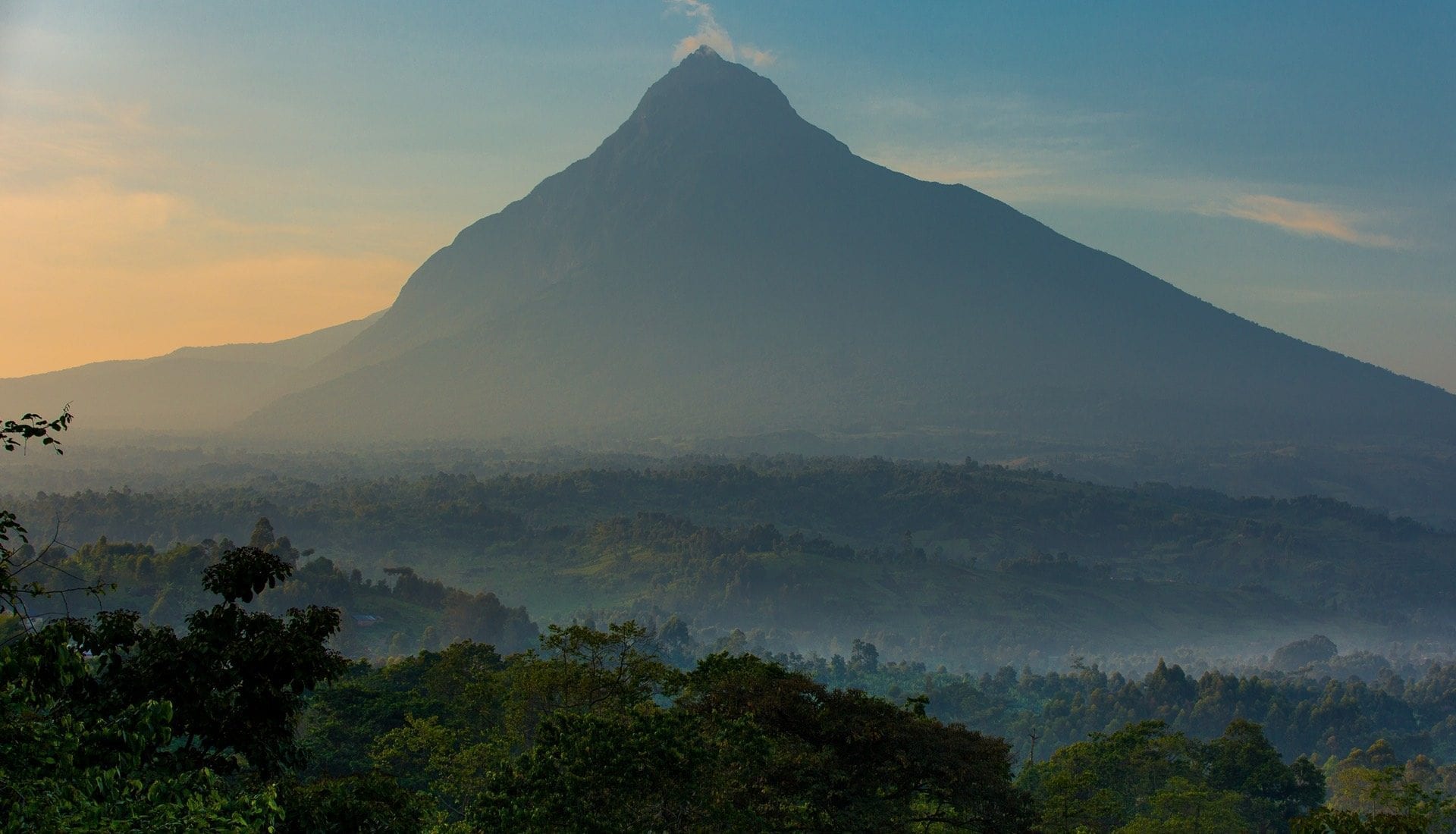
Virunga National Park is one of the most famous safari destinations in Congo and one of Africa’s most legendary protected areas. Located in eastern Democratic Republic of Congo, Virunga is recognized as Africa’s oldest national park and one of the most biodiverse protected areas on the continent. The official Virunga tourism platform describes the park as home to exceptional biodiversity, including mammals, birds, reptiles, and great apes.
Virunga is best known for mountain gorillas, volcanic landscapes, tropical forests, savannah plains, Lake Edward, the Rwenzori Mountains, and the Nyiragongo volcano region. For many travelers, Virunga has long represented the most adventurous gorilla trekking destination in Africa. Its gorilla families live in a dramatic landscape of forested volcano slopes, making the experience different from Uganda’s Bwindi or Rwanda’s Volcanoes National Park.
A Virunga safari package can include mountain gorilla trekking, nature walks, birding, community experiences, conservation visits, and volcano-based adventure where access is officially open. However, Virunga travel must always be handled carefully because the park has experienced periods of closure and security disruption. Recent reporting and operator updates have highlighted that tourism access has been affected by instability in North Kivu, so best Congo safari packages 2027–2030 should only be sold with clear wording such as “subject to official park reopening, permit availability, and security clearance.”
Kahuzi-Biega National Park
Kahuzi-Biega National Park is one of the best destinations for Congo safari packages because it offers eastern lowland gorilla trekking, a rare experience not available in Uganda or Rwanda. Located near Bukavu in eastern DRC, the park protects mountain and lowland rainforest ecosystems and is famous for Grauer’s gorillas, also known as eastern lowland gorillas.
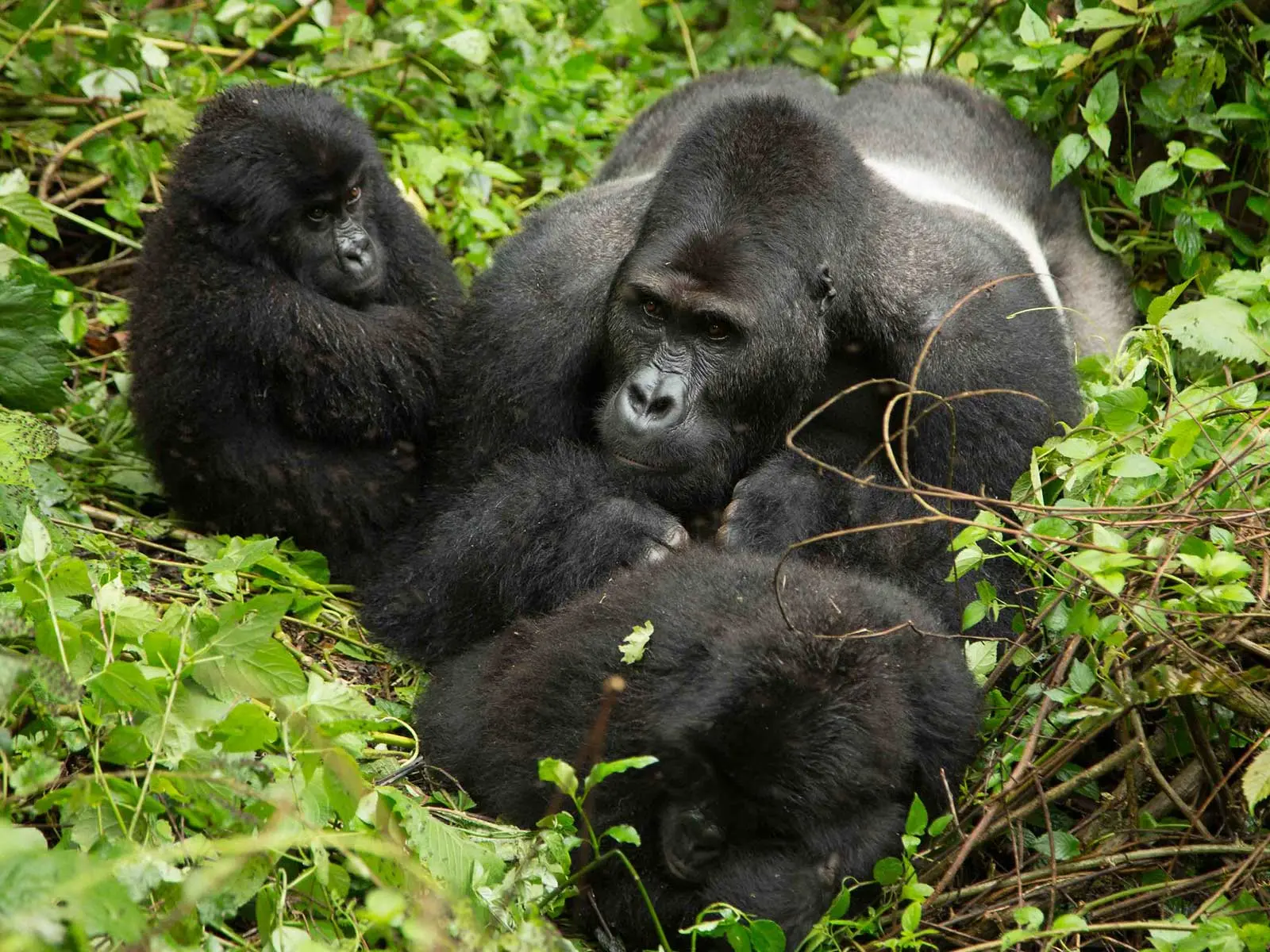
This park is ideal for travelers who want a different gorilla experience from the mountain gorillas of Bwindi, Mgahinga, Volcanoes, and Virunga. Eastern lowland gorillas are generally larger than mountain gorillas, with powerful bodies, broad chests, and calm social behavior. Trekking them in Kahuzi-Biega gives visitors a chance to explore dense Congolese rainforest while supporting the conservation of one of the world’s most endangered great apes.
Kahuzi-Biega safari packages are often arranged through Rwanda, using Kigali as the arrival point, then continuing to Cyangugu/Rusizi and crossing into Bukavu. This makes the park one of the most practical Congo safari destinations for regional itineraries. A strong package can include one or two gorilla treks, Bukavu city experiences, Lake Kivu views, community visits, birding, forest walks, and extensions to Nyungwe, Volcanoes National Park, or Akagera in Rwanda.
For 2027–2030, Kahuzi-Biega should be one of the core destinations on any “Best Congo Safari Packages” page because it combines rare wildlife, practical access, strong search demand, and a clear safari identity. It is especially suitable for 3-day, 4-day, 5-day, and 6-day Congo lowland gorilla packages.
Garamba National Park
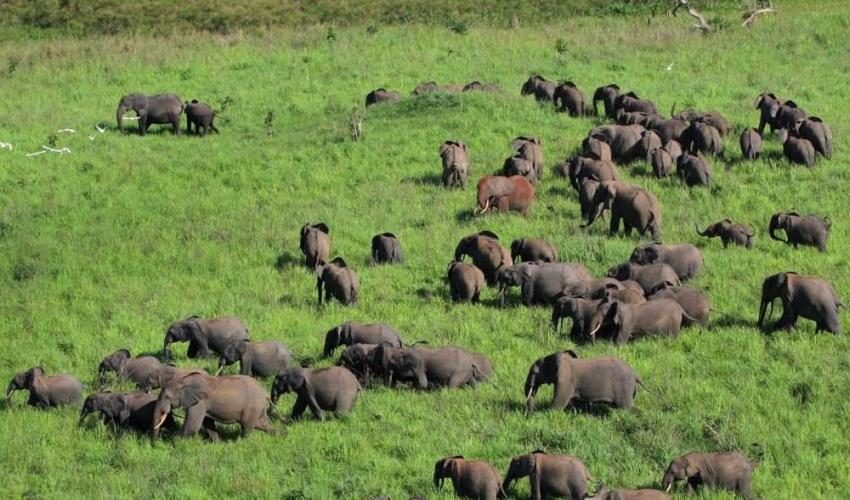
Garamba National Park is one of Congo’s most important savannah and woodland safari destinations. Unlike the rainforest-heavy image many travelers have of Congo, Garamba offers a landscape of grasslands, woodland, rivers, and gallery forests. UNESCO describes Garamba as a habitat for major large mammals including elephants, giraffes, hippopotamuses, and other important species.
Garamba is located in northeastern DRC and is best suited for specialist travelers, conservation guests, photographers, researchers, and high-end expedition clients. African Parks, which supports management in Garamba, describes the park as one of Africa’s oldest national parks, with elephant and giraffe populations, lion, buffalo, chimpanzee, giant forest hog, and golden cat in different habitats.
A Garamba safari is not a simple road-based holiday. It usually requires careful logistics, charter flights, park coordination, security updates, and conservation-led planning. However, that is exactly what makes it special. It is a destination for travelers who want to experience a recovering wilderness, support ranger protection, and see a very different side of Congo.
For 2027–2030, Garamba can be presented as a premium conservation safari package rather than a mainstream tour. Strong package themes include “Garamba Conservation Safari,” “Garamba Wildlife Expedition,” “Luxury Congo Wilderness Safari,” and “Congo Savannah and Rainforest Expedition.”
Salonga National Park
Salonga National Park is one of the greatest rainforest wilderness areas in Africa. UNESCO describes Salonga as Africa’s largest tropical rainforest reserve, located in the central Congo Basin and accessible mainly by water. The park is home to important species such as bonobos, forest elephants, Congo peafowl, and African slender-snouted crocodiles.
Salonga is not a typical tourist park. It is remote, vast, logistically challenging, and best suited for expedition-style travel. Safaris here are for travelers who understand that the reward is not easy wildlife viewing, but deep rainforest immersion. A Salonga journey may involve river travel, forest camps, conservation teams, local communities, birding, primate research interests, and exploration of one of the least accessible World Heritage landscapes in Africa.
Salonga National Park is not a quick gorilla trekking destination, and it is not for casual travelers. It is for serious adventurers, scientists, photographers, conservation donors, documentary teams, and guests seeking one of Africa’s last true rainforest expeditions. Including Salonga National Park in the best Congo safari packages is an excellent option to combine, as it offers a unique and remote rainforest experience with rare wildlife like bonobos, forest elephants, and Congo peacocks, perfectly complementing gorilla trekking and other classic safari highlights in the region.

Maiko National Park
Maiko National Park is one of Congo’s most remote and least explored national parks. Located across parts of eastern DRC, it protects deep Congo Basin rainforest and is associated with rare wildlife such as eastern lowland gorillas, okapi, forest elephants, chimpanzees, and Congo peafowl. DRC Tourism describes Maiko as a vast expanse of untouched Congo Basin rainforest and a refuge for some of the continent’s rarest wildlife.
Maiko is not a standard tourism destination. It is extremely remote, with limited visitor infrastructure and complex access. This makes it more suitable for scientific expeditions, conservation missions, documentary work, research travel, and highly specialized adventure safaris. For most leisure travelers, Maiko National Park should be featured in the best Congo safari packages as a specialized expedition safari rather than a standard safari package, appealing to adventurous travelers seeking remote wilderness, challenging treks, and rare wildlife experiences.
Okapi Wildlife Reserve
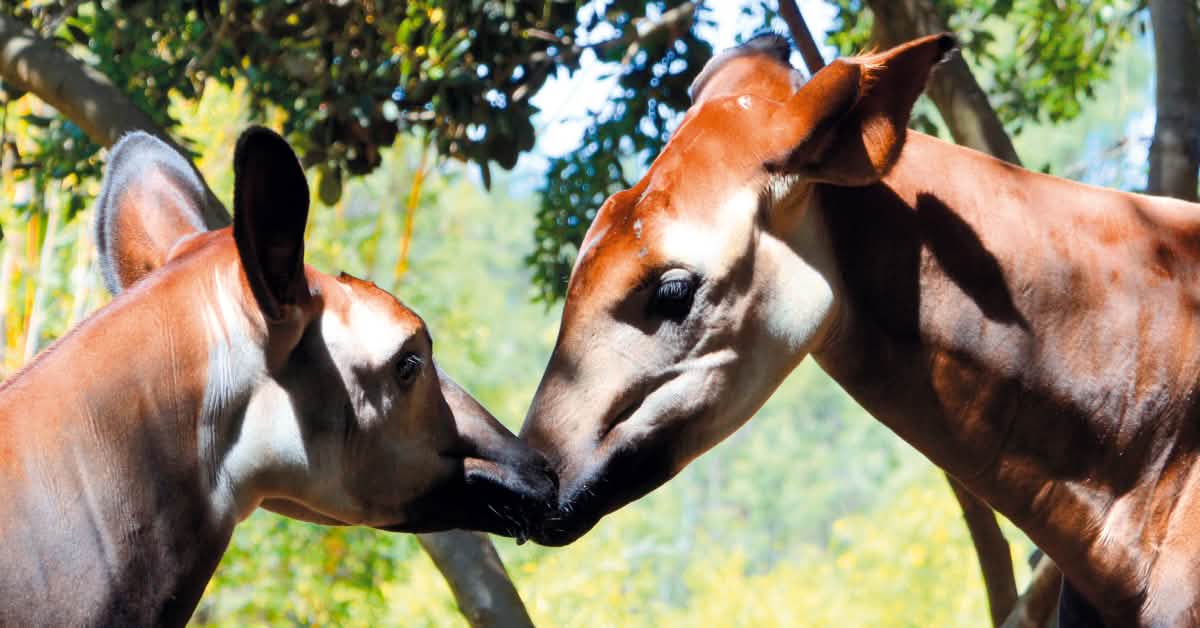
Okapi Wildlife Reserve is one of Congo’s most unique wildlife destinations. Located in the Ituri Forest in northeastern DRC, it protects one of the most important habitats for the okapi, a rare forest mammal found only in the Democratic Republic of Congo. UNESCO states that the reserve occupies about one-fifth of the Ituri Forest and contains threatened primates, birds, dramatic waterfalls, and around 5,000 of the estimated 30,000 okapi surviving in the wild.
The reserve is best known for the Epulu area and the Okapi Conservation Centre, where travelers may learn about okapi conservation, forest ecology, and the challenges of protecting wildlife in the Ituri landscape. It is a powerful destination for travelers interested in rare mammals, conservation, indigenous forest cultures, and Congo Basin biodiversity.
However, this region has also faced serious security and conservation challenges, including poaching, illegal mining, and instability. Any 2027–2030 safari package featuring Okapi Wildlife Reserve should be arranged only after checking current access conditions and official safety guidance.
As a safari product, Okapi Wildlife Reserve fits best into a specialist Congo conservation itinerary, not a simple leisure safari. It can be combined with Kisangani, Ituri Forest experiences, conservation visits, and broader Congo Basin exploration where conditions allow.
Lomami National Park
Lomami National Park is one of Congo’s newest and most exciting protected areas. Located in the central Congo Basin, it covers nearly 9,000 square kilometers and protects a remote rainforest landscape between the Tshuapa, Lomami, and Lualaba rivers. Frankfurt Zoological Society notes that Lomami is home to bonobos, forest elephants, giant pangolins, hippos, rare primates, Congo peafowl, and okapi.
Lomami is especially important because it represents the future of Congo conservation tourism. It is not yet a highly developed safari destination, but it has enormous potential for low-impact ecotourism, primate research, river-based expeditions, and conservation travel. The park is associated with rare species such as the lesula monkey, a primate only described by science in recent years, making it especially attractive to wildlife enthusiasts and researchers.
A Lomami safari package for 2027–2030 should be framed as a rare rainforest expedition. Activities may include river travel, guided forest walks, birding, primate observation, conservation learning, community engagement, and wilderness camping where permitted. It is not a destination for travelers expecting luxury lodges and predictable wildlife sightings. It is for guests who want discovery, silence, scientific value, and authentic rainforest adventure.
Upemba National Park
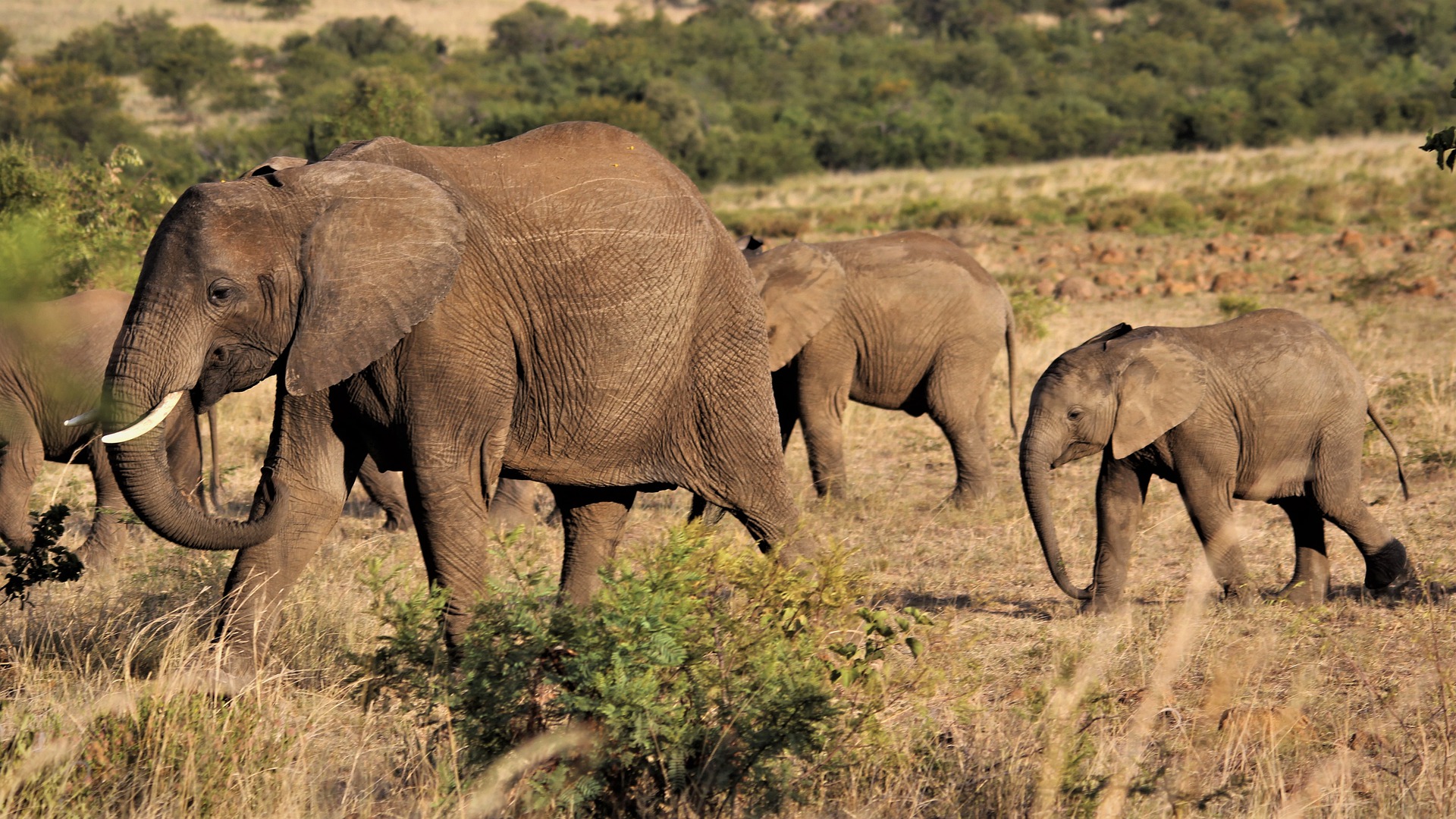
Upemba National Park is one of Congo’s oldest protected areas and one of the most important safari destinations in the southeast of the country. The park protects wetlands, lakes, savannah, woodland, grasslands, and highland ecosystems. Its official park information highlights its role as a refuge for DRC’s savannah elephants, wild zebras, and Katanga buffalo.
Upemba is important because it offers a different safari identity from Congo’s gorilla and rainforest destinations. It has open landscapes, lake systems, wetlands, antelope species, birdlife, and conservation restoration potential. African Parks and conservation partners have also highlighted Upemba as a key biodiversity area with large herbivores, predators, and the only population of wild zebras in DRC.
For best Congo safari packages 2027–2030, Upemba can be positioned as a rewilding and conservation safari destination. It is suitable for travelers interested in wildlife recovery, ranger conservation, remote landscapes, birding, photography, and southeastern Congo expeditions. However, recent security incidents in the park area mean any itinerary must be handled with caution, official coordination, and updated safety checks.
Kundelungu National Park
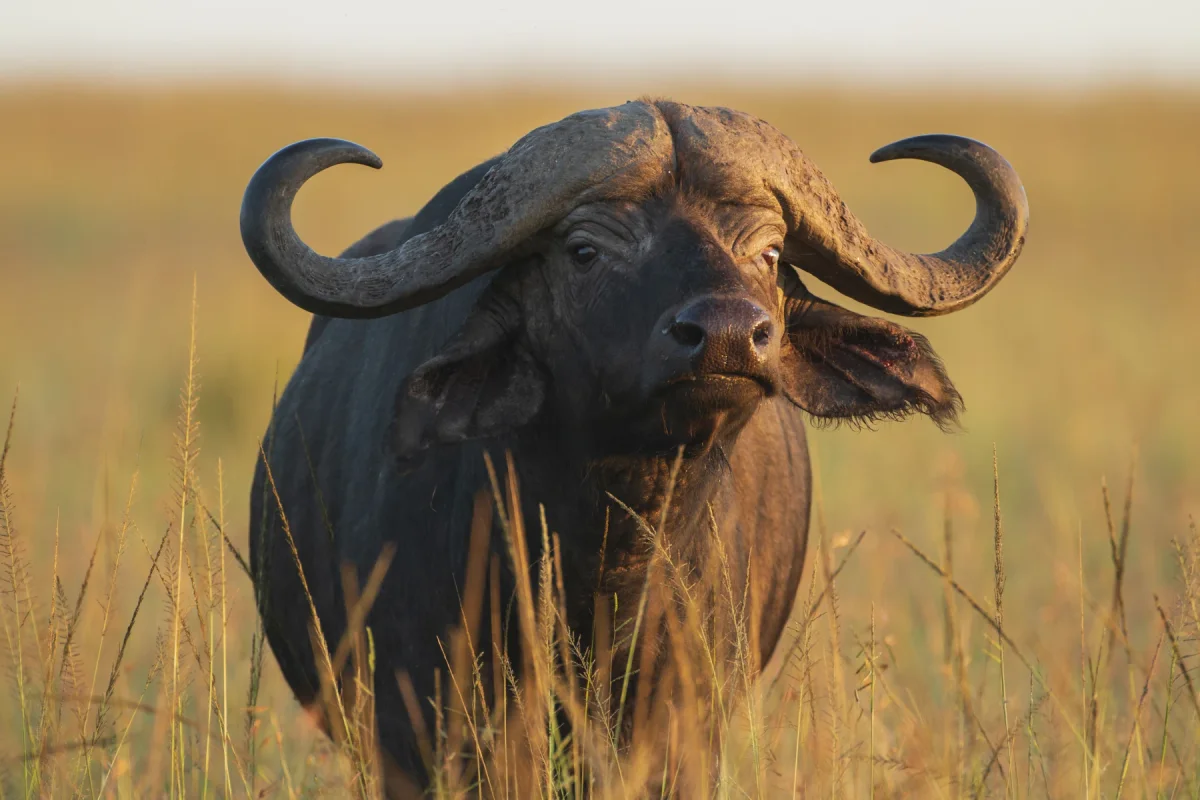
Kundelungu National Park is located in southeastern DRC and is one of the country’s most scenic protected areas. It is known for high plateaus, savannah, woodland, escarpments, waterfalls, and dramatic landscapes. African Parks describes Kundelungu as one of DRC’s more accessible parks because of its location near Lubumbashi, giving it strong potential for sustainable tourism development.
The park is particularly attractive for travelers who enjoy landscapes, hiking, waterfalls, birding, scenic photography, and quiet wilderness rather than only big mammal viewing. Kundelungu’s plateau scenery gives it a very different atmosphere from the dense rainforests of central and eastern Congo.
For best Congo safari packages 2027–2030, Kundelungu can be packaged with Lubumbashi, Upemba National Park, Lofoi Falls, cultural experiences, and southeastern Congo conservation travel. It is best presented as an emerging safari and hiking destination rather than a fully developed classic safari park.
Lola ya Bonobo Sanctuary
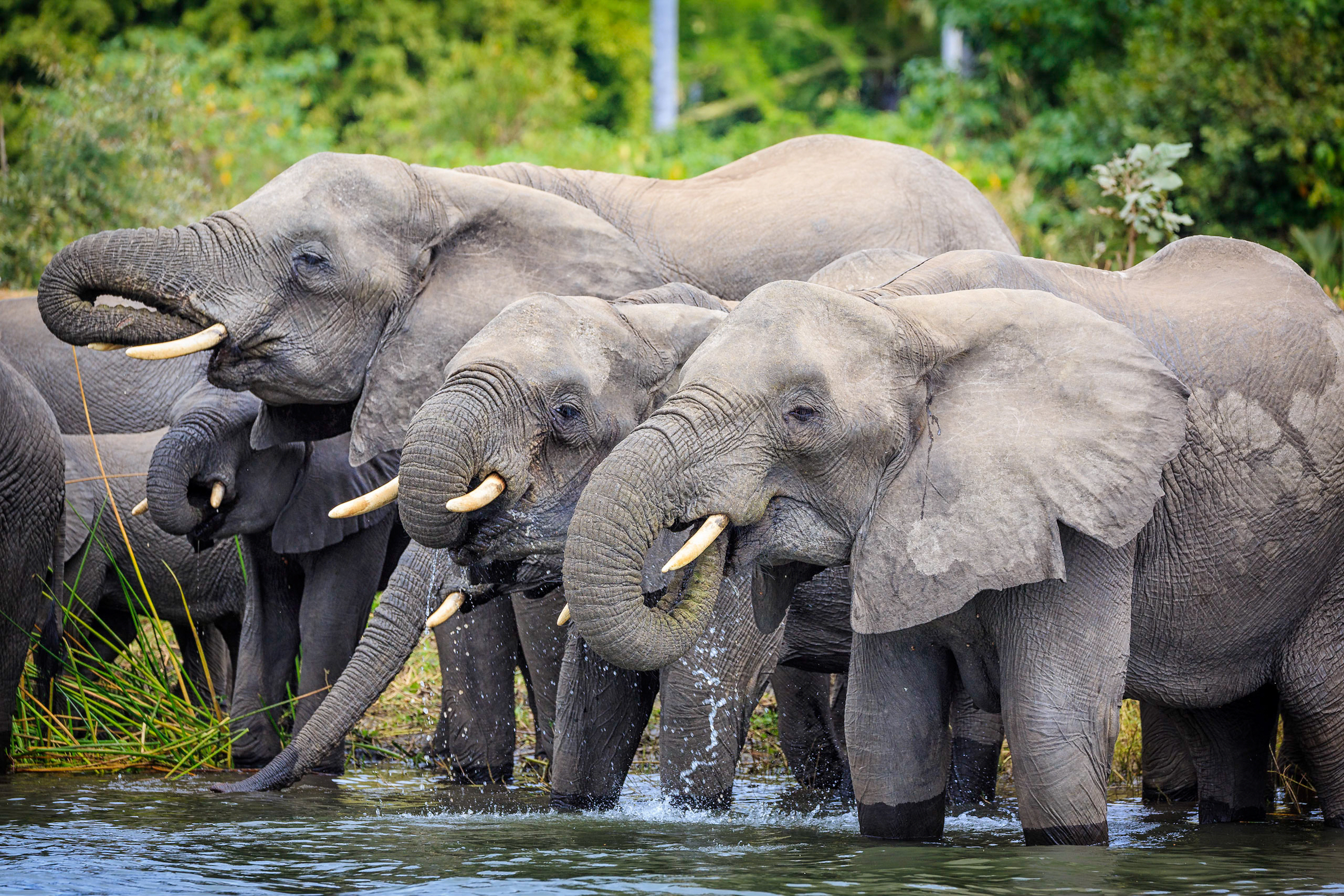
Lola ya Bonobo Sanctuary is one of the most accessible and meaningful wildlife experiences in Congo. Located just outside Kinshasa, it is dedicated to the rescue, rehabilitation, and protection of orphaned bonobos. The official sanctuary website describes a visit as an unforgettable opportunity to observe bonobos in a forested sanctuary setting near Kinshasa.
Bonobos are found only in the Democratic Republic of Congo, making Lola ya Bonobo one of the most important primate tourism experiences in the country. A visit here is ideal for travelers with limited time, business visitors in Kinshasa, families, conservation supporters, photographers, and guests who want a meaningful wildlife experience without traveling deep into remote forest.
Lola ya Bonobo can be included in short Kinshasa city packages, Congo River experiences, cultural tours, pre- or post-safari extensions, and conservation-focused itineraries. For 2027–2030, it should be one of the easiest Congo safari products to sell because it is accessible, educational, emotional, and highly unique.
Congo Basin Rainforest
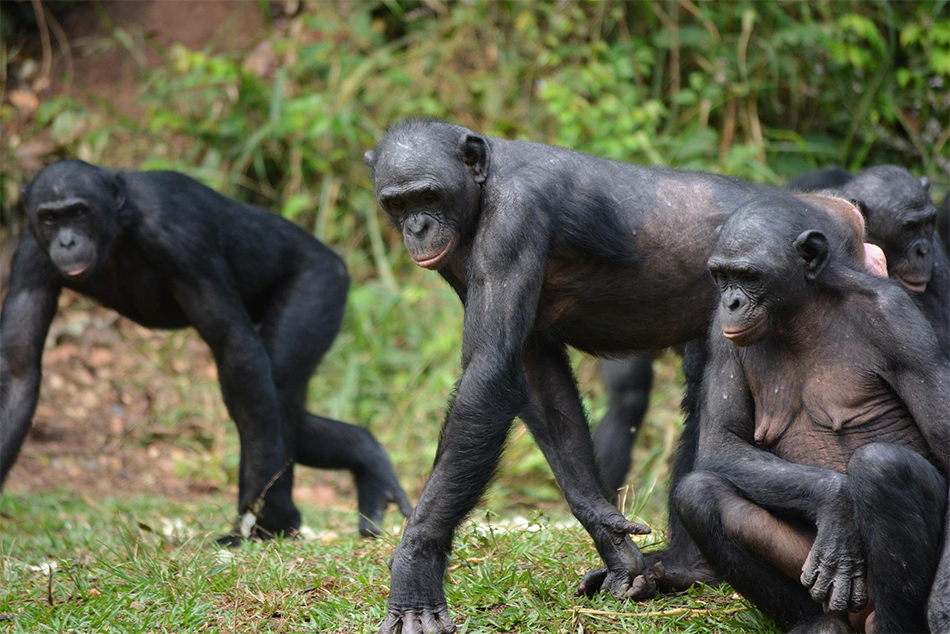
The Congo Basin Rainforest is the heart of Congo safari travel. It is the foundation behind the country’s gorillas, bonobos, okapi, forest elephants, rare birds, rivers, wetlands, and remote national parks. WWF describes the Congo Basin as the largest tropical forest in Africa and the second-largest in the world, spanning six Central African countries.
For safari travelers, the Congo Basin is not just a forest; it is an entire world of wildlife, water, culture, and climate importance. It supports local communities, stores huge amounts of carbon, protects endangered species, and offers some of the most authentic wilderness experiences left on the planet.
Congo Basin safari packages can include rainforest trekking, river journeys, primate tracking, birding, conservation visits, forest camping, cultural encounters, photography, scientific travel, and remote expedition logistics. For 2027–2030, this should be the main storytelling theme behind the page: Congo is not only a safari destination; it is one of the last places where travelers can still experience Africa’s ancient rainforest wilderness in its rawest form.
Best Congo Safari Packages 2027–2030
2 Days Congo Gorilla Trek
The 2 Days Congo Gorilla Trek is the shortest and most affordable way to experience mountain gorilla trekking in the Democratic Republic of Congo. Designed for travelers with limited time, this safari typically begins with arrival in Kigali, Rwanda, followed by a scenic drive to the Congo border and onward to the gorilla trekking sector. The highlight is spending one unforgettable hour observing a habituated mountain gorilla family in its natural rainforest habitat.
This best Congo safari package includes professional guides, park entry, accommodation, transportation, and gorilla permits where applicable. It is ideal for travelers combining Rwanda with Congo or those looking for a quick weekend gorilla adventure.
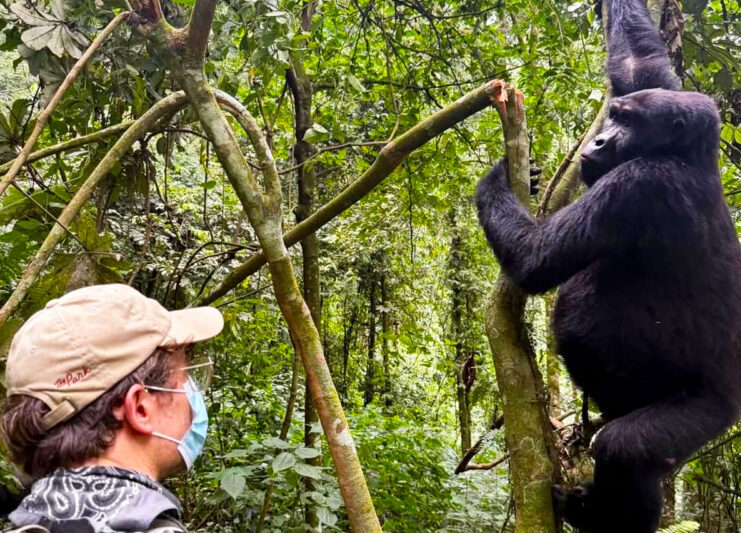
Best for: Short holidays, weekend travelers, photographers, and first-time gorilla trekkers.
3 Days Virunga Gorilla Trekking Safari
The 3 Days Virunga Gorilla Trekking Safari offers a more relaxed mountain gorilla experience by allowing travelers additional time to enjoy the surrounding volcanic landscapes and local communities. Depending on official park accessibility, visitors travel through eastern Congo to explore one of Africa’s oldest national parks while enjoying one of the continent’s most remarkable wildlife encounters.
Besides gorilla trekking, the safari may include nature walks, birdwatching, cultural experiences, conservation visits, and spectacular views of the Virunga Volcanoes. This makes it one of the best Congo safari packages.
Best for: Adventure travelers seeking a classic Congo gorilla safari.
3 Days Eastern Lowland Gorilla Safari
This safari focuses on one of Congo’s greatest wildlife treasures—the eastern lowland gorilla. Found only in the forests of eastern Democratic Republic of Congo, these magnificent primates are the largest gorilla subspecies in the world and provide a completely different trekking experience from mountain gorillas.
Travelers explore the magnificent forests surrounding Kahuzi-Biega National Park while accompanied by experienced park guides who interpret the ecology, conservation history, and behavior of Grauer’s gorillas.
The trek itself passes through dense rainforest filled with birds, butterflies, towering trees, orchids, and numerous monkey species before reaching one of the habituated gorilla families.
This safari is perfect for travelers looking for a unique primate experience that few people in the world have the opportunity to enjoy.
Ideal for: Primate enthusiasts, conservation travelers, wildlife photographers, and repeat gorilla trekkers.
4 Days Nyiragongo Hiking Safari
The 4 Days Nyiragongo Hiking Safari is one of Africa’s greatest adventure holidays. Its centerpiece is the hike to the summit of Mount Nyiragongo, one of the world’s most active volcanoes and home to one of the planet’s largest permanent lava lakes, where access is officially permitted.
The trek begins through tropical forest before climbing into higher volcanic terrain, offering constantly changing scenery and magnificent views across the Virunga landscape. Upon reaching the summit, travelers spend the night in mountain shelters overlooking the glowing lava lake, creating one of Africa’s most unforgettable overnight experiences.
The following morning offers spectacular sunrise views before descending back to the base.
This safari is physically demanding but immensely rewarding for adventurous travelers seeking something truly extraordinary.

Ideal for: Hikers, adventure seekers, photographers, and volcano enthusiasts.
5 Days Congo Gorilla & Nyiragongo Safari
This itinerary combines Congo’s two most famous attractions into one unforgettable adventure. Travelers experience both mountain gorilla trekking and the legendary Nyiragongo Volcano hike, creating an exceptional safari that blends wildlife with adventure.
Guests begin by tracking endangered mountain gorillas through tropical rainforest before continuing to the volcanic slopes of Nyiragongo for the overnight summit experience. Along the way, visitors enjoy spectacular scenery, local communities, conservation stories, and diverse ecosystems ranging from rainforest to volcanic lava fields.
This is widely considered one of the most exciting safari combinations available anywhere in Africa.
Ideal for: Adventure travelers, honeymooners, photographers, and active explorers.
6 Days Kahuzi-Biega & Bukavu Safari
The 6 Days Kahuzi-Biega & Bukavu Safari combines wildlife, culture, and relaxation into one well-balanced itinerary. Visitors spend time trekking eastern lowland gorillas while also exploring Bukavu, one of eastern Congo’s most scenic cities overlooking Lake Kivu.
Besides gorilla trekking, travelers can enjoy cultural experiences, local markets, coffee farms, historical sites, birdwatching, forest walks, and beautiful lakeside accommodation.
The slower pace makes this package ideal for travelers who prefer immersive travel rather than fast-moving itineraries.
Ideal for: Couples, culture lovers, birdwatchers, and photographers.
7 Days Congo Primates Safari
The 7 Days Congo Primates Safari is designed for wildlife enthusiasts who want to experience Congo’s remarkable diversity of primates. Depending on current accessibility and conservation activities, the itinerary may include mountain gorillas, eastern lowland gorillas, chimpanzees, bonobos, and several monkey species.
Travelers explore multiple rainforest habitats while learning about primate behavior, conservation challenges, forest ecology, and local communities living alongside these endangered species.
Few destinations in Africa offer such extraordinary primate diversity within a single safari.
Ideal for: Researchers, photographers, conservation supporters, and wildlife enthusiasts.
8 Days Congo Wildlife & Gorilla Safari
This safari combines rainforest primates with traditional wildlife viewing. Depending on park access and logistics, guests experience gorilla trekking together with game viewing, birdwatching, scenic drives, river landscapes, and cultural interactions.
The itinerary offers excellent opportunities to appreciate the incredible ecological diversity of the Democratic Republic of Congo, from dense rainforest to open woodland ecosystems.
It is an excellent option for travelers wanting more than just gorilla trekking.
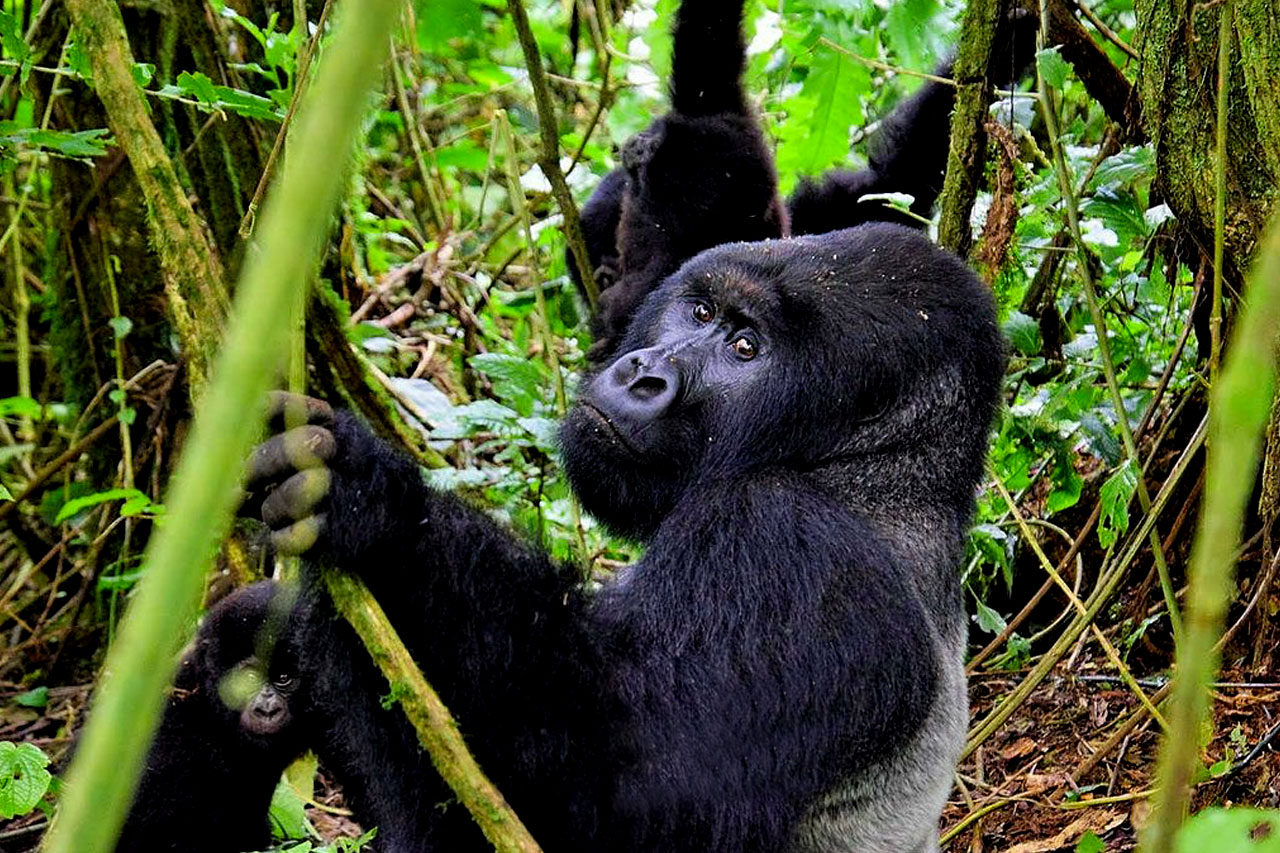
Ideal for: Families, wildlife lovers, photographers, and first-time Congo visitors.
9 Days Congo Adventure Safari
The 9 Days Congo Adventure Safari is created for travelers who enjoy active exploration. It combines rainforest trekking, mountain landscapes, volcanoes where accessible, cultural experiences, nature walks, wildlife viewing, and spectacular photography opportunities.
Every day introduces a new landscape, making this itinerary one of the most varied Congo safari packages available.
This best Congo safari package appeals to adventurous travelers looking for authentic experiences away from mass tourism.
Ideal for: Adventure travelers, couples, solo explorers, and photographers.
10 Days Congo Explorer Safari
The 10 Days Congo Explorer Safari provides a comprehensive introduction to the Democratic Republic of Congo’s remarkable natural heritage. Travelers experience gorilla trekking, rainforest exploration, local communities, scenic lakes, birdwatching, conservation projects, and optional volcano adventures where conditions allow.
The extended duration allows guests to travel at a comfortable pace while discovering several different regions of the country.
This best Congo safari package is perfect for visitors seeking a balanced combination of wildlife, scenery, and culture.
Ideal for: First-time Congo visitors seeking a complete safari experience.
12 Days Congo Wildlife Expedition
The 12 Days Congo Wildlife Expedition explores some of the country’s most fascinating protected areas while showcasing Congo’s exceptional biodiversity. Guests discover rainforest ecosystems, primates, rare mammals, birdlife, rivers, waterfalls, and conservation projects while enjoying expertly planned logistics.
The itinerary emphasizes wildlife viewing and ecological understanding rather than simply moving between destinations.
This safari provides one of the most immersive wildlife experiences available in Central Africa.
Ideal for: Naturalists, conservation travelers, researchers, and photographers.
14 Days Complete Congo Safari
The 14 Days Complete Congo Safari offers an extensive journey through the country’s most iconic attractions. Travelers enjoy mountain gorillas, eastern lowland gorillas, rainforest expeditions, cultural experiences, birdwatching, lakes, volcano landscapes where accessible, and conservation activities.
This itinerary provides enough time to appreciate Congo’s extraordinary diversity while maintaining a comfortable pace.
It is one of the most comprehensive safari holidays available in the Democratic Republic of Congo.
Ideal for: Serious wildlife enthusiasts and extended holiday travelers.
15 Days Congo, Rwanda & Uganda Safari
This cross-border safari combines three of East and Central Africa’s premier wildlife destinations into one unforgettable expedition. Travelers enjoy mountain gorilla trekking, Big Five safaris, chimpanzee tracking, beautiful lakes, volcanic landscapes, and rich cultural experiences.
The itinerary highlights the unique strengths of each country while providing smooth border crossings, comfortable accommodation, and expertly coordinated logistics.
It is among the most popular multi-country safari packages in Africa.
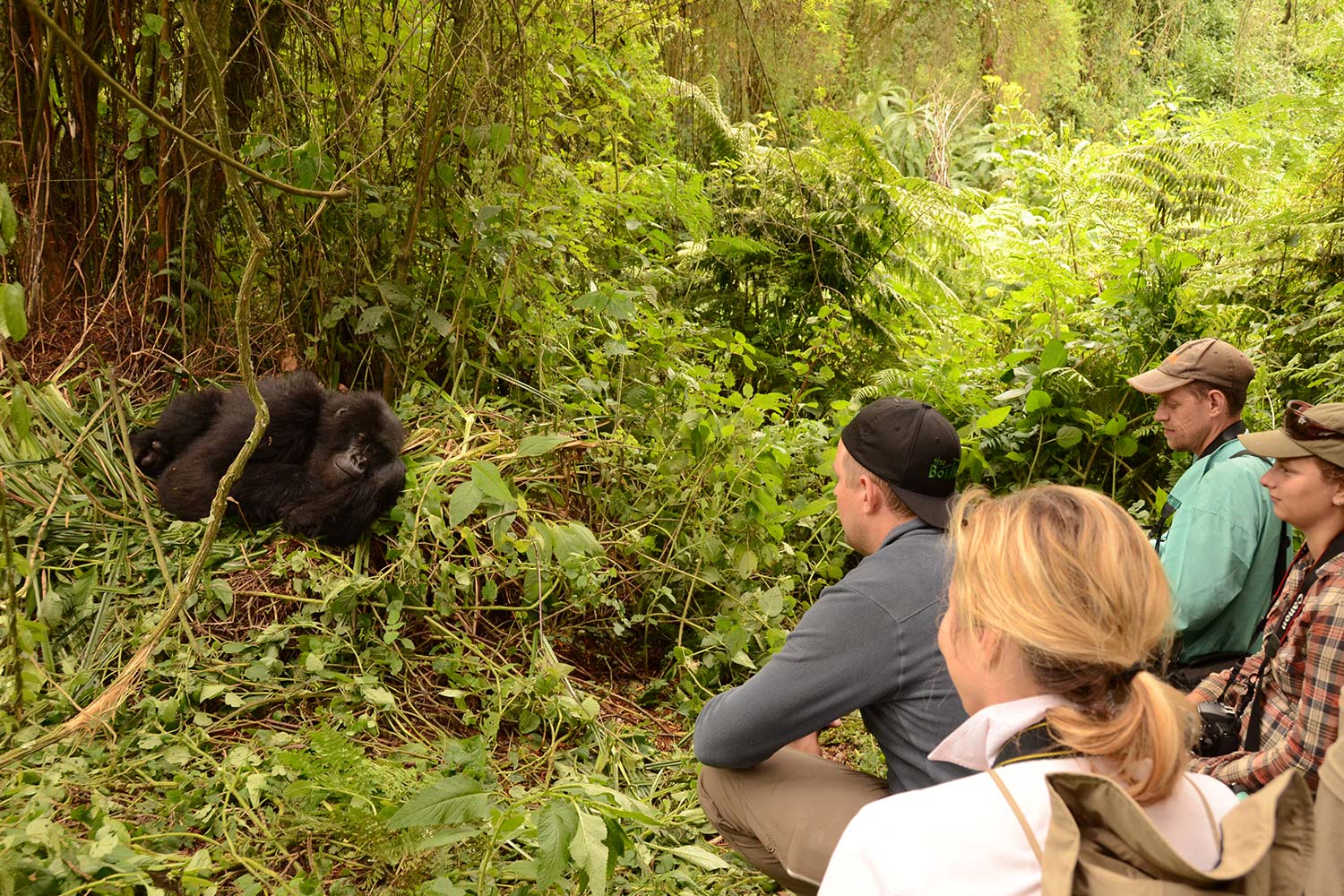
Ideal for: International travelers seeking maximum diversity.
18 Days Ultimate Congo Expedition
The 18 Days Ultimate Congo Expedition is designed for experienced travelers wanting to explore the Democratic Republic of Congo in exceptional depth. The journey combines remote rainforest exploration, rare wildlife encounters, cultural immersion, scenic landscapes, conservation initiatives, and several national parks.
The slower pace allows visitors to fully appreciate one of Africa’s last great wilderness frontiers.
This expedition delivers an unmatched combination of adventure, education, and wildlife.
Ideal for: Expedition travelers, documentary teams, researchers, and photographers.
21 Days Congo Grand Safari
The 21 Days Congo Grand Safari represents the ultimate Central African adventure. It is a once-in-a-lifetime expedition showcasing the country’s most important national parks, rainforest ecosystems, great apes, volcanic landscapes, conservation projects, rivers, lakes, and cultural heritage.
Designed for travelers who want to experience Congo beyond the ordinary, this safari provides exceptional opportunities for wildlife observation, photography, scientific learning, and authentic cultural interaction. Every destination contributes to a deeper understanding of one of the world’s richest biodiversity hotspots.
For those seeking the most complete and rewarding best Congo safari packages between 2027 and 2030, this itinerary offers an unparalleled exploration of Africa’s last great wilderness.
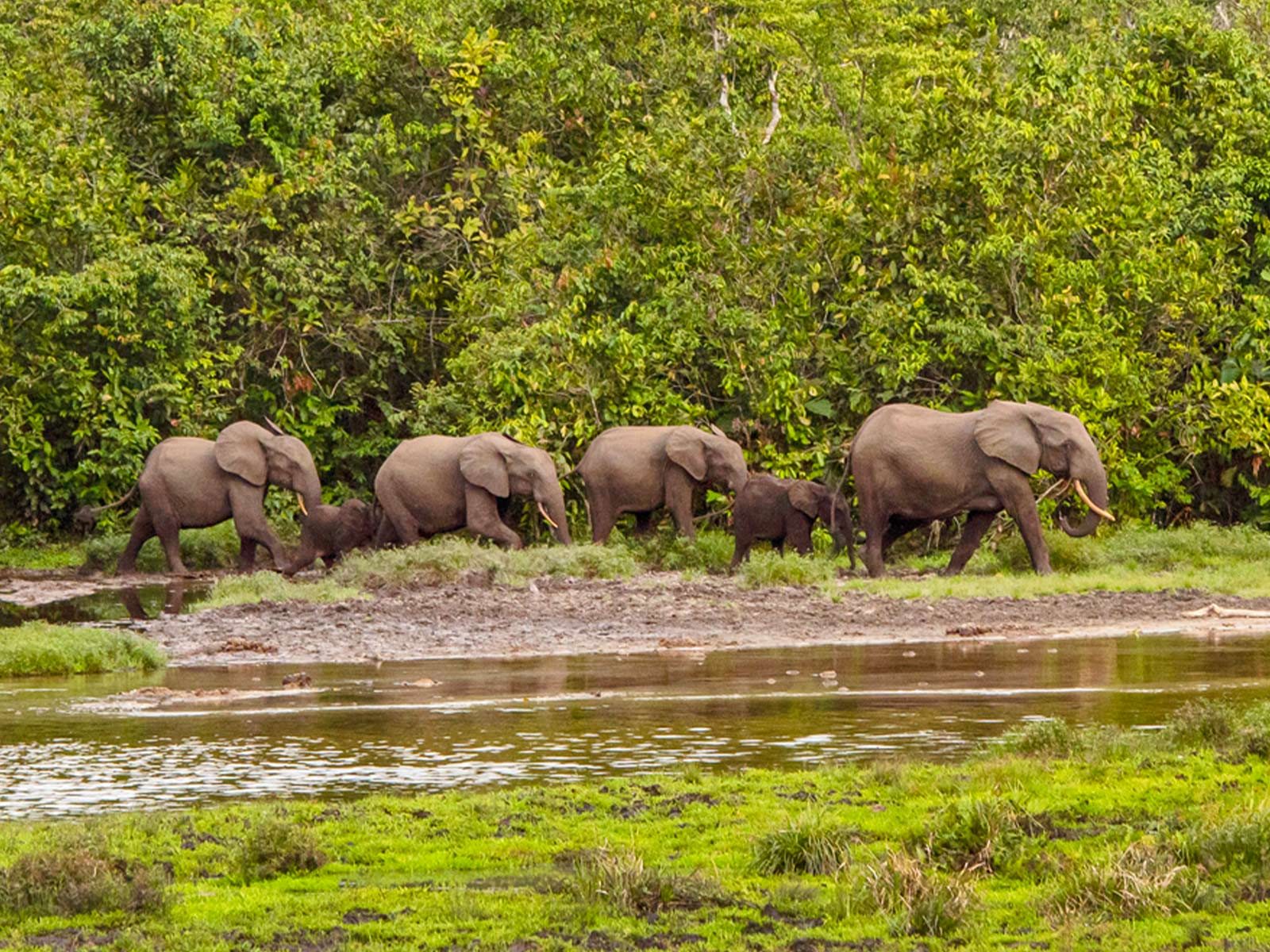
Ideal for: Luxury expedition travelers, wildlife photographers, conservation enthusiasts, filmmakers, and travelers seeking the ultimate Congo safari experience.
Best Congo Safari Packages Comparison
| Safari Package | Duration | Main Highlight | Best For | Starts From |
|---|---|---|---|---|
| 2 Days Congo Gorilla Trek | 2 Days | Mountain Gorilla Trekking | Short Holidays & Weekend Travelers | US$1,100 |
| 3 Days Virunga Gorilla Trekking Safari* | 3 Days | Mountain Gorillas & Virunga Landscapes | Adventure Travelers | US$1,600 |
| 3 Days Eastern Lowland Gorilla Safari | 3 Days | Eastern Lowland Gorilla Trekking | Primate Enthusiasts | US$1,450 |
| 4 Days Nyiragongo Hiking Safari* | 4 Days | Active Volcano & Lava Lake Experience | Hikers & Adventure Travelers | US$1,900 |
| 5 Days Congo Gorilla & Nyiragongo Safari* | 5 Days | Gorilla Trekking & Volcano Adventure | Active Explorers | US$2,600 |
| 6 Days Kahuzi-Biega & Bukavu Safari | 6 Days | Lowland Gorillas & Lake Kivu | Couples & Wildlife Lovers | US$2,900 |
| 7 Days Congo Primates Safari | 7 Days | Multiple Primate Experiences | Researchers & Wildlife Enthusiasts | US$3,500 |
| 8 Days Congo Wildlife & Gorilla Safari | 8 Days | Gorillas & Wildlife Viewing | First-Time Congo Visitors | US$4,000 |
| 9 Days Congo Adventure Safari | 9 Days | Rainforest, Culture & Adventure | Adventure Travelers | US$4,600 |
| 10 Days Congo Explorer Safari | 10 Days | Complete Congo Highlights | Wildlife Enthusiasts | US$5,200 |
| 12 Days Congo Wildlife Expedition | 12 Days | Multiple National Parks | Naturalists & Photographers | US$6,300 |
| 14 Days Complete Congo Safari | 14 Days | Ultimate Congo Experience | Comprehensive Safari Travelers | US$7,500 |
| 15 Days Congo, Rwanda & Uganda Safari | 15 Days | Three-Country Wildlife Adventure | Multi-Country Travelers | US$8,400 |
| 18 Days Ultimate Congo Expedition | 18 Days | Remote Wilderness & Conservation | Expedition Travelers | US$10,500 |
| 21 Days Congo Grand Safari | 21 Days | Complete Congo & Congo Basin Exploration | Serious Wildlife Explorers | US$12,500 |
Congo Gorilla Trekking Safaris
Congo Gorilla Trekking Safaris offer one of the most extraordinary wildlife experiences anywhere in the world. The Democratic Republic of Congo is the only country where travelers have the opportunity to experience both mountain gorilla trekking and eastern lowland gorilla trekking within one destination. This unique advantage makes Congo a dream destination for primate enthusiasts, wildlife photographers, conservation supporters, and adventurous travelers seeking authentic rainforest experiences.
Unlike many safari destinations that focus primarily on game drives, best Congo safari packages revolve around intimate encounters with great apes living freely in their natural habitats. Every trek is guided by experienced park rangers and trackers who spend countless hours monitoring gorilla families, ensuring both visitor safety and the well-being of these critically endangered animals.
A typical gorilla trekking experience begins early in the morning with a ranger briefing covering safety guidelines, gorilla behavior, trekking etiquette, and conservation rules. Visitors are then assigned to a habituated gorilla family based on fitness level and group size before entering the rainforest. Treks can last anywhere from one to six hours depending on where the gorillas have moved, making each expedition unique.
The journey through the forest is as rewarding as the gorilla encounter itself. Trekkers pass beneath towering tropical trees, cross small streams, navigate dense vegetation, and encounter colorful birds, butterflies, orchids, monkeys, and countless rainforest species before finally reaching the gorillas.
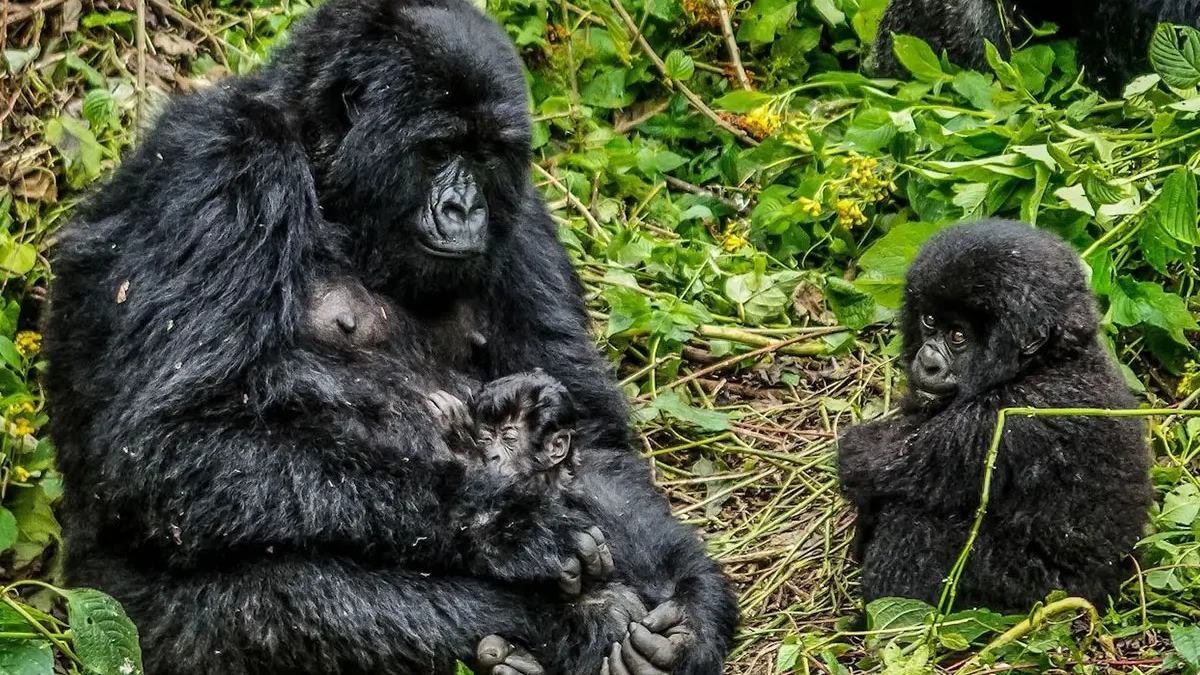
Once located, visitors are allowed one unforgettable hour with the gorilla family. During this time, they observe the silverback leading the group, females caring for infants, juveniles playing, and the family carrying on with their daily lives completely undisturbed. The experience is often described as emotional, humbling, and life-changing because of the remarkable similarities between gorillas and humans.
Beyond wildlife viewing, every Congo gorilla trek contributes directly to conservation. Gorilla permit revenue helps finance ranger patrols, veterinary care, habitat protection, scientific research, anti-poaching efforts, and community development initiatives that encourage local people to protect wildlife.
For travelers visiting Congo between 2027 and 2030, gorilla trekking remains the country’s signature safari experience and the highlight of nearly every itinerary.
Mountain Gorilla Trekking
Mountain gorilla trekking is one of the most sought-after wildlife experiences in Africa. Congo is home to a significant population of endangered mountain gorillas living within the spectacular Virunga Massif, a chain of volcanic mountains shared with Rwanda and Uganda.
Mountain gorillas inhabit high-altitude forests ranging between approximately 2,200 and 4,000 meters above sea level. These cool, mist-covered forests create one of the world’s most beautiful wildlife habitats, filled with giant bamboo, Hagenia trees, moss-covered vegetation, waterfalls, and breathtaking volcanic scenery.
Mountain gorillas are the largest living primates. Adult silverbacks can weigh over 180 kilograms and serve as the protectors and leaders of their families. Each gorilla family normally consists of one dominant silverback, several females, juveniles, infants, and younger males.
The trekking experience begins with a briefing by park authorities before visitors are allocated to one of the habituated gorilla families. Rangers and experienced trackers lead guests through the rainforest while interpreting animal behavior, plant life, bird species, and conservation efforts.
The trek itself varies depending on where the gorillas have nested overnight. Some families may be located within one hour of walking, while others require several hours of hiking through rugged mountain terrain. This unpredictability makes every gorilla trek unique.
When the gorillas are finally found, visitors spend sixty minutes quietly observing the family. During this precious hour, travelers witness remarkable behaviors such as grooming, feeding, resting, climbing, nursing infants, and playful interactions among younger gorillas.
Mountain gorilla trekking offers exceptional photography opportunities because the gorillas often remain calm and relatively close to visitors. Their expressive eyes, gentle behavior, and complex social interactions leave lasting memories that few wildlife experiences can match.
Because mountain gorillas remain critically endangered, strict regulations protect them. Visitor numbers are limited each day, group sizes remain small, and all trekkers must follow conservation guidelines designed to minimize disturbance and disease transmission.
For many travelers, mountain gorilla trekking is the primary reason for visiting Congo and is considered one of the greatest wildlife encounters on Earth.
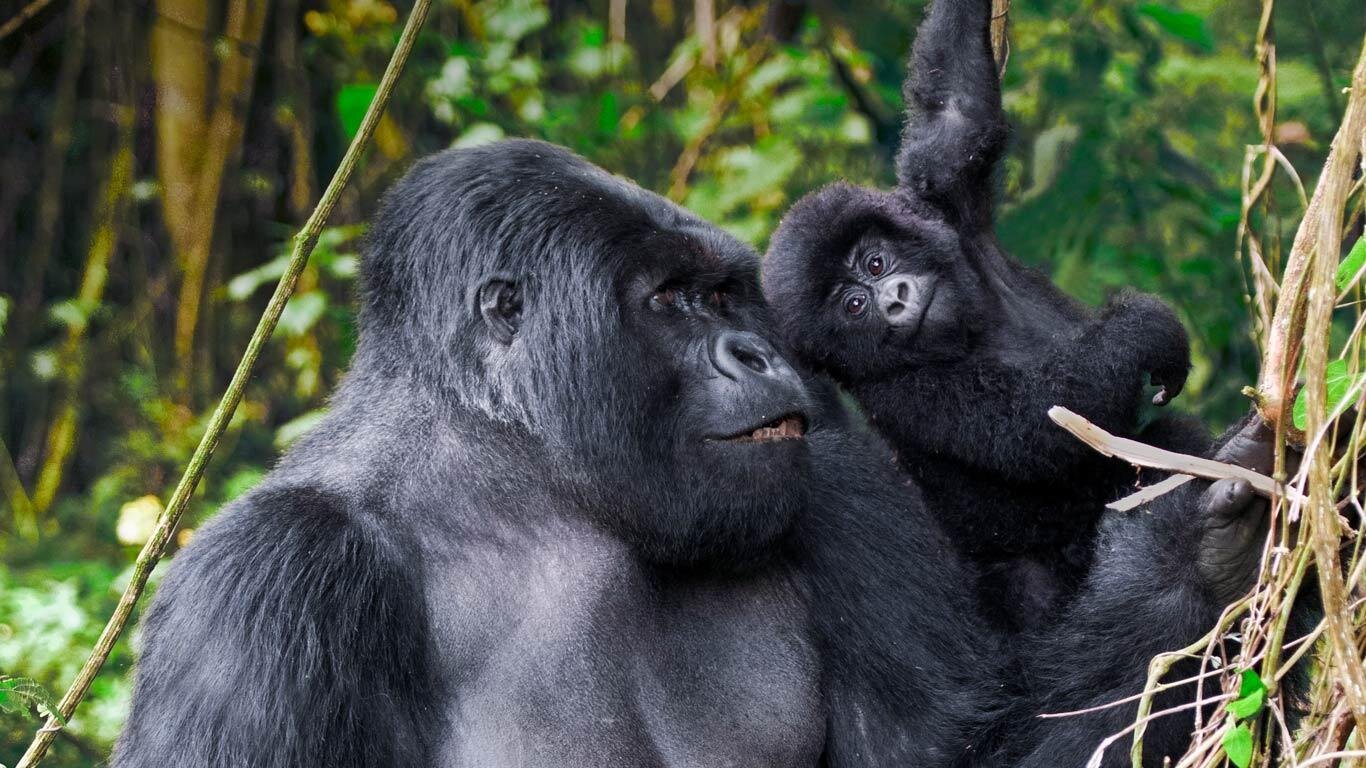
Eastern Lowland Gorilla Trekking
Eastern lowland gorilla trekking offers an entirely different primate experience from mountain gorilla trekking. Available primarily in Kahuzi-Biega National Park, this safari introduces visitors to Grauer’s gorillas, the world’s largest gorilla subspecies.
Eastern lowland gorillas inhabit lowland and montane rainforests, where the environment differs significantly from the volcanic slopes occupied by mountain gorillas. The forests are characterized by enormous tropical hardwood trees, dense undergrowth, rivers, swamps, vines, and incredible biodiversity.
These gorillas are physically larger than mountain gorillas, possessing broader chests, longer arms, larger hands, and slightly shorter body hair. Adult males can exceed 200 kilograms, making them the largest living primates on Earth.
The trekking experience follows a similar format to mountain gorilla trekking but takes place in a completely different ecosystem. Visitors walk through ancient rainforest accompanied by experienced guides who explain the forest’s ecology, medicinal plants, birdlife, insects, and other wildlife encountered along the way.
Eastern lowland gorillas are known for their peaceful temperament and fascinating feeding behavior. They spend much of their day consuming leaves, stems, fruits, bark, roots, and other forest vegetation while maintaining strong family bonds led by a dominant silverback.
Because far fewer people trek eastern lowland gorillas than mountain gorillas, the experience often feels even more exclusive. Visitors enjoy quieter forests, fewer trekking groups, and a genuine sense of wilderness rarely found elsewhere in Africa.
Kahuzi-Biega National Park also offers excellent opportunities to observe numerous monkey species, colorful forest birds, butterflies, and remarkable tropical flora, making every trek both a wildlife and botanical adventure.
For travelers seeking something beyond traditional gorilla trekking, eastern lowland gorillas provide one of the rarest and most rewarding wildlife experiences available anywhere in the world.
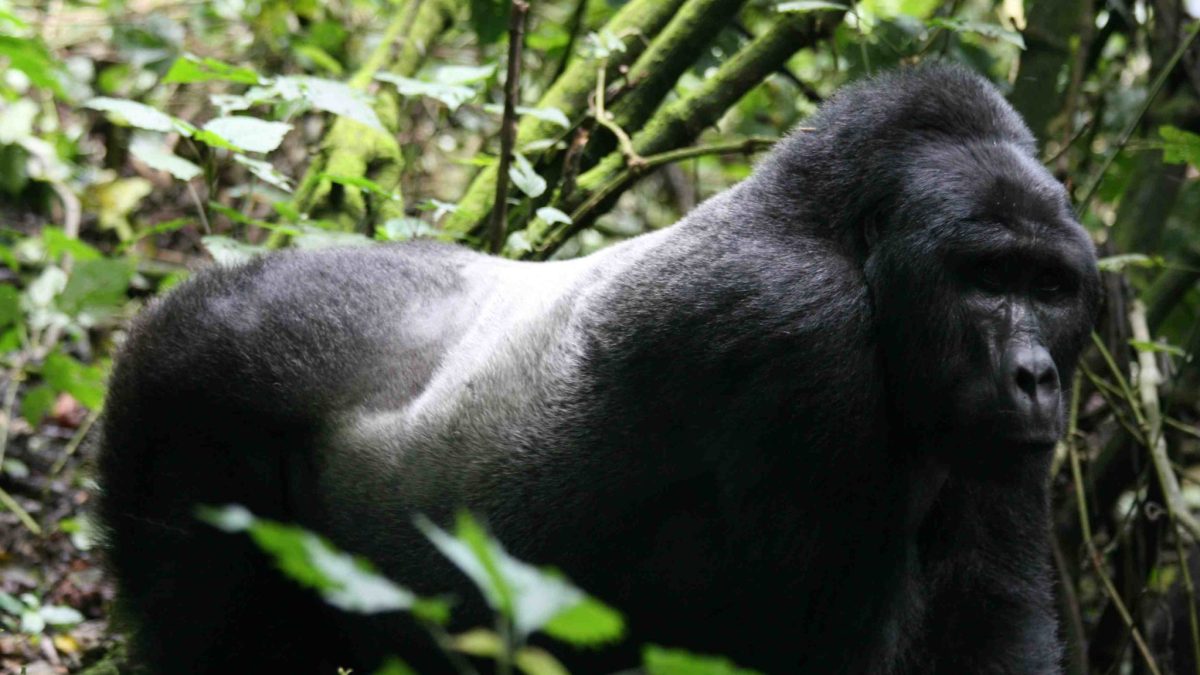
Gorilla Habituation Experiences
Gorilla habituation is a specialized conservation process through which wild gorilla families gradually become accustomed to the presence of researchers, trackers, veterinarians, and eventually tourists without changing their natural behavior.
Habituation is essential because completely wild gorillas generally avoid humans and may react defensively when approached. The process typically takes several years and requires dedicated conservation teams who spend time with the gorillas almost every day while carefully maintaining safe distances and minimizing disturbance.
During habituation, researchers observe feeding habits, family structure, health, breeding patterns, communication, territorial behavior, movement patterns, and social relationships. This information contributes significantly to scientific understanding and long-term conservation planning.
Once a gorilla family has successfully completed the habituation process, it may eventually be opened for carefully regulated tourism, allowing visitors to experience these remarkable animals while generating conservation funding.
It is important for travelers to understand that dedicated gorilla habituation experiences for tourists are not currently a standard tourism product in the Democratic Republic of Congo. While habituation is continuously undertaken by conservation teams as needed, the extended tourist habituation experience widely known in Uganda is not generally offered in Congo. Travelers should therefore book Congo gorilla trekking with the expectation of visiting fully habituated gorilla families, unless official park authorities announce otherwise.
The success of habituation has played a major role in increasing gorilla populations, improving veterinary monitoring, strengthening anti-poaching efforts, and creating sustainable tourism opportunities that benefit both wildlife and surrounding communities.
Every visitor who purchases a gorilla permit helps support these ongoing conservation activities, ensuring future generations will continue to experience gorillas in the wild.
Comparison of Congo Gorilla Trekking With Destinations
| Gorilla Destination | Gorilla Species | Trekking Difficulty | Success Rate |
|---|---|---|---|
| Virunga National Park | Mountain Gorilla | Moderate | Over 95%* |
| Kahuzi-Biega National Park | Eastern Lowland Gorilla | Moderate | Over 95% |
| Bwindi Impenetrable National Park (Uganda) | Mountain Gorilla | Moderate to Challenging | Over 98% |
| Mgahinga Gorilla National Park (Uganda) | Mountain Gorilla | Moderate | Over 98% |
| Volcanoes National Park (Rwanda) | Mountain Gorilla | Moderate | Over 98% |
Gorilla Permit Information
A gorilla permit is a mandatory authorization issued by the relevant wildlife authorities that allows visitors to participate in gorilla trekking. Every traveler must obtain a valid permit before entering the forest, regardless of nationality or the length of their safari.
Permit numbers are deliberately limited each day to reduce pressure on gorilla families and maintain a high-quality visitor experience. Each habituated gorilla family receives only a small number of visitors per day, ensuring the gorillas continue their natural behaviors with minimal human disturbance.
A standard gorilla permit includes ranger guidance, armed security where required, park entry for the trekking activity, tracking services, conservation support, and one hour of observation after locating the gorillas. Accommodation, transport, porter services, meals, visas, and gratuities are usually separate unless included within a safari package.
Travelers should reserve permits well in advance, especially for peak travel months, as availability is limited and demand can be high. Booking six to twelve months before travel is recommended for those planning safaris between 2027 and 2030, particularly for holidays, Christmas, New Year, and the main dry seasons.
To participate in gorilla trekking, visitors are generally expected to be at least 15 years old and physically capable of hiking through mountainous or forested terrain. While trekking does not require technical climbing skills, the duration and difficulty vary depending on the location of the gorilla family, weather conditions, and forest terrain.
To protect both people and gorillas, trekkers must follow strict conservation rules. Visitors should maintain the recommended viewing distance, avoid direct physical contact, keep noise levels low, refrain from flash photography, and never trek if experiencing contagious illnesses such as flu or respiratory infections. These precautions help prevent disease transmission, as gorillas are highly susceptible to many human illnesses.
Permit fees and regulations are determined by the responsible wildlife authorities and may change over time. Travelers planning a Congo safari between 2027 and 2030 should always confirm the latest permit prices, availability, booking procedures, and park accessibility before finalizing their itinerary. Booking through an experienced Congo safari operator ensures permits, accommodation, transportation, and logistics are coordinated seamlessly, allowing visitors to focus entirely on enjoying one of Africa’s most unforgettable wildlife experiences.
Congo Wildlife Safari Packages
Congo Wildlife Safari Packages offer a completely different perspective of Africa compared to the traditional savannah safaris of East and Southern Africa. While many travelers associate the Democratic Republic of Congo with gorilla trekking, the country is also home to an extraordinary diversity of wildlife spread across vast rainforests, wetlands, rivers, mountains, savannahs, and woodlands. Covering more than 2.3 million square kilometers, the DRC protects some of the continent’s largest remaining wilderness areas, many of which remain largely untouched by mass tourism.
From the dense forests of Kahuzi-Biega and Salonga National Parks to the savannahs of Garamba, the wetlands of Upemba, and the remote landscapes of Lomami and Maiko, Congo provides exceptional opportunities for wildlife enthusiasts seeking authentic and off-the-beaten-path safari experiences. These habitats support hundreds of mammal species, over a thousand bird species, countless reptiles and amphibians, and an incredible variety of insects and plant life, making Congo one of the world’s richest biodiversity hotspots.
Unlike conventional game drives where wildlife is often concentrated around open plains, Congo safaris focus on exploration and discovery. Every journey through the rainforest or along the rivers reveals new species and ecosystems, rewarding patient travelers with encounters that few people ever experience. Whether tracking forest elephants beneath towering trees, searching for elusive okapi in the Ituri Forest, spotting colorful birds in the canopy, or exploring winding rivers lined with wildlife, Congo offers adventures unlike anywhere else in Africa.
Our Congo Wildlife Safari Packages for 2027–2030 are carefully designed to combine wildlife viewing with conservation, cultural experiences, and sustainable tourism. Every safari is led by experienced guides who possess extensive knowledge of the country’s ecosystems, ensuring visitors gain a deeper appreciation of Congo’s remarkable natural heritage while directly supporting wildlife conservation and local communities.
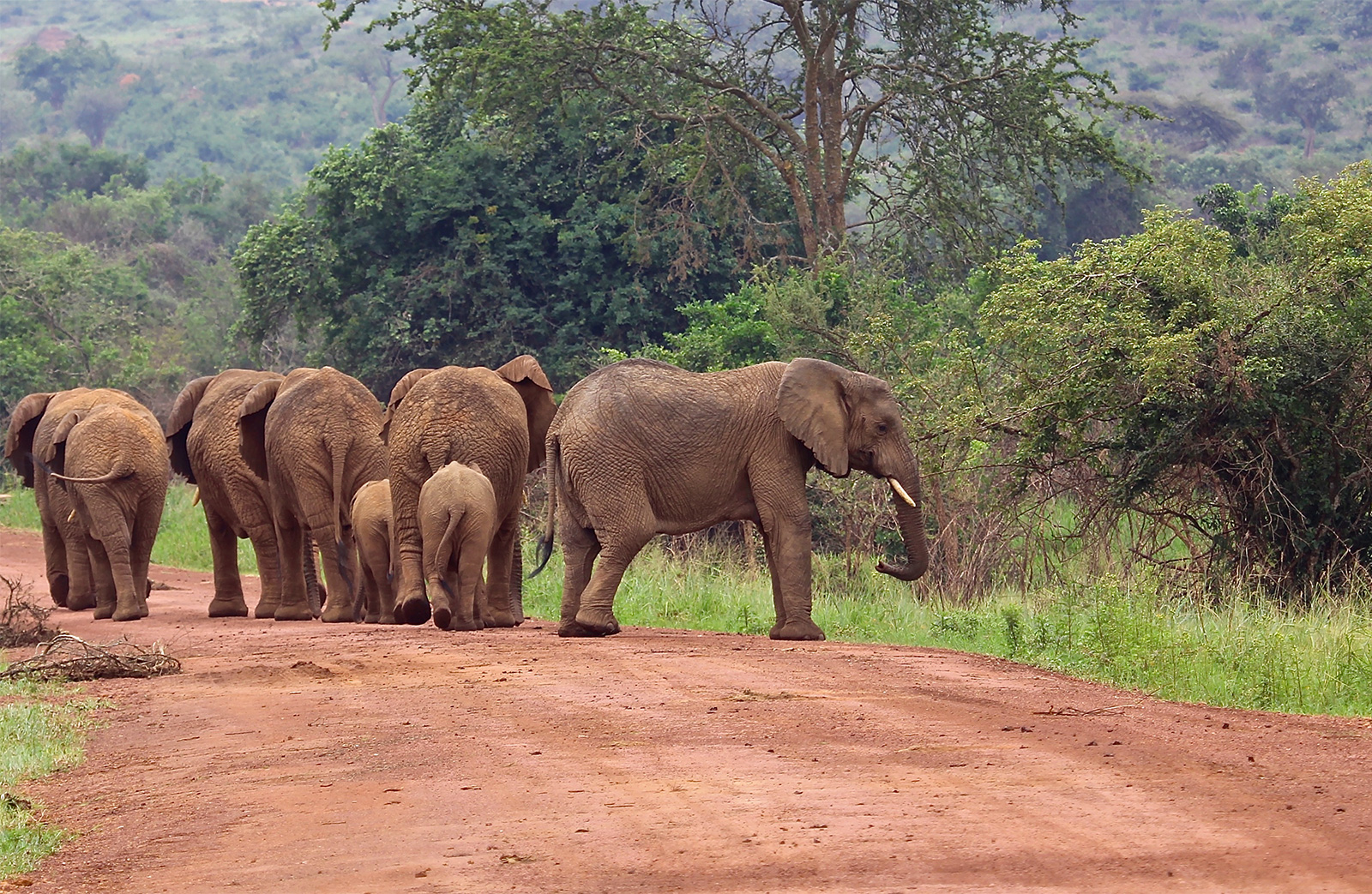
Big Mammals
Although Congo is best known for its gorillas, the country is also home to an impressive variety of large mammals that inhabit its forests, savannahs, wetlands, and river systems. Wildlife enthusiasts visiting the Democratic Republic of Congo can encounter species that are rarely seen elsewhere in Africa, making every safari a unique and rewarding experience.
Among the most iconic mammals are the endangered mountain gorilla and the eastern lowland gorilla, both of which represent some of Africa’s greatest conservation success stories. Forest elephants, smaller and more elusive than their savannah relatives, roam the dense rainforests of Salonga, Okapi Wildlife Reserve, and other protected areas, playing an essential role in maintaining healthy forest ecosystems by dispersing seeds and creating natural pathways.
Garamba National Park offers opportunities to observe larger savannah mammals, including African elephants, buffaloes, giraffes, various antelope species, warthogs, and predators such as lions and leopards where populations persist. Upemba National Park supports buffalo, antelopes, zebras, and numerous wetland species, while remote parks such as Lomami and Maiko continue to protect some of Central Africa’s least disturbed wildlife populations.
Other remarkable mammals found throughout Congo include the rare okapi, giant forest hog, bongo antelope, sitatunga, bushbuck, waterbuck, bush pigs, duikers, giant pangolins, African golden cats, civets, genets, and numerous species of bats and rodents that contribute to the country’s extraordinary biodiversity.
Because Congo’s wildlife inhabits dense forests rather than open grasslands, sightings often require patience, experienced guides, and an appreciation for tracking rather than simply driving between animals. This makes every encounter especially memorable and rewarding.
Forest Wildlife
The rainforests of the Congo Basin support one of the richest collections of wildlife on Earth. Stretching across vast areas of Central Africa, these ancient forests form the ecological heart of the Democratic Republic of Congo and provide habitat for countless species found nowhere else in the world.
Exploring Congo’s forests is an immersive experience. Visitors walk beneath towering mahogany, ebony, and hardwood trees while listening to the sounds of birds, insects, monkeys, and distant primates echoing through the canopy. Every section of forest supports its own unique ecosystem, from swamp forests and bamboo zones to montane forests and riverine woodlands.
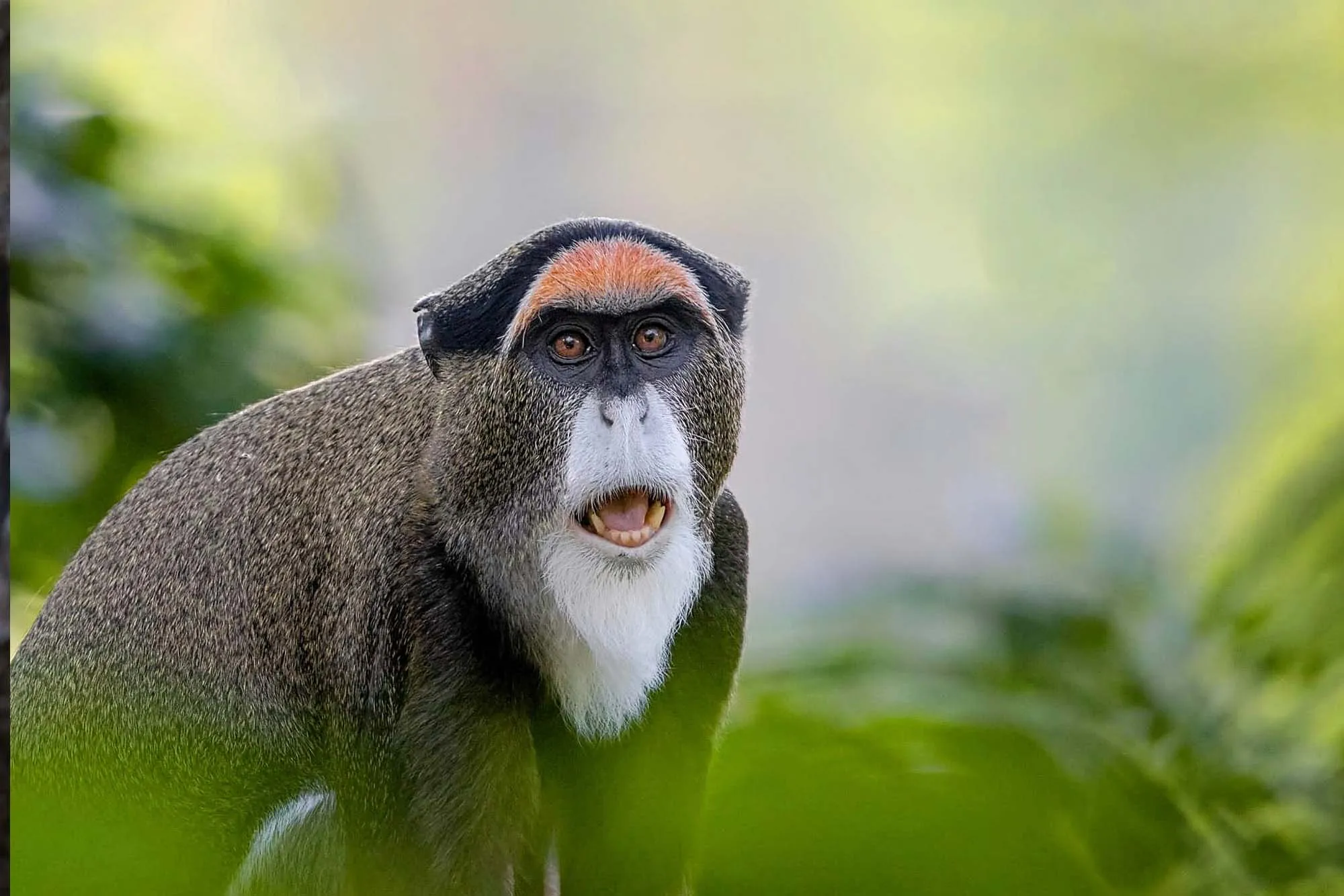
Among the most sought-after forest species are gorillas, chimpanzees, bonobos, okapi, forest elephants, giant forest hogs, bongos, and numerous monkey species including black-and-white colobus, blue monkeys, red-tailed monkeys, De Brazza’s monkeys, owl-faced monkeys, Allen’s swamp monkeys, Wolf’s monkeys, and the rare lesula monkey.
The forest is also home to countless reptiles, amphibians, butterflies, orchids, medicinal plants, fungi, and insects that together create one of the planet’s most complex ecosystems. Every guided forest excursion becomes both a wildlife safari and an educational journey through one of the world’s last great tropical rainforests.
Unlike open savannah wildlife viewing, forest safaris encourage visitors to appreciate animal tracks, feeding signs, bird calls, plant identification, and the interconnected relationships that sustain rainforest life. This slower, more intimate style of wildlife viewing provides a deeper understanding of Congo’s remarkable biodiversity.
Birdwatching Safaris
The Democratic Republic of Congo is one of Africa’s premier savannah wildlife viewing, yet it remains one of the continent’s least explored locations for birders. With more than 1,000 recorded bird species occupying rainforests, mountains, wetlands, rivers, lakes, and savannahs, Congo offers exceptional opportunities for both experienced ornithologists and casual bird enthusiasts.
The country’s varied ecosystems support an extraordinary diversity of resident and migratory birds, including numerous Albertine Rift endemics, Congo Basin specialties, forest birds, waterbirds, raptors, kingfishers, hornbills, bee-eaters, turacos, parrots, owls, sunbirds, barbets, weavers, and woodpeckers.
Among the most iconic species sought by birdwatchers are the Congo peafowl, Rockefeller’s sunbird, Grauer’s broadbill, Shelley’s crimsonwing, Ruwenzori turaco, African green broadbill, yellow-crested helmetshrike, handsome francolin, dwarf honeyguide, and many colorful forest specialists rarely encountered elsewhere in Africa.
Birdwatching safaris are particularly rewarding in Kahuzi-Biega National Park, Virunga National Park, Okapi Wildlife Reserve, Garamba National Park, Salonga National Park, Upemba National Park, and the wetlands surrounding the Congo River system.
Professional birding guides help visitors identify species through sight and sound while explaining migration patterns, breeding behavior, habitat preferences, and conservation challenges. Whether exploring rainforest trails at dawn or scanning wetlands during sunset, every birdwatching excursion reveals new surprises.
For travelers interested in photography, Congo offers remarkable opportunities to capture species that remain absent from the bird lists of many African safari destinations.
River Safaris
The rivers of Congo are among the country’s greatest natural treasures. Dominated by the mighty Congo River—the second-longest river in Africa and the world’s second-largest by discharge—these waterways support an incredible variety of wildlife while providing unique safari experiences unavailable in most other African countries.
River safaris allow travelers to explore secluded waterways, flooded forests, oxbow lakes, islands, and riverbanks that support hippos, crocodiles, otters, waterbirds, monkeys, and numerous aquatic species. Boat excursions also provide excellent opportunities to observe local fishing communities, traditional river transport, and the daily life of people who have depended on these waterways for generations.
Beyond the main Congo River, visitors can explore portions of the Lualaba, Lomami, Aruwimi, Tshuapa, and other rivers flowing through the Congo Basin. These waterways serve as lifelines for both wildlife and local communities while opening access to some of the country’s most remote protected areas.
River safaris are especially valuable for birdwatchers and photographers because they offer quiet approaches to wildlife with minimal disturbance. Early morning and late afternoon excursions often produce the best sightings as animals come to drink, feed, or hunt along the riverbanks.
For adventurous travelers, multi-day river expeditions provide opportunities to experience Congo’s wilderness from an entirely different perspective, combining wildlife observation with exploration of one of the world’s largest freshwater systems.
Walking Safaris
Best Congo safari packages that combine walking tours provide one of the most immersive ways to experience Congo’s extraordinary wilderness. Rather than observing wildlife from a vehicle, visitors explore forests, wetlands, volcanic landscapes, and nature trails on foot while accompanied by experienced guides and park rangers.
Walking through the rainforest awakens the senses in ways that are impossible during conventional game drives. Travelers hear birds calling high above the canopy, smell flowering plants and damp earth, examine animal footprints, discover medicinal trees, observe butterflies, and learn how different species interact within the ecosystem.
Guides interpret every aspect of the forest, from insects and fungi to giant trees, primate behavior, nesting sites, feeding areas, and wildlife signs that might otherwise go unnoticed. Even when large mammals remain hidden, the journey itself becomes an educational exploration of one of Earth’s richest ecosystems.
Walking safaris are commonly incorporated into gorilla trekking packages, birdwatching tours, forest exploration, volcano adventures, community visits, and conservation experiences. Depending on location, routes vary from gentle nature walks lasting one or two hours to more challenging full-day rainforest expeditions.
Photography enthusiasts particularly appreciate walking safaris because they provide opportunities to capture landscapes, plants, insects, birds, and smaller wildlife often overlooked during vehicle-based safaris.
For travelers seeking a deeper connection with nature, walking safaris represent one of the most authentic ways to experience the untouched beauty of the Congo Basin.
Night Safaris
As darkness falls over Congo’s forests and savannahs, an entirely different world begins to emerge. Night safaris reveal the fascinating behavior of nocturnal wildlife that remains hidden during daylight hours, offering visitors a completely new safari experience.
With the assistance of powerful spotlights and experienced guides, travelers may observe bush babies leaping through the trees, civets quietly hunting along forest paths, genets moving through the undergrowth, owls scanning for prey, bats feeding overhead, frogs calling from wetlands, and countless nocturnal insects illuminating the forest with their unique sounds and movements.
In savannah and woodland areas where night drives are permitted, visitors may also encounter hyenas, porcupines, aardvarks, small carnivores, and predators beginning their nightly hunts. The darkness heightens every sound, creating an atmosphere of excitement and discovery that contrasts dramatically with daytime wildlife viewing.
Night safaris also provide exceptional opportunities to study the rainforest’s nocturnal ecology, including insects, reptiles, amphibians, fungi, and flowering plants that become active after sunset.
Because night activities are only permitted in specific locations and under park regulations, availability varies between destinations. Where offered, they provide an unforgettable extension to daytime wildlife experiences and allow travelers to appreciate the remarkable diversity of Congo’s ecosystems around the clock.
For photographers, naturalists, and adventurous travelers, a night safari adds another dimension to exploring one of Africa’s last great wilderness frontiers, revealing wildlife behaviors that few visitors ever have the privilege to witness.
Congo Primate Safari Packages
The Democratic Republic of Congo is widely recognized as one of the world’s greatest primate destinations. Nowhere else in Africa offers such an extraordinary diversity of great apes and monkeys living within one vast tropical rainforest ecosystem. While mountain gorillas and eastern lowland gorillas remain the country’s flagship wildlife attractions, Congo is equally remarkable for its chimpanzees, bonobos, golden monkeys, and more than twenty species of monkeys inhabiting the forests, mountains, wetlands, and river systems of the Congo Basin.
A Congo primate safari is far more than simply observing wildlife. It is an immersive journey into one of Earth’s oldest rainforest ecosystems, where visitors learn about primate evolution, social behavior, conservation, forest ecology, and the delicate balance that supports one of the richest concentrations of biodiversity on the planet. Every trek is guided by experienced trackers and conservation experts who help visitors understand the lives of these remarkable animals while ensuring their protection for future generations.
Unlike traditional wildlife safaris that focus on vehicle-based game drives, primate safaris are active adventures. Visitors walk through dense rainforest, bamboo forests, volcanic slopes, and river valleys while searching for primates in their natural habitat. Along the way, they encounter countless birds, butterflies, medicinal plants, giant trees, reptiles, insects, and smaller mammals that make every trek an educational rainforest experience.
Our Congo Primate Safari Packages for 2027–2030 are designed for travelers who want to experience Africa’s greatest diversity of primates through carefully planned, conservation-focused itineraries. Whether visiting for a short gorilla trek or a multi-week expedition exploring several national parks, Congo offers one of the most rewarding wildlife experiences anywhere in the world.
Chimpanzee Tracking
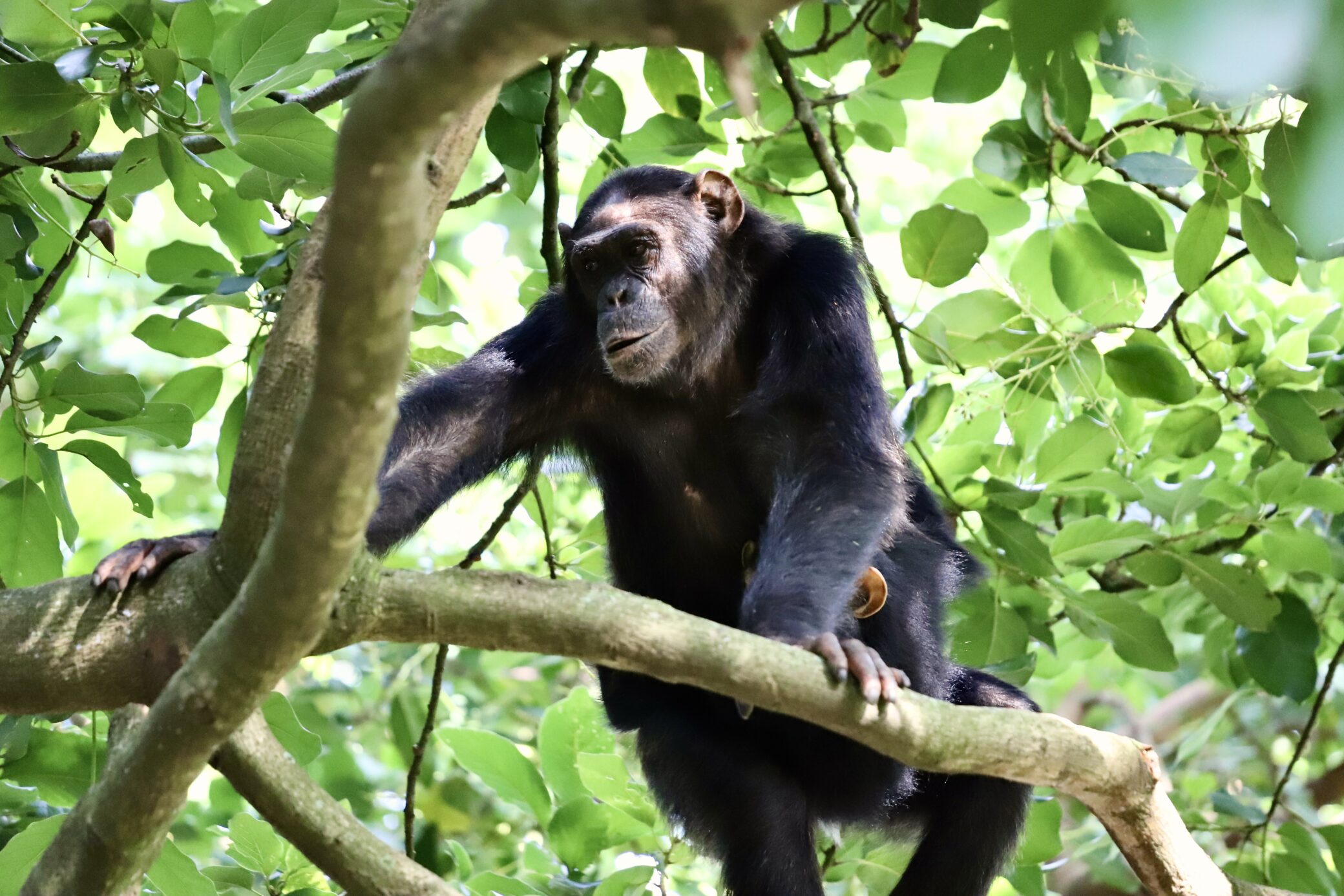
Chimpanzees are humanity’s closest living relatives, sharing approximately 98 percent of their DNA with humans. Tracking these intelligent primates through the forests of Congo is one of the country’s most fascinating wildlife experiences and offers visitors a deeper understanding of primate behavior, communication, and social organization.
Chimpanzees inhabit several protected forests throughout the Democratic Republic of Congo, including parts of Virunga National Park, Maiko National Park, Garamba National Park, Lomami National Park, and other regions where healthy populations continue to survive. They occupy a wide range of habitats, from lowland rainforests and swamp forests to montane woodlands and riverine forests.
A typical chimpanzee tracking experience begins early in the morning when the animals are most active. Experienced trackers locate fresh nests, feeding sites, footprints, broken branches, and vocalizations before guiding visitors through the forest to locate a habituated community.
Unlike gorillas, chimpanzees are highly energetic and spend much of their day moving through the forest canopy and on the ground. Visitors may observe them feeding on fruits, hunting small mammals, grooming each other, communicating through loud vocalizations, constructing nests, caring for infants, and displaying complex social interactions.
Chimpanzee communities often consist of dozens of individuals with constantly changing group compositions. Their intelligence, tool use, emotional expressions, and problem-solving abilities provide one of the most captivating wildlife encounters available in Africa.
Beyond wildlife viewing, chimpanzee tracking contributes directly to conservation by supporting habitat protection, scientific research, anti-poaching patrols, veterinary monitoring, and community development programs that encourage long-term coexistence between local communities and wildlife.
Bonobo Experiences
Bonobos are among the rarest and most fascinating primates on Earth and are found nowhere in the wild except the Democratic Republic of Congo. Sometimes referred to as the “forgotten ape,” bonobos share an even closer genetic relationship with humans than gorillas and possess remarkably peaceful and cooperative social structures.
Unlike chimpanzees, bonobos are known for their strong female leadership, peaceful conflict resolution, close family bonds, and highly social behavior. Scientists continue to study bonobos because they offer valuable insights into human evolution, cooperation, communication, and social development.
One of the most accessible bonobo experiences is a visit to Lola ya Bonobo Sanctuary near Kinshasa. The sanctuary rescues orphaned bonobos that have been confiscated from illegal wildlife trafficking and provides lifelong care while supporting conservation education and scientific research.
For travelers interested in observing bonobos in more natural forest environments, carefully organized expeditions to remote regions of the Congo Basin may be possible where research and conservation activities permit. These expeditions require extensive planning and are generally suitable for experienced adventure travelers, researchers, documentary teams, and conservation supporters.
During a bonobo experience, visitors learn about their behavior, vocal communication, diet, family structure, habitat requirements, and the major conservation challenges threatening their survival, including habitat destruction, bushmeat hunting, and illegal wildlife trade.
Bonobo safaris are among the most exclusive wildlife experiences available anywhere in the world and provide visitors with a rare opportunity to encounter one of humanity’s closest relatives while directly supporting its protection.
Golden Monkey Tracking
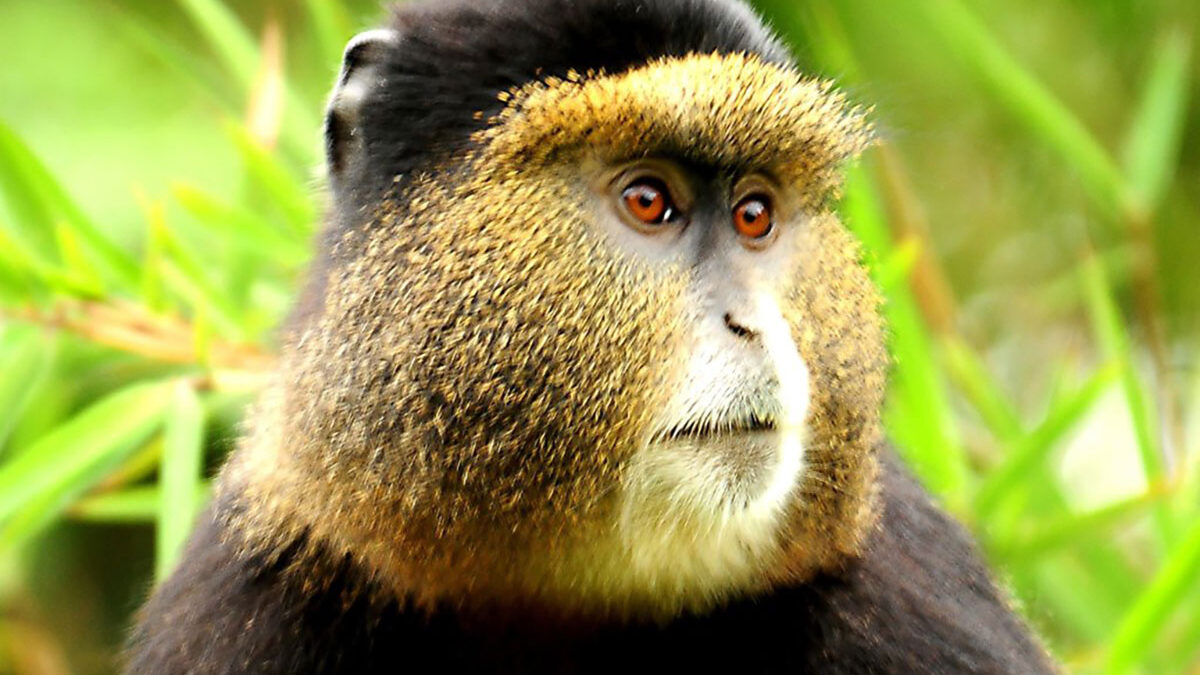
Golden monkey tracking offers one of the most colorful and entertaining primate experiences in the Virunga Mountains. These energetic monkeys inhabit the bamboo forests of the Virunga Massif, where they spend much of their day moving rapidly through the vegetation in search of bamboo shoots, fruits, leaves, flowers, and insects.
Golden monkeys are instantly recognizable by their brilliant golden-orange fur, expressive faces, playful behavior, and remarkable agility. Large troops often contain dozens of individuals, creating constant activity as they leap effortlessly between bamboo stems and forest trees.
The tracking experience usually begins after a ranger briefing before visitors enter the bamboo forests accompanied by experienced guides. Compared to gorilla trekking, golden monkey tracking is generally less physically demanding because the monkeys often remain within lower elevations and relatively accessible habitats.
Watching golden monkeys interact is highly entertaining. Juveniles chase one another through the bamboo, mothers carefully carry infants, and adult males keep watch over the troop while feeding or resting.
The bamboo forests supporting golden monkeys are also home to numerous birds, butterflies, forest mammals, and beautiful mountain scenery, making the trek enjoyable even before the monkeys are located.
Golden monkey tracking serves as an excellent addition to gorilla trekking itineraries, allowing visitors to experience two remarkable primate species during the same safari while supporting conservation efforts across the Virunga ecosystem.
Monkey Species
Beyond gorillas, chimpanzees, bonobos, and golden monkeys, the Democratic Republic of Congo supports one of Africa’s richest diversities of monkey species. Its vast rainforests, mountains, wetlands, and river systems provide ideal habitats for dozens of monkeys that vary dramatically in size, behavior, coloration, and ecology.
Among the most frequently encountered species are black-and-white colobus monkeys, blue monkeys, red-tailed monkeys, De Brazza’s monkeys, owl-faced monkeys, Allen’s swamp monkeys, Wolf’s monkeys, L’Hoest’s monkeys, Dent’s mona monkeys, crowned monkeys, red colobus monkeys, vervet monkeys, and mangabeys. In more remote forests, visitors may also encounter the rare lesula monkey, a species scientifically described only in recent years and found exclusively within central Congo.
Each monkey species occupies its own ecological niche. Some spend nearly their entire lives in the forest canopy, while others forage extensively on the forest floor or along rivers and wetlands. Their diets include fruits, seeds, flowers, leaves, insects, tree bark, fungi, and occasionally small animals.
Guided primate safaris provide opportunities to observe their fascinating behaviors, including grooming, territorial displays, communication, feeding, parenting, and interactions with other forest wildlife.
For photographers and wildlife enthusiasts, Congo’s incredible diversity of monkey species transforms every forest walk into an exciting search for new discoveries. Even experienced safari travelers are often surprised by the sheer variety of primates inhabiting the Congo Basin.
Nyiragongo Volcano Safari Packages
Nyiragongo Volcano Safari Packages offer one of Africa’s most thrilling adventure experiences. Rising approximately 3,470 meters above sea level in the Virunga Mountains, Mount Nyiragongo is famous for its spectacular lava lake, dramatic volcanic landscapes, and breathtaking views across eastern Democratic Republic of Congo. The volcano has long attracted hikers, photographers, volcanologists, and adventure travelers seeking one of the world’s most extraordinary natural wonders.
A Nyiragongo safari is unlike any traditional wildlife holiday. Instead of tracking animals through rainforest, visitors climb an active stratovolcano, passing through changing ecosystems that range from tropical forest and bamboo vegetation to volcanic rock fields and alpine terrain. Every section of the trail reveals new landscapes shaped by centuries of volcanic activity.
Although Mount Nyiragongo has historically been one of Congo’s most iconic tourism attractions, access has been affected in recent years by volcanic activity and regional security conditions. Travelers planning safaris between 2027 and 2030 should confirm the latest official information regarding park access, safety conditions, and reopening status before booking.
When available, Nyiragongo Volcano Safari Packages can easily be combined with gorilla trekking, golden monkey tracking, cultural experiences, and cross-border itineraries through Rwanda, creating one of Africa’s most memorable adventure holidays.
Hiking Experience
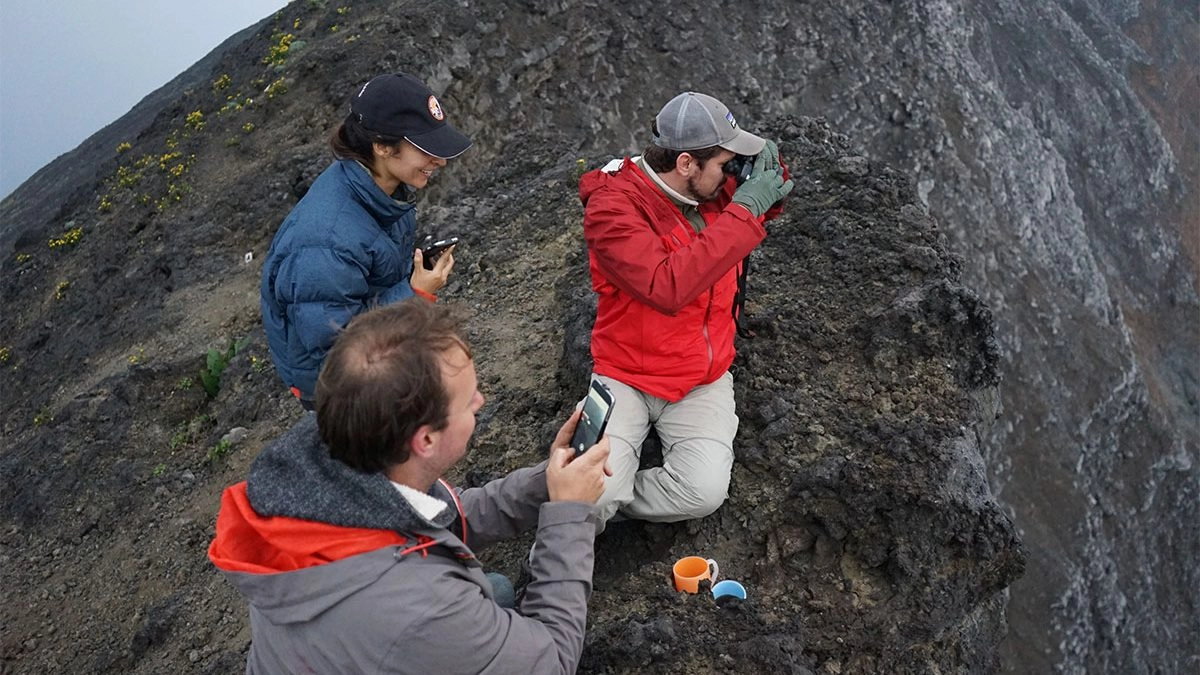
The Nyiragongo hike is regarded as one of the most rewarding volcano treks in Africa. The journey begins with a registration and safety briefing before visitors set out on a guided ascent led by experienced park rangers.
The trail climbs steadily through several ecological zones, beginning in tropical rainforest where birds, butterflies, monkeys, and dense vegetation dominate the landscape. As elevation increases, the forest gradually gives way to bamboo, shrubs, lava rock, and alpine vegetation shaped by previous volcanic eruptions.
Throughout the hike, visitors enjoy spectacular panoramic views of the Virunga Mountains, surrounding volcanoes, Lake Kivu, and the vast landscapes of eastern Congo. Rangers provide fascinating insights into the volcano’s geological history, previous eruptions, wildlife, vegetation, and conservation efforts within the Virunga ecosystem.
The climb typically takes between five and seven hours depending on weather conditions, trail conditions, altitude, and individual fitness levels. Although physically demanding, the steadily changing scenery makes the ascent both enjoyable and rewarding.
Reaching the summit is a remarkable achievement that rewards hikers with one of the most extraordinary volcanic landscapes anywhere on Earth.
Lava Lake Adventure
The highlight of every Nyiragongo safari is witnessing the famous lava lake, one of the world’s largest and most active permanent lava lakes. From the crater rim, visitors observe molten lava continuously circulating deep within the volcano, creating a mesmerizing display of glowing orange light, rising gases, and powerful geothermal energy.
During daylight hours, the crater reveals the immense scale of the volcanic caldera, while after sunset the lava lake becomes even more spectacular as darkness enhances the brilliant glow reflecting against the crater walls and surrounding clouds.
The constantly changing movement of the molten lava means that no two visits are ever identical. Every moment presents new photographic opportunities as lava fountains rise, crusts form and break apart, and the volcanic landscape evolves before visitors’ eyes.
The lava lake experience is widely regarded as one of the most unforgettable natural spectacles in Africa and remains the primary reason many travelers undertake the challenging ascent.
Trekking Difficulty
The Nyiragongo trek is considered moderately to highly challenging and requires a reasonable level of physical fitness. Although the trail does not involve technical climbing or mountaineering skills, hikers must be prepared for a long uphill ascent over uneven volcanic terrain at high altitude.
The total hiking distance is approximately 12 to 14 kilometers round trip, with a significant elevation gain from the park headquarters to the crater rim. Sections of the trail pass over loose volcanic rocks, steep slopes, and rugged lava fields that require careful footing.
Altitude may also affect some visitors, particularly during the final stages of the climb when oxygen levels become lower. Slow pacing, adequate hydration, suitable hiking boots, layered clothing, and trekking poles greatly improve comfort during the ascent.
Experienced guides adjust the pace according to the group, allowing regular rest stops and ensuring that hikers safely reach the summit while enjoying the scenery along the way.
Despite its physical demands, thousands of hikers have successfully completed the trek, making it achievable for most healthy travelers with average fitness and proper preparation.
Overnight at the Summit
One of the highlights included in the best Congo safari packages is the unforgettable overnight experience on the summit of Mount Nyiragongo. After reaching the crater rim, hikers settle into simple mountain shelters located close to the edge of the volcanic crater, allowing uninterrupted views of the spectacular lava lake throughout the evening and early morning.
As darkness falls, the glowing lava lake becomes even more dramatic, illuminating the crater with brilliant shades of orange and red. Travelers on the best Congo safari packages often spend hours watching the constantly changing volcanic activity while capturing breathtaking nighttime photographs of one of the world’s most extraordinary geological wonders.
The overnight stay also provides a rare opportunity to experience the peaceful atmosphere of the summit after daytime hikers have departed. On clear nights, the glowing crater is complemented by brilliant star-filled skies, creating one of the most remarkable natural spectacles found anywhere in Africa.
At sunrise, visitors are rewarded with sweeping panoramic views across the Virunga Mountains, neighboring volcanoes, and the vast forests below before beginning the descent back to the trailhead.
For many travelers, the overnight summit adventure is the defining highlight of the best Congo safari packages, combining adventure, breathtaking scenery, and one of Africa’s most unforgettable wilderness experiences into a single extraordinary journey.
Congo Safari Destinations
The Democratic Republic of Congo is one of Africa’s most biologically diverse and least-explored safari destinations. Covering more than 2.3 million square kilometers, the country protects an extraordinary network of national parks, wildlife reserves, rainforests, rivers, wetlands, volcanoes, and mountain ecosystems that collectively form one of the world’s greatest conservation landscapes. At the heart of this natural heritage lies the Congo Basin, the second-largest tropical rainforest on Earth, supporting thousands of plant species and some of the planet’s rarest wildlife.
Unlike traditional safari destinations known primarily for open grasslands and large herds of game, Congo offers a unique combination of dense equatorial rainforest, volcanic mountains, remote savannahs, vast wetlands, and untouched wilderness. These ecosystems provide habitat for mountain gorillas, eastern lowland gorillas, bonobos, chimpanzees, okapi, forest elephants, lions, giraffes, buffaloes, hippos, crocodiles, and more than one thousand bird species.
Each protected area in best Congo safari packages offers a distinct safari experience. Some parks are famous for gorilla trekking, while others are internationally recognized for rainforest expeditions, birdwatching, conservation tourism, volcanic adventures, or rare endemic wildlife. Together, these destinations make Congo one of the most rewarding countries for travelers seeking authentic African wilderness beyond the traditional safari circuit.
Whether you dream of trekking through mist-covered forests in search of mountain gorillas, exploring one of the world’s oldest national parks, photographing elusive rainforest mammals, or discovering remote landscapes visited by only a handful of travelers each year, Congo offers unforgettable safari destinations for every type of explorer.
Virunga National Park
Virunga National Park is Congo’s most famous safari destination and one of Africa’s greatest conservation treasures. Established in 1925, it is the oldest national park on the African continent and a UNESCO World Heritage Site. Stretching from the Virunga Volcanoes in the south to the Rwenzori Mountains and Lake Edward in the north, the park covers an extraordinary variety of landscapes, including tropical rainforest, bamboo forests, alpine vegetation, savannah, wetlands, lava fields, and active volcanoes.
Virunga is internationally renowned for its endangered mountain gorillas, which inhabit the forested slopes of the Virunga Mountains. Gorilla trekking has historically attracted visitors from around the world who come to experience one of the planet’s most emotional wildlife encounters. Spending one hour with a habituated gorilla family while surrounded by ancient rainforest is widely regarded as one of Africa’s finest safari experiences.
Beyond gorillas, Virunga supports an exceptional diversity of wildlife, including chimpanzees, forest elephants, buffaloes, hippos, giant forest hogs, bushbuck, numerous monkey species, reptiles, amphibians, and more than 700 recorded bird species. The park’s incredible range of habitats allows visitors to experience several different ecosystems within a single safari.
Virunga is also home to the legendary Mount Nyiragongo, one of the world’s most active volcanoes. When officially accessible, the volcano offers adventurous travelers the opportunity to hike to its summit and witness one of the world’s largest permanent lava lakes. The dramatic volcanic scenery, combined with breathtaking views across the Virunga landscape, makes Nyiragongo one of Africa’s premier hiking destinations.
Conservation lies at the heart of Virunga National Park. Park rangers work tirelessly to protect endangered wildlife from poaching, habitat destruction, and illegal activities while supporting surrounding communities through education, employment, healthcare, and sustainable development initiatives. Visitors play an important role in these efforts by contributing directly to conservation through tourism.
Although tourism in Virunga has experienced periods of closure due to regional security conditions, the park remains one of Africa’s most iconic protected areas. Travelers planning safaris between 2027 and 2030 should always confirm current accessibility and official park operations before finalizing their itinerary.
Virunga remains the ultimate destination for travelers seeking mountain gorillas, volcanic landscapes, conservation experiences, and one of the most remarkable wilderness adventures anywhere in Africa.
Kahuzi-Biega National Park
Kahuzi-Biega National Park is one of the world’s most important rainforest conservation areas and the premier destination for eastern lowland gorilla trekking. Located near the lakeside city of Bukavu in eastern Democratic Republic of Congo, the park derives its name from Mount Kahuzi and Mount Biega, two extinct volcanoes that dominate the surrounding landscape.
Covering more than 6,000 square kilometers, the park protects an exceptional range of ecosystems extending from montane forests at higher elevations to vast lowland tropical rainforests. This remarkable diversity of habitats supports an extraordinary variety of wildlife and makes Kahuzi-Biega one of Africa’s richest biodiversity hotspots.
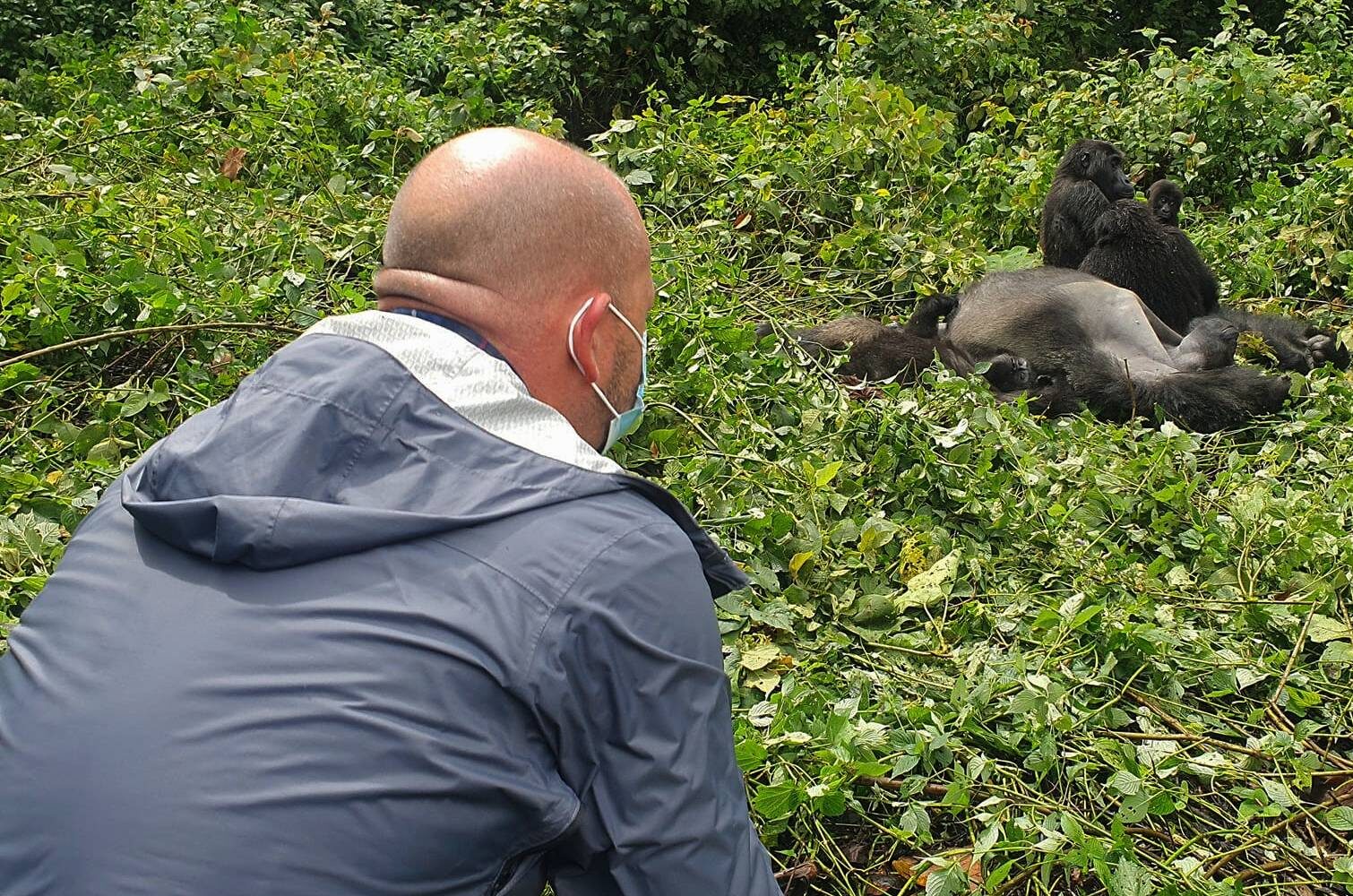
The park is globally famous for the eastern lowland gorilla, also known as Grauer’s gorilla, the largest gorilla subspecies in the world. Unlike mountain gorillas, these impressive primates inhabit dense lowland forests where they feed on leaves, fruits, bark, roots, and numerous forest plants. Trekking these gentle giants offers a unique wildlife experience found nowhere else outside eastern Congo.
In addition to gorillas, Kahuzi-Biega supports chimpanzees, forest elephants, bush buffaloes, giant forest hogs, bongos, duikers, monkeys, reptiles, amphibians, butterflies, and over 350 recorded bird species. Every forest trail reveals fascinating plant life, towering trees, orchids, vines, medicinal plants, and countless insects that contribute to the park’s incredible ecological complexity.
The surrounding Bukavu region further enhances the safari experience. Visitors often combine gorilla trekking with excursions around Lake Kivu, coffee plantations, local markets, cultural villages, waterfalls, hiking trails, and scenic viewpoints overlooking one of Africa’s most beautiful lakes.
Kahuzi-Biega is particularly suitable for travelers interested in rainforest ecology, conservation tourism, birdwatching, wildlife photography, and extended primate safaris. It also serves as an excellent destination for travelers entering Congo from Rwanda via the nearby border at Cyangugu.
As one of the country’s most accessible gorilla trekking destinations, Kahuzi-Biega remains a cornerstone of best Congo safari packages and one of the finest primate destinations on the African continent.
Garamba National Park
Garamba National Park offers one of the most distinctive safari experiences in Central Africa. Located in northeastern Democratic Republic of Congo near the borders of South Sudan and the Central African Republic, Garamba is one of Africa’s oldest national parks and a UNESCO World Heritage Site renowned for its vast savannahs, rolling grasslands, river systems, woodlands, and gallery forests.
Unlike Congo’s rainforest parks, Garamba resembles the classic African safari landscapes more commonly associated with East Africa. These open ecosystems support large populations of grazing mammals and predators, creating exceptional opportunities for traditional wildlife viewing.
Visitors to Garamba may encounter African elephants, giraffes, buffaloes, hippopotamuses, kob antelopes, hartebeest, waterbuck, bushbuck, giant forest hogs, warthogs, hyenas, lions, leopards, chimpanzees, and numerous smaller mammals. Although wildlife densities vary across the park, Garamba remains one of Congo’s most important strongholds for large terrestrial mammals.
The park is equally impressive for birdwatching. Wetlands, rivers, seasonal floodplains, and woodlands attract hundreds of resident and migratory bird species, making Garamba a rewarding destination for ornithologists and wildlife photographers.
Garamba has become internationally recognized for its conservation achievements under African Parks, which continues to strengthen anti-poaching operations, habitat restoration, scientific research, and community development initiatives. Visitors gain valuable insight into modern conservation practices while supporting long-term wildlife protection.
Because of its remote location, Garamba is best suited for travelers seeking expedition-style safaris, conservation tourism, photography, and authentic wilderness experiences away from heavily visited safari destinations.
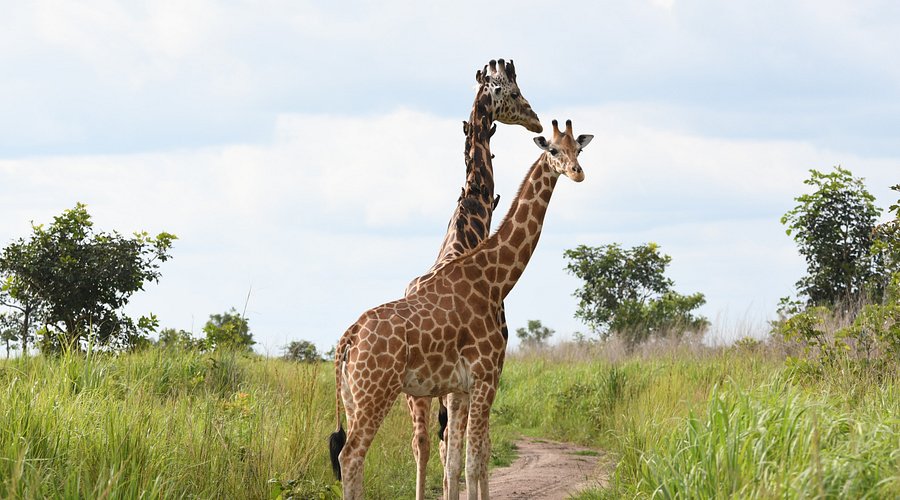
Salonga National Park
Salonga National Park is the largest tropical rainforest national park in Africa and one of the most remote wilderness areas on Earth. Covering more than 36,000 square kilometers within the heart of the Congo Basin, the park protects an immense network of untouched rainforest, rivers, swamps, and wetlands that remain largely inaccessible except by boat.
Recognized as a UNESCO World Heritage Site, Salonga plays a vital role in global biodiversity conservation and climate regulation. Its vast forests store enormous quantities of carbon while providing habitat for countless plant and animal species that exist nowhere else.
Salonga is internationally celebrated as one of the most important refuges for bonobos, humanity’s closest living relatives found only in the Democratic Republic of Congo. The park also supports forest elephants, Congo peafowl, slender-snouted crocodiles, African dwarf crocodiles, giant pangolins, chimpanzees, numerous monkey species, rare amphibians, reptiles, and extraordinary insect diversity.
Unlike conventional safari destinations where wildlife sightings are frequent and predictable, Salonga rewards patience and exploration. Much of the safari experience revolves around navigating remote rivers, trekking through pristine rainforest, observing birds, studying plants, and appreciating the immense scale of one of the world’s last great tropical wildernesses.
River expeditions are an integral part of visiting Salonga. Boats travel through narrow forest channels where visitors encounter kingfishers, herons, crocodiles, monkeys, and countless aquatic species while experiencing the remarkable tranquility of the Congo Basin.
Salonga is best suited for adventurous travelers, researchers, conservationists, wildlife photographers, documentary filmmakers, and visitors seeking one of Africa’s most authentic rainforest expeditions.
Okapi Wildlife Reserve
The Okapi Wildlife Reserve is one of the Democratic Republic of Congo’s most extraordinary conservation areas and one of the best places in the world to learn about the elusive okapi. Located within the Ituri Forest in northeastern Congo, the reserve protects approximately one-fifth of this vast rainforest ecosystem and is recognized as a UNESCO World Heritage Site.
The okapi, often called the “forest giraffe,” is found only in the Democratic Republic of Congo. Although related to the giraffe, its striking zebra-like striped legs, velvety dark coat, long neck, and gentle nature make it one of Africa’s most distinctive mammals. Spotting an okapi in the wild is extremely rare, making every encounter a remarkable privilege.
The reserve also protects forest elephants, chimpanzees, leopards, giant forest hogs, bongos, numerous monkey species, over 370 bird species, reptiles, amphibians, butterflies, and thousands of plant species. This exceptional biodiversity has earned the Ituri Forest global recognition as one of Africa’s richest rainforest ecosystems.
A visit to the Epulu Conservation Centre provides visitors with valuable insight into okapi conservation, scientific research, veterinary care, community engagement, and the challenges of protecting wildlife in one of the world’s most important tropical forests.
The Okapi Wildlife Reserve is also home to Indigenous Mbuti and Efe communities whose traditional knowledge of the forest has shaped the region for generations. Cultural interactions offer visitors opportunities to learn about sustainable forest living, traditional hunting techniques, music, crafts, and the close relationship between local communities and the rainforest.
For travelers passionate about rare wildlife, rainforest conservation, and authentic cultural experiences, the Okapi Wildlife Reserve remains one of Africa’s most remarkable safari destinations.
Lomami National Park
Lomami National Park represents one of Africa’s newest and most exciting conservation success stories. Officially established in 2016, the park protects nearly 9,000 square kilometers of pristine rainforest situated between the Lomami and Tshuapa Rivers in the central Congo Basin.
Largely unexplored by international tourism, Lomami offers visitors the rare opportunity to experience an untouched rainforest ecosystem where wildlife continues to thrive with minimal human disturbance. The park was created following years of scientific research that revealed its exceptional biodiversity and the presence of numerous rare and previously undocumented species.
Lomami is particularly famous for the discovery of the lesula monkey, a species unknown to science until the twenty-first century. Alongside the lesula, the park supports bonobos, forest elephants, okapi, giant pangolins, Congo peafowl, chimpanzees, buffaloes, leopards, crocodiles, and many other rainforest specialists.
The park’s rivers, wetlands, swamp forests, upland forests, and lowland rainforest create diverse habitats supporting thousands of plant species, butterflies, amphibians, reptiles, fish, and birds. Every expedition through Lomami offers opportunities for scientific discovery and exceptional wildlife photography.
Unlike more established safari destinations, Lomami focuses on low-impact ecotourism and conservation. Visitors participate in carefully managed expeditions led by expert guides, researchers, and conservation teams who share insights into rainforest ecology, wildlife monitoring, biodiversity research, and community-based conservation.
For travelers seeking one of Africa’s last true wilderness experiences, Lomami National Park offers an unforgettable journey into a rainforest that remains virtually unchanged from centuries past. It is a destination where exploration, conservation, and discovery come together to create one of the most authentic safari experiences available anywhere in the Congo Basin.
Congo National Parks Comparison
| National Park | Main Attraction | Travel Difficulty | Best Months | Recommended Stay |
|---|---|---|---|---|
| Virunga National Park* | Mountain Gorillas, Volcanoes & Nyiragongo | Moderate | June–September, December–February | 3–5 Days |
| Kahuzi-Biega National Park | Eastern Lowland Gorillas | Easy to Moderate | June–September, December–February | 2–4 Days |
| Garamba National Park | Savannah Wildlife & Conservation | Challenging | December–March | 4–6 Days |
| Salonga National Park | Congo Basin Rainforest & Bonobos | Very Challenging | June–September | 5–8 Days |
| Maiko National Park | Remote Rainforest & Rare Wildlife | Expedition Level | June–September | 6–10 Days |
| Okapi Wildlife Reserve | Okapi & Ituri Forest | Challenging | June–September | 3–5 Days |
| Lomami National Park | Primate Research & Rainforest | Expedition Level | June–September | 5–8 Days |
| Upemba National Park | Wetlands, Savannah & Birdlife | Moderate to Challenging | May–September | 3–5 Days |
| Kundelungu National Park | Waterfalls & Scenic Landscapes | Moderate | May–September | 2–4 Days |
| Lola ya Bonobo Sanctuary | Bonobo Conservation Experience | Easy | Year-round | Half Day–1 Day |
Luxury Congo Safari Packages
Luxury Congo Safari Packages are designed for discerning travelers who seek extraordinary wildlife encounters without compromising on comfort, privacy, personalized service, and exclusive experiences. While the Democratic Republic of Congo is known for its rugged wilderness and expedition-style adventures, luxury safaris transform these remote landscapes into unforgettable journeys by combining premium accommodation, professional guiding, private transportation, and carefully curated itineraries.
A luxury safari in Congo is about much more than staying in an elegant lodge. It is about enjoying seamless travel logistics, expert planning, flexible schedules, private wildlife experiences where possible, exceptional dining, and personalized attention from arrival to departure. Every aspect of the journey is tailored to maximize comfort while allowing guests to explore one of Africa’s last great wilderness frontiers.
Luxury itineraries often begin with VIP airport meet-and-greet services in Kigali or Kinshasa before continuing with private transfers, charter flights where available, premium lakeside hotels, luxury safari lodges, and exclusive camps located close to national parks. Guests enjoy spacious suites, gourmet cuisine, fine wines, attentive hospitality, spa treatments at selected properties, and spectacular views overlooking forests, lakes, or volcanic landscapes.
Depending on current park accessibility, luxury Congo safaris can include mountain gorilla trekking, eastern lowland gorilla trekking, chimpanzee tracking, bonobo experiences, birdwatching, rainforest exploration, cultural encounters, and carefully planned conservation visits. For adventurous travelers, luxury itineraries may also incorporate Nyiragongo Volcano expeditions when officially open, combining challenging outdoor adventure with comfortable accommodation before and after the hike.
One of the greatest advantages of luxury travel is flexibility. Private vehicles and dedicated guides allow guests to travel at their own pace, spend additional time photographing wildlife, make scenic stops, and customize each day’s activities according to their interests. Families, honeymoon couples, photographers, and VIP travelers particularly appreciate the exclusivity and personalized service that accompany luxury safaris.
Luxury Congo Safari Packages are ideal for travelers celebrating special occasions such as honeymoons, anniversaries, birthdays, retirement trips, or once-in-a-lifetime adventures. They also appeal to wildlife photographers, filmmakers, business executives, and travelers who prefer small, personalized experiences rather than large group tours.
Although Congo remains a developing safari destination compared to some neighboring countries, carefully planned luxury safaris demonstrate that authentic adventure and exceptional comfort can coexist. Every luxury itinerary contributes directly to conservation by supporting protected areas, local employment, and sustainable tourism initiatives that safeguard Congo’s extraordinary wildlife and ecosystems.
Mid-Range Congo Safari Packages
Mid-Range Congo Safari Packages offer the perfect balance between affordability, comfort, and unforgettable wildlife experiences. They are the most popular choice for travelers who want high-quality accommodation, reliable transportation, experienced guides, and well-organized itineraries without the premium price tag associated with luxury travel.
A mid-range safari provides excellent value while still delivering comfortable rooms, private bathrooms, quality meals, professional guiding, and carefully selected lodges located close to major safari destinations. Guests enjoy personalized service and convenient logistics while maintaining a reasonable travel budget.
These packages commonly include gorilla trekking in Kahuzi-Biega National Park, cultural experiences around Bukavu, birdwatching, rainforest walks, scenic drives, community visits, and optional cross-border extensions into Rwanda. Depending on official accessibility, travelers may also include Virunga National Park experiences or volcano adventures.
Accommodation typically consists of well-appointed safari lodges, boutique hotels, ecolodges, and comfortable guesthouses offering clean rooms, hot showers, Wi-Fi in selected properties, restaurant facilities, and beautiful natural surroundings. While amenities may not be as extensive as those found in luxury lodges, they provide everything required for a relaxing and enjoyable safari.
Transportation is usually provided in comfortable 4×4 safari vehicles driven by knowledgeable English-speaking guides who possess extensive knowledge of wildlife, local cultures, conservation, and regional history. Travelers benefit from flexible itineraries, small group sizes, and personalized attention throughout the journey.
Mid-range safaris are particularly suitable for couples, families, solo travelers, groups of friends, photographers, and first-time visitors to Congo. They also appeal to travelers who wish to maximize their wildlife experiences while maintaining sensible travel costs.
For many visitors, mid-range Congo Safari Packages represent the ideal combination of adventure, comfort, safety, and affordability, making them one of the best ways to discover the country’s remarkable biodiversity.
Budget Congo Safari Packages
Budget Congo Safari Packages make one of Africa’s most extraordinary wildlife destinations accessible to travelers seeking unforgettable experiences at an affordable cost. These safaris focus on delivering exceptional value by prioritizing wildlife encounters, experienced guiding, and efficient logistics while using comfortable but simpler accommodation and shared services where appropriate.
Contrary to popular belief, choosing a budget safari does not mean compromising the quality of the experience. Visitors still enjoy professionally organized itineraries, knowledgeable local guides, reliable transportation, and opportunities to encounter some of the world’s rarest wildlife, including eastern lowland gorillas, mountain gorillas where accessible, chimpanzees, bonobos, colorful birdlife, and the incredible biodiversity of the Congo Basin.
Budget accommodation generally consists of clean guesthouses, locally owned lodges, community-operated camps, and simple hotels offering comfortable beds, private or shared bathrooms depending on the property, nutritious meals, and friendly hospitality. These establishments often provide authentic cultural experiences while directly supporting local communities through tourism.
Transportation typically uses shared safari vehicles or scheduled transfers, allowing travelers to reduce costs while still enjoying safe and efficient travel between destinations. Group departures may also be available during peak seasons, enabling visitors to share transport and guide expenses with other travelers.
Budget itineraries commonly focus on shorter safaris lasting two to six days, especially gorilla trekking around Kahuzi-Biega National Park, Bukavu excursions, Lake Kivu visits, birdwatching, cultural experiences, and forest walks. Longer itineraries can also be arranged by combining multiple destinations while maintaining cost-effective accommodation throughout the journey.
These packages are ideal for backpackers, students, solo travelers, conservation volunteers, young couples, photographers, and anyone wishing to experience Congo’s incredible wildlife without exceeding their travel budget.
Although more affordable, budget safaris still contribute significantly to conservation by supporting national parks, employing local guides and drivers, creating income for surrounding communities, and generating tourism revenue that helps protect endangered species and their habitats.
Private Congo Safari Packages
Private Congo Safari Packages provide the highest level of flexibility, exclusivity, and personalization for travelers who prefer complete control over their safari experience. Rather than following fixed departure dates or group schedules, private safaris are designed entirely around your interests, travel dates, preferred accommodation, fitness level, and wildlife priorities.
From the moment you arrive, every aspect of the safari is arranged exclusively for you and your travel companions. A dedicated professional guide accompanies you throughout the journey, providing personalized interpretation of wildlife, culture, history, conservation, and the remarkable ecosystems that make Congo one of Africa’s most fascinating safari destinations.
Private safaris allow complete itinerary customization. Travelers can choose the number of days, national parks, activities, accommodation standards, border crossings, and pace of travel. Whether your priority is eastern lowland gorilla trekking, mountain gorillas, birdwatching, chimpanzees, bonobos, rainforest photography, volcano hiking where available, or cultural immersion, the itinerary can be tailored to match your specific interests.
Photography enthusiasts especially benefit from private safaris because guides can spend additional time at wildlife sightings, adjust schedules according to lighting conditions, and visit locations best suited for nature photography. Families also appreciate the flexibility to travel at a comfortable pace while accommodating children or elderly relatives.
Private Congo safaris are equally popular among honeymoon couples, retirees, business executives, documentary filmmakers, researchers, conservation organizations, and travelers celebrating special occasions. They offer greater privacy, enhanced comfort, flexible departure times, customized meal arrangements, and the freedom to make spontaneous stops throughout the journey.
Another significant advantage is the ability to combine destinations across multiple countries. Many travelers choose private itineraries that seamlessly connect Congo with Rwanda and Uganda, creating comprehensive East and Central African adventures featuring gorilla trekking, chimpanzee tracking, Big Five safaris, Lake Kivu relaxation, cultural experiences, and exceptional birdwatching.
Whether you desire a short two-day gorilla trek or a three-week expedition exploring the Congo Basin, Private Congo Safari Packages provide a completely personalized experience where every detail is carefully planned to reflect your travel goals. The result is a seamless, exclusive, and deeply rewarding safari that allows you to experience the extraordinary beauty of the Democratic Republic of Congo at your own pace while directly supporting conservation and sustainable tourism.
Family Congo Safari Packages
Family Congo Safari Packages are thoughtfully designed to introduce families to the incredible wildlife, landscapes, and cultures of the Democratic Republic of Congo while ensuring safety, comfort, and enjoyable experiences for travelers of all ages. Although Congo is known for its adventurous wilderness, many destinations can be explored through carefully planned family-friendly itineraries that balance wildlife activities with relaxation, cultural encounters, and flexible travel schedules.
Every family safari is customized according to the ages of the children, fitness levels, travel preferences, and the specific interests of each family member. While gorilla trekking is restricted to visitors meeting the minimum age requirements set by park authorities, families can still enjoy a wide range of activities, including guided nature walks, birdwatching, boat excursions, community visits, scenic drives, cultural performances, butterfly observation, coffee farm tours, and educational conservation experiences.
Accommodation is selected with families in mind, offering spacious rooms, family cottages, interconnecting suites where available, child-friendly meals, secure environments, and welcoming hospitality. Private safari vehicles allow families to travel comfortably at their own pace while making scenic stops whenever desired.
Educational experiences are a major highlight of family safaris. Children and adults alike learn about rainforest ecology, wildlife conservation, local traditions, medicinal plants, birdlife, and the importance of protecting endangered species. These interactive experiences encourage a deeper appreciation for nature while creating meaningful family memories.
Many family itineraries combine Congo with neighboring Rwanda or Uganda, allowing visitors to experience a greater diversity of wildlife, national parks, and activities during a single East African adventure. Whether exploring Lake Kivu, visiting conservation centers, or discovering rainforest ecosystems, family safaris create unforgettable experiences that inspire future generations of wildlife lovers.
Family Congo Safari Packages are perfect for adventurous families seeking an authentic African experience filled with learning, discovery, and lifelong memories.
Honeymoon Congo Safari Packages
Honeymoon Congo Safari Packages offer couples a unique opportunity to celebrate their love in one of Africa’s most exclusive and untouched wilderness destinations. Far from crowded tourist attractions, Congo provides privacy, breathtaking scenery, extraordinary wildlife encounters, and unforgettable adventures that create memories lasting a lifetime.
A honeymoon in Congo combines romance with exploration. Couples may spend their days trekking through ancient rainforests in search of gorillas, enjoying scenic boat rides across tranquil lakes, exploring vibrant local communities, relaxing in luxurious lodges surrounded by nature, or watching spectacular sunsets over volcanic landscapes and tropical forests.
Luxury honeymoon itineraries often include private airport transfers, premium accommodation, romantic room decorations, candlelit dinners, spa treatments where available, lakeside relaxation, personalized guiding, and carefully planned experiences designed exclusively for the couple. Many lodges offer stunning views of forests, mountains, or Lake Kivu, providing peaceful settings for romance and relaxation.
For adventurous couples, honeymoon packages can include eastern lowland gorilla trekking, mountain gorilla trekking where officially accessible, chimpanzee tracking, birdwatching, rainforest walks, cultural experiences, and optional volcano expeditions when conditions permit. Cross-border itineraries extending into Rwanda or Uganda further enhance the honeymoon by combining multiple iconic safari experiences within one journey.
Photography opportunities are endless throughout the honeymoon, from intimate moments overlooking the rainforest to breathtaking wildlife encounters and dramatic volcanic scenery. Every destination provides beautiful backdrops for celebrating a new chapter together.
Whether you prefer luxury lodges, boutique ecolodges, or secluded forest retreats, Honeymoon Congo Safari Packages offer an extraordinary combination of romance, adventure, exclusivity, and authentic African wilderness.
Small Group Congo Safari Packages
Small Group Congo Safari Packages provide the ideal balance between affordability, personalized service, and shared adventure. Traveling in small groups allows guests to reduce overall safari costs while maintaining intimate wildlife experiences, flexible itineraries, and meaningful interactions with guides and fellow travelers.
Unlike large coach tours, small group safaris typically consist of a limited number of participants, ensuring everyone enjoys excellent visibility during wildlife viewing, easier communication with guides, and a more relaxed travel atmosphere. The smaller group size also minimizes environmental impact and supports responsible tourism practices within Congo’s protected areas.
These itineraries commonly include gorilla trekking, rainforest exploration, birdwatching, cultural encounters, conservation visits, and scenic excursions around Congo’s most famous national parks. Group members often develop lasting friendships while sharing unforgettable experiences such as tracking gorillas through dense rainforest or observing rare wildlife together.
Accommodation usually consists of comfortable safari lodges and boutique hotels selected for their excellent service, convenient locations, and welcoming atmosphere. Shared transportation in modern 4×4 safari vehicles further enhances the social aspect of the journey while maintaining high standards of comfort.
Small Group Congo Safari Packages are ideal for solo travelers, couples, friends, wildlife clubs, photography enthusiasts, university groups, and conservation supporters looking to enjoy exceptional safari experiences at a reasonable cost without sacrificing quality.
Photography Congo Safari Packages
Photography Congo Safari Packages are specially designed for travelers who wish to capture the extraordinary beauty of one of Africa’s most biodiverse countries. Congo’s rainforests, volcanoes, rivers, wildlife, and cultural diversity provide endless opportunities for both professional and amateur photographers seeking unique and compelling images.
The highlight for many photographers is gorilla photography. Observing mountain gorillas or eastern lowland gorillas in their natural habitat allows photographers to capture intimate portraits, family interactions, expressive facial features, and remarkable behaviors that few wildlife experiences can match.
Beyond gorillas, Congo offers exceptional opportunities to photograph chimpanzees, bonobos, golden monkeys, okapi, forest elephants, colorful birds, butterflies, reptiles, dramatic rainforest landscapes, waterfalls, rivers, volcanoes, and vibrant local communities.
Photography safaris are typically led by experienced guides who understand wildlife behavior, lighting conditions, and positioning. Flexible schedules allow photographers additional time at wildlife sightings, early morning departures, late afternoon excursions, and strategic stops that maximize photographic opportunities.
Special attention is given to minimizing disturbance to wildlife while ensuring photographers achieve outstanding images through ethical wildlife photography practices. Whether using professional DSLR equipment or modern mirrorless cameras, visitors return home with remarkable photographs documenting one of Africa’s last great wilderness frontiers.
Photography Congo Safari Packages are ideal for wildlife photographers, landscape photographers, filmmakers, content creators, conservation organizations, and anyone passionate about visual storytelling.
Birding Congo Safari Packages
Birding Congo Safari Packages showcase one of Africa’s richest and least-explored birdwatching destinations. With more than 1,000 recorded bird species distributed across rainforests, wetlands, rivers, mountains, savannahs, and volcanic ecosystems, the Democratic Republic of Congo is a true paradise for bird enthusiasts.
The country’s remarkable diversity of habitats supports numerous Albertine Rift endemics, Congo Basin specialties, migratory species, and many birds found nowhere else on Earth. From colorful turacos and hornbills to elusive forest specialists and spectacular raptors, every day presents opportunities to expand even the most experienced birder’s life list.
Prime birding destinations include Kahuzi-Biega National Park, Virunga National Park, Garamba National Park, Salonga National Park, Okapi Wildlife Reserve, Lomami National Park, Lake Kivu, and the extensive wetlands associated with the Congo River system.
Experienced birding guides assist visitors in identifying species through both visual observation and vocalizations while explaining habitat preferences, migration patterns, breeding behavior, and conservation challenges. Early morning forest walks, river excursions, mountain trails, and wetland visits provide outstanding opportunities for observing birds in diverse environments.
Whether searching for the Congo peafowl, Grauer’s broadbill, Rockefeller’s sunbird, Ruwenzori turaco, African green broadbill, or dozens of other sought-after species, Birding Congo Safari Packages offer one of the most rewarding ornithological experiences anywhere in Africa.
Congo Walking Safari Packages
Congo Walking Safari Packages provide an immersive way to explore the country’s extraordinary rainforests and natural landscapes on foot. Unlike vehicle-based safaris, walking safaris allow travelers to experience the rainforest using all their senses while developing a deeper understanding of Congo’s remarkable biodiversity.
Guided by experienced naturalists and park rangers, visitors explore forest trails, volcanic slopes, wetlands, bamboo forests, and scenic viewpoints while learning about wildlife behavior, medicinal plants, insects, fungi, birdlife, animal tracks, and rainforest ecology.
Walking safaris often complement gorilla trekking, chimpanzee tracking, birdwatching, photography tours, and cultural visits, providing opportunities to appreciate the countless smaller details that make the Congo Basin one of the world’s most complex ecosystems.
Along the trails, visitors may observe monkeys, colorful butterflies, reptiles, frogs, orchids, giant trees, mushrooms, medicinal herbs, and numerous bird species while learning how local communities have lived alongside these forests for generations.
The pace of a walking safari encourages careful observation rather than hurried travel, making every excursion an educational and highly rewarding experience. Whether exploring gentle forest paths or more challenging mountain trails, walking safaris reveal the true beauty of Congo’s wilderness.
Walking Safari Packages are particularly suitable for nature enthusiasts, photographers, conservation supporters, botanists, birdwatchers, and travelers seeking authentic rainforest experiences beyond conventional game drives.
Congo Camping Safari Packages
Congo Camping Safari Packages offer adventurous travelers the opportunity to experience Africa’s wilderness in its purest form. Sleeping beneath the stars or within the heart of the rainforest creates a close connection with nature that few other safari styles can provide.
Camping safaris range from comfortable mobile camps with spacious safari tents, beds, dining facilities, and camp staff to more adventurous expedition-style camping for researchers and experienced explorers. Regardless of the level of comfort, all camping safaris prioritize safety, environmental responsibility, and minimal impact on the surrounding ecosystem.
Evenings around the campfire provide opportunities to share stories, enjoy freshly prepared meals, listen to the sounds of the rainforest, and learn about local wildlife from experienced guides. As darkness falls, the forest comes alive with nocturnal birds, insects, frogs, and mammals, creating an unforgettable wilderness atmosphere.
Camping itineraries may include gorilla trekking, rainforest expeditions, birdwatching, cultural visits, river exploration, photography, and multi-day hiking adventures. Remote camps also allow early morning wildlife activities before other visitors arrive, increasing opportunities for exceptional wildlife encounters.
Camping Safari Packages are ideal for adventurous travelers, backpackers, photographers, researchers, students, and conservation enthusiasts seeking an authentic outdoor experience while exploring Congo’s extraordinary protected areas.
Fly-in Congo Safari Packages
Fly-in Congo Safari Packages provide the fastest, most comfortable, and most efficient way to explore the Democratic Republic of Congo’s vast and remote wilderness. Given the country’s enormous size and the considerable distances between national parks, domestic flights and charter aircraft significantly reduce travel time while allowing visitors to maximize their safari experience.
Rather than spending several days traveling by road, guests can fly directly between major gateways and selected safari destinations where air access is available. This allows more time for gorilla trekking, wildlife viewing, birdwatching, cultural experiences, and relaxation while minimizing lengthy overland journeys.
Fly-in safaris are particularly valuable for luxury travelers, photographers, business executives, honeymoon couples, and visitors with limited holiday time. They also provide access to remote conservation areas that would otherwise require complex road logistics.
These itineraries often combine premium airport services, private transfers, luxury accommodation, charter flights, and exclusive guiding to create a seamless travel experience from arrival to departure. Depending on operational availability and current conditions, fly-in safaris can be combined with destinations in Rwanda and Uganda, creating exceptional multi-country adventures featuring gorillas, chimpanzees, Big Five wildlife, volcanoes, and the spectacular landscapes of East and Central Africa.
Fly-in Congo Safari Packages represent the highest level of convenience for travelers seeking to explore one of Africa’s most remarkable wilderness destinations while enjoying efficient logistics, greater comfort, and more time immersed in nature.
Cross-Border Congo Safari Packages
Cross-Border Congo Safari Packages offer travelers the unique opportunity to experience the incredible diversity of Central and East Africa within one seamless journey. By combining the Democratic Republic of Congo with neighboring safari destinations, visitors can enjoy a richer travel experience that includes great ape encounters, Big Five game viewing, breathtaking landscapes, vibrant cultures, tropical lakes, mountain ranges, and some of the world’s finest national parks.
One of the greatest advantages of multi-country safaris is the ability to experience different ecosystems in a single holiday. Travelers can trek mountain gorillas in Congo, witness the Big Five on the savannahs of Uganda or Rwanda, relax along the shores of Lake Kivu, visit vibrant cities, explore volcanic landscapes, or continue to the endless plains of Tanzania and Kenya for the Great Migration and world-class wildlife viewing.
Cross-border safaris are carefully planned to ensure smooth border crossings, efficient transportation, well-coordinated accommodation, and professionally guided experiences throughout the journey. Every itinerary can be customized according to travel duration, preferred accommodation, budget, wildlife interests, and international flight connections.
These safaris are ideal for first-time visitors to Africa, returning safari enthusiasts, honeymoon couples, photographers, wildlife researchers, birdwatchers, families, and adventure travelers who want to maximize their African experience.
Congo & Rwanda Safari Packages
A Congo and Rwanda Safari is one of the most popular cross-border adventures in Central Africa because of the close proximity between the two countries and their complementary attractions. Kigali serves as the primary international gateway, making travel into eastern Congo both convenient and efficient.
This combination allows travelers to experience two of Africa’s premier gorilla destinations while also discovering Rwanda’s breathtaking landscapes, exceptional conservation achievements, luxury lodges, and outstanding wildlife experiences.
A typical itinerary may begin with arrival in Kigali before exploring the city’s cultural attractions, including museums, art galleries, craft markets, and historical sites. Travelers then continue to Volcanoes National Park for optional golden monkey tracking, cultural visits, or luxury accommodation before crossing into Congo for eastern lowland gorilla trekking in Kahuzi-Biega National Park or mountain gorilla trekking where official park access permits.
Many itineraries also include time along the shores of Lake Kivu, one of Africa’s most beautiful freshwater lakes. Visitors enjoy boat cruises, lakeside relaxation, kayaking, coffee tours, cycling, hiking, and spectacular sunsets before returning to Rwanda.
For wildlife enthusiasts, this combination provides opportunities to encounter mountain gorillas, eastern lowland gorillas, chimpanzees, golden monkeys, numerous monkey species, and hundreds of bird species within one carefully planned journey.
Luxury travelers appreciate the excellent infrastructure in Rwanda combined with the raw wilderness experiences offered by Congo, creating a perfect balance between comfort and adventure.
The Congo and Rwanda combination is ideal for travelers with five to ten days who wish to experience the very best of Central African primate tourism.
Congo & Uganda Safari Packages
A Congo and Uganda Safari combines the extraordinary rainforests of the Democratic Republic of Congo with Uganda’s famous savannah national parks, mountain gorillas, chimpanzees, crater lakes, and diverse wildlife. Together, the two countries create one of Africa’s most rewarding safari combinations.
The journey typically begins in either Kigali or Entebbe before traveling to southwestern Uganda or eastern Congo depending on the chosen itinerary. Visitors may experience eastern lowland gorillas in Kahuzi-Biega National Park before crossing into Uganda to explore Bwindi Impenetrable National Park, Queen Elizabeth National Park, Kibale National Park, or Lake Mburo National Park.
This combination offers remarkable wildlife diversity. Travelers can enjoy gorilla trekking, chimpanzee tracking, Big Five safaris, boat cruises along the Kazinga Channel, game drives across open savannahs, birdwatching, forest walks, and cultural experiences with local communities.
Uganda’s excellent safari infrastructure complements Congo’s adventurous rainforest experiences, allowing visitors to enjoy both comfortable wildlife lodges and authentic wilderness exploration within one holiday.
For birdwatchers, the two countries collectively support more than 1,700 recorded bird species, making this one of Africa’s premier birding combinations. Wildlife photographers also benefit from the dramatic contrast between dense rainforest habitats and open savannah ecosystems.
The Congo and Uganda combination is perfect for travelers seeking a comprehensive African safari that combines great apes with traditional wildlife viewing.
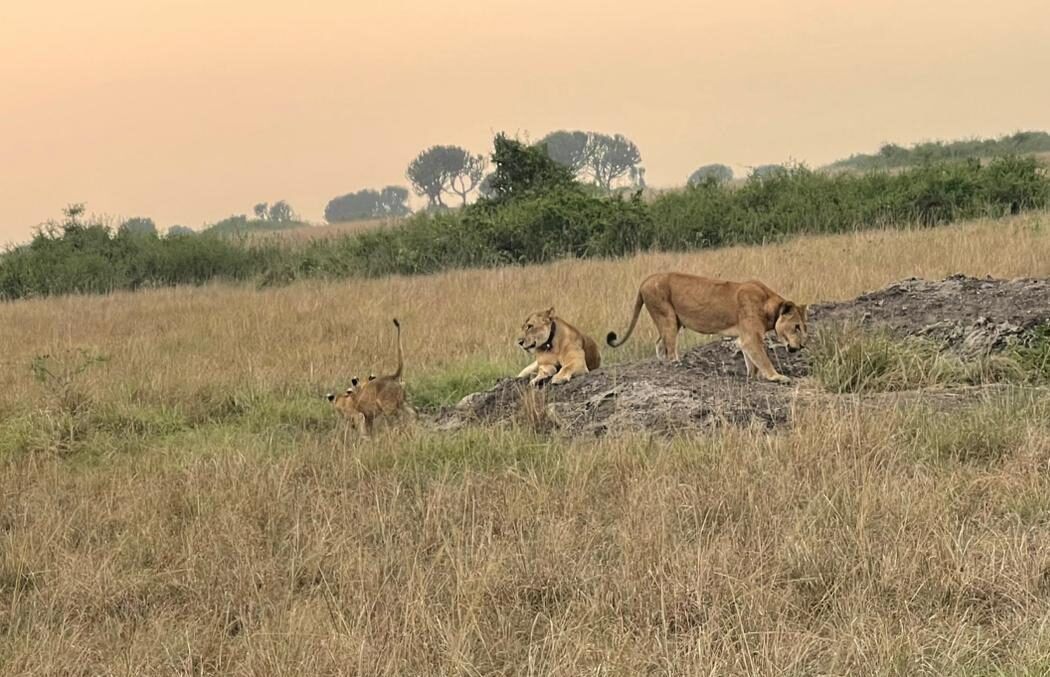
Congo, Rwanda & Uganda Safari Packages
A Congo, Rwanda and Uganda Safari represents one of Africa’s ultimate primate and wildlife adventures. By combining three neighboring countries, travelers experience an extraordinary diversity of landscapes, cultures, wildlife, and conservation success stories within a single itinerary.
This multi-country journey allows visitors to compare three internationally recognized gorilla destinations while also discovering the unique attractions that distinguish each country. Rwanda contributes luxury tourism, spectacular volcanoes, Lake Kivu, and world-class hospitality. Uganda offers Big Five safaris, chimpanzee tracking, the source of the Nile, crater lakes, and abundant wildlife. Congo adds untouched rainforests, eastern lowland gorillas, bonobos, and one of Africa’s last great wilderness frontiers.
Depending on itinerary length, travelers may enjoy mountain gorilla trekking in Uganda or Rwanda, eastern lowland gorilla trekking in Congo, chimpanzee tracking in Kibale Forest, golden monkey tracking in the Virunga Mountains, game drives in Queen Elizabeth National Park, boat safaris, birdwatching, rainforest walks, volcano scenery, coffee experiences, community tourism, and lakeside relaxation.
Accommodation ranges from luxury safari lodges and boutique hotels to comfortable mid-range properties and authentic ecolodges, allowing travelers to customize the journey according to their preferred travel style and budget.
Because of the close proximity between these countries, travel distances remain relatively manageable, enabling visitors to experience several iconic destinations without excessive travel time.
For many international visitors, this three-country itinerary provides the most complete introduction to East and Central African wildlife, conservation, and culture. It is especially recommended for travelers with ten to twenty-one days available for exploration.
Congo & Tanzania Safari Packages
A Congo and Tanzania Safari combines two completely different African safari worlds into one extraordinary holiday. The rainforests and great apes of Central Africa are perfectly complemented by Tanzania’s endless savannahs, abundant wildlife, and world-famous national parks.
The journey often begins in Congo with unforgettable gorilla trekking, rainforest exploration, chimpanzee tracking, or bonobo experiences before flying to northern Tanzania to begin a classic wildlife safari through Tarangire National Park, the Ngorongoro Conservation Area, and the Serengeti National Park.
This combination allows travelers to witness two of Africa’s greatest wildlife spectacles. In Congo, they experience intimate encounters with endangered primates within dense tropical forests. In Tanzania, they enjoy open savannahs filled with elephants, lions, leopards, buffaloes, rhinoceroses, giraffes, zebras, wildebeest, cheetahs, and countless other species.
Seasonal itineraries can be timed to coincide with the Great Wildebeest Migration, offering visitors opportunities to witness river crossings, predator-prey interactions, and one of the greatest wildlife events on Earth.
Many travelers extend the safari with a relaxing beach holiday on Zanzibar, creating a perfect combination of adventure and tropical relaxation.
The contrast between Congo’s lush rainforest and Tanzania’s vast plains makes this one of Africa’s most diverse safari combinations and an excellent choice for honeymooners, photographers, families, and first-time safari travelers.
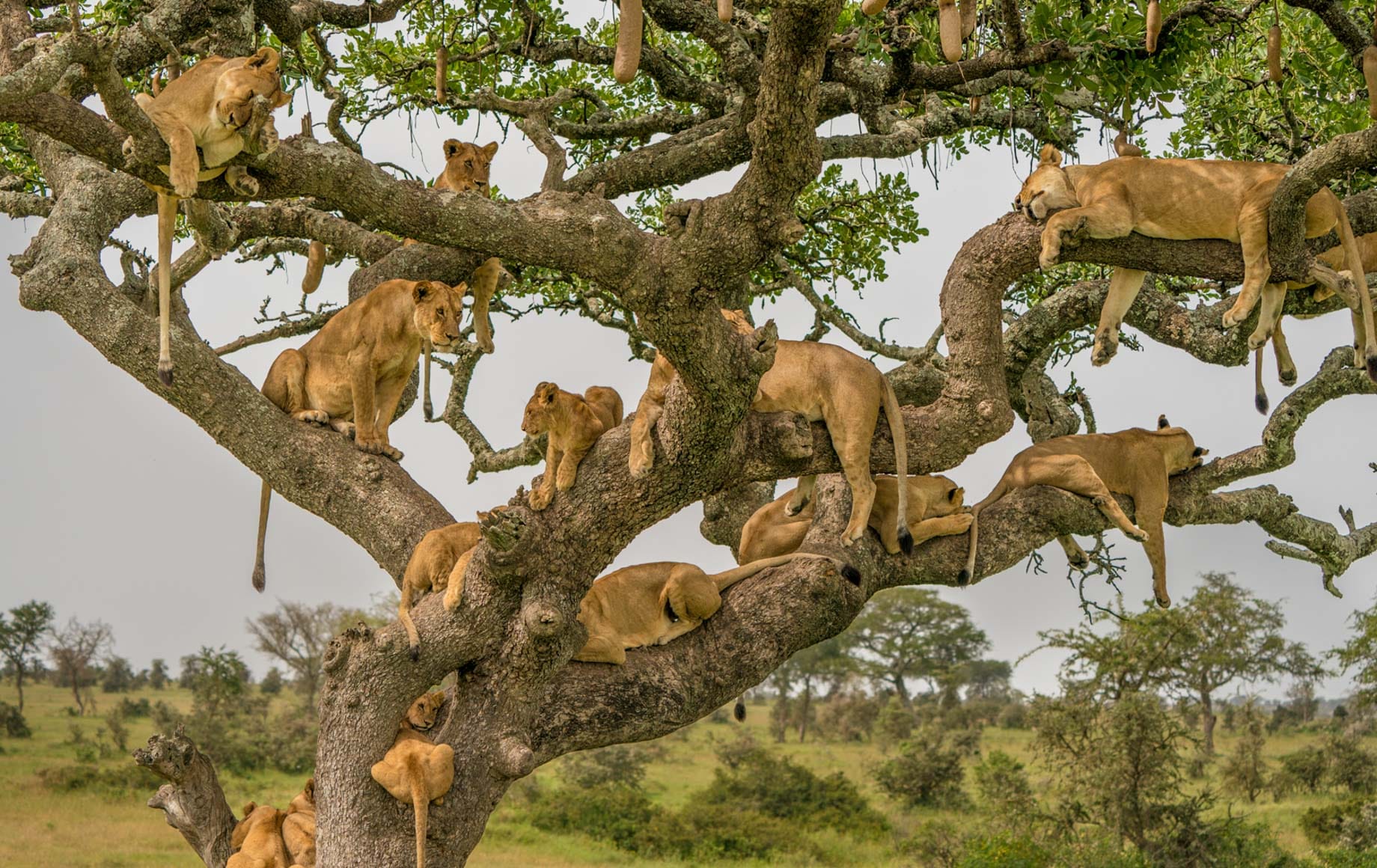
Congo & Kenya Safari Packages
A Congo and Kenya Safari combines the extraordinary primate experiences of Central Africa with Kenya’s legendary wildlife reserves, dramatic landscapes, and rich cultural heritage. This itinerary offers travelers the opportunity to enjoy some of the continent’s most iconic safari experiences within one carefully planned journey.
The adventure often begins with gorilla trekking in Congo before continuing to Kenya’s renowned national parks and reserves, including the Maasai Mara National Reserve, Amboseli National Park, Lake Nakuru National Park, Samburu National Reserve, and Tsavo National Parks.
This combination allows visitors to experience remarkable contrasts in scenery and wildlife. Congo offers dense rainforest, volcanoes, rare primates, and untouched wilderness, while Kenya showcases sweeping savannahs, vast herds of plains game, the Big Five, dramatic sunsets, and breathtaking views of Mount Kilimanjaro from Amboseli.
Cultural experiences also play an important role in this itinerary. Travelers can meet local communities in Congo before visiting Maasai villages in Kenya, gaining valuable insight into the traditions, lifestyles, music, crafts, and conservation efforts of two very different regions of Africa.
For photographers, this safari provides exceptional opportunities to capture both intimate rainforest wildlife and classic African safari scenes featuring elephants, lions, giraffes, zebras, cheetahs, and migrating wildebeest.
Luxury travelers often choose private fly-in itineraries combining Congo with Kenya’s exclusive safari camps, while mid-range and budget travelers enjoy carefully planned overland and regional flight combinations.
The Congo and Kenya Safari is ideal for visitors seeking the perfect blend of adventure, wildlife diversity, luxury, culture, and unforgettable African landscapes. It delivers a comprehensive safari experience that showcases the very best of both Central and East Africa while creating memories that last a lifetime.
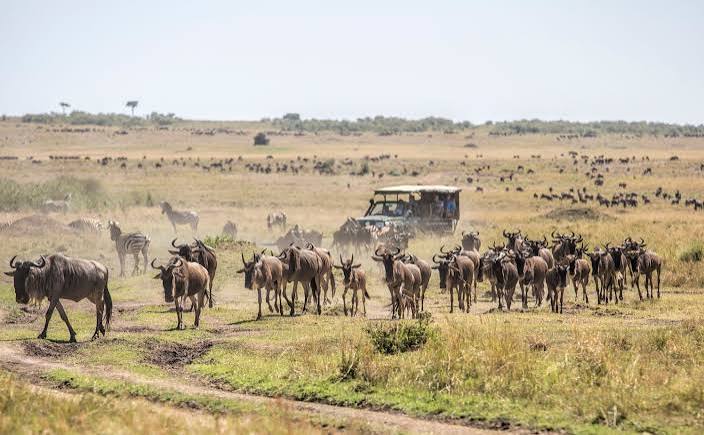
Best Things to Do on a Congo Safari
A safari in the Democratic Republic of Congo is unlike any other wildlife adventure in Africa. While many safari destinations focus primarily on traditional game drives across open plains, Congo offers a far more diverse range of experiences that combine wildlife encounters, rainforest exploration, volcanic adventures, conservation tourism, river expeditions, birdwatching, cultural immersion, and breathtaking photography opportunities.
As home to the second-largest tropical rainforest on Earth, Congo provides visitors with access to ecosystems that remain largely untouched by mass tourism. Every activity offers a deeper understanding of one of the planet’s richest biodiversity hotspots while directly supporting wildlife conservation and local communities.
Whether you are an adventure traveler seeking active volcanoes, a wildlife enthusiast searching for endangered primates, a photographer looking for extraordinary images, or a nature lover wanting to explore ancient rainforests, Congo offers experiences found nowhere else in Africa.
Below are the most rewarding things to do on a Congo safari between 2027 and 2030.
Gorilla Trekking
Gorilla trekking is the signature wildlife experience in the Democratic Republic of Congo and remains one of the greatest wildlife encounters anywhere on Earth. Walking through ancient rainforest before coming face-to-face with a family of wild gorillas is an emotional experience that leaves a lasting impression on every visitor.
Accompanied by experienced park rangers and trackers, visitors hike through dense rainforest following fresh gorilla trails until they locate one of the habituated gorilla families. The trek itself is an adventure, taking visitors through towering forests filled with birds, butterflies, orchids, giant ferns, and countless rainforest species.
Upon finding the gorillas, visitors spend one unforgettable hour quietly observing the family as they feed, groom one another, care for infants, and interact naturally within their forest home. The opportunity to observe these intelligent primates at such close range is both humbling and inspiring.
Every gorilla permit purchased contributes directly to conservation, funding ranger patrols, habitat protection, veterinary care, scientific research, and community development initiatives that help safeguard the future of these endangered animals.
For many travelers, gorilla trekking alone is reason enough to visit Congo.
Lowland Gorilla Trekking
Eastern lowland gorilla trekking is one of Congo’s most unique wildlife experiences and cannot be replicated in Uganda or Rwanda. Conducted primarily in Kahuzi-Biega National Park, this activity introduces visitors to Grauer’s gorillas, the largest gorilla subspecies in the world.
Unlike mountain gorillas that inhabit high-altitude forests, eastern lowland gorillas live within vast tropical rainforests filled with enormous trees, tangled vines, rivers, and exceptional biodiversity. Their larger body size, longer arms, and distinctive appearance create a fascinating contrast with mountain gorillas.
The trekking experience follows experienced trackers through dense rainforest where visitors may also encounter monkeys, forest birds, butterflies, medicinal plants, and countless rainforest species before locating the gorillas.
Because relatively few tourists undertake eastern lowland gorilla trekking, the experience feels exceptionally exclusive. Visitors often enjoy quieter forests, smaller trekking groups, and a genuine sense of exploration within one of Africa’s least-visited protected areas.
For wildlife enthusiasts seeking a truly rare primate encounter, lowland gorilla trekking represents one of the highlights of any Congo safari.
Nyiragongo Volcano Hike
The hike to Mount Nyiragongo has long been regarded as one of Africa’s greatest adventure experiences. Rising approximately 3,470 meters above sea level, the volcano is famous for its spectacular lava lake and dramatic volcanic scenery.
The trek takes hikers through changing ecosystems that include tropical rainforest, bamboo forests, volcanic rock fields, alpine vegetation, and lava landscapes. Along the route, guides explain the volcano’s geological history, previous eruptions, local ecology, and the remarkable landscapes that define the Virunga Mountains.
Upon reaching the summit, hikers are rewarded with breathtaking views across eastern Congo and an unforgettable sight of the glowing lava lake deep within the volcanic crater. Spending the night near the summit has historically been one of the most memorable experiences available in Central Africa.
Because access has been affected by volcanic activity and regional security conditions in recent years, travelers planning this activity between 2027 and 2030 should always verify current operational status before booking.
When available, the Nyiragongo hike perfectly complements gorilla trekking and creates one of Africa’s most exciting adventure safaris.
Chimpanzee Tracking
Chimpanzee tracking offers visitors the opportunity to observe humanity’s closest living relatives within the forests of the Congo Basin. These highly intelligent primates are known for their complex social structures, remarkable communication, tool use, and energetic behavior.
Guided by experienced trackers, visitors search for chimpanzee communities by following fresh nests, feeding sites, footprints, broken branches, and distinctive vocalizations echoing through the rainforest.
Unlike gorillas, chimpanzees are constantly moving, climbing trees, feeding, playing, and interacting with one another. Their active lifestyle creates an exciting wildlife experience filled with constant movement and fascinating behavior.
Watching chimpanzees use tools, groom companions, care for infants, and communicate through expressive gestures provides remarkable insight into human evolution and the close relationship shared between humans and great apes.
Chimpanzee tracking also supports important conservation programs dedicated to protecting one of Africa’s most endangered primates.
Bonobo Tracking
Bonobos are among the world’s rarest great apes and are found naturally only in the Democratic Republic of Congo. Observing these remarkable primates is one of the country’s most exclusive wildlife experiences.
Bonobos are celebrated for their peaceful social structure, strong female leadership, cooperative behavior, and remarkable intelligence. Scientists continue to study them because of the valuable insights they provide into human evolution and social relationships.
Depending on itinerary and conservation access, visitors may learn about bonobos through sanctuary visits, conservation centers, or specialized rainforest expeditions led by researchers and conservation teams.
During these experiences, travelers gain an understanding of bonobo ecology, feeding behavior, communication, reproduction, habitat conservation, and the challenges posed by habitat loss and illegal wildlife trade.
Bonobo tracking and conservation experiences remain among the rarest wildlife activities available anywhere in the world.
Wildlife Game Drives
Although Congo is famous for its rainforests and great apes, several national parks also provide rewarding wildlife game drives across open savannahs, woodland, wetlands, and river valleys.
Garamba National Park offers opportunities to observe elephants, giraffes, buffaloes, antelopes, warthogs, lions, leopards, and numerous smaller mammals within expansive savannah landscapes. Other protected areas such as Upemba also support a variety of grassland wildlife.
Game drives are typically conducted during the early morning and late afternoon when wildlife is most active. Professional guides interpret animal behavior while helping visitors locate species that may otherwise remain hidden.
The combination of rainforest exploration and traditional game drives makes Congo one of Africa’s most diverse safari destinations.
Bird Watching
With more than 1,000 recorded bird species, Congo ranks among Africa’s finest birdwatching destinations. The country’s rainforests, wetlands, lakes, mountains, rivers, and savannahs support an extraordinary diversity of resident and migratory birds.
Birdwatchers search for Congo peafowl, Grauer’s broadbill, Rockefeller’s sunbird, hornbills, turacos, bee-eaters, kingfishers, weavers, parrots, owls, raptors, and many Albertine Rift endemic species.
Guided birding excursions begin early each morning when bird activity reaches its peak. Experienced bird guides assist visitors in identifying species through visual observation, calls, and behavior while explaining habitat preferences and conservation status.
Whether exploring rainforest trails or cruising along wetlands, birdwatching provides rewarding opportunities for both beginner and experienced birders.
Boat Excursions
Congo’s rivers and lakes provide exceptional opportunities for relaxing and scenic boat excursions that reveal wildlife from an entirely different perspective.
The mighty Congo River, Lake Kivu, Lake Edward, and numerous smaller waterways support hippos, crocodiles, waterbirds, monkeys, otters, fish, and vibrant riverside communities. Quiet boat rides allow visitors to observe wildlife with minimal disturbance while enjoying spectacular views of surrounding forests and mountains.
Boat excursions are particularly rewarding during sunrise and sunset when wildlife becomes more active and lighting conditions create beautiful photographic opportunities.
Some river journeys also include visits to traditional fishing villages where travelers learn about local livelihoods, culture, and the importance of waterways within everyday Congolese life.
Community Visits
Community visits allow travelers to discover the rich cultural heritage of the Democratic Republic of Congo while supporting sustainable tourism and local livelihoods.
Visitors have opportunities to meet local families, farmers, artisans, musicians, dancers, coffee producers, and conservation partners who share their traditions, history, crafts, agriculture, music, and daily life.
Many communities living near national parks actively participate in conservation by protecting wildlife, reducing human-wildlife conflict, and developing sustainable tourism enterprises that generate alternative income.
Community experiences often include traditional dance performances, handicraft demonstrations, cooking experiences, storytelling, coffee processing, basket weaving, cultural museums, and visits to schools or community projects.
These encounters create meaningful connections between visitors and local people while ensuring tourism directly benefits surrounding communities.
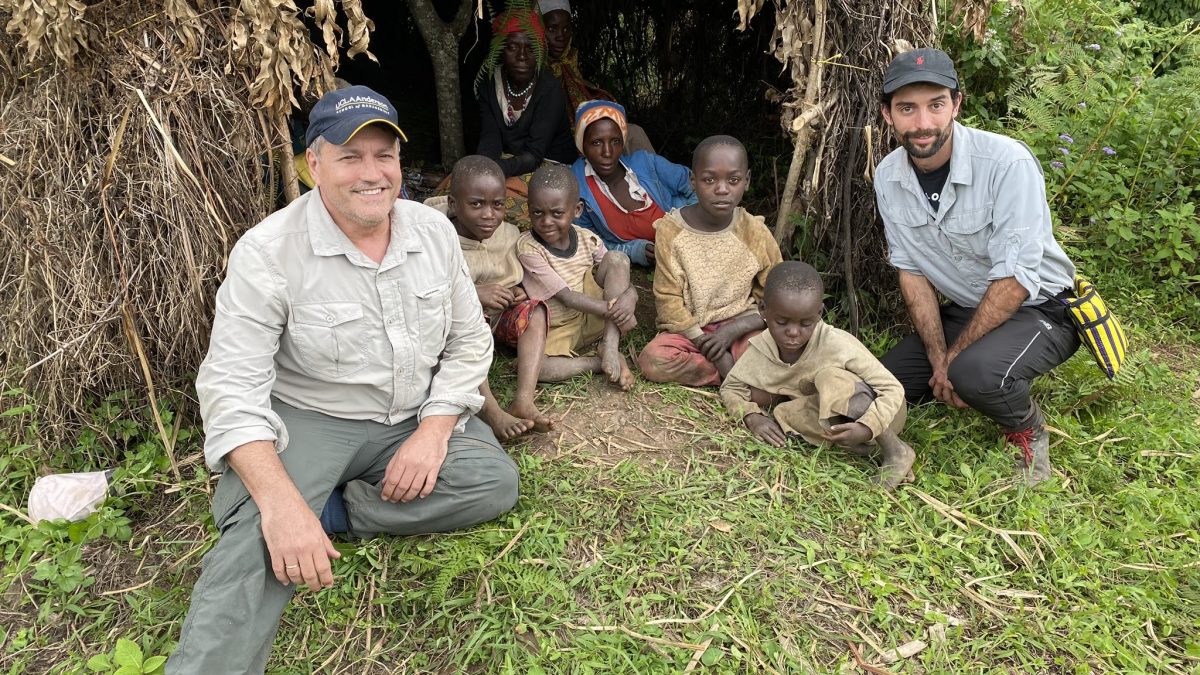
Forest Walks
Forest walks provide one of the most immersive ways to experience the extraordinary biodiversity of the Congo Basin.
Guided by experienced naturalists, visitors explore rainforest trails while learning about medicinal plants, giant trees, orchids, fungi, butterflies, insects, reptiles, birds, monkeys, and countless smaller species often overlooked during traditional wildlife safaris.
Unlike fast-paced wildlife viewing, forest walks encourage visitors to slow down and appreciate the intricate ecological relationships that sustain one of the world’s oldest tropical forests.
Every trail reveals fascinating discoveries, from colorful fungi growing on fallen trees to animal tracks, bird nests, forest sounds, and rare plant species used for generations by local communities.
Forest walks are suitable for nature lovers, photographers, botanists, birdwatchers, and anyone wishing to experience the rainforest beyond gorilla trekking.
Photography
Congo is one of Africa’s most rewarding destinations for wildlife and nature photography. Its dramatic landscapes, rare wildlife, vibrant cultures, volcanic scenery, and ancient rainforests provide endless opportunities for capturing extraordinary images.
Photographers can document intimate gorilla encounters, eastern lowland gorillas, chimpanzees, bonobos, colorful birds, butterflies, forest elephants, rivers, waterfalls, volcanoes, mist-covered mountains, tropical forests, and authentic cultural experiences.
The constantly changing light within the rainforest creates unique photographic challenges while rewarding patience with stunning compositions filled with atmosphere and emotion. Sunrise, sunset, mist, rainfall, and filtered forest light combine to create spectacular visual effects rarely found in other safari destinations.
Professional photography safaris often include flexible schedules, extended wildlife viewing, private guides familiar with photographic requirements, and carefully selected locations that maximize opportunities for exceptional images.
Whether using a smartphone or professional camera equipment, every traveler returns from Congo with unforgettable photographs documenting one of Africa’s last great wilderness frontiers and the remarkable wildlife that calls it home.
Animals You Can See in Congo
The Democratic Republic of Congo is one of the world’s greatest wildlife destinations, protecting an extraordinary diversity of animals across the vast Congo Basin rainforest, volcanic mountains, wetlands, rivers, savannahs, and alpine ecosystems. Home to some of Africa’s rarest and most endangered species, Congo offers wildlife encounters that are unlike anywhere else on the continent.
Unlike the classic safari destinations of East Africa, where wildlife is concentrated on open plains, Congo’s animals inhabit dense tropical forests and remote wilderness areas. This creates a more adventurous safari experience where visitors actively explore rainforests, mountain trails, rivers, and wetlands in search of wildlife. Every trek, boat excursion, forest walk, or game drive becomes a journey of discovery through one of Earth’s richest biodiversity hotspots.
The country supports more than 400 mammal species, over 1,000 bird species, hundreds of reptiles and amphibians, thousands of butterflies, and an incredible diversity of insects and plants. Several of these species occur nowhere else on Earth, making Congo one of Africa’s most important destinations for wildlife enthusiasts, photographers, birdwatchers, researchers, and conservation travelers.
Below are some of the remarkable animals you may encounter during a Congo safari.
Mountain Gorillas
Mountain gorillas are Congo’s most famous wildlife attraction and one of the world’s most endangered great apes. Living within the mist-covered forests of the Virunga Mountains, these magnificent primates have become a global symbol of wildlife conservation and ecotourism.
Mountain gorillas live in stable family groups led by a dominant silverback, who protects the group, resolves conflicts, and guides daily activities. A typical family also includes several adult females, juveniles, infants, and younger males. Watching these close-knit families interact naturally is one of the most emotional wildlife experiences available anywhere in the world.
Adult males can weigh over 180 kilograms and are easily recognized by the silver hair covering their backs, which develops as they mature. Despite their immense strength, mountain gorillas are remarkably gentle animals that spend much of their day feeding on leaves, bamboo shoots, stems, roots, and wild fruits.
Visitors encounter mountain gorillas through guided trekking experiences that allow one carefully regulated hour with a habituated family. During this time, travelers witness grooming, feeding, infant care, playful behavior, and the remarkable intelligence that closely connects gorillas with humans.
Mountain gorilla tourism has become one of Africa’s greatest conservation success stories, generating essential funding for ranger patrols, veterinary care, habitat protection, scientific research, and community development while helping to stabilize wild gorilla populations.
Eastern Lowland Gorillas
Eastern lowland gorillas, also known as Grauer’s gorillas, are found almost exclusively in the eastern rainforests of the Democratic Republic of Congo. They are the largest gorilla subspecies in the world and one of Africa’s rarest primates.
Unlike mountain gorillas, eastern lowland gorillas inhabit lower-elevation tropical rainforests characterized by towering hardwood trees, dense vegetation, rivers, and abundant plant life. Their longer arms, broader chests, larger hands, and shorter body hair distinguish them from their mountain relatives.
Kahuzi-Biega National Park provides the best opportunity to observe these magnificent animals in their natural habitat. Trekking through ancient rainforest before meeting a family of eastern lowland gorillas is one of Congo’s most exclusive wildlife experiences.
Grauer’s gorillas are highly intelligent, peaceful, and social animals that spend much of their day feeding on leaves, fruits, bark, stems, and forest vegetation while maintaining strong family relationships led by an experienced silverback.
Because relatively few visitors travel to Kahuzi-Biega, encounters with eastern lowland gorillas often feel more intimate and less crowded than gorilla experiences elsewhere in Africa.
Chimpanzees
Chimpanzees are among Congo’s most intelligent and fascinating wildlife species. Sharing approximately 98 percent of their DNA with humans, these remarkable primates display complex emotions, advanced communication, tool use, and sophisticated social structures that continue to intrigue scientists worldwide.
Chimpanzees inhabit several of Congo’s protected forests, where they live in large communities that constantly change as individuals join and leave different feeding groups. Their energetic lifestyle contrasts sharply with the calmer behavior of gorillas.
Visitors may observe chimpanzees climbing trees, searching for fruit, grooming companions, constructing nests, hunting small mammals, caring for infants, and communicating through loud vocalizations that echo across the rainforest.
Their curiosity, intelligence, and playful behavior make chimpanzees one of the most captivating animals encountered during a Congo safari.
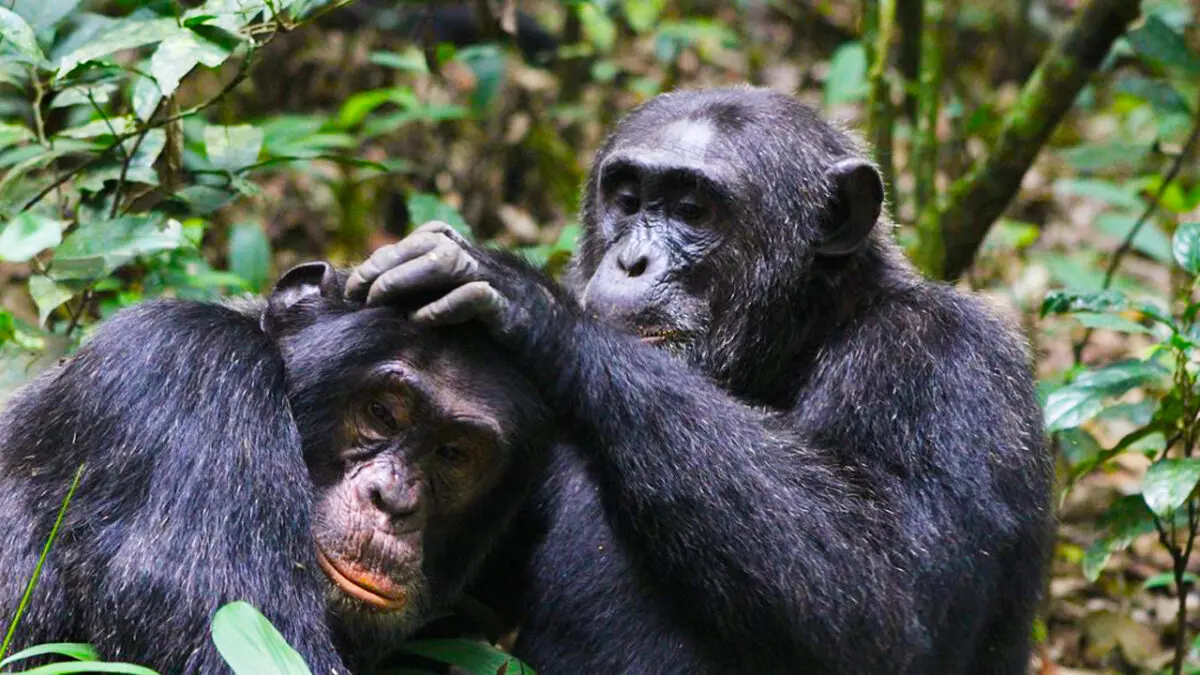
Bonobos
Bonobos are among the world’s rarest great apes and are found naturally only within the Democratic Republic of Congo. Their restricted distribution makes Congo the only destination where travelers can experience these extraordinary primates in their native habitat.
Often called the “forgotten ape,” bonobos are renowned for their peaceful society, female-led social groups, remarkable intelligence, and close family relationships. They rely heavily on cooperation and social interaction to maintain harmony within their communities.
Bonobos primarily inhabit the central Congo Basin rainforests, where they feed on fruits, leaves, flowers, seeds, insects, and other forest resources. Their graceful movements, expressive faces, and gentle interactions create unforgettable wildlife encounters.
Observing bonobos provides valuable insight into primate evolution and offers visitors a rare opportunity to appreciate one of humanity’s closest living relatives while supporting critical conservation efforts dedicated to protecting their fragile populations.
Forest Elephants
Forest elephants are one of Congo’s most elusive and important mammals. Smaller than their savannah relatives, they have straighter tusks, rounded ears, and compact bodies perfectly adapted for moving through dense tropical rainforest.
These gentle giants play a crucial ecological role by dispersing seeds, opening forest pathways, and maintaining healthy rainforest ecosystems. Many tree species depend on forest elephants for successful seed distribution, making them essential engineers of the Congo Basin.
Forest elephants inhabit protected areas such as Salonga National Park, Okapi Wildlife Reserve, Lomami National Park, Maiko National Park, and other remote forests.
Although sightings are less common than on open savannahs, encountering a forest elephant within the rainforest is one of the most rewarding wildlife experiences available in Central Africa.
Forest Buffalo
Forest buffalo are another remarkable rainforest species commonly encountered within Congo’s protected areas. Considerably smaller and darker than the Cape buffalo found across East and Southern Africa, forest buffalo possess reddish-brown coats, shorter horns, and compact bodies adapted to forest environments.
These buffalo inhabit dense forests, swampy areas, forest clearings, and river valleys where they graze on grasses, leaves, shrubs, and aquatic vegetation.
Although generally shy and difficult to observe, forest buffalo occasionally emerge into forest clearings, providing exciting viewing opportunities for patient wildlife enthusiasts.
Their presence contributes significantly to the ecological balance of Congo’s rainforest ecosystems.
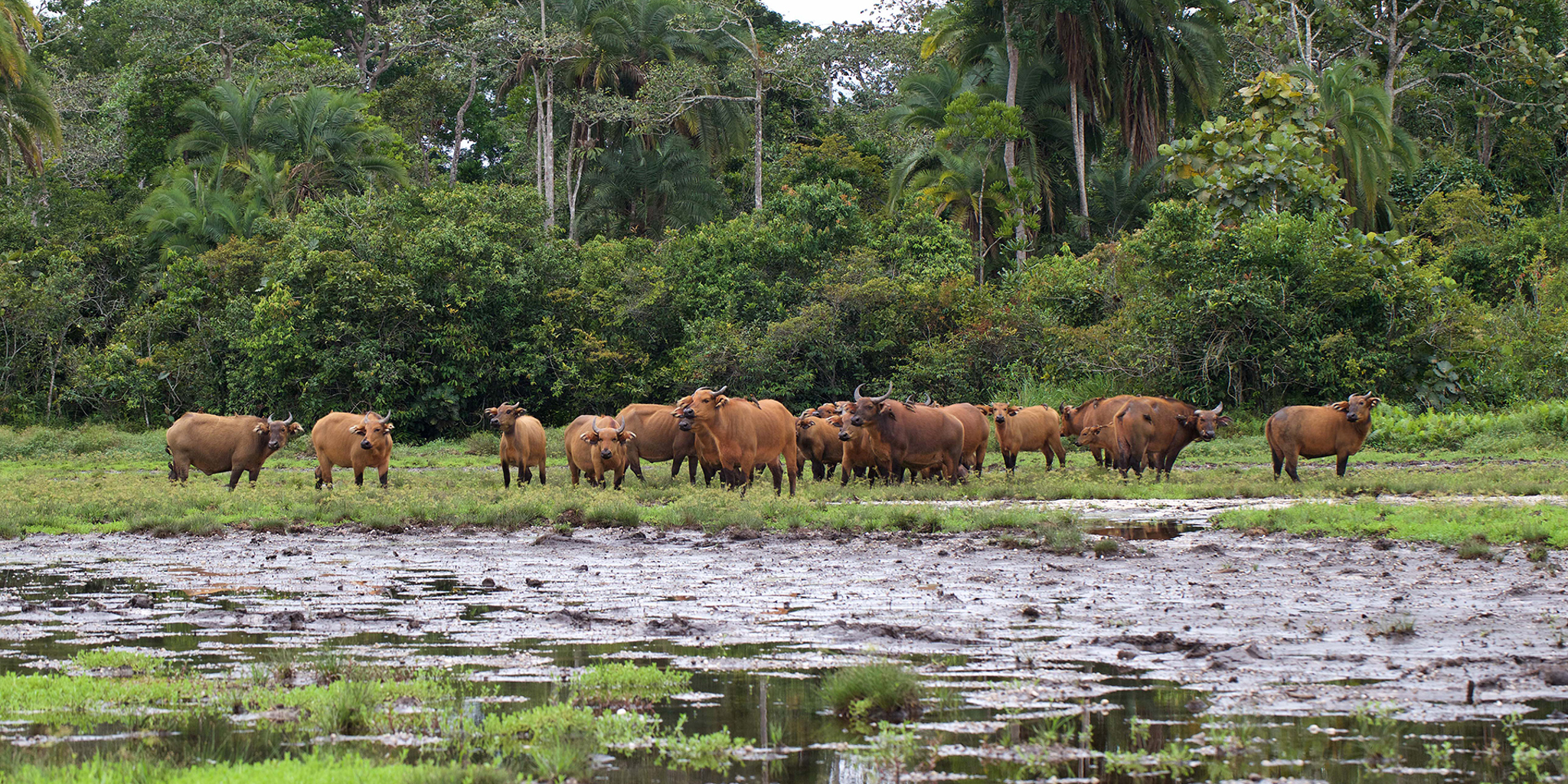
Okapi
The okapi is perhaps Congo’s most unique and mysterious mammal. Found nowhere else in the wild, this remarkable animal inhabits the dense Ituri Forest and other parts of northeastern Congo.
Often described as the “forest giraffe,” the okapi is closely related to the giraffe despite its striking zebra-like striped legs. Its velvety chocolate-colored body, elongated neck, large ears, and long prehensile tongue make it one of Africa’s most distinctive mammals.
Okapis are solitary and highly secretive, spending much of their lives hidden within dense rainforest vegetation where they browse on leaves, fruits, shoots, fungi, and forest plants.
Because of their elusive nature, seeing an okapi in the wild is considered one of Africa’s greatest wildlife privileges.
The Okapi Wildlife Reserve plays a vital role in protecting this endangered species while supporting scientific research and conservation education.
Bongo
The bongo is Africa’s largest forest antelope and one of the most beautiful mammals inhabiting Congo’s rainforests. Easily recognized by its rich chestnut coat marked with narrow white vertical stripes, the bongo is perfectly camouflaged within dense tropical vegetation.
Both males and females possess elegant spiral horns that may exceed one meter in length. Their exceptional hearing and cautious behavior help them avoid predators while navigating the rainforest.
Bongos are primarily nocturnal or active during early morning and evening hours. They feed on leaves, fruits, bark, grasses, vines, and herbs while moving quietly through dense forest habitats.
Because they are naturally shy and inhabit remote forests, sightings remain relatively rare, making every encounter especially memorable for wildlife enthusiasts.
Hippopotamus
Hippopotamuses inhabit many of Congo’s rivers, lakes, and wetlands, including sections of the Congo River, Lake Edward, and Garamba National Park. These massive semi-aquatic mammals spend much of the day submerged in water to regulate their body temperature before emerging at night to graze on grasses.
Despite their seemingly peaceful appearance, hippos are among Africa’s most powerful and territorial animals. Visitors observe them safely from boats or designated viewing areas while learning about their ecological importance within freshwater ecosystems.
Hippos create channels through wetlands, transport nutrients between aquatic and terrestrial habitats, and support numerous fish and bird species, making them an important component of Congo’s river ecosystems.
Crocodiles
Several crocodile species inhabit Congo’s rivers, lakes, swamps, and wetlands, including the Nile crocodile and African slender-snouted crocodile in suitable habitats.
These ancient reptiles have survived for millions of years and remain among Africa’s most effective aquatic predators. They play an essential ecological role by maintaining healthy fish populations and supporting balanced freshwater ecosystems.
Boat excursions along the Congo River and other waterways often provide opportunities to observe crocodiles basking on riverbanks or silently waiting beneath the water’s surface.
Their incredible patience, camouflage, and hunting techniques make them fascinating subjects for wildlife observation and photography.
Antelope Species
The Democratic Republic of Congo supports an impressive diversity of antelope species adapted to both rainforest and savannah ecosystems. Unlike East Africa’s large grazing herds, many of Congo’s antelopes inhabit dense forests where camouflage and cautious behavior provide protection from predators.
Species found throughout the country include bongo, sitatunga, bushbuck, waterbuck, kob, hartebeest, reedbuck, duikers, blue duiker, yellow-backed duiker, bay duiker, and several other forest antelope species.
Each species occupies its own ecological niche, feeding on grasses, fruits, leaves, herbs, and forest vegetation while contributing to seed dispersal and vegetation management.
For wildlife enthusiasts, spotting Congo’s elusive forest antelopes requires patience, skilled guides, and careful observation, making every sighting especially rewarding.
Primates
Beyond gorillas, chimpanzees, and bonobos, Congo supports one of Africa’s richest concentrations of primate species. More than twenty monkey species inhabit the country’s forests, wetlands, mountains, and river systems, creating endless opportunities for primate observation.
Visitors may encounter black-and-white colobus monkeys, blue monkeys, red-tailed monkeys, De Brazza’s monkeys, L’Hoest’s monkeys, owl-faced monkeys, Wolf’s monkeys, Allen’s swamp monkeys, crowned monkeys, mangabeys, vervet monkeys, and the rare lesula monkey.
These primates display remarkable diversity in appearance, diet, behavior, and habitat preferences. Some live high within the forest canopy while others forage on the ground or along rivers.
Observing multiple primate species during a single forest walk highlights Congo’s extraordinary biodiversity and reinforces its reputation as one of the world’s premier primate destinations.
Bird Species
The Democratic Republic of Congo is one of Africa’s most important birding destinations, supporting more than 1,000 recorded bird species across an astonishing variety of habitats. The country’s position within the Congo Basin and the Albertine Rift creates ideal conditions for both widespread African birds and highly localized endemic species.
Among the most sought-after birds are the Congo peafowl, Grauer’s broadbill, Rockefeller’s sunbird, African green broadbill, Ruwenzori turaco, Shelley’s crimsonwing, yellow-crested helmetshrike, dwarf honeyguide, handsome francolin, hornbills, bee-eaters, kingfishers, parrots, barbets, turacos, weavers, raptors, owls, and numerous colorful forest specialists.
Birdlife can be enjoyed throughout the country, from the misty mountains of the Albertine Rift and the rainforests of Kahuzi-Biega and Okapi Wildlife Reserve to the wetlands of Upemba, the savannahs of Garamba, and the waterways of the Congo River Basin.
Whether you are an experienced ornithologist or simply enjoy observing wildlife, Congo offers exceptional birdwatching opportunities throughout the year. Every forest walk, boat excursion, or game drive presents the chance to discover species that are rarely seen elsewhere in Africa, making birding an unforgettable highlight of any Congo safari.
Best Time for Congo Safari Packages
The Democratic Republic of Congo can be visited throughout the year, but the best time for a safari depends on the activities you plan to enjoy and the regions you intend to explore. Thanks to its equatorial climate, Congo experiences warm temperatures year-round, with alternating dry and rainy seasons rather than the four distinct seasons found in temperate countries.
For most travelers, the dry seasons provide the best conditions for gorilla trekking, rainforest hiking, birdwatching, wildlife viewing, and photography because trails are generally less muddy, river crossings are easier, and visibility within the forests improves. However, the rainy seasons transform the Congo Basin into a lush green paradise, offering spectacular scenery, abundant birdlife, fewer tourists, and excellent photographic opportunities.
Because Congo’s diverse landscapes range from tropical lowland rainforest and volcanic mountains to savannahs and wetlands, weather conditions may vary between regions. A well-planned safari considers both seasonal climate and the specific destinations included in your itinerary.
Whether you travel during the dry or wet season, Congo offers unforgettable wildlife experiences throughout the year, especially for gorilla trekking, primate safaris, birdwatching, and rainforest exploration.
Dry Season
The dry seasons are generally considered the best time for most Congo safari activities. The principal dry periods typically occur from June to September and December to February, although rainfall can still occur because of the country’s equatorial climate.
During these months, rainforest trails become firmer, making gorilla trekking, chimpanzee tracking, forest walks, and volcano hikes more comfortable. Reduced vegetation also improves visibility, increasing opportunities to photograph wildlife.
Road travel between destinations is generally easier during the dry season, especially in remote regions where heavy rains can make roads difficult to navigate. River levels also become more predictable, improving access to certain national parks and allowing smoother boat excursions.
The dry season is particularly recommended for:
- Mountain gorilla trekking
- Eastern lowland gorilla trekking
- Chimpanzee tracking
- Bird photography
- Nyiragongo hiking (when officially accessible)
- Wildlife photography
- Multi-country safaris
Because these months coincide with international holiday periods, they are also the busiest travel seasons. Gorilla permits, accommodation, and experienced guides should therefore be reserved well in advance.
Wet Season
The rainy seasons usually occur between March and May and October to November, bringing regular rainfall that transforms Congo’s forests into exceptionally lush landscapes.
Although some travelers avoid the rainy season, it offers several advantages. The rainforest becomes vibrant and incredibly scenic, waterfalls flow at their fullest, flowering plants bloom, and bird activity reaches its peak as many species begin breeding.
Wildlife remains active throughout the year because rainforest ecosystems provide food continuously. Gorilla trekking is still conducted during the rainy season, although trails may become muddy and hiking can require greater physical effort.
The wet season also provides opportunities for:
- Fewer visitors at trekking sites
- Better availability of accommodation
- Potential seasonal promotions from some lodges and operators
- Exceptional rainforest photography
- Peak butterfly activity
- Excellent birdwatching
- Beautiful green landscapes
Travelers choosing the rainy season should pack waterproof hiking boots, rain jackets, waterproof backpacks, gaiters, and quick-drying clothing.
For photographers, the soft lighting, mist-covered forests, and dramatic cloud formations often produce some of the most spectacular images of the year.
Monthly Safari Guide (January–December)
January
January falls within one of Congo’s drier travel periods and offers excellent conditions for gorilla trekking, chimpanzee tracking, birdwatching, and rainforest exploration. The trails are generally more accessible, making it one of the most popular months for wildlife safaris.
February
February continues to provide favorable trekking conditions with relatively dry weather across many safari regions. Wildlife viewing, photography, and cultural tours remain highly enjoyable before heavier rains begin.
March
March marks the beginning of one of the rainy seasons. Rainfall becomes more frequent, forests become greener, and bird activity increases significantly. Gorilla trekking continues throughout the month but hikers should expect muddier trails.
April
April is usually among the wettest months of the year. Heavy rainfall creates spectacular rainforest scenery, abundant waterfalls, and excellent opportunities for birdwatching and botanical exploration. Wildlife remains active despite wetter conditions.
May
Rainfall gradually decreases toward the end of May, improving trekking conditions. Forests remain beautifully green while visitor numbers are generally lower than during the peak dry season.
June
June marks the beginning of the principal dry season and is considered one of the best months to visit Congo. Gorilla trekking, forest walks, photography, and wildlife viewing all benefit from improved trail conditions.
July
July offers some of the year’s finest safari conditions. Clearer weather, comfortable temperatures, and good road accessibility make it ideal for longer safari itineraries and cross-border adventures.
August
August remains one of the busiest travel months. Excellent trekking conditions, beautiful scenery, and outstanding wildlife viewing attract visitors from around the world.
September
September continues the dry season while offering exceptional opportunities for gorilla trekking, birdwatching, photography, and rainforest exploration before seasonal rains gradually return.
October
October introduces another rainy period. Although showers become more frequent, wildlife experiences continue throughout the month. The forests become increasingly vibrant and colorful.
November
November is characterized by lush vegetation, excellent bird activity, and dramatic rainforest scenery. It is an attractive month for photographers and birdwatchers who prefer quieter travel periods.
December
December marks the return of drier conditions in many regions and coincides with the international holiday season. Gorilla trekking, wildlife safaris, and cross-border itineraries become especially popular during Christmas and New Year, making early reservations essential.
Congo Safari Costs 2027–2030
The cost of a Congo safari depends on several factors, including the length of the itinerary, accommodation category, transportation, gorilla permits, domestic flights, group size, and the national parks visited. Congo remains one of Africa’s most adventurous safari destinations, and prices vary significantly depending on whether travelers choose budget, mid-range, luxury, or fully customized private safaris.
A short gorilla trekking safari generally costs considerably less than an extended expedition covering multiple national parks or combining Congo with Rwanda, Uganda, Tanzania, or Kenya.
Although Congo is often associated with affordable gorilla permits compared to neighboring countries, the overall safari budget should also include accommodation, transport, visas, meals, guides, porter services, travel insurance, and optional activities.
The following estimates provide a useful guide for planning Congo safaris between 2027 and 2030. Actual prices may change depending on exchange rates, park regulations, conservation fees, seasonal demand, and supplier pricing.
Budget Safari Costs
Budget Congo Safari Packages generally range between US$1,200 and US$2,000 per person for a two- to five-day safari, depending on the itinerary and inclusions.
Budget safaris typically include:
- Budget guesthouses or simple lodges
- Shared transportation
- Professional guide
- Park entry where applicable
- Meals
- Basic airport transfers
These packages are ideal for backpackers, students, solo travelers, and visitors looking for an affordable introduction to Congo’s wildlife.
Mid-Range Safari Costs
Mid-range Congo safaris usually cost between US$2,200 and US$4,500 per person depending on safari duration and destinations visited.
Typical inclusions are:
- Comfortable safari lodges
- Private 4×4 safari vehicle
- Experienced driver-guide
- Meals
- Park fees
- Airport transfers
- Selected activities
Mid-range safaris provide an excellent balance between comfort, value, and wildlife experiences.
Luxury Safari Costs
Luxury Congo Safari Packages generally begin around US$4,500 per person and can exceed US$10,000 for extended or fly-in expeditions.
Luxury packages often include:
- Premium safari lodges
- Private transfers
- Charter flights where available
- Luxury accommodation
- Exclusive guiding
- Personalized itineraries
- Fine dining
- VIP airport services
- Customized wildlife experiences
These safaris are particularly popular among honeymooners, photographers, documentary teams, and travelers seeking maximum comfort.
Gorilla Permit Costs
A gorilla permit is the largest single fixed cost for most Congo safaris. For planning purposes, travelers should budget approximately US$400 per person for a standard Congo gorilla trekking permit, although official fees may be revised by the relevant authorities before travel. In some years, promotional low-season pricing has also been offered, but availability is not guaranteed.
Because permit prices and park operations can change, especially for travel planned several years ahead, visitors should always confirm the latest official permit fees before booking.
Park Fees
In addition to gorilla permits, some safari activities require separate park entrance fees, conservation fees, or activity charges depending on the destination and itinerary.
These may include:
- National park entrance fees
- Conservation levies
- Activity permits
- Camping fees
- Vehicle entry fees
- Ranger fees
Many all-inclusive safari packages include these charges, making budgeting much easier.
Transport Costs
Transportation represents a significant component of every Congo safari because of the country’s size and varying infrastructure.
Travel costs may include:
- Airport transfers
- Private 4×4 safari vehicles
- Fuel
- Driver services
- Domestic flights where available
- Charter aircraft
- Boat transfers
- Cross-border transfers
- Border assistance
Private transportation offers greater flexibility, while shared departures can reduce overall costs.
Accommodation Costs
Accommodation prices vary depending on location, comfort level, and season.
Typical nightly rates include:
- Budget accommodation: approximately US$40–150
- Mid-range lodges: approximately US$150–350
- Luxury lodges: US$350–1,000+
Many safari packages include full-board accommodation covering breakfast, lunch, dinner, and overnight stays.
Guide Fees
Professional safari guides play a vital role in ensuring a successful Congo safari. Their knowledge of wildlife, conservation, local cultures, languages, and rainforest navigation greatly enhances the overall experience.
Guide costs are often included within package prices. Private specialist guides, photography guides, birding experts, and multilingual guides may involve additional charges depending on the itinerary and level of specialization.
Porter Fees
Hiring a porter during gorilla trekking or challenging forest hikes is highly recommended. Porters assist with carrying backpacks, camera equipment, walking sticks, and personal belongings while providing valuable support on steep or muddy trails.
Beyond making the trek easier, employing a porter directly benefits local communities by creating sustainable employment opportunities around the national parks.
Although porter services are optional, they are affordable and widely regarded as one of the best ways to support conservation-linked community tourism while enhancing your trekking experience. Typical gratuities and porter fees vary by location, so it is advisable to carry cash for this service.
Congo Safari Accommodation
Accommodation plays a vital role in shaping your overall Congo safari experience. Although the Democratic Republic of Congo remains one of Africa’s most adventurous safari destinations, visitors can choose from a growing selection of luxury lodges, comfortable mid-range hotels, budget guesthouses, safari camps, and community-operated ecolodges located near the country’s major national parks and wildlife attractions.
The style of accommodation varies depending on the destination. Around Kahuzi-Biega National Park and Bukavu, visitors will find lakeside resorts, boutique lodges, and comfortable hotels overlooking Lake Kivu. In regions bordering Virunga, where tourism is officially operating, accommodation ranges from eco-lodges and safari camps to premium wilderness lodges. Throughout other parts of the country, accommodation focuses on providing authentic experiences close to nature while supporting local communities and conservation initiatives.
Most safari lodges are strategically located to minimize travel time to national parks, allowing guests to begin early morning wildlife activities with ease. Whether you choose luxury comfort or a simple forest camp, staying close to the wilderness allows you to fully experience the sounds, scenery, and atmosphere of the Congo Basin.
Selecting the right accommodation depends on your budget, travel style, preferred activities, and desired level of comfort. Every option offers a unique way to experience Congo’s remarkable landscapes while contributing to sustainable tourism and local economic development.
Luxury Lodges
Luxury lodges in Congo combine wilderness adventure with exceptional comfort and personalized service. Designed for travelers seeking premium experiences, these properties provide spacious suites, elegant interiors, fine dining, attentive hospitality, breathtaking scenery, and carefully curated safari experiences.
Many luxury lodges overlook Lake Kivu, tropical forests, or mountain landscapes, allowing guests to relax in spectacular natural surroundings after a day of gorilla trekking or rainforest exploration. Accommodation often includes private balconies, comfortable lounges, beautifully landscaped gardens, high-quality cuisine, Wi-Fi where available, laundry services, and wellness facilities at selected properties.
Luxury lodges frequently serve as ideal bases for gorilla trekking, birdwatching, photography, and cultural excursions. Their experienced staff assist with safari logistics, early breakfasts before trekking, packed lunches, and personalized services tailored to each guest.
These lodges are especially popular among honeymoon couples, photographers, families seeking comfort, luxury safari enthusiasts, and travelers celebrating special occasions.
Mid-Range Lodges
Mid-range lodges offer an excellent combination of comfort, affordability, and authentic safari hospitality. They are the preferred choice for many travelers because they provide comfortable accommodation, quality meals, private bathrooms, reliable service, and convenient locations without the premium prices associated with luxury properties.
Most mid-range lodges feature spacious guest rooms, restaurant facilities, beautiful gardens, scenic views, and friendly staff who understand the needs of safari travelers. Many are family-owned establishments that provide warm hospitality and personalized attention throughout your stay.
These lodges are ideally situated near major safari destinations such as Kahuzi-Biega National Park, Bukavu, and Lake Kivu, making them excellent bases for gorilla trekking, birdwatching, community visits, and rainforest walks.
Mid-range accommodation is particularly suitable for couples, families, solo travelers, and small groups seeking high-quality experiences while maintaining a reasonable travel budget.
Budget Lodges
Budget lodges provide clean, comfortable, and affordable accommodation for travelers exploring Congo on a limited budget. While they may offer fewer luxury amenities, they provide everything necessary for a pleasant safari experience, including comfortable beds, basic private or shared facilities depending on the property, local cuisine, and welcoming hospitality.
Many budget lodges are locally owned, allowing visitors to support community businesses while experiencing authentic Congolese hospitality. Guests often enjoy close interaction with local people and gain valuable cultural insights that larger hotels may not provide.
Budget accommodation is ideal for backpackers, students, solo travelers, conservation volunteers, photographers, and anyone wishing to maximize wildlife experiences while minimizing accommodation expenses.
Despite their affordability, many budget lodges maintain excellent standards of cleanliness, security, and service, making them an excellent choice for adventurous travelers.
Safari Camps
Safari camps provide one of the most immersive ways to experience Congo’s remarkable wilderness. Located close to national parks and remote wildlife areas, these camps allow guests to stay surrounded by nature while enjoying comfortable accommodation within carefully managed environments.
Depending on the level of luxury, safari camps may feature permanent canvas tents, raised wooden platforms, en-suite bathrooms, comfortable beds, dining tents, campfire areas, and panoramic views of forests, rivers, or mountains. More adventurous expedition camps focus on simplicity while maintaining safety and environmental responsibility.
Evenings spent around the campfire provide unforgettable opportunities to listen to the sounds of the rainforest, observe nocturnal wildlife, share stories with fellow travelers, and learn from experienced guides about the surrounding ecosystem.
Safari camps are particularly popular among adventure travelers, photographers, birdwatchers, conservation enthusiasts, and visitors seeking a deeper connection with nature.
Community Lodges
Community lodges offer visitors a unique opportunity to experience authentic Congolese culture while directly supporting local livelihoods and conservation initiatives. Owned or managed by surrounding communities, these lodges generate sustainable income that helps reduce dependence on natural resource exploitation while encouraging wildlife protection.
Accommodation is typically simple yet comfortable, emphasizing local architecture, traditional building materials, regional cuisine, and genuine hospitality. Guests enjoy meaningful cultural interactions through traditional music, dance, handicrafts, storytelling, coffee production, farming activities, and guided village walks.
Community lodges also provide valuable educational experiences, allowing visitors to understand how local people coexist with wildlife and participate in conservation efforts surrounding national parks.
Choosing community accommodation helps ensure that tourism benefits local families while preserving Congo’s extraordinary natural and cultural heritage for future generations.
Sample Congo Safari Itineraries
The Democratic Republic of Congo offers safari itineraries suitable for every type of traveler, whether you have a long weekend or several weeks to explore Central Africa’s incredible biodiversity. From short gorilla trekking adventures to comprehensive multi-country expeditions, Congo safari itineraries can be fully customized according to your interests, travel style, budget, and available time.
Most itineraries combine wildlife experiences with rainforest exploration, cultural encounters, birdwatching, scenic landscapes, and conservation tourism. Longer safaris also allow travelers to combine Congo with neighboring Rwanda, Uganda, Tanzania, or Kenya, creating unforgettable East and Central African adventures.
Below are some of the most popular itinerary durations for Congo safaris between 2027 and 2030.
3 Days Congo Safari
A 3-day Congo safari is perfect for travelers with limited time who want to experience one of the country’s iconic attractions. These itineraries commonly focus on eastern lowland gorilla trekking in Kahuzi-Biega National Park or, where officially accessible, mountain gorilla trekking in Virunga National Park.
Visitors typically arrive via Kigali or Bukavu, enjoy guided gorilla trekking, explore surrounding communities or Lake Kivu, and return with unforgettable memories of one of Africa’s greatest wildlife encounters.
This itinerary is ideal for weekend travelers, photographers, and visitors combining Congo with Rwanda.
4 Days Congo Safari
A 4-day safari allows additional time to explore Congo beyond gorilla trekking. Travelers may combine eastern lowland gorillas with cultural experiences in Bukavu, forest walks, birdwatching, coffee farm visits, or scenic excursions around Lake Kivu.
Depending on official park accessibility, some itineraries may also include the Nyiragongo Volcano experience or additional rainforest exploration.
The extra day creates a more relaxed pace while allowing visitors to appreciate Congo’s rich biodiversity and local culture.
5 Days Wildlife Congo Safari
Five-day itineraries provide an excellent balance between wildlife, adventure, and relaxation. Visitors typically combine gorilla trekking with rainforest walks, community tourism, birdwatching, conservation visits, and scenic lake excursions.
Cross-border combinations with Rwanda also become practical within this timeframe, allowing travelers to experience Volcanoes National Park, Kigali, and Lake Kivu alongside Congo’s remarkable rainforests.
Five days is one of the most popular safari durations because it offers a well-rounded introduction to Central African wildlife.
7 Days Congo & Rwanda Safari
A seven-day Congo safari allows visitors to explore multiple destinations while traveling at a comfortable pace. Typical itineraries include eastern lowland gorilla trekking, chimpanzee experiences where available, birdwatching, cultural encounters, rainforest exploration, and several nights enjoying the beautiful scenery around Lake Kivu.
This duration also provides opportunities to include neighboring Rwanda or southwestern Uganda, greatly increasing wildlife diversity and overall safari value.
Seven-day safaris are ideal for couples, families, photographers, and first-time visitors seeking a comprehensive experience.
10 Days Ultimate Congo Safari
Ten-day safaris provide enough time to experience several of Congo’s most remarkable attractions without feeling rushed. Travelers may combine gorilla trekking, rainforest expeditions, birdwatching, conservation tourism, community visits, scenic boat excursions, and carefully selected cross-border destinations.
The extended itinerary allows greater flexibility, increased wildlife viewing opportunities, and additional time for photography and cultural immersion.
Many travelers consider ten days the ideal duration for discovering both Congo’s wildlife and its remarkable natural landscapes.
14 Days Tour Congo
A fourteen-day safari offers one of the most complete introductions to the Democratic Republic of Congo. Visitors have sufficient time to experience multiple national parks, rainforest ecosystems, great apes, birdlife, cultural experiences, conservation projects, and optional neighboring countries.
Longer itineraries also provide opportunities to include more remote destinations such as Garamba National Park, Okapi Wildlife Reserve, or other conservation-focused expeditions where logistics permit.
Fourteen-day safaris are especially popular among serious wildlife enthusiasts, photographers, birdwatchers, and travelers seeking an immersive African adventure.
21 Days Exclusive Congo Safari
A twenty-one-day Congo safari represents the ultimate Central African expedition. This extended journey allows travelers to explore the country’s extraordinary diversity at a relaxed pace while combining multiple national parks, great ape experiences, rainforest ecosystems, rivers, lakes, cultural destinations, and neighboring countries.
Visitors may experience eastern lowland gorillas, mountain gorillas where officially accessible, chimpanzees, bonobos, exceptional birdlife, wildlife safaris, community tourism, rainforest trekking, conservation projects, scenic boat cruises, and unforgettable photographic opportunities.
The itinerary can also incorporate Rwanda, Uganda, Tanzania, or Kenya, creating one of Africa’s most comprehensive wildlife expeditions. Over three weeks, travelers gain a deep appreciation of the Congo Basin, its extraordinary biodiversity, and the dedicated conservation efforts protecting one of the planet’s last great wilderness regions.
For wildlife lovers, photographers, researchers, documentary teams, and adventure travelers, a 21-day Congo safari is the ultimate way to experience the remarkable natural heritage of the Democratic Republic of Congo.
How to Get to Congo
Traveling to the Democratic Republic of Congo (DRC) has become much easier thanks to improved regional flight connections, expanding international airline networks, and well-established border crossings with neighboring countries. The best route depends on the safari destination you plan to visit. Travelers heading to eastern Congo for gorilla trekking generally enter through Rwanda, while those visiting Kinshasa, the Congo Basin, Garamba National Park, or other central and western destinations usually fly directly into one of the country’s international airports.
Because the DRC is Africa’s second-largest country, travel distances between regions can be considerable. Many safari itineraries combine international flights, private road transfers, domestic flights, and, in some areas, boat transport to reach remote national parks.
For the smoothest safari experience, most travelers choose an organized tour where airport transfers, border formalities, transportation, accommodation, permits, and guiding are arranged in advance. This allows visitors to focus entirely on enjoying their adventure while experienced safari professionals manage the logistics.
Below are the main ways to reach Congo for your safari.
International Airports
The Democratic Republic of Congo is served by several international airports that connect the country to major cities across Africa, Europe, and the Middle East. The airport you choose depends largely on your safari destination.
N’djili International Airport (Kinshasa)
Located in the capital city of Kinshasa, N’djili International Airport is the country’s largest and busiest international gateway. It receives flights from numerous African capitals as well as selected long-haul international destinations.
This airport is the preferred arrival point for travelers exploring western Congo, the Congo River, Lola ya Bonobo Sanctuary, Salonga National Park, Lomami National Park, and other central rainforest regions.
Goma International Airport
Goma International Airport serves eastern Democratic Republic of Congo and is an important gateway for visitors traveling to the Virunga region when tourism operations are officially open.
The airport offers regional connections from neighboring countries and is frequently used for safaris involving gorilla trekking, Nyiragongo Volcano, and other attractions in North Kivu.
Kavumu Airport (Bukavu)
Kavumu Airport is located north of Bukavu and serves travelers visiting Kahuzi-Biega National Park for eastern lowland gorilla trekking.
Many visitors combine flights into Rwanda with road transfers to Bukavu, while others use domestic or regional flights depending on their itinerary.
Lubumbashi International Airport
Located in southeastern Congo, Lubumbashi International Airport provides access to Upemba National Park, Kundelungu National Park, and the Katanga region.
It is particularly useful for travelers exploring southeastern Congo or combining business travel with wildlife experiences.
Kisangani Bangoka International Airport
Bangoka International Airport serves Kisangani and provides access to the Congo Basin, rainforest expeditions, and selected conservation areas in northeastern Congo.
Although visitor numbers remain relatively low, this airport supports expeditions into some of the country’s least-explored wilderness regions.
Entry Through Rwanda
For most safari travelers, entering Congo through Rwanda is the easiest, fastest, and most popular option. Kigali International Airport offers excellent international connections from Europe, the Middle East, Asia, and other African countries, making it a convenient starting point for eastern Congo safaris.
After arriving in Kigali, visitors travel by road through Rwanda’s beautiful rolling hills toward the Congo border. Depending on the itinerary, transfers usually take between four and seven hours, passing picturesque villages, tea plantations, volcanic landscapes, and Lake Kivu.
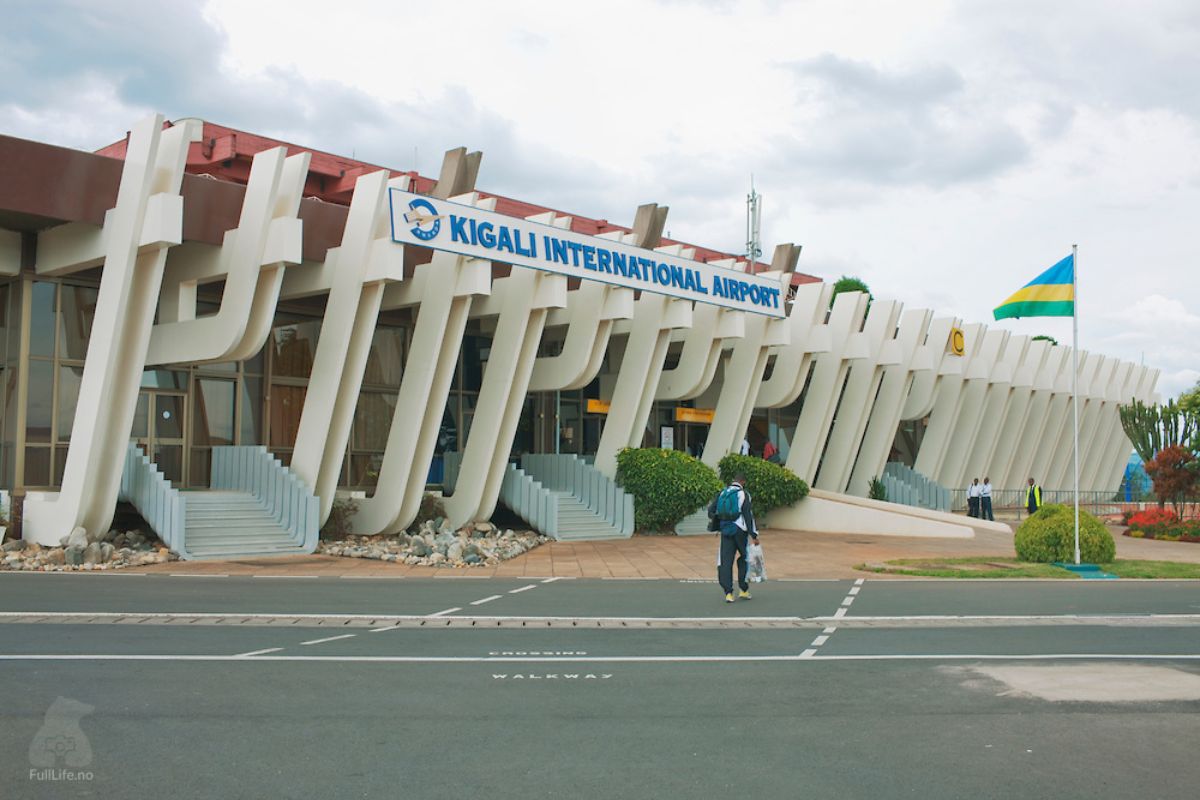
Entering through Rwanda is particularly recommended for:
- Eastern Lowland Gorilla Trekking
- Kahuzi-Biega National Park
- Bukavu
- Lake Kivu
- Virunga region (subject to official accessibility)
- Cross-border Rwanda and Congo safaris
This route offers well-developed infrastructure, quality accommodation, and efficient logistics, making it the preferred choice for most international visitors.
Entry Through Uganda
Uganda provides another convenient gateway into eastern Democratic Republic of Congo, especially for travelers combining Uganda’s famous national parks with Congo’s rainforest experiences.
International visitors arrive at Entebbe International Airport before traveling southwest through Uganda toward the Congo border. This route allows travelers to combine attractions such as Bwindi Impenetrable National Park, Queen Elizabeth National Park, Kibale National Park, and Lake Bunyonyi before continuing into Congo.
The Uganda route is particularly suitable for:
- Multi-country Uganda and Congo safaris
- Gorilla trekking combinations
- Wildlife and primate itineraries
- Extended East African expeditions
- Birdwatching tours
Many travelers appreciate this option because it combines Uganda’s excellent safari infrastructure with Congo’s unique rainforest adventures.
Border Crossings
Several official border crossings connect the Democratic Republic of Congo with neighboring countries. The most commonly used crossings for safari travelers include:
Rusizi I Border (Rwanda – Bukavu)
The Rusizi I Border links Cyangugu (Rusizi) in Rwanda with Bukavu in eastern Congo. This is the primary crossing for visitors heading to Kahuzi-Biega National Park for eastern lowland gorilla trekking.
Because Bukavu lies only a short distance from the border, this crossing provides one of the most convenient access routes into Congo.
Grande Barrière Border (Rwanda – Goma)
The Grande Barrière Border connects Gisenyi in Rwanda with Goma in Congo and has historically served travelers visiting Virunga National Park and Mount Nyiragongo when tourism operations are officially available.
It is one of the busiest crossings between the two countries and is frequently used for cross-border safaris.
Bunagana Border (Uganda – Congo)
The Bunagana Border connects southwestern Uganda with eastern Congo and provides access to parts of North Kivu.
This crossing is commonly used on Uganda-Congo safari combinations, depending on current border regulations and security conditions.
Mpondwe–Kasindi Border (Uganda – Congo)
Located near Queen Elizabeth National Park, the Mpondwe-Kasindi crossing serves travelers exploring western Uganda and eastern Congo.
It is an important regional crossing for tourism, trade, and transportation between the two countries.
Before traveling, visitors should always confirm current visa requirements, border opening hours, security conditions, and entry regulations, as these may change over time.
Domestic Flights
Because the Democratic Republic of Congo covers an enormous geographical area, domestic flights play an essential role in connecting major cities and remote safari destinations. Flying significantly reduces travel time and allows visitors to maximize their safari experience.
Domestic air services connect destinations including:
- Kinshasa
- Goma
- Bukavu (via Kavumu)
- Kisangani
- Lubumbashi
- Mbandaka
- Kananga
- Kindu
- Bunia
- Other regional airports, depending on airline schedules
For travelers visiting remote national parks or conservation areas, charter flights may also be arranged where suitable airstrips exist. These private flights provide greater flexibility and access to destinations that would otherwise require several days of overland travel.
Fly-in safaris are especially popular among luxury travelers, photographers, researchers, documentary teams, and visitors with limited holiday time. They can also be combined with regional flights from Kigali, Entebbe, Nairobi, Dar es Salaam, or other East African hubs, creating seamless multi-country itineraries.
Whether arriving through Kinshasa, Kigali, Entebbe, or another regional gateway, a well-planned combination of international flights, border transfers, and domestic air travel allows visitors to explore the extraordinary landscapes and wildlife of the Democratic Republic of Congo efficiently, comfortably, and safely.

Congo Visa Requirements
Most international travelers require a valid visa before entering the Democratic Republic of Congo. The type of visa depends on the purpose of travel, whether for tourism, business, research, volunteering, or other activities. Since visa regulations can change, visitors planning a safari between 2027 and 2030 should confirm the latest requirements with the nearest Congolese embassy or consulate before departure.
To obtain a tourist visa, applicants are generally required to provide a passport valid for at least six months beyond the intended date of entry, completed visa application forms, recent passport photographs, proof of accommodation or an invitation letter, a return or onward flight ticket, evidence of sufficient financial means, and a valid Yellow Fever vaccination certificate. Some travelers may also need to provide a detailed travel itinerary or confirmation from their safari operator.
Certain entry points and nationalities may be eligible for electronic visa procedures or limited visa-on-arrival arrangements, but these options are not universally available. Travelers should never assume that a visa will be issued upon arrival and should verify eligibility well before traveling.
Visitors should carry printed copies of important travel documents, including passports, visas, safari confirmations, hotel reservations, travel insurance certificates, flight tickets, vaccination certificates, and emergency contact information. Keeping both paper and digital copies can help avoid unnecessary delays during border inspections or domestic travel.
If your itinerary includes neighboring countries such as Rwanda or Uganda, ensure that you also meet the visa and entry requirements for those countries, particularly if you plan multiple border crossings during your safari.
Safety Tips for Congo Safaris
A safari in the Democratic Republic of Congo can be an extraordinary experience when carefully planned with a reputable safari operator. Like many adventure destinations, safety depends largely on proper planning, current security information, experienced guides, and responsible travel practices.
The first and most important recommendation is to book your safari through a licensed and experienced tour operator familiar with local conditions. Professional operators continuously monitor park accessibility, road conditions, weather, security updates, and government travel advisories to ensure guests travel only in areas considered appropriate for tourism.
Travelers should avoid independent travel into unfamiliar or remote regions. Guided safaris provide not only logistical support but also local knowledge, language assistance, emergency coordination, and direct communication with park authorities.
When participating in gorilla trekking or other wildlife activities, always follow the instructions of park rangers. Maintain the recommended viewing distance from wildlife, avoid sudden movements, keep noise levels low, and never attempt to feed or touch wild animals.
Personal belongings such as passports, cash, cameras, and electronics should be kept secure at all times. Carry only the amount of cash required for daily expenses and use hotel safes where available.
Respect local customs by dressing modestly in towns and villages, asking permission before photographing people, and following the guidance of your local guide during community visits.
Before departure, monitor official travel advisories for your intended destinations and remain flexible, as itineraries may occasionally require adjustments due to weather, conservation activities, or regional security developments.
What to Pack for a Congo Safari
Packing appropriately is essential for enjoying a comfortable and successful Congo safari. Because most activities involve tropical rainforest, varying elevations, and outdoor exploration, clothing should be practical, lightweight, and suitable for changing weather conditions.
Lightweight long-sleeved shirts and long trousers help protect against insects, sun exposure, and scratches from forest vegetation during gorilla trekking and rainforest walks. Neutral colors such as green, brown, or khaki are recommended because they blend naturally into the environment.
A waterproof rain jacket is indispensable since rainfall can occur at any time of year. Waterproof hiking boots with good ankle support are equally important, particularly for gorilla trekking where trails can be steep, muddy, and uneven.
Additional useful items include:
- Lightweight fleece or warm sweater for cool mountain mornings
- Wide-brimmed hat or cap
- Sunglasses with UV protection
- Gardening or trekking gloves for gripping vegetation
- High-quality binoculars
- Camera with spare batteries and memory cards
- Dry bags or waterproof camera protection
- Insect repellent containing DEET or other effective ingredients
- High-SPF sunscreen
- Lip balm
- Reusable water bottle
- Small daypack
- Personal medications
- Basic first-aid kit
- Power bank and universal travel adapter
- Trekking poles (optional but helpful)
- Gaiters for muddy forest trails
- Quick-drying socks and clothing
Travelers should also carry copies of passports, visas, travel insurance documents, emergency contacts, and vaccination certificates in a waterproof document holder.
Health Requirements
Good preparation is essential before traveling to the Democratic Republic of Congo. Visitors should consult a travel medicine clinic or healthcare provider several weeks before departure to discuss recommended vaccinations, malaria prevention, prescription medications, and any individual health concerns.
Because many safari destinations are located in remote rainforest regions, preventive healthcare is far easier than seeking treatment after arrival. Travelers with existing medical conditions should carry sufficient medication for the duration of the safari together with copies of prescriptions.
Good hygiene practices also help reduce the risk of illness. Drink bottled or purified water, wash hands regularly, avoid undercooked food, and protect yourself against mosquito bites both during the day and at night.
Vaccinations
A valid Yellow Fever vaccination certificate is mandatory for entry into the Democratic Republic of Congo for most travelers and should be obtained at least ten days before departure. Travelers should carry the original International Certificate of Vaccination throughout their journey.
Depending on your medical history, travel itinerary, and duration of stay, healthcare professionals may also recommend vaccinations against:
- Hepatitis A
- Hepatitis B
- Typhoid
- Tetanus
- Diphtheria
- Polio
- Rabies (for extended stays or remote travel)
- Meningococcal disease where appropriate
Recommendations vary according to individual circumstances, so professional medical advice should always be sought before travel.
Malaria Prevention
Malaria occurs throughout much of the Democratic Republic of Congo, making prevention an essential part of safari planning.
Travelers should consult their doctor regarding appropriate antimalarial medication before departure and follow the prescribed schedule before, during, and after the trip.
Additional protective measures include:
- Wearing long sleeves and trousers during evenings
- Applying insect repellent regularly
- Sleeping under insecticide-treated mosquito nets where provided
- Keeping doors and windows screened or closed
- Wearing light-colored clothing that covers exposed skin
If fever develops during or after travel, medical attention should be sought immediately, as early diagnosis and treatment are critical.
Travel Insurance
Comprehensive travel insurance is strongly recommended for every visitor traveling to Congo. Because many safari destinations are located in remote areas, insurance should include emergency medical treatment, hospital care, emergency evacuation, trip cancellation, baggage protection, personal liability, and coverage for adventure activities such as gorilla trekking or volcano hiking if included in your itinerary.
Travelers should carefully read their policy to ensure that all planned safari activities are covered and carry both printed and digital copies of their insurance documents throughout the trip.
Medical evacuation coverage is particularly important because transferring patients from remote national parks to advanced medical facilities can be complex and expensive.
Medical Facilities
Medical facilities vary considerably across the Democratic Republic of Congo. Major cities such as Kinshasa, Lubumbashi, Goma, and Bukavu offer hospitals, private clinics, pharmacies, and qualified medical professionals capable of handling many routine medical conditions.
However, facilities in remote safari areas are generally limited to basic health centers or park clinics that provide first aid and initial treatment before transferring patients when necessary. Serious medical emergencies may require evacuation to larger cities or, in some cases, to neighboring countries with more specialized healthcare services.
For this reason, travelers should carry adequate personal medication, maintain comprehensive travel insurance that includes emergency evacuation, and inform their safari operator in advance of any existing medical conditions or dietary requirements.
Choosing an experienced safari company with established emergency procedures and reliable communication systems adds an important layer of safety and ensures prompt assistance should unexpected health issues arise during your Congo safari.
Responsible Tourism in Congo
Responsible tourism is at the heart of every successful Congo safari. The Democratic Republic of Congo protects some of the world’s most important ecosystems, including the vast Congo Basin Rainforest, active volcanic landscapes, mountain forests, wetlands, rivers, and internationally recognized national parks that provide sanctuary for endangered wildlife found nowhere else on Earth. Every safari has the potential to make a meaningful contribution to the long-term protection of these remarkable natural resources.
Choosing responsible tourism means traveling in a way that benefits wildlife, supports local communities, respects cultural traditions, and minimizes environmental impact. Rather than simply observing nature, responsible travelers become active participants in protecting the forests, animals, and people that make Congo such an extraordinary destination.
One of the most significant contributions visitors make is through park entrance fees and gorilla permits. Revenue generated from tourism supports ranger salaries, anti-poaching patrols, wildlife monitoring, veterinary care, scientific research, habitat restoration, and conservation education. Without sustainable tourism, many protected areas would face even greater challenges from illegal hunting, habitat destruction, and unsustainable resource use.
Responsible tourism also creates employment opportunities for thousands of Congolese people. Safari guides, drivers, trackers, porters, lodge staff, cooks, artisans, farmers, and community tourism groups all benefit directly from visitor spending. Tourism provides sustainable alternatives to activities that may threaten wildlife, helping communities recognize the long-term value of protecting their natural heritage.
Visitors can further support conservation by staying in locally owned lodges, hiring local guides and porters, purchasing authentic handicrafts, respecting wildlife viewing regulations, avoiding single-use plastics where possible, and following Leave No Trace principles during forest walks and trekking activities.
Respect for local cultures is equally important. Congo is home to hundreds of ethnic communities with rich traditions, languages, music, crafts, and histories. Responsible travelers seek meaningful cultural exchanges by asking permission before taking photographs, dressing respectfully in villages, supporting community enterprises, and approaching every interaction with curiosity and respect.
Wildlife viewing should always prioritize the well-being of the animals. Visitors should maintain recommended viewing distances, avoid loud noises, never feed wildlife, and follow all instructions provided by park rangers. These guidelines help minimize stress on endangered species while ensuring safe and enjoyable experiences for everyone.
By choosing responsible tourism, every traveler becomes part of the ongoing effort to preserve one of Africa’s greatest natural treasures while helping local communities build sustainable livelihoods that depend on healthy ecosystems rather than their exploitation.
Conservation Projects Supporting Congo Safaris
The Democratic Republic of Congo contains one of the planet’s most significant concentrations of biodiversity, making conservation efforts essential for protecting its extraordinary wildlife and ecosystems. Numerous national and international organizations work alongside government authorities and local communities to safeguard endangered species, restore habitats, strengthen protected area management, and promote sustainable tourism throughout the country.
One of the primary focuses of conservation is protecting great apes, including mountain gorillas, eastern lowland gorillas, chimpanzees, and bonobos. These species face ongoing challenges such as habitat loss, illegal hunting, human encroachment, disease transmission, and climate change. Conservation programs support daily monitoring, veterinary interventions, scientific research, anti-poaching patrols, and community outreach designed to secure their long-term survival.
Protected area management has also improved significantly through investments in ranger training, modern equipment, ecological monitoring, infrastructure development, and stronger law enforcement. Rangers work under extremely challenging conditions to protect wildlife while ensuring visitors enjoy safe and memorable safari experiences.
Community conservation projects play an equally important role. Many initiatives help local families develop alternative income sources through tourism, sustainable agriculture, handicrafts, beekeeping, coffee production, ecotourism enterprises, and environmental education. By improving livelihoods, these programs reduce dependence on activities that threaten wildlife and forests.
Environmental education is another key component of conservation in Congo. Schools, community groups, youth organizations, and local leaders participate in awareness campaigns that emphasize the importance of biodiversity, forest protection, climate resilience, and sustainable resource management. These educational efforts help build long-term support for conservation among future generations.
Scientific research continues to expand knowledge of Congo’s wildlife and ecosystems. Researchers monitor gorilla populations, study bonobo behavior, document newly discovered species, assess forest health, and investigate the effects of climate change on biodiversity. The findings guide conservation strategies while improving wildlife management and visitor experiences.
Tourism directly supports many of these initiatives. Every gorilla permit purchased, park entrance fee paid, and night spent in a safari lodge contributes to the protection of national parks, the employment of local people, and the continued survival of some of the world’s rarest wildlife species.
By choosing a responsible safari operator, travelers become partners in conservation, helping preserve the Congo Basin Rainforest and its remarkable biodiversity for future generations while enjoying one of Africa’s most authentic wildlife destinations.
Why Book Your Congo Safari with Pieland Gorilla Safaris
Choosing the right safari company is one of the most important decisions when planning a trip to the Democratic Republic of Congo. At Pieland Gorilla Safaris, we combine local expertise, personalized service, conservation values, and carefully planned itineraries to deliver unforgettable safari experiences throughout Congo and the wider East African region.
Our team has extensive knowledge of Congo’s national parks, border procedures, gorilla trekking logistics, accommodation options, transportation networks, and seasonal travel conditions. We work closely with trusted local partners to ensure every safari is professionally organized, safe, and tailored to your interests and travel style.
Whether you are planning a short gorilla trekking adventure, a luxury honeymoon, a birdwatching expedition, a photography tour, a family holiday, or a multi-country safari across Congo, Rwanda, and Uganda, we create fully customized itineraries that match your budget, schedule, and expectations.
When you book with Pieland Gorilla Safaris, we take care of every detail, including gorilla permits, accommodation reservations, private transportation, experienced English-speaking guides, airport transfers, border assistance, domestic flights where required, and personalized safari planning. Our goal is to provide a seamless travel experience so you can focus entirely on enjoying your adventure.
We are committed to responsible tourism and believe that every safari should positively impact wildlife conservation and local communities. By working with community-based accommodations, employing local guides and porters, supporting conservation initiatives, and promoting sustainable tourism practices, we help ensure that tourism contributes directly to protecting Congo’s extraordinary natural heritage.
Our commitment to exceptional customer service begins long before your arrival. From your first inquiry to your journey home, our travel specialists provide honest advice, prompt communication, flexible itinerary planning, and ongoing support throughout your safari. We understand that every traveler is unique, and we take pride in designing journeys that reflect your individual interests, fitness level, preferred accommodation, and travel goals.
Whether your dream is to stand face-to-face with endangered gorillas, explore the ancient Congo Basin Rainforest, photograph rare wildlife, discover vibrant local cultures, or experience one of Africa’s last great wilderness frontiers, Pieland Gorilla Safaris is ready to turn that dream into reality.
Contact Pieland Gorilla Safaris today to receive a free personalized itinerary, expert travel advice, and a no-obligation quotation. Let our experienced team help you plan an unforgettable Congo safari for 2027–2030, where extraordinary wildlife, breathtaking landscapes, and authentic African adventure come together in one remarkable journey.
What are the best Congo Safari Packages for 2027–2030?
The Best Congo Safari Packages 2027–2030 are designed to showcase the Democratic Republic of Congo’s most extraordinary wildlife, landscapes, and conservation experiences. The most popular packages include eastern lowland gorilla trekking in Kahuzi-Biega National Park, mountain gorilla trekking where tourism is officially operating, chimpanzee tracking, bonobo experiences, rainforest expeditions, birdwatching tours, Nyiragongo Volcano hiking when accessible, and multi-country safaris combining Congo with Rwanda and Uganda.
Short safaris lasting 2–5 days are perfect for travelers primarily interested in gorilla trekking, while 7–14-day itineraries provide opportunities to experience several national parks, cultural attractions, and wildlife activities. Travelers seeking the ultimate adventure often choose 21-day expeditions that explore multiple ecosystems across Central Africa.
The best package depends on your available time, travel budget, fitness level, wildlife interests, and preferred accommodation. A customized itinerary ensures you experience the destinations and activities that best match your expectations.
Is Congo a good safari destination?
Yes. The Democratic Republic of Congo is one of Africa’s most unique safari destinations. Unlike traditional safari countries that focus mainly on open savannah wildlife, Congo offers dense tropical rainforests, endangered great apes, rare mammals, active volcanoes, enormous rivers, and some of the world’s least-explored protected areas.
Congo is especially famous for mountain gorillas, eastern lowland gorillas, bonobos, chimpanzees, forest elephants, okapi, and over 1,000 bird species. It is also home to the Congo Basin, the world’s second-largest tropical rainforest, making it one of the planet’s most important biodiversity hotspots.
For travelers seeking authentic adventure, conservation-focused tourism, and unforgettable wildlife encounters away from crowded safari routes, Congo is one of Africa’s finest destinations.
Is Congo safe for safari tourists?
A Congo safari can be safe when it is carefully planned with a reputable and experienced safari operator like Pieland Gorilla Safaris. The Democratic Republic of Congo is a large country, and security conditions vary significantly between regions. Some areas are suitable for tourism, while others should be avoided.
Professional safari companies continuously monitor government advisories, park accessibility, road conditions, and local security updates before operating tours. They also work closely with park authorities, guides, and local communities to ensure visitor safety.
Independent travel is generally not recommended in remote areas. Booking an organized safari with experienced guides greatly reduces risk while providing professional support throughout your journey.
Travelers should always review official travel advisories before departure and remain flexible, as itineraries may occasionally change depending on local conditions.
When is the best time to visit Congo?
The best time to visit Congo is generally during the dry seasons from June to September and December to February. These months provide more comfortable trekking conditions, firmer forest trails, easier road travel, and improved wildlife photography.
The rainy seasons, from March to May and October to November, also offer excellent safari opportunities. Forests become exceptionally green, waterfalls are spectacular, bird activity increases, and visitor numbers are lower.
Because gorilla trekking takes place throughout the year, Congo remains an excellent destination regardless of season.
How much does a Congo safari cost?
The cost of a Congo safari depends on the itinerary, accommodation category, transportation, activities, and safari duration.
Budget safaris generally start from approximately US$1,200 for shorter itineraries. Mid-range safaris usually range between US$2,200 and US$4,500, while luxury safaris often begin around US$4,500 and may exceed US$10,000 for extended private expeditions.
Factors influencing price include gorilla permits, domestic flights, private vehicles, accommodation, guide services, border crossings, and the number of destinations visited.
Customized itineraries allow travelers to balance comfort, experiences, and budget according to their preferences.
What is included in a Congo safari package?
Most professionally organized Congo safari packages include accommodation, transportation, airport transfers, professional guides, park entrance fees, meals as specified in the itinerary, and scheduled safari activities.
Depending on the itinerary, packages may also include gorilla permits, chimpanzee tracking, community visits, birdwatching excursions, forest walks, boat cruises, and cultural experiences.
Luxury safaris often include private vehicles, charter flights, premium lodges, personalized guiding, and additional exclusive services.
International flights, visas, travel insurance, personal expenses, porter fees, drinks, and gratuities are usually excluded unless specifically stated.
Can I see both mountain gorillas and eastern lowland gorillas on one safari?
Yes. One of Congo’s greatest advantages is that it is the only country where travelers can potentially experience both mountain gorillas and eastern lowland gorillas within a single destination, depending on official park accessibility.
Many longer itineraries combine Kahuzi-Biega National Park for eastern lowland gorillas with gorilla trekking in the Virunga region when tourism operations are officially available.
Some travelers also combine Congo with Uganda or Rwanda to experience different gorilla populations while exploring several remarkable national parks.
This creates one of Africa’s most comprehensive primate safaris.
Which national park is best for gorilla trekking in best Congo safari packages?
Kahuzi-Biega National Park is currently the best-known destination for eastern lowland gorilla trekking and is one of Congo’s most accessible safari parks.
Historically, Virunga National Park has been internationally famous for mountain gorilla trekking. However, tourism availability depends on current operational status and official park accessibility.
Both parks offer unforgettable gorilla experiences, but they protect different gorilla subspecies living within distinct rainforest environments.
The choice depends on your interests, travel plans, and current tourism conditions.
How difficult is gorilla trekking in Congo?
Gorilla trekking requires a moderate level of physical fitness but does not demand technical hiking experience.
Treks may last anywhere from one to six hours depending on the location of the gorilla family. Visitors walk through tropical rainforest, crossing uneven terrain, muddy trails, streams, and occasional steep sections.
Experienced guides adjust the pace according to the group’s ability and provide assistance throughout the trek.
Hiring a local porter is highly recommended because they help carry equipment, assist on difficult sections, and directly support surrounding communities.
Most reasonably fit travelers successfully complete the experience.
How close can you get to gorillas?
Visitors are generally required to maintain a minimum distance of approximately seven meters from the gorillas whenever possible.
However, gorillas are wild animals and occasionally choose to approach visitors themselves. In such situations, guests should remain calm, avoid sudden movements, and follow the instructions of their ranger.
The one-hour viewing period provides exceptional opportunities to observe gorillas feeding, grooming, resting, and interacting naturally while minimizing disturbance to the animals.
Strict viewing regulations help protect both visitors and gorillas from disease transmission.
Are Congo gorilla permits cheaper than Uganda and Rwanda?
Historically, Congo has often offered more affordable gorilla permits than neighboring Uganda and Rwanda, making it an attractive option for travelers seeking a more budget-friendly gorilla experience.
However, permit prices may change depending on government policies, conservation funding requirements, tourism demand, and park management decisions.
Travelers planning safaris between 2027 and 2030 should always confirm the latest permit prices before booking.
Despite lower permit costs in some years, overall safari pricing depends on transportation, accommodation, and itinerary length.
Can beginners visit Congo?
Absolutely. Many first-time safari travelers successfully visit Congo each year through professionally organized tours.
Experienced guides handle transportation, border procedures, accommodation, wildlife activities, permits, and logistics, allowing visitors to enjoy the experience without worrying about complicated travel arrangements.
Beginners are encouraged to choose shorter itineraries focused on Kahuzi-Biega National Park or cross-border combinations with Rwanda, where travel infrastructure is particularly convenient.
Private safaris also provide additional flexibility and personalized assistance for first-time visitors.
What wildlife can I expect besides gorillas?
Congo is home to an extraordinary diversity of wildlife beyond gorillas.
Visitors may encounter chimpanzees, bonobos, forest elephants, forest buffalo, okapi, bongos, giant forest hogs, sitatunga, bushbuck, crocodiles, hippopotamuses, numerous monkey species, reptiles, butterflies, and over one thousand bird species.
Depending on the national park visited, travelers may also see giraffes, lions, buffaloes, elephants, antelope species, hyenas, leopards, and many smaller mammals.
Every safari reveals a different combination of wildlife depending on habitat and season.
Is Congo good for birdwatching?
Yes. Congo is considered one of Africa’s finest birdwatching destinations.
With more than 1,000 recorded bird species, the country supports an exceptional diversity of rainforest birds, Albertine Rift endemics, waterbirds, raptors, parrots, hornbills, kingfishers, turacos, sunbirds, and the famous Congo peafowl.
Major birding destinations include Kahuzi-Biega National Park, Virunga National Park, Garamba National Park, Okapi Wildlife Reserve, Salonga National Park, and the Congo River Basin.
Both experienced ornithologists and casual birdwatchers will find outstanding opportunities throughout the country.
Can I combine Congo with Rwanda or Uganda?
Yes. Cross-border safaris combining Congo with Rwanda and Uganda are among the most popular itineraries in Central Africa.
These combinations allow travelers to enjoy gorilla trekking, chimpanzee tracking, Big Five safaris, Lake Kivu, Volcanoes National Park, Queen Elizabeth National Park, Bwindi Impenetrable National Park, Kibale Forest, and many other attractions within one seamless journey.
Kigali International Airport serves as the primary gateway for many Congo safaris because of its excellent international flight connections and relatively short driving distances to eastern Congo.
These itineraries maximize wildlife diversity while making travel logistics highly efficient.
Do I need a guide in Congo?
Yes. Nearly all wildlife activities in Congo require experienced guides and park rangers.
Professional guides ensure visitor safety, assist with wildlife tracking, explain rainforest ecology, interpret animal behavior, coordinate logistics, and provide valuable cultural insights.
Independent trekking is not permitted in national parks.
Hiring knowledgeable local guides also contributes directly to conservation and local employment.
Is Congo suitable for photographers?
Congo is one of Africa’s most rewarding destinations for wildlife and nature photography.
The country offers exceptional opportunities to photograph gorillas, chimpanzees, bonobos, rainforest landscapes, volcanoes, rivers, waterfalls, birds, butterflies, local communities, and unique forest wildlife.
Photography safaris can be customized with flexible schedules, private guides, and additional time at wildlife sightings to maximize photographic opportunities.
Whether you are an amateur or professional photographer, Congo provides extraordinary subjects rarely found elsewhere.
How many days should I spend on a Congo safari?
The ideal safari duration depends on your travel goals.
A three-day itinerary is sufficient for eastern lowland gorilla trekking.
Five to seven days allows travelers to combine gorilla trekking with cultural experiences, birdwatching, and rainforest exploration.
Ten to fourteen days provides a comprehensive Congo safari including multiple destinations.
Travelers wishing to combine Congo with Rwanda and Uganda generally benefit from itineraries lasting fourteen to twenty-one days.
Longer safaris offer greater wildlife diversity and a more relaxed pace.
Are Congo safaris suitable for families?
Yes, although itinerary planning depends on the ages of children.
Children who meet the minimum age requirement may participate in gorilla trekking, while younger family members can enjoy birdwatching, nature walks, cultural visits, scenic drives, boat excursions, conservation education, and community experiences.
Private family safaris provide flexible schedules, family-friendly accommodation, and activities suitable for different age groups.
Many families combine Congo with Rwanda or Uganda to create well-balanced multi-country adventures.
Why should I book with Pieland Gorilla Safaris?
Pieland Gorilla Safaris specializes in creating personalized Congo safari experiences designed around each traveler’s interests, budget, and schedule.
Our experienced team handles every aspect of your journey, including gorilla permits, accommodation, transportation, airport transfers, professional guides, border assistance, and customized itineraries. We are committed to responsible tourism, supporting conservation initiatives and local communities while delivering exceptional service from your first inquiry until the end of your safari.
Whether you are planning a luxury gorilla adventure, a family holiday, a photography expedition, a honeymoon, or a multi-country safari across Central and East Africa, Pieland Gorilla Safaris ensures every detail is professionally managed so you can enjoy an unforgettable journey through one of Africa’s most extraordinary wildlife destinations.
Do I need a visa to visit the Democratic Republic of Congo for a safari?
Yes. Most international travelers require a visa before entering the Democratic Republic of Congo. The application process generally requires a passport valid for at least six months, completed visa forms, passport photographs, proof of accommodation, a return or onward ticket, evidence of sufficient funds, and a Yellow Fever vaccination certificate. Some nationalities may have additional requirements depending on bilateral agreements. If your itinerary includes Rwanda or Uganda, you should also ensure you meet their entry requirements. Your safari operator can often provide supporting documents to simplify the visa application process.
Which airport should I fly into for a Congo safari?
The best airport depends on the destination included in your itinerary. Travelers visiting Kahuzi-Biega National Park often fly into Kigali International Airport in Rwanda before transferring overland to Bukavu. Those planning safaris in western or central Congo usually arrive at N’djili International Airport in Kinshasa. Goma International Airport serves eastern Congo when regional flight schedules and tourism operations allow. Your safari company will recommend the most efficient route based on your chosen destinations.
Can I combine gorilla trekking with traditional wildlife safaris?
Yes. Many travelers combine gorilla trekking with classic wildlife viewing to enjoy the best of Central and East Africa. A longer itinerary may include eastern lowland gorillas in Congo, Big Five game drives in Uganda, Akagera National Park in Rwanda, or even the Serengeti and Maasai Mara in Tanzania and Kenya. These combinations offer exceptional wildlife diversity while creating a balanced safari experience featuring both rainforest exploration and open savannah game viewing.
How far in advance should I book a Congo safari?
Booking six to twelve months before travel is recommended, particularly if you plan to travel during the dry season or over Christmas and New Year. Early booking provides the best choice of accommodation, increases the likelihood of securing gorilla permits on your preferred dates, and often results in more favorable flight options. Luxury lodges and private guides can become fully booked well in advance during peak travel periods.
What fitness level is required for a Congo safari?
Most travelers with average fitness can comfortably enjoy a Congo safari. Gorilla trekking requires walking over uneven rainforest terrain, while activities such as birdwatching, community visits, and boat excursions involve much lighter physical effort. Travelers interested in volcano hiking or extended rainforest expeditions should prepare for more demanding hikes. Your itinerary can always be customized to match your fitness level and travel preferences.
Can senior travelers visit Congo?
Yes. Many senior travelers successfully enjoy Congo safaris each year. Private safaris provide flexibility, allowing walking speeds, travel distances, and accommodation choices to be adapted to individual needs. Hiring a porter during gorilla trekking greatly reduces physical effort, while carefully selected lodges provide comfortable accommodation close to national parks. Travelers with medical conditions should consult their physician before departure and discuss any mobility requirements with their safari operator.
Is Congo a good honeymoon destination?
Congo offers one of Africa’s most unique honeymoon experiences for couples seeking adventure rather than conventional beach holidays. Romantic itineraries combine luxury lodges, breathtaking rainforest scenery, gorilla trekking, private guides, Lake Kivu relaxation, fine dining, cultural experiences, and exceptional wildlife encounters. Many couples extend their honeymoon into Rwanda, Uganda, or Zanzibar, creating an unforgettable combination of adventure and relaxation.
What makes Congo different from Uganda and Rwanda?
Although all three countries offer gorilla trekking, Congo provides experiences unavailable elsewhere. It is the only destination where travelers can experience eastern lowland gorillas in their natural habitat. Congo also protects bonobos, the Okapi Wildlife Reserve, the vast Congo Basin Rainforest, and several remote wilderness areas rarely visited by international tourists. Travelers looking for raw adventure, fewer crowds, and exceptional biodiversity often find Congo to be one of Africa’s most rewarding safari destinations.
Can I visit Congo throughout the year?
Yes. Congo offers year-round safari opportunities. Gorilla trekking, birdwatching, rainforest exploration, and cultural experiences operate throughout the year, although weather conditions vary by season. The dry months generally provide easier hiking conditions, while the rainy seasons offer lush scenery, excellent bird activity, dramatic photography opportunities, and fewer visitors. Every season has its own advantages depending on your interests.
Are private Congo safaris worth the extra cost?
Private safaris offer significant advantages for travelers seeking flexibility, comfort, and personalized service. You enjoy your own safari vehicle, dedicated guide, flexible departure times, customized activities, and the freedom to travel at your preferred pace. Private safaris are especially popular with photographers, honeymooners, families, birdwatchers, and travelers celebrating special occasions because they provide a far more personalized experience than scheduled group departures.
Can I customize my Congo safari itinerary?
Absolutely. Most Congo safaris are tailor-made to suit each traveler’s interests, budget, and available time. You can choose your preferred accommodation standard, activities, national parks, border crossings, transportation options, and safari duration. Many visitors combine gorilla trekking with birdwatching, chimpanzee tracking, cultural experiences, Lake Kivu, Rwanda, Uganda, or other East African destinations to create a completely personalized itinerary.
What languages are spoken during Congo safaris?
Professional safari guides generally speak English and French, while many also speak Swahili and local languages depending on the region. Multilingual guides for German, Spanish, Italian, Dutch, and other languages can often be arranged upon request with sufficient advance notice. Communication during organized safaris is rarely a challenge because experienced guides are accustomed to working with international visitors.
Can I use US dollars in Congo?
Yes. US dollars are widely accepted throughout the tourism industry, particularly at hotels, lodges, safari companies, and for park-related payments. It is advisable to carry newer US dollar notes printed within the last decade because older notes may not be accepted. Small denominations are useful for tips, porter fees, local purchases, and community visits. Travelers should also carry some local currency for smaller transactions where necessary.
Is internet available during a Congo safari?
Internet access is available in many hotels, lodges, and urban areas, although speeds and reliability vary considerably depending on location. Luxury lodges generally offer Wi-Fi, while more remote safari camps may have limited or no internet access. Mobile phone coverage also varies between regions. Many travelers view the temporary disconnection as an opportunity to fully immerse themselves in Congo’s extraordinary wilderness.
What type of vehicles are included in best Congo safari packages?
Most safari operators use well-maintained four-wheel-drive vehicles designed for Africa’s varying road conditions. These vehicles provide comfortable seating, large viewing windows, ample luggage space, and experienced professional drivers familiar with local terrain. Private safaris often use customized 4×4 safari vehicles, while smaller transfers between destinations may utilize SUVs or minibuses depending on group size.
Are children allowed to go gorilla trekking?
Children must meet the minimum age requirement established by park authorities before participating in gorilla trekking. This regulation exists to protect both visitors and gorillas while ensuring participants can safely complete the trek and understand the importance of following wildlife viewing guidelines. Families traveling with younger children can enjoy many alternative activities, including nature walks, birdwatching, cultural experiences, and scenic excursions.
How important are porters during gorilla trekking?
Hiring a porter is one of the best decisions travelers can make during gorilla trekking. Porters assist with carrying backpacks, camera equipment, walking sticks, and provide physical support over steep or muddy terrain. Beyond making the hike easier, hiring a porter directly supports local livelihoods by creating employment opportunities for communities living around the national parks. The service is affordable and highly recommended regardless of your fitness level.
Can photographers bring professional camera equipment?
Yes. Congo welcomes professional and amateur photographers. Telephoto lenses, wide-angle lenses, tripods for permitted areas, drones where authorized, waterproof camera bags, spare batteries, and memory cards are all valuable additions to a photography safari. Because rainforest conditions can be humid, weather protection for cameras is essential. Specialized photography itineraries can also be arranged with guides who understand wildlife behavior and optimal lighting conditions.
What conservation impact does my safari have?
Your safari directly supports conservation across the Democratic Republic of Congo. Revenue from gorilla permits, park entrance fees, accommodation, guiding services, and community tourism contributes to wildlife protection, ranger salaries, anti-poaching operations, habitat restoration, scientific research, veterinary care, conservation education, and sustainable livelihood projects. Responsible tourism has become one of the most effective tools for protecting Congo’s extraordinary biodiversity while benefiting local communities.
Why is Congo considered one of Africa’s last great wilderness destinations?
The Democratic Republic of Congo protects one of the largest remaining wilderness areas on Earth. Vast sections of the Congo Basin Rainforest remain largely untouched by mass tourism, providing habitat for rare wildlife found nowhere else on the planet. Visitors experience ancient forests, remote rivers, volcanic landscapes, endangered great apes, extraordinary birdlife, and authentic cultural traditions in an environment that still feels truly wild. For travelers seeking genuine exploration rather than crowded tourist destinations, Congo offers one of Africa’s most remarkable safari experiences.
Why should I choose the Best Congo Safari Packages 2027–2030 instead of other African safaris?
The best Congo safari packages 2027–2030 offer experiences that cannot be replicated anywhere else in Africa. While countries such as Kenya and Tanzania are famous for vast savannahs and the Great Migration, Congo is renowned for its pristine rainforests, exceptional primate diversity, and untouched wilderness. It is one of the few places where travelers can trek eastern lowland gorillas, learn about bonobo conservation, explore the Congo Basin Rainforest, and discover wildlife that rarely appears on traditional safari itineraries. If your goal is to experience Africa beyond the ordinary, Congo provides one of the continent’s most rewarding adventures.
Which Congo safari package is best for first-time visitors?
First-time visitors usually benefit from a five to seven-day itinerary centered around Kahuzi-Biega National Park and Lake Kivu. These safaris provide an excellent introduction to eastern lowland gorilla trekking, rainforest ecology, birdwatching, cultural experiences, and the stunning scenery of eastern Congo without requiring extensive travel across the country. Many travelers also include Kigali in Rwanda to simplify international flights and border crossings.
What is the minimum number of days recommended for a Congo safari?
Although a three-day itinerary allows visitors to complete a gorilla trekking experience, five to seven days is generally recommended. This provides sufficient time to enjoy wildlife activities, cultural experiences, scenic landscapes, and a more relaxed travel pace. Travelers wishing to explore several national parks or combine Congo with neighboring countries should consider itineraries lasting ten to twenty-one days.
Can I visit multiple national parks during one Congo safari?
Yes. Longer itineraries allow travelers to explore several of Congo’s remarkable protected areas. Depending on accessibility and logistics, visitors may combine Kahuzi-Biega National Park with Garamba National Park, Okapi Wildlife Reserve, Lomami National Park, Salonga National Park, or other destinations. Multi-park safaris provide exceptional biodiversity and allow travelers to experience rainforest, savannah, wetlands, rivers, and mountain ecosystems within a single expedition.
Are best Congo safari packages suitable for solo travelers?
Absolutely. Solo travelers regularly visit Congo through private or small-group safari packages. Many choose private tours for greater flexibility and personalized guiding, while others join scheduled departures to reduce travel costs and meet fellow wildlife enthusiasts. Solo safaris are particularly popular among photographers, birdwatchers, researchers, and adventure travelers seeking meaningful wildlife experiences.
What types of accommodation are available in the best Congo safari packages?
Congo offers accommodation for every budget, including luxury safari lodges, boutique ecolodges, comfortable mid-range hotels, budget guesthouses, safari camps, and community-operated lodges. Luxury properties provide spacious suites, fine dining, and premium services, while community lodges offer authentic cultural experiences and directly support local livelihoods. Accommodation is carefully selected according to your itinerary, budget, and preferred level of comfort.
Are Congo safari roads suitable for self-driving?
Self-driving is generally not recommended for international visitors. Road conditions vary considerably depending on the region, and navigation, local regulations, weather, and security considerations can make independent travel challenging. Professional safari operators provide experienced drivers who are familiar with local routes, border procedures, and changing road conditions, ensuring a safer and more enjoyable journey.
Can I use drones during my Congo safari?
Drone regulations vary depending on the national park and the activity. In most protected areas, drones are prohibited or require special authorization because they may disturb wildlife and compromise visitor safety. Travelers interested in aerial photography should consult their safari operator well before departure to determine whether permits are available for specific locations.
Are there luxury fly-in safaris in Congo?
Yes. Luxury fly-in safaris are available for travelers wishing to reduce travel time between destinations while enjoying premium comfort. Charter flights and domestic air services connect major cities and selected safari regions where airstrips exist. These itineraries combine luxury accommodation, private guiding, personalized service, and efficient logistics, making them particularly attractive for honeymooners, photographers, executives, and travelers with limited time.
What makes eastern lowland gorillas different from mountain gorillas?
Eastern lowland gorillas, also known as Grauer’s gorillas, are the largest gorilla subspecies and inhabit the tropical lowland rainforests of eastern Congo. They are generally larger than mountain gorillas, with broader chests, longer arms, and shorter body hair. Mountain gorillas, by contrast, live at higher elevations within cooler montane forests. Observing both subspecies allows travelers to appreciate the remarkable diversity of Africa’s great apes.
Is Congo good for wildlife photography throughout the year?
Yes. Every season offers unique photographic opportunities. The dry season provides easier trekking conditions, clearer forest trails, and excellent wildlife visibility, while the rainy season transforms the rainforest into a vibrant green landscape filled with dramatic mist, flowering plants, waterfalls, and active birdlife. Professional photographers often appreciate the soft natural lighting created by cloud cover during the wetter months.
What conservation success stories can visitors learn about in Congo?
Congo has become internationally recognized for its conservation efforts involving mountain gorillas, eastern lowland gorillas, bonobos, okapi, and rainforest protection. Visitors learn about anti-poaching programs, veterinary interventions, scientific research, community conservation initiatives, and ranger training that help protect endangered species. Tourism revenue plays a crucial role in supporting these long-term conservation achievements.
Are community visits included in Congo safari packages?
Many itineraries include carefully planned community visits that introduce travelers to local traditions, music, dance, farming practices, handicrafts, coffee production, and conservation projects. These experiences provide meaningful cultural exchanges while generating sustainable income for communities living near protected areas. Responsible community tourism ensures that local people directly benefit from wildlife conservation.
Can I celebrate a special occasion during my Congo safari?
Yes. Congo is becoming an increasingly popular destination for honeymoons, anniversaries, birthdays, retirement celebrations, and milestone adventures. Luxury lodges can arrange private dinners, romantic room decorations, lakeside experiences, personalized guiding, and customized itineraries to make your celebration truly memorable. Your safari operator can tailor the journey to suit the occasion.
Is Congo suitable for bird photographers?
Congo is one of Africa’s premier destinations for bird photography. With over 1,000 recorded bird species, including the Congo peafowl, Grauer’s broadbill, Rockefeller’s sunbird, and numerous Albertine Rift endemics, photographers enjoy exceptional opportunities to capture rare and colorful species. Early morning forest walks, wetlands, rivers, and montane forests provide outstanding photographic conditions.
Will I have opportunities to interact with conservation rangers?
Depending on the itinerary, visitors may meet park rangers, trackers, researchers, and conservation staff who work tirelessly to protect Congo’s extraordinary biodiversity. These interactions provide valuable insight into wildlife monitoring, anti-poaching patrols, gorilla conservation, habitat restoration, and the daily challenges of managing some of Africa’s most important protected areas.
Are Congo safari packages environmentally sustainable?
Responsible safari operators place sustainability at the center of their operations by supporting conservation projects, employing local staff, minimizing environmental impact, reducing plastic waste, partnering with community-owned accommodation, and promoting ethical wildlife viewing practices. Choosing a responsible operator ensures your safari contributes positively to both wildlife conservation and local communities.
Can I combine adventure activities with wildlife experiences?
Yes. Congo offers one of Africa’s most diverse combinations of adventure and wildlife. Depending on current accessibility, travelers may combine gorilla trekking, rainforest hikes, birdwatching, cultural experiences, boat excursions, Lake Kivu activities, forest walks, and Nyiragongo Volcano expeditions. This combination of adventure and wildlife makes Congo particularly attractive to active travelers.
What makes Congo one of Africa’s best destinations for primate lovers?
Few countries in the world can match Congo’s diversity of primates. Visitors have opportunities to experience eastern lowland gorillas, mountain gorillas where tourism is officially operating, chimpanzees, bonobos, golden monkeys in the Virunga ecosystem, and more than twenty monkey species inhabiting the Congo Basin. Combined with ancient rainforests and world-class conservation programs, this extraordinary diversity makes Congo one of the ultimate destinations for primate enthusiasts.
How do I book the Best Congo Safari Packages 2027–2030?
Booking the Best Congo Safari Packages 2027–2030 begins by contacting an experienced safari specialist who understands the country’s national parks, gorilla permit systems, accommodation options, border crossings, and transportation logistics. After discussing your travel dates, budget, interests, and preferred activities, a personalized itinerary is prepared to match your expectations. Once confirmed, your tour operator arranges permits, accommodation, transportation, guides, and all essential safari services, allowing you to travel with confidence and focus on enjoying one of Africa’s most extraordinary wildlife adventures.
Can I combine best Congo safari packages with a beach holiday?
Yes. Many travelers choose to combine a Congo safari with a beach holiday in Zanzibar, the Kenyan coast, or the islands of the Indian Ocean. After several days of gorilla trekking, rainforest exploration, and wildlife adventures, relaxing on white sandy beaches provides the perfect conclusion to an African holiday. These combination itineraries are especially popular with honeymooners and couples seeking both adventure and relaxation.
Is Congo suitable for wildlife researchers and conservation enthusiasts?
Absolutely. The Democratic Republic of Congo is one of the world’s most important destinations for conservation-focused travel. Researchers, students, documentary filmmakers, photographers, and conservation supporters visit to learn about rainforest ecology, great ape conservation, biodiversity monitoring, and community-based conservation initiatives. Many itineraries can include educational experiences with conservation organizations where appropriate.
Are there luxury honeymoon lodges in best Congo safari packages?
Yes. Although Congo remains an adventurous destination, several luxury lodges provide elegant accommodation, personalized service, gourmet dining, spectacular views, and romantic settings overlooking forests, mountains, or Lake Kivu. Honeymoon packages often include private transfers, romantic dinners, beautifully decorated rooms, and customized safari experiences designed exclusively for couples.
Can I travel to Congo if I do not want to trek gorillas?
Yes. While gorilla trekking is the country’s most famous attraction, Congo offers many other experiences including birdwatching, chimpanzee tracking, bonobo conservation visits, rainforest walks, wildlife safaris, boat excursions, photography tours, cultural experiences, coffee tours, river expeditions, and exploration of the Congo Basin. Travelers who prefer less physically demanding activities can enjoy an equally rewarding itinerary.
How early do gorilla trekking excursions begin?
Most gorilla trekking experiences begin early in the morning. Visitors usually arrive at the park headquarters for registration, permit verification, and a ranger briefing before trekking groups are assigned. Early departures maximize the chances of locating gorilla families while temperatures remain cooler for hiking through the rainforest.
What should I wear during gorilla trekking?
Long-sleeved shirts, long trousers, waterproof hiking boots, gardening gloves, and a lightweight waterproof jacket are strongly recommended. Neutral-colored clothing blends naturally with the forest environment while protecting against insects, thorny vegetation, and changing weather conditions. Comfortable hiking socks and gaiters are also useful during muddy conditions.
Are meals included in best Congo safari packages?
Most safari packages include meals according to the itinerary. Full-board accommodation generally covers breakfast, lunch, and dinner, while packed lunches are often prepared for gorilla trekking or full-day excursions. Luxury lodges may also offer personalized dining experiences, special dietary options, and private meals upon request.
Can vegetarians and travelers with dietary restrictions be accommodated?
Yes. Most safari lodges and hotels can prepare vegetarian, vegan, gluten-free, halal, and other special dietary meals when informed in advance. It is advisable to notify your safari operator during the booking process so accommodation providers can make the necessary arrangements throughout your journey.
Are there opportunities to buy local souvenirs during a Congo safari?
Yes. Community markets, craft centers, village cooperatives, and cultural centers offer a wide variety of locally produced handicrafts including woven baskets, wood carvings, paintings, jewelry, textiles, musical instruments, coffee, and handmade artwork. Purchasing authentic local products supports community livelihoods while providing meaningful souvenirs from your safari.
Can I use credit cards during my Congo safari?
Major hotels in larger cities may accept international credit cards, but many smaller lodges, community projects, local shops, and rural areas operate primarily on cash. Travelers should carry sufficient US dollars in good condition for tips, porter services, souvenirs, and incidental expenses while confirming payment methods before arrival.
What kind of photography opportunities does Lake Kivu offer?
Lake Kivu provides some of the most scenic landscapes in Central Africa. Photographers can capture dramatic sunrises, tranquil sunsets, fishing boats, rolling hills, lakeside villages, islands, birdlife, and reflections across the calm waters. The lake also serves as a beautiful contrast to the dense rainforests visited during gorilla trekking, adding significant variety to a photography itinerary.
Is Congo suitable for birdwatchers who are new to birding?
Yes. Beginners as well as experienced birdwatchers can enjoy Congo’s remarkable birdlife. Professional bird guides help identify species through appearance, calls, and behavior while explaining their habitats and ecological importance. Even visitors with little prior birdwatching experience often leave with an impressive list of species and a greater appreciation for rainforest ecosystems.
Can I extend my Congo safari after arrival?
In many cases, yes. If accommodation availability, permits, and transportation allow, your safari operator may arrange additional nights, extra activities, or extensions into Rwanda, Uganda, or other destinations. However, extensions involving gorilla permits or domestic flights are easier to arrange when planned before arrival.
What makes the Congo Basin Rainforest so important?
The Congo Basin is the second-largest tropical rainforest on Earth and one of the world’s most important ecosystems. It stores enormous amounts of carbon, regulates regional climate, supports millions of people, and provides habitat for thousands of plant and animal species, including many found nowhere else. Visiting this extraordinary forest allows travelers to appreciate its global environmental importance while directly supporting conservation through responsible tourism.
What wildlife is most difficult to see in Congo?
Some of Congo’s rarest animals include the okapi, bonobo, bongo, giant pangolin, Congo peafowl, forest elephant, and several elusive monkey species. Although sightings cannot be guaranteed because these animals inhabit dense rainforest, experienced guides greatly improve the chances of encountering them during carefully planned expeditions.
Are there opportunities to learn about local culture during the safari?
Yes. Cultural experiences are an important part of many Congo safari itineraries. Visitors may meet local communities, learn traditional dances, observe handicraft production, visit coffee farms, experience regional cuisine, hear local music, and gain insight into the traditions and daily lives of people living near protected areas. These encounters enrich the safari while directly benefiting community tourism initiatives.
Why is Congo considered an emerging safari destination?
Unlike more established safari countries, Congo remains relatively unexplored by international tourism. This provides visitors with authentic wilderness experiences, fewer crowds, remarkable biodiversity, and opportunities to discover destinations that remain largely untouched by mass tourism. Continued investment in conservation, tourism infrastructure, and responsible travel is steadily increasing Congo’s reputation as one of Africa’s most exciting emerging safari destinations.
Can I travel alone on gorilla trekking day?
No. Gorilla trekking is always conducted under the supervision of trained park rangers and experienced trackers. Visitors are assigned to small groups and accompanied throughout the trek to ensure safety, protect the gorillas, and maximize the chances of locating a habituated family. Independent trekking is not permitted.
How does tourism help local communities in Congo?
Tourism creates employment for guides, drivers, porters, lodge staff, artisans, farmers, cooks, and community tourism groups. Revenue generated through permits, accommodation, transportation, and cultural activities supports education, healthcare, conservation, infrastructure, and sustainable business opportunities. Responsible tourism provides communities with long-term economic incentives to protect wildlife and forests rather than exploit them.
Why should I choose the Best Congo Safari Packages 2027–2030 with Pieland Gorilla Safaris?
Pieland Gorilla Safaris combines expert local knowledge, personalized service, and a strong commitment to responsible tourism to deliver exceptional safari experiences throughout the Democratic Republic of Congo. From securing permits and selecting the finest accommodation to arranging experienced guides, reliable transportation, and customized itineraries, every aspect of your journey is carefully managed. Whether you dream of trekking eastern lowland gorillas, exploring the Congo Basin, photographing rare wildlife, or combining Congo with Rwanda and Uganda, Pieland Gorilla Safaris ensures your adventure is professionally organized, conservation-focused, and tailored to create memories that will last a lifetime.
Is the Democratic Republic of Congo worth visiting for a safari?
Absolutely. The Democratic Republic of Congo is one of Africa’s most rewarding safari destinations for travelers seeking authentic wilderness, exceptional biodiversity, and unforgettable wildlife encounters. Unlike heavily visited safari destinations, Congo offers vast rainforests, remote national parks, endangered great apes, and unique ecosystems that remain largely untouched by mass tourism. Visitors experience genuine adventure while contributing directly to wildlife conservation and community development. For travelers looking beyond traditional African safaris, Congo offers one of the continent’s most remarkable and memorable journeys.
What makes Congo different from other gorilla trekking destinations?
Congo is unique because it is the only country where travelers can experience eastern lowland gorillas in their natural habitat. It also offers access to mountain gorillas where tourism is officially operating, making it possible to observe two different gorilla subspecies within one country. In addition, Congo’s rainforests are larger, wilder, and less visited than those of neighboring countries, providing a more adventurous and exclusive trekking experience.
Which Congo safari package is best for wildlife photographers?
Photography enthusiasts generally benefit from itineraries lasting seven to fourteen days. These allow sufficient time for gorilla trekking, birdwatching, rainforest landscapes, community photography, Lake Kivu, and multiple wildlife activities. Private safaris are particularly recommended because they offer flexible schedules, additional time at wildlife sightings, and personalized guiding focused on photography opportunities and lighting conditions.
Can I combine gorilla trekking with chimpanzee tracking in Congo?
Yes. Depending on your itinerary and the operational status of specific destinations, it is possible to combine gorilla trekking with chimpanzee experiences within the Democratic Republic of Congo. Longer itineraries may also include birdwatching, rainforest exploration, cultural visits, and other wildlife activities, creating one of Africa’s most comprehensive primate safaris.
What is the success rate of seeing gorillas during trekking?
The success rate of locating habituated gorilla families is extremely high, typically exceeding 95 percent because experienced trackers begin searching early each morning before visitors enter the forest. Trackers monitor gorilla movements daily, greatly increasing the likelihood of successful encounters. Although gorillas remain wild animals and sightings can never be guaranteed, very few visitors leave without seeing them.
Do I need previous hiking experience for a Congo safari?
No previous hiking experience is required for most safari activities. Gorilla trekking involves walking through natural rainforest terrain at a pace determined by the group and guided by experienced rangers. Visitors simply need a reasonable level of fitness and appropriate hiking equipment. Those seeking easier itineraries can also focus on birdwatching, community experiences, scenic drives, and boat excursions.
Can I visit Congo as part of a longer East African safari?
Yes. Many travelers include Congo within extended East African itineraries featuring Rwanda, Uganda, Kenya, or Tanzania. These combinations allow visitors to experience rainforest primates alongside Big Five safaris, the Great Migration, Lake Kivu, Zanzibar beaches, Mount Kilimanjaro views, and many other iconic African attractions. Multi-country itineraries offer exceptional value by showcasing the incredible diversity of East and Central Africa.
What kind of cultural experiences are available in best Congo safari packages?
Cultural tourism forms an important part of many best Congo safari packages. Visitors can meet local communities, observe traditional dance performances, visit handicraft cooperatives, explore coffee plantations, learn about local farming practices, taste regional cuisine, and participate in educational community visits. These experiences provide meaningful insight into Congolese culture while supporting sustainable local livelihoods.
Is Congo a good destination for adventure travelers?
Yes. Congo is widely regarded as one of Africa’s premier adventure destinations. Activities include gorilla trekking, rainforest expeditions, birdwatching, boat cruises, volcano hiking where available, photography, wildlife tracking, cultural exploration, and journeys through some of the continent’s most remote wilderness areas. Travelers seeking genuine adventure rather than conventional tourism will find Congo exceptionally rewarding.
How environmentally friendly are Congo safari lodges?
Many safari lodges increasingly embrace sustainable tourism practices by reducing waste, conserving water, using renewable energy where possible, supporting local employment, sourcing food locally, and participating in conservation initiatives. Community-owned lodges and ecolodges play a particularly important role in promoting responsible tourism while generating direct economic benefits for surrounding communities.
Can I observe baby gorillas during trekking?
Yes. Many habituated gorilla families include playful infants and juveniles. Watching young gorillas interact with siblings, climb trees, wrestle, and play under the watchful eyes of their mothers is often one of the most memorable moments of the trekking experience. Their curiosity and energetic behavior provide exceptional opportunities for photography and wildlife observation.
What bird species make Congo famous among birdwatchers?
Congo is internationally recognized for rare species such as the Congo peafowl, Grauer’s broadbill, Rockefeller’s sunbird, African green broadbill, Ruwenzori turaco, Shelley’s crimsonwing, yellow-crested helmetshrike, and numerous Albertine Rift endemic birds. Combined with more than one thousand recorded bird species, this diversity makes Congo one of Africa’s premier birdwatching destinations.
Are there luxury safari experiences available outside gorilla trekking?
Yes. Luxury travelers can enjoy private rainforest excursions, personalized birdwatching tours, scenic boat cruises on Lake Kivu, premium accommodation, gourmet dining, wellness facilities at selected lodges, cultural experiences, and fly-in safari options where available. Luxury safaris combine wilderness adventure with exceptional comfort and personalized service throughout the journey.
Can I support conservation during my safari?
Every safari contributes directly to conservation through park entrance fees, gorilla permits, lodge stays, community tourism, guide services, and local employment. Many travelers also choose to donate to conservation organizations, purchase locally made products, or participate in educational experiences that support wildlife protection and sustainable community development.
Is Congo suitable for repeat safari visitors?
Many experienced safari travelers consider Congo one of Africa’s most rewarding destinations precisely because it offers experiences unavailable elsewhere. Visitors who have previously explored Kenya, Tanzania, Botswana, Namibia, South Africa, Uganda, or Rwanda often choose Congo to experience rare wildlife, ancient rainforests, and authentic wilderness that provide an entirely different perspective on African safaris.
What is the biggest highlight of best Congo safari packages?
Although every traveler has different interests, eastern lowland gorilla trekking is widely regarded as the country’s most iconic wildlife experience. Standing just a few meters away from the world’s largest gorillas within the ancient Congo rainforest is an unforgettable encounter that consistently ranks among Africa’s greatest wildlife experiences. Many visitors also describe the untouched rainforest itself as one of Congo’s greatest attractions.
How do private best Congo safari packages improve the overall experience?
Private safaris provide complete flexibility. Travelers enjoy their own vehicle, dedicated guide, customized departure times, personalized activities, and the ability to adjust the itinerary according to weather, wildlife sightings, photography opportunities, or personal preferences. This level of flexibility significantly enhances comfort and allows visitors to experience Congo at their own pace.
What should I expect during my first day in Congo?
Your first day usually begins with an airport or border pickup by your professional guide. Depending on your itinerary, you may transfer to your accommodation, receive a safari briefing, explore nearby attractions, or relax before beginning wildlife activities the following morning. Your guide will explain the itinerary, safety guidelines, local customs, and practical information to ensure a smooth start to your adventure.
How far in advance should I reserve the Best Congo Safari Packages 2027–2030?
For the best availability, travelers should ideally reserve their safari six to twelve months before departure, especially if traveling during peak seasons or planning a luxury itinerary. Early booking secures preferred accommodation, gorilla permits, experienced guides, and the most convenient international and domestic flight options while allowing sufficient time for visa applications and travel preparation.
Why are the Best Congo Safari Packages 2027–2030 becoming increasingly popular?
Interest in the Best Congo Safari Packages 2027–2030 continues to grow because modern travelers increasingly seek authentic, conservation-focused, and less-crowded wildlife experiences. Congo offers extraordinary biodiversity, world-class gorilla trekking, untouched rainforests, exceptional birdwatching, rich cultural heritage, and remarkable adventure opportunities rarely found elsewhere. Combined with improving tourism infrastructure and responsible conservation initiatives, the Democratic Republic of Congo is emerging as one of Africa’s most exciting safari destinations for travelers looking beyond the traditional safari circuit.
Book the Best Congo Safari Packages 2027–2030
Your dream journey into the heart of Africa begins with Pieland Gorilla Safaris. Whether you want to stand face-to-face with the world’s largest eastern lowland gorillas, trek endangered mountain gorillas, explore the ancient Congo Basin Rainforest, discover rare wildlife, or combine Congo with Rwanda, Uganda, Kenya, or Tanzania, our experienced safari specialists will design a personalized itinerary that matches your travel style, interests, and budget.
At Pieland Gorilla Safaris, we understand that no two travelers are alike. That is why every safari is tailor-made to suit your preferred travel dates, accommodation standard, activities, fitness level, and available time. From short gorilla trekking adventures to three-week multi-country expeditions, we carefully plan every detail to ensure a seamless, safe, and unforgettable experience.
Our dedicated team takes care of everything before you arrive, including gorilla permit reservations, accommodation bookings, private 4×4 safari vehicles, professional English-speaking guides, airport transfers, border crossing assistance, domestic flights where required, park permits, and personalized travel support throughout your safari. This allows you to focus entirely on experiencing the extraordinary wildlife, landscapes, and cultures of the Democratic Republic of Congo.
Whether you are planning a luxury honeymoon, a family adventure, a wildlife photography expedition, a birdwatching holiday, a conservation-focused journey, or a budget-friendly gorilla trekking safari, we work closely with trusted accommodation partners and local communities to deliver exceptional service while supporting responsible tourism and wildlife conservation. Every safari booked contributes to protecting endangered species and creating sustainable livelihoods for communities living alongside Congo’s national parks.
With extensive regional expertise and carefully crafted itineraries, Pieland Gorilla Safaris offers some of the finest safari experiences across Central and East Africa. Our commitment to personalized service, transparent pricing, reliable logistics, and unforgettable wildlife encounters has made us a trusted choice for travelers seeking authentic African adventures.
Whether your dream safari includes eastern lowland gorillas in Kahuzi-Biega National Park, mountain gorillas where tourism is officially operating, chimpanzee tracking, birdwatching in the Congo Basin, cultural experiences, Lake Kivu, or a spectacular cross-border adventure through Rwanda and Uganda, we are ready to help you create memories that will last a lifetime.
Contact Pieland Gorilla Safaris today for your free personalized itinerary, expert travel advice, and a no-obligation quotation. Let our safari specialists help you plan the Best Congo Safari Packages 2027–2030 and experience one of Africa’s last great wilderness destinations with confidence, comfort, and unforgettable adventure.
Request a free safari quote about best Congo safari packages.